Ask most luxury wedding studios what they lead with and the answer is the table: the linen, the florals, the china pattern. Infinity Weddings leads with something else. “The weddings have to be memorable for the entertainment, setting and music,” says founder Sara Mazzei. “The decor is the frame.” It is a small reordering of priorities that changes what the studio actually builds first.
Infinity Weddings was founded over twenty years ago, in the early 2000s, by Sara Mazzei, working from Empoli, a town between Florence and the Tuscan coast. The studio’s own count puts its portfolio past a thousand weddings since, produced by a team of senior and junior planners, designers and architects who build every concept as a mood board and, increasingly, a 3D rendering before a single vendor is briefed. Sara came to weddings from art and design, and says that background shaped how she sees a room: not as a set of surfaces to decorate, but as a space to compose.
Ten years ago she founded a second company, SM Event Creation, based in Zurich, producing private and corporate events across Switzerland, France, Spain, Portugal, Turkey and the Middle East. It runs alongside Infinity Weddings rather than instead of it, and it is evidence of the same instinct scaled to a different client base: more than 80 percent of the studio’s work, by her own account, now comes through personal referral rather than marketing, built on relationships with families and entrepreneurs across several countries over two decades.
The studio’s own published service breakdown, on its directory listing, is unusually granular for this end of the market. It puts sixty to two hundred and fifty hours into a wedding, creates detailed timelines and floor plans, brainstorms style direction and coordinates every design detail, and keeps an in-house planner overseeing the wedding day itself rather than handing that role to a subcontractor on the morning. Vendor referrals and contract negotiation, budget management, hotel room blocks and guest transport, site tours and the menu tasting, and running the rehearsal are all listed as part of the same engagement, alongside venue scouting and the flower design itself. Read as a checklist it looks routine. Read against the portfolio, where a Roman palazzo reception and a Puglian trulli wedding sit inside the same practice, it reads as the operational backbone that makes that range possible without either end suffering for it.
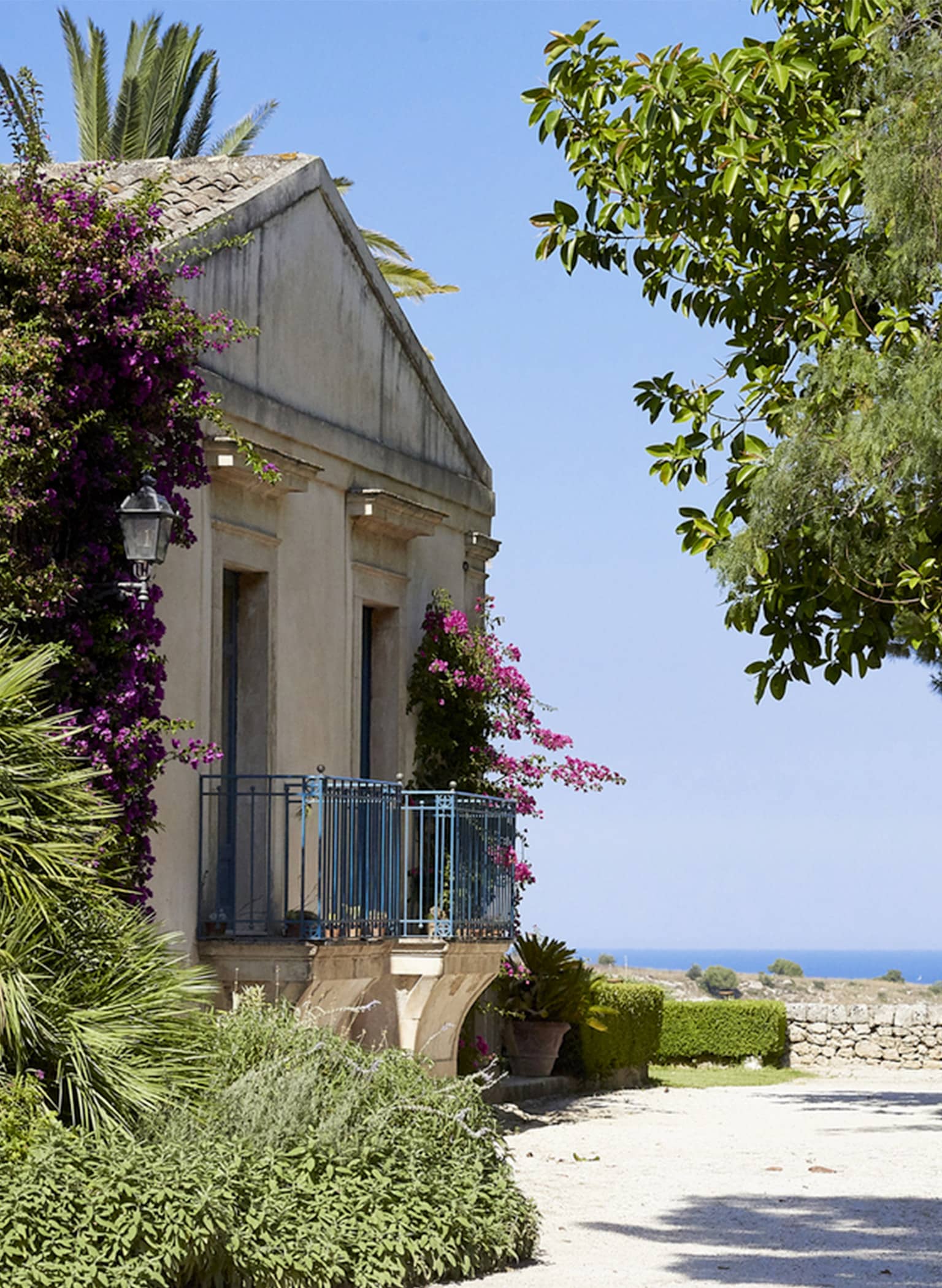
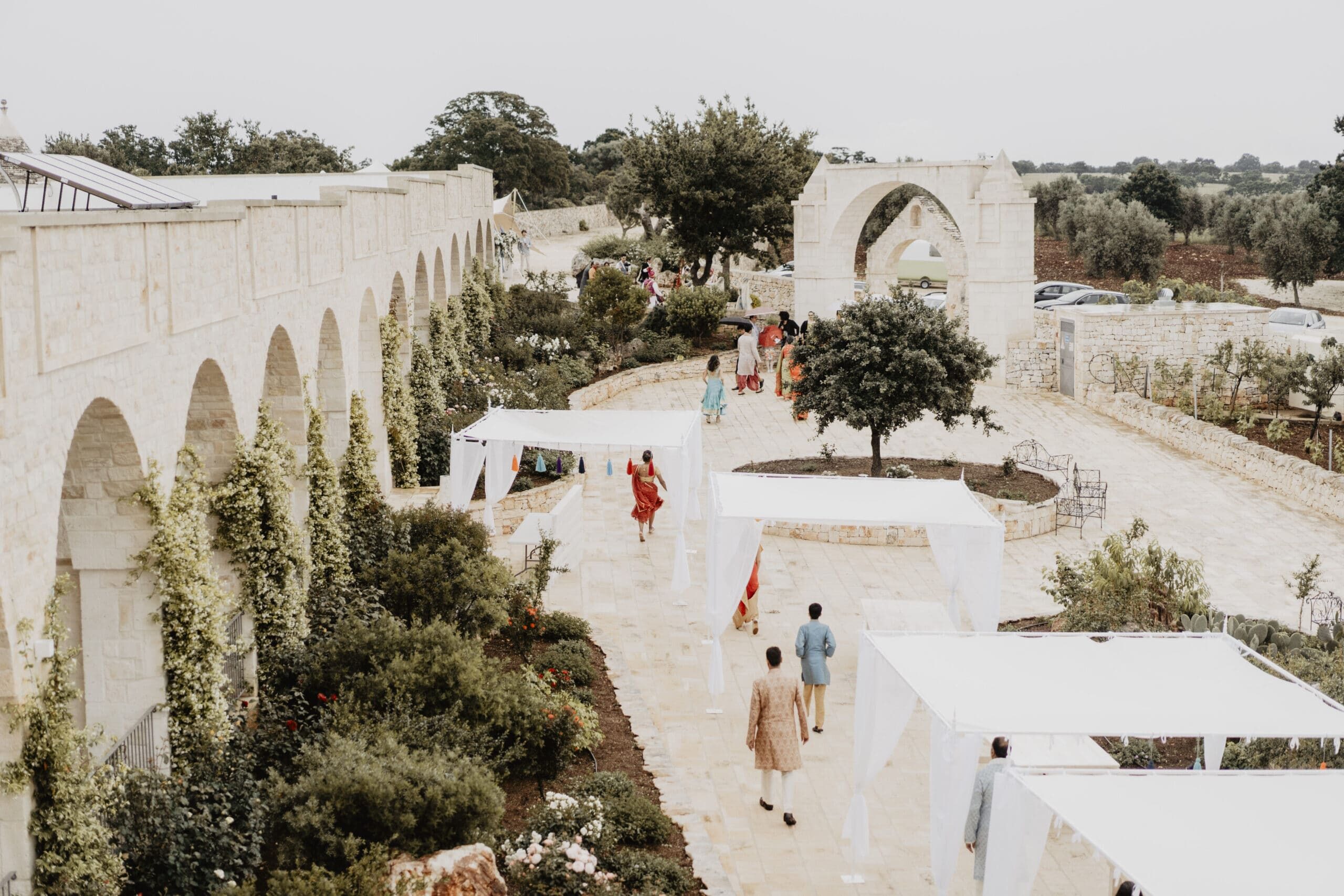
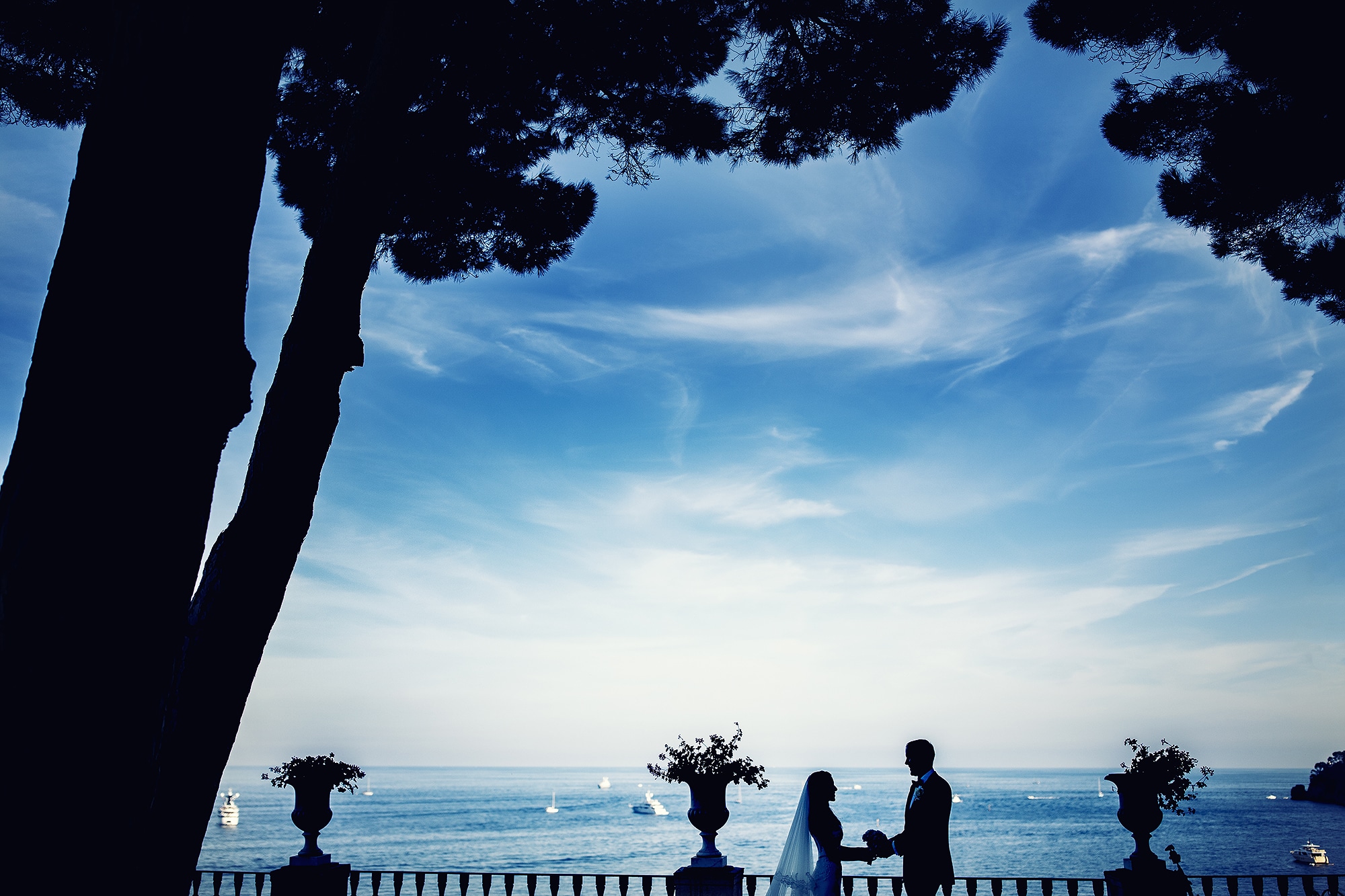
What the portfolio actually shows is a studio that treats each region as a separate production brief rather than a single aesthetic applied everywhere. A stone villa on Sicily‘s coast, walled in bougainvillea, is a different problem from a Puglian courtyard where guests in Indian wedding dress cross beneath white event canopies past a barrel-vaulted colonnade. A couple’s silhouette on a Portofino terrace at dusk is a third register entirely: quieter, more editorial, built around a single held frame rather than a crowd in motion.
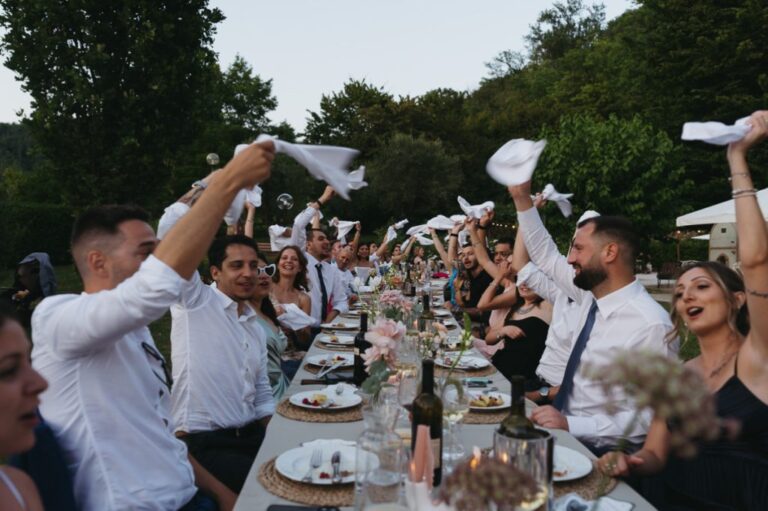
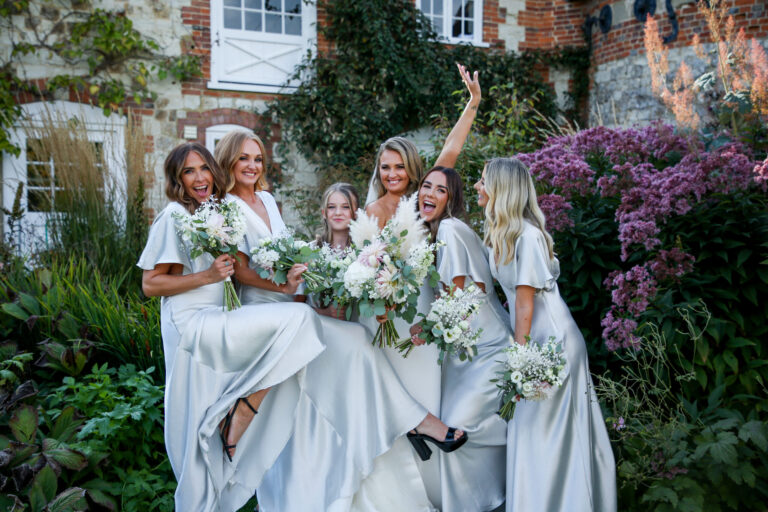
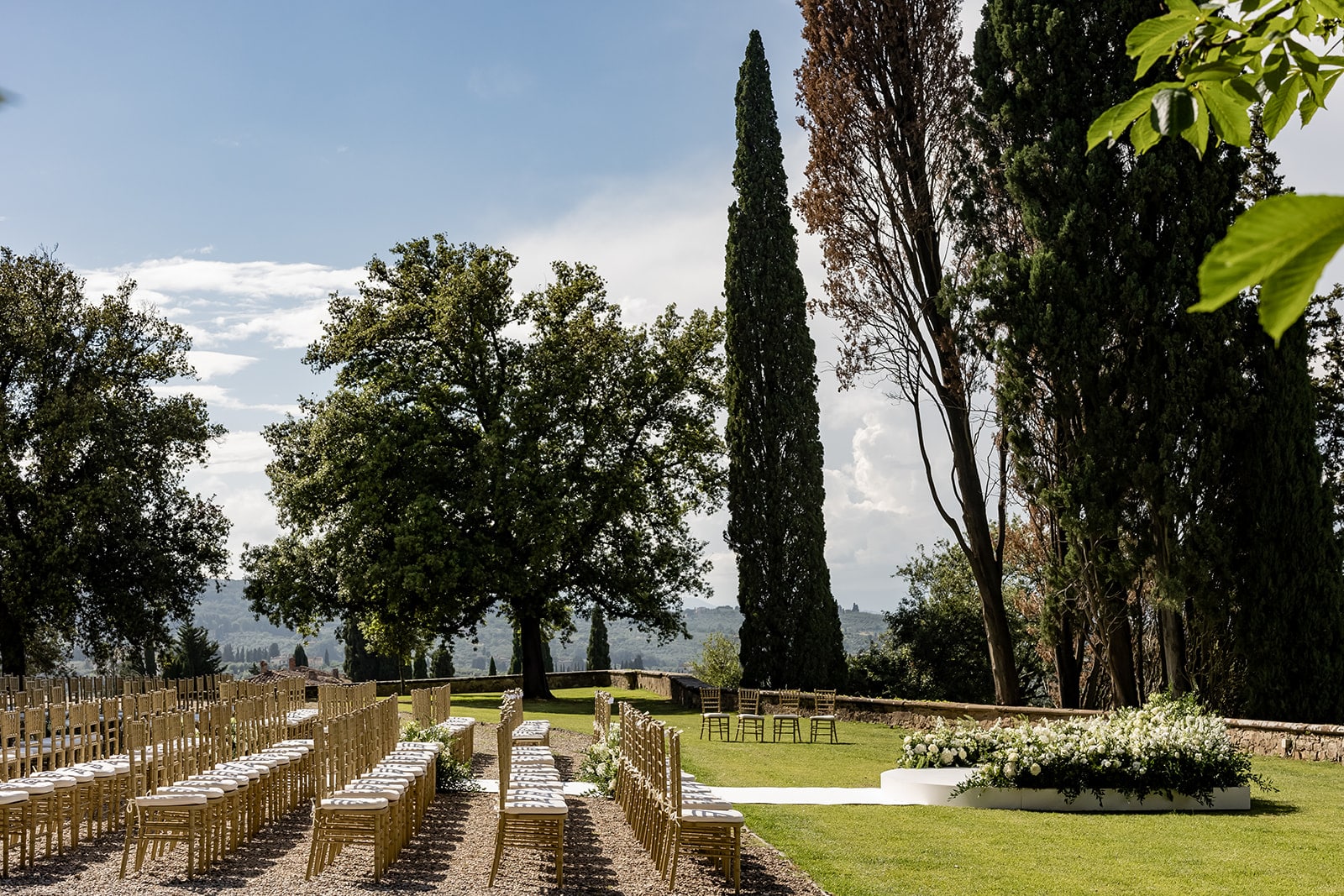
Tuscany carries the largest share of the work, and it appears in two distinct keys. One is rustic and unbuttoned: a grape pergola strung with bulb lights, terracotta pots of basil and lemon doubling as centrepieces, gingham napkins on a farmhouse table. The other is considerably more produced: a table dressed in pink stripes and set with citrus and stone fruit under straw sunhats and a dried-palm parasol, or rows of gold chiavari chairs between cypress trees leading to a white floral altar. Vibrant colour is not an accent in this portfolio. It is close to a signature, consistent with a founder who names “vibrant colours and fun” as the point of the company on her own about page.
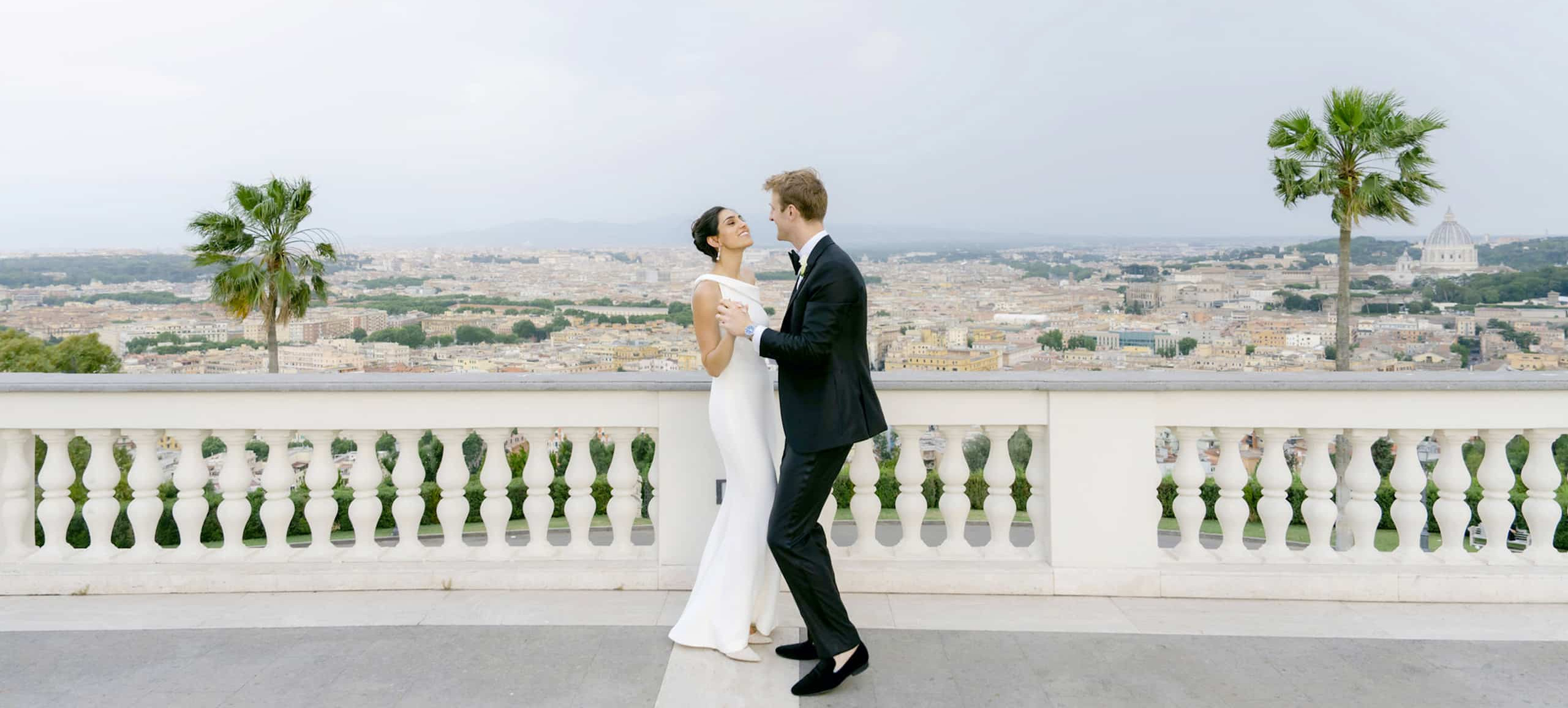
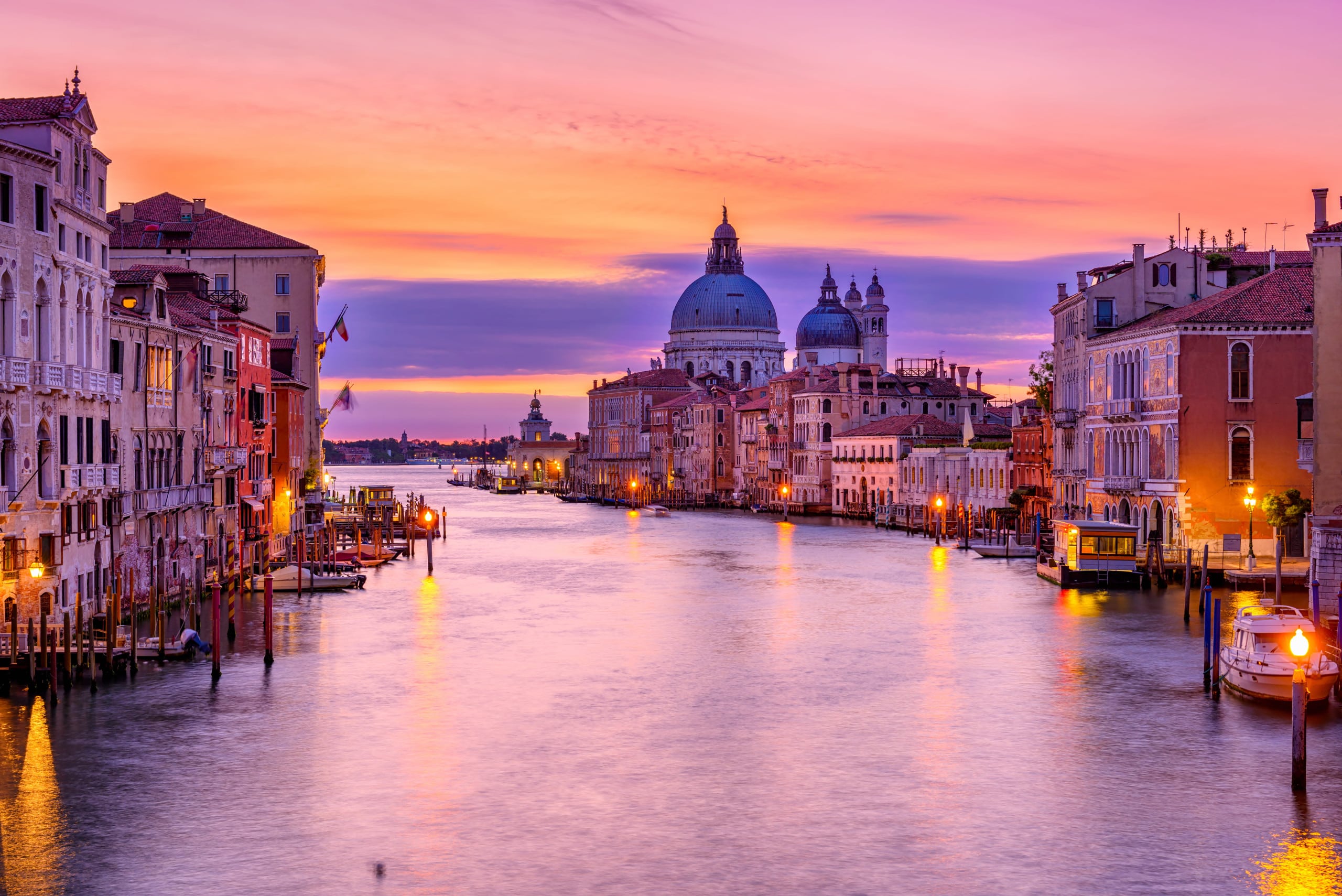
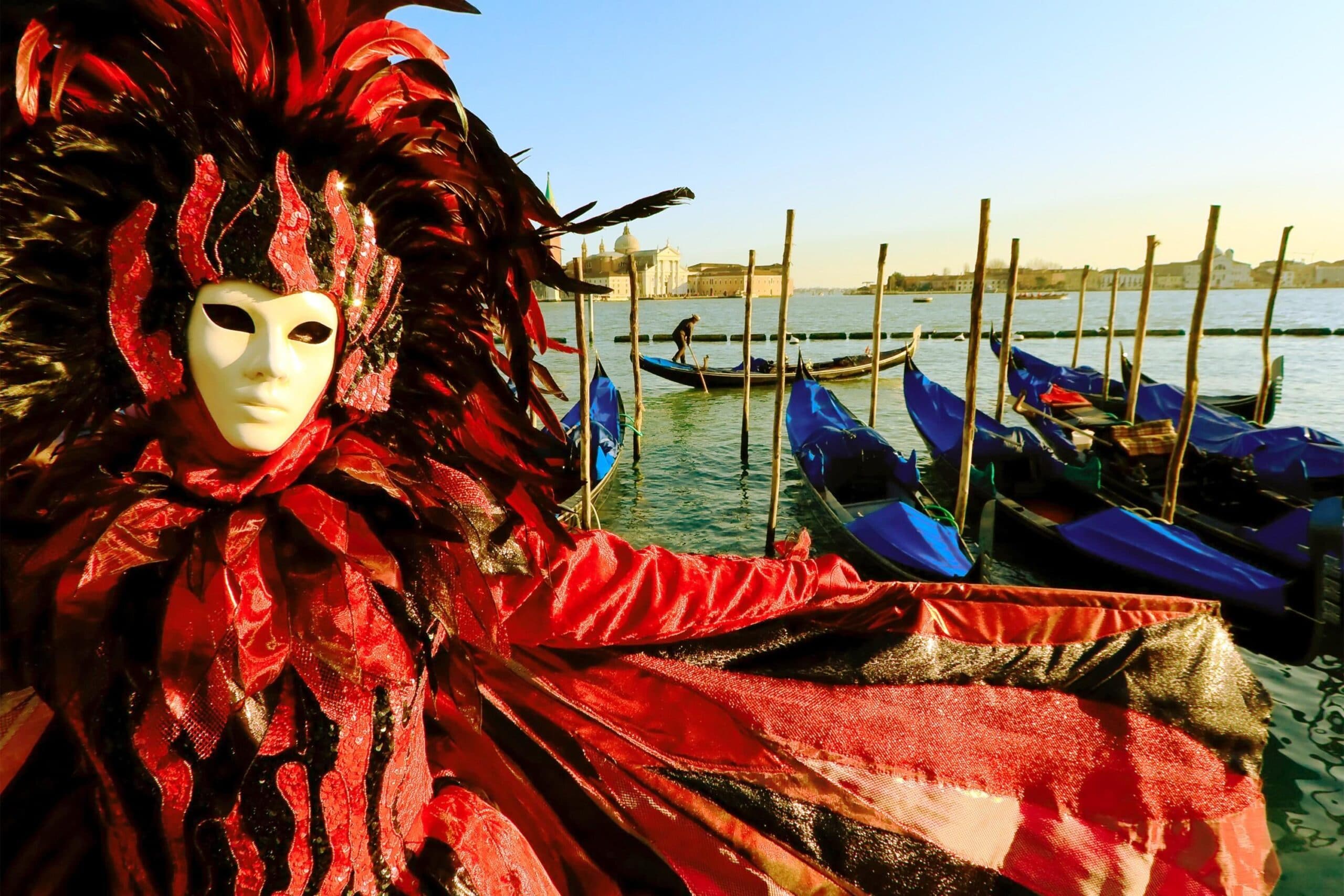
Rome and Venice show up as two different kinds of spectacle. In Rome, a reception was laid out across a palazzo terrace with St Peter’s dome sitting on the skyline behind the last row of tables, an aerial frame that makes the scale of the production legible in a single image. Elsewhere on the same terrace, a couple dances with the city spread out below them. Venice appears through its own theatrical register: a Carnevale mask and feathered costume staged beside the gondola moorings, and, separately, the Grand Canal itself at sunset, Santa Maria della Salute’s dome catching the last colour in the sky. The city supplies its own drama; the studio’s job there is knowing where to stand.
Cross-cultural production recurs often enough in this portfolio to read as a specialism rather than an occasional booking. A Lebanese wedding in Florence, documented in the studio’s own backstage film, sits alongside multiple Indian weddings staged in Rome, complete with baraat processions and mandap ceremonies, and a Jewish wedding filmed in Tuscany with its own detailed “what’s behind” documentary short. Each tradition carries its own liturgical requirements and its own guest-experience expectations, and the studio’s own films show the seams rather than smoothing over them: a band playing close to the guests at an Indian dinner, a mandap dressed in pink fabric rather than a generic floral arch, a chuppah built to carry both the ceremony’s meaning and the Amalfi Coast view behind it. None of it reads as a single template wearing different decorations for the day.
The Amalfi Coast and Ravello carry some of the most demanding logistics in the portfolio, and also some of its most tender moments. A Jewish ceremony was staged under a floral chuppah on a cliffside lawn above Ravello, the whole coastline running out behind the wedding party at sunset. Elsewhere, a first kiss happens under a rose-covered arch with guests seated among umbrella pines, an image that could be mistaken for a formal Roman garden if the sea were not visible past the columns. A stone loggia nearby is hung with pink and green scalloped fringe lampshades over a table dressed in toile, proof that the studio’s stated love of colour survives the transition from a rustic Tuscan table to formal coastal architecture.
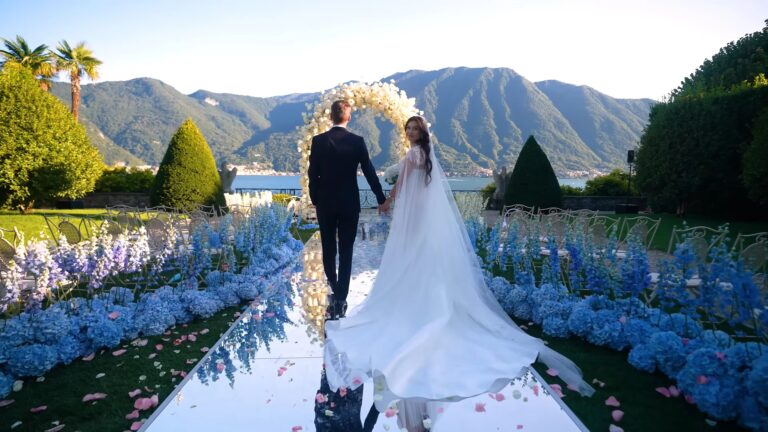
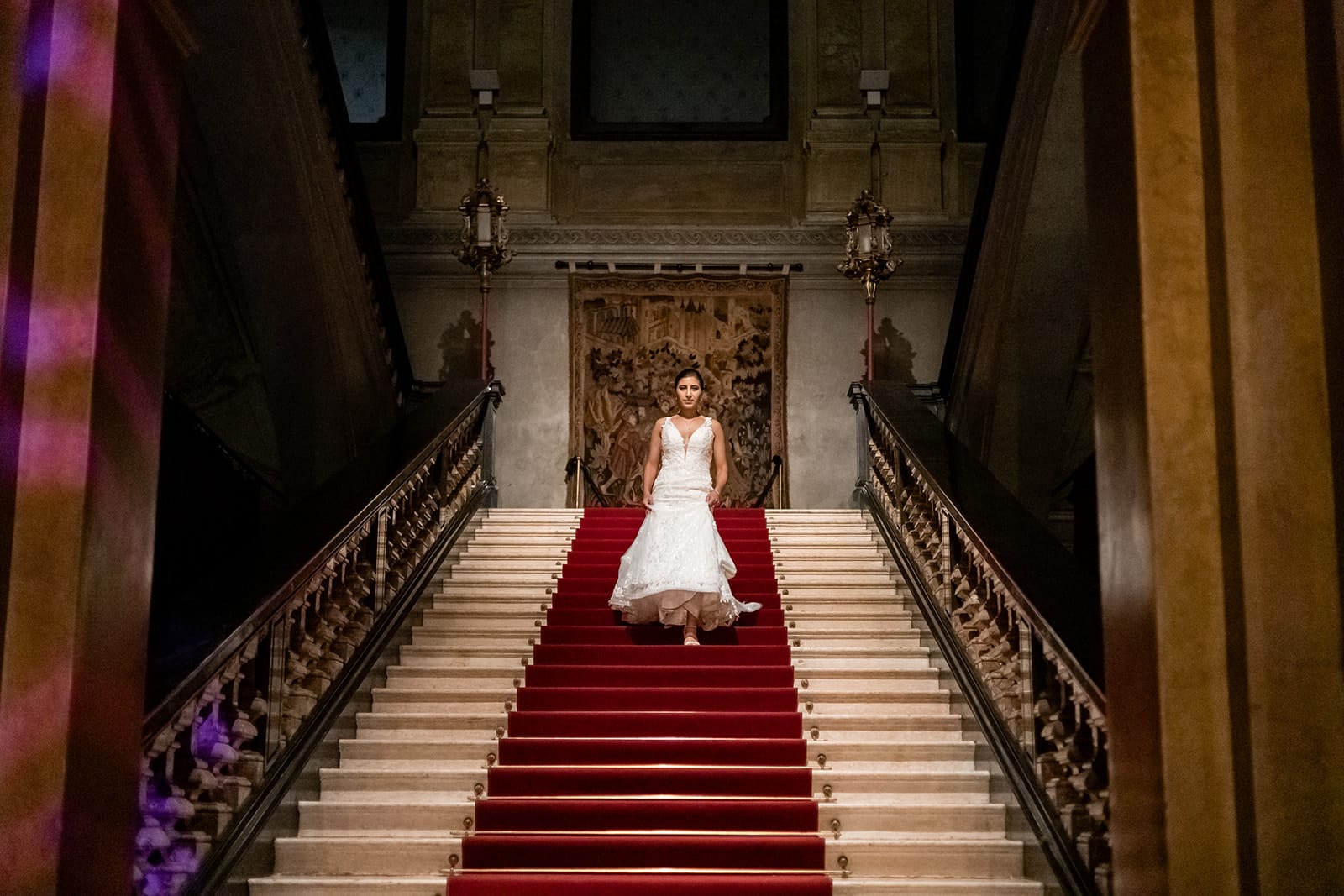
Lake Como and Portofino round out the northern half of the map. A bride descends a frescoed palazzo’s grand staircase under a red carpet in one frame; a lakefront villa glows against the dusk in another, a fountain and a row of empty ceremony chairs waiting on the lawn below it. On the Riviera, a wedding party toasts on a terrace above Portofino harbour, the boats at anchor below them, evidence that the studio’s production reach extends well past Tuscany’s borders.
The reviews on the studio’s own directory listing are sparse but specific. Tracee and Chris, writing after their wedding, thanked a member of the Infinity Weddings team by name: “Thank you for your email, and for ALL your help with the wedding. We couldn’t have done it without you and are most grateful for everything that you did for us on that magical day.” It is a short note, but it names the thing that recurs across the studio’s own language too: a team standing behind the founder, doing the unglamorous work that a couple only notices in its absence.
I try to evoke that astonished look a child has when discovering a new and fascinating game. It’s inside each of us. I like to design situations and events that give that feeling space.
Sara Mazzei
That line, from Sara Mazzei’s own interview on the studio’s site, is a fair summary of what the portfolio argues for: an evening built to surprise the people living through it, rather than to photograph well and nothing more. Whether that surprise arrives as a chuppah on a cliff above the Amalfi Coast, a couple on a Puglian trulli rooftop, or a marquee bar built from teal velvet and greenery garlands under a clear roof, the studio’s own stated method stays the same. Design the entertainment and the flow first. Let the decor frame it.
For a couple weighing where in Italy to marry and who should run the production, the honest answer from this portfolio is: it depends less on the region than on what kind of evening you actually want. Infinity Weddings’ range, from a rustic Tuscan farmhouse table to a formally produced Roman terrace, suggests a studio built to take that brief seriously rather than default to one look regardless of what is asked for. Two decades in, most of that work still arrives through referral rather than advertising, which is its own kind of evidence: the couples who lived through one of these evenings are the ones sending the next family through the door.
- Planning and production: Infinity Weddings
- Films: Infinity Weddings