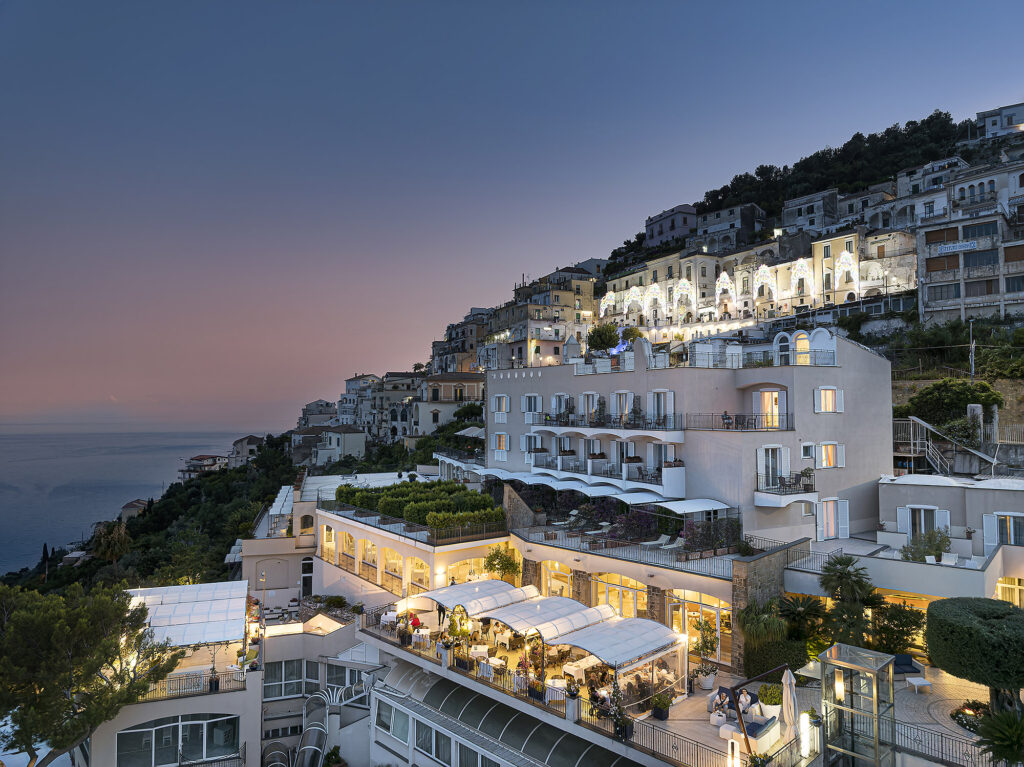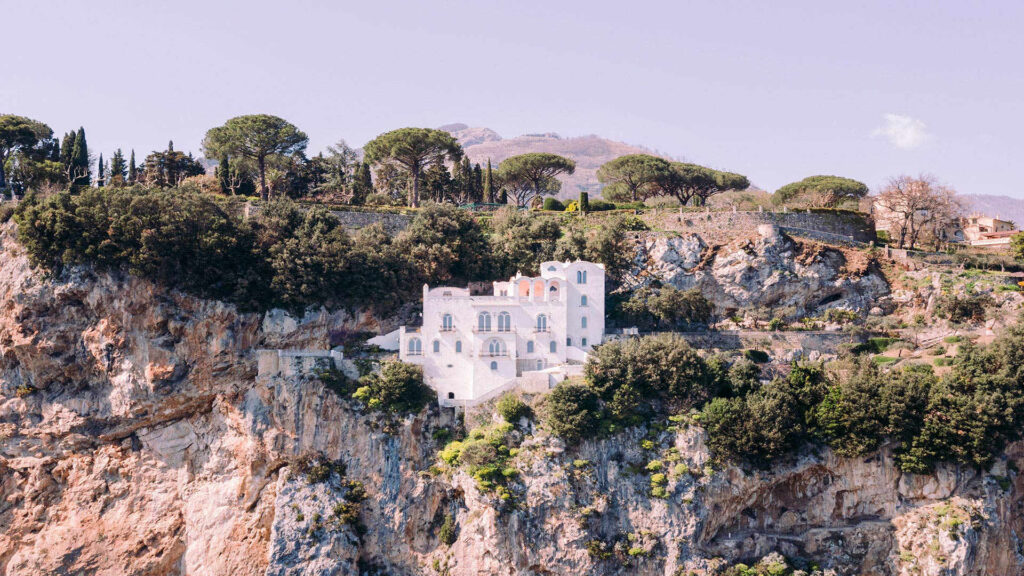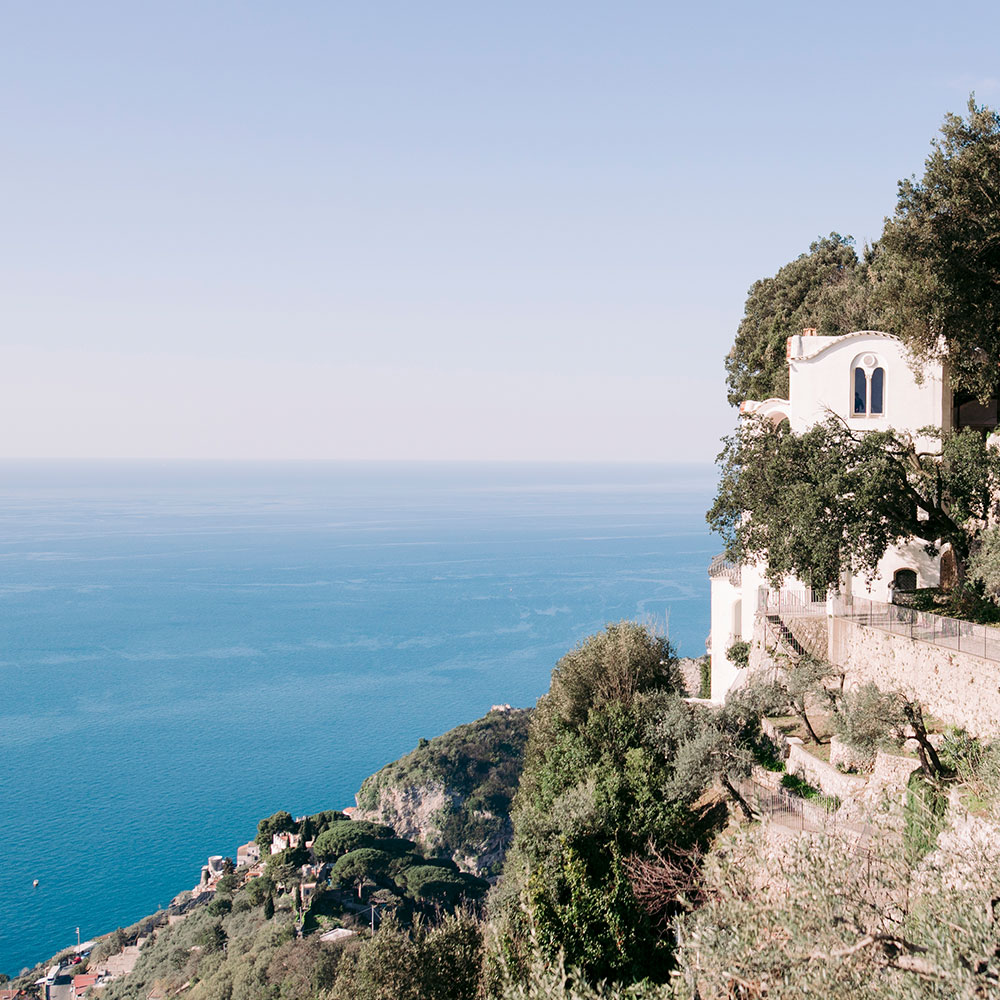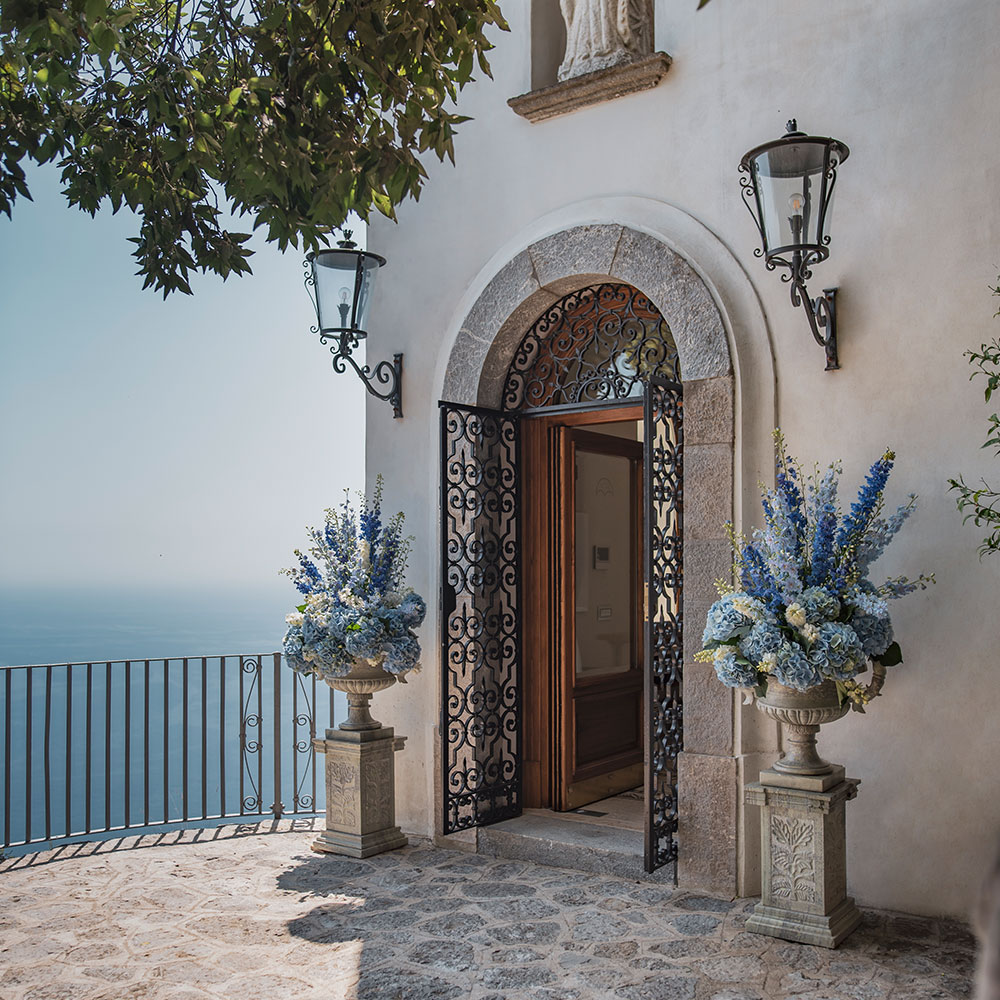
The family who built Caruso never meant to be in Ravello. As the hotel tells the story, a patrician Roman family set out for Constantinople in the eleventh century and was turned back by a storm at sea. They came ashore on the Amalfi Coast almost by accident and, grateful to have survived, raised a palace on the highest point of the town. They called it Palazzo d’Afflitto, a name that carries the shipwreck in it.
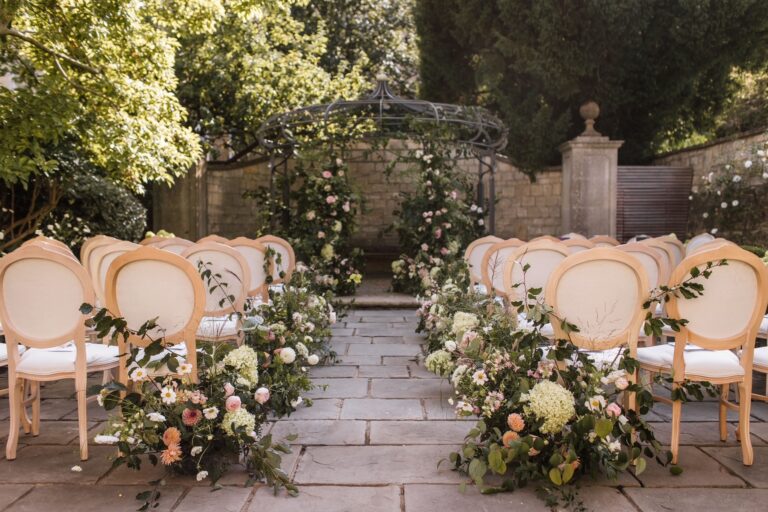
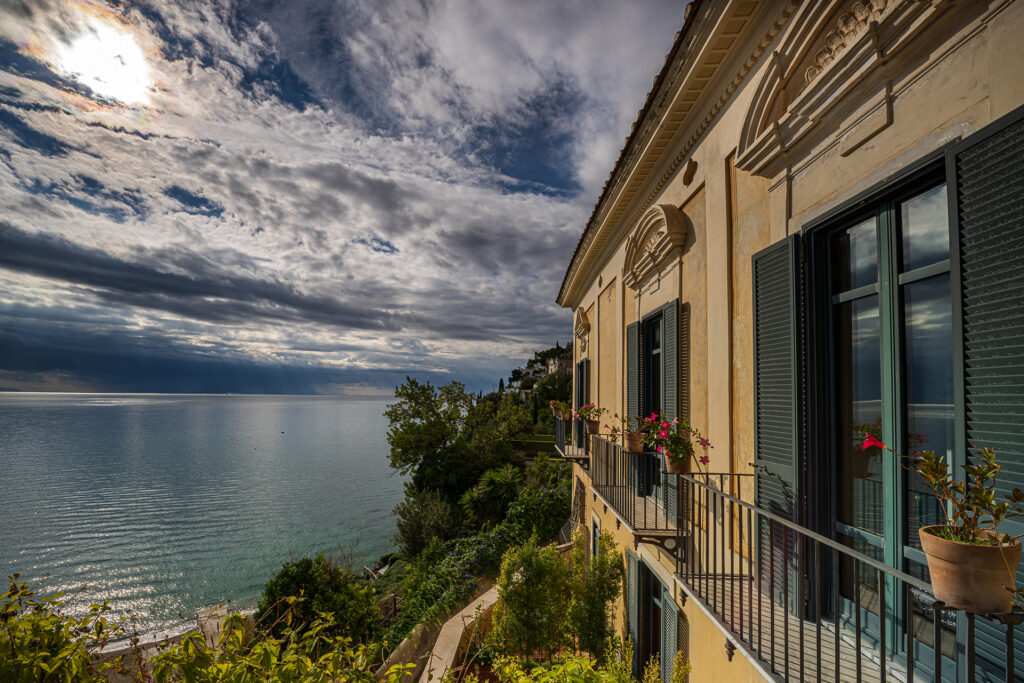
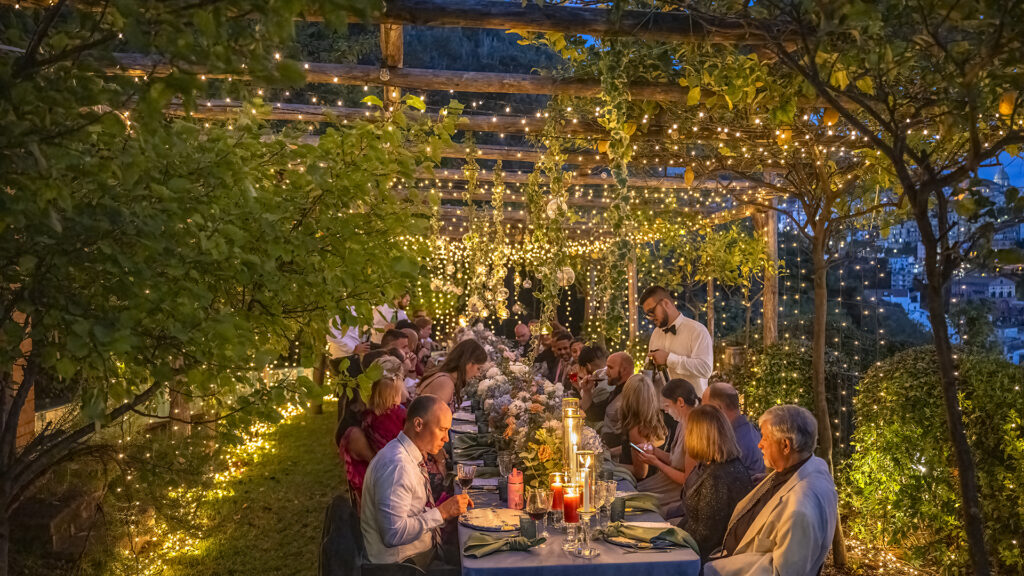
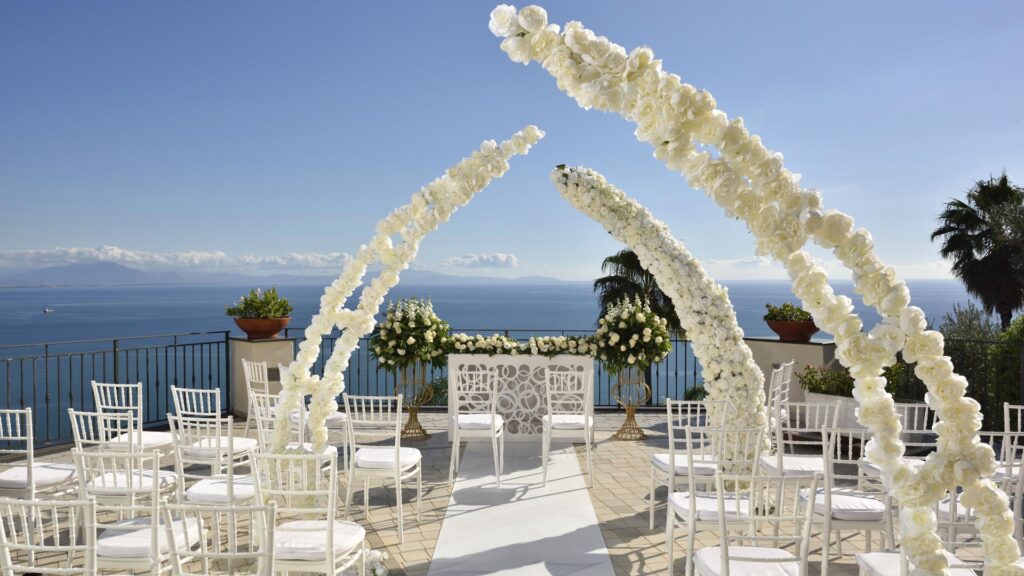
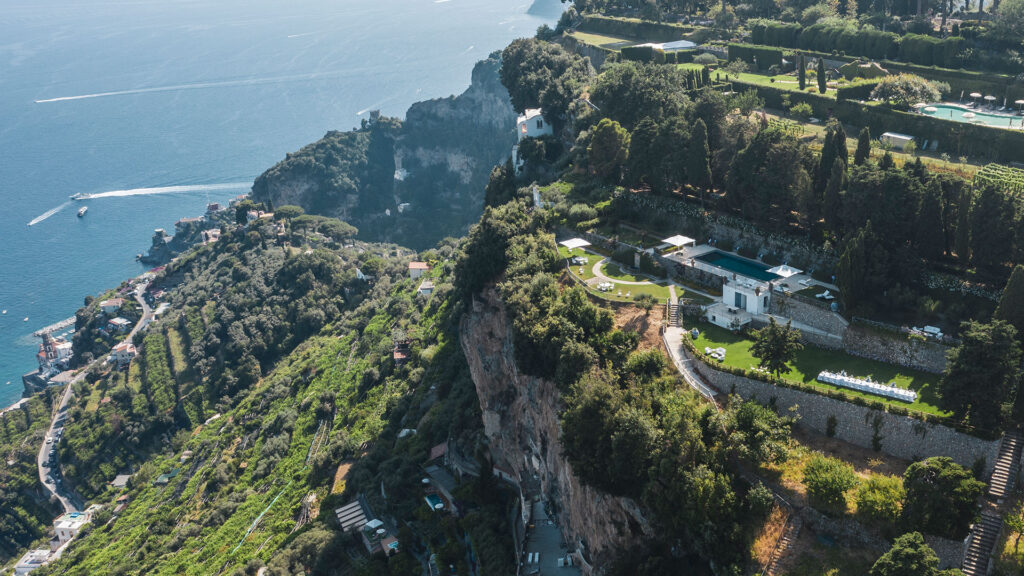
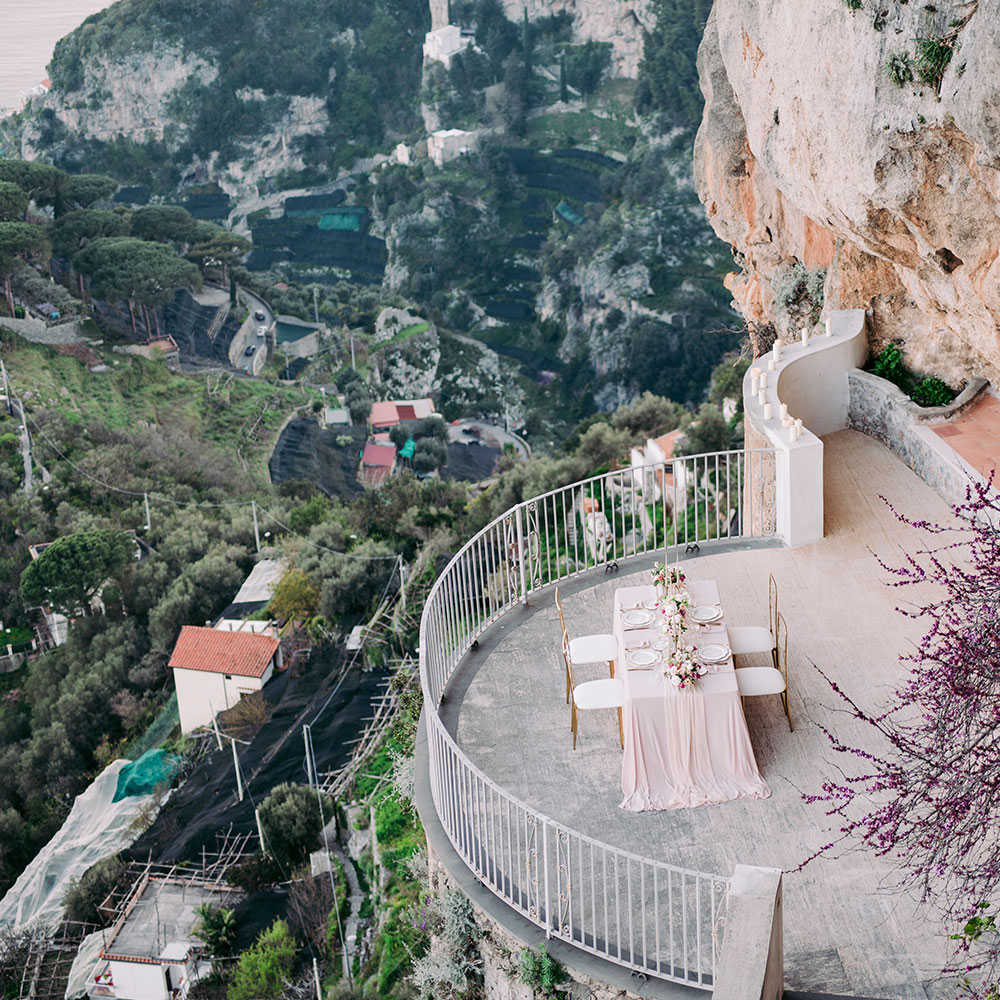
Nearly a thousand years on, the same palace takes weddings of up to 150 guests in its gardens and terraces, with the Gulf of Salerno and the rocky Amalfi coastline dropping away more than 350 metres below the terraces.

A palace rebuilt, whitewashed and revealed
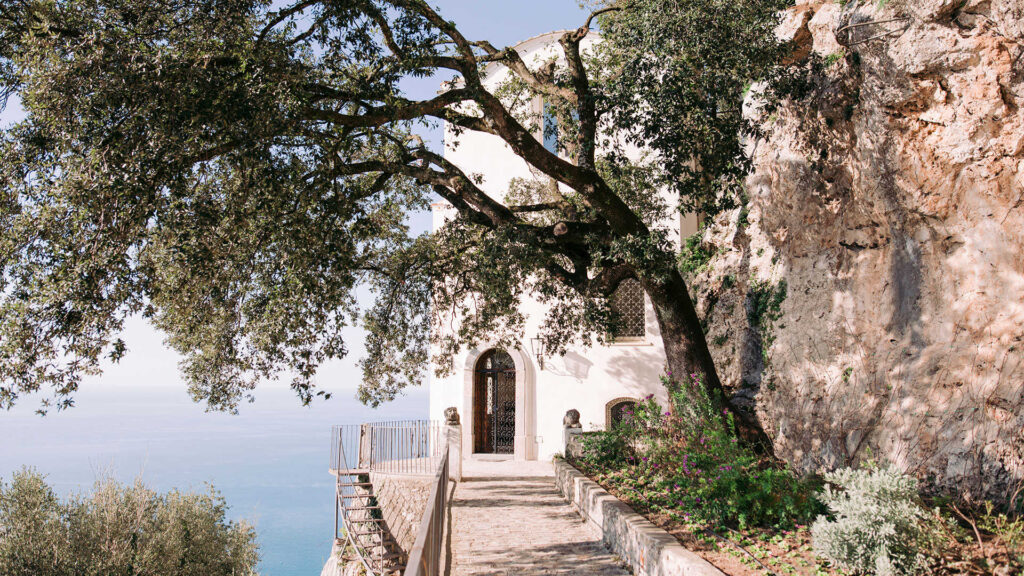
The building has been ruined and restored more than once. Ravello and Amalfi suffered through the centuries as the Italian republics fought one another, and the palace fell in and out of ruin. By the sixteenth century it had been rebuilt, and a colonnade was added in the raised garden, leading to a lookout tower with small stone benches. In the late seventeenth and early eighteenth centuries local painters from Campania covered the walls and ceilings with pastoral scenes, abstract designs and fantasy figures, and a painted chapel was added.
Then the colour disappeared. In the nineteenth century the frescoes cracked and faded, and cash strapped owners whitewashed them over. In 1893 a hotelier and vineyard owner, Pantaleone Caruso, and his wife Emilia Cicalese rented five rooms in one wing of the palace and opened the Pensione Belvedere, named for the view of the hanging garden plunging towards the sea. Caruso had worked for the Scottish botanist Sir Francis Neville Reid, laying out the parterres at Villa Rufolo in the centre of Ravello, and it was the gardens that most interested him. The salons stayed largely chalked out and were used as service areas, and the chapel became an office. The pensione grew to fill the whole palace with 24 rooms and became Hotel Caruso Belvedere.
A visiting New York Times journalist in 1903 helped to draw wealthy Americans wintering on the European rivieras, and the hotel became a favourite of Virginia Woolf and the Bloomsbury Group. After the Second World War the hotel stayed in the Caruso family, and its guests included Greta Garbo, Gina Lollobrigida, Humphrey Bogart, Jackie Kennedy and Dustin Hoffman, drawn by the privacy of the gardens.
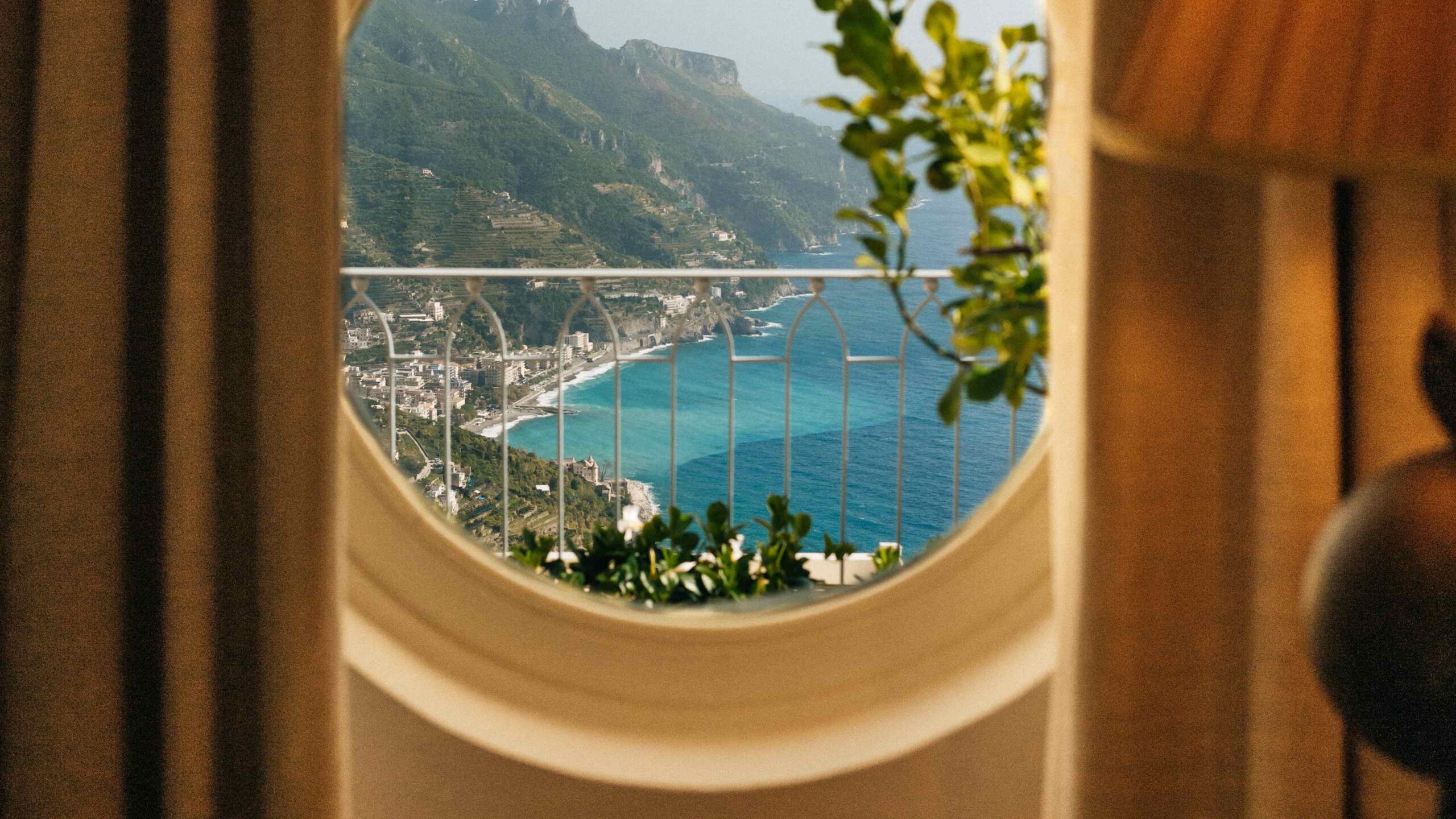
Uncovering the palace again
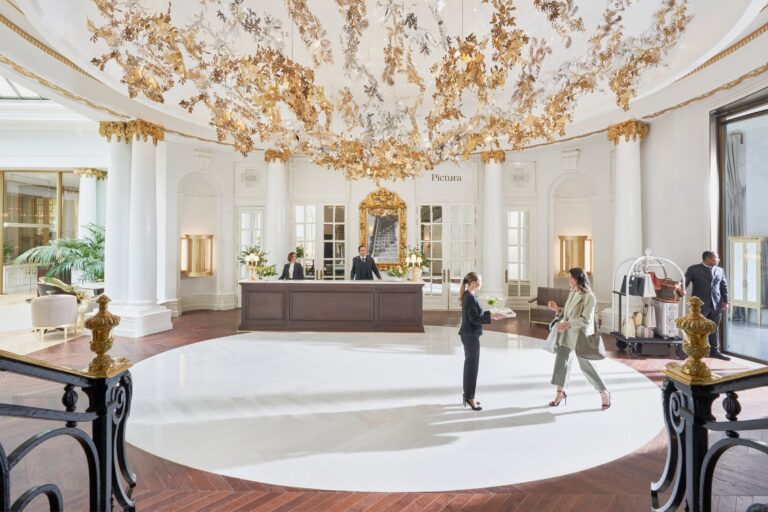
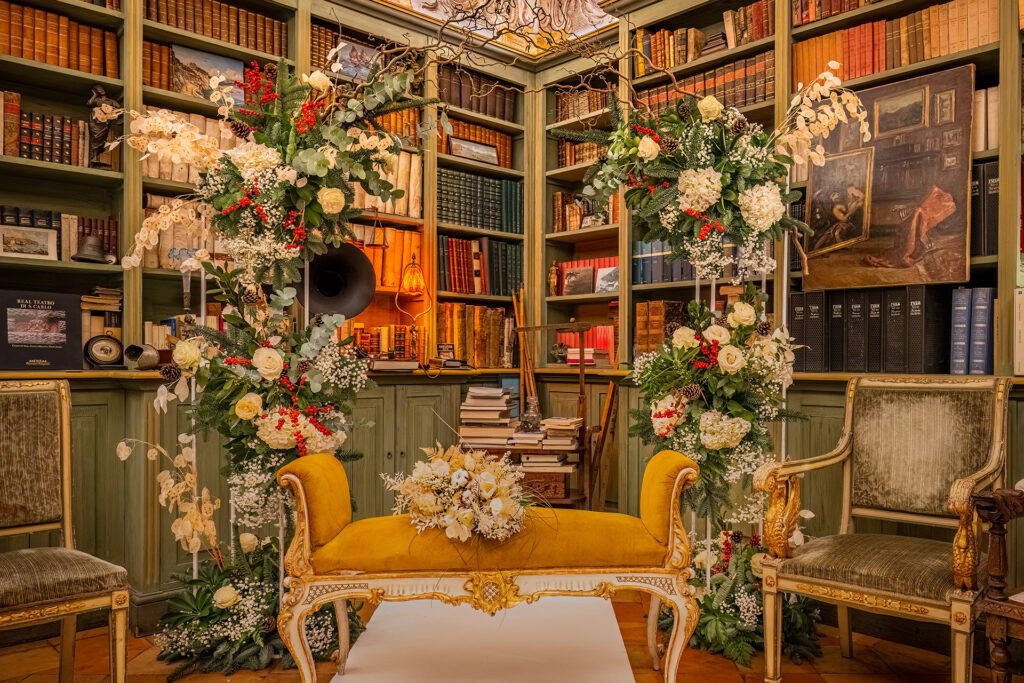
Belmond, then trading as Orient-Express Hotels, acquired the hotel in 2000 and spent four years restoring it with the Italian fine arts authorities. Archaeologists were called in when the foundations of the medieval palace were uncovered beside the main buildings. Under the art historian Antonio Forcellino, local craftsmen removed the whitewash to reveal ribbons, flowers, cornucopias, Arcadian scenes and nymphs. In the hall, the ceiling showed a pair of griffins facing one another above four frescoes of Ravello, probably the earliest paintings of the town. Frescoes were restored in three salons, the drawing room, the chapel, the bar, the reception and one bedroom.
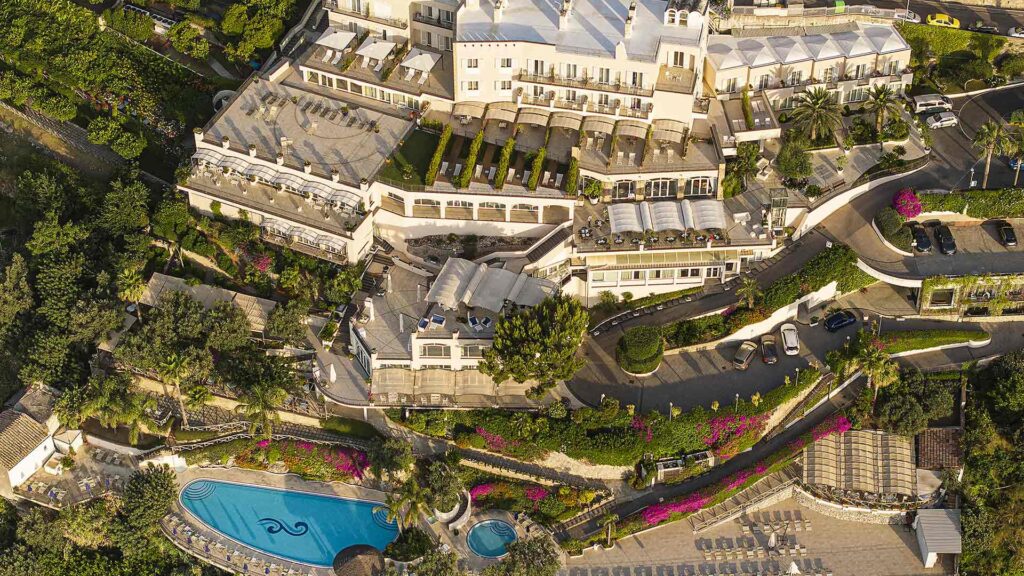
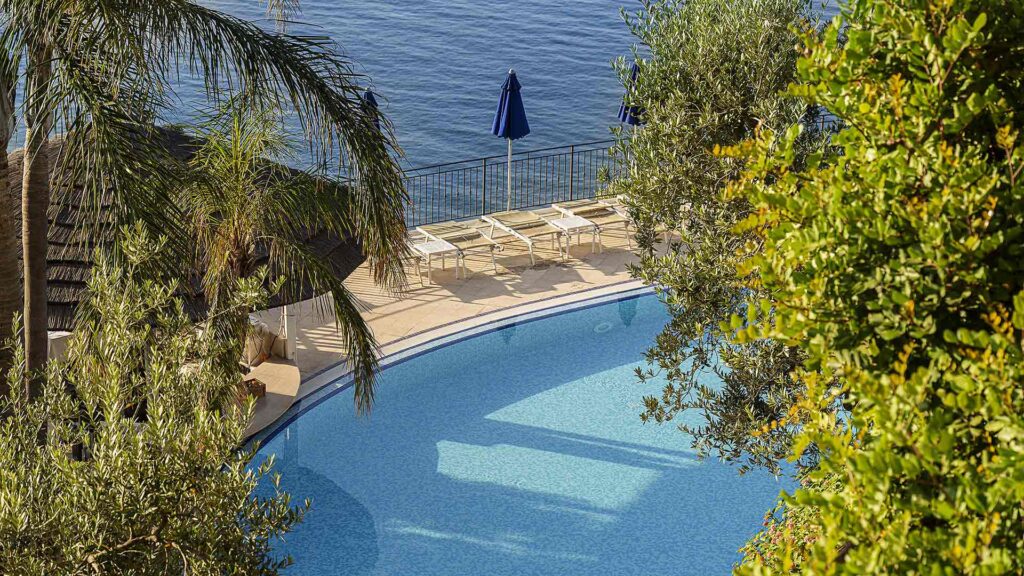
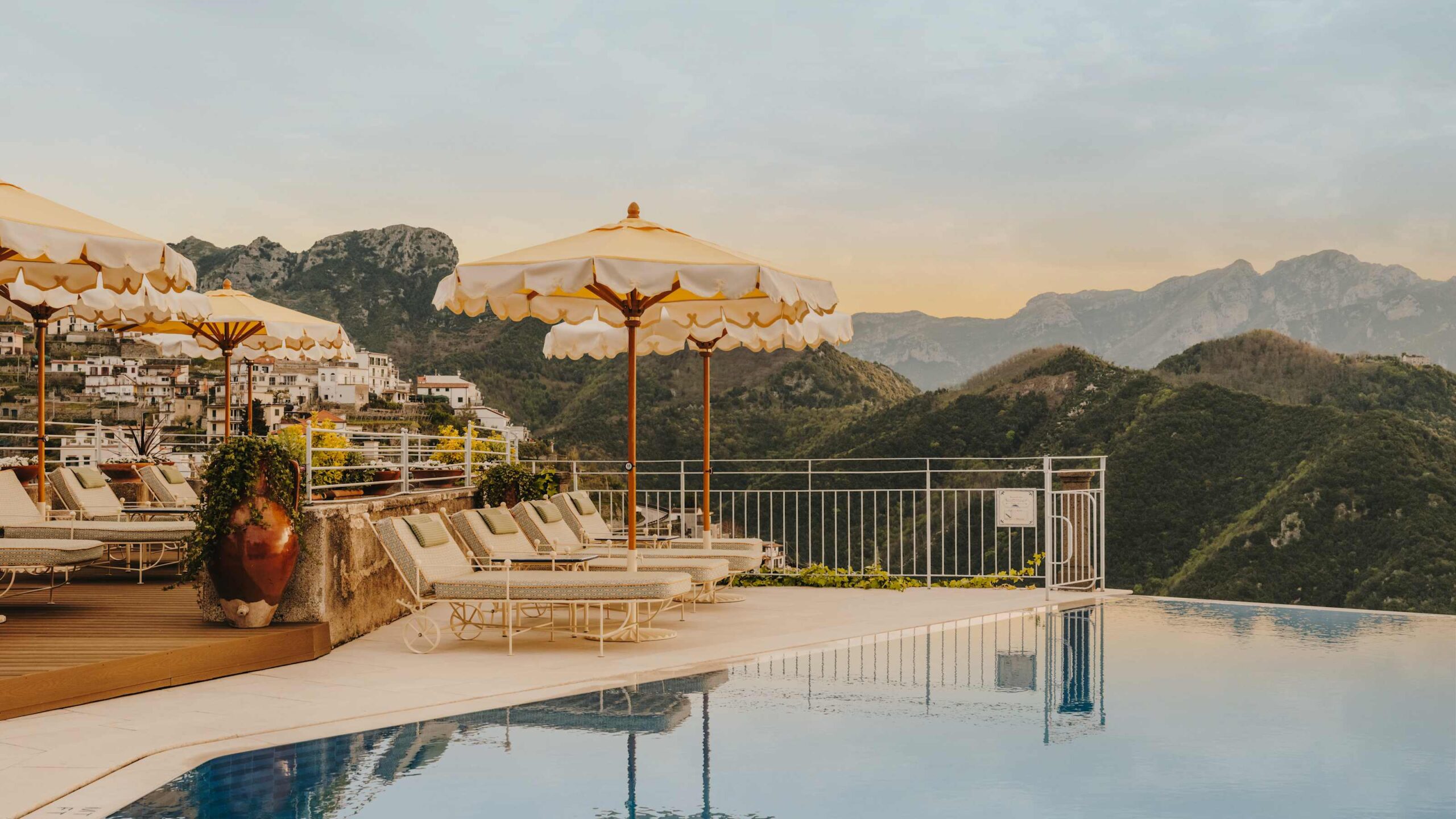
The designer Federico Forquet brought in terracotta tiles from demolished palazzi and handpainted majolica, and the hotel reopened in July 2005 with its infinity pool built and fifteen rooms with private garden terraces on levels down the hillside. Today it has 50 rooms and suites, and the frescoes, Norman arches, portico and the two stone lions at the entrance greet guests as they did before.
Forquet’s brief was to bring the palace up to date without losing its authenticity or its Neapolitan spirit. He recreated ancient Neapolitan patterns in the floors, had local craftsmen piece together old mosaics, commissioned textiles and hung oil paintings of seafaring scenes. Beaten copper lamps by local craftsmen and outsized stone planters furnish the public rooms, and a bronze and crystal chandelier holds thirty candles. He described wanting the rooms to feel like the residence of the Marquis d’Afflitto, the palace’s old owner, once again.
The hotel has collected recognition for the result. Travel and Leisure named it the best hotel in Italy in 2012, Condé Nast Traveller listed it among the top 50 hotels in Italy in 2013, and Fodor’s placed its pool among the best hotel pools in the world in 2013.
Ravello above the coast
Ravello sits about 65 km from Naples, smaller and quieter than Positano, Amalfi or Sorrento. It was founded in the sixth century and has a cathedral from the twelfth, houses in the Arabic Sicilian style and a scatter of marble columns brought back from ancient Greek and Roman sites. Villa Cimbrone, a famous lookout, is in the town, and a summer music festival is held on the terrace at Villa Rufolo, whose garden inspired Wagner’s Parsifal. The composer’s name returns at the hotel, where the Wagner Gardens and the Wagner Room look onto each other, so a celebration here sits within a tradition of music and gardens that Ravello has kept for generations.
For a wedding, the town offers its own ceremony setting. Couples can exchange vows in the 900 year old Duomo of Ravello, a short walk away, after which guests return to the gardens for the celebration.
How a celebration moves through the palace
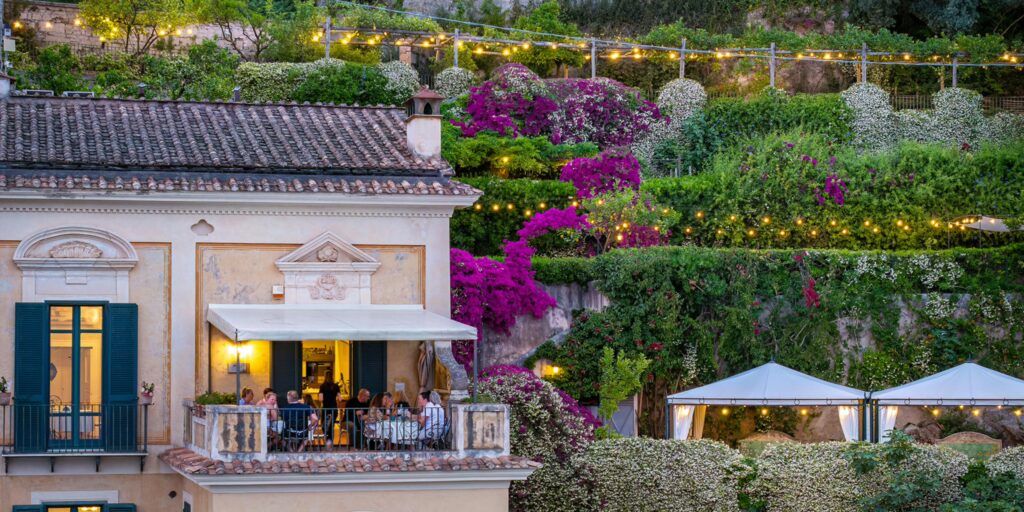
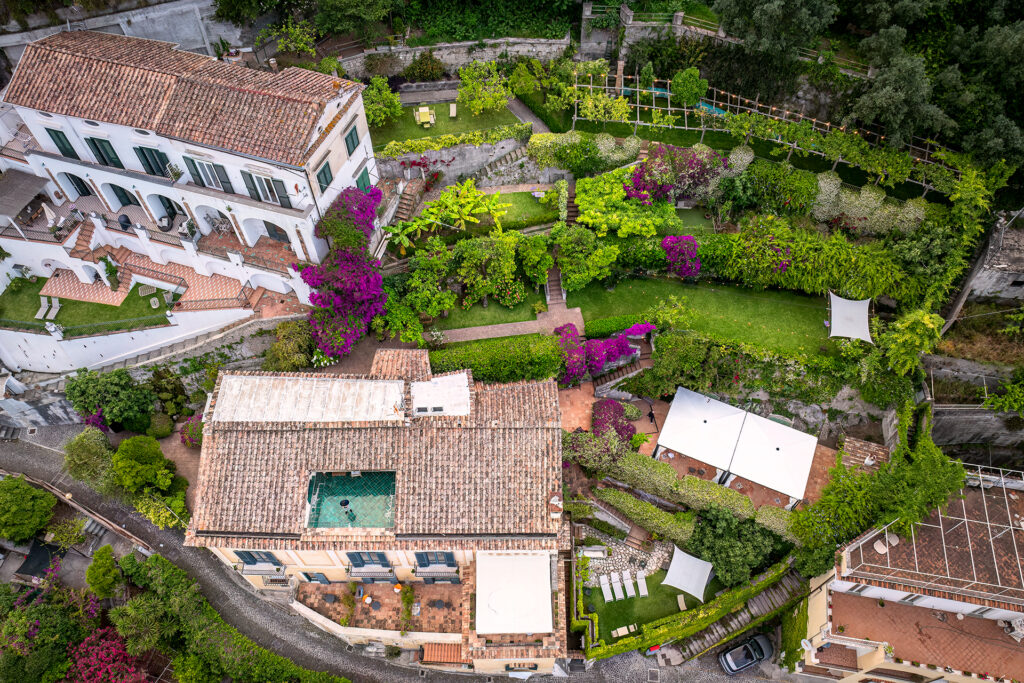
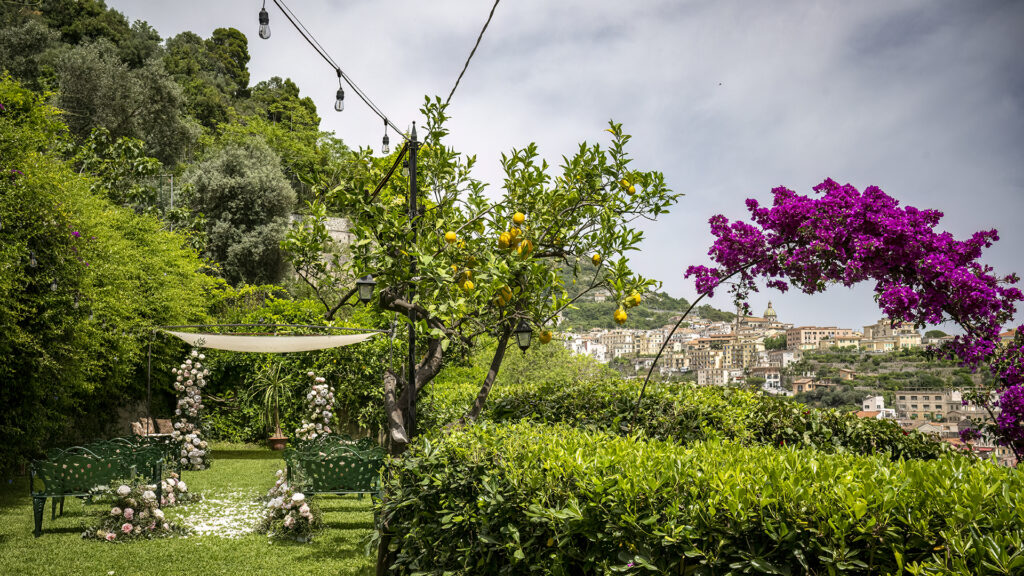
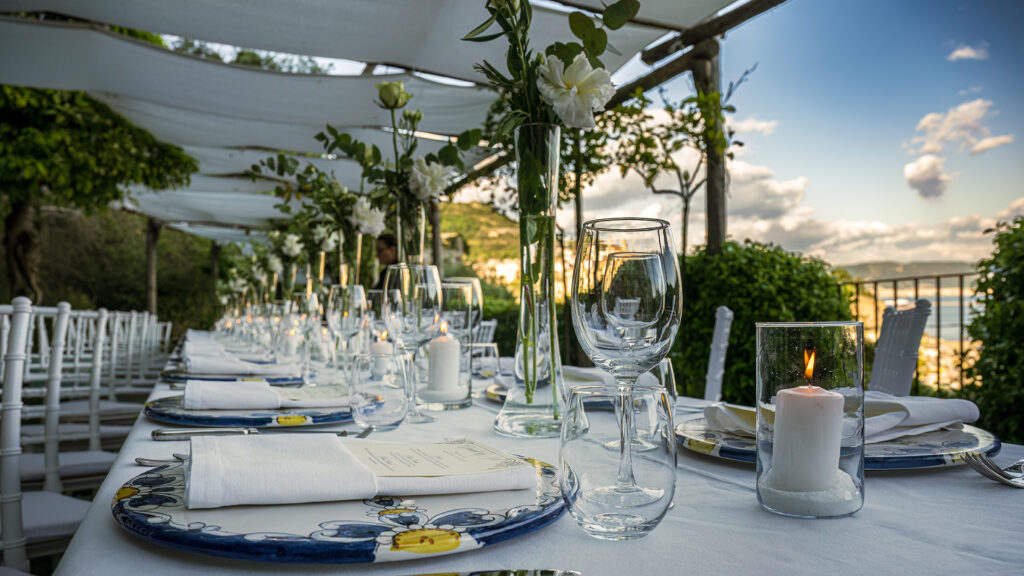
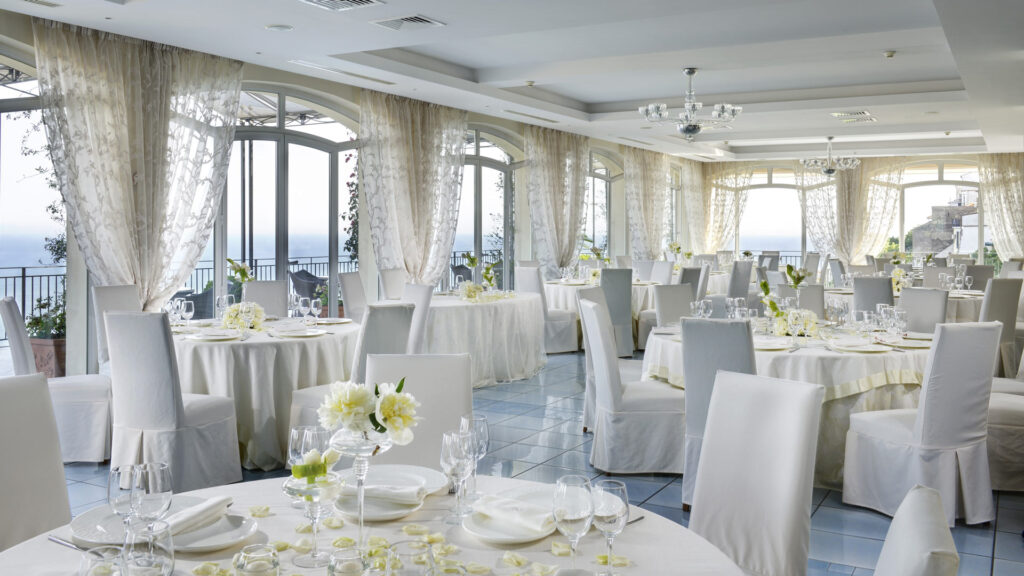
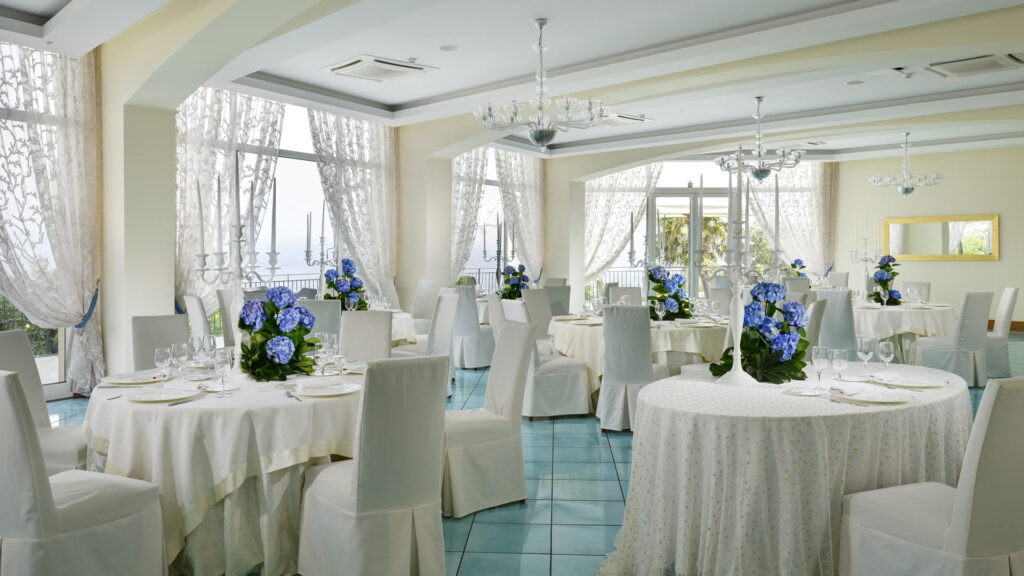
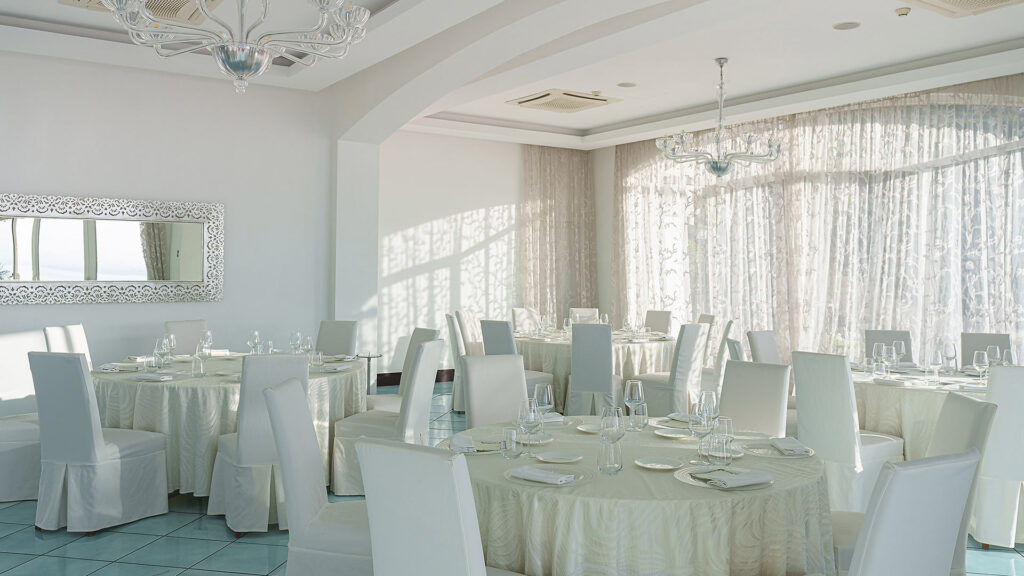
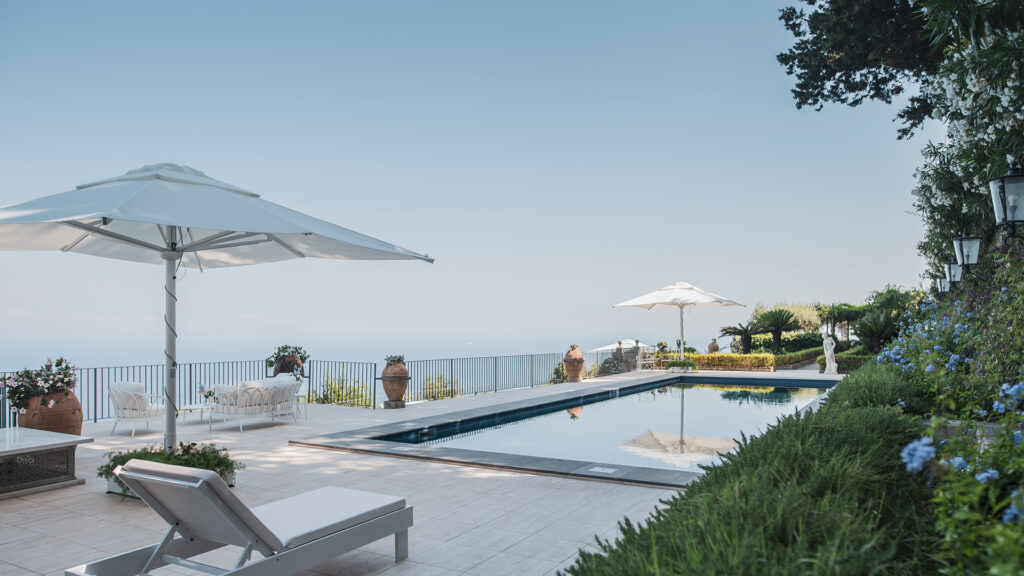
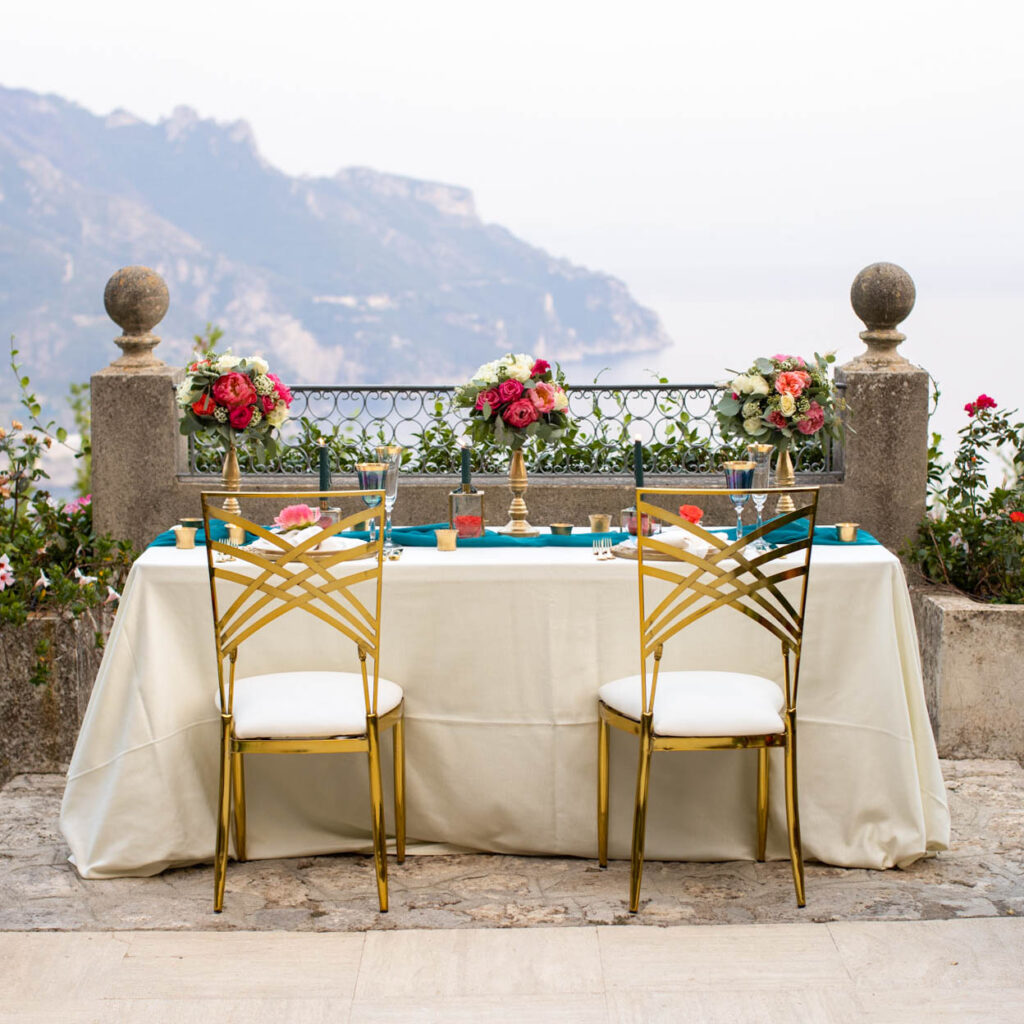
The outdoor venues host between 91 and 150 guests, and they follow the garden terraces down the hillside. The Wagner Gardens, planted with flowers and fruit trees, look down towards the coastline from the terraces of the old palace, and La Piscina, the pool terrace with its bar, is also listed as a celebration setting. Indoors, the Wagner and Colonne rooms provide space for banquets and receptions among the palace’s frescoed interiors. A dedicated team plans the day, and the entire hotel can be booked for a celebration.
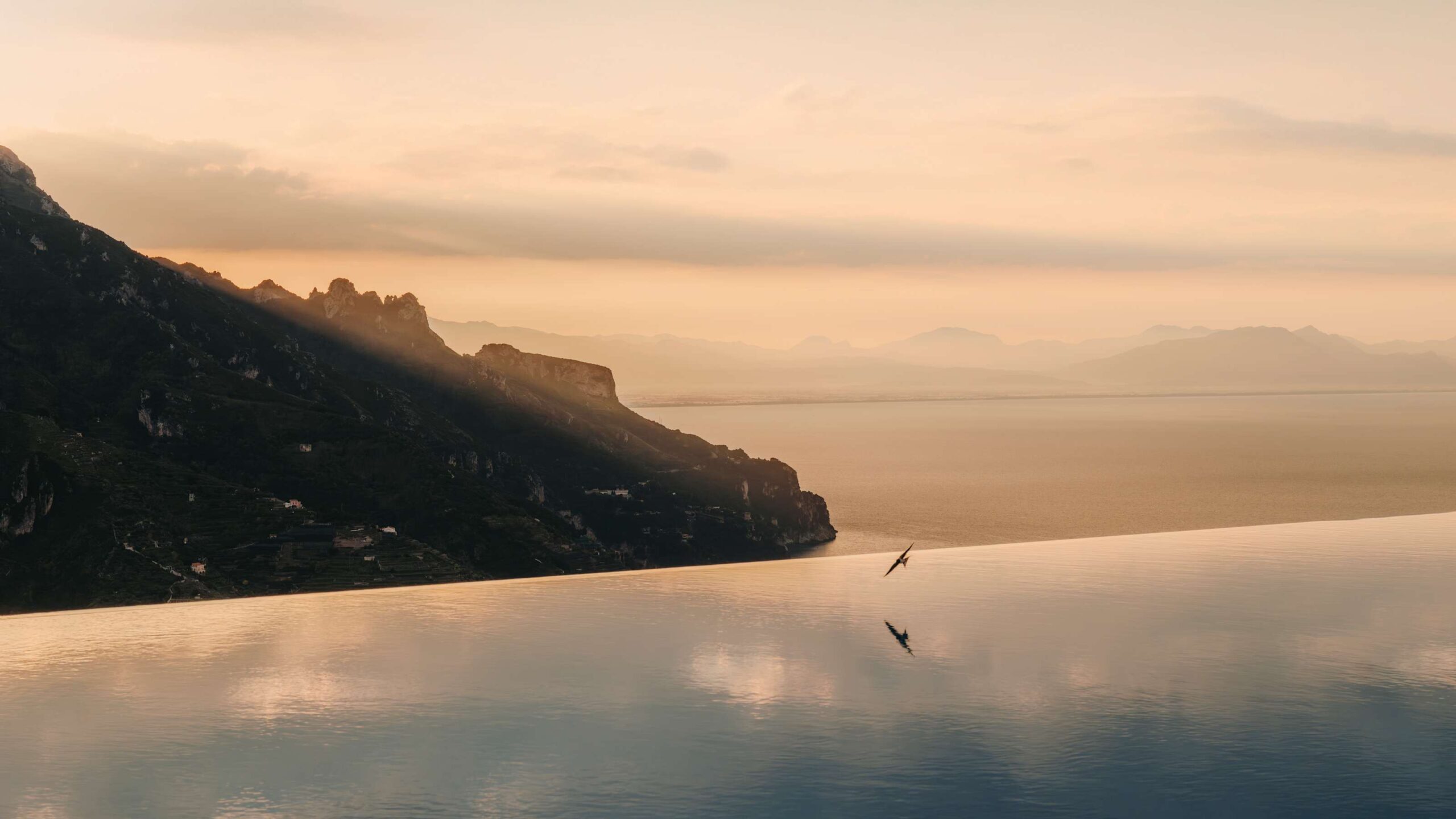
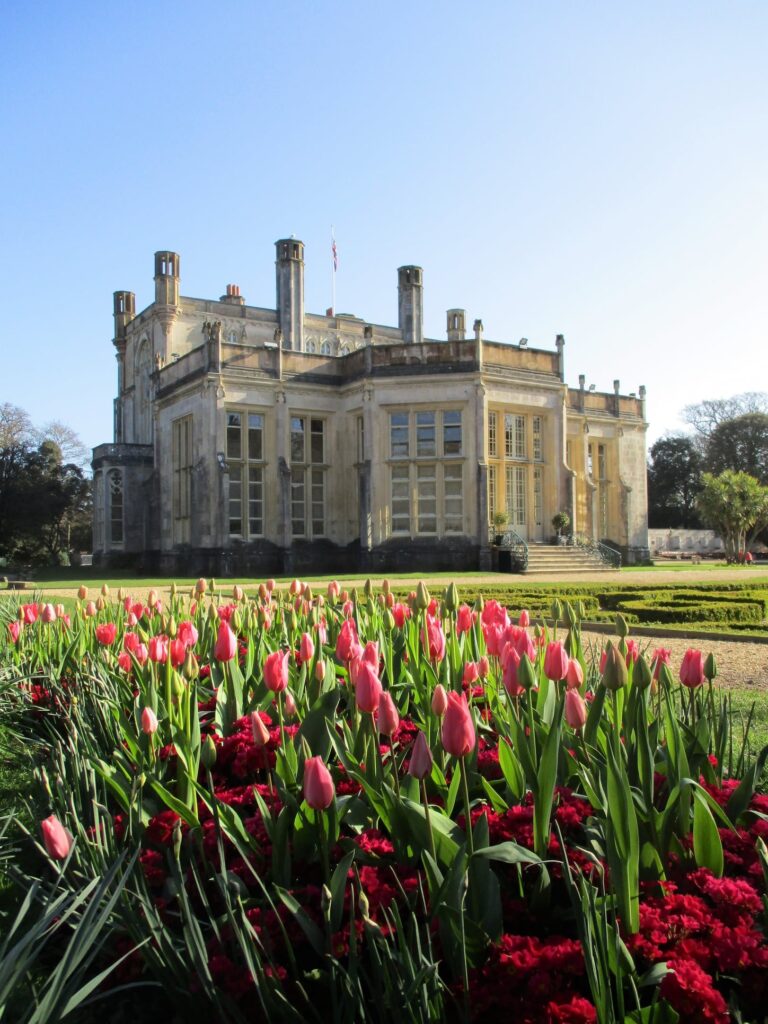
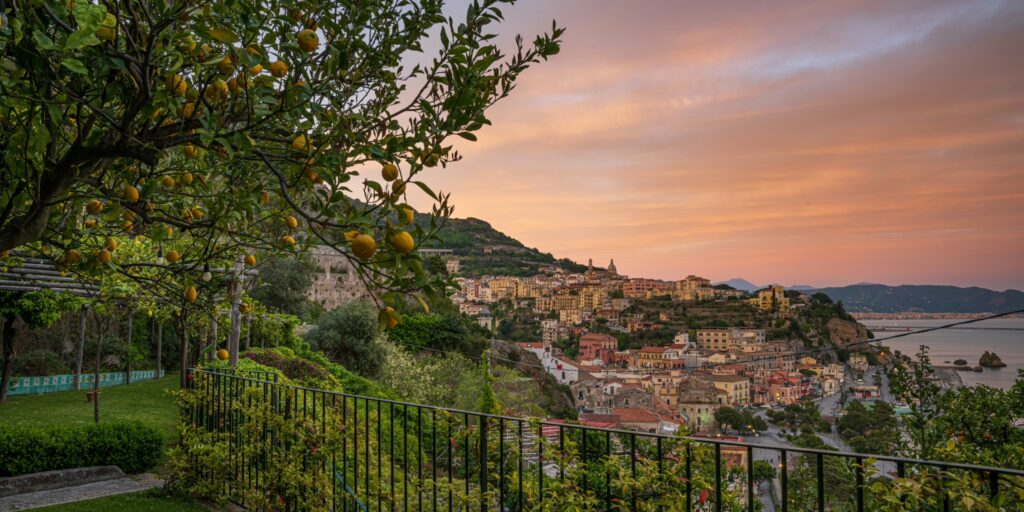
The gardens have more than a century behind them, a sequence of terraces and scented walkways with olive trees for shade, lemon trees, herb beds and roses that climb over the colonnade leading to the highest point of the property. The infinity pool, built in 2005, appears suspended above the coast.
At the table
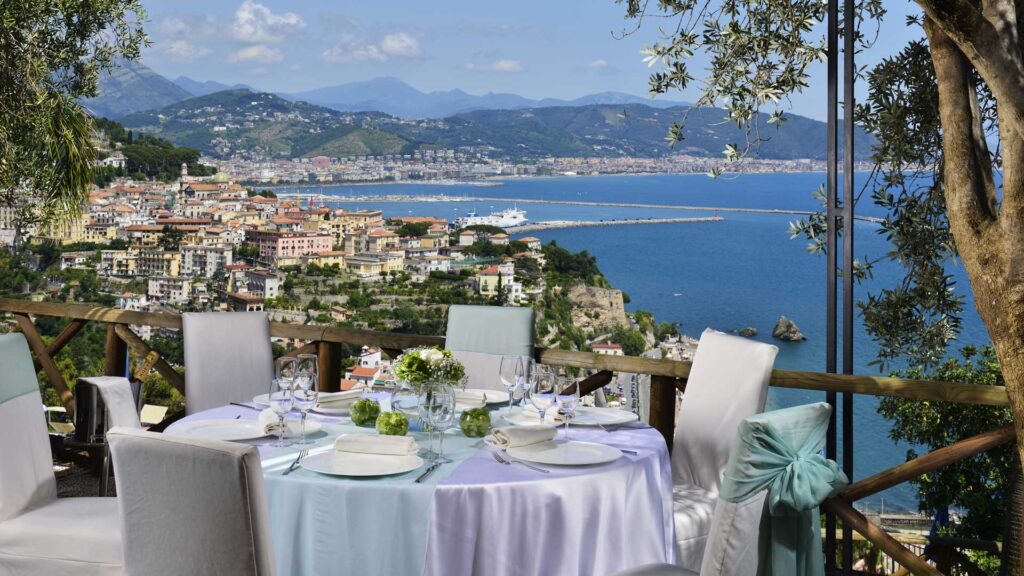
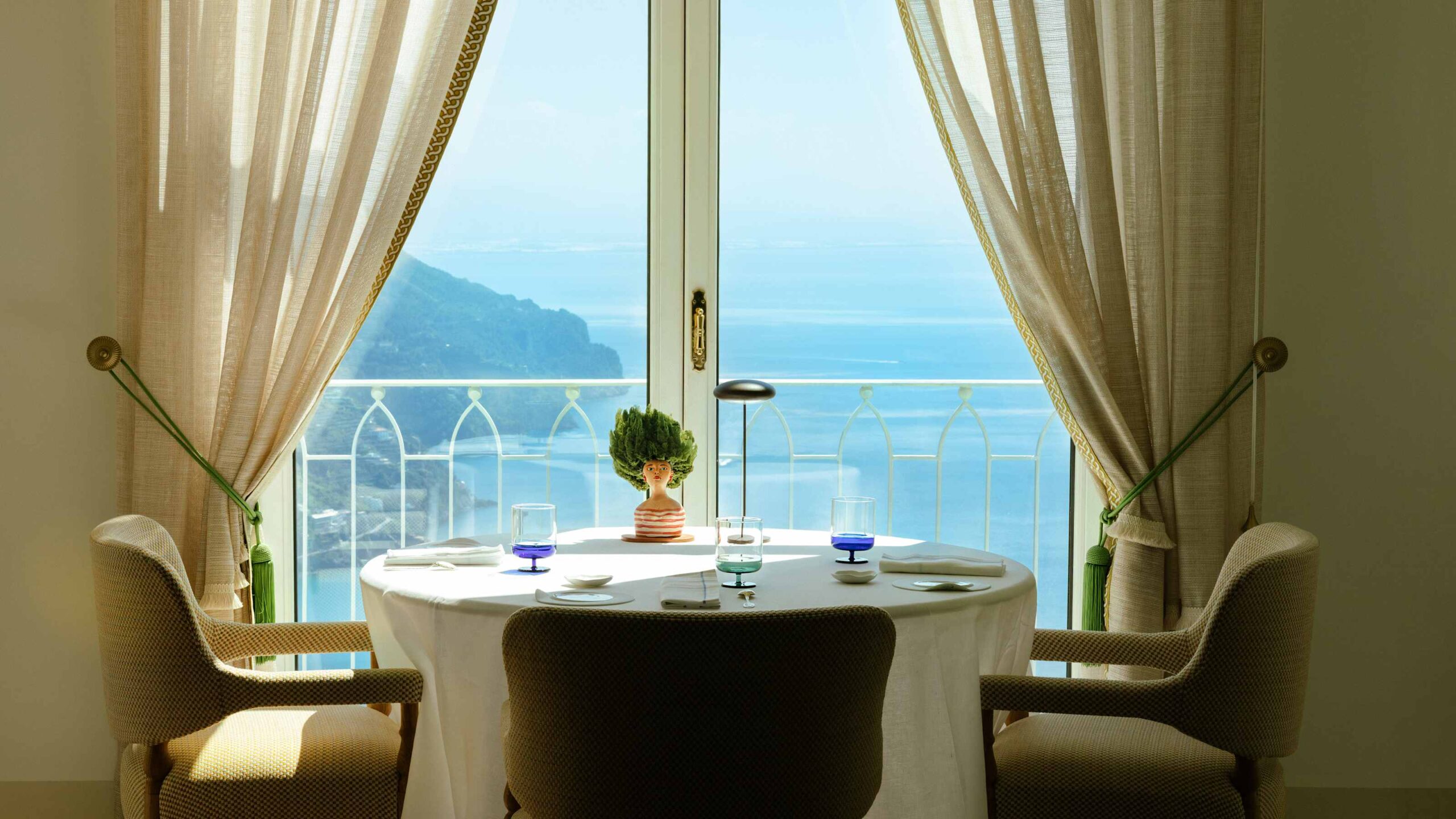
Dining is spread across three rooms. Il Pantaleone is the hotel’s restaurant, led by Chef Armando Aristarco and serving the cooking of Campania with views of the coastline. Caruso Grill serves wood fired dishes by the pool, and Adagio Bar sits among eighteenth century frescoes. The gardens feed the kitchens too, with lemon trees and herb beds that supply fresh mint, thyme, rosemary and bay.
Staying in the palace
The 50 rooms and suites occupy the corners and levels of the old building and its hillside garden. Double rooms follow the classic Neapolitan style, each with its own design, and junior suites have balconies or terraces facing the sea. Suites of 50 to 65 square metres sleep up to four and have a terrace and dining area, and the Signature Suites of 90 to 95 square metres have ocean views and private gardens. Two suites can be joined to make a two bedroom suite. Guests can also use Villa Margherita, a signature villa the hotel makes available alongside its suites.
The spa has signature treatments, a wellness centre and an open air gym, and sunrise yoga is offered on the pool terrace.
Beyond the hotel
Amalfi is a 17 minute drive and Positano about an hour. Experiences include the Path of the Gods, a hiking route high above the coast, along with excursions to Pompeii and Mount Vesuvius, a lemon tour and winery visits, a day trip to Paestum and the Vannulo farm, and Capri, which is suggested to honeymooners.
Planning your wedding
Naples Airport is 65 km away, a drive of about an hour and a quarter. Wedding pricing is given on request through the hotel’s events team, and a brochure can be downloaded. Couples planning a legal ceremony, whether in the Duomo or elsewhere, should confirm with the hotel how the paperwork is handled, and ask which of the outdoor venues is available for the season they have in mind.
Some questions are best settled early. Couples should ask which outdoor venue suits the size of their party, whether the whole hotel is available for their dates, and how guests will move between the Duomo, the gardens and the pool terrace. The hotel’s team can set out the arrangements once it knows the date and the numbers.
A palace with a past
Caruso suits couples who want a wedding with real history behind it, guests who will enjoy being in a place with frescoes and a founder’s story, and parties of up to 150 who want the garden terraces and pool to themselves. Few weddings begin with a shipwreck, and fewer still have a palace to show for it.
See the Caruso profile, read the Caruso issue of the magazine or browse wedding venues in Italy. When you are ready, Check your date.