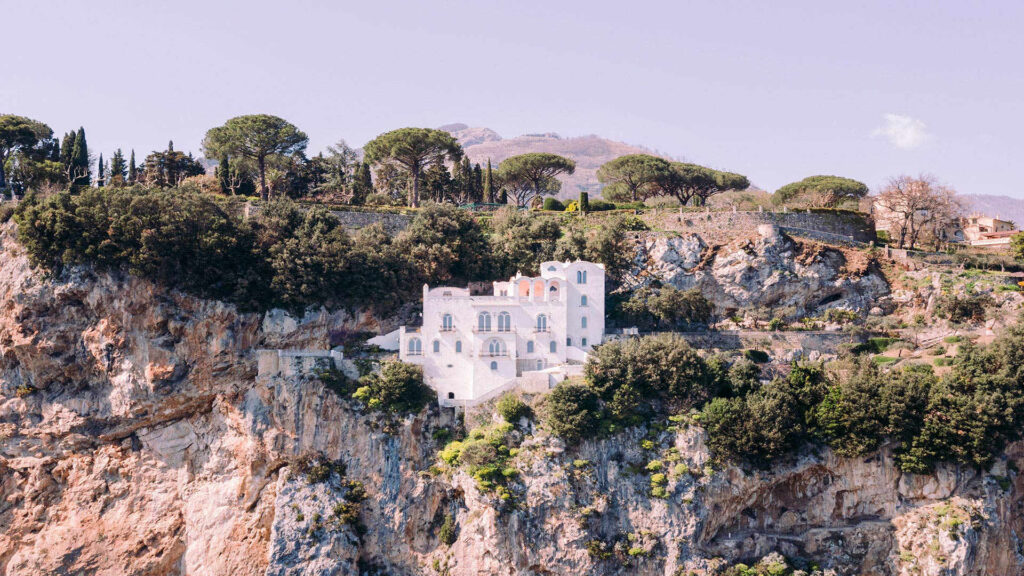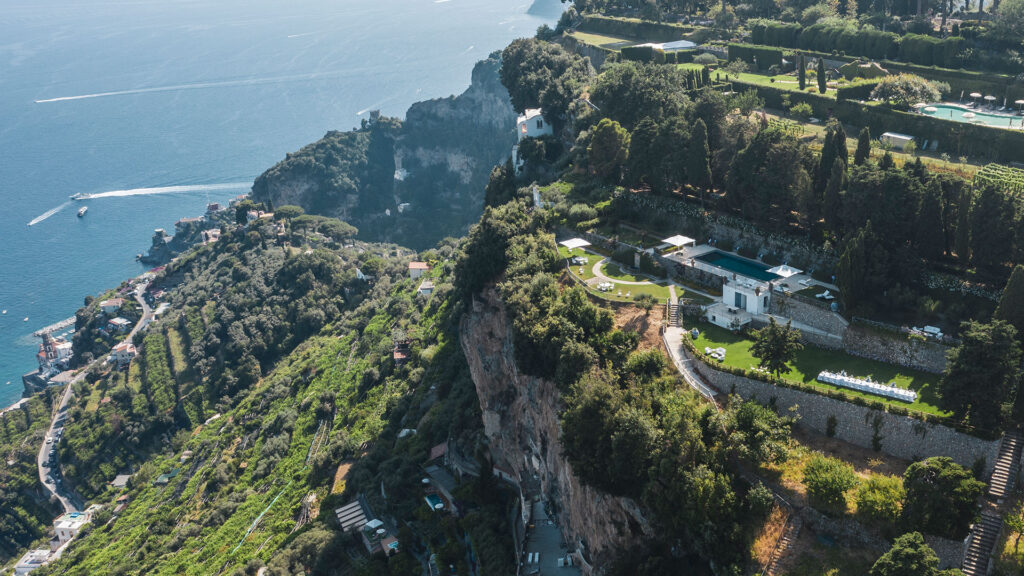
In 1904 an Englishman bought a neglected villa on a rocky outcrop above Ravello and set about rebuilding it with a builder he had met at home. Ernest William Beckett, later Lord Grimthorpe, brought Nicola Mansi, a tailor, barber and builder from Ravello who had found his way to England, back to the town to restore the house and lay out the gardens along the cliff. What they made is the villa that stands today, and the reason it still draws visitors well beyond the people who stay in it.
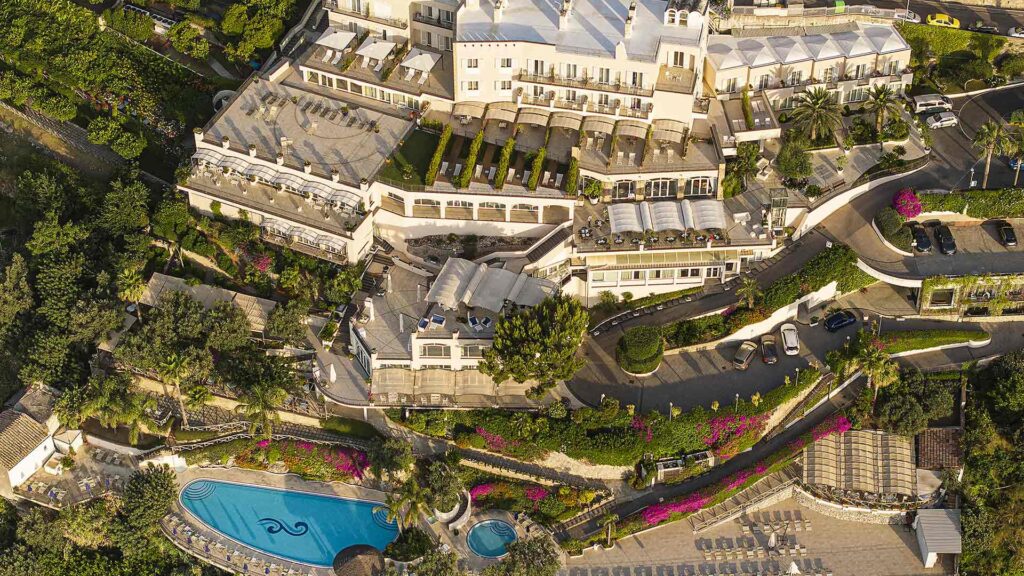
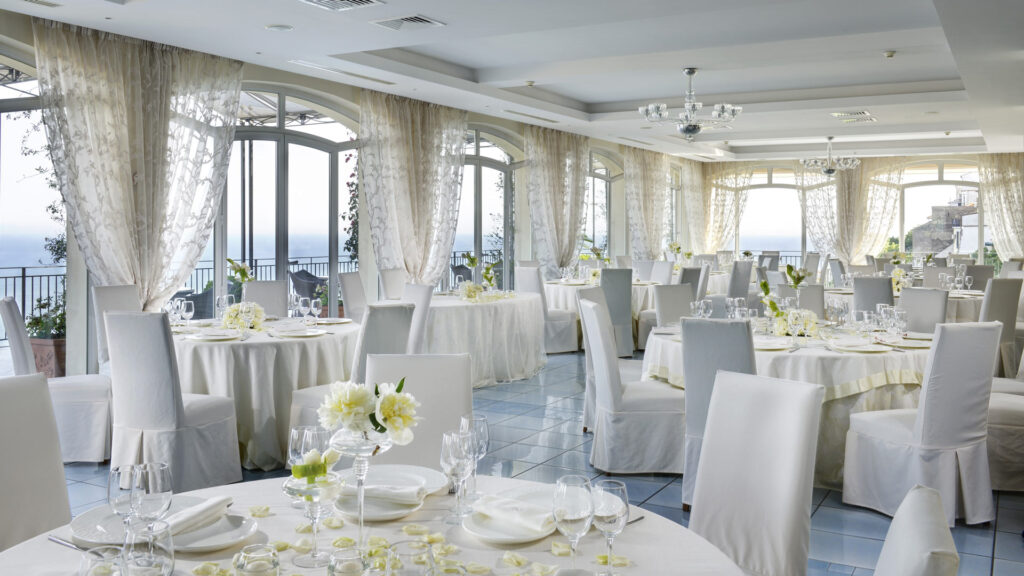
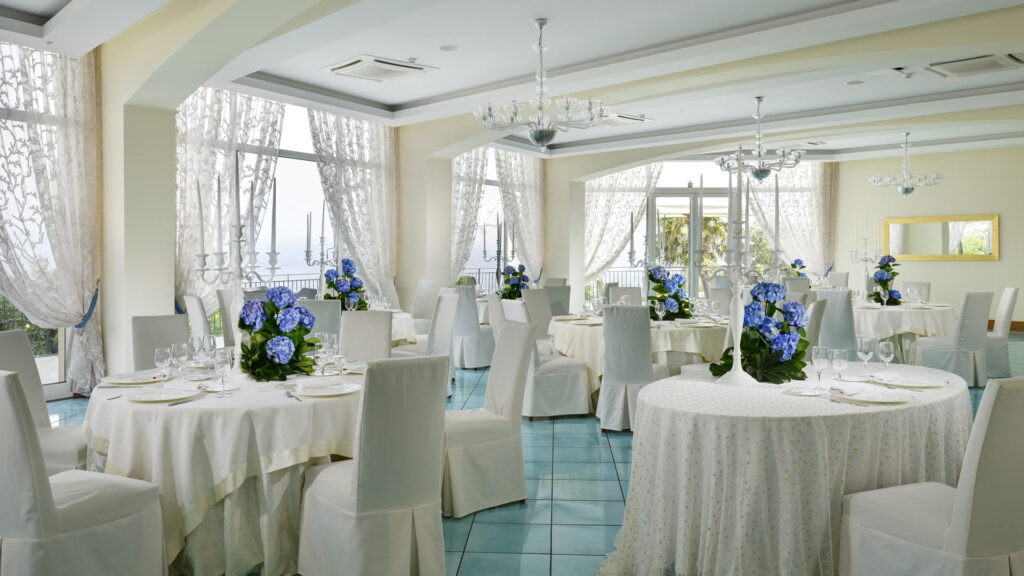
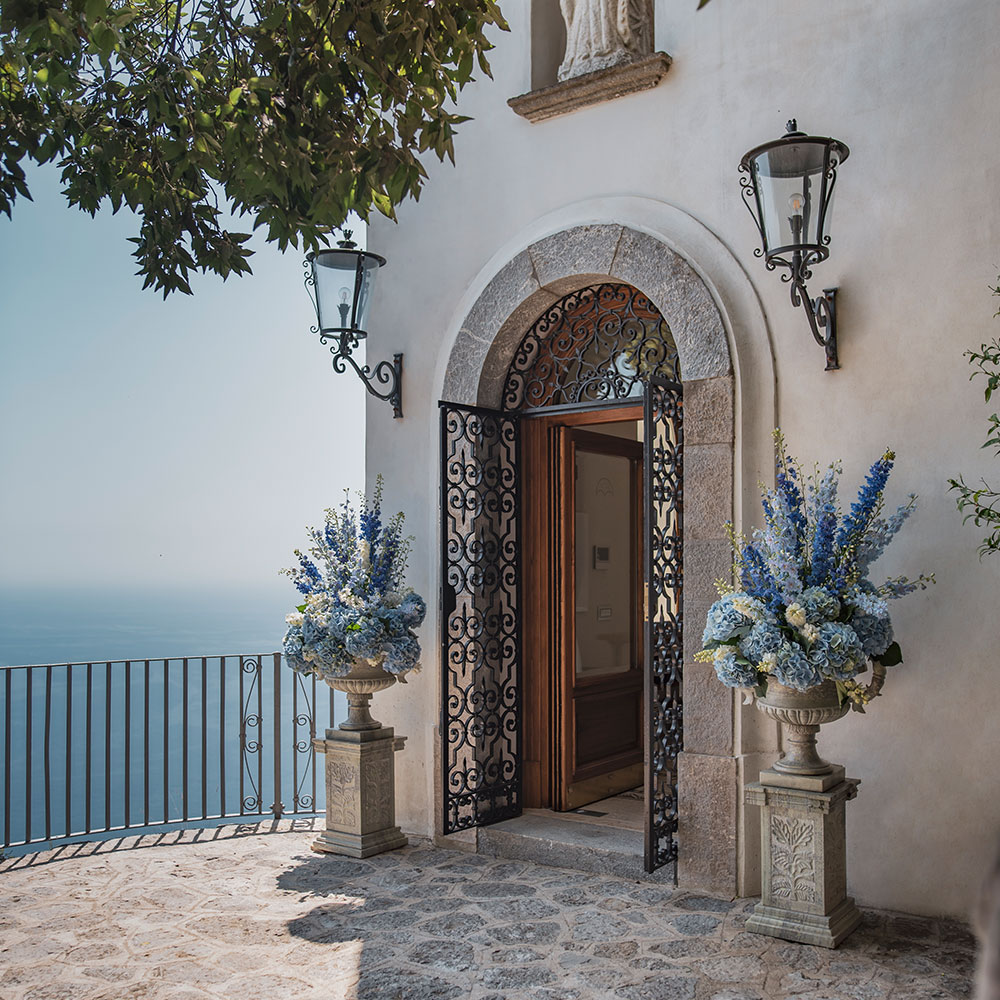
Villa Cimbrone is now a hotel, and its gardens form the setting for weddings.

A villa built from borrowed styles
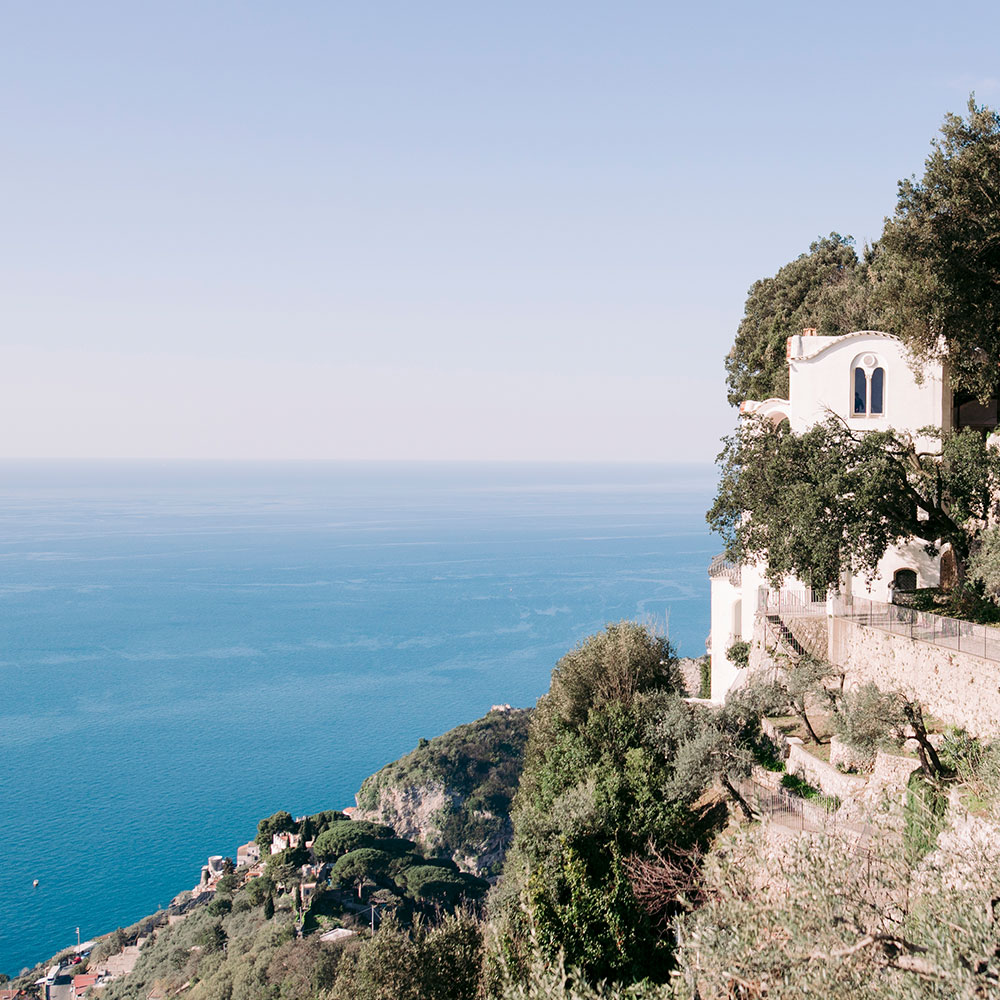
The site is old. The earliest references to the villa date from the eleventh century, to a rocky outcrop called Cimbronium. The estate later became part of the monastery of Santa Chiara, and the papal arms of Cardinal Della Rovere were set above the old entrance gate. By the second half of the nineteenth century it belonged to the Amici family of Atrani.
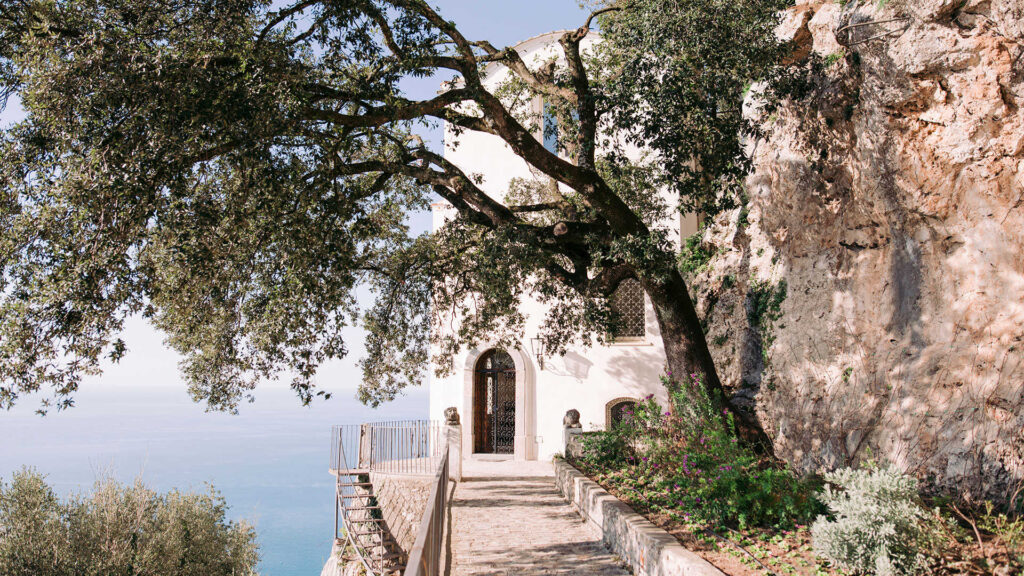
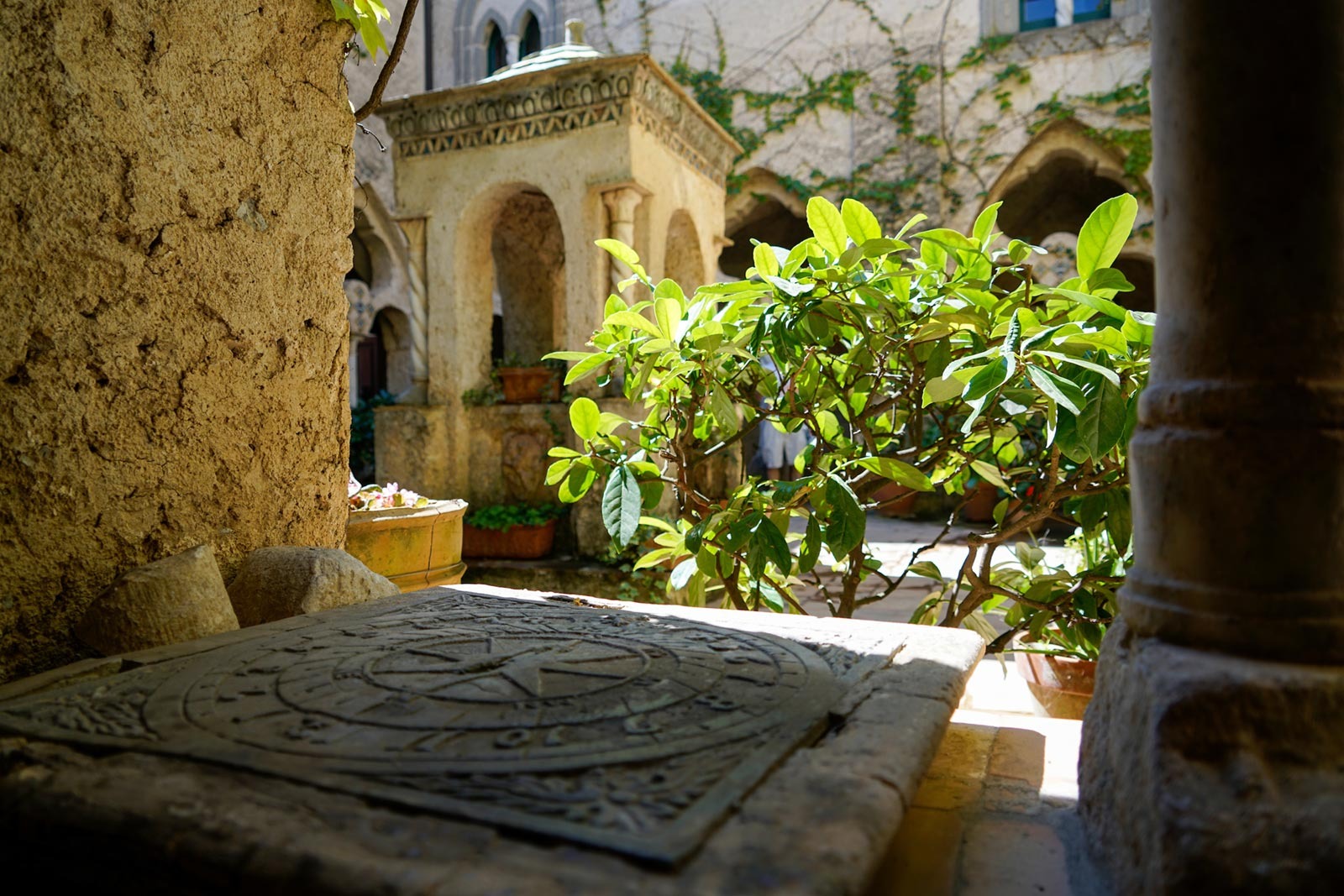
Beckett and Mansi added to it in a mixture of styles. The new work combined mock Gothic, Moorish and Venetian forms, with battlements, terraces and a cloister, and much of the villa is assembled from architectural pieces gathered from elsewhere in Italy and beyond. Little of the original structure remains visible.
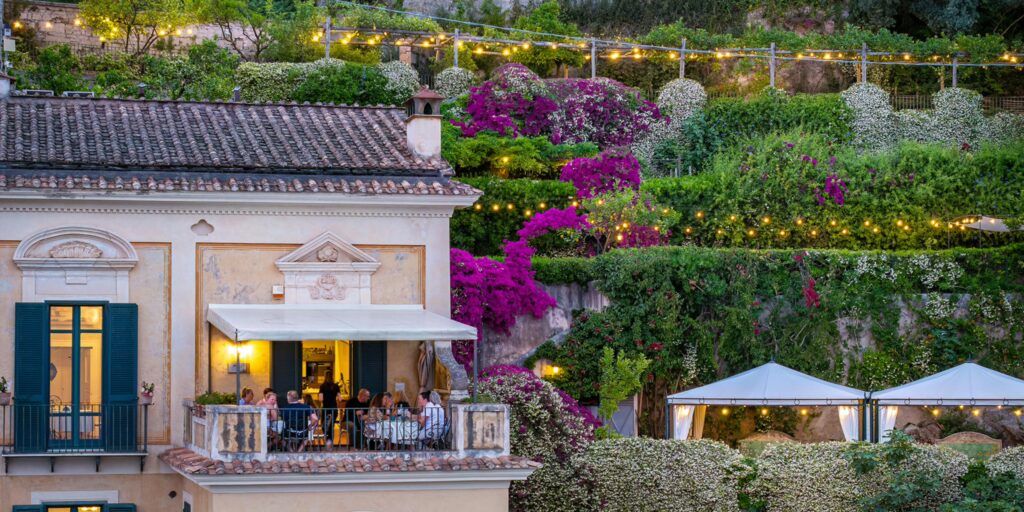
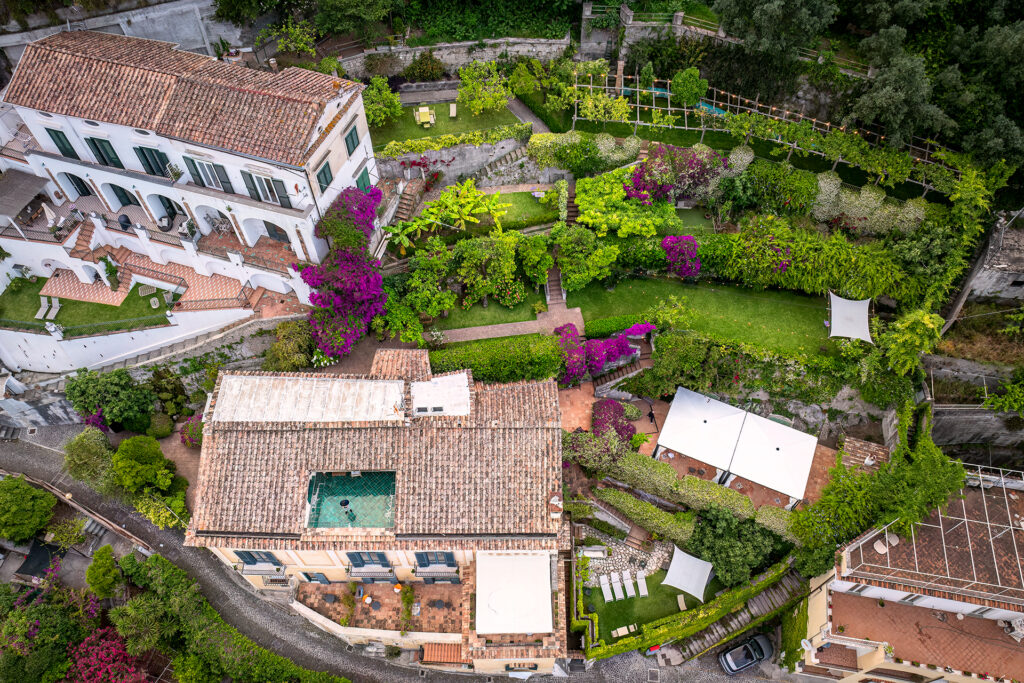
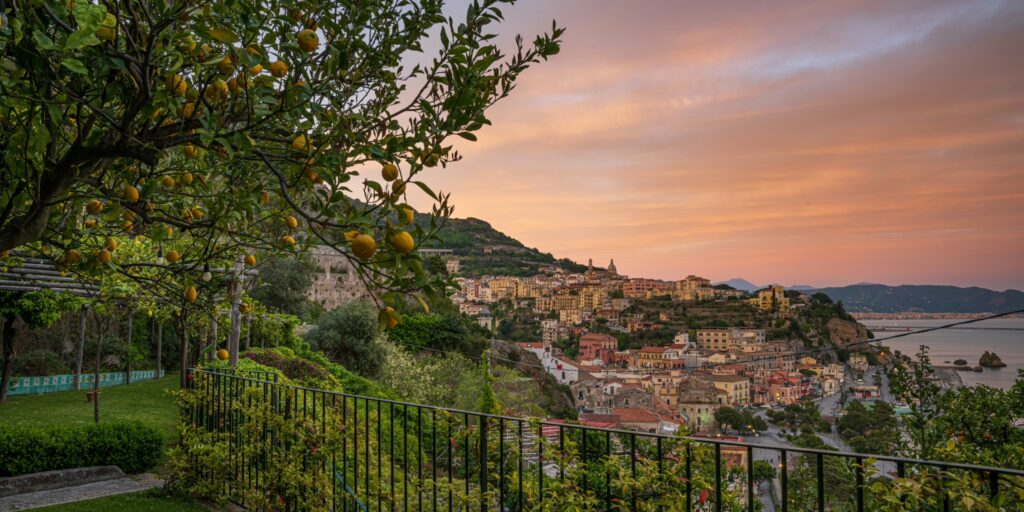
The gardens were redeveloped at the same time, strung out along the cliff face, and they are described as a meeting of the classical Italian garden with the natural character of the English one. They cover more than eight hectares, and they are open to visitors every day.
The Terrace of Infinity
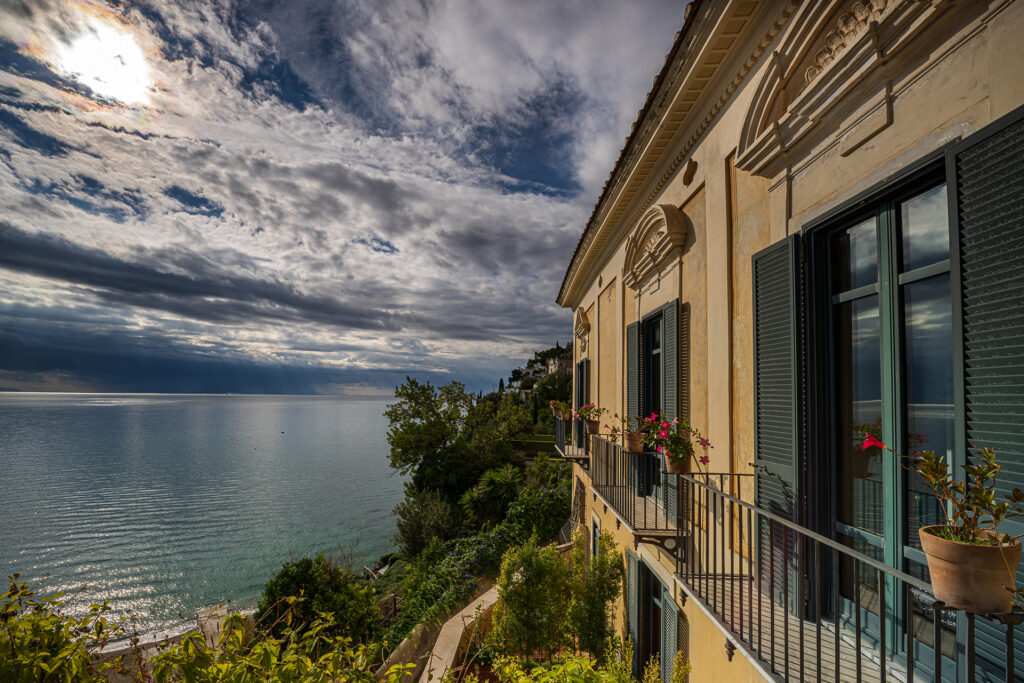
The central feature of the gardens is the belvedere called the Terrace of Infinity, a line of classical marble statues overlooking the Gulf of Salerno. The German historian Ferdinand Gregorovius visited in the nineteenth century, before Beckett’s time, and described the villa rising from roses and oleanders on a plateau from which the gaze reaches the sea. He found the marble statues less appealing at close quarters than from a distance.
The view has outlasted its critics. In 1976 the writer Gore Vidal, who lived for years at a nearby house, called it one of the most beautiful he had seen. The writer and film director Pier Paolo Pasolini, sitting among the columns above the drop to the sea, wrote of such peace there that he could not tear himself away, and compared himself to D. H. Lawrence, who he said would also have wished to die of too much peace. A bar, Il Balcone di Lucille, sits just below the terrace.
Who came to stay
The villa became a meeting place for English visitors on the Amalfi Coast. The Bloomsbury Group stayed, among them Virginia and Leonard Woolf, E. M. Forster, John Maynard Keynes and Lytton Strachey, and D. H. Lawrence, T. S. Eliot, Winston Churchill and the psychologist Jean Piaget are also recorded as visitors. In the late 1930s Greta Garbo and the conductor Leopold Stokowski stayed several times, and a plaque marks a visit in 1938. The villa appeared in John Huston’s film Beat the Devil in 1953 and, briefly, in Christopher Nolan’s Tenet in 2020.
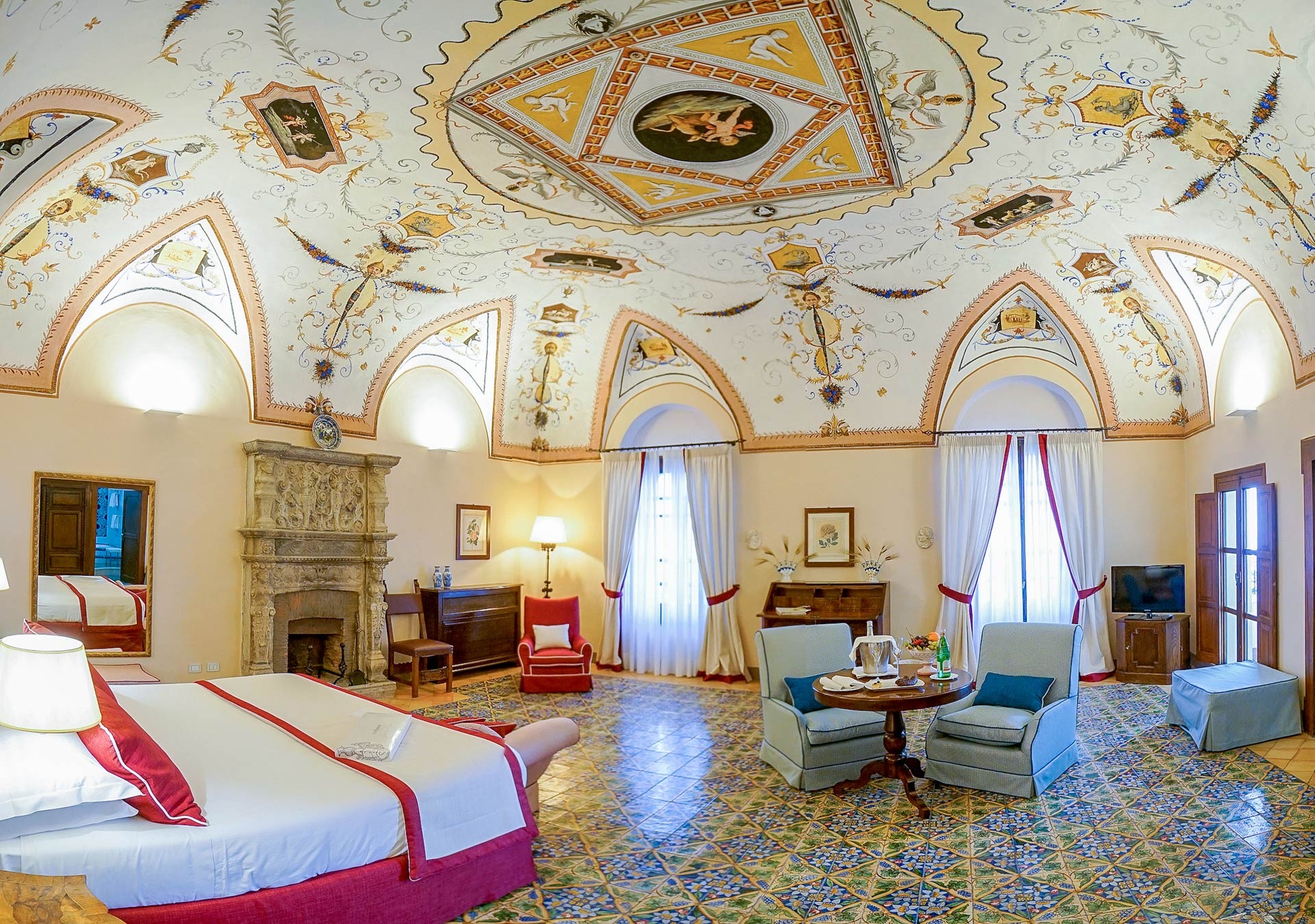
Beckett died in London in 1917 and was buried at the foot of the Temple of Bacchus in the gardens. His daughter Lucy, who lived at the villa and bred roses, is linked to the Rose of Ravello in the 1930s. The hotel names two suites after this history, the Ernest William Beckett Suite, with frescoed ceilings and stone fireplaces, and the Greta Garbo Suite, a bright, romantic suite with vaulted ceilings and a separate living room.
A hotel kept by one family
The hotel’s own account is a family story, and it starts before the villa. The Vuilleumier family’s hospitality dates from 1874, when Pasquale Palumbo, the head of the family on his mother’s side, was hired by Francis Nevil Reid, a Scotsman who loved Ravello. Reid’s family had bought the Villa Episcopio, once the Bishops’ Palace, and the Rufolo Palace, and in 1874 he turned the Episcopio into the first real hotel in Ravello. Its guests were mostly British travellers on the Grand Tour, drawn by the beauty and history of the Amalfi Coast. In 1870 Palumbo had also started the first commercial production of wine in the town.
In the 1960s Marco Vuilleumier, from the third generation of the hotelier family, was hired as curator of Villa Cimbrone, then the residence of the Beckett heir. In the 1990s the running of the business passed to Marco’s sons and daughters, and today the fifth generation works alongside them. The villa still keeps the refined atmosphere Lord Grimthorpe set out in the early 1900s, and later restorations by the family have respected its original architectural and design elements.
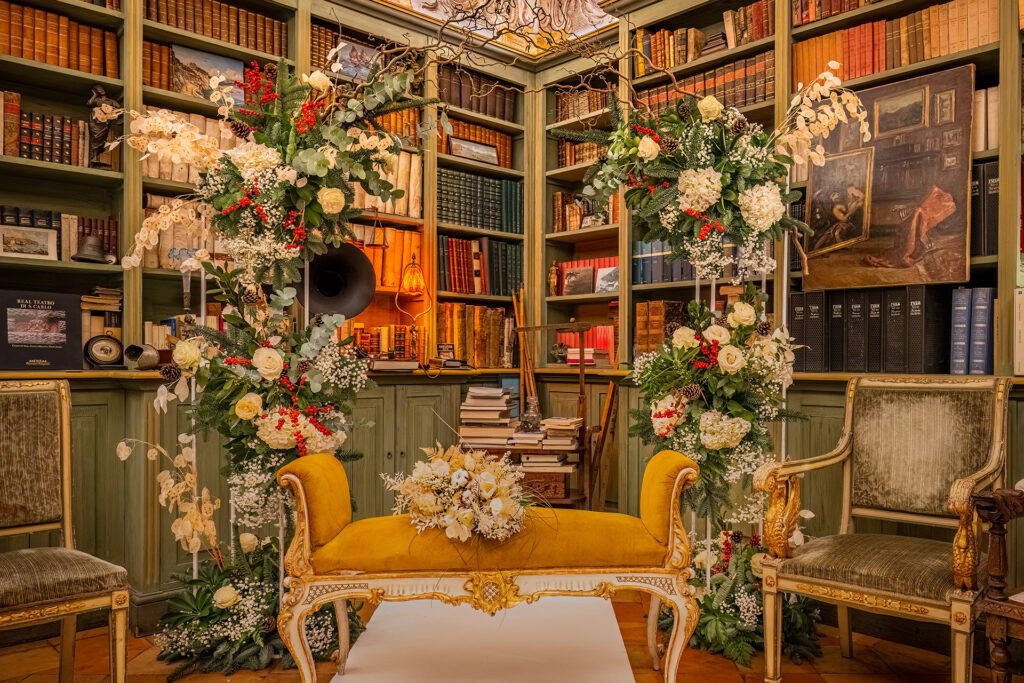
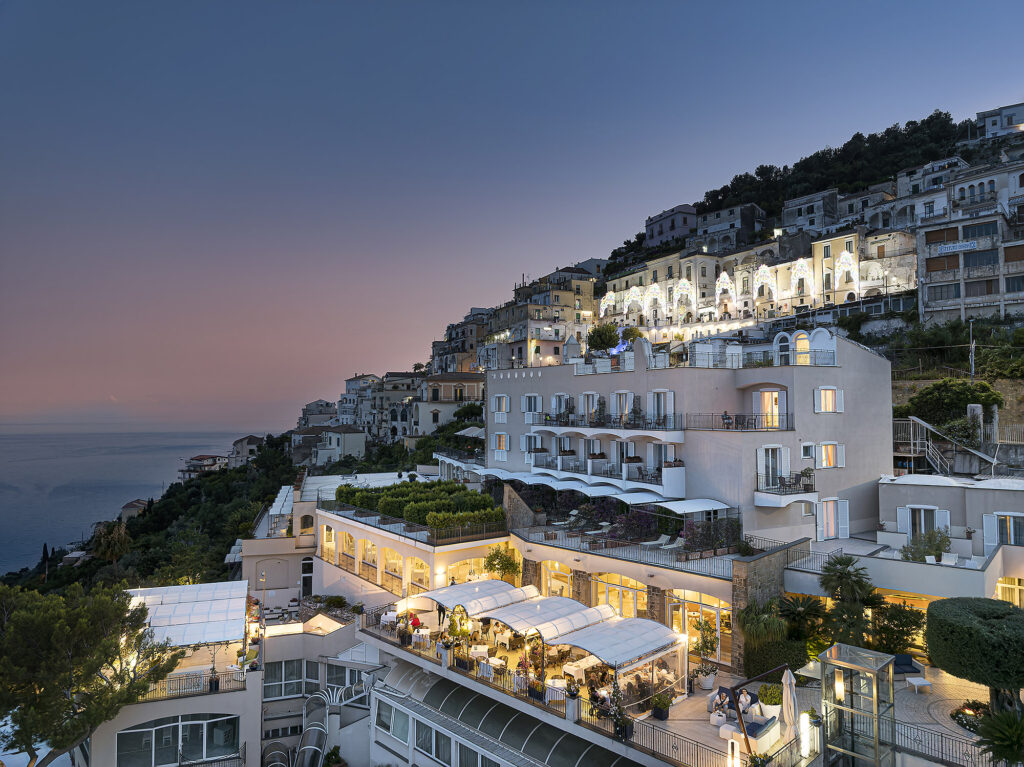
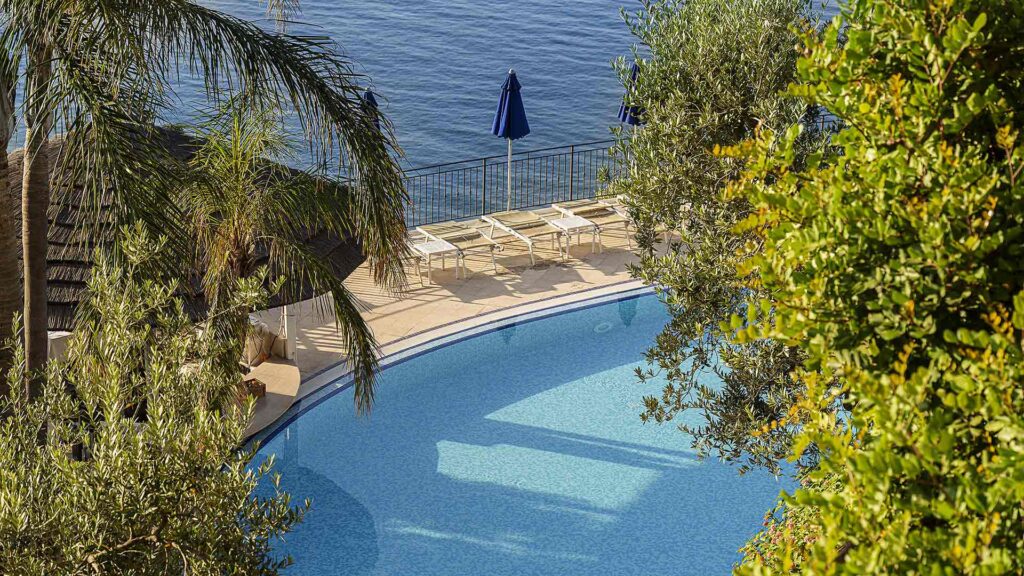
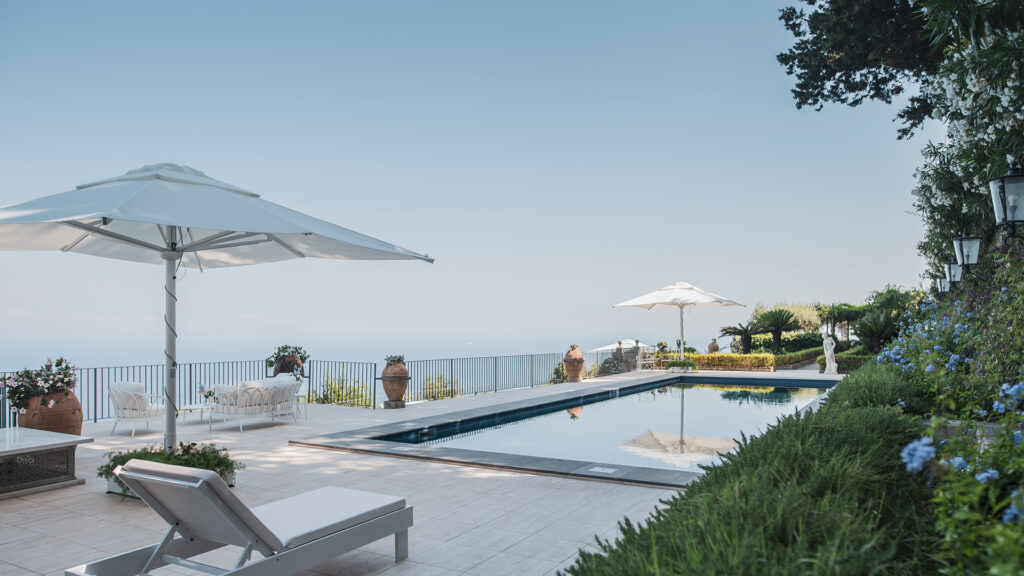
The rooms keep the character of the house. Classic rooms have antique Vietri majolica floors, and many rooms and suites have frescoed ceilings, stone fireplaces and majolica floors from the late nineteenth century, with views of the sea or the gardens. The range runs from classic, superior and deluxe rooms to studio suites and suites. Superior rooms have fine furnishings and a small panoramic terrace or large windows, deluxe rooms are spacious and bright with large windows or a terrace facing the sea, and studio suites have antique decorations, a terrace and large windows or balconies. Outside there is a curving pool in the gardens, shaded by an avocado tree, with a solarium, and the hotel has its own private helipad.
A wedding in the gardens
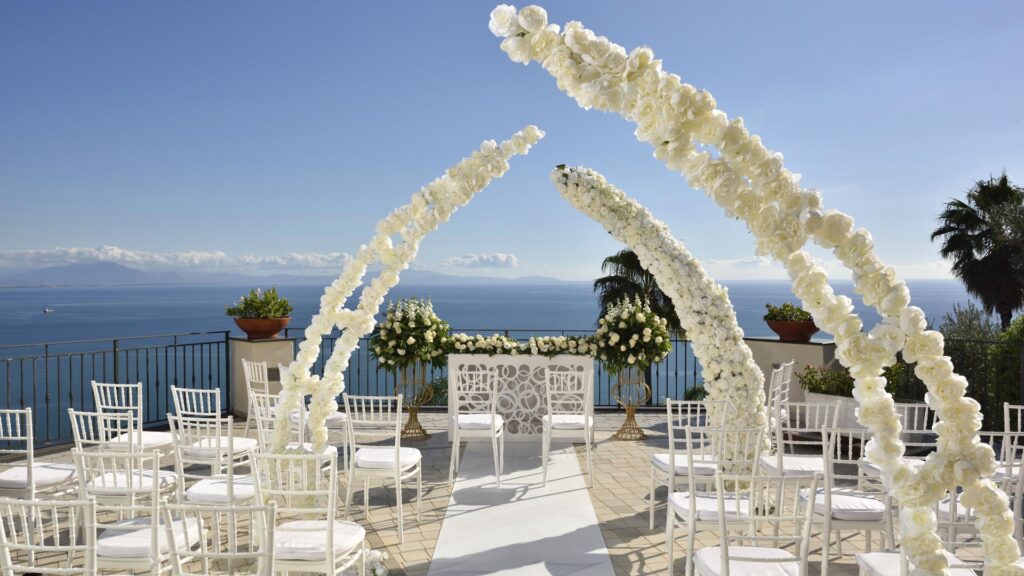
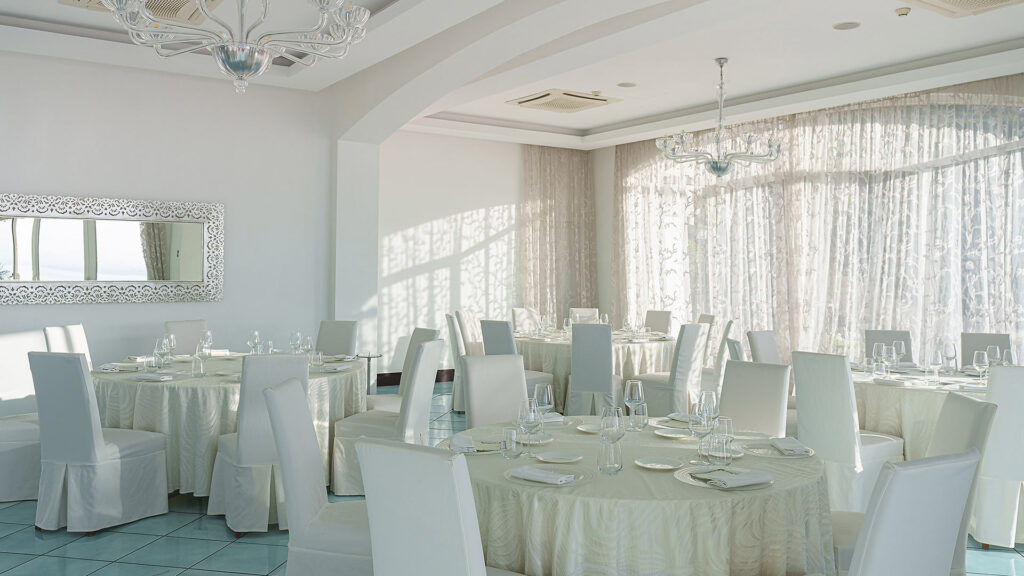
The gardens and the rooms of the villa are the backdrop for weddings, galas and other events. The events team helps couples choose suppliers and assists on the day, including pairing dishes and wines. The services on offer include customised event planning, beauty services, entertainment and babysitting, audiovisual systems, filming and photography, a hostess service, security, an interpreter and the private helipad. The hotel has also made a wedding film, which gives a sense of how the terraces and the lawns above the sea are used.
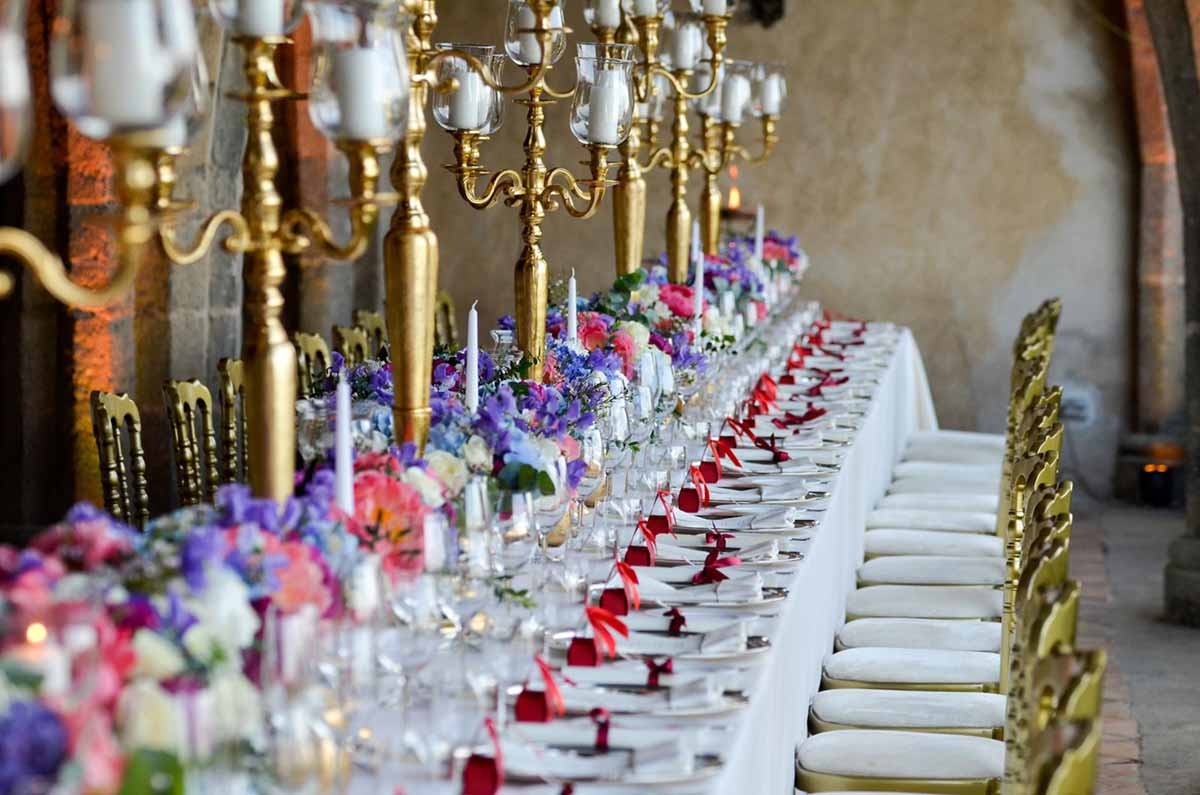
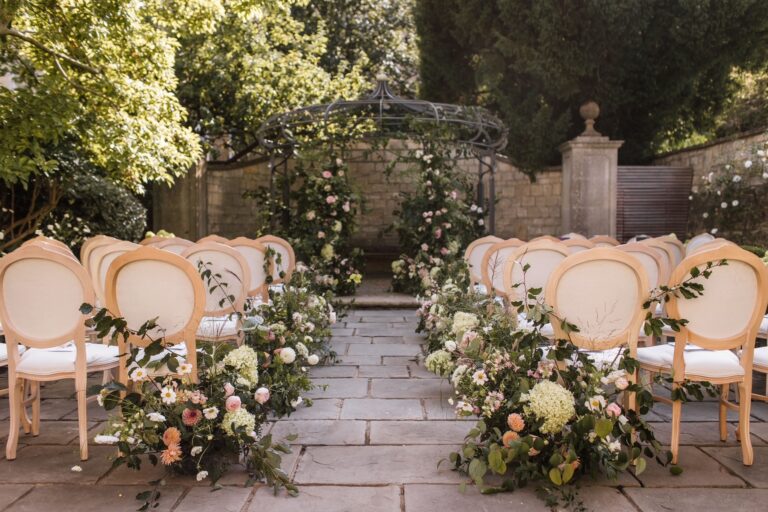
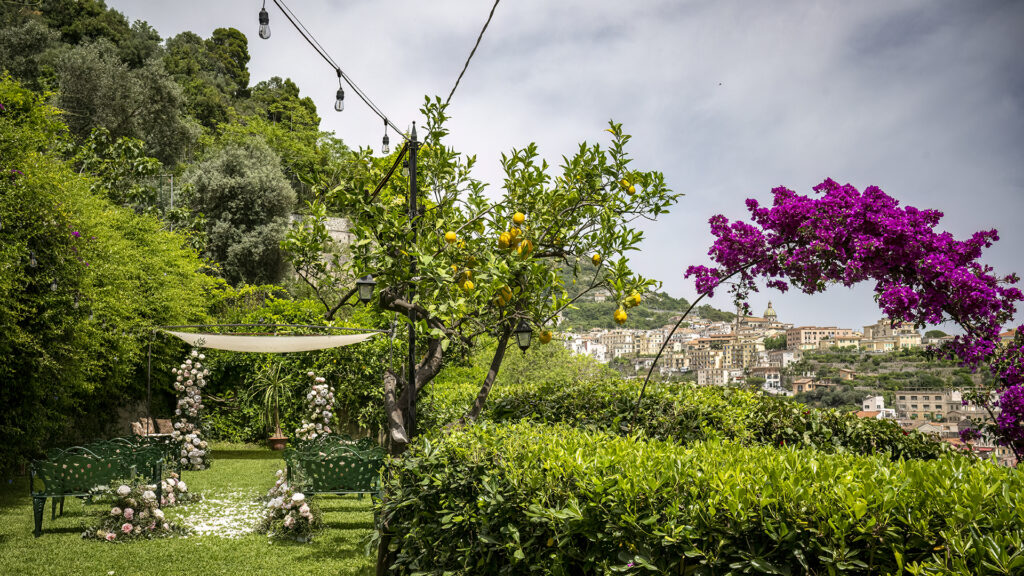
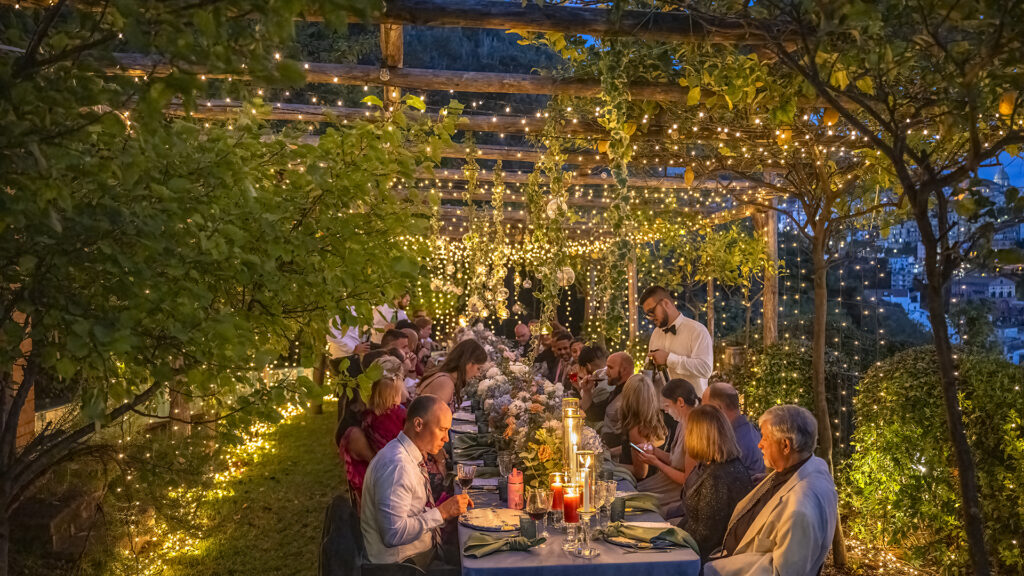
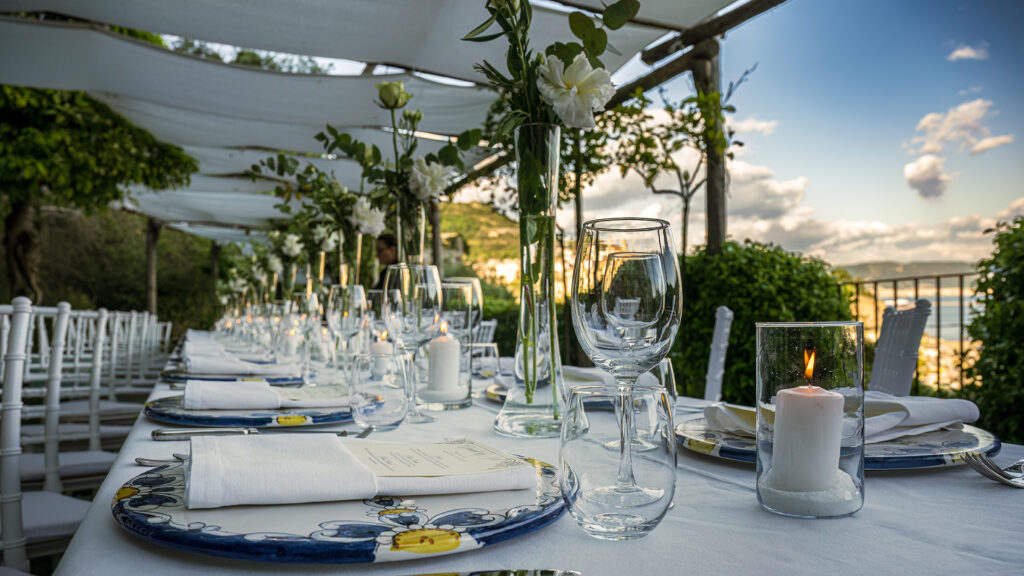
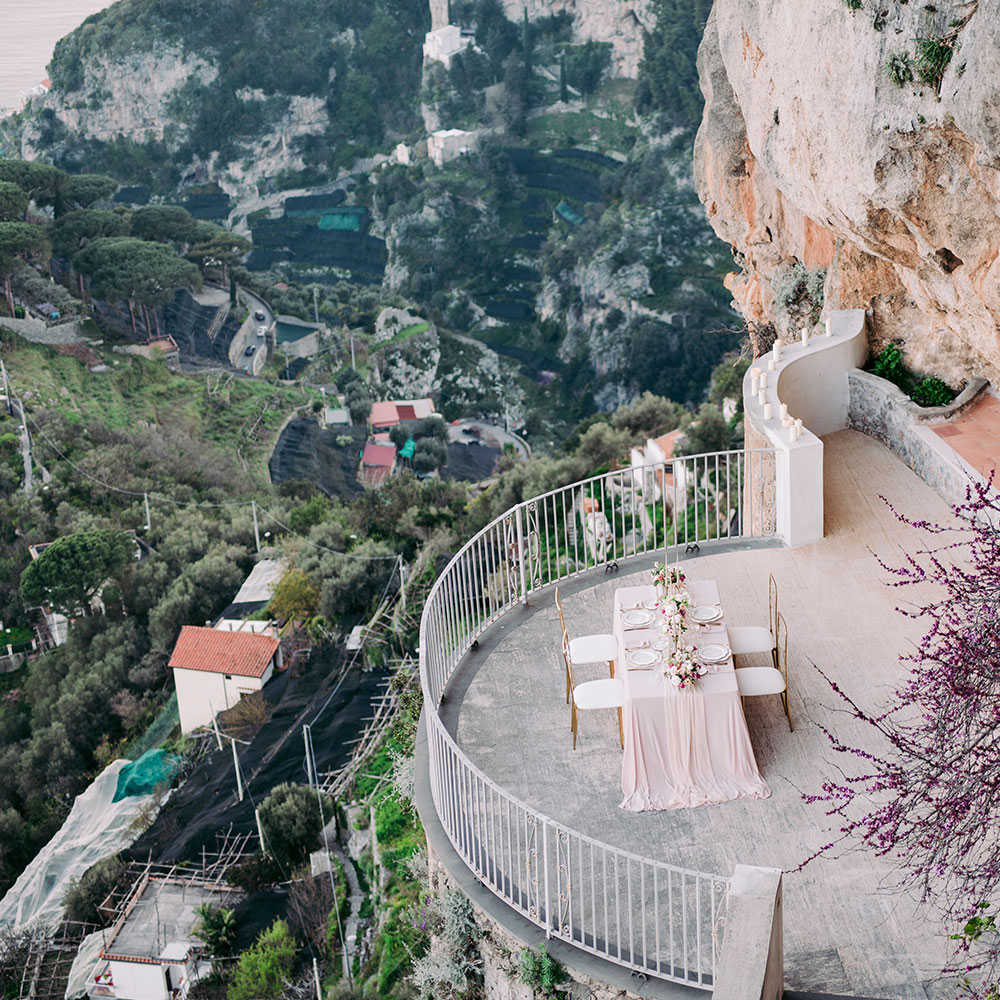
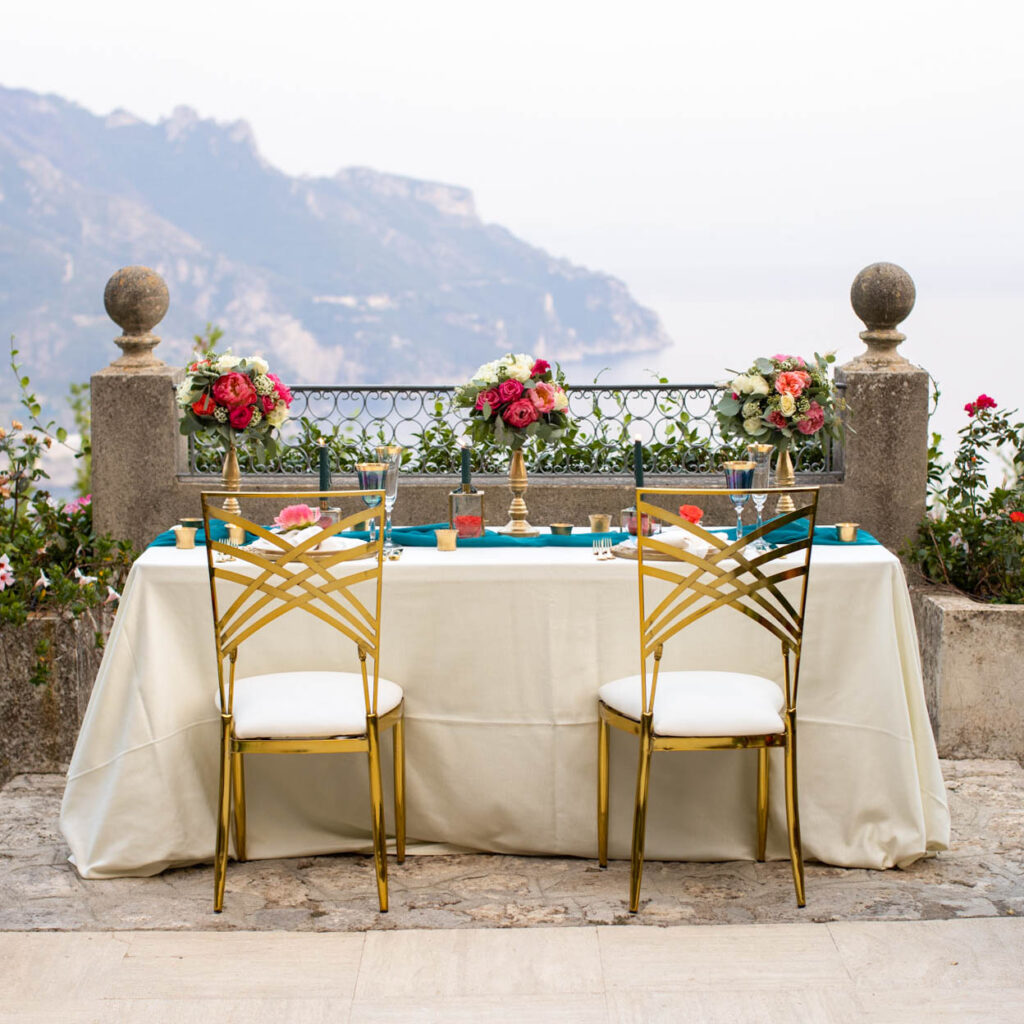
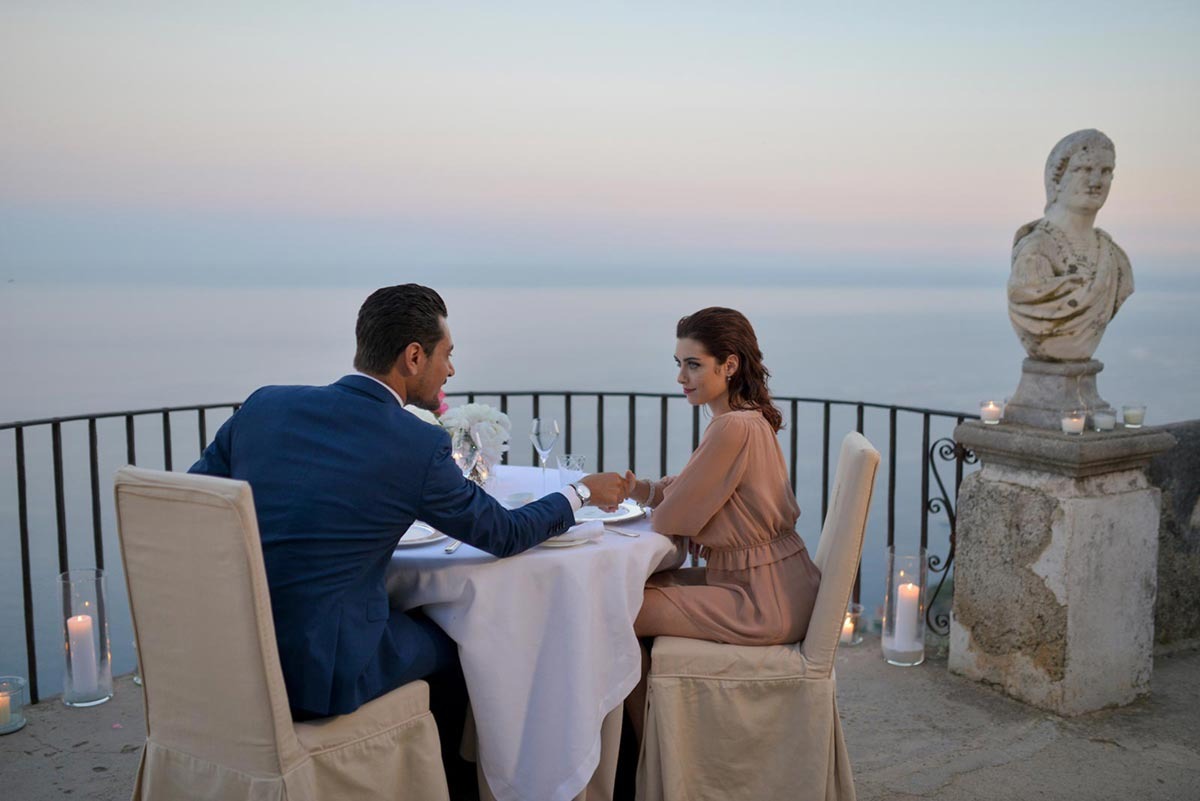
The hotel’s photographs show how the setting is used: a long banquet table under a canopy of wisteria, tables on the lawn under strings of lanterns facing the sea, a flowered arch and aisle above the water, and a candlelit table for two on the belvedere terrace. Which of these arrangements is possible depends on the date and the size of the party, so it is worth asking the events team.
At the table
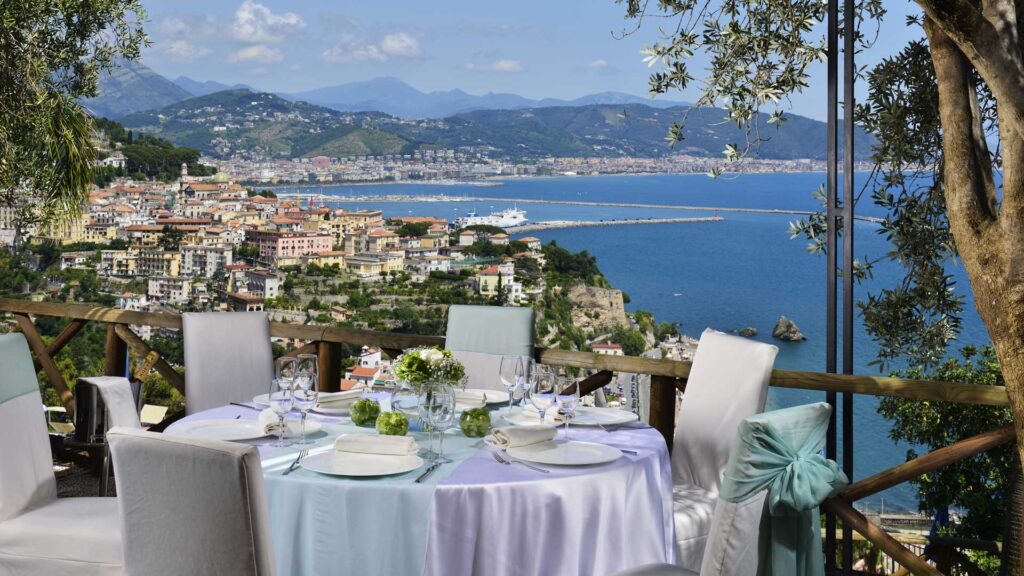
The old stone vaulted cellar, restored to hold the hotel’s wine collection, includes a room for red wines guided by a sommelier. Il Flauto di Pan is the hotel’s restaurant and is listed in the Michelin Guide. It serves Italian cooking with ingredients from the villa’s organic gardens. Restaurant Mediterraneo and the V Lounge Bar complete the dining, and Il Balcone di Lucille serves drinks below the Terrace of Infinity.

Around Ravello
Ravello was founded in the sixth century and has a cathedral from the twelfth, and the villa stands beside Villa Rufolo, where a summer music festival is held on the terrace and whose garden is said to have inspired Wagner’s Parsifal. The town is smaller and quieter than Positano, Amalfi or Sorrento, and the walk from the gates to its square is short.
The hotel suggests itineraries that take guests down to Amalfi and Positano, along the Path of the Gods, across to Capri and out to Pompeii, and Ravello itself is a short walk from the gates. For a wedding party staying several days, the villa works as a base from which each of these can be a day out.
Planning your wedding
The hotel gives no guest numbers for weddings, so couples should ask which part of the gardens suits their party and how many guests it holds. Pricing is available on request through the events team. Anyone who wants a legally recognised ceremony should ask the hotel how that is arranged, and it is worth asking how the terraces are used in poor weather.
Salerno and Naples are the nearest airports, and the private helipad offers another way to arrive. The gardens are open to day visitors, so couples who want to see the setting before they decide can walk through it.
A garden with a long guest list
Villa Cimbrone suits couples who care about gardens and about the story of the place where they marry, and who like the thought of marrying where Bloomsbury once stayed. It has been kept by one hotelier family since the 1960s. The practical questions are the numbers, the cost and the legal ceremony, and each is worth settling early.
See the Villa Cimbrone profile, read the Villa Cimbrone issue of the magazine or browse wedding venues in Italy. When you are ready, Check your date.