After a tour of Europe, King Alfonso XIII wanted a luxury hotel in Madrid fit for royalty. He commissioned it himself, helped to pay for it, and wanted César Ritz to oversee it, though Ritz was unable to take part because of depression. The Hotel Ritz opened on 2 October 1910 with the king in attendance, on the Plaza de la Lealtad beside the Prado Museum.
It is now the Mandarin Oriental Ritz, Madrid, and it offers a ballroom for up to 350 guests, a private garden and a terrace over the trees, with the Prado close by.

A hotel built for a king
The French architect Charles Mewès designed the Ritz in 1908, and the Spanish architect Luis de Landecho directed its construction between 1908 and 1910. The building was finished on 14 May 1910. It was one of the first in Madrid to use reinforced concrete, and politicians objected to it, arguing that its height broke the zoning rules, but it went ahead. The front is in the Art Nouveau style of the period, and the façade is a listed national monument.
The furnishings were commissioned from leading makers of the time: carpets from the Royal Tapestry Factory, linens from Irish companies, furniture from Lissarraga y Sobrinos, mirrors from Pereantón, Limoges china and English cutlery. The first manager, Antonio Mella, had worked at the Ritz hotels in Paris and London. The hotel introduced afternoon tea to Madrid and held Tuesday evening dances at which the foxtrot became fashionable.
A century of guests
Mata Hari stayed at the hotel under an assumed name in 1916 and 1917. Ernest Hemingway, Ava Gardner, Madonna, Haile Selassie and Randolph Hearst with Marion Davies were guests, and Grace Kelly and Prince Rainier III chose it for their honeymoon.
The twentieth century was not only glamour. In 1926 the Belgian Georges Marquet bought the hotel, and his family ran it for three generations. In 1936, during the Spanish Civil War, the building served as a military hospital, where the anarchist leader Buenaventura Durruti died, and it returned to use as a hotel in 1939, under Georges Marquet’s son. The 1970s were a period of decline, when dining in the garden stopped, and in 1978 Enrique Maso acquired it. Trusthouse Forte bought it in 1981 and invested in its renovation, and in 1999 Travel and Leisure named it among the top ten hotels in the world. Le Méridien completed a full restoration in 2001, and from 2003 Orient-Express Hotels, later Belmond, was a partner.
An unwritten rule
For years, in the Marquet era, the hotel was said to keep an unwritten admissions rule that barred certain visitors. The actor James Stewart was turned away at first, and was admitted only after he showed a military badge.
The hotel reborn
In 2015 Belmond sold its stake and the hotel became the Mandarin Oriental Ritz, Madrid. A full renovation followed, led by the architect Rafael de La-Hoz with the designers Gilles & Boissier, and the hotel reopened on 16 April 2021. It has 153 rooms and suites, 100 rooms and 53 suites, including a Royal Suite and a Presidential Suite overlooking the Prado.
The setting beside the Prado
The Plaza de la Lealtad sits in Madrid’s Retiro district, beside the Prado Museum, and the hotel’s windows look over the museum, the Neptune Fountain and its own private garden. Los Jerónimos el Real, the nearest Catholic church, is a ten minute walk away. The Prado is next door.
The rooms for a celebration
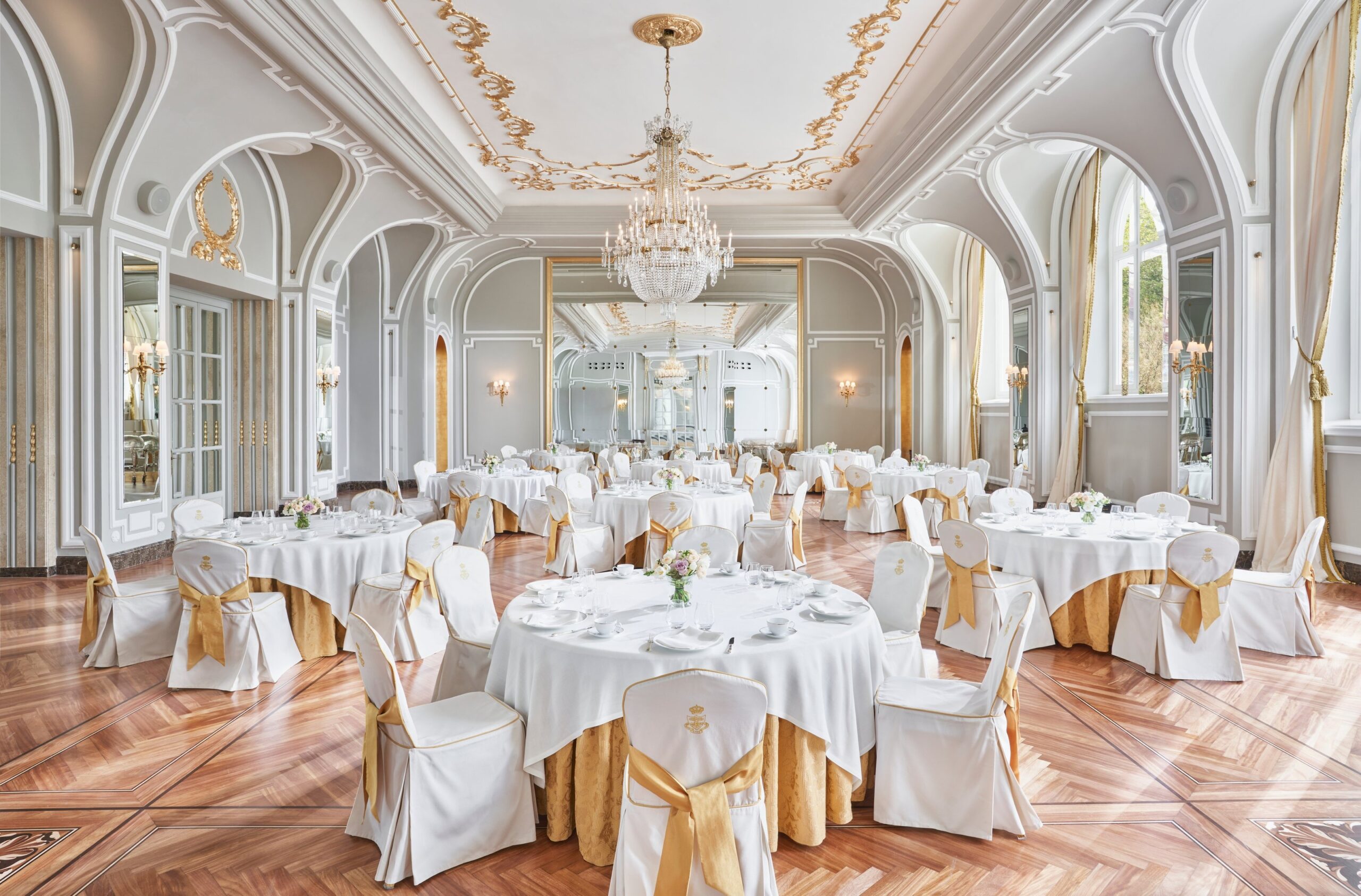
The Royal Ballroom is the principal room, with large high windows, a richly decorated ceiling and parquet floors, and a view over the Prado. It takes between 230 and 350 guests, depending on the layout. Salon Felipe IV, a restored salon flooded with natural light, takes between 90 and 160 for a banquet or a cocktail reception, and smaller rooms, including the Real Academia and the Countess Maslov room, suit gatherings of 10 to 40 guests.
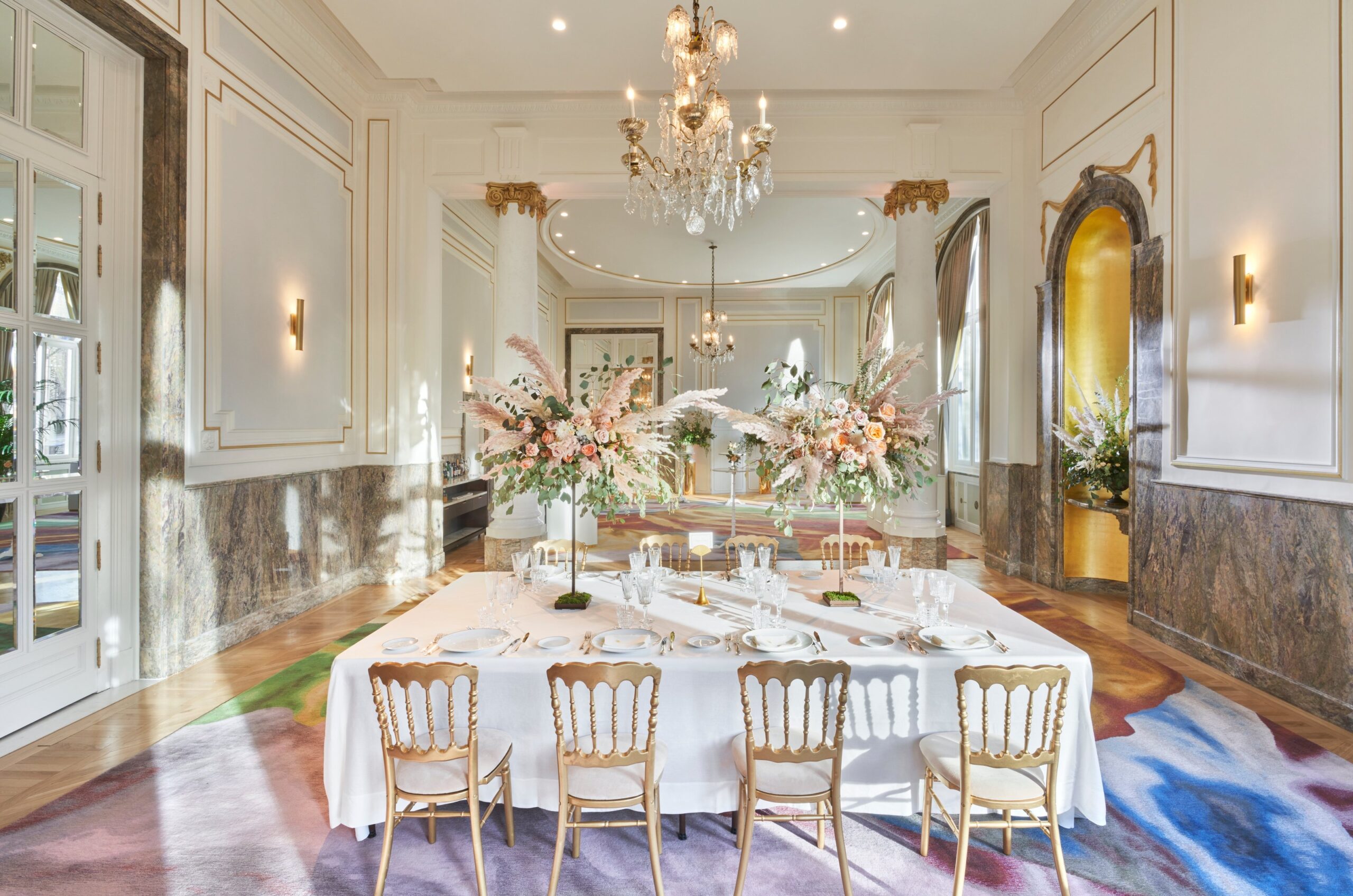
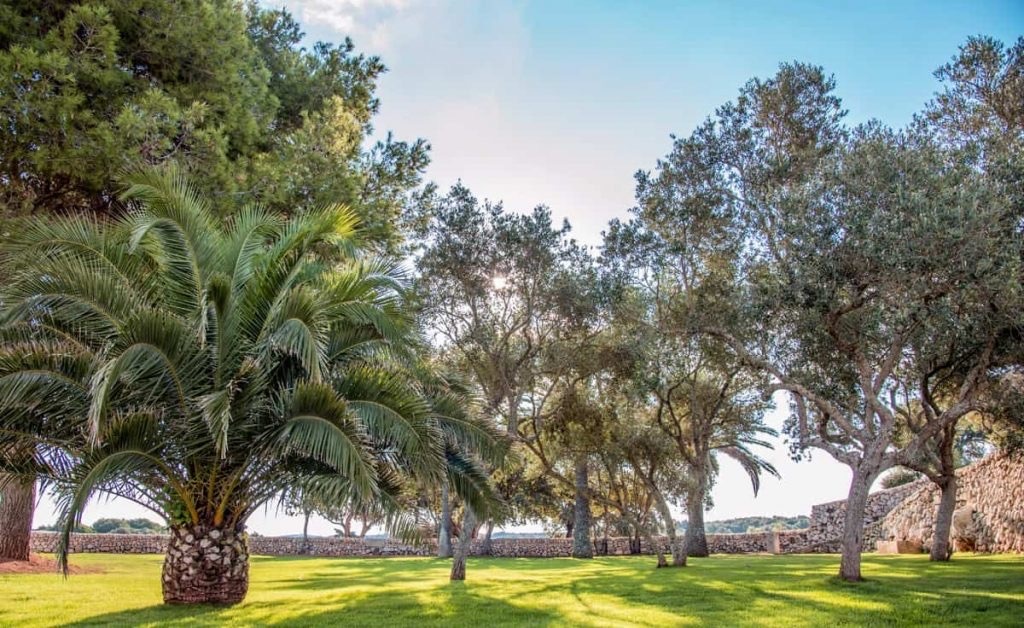
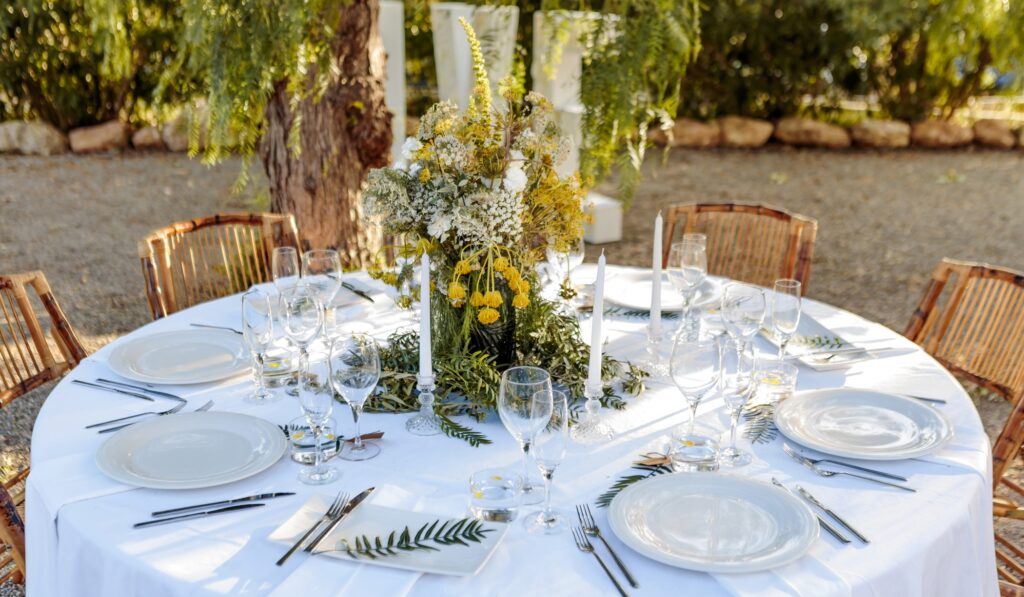
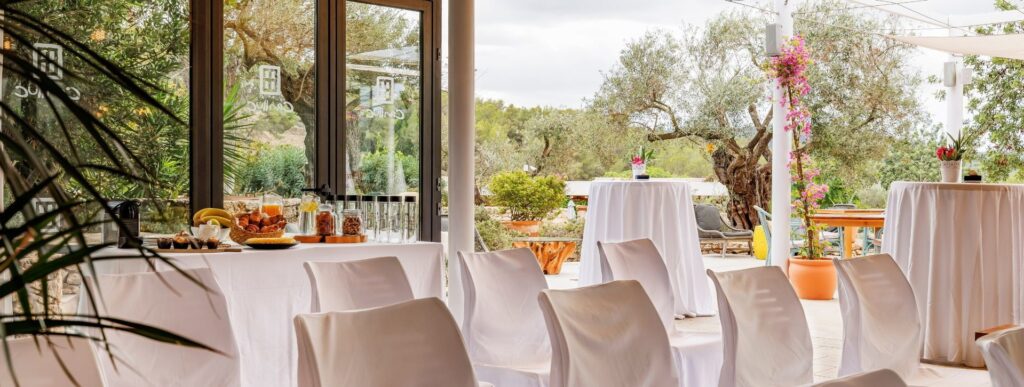
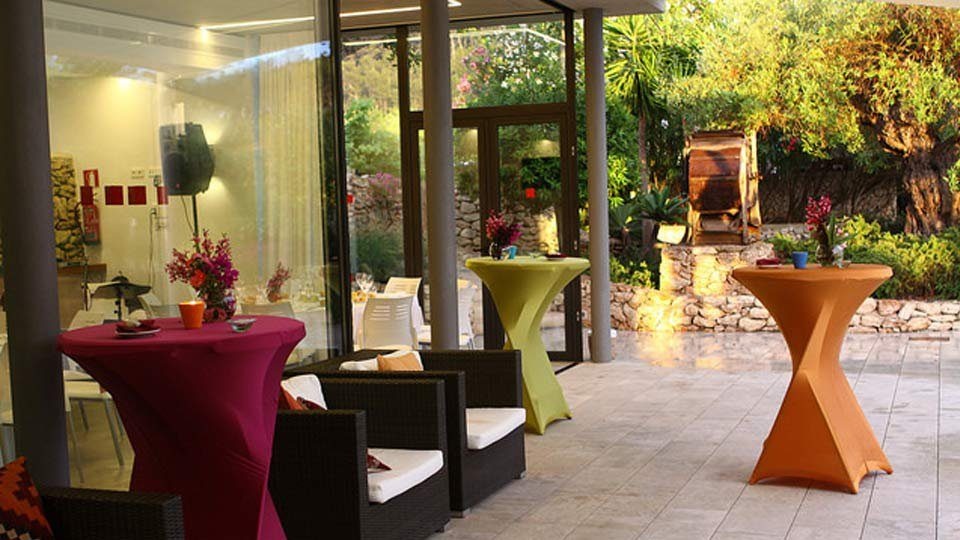
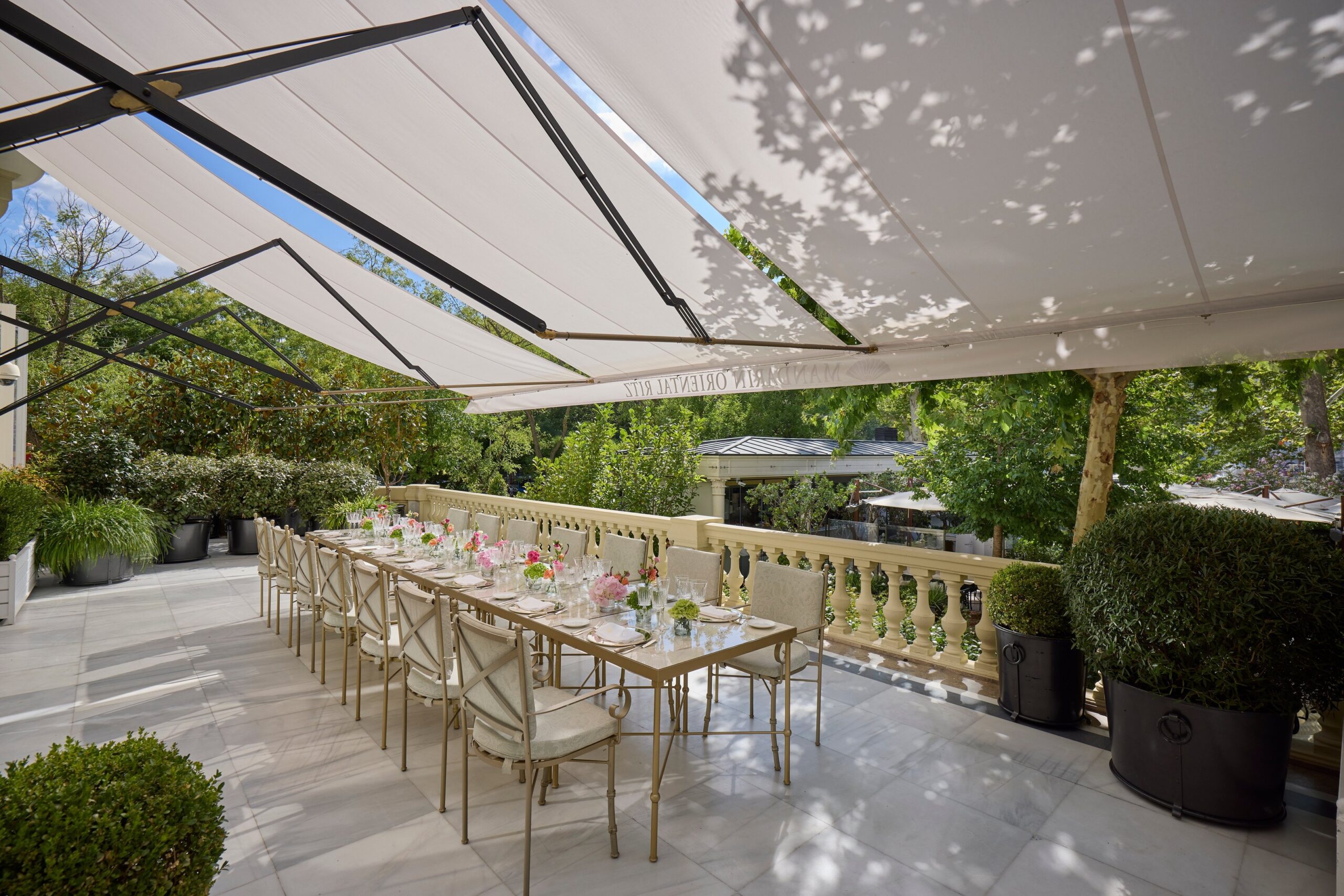
The Terrace, over the Ritz Garden, suits receptions of 30 to 120 guests, and the garden itself is a private space in the city, where El Jardín del Ritz serves meals outdoors. The hotel’s photographs show long tables on the covered Terrace and a Terrace set for a seated dinner.
How the day is run
A dedicated team plans each celebration, with decoration, wedding planning and menus overseen by the chef Quique Dacosta. The hotel offers private transfers, tailor made menus, live music and a welcome cocktail in a separate area. Civil ceremonies can be held at the hotel, and the nearest Catholic church, Los Jerónimos el Real, is a ten minute walk away. The late night party can run until four in the morning.
At the table
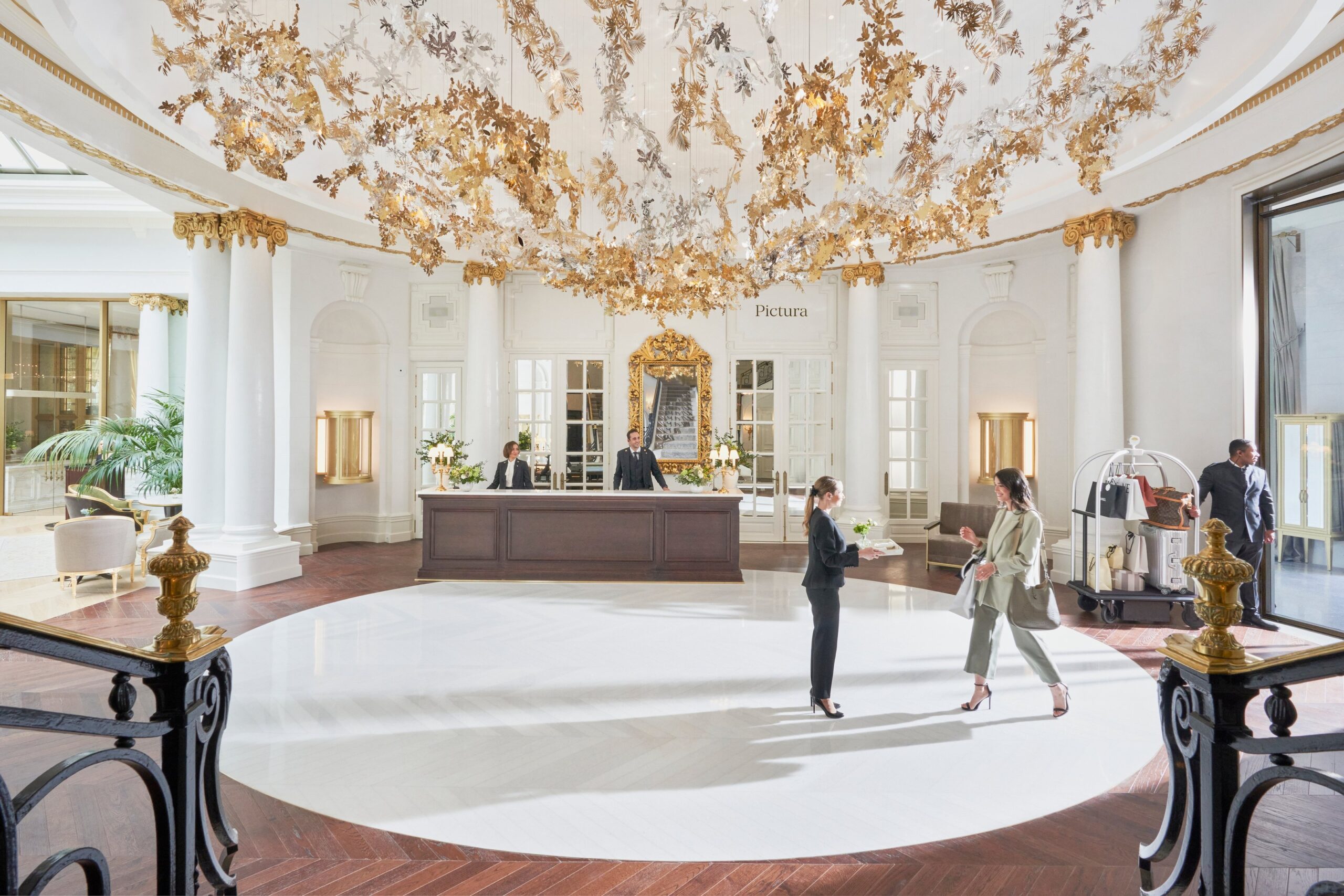
Dining is in several rooms. Deessa, Dacosta’s restaurant, overlooks the garden, and Events by Deessa brings his cooking to private celebrations. Palm Court serves all day dining and afternoon tea beneath a glass canopy ceiling. Pictura is a bar, and El Jardín del Ritz serves al fresco meals in the garden.
Wellbeing
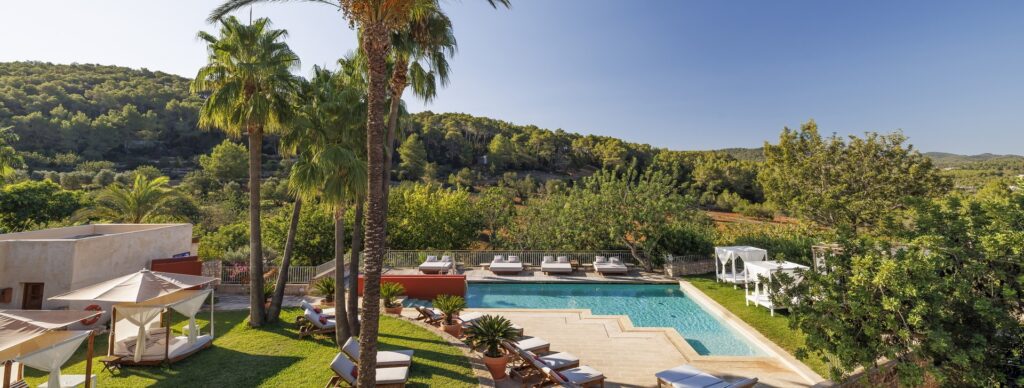
The hotel has a heated indoor pool and a spa, for guests staying at the hotel.
Planning your wedding
Wedding pricing is given on request. Couples should ask which room is free on their date, how the Terrace is used in poor weather, and how the civil ceremony is arranged with the hotel.
A hotel with a long memory
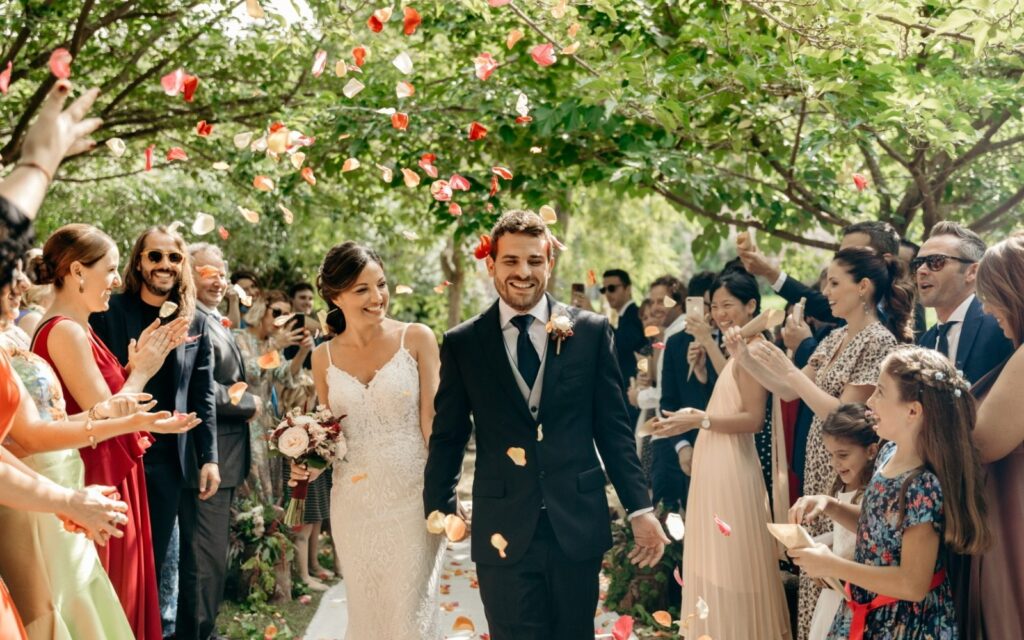
The Mandarin Oriental Ritz suits couples who want a wedding in a building made for a king, in the middle of Madrid’s museum quarter, with a ballroom large enough for a party of 350 and a garden for the aperitif. The practical questions are the choice of room, the legal ceremony and the cost, each of which is worth raising early.
See the Mandarin Oriental Ritz, Madrid profile or browse wedding venues in Spain. When you are ready, Check your date.