
The Wedding Atlas · Austria
Getting Married in Austria
From the Habsburg palaces of Vienna and the lakes of the Salzkammergut to the alpine meadows of Tyrol and the vineyard ridges of Styria, Austria offers a wedding setting for every mood. Choose the setting first, and let the venue follow.
Part of the Austria destination guide.
Where to marry
Explore Austria
Austria offers imperial palaces, a district of lakes, alpine resorts and vineyard ridges. Each guide has its own settings and its journey.
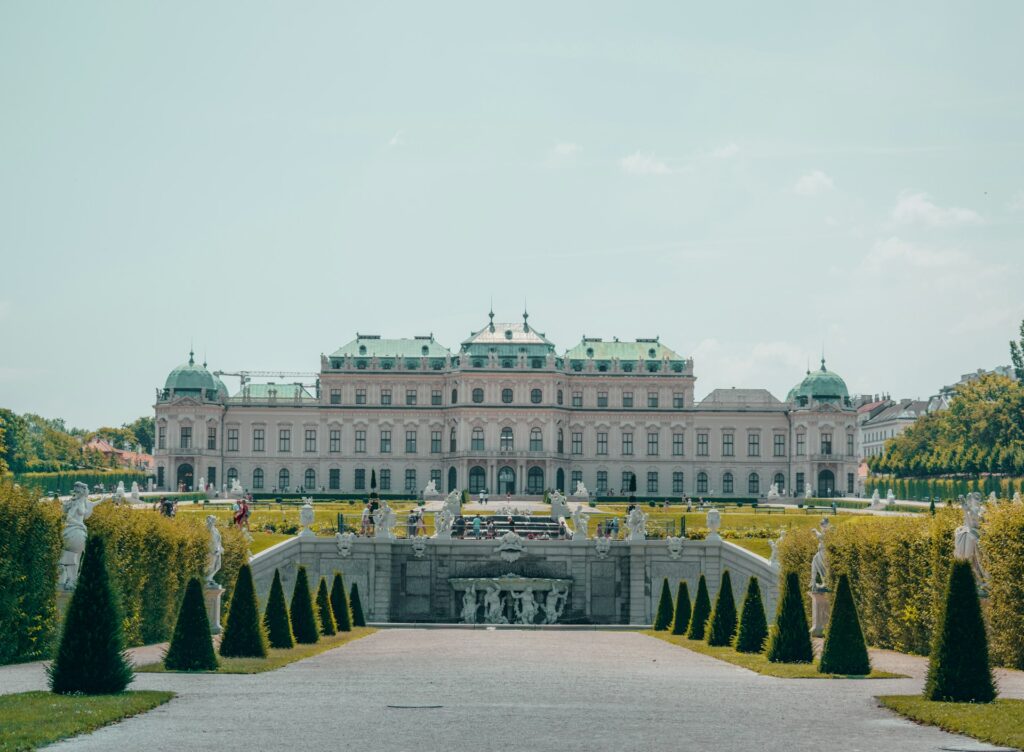
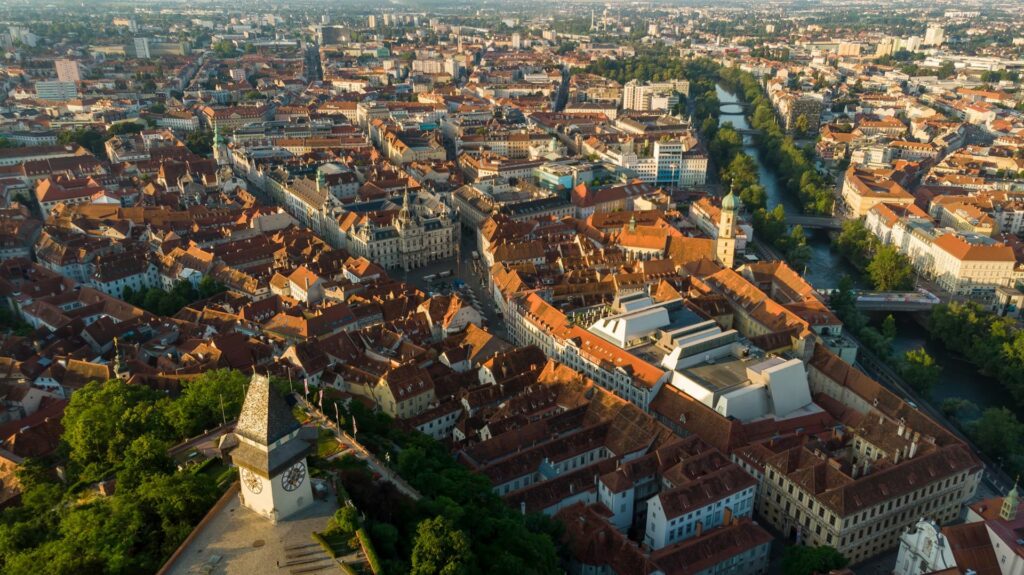
Palaces and vineyards
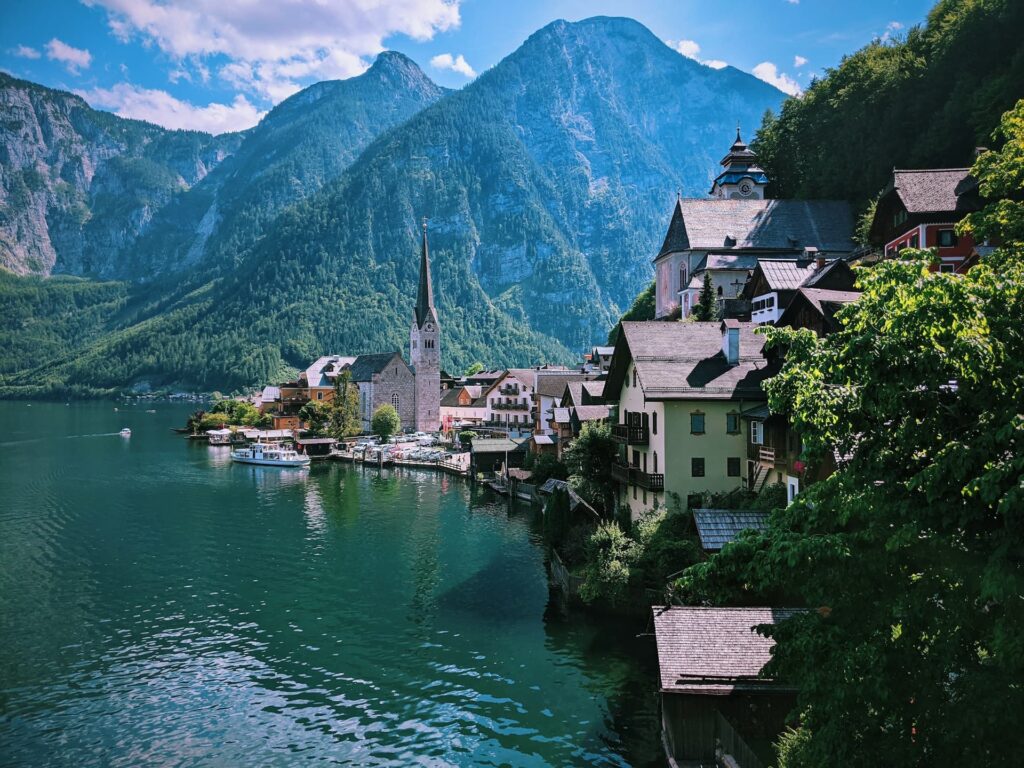
Lakes and mountains
Not sure which destination suits you? .
On the map
Where the guides are
Each marker is one guide. Tap a marker to read a line about it and open the guide.
Choosing where to marry
Which Austria suits you
For imperial ceremony
Vienna is the city of imperial ceremony. The Habsburgs shaped it for nearly 700 years, and the Ringstrasse, built between 1858 and 1900 under Emperor Franz Joseph I, lines a boulevard with palaces, museums, the State Opera and grand hotels.
For a lake district
The Salzkammergut is a lake district of 76 lakes in Upper Austria and Salzburg province, enclosed by the Dachstein, the Totes Gebirge and the Höllengebirge. Wolfgangsee is the classic lake setting.
For a mountain resort
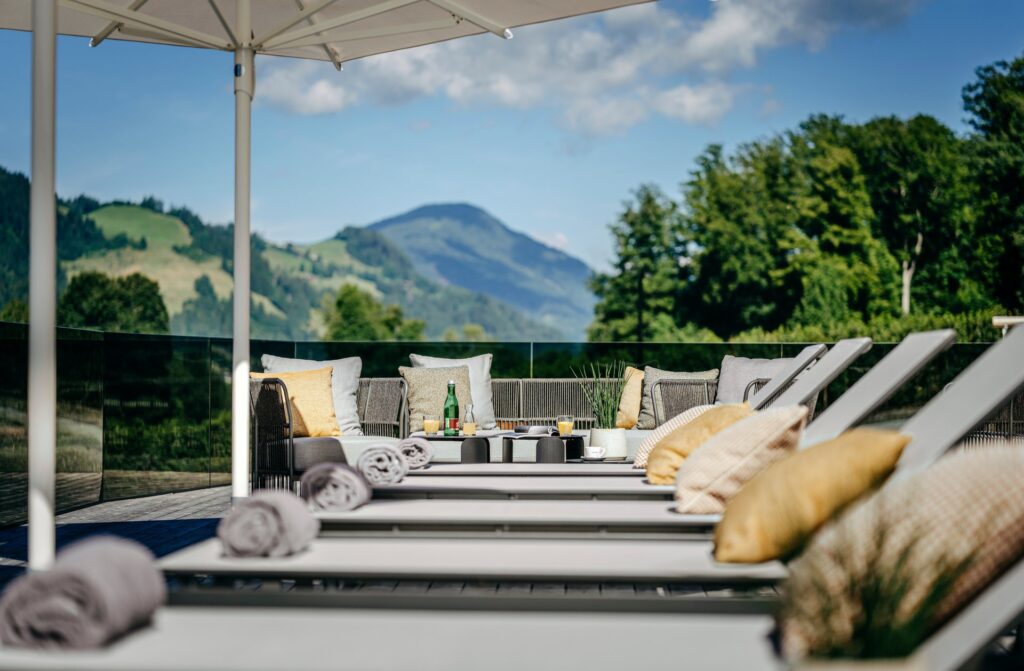
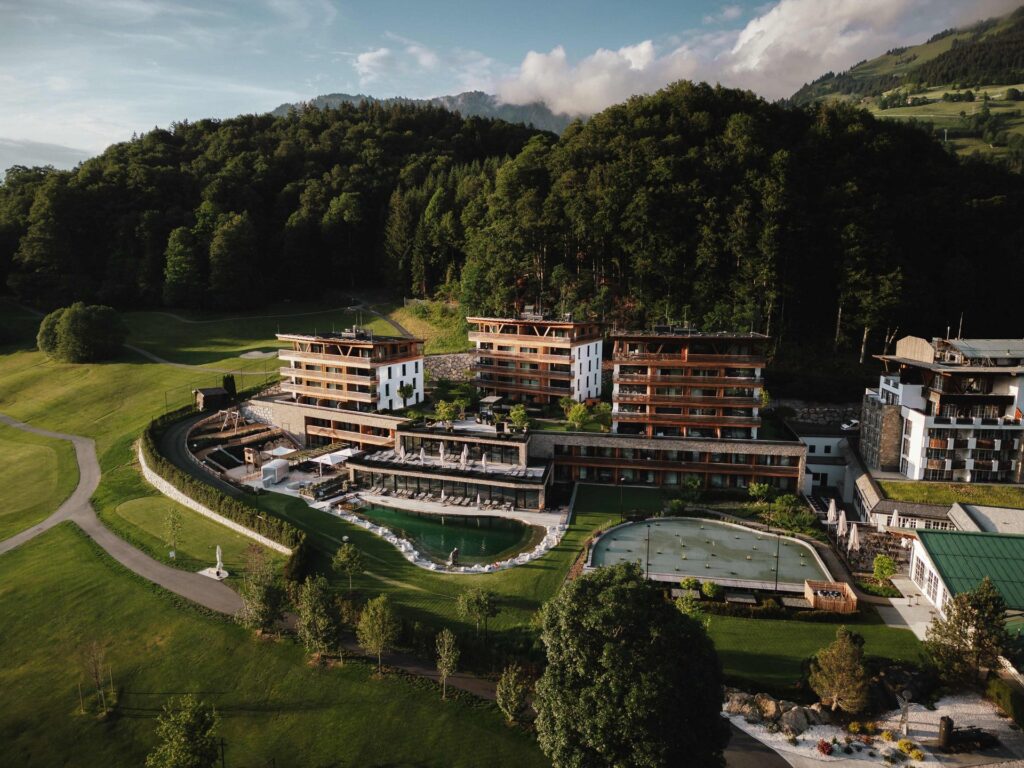
Tyrol contains two well-known resort destinations: Kitzbühel, a medieval ski town known for the Hahnenkamm downhill race, and Innsbruck, the historic regional capital with its Golden Roof and the Nordkette range rising above the streets. The wedding offer rests on two settings: the mountain resort hotel and the alpine meadow ceremony. A meadow ceremony is possible from June to September, when cable car operators serve meadow stations high above the treeline with wide panoramas.
For wine country
The South Styrian wine route is a landscape of vine ridges, Buschenschank taverns and pumpkin fields, sometimes called the Styrian Tuscany for its shape. The Wachau is a stretch of the Danube between Melk in the west and Krems in the east, in Lower Austria.
For Mozart and a fortress
Salzburg is a compact city with a strong visual identity. The Hohensalzburg Fortress, a well-preserved medieval castle, dominates the limestone ridge above the Salzach.
The season
When to get married, region by region
Salzburg
May to August are good, with afternoons of 20 to 25°C, and September is very good, with fewer wet days. Measurable rain falls on 13 to 15 days a month in summer, so a covered option is sensible.
In Salzburg the average afternoon high is 25°C in July and August, with about 250 hours of sunshine (GeoSphere Austria, Salzburg Flughafen, 1991 to 2020). Measurable rain falls on 13 to 15 days a month from May to August and on 12 days in September. Overnight stays across the province of Salzburg peak in February and are also high in January, July and August (Statistik Austria).
Salzkammergut
August and September are the more settled months, while June and July bring the warmest weather and the most rain, on about 15 days a month. A covered option is advisable for any outdoor ceremony.
Around the lakes the average afternoon high is 23 to 25°C from June to August (GeoSphere Austria, Bad Ischl and Mondsee, 1991 to 2020). Measurable rain falls on 14 to 16 days a month in June and July, on 13 days in August and on 12 or 13 in September. Overnight stays across Upper Austria peak in July and August (Statistik Austria).
Styria and Graz
August is the most settled month, and May to September are very good, with afternoons of 21 to 27°C and rain on 9 to 12 days a month. Autumn and winter are cool.
In Graz the average afternoon high is 25 to 27°C from June to August and 21°C in May and September, with 240 to 255 hours of sunshine in July and August (GeoSphere Austria, Graz Universität, 1991 to 2020). Measurable rain falls on 10 to 12 days a month in summer and on 9 days in September. Styria overnight stays peak in July and August (Statistik Austria).
Tyrol
August is the best summer month, and May and September are good. June and July bring the most rain, on about 15 days a month. Winter is cold, with average nights below freezing from December to March.
In Kitzbühel (772 m) the average afternoon high is 24°C in July and August, with rain on 14 to 16 days a month from May to August (GeoSphere Austria, 1991 to 2020). In winter the afternoon high is between 2 and 5°C from December to February, and a typical morning in the valley has about 20 cm of snow (GeoSphere Austria). Overnight stays across Tyrol peak in February and are also high in January, July and August (Statistik Austria).
Vienna
June, July and August are the most reliable months, with afternoons of 25 to 27°C and rain on 8 or 9 days. May and September are very good, and the city is cool from October to April.
In Vienna the average afternoon high is 25°C in June and 27°C in July and August, with rain on 8 or 9 days a month and 260 to 275 hours of sunshine (GeoSphere Austria, Wien Hohe Warte, 1991 to 2020). Afternoons reach 32°C or more on about four days in both July and August. Overnight stays are highest in December, August and July (Statistik Austria).
Wachau Valley
June, July and August are the most reliable months, with afternoons of 25 to 27°C and rain on 9 or 10 days. May and September are very good, and the valley is cool from October to April.
In Krems the average afternoon high is 25°C in June and 27°C in July and August, with rain on 9 or 10 days a month and 230 to 245 hours of sunshine (GeoSphere Austria, Krems, 1991 to 2020). Afternoons reach 32°C or more on about four days in both July and August. Overnight stays across Lower Austria peak in August, with July close behind (Statistik Austria).
The word shows how well the weather suits a wedding. The dots show estimated visitor busyness, based on tourism data rather than wedding bookings.
Planning
Planning by destination
Each guide sets out how guests reach the destination and what to do once there. The links below are grouped by the destination they describe.
Vienna
Vienna International Airport is among the best connected in Central Europe.
- Read the guideThe Vienna Wedding Atlas
Salzkammergut
Salzburg airport is the gateway for the whole Salzkammergut, and the main lakes are a short drive from it.
- Read the guideThe Salzkammergut Wedding Atlas
Styria and Graz
Graz Airport has a direct link from London Stansted.
- Read the guideThe Styria and Graz Wedding Atlas
Questions couples ask
Before you decide
When is Vienna best for a wedding?
May, June, September and October give the best mix of weather, light and manageable visitor numbers. The ball season is rich but cold, and winter suits the Christmas market backdrop.
Which airport do guests fly into for a Vienna wedding?
Vienna International Airport is among the best connected in Central Europe. Several carriers connect to many UK airports with daily flights. The City Airport Train runs to Wien Mitte in the centre and is the easiest link into the centre.
Can guests combine the wedding with skiing or hiking?
This is the main advantage of a Tyrol wedding. In winter a programme of a few nights can pair the ceremony with ski days, and in summer waymarked trails start from every hotel. The Kitzbüheler Horn and the Schwarzsee lake are natural additions.
How is guest movement between the lakes handled?
A private coach or minibus is the practical way to move groups, and the public lake boats can be chartered privately. The main principle is to set one base and treat the other lakes as day excursions.
Is Styria practical for guests travelling from the UK?
With planning. Within Styria a car is essential, because the estates are far apart and rural public transport is thin. A private coach for the wedding day and hire cars at Graz Airport are the usual answer.
Which airport should guests fly into for a Tyrol wedding?
Three airports serve Tyrol. Innsbruck is the most convenient for Kitzbühel but has limited year-round UK connections. Salzburg flights are more consistent through the year, and a direct train runs to Kitzbühel. Munich has the most reliable year-round UK connectivity, particularly for large wedding parties.
Meet Aura
Your wedding planning companion for Austria
Ask Aura about wedding destinations, venues and planning possibilities across Austria, drawing on the information available through 5 Star Weddings.
The directory
Ready to look at venues and people?
The guides help you choose where. The destination page lists the venues and wedding professionals themselves.