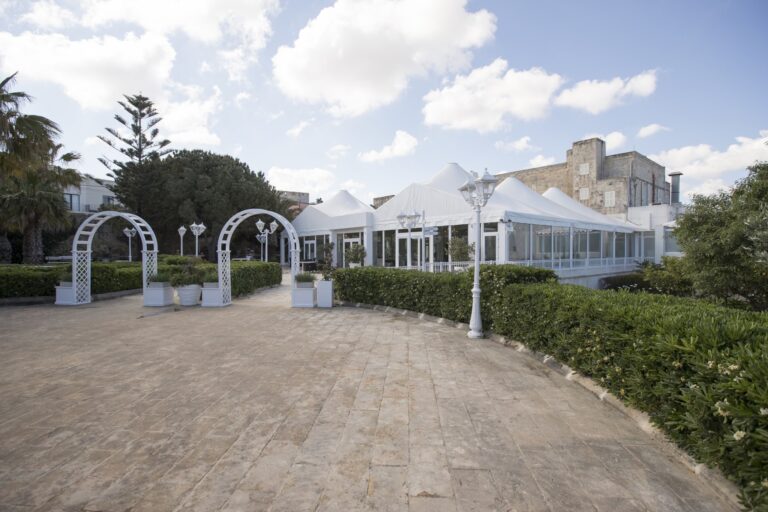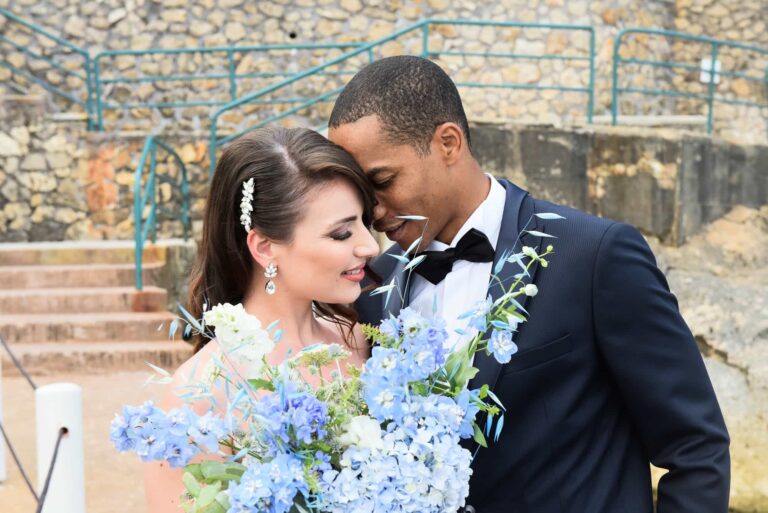
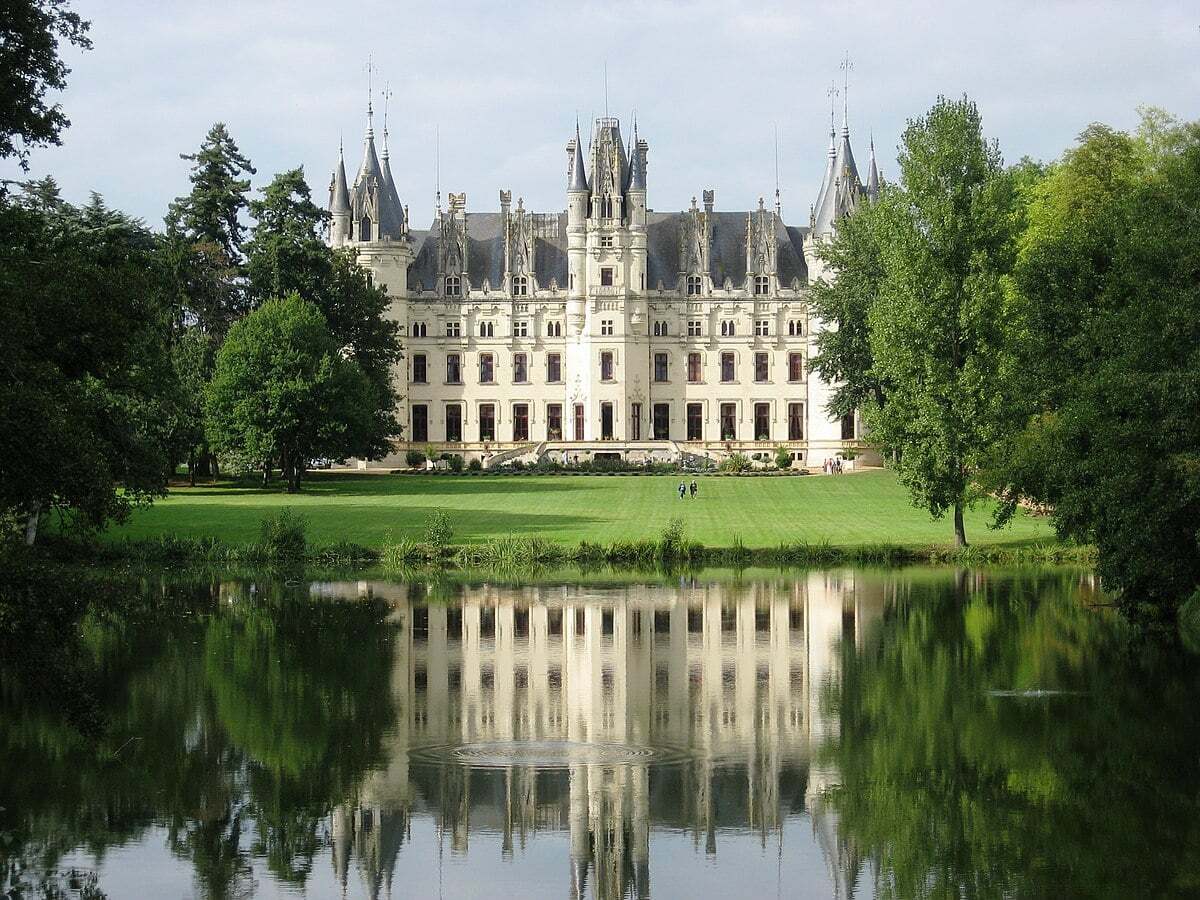
A château may host the ceremony, but in France it is the town hall that marries you. French law recognises only the civil ceremony, so a wedding in a château, a chapel or a garden above the sea is, for most couples from abroad, a celebration rather than the legal act. That fact shapes everything else in this guide: which regions to look at, how long to give the planning, and what to ask each venue.
How a wedding in France works for couples from abroad
The civil ceremony takes place at the mairie, and the official guidance on service-public.fr sets the conditions. The marriage can be celebrated in the commune where either spouse has a home, main or secondary, and that residence must have lasted at least one continuous month on the day the banns are published. The banns are displayed for ten days. A mairie may ask foreign nationals for a certificate of customary law, usually issued by their embassy or consulate, and a certificate of celibacy, with documents in another language translated by a sworn translator.
Sources differ on the length of residence. The French guidance says one month; the UK government guidance for British nationals gives 40 days, and the France.fr guide gives 30. The mairie of the commune you choose has the final word, so ask it before you fix a date.
Couples who live abroad usually take a simpler route: they marry civilly at home and hold a symbolic or blessing ceremony in France. That ceremony carries no legal weight, but it can take place anywhere, in a chapel, on a lawn or on a terrace above the sea. Whether your home country recognises a marriage made abroad depends on its own law, so confirm that before you plan.
The Loire Valley: châteaux for a wedding weekend
The Loire Valley between Sully-sur-Loire and Chalonnes is a UNESCO World Heritage cultural landscape, inscribed in 2000, and the region around it is château country. The two houses below stand in Anjou and the Sarthe, and both are hired exclusively for the wedding party.
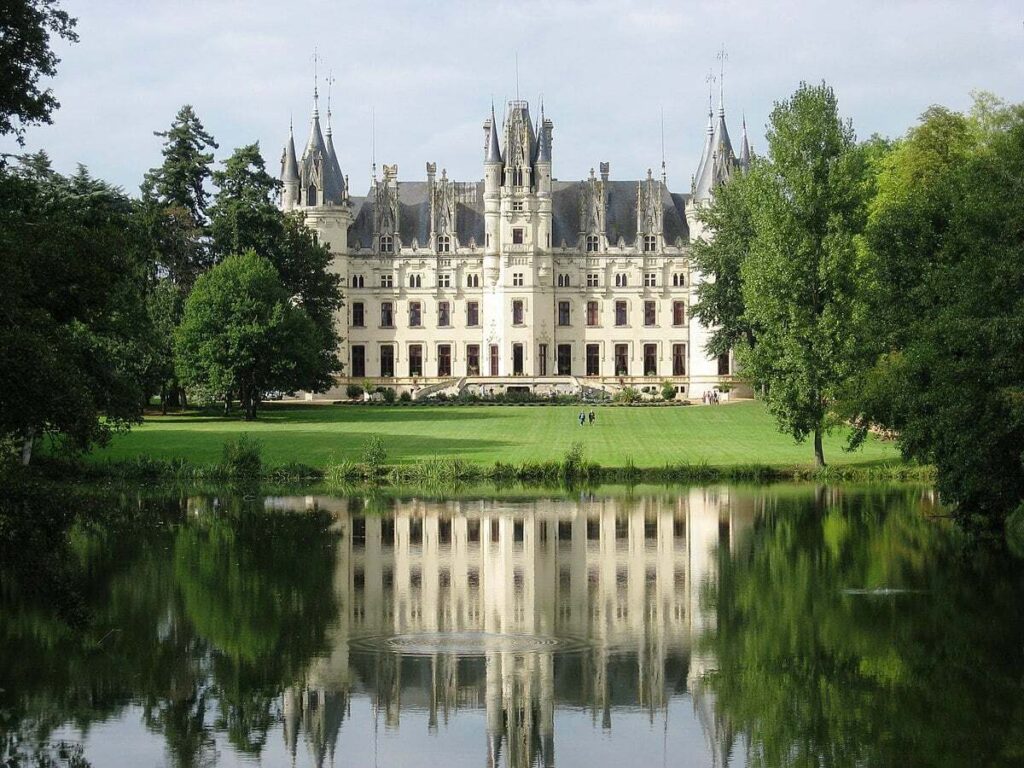
Chateau Challain in Challain-la-Potherie is a neo-Gothic château begun in 1847 by the architect Louis Visconti and completed in 1854, known locally as the Neo-Gothic Jewel of Anjou. It has 72 acres of gardens, forest and lake. Ceremonies can be held in the gardens, in the on-site chapel, which holds 20, or under the dome gazebo over the lake, which hosts 120 or more guests. The château sleeps 50.
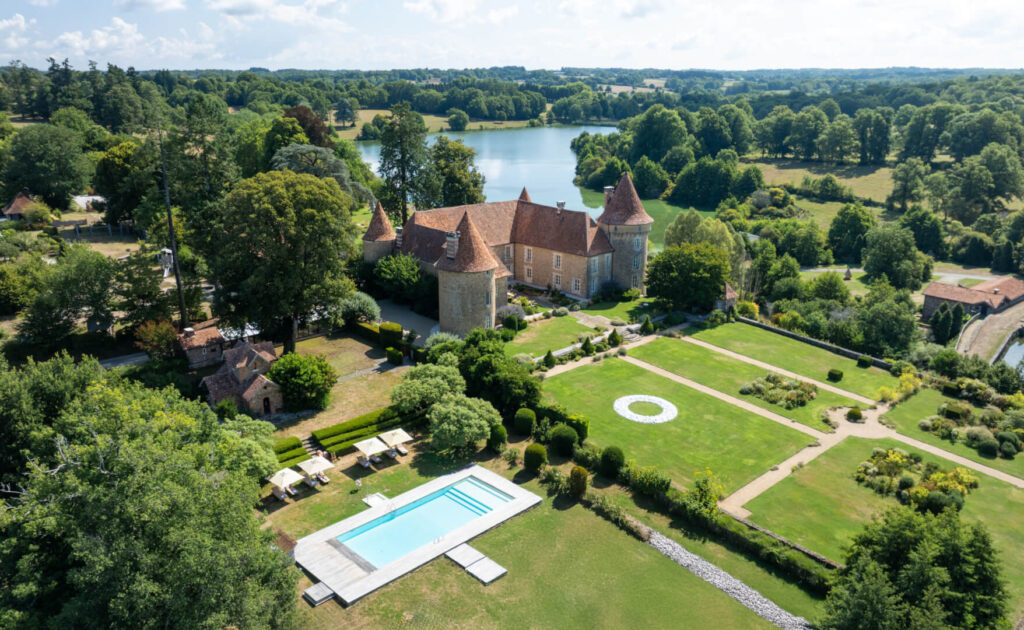
Château de Chéronne in Tuffé, Sarthe, has stayed in one family for around 500 years. It stands about 1h45 from Paris and is reserved entirely for the wedding party between May and October, with a four-hectare English-style park for the cocktail and a heated marquee behind the château for dinner.
Around Paris
Château de Ferrières belongs to the story of Rothschild ambition. Baron James de Rothschild asked Joseph Paxton, the English architect of the Crystal Palace, for a château in the manner of Mentmore but twice the size. It was inaugurated in December 1862 in the presence of Napoléon III, and it stands in a 135-hectare park with a lake, thirteen salons and the Hall of Honour, 30 minutes from central Paris. In-house catering is available.
For a different register, Disneyland Paris holds symbolic weddings, engagement celebrations and vow renewals in its parks and hotels, including at Sleeping Beauty Castle, with room for up to 500 guests.
The Riviera and Provence
Above Grasse, the town known as the world capital of perfume, Chateau Saint Georges stands in a three-hectare park in the hills of the French Riviera. A perfumer built the nineteenth-century house, which is nicknamed Le Petit Versailles of the French Riviera. Ceremonies take place at the Temple of Love, a domed stone pavilion on the lawn that looks across the valley towards Cannes, for up to 100 guests, 60 of them seated for dinner.
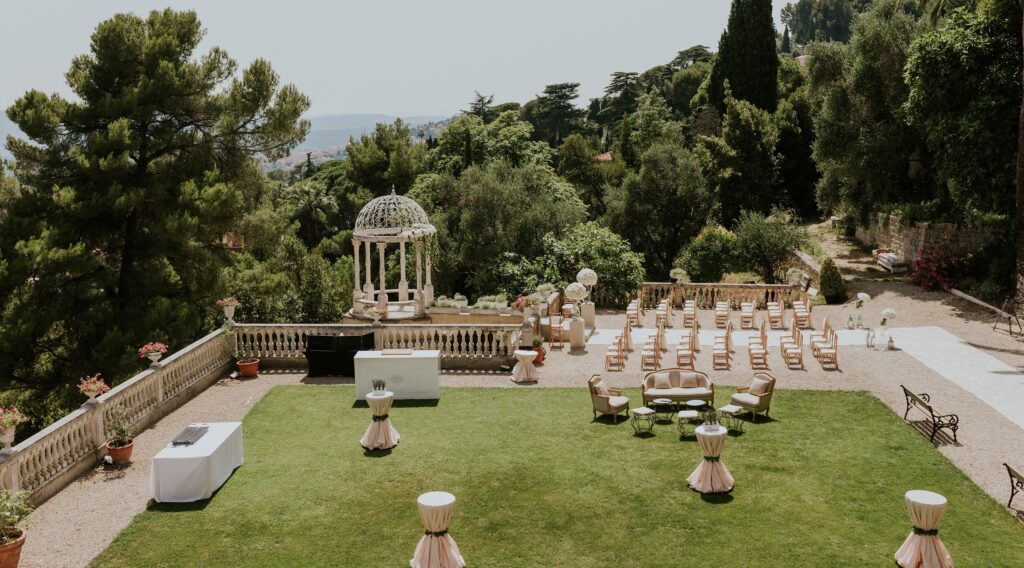
Rocabella sits on a hillside in Le Pradet, between Toulon and Saint-Tropez, with views over the Mediterranean. It is hired in full across four houses, with ceremonies on the Belvedere and dinners facing the sea, for up to 150 guests, 120 of them seated.
In Cassis, Domaine de Canaille stands in the Calanques National Park on the site of the former Revestel hotel. Weddings of up to 110 guests take place outdoors, on the terrace above the bay and in the grounds, and the villa has twelve bedrooms for 24 guests. Wedding guests do not enter the house, so a tent is set up in case of bad weather.
The Atlantic coast and the Charente
Villa La Tosca was built in 1903 in the Italian-influenced style of the Atlantic coast, at Taussat on the Arcachon Bay. It has eight bedrooms and is taken on exclusive use. The garden is the setting for the vows, the evening can host up to 120 guests outside, and a brunch follows at the villa the next day.
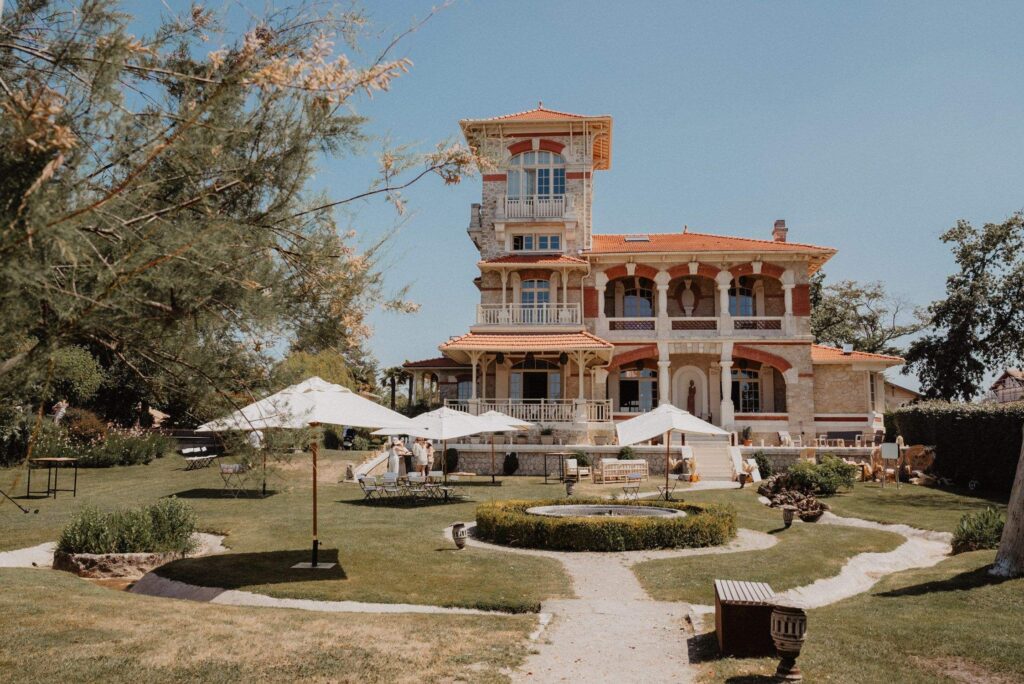
Inland, Domaine des Etangs in Massignac, Charente, is a thirteenth-century château restored as a hotel with a contemporary art collection, on an estate of 1,000 hectares of lakes and forest in Nouvelle-Aquitaine. Ceremonies take place on the lakefront lawn, and receptions in La Laiterie, a 300 square metre hall with exposed beams, which seats 150. The estate has 17 rooms and sleeps 58.
Choosing between them
The order of questions matters more than the region. Decide first whether the legal ceremony will take place in France or at home, because that sets the timetable: a month of residence, ten days of banns, and documents that may need a sworn translation. Then ask each venue whether it offers exclusive use, how many guests it can host outdoors, and what its plan is if the weather turns, since several of these houses hold ceremonies on lawns and terraces.
The Atlas guide to France sets out the regions in more detail, and each venue linked above has its own profile. Check your date with the venue you prefer before you build anything else around it.