
Getting Married in Alsace
Half-timbered wine villages along the Route des Vins, below the Vosges. Of all French regions, Alsace looks the least French. Half-timbered houses, flower-filled window boxes, Gothic spires and Germanic village names create a landscape unlike anything south of the Vosges. Strasbourg is a short TGV ride from Paris, and the wine, food and hotel infrastructure is strong.
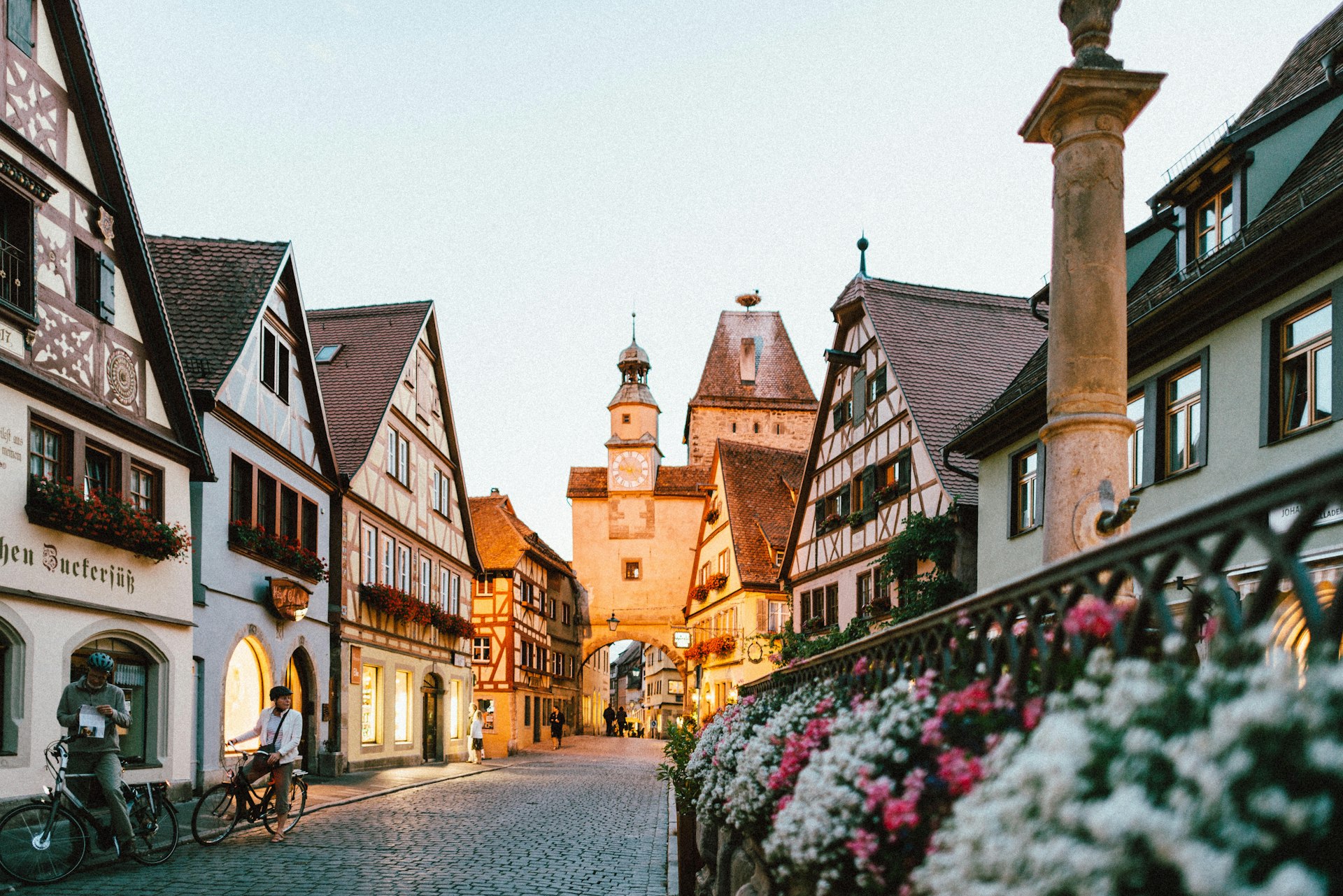
Half-timbered wine villages along the Route des Vins, below the Vosges
Weddings follow the Route des Vins along the eastern slopes of the Vosges, from Marlenheim in the north to Thann in the south. The most photographed stretch passes Colmar, Eguisheim, Riquewihr and Kaysersberg, a cluster of medieval villages. Behind them the foothills climb through pine forest to castle ruins, and below them the Rhine plain runs to Germany.
The table is the most specific in France. Riesling, Gewurztraminer, Pinot Gris and Cremant d'Alsace lead the wines, and choucroute garnie, baeckeoffe, tarte flambee and foie gras give a menu unlike any served south of the Vosges.
Where to Get Married in Alsace
Colmar and the central Route des Vins
The most photographed part. Colmar is the most complete medieval town in the region, and its Petite Venise quarter is among the most reproduced images in French tourism. This zone holds the most chateau and domaine venues.
Strasbourg and northern Alsace
The regional capital and TGV hub, with a Gothic cathedral and the Petite France canal quarter. It suits a city wedding in private salons or townhouses. The wine road around Obernai and Barr sees fewer visitors.
The Vosges foothills
Forested hills behind the wine villages, with ruined castles above the vineyards. Haut-Koenigsbourg, a restored imperial castle, can host events.
Southern Alsace (Mulhouse and the Sundgau)
Quieter than the Colmar corridor. Mulhouse is an industrial city with strong museums, and the Sundgau is farming country with carp ponds. Demand and wedding infrastructure are both limited.
When to marry, and what to arrange
The season
When to Get Married
Summers are warm and sunny and winters cold, with reliable snow in the Vosges. June and July bring long evenings and green vines. Late September is harvest. October, with yellow and orange vines against half-timbered fronts, is among the most atmospheric wedding months in France. Christmas markets from late November are busy and complicated, so the season ends by mid-November.
Recommended wedding months
June, July, and late September to October
Peak season is July and August, and the shoulder months are May and October to November.
Settings, travel and stays
Choosing a Setting
Wine domaine. A working estate with a courtyard and a cellar in a wine-road village. A courtyard hosts the ceremony and estate Riesling and Gewurztraminer accompany dinner.
Château. Either a medieval hilltop castle, several of which host events in part, or a classical country house in one of the larger wine towns. The logistics differ widely.
Hotel venue. Small hotels in converted historic buildings in Colmar, Eguisheim and Kaysersberg. A buyout gives an operating base that smaller domaines cannot match.
Getting There
Strasbourg is reached from Paris Gare de l'Est by TGV, with Colmar a short run south. From London, Eurostar to Paris connects onward. The A35 motorway runs the length of the plain.
Strasbourg (SXB). Direct routes from Paris, Lyon and Marseille, with few UK services. Best for the northern wine road and city weddings.
Basel-Mulhouse-Freiburg (BSL). The practical gateway for the Colmar zone, with direct UK routes. It also serves guests crossing from Germany or Switzerland.
Frankfurt (FRA). Reached by road or ICE train. It matters for intercontinental guests who cannot route directly to Strasbourg or Basel.
Where Guests Stay
French elegance meets Germanic comfort in half-timbered village hotels, vineyard guesthouses and converted Renaissance manors.
Castle hotel above the wine road, Rouffach. A twelfth-century castle turned hotel, with views over the Rhine plain to the Black Forest, a cellar and terraced gardens.
Riquewihr and the Route des Vins. A well preserved medieval wine village with Renaissance merchant houses, small guesthouses and cellar doors. Suited to intimate weddings.
Strasbourg. Hotels in and around the UNESCO-listed Grande Ile, with a direct TGV to Paris and an airport.
Colmar. Painted houses, canals and covered markets, with boutique hotels in the Tanneurs quarter and Petite Venise.
Good to know
Food and Drink
Alsace has the heartiest cooking in France. It draws on Germanic tradition and pairs with outstanding white wines.
Tarte Flambee. A thin flatbread baked in a wood-fired oven with creme fraiche, bacon and onion, served by the round. An easy sharing dish for a wedding evening.
Choucroute Garnie. Sauerkraut braised in Riesling with smoked sausages, ham hock and belly. A centrepiece for an autumn or winter feast.
Baeckeoffe. Marinated lamb, pork and beef layered with potato and onion, sealed in a terracotta pot and baked for hours. It now appears at wine-estate dinners.
Good to Know
Getting There. Strasbourg has fewer direct UK routes than larger French airports. Basel-Mulhouse-Freiburg, shared by France, Switzerland and Germany, has direct London flights.
Christmas Market Season. Strasbourg's Christkindelsmaerik, the oldest in France, runs from late November to Christmas Eve. Hotels fill from mid-November, so a winter wedding needs very early bookings.
Route des Vins Driving. The wine road passes many villages. A private minibus tour is a signature guest experience and far better than driving between tastings.
Cross-Border Exploration. Alsace borders the Black Forest and the canton of Basel. Both suit guests who stay extra days.
Marrying legally and entry rules
The legal requirements for marrying here, and who needs a visa, are being checked and are not published yet. Confirm both with the official authority that will marry you before you book.
Planners, photographers, florists and musicians who work in Alsace
Why does Alsace look so different?
It spent much of its history on the France and Germany border. Half-timbered houses, Gothic churches and central European village layouts show it, and photographs read as one specific place.
How do UK guests get to Alsace?
By Eurostar to Paris and the TGV from Gare de l'Est to Strasbourg, or by air to Basel-Mulhouse for the Colmar zone.
How does Alsatian food differ from other French cooking?
It leans on the Germanic tradition: choucroute, baeckeoffe, flammekueche and Munster cheese. The foie gras is goose rather than duck.
Does October work for an Alsace wedding?
Yes, especially for autumn colour. Vines turn yellow, orange and red, mist hangs over the foothills and village restaurants move to game and wild mushroom. Outdoor ceremonies work into mid-October.
Which wine suits an Alsace wedding?
Riesling from Grand Cru slopes for the aperitif and fish, Pinot Gris for the main course, and Cremant d'Alsace for the welcome and toasts.
Meet Aura, Your Wedding Planning Assistant
Describe your dream wedding, from the destination and setting to the number of guests and your budget. Aura will help you discover wedding venues and professionals that match your plans.
More Wedding Destinations
FranceBordeauxBurgundyCôte d'AzurAll destinations
How We Compiled This Guide
This guide draws on the venues' own published details, official sources and the knowledge of our editors. Entry and legal information can change, so confirm it with the authority that will marry you before you book.