Marrying in Bordeaux
Bordeaux became a serious wedding destination only in the last decade. The fast train from Paris takes about two hours, and the airport has direct flights from London, Edinburgh and Manchester. A long regeneration programme reshaped the city, and its eighteenth-century centre is now among the best preserved in France.
The wine country splits into distinct landscapes. Saint-Émilion to the east is a medieval hilltop village ringed by classified estates. The Médoc, north of the city, is flat pine country broken by grand châteaux. The Graves and Pessac-Léognan zone lies just south of the city, with older buildings and smaller estates.
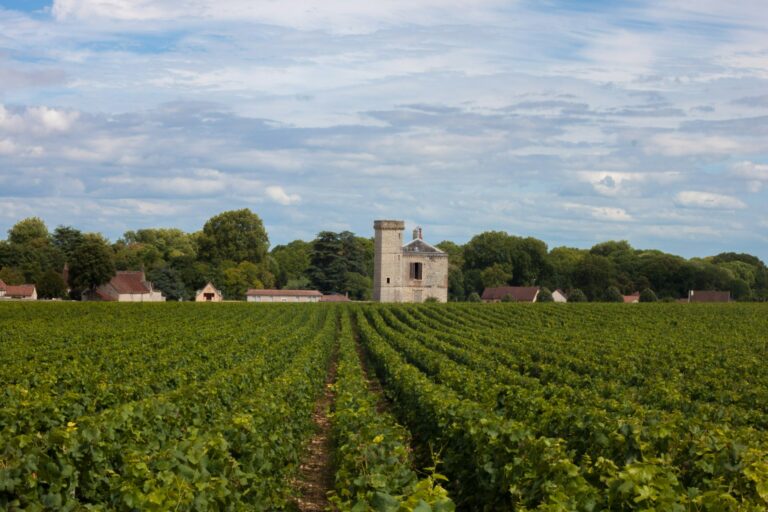
The wine estate is the venue type this region owns outright: a working vineyard, a chai (barrel hall) used for dinner, formal gardens and rooms in the château. Most estates supply their own wine through the catering.
The seasons
- Best
- Shoulder
- Peak
- Quieter
5 Star view Our reading of the wedding year, from the months below.
- Best months
- June, September, and October
- Shoulder season
- May and late October
- Peak season
- July and August
September and October are the months planners choose most. The harvest starts in mid-September, the vineyards turn from green to gold, and weather is warm and settled with lighter supplier competition than in high summer. June is the best choice before the harvest, with long evenings and gardens at their fullest.
Daylight and sunset
The bar runs from sunrise to sunset on the 15th of each month. A ceremony is usually timed an hour or two before the sunset shown.
Calculated From the coordinates of Bordeaux, local time, for 2027.
Ramadan and Eid
For couples and guests who observe them, the dates to plan a wedding around.
| Year | Ramadan | Eid al-Fitr | Eid al-Adha |
|---|---|---|---|
| 2027 | 8 Feb to 8 Mar | 9 Mar | 16 May |
| 2028 | 28 Jan to 25 Feb | 26 Feb | 5 May |
Calculated From the Umm al-Qura calendar. The observed dates follow the sighting of the moon and can fall a day either side.
The areas of Bordeaux
Saint-Émilion and the Libournais
The best-known zone, centred on a UNESCO-listed hilltop village on a limestone plateau. Many classified estates around it take events, and summer dates are in very high demand.
Médoc
The left-bank appellation running north along the Gironde estuary. The châteaux of Pauillac, Saint-Julien and Margaux are grander than those of Saint-Émilion, with eighteenth and nineteenth-century main houses and formal gardens.
Graves and Pessac-Léognan
South of the city, with more varied, older buildings and quieter estates. Closeness to the city lets guests combine a country wedding with an urban programme.
Bordeaux city
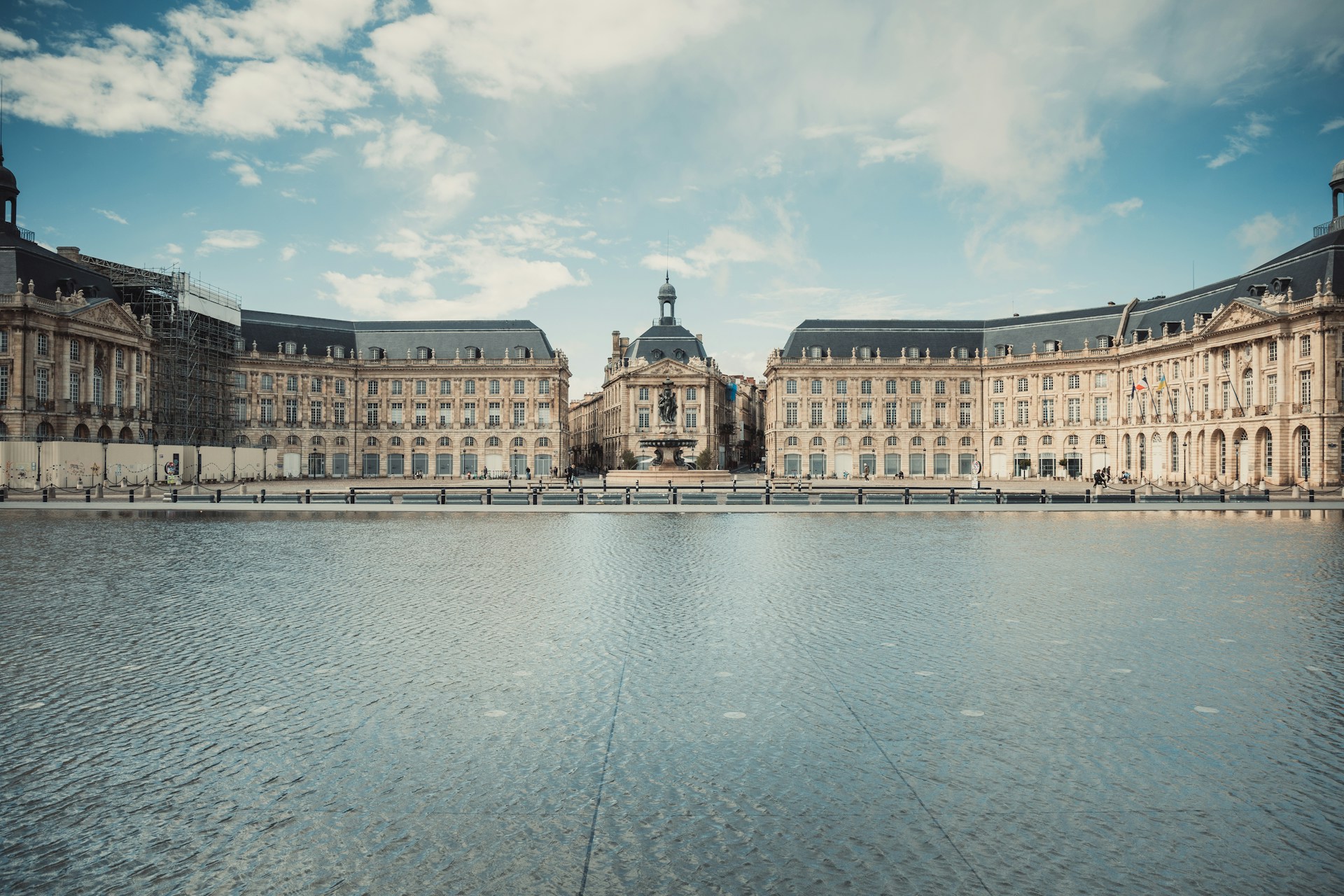
The UNESCO-listed centre, the Place de la Bourse, the wine museum and the Chartrons riverside give strong urban options, either for a city wedding or a reception paired with a country ceremony.
What venues are like
Wine château
The defining Bordeaux venue: a classified or grand cru estate with a working vineyard, a chai for dinner, a formal garden and a main house for exclusive hire. Wine is usually part of the catering offer.
Domaine or estate
A smaller wine property without a grand cru rating. It is more agricultural in feel and usually easier to book, with the same chai and garden format on an intimate scale.
City venue
Eighteenth-century town houses, converted industrial buildings in Chartrons and private dining rooms in the main city hotels.
Airports and transfers
- Paris Charles de Gaulle (CDG) Linked to Bordeaux by the fast train. It matters for intercontinental guests who cannot fly straight in.
- Paris Orly (ORY)
- Nice Cote d'Azur (NCE)
- Bordeaux Merignac (BOD) Direct services from London, Edinburgh, Manchester, Bristol and major European hubs, with a tram into the city. It is the practical gateway for UK guests.
- Marseille Provence (MRS)
- Lyon Saint-Exupery (LYS)
- Nantes Atlantique (NTE)
- Toulouse Blagnac (TLS)
- Paris Beauvais (BVA)
- Angouleme Cognac (ANG)
Bordeaux airport has direct flights from London, Edinburgh, Manchester and most large European cities. Saint-Émilion estates are a short drive from the city, and the Médoc châteaux a longer one to the north.
Marrying legally in France
Civil marriage in France is held at the town hall, in public, before the mayor or a deputy, and a religious ceremony may not come before it. At least one of the couple, or one of their parents, must have a home or an established residence of at least one month in the commune on the day the banns are published. Two foreigners with no home in France can marry only at the consulate of one partner's country or in an overseas collectivity.
- 1After one month of residence in the commune
File with the town hall
Both partners attend to lodge the file at the town hall of the chosen commune, with original identity documents, proof of address dated more than one month earlier, birth certificates (under 6 months old if issued abroad; apostille or legalisation may be required), sworn translations, and where asked a certificate of custom and a certificate of celibacy.
- 2Ten days of banns, then the prosecutor's review
Banns and hearing
Banns are posted for 10 days and the wedding cannot take place before the 10th day after publication; it must take place within one year after that period ends. The registrar hears the couple, usually together, and alerts the prosecutor to any serious sign of fraud, who has 15 days to allow or oppose the marriage.
- 3The day
The civil ceremony
At the town hall in a room open to the public, before the mayor or a deputy, with the couple's witnesses. The mayor may use another communal building, which the prosecutor may oppose.
- Residence
- 1 month in the commune before banns
- Banns
- posted 10 days
- Where
- town hall, open to the public
- Religious ceremony
- never before the civil marriage
Already married at home?5 Star view
French law allows only the civil ceremony to carry legal effect, and a religious marriage must not be celebrated before it. Many couples therefore marry in their own country or at a town hall and hold the blessing or celebration at the venue; a ceremony with no legal effect needs none of the steps above and the venue and planner arrange it.
Who needs a visa
Travelling from the United Kingdom
British passport holders visit France without a visa for up to 90 days in any 180-day period, counted across the whole Schengen area. The passport must have been issued less than 10 years before arrival and be valid for at least 3 months after the day you plan to leave. The European Union's Entry/Exit System registers fingerprints and a photograph at the border on a first visit.
Other nationalities
EU, EEA and Swiss nationals need no visa. Other nationalities check with the French embassy or consulate in their country. Overseas departments and territories have their own entry rules; check with the French embassy.
Reference service-public.gouv.fr: Marriage in France (F930, read 2026-10-21). gov.uk: France entry requirements (travel advice, read 2026-10-21). European Union entry rules for visa-exempt visitors (EES, ETIAS) and European Commission implementing decisions on multiple-entry visas for Saudi, Bahraini and Kuwaiti nationals. Checked 21 October 2026. Rules change: confirm with the authority that will marry you before you book.
Accommodation
Accommodation runs from wine-estate lodgings to restored merchant townhouses in the city and boutique châteaux around Saint-Émilion and the Médoc.
At the table
The table draws on the Atlantic coast, the Garonne and Dordogne rivers and a long habit of dining around wine. Good ingredients count for more than elaborate technique.
Entrecôte à la Bordelaise
Rib steak with a sauce of bone marrow, red Bordeaux, shallots and tarragon, the region's defining meat dish.
Huîtres du Bassin d'Arcachon
Oysters from Arcachon Bay with a clean, mineral taste, eaten raw with rye bread and cold white Graves, often at wedding aperitifs.
Cannelé de Bordeaux
A small fluted pastry with a caramelised crust and a soft rum-and-vanilla custard centre, made in the city since the eighteenth century.
Macarons de Saint-Émilion
Chewy almond macaroons first made in the seventeenth century by Ursuline nuns, served with dessert wine and coffee.
What planners tell couples
Getting there
The airport has direct flights from London and Edinburgh. The fast train from Paris stops at the central station, so guests can also come by Eurostar and an onward train.
Classification and access
The 1855 classification remains the reference for left-bank estates, while Saint-Émilion has its own, revised from time to time. Many classified estates offer private tours and tastings, booked directly and well ahead.
Harvest timing
Harvest usually runs from late September to mid-October. It is the most atmospheric period, but venues and guesthouses fill early, so rooms should be secured far in advance.
Right bank and left bank
The Médoc appellations are flatter and more formal. The right bank (Saint-Émilion, Pomerol) is hillier and more intimate, and arguably better for small celebrations. Both lie within an hour of the city.