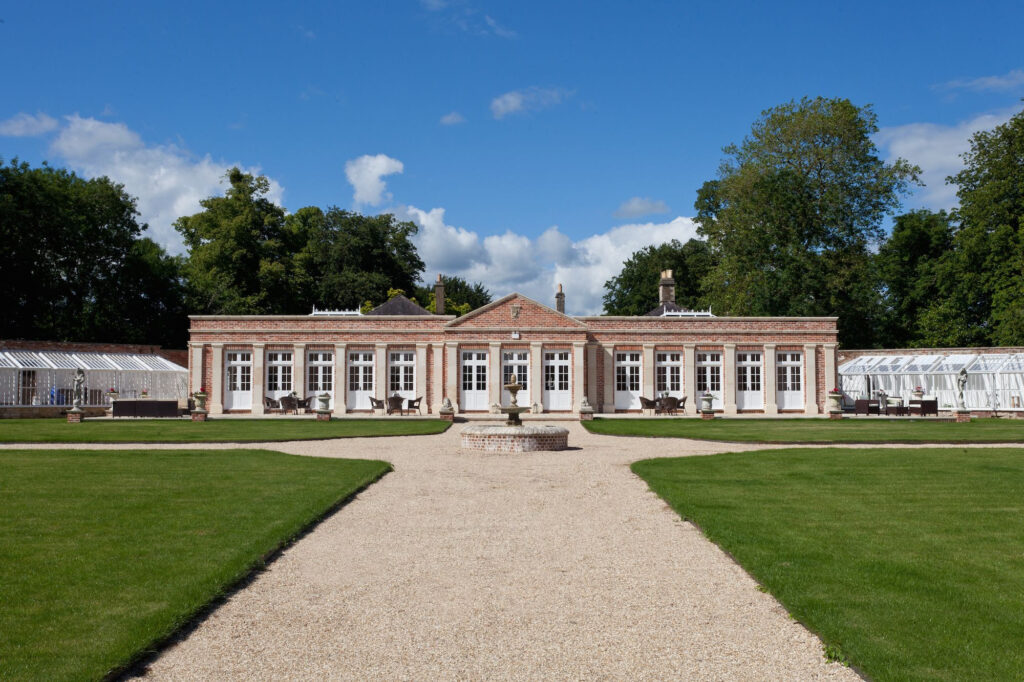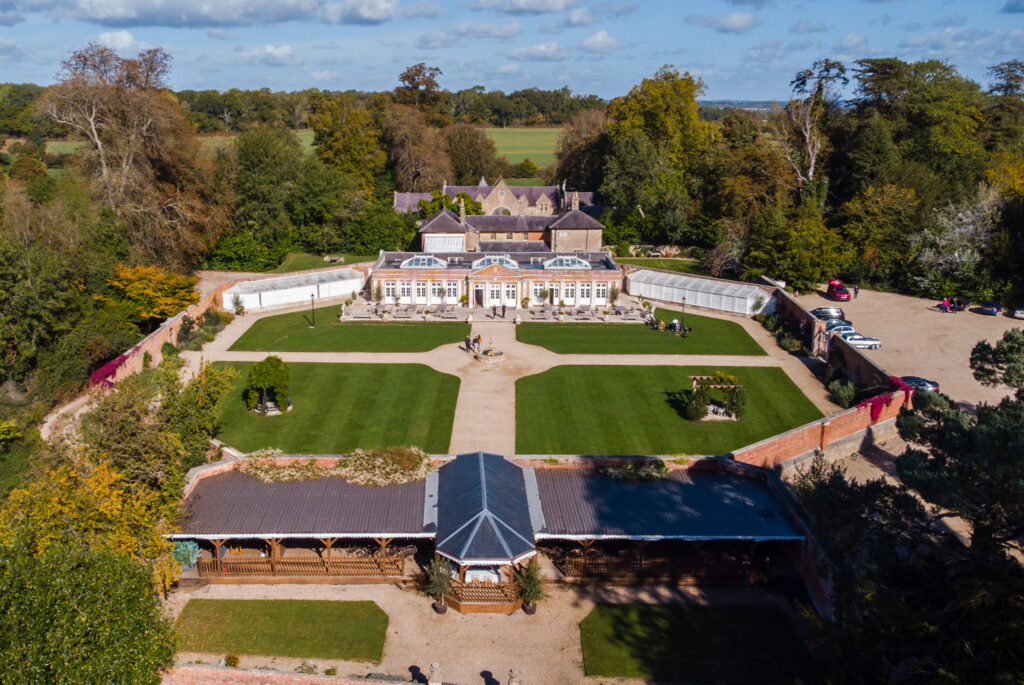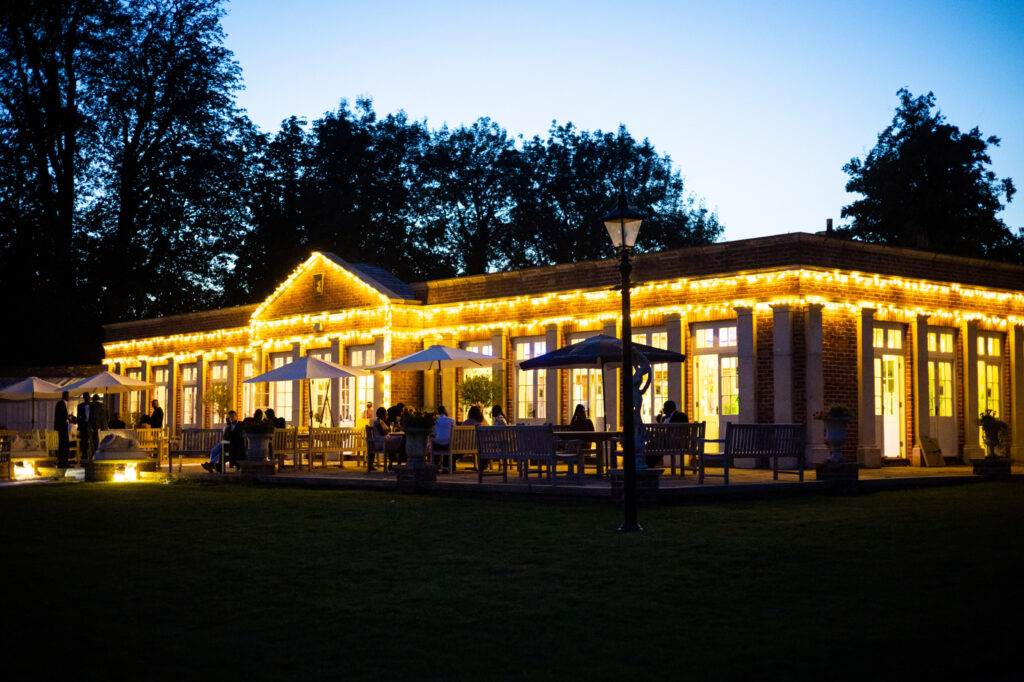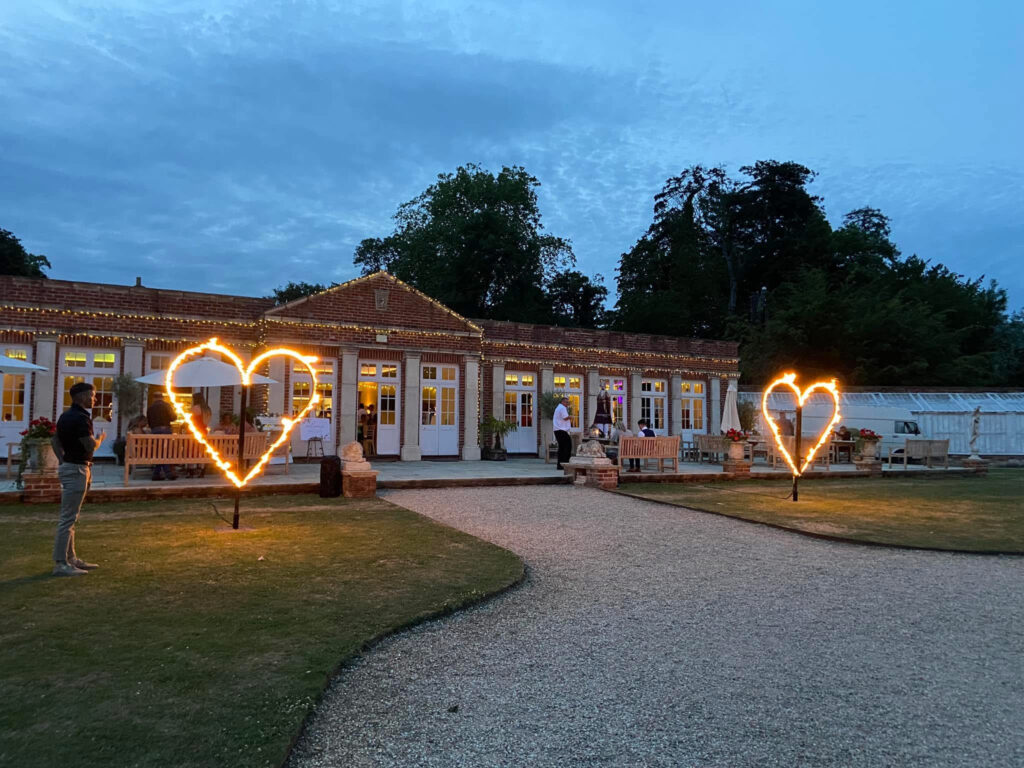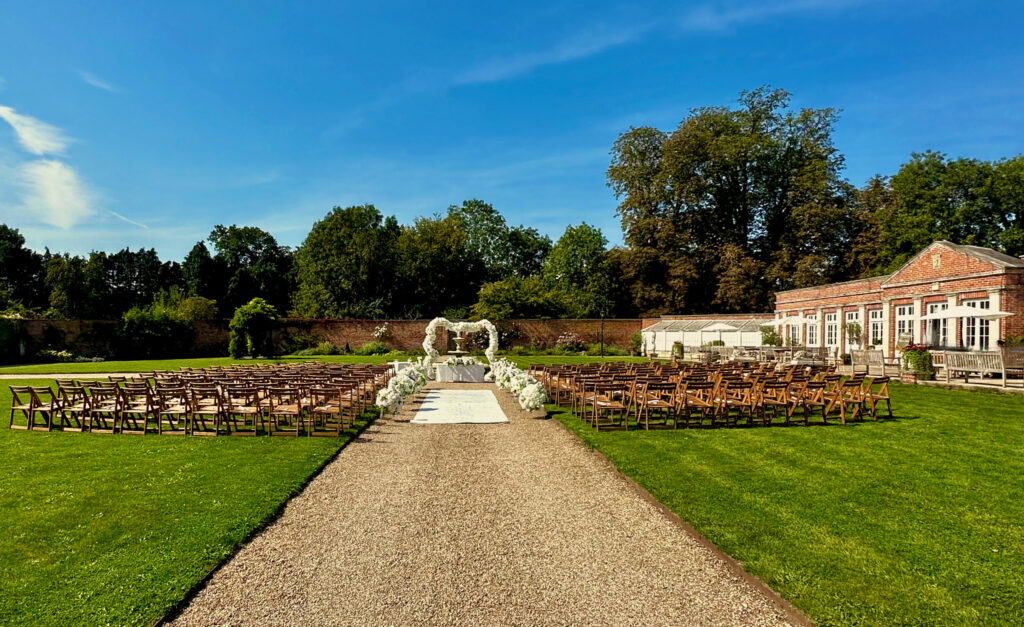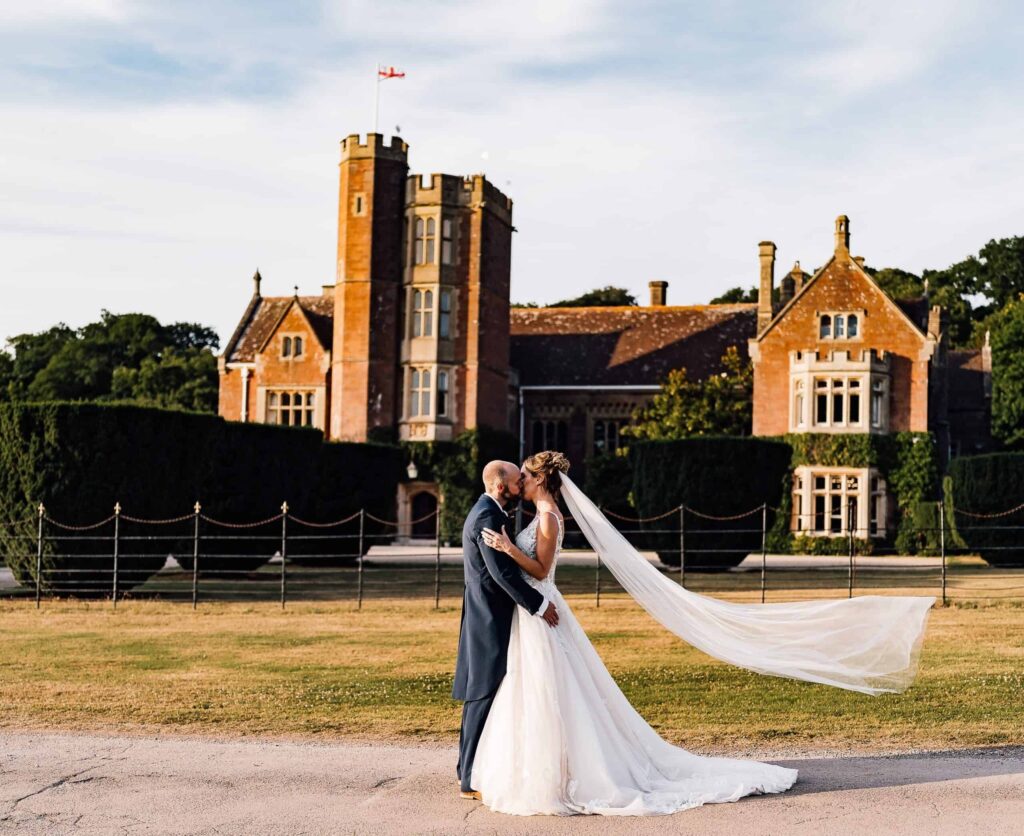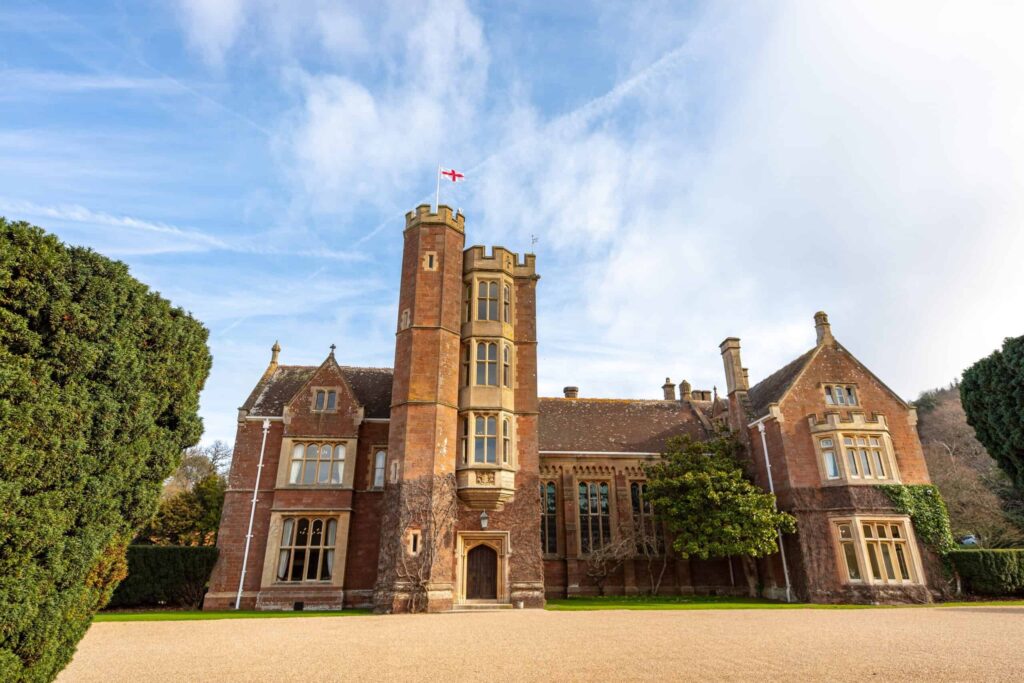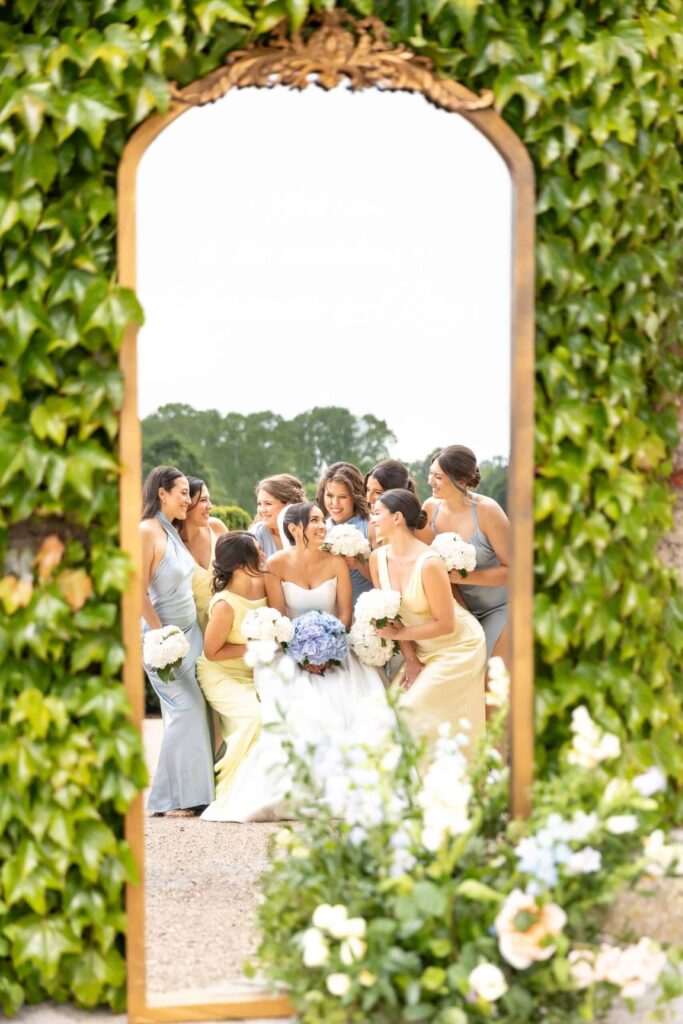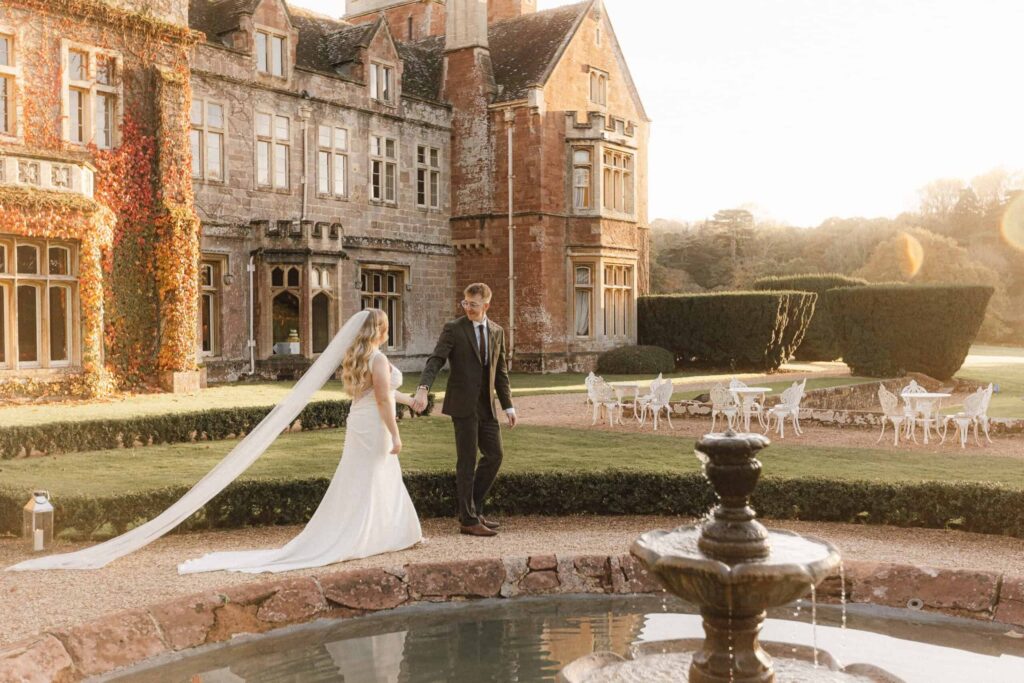
There is no single architectural moment at Brympton House. The house near Yeovil in Somerset has been altered, extended and reimagined over eight centuries, its successive owners leaving behind stone façades, panelled rooms, terraces and gardens that reflect changing ideas of country-house life.
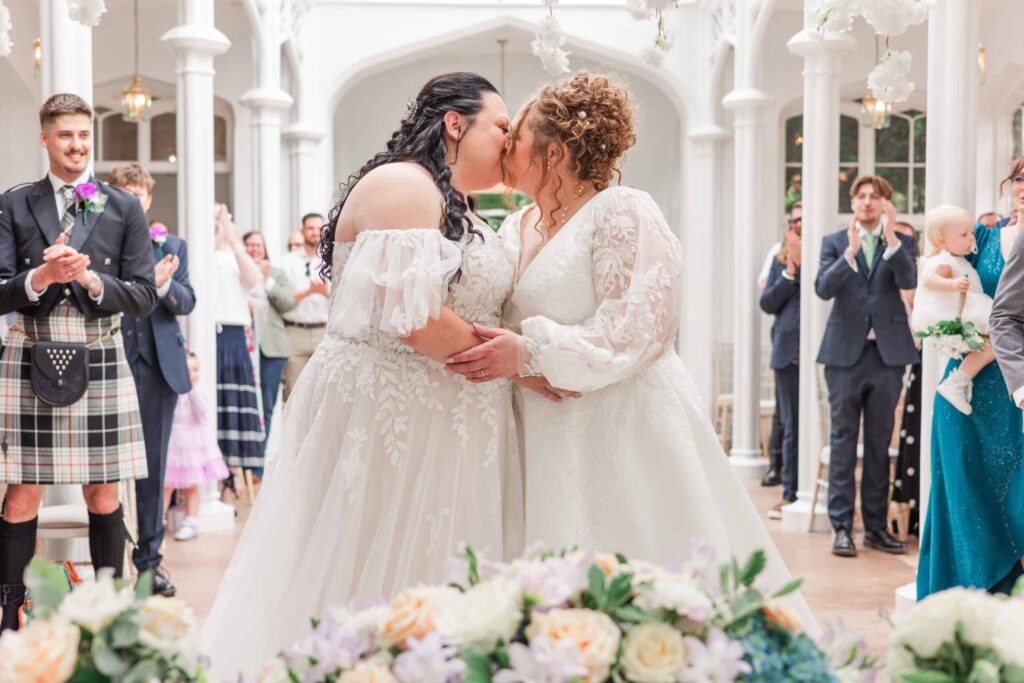
For a wedding, that layered history becomes part of the experience. A ceremony might take place beside a medieval church or within the gardens. Drinks follow in the Great Hall or on the South Terrace. Dinner brings guests into one of the formal rooms before the evening moves to a separate barn for music and dancing.
The journey is not simply between spaces. It is through the different periods of a house that has never belonged entirely to one age.
A house built over centuries
The history of Brympton begins in 1220, when Thomas d’Evercy acquired land here. The estate remained with his descendants for more than a century before passing through other hands and eventually becoming associated with the Sydenham family, whose ownership shaped much of the house that survives today.
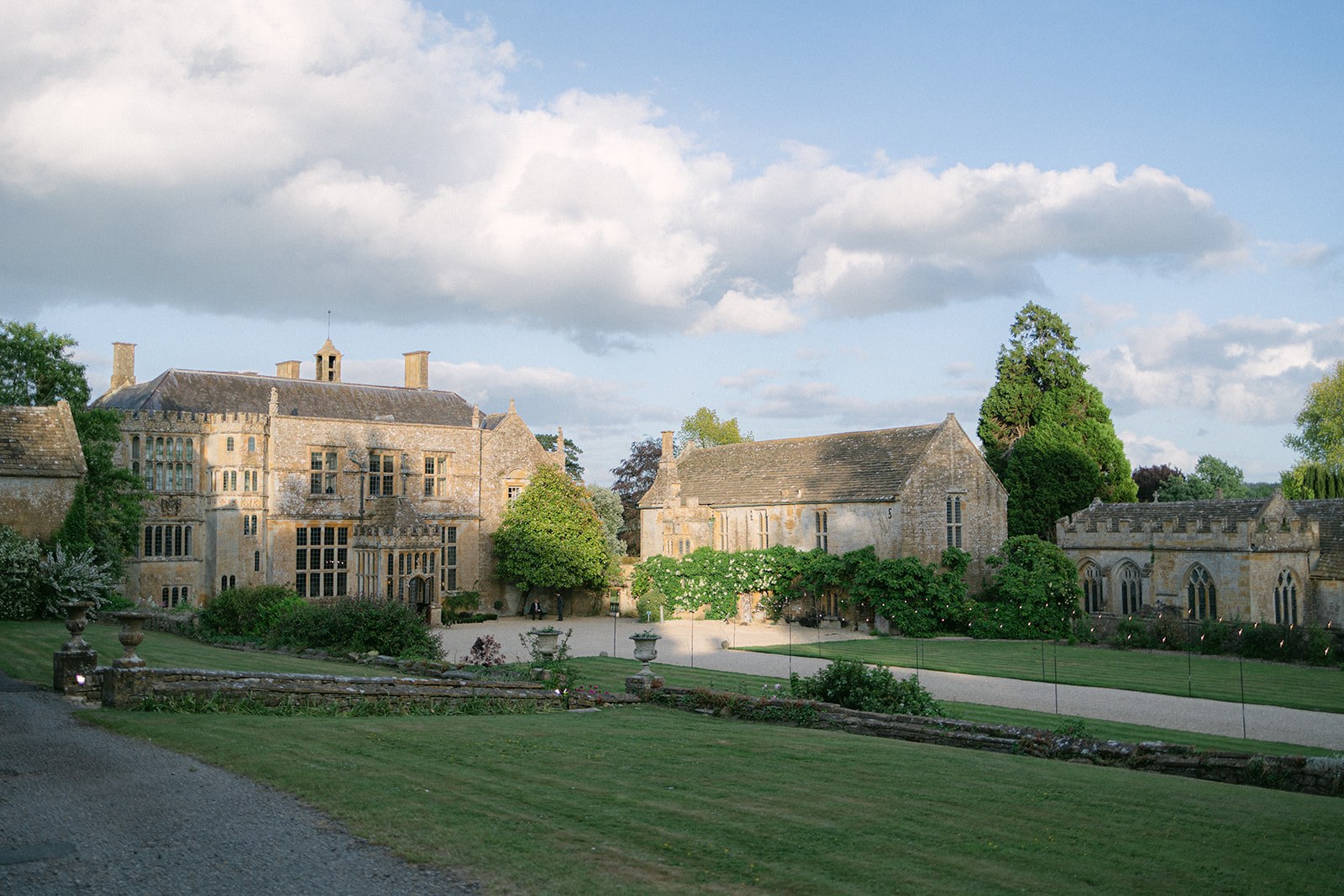
The medieval origins remain visible, but Brympton is not a house preserved at a single point in time. Its Grade I listing reflects an architectural history extending through the fifteenth and sixteenth centuries and into the grander domestic ambitions of the seventeenth and eighteenth.
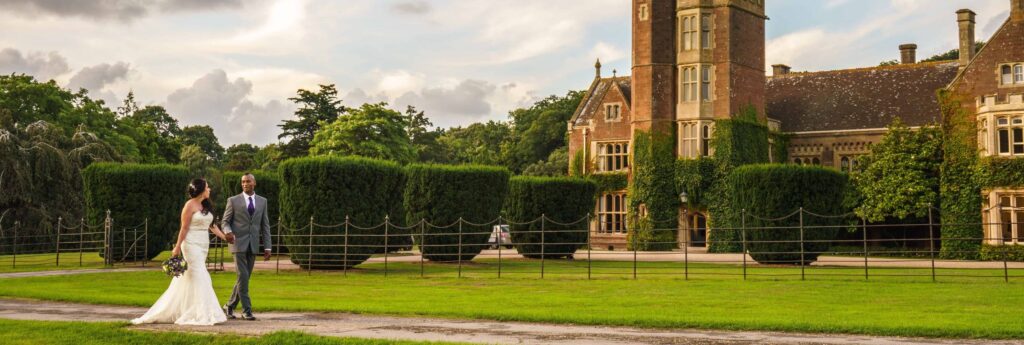
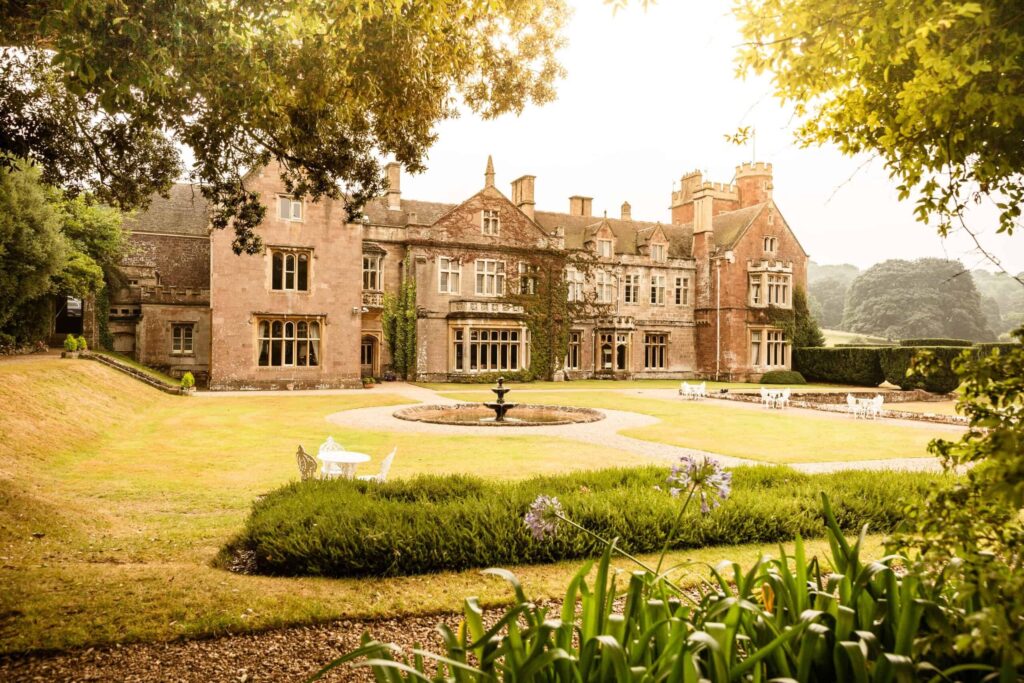
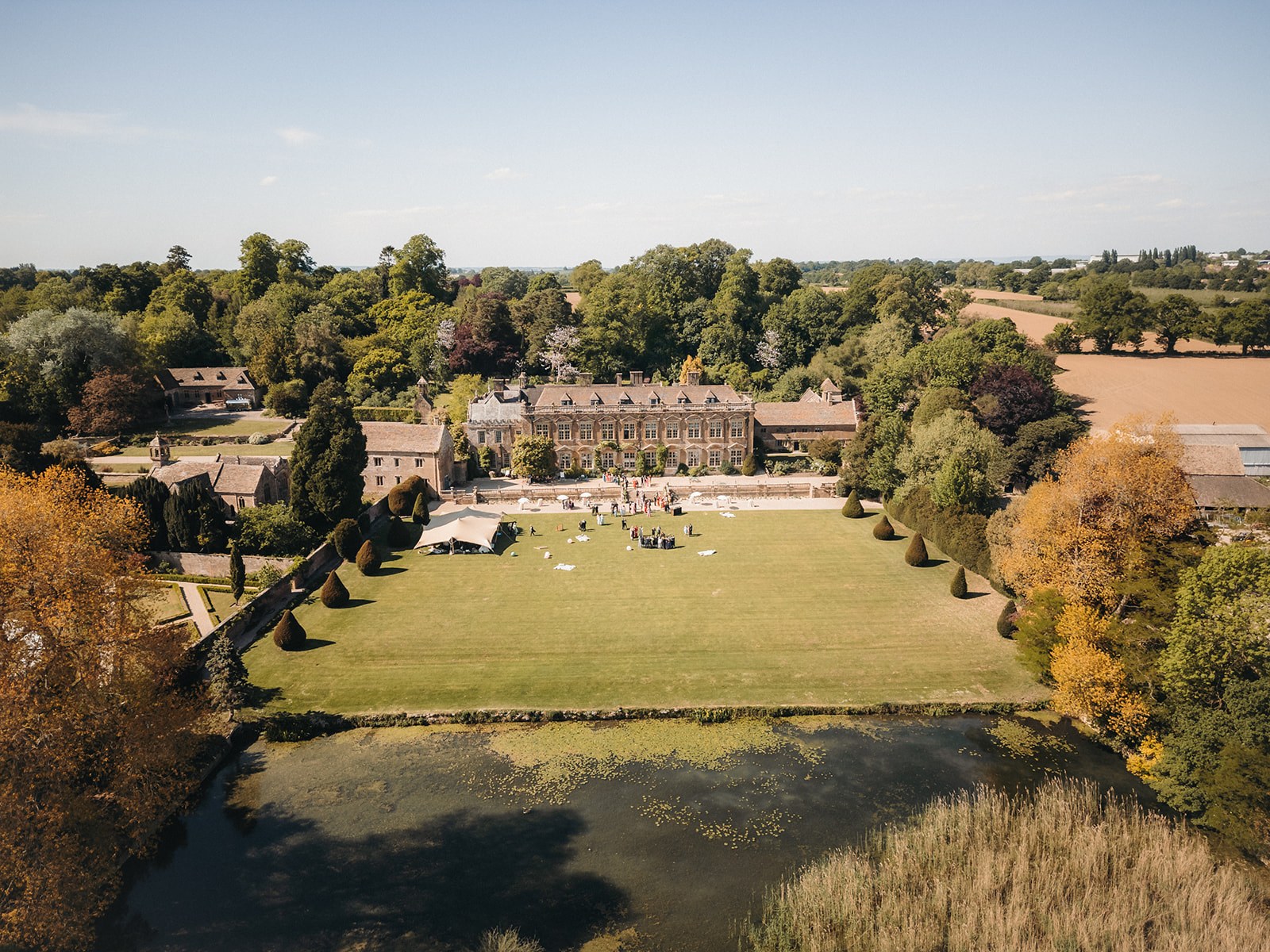
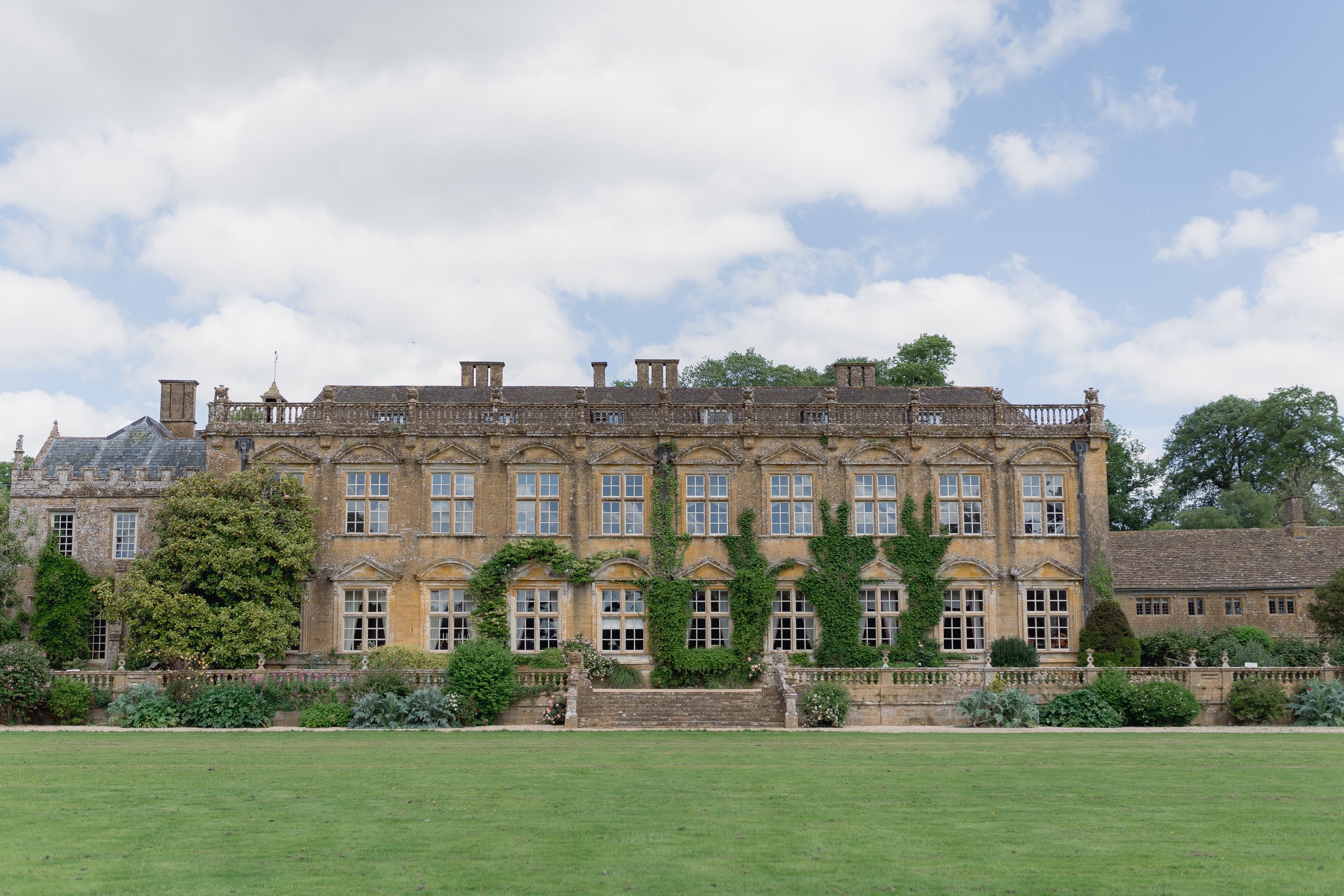
The west front reveals something of that progression. Stonework from different periods sits alongside later alterations, while the south façade presents a more composed country-house appearance, with tall windows, a balustraded terrace and architectural details influenced by the classical fashions of its time.
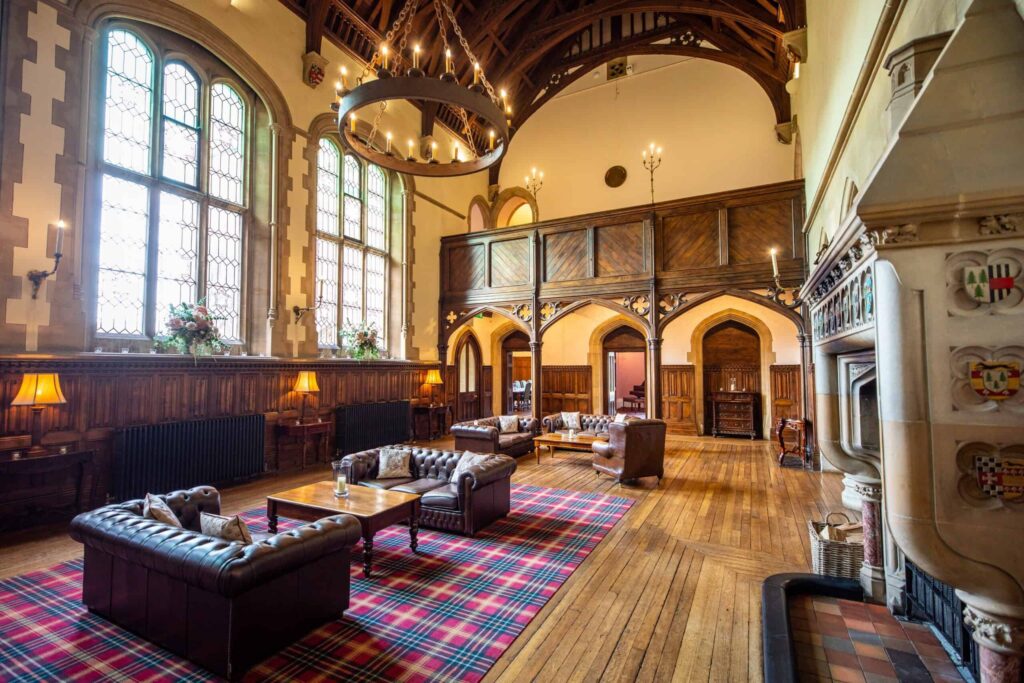
Inside, the contrast continues. The hall retains historic timberwork and panelling, while the principal rooms reflect the tastes of successive generations. Staircases, ceilings and decorative plasterwork give each part of the building a character of its own.
For a wedding, this variety offers something more interesting than a sequence of interchangeable reception rooms. Moving through Brympton means encountering the house as its owners gradually made it.
Where the ceremony begins
The choice of ceremony setting introduces couples to different parts of the estate.
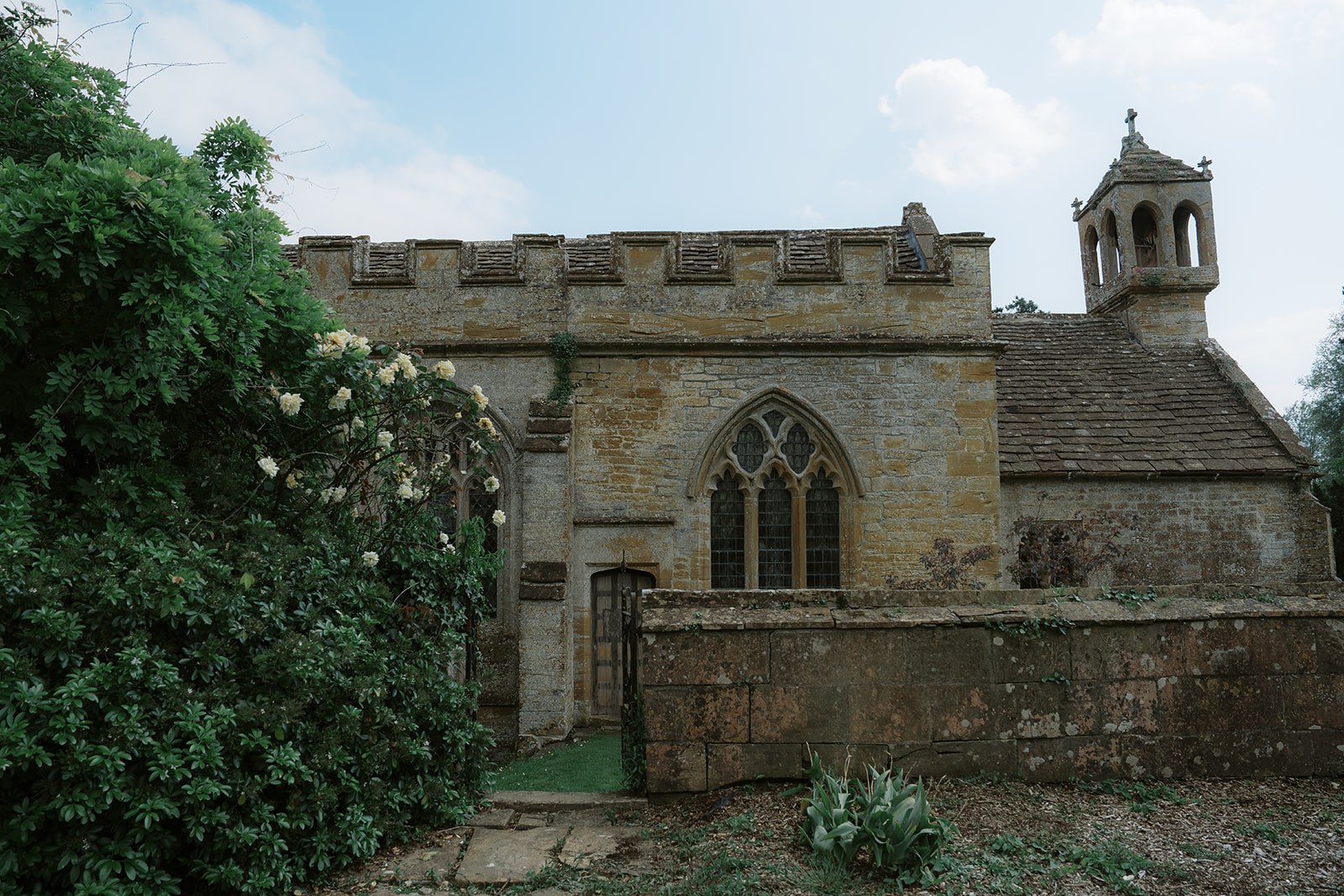
St Andrew’s Church stands beside the house, its origins reaching back to the thirteenth century. Its medieval architecture, historic monuments and surviving decorative details connect the present-day estate with the families who lived here long before it became a wedding destination.
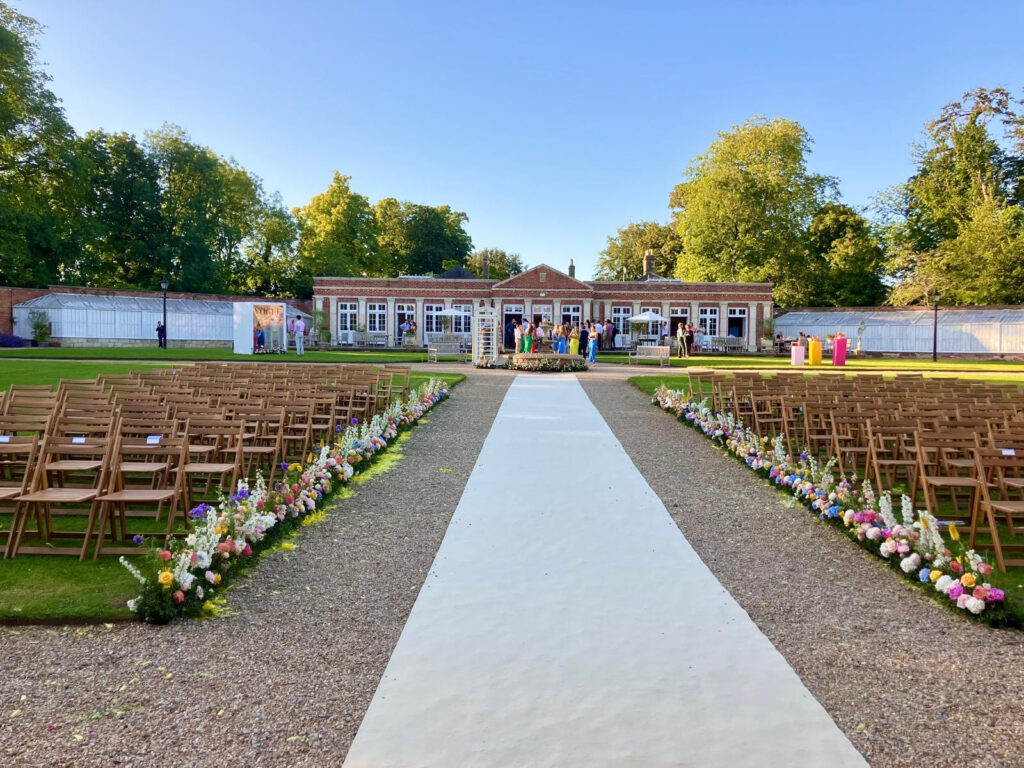
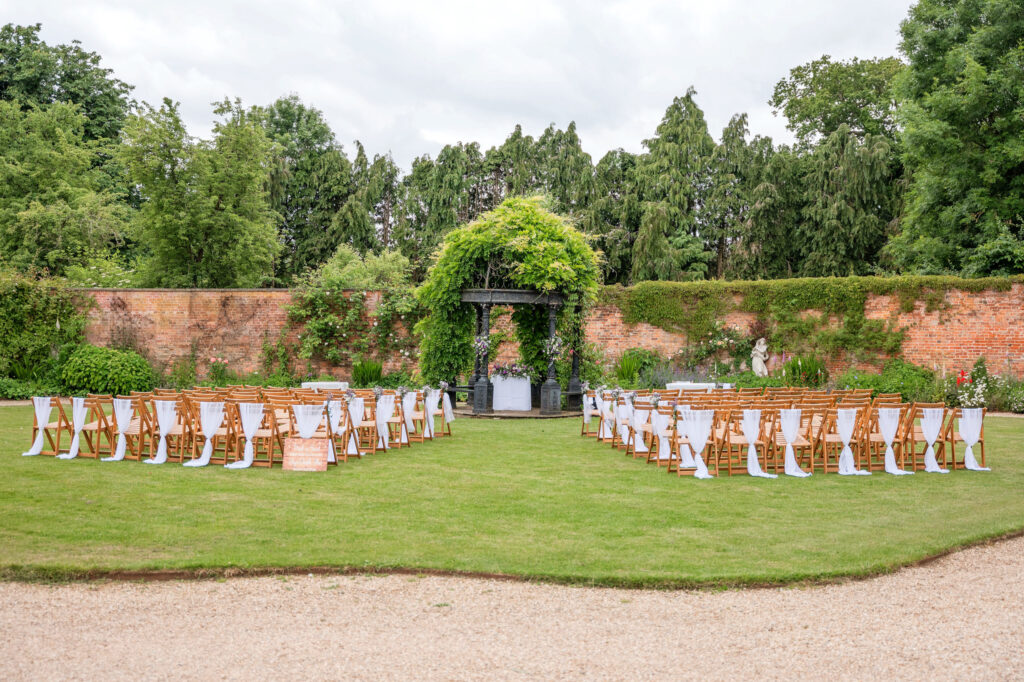
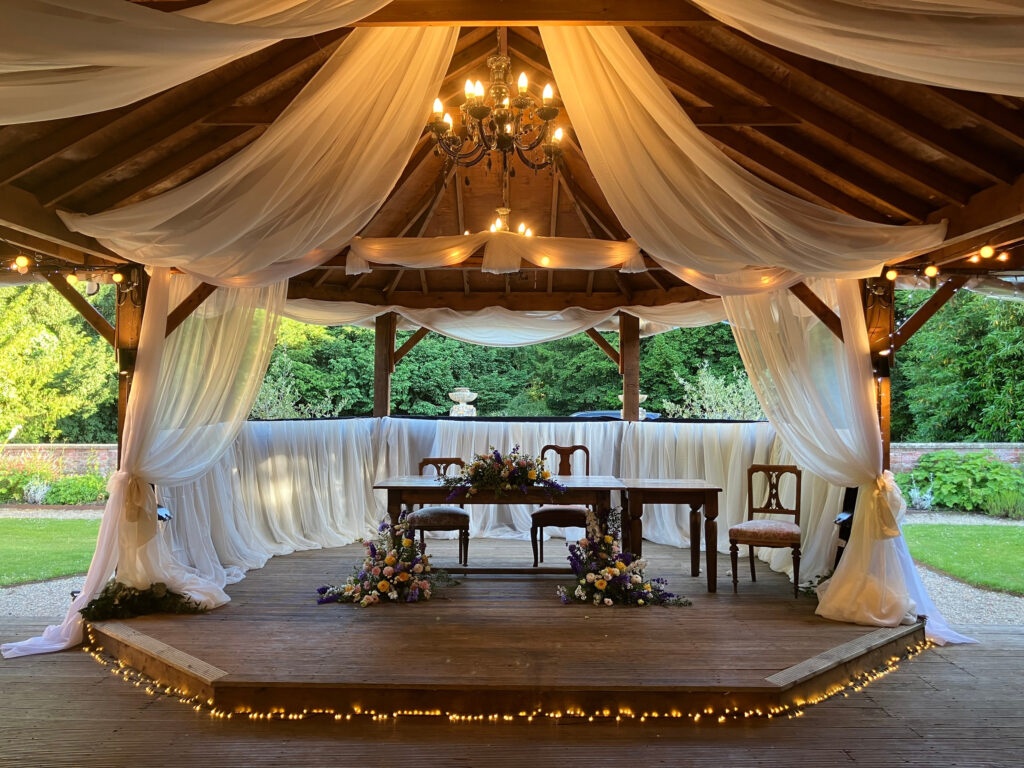
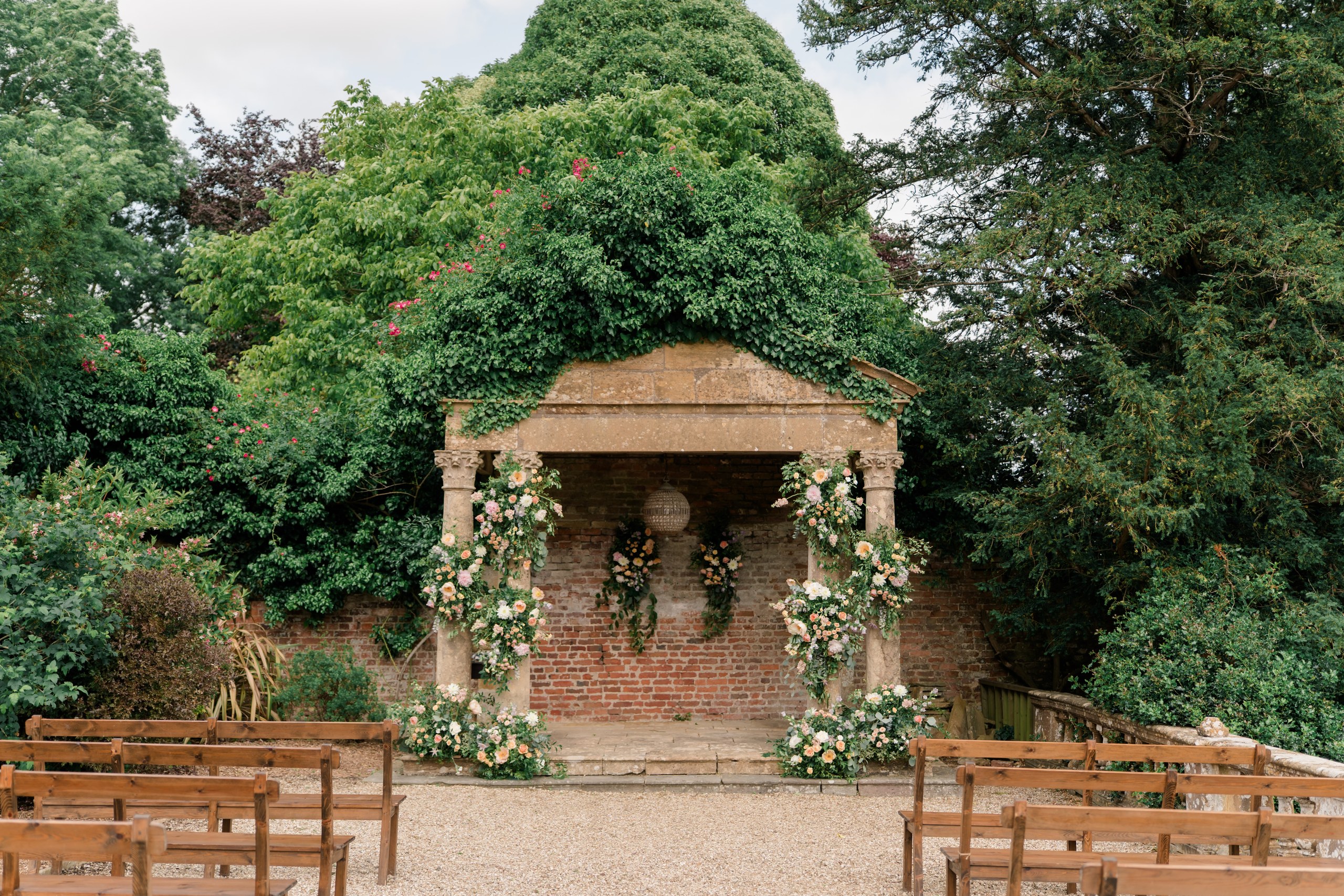
Within the grounds, Brympton also offers its chapel, while outdoor ceremonies may be arranged in the Gardens or at the Temple.
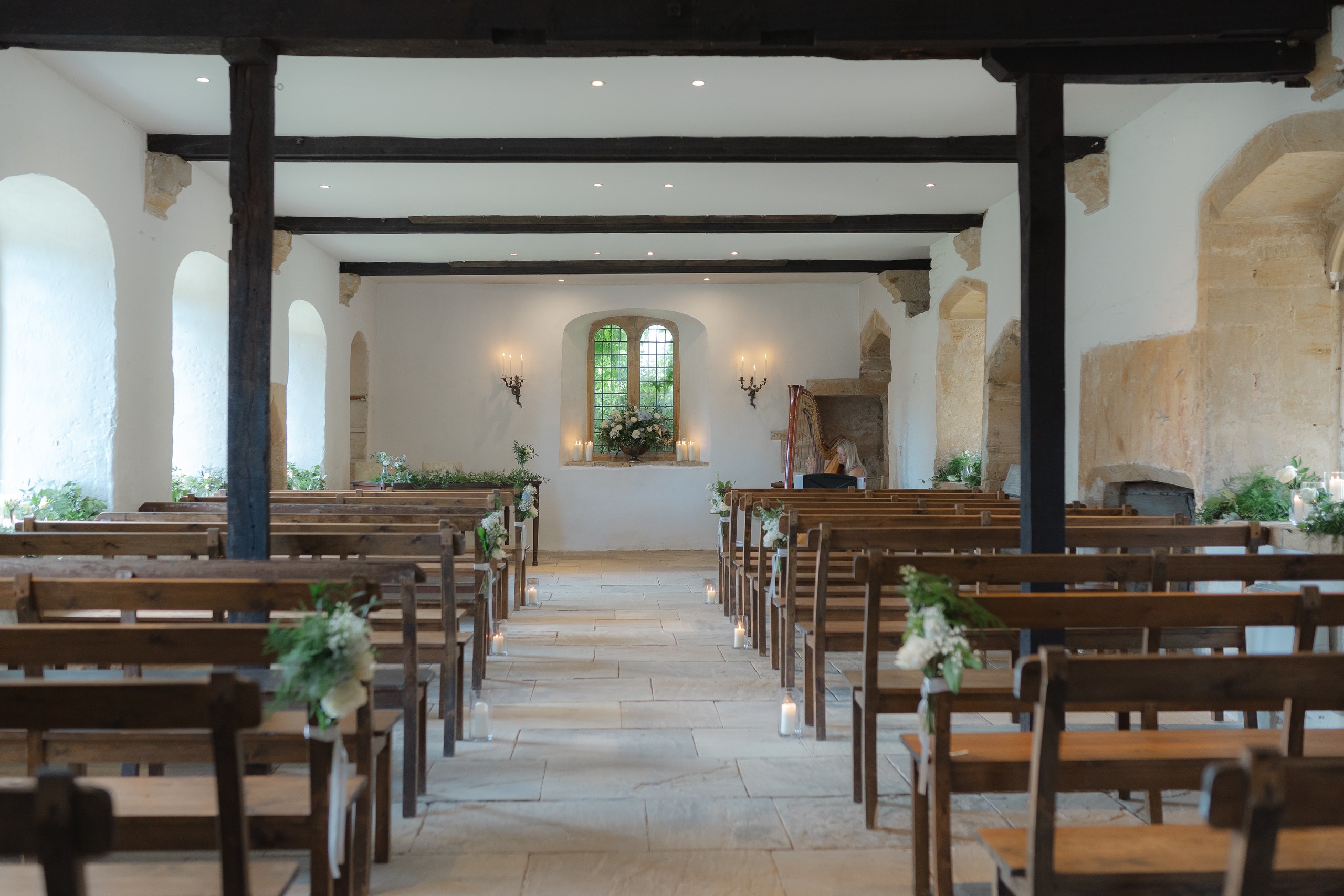
Each setting creates a different relationship with the property. The church has the intimacy and continuity of a historic place of worship. The chapel offers a ceremony within the estate’s buildings. The gardens bring the surrounding landscape into the occasion, while the Temple offers a more formal architectural setting outdoors.
The choice is therefore not only about the number of guests or the weather. It is also about which part of Brympton’s character a couple wants to place at the centre of their wedding.
The woman who gave the gardens another life
Among the many people who shaped Brympton, Violet Clive deserves particular attention.
Widowed young, she devoted decades to collecting plants and developing the gardens. Her interests extended beyond Somerset, with connections to gardens and horticultural influences further afield, including Japan.
One of the estate’s most intriguing features is the pedimented Temple at the eastern end of the South Terrace. It is said to have been assembled using architectural materials brought from Yeovil Town Hall, giving this elegant garden structure an unexpected municipal history.
The story captures something essential about Brympton. Its owners did not merely preserve what they inherited. They adapted, collected and rearranged, sometimes giving old materials an entirely new purpose.
Below the terrace, the lawn descends towards an elliptical pond, a stone-arched boathouse and a small island. The surrounding landscape adds another dimension to the estate, beyond the formal rooms and historic façades.
For a couple considering an outdoor ceremony, the gardens are not simply a picturesque alternative to the house. They are part of Brympton’s history in their own right.
A wedding that moves through the house
Once the ceremony is over, the estate’s arrangement begins to reveal its practical advantages.
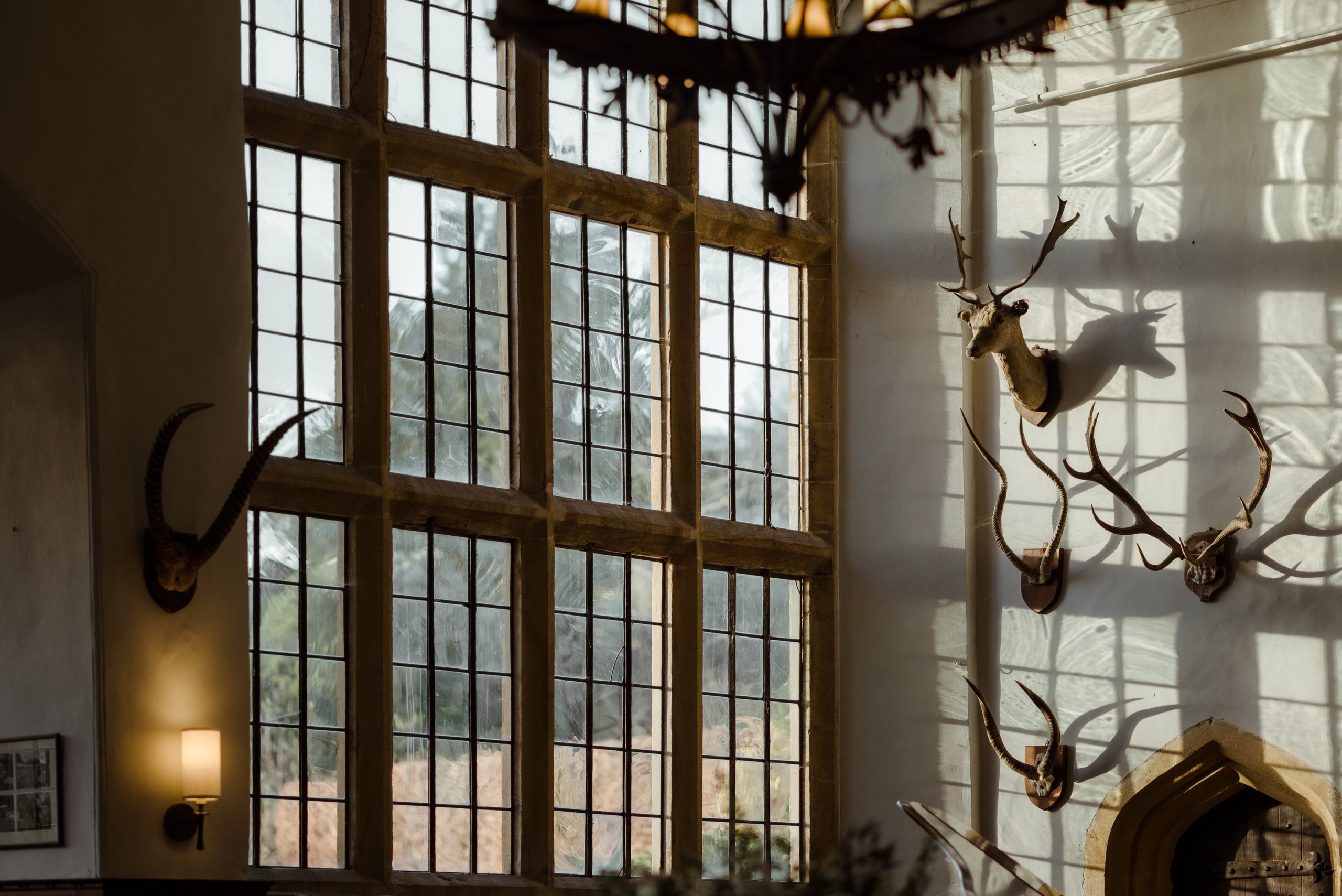
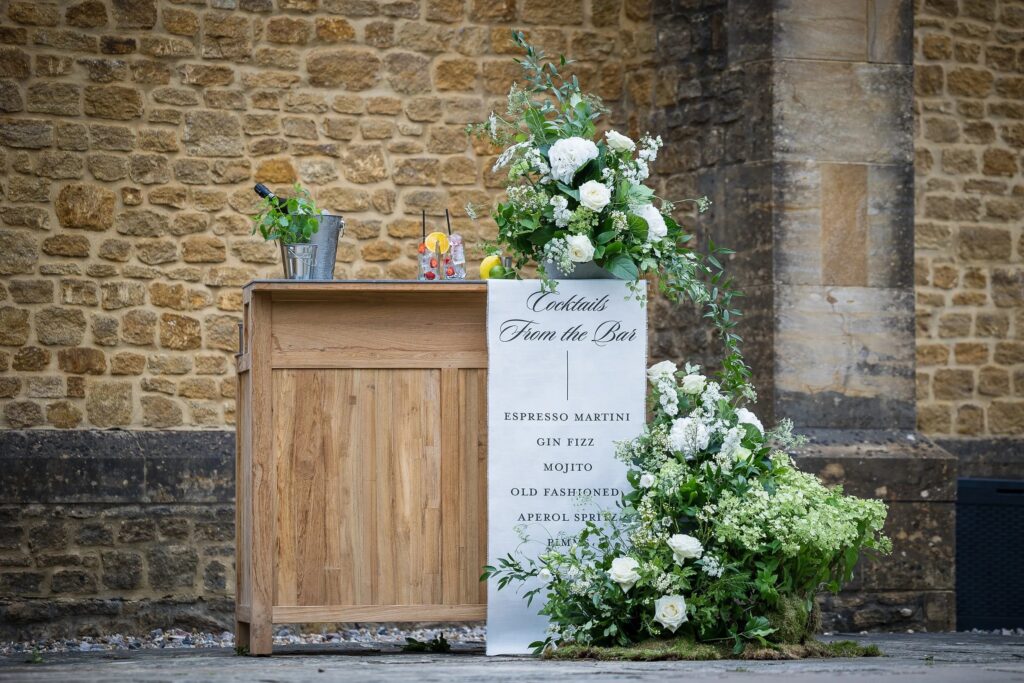
Drinks may be served in the Great Hall, where historic architectural details give the gathering a sense of occasion, or outside on the South Terrace when conditions allow.
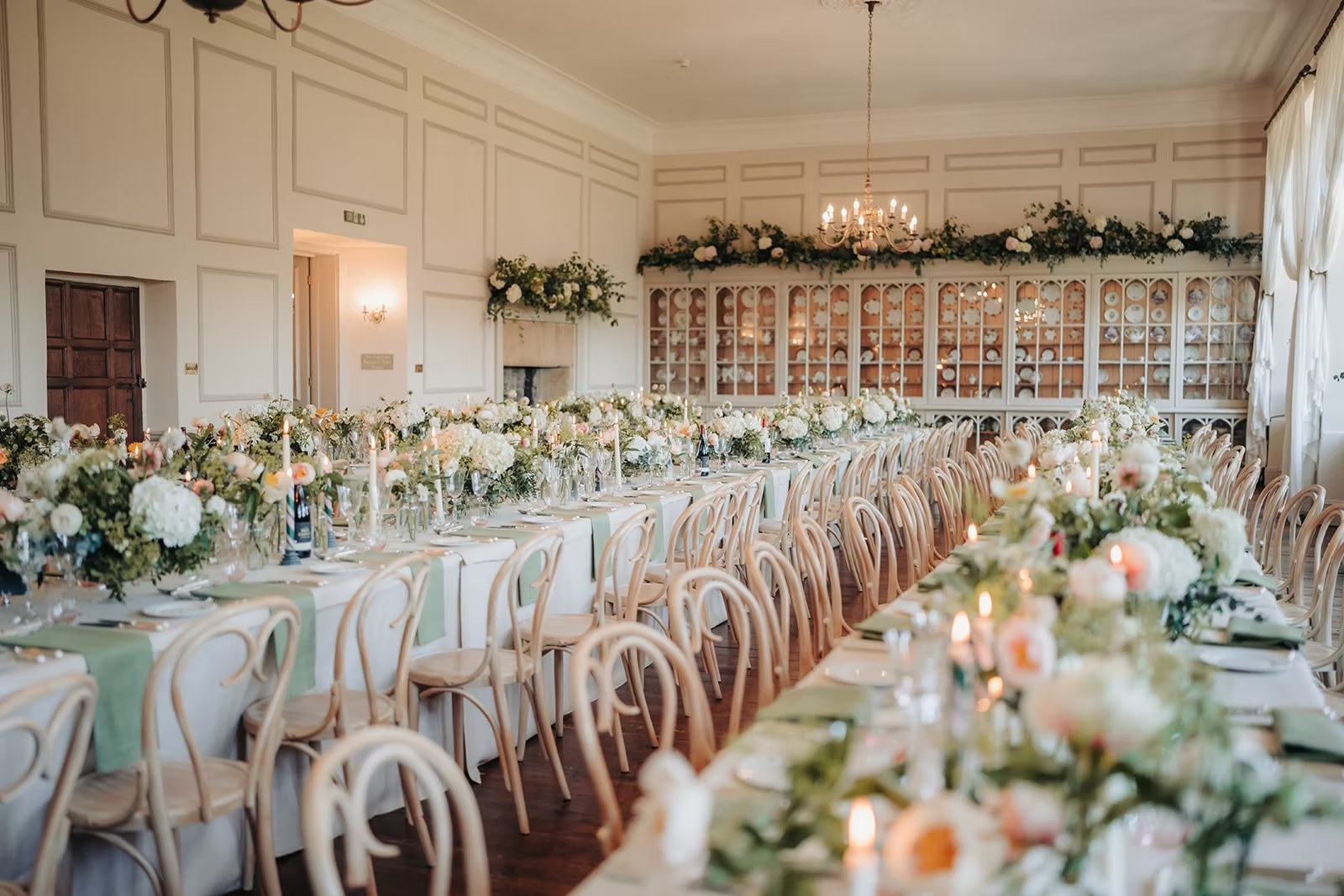
Dinner brings a change of setting. The Ballroom provides the largest of the formal dining spaces, while the Salon and State Dining Room offer alternatives for different guest numbers and styles of celebration.
Rather than requiring every part of the wedding to happen in one room, Brympton allows the day to develop as guests move between spaces.
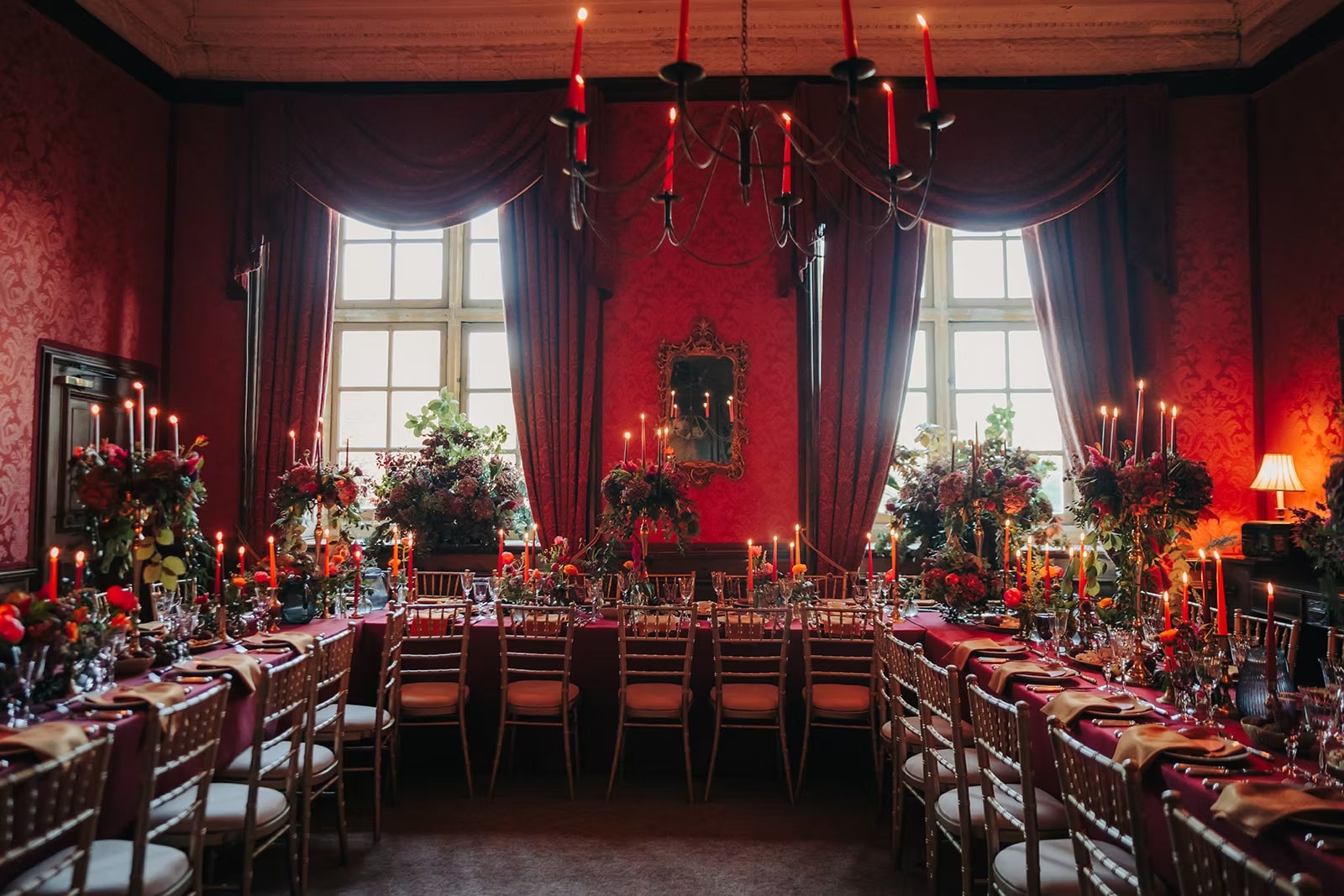
The effect is particularly interesting in a historic house. A room that feels formal during dinner may give way to a more relaxed atmosphere elsewhere, without losing the continuity of being within the same estate.
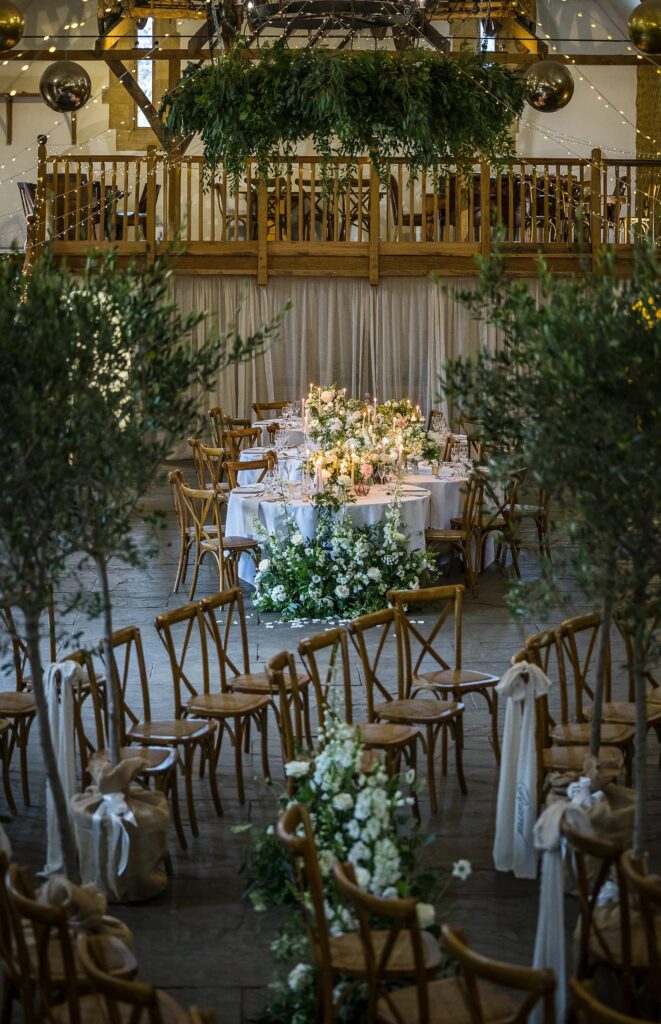
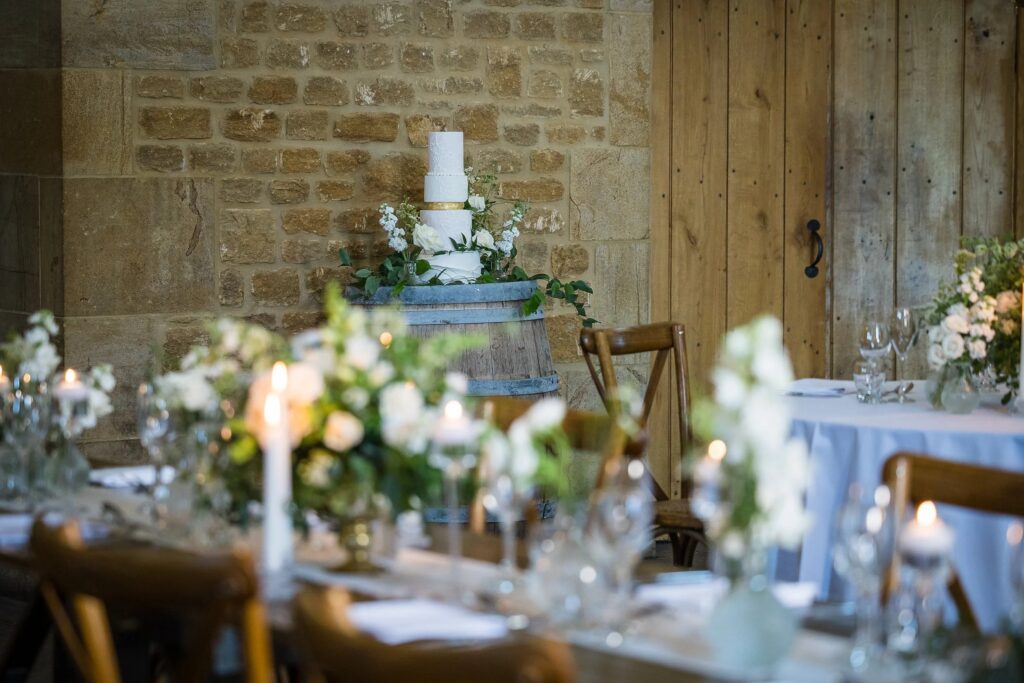
The evening then moves away from the main building to the Party Barn, where music, dancing and the late bar take over.
This separation gives the celebration a natural progression. The house provides the ceremony and hospitality; the barn offers a distinct setting for the livelier part of the evening.
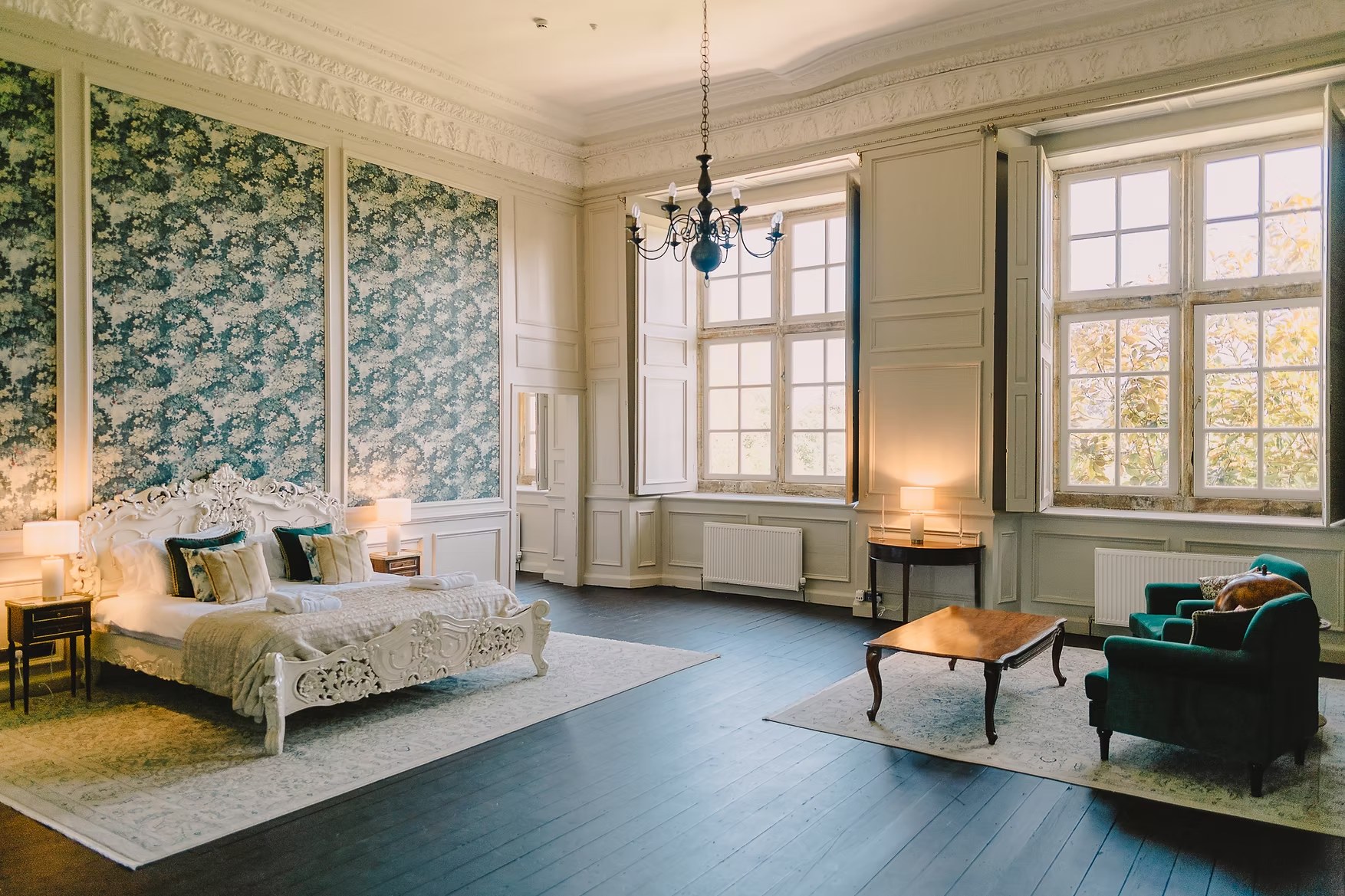
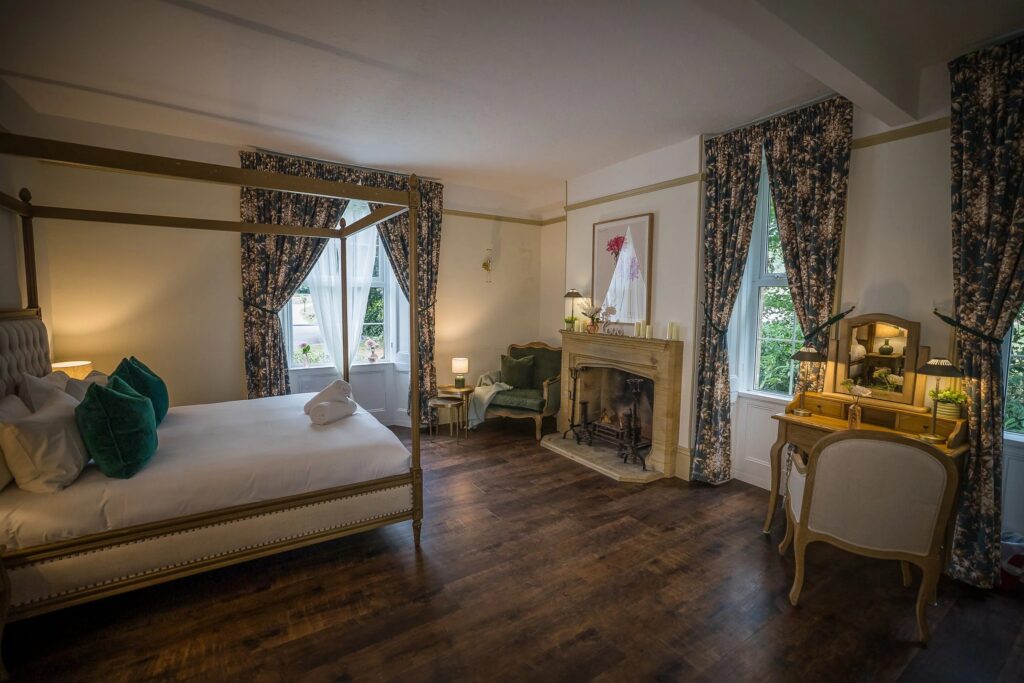
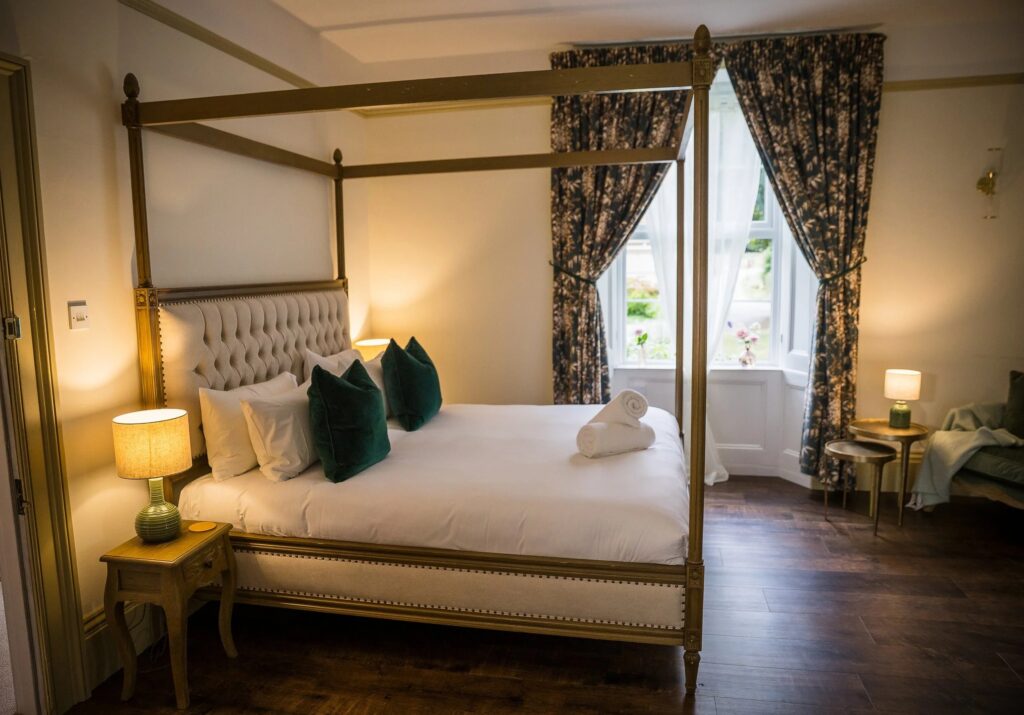
The Honeymoon Suite completes the journey, bringing the couple back into the house after the celebrations.
One estate, one wedding
Brympton’s exclusive-use arrangement is an important part of its appeal.
Rather than sharing the property with another wedding, a couple has the estate to themselves for their celebration. The venue describes its exclusive-use period as running from midday to midday, allowing the different spaces to operate as parts of one private occasion.
The grounds extend across approximately 33 acres in the venue’s wedding information, although the wider historic landscape has been described separately in heritage records.
That distinction matters. Brympton is both a working wedding venue and a much older country estate, and the boundaries used in wedding packages need not be identical to those of its registered historic landscape.
The result is a property with enough variety to accommodate different moments of the day without requiring guests to leave the setting.
A different character in every season
Brympton also adapts its wedding arrangements to the calendar.
In the colder months, fires in the principal rooms and candlelit settings give the interiors a different character from the gardens and terraces of spring and summer.
The venue’s collections reflect those seasonal distinctions. Candlelit weddings are associated with the winter months, while Spring Celebration is offered in April. The Bijou collection focuses on quieter dates, including selected winter months and midweek periods during the rest of the year.
For couples considering a longer celebration, two-night arrangements allow more time at the property, with accommodation forming part of the experience.
The venue’s published information has indicated single-day Bespoke weddings from £9,500 and two-night celebrations with bedrooms from £29,500. These should be treated as starting prices rather than a complete quotation, with current rates, inclusions and availability confirmed directly.
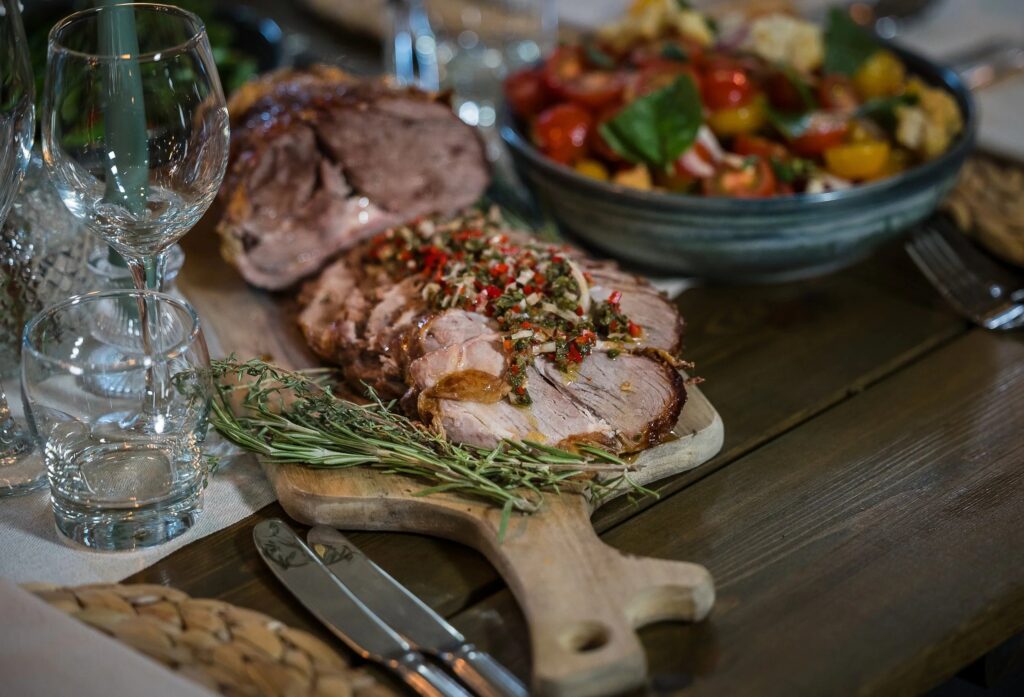
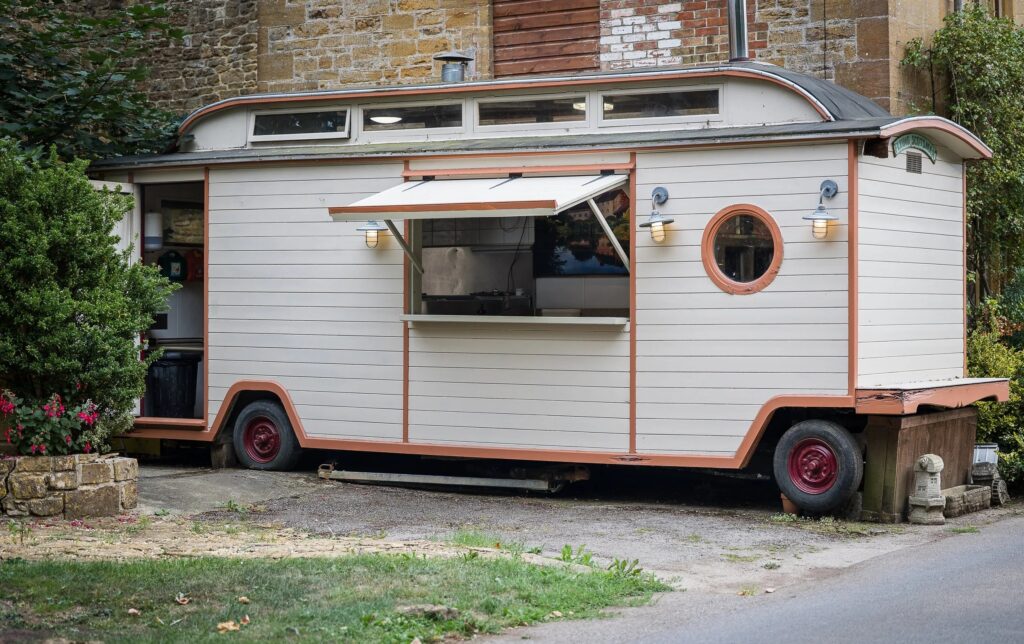
Catering arrangements also depend on the chosen package. Brympton describes options involving approved caterers, licensed external caterers by arrangement and dry hire.
These practical distinctions deserve attention early in the planning process, particularly where couples are comparing a single-day wedding with a full weekend at the estate.
The pleasure of a house that has changed
What distinguishes Brympton is not simply its age.
Many country houses can trace their history back centuries. Brympton makes that history unusually visible. Medieval origins sit alongside Tudor additions, later classical façades, historic interiors and gardens shaped by owners with very different tastes.
There is no attempt to make every room feel as though it belongs to the same period.
For a wedding, that variety is an advantage. The ceremony, reception, dinner and evening celebration can each occupy a different setting while remaining connected by the character of the estate.
It is a house whose history is encountered gradually, rather than explained all at once.
And perhaps that is the most appealing quality of Brympton House: it does not ask a wedding to fit into a single grand room. It allows the celebration to discover the property as the day unfolds.
Planning a wedding at Brympton House
Brympton House is in Odcombe, near Yeovil in Somerset, England. It offers exclusive-use weddings, indoor and outdoor ceremony settings, formal reception rooms, a separate Party Barn and accommodation arrangements associated with selected wedding collections.
Couples should confirm their preferred ceremony setting, guest capacity, available bedrooms, catering arrangements, current package prices and permitted finish times directly with the venue.
For those considering a weekend celebration, it is also worth establishing which spaces and services are included across the full stay.
Check your date with Brympton House to explore the available wedding arrangements.