Getting married in Italy comes down to two questions: what paperwork the authorities want from you, and whether the legal ceremony can take place at your venue. The first is set by Italian practice and your own country’s documents. The second differs from one venue to the next. This guide covers what official sources say for British couples, what they say for Americans, how legal ceremonies work at the venues on 5 Star Weddings, and what we could not confirm.
Getting married in Italy from the UK: the nulla osta
The key document is the nulla osta, which in English is a certificate of no impediment. The GOV.UK guidance for marriages in Italy says that a nulla osta is the same as a certificate of no impediment, and that British nationals who qualify apply by post from the British Embassy in Rome. The application includes a notice of marriage, which a notary witnesses, and an affirmation. GOV.UK publishes the application forms for opposite-sex and same-sex couples.
A sworn statement alone does not replace it. The Italian Consulate General in London says that an affidavit does not correspond to a nulla osta, and that the document comes from the competent authority of the partner’s country. The consulate adds that the document must not have been issued more than six months before a consular appointment. That is the consulate’s rule, so ask the Italian town hall (comune) where you are marrying whether it applies the same limit.
Apostille, translation and the town hall
The same consulate page says that for a British partner the registrar’s signature on the certificate needs a paper apostille, and that documents must be in Italian or English, or be translated. Foreign partners do not go through the consulate for banns: the consulate tells them to contact the comune for its list of documents. So the practical order is to choose the venue, ask its coordinator which comune will register the marriage, then ask that comune for its document list before you apply for anything.
GOV.UK also publishes a bilingual statutory declaration for Italy, confirming there is no legal reason why you should not marry there. Ask your comune whether it wants the declaration as well as the nulla osta. GOV.UK’s tool to check your documents sends you to the person conducting the ceremony for local advice.
Getting married in Italy as an American
The Italian Consulate General in Los Angeles describes a different route. US citizens make an atto notorio, an affidavit sworn by the applicant and four witnesses at a consulate in the US, confirming that neither US law nor the Italian Civil Code presents an obstacle. The witnesses must be over 18 and unrelated to either partner. A separate sworn declaration is made before a US consulate in Italy. A divorce decree or death certificate for a previous marriage needs an apostille from the relevant Secretary of State, and Italian translation. Confirm the steps with your own consulate before you rely on them.

Can you have the legal ceremony at your venue?
This is the question the paperwork guides skip, and it is the one that shapes a wedding. Italian venues handle the legal ceremony in different ways, and the records of our listed venues show three arrangements.
| Arrangement | Venue | What the record states |
|---|---|---|
| Legal ceremony at the venue | Casale de’ Pasquinelli, Lucca | An approved premises for civil weddings, so the legal ceremony takes place in the garden rather than at the registry office; up to around 100 guests |
| Legal ceremony at the venue | Villa Mosconi Bertani, Valpolicella | Civil ceremonies with legal value inside the villa and in the gardens and park |
| Legal ceremony at the venue | Agriturismo Cima alla Serra, near Pisa | Civil ceremonies on the panoramic terrace, Monday to Saturday |
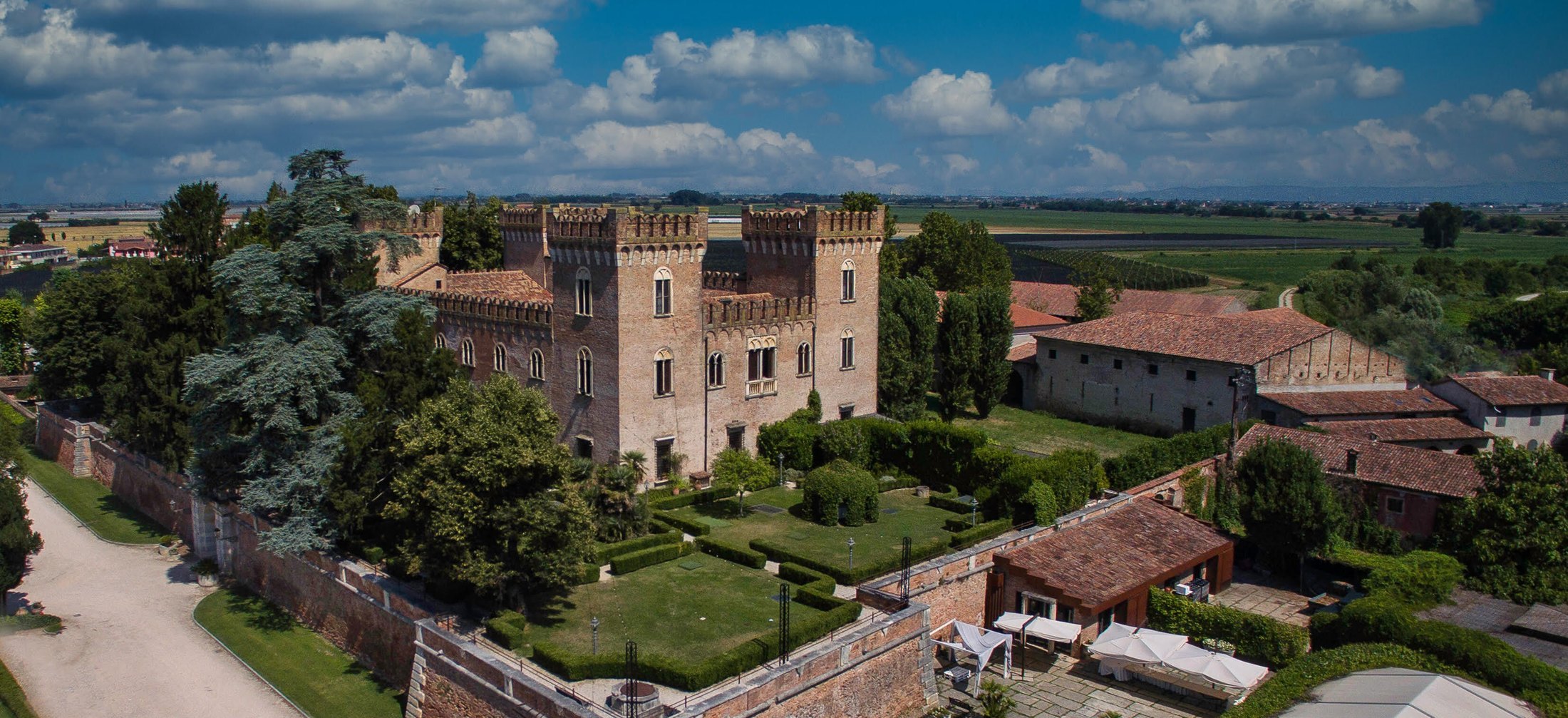
| Civil ceremony arranged on site | Castello Bevilacqua, between Verona and Venice | Civil ceremonies are arranged on site, with a Catholic church 200 metres from the gates |
| Legal ceremony at the town hall | Palazzo Ducale di Avella, Campania | Legal civil ceremonies are held at the Avella comune; symbolic and blessing ceremonies take place in the Roman amphitheatre |
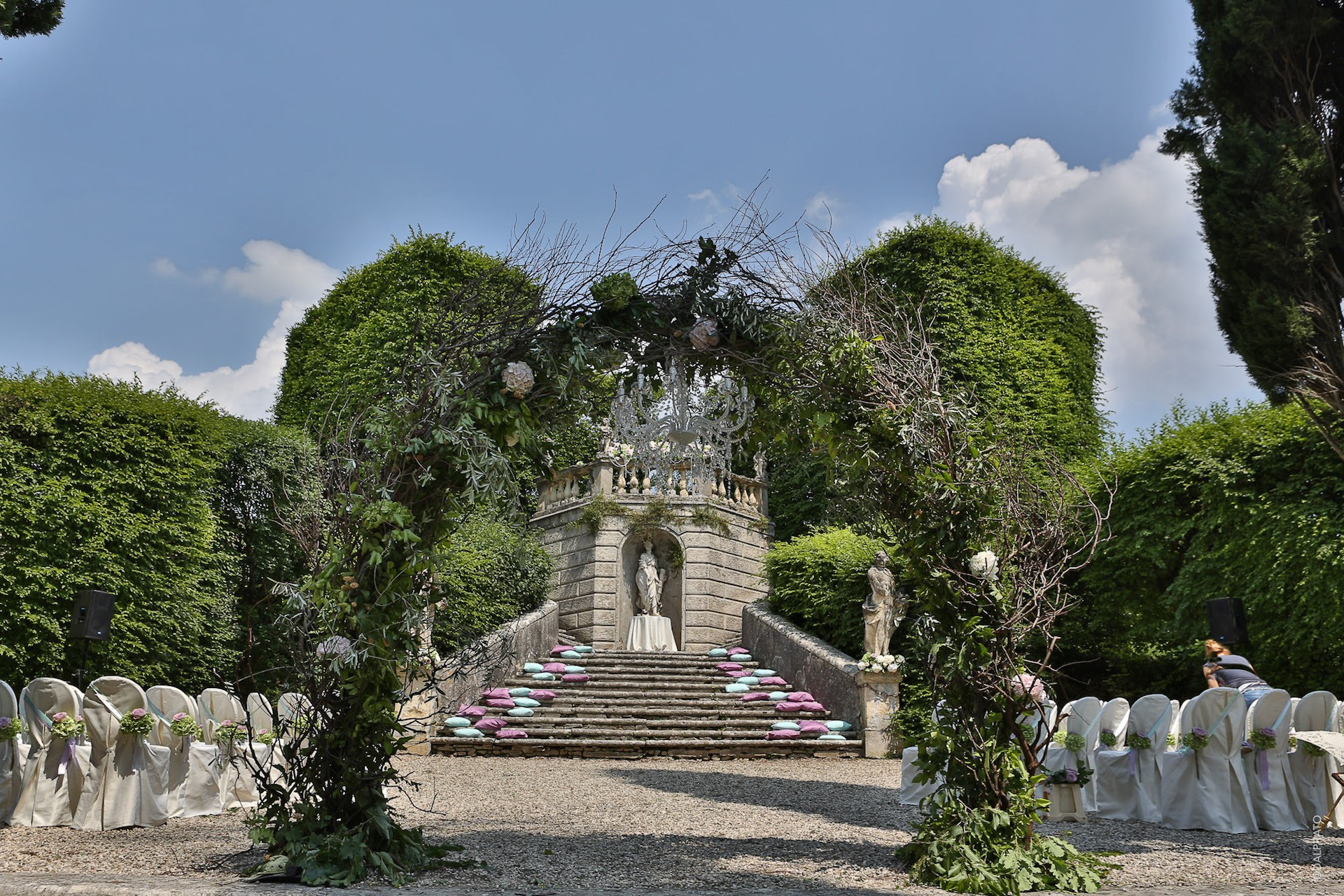
The last arrangement is common across Italy and worth understanding before you fall in love with a setting. Where the legal ceremony is held at the town hall, a symbolic ceremony at the venue can follow. Where a venue is an approved premises, the official can come to the venue. Ask each venue which of these it offers, which comune handles the paperwork, and whether the official’s travel or the licence adds a cost.

What we could not confirm
The official pages we could read give no fees, no timings, no detail on how the comune publishes the intention to marry, how religious ceremonies work, who the witnesses at the wedding must be, or how the marriage is recognised in the UK or the US. GOV.UK’s guidance on marriages abroad says a marriage abroad cannot get a UK marriage certificate, and that the foreign certificate comes from the person conducting the ceremony, so ask them how to obtain and translate it. We did not read the Italian foreign ministry or US government pages, because they were not available to us. If any of these points affects your plans, confirm it with the comune and with your own embassy or consulate before you book.
Planning an Italian wedding
Choose the region and the venue first, then ask the venue for its comune and its civil ceremony arrangements. For a worked example of one region, see where you can legally marry in Puglia. For the wider picture, see our Italy wedding guide. A planner who handles international couples can manage the translations and the comune, and that is a good question to ask at the first call.
Questions couples ask
What is a nulla osta?
It is the Italian name for a certificate of no impediment. GOV.UK says the two are the same document.
Do British couples apply through the Italian consulate?
No. British nationals apply by post from the British Embassy in Rome. The Italian consulate in London tells foreign partners to contact the town hall for the list of documents.
Can we marry legally at our venue?
At some, yes; at others the legal ceremony is at the town hall and the venue hosts a symbolic ceremony. The table above shows examples of each, and your venue can tell you which applies.
Check your date with the venues that suit your plans.
Updated 28 November 2026