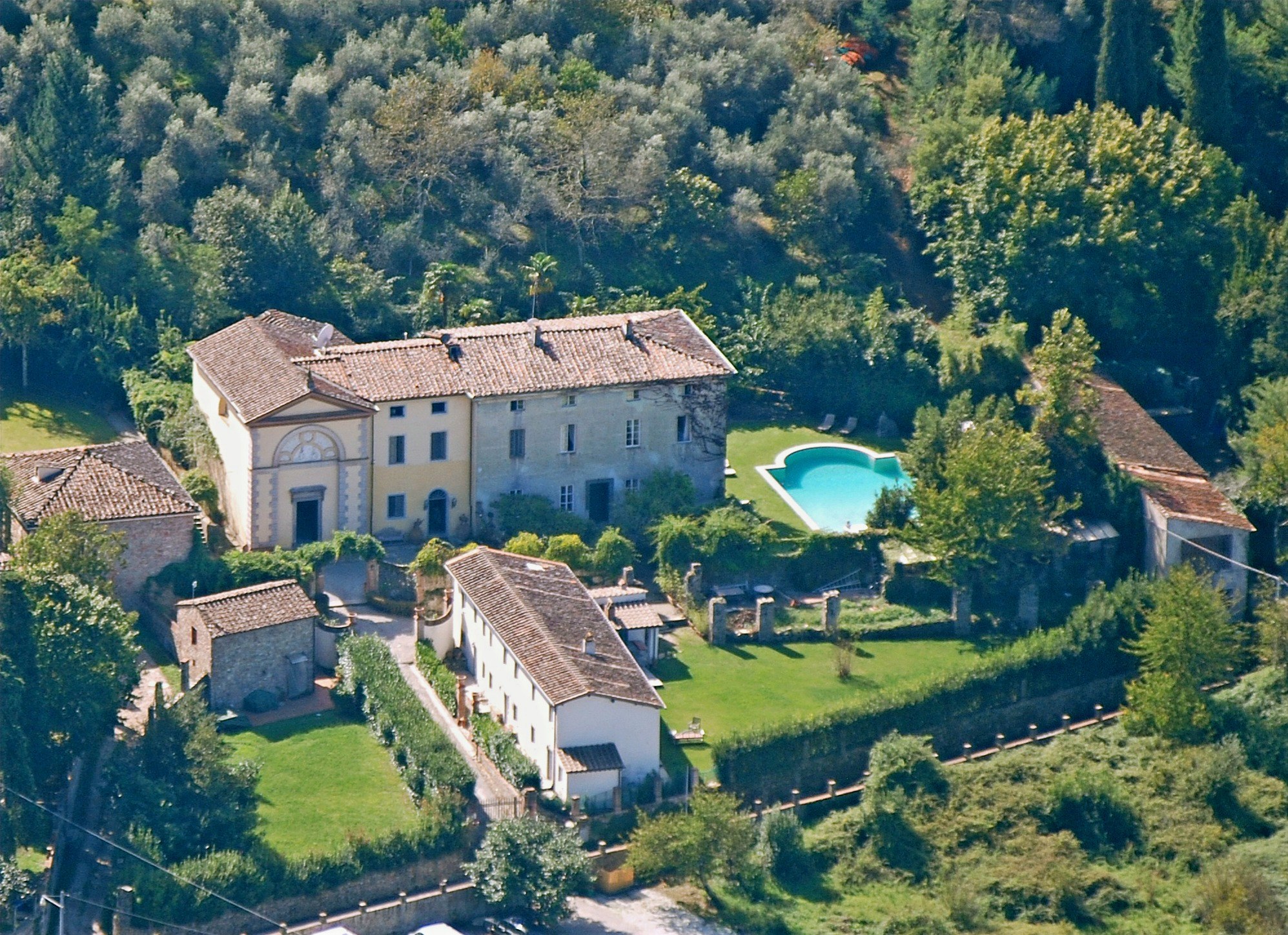
A house at the foot of Monte Zano
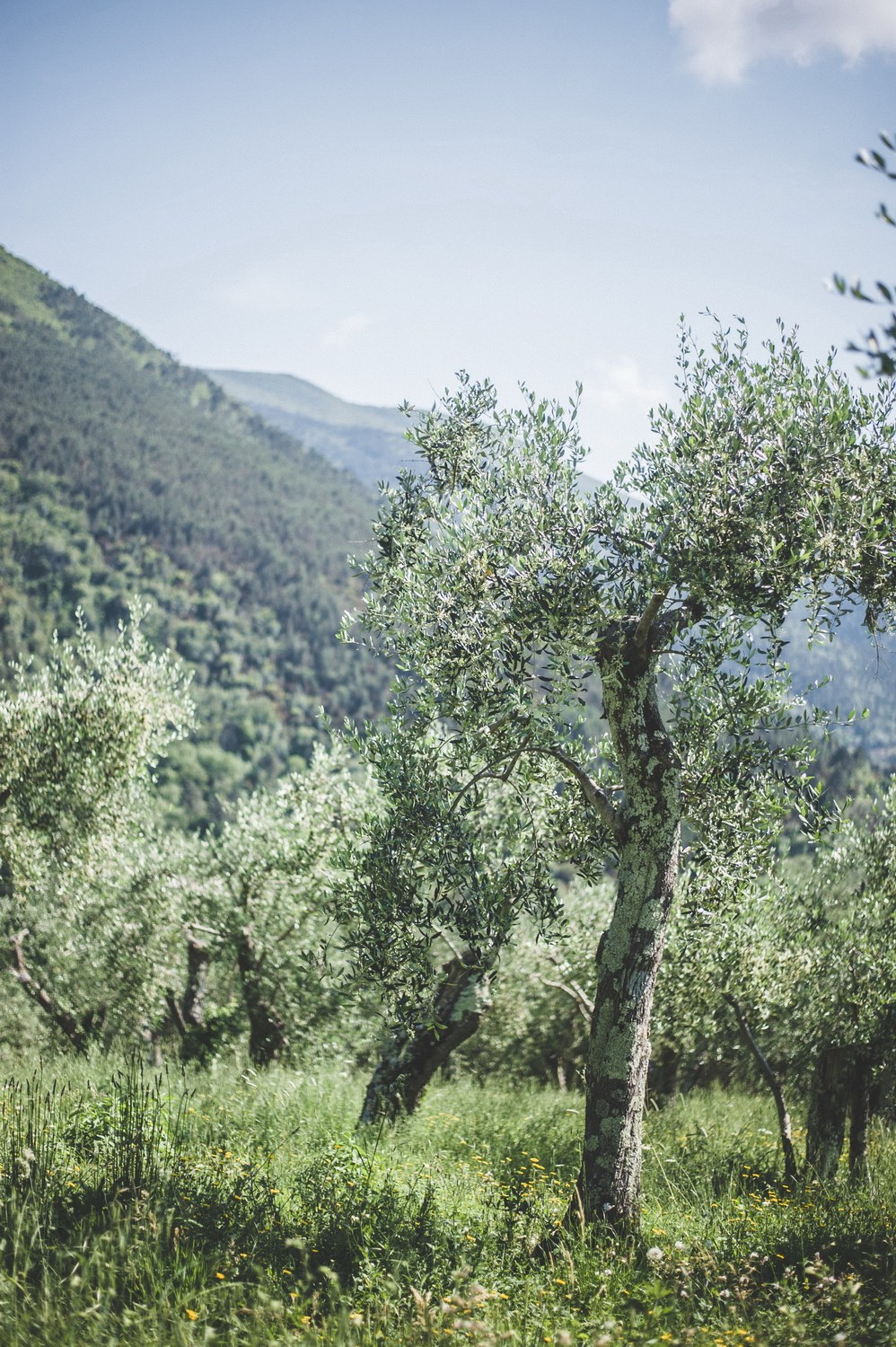
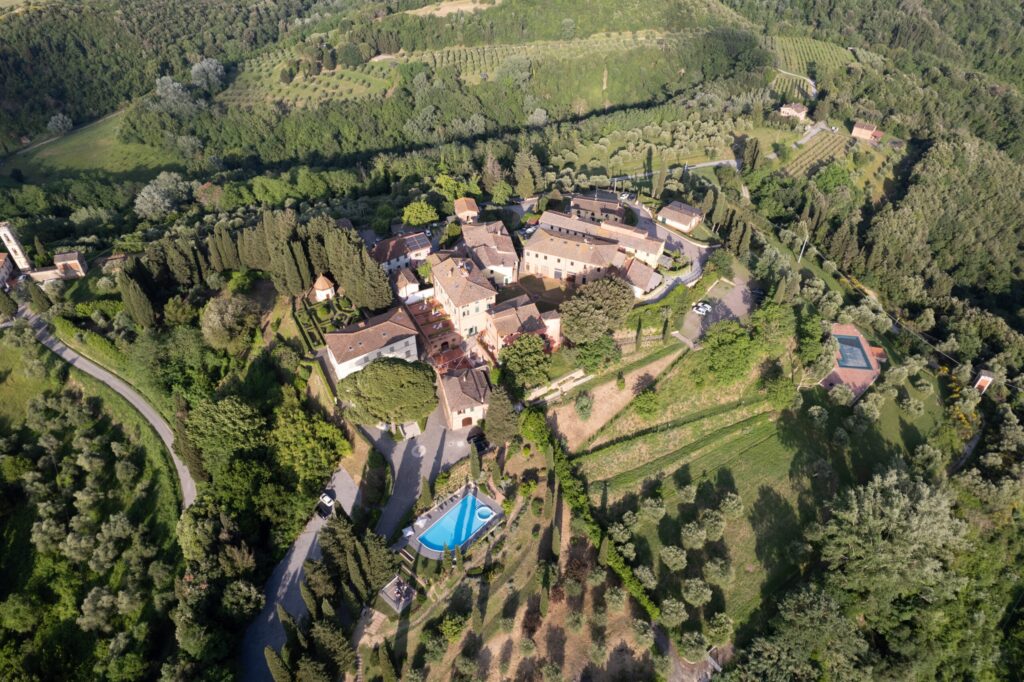
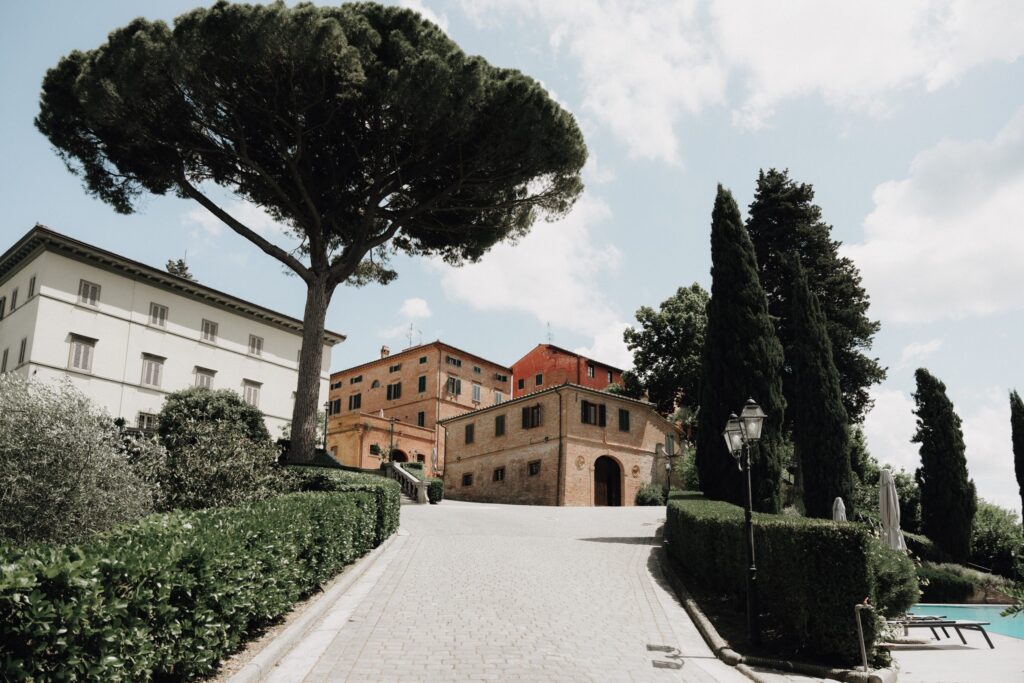
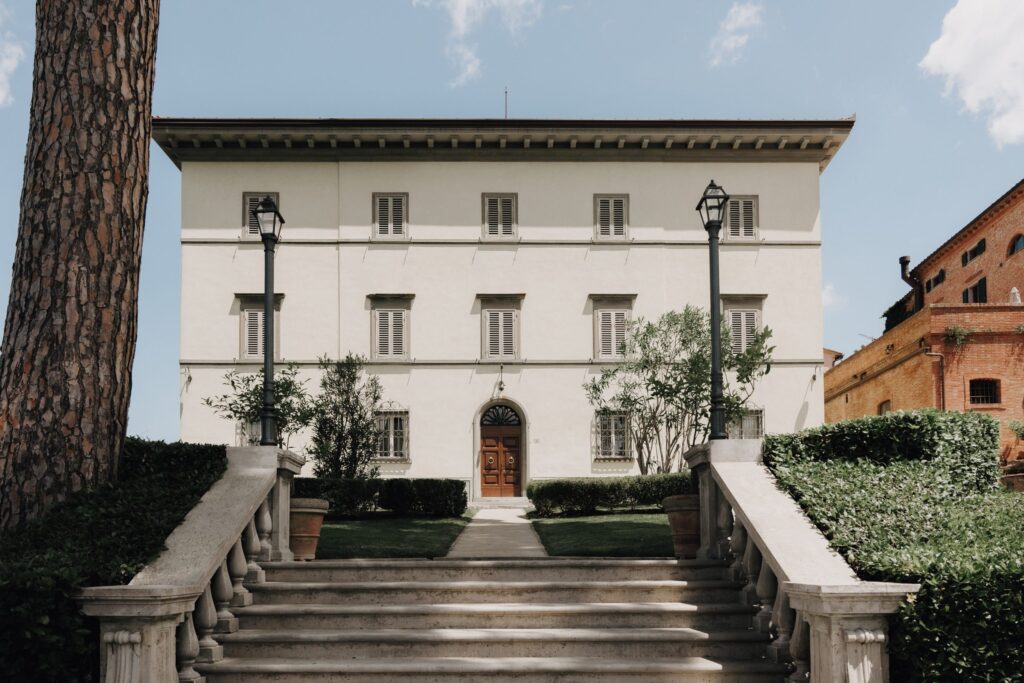
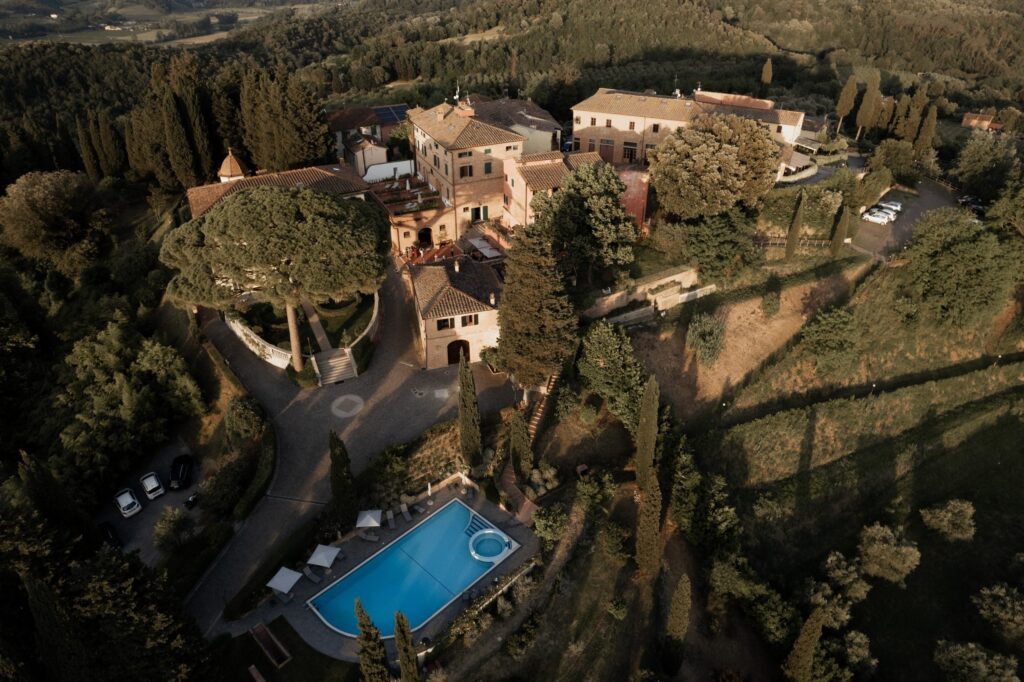
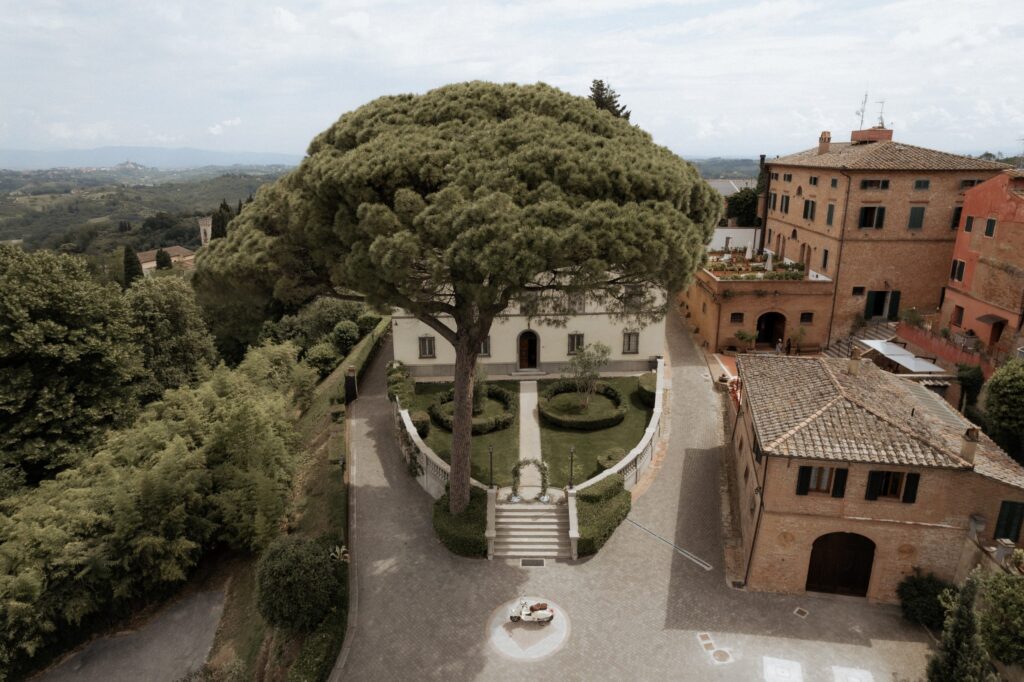
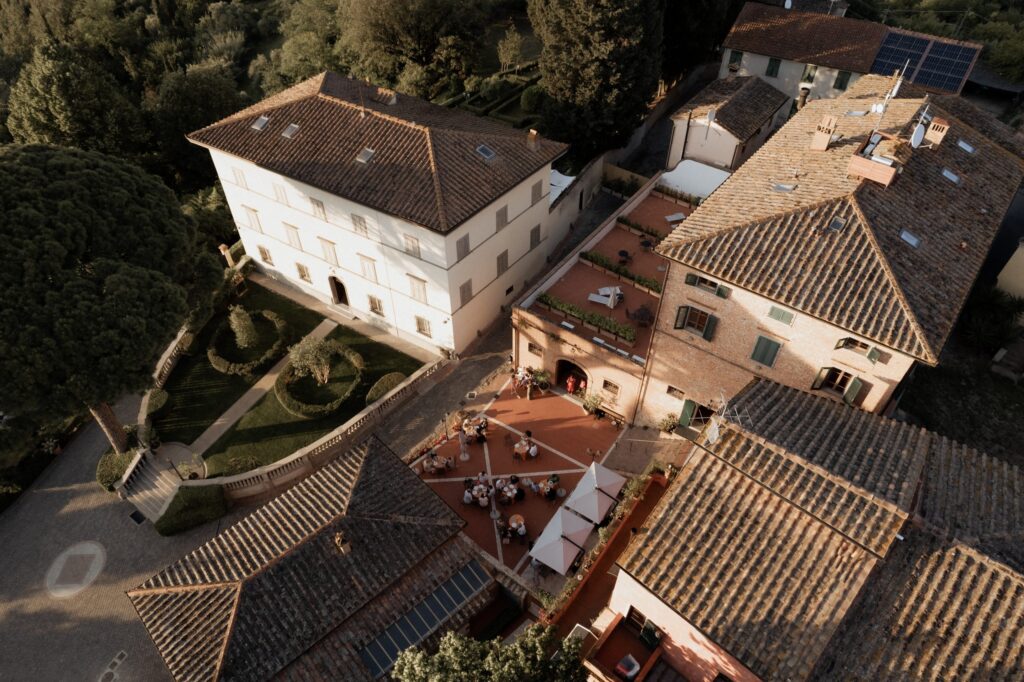
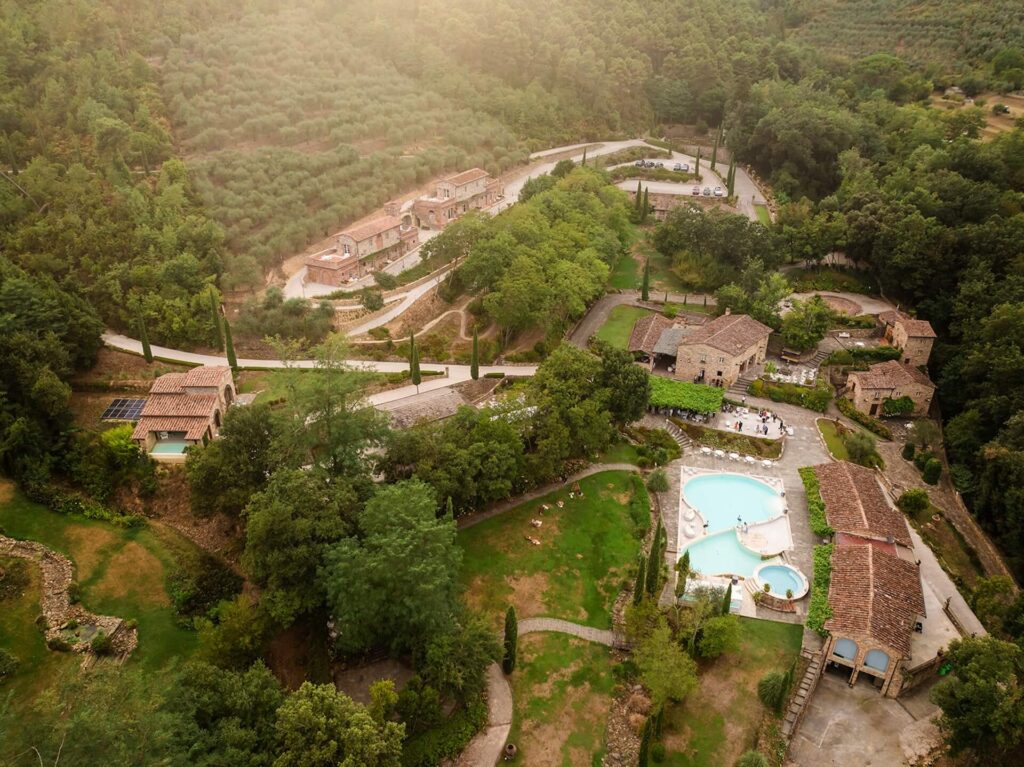
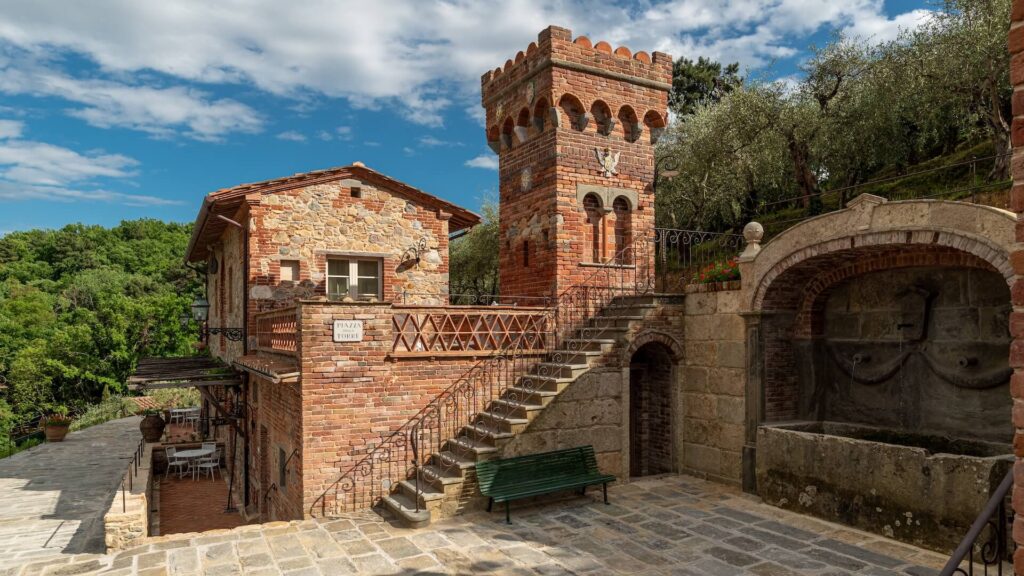
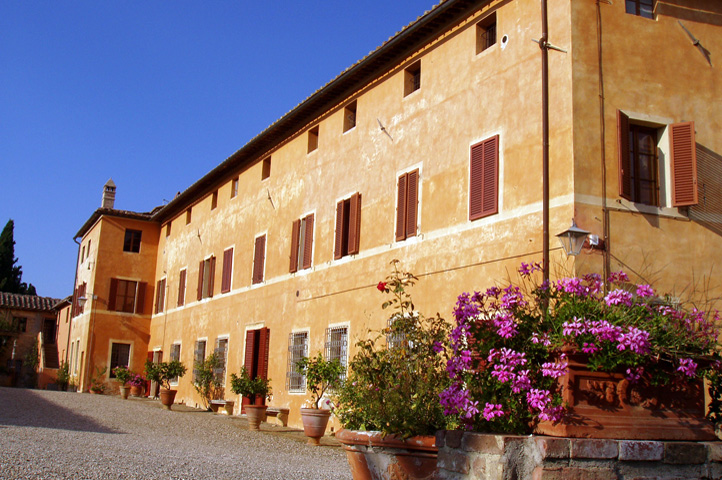
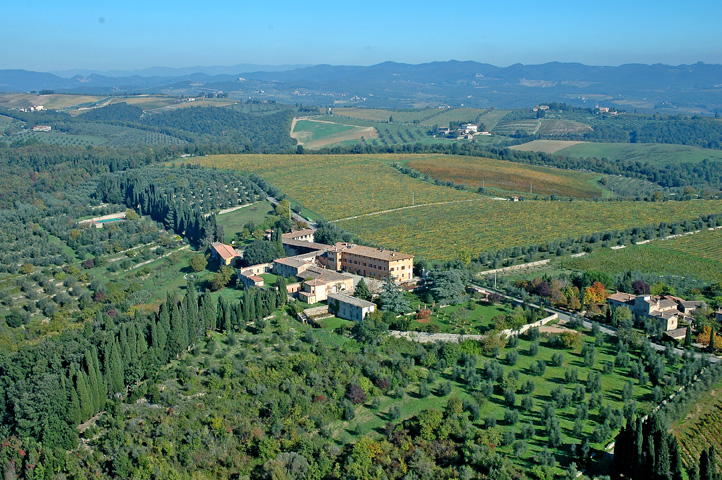
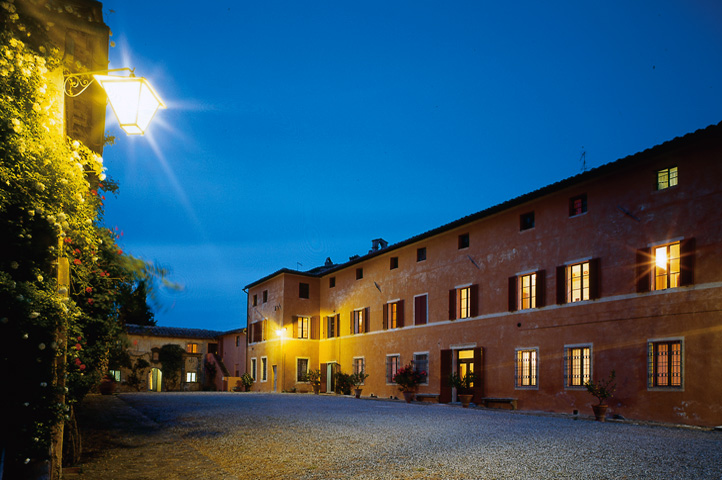
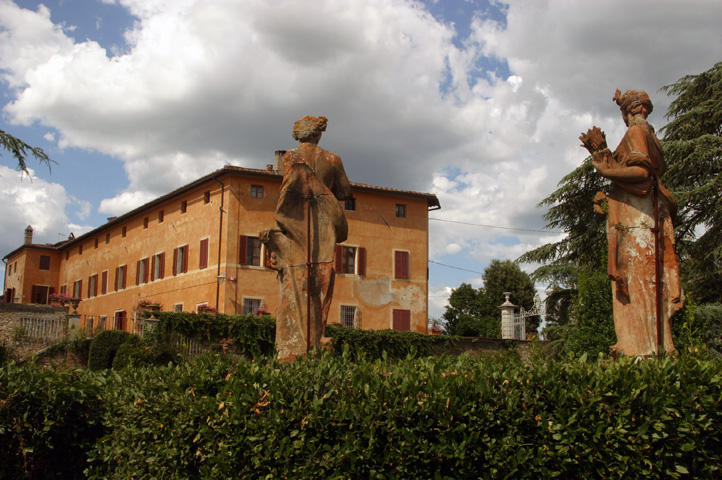
The house stands at the foot of Monte Zano, a short distance from the parish church of Vorno, a village in the municipality of Capannori in the hills above Lucca. The original building dates from the fifteenth century, and the house took its present appearance in the early 1800s, when the Nottolini family bought it. The north front has a large door with a stone architrave, and a matching door on the south side opens to the lemon garden, with its fountain, flowerbeds, paths and pergolas. The main house has three floors and a basement. Lorenzo Nottolini, born in 1787 at Segromigno in Monte, also in Capannori, became Court Architect and Engineer in Lucca in 1818 and is remembered for the city’s aqueduct. The villa credits him with the design of the chapel, and attributes its 1860s rebuilding to the Nottolini family who then owned the house.
The Annunziata chapel and the ceremony
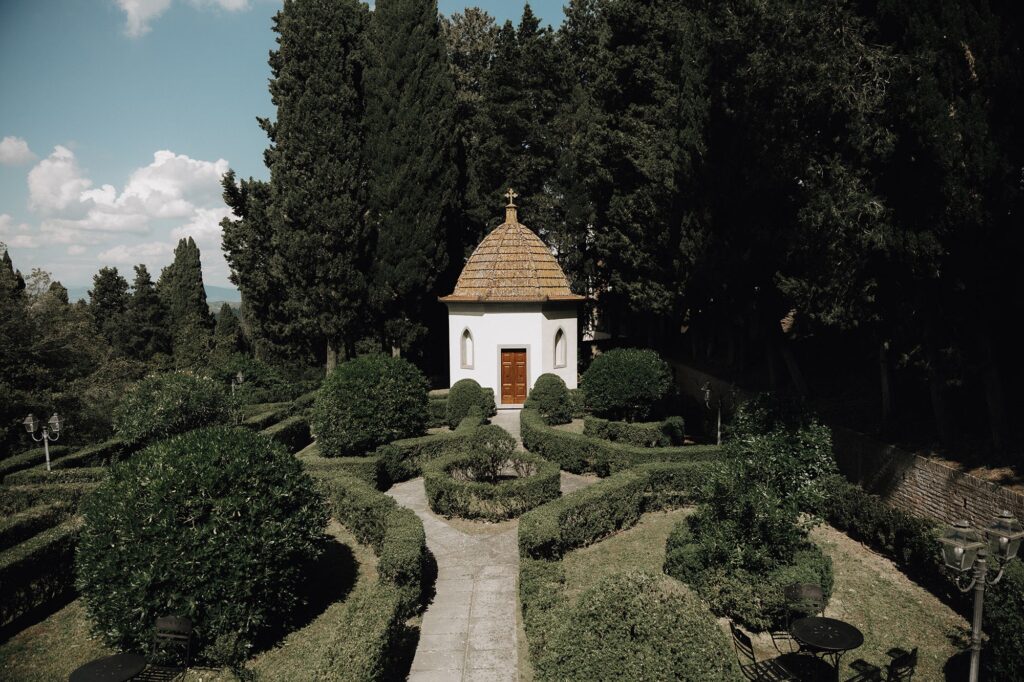
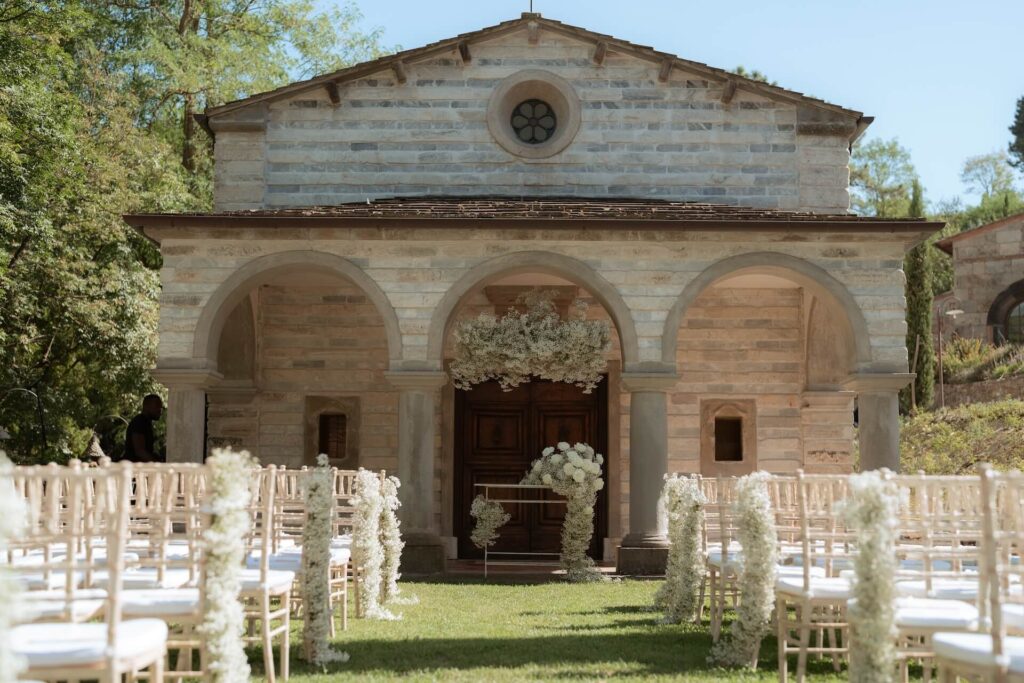
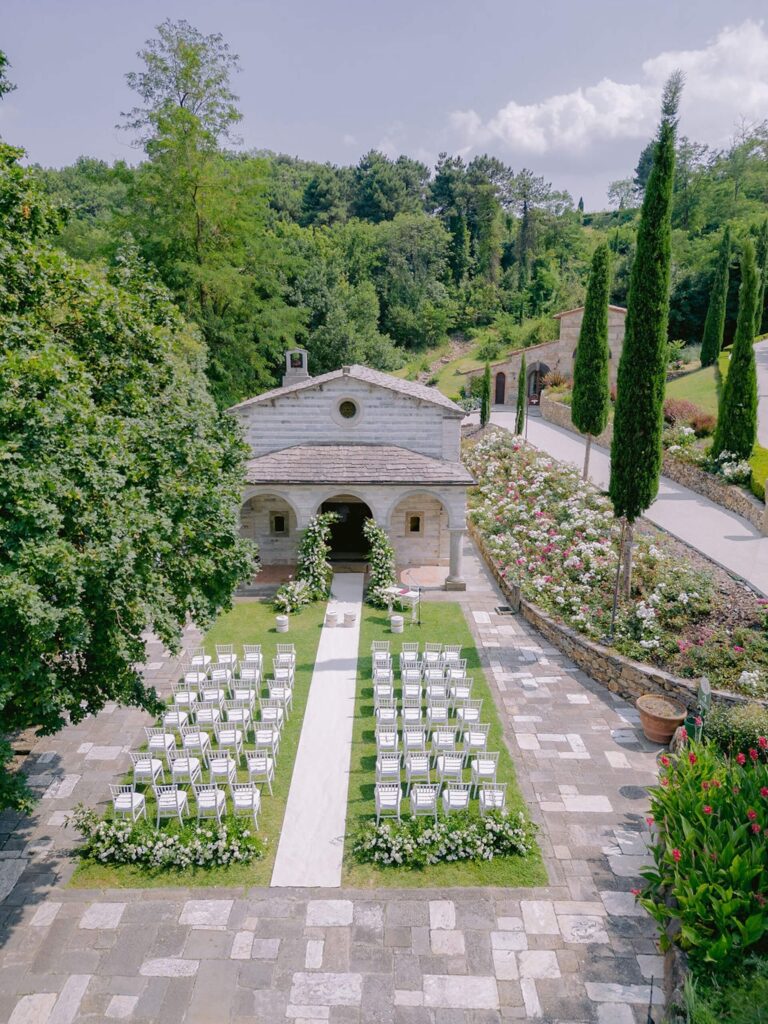
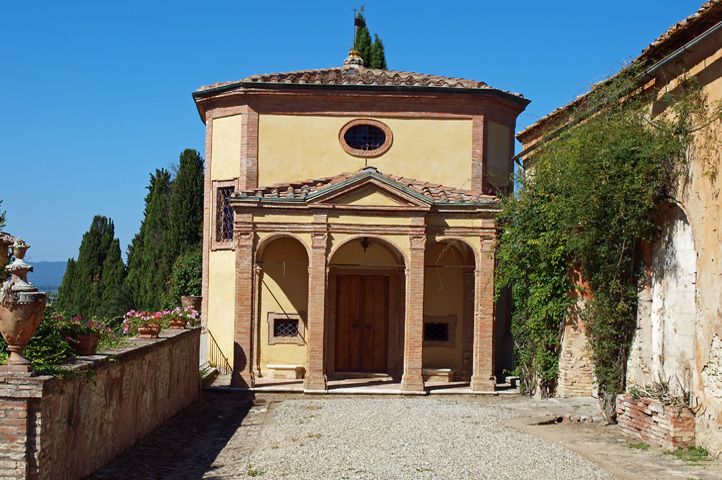
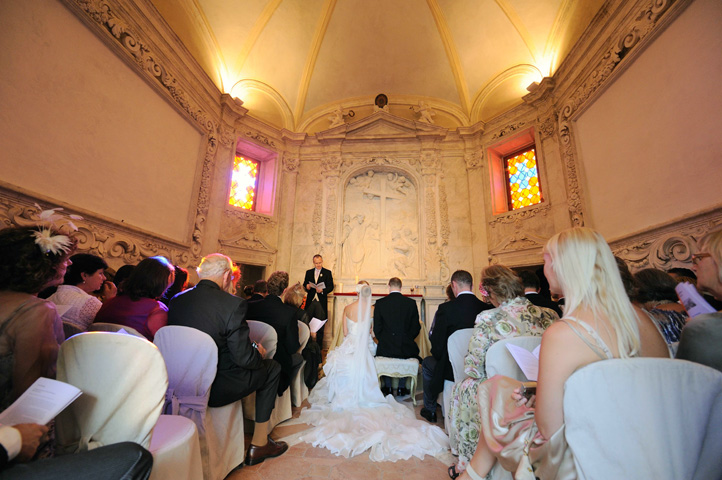
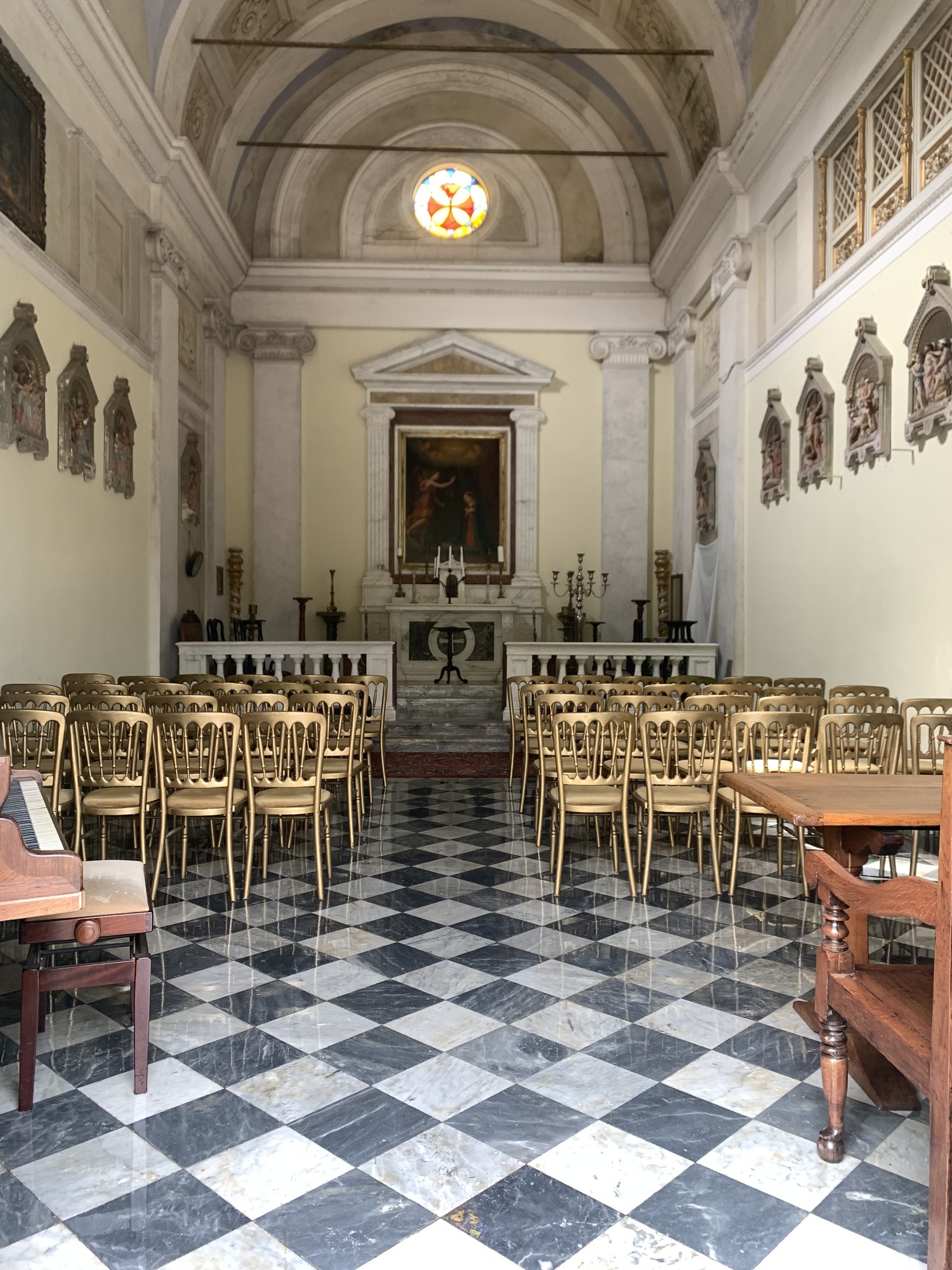
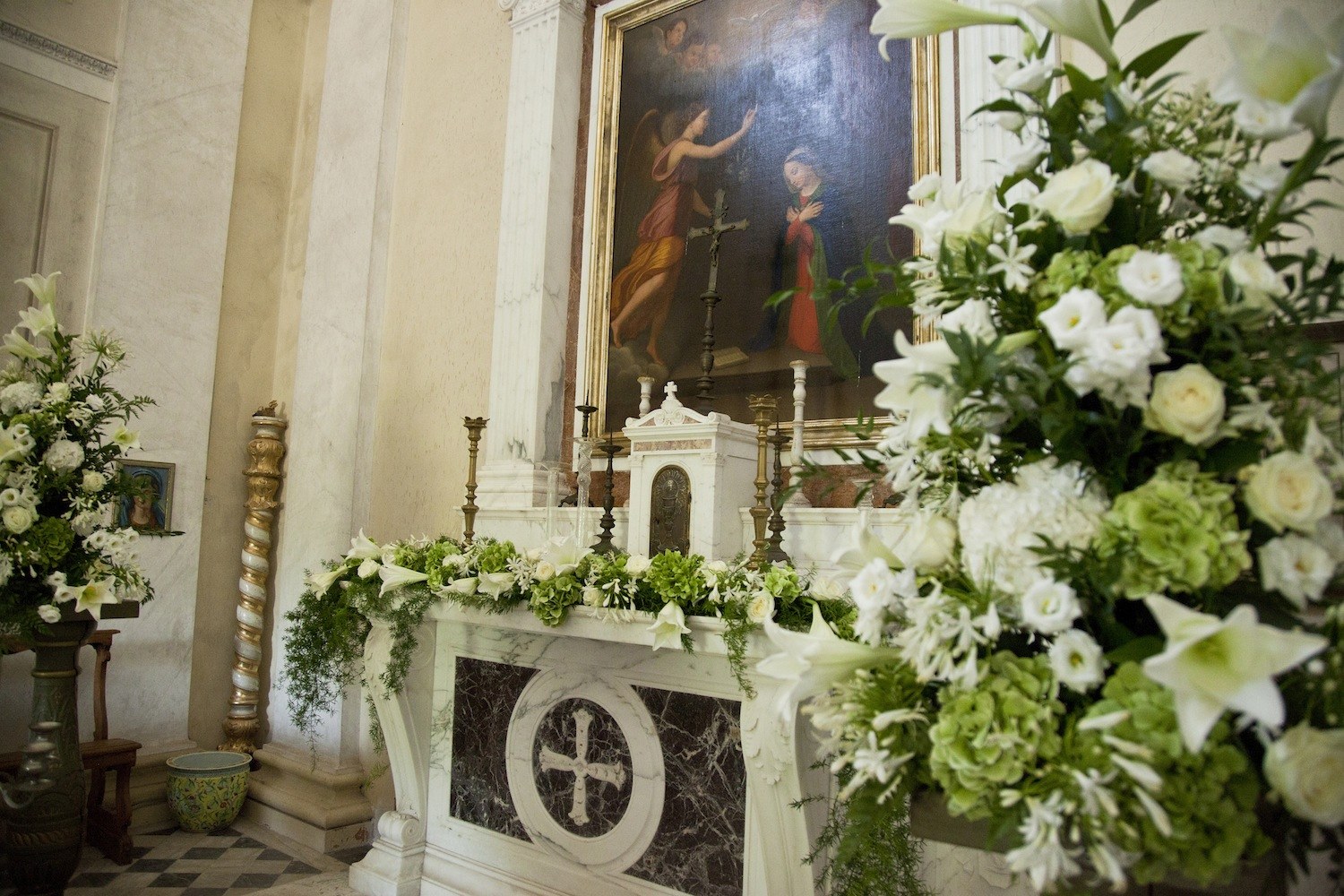
The villa’s weddings page credits Lorenzo Nottolini (1787 to 1851) with the chapel’s design, while its history page dates the rebuilding to 1860 to 1870, after his death, a point the villa can clarify. The Annunziata has a neoclassical facade, with an arch above showing floral motifs and the Annunciation. It is reached by a driveway built in 1910, after the commune made the old Valle road, which had passed in front of it, private. Inside, the nave has a chequerboard floor in dark and pale stone, gilt chairs and, above the altar, a painting of the Annunciation, the same subject as the arch on the facade.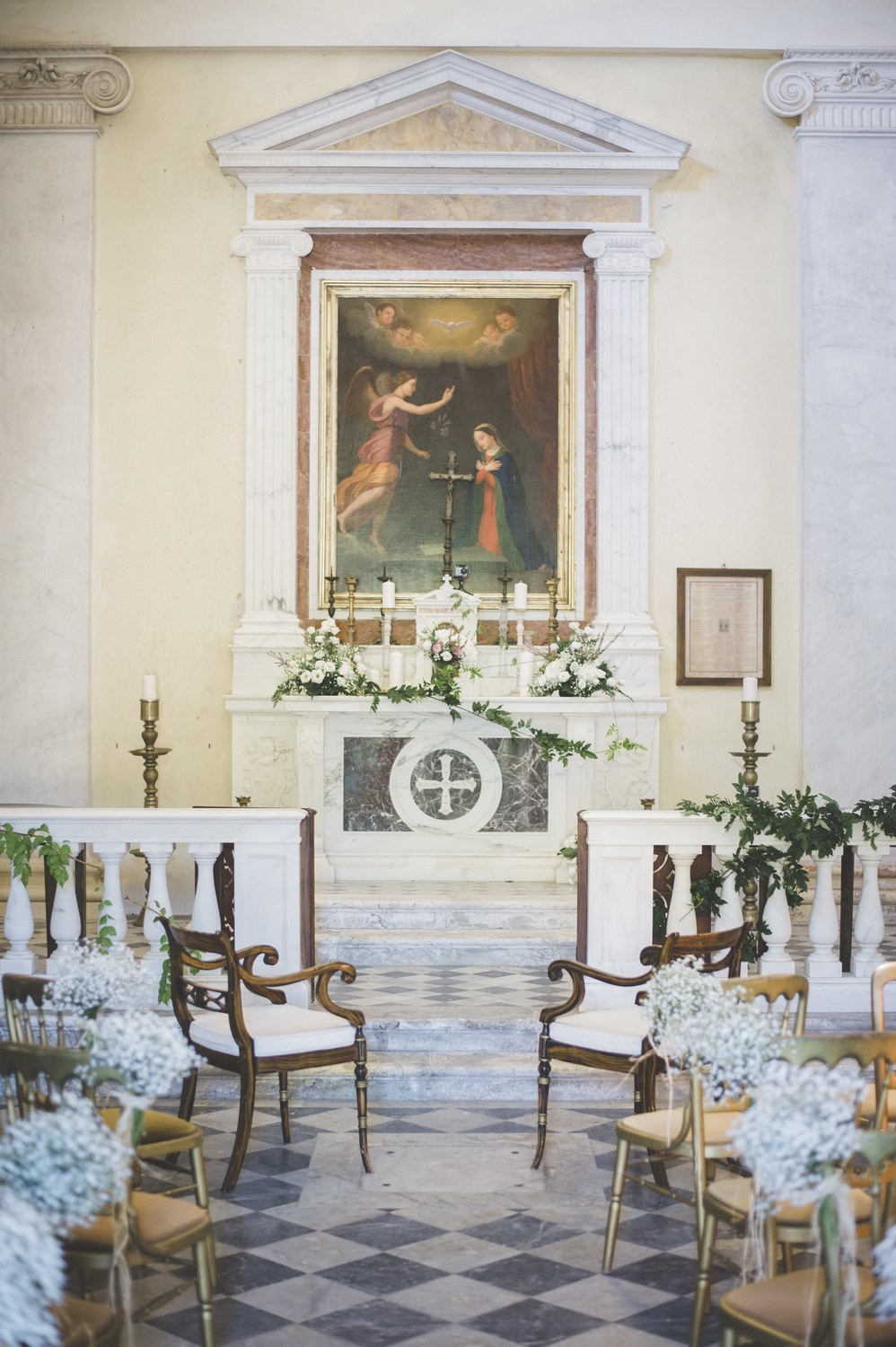
The wedding weekend, from Friday to Monday
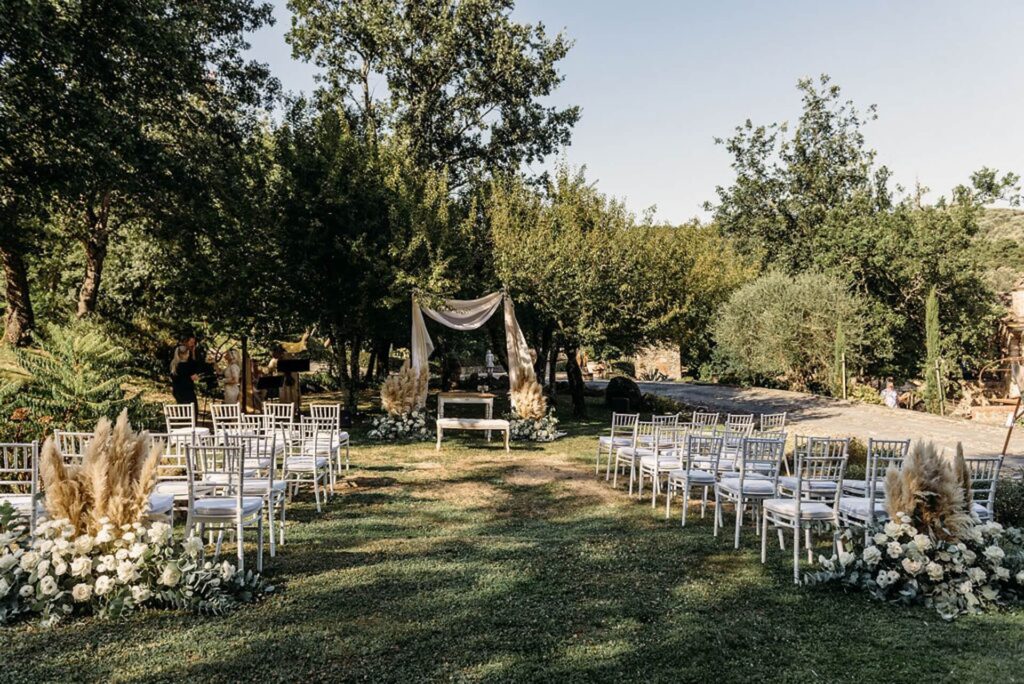
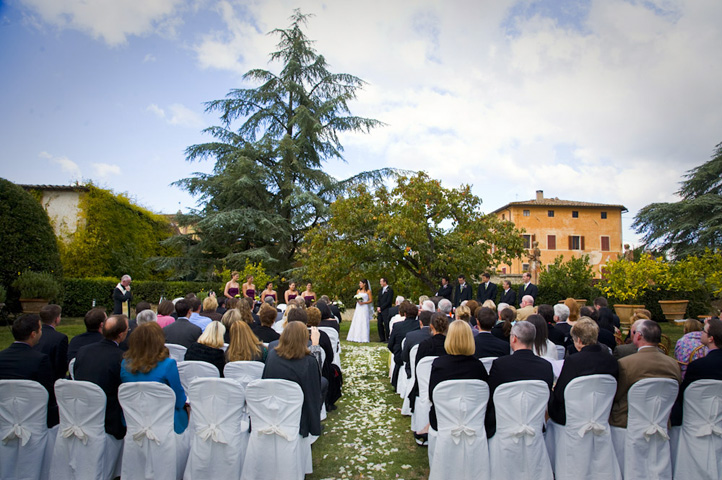
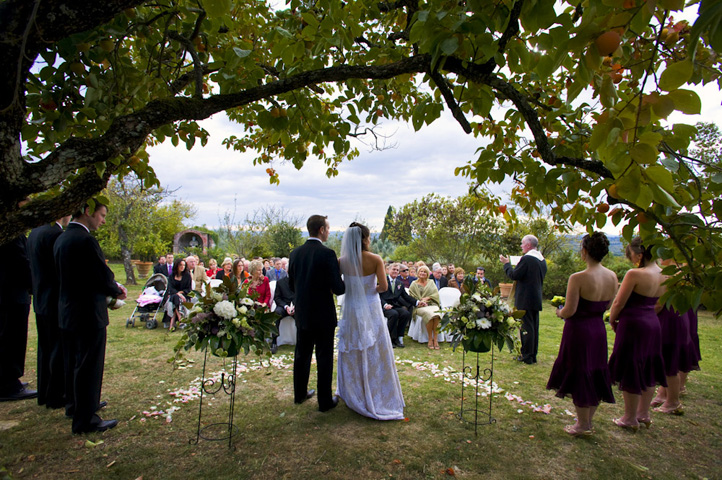
A wedding weekend runs over four days, from Friday to Monday. Guests arrive on Friday afternoon, gather by the pool for welcome cocktails and have a pizza or pasta dinner from the wood fired oven, or walk through the valley to dinner at Lo Scompiglio, a family run restaurant with a terrace over its vineyards, and the villa can arrange a table and a ride back. Saturday starts slowly, with a walk to the village square and a short bus to Lucca for the Renaissance walls, while the wedding party prepares in their rooms. The ceremony takes place in the late afternoon, in the chapel or the gardens. Cocktails and canapés follow in the lemon garden, with dinner by the pool and speeches under lit vines, and dancing continues in the gardens until midnight and then in a sound proof underground party room. Confirm the finish time for the music when you enquire. Sunday is a pool side barbecue, pizza party or long Tuscan lunch, and on Monday guests breakfast together and leave. The pool and tennis court are part of the exclusive use for the whole stay.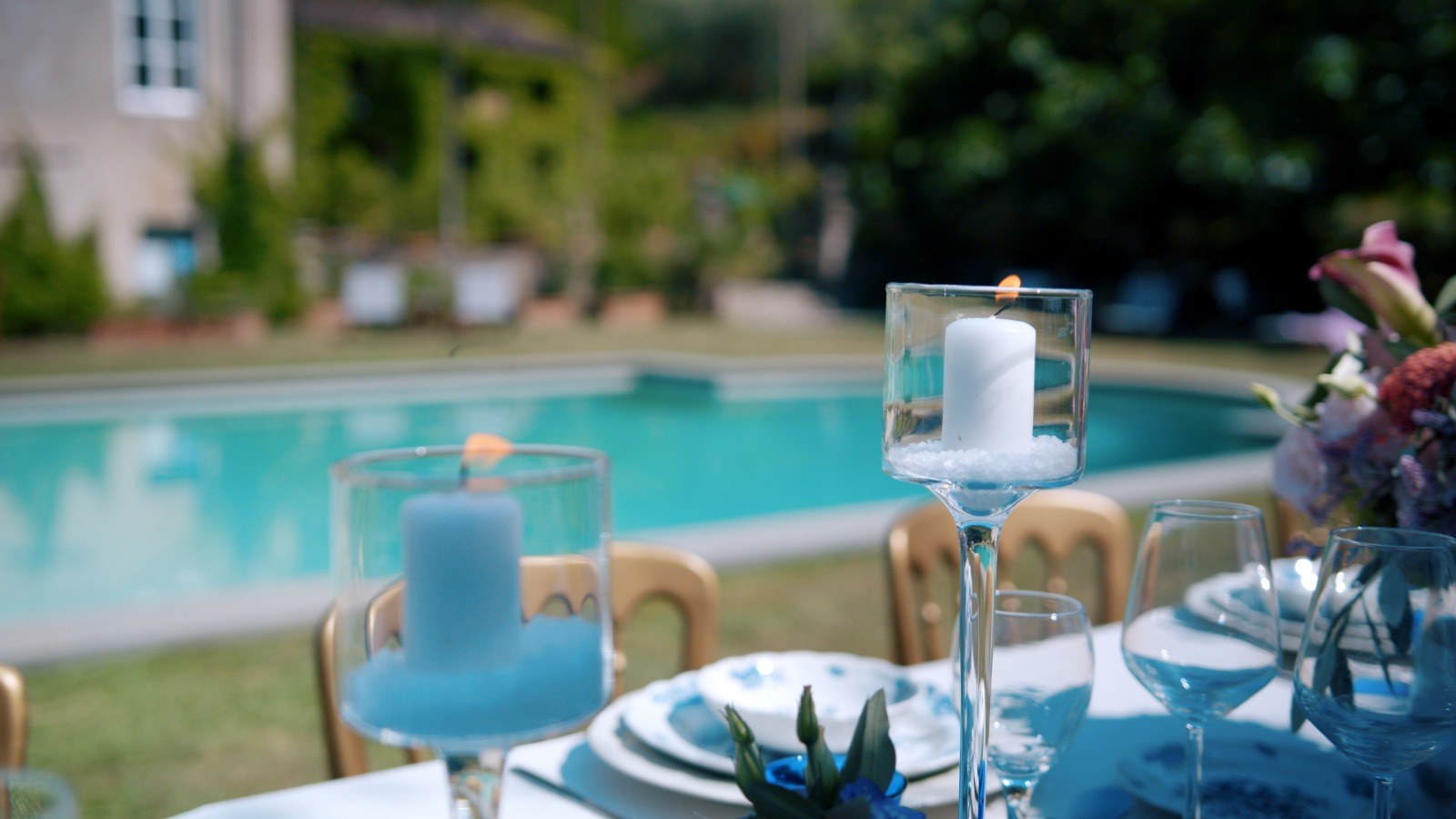
Tuscan catering at the villa
Meals are cooked in house by local chefs, and a wedding dinner is three courses of Tuscan food with uniformed waiters and half a bottle of wine per guest. The sample menus include a canapé list from which couples choose six, a barbecue menu with panzanella, grilled chicken and Tuscan sausages, and a gala dinner.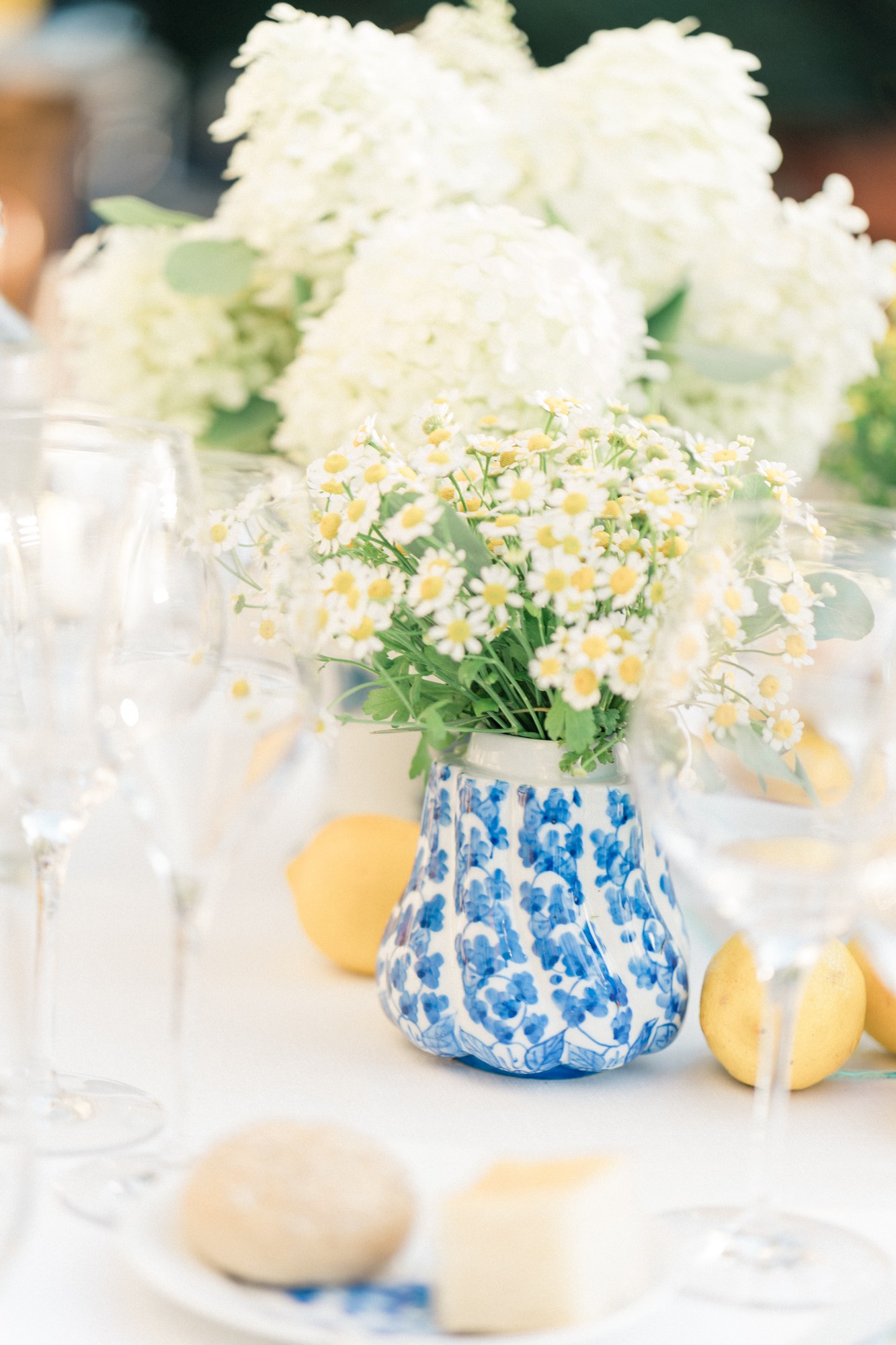
Staying in the villa and Casa Una
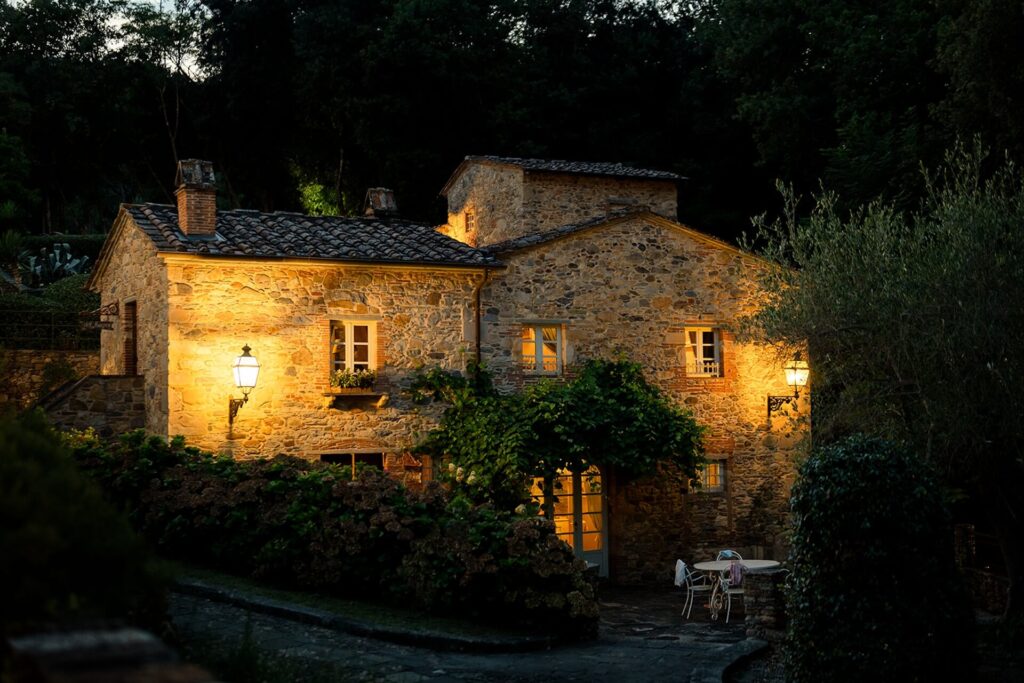
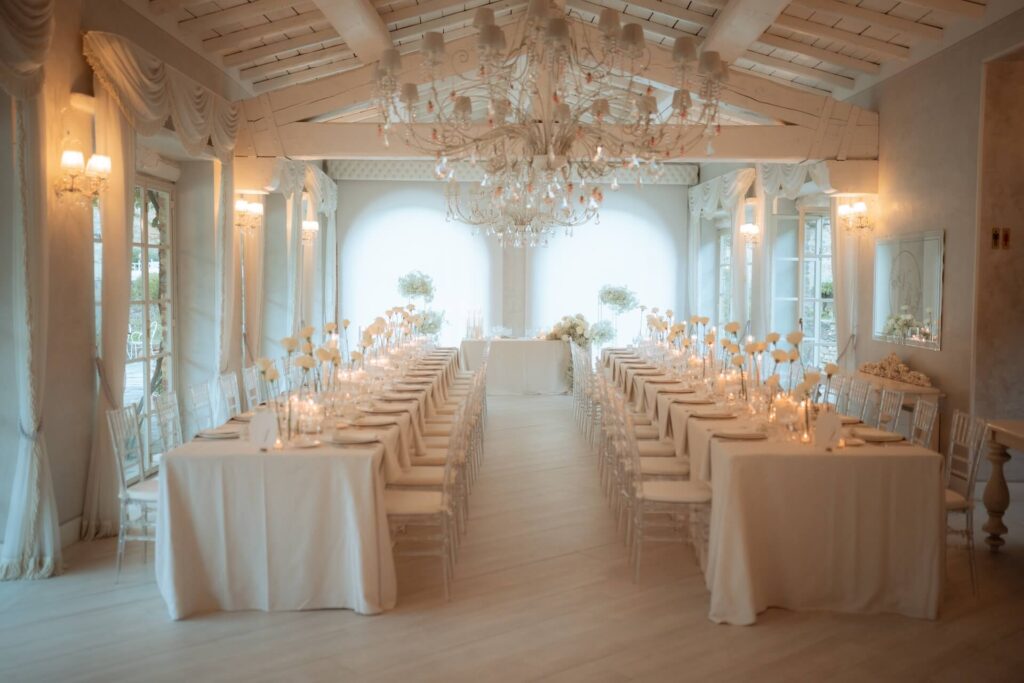
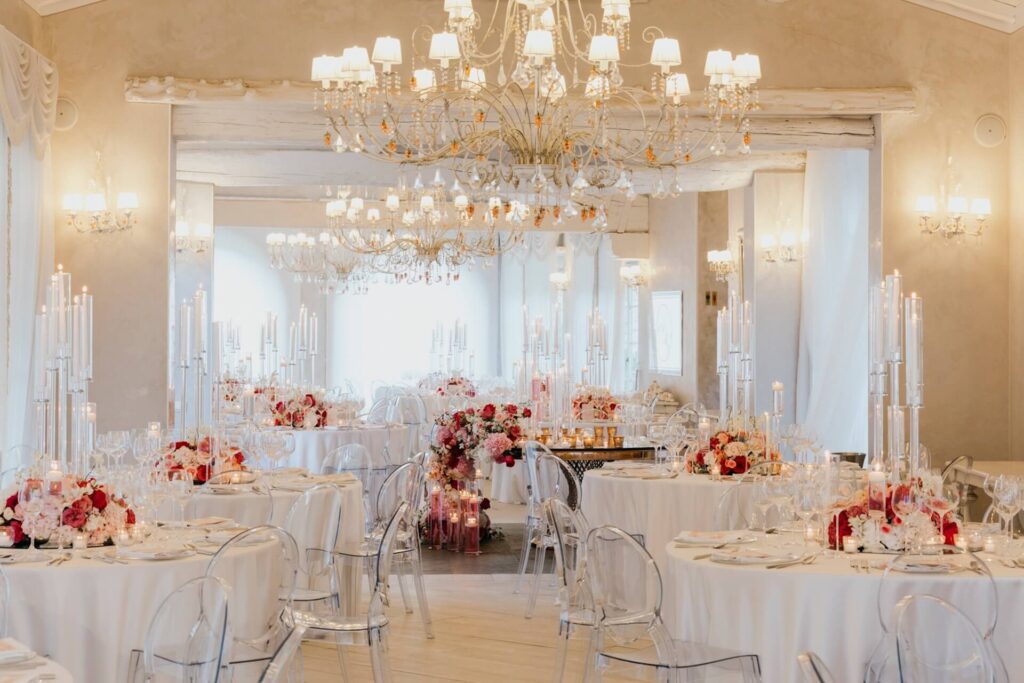
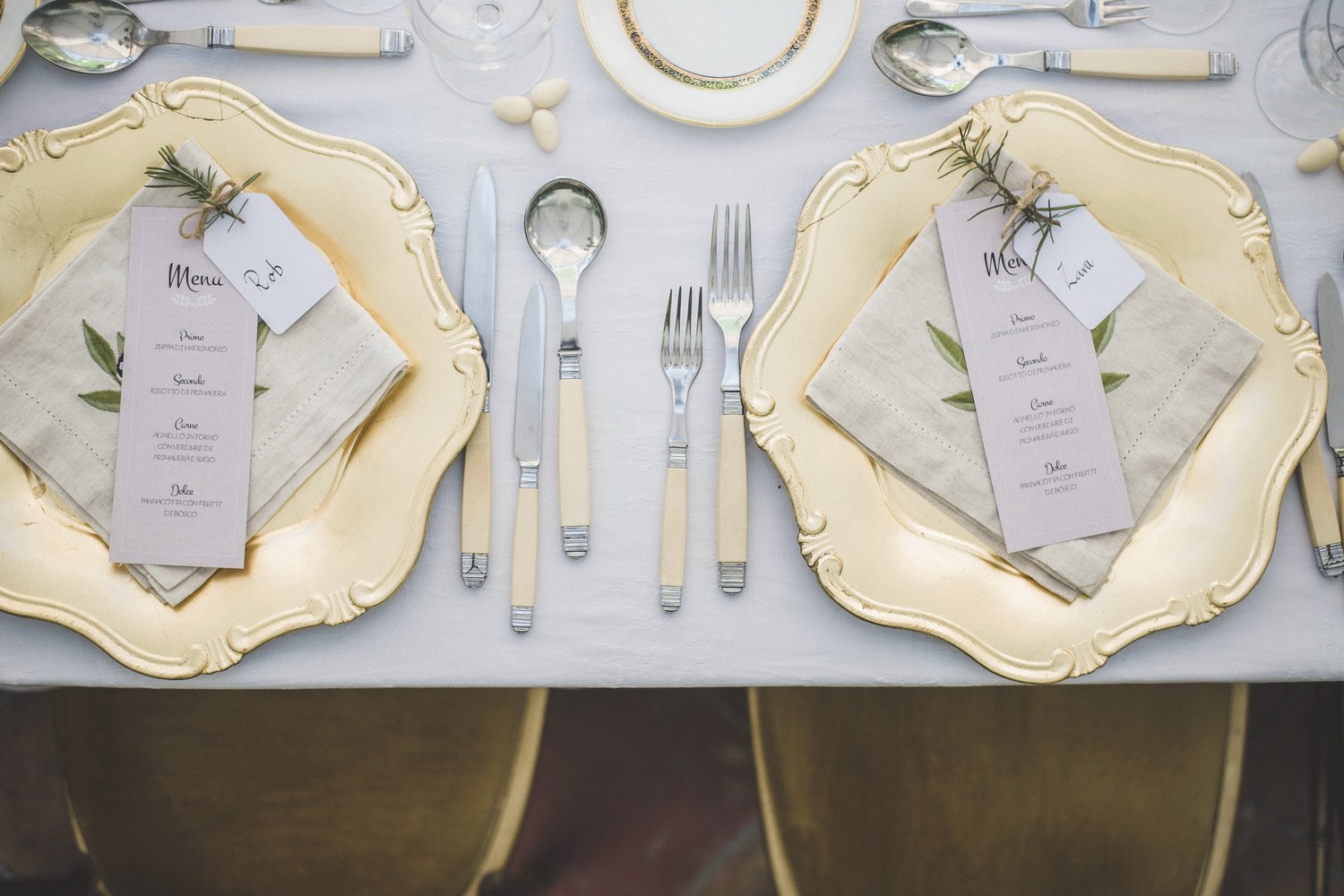
The main villa has 12 bedrooms and 11 bathrooms and sleeps 24 adults, with four more children or teenagers in a dormitory; Casa Una adds 11, for 35 places in all. It has two kitchens, a chandeliered dining room that seats 32, a snug with a television, an upstairs drawing room with a piano and a games room with a billiard table. Ten of the twelve bedrooms are en suite and two share a bathroom off the grand staircase. The rooms blend Tuscan and British interior design, and the chapel adjoins the main villa, so on the wedding day the walk to the altar is a short one. Casa Una, the original farmhouse, stands 30 metres away. It has four bedrooms with wide double beds and a fifth with three singles, all with bathrooms, a sitting room, a kitchen with an Aga and a paved terrace with a marble table for 12 and a pizza oven said to be 200 years old, with views towards the Apuan Alps, and a lawn with a trampoline for younger guests.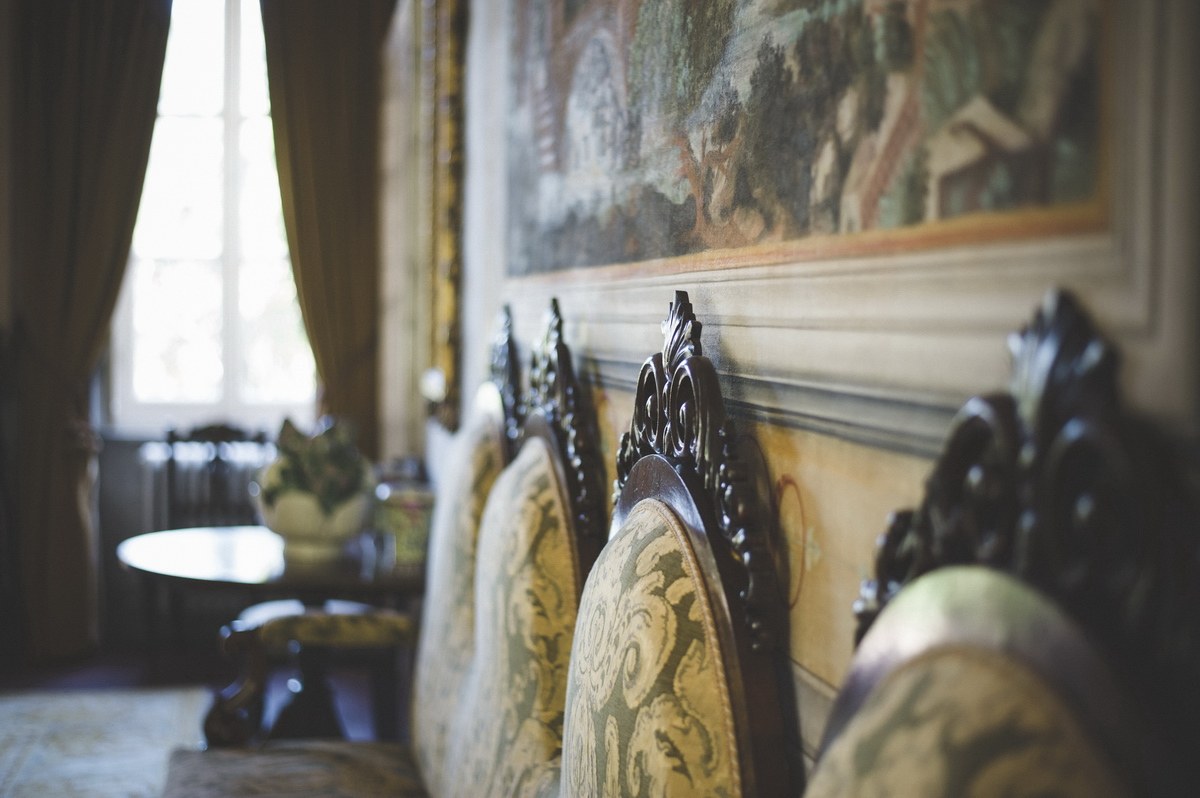
The country around Lucca
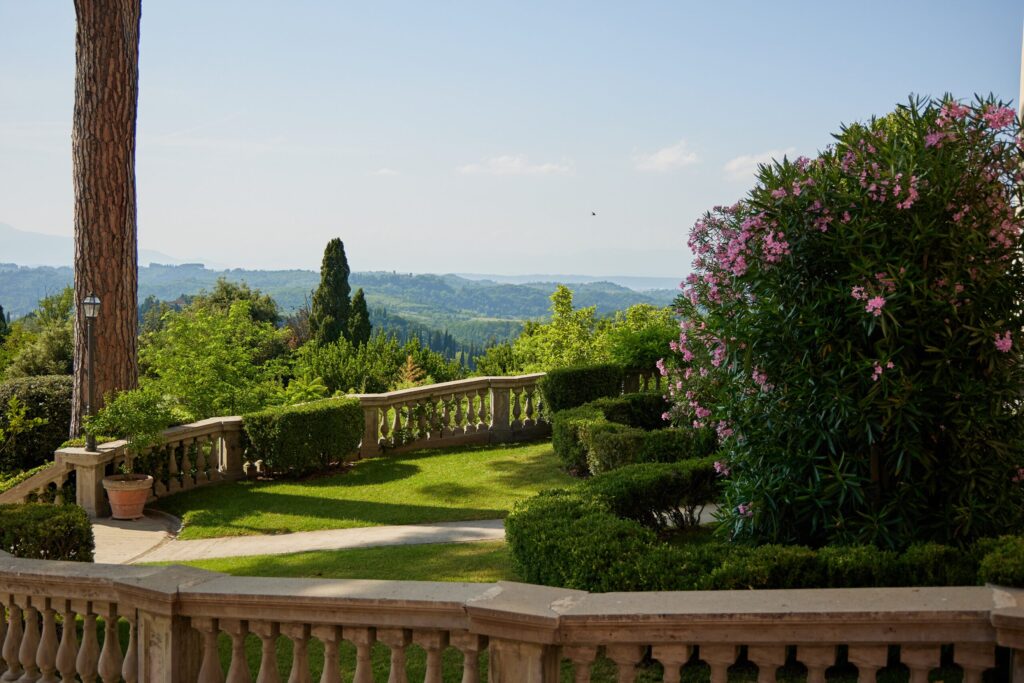
The house is about 5 kilometres from Lucca and roughly half an hour by car from Pisa airport and an hour from Florence airport. The Via Francigena, the pilgrim road between Canterbury and Rome, runs through this part of Tuscany, and Lo Scompiglio, a contemporary arts centre, can be reached on foot over the hills. Guests can take wine tastings in the Montecarlo district or hear opera recitals in Lucca’s churches.