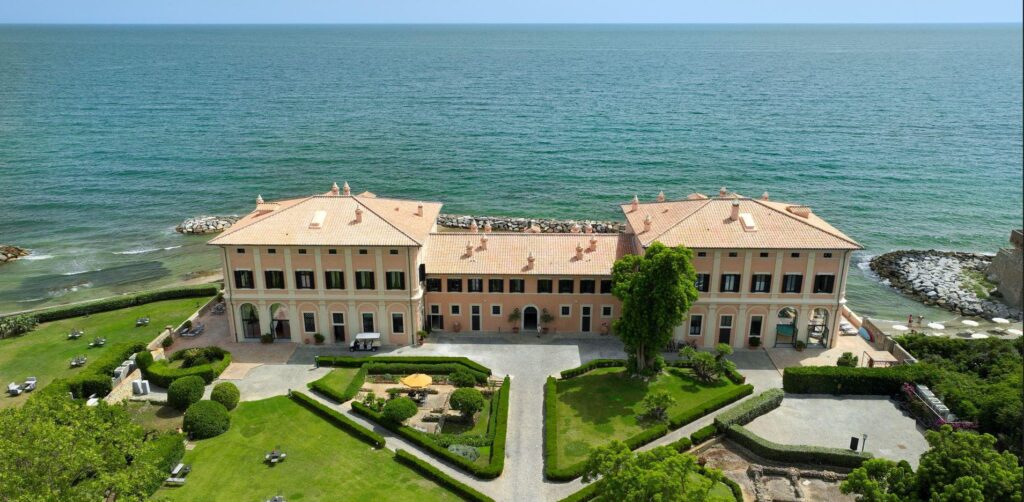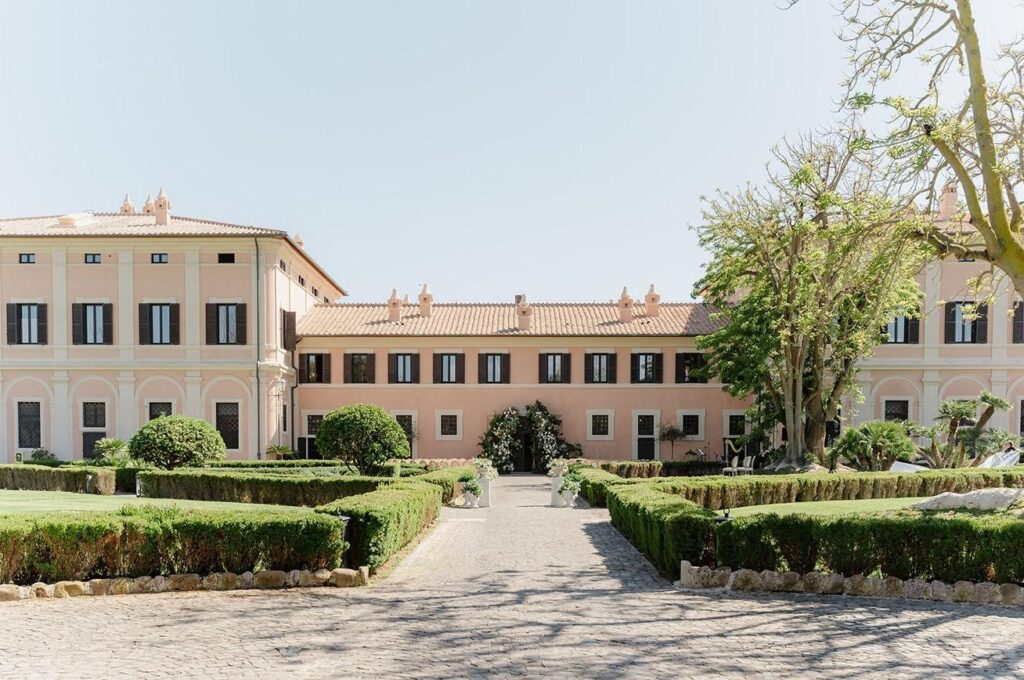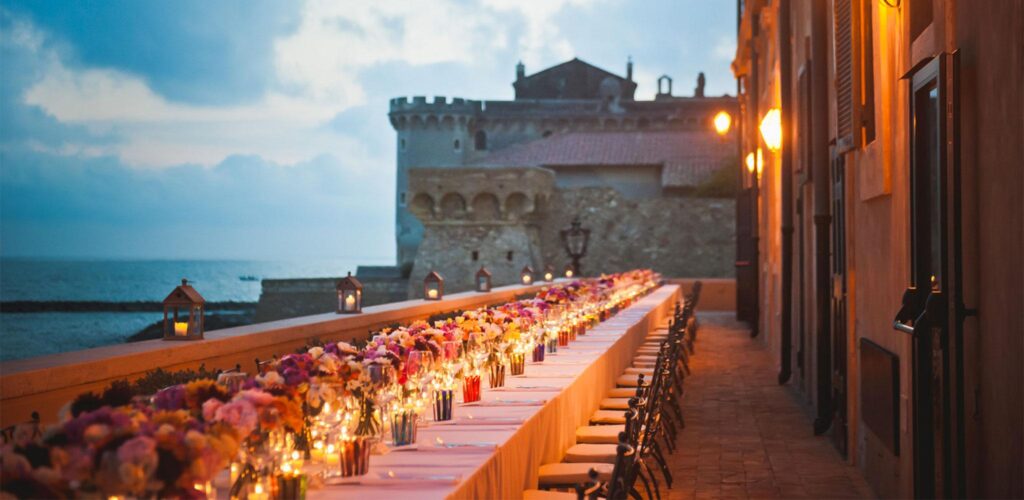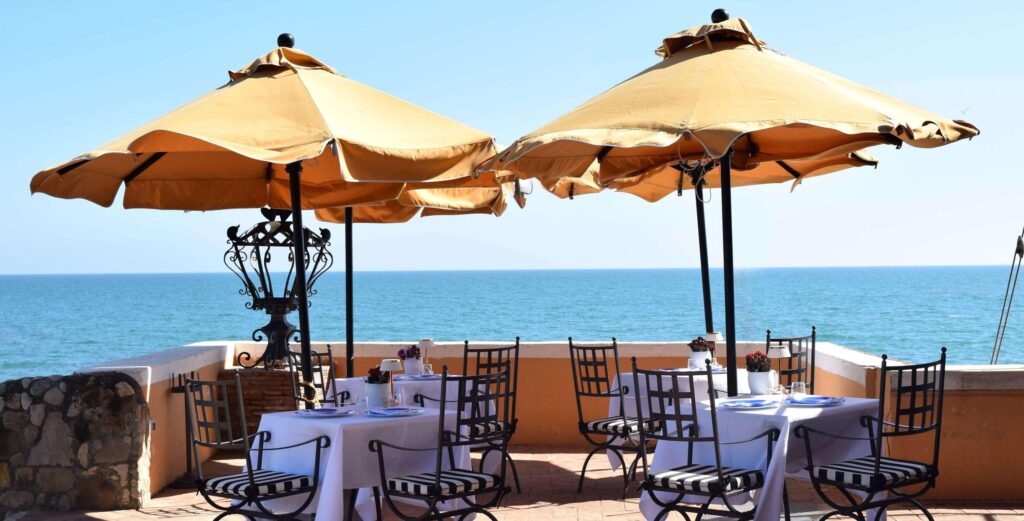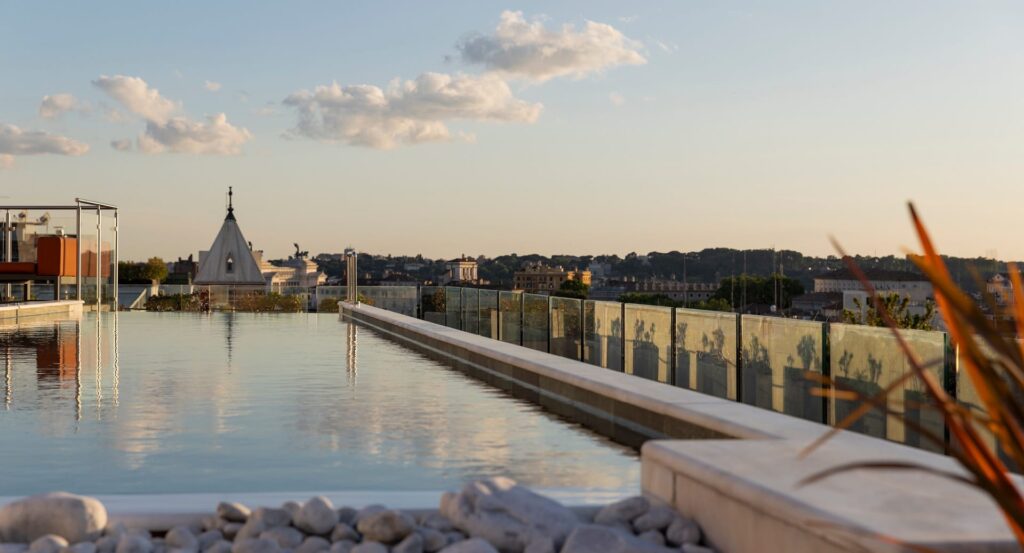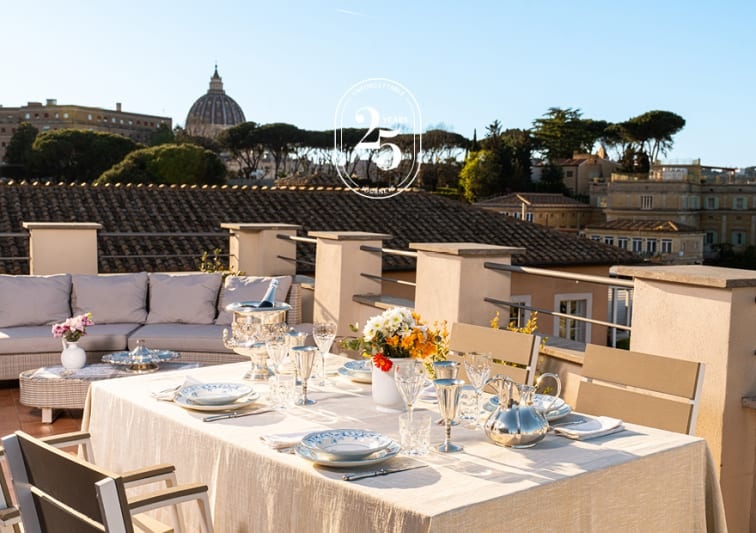
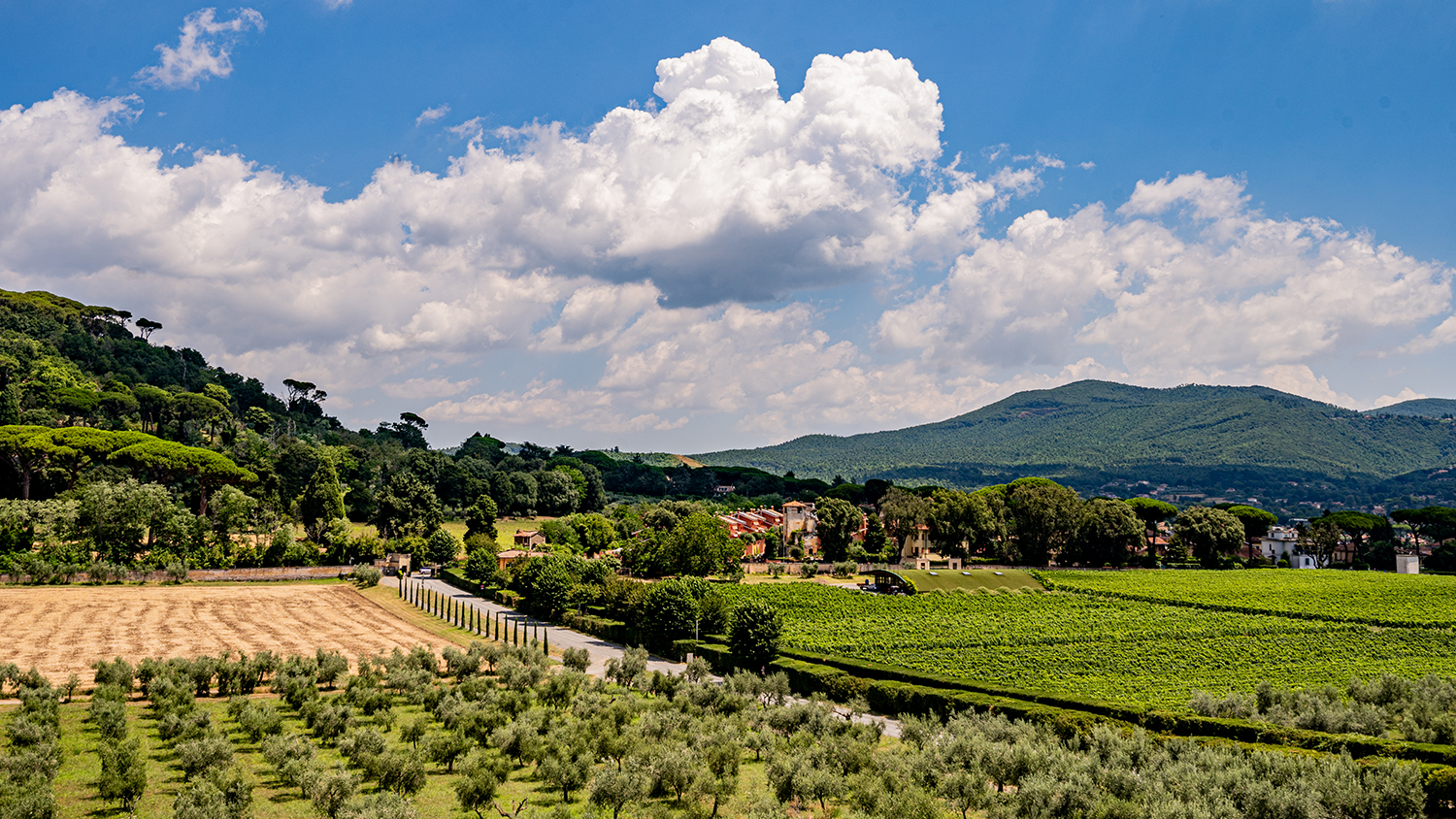
At Villa Cavalletti the table can come from the land: extra virgin oil from about 5,000 centuries-old olive trees, wine from a historic vineyard restored since 2014, and flour and pasta from organic ancient wheat grown on the estate. It stands on a hill at Grottaferrata, in the Castelli Romani regional park south east of Rome, with a terrace that looks across the plain to the city. Villa Cavalletti has an AgriWedding offer, set among olive groves, vineyards and woods at the foot of the historic villa.

A cardinal’s villa and the Jesuits
Cardinal Federico Cesi began the Villa Storica in 1580 as a small country house, and in 1596 the Marchese Ermete Cavalletti bought it. Over the next two centuries it grew into a larger noble estate with baroque detail and Italian gardens. An eighteenth-century portal still carries the Cavalletti arms, a winged horse that the estate has since reworked into its logo.
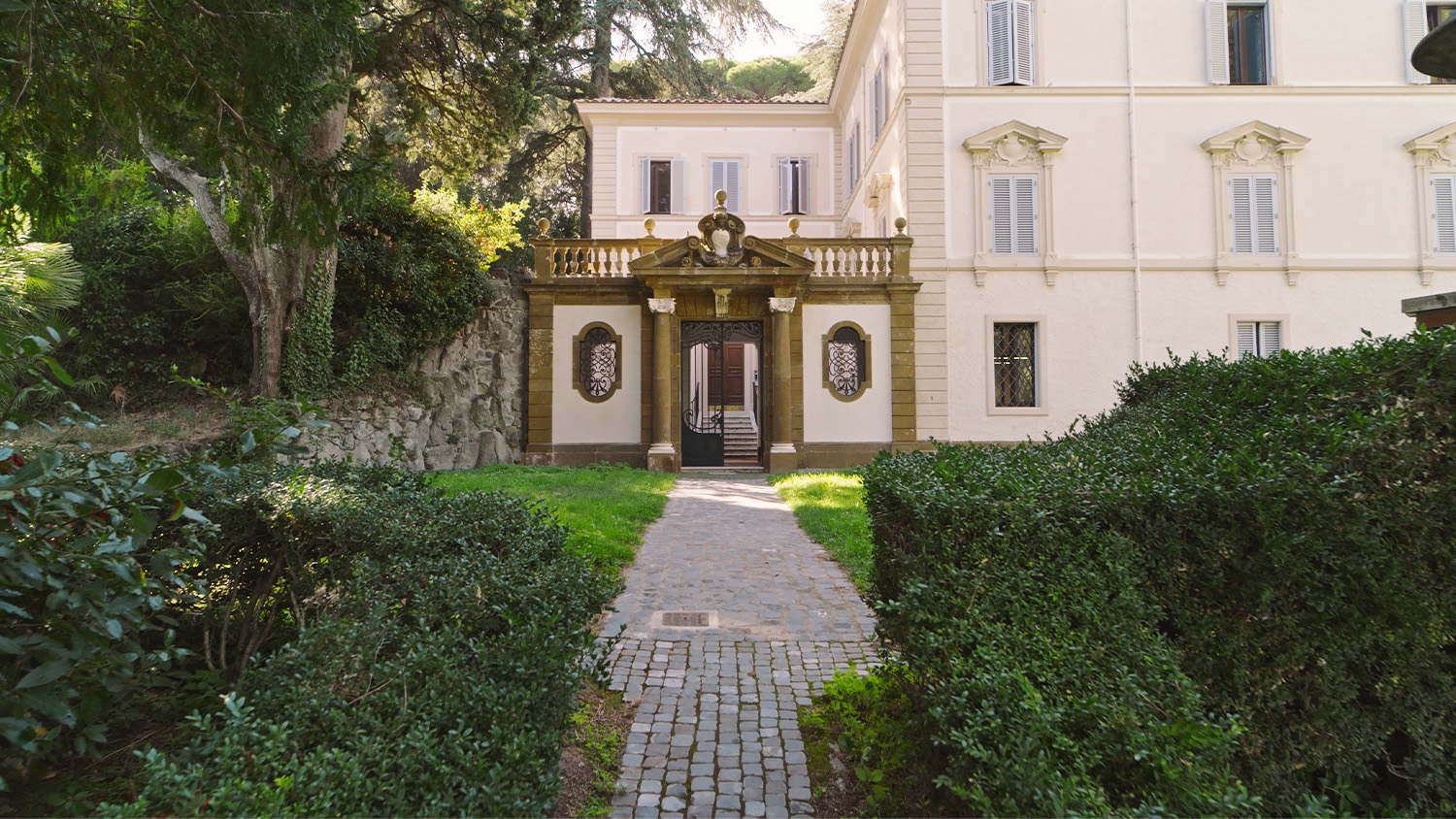
The twentieth century added a second building and a succession of institutions. From the 1960s the complex was the general curia of the Jesuits under Father Pedro Arrupe, and Jorge Mario Bergoglio, the future Pope Francis, came to its meetings as the Jesuit provincial of Argentina. In 2003 the Academy for the Theology of the People of God was founded on the estate with the support of Cardinal Ratzinger, later Pope Benedict XVI. The long modernist building from that period, the Accademia, has been regenerated since 2018 with ecological building methods and runs on renewable energy. It now holds the reception, a conference centre, the guest rooms and La Terrazza.
What couples ask for
Tiziana Torelli, who owns Villa Cavalletti and Park Hotel Villa Grazioli, told Millionaire magazine that requests for weddings in nature had grown by 20 per cent across her properties, and that couples, most of them from abroad, ask for walks in the vineyard or the olive grove, tastings, visits to local workshops and short explanations of the local products during the day. She described menus, flowers, fabrics and music tied to the territory, favours of wine, oil, small plants and local crafts, and collaborations with mosaic makers and ceramists from the area.
Five thousand olive trees and a Jesuit mill
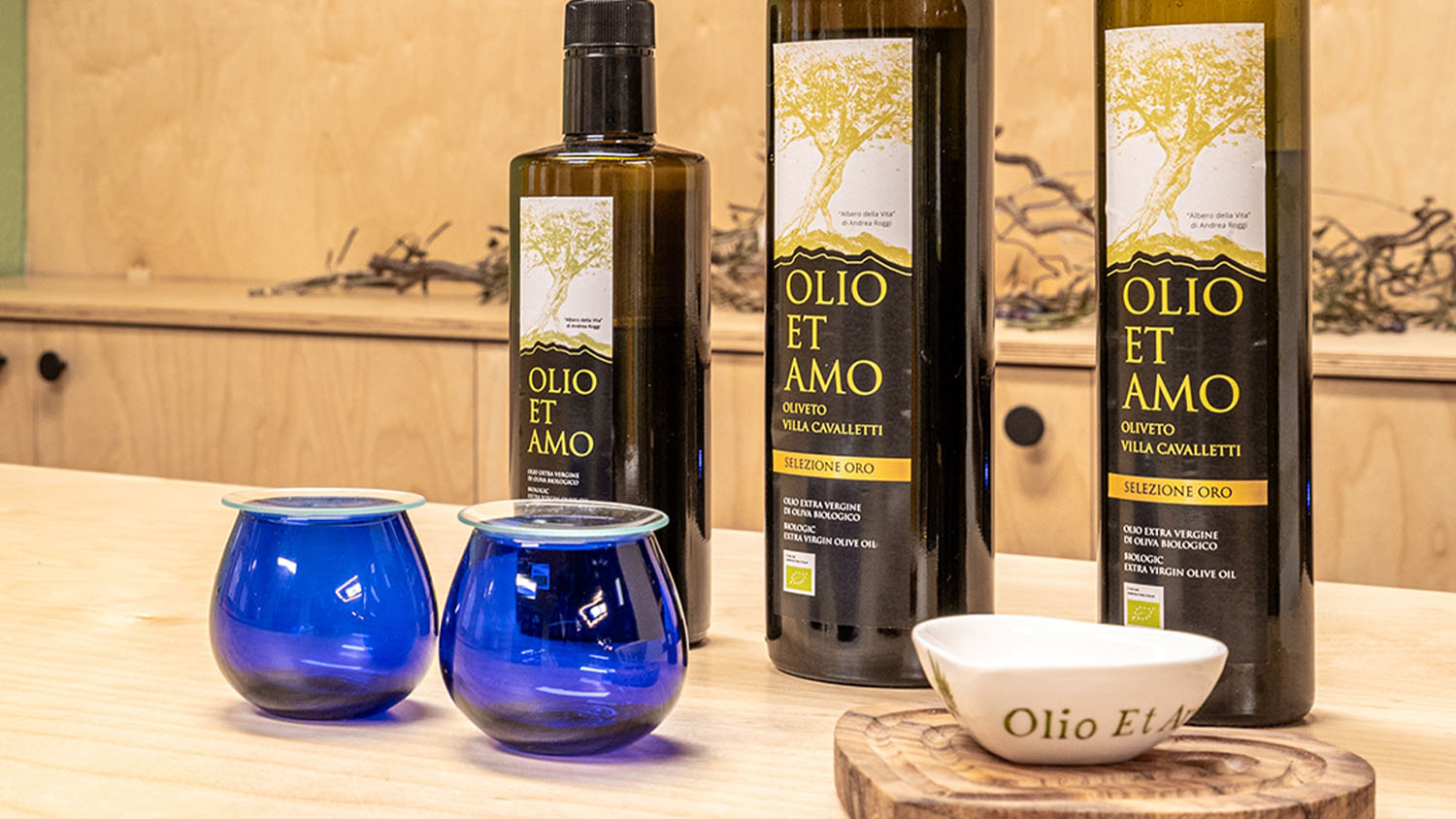
About 5,000 centuries-old olive trees make up a Slow Food Presidium of the Olivi Secolari, in the Pendolino, Leccino, Moraiolo, Rosciola and Carboncella varieties typical of the area. The olives are picked by hand at the start of ripening, while they are still green, and the oil is extracted cold, which gives the fruity, peppery character sold as Olio et Amo and, under the name Tusculum, as Olio di Roma IGP.
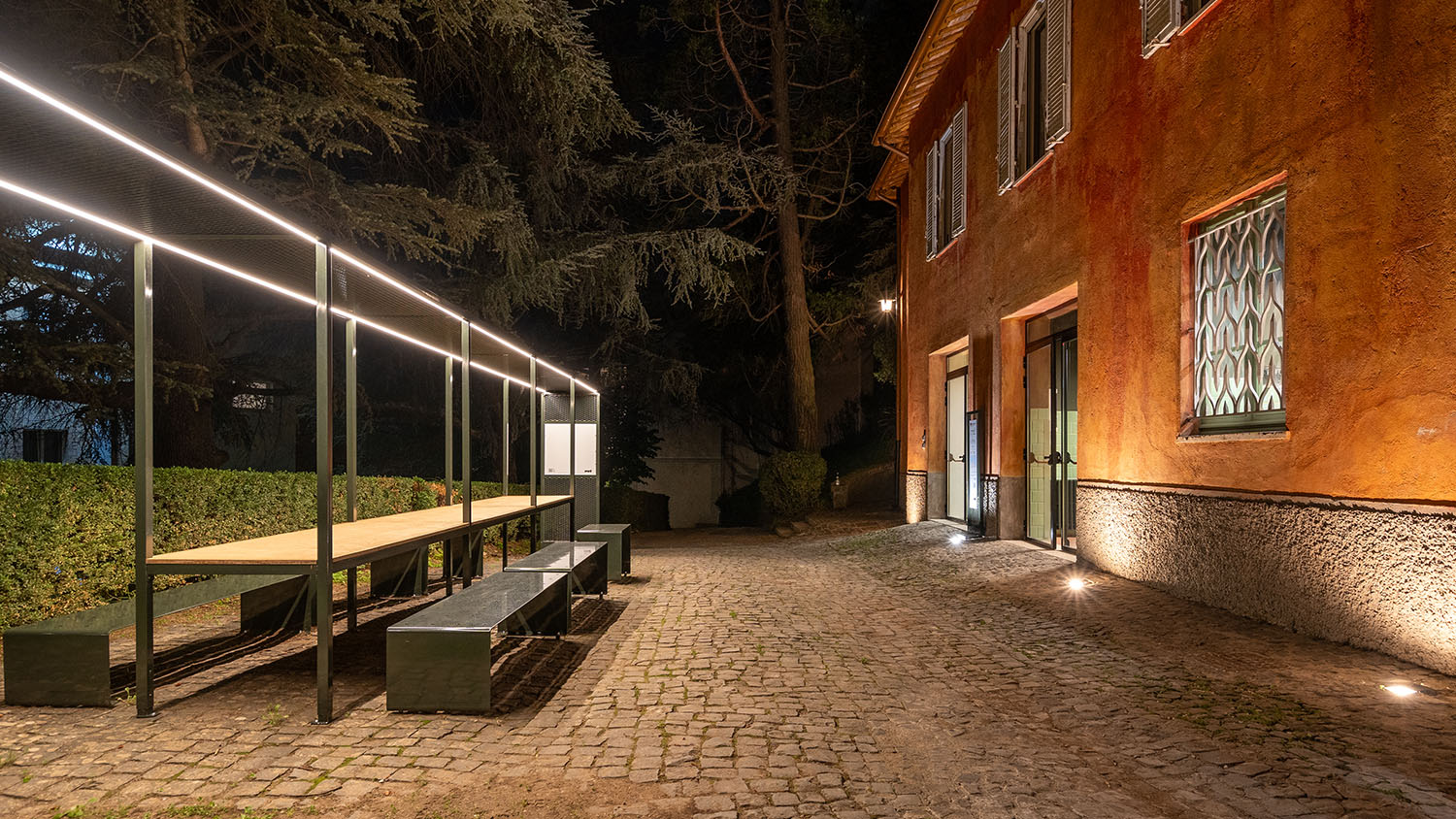
In the seventeenth century the Villino Rosso was the farm manager’s house, and in the twentieth the Jesuits installed a traditional olive mill inside it, which was forgotten until a restoration led by the architect Dario Biello of Expositore Architettura. The red facade was repainted by hand in its recorded original colours and the mill was left as it worked. Backlit panels, QR codes and 3D printed supports for visitors with low vision make the route accessible. A tasting laboratory and a shop called La Bottega complete the museum, and visits are by booking.
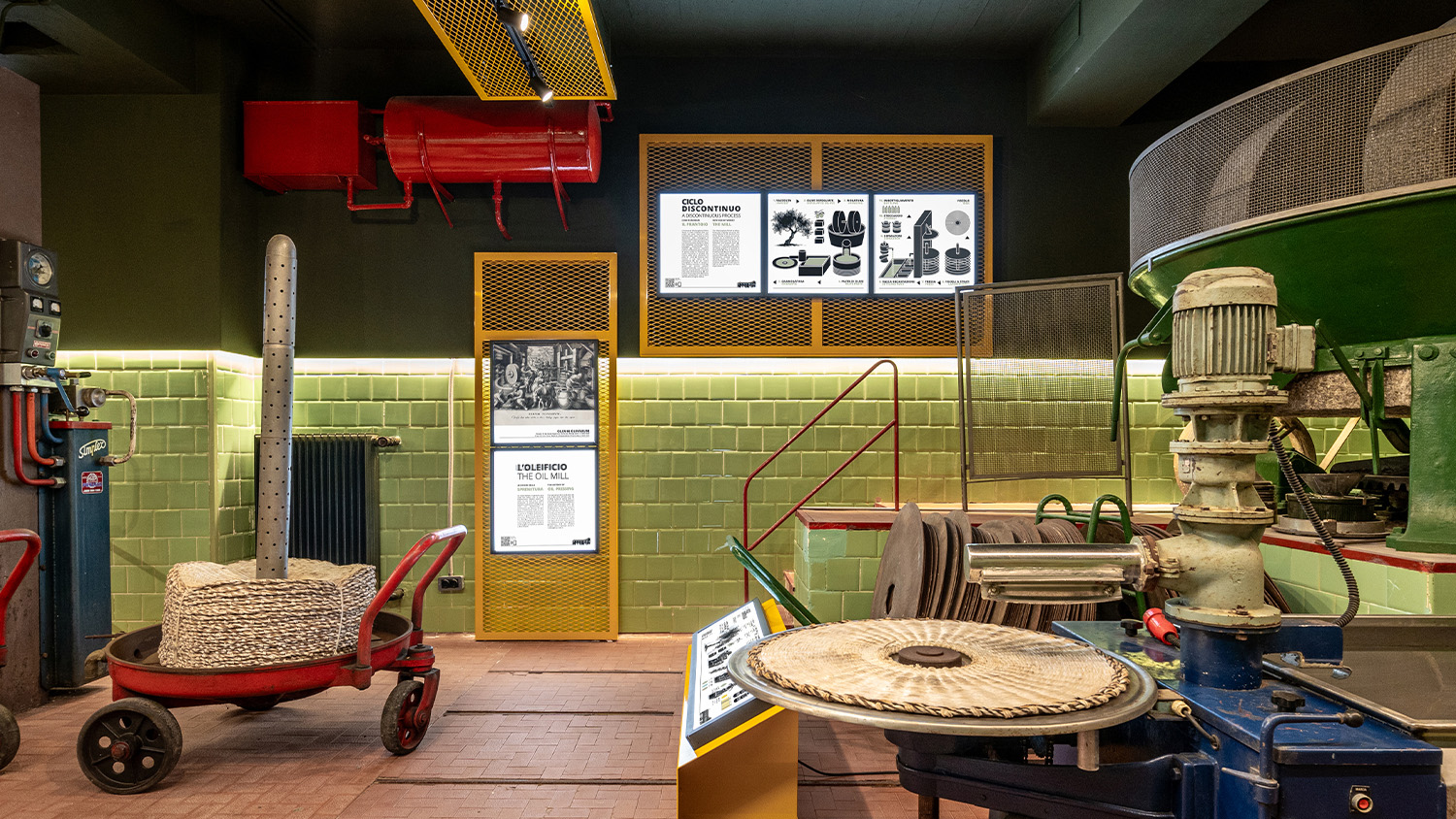
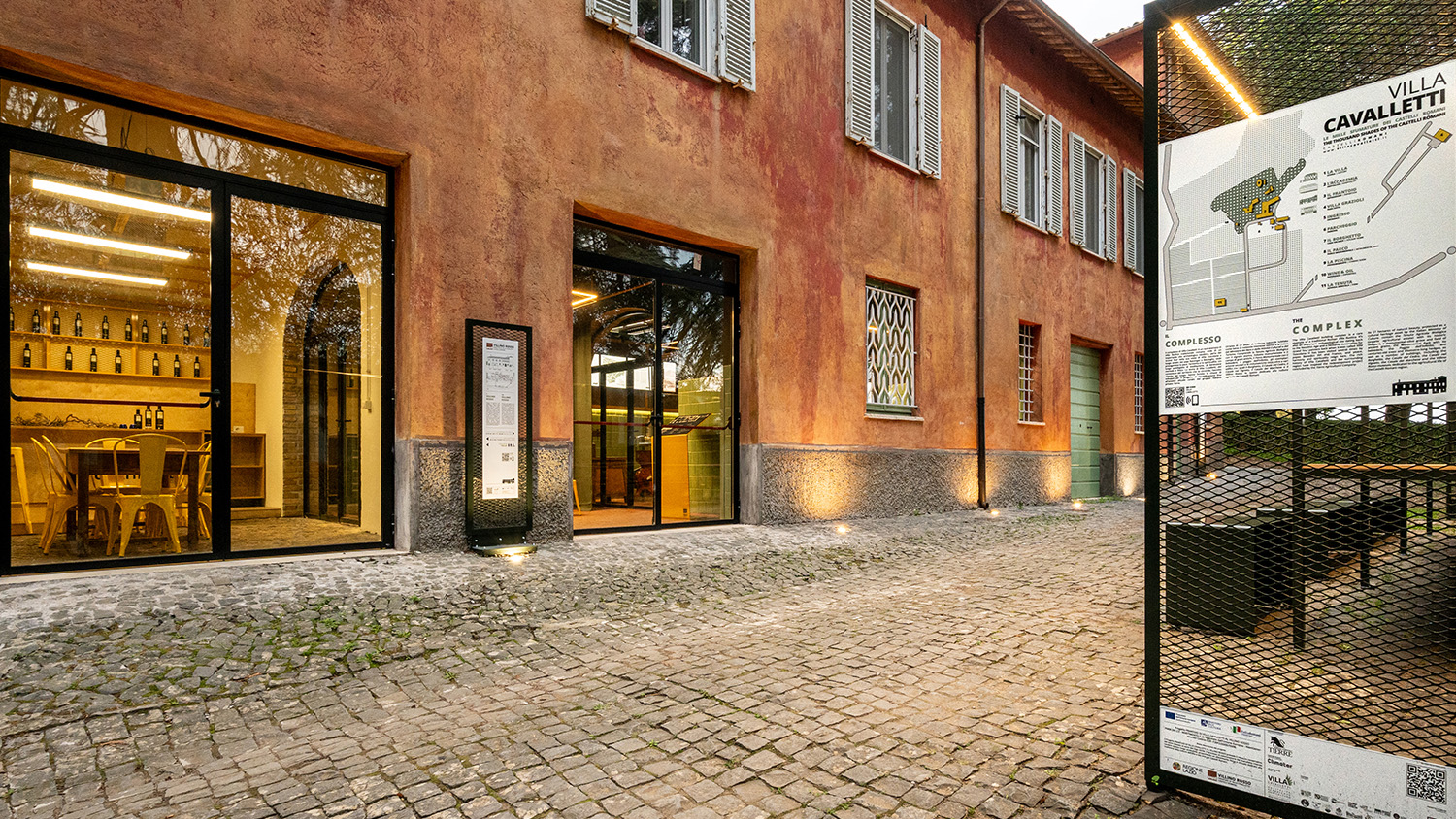
Olio et Amo Classic is a guided tasting of three oils by the Solinas method, with a blind test to learn to spot a defective oil, followed by the oils on bread made with the estate’s own organic Platone wheat, with a visit to the estate and the museum included. The wheat is milled at the Mulino Val d’Orcia and made into bronze-drawn pasta.
People with cognitive disabilities work at Villa Cavalletti as members of the team. In the agriturismo they help welcome guests, support simple service tasks, help in the kitchen and look after the shared spaces, and at the olive and grape harvests they pick by hand beside the other staff.
A vineyard recovered from the Jesuits
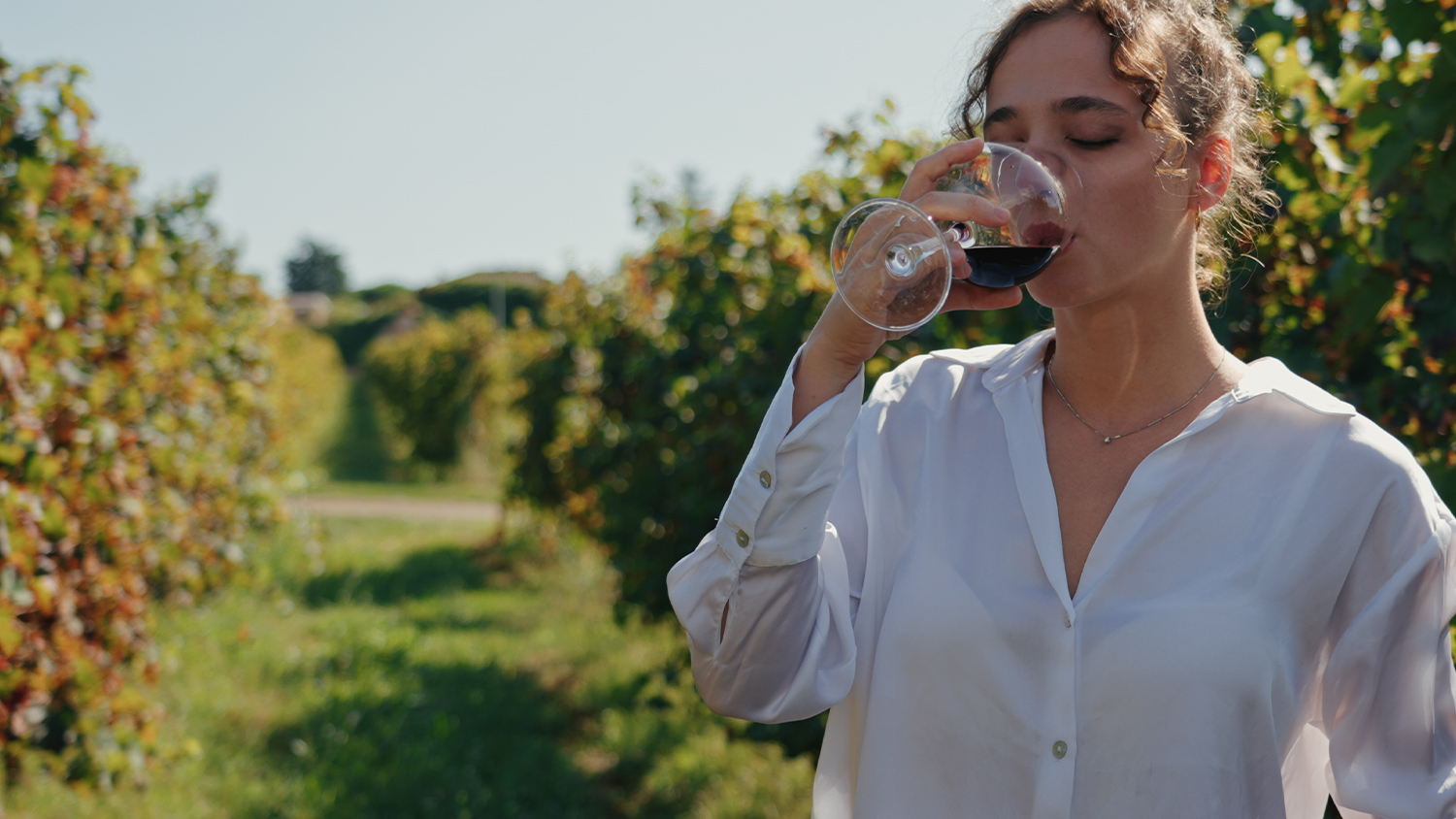
The vineyard is the Jesuits’ historic planting, recovered from 2014 with varieties chosen for this volcanic ground and worked organically, with leguminous green manure and mechanical tools only. The estate is a member of an association of Grottaferrata winemakers, and its wines include a Roma DOC Rosso blended from Montepulciano and Cesanese, a Cesanese called Meraco, a Spumante Brut from Malvasia Puntinata and Trebbiano picked early, and a Brut Rosé made only from Cesanese grapes lightly macerated on the skins. The 2023 Roma DOC Rosso Riserva received five grappoli, the top mark, in the Bibenda guide for 2027.
In 2026 the estate launched its first white, Affresco, a blend of 70 per cent Trebbiano and 30 per cent Viognier, signed Villa Grazioli and labelled with the Bacchus from the Pannini gallery at Park Hotel Villa Grazioli, Torelli’s other property in Grottaferrata. Sentieri Divini Classic is a technical tasting of three of the wines, with bread, oil and the estate’s spreads, and includes a visit to the estate.
La Terrazza and the spaces around it
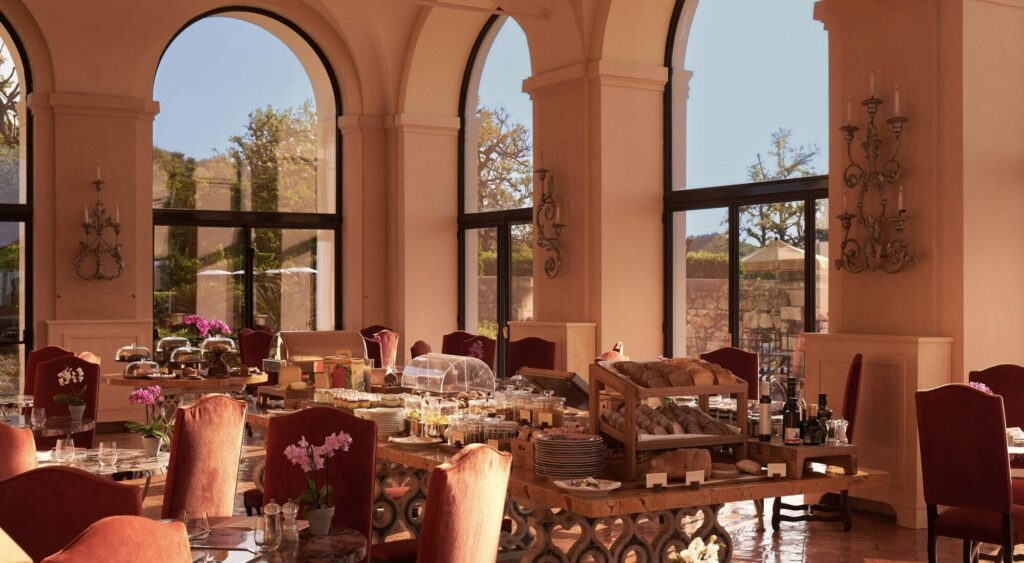
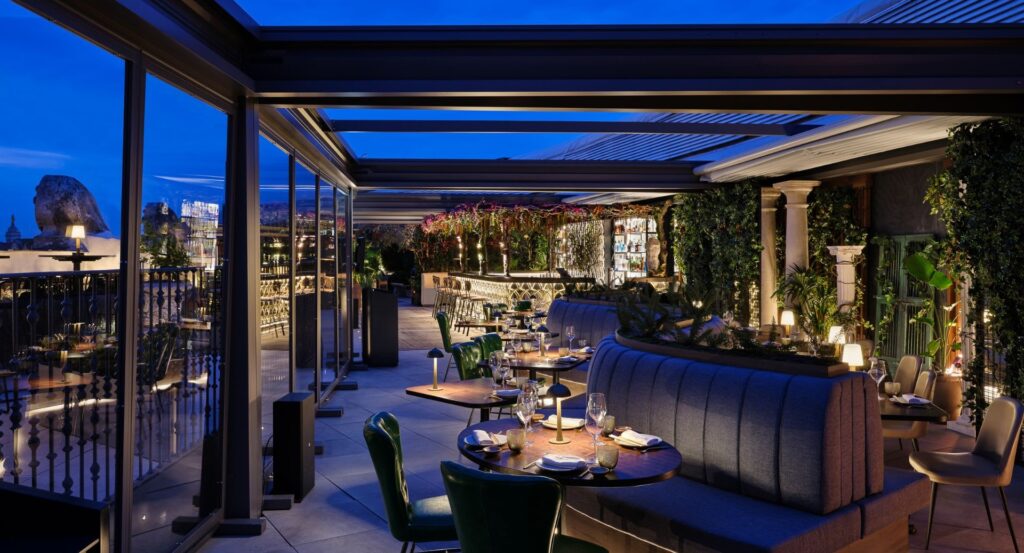
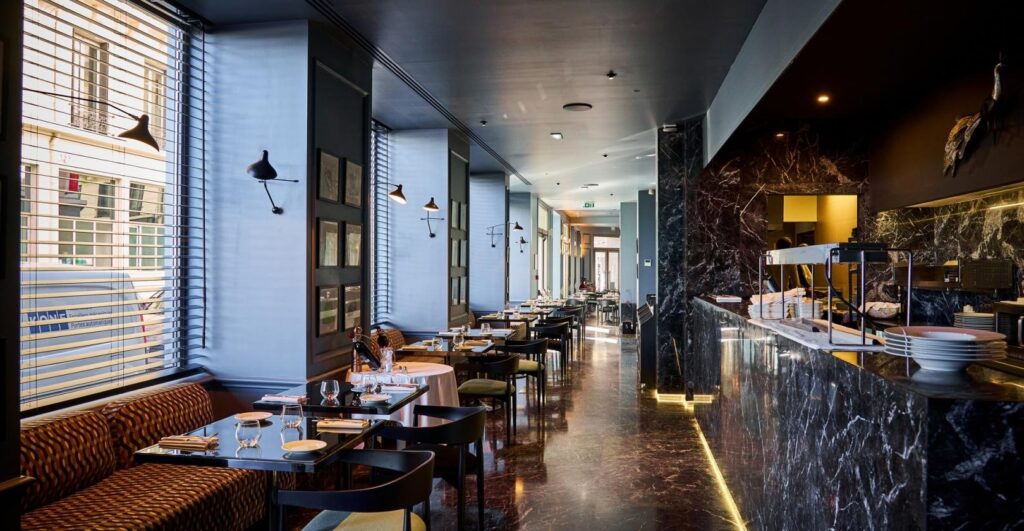
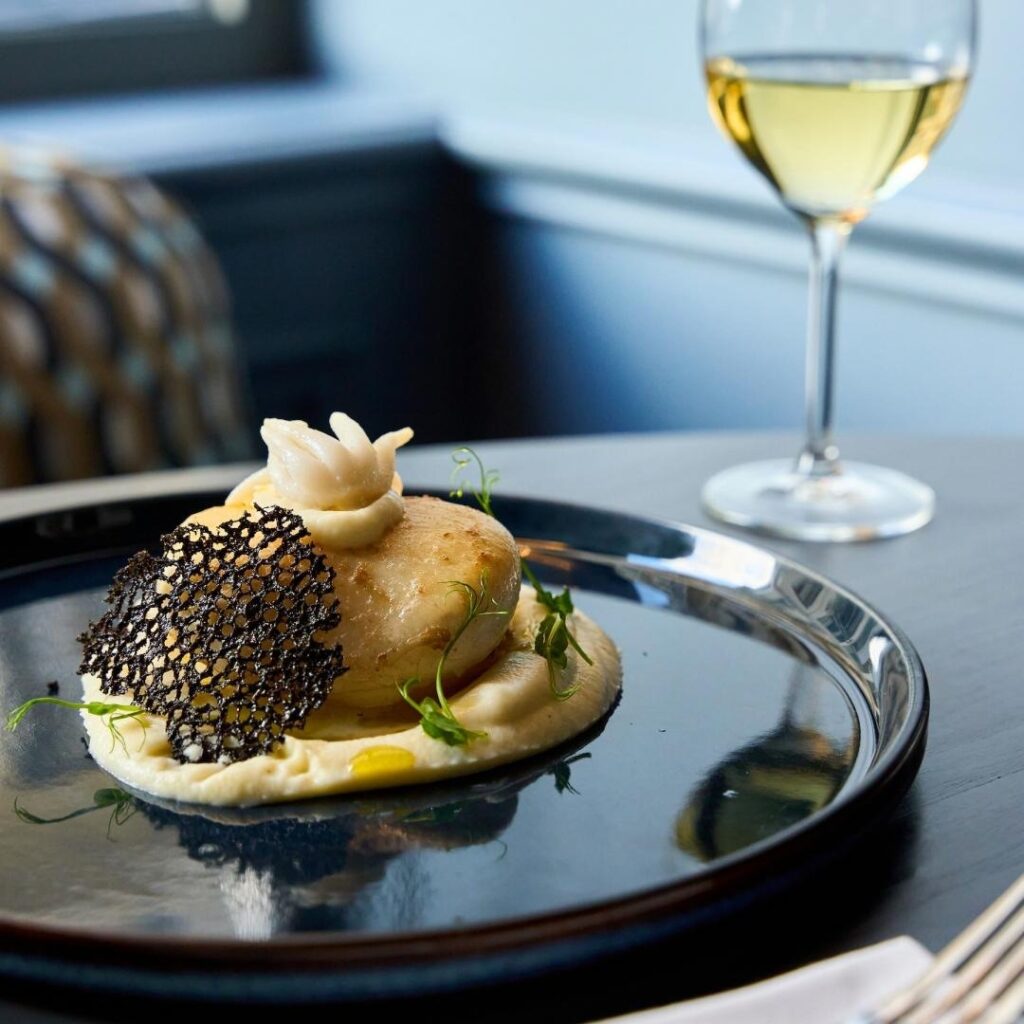
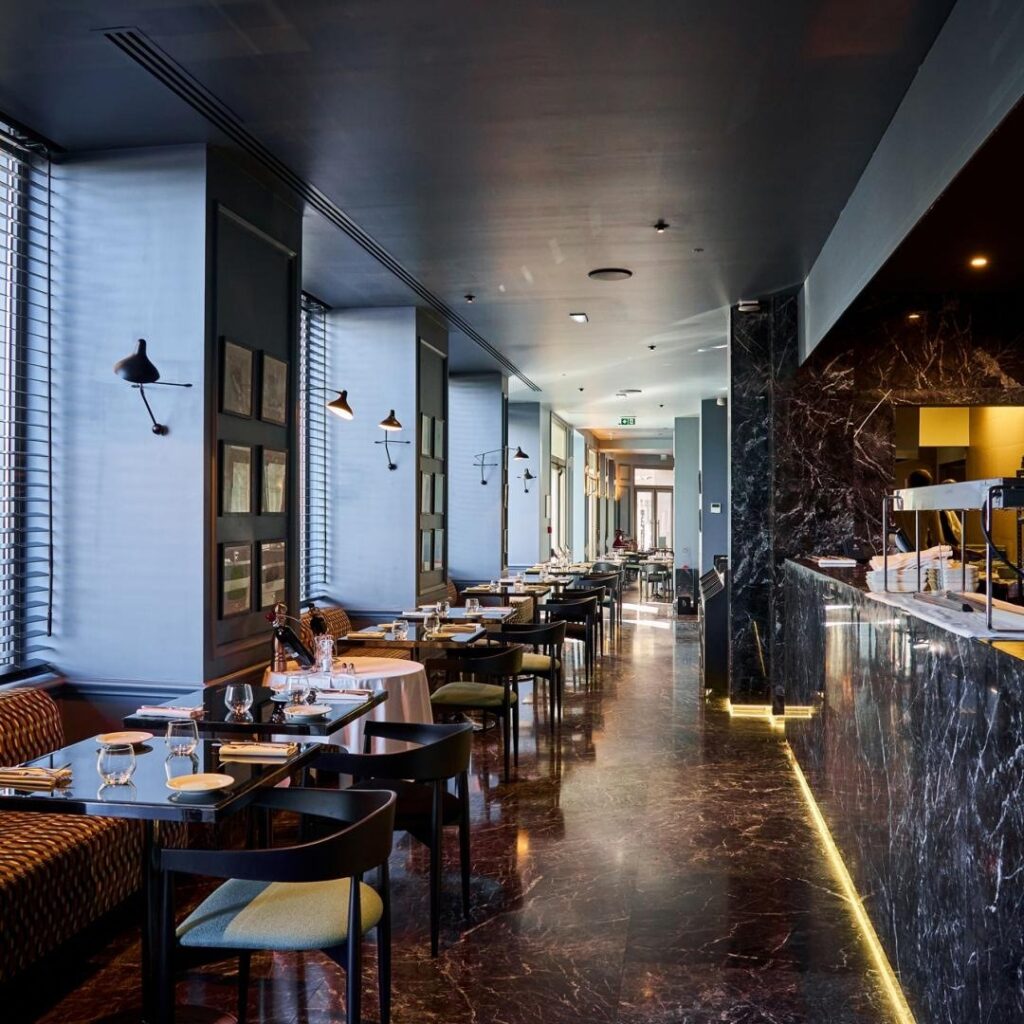
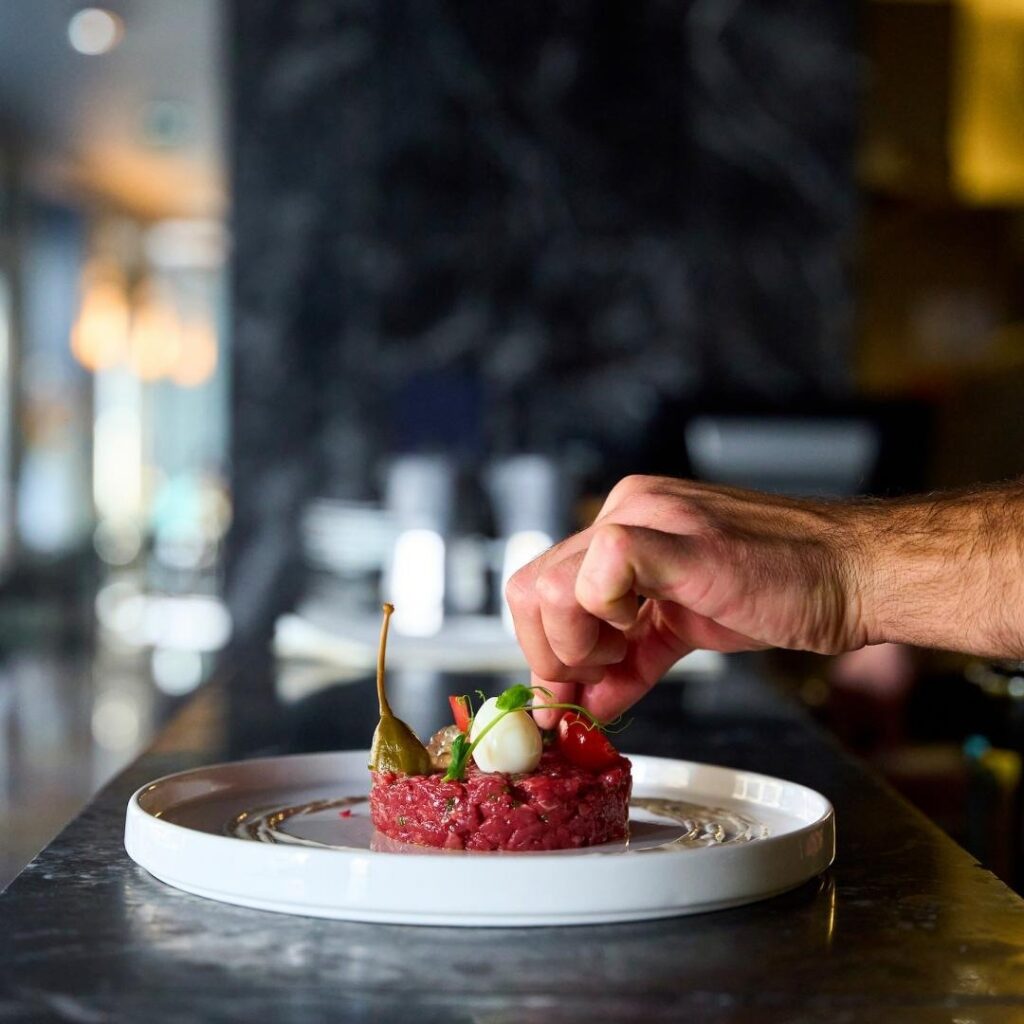
La Terrazza opened on 19 March 2026 on the top of the Accademia. It is run as a contemporary agriturismo, and the menu follows the season from the estate’s own flour, oil and wine. Breakfast is served daily from 7:00 to 10:30, and lunch on weekdays. The room can be configured for seated or buffet service, catered or self service, and movable glass walls give natural ventilation in every season. The furniture mixes timber pieces made to measure with twentieth-century chairs, Thonet No. 14 among them, found in the villa’s store and restored.
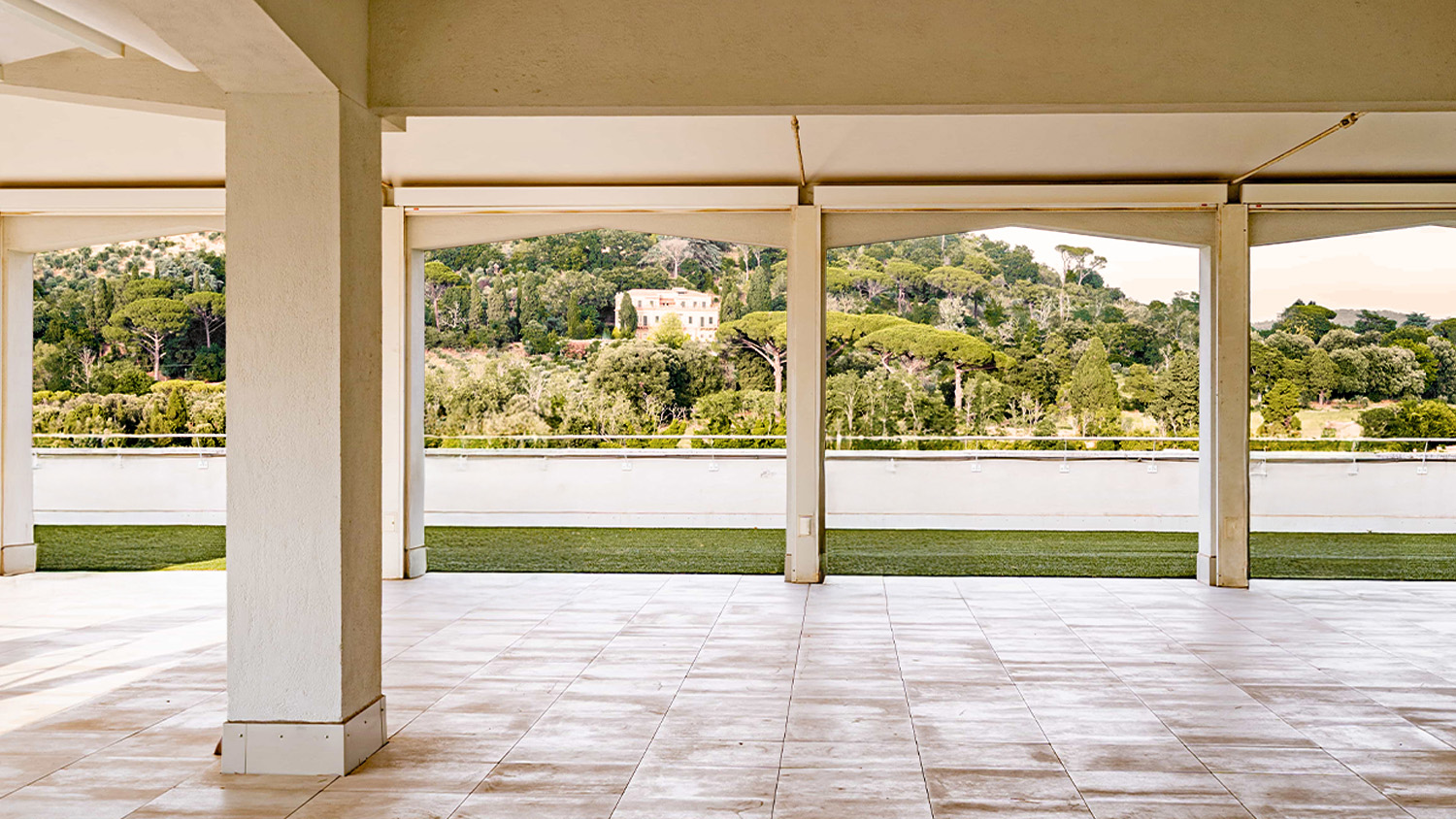
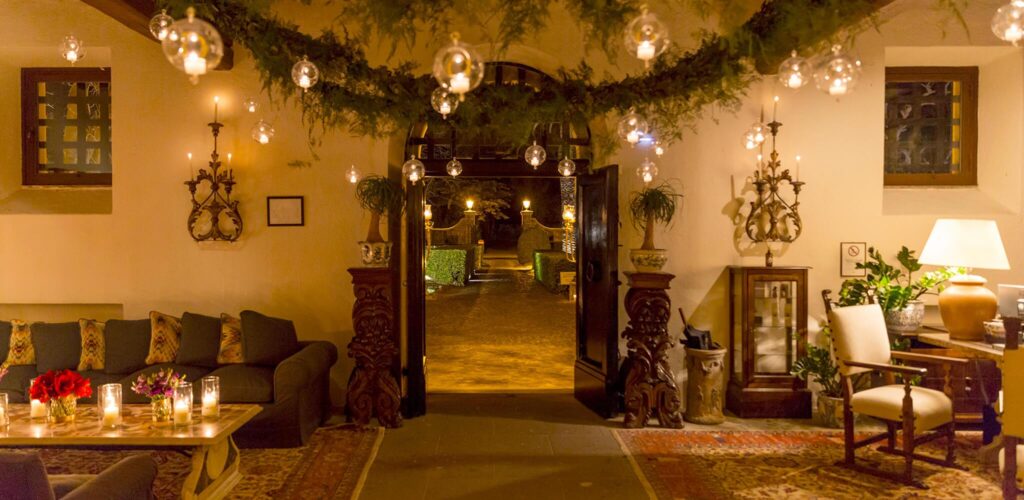
Outdoors, the park has old trees around a historic stone fountain and faces Rome, and the Tavolo Convivio, a long communal table, stands in the courtyard before the museum. The 27 hectares of vineyard and olive grove are open to outdoor events. The estate gives these as event capacities, not seated or wedding figures: 200 or more for the terrace room, 100 or more for the museum hall, 500 or more for the park and 200 or more for the courtyard table. The museum hall is also used for exhibitions, small seminars and conferences with multimedia. The conference centre in the Accademia has more than five meeting rooms and an auditorium that can be set for up to 300 seats, with natural and artificial lighting and a raised control room for sound and video.
Where guests would stay
The estate cites 45 rooms in total, in the Accademia. The farmhouse rooms there are called Harmony, Elegance and Classic, of 22 to 29 square metres, with a balcony over Rome for Harmony and a view of the villa and the park for Elegance. Beds have fir frames and Dorelan mattresses, the linen is Italian cotton with Rubelli fabric, the bathrooms are in Roman travertine, and the mosaic decoration was made by the mosaic makers of Castel Gandolfo.
The holiday apartments are in the same building: studios of 34 and 46 square metres and a two-room apartment, with kitchens and a minimum stay of three nights. A week in the 34 square metre studio for two guests is from EUR 543 at the time of writing. The upper floor of the Villino Rosso has been restored as a further flat. The estate was named in the Electric Friendly section of the Touring Club Italiano guide for 2024, and has a charging point for bikes and cars.
Around the estate
Guided walks start from the estate: along the Tusculan villas that cardinals and noble families built in these hills, around the rim of the old volcanic crater, up the ancient Via Sacra that led to the temple of Jupiter on Monte Cavo, and between the lakes of Castel Gandolfo and Nemi. Guided e-mountain bike tours with tastings cover the same hills, with electric bikes to hire, and yoga and aerial yoga are held on the lawn of the park for guests, couples or groups.
Reaching Grottaferrata
Grottaferrata lies 20 kilometres south east of Rome, on the lower slopes of the Alban Hills. Roma Termini is 19 kilometres from the estate and Fiumicino airport 36 kilometres in a straight line, and a large private car park serves guests.
Planning a wedding here
What a wedding at Villa Cavalletti involves is still to be worked out with the estate. A wedding capacity, whether the grounds can be taken for a weekend, where a ceremony would be held, whether an outside caterer can work with the kitchen and the price are all unconfirmed, and the figures above are event capacities and holiday rates. Ask the estate directly, and see the Villa Cavalletti listing for what is confirmed.
Villa Cavalletti is a working farm that also receives guests, with a wedding offer still to be defined. It will suit couples who want to talk through a countryside celebration with the estate, and the first questions are capacity, use of the grounds and the ceremony. Check your date to ask, or read more about weddings in Rome, the Edit on Torre Collevento above Orvieto and the Wedding Atlas guide to Italy.