Marrying in Mallorca
Mallorca is the most developed wedding destination in Spain and among the most developed in Europe. The island has hosted international couples for two decades, and the result is a deep pool of finca and villa estates, a mature network of local photographers, florists and caterers, and direct scheduled flights to Palma from every major UK airport.
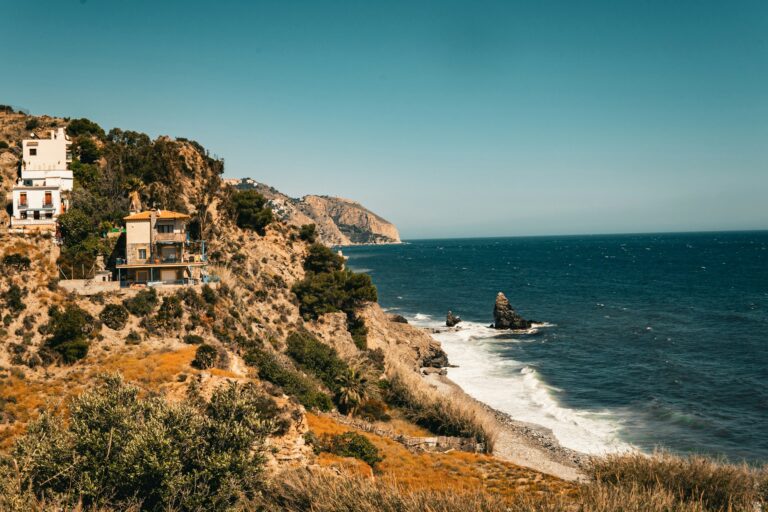
The island divides into four wedding geographies. The UNESCO-listed Serra de Tramuntana along the northwest coast holds the most dramatic landscape, with villages such as Deià, Valldemossa and Sóller. The southwest hinterland behind Palma has the most mid-range to premium fincas and villas. The northeast, around Artà and Capdepera, is quieter. The north, around Pollença and Alcúdia, combines beach access with a working town culture.
The long season, from April to October with little rain risk, makes Mallorca workable across a wide window, and local planners handle coach transfers and ceremony locations routinely.
The seasons
- Best
- Shoulder
- Peak
- Quieter
5 Star view Our reading of the wedding year, from the months below.
- Best months
- May, June, and September
- Shoulder season
- April and October
- Peak season
- July and August
May and June are widely seen as the best months: green landscape, warm but not extreme heat, and no peak crowds yet. September is the favourite of most experienced planners, with eased heat, the warmest sea and a clearer island after August. July and August work but are demanding and priced at the peak. October suits couples who want lower costs and an autumnal palette.
Daylight and sunset
The bar runs from sunrise to sunset on the 15th of each month. A ceremony is usually timed an hour or two before the sunset shown.
Calculated From the coordinates of Mallorca, local time, for 2027.
Ramadan and Eid
For couples and guests who observe them, the dates to plan a wedding around.
| Year | Ramadan | Eid al-Fitr | Eid al-Adha |
|---|---|---|---|
| 2027 | 8 Feb to 8 Mar | 9 Mar | 16 May |
| 2028 | 28 Jan to 25 Feb | 26 Feb | 5 May |
Calculated From the Umm al-Qura calendar. The observed dates follow the sighting of the moon and can fall a day either side.
The areas of Mallorca
Tramuntana mountains
Stone-terraced olive groves dropping to the sea, and mountain villages including Deià, Valldemossa, Sóller and Banyalbufar. Fincas here are usually more secluded and distinctive than in the villa-heavy southwest. Demand is very high, and the most sought-after properties must be booked far ahead.
Southwest (Calvià and Andratx)
The largest concentration of hireable villas and fincas, close to the airport. The stock mixes restored stone fincas, modern villas and boutique hotel estates, with the widest range of prices and the strongest transfer logistics.
Pollença and the North
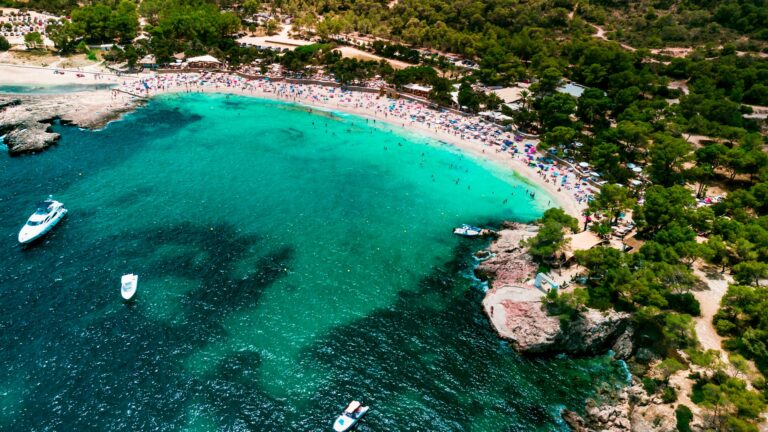
The market town of Pollença and the Roman town of Alcúdia, with pine-clad hills falling to the Bahia de Pollença and the Formentor peninsula. There are fewer wedding venues than in the southwest, but more island character.
East (Artà and Capdepera)
The least visited corner, with a talayotic landscape, pine forests and fincas that are more secluded and less marketed. Properties are often reached only through specialist agents. It suits couples who want real remoteness.
What venues are like
Finca
The defining Mallorcan venue: a farmhouse estate of local sandstone and terracotta tiles among olive, almond or carob groves. Most offer exclusive use of the main house and cottages, a ceremony terrace or garden, and a pool terrace for the aperitif.
Private villa
A purpose-designed or converted property on an elevated site with sea or mountain views, with infinity pools and stone terraces that suit photography. Many of the best run through specialist agencies and need a planner.
Hotel estate
Small hotel estates, several offering full buyout or significant event hire. A buyout gives hotel service alongside the exclusivity most couples want.
Airports and transfers
- Barcelona El Prat (BCN) For intercontinental guests who cannot route directly into Palma, with frequent short domestic flights.
Palma de Mallorca Airport (PMI) is among the best-connected regional airports in Europe, with direct scheduled services from London and virtually every UK regional airport. Southwest venues lie closest and Tramuntana venues are further by road.
Marrying legally in Spain
A civil marriage in Spain follows a prior file (acta or expediente) that proves each partner is free and able to marry; it is opened where at least one of the couple has their domicile. When the file is approved, the ceremony is held before the mayor or a delegated councillor, a notary or a court official. Both partners are heard privately and separately first.
- 1Months before; no fixed minimum in the Civil Code
Open the marriage file
A notary (acta) or the Civil Registry or court official (expediente) of the place where one of the couple is domiciled opens the file to confirm capacity and the absence of any impediment. A couple resident abroad is dealt with by the Spanish consular official in the country of residence.
- 2Before the ceremony
Hearing and authorisation
Each partner is heard privately and separately. The file ends in a decision that authorises or refuses the marriage. If the marriage is not celebrated within a year of publication of the notices, the file must be repeated.
- 3The day
The ceremony
Held before the mayor or a councillor the mayor delegates, or before a notary freely chosen by the couple; where a court official handled the file the couple may choose that official, another, or the mayor. Each partner is asked whether they consent to the marriage and the officiant declares them married.
- Who marries you
- mayor or councillor, notary or court official
- Prior file
- required, opened where one partner is domiciled
- Hearing
- each partner privately and separately
- Validity of the file
- one year
Already married at home?5 Star view
Many couples complete the legal or religious marriage in their own country and hold the celebration here. A ceremony with no legal effect needs none of the steps above: the venue and the planner arrange it.
Who needs a visa
Travelling from the United Kingdom
British passport holders visit Spain without a visa for up to 90 days in any 180-day period, counted across the whole Schengen area. The passport must have been issued less than 10 years before arrival and be valid for at least 3 months after the day you plan to leave. The European Union's Entry/Exit System registers fingerprints and a photograph at the border on a first visit.
Other nationalities
EU, EEA and Swiss nationals need no visa. Other nationalities check with the Spanish embassy or consulate in their country. The Balearic and Canary Islands, Ceuta and Melilla are covered by the same Spanish civil-marriage law; check Schengen rules for Ceuta and Melilla with the Spanish embassy.
Reference Spanish Civil Code, articles 49, 50, 51, 56, 57 and 58, and Ley 20/2011 del Registro Civil, article 58 (boe.es, read 2026-10-21). gov.uk: Spain entry requirements (travel advice, read 2026-10-21). European Union entry rules for visa-exempt visitors (EES, ETIAS) and European Commission implementing decisions on multiple-entry visas for Saudi, Bahraini and Kuwaiti nationals. Checked 21 October 2026. Rules change: confirm with the authority that will marry you before you book.
Accommodation
The best accommodation lies in the Tramuntana mountains and the southwest hinterland, where a few estate hotels sit at the top of the market.
At the table
Mallorcan food is rooted in the island's farming and fishing traditions and differs from the mainland.
Pa amb oli
Toasted bread rubbed with ripe tomato and dressed with olive oil, served with sobrasada, cheese or jamón. Common at finca aperitif hours.
Ensaimada
A light, coiled sweet dough made with saïm (pork lard) and dusted with icing sugar, baked daily and best eaten warm in the morning.
Sobrasada
A soft, spreadable cured sausage of minced pork, paprika and black pepper. Mallorca is the only region licensed to produce Sobrasada de Mallorca IGP, so it is the most identifiably Mallorcan product.
Tumbet
Layers of potato, aubergine and red pepper fried in olive oil and baked in tomato sauce. It appears on wedding menus when the caterer sources locally.
What planners tell couples
Finca access and supplier relationships
The best fincas and villas work through planners with established relationships. Booking directly usually leads to a refusal or to second-tier properties, so a planner embedded in the local network is not optional.
Accommodation blocks for guests
The most popular villages (Deià, Sóller, Pollença) have limited hotel stock that books out well ahead for summer weekends. Guests should receive a shortlist and book independently as early as possible.
Road transfers from Palma Airport
The Ma-1 motorway links the airport to the southwest. The Ma-10 mountain road into the Tramuntana is scenic but narrow in places, so coaches need vehicles rated for mountain roads.
Symbolic and legal ceremonies
Most international couples hold a symbolic ceremony in Mallorca and complete the legal marriage at home. A specialist wedding lawyer can advise on requirements for any nationality combination.