Marrying in Romania
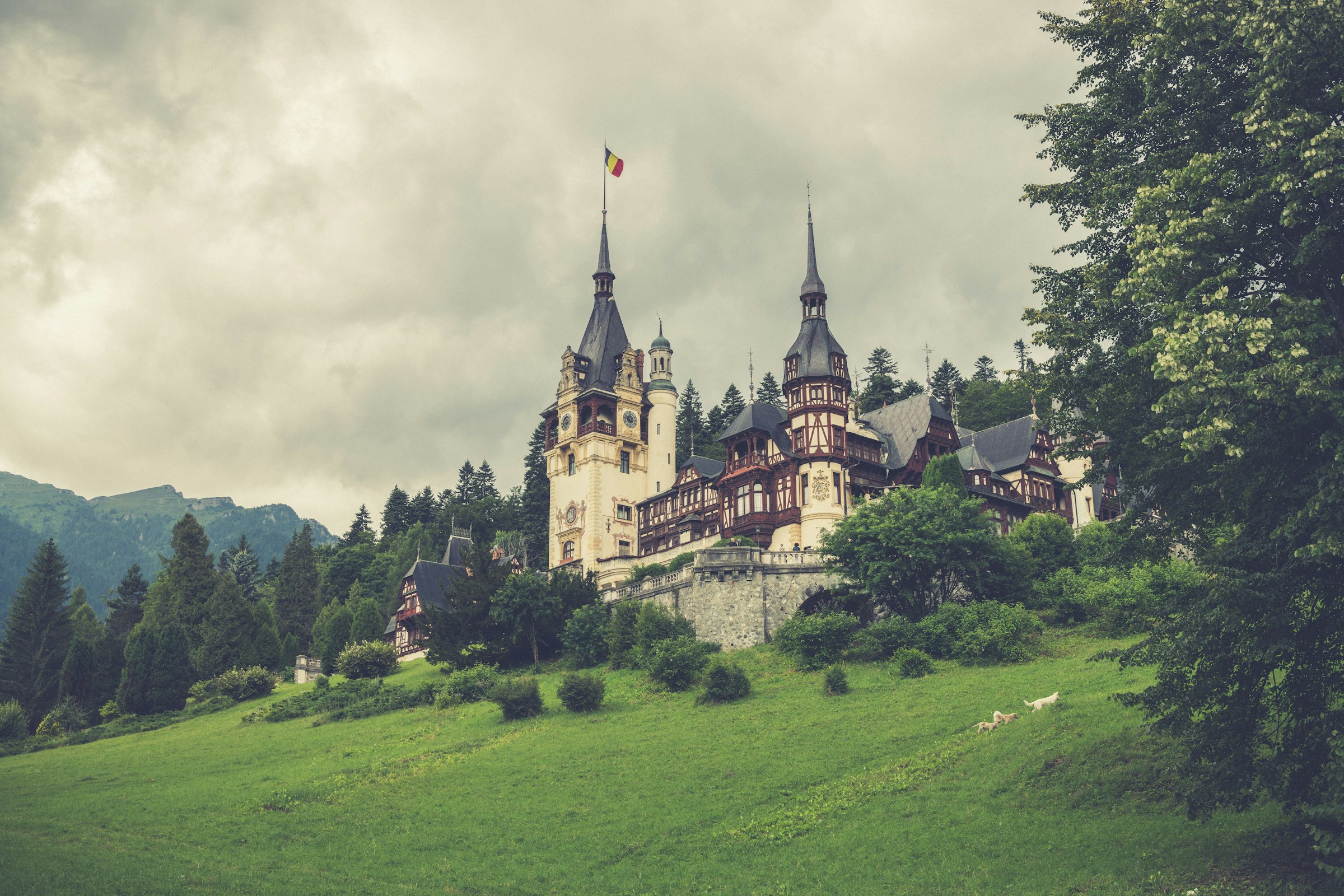
Romania offers what no Mediterranean destination can: castles, fortified churches and medieval towns in a mountain landscape, with a capital city an hour's flight from most of Europe. The Carpathians and the Transylvanian Alps carry deep forests, glacial lakes and alpine villages; below them stand the Saxon towns of Brașov, Sibiu and Sighișoara, and the two castles everyone knows, Bran and Peleș. Bucharest, in the south, has the grand hotels and the belle-époque palaces for a city wedding, and the Black Sea coast and the Danube Delta lie to the east.
The legal side is a civil ceremony at the town hall, and nothing else counts. The couple files a declaration of marriage and the marriage is concluded eleven to fourteen days later, within the fourteen-day validity of the medical certificates both partners obtain in Romania. The foreign partner brings an apostilled birth certificate with a notarised Romanian translation, a notarised affidavit of freedom to marry from their embassy in Romania, proof of the end of any previous marriage, and the prenuptial medical certificate from a clinic in the town of the wedding. The religious or symbolic ceremony at the castle or the estate is held after the civil one.
The weather divides the year cleanly. April to June is the sweet spot: green landscapes, comfortable temperatures and the castles less crowded than in July and August, which are the warmest months and the busiest at Bran and Peleș. September and October bring mild weather and autumn colour to the alpine villages and medieval towns. Winters are cold, with snow in the mountains and a continental chill in the east.
The seasons
- Best
- Shoulder
- Peak
- Quieter
5 Star view Our reading of the wedding year, from the months below.
- Best months
- May, June and September
- Shoulder season
- April and October
- Peak season
- July and August
April to June gives green landscapes and comfortably warm days; September and October mild weather and autumn colour. July and August are the warmest and the castles are at their most crowded. The west has hot, humid summers and mild winters; the east is continental, with hot summers and icy winters; the Black Sea coast and the south are warmer. A winter wedding is a snow wedding.
The weather, month by month
Lower row: average rainfall in the month, mm
Lower row: average rainfall in the month, mm
Reference Bucharest: climatological normals 1981 to 2010, National Meteorological Administration, through the WMO World Weather Information Service. Sibiu: climatological normals 1981 to 2010, National Meteorological Administration, through the WMO World Weather Information Service. Read 5 October 2026.
Daylight and sunset
The bar runs from sunrise to sunset on the 15th of each month. A ceremony is usually timed an hour or two before the sunset shown.
Calculated From the coordinates of Bucharest, local time, for 2027.
Ramadan and Eid
For couples and guests who observe them, the dates to plan a wedding around.
| Year | Ramadan | Eid al-Fitr | Eid al-Adha |
|---|---|---|---|
| 2027 | 8 Feb to 8 Mar | 9 Mar | 16 May |
| 2028 | 28 Jan to 25 Feb | 26 Feb | 5 May |
Calculated From the Umm al-Qura calendar. The observed dates follow the sighting of the moon and can fall a day either side.
The areas of Romania
Brașov and the Bran corridor
The Saxon town below the Carpathians, with Bran Castle and the Peleș royal palace at Sinaia within an hour: the castle wedding country, and the busiest in high summer.
Sibiu and Sighișoara
The fortified Saxon towns of central Transylvania: Sibiu's squares and towers, Sighișoara's walled citadel, and the fortified village churches between them, for a medieval setting away from the crowds.
The Transylvanian villages
Alpine villages and manor estates in the forests and hills, some restored as guesthouses by their old families, for a wedding that takes a village for the weekend.
Bucharest
The capital: belle-époque palaces, grand hotels and boulevards, Otopeni airport twenty minutes away, for a city wedding with the whole of Europe a short flight off.
The Danube Delta and the coast
The wetlands of the delta and the Black Sea coast in the east, with a Mediterranean-leaning climate, for a summer wedding by the water.
What venues are like
Castle and royal palace
Bran, Peleș and the smaller castles of Transylvania: the ceremony in the courtyard or the garden, the civil formalities at the town hall beforehand.
Saxon town house and citadel
Hotels in the restored merchant houses of Brașov, Sibiu and Sighișoara, with the squares and towers as the setting.
Manor estate and village guesthouse
Restored manors and whole-village guesthouses in the Transylvanian hills, taken by one party.
City palace and grand hotel
Bucharest's belle-époque palaces and the hotels of the Calea Victoriei, for a formal city wedding.
Mountain lodge
Lodges and chalets in the Carpathians for a small wedding with the forest and the peaks.
For a large or private celebration
- Take 300 guests or more
- 1 of 1 venues
- Whole venue to yourselves
- 0 of 1
- Your own caterer welcome
- 0 of 1
- Largest
- Iris Orangerie, up to 300
Counted Counted from the venue records when this page loaded.
Halal catering, service without alcohol, a private celebration for the ladies and a prayer room are arranged venue by venue: ask when you check your date. See the Romania venues for 300 guests or more.
Airports and transfers
- Bucharest Otopeni (OTP) The main gateway, about 20 minutes from the city centre; roughly three hours by road to Brașov and the Bran corridor.
- Cluj-Napoca (CLJ) The second city's airport, with direct European flights; the gateway to northern and central Transylvania.
- Sibiu (SBZ) A small airport with seasonal and year-round European routes, minutes from the Saxon town.
Bucharest is the international gateway; Transylvania is reached by road or by the regional airports. A coach from Bucharest to Brașov is about three hours through the mountains; Cluj and Sibiu airports serve central Transylvania directly.
Marrying legally in Romania
Only a civil marriage at the town hall is legally valid. The couple files a declaration of marriage and the ceremony is concluded eleven to fourteen days later, inside the fourteen-day life of the medical certificates both partners obtain in Romania. A religious or symbolic ceremony follows it.
- 111 to 14 days before
Declare the marriage
At the town hall, with an apostilled birth certificate in notarised Romanian translation, a notarised statement of freedom to marry from your embassy in Romania, proof that any earlier marriage has ended, and a prenuptial medical certificate from a clinic in the town of the wedding.
- 2The day
The civil ceremony
At the town hall, which is the only legally valid form. A partner who does not speak Romanian has an authorised interpreter.
- Wait
- 11 to 14 days after the declaration
- Medical certificate
- valid 14 days
- Legal form
- town hall only
- Interpreter
- required without Romanian
Already married at home?5 Star view
Many couples complete the legal or religious marriage in their own country and hold the celebration here. A ceremony with no legal effect needs none of the steps above: the venue and the planner arrange it.
Who needs a visa
Travelling from the United States
American citizens visit Romania without a visa for up to 90 days in any 180-day period under Schengen rules. The European Union's ETIAS travel authorisation will be required of visa-exempt visitors, Americans included, once it is operating; the EU expects that in the last quarter of 2026.
Travelling from the United Kingdom
British passport holders visit Romania without a visa for up to 90 days in any 180-day period, counted across the whole Schengen area. The passport must have been issued less than 10 years before arrival and be valid for at least 3 months after the day you plan to leave. The European Union's Entry/Exit System registers fingerprints and a photograph at the border on a first visit.
Travelling from the Gulf
Citizens of the United Arab Emirates travel to Romania without a visa for up to 90 days in any 180-day period, and will need the European Union's ETIAS travel authorisation once it is operating. Citizens of Saudi Arabia, Qatar, Kuwait, Bahrain and Oman need a Schengen short-stay visa, applied for through the Romanian consulate or its visa centre; under European Commission rules, Saudi, Bahraini and Kuwaiti nationals who qualify can be issued a multiple-entry visa valid for five years. A resident of the Gulf who holds another passport follows the rule for that passport.
Other nationalities
EU and EEA nationals need no visa. Other nationalities check with the Romanian embassy or consulate in their country.
Reference gov.uk: Romania entry requirements. US Embassy in Romania and expatriate guides: documents for a foreigner marrying in Romania. EU Travel to Europe (travel-europe.europa.eu): ETIAS, who should apply European Commission implementing decisions on multiple-entry visas for Saudi, Bahraini and Kuwaiti nationals (2023, 2024). Checked 5 October 2026. Rules change: confirm with the authority that will marry you before you book.
Accommodation
Guests stay in the Saxon towns' restored houses, in the castle hotels and manors of Transylvania, in a mountain lodge, or in Bucharest's grand hotels.
At the table
Romanian cooking is hearty and rural: stuffed cabbage leaves, polenta, smoked meats, sheep's cheeses from the mountains, plum brandy, and wines from some of Europe's oldest vineyards.
Sarmale
Cabbage or vine leaves stuffed with minced meat and rice, the dish of every Romanian wedding table.
Mămăligă
Polenta, served with sheep's cheese and sour cream or beside a stew.
Mountain cheese and smoked meats
Telemea and caș from the Carpathian shepherds, and the smoked sausages of Transylvania's Saxon villages.
Țuică and pălincă
Plum brandy, offered before the meal, stronger in Transylvania.
Romanian wine
Fetească Neagră and Fetească Albă from Dealu Mare, Transylvania and the Moldavian hills.
What planners tell couples
Only the town hall marries you
Romania recognises only the civil marriage performed at the town hall (primăria) of the place where the Romanian partner resides, or where the wedding is held for two foreigners. The religious or symbolic ceremony at the castle follows it and has no legal effect of its own.
Eleven to fourteen days
The couple files a declaration of marriage at the town hall; the marriage is concluded between eleven and fourteen days later, and within the fourteen-day validity of the medical certificates. Plan the civil ceremony for the week of the wedding and arrive early for the paperwork.
The documents for the foreign partner
A certified copy of the birth certificate with a notarised Romanian translation made by a Romanian notary; a notarised statement that the person is free to marry, obtained from their own embassy in Romania; proof of the end of any previous marriage (divorce or annulment decree, or a death certificate) with a Romanian translation; and the prenuptial medical certificate from a clinic in the town of the wedding. Public documents from outside the EU are apostilled for use in Romania.
The medical certificate
Both partners obtain a prenuptial health certificate from a clinic in the town where they marry; it is valid for fourteen days, which sets the timetable.
An interpreter
A partner who does not speak Romanian has an authorised interpreter at the declaration and the ceremony.
Castles in summer
Bran and Peleș are at their most crowded in July and August; a castle ceremony sits better in May, June, September or early October, with the civil marriage at the town hall in the days before.