Marrying in the Cotswolds
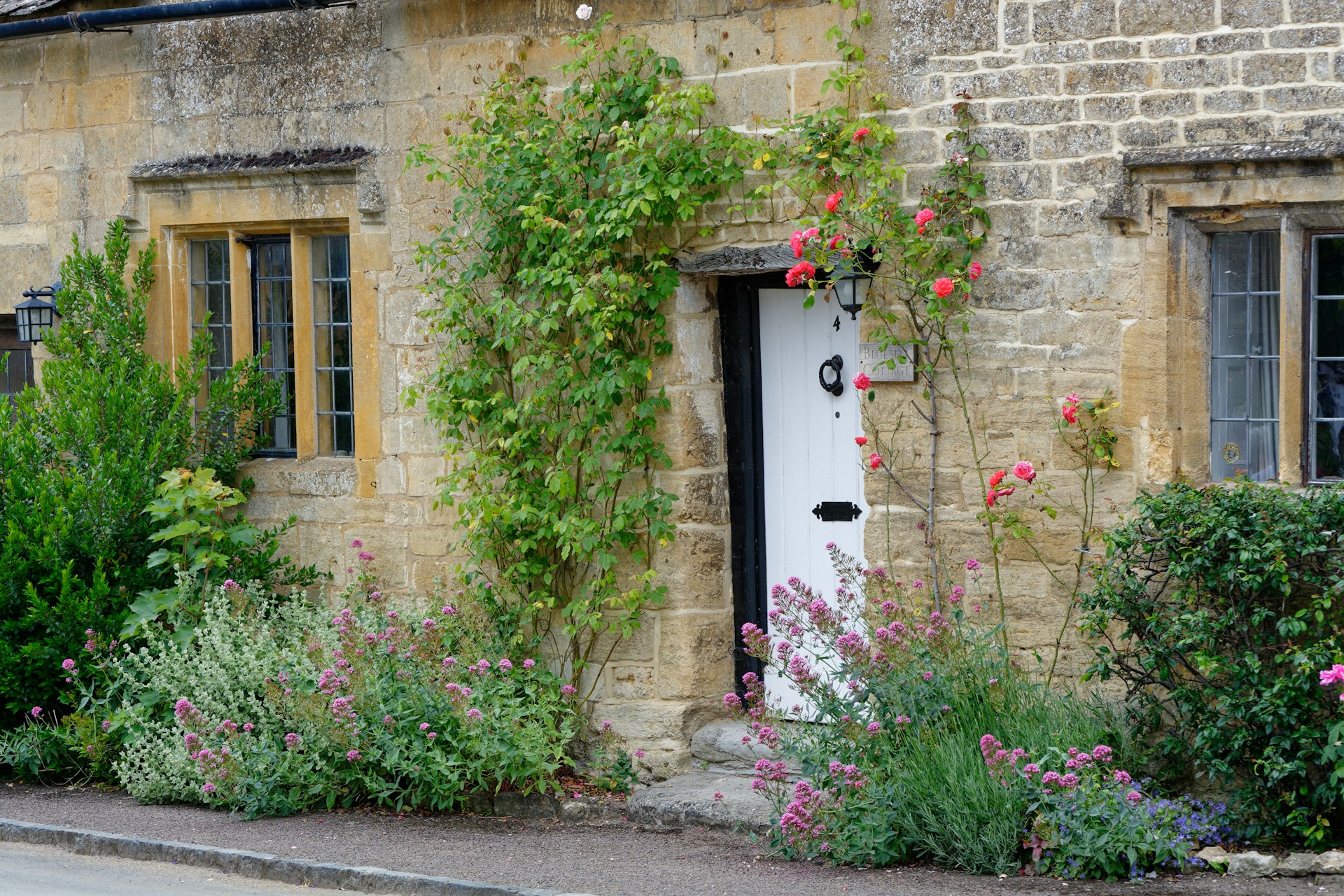
The Cotswolds is the most established rural wedding destination in England. Its appeal is consistent and specific: honey-coloured limestone villages, walled gardens, long-light summer evenings, and a concentration of country houses and private estates within a two-hour radius of London. The region is accessible, predictable in its beauty, and deeply familiar to a global audience.
The geography spans six counties from Chipping Campden in the north to Bath in the south, with the official Area of Outstanding Natural Beauty covering 800 square miles. Within this, the wedding market is concentrated in a handful of zones: the northern villages around Broadway and Chipping Campden, the central belt between Cheltenham and Burford, the southern Cotswolds around Tetbury and Cirencester, and the eastern edge reaching into Oxfordshire.
Cotswolds weddings operate across a wide range. At the top end, private estate hire commands prices comparable to northern Italy. In the mid-market, converted barn venues and country house hotels offer a polished product at lower cost. The consistent factor is the landscape: even at moderate budget levels, the backdrop is one of the most photogenic in England.
The seasons
- Best
- Shoulder
- Peak
- Quieter
5 Star view Our reading of the wedding year, from the months below.
- Best months
- June, July, and September
- Shoulder season
- May and October
- Peak season
- July and August
The English weather is never guaranteed, which is why the best Cotswolds venues are designed for flexibility: covered pavilions, heated marquees, and indoor ceremony rooms that do not compromise the outdoor aesthetic. June and July offer the longest evenings and the most reliable light. September combines harvest season warmth with lower venue competition. May can be spectacular but is more variable.
Daylight and sunset
The bar runs from sunrise to sunset on the 15th of each month. A ceremony is usually timed an hour or two before the sunset shown.
Calculated From the coordinates of Cotswolds, local time, for 2027.
Ramadan and Eid
For couples and guests who observe them, the dates to plan a wedding around.
| Year | Ramadan | Eid al-Fitr | Eid al-Adha |
|---|---|---|---|
| 2027 | 8 Feb to 8 Mar | 9 Mar | 16 May |
| 2028 | 28 Jan to 25 Feb | 26 Feb | 5 May |
Calculated From the Umm al-Qura calendar. The observed dates follow the sighting of the moon and can fall a day either side.
The areas of the Cotswolds
North Cotswolds
Broadway, Chipping Campden, and Moreton-in-Marsh. The most photographed villages, the longest established tourism corridor, and the highest concentration of honeyed limestone architecture. Premium estate properties here book early. Strong rail links from London Paddington via Moreton-in-Marsh make guest logistics straightforward.
Central Cotswolds
Cheltenham, Bourton-on-the-Water, Burford, and the Windrush valley. More varied in character than the north. Cheltenham itself offers urban venues with Regency architecture. The surrounding countryside suits large-scale estate weddings with significant on-site accommodation.
South Cotswolds
Tetbury, Cirencester, and the country reaching toward Bath. More private, less touristed. Some of the largest private estate properties in the region sit in this zone. Proximity to Bath adds a significant secondary base for guests who want a city hotel alongside the countryside programme.
Oxfordshire edge
Great Tew, Soho Farmhouse territory, the Chipping Norton belt. The most in-demand area among London-based couples due to convenience. Great Tew estate in particular has established a style of Cotswolds wedding that many other venues now reference.
What venues are like
Private estate
Large country houses with private grounds, walled gardens, and outbuildings converted for events. Full exclusive use for the weekend, including accommodation in the main house and cottages. The top-tier Cotswolds estates offer a level of privacy and pastoral immersion that defines the region's appeal at the luxury level.
Country house hotel
Historic houses operating as boutique hotels that offer exclusive hire for weddings. More logistically predictable than a private estate: professional events team, on-site catering, and established supplier relationships. Less private than a full estate but significantly easier to coordinate.
Barn and working farm
Converted agricultural buildings set within active farming operations. The dominant mid-market format. The aesthetic is deliberately rustic but the operational standard at the top venues is high.
Manor house
Smaller country houses, typically 16th to 18th century, available for exclusive hire at a lower price point than the major estates.
Airports and transfers
- Heathrow (LHR) Primary international gateway. 90 minutes to the central Cotswolds by road. Direct routes from all major global hubs.
- Gatwick (LGW)
- Stansted (STN)
- Luton (LTN)
- London City (LCY)
- Birmingham (BHX) 60 minutes from the northern Cotswolds. Growing international network including North America and the Middle East. Better for guests arriving from the north.
- Manchester (MAN)
- Bristol (BRS) 45 minutes from the southern Cotswolds and Bath. Useful for guests flying with low-cost carriers from Europe and domestic connections.
- East Midlands (EMA)
- Leeds Bradford (LBA)
- Newcastle (NCL)
- Liverpool (LPL)
- Southampton (SOU)
- Exeter (EXT)
- Norwich (NWI)
- Edinburgh (EDI)
- Glasgow (GLA)
- Aberdeen (ABZ)
- Inverness (INV)
- Belfast International (BFS)
- Cardiff (CWL)
The Cotswolds is well served by rail. Moreton-in-Marsh connects directly to London Paddington in 90 minutes. Cheltenham Spa has direct services from London Paddington and connections from Birmingham and the north. Most venues provide shuttle services between the nearest station and the property.
Marrying legally in the United Kingdom
Applies to: England and Wales
Both partners give notice at a register office at least 29 days before the ceremony, after living in that registration district for 7 days. The ceremony follows within 12 months, at a register office or a venue approved by the local council, with a registrar and at least two witnesses. Scotland and Northern Ireland have their own rules.
- 136 days before, at the latest
Live in the district
You must have lived in the registration district for the past 7 days before you give notice there.
- 229 days before, at the latest
Give notice
Sign the legal statement at the local register office, naming the venue. Bring a passport, proof of address and proof that any earlier marriage has ended. The earliest ceremony date is 29 days later.
- 3The day
The ceremony
At a register office or at any venue approved by the local council, such as a stately home or a hotel, with a registrar and at least 2 witnesses. It must take place within 12 months of giving notice.
- Notice
- 29 days, valid for 12 months
- Residence
- 7 days in the district
- Witnesses
- at least 2
- Registrar
- £62 at a register office
- Minimum age
- 18
Already married at home?5 Star view
Many couples complete the legal or religious marriage in their own country and hold the celebration here. A ceremony with no legal effect needs none of the steps above: the venue and the planner arrange it.
Who needs a visa
Travelling from the United States
American guests need an electronic travel authorisation (ETA) to visit, which costs £20. Anyone coming to the UK to marry who does not plan to stay applies for a Marriage Visitor visa instead: it costs £135, can be applied for from 3 months before travel, and allows a stay of up to 6 months with the marriage inside that time.
Travelling from the Gulf
Citizens of the United Arab Emirates, Saudi Arabia, Qatar, Kuwait, Bahrain and Oman travel on an electronic travel authorisation (ETA) rather than a visa, for visits of up to 6 months. A couple coming to the UK to marry who do not plan to stay apply for a Marriage Visitor visa instead. A resident of the Gulf who holds another passport follows the rule for that passport.
Other nationalities
Most visitors need an ETA or a visa, depending on nationality. A partner from outside the UK or Ireland gives notice together with their partner, with proof of immigration status and a passport photograph for each of them.
The registrar's fee is £114.50 at a registered religious building, and approved premises set their own.
Reference gov.uk: Marriages and civil partnerships in England and Wales (give notice; documents; plan your ceremony); Marriage Visitor visa; Get an electronic travel authorisation (ETA); Check when you can get an ETA (nationalities). Checked 5 October 2026. Rules change: confirm with the authority that will marry you before you book.
At the table
The Cotswolds has a concentrated local food economy built around estate shoots, artisan cheesemakers in the Vale of Berkeley, and kitchen garden producers around Chipping Norton and Burford.
Cotswold lamb and game
The limestone uplands produce excellent lamb, and the surrounding estates supply game throughout the autumn and winter season. Venison, pheasant, and partridge from local shoots are regularly featured on wedding menus by Cotswolds-based caterers.
Double Gloucester and Stinking Bishop
The Vale of Berkeley, at the southern edge of the Cotswolds, is one of England's most productive artisan cheese districts. Double Gloucester and the pungent, washed-rind Stinking Bishop are the two most distinctive regional cheeses and appear on almost every Cotswolds wedding cheese board.
Afternoon tea at Buckland Manor
Buckland Manor near Broadway offers one of the most refined traditional afternoon teas in the region, served in the original drawing rooms of a 13th-century manor house. A standard activity for the day before or morning after the wedding.
The Kingham Plough
A village pub and restaurant in Kingham that has been one of the most admired gastropubs in England for over a decade. Regularly used as a rehearsal dinner venue or post-wedding lunch for couples based in the central Cotswolds.
What planners tell couples
No usable rail station inside the region
The Cotswolds has no mainline station within the region itself. Moreton-in-Marsh on the Paddington line is the closest useful option for guests arriving from London by train, but still requires a car or taxi for the final stretch to most venues. Plan road transfers from the outset.
Book venue exclusive hire 18 to 24 months ahead
Saturday dates at the most sought-after country house and tithe barn venues are routinely committed 18 to 24 months in advance. September Saturdays are particularly competitive. Midweek and Sunday bookings are typically available on 12 months notice.
Outdoor ceremonies depend on a marquee backup
Even in May and June, Cotswolds weather is unpredictable. All outdoor ceremony plans require a licensed indoor or covered backup. The best estate venues have this built into their infrastructure; confirm it explicitly when assessing any venue.
Coordinate village parking for guests
The most beautiful Cotswold villages have very limited parking and narrow approach roads. For weddings in or near a village setting, a shuttle from a designated car park or from a nearby town is standard practice and avoids congestion complaints from local residents and neighbouring properties.