Alentejo
Craveiral Farmhouse
A working organic farm of 38 houses and a farm-to-table restaurant between the countryside and the sea, close to Zambujeira do Mar, that hosts weddings on its terraces, in its gardens and around its pools.
One national marriage process, and a choice between a capital, a southern coast, open farmland, a wine valley and two Atlantic island groups. Portugal marries foreign couples under its own national civil law, and the process is the same in Lisbon, the Algarve, the Douro and the islands. A wedding here starts with a file at a civil registry office, and the celebration, whether civil, religious or symbolic, is built around it. The Portuguese language matters more than most couples expect: the registry works in Portuguese, so a couple who do not speak it need an interpreter at the registry and at the ceremony.
The country gives six distinct settings in one legal system. Lisbon and its region cover the capital on the Tagus estuary, the Sintra hills and the Cascais coast, and the Arrábida hills across the water. The Algarve is the south coast, with Faro airport. The Alentejo is farmland, cork oak and a largely undeveloped Atlantic coast. The Douro is a river of terraced wine estates in the north. Porto and the green north sit on the Atlantic, and Madeira and the Azores are separate island groups with airports of their own.
The weather divides the country as clearly as the map. In the station normals Lisbon and Faro are close to dry from June to September, while Porto has some rain in every month, so the north asks for a covered fallback in a way the south does not. The venues in our collection so far are in the Lisbon region, the Algarve, the Alentejo and central Portugal; the Douro, Porto and the north, Madeira and the Azores are described below from public sources, and the collection has no venue there yet.
The capital stands on the north bank of the Tagus estuary, about twenty minutes from its airport, with Sintra and the Cascais coast within an hour. Sintra's cultural landscape is a UNESCO World Heritage site. Across the estuary, in the Serra da Arrábida Natural Park, José Maria da Fonseca at Vila Nogueira de Azeitão is a wine house's family home with gardens and cellars used for celebrations.
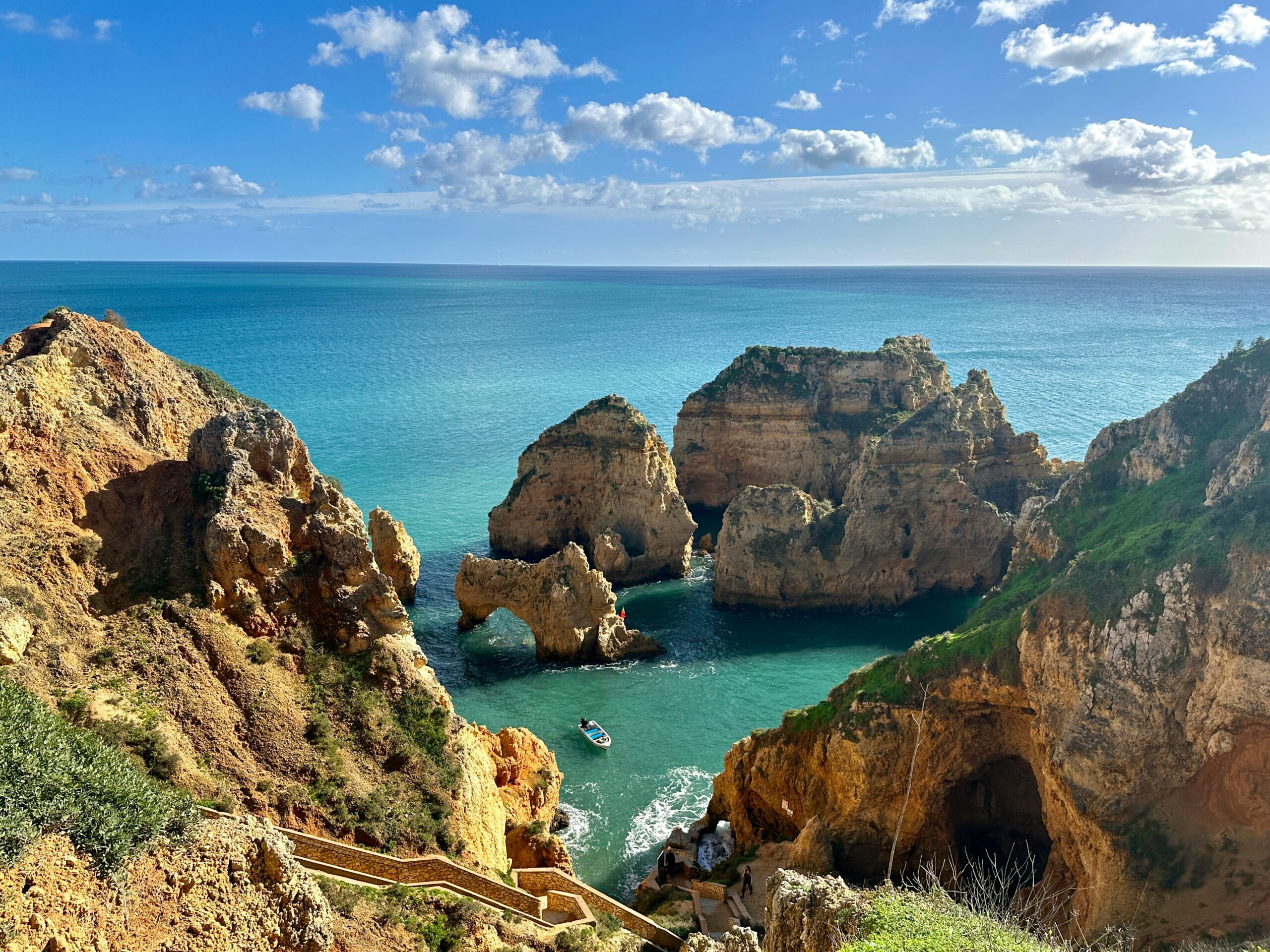
The south coast of Portugal, served by Faro airport, with cliffs and beaches to the west and lagoons to the east. Planners based here arrange weddings in villas, quintas, beach clubs and hotels along the coast. Inland at Algoz, about ten minutes from the sea, Solar do Paço is a restored manor house in landscaped grounds.
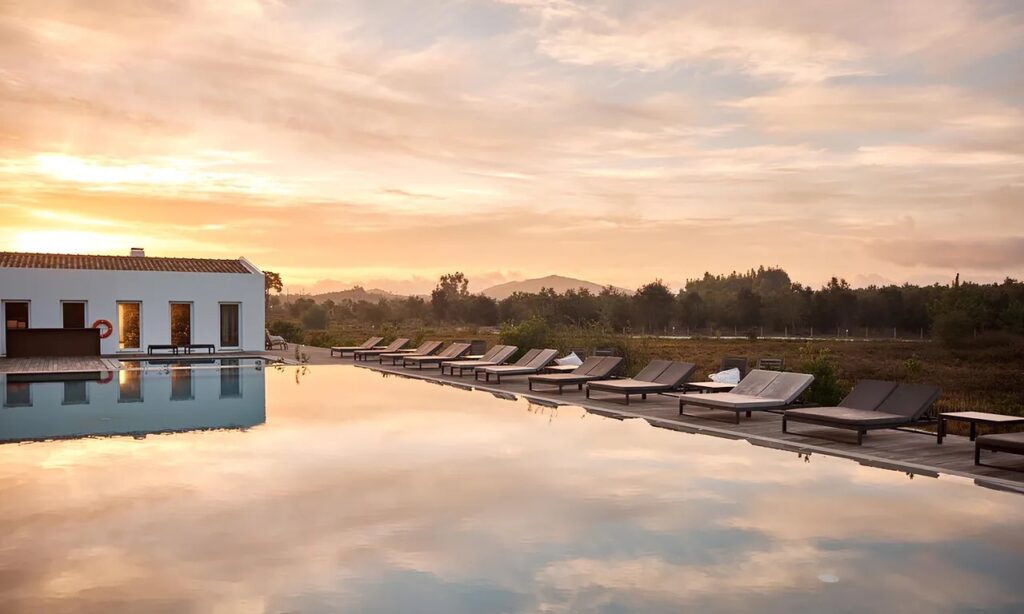
The south of Portugal between Lisbon and the Algarve: cork oaks, wheat fields and a largely undeveloped Atlantic coast. Craveiral Farmhouse, an organic farm near São Teotónio on the Costa Vicentina, holds weddings among its whitewashed houses and pool. In the station normals the inland Alentejo is noticeably hotter in July and August than the coast.
The inland region between Lisbon and Porto, with the pilgrimage town of Fátima, the monasteries of Alcobaça and Batalha and the Serra de Aire hills. Luz Houses, a small hotel of restored stone houses in a pine wood at Moimento on the edge of Fátima, is the venue here.
A river valley in the north, laid out in terraced vineyards that are a UNESCO World Heritage landscape and the source of Port. The wine region was demarcated by royal decree in 1756. Its estates are called quintas, and a railway follows the river upstream from Porto.
Porto stands at the mouth of the Douro on the Atlantic and has its own airport. The Minho and the green north beyond it are the wettest part of the mainland in the station normals, with rain in every month, and the region of Vinho Verde.
Two Atlantic island groups, each with its own airport, at Funchal and Ponta Delgada. Funchal's temperatures vary little through the year, and Madeira's laurel forest is a UNESCO World Heritage site. In the Azores the vineyard landscape of Pico Island is World Heritage listed, and Ponta Delgada has rain on most days in winter.
A short selection from the venues listed with us. The full collection has every Portugal venue.
A working organic farm of 38 houses and a farm-to-table restaurant between the countryside and the sea, close to Zambujeira do Mar, that hosts weddings on its terraces, in its gardens and around its pools.
José Maria da Fonseca is a nineteenth-century family residence at the heart of one of Portugal's most historic family-owned wineries, in Vila Nogueira de Azeitão, just south of Lisbon, with gardens, historic cellars and a 500 m² Winter Garden for celebrations of 300 to 350 guests.
A small village-style hotel of 15 rooms and suites in Moimento, Fátima, with a restaurant, gardens, a heated pool and a natural cave for wellness treatments.
Venues in the guide are listed with 5 Star Weddings. Our editors choose which listed venues to feature, and a place in the collection does not depend on a feature here.
In the station normals July and August are the driest months in Lisbon, Faro and the Alentejo, and the hottest, with inland Alentejo afternoons well above the coast. May, June and September keep most of that dry weather with milder afternoons. From November to February the south and the north both turn wet, with rain on about half of the days in Lisbon and Porto. Madeira changes least through the year, and the Azores have rain on most days in winter.
Recommended wedding months
May, June and September
Peak season is July and August, and the shoulder months are April and October.
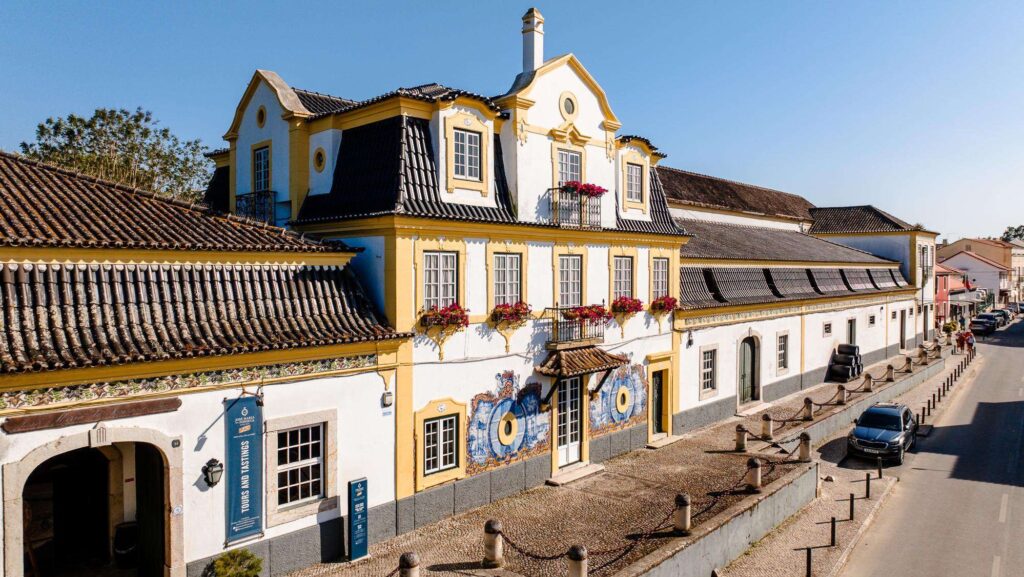
Wine house and quinta. A quinta is an estate with farmland, and in the Douro, the Alentejo and the Setúbal peninsula many are wine producers. José Maria da Fonseca is the family house of a wine house founded in 1834, with a tiled facade, formal gardens and barrel cellars set for dinners.
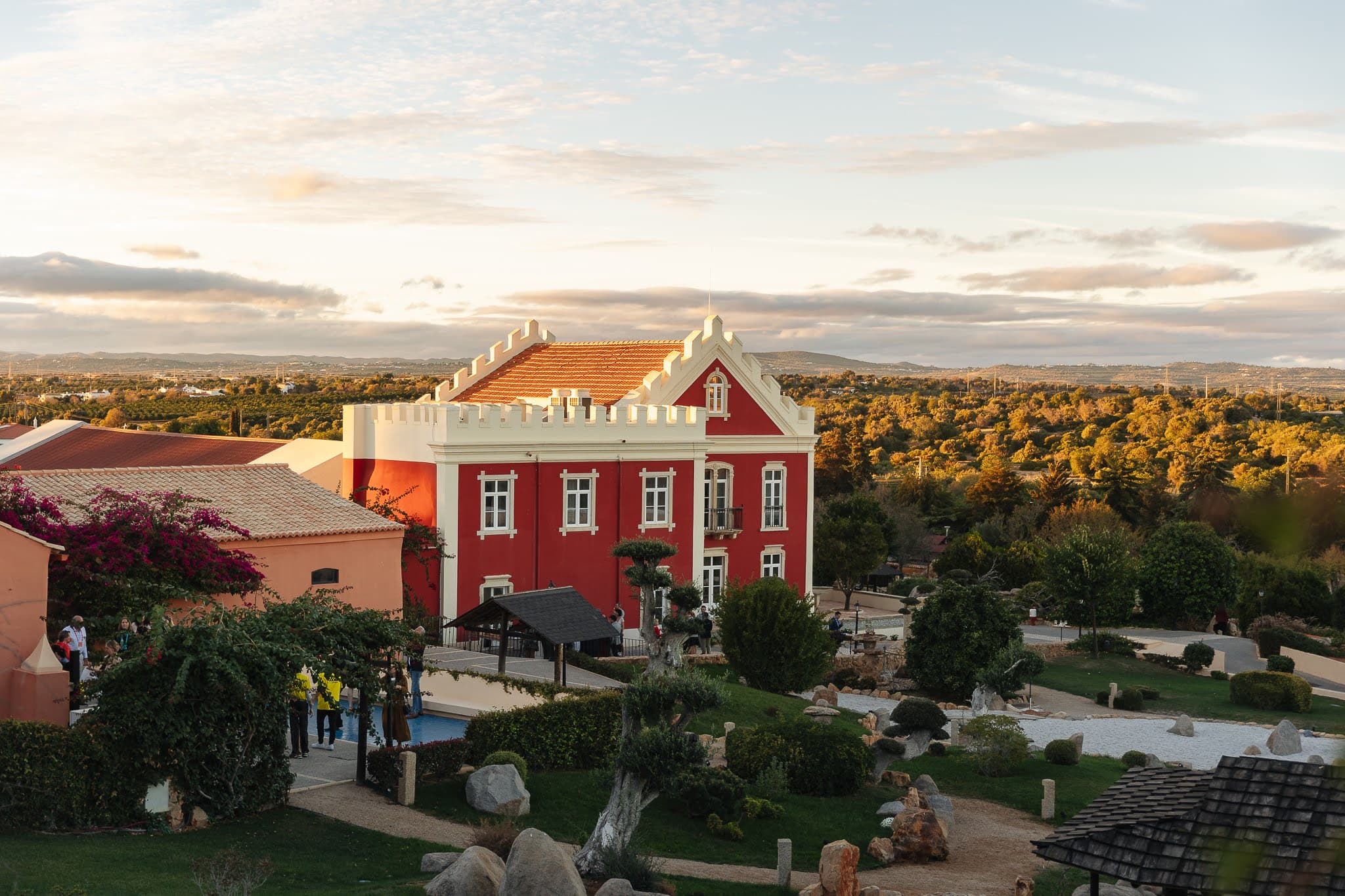
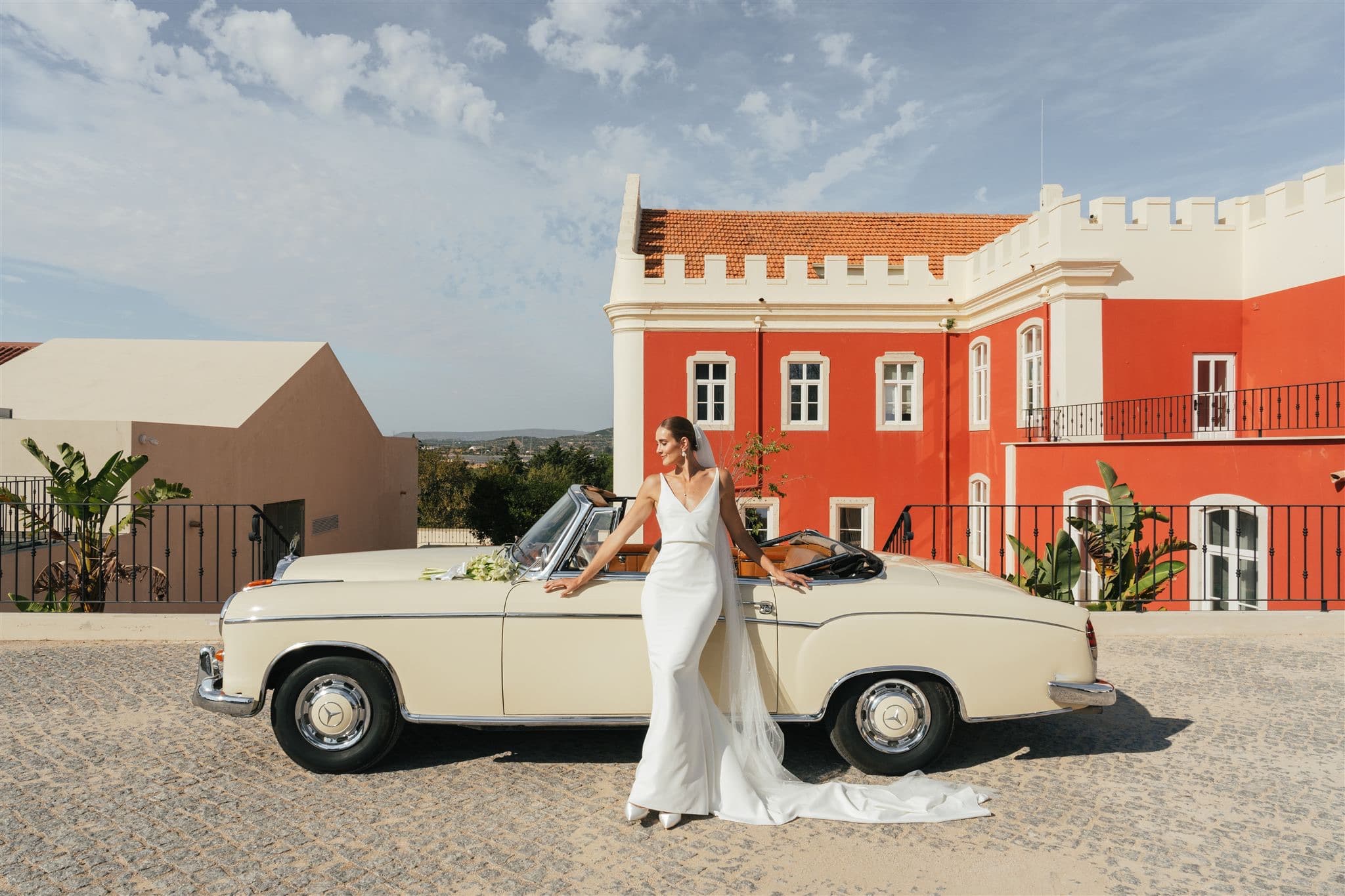
Manor house and palace. A solar is a manor house. Solar do Paço at Algoz is a noble manor house on a fourteenth-century estate, centred on a red nineteenth-century palace in more than two hectares of grounds.
Farmhouse and rural estate. A working farm turned into a place to stay. Craveiral Farmhouse is an organic farm of nine hectares in the south-west Alentejo, with clusters of whitewashed houses from studios to two-bedroom cottages, a pool terrace and a restaurant.
Village houses. A small group of restored houses used as one property. Luz Houses is a village of stone houses in a pine wood near Fátima, built around a central house with a living room, a fireplace and a store.
Villa, beach club and hotel. On the Algarve coast the planners in our records arrange weddings in villas, quintas, beach clubs and hotels, with Faro airport close to all of them.
Portugal has an airport for each of its main regions: Lisbon for the capital and the Alentejo coast, Porto for the north and the Douro, Faro for the Algarve, and Funchal and Ponta Delgada for the islands. Trains join the three big cities: the Alfa Pendular runs between Lisbon and Porto, and the Linha do Sul runs from Lisbon to Faro, each taking about three hours or a little more according to the operator's timetables.
Lisbon Humberto Delgado (LIS). The airport for Lisbon, Sintra, Cascais and the Arrábida hills, about twenty minutes from the city centre. Venues on the Alentejo coast are further south.
Porto Francisco Sá Carneiro (OPO). The airport for Porto, the Minho and the Douro.
Faro (FAO). The airport for the whole Algarve.
Funchal (FNC). The airport for Madeira.
Where a venue has its own rooms the wedding party sleeps on site. Luz Houses is a small hotel of restored stone houses, and Craveiral Farmhouse has clusters of houses around the pool. Where it does not, guests stay in the nearest town: Lisbon, Cascais or Sintra for the capital region, or the coastal towns of the Algarve.
On the property. Luz Houses and Craveiral Farmhouse both house guests in the grounds where the celebration is held.
The capital region. Lisbon, Cascais and Sintra, all within about an hour of each other.
The Algarve coast. The coastal towns around Faro airport.
Portuguese cooking is built on salted cod, fish and shellfish from the Atlantic, and the wines of five distinct regions.
Bacalhau. Salted cod, the country's best-known fish dish, prepared in many ways and served in every region.
Seafood on the coast. Fish and shellfish from the Atlantic, grilled or in rice and stew, on the Algarve and Alentejo coasts and in Lisbon.
Pastel de nata. The custard tart of Lisbon, often served with coffee at the end of a meal.
Civil, Catholic and other religious ceremonies. A civil marriage is made at a registry office. A Catholic marriage has civil effects when it is transcribed into the civil registry, and under the Concordat of 2004 the priest sends the record to the registry. Other religious communities' ceremonies can also carry civil effects, with conditions on the officiant. Whichever form the couple choose, the preliminary file at the registry says which it is, so the officiant should be settled before the file is opened.
Symbolic ceremonies. A ceremony led by a celebrant at the venue has no legal effect unless it is one of the forms above. Couples who want one usually complete the legal marriage at the registry, or at home, and hold the symbolic ceremony on the day of the celebration.
An interpreter. The registry requires an interpreter at the application and at the ceremony unless both partners speak Portuguese proficiently. Settle who will interpret before the date is fixed.
Any marriage settlement comes first. A couple who want a prenuptial agreement under Portuguese law make it before the wedding, because it cannot be drawn up afterwards.
The legal requirements for marrying here, and who needs a visa, are being checked and are not published yet. Confirm both with the official authority that will marry you before you book.
A Touch of NevaehAlgarve Wedding PlannersAmore London, Asian Wedding PlannersFind Portugal wedding professionals
May, June and September. The south is dry from June to September, and these months keep most of that dry weather with milder afternoons than July and August. The north has rain in every month, so a covered fallback is sensible whatever the date.
No. The U.S. Embassy states that residence is not a requirement to marry in Portugal. The preliminary file can be opened by the couple or by an attorney holding a power of attorney.
Lisbon for the capital, Sintra, Cascais and the Arrábida hills; Faro for the Algarve; Porto for the north and the Douro; Funchal for Madeira and Ponta Delgada for the Azores. The Alentejo coast is reached from Lisbon.
Yes. A Catholic marriage carries civil effects once it is transcribed into the civil registry, and other religious communities' ceremonies can too, with conditions on the officiant. The registry file records the form chosen.
Portuguese cooking is built on salted cod, fish and shellfish from the Atlantic, and the wines of five distinct regions. Bacalhau, salted cod, is the country's best-known fish dish, prepared in many ways and served in every region. Pastel de nata, the custard tart of Lisbon, is often served with coffee at the end of a meal.
Describe your dream wedding, from the destination and setting to the number of guests and your budget. Aura will help you discover wedding venues and professionals that match your plans.
AlentejoAlgarveAzoresDouro ValleyAll destinations
This guide draws on the venues' own published details, official sources and the knowledge of our editors. Entry and legal information can change, so confirm it with the authority that will marry you before you book.
Ask for a place, a name, a trade or the whole wedding. Every answer comes from checked records.
Your cookie choices
We use essential cookies to run the site. With your permission we also use statistics cookies to see how the site is used, and marketing cookies for affiliate links. You can change this at any time. Cookie Policy