Marrying in the Scottish Highlands
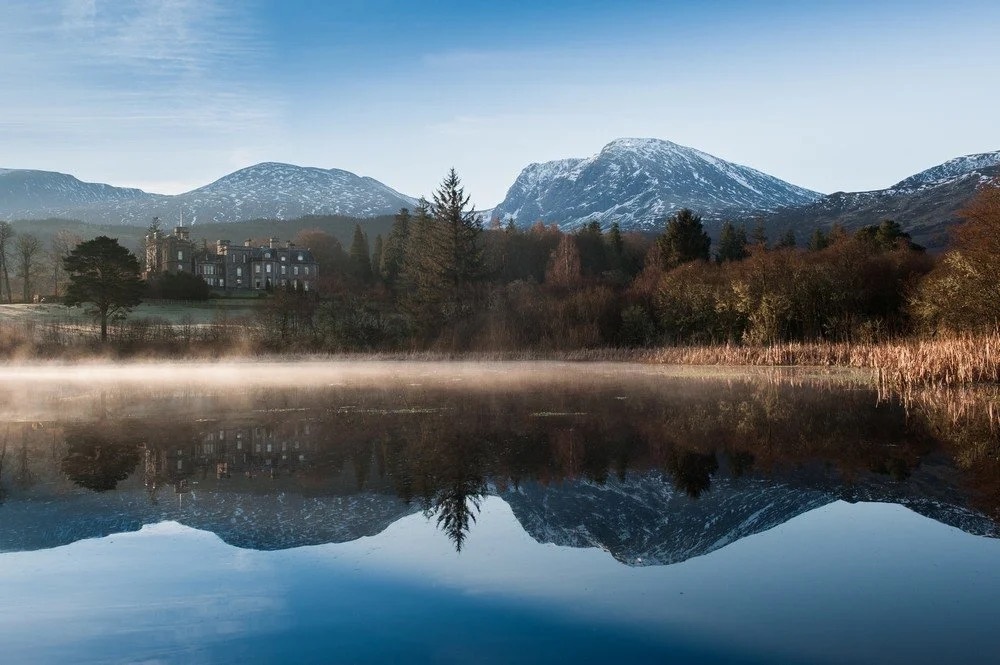
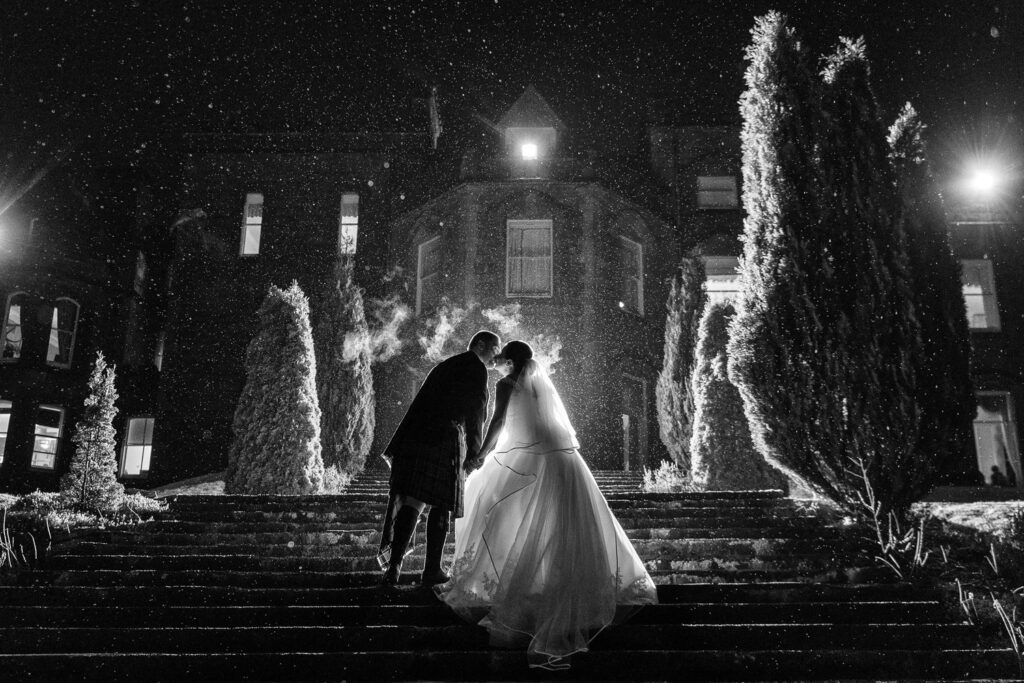
The Scottish Highlands offer something no other British wedding destination can: the combination of genuine wilderness, medieval castle venues, and a loch setting so particular to Scotland that the imagery is recognised worldwide. A wedding in the Highlands carries a weight of place that requires nothing else to justify the choice.
The Highlands are not a single landscape. Perthshire is green and accessible, an hour from Edinburgh. The Cairngorms are the highest and most remote plateau in Britain. Skye is an island of basalt columns and sea lochs. Glencoe is a valley of such drama that it constitutes a landscape event in its own right. Each zone has its own character and its own venue infrastructure.
Logistics here are better than the map implies. Inverness has direct flights from London. Perthshire is 90 minutes from Edinburgh or Glasgow. The destination wedding framework is well understood by Highland venues: most are experienced at managing guests arriving from multiple departure points, coordinating transfers across long road distances, and hosting multi-night estate stays.
The seasons
- Best
- Shoulder
- Peak
- Quieter
5 Star view Our reading of the wedding year, from the months below.
- Best months
- June, July and September
- Shoulder season
- May and October, often beautiful but with shorter days and higher rainfall probability
- Peak season
- August, coinciding with the Edinburgh Festival and the start of the grouse season
June offers the longest days in the Highlands: at midsummer, Inverness has 18 hours of daylight with golden light persisting late into the evening. September combines reliable weather with dramatic heather colour on the moorland. Rain is possible in any month and Highland venues are universally experienced at adapting ceremonies for all conditions.
Daylight and sunset
The bar runs from sunrise to sunset on the 15th of each month. A ceremony is usually timed an hour or two before the sunset shown.
Calculated From the coordinates of Scottish Highlands, local time, for 2027.
Ramadan and Eid
For couples and guests who observe them, the dates to plan a wedding around.
| Year | Ramadan | Eid al-Fitr | Eid al-Adha |
|---|---|---|---|
| 2027 | 8 Feb to 8 Mar | 9 Mar | 16 May |
| 2028 | 28 Jan to 25 Feb | 26 Feb | 5 May |
Calculated From the Umm al-Qura calendar. The observed dates follow the sighting of the moon and can fall a day either side.
The areas of the Scottish Highlands
Perthshire and the Southern Highlands
Loch Ness and Inverness
Isle of Skye
Glencoe and Lochaber
Speyside and the Cairngorms
What venues are like
Highland Castle
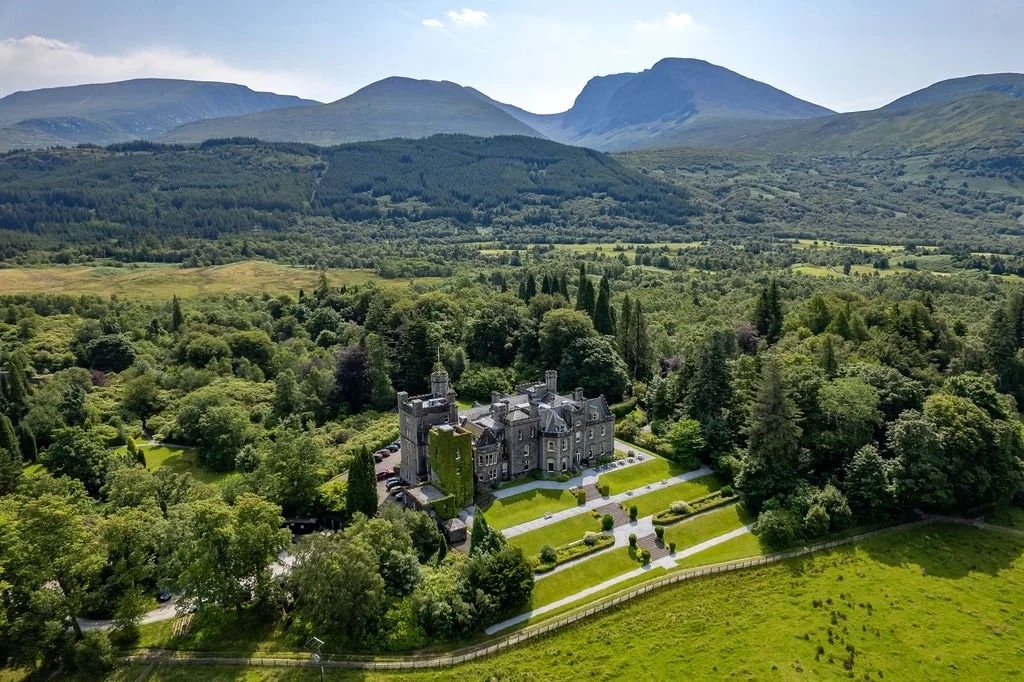
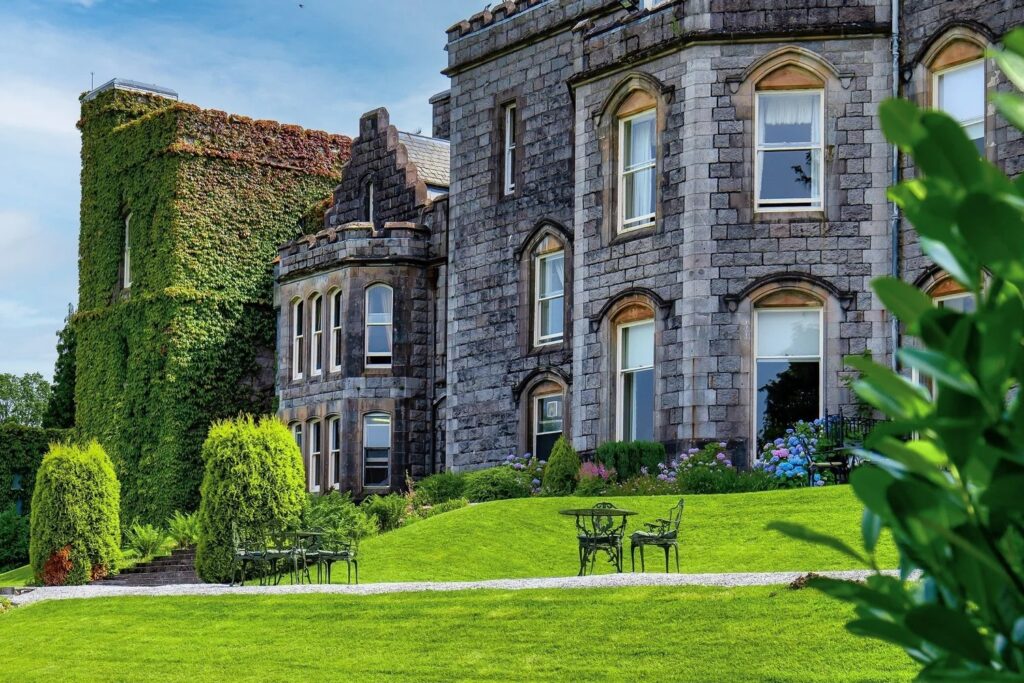
A category unique to Scotland and to the Highlands in particular. Genuine medieval or Baronial-era castles with tower rooms, great halls, and grounds set directly against loch or moorland. Several are available for exclusive private hire. The imagery produced at a Highland castle wedding is instantly recognisable and entirely distinctive. Availability is limited: the finest examples book two years ahead.
Lochside Estate
Private shooting or fishing estates with a main house positioned directly on a named loch, typically including a private jetty, boathouse, and boat hire. Deer stalking, salmon fishing, and highland games can be incorporated into the wedding weekend programme. Exclusive hire ensures complete privacy for the duration of the event.
Country House Hotel
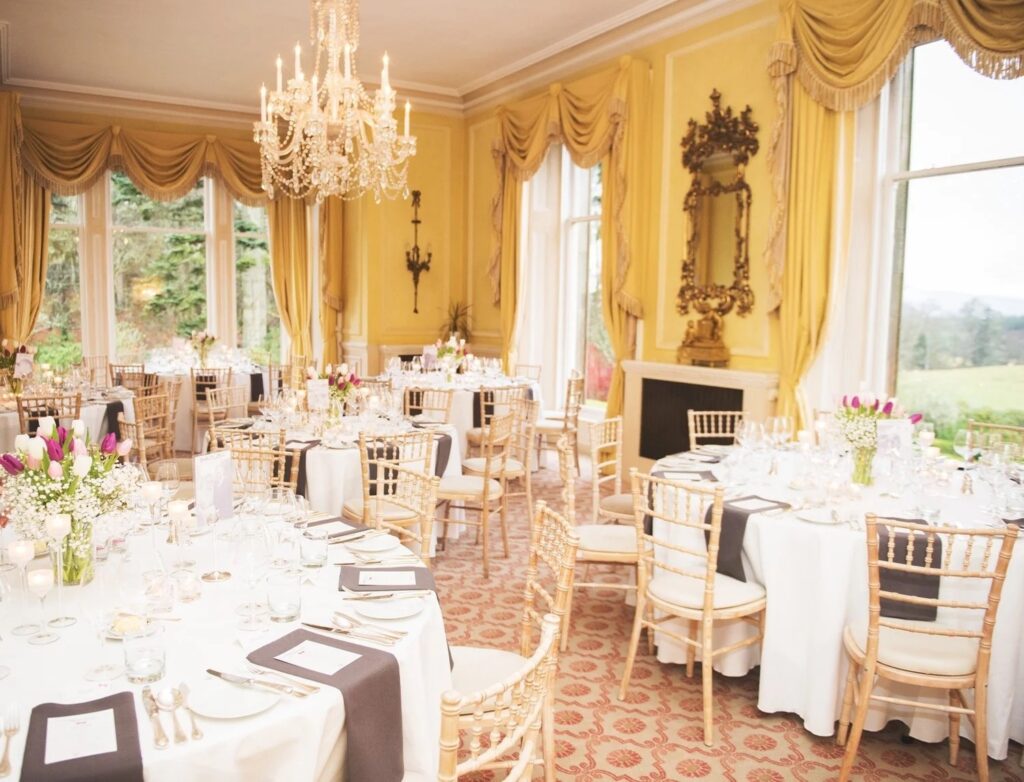
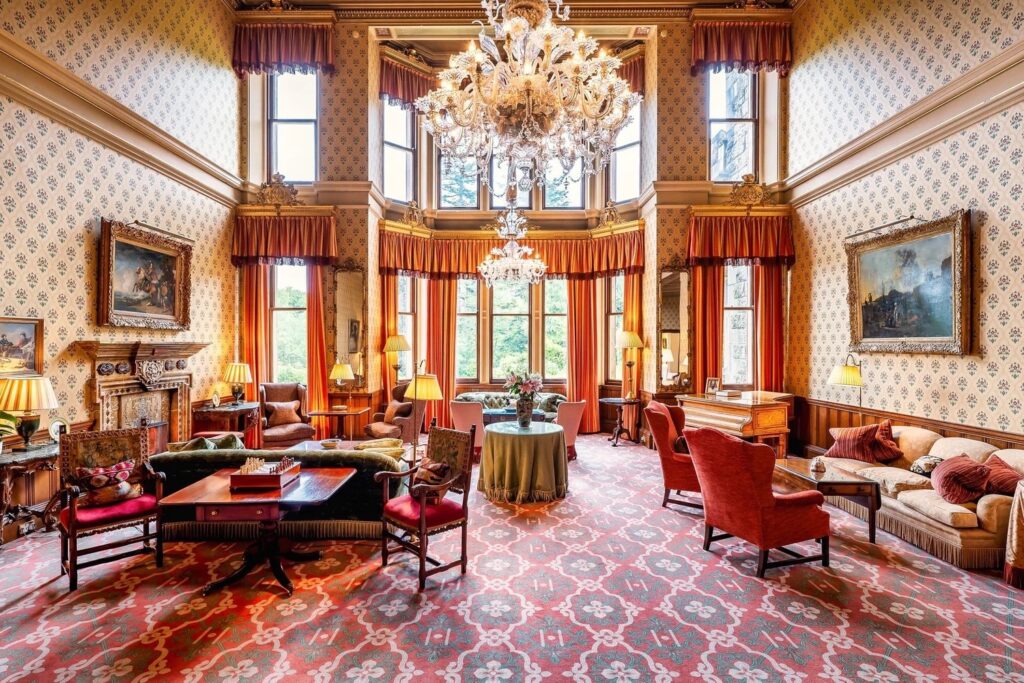
Converted Victorian shooting lodges and Baronial houses now operating as luxury hotels, with the flexibility to take exclusive bookings for wedding groups. The combination of hotel service, estate grounds, and Highland setting makes this the most practically straightforward Highland venue type. Several hold Scottish civil ceremony licences.
Converted Steading
The distinctive Scottish farm conversion: a courtyard of stone outbuildings surrounding a cobbled yard, with the main barn converted for dining and the smaller buildings providing accommodation or support space. The steading format has a warmth and solidity that differs from the English tithe barn conversion. Several examples in Perthshire and Aberdeenshire are among the finest rural wedding venues in Britain.
Isle Retreat
Exclusive-hire island properties and small island hotels, principally on Skye and the Inner Hebrides. The island setting creates a natural guest commitment: those who come, stay. The photography, the light, and the cultural character of island Scotland are unlike anything available on the mainland. Transfers by road and ferry are straightforward from Inverness or Glasgow.
Airports and transfers
- Heathrow (LHR)
- Gatwick (LGW)
- Stansted (STN)
- Luton (LTN)
- London City (LCY)
- Birmingham (BHX)
- Manchester (MAN)
- Bristol (BRS)
- East Midlands (EMA)
- Leeds Bradford (LBA)
- Newcastle (NCL)
- Liverpool (LPL)
- Southampton (SOU)
- Exeter (EXT)
- Norwich (NWI)
- Edinburgh (EDI) Direct flights from London and all major European cities. 90 minutes by road to the Perthshire Highlands. The best arrival option for venues in the southern or central Highlands.
- Glasgow (GLA) 1.5 hours to the southern Highlands via the A82 along Loch Lomond. Frequent connections from London, Dublin, and major European cities. Well suited to guests arriving from Ireland and western Europe.
- Aberdeen (ABZ)
- Inverness (INV) Direct flights from London Heathrow, London Gatwick, and several regional airports. The most direct arrival for venues in the northern and central Highlands. Transfer time to Loch Ness venues is 30 minutes; to Skye approximately 2 hours.
- Belfast International (BFS)
- Cardiff (CWL)
Skye is reached via the Skye Bridge from Kyle of Lochalsh, approximately 2.5 hours from Inverness or 3.5 hours from Glasgow. Private coach transfers for guest groups are the standard approach for Highland weddings with guests arriving from multiple cities. Transfers of 2 to 3 hours are entirely normal and expected at Highland destination venues.
Marrying legally in the United Kingdom
Applies to: England and Wales
Both partners give notice at a register office at least 29 days before the ceremony, after living in that registration district for 7 days. The ceremony follows within 12 months, at a register office or a venue approved by the local council, with a registrar and at least two witnesses. Scotland and Northern Ireland have their own rules.
- 136 days before, at the latest
Live in the district
You must have lived in the registration district for the past 7 days before you give notice there.
- 229 days before, at the latest
Give notice
Sign the legal statement at the local register office, naming the venue. Bring a passport, proof of address and proof that any earlier marriage has ended. The earliest ceremony date is 29 days later.
- 3The day
The ceremony
At a register office or at any venue approved by the local council, such as a stately home or a hotel, with a registrar and at least 2 witnesses. It must take place within 12 months of giving notice.
- Notice
- 29 days, valid for 12 months
- Residence
- 7 days in the district
- Witnesses
- at least 2
- Registrar
- £62 at a register office
- Minimum age
- 18
Already married at home?5 Star view
Many couples complete the legal or religious marriage in their own country and hold the celebration here. A ceremony with no legal effect needs none of the steps above: the venue and the planner arrange it.
Who needs a visa
Travelling from the United States
American guests need an electronic travel authorisation (ETA) to visit, which costs £20. Anyone coming to the UK to marry who does not plan to stay applies for a Marriage Visitor visa instead: it costs £135, can be applied for from 3 months before travel, and allows a stay of up to 6 months with the marriage inside that time.
Travelling from the Gulf
Citizens of the United Arab Emirates, Saudi Arabia, Qatar, Kuwait, Bahrain and Oman travel on an electronic travel authorisation (ETA) rather than a visa, for visits of up to 6 months. A couple coming to the UK to marry who do not plan to stay apply for a Marriage Visitor visa instead. A resident of the Gulf who holds another passport follows the rule for that passport.
Other nationalities
Most visitors need an ETA or a visa, depending on nationality. A partner from outside the UK or Ireland gives notice together with their partner, with proof of immigration status and a passport photograph for each of them.
The registrar's fee is £114.50 at a registered religious building, and approved premises set their own.
Reference gov.uk: Marriages and civil partnerships in England and Wales (give notice; documents; plan your ceremony); Marriage Visitor visa; Get an electronic travel authorisation (ETA); Check when you can get an ETA (nationalities). Checked 5 October 2026. Rules change: confirm with the authority that will marry you before you book.
Accommodation
The Scottish Highlands offers some of the most dramatically sited hotel accommodation in the world, from Victorian castle hotels on private loch shores to converted shooting lodge estates in remote glens.
At the table
Scottish Highland food culture is centred on game, seafood from the northwest coast, whisky from the distilleries of Speyside and the islands, and a handful of products with global recognition rooted in this specific landscape.
Haggis, neeps and tatties
Scotland's national dish: minced sheep offal mixed with oatmeal, onion, suet, and seasoning, traditionally cooked in a sheep's stomach. Served with mashed swede (neeps) and mashed potato (tatties). Haggis appears at almost every formal Scottish wedding dinner, either as a starter or presented ceremonially with a piper before the main course. The Addressing of the Haggis, Burns' poem recited before cutting, is a standard feature of Highland wedding dinners.
Speyside whisky tasting
The Speyside region of the Grampian Highlands contains more working whisky distilleries than any comparable area in the world. Glenfiddich, The Macallan, Balvenie, Glenlivet, and dozens of others sit within a 30-mile corridor along the River Spey. A guided whisky tasting from a specialist guide is one of the most popular pre-wedding or morning-after activities for Highland wedding guests.
West Coast langoustines and oysters
The sea lochs of the northwest Highlands produce some of the finest langoustines in Europe, landed daily at Lochinver, Kinlochbervie, and Ullapool and available to caterers within hours of landing. Hebridean oysters from the sheltered sea loch farms of the Outer Hebrides are equally distinctive. Both ingredients appear at the top end of Highland wedding menus and are among the strongest arguments for choosing the region for food quality.
Highland Games catering tradition
The Braemar Gathering and the network of Highland Games events across the summer season maintain a tradition of outdoor communal catering that includes Scotch pies, tablet (a dense Scottish fudge), cranachan (whisky, oats, raspberries, and cream), and Cullen skink, the smoked haddock chowder from the Moray coast. These dishes appear in refined form at Highland wedding receptions and provide a distinctly Scottish register that no other UK wedding region replicates.
What planners tell couples
Inverness Airport is the main Highland gateway
Inverness Airport (INV) has direct services from London Gatwick, London Heathrow, Edinburgh, Glasgow, Bristol, and Manchester. It is the most convenient arrival point for venues in the central and northern Highlands. Glasgow and Edinburgh airports serve the southern Highlands and Loch Lomond region; transfer times from Edinburgh or Glasgow to Fort William or the Great Glen run 2 to 3 hours by road.
Midges are active from May to September
Highland midges are a genuine planning factor. They are most active in still, humid conditions, particularly near water, woodland, and sheltered glens, from late May through September. Outdoor evening receptions and post-ceremony drinks on exposed lawns require midge repellent to be available for guests. Venues with coastal or exposed hill positions have substantially fewer midges than sheltered glen and loch-side settings.
Driving distances are large
The Highlands are large; a drive from Inverness to Torridon is over 90 miles on single-track roads and takes nearly 2 hours. Couples planning multi-venue itineraries or expecting guests to self-drive between locations should map all journey times explicitly. Single-track roads with passing places are not intimidating once understood but require a briefing note for guests unfamiliar with them.
Scottish marriage law is distinct from English law
Scotland has its own marriage law and registers. Couples marrying in Scotland must give notice to the relevant registrar in Scotland; the process is separate from English and Welsh registration. The Church of Scotland, the Catholic Church in Scotland, and the Humanist Society Scotland all have the legal authority to solemnise marriages. Ensure your officiant is correctly registered under Scots law before confirming any ceremony arrangement.