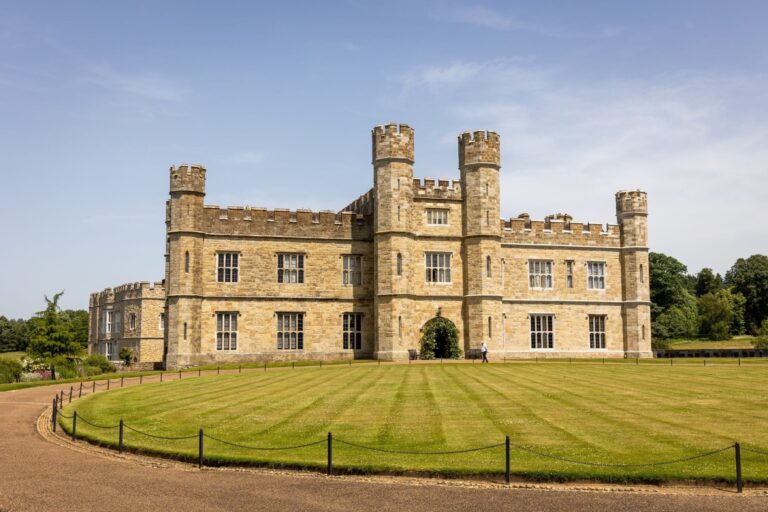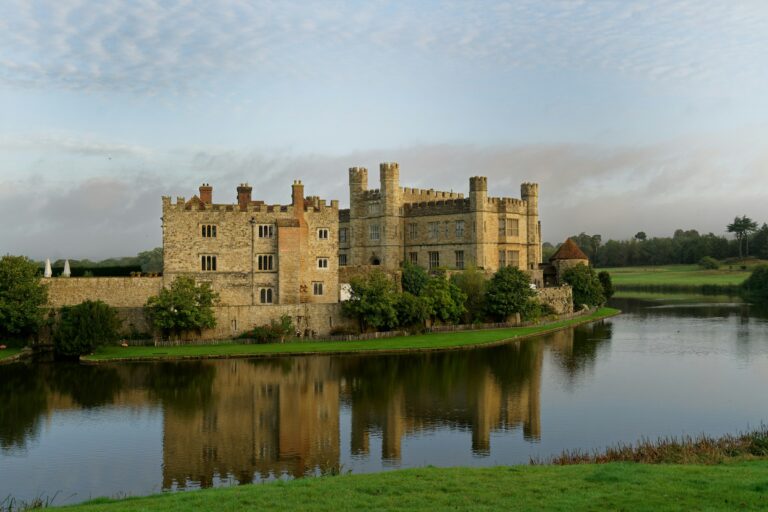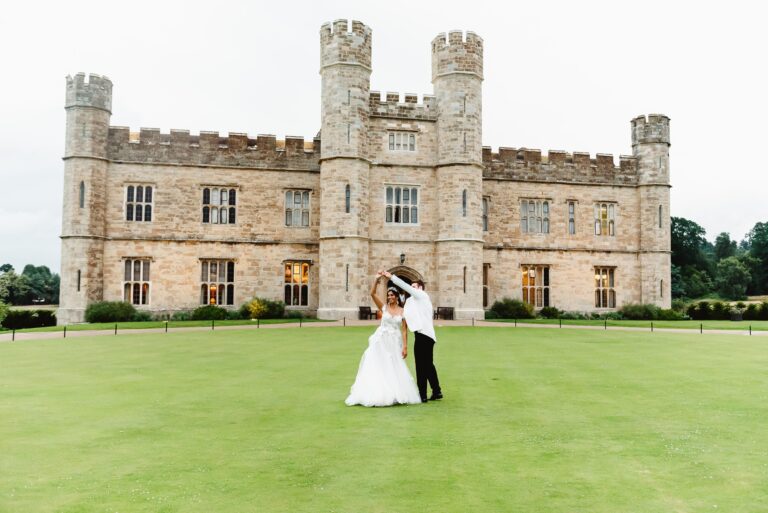
Olive, Lady Baillie bought Leeds Castle, near Maidstone in Kent, in 1926 and turned a moated medieval castle into a house for entertaining. Through the 1930s it was a centre of hospitality for statesmen, European royalty and film stars. A Castle wedding today is held in the rooms she arranged for those weekends, and the 1930s house is the reason the day works as it does: a castle set up for a party that lasted from arrival to bedtime, without anyone leaving the island.

From royal castle to country house
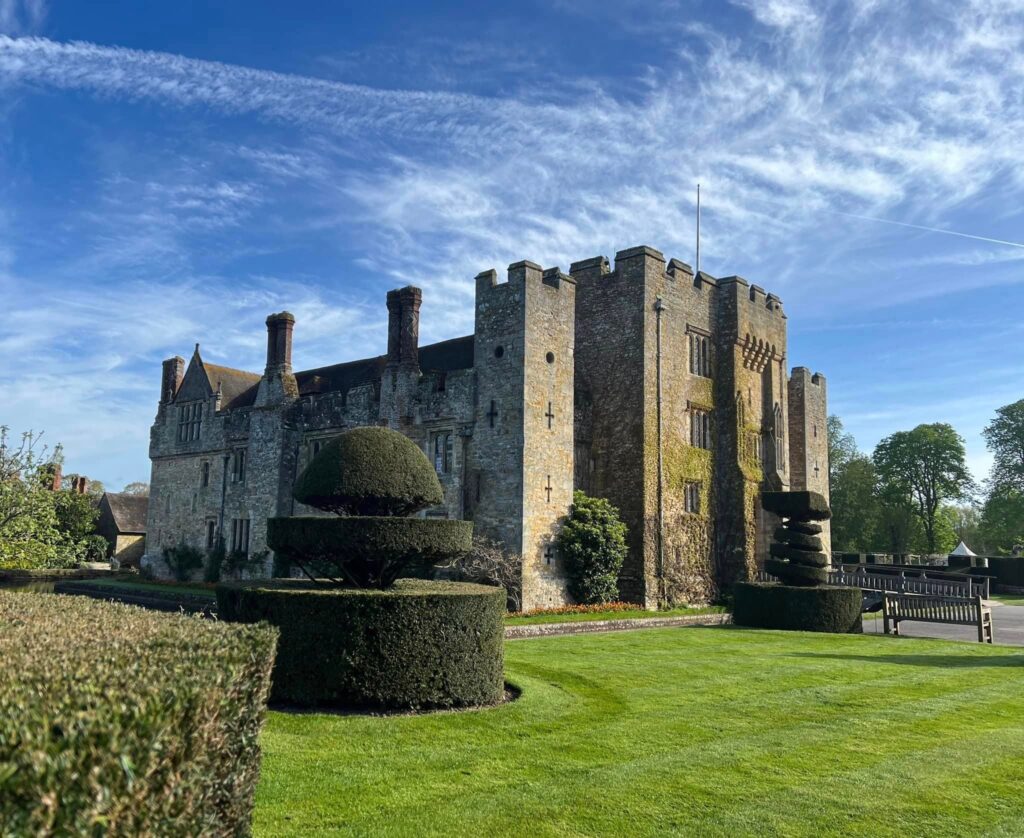
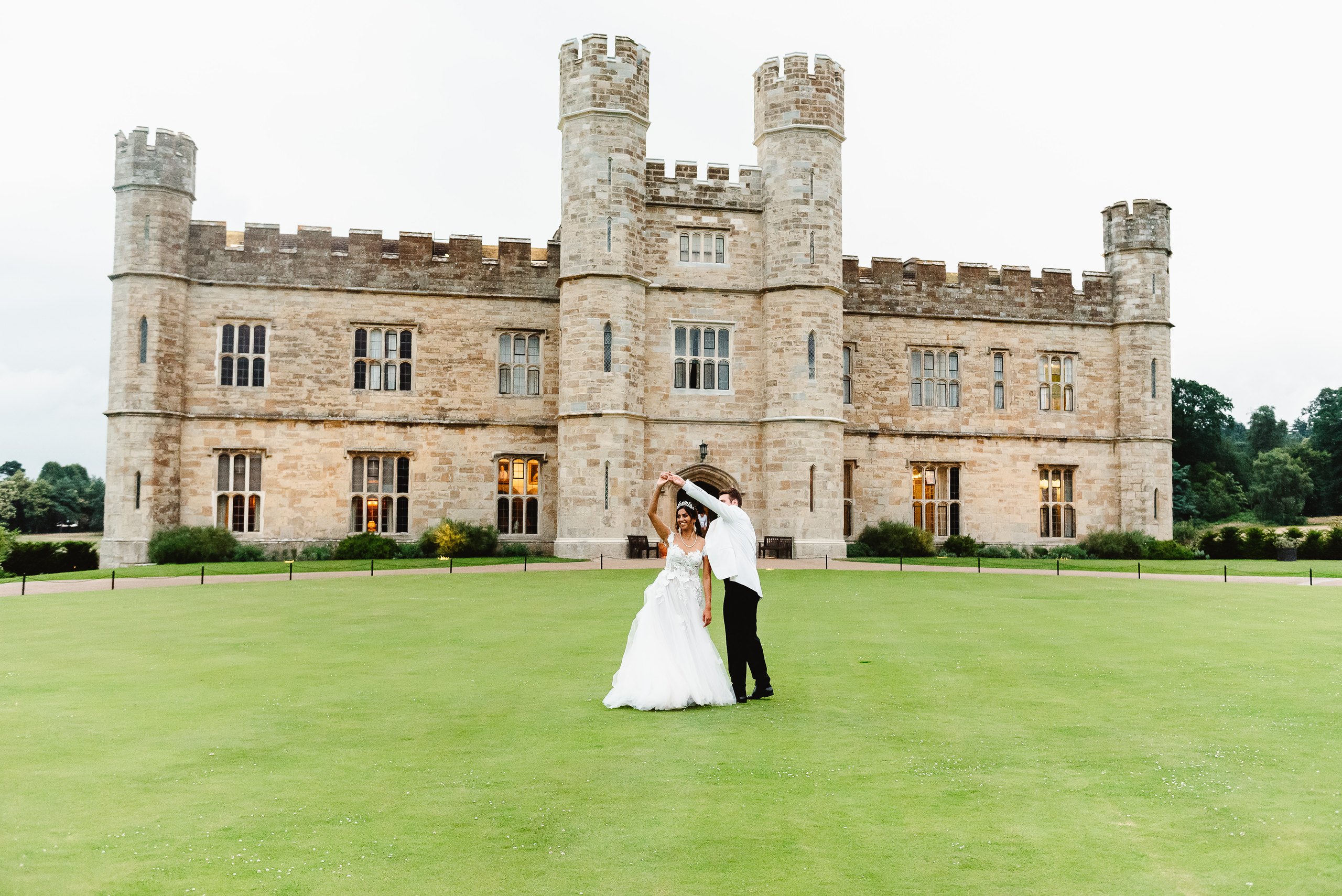
The first stone castle went up in 1119, when Robert de Crevecoeur built on two rocky islands in the River Len. Eleanor of Castile, queen of Edward I, acquired it in 1278, and in 1519 Henry VIII transformed it for Catherine of Aragon. The range that faces the lawns, with its octagonal corner turrets and stone mullioned windows, is younger than it looks: it was built in 1822 in a 16th century style. Historic England lists the castle at Grade I.
Lady Baillie wanted a castle that looked largely medieval and lived like a modern house. The architect Owen Little reorganised the ground floor of the New Castle; the French designer Armand-Albert Rateau, known for his Art Deco work, restored the Banqueting Hall to its full size and rearranged the upper floors for modern plumbing; and from 1932 Stéphane Boudin, president of the Paris firm Maison Jansen, designed interiors that can still be seen. Her visitors included the Prince of Wales with Wallis Simpson, Charlie Chaplin and Errol Flynn. She died in 1974 and left the castle to the Leeds Castle Foundation, a charity created to preserve it, and every wedding booking helps to fund it.
A wedding day in Lady Baillie’s rooms
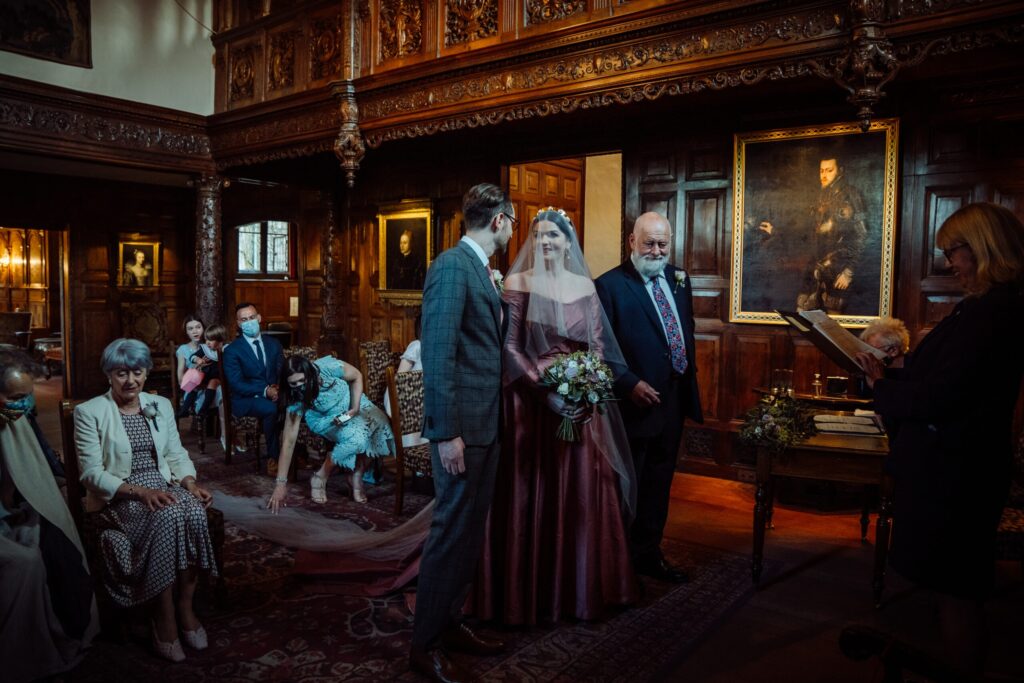
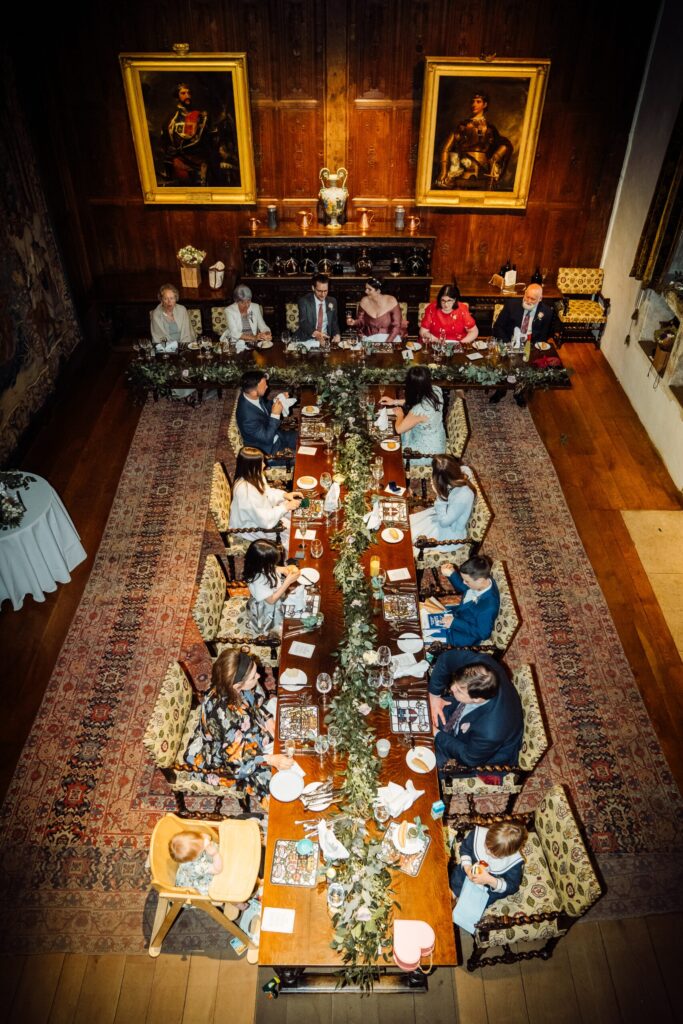
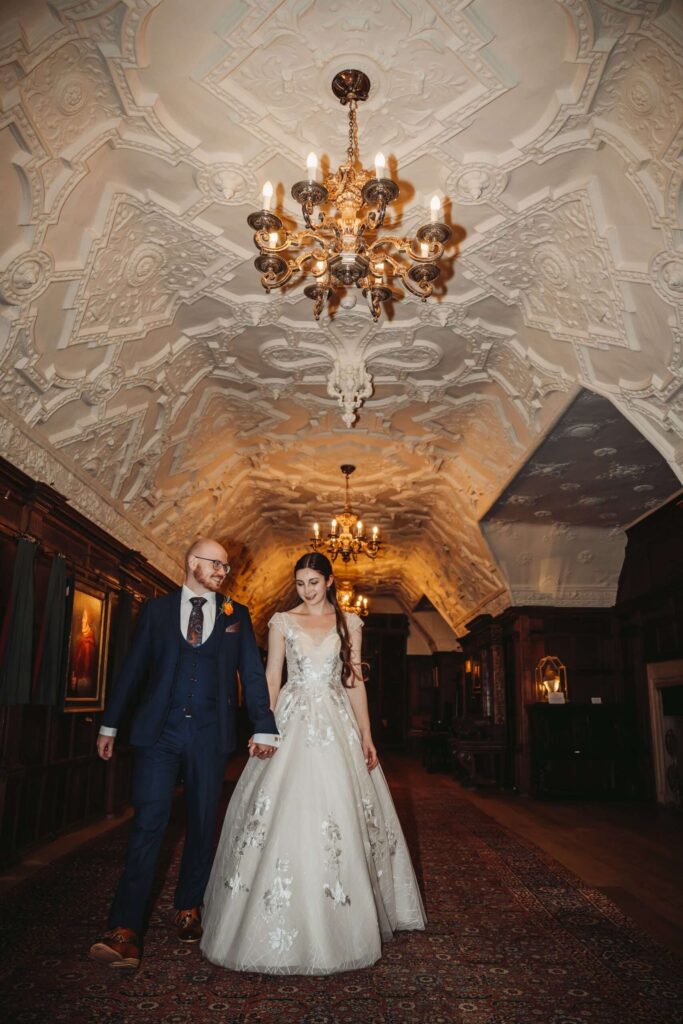
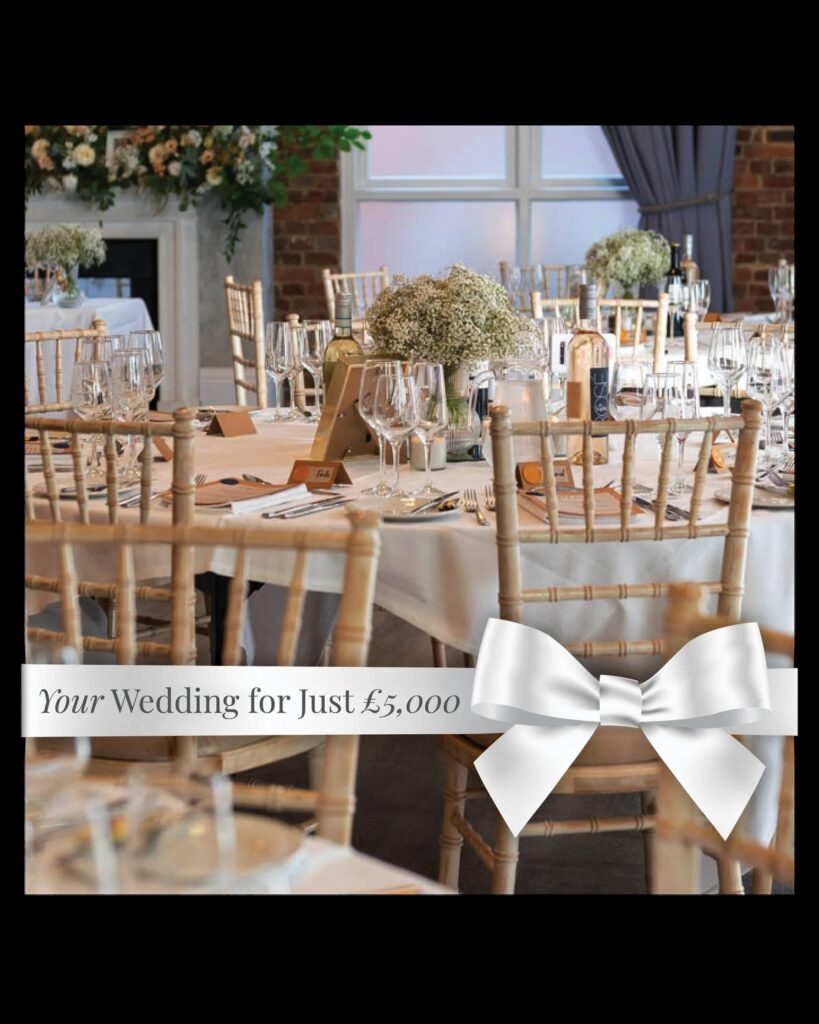
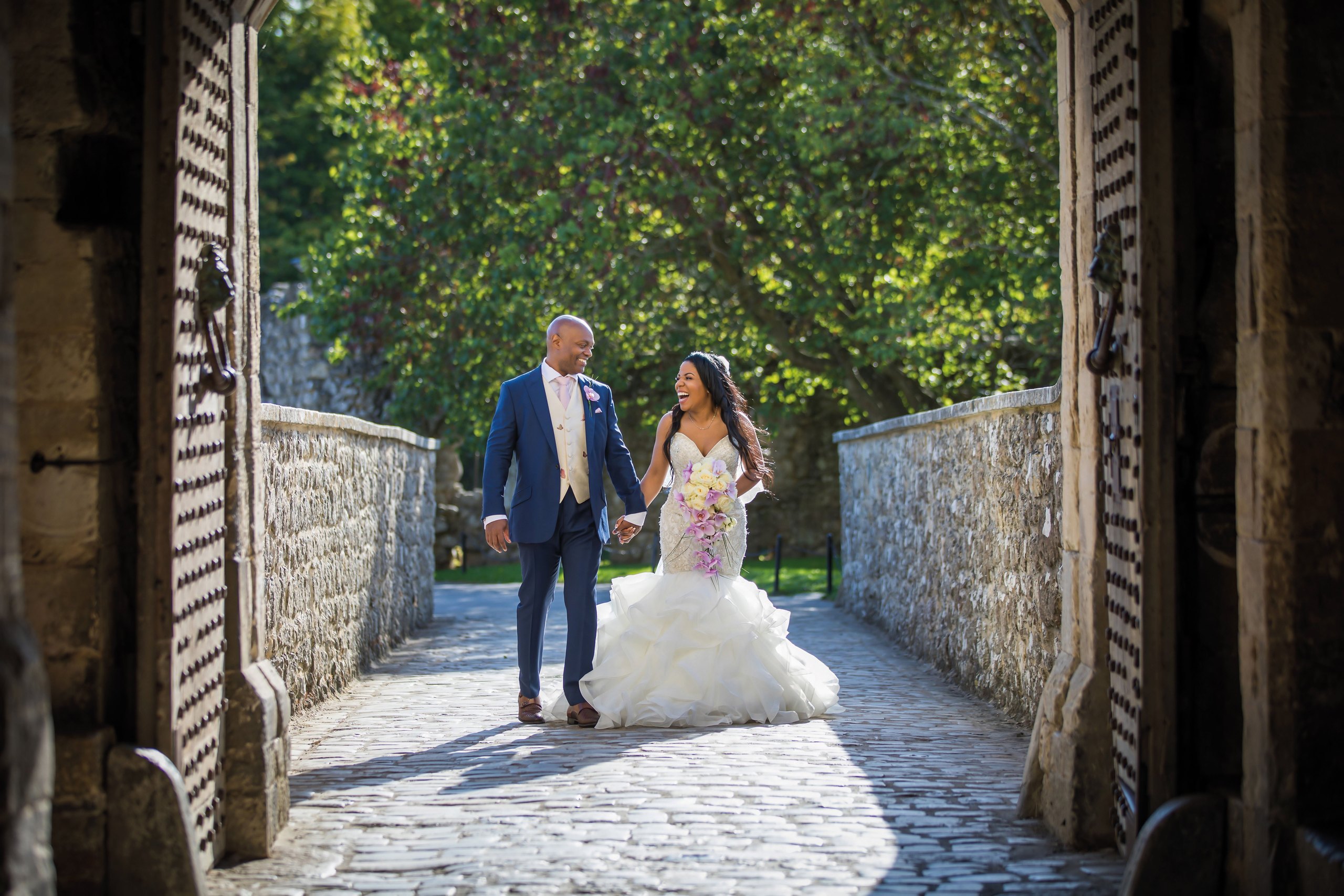
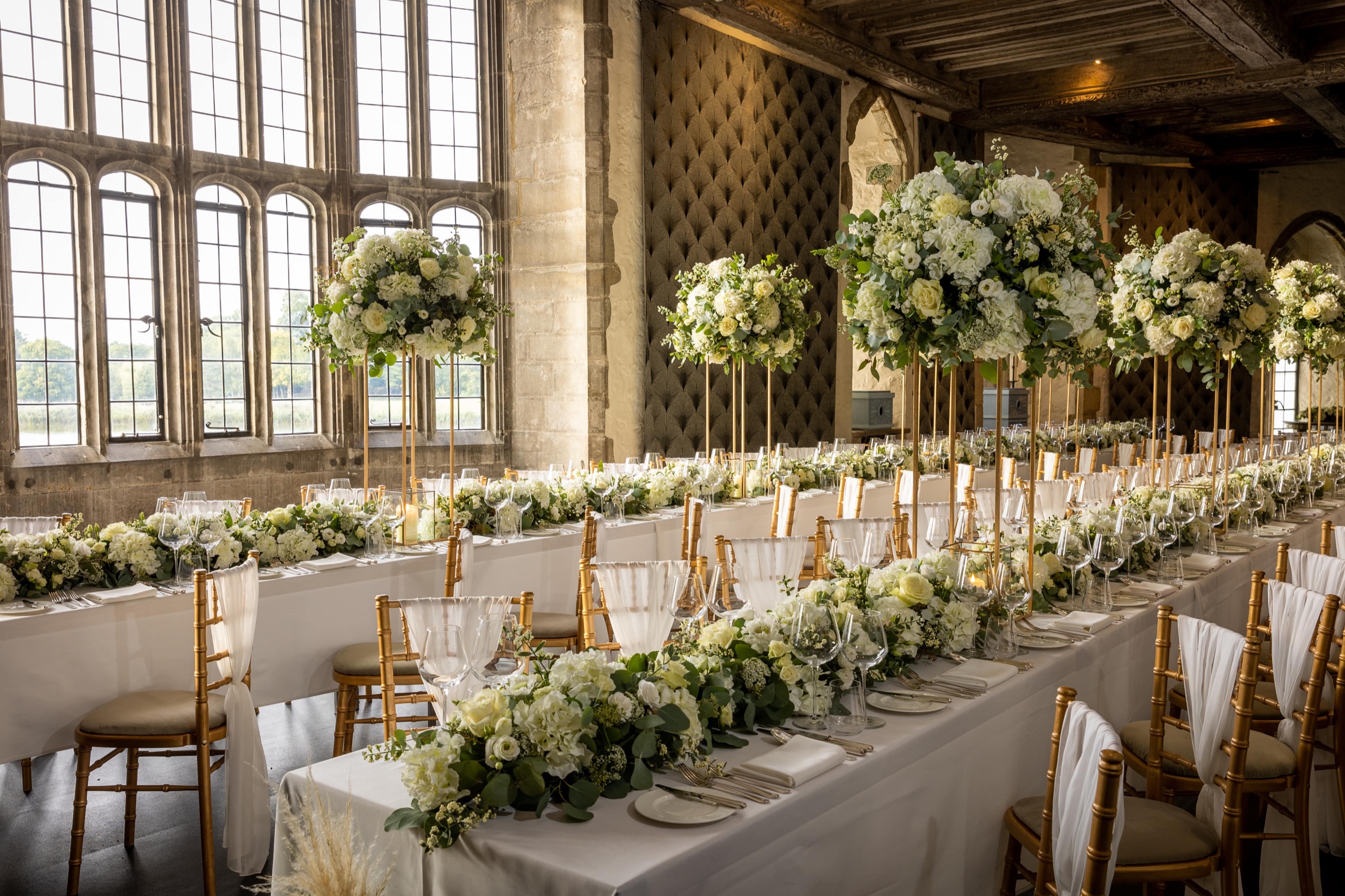
Lady Baillie’s 1930s rooms were designed for entertaining at scale and for staying on, which is what shapes a wedding here. The Salon, the largest room in the castle, was where her weekend guests dined, and it still seats the wedding breakfast banquet style beneath a 16th century French fireplace of Caen stone and an ebony floor. The Drawing Rooms were made for the evening, so the dancing moves a few steps from the table rather than to another building. A duty manager and a team of footmen are part of the hire, as is a golf buggy for the couple and their photographer.
The couple and their closest guests sleep in the castle, which is the other half of the house-party idea. The Castle package includes ten double bedrooms with breakfast, among them the Bridal State bedroom, and more Classic rooms can be added. Residential guests can return to the castle and grounds the following day. The Exclusive Use package joins the Castle to the Maiden’s Tower and brings the bedrooms to 23.
The Maiden’s Tower, once a brewhouse and a cinema
The Maiden’s Tower is the castle’s most layered building. A 16th century stone tower on the larger island, it began as a brewhouse, became bachelor apartments and a cinema for Lady Baillie’s weekend guests, and after the war was the family home of her daughter Susan. It now works as a wedding venue in its own right, with exclusive use until midnight.
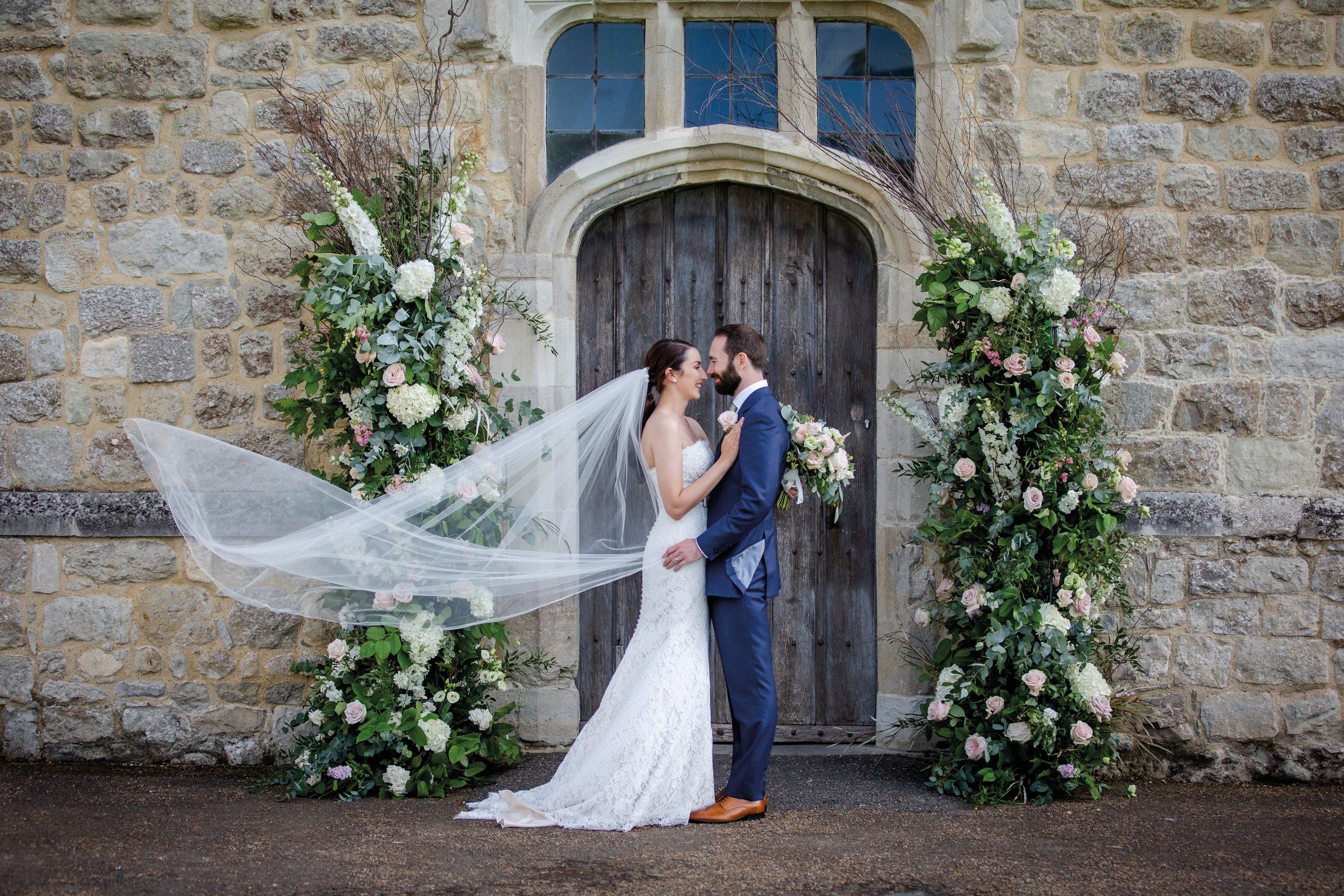
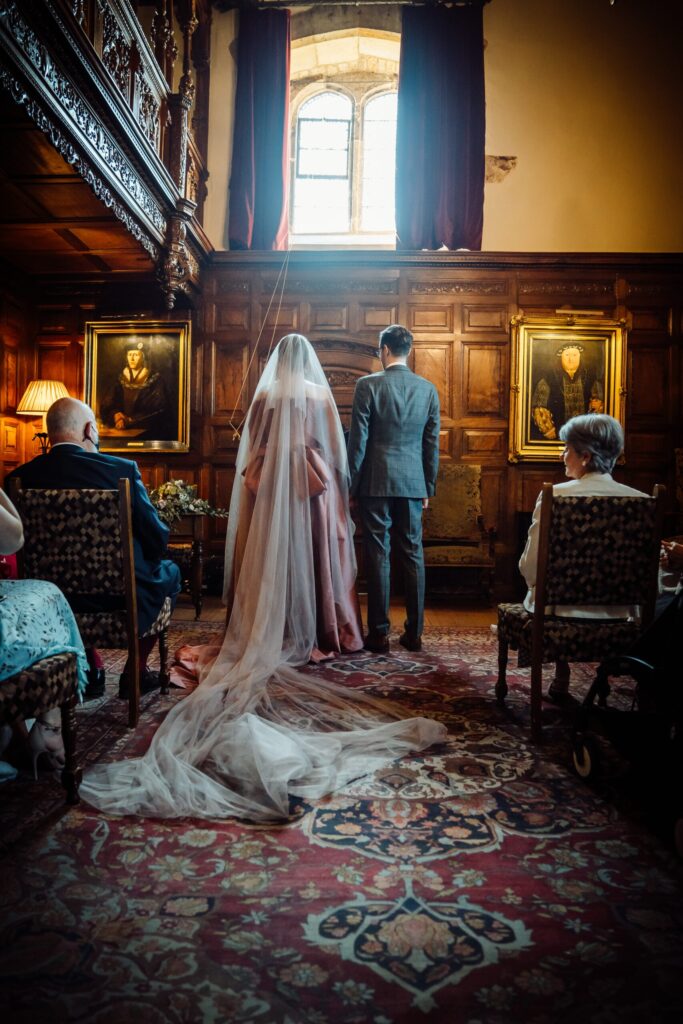
Couples marry in the Long Gallery or the private garden and dine in the Tudor Hall, both opening through French doors. Five en suite bedrooms in period style look across the moat to the estate’s nine hole golf course, built in 1931 by Sir Guy Campbell.
Battel Hall, a medieval manor in the fields
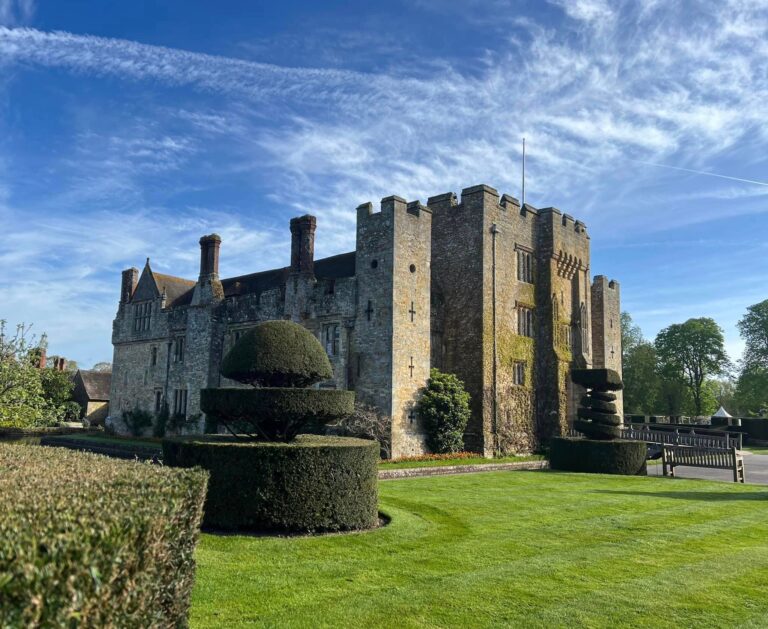
Battel Hall stands apart in the fields of the estate, a ragstone hall house of the second quarter of the 14th century, listed Grade II*. Its rarest feature is a large stone laver, a medieval washing place set under a crocketed ogee arch, with a battlemented cistern and lion’s head spouts. J. Newman wrote of it in 1980 that “nothing like it survives anywhere else in England.”
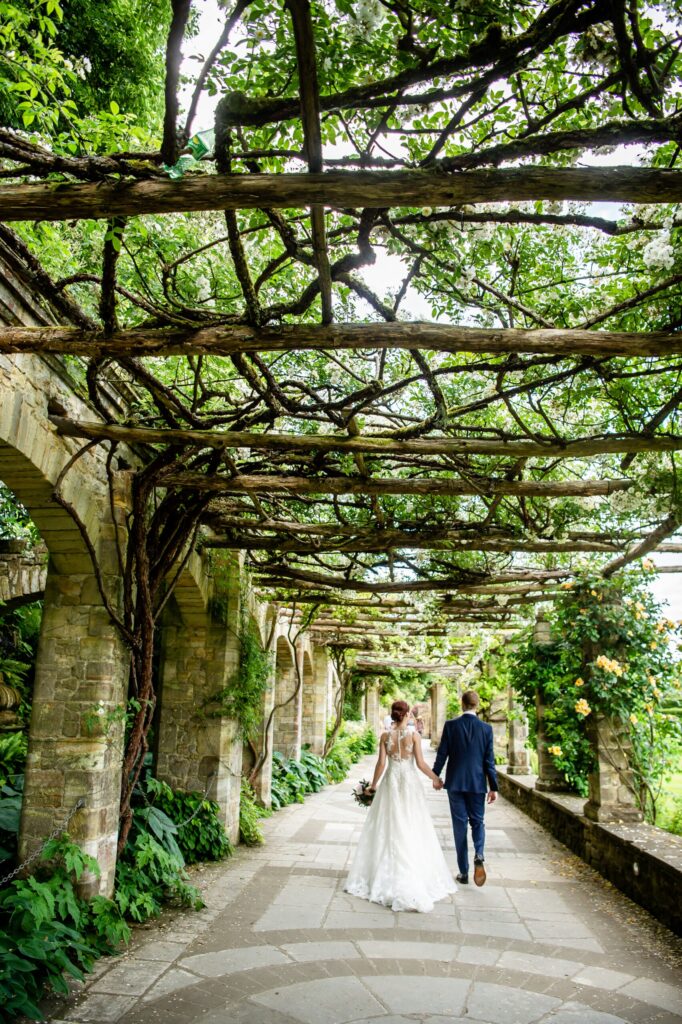
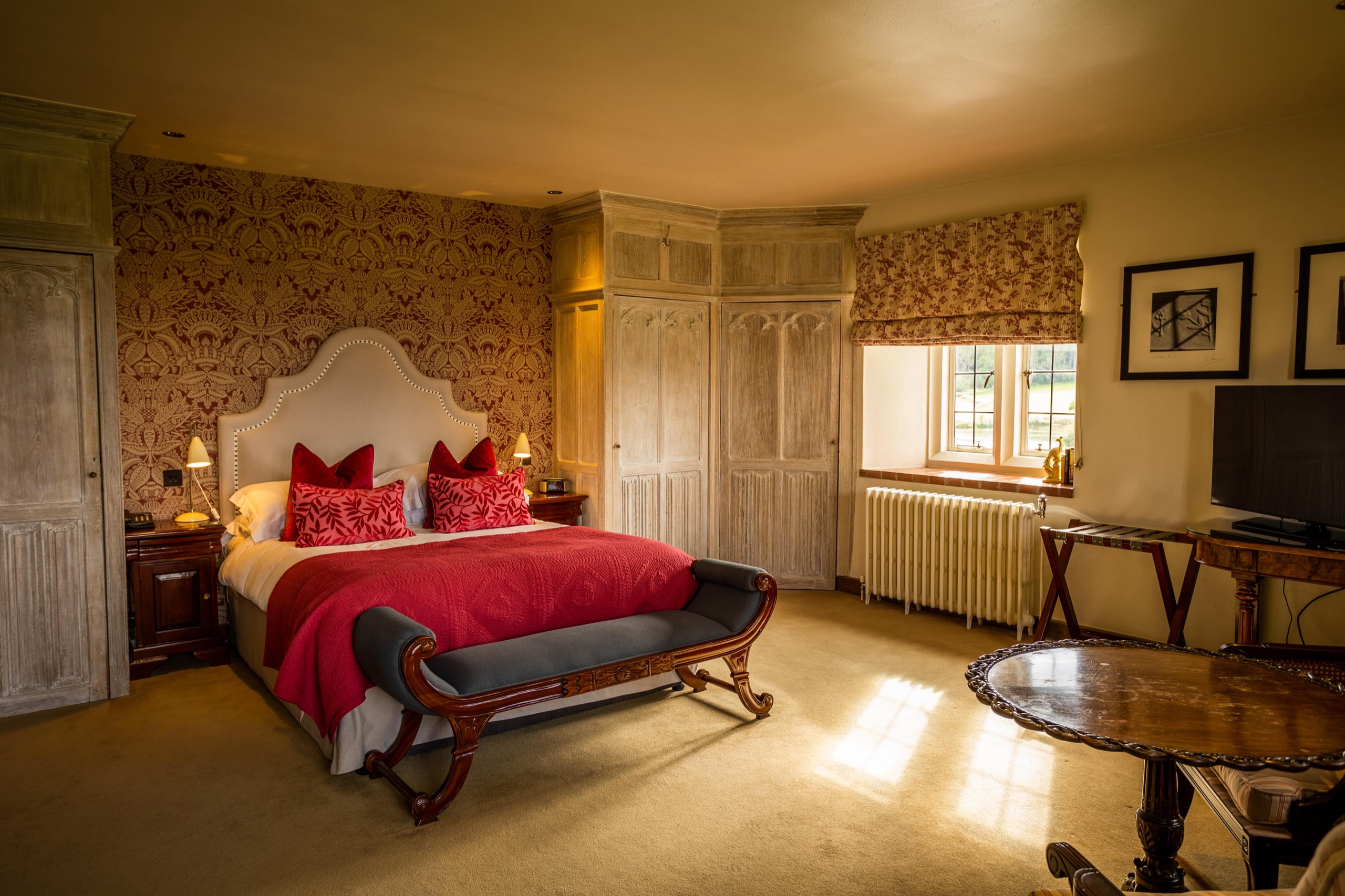
The scale is domestic. A wedding is a three night, self catering stay for up to 14 guests and two children, with five en suite bedrooms in the hall and two more in the Grade II listed Oast beside it. The ceremony is in the wood panelled room or under the timber framed garden pagoda, and the Library opens onto gardens and woodland. Wisteria about a hundred years old covers the outer walls in spring and summer, and there are open fires in winter.
When the guest list outgrows the castle
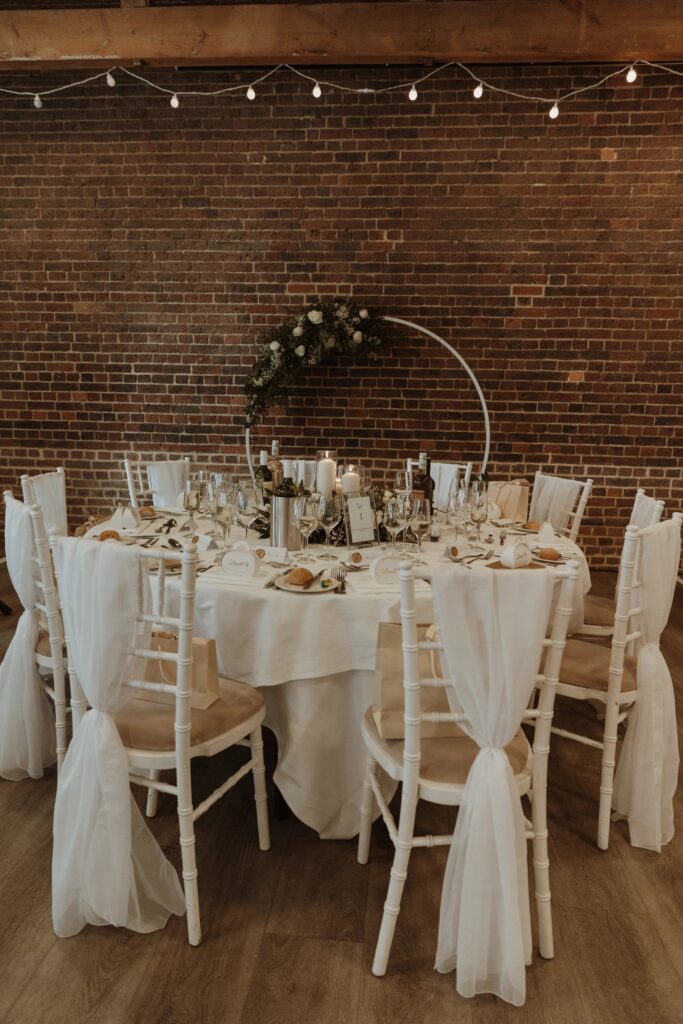
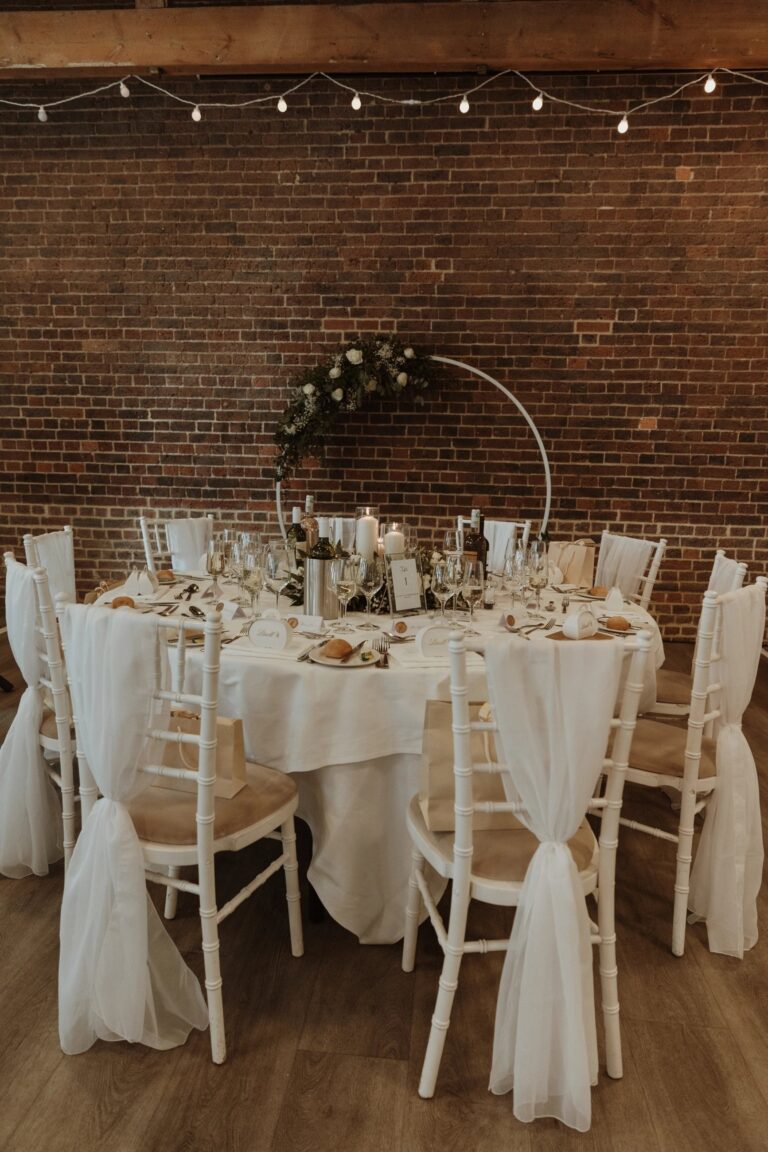
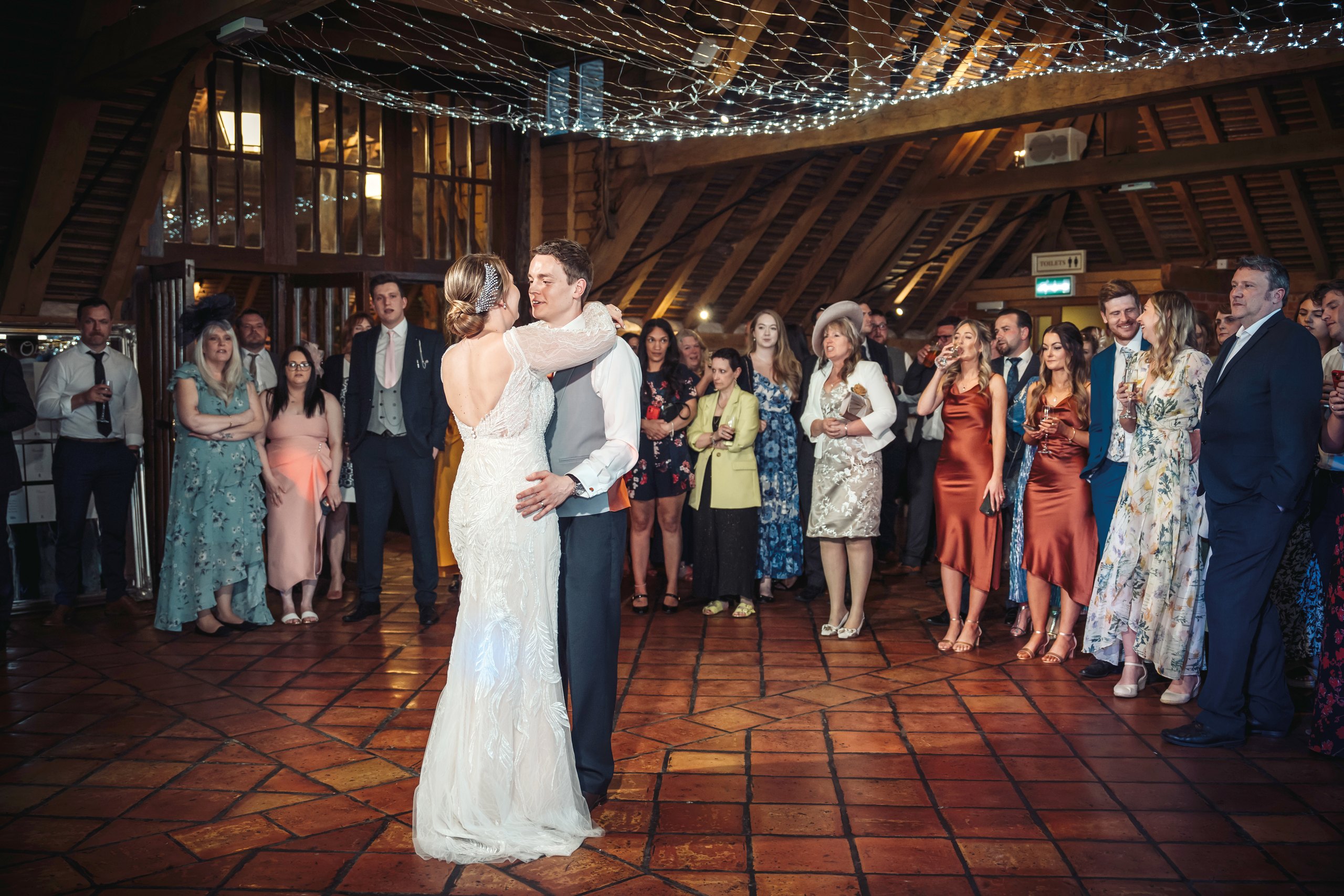
Larger evenings move out to the Fairfax Barn, a 17th century Kentish timber framed barn with oak beams, interiors with an Art Deco influence and a large terrace looking towards the castle. Built as a working barn, it now takes the larger evening party. It is booked only as an addition to a Castle, Maiden’s Tower or Exclusive Use wedding, so a dinner in the Salon can become a much bigger party without leaving the estate. The guest maximum and the number of Stable Courtyard bedrooms that come with it differ between the estate’s own published documents, so confirm both for your date.
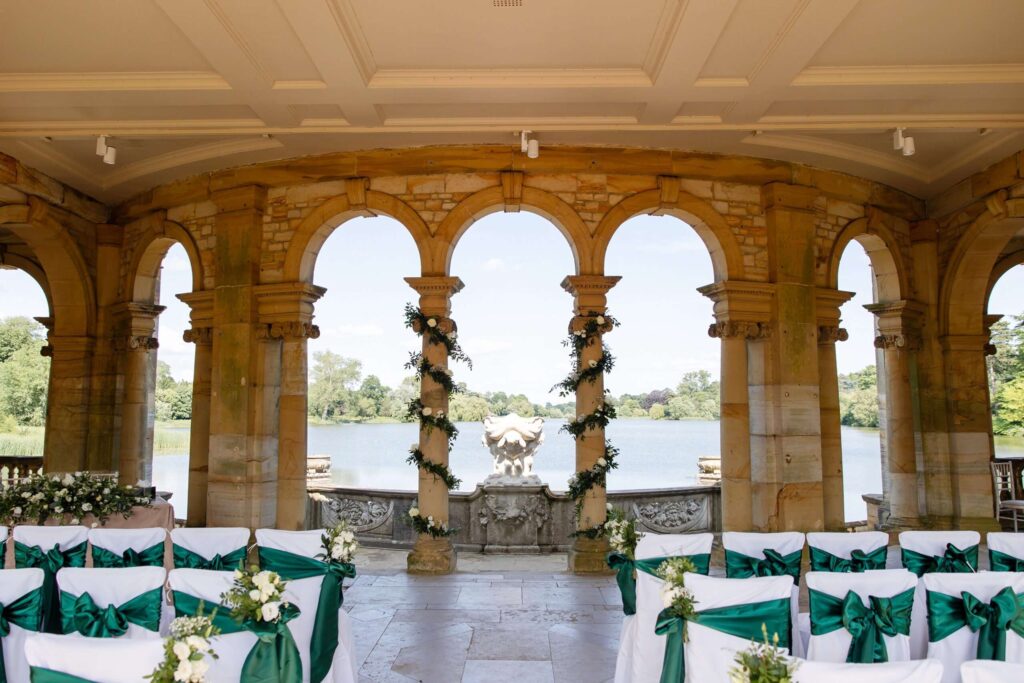
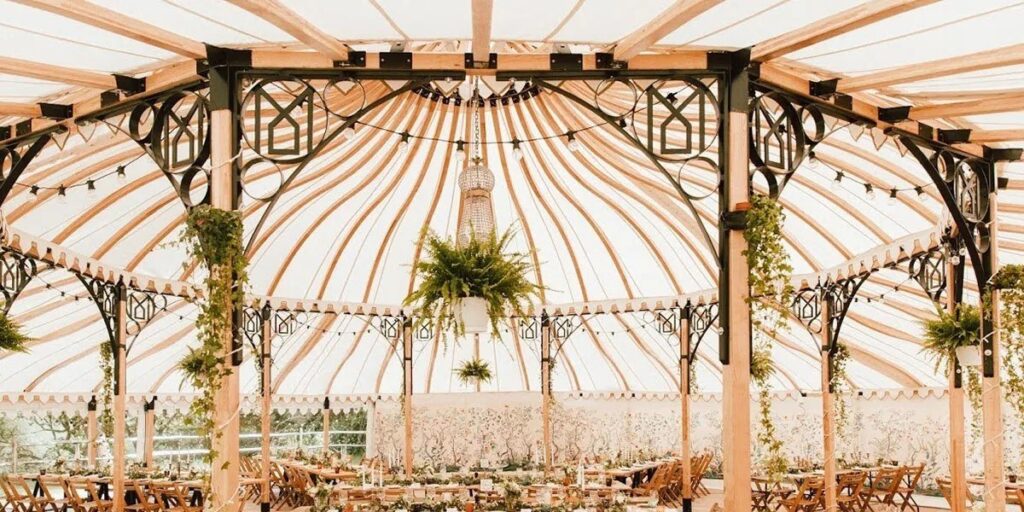
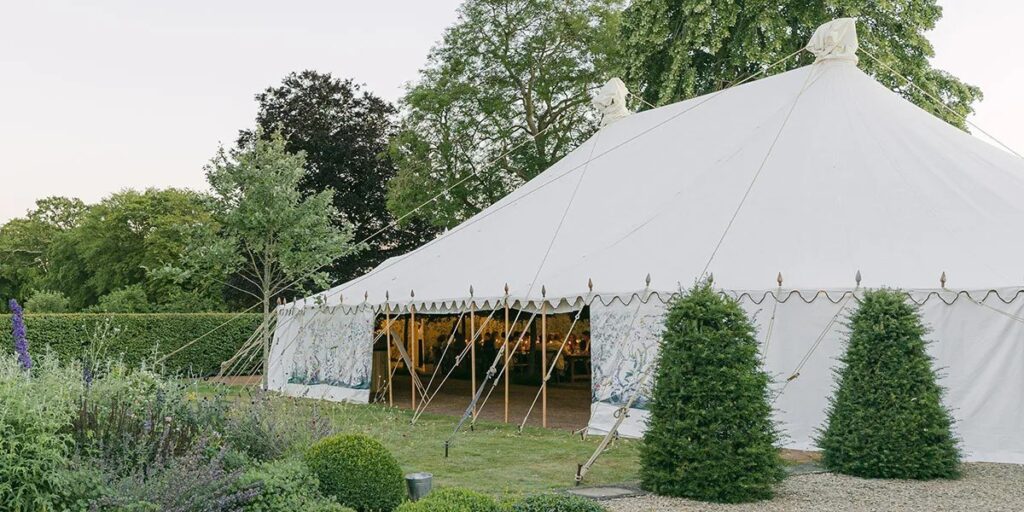
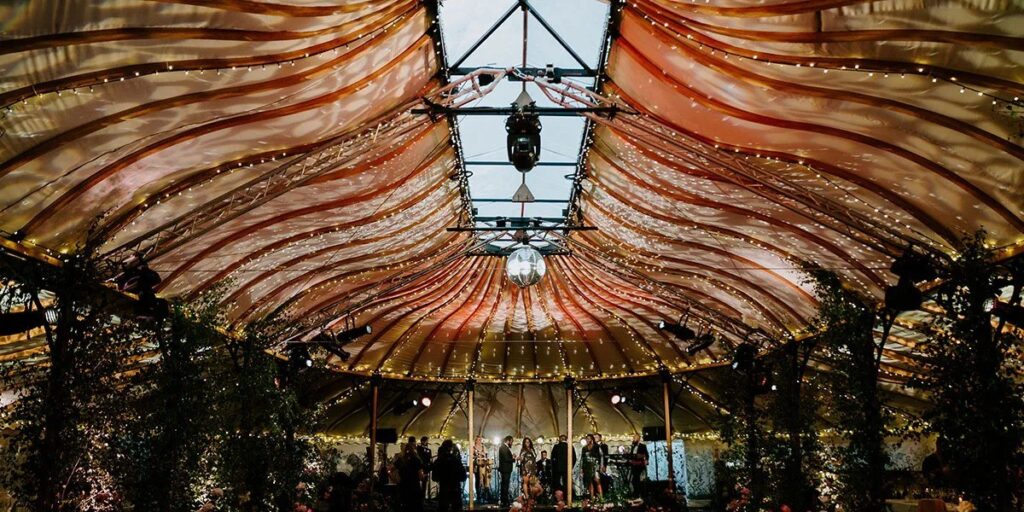
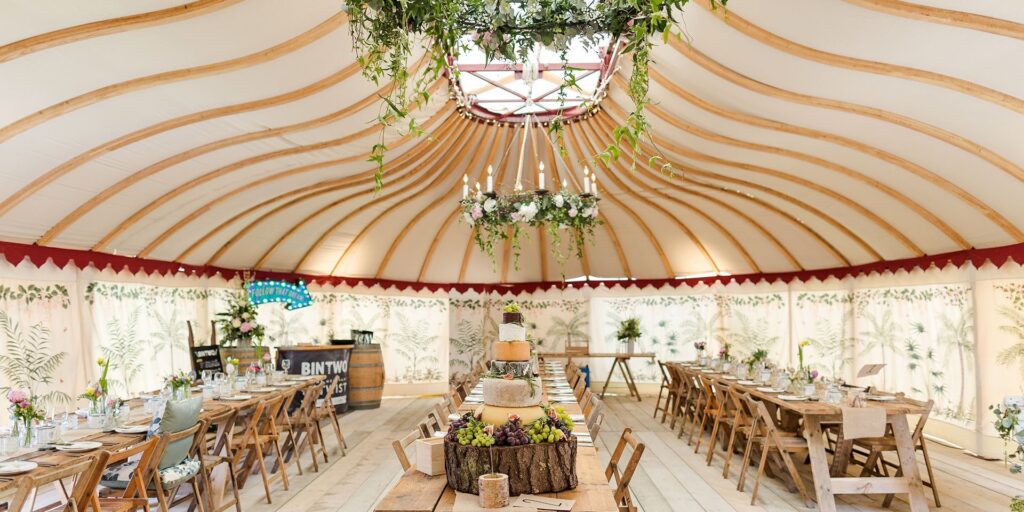
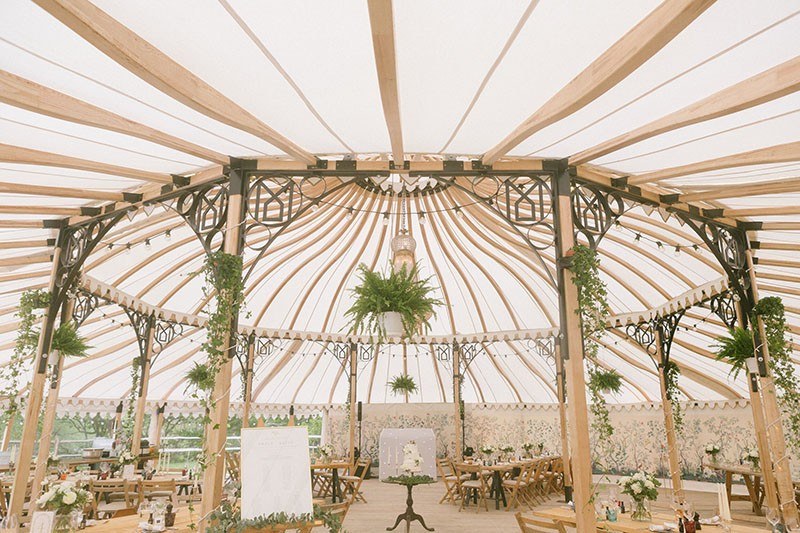
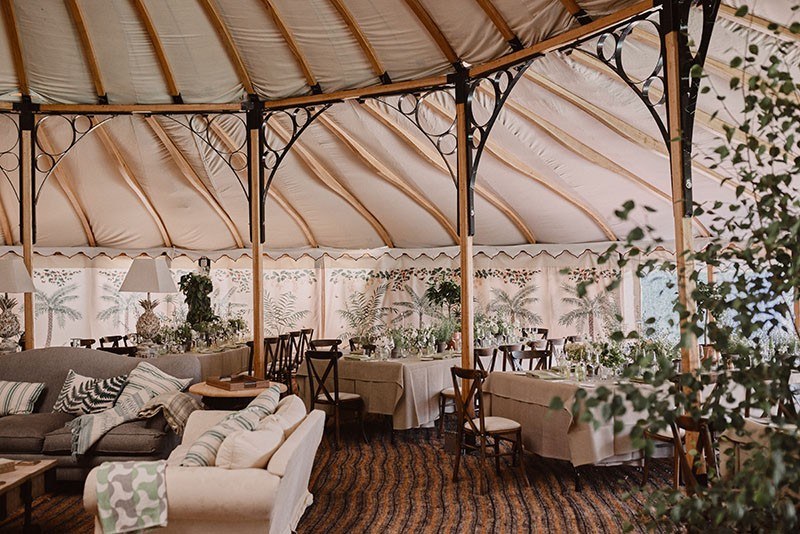
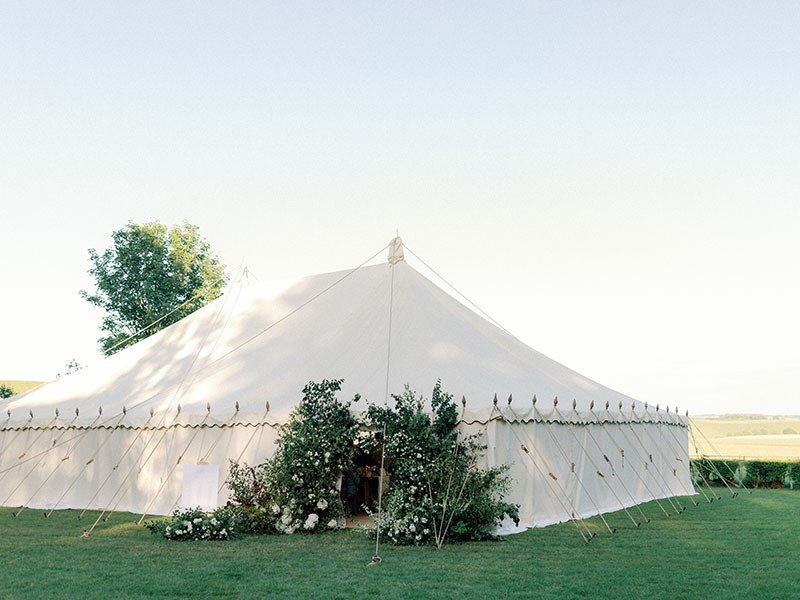
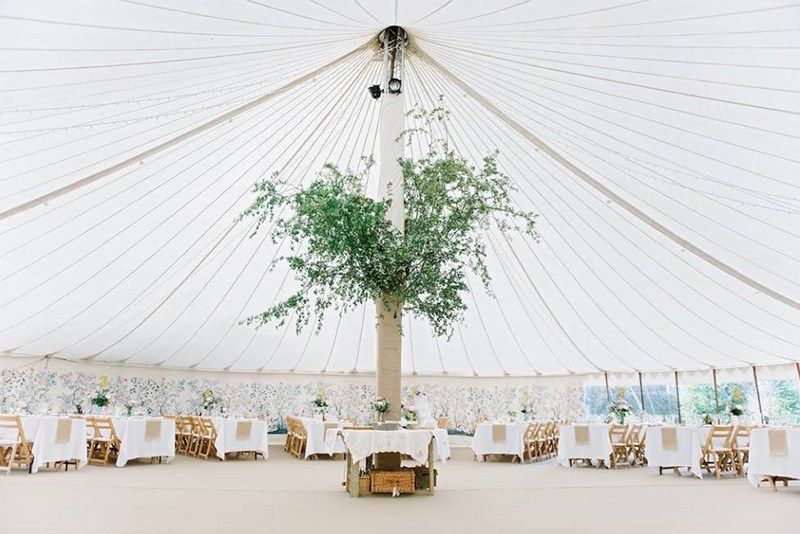
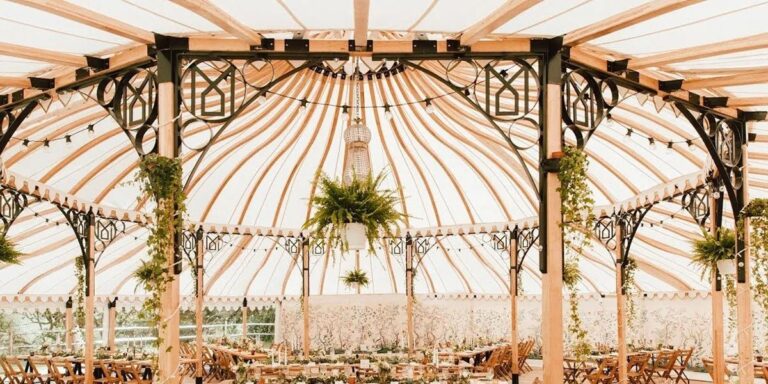
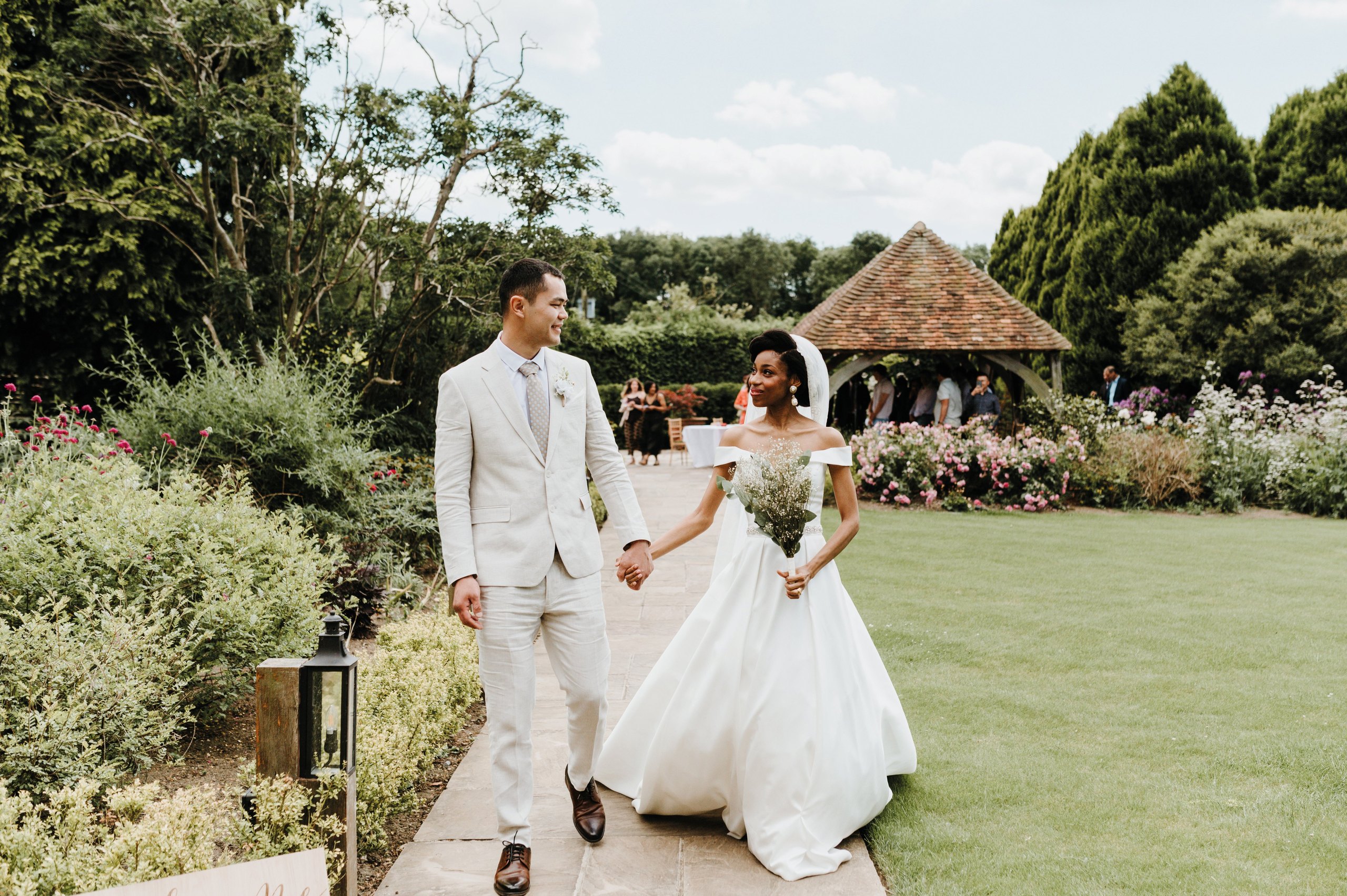
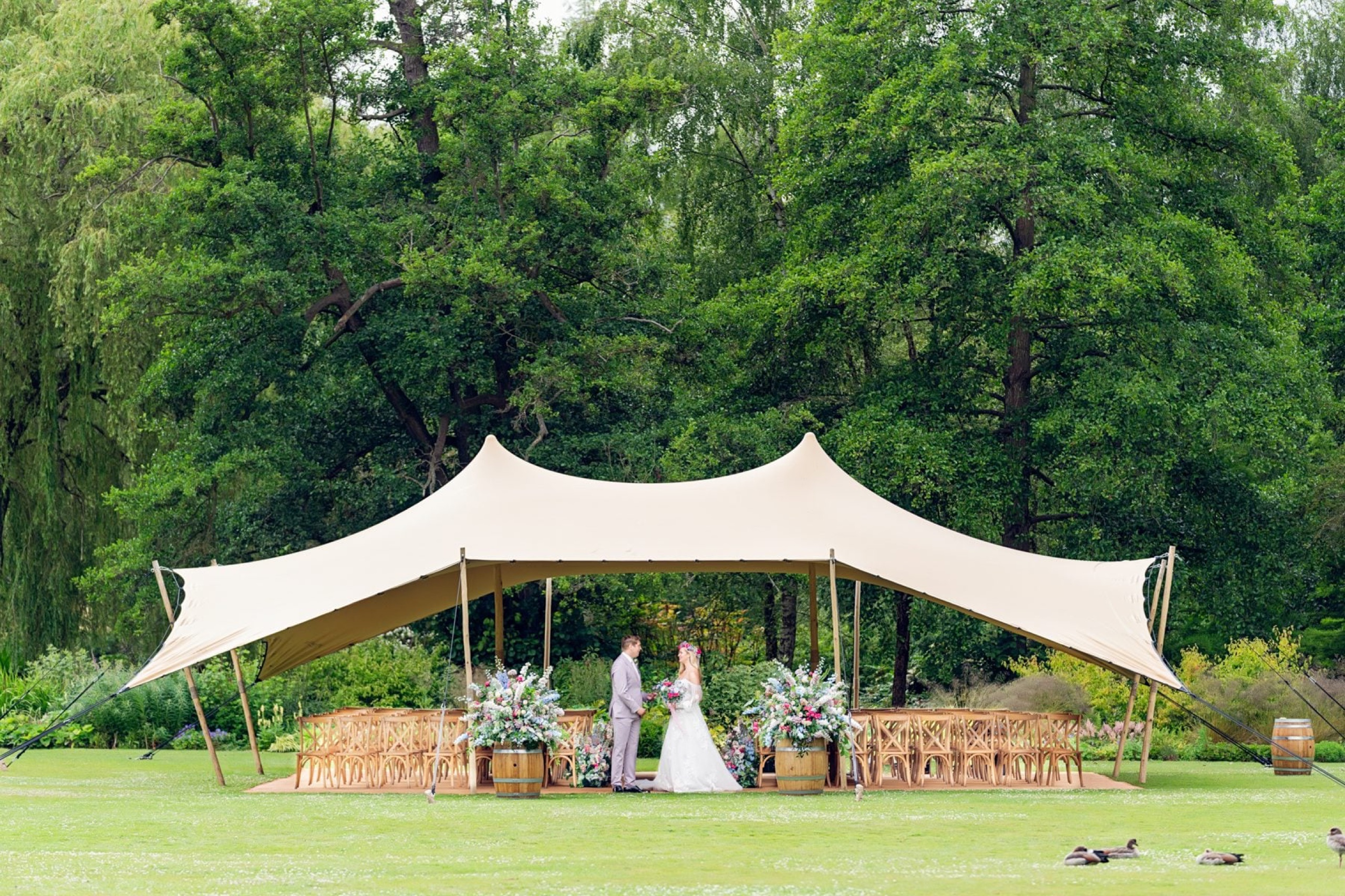
Outdoors there are three settings. Castle Island, on the moat, is used for ceremonies; on the Pavilion Lawn a stretched tent holds both ceremony and reception; and the Cedar Lawn, which looks over the castle and moat, is the site for marquee receptions. The estate also holds Asian and cultural weddings, Hindu, Sikh and Muslim among them, with mandaps, ceremonial stages, specialist caterers and celebrations that run over several days.
Asian Weddings at Leeds Castle. Film: Leeds Castle Kent on YouTube.
Numbers, seasons and the road from London
Each building sets its own numbers. The Castle takes 100 for the ceremony and dinner and 120 in the evening; the Maiden’s Tower takes 80 for the ceremony and dinner and 100 in the evening; the Fairfax Barn takes larger evening receptions, with its figure to be confirmed; and the Cedar Lawn marquees are for weddings of more than 200. Leeds Castle stays open to visitors, so on public opening days a Castle wedding has the building to itself from 4.30pm.
Venue hire for a Castle wedding starts at £8,400, the 2028 rate for a Monday to Thursday between October and April, including VAT; Saturdays from May to September carry the highest rate. Battel Hall starts at £6,000. Catering is separate everywhere: couples choose from Leeds Castle’s preferred caterers, who quote their own menus and prices, and a Fairfax Barn evening carries a minimum catering spend of £5,000.
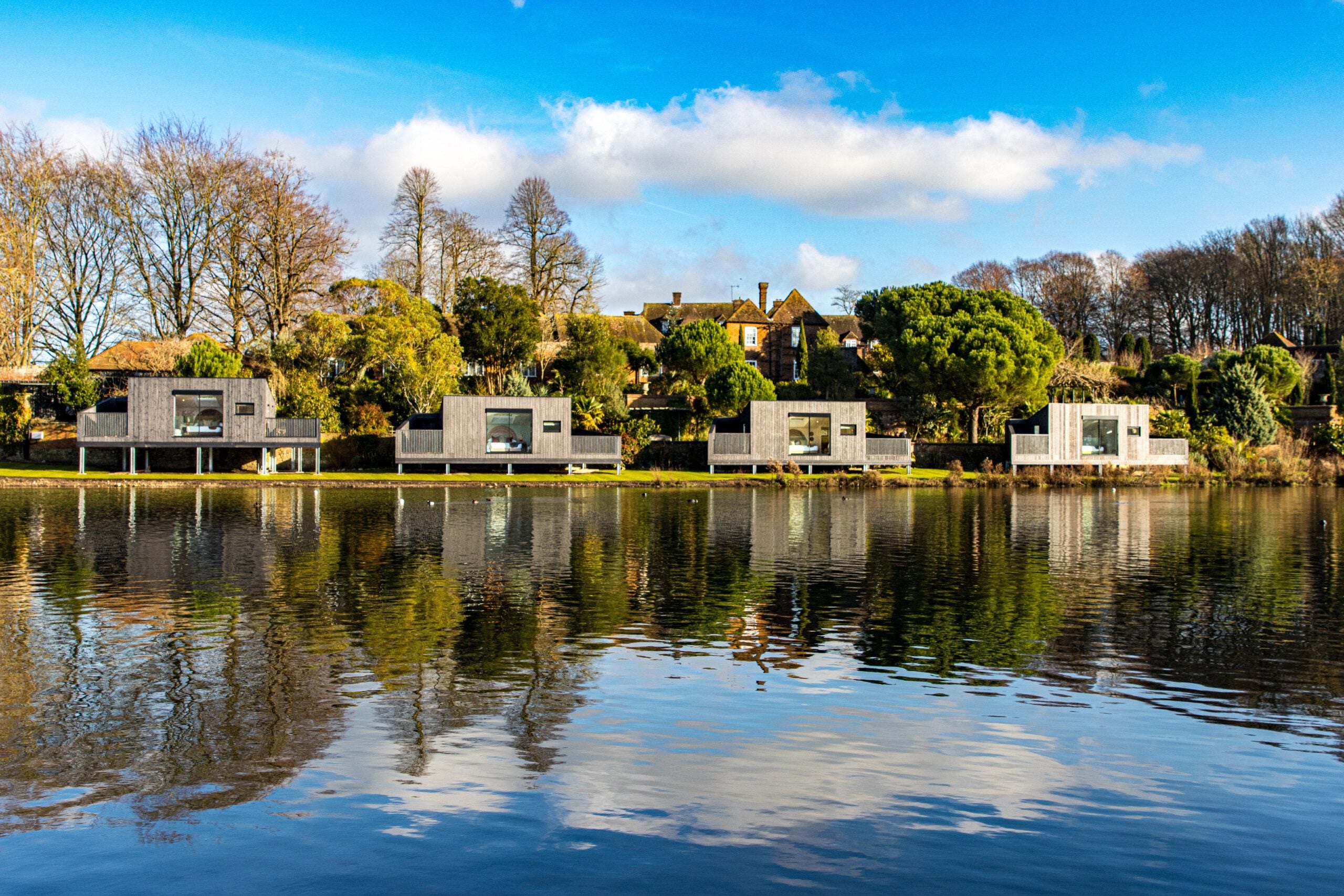
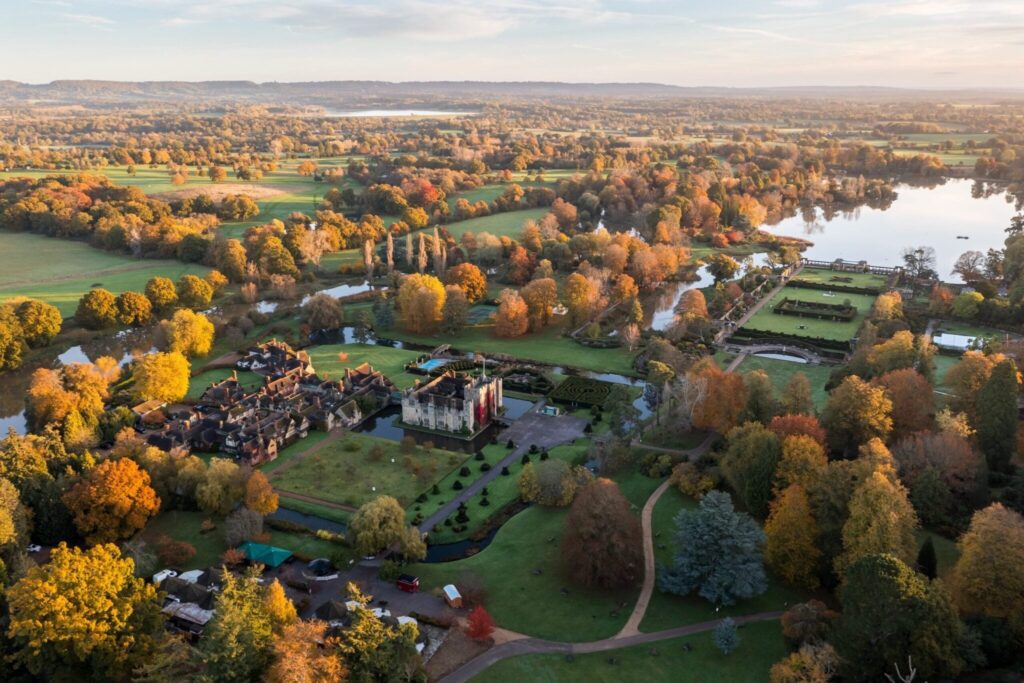
The estate covers 550 acres at Broomfield, about 40 miles from central London and five minutes from junction 8 of the M20. Trains from London Victoria reach Bearsted in about 70 minutes, London Gatwick is about 45 minutes by road, and parking for guests is free. Those not sleeping in the castle can stay in the Stable Courtyard rooms, the Lakeside Lodges or the estate’s holiday cottages. The Leeds Castle profile sets out each space, the Kent Wedding Atlas covers marrying in the county, our Kent venues sit alongside it, and the UK castle wedding guide sets Leeds beside other castles.
The castle or the estate
Leeds Castle is at its strongest when the whole wedding happens inside the castle walls: vows, a banquet in the Salon and a night upstairs without leaving the island, in rooms first arranged for house parties ninety years ago. The decision a couple has to make is whether their guest list fits around that table, or whether their day belongs in the barn and on the lawns.
Our view: choose Leeds Castle for a wedding of around 100 that wants to dine and sleep in a moated castle within reach of London, and budget for a caterer on top of the hire. If the guest list is much larger, ask early how the barn and marquee options will work.