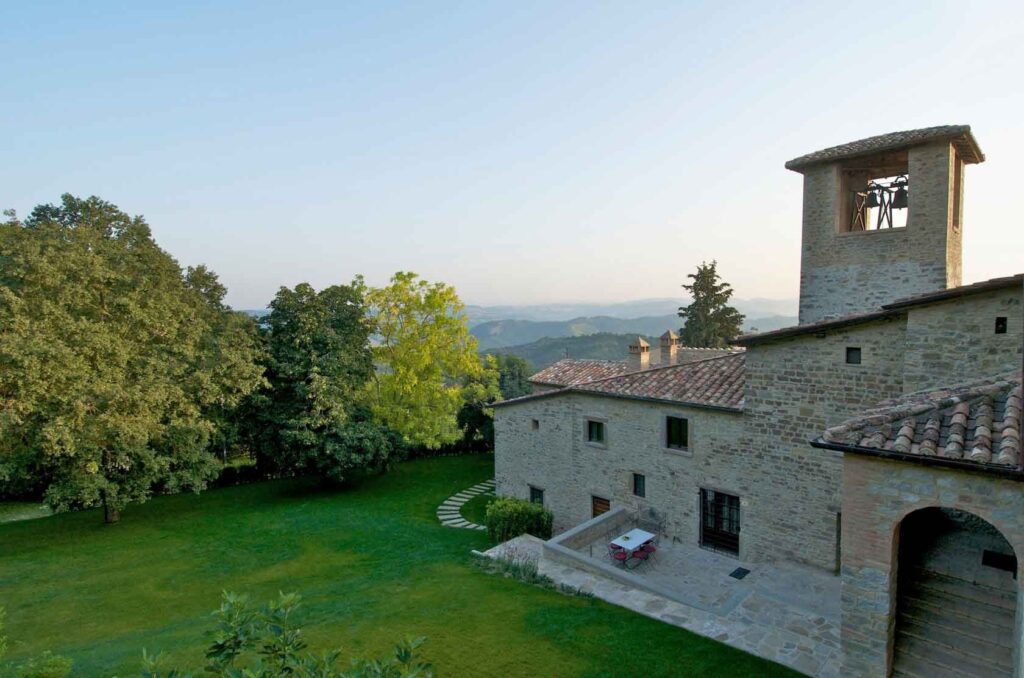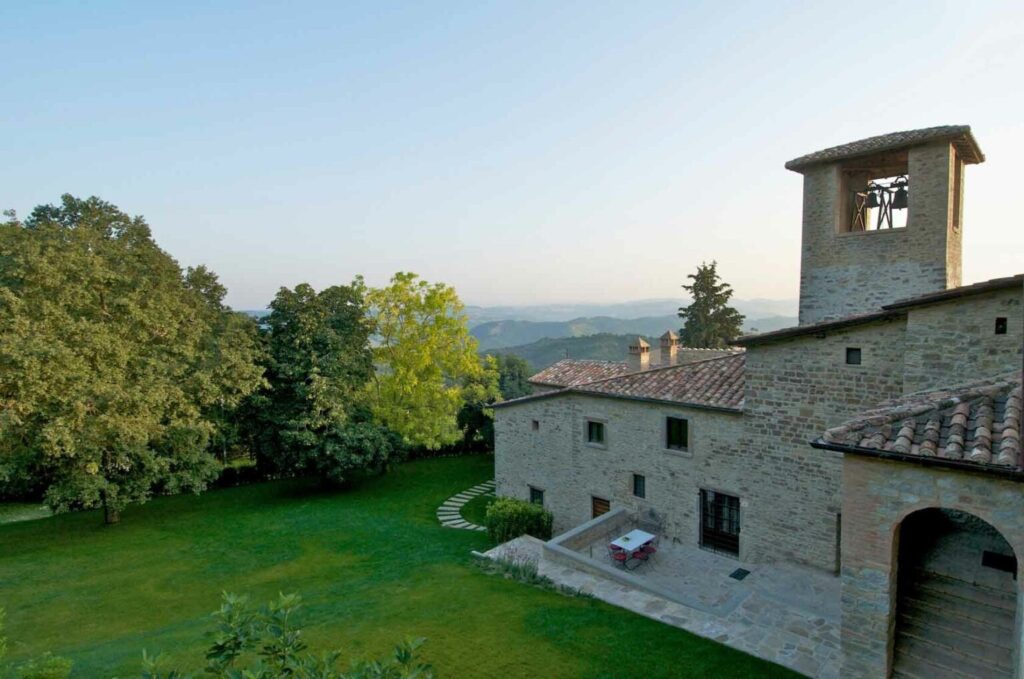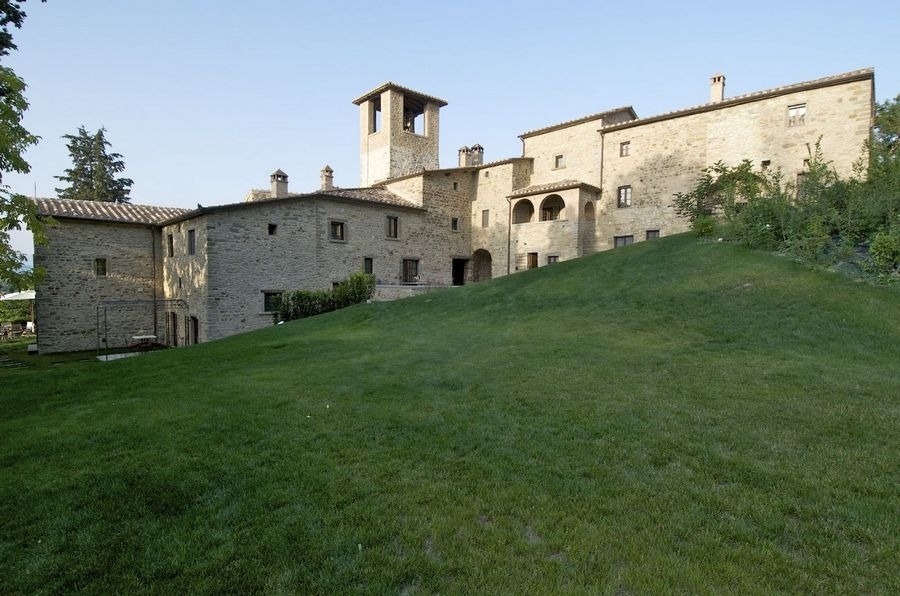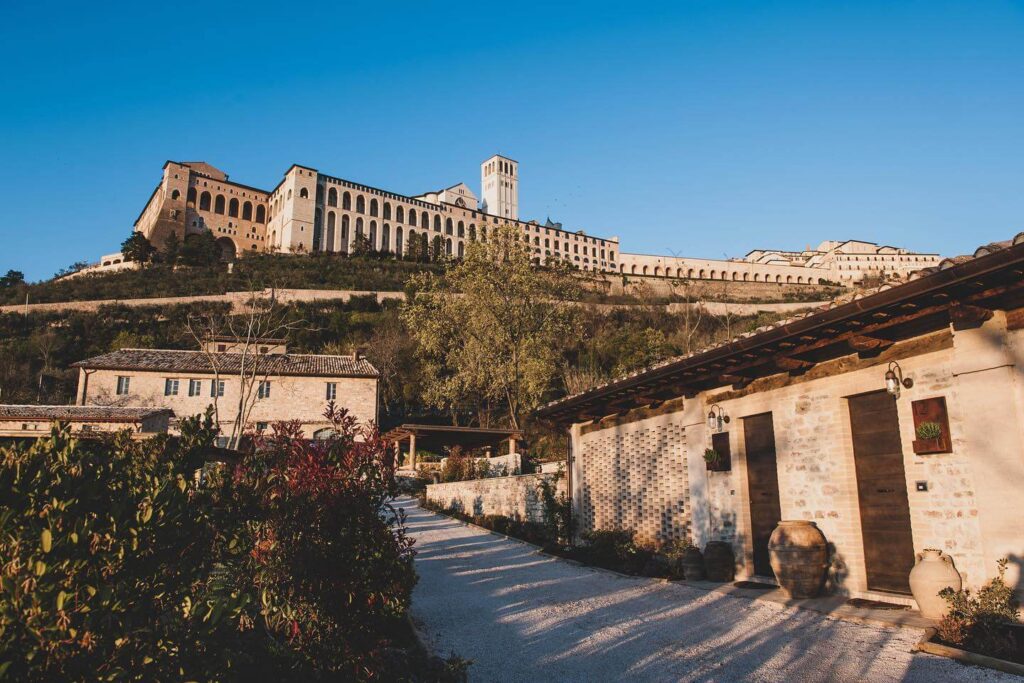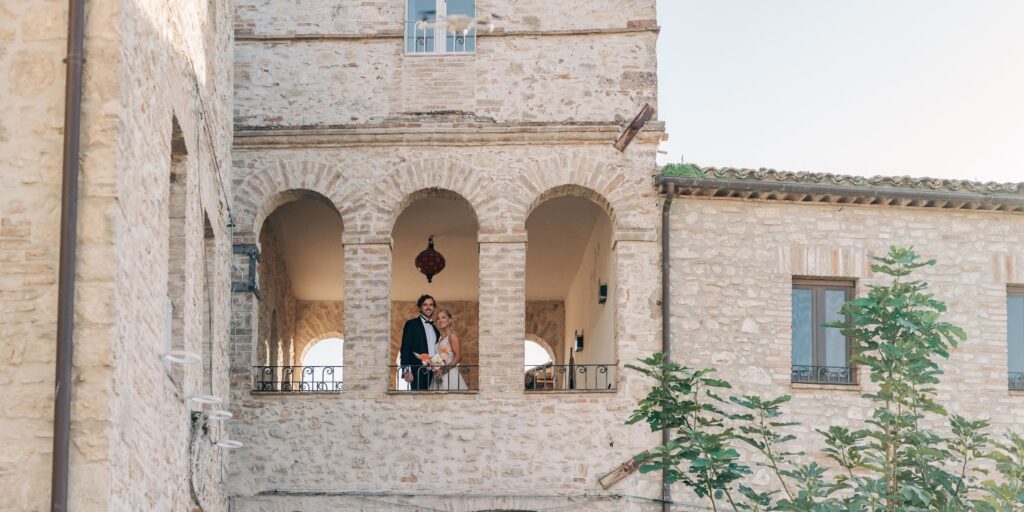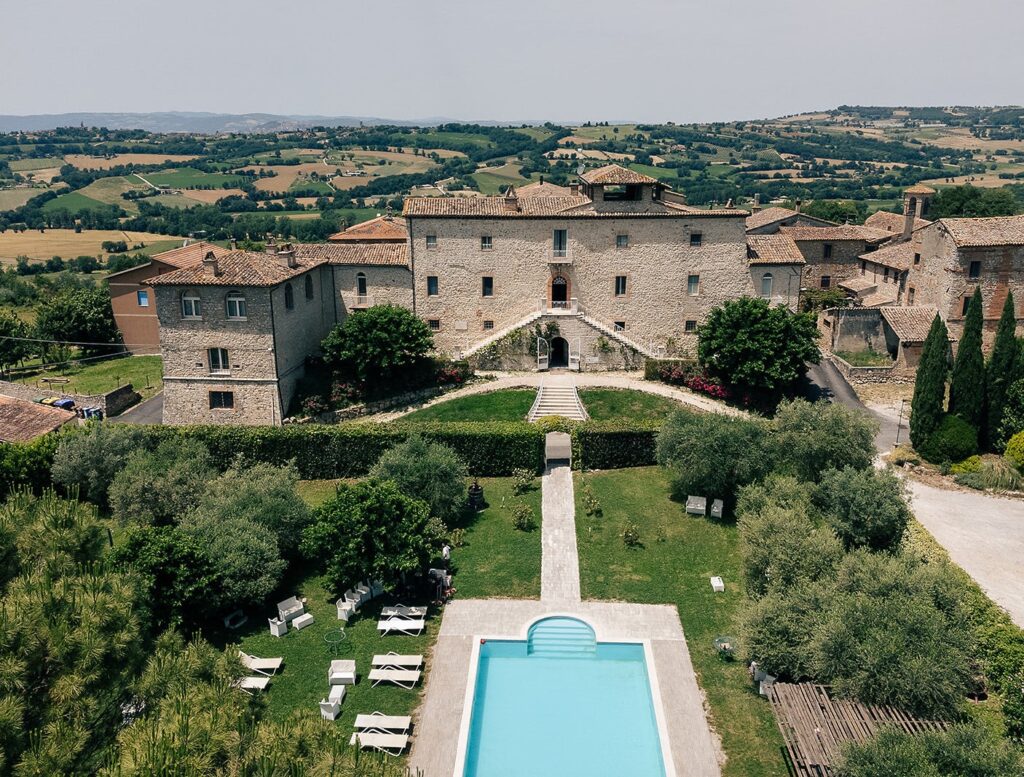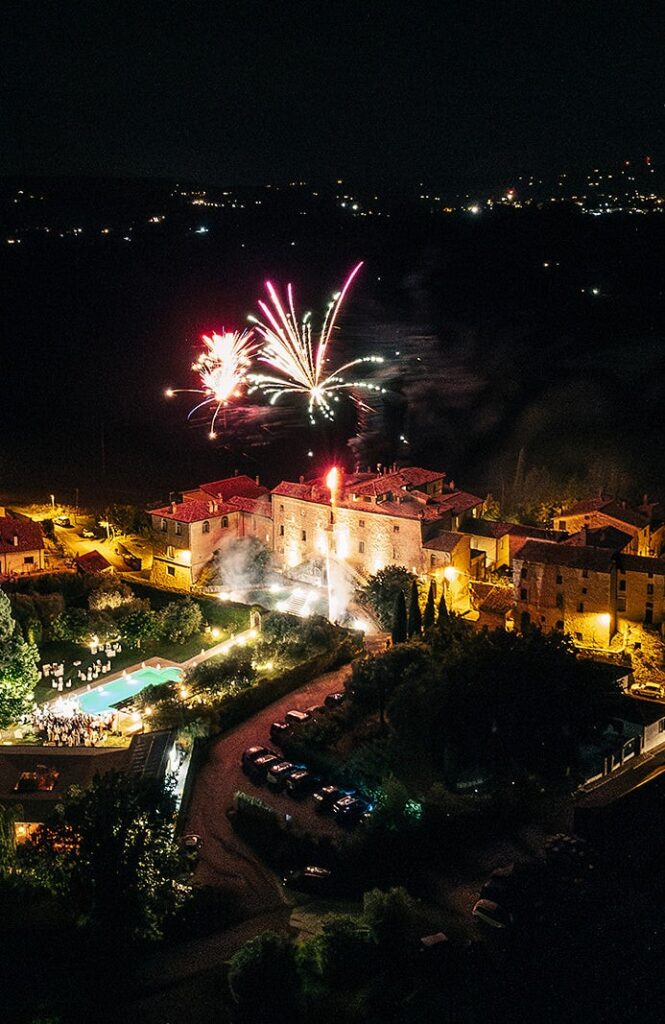
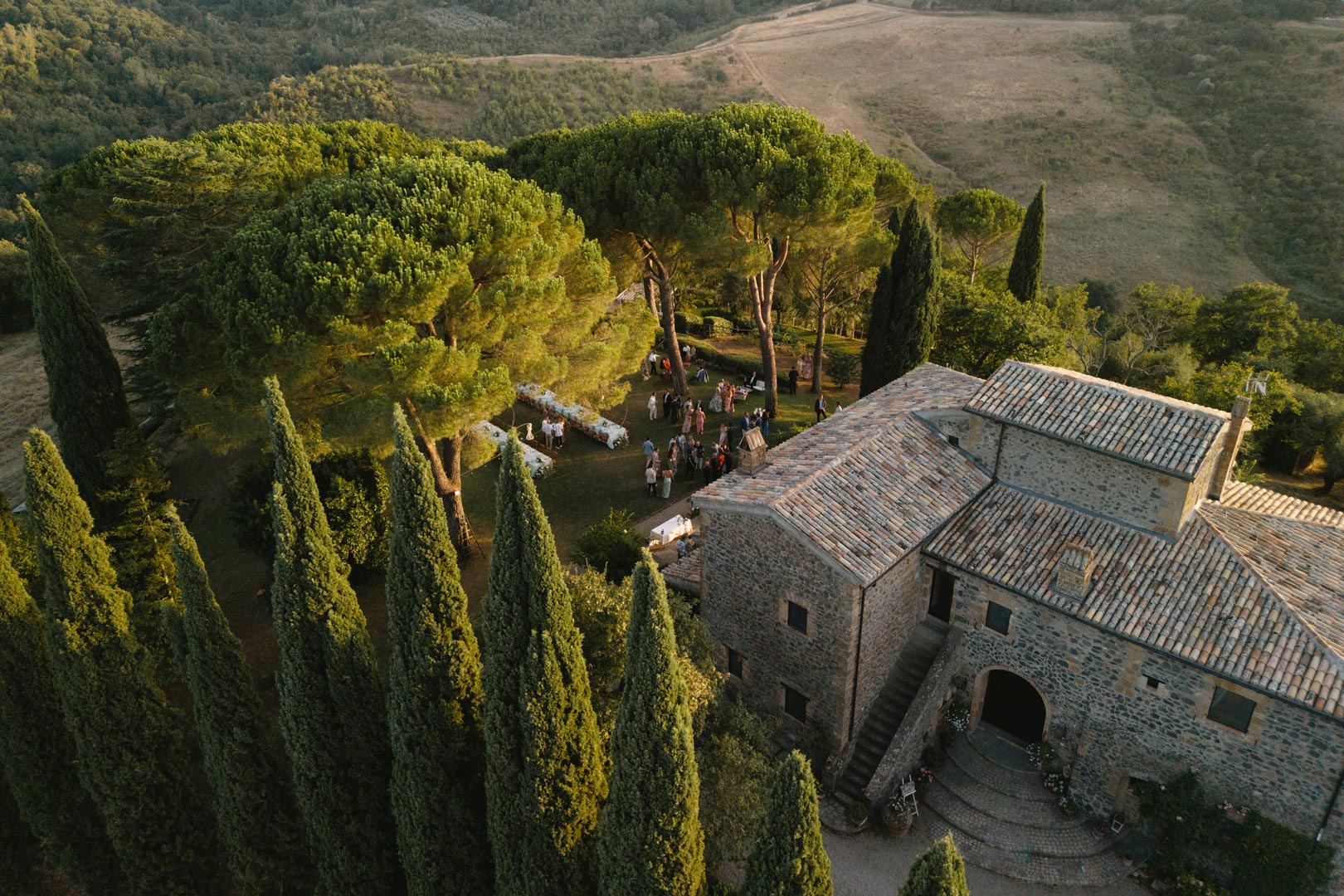
Fortino is the Italian word for a small fort, and Torre Collevento is one of the last authentic examples left in the hills around Orvieto. The stone tower dates from the sixteenth century, and a nobleman, Conte Pallucco, once used it as a hunting lodge; his private quarters are now a suite named for Puccini. Greta and Giacomo restored the estate as a house rather than a hotel, and they give it to one wedding at a time. For the length of the booking a couple has everything on the hilltop at Le Velette: the tower, the gardens, the olive grove, the pool and every bedroom.
No other event runs alongside a wedding, and the grounds are never lent to outsiders during one. Greta leads the planning herself, and the couple’s closest family and friends can stay on the estate for the whole celebration.

A small fort on the hill of Le Velette
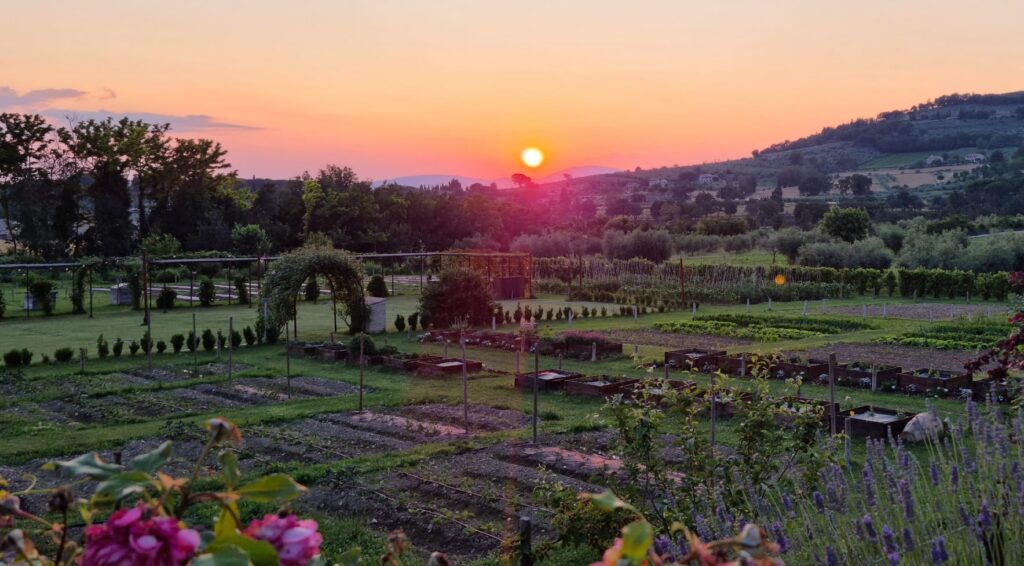
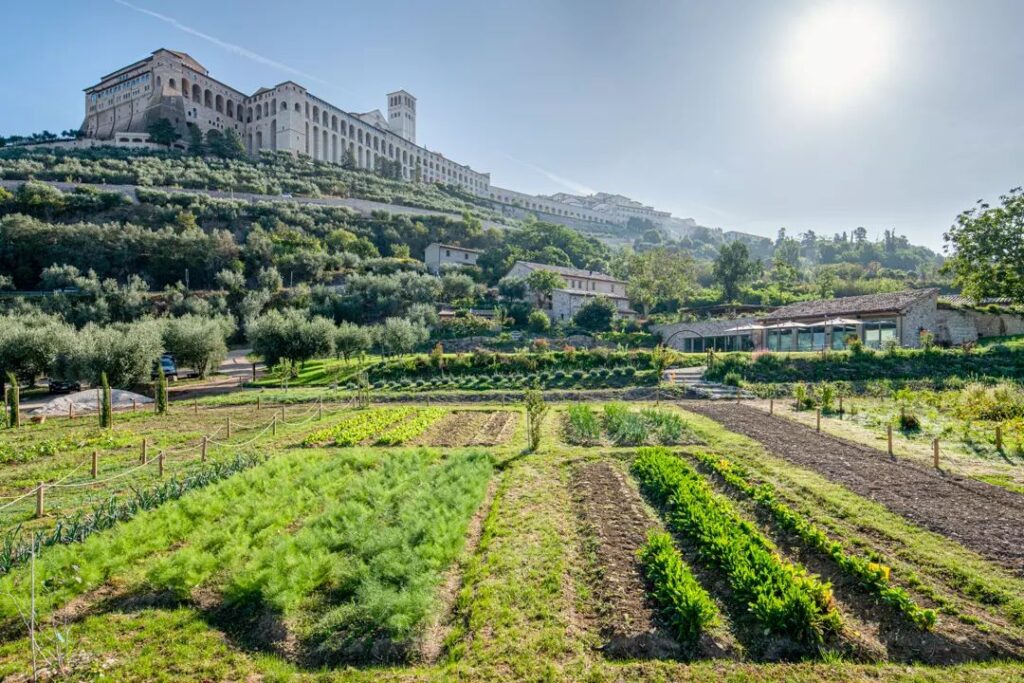
The tower is built of stone quarried from the ground it stands on. By the nineteenth century it sat at the centre of a working estate of olive groves, vineyards and grain fields, and the olives are still here: 250 trees across six and a half acres, their oil cold pressed every autumn.
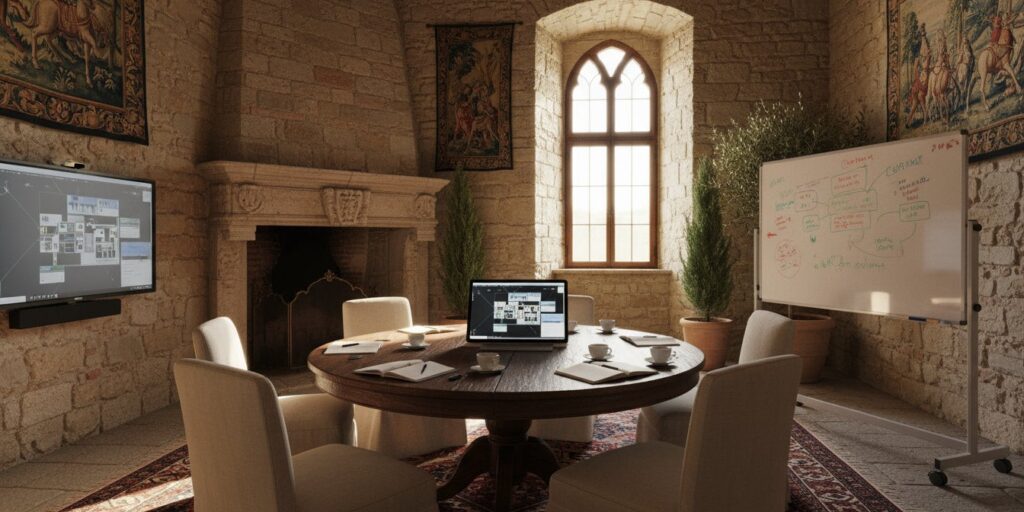
Restoration was slow work, carried out with stonemasons and carpenters who had grown up around these materials, on the principle that nothing original should be lost without reason. Hand hewn chestnut beams and old terracotta floors were kept, and the frescoed ceilings were cleaned rather than erased. The halls have their fireplaces and antique furniture. Heating now runs beneath the stone floors, and the bathrooms are hidden behind doors.
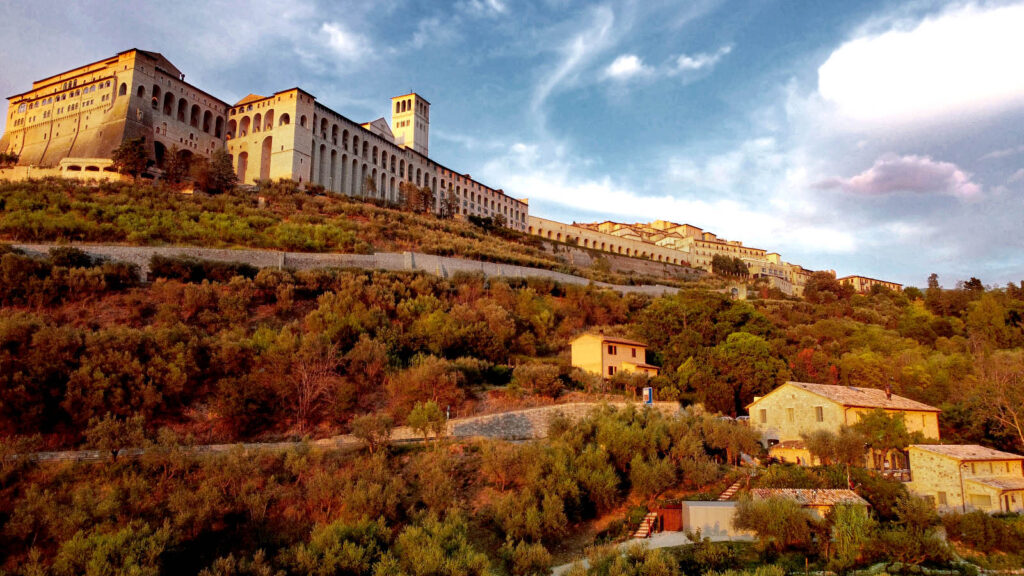
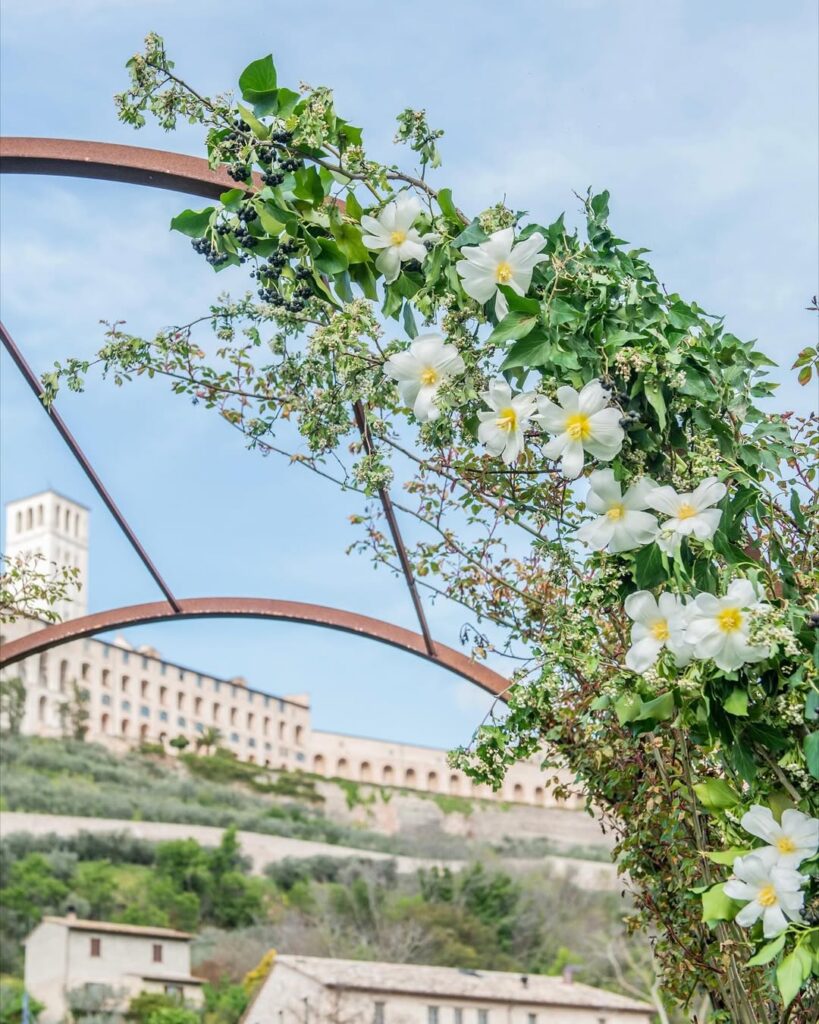
Across the valley, Orvieto stands on the flat summit of a butte of volcanic tuff, its near vertical cliffs finished with defensive walls of the same stone. The foundation stone of its cathedral was laid on 13 November 1290, and the façade begun in 1310 by the Sienese architect Lorenzo Maitani now carries gold mosaics and a large rose window. From the gazebo terrace at Torre Collevento the city and its cathedral are in view across the vineyards.
Vows among the olive trees
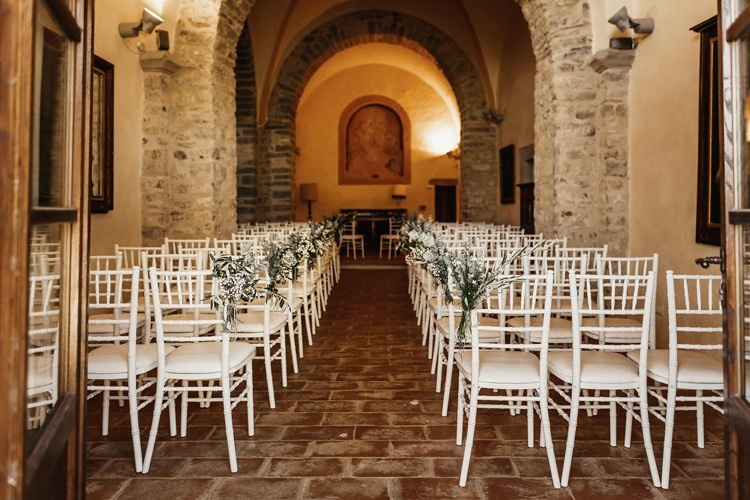
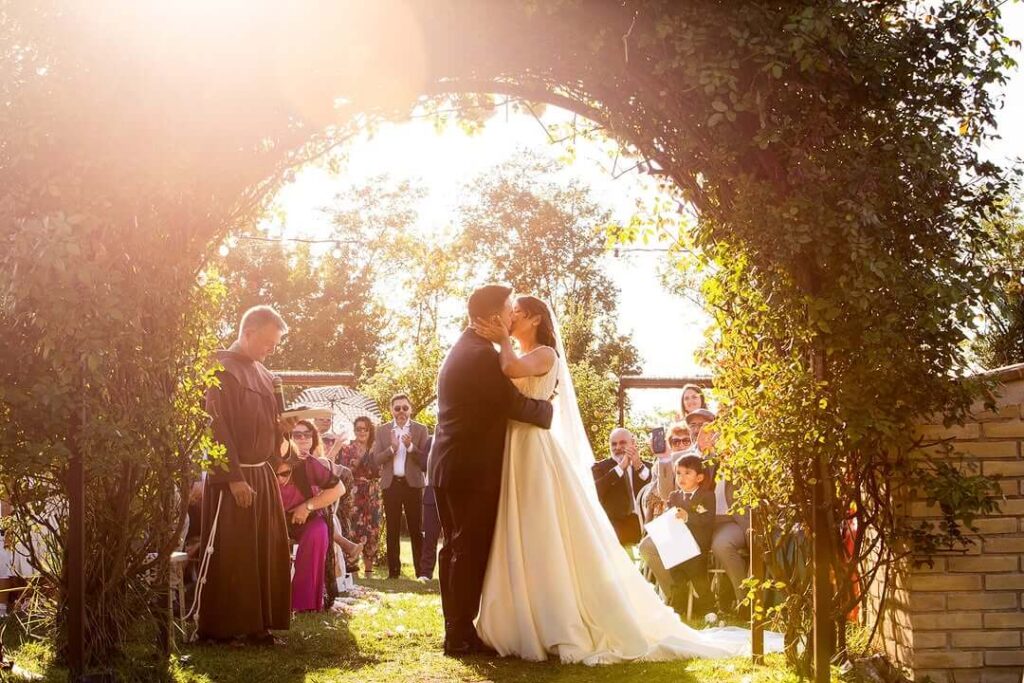
Every ceremony here is held in the open air. The Gardens take a ceremony for up to 150 guests beneath old olive trees, and the Olive Grove is a second outdoor setting for the same number. The gazebo terrace above the vineyards is used for ceremonies too, as well as for aperitivi and candlelit receptions. The legal civil formalities are completed at the comune in Orvieto, and help with the documents is one of the services the planning team can add. The plan for rain is worth settling at the site visit.
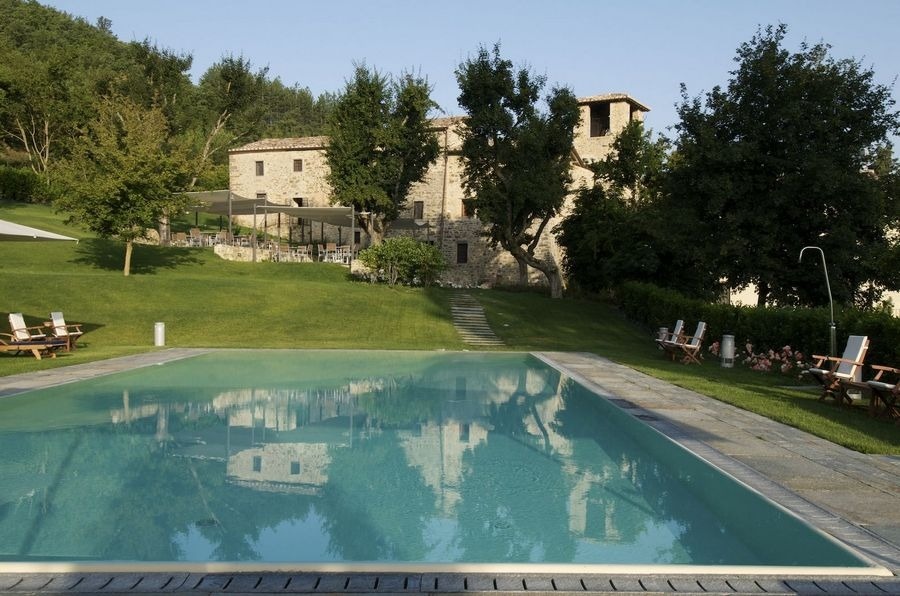
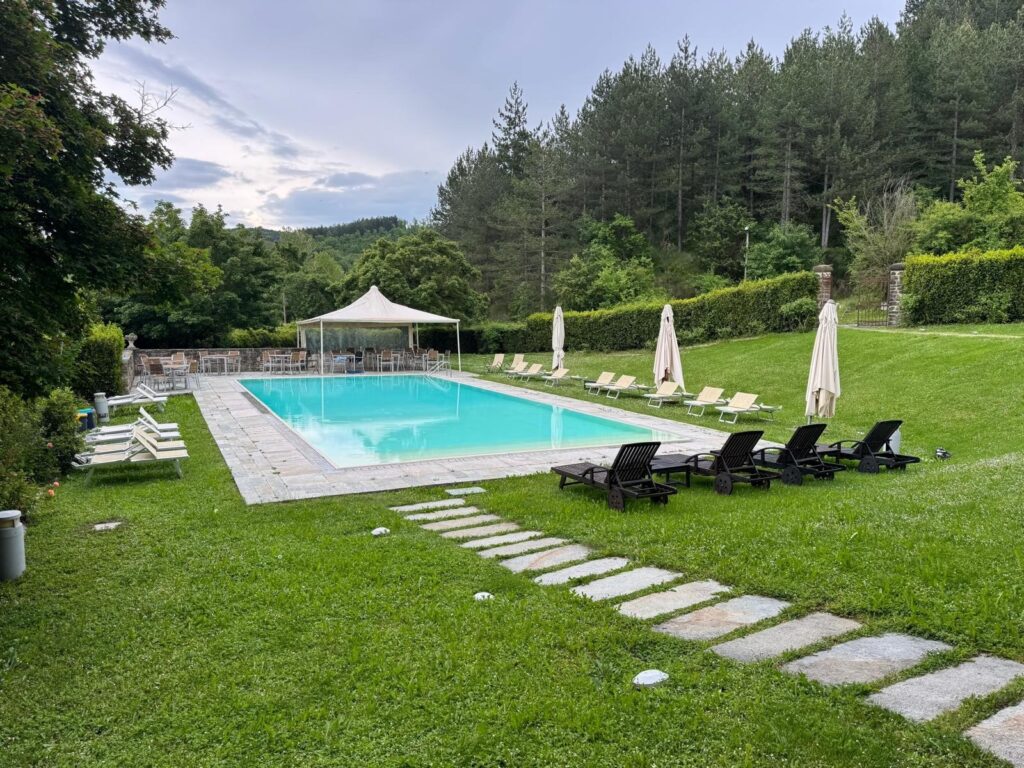
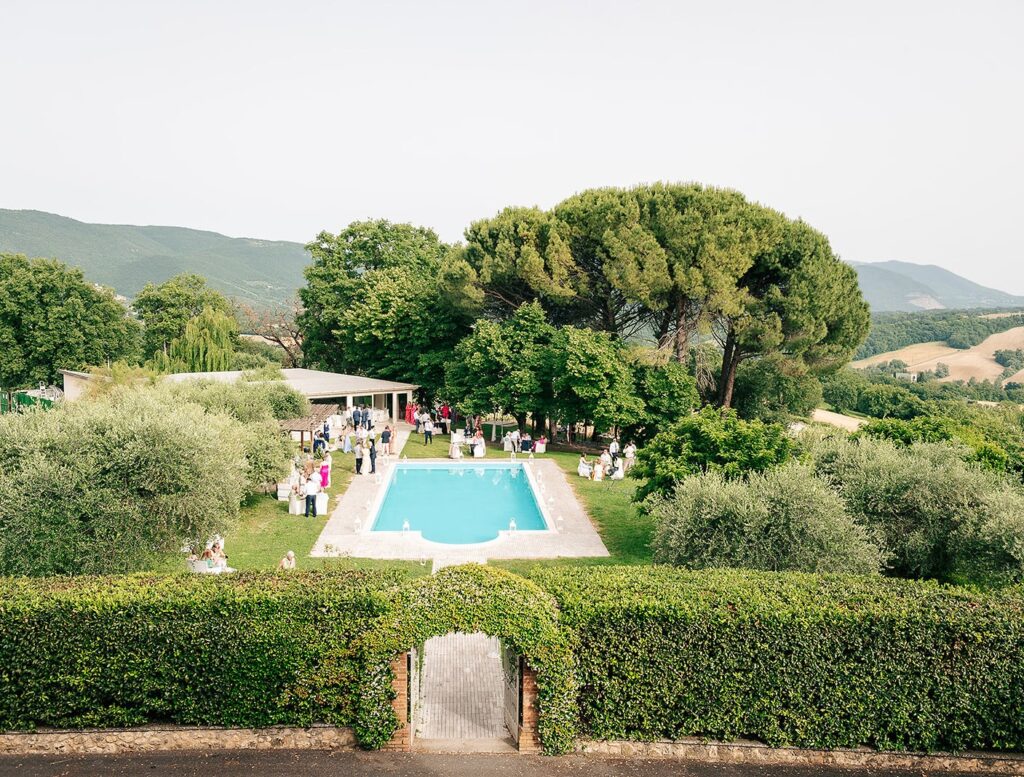
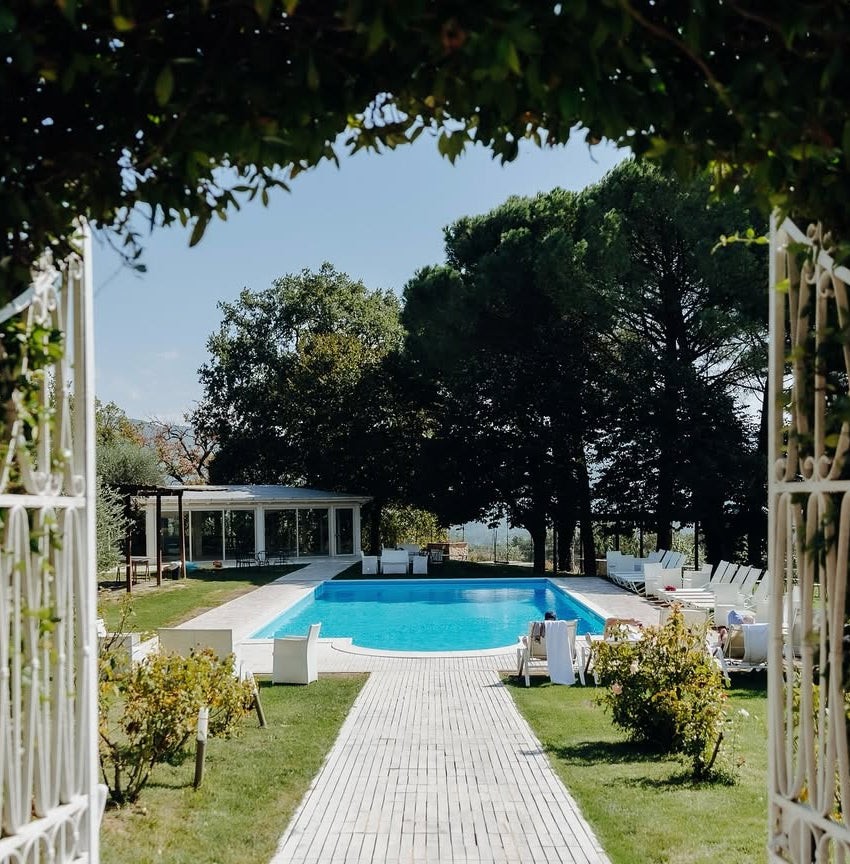
After the vows, drinks can move to the Tower Terrace, which takes up to 60 guests for a cocktail hour with a wide view over the Umbrian hills. The pool terrace, set among pines and cypresses and looking over the vineyards, is kept for the party after the ceremony and for long summer evenings.
An Umbrian table
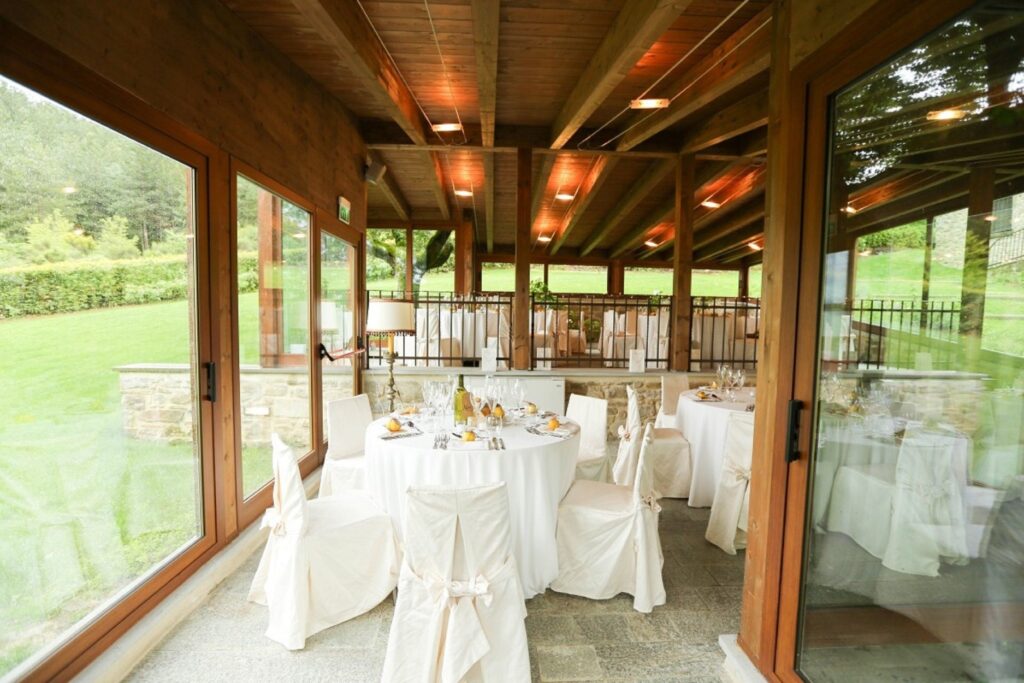
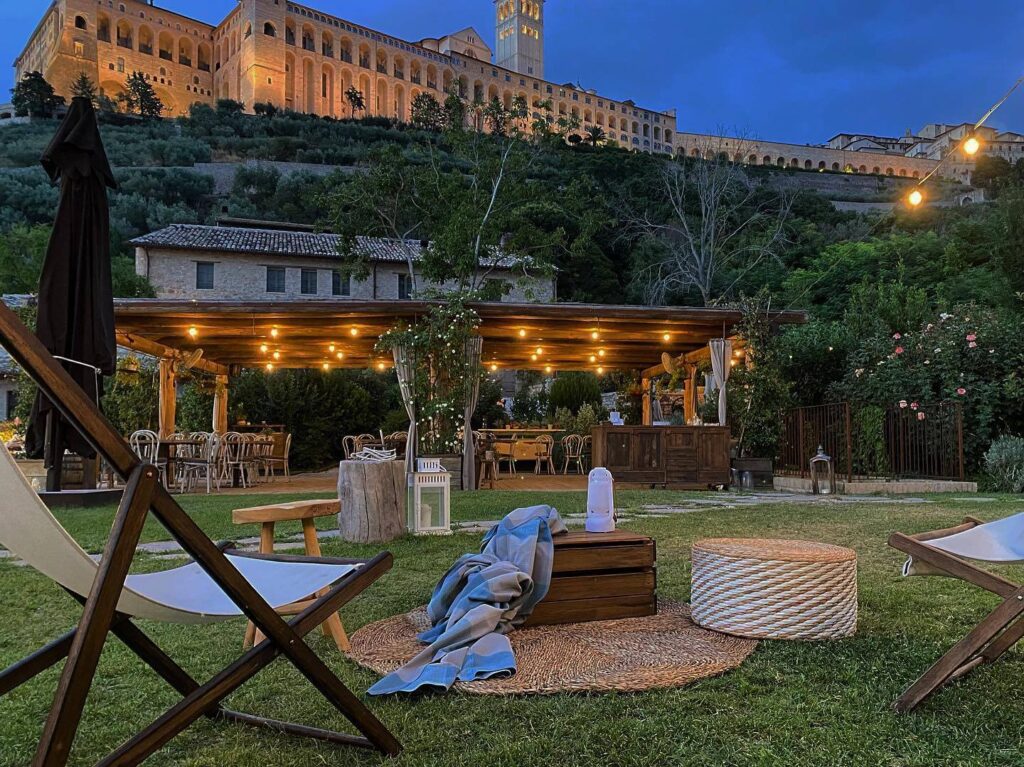
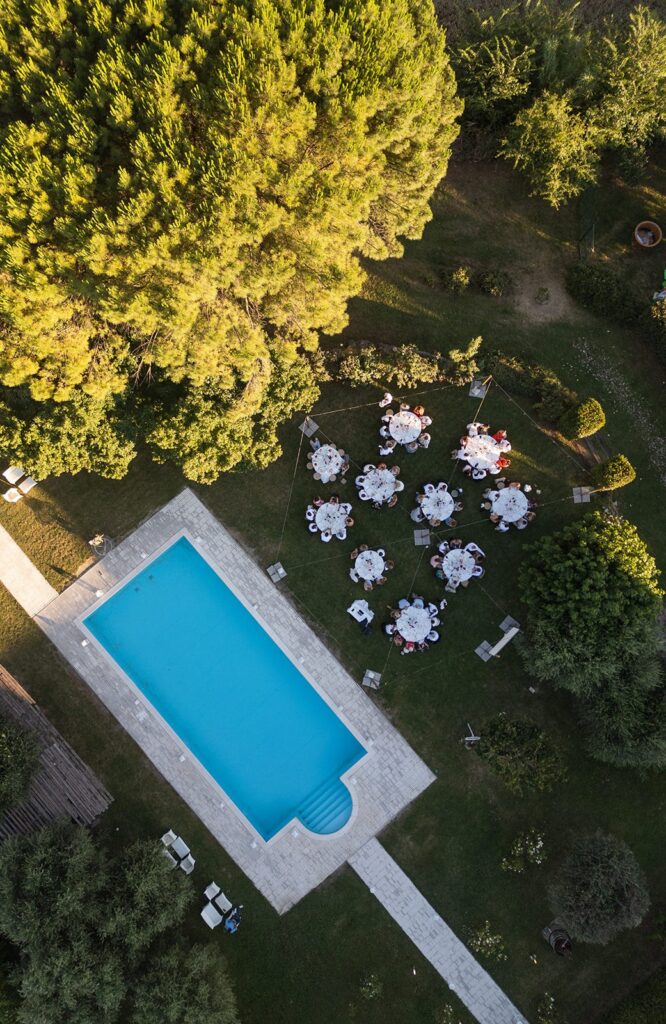
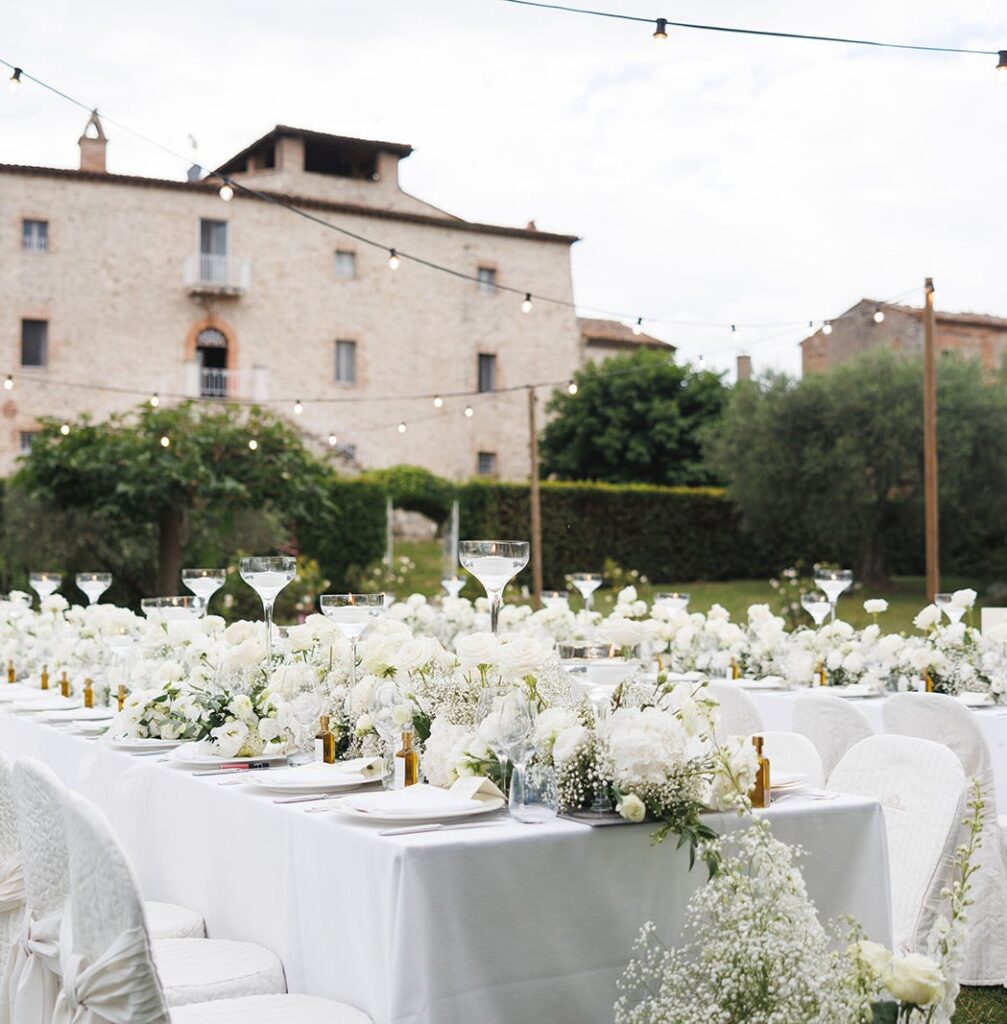
Wedding dinners are laid outdoors, at long candlelit tables on the terrace and in the gardens. The catering is arranged for each couple from Umbrian producers: handmade pasta, olive oil from the estate and the region, truffles from the surrounding hills and wine from the Orvieto DOC. Menus follow the season, and there are other formats for a welcome dinner or a pool party, so the days either side of the wedding can be fed on the estate as well. Catering and drinks are charged on top of the estate fee.
The local wine has a long history. Orvieto DOC is known chiefly for white wines made mostly from Grechetto and Trebbiano; in the Middle Ages Orvieto was a sweet, golden wine, and today’s white Orvieto is dry. The Etruscans brought vines to the area and dug cellar caves out of the volcanic ground.
The house also keeps an estate table every evening for those staying: a home cooked Umbrian dinner with no fixed menu, made from produce of the land and local farms. At dawn a local truffle hunter leads guests through the oak woods with the dogs, and a cooking class of three to four hours in the estate kitchen covers handmade pasta and truffles. Electric bikes go out for half a day along the back roads of southern Umbria, and seasonal workshops range from painting in the open air to tasting wine from the cellar and working with a ceramicist from Deruta, the Umbrian town long known for its maiolica.
Composers’ rooms and a suite in the rock
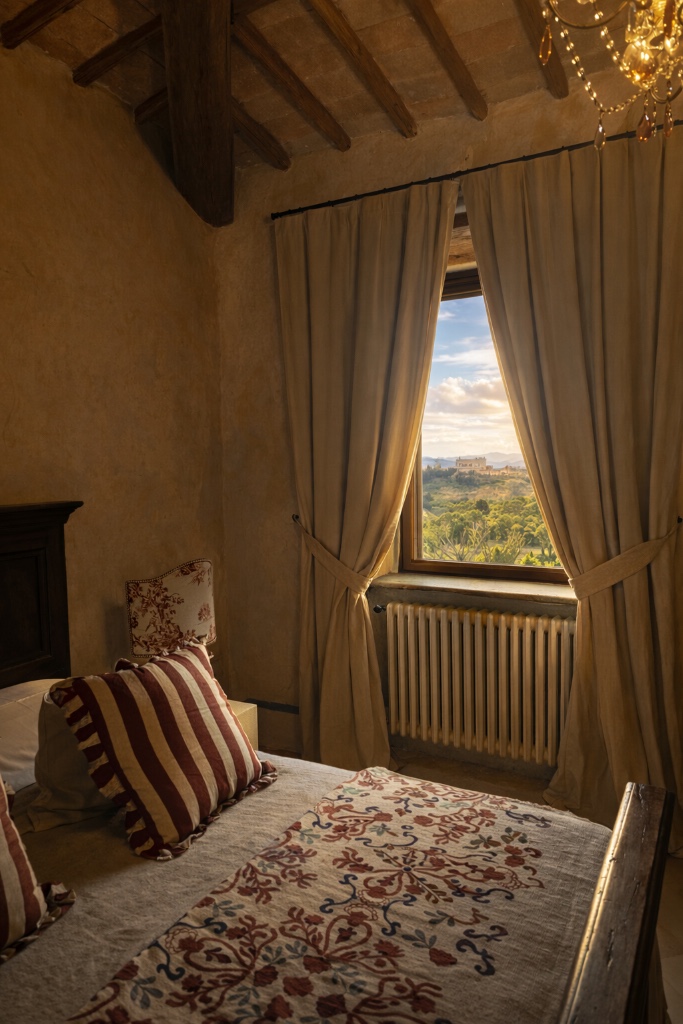
The bedrooms carry the names of Italian composers, and between them the house sleeps 16. With ceremonies for up to 150, most guests at a larger wedding will sleep elsewhere, and booking their accommodation and arranging their transport are among the services Greta’s team provides.
Puccini, once Conte Pallucco’s own quarters, is a suite of 45 square metres under high ceilings, with original stone walls and wooden beams, a king bed, a separate sitting area with a sofa bed and a private terrace over the valley. It sleeps up to four, so it suits a family.
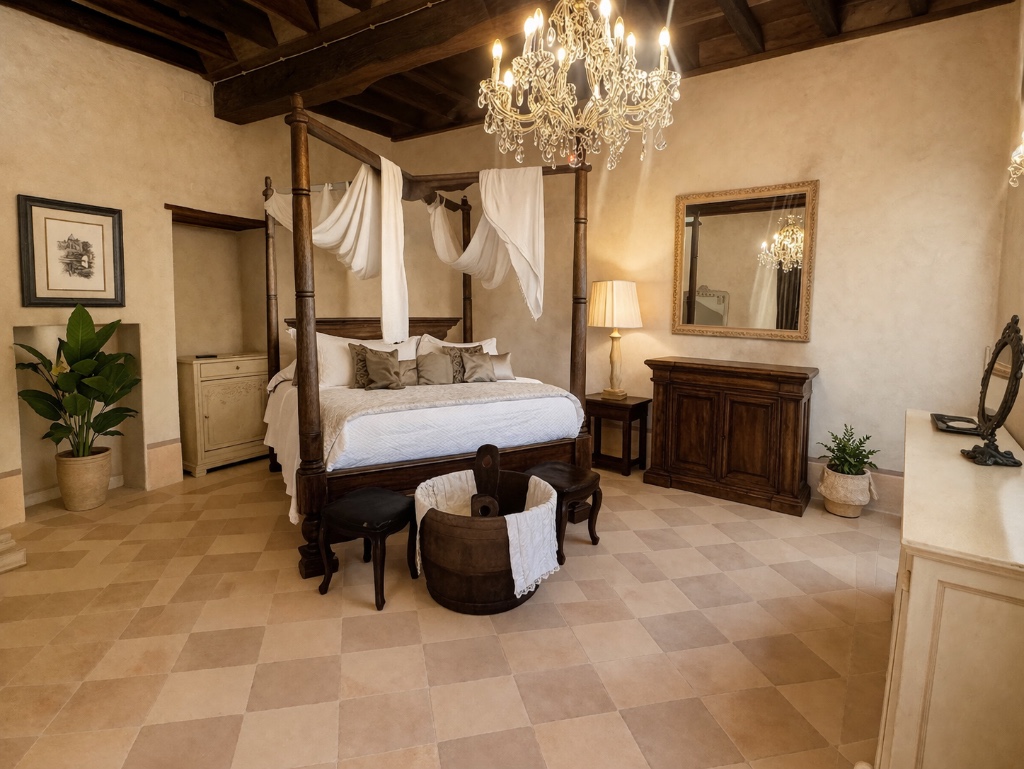
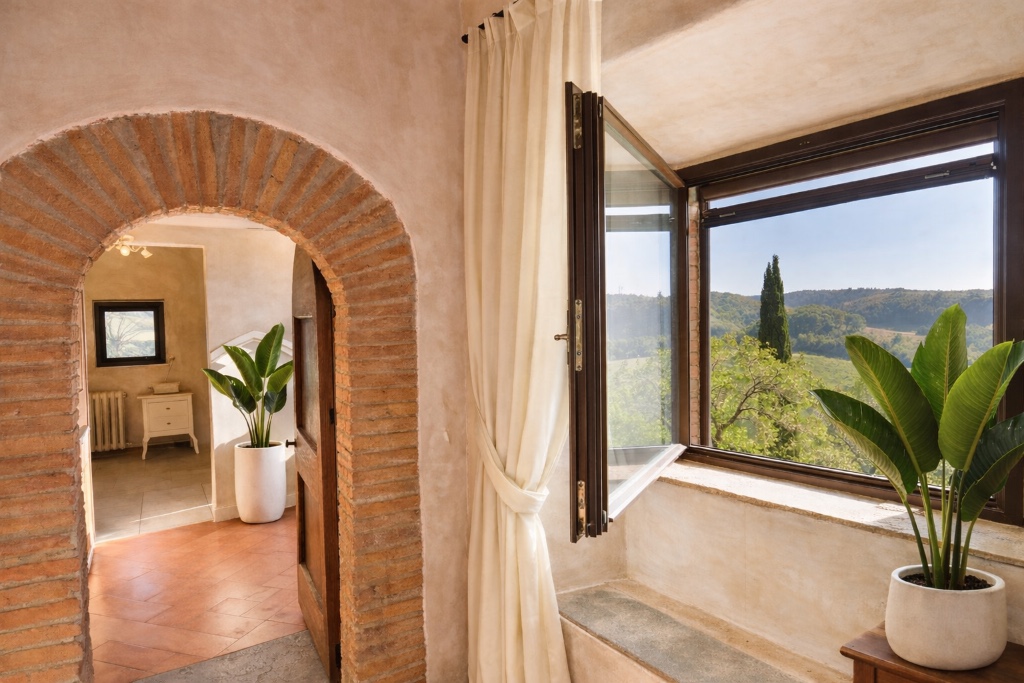
Rossini has a private terrace and sunset views towards Orvieto, with hand painted majolica tiles among its details. The other rooms include Donizetti, Vivaldi and Verdi.
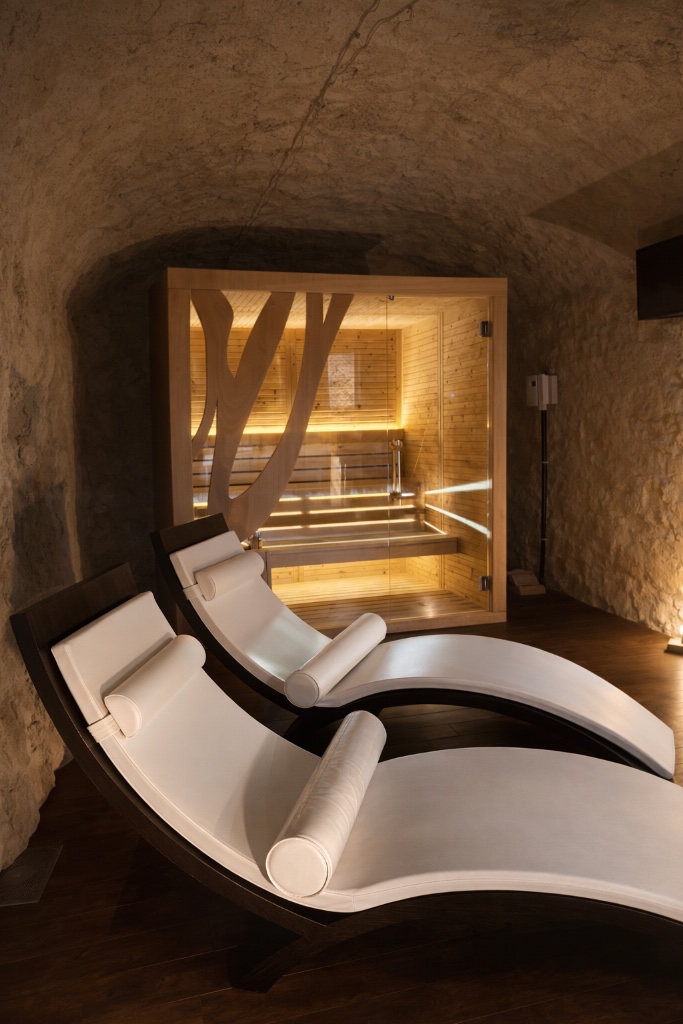
The couple’s room is the Mascagni Cave Spa, a suite of 55 square metres set in a natural cave cut into the hillside. Its bedroom and king bed are kept apart from a private spa with a jacuzzi for two, a Finnish sauna and chromotherapy lighting.
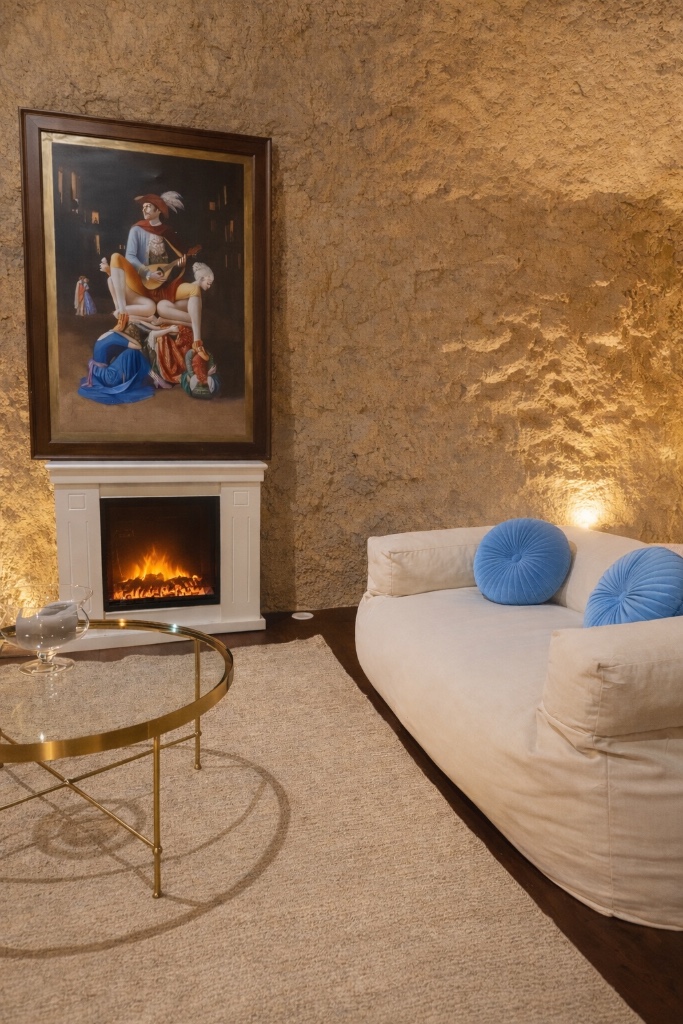
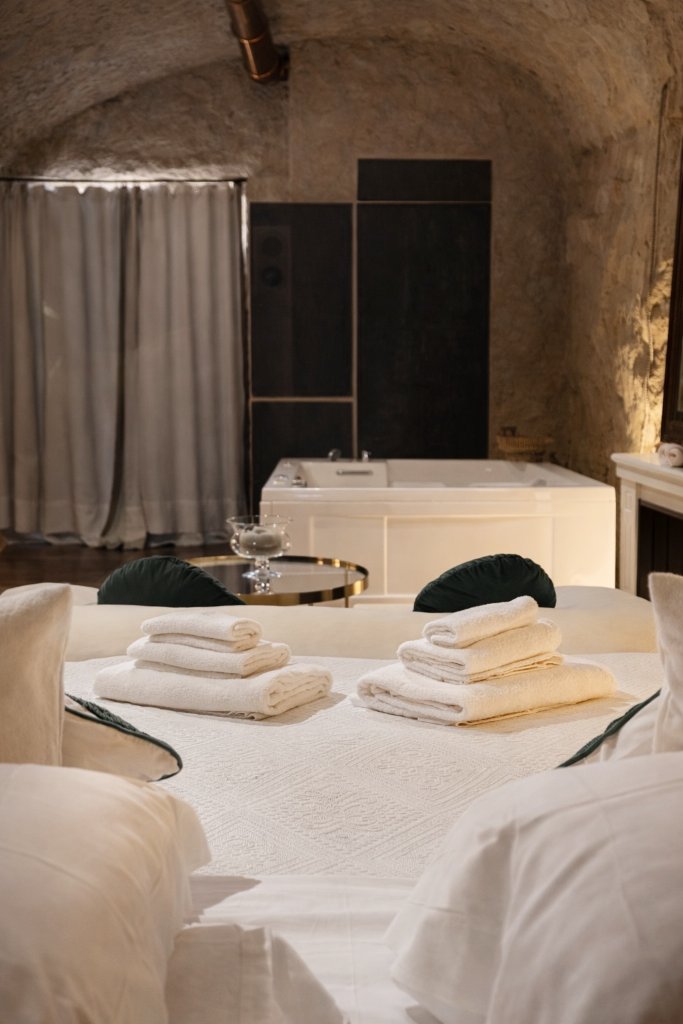
Treatments can be arranged in the suite, and massage and private Pilates sessions can also be held outdoors on the grounds.
Planning with Greta
Greta’s team works in seven stages: a first consultation, a site visit, design and planning, guest coordination, the final checks and rehearsal, the wedding day, and the care afterwards, when gifts are distributed and suppliers are paid. Within that sit the timeline, supplier coordination and the budget; flowers, lighting and decoration; welcome packs and itineraries for guests; and Italian touches in regional food, music and local traditions.
The estate is let by the night. Exclusive use in 2026 starts at €12,000 for two nights, and each further night adds €3,000, up to €27,000 for seven nights; the rates are indicative. That covers the estate and its grounds, the bedrooms for up to 16 guests, planning support, setting up and clearing away, supplier liaison and support on the day. Catering and drinks, flowers, photography and film, music, the cake, guest transport, hair and make up and help with the legal documents are added separately.
Eight minutes from Orvieto
Orvieto’s old town is about eight minutes from the estate by car and its railway station about seven. The station is on the Florence to Rome line, and a funicular climbs from it through the city’s rampart to Piazza Cahen, 157 metres above. Rome is about an hour and twenty minutes away, by road or by direct train, and Florence about an hour and a half; the nearest airports are Rome Fiumicino and Florence. Spoleto is about 40 minutes by road, Assisi 45 and Perugia 55, and the estate lies close to the border with Tuscany. It opens from March to December, and in January and February by private arrangement.
For more weddings in the region, read our Edits on Castello di Montignano and Parco dei Cavalieri near Assisi, or browse wedding venues in Orvieto, Umbria and the Umbria Wedding Atlas.
How many nights
Because Torre Collevento is let by the night rather than by the event, the decision that shapes a wedding here is how long to take it for. Two nights cover the arrival, the wedding and the morning after. A longer booking gives the sixteen people sleeping in the house time for the truffle walk, the cooking class and evenings at the estate table, with the tower to themselves throughout. Read the Torre Collevento profile and check your date.