Marrying in Barcelona
Barcelona works as a city wedding and a countryside wedding at once. Close to the centre the landscape changes completely: the Penedès wine country lies to the southwest, the Maresme coastline to the north and the pre-Pyrenean foothills to the northwest. A couple does not have to choose between architecture and landscape, since the region offers both within the same weekend.
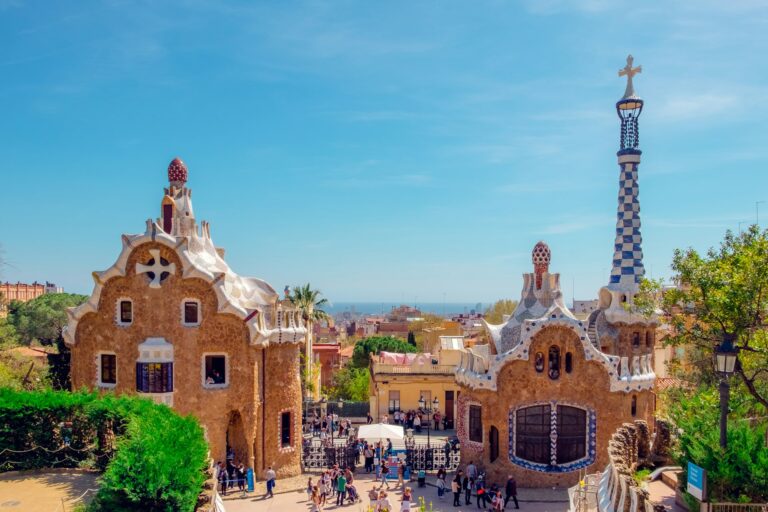
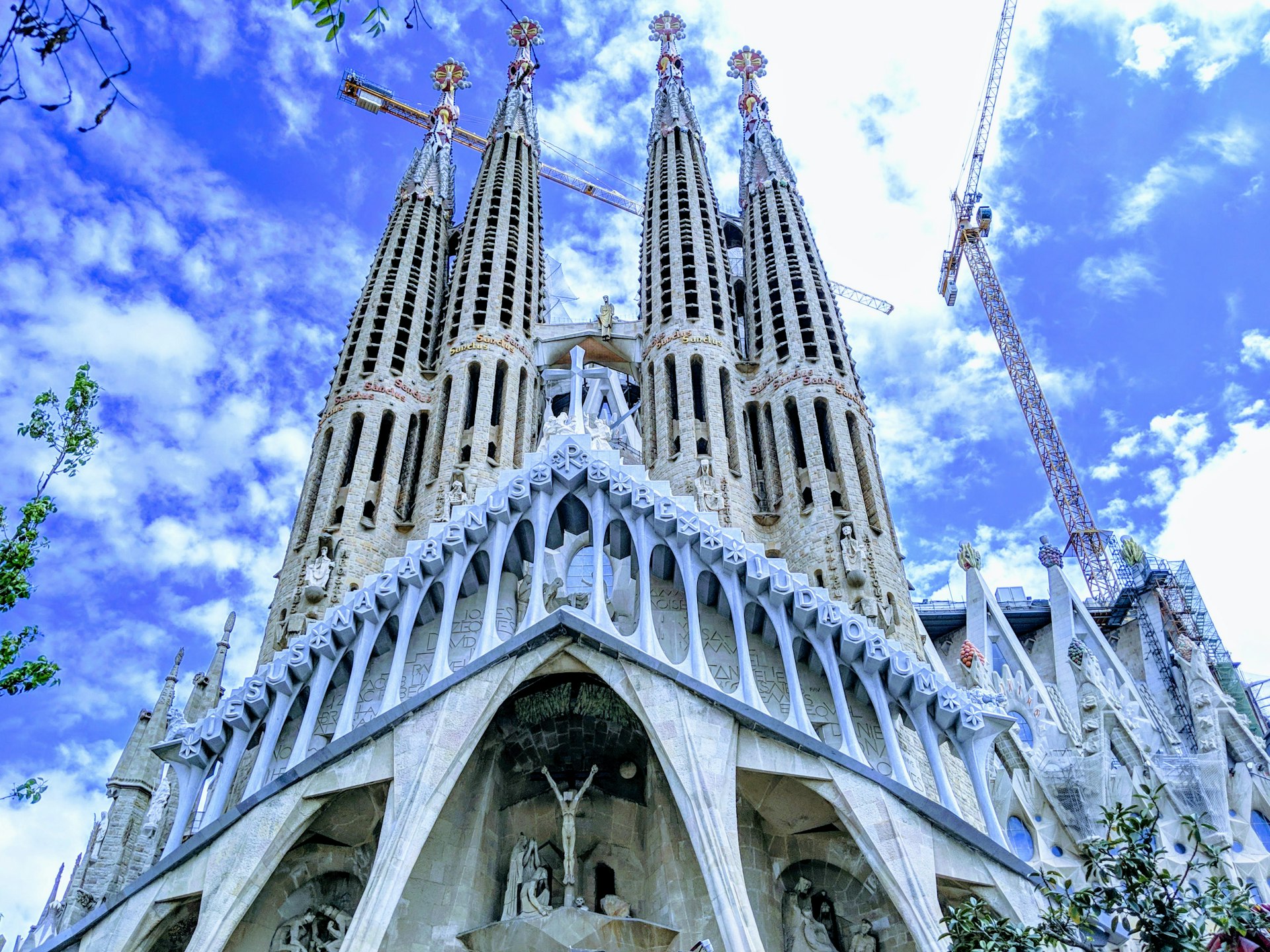
The city supplies its own range of venues. Modernist architecture from the generation of Gaudí and Domènech i Montaner created a building language of organic form and craft detail, and together with the palaces and historic gardens of the old city it gives a wide choice of urban venues.
Catalan culture sets the tone. The food is serious and specific, Penedès wine is well regarded, and a celebration is expected to run long, eat well and be treated as an event.
The seasons
- Best
- Shoulder
- Peak
- Quieter
5 Star view Our reading of the wedding year, from the months below.
- Best months
- May, June, September, and October
- Shoulder season
- April and late October
- Peak season
- July and August
May and June bring warm, reliable weather and long evenings. September and October are increasingly popular: the summer heat has passed, the vendimia harvest is under way in the Penedès, and hotel and flight prices ease from the August peak. July and August are the hottest months, but evening events from 7pm onwards stay comfortable.
Daylight and sunset
The bar runs from sunrise to sunset on the 15th of each month. A ceremony is usually timed an hour or two before the sunset shown.
Calculated From the coordinates of Barcelona, local time, for 2027.
Ramadan and Eid
For couples and guests who observe them, the dates to plan a wedding around.
| Year | Ramadan | Eid al-Fitr | Eid al-Adha |
|---|---|---|---|
| 2027 | 8 Feb to 8 Mar | 9 Mar | 16 May |
| 2028 | 28 Jan to 25 Feb | 26 Feb | 5 May |
Calculated From the Umm al-Qura calendar. The observed dates follow the sighting of the moon and can fall a day either side.
The areas of Barcelona
Penedès wine country
The most popular countryside choice, a landscape of rolling vineyards between the Montserrat massif and the Mediterranean. Masias and wine estates sit in a productive agricultural setting, and the cava zone centres on Sant Sadurní d'Anoia.
Maresme coast
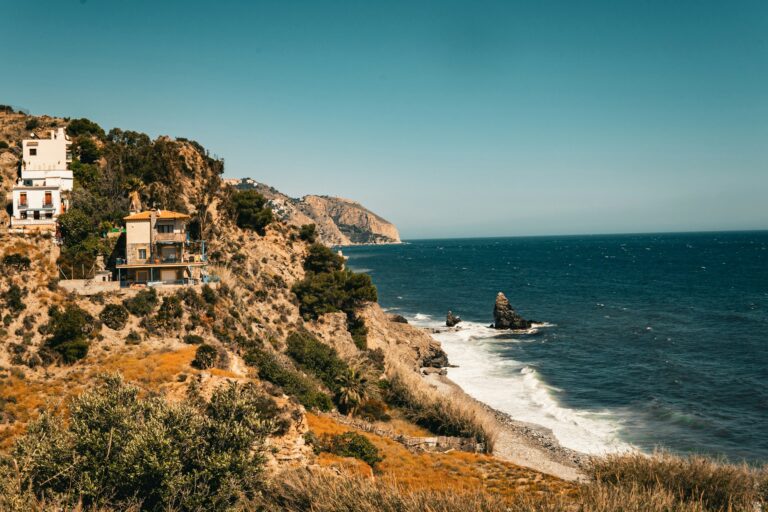
The strip of coast running north from Montgat to Blanes. It combines sea and mountain, with a mix of cliff villas, modernised masias and hotels reached by rail or road.
Barcelona city
Historic palaces in the Barri Gòtic and the Eixample, modernist buildings, museum garden terraces and private rooftops looking over the city. Guests stay in the city and move on foot or by taxi, so no rural transfers are needed.
Garraf and Sitges
The coast southwest of the city, above the Penedès. Sitges is an established cultural destination, and the area has cliff villas, coastal masias and private properties above the sea, close to the airport.
What venues are like
Masia
The defining Catalan countryside venue: a traditional farmhouse built around a central courtyard, with stone walls, arched porticos and a setting of vineyard, olive grove or orchard. The best have been fully restored while keeping their structural character.
Finca and wine estate
Wine-producing estates in the Penedès, many with cava cellars beneath the main building. Most include cellar visits and estate wine in the catering, which suits couples who want wine culture at the centre of the celebration.
Historic city venue
Modernist palaces, Gothic courtyard complexes and Eixample mansions converted for events. They call for experienced event producers who understand city logistics, permits and the demands of a historic building.
Coastal villa
Private villas on the Maresme coast or above Sitges, usually with a pool, garden and sea view. Their closeness to the airport suits multi-day wedding programmes.
Airports and transfers
- Barcelona El Prat (BCN) The primary gateway, with direct routes from London, Manchester, Amsterdam, Paris, Frankfurt, New York and most major global hubs.
Barcelona El Prat is among the best-connected airports in southern Europe, with direct routes from North America, the Middle East and all major European hubs.
Marrying legally in Spain
A civil marriage in Spain follows a prior file (acta or expediente) that proves each partner is free and able to marry; it is opened where at least one of the couple has their domicile. When the file is approved, the ceremony is held before the mayor or a delegated councillor, a notary or a court official. Both partners are heard privately and separately first.
- 1Months before; no fixed minimum in the Civil Code
Open the marriage file
A notary (acta) or the Civil Registry or court official (expediente) of the place where one of the couple is domiciled opens the file to confirm capacity and the absence of any impediment. A couple resident abroad is dealt with by the Spanish consular official in the country of residence.
- 2Before the ceremony
Hearing and authorisation
Each partner is heard privately and separately. The file ends in a decision that authorises or refuses the marriage. If the marriage is not celebrated within a year of publication of the notices, the file must be repeated.
- 3The day
The ceremony
Held before the mayor or a councillor the mayor delegates, or before a notary freely chosen by the couple; where a court official handled the file the couple may choose that official, another, or the mayor. Each partner is asked whether they consent to the marriage and the officiant declares them married.
- Who marries you
- mayor or councillor, notary or court official
- Prior file
- required, opened where one partner is domiciled
- Hearing
- each partner privately and separately
- Validity of the file
- one year
Already married at home?5 Star view
Many couples complete the legal or religious marriage in their own country and hold the celebration here. A ceremony with no legal effect needs none of the steps above: the venue and the planner arrange it.
Who needs a visa
Travelling from the United Kingdom
British passport holders visit Spain without a visa for up to 90 days in any 180-day period, counted across the whole Schengen area. The passport must have been issued less than 10 years before arrival and be valid for at least 3 months after the day you plan to leave. The European Union's Entry/Exit System registers fingerprints and a photograph at the border on a first visit.
Other nationalities
EU, EEA and Swiss nationals need no visa. Other nationalities check with the Spanish embassy or consulate in their country. The Balearic and Canary Islands, Ceuta and Melilla are covered by the same Spanish civil-marriage law; check Schengen rules for Ceuta and Melilla with the Spanish embassy.
Reference Spanish Civil Code, articles 49, 50, 51, 56, 57 and 58, and Ley 20/2011 del Registro Civil, article 58 (boe.es, read 2026-10-21). gov.uk: Spain entry requirements (travel advice, read 2026-10-21). European Union entry rules for visa-exempt visitors (EES, ETIAS) and European Commission implementing decisions on multiple-entry visas for Saudi, Bahraini and Kuwaiti nationals. Checked 21 October 2026. Rules change: confirm with the authority that will marry you before you book.
Accommodation
Two landmark waterfront hotels anchor the offer, complemented by a strong boutique scene in the Gothic Quarter, El Born and the Eixample grid.
At the table
Catalan cuisine combines cooking of the sea and the mountains in a way found nowhere else in Spain.
Market culture
The Mercat de la Boqueria on Las Ramblas is the best-known food market in Spain, with salt cod (bacallà), botifarra sausage, wild Pyrenean mushrooms and Catalan cheeses.
Las Ramblas and El Born
Cava and Catalan wine
Cava, the sparkling wine made by the traditional method, comes from the Penedès and is the natural choice for a wedding aperitivo. The region also makes still wines from Xarel·lo, Macabeu and Garnatxa.
What planners tell couples
Airport access
Barcelona El Prat is a major European hub with direct routes from all UK airports and most global cities. Guests from the United States, Australia, the Middle East and Europe can arrive without routing through Madrid. The city is reached by express bus or the L9 metro line.
Permits for urban venues
Civil and symbolic ceremonies in historic venues, including the Palau de la Generalitat, private palaces and hotel rooftops, need permits from the relevant authorities. Lead times at the most sought-after locations are long, so a planner with established Barcelona relationships is essential.
Pickpocketing
Las Ramblas and the Gothic Quarter are among the most active pickpocketing zones in Europe. Guests should be briefed to avoid bags reachable from behind on Las Ramblas, at the Boqueria and on the metro. Hotel and venue areas are safe.