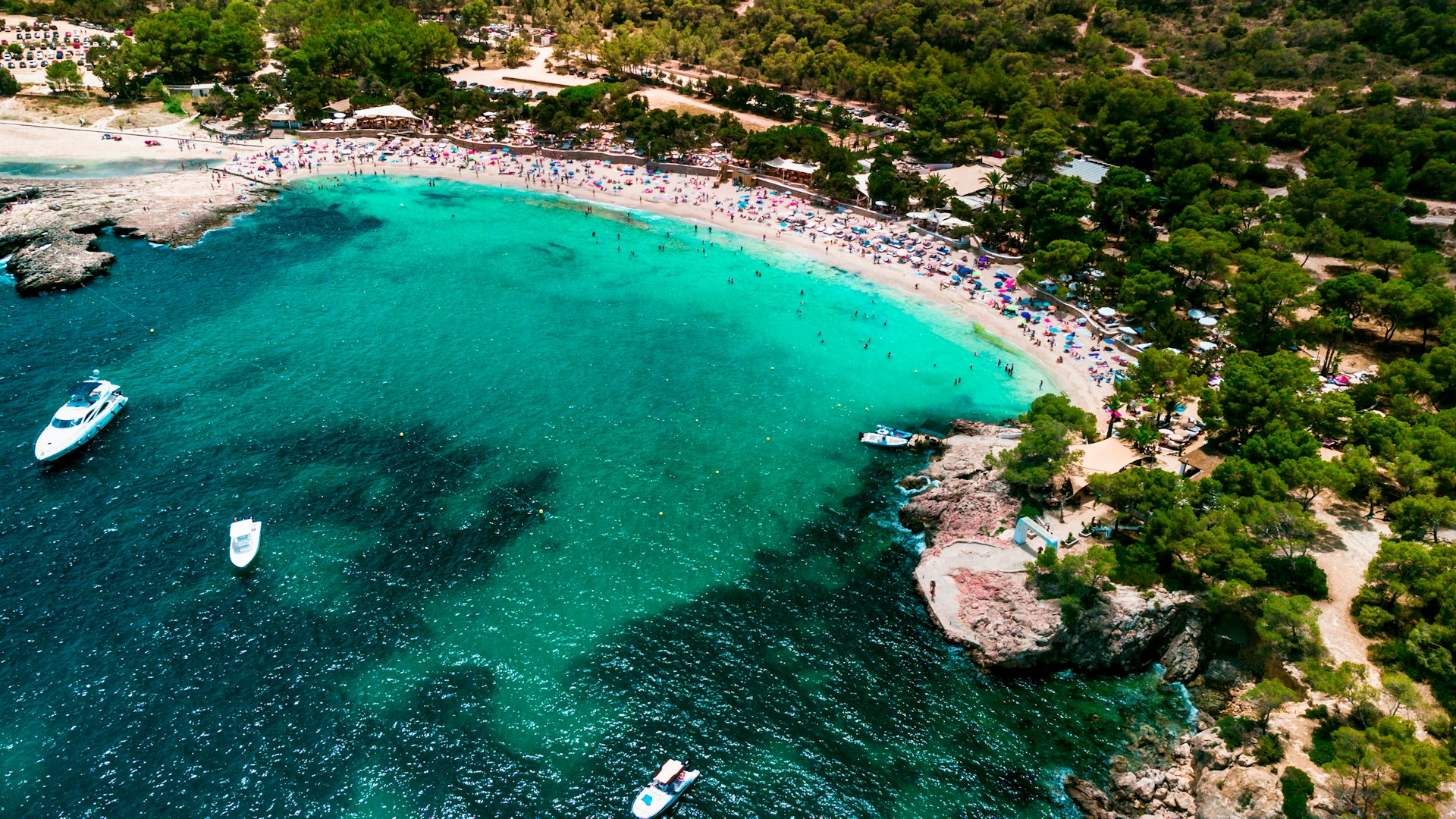
Marrying in Ibiza
Ibiza holds a position in the European wedding market that Mallorca does not. Its identity, built around the arts, privacy and an international bohemian life, draws a couple profile that differs deliberately from the mainstream. The villa market of the north and east, largely hidden from visitors, includes some of the most private properties in the Balearics, and Dalt Vila, the UNESCO-listed fortress above Ibiza Town's harbour, is a major architectural setting.
The geography divides by character. The north, around Sant Joan de Labritja and Santa Agnes, is the rural heart: whitewashed fincas, dry-stone terraces and a quiet unlike Mallorca. The east, around Santa Eulalia del Río and Cala Llonga, is more developed but still intimate. Ibiza Town and the southwest offer the urban and architectural side.
The case for Ibiza rests on privacy, originality and a creative supplier network built up over two decades of photographers, florists and creative directors.
The seasons
- Best
- Shoulder
- Peak
- Quieter
5 Star view Our reading of the wedding year, from the months below.
- Best months
- May, June, and September
- Shoulder season
- April and October
- Peak season
- July and August
The season runs from late April to mid-October. May and June show the island at its calmest, with warm, stable weather and green landscape. July and August work for villa weddings in the private north, but traffic is heavy and the airport very busy, so every arrival needs generous time.
Daylight and sunset
The bar runs from sunrise to sunset on the 15th of each month. A ceremony is usually timed an hour or two before the sunset shown.
Calculated From the coordinates of Ibiza, local time, for 2027.
Ramadan and Eid
For couples and guests who observe them, the dates to plan a wedding around.
| Year | Ramadan | Eid al-Fitr | Eid al-Adha |
|---|---|---|---|
| 2027 | 8 Feb to 8 Mar | 9 Mar | 16 May |
| 2028 | 28 Jan to 25 Feb | 26 Feb | 5 May |
Calculated From the Umm al-Qura calendar. The observed dates follow the sighting of the moon and can fall a day either side.
The areas of Ibiza
North (Sant Joan and the interior)
The rural heart of the island, with whitewashed fincas on pine-covered hillsides and ancient terraces. It is the most private zone and hard to reach without a planner who has local knowledge. Venues are rarely marketed publicly.
East (Santa Eulalia and Cala Llonga)
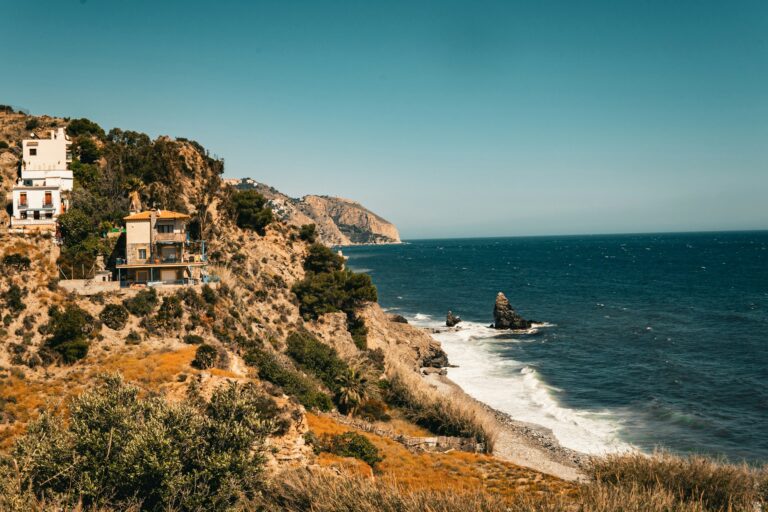
The most developed rural zone, with the widest choice of villas and fincas. Santa Eulalia del Río is the most family-oriented town and a practical guest base. Cliff-edge villas above the coves give strong sea views.
Ibiza Town and Dalt Vila
The UNESCO-listed fortified city above the harbour. Its 16th-century walls and cathedral terrace form the island's most significant architectural setting, and several properties inside can be hired for events.
Southwest (San José and Es Vedrà)
The sunset coast, centred on San José and the viewpoint of Es Vedrà, the sea stack south of the island. Properties face west, which makes this a sought-after direction for outdoor ceremonies.
What venues are like
Private villa
The defining Ibiza format: a privately owned hillside or cliff-edge property with sea views, hired exclusively. The best are run by specialist agencies and open only to planners with established relationships.
Finca
A traditional Ibicenco farmhouse, usually whitewashed with a flat roof and Moorish influence, unlike the terracotta-tiled fincas of Mallorca. Thick white walls and arched porticos root it in the island's heritage.
Dalt Vila venue
Private and semi-private spaces within the UNESCO-listed walls combine 16th-century stone with views over the harbour and the sea. The logistics are complex and call for a specialist planner.
Airports and transfers
- Barcelona El Prat (BCN)
Ibiza Airport (IBZ) has direct routes from London and most UK regional airports from April to October. Year-round connectivity is more limited than at Mallorca. Most villa and finca venues are a moderate drive from the airport, and July and August transfers need ample time because of island traffic.
Marrying legally in Spain
A civil marriage in Spain follows a prior file (acta or expediente) that proves each partner is free and able to marry; it is opened where at least one of the couple has their domicile. When the file is approved, the ceremony is held before the mayor or a delegated councillor, a notary or a court official. Both partners are heard privately and separately first.
- 1Months before; no fixed minimum in the Civil Code
Open the marriage file
A notary (acta) or the Civil Registry or court official (expediente) of the place where one of the couple is domiciled opens the file to confirm capacity and the absence of any impediment. A couple resident abroad is dealt with by the Spanish consular official in the country of residence.
- 2Before the ceremony
Hearing and authorisation
Each partner is heard privately and separately. The file ends in a decision that authorises or refuses the marriage. If the marriage is not celebrated within a year of publication of the notices, the file must be repeated.
- 3The day
The ceremony
Held before the mayor or a councillor the mayor delegates, or before a notary freely chosen by the couple; where a court official handled the file the couple may choose that official, another, or the mayor. Each partner is asked whether they consent to the marriage and the officiant declares them married.
- Who marries you
- mayor or councillor, notary or court official
- Prior file
- required, opened where one partner is domiciled
- Hearing
- each partner privately and separately
- Validity of the file
- one year
Already married at home?5 Star view
Many couples complete the legal or religious marriage in their own country and hold the celebration here. A ceremony with no legal effect needs none of the steps above: the venue and the planner arrange it.
Who needs a visa
Travelling from the United Kingdom
British passport holders visit Spain without a visa for up to 90 days in any 180-day period, counted across the whole Schengen area. The passport must have been issued less than 10 years before arrival and be valid for at least 3 months after the day you plan to leave. The European Union's Entry/Exit System registers fingerprints and a photograph at the border on a first visit.
Other nationalities
EU, EEA and Swiss nationals need no visa. Other nationalities check with the Spanish embassy or consulate in their country. The Balearic and Canary Islands, Ceuta and Melilla are covered by the same Spanish civil-marriage law; check Schengen rules for Ceuta and Melilla with the Spanish embassy.
Reference Spanish Civil Code, articles 49, 50, 51, 56, 57 and 58, and Ley 20/2011 del Registro Civil, article 58 (boe.es, read 2026-10-21). gov.uk: Spain entry requirements (travel advice, read 2026-10-21). European Union entry rules for visa-exempt visitors (EES, ETIAS) and European Commission implementing decisions on multiple-entry visas for Saudi, Bahraini and Kuwaiti nationals. Checked 21 October 2026. Rules change: confirm with the authority that will marry you before you book.
Accommodation
Accommodation is dominated by the private villa and agroturismo market, with the most characterful properties in the quiet north and east, away from the resort hotels of the west.
At the table
Ibiza's food blends the traditional fishing and farming kitchen, the creative influence of the international community and good local produce.
Fresh fish and seafood
The waters around Ibiza and Formentera yield red mullet, sea bream and red shrimp (gamba roja). The seafood restaurants of Santa Eulalia and the Ibiza Town market set the benchmark. A dinner built around seafood sourced that morning is a distinctive choice.
Tapas and aperitivo culture
The usual opening of an Ibiza dinner is an informal aperitivo of local sobrasada, fresh cheeses, olives and chilled cava or local wine. Creative caterers blend it with international influences.
Bullit de peix
The traditional fish stew: whole fish, potato and vegetables in a saffron-flavoured broth, with the broth then used to cook rice. It is served at traditional restaurants and occasionally on wedding menus.
What planners tell couples
Peak-season island logistics
In July and August the airport is very busy and road transfers take much longer. Guests should be briefed to allow generous time. The northern and eastern venues lie furthest from the airport.
Noise restrictions at rural venues
Ibiza has tightened noise enforcement in rural zones after pressure from permanent residents. Most rural venues set an outdoor music curfew around midnight, some earlier. The restriction should be confirmed before booking.
Accessing the best villas
The most sought-after villas in the north and east are not advertised. They are open only through a planner with direct relationships with the specialist agencies, and general rental platforms do not reach the top tier.
Dalt Vila ceremony logistics
A ceremony inside Dalt Vila needs permits from the Ibiza Town council and coordination with the property manager inside the walls. Permits take a long lead time, so planning starts far ahead with a specialist planner.