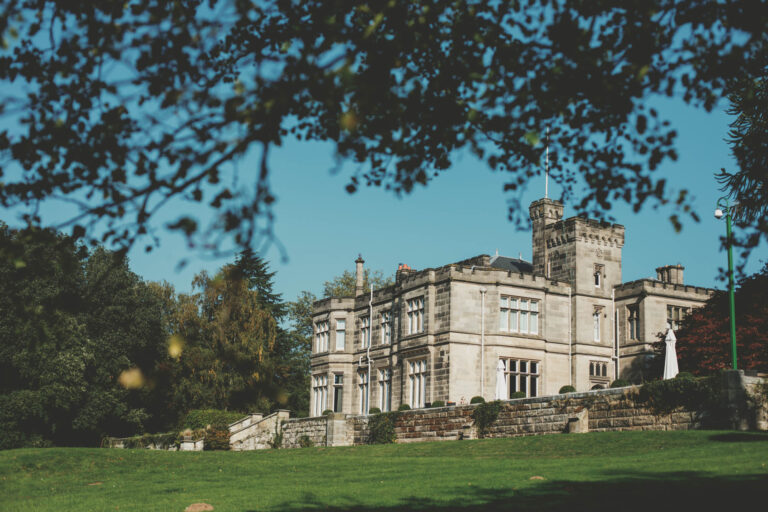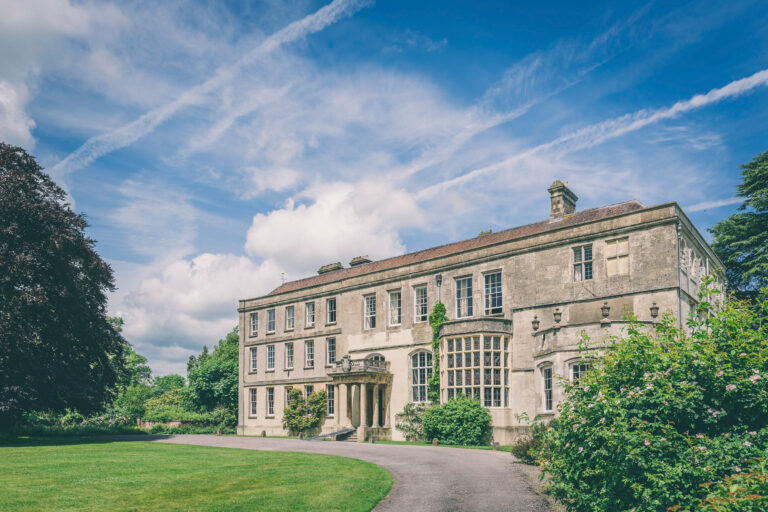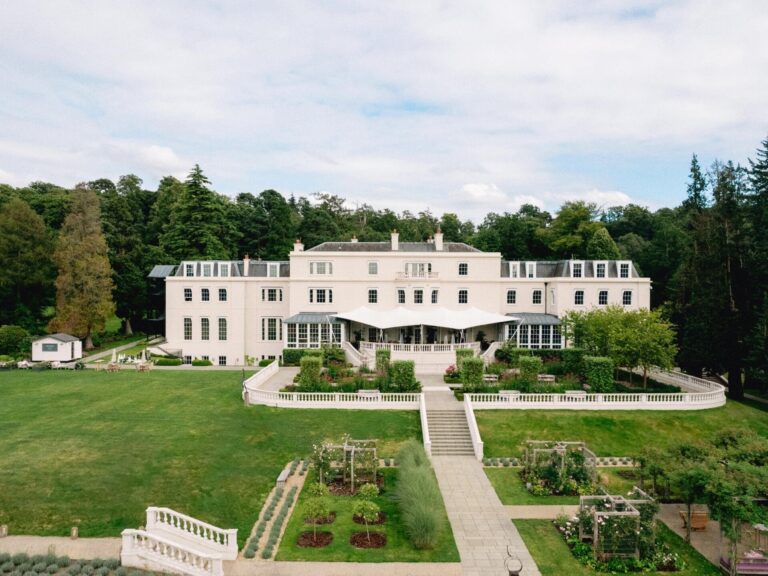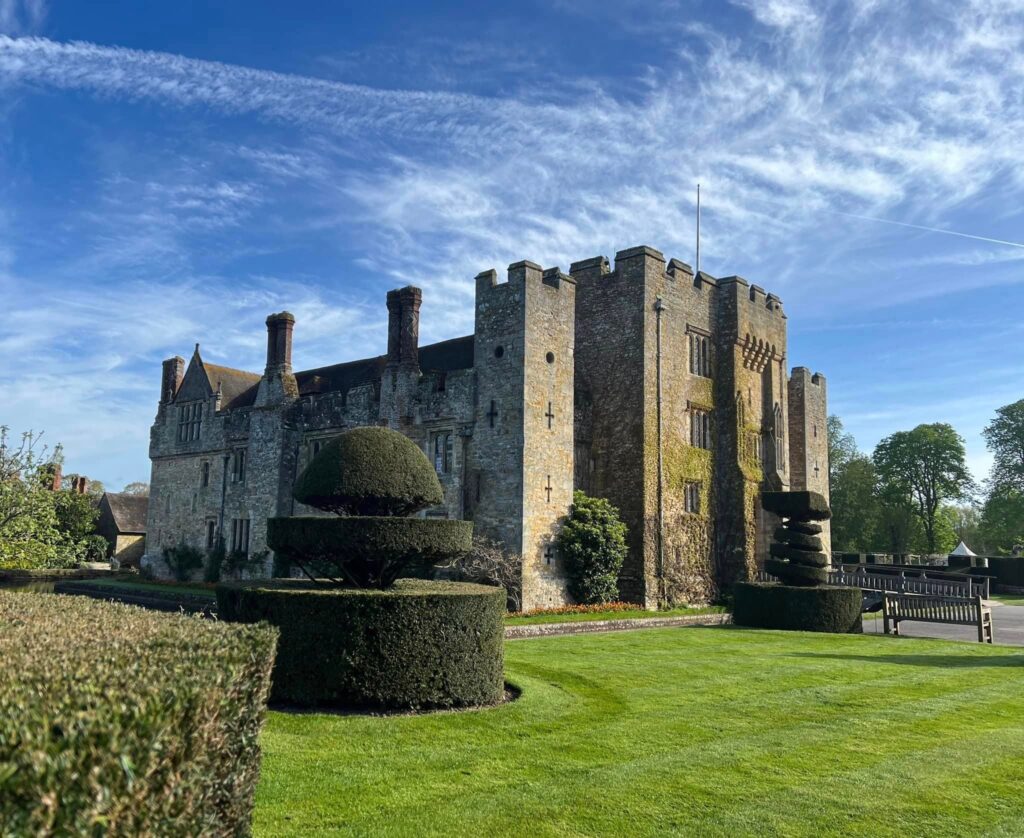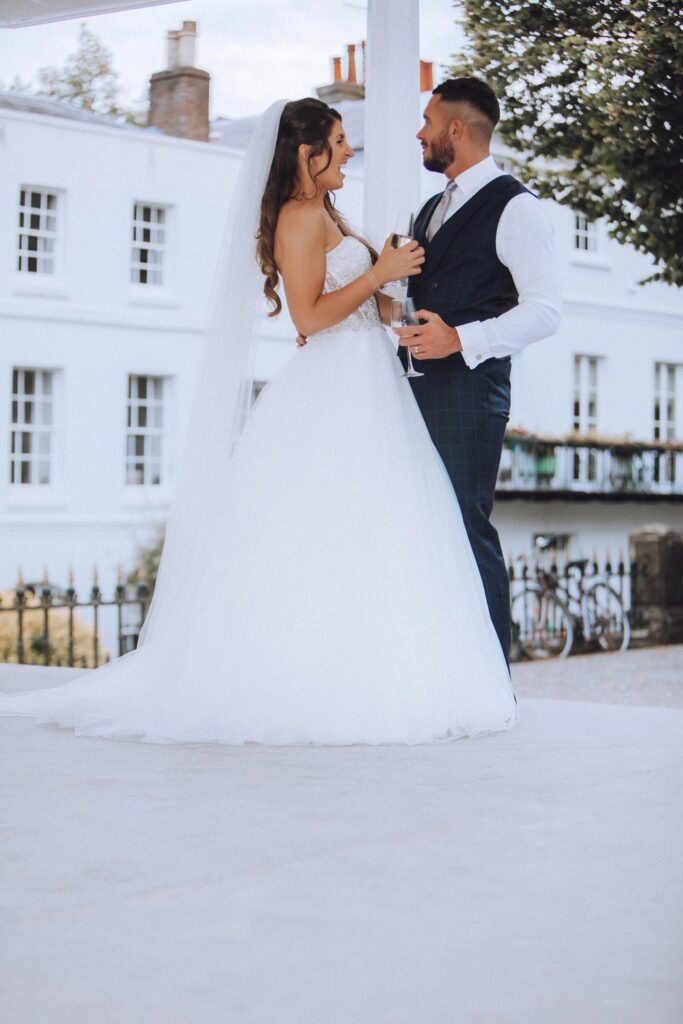
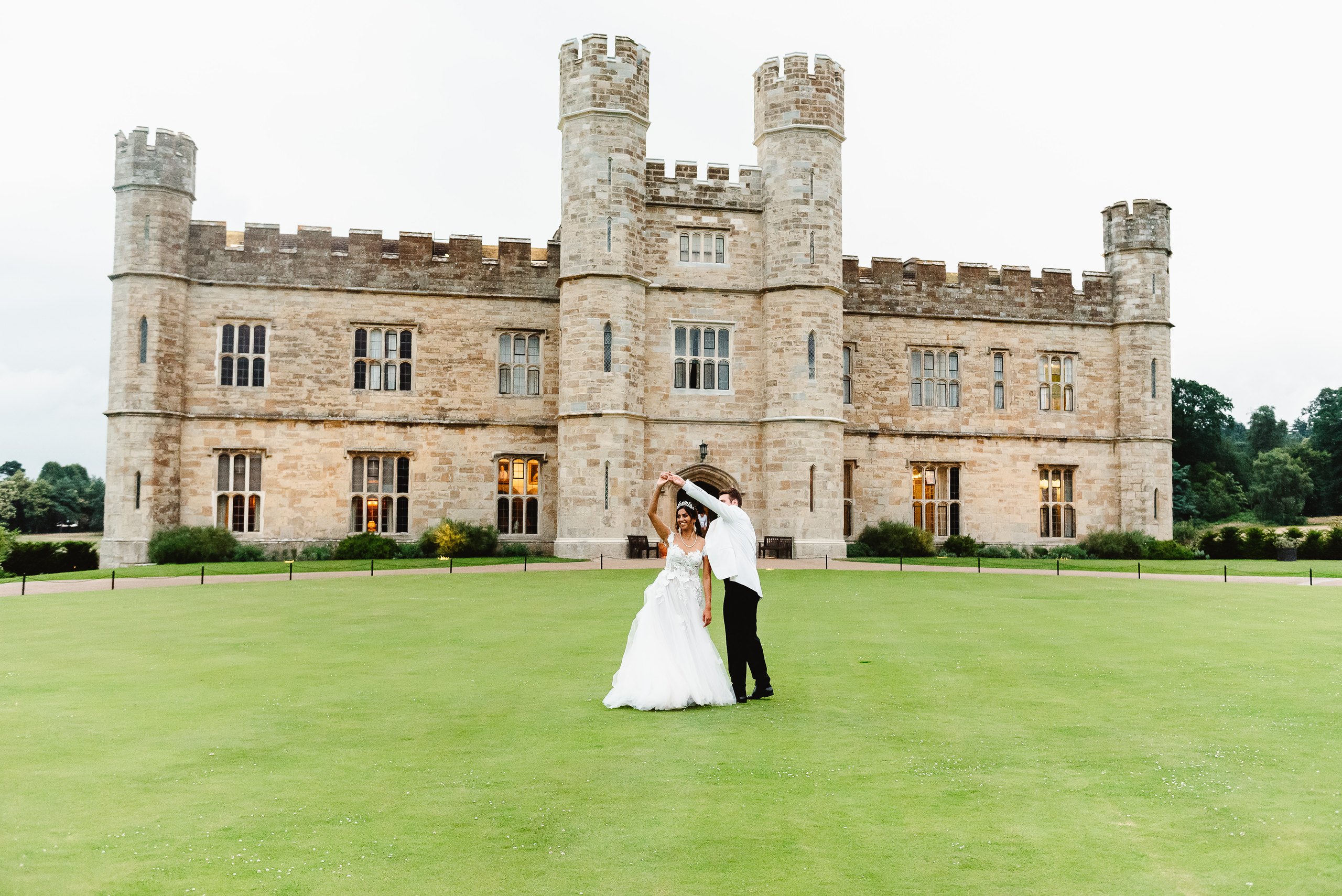
Olive, Lady Baillie bought Leeds Castle, near Maidstone in Kent, in 1926 and turned a moated medieval castle into a house for entertaining. Through the 1930s it was a centre of hospitality for statesmen, European royalty and film stars. A Castle wedding today is held in the rooms she arranged for those weekends: vows beside long French windows, dinner in the Salon where her guests from the silver screen gathered, dancing in her 1930s Drawing Rooms, and a night in the castle’s State bedrooms, which come with the package.

From royal castle to country house
The first stone castle went up in 1119, when Robert de Crevecoeur built on two rocky islands in the River Len. Eleanor of Castile, queen of Edward I, acquired it in 1278, and in 1519 Henry VIII transformed it for Catherine of Aragon. The range that faces the lawns, with its octagonal corner turrets and stone mullioned windows, is younger than it looks: it was built in 1822 in a 16th century style. Historic England lists the castle at Grade I.
Lady Baillie wanted a castle that looked largely medieval and lived like a modern house. The architect Owen Little reorganised the ground floor of the New Castle; the French designer Armand-Albert Rateau, known for his Art Deco work, restored the Banqueting Hall to its full size and rearranged the upper floors for modern plumbing; and from 1932 Stéphane Boudin, president of the Paris firm Maison Jansen, designed interiors that can still be seen. Her visitors included the Prince of Wales with Wallis Simpson, Charlie Chaplin and Errol Flynn. She died in 1974 and left the castle to the Leeds Castle Foundation, a charity created to preserve it, and every wedding booking helps to fund it.
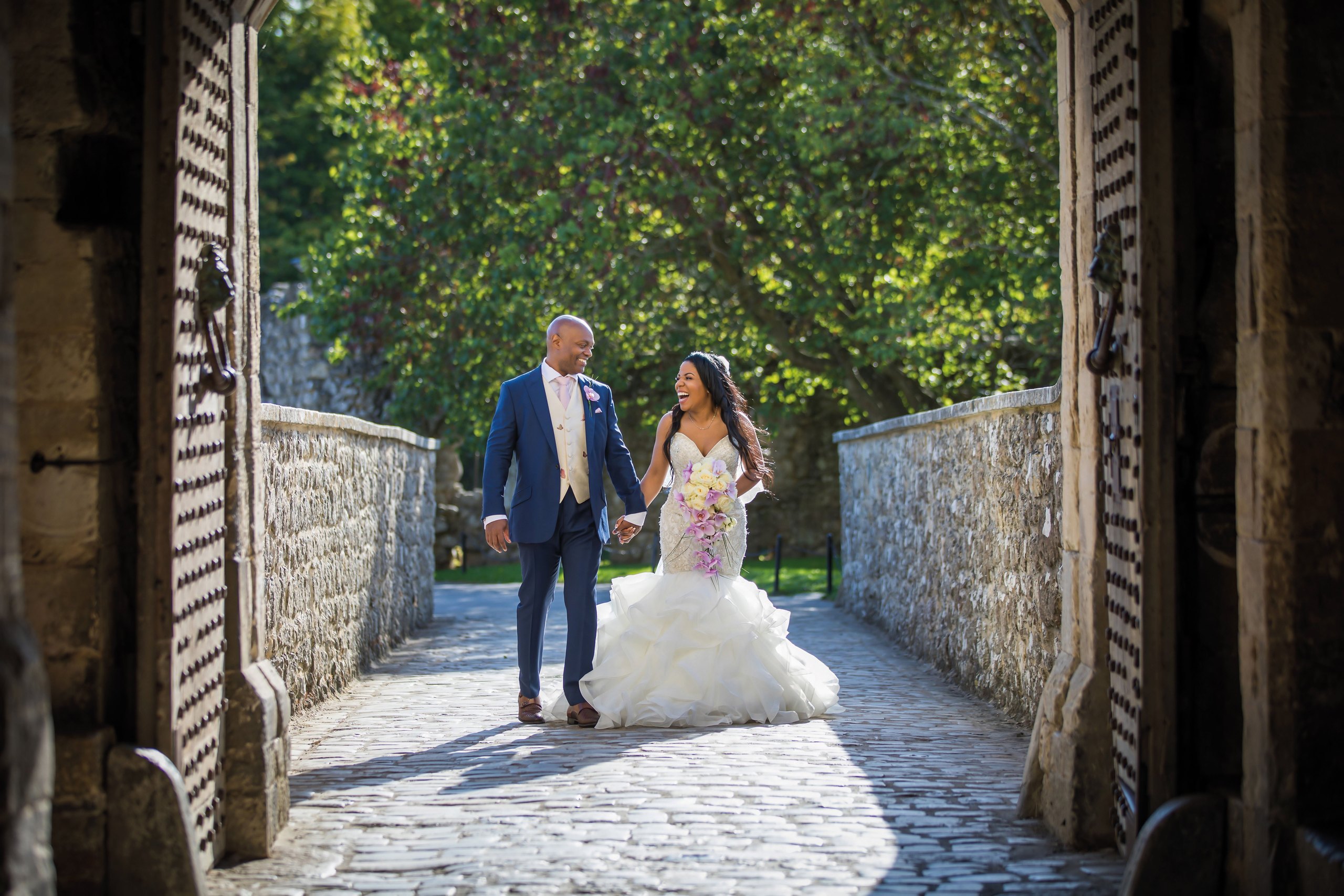
A wedding day in Lady Baillie’s rooms
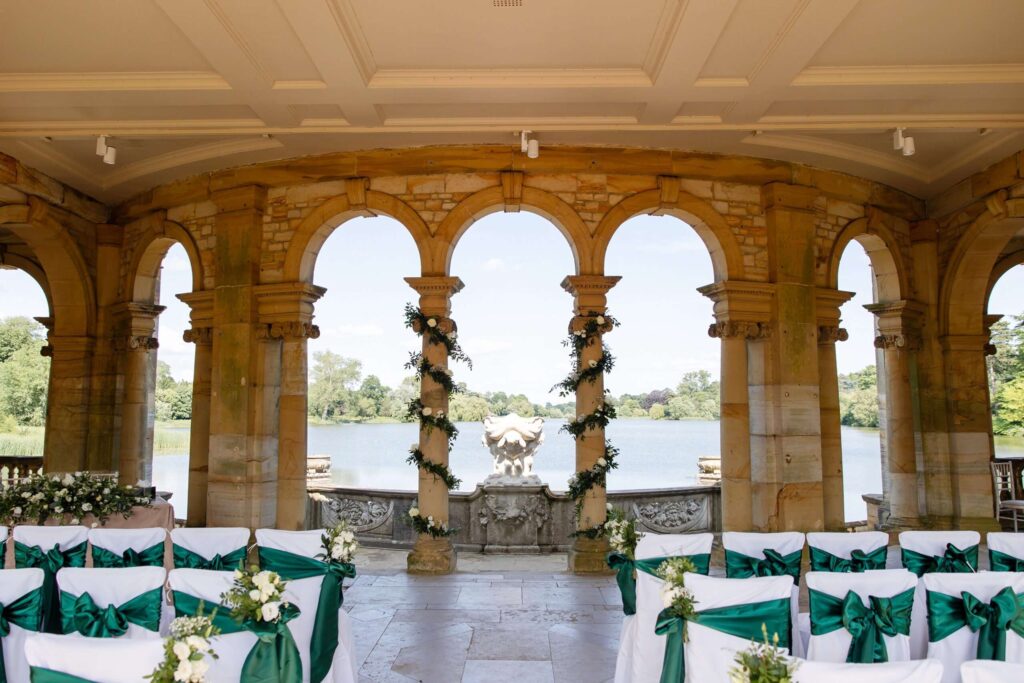
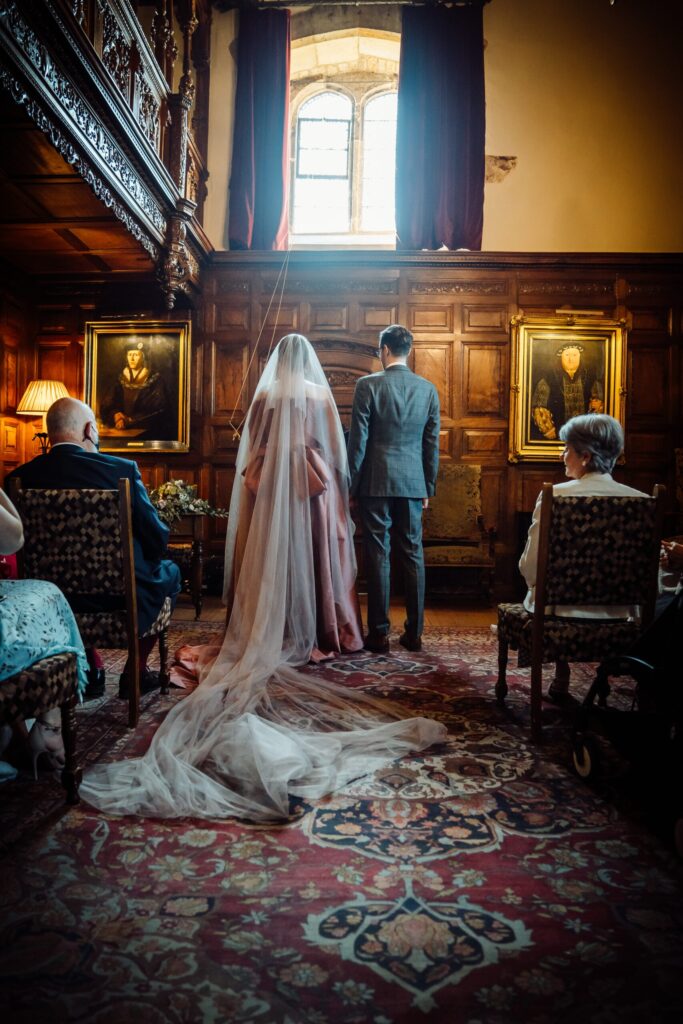
Guests arrive with the castle rising above the moat ahead of them, then enter the newly refurbished Ceremony Room, where long French windows bring in the daylight. Drinks follow in the State Rooms, and a golf buggy takes the couple and their photographer out into the grounds. A duty manager and a team of footmen look after the party through the day.
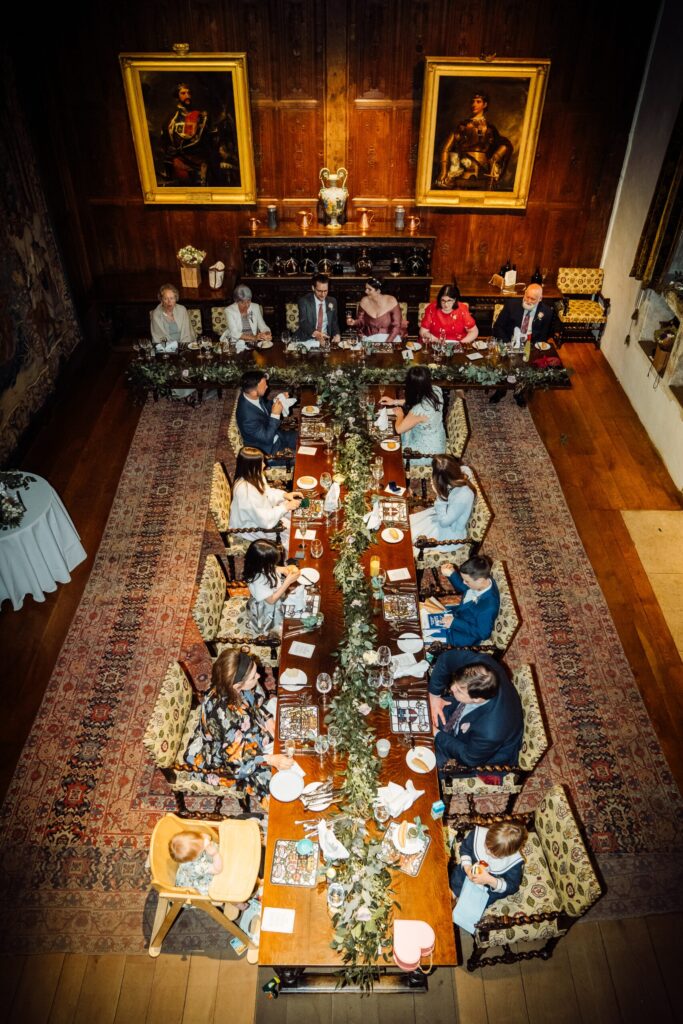
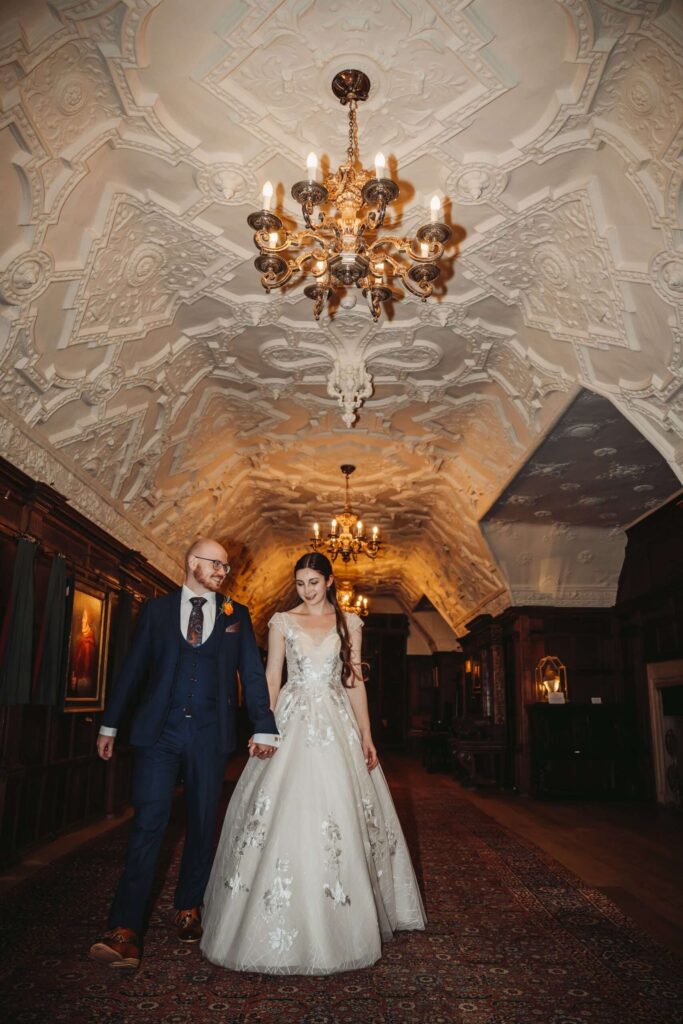
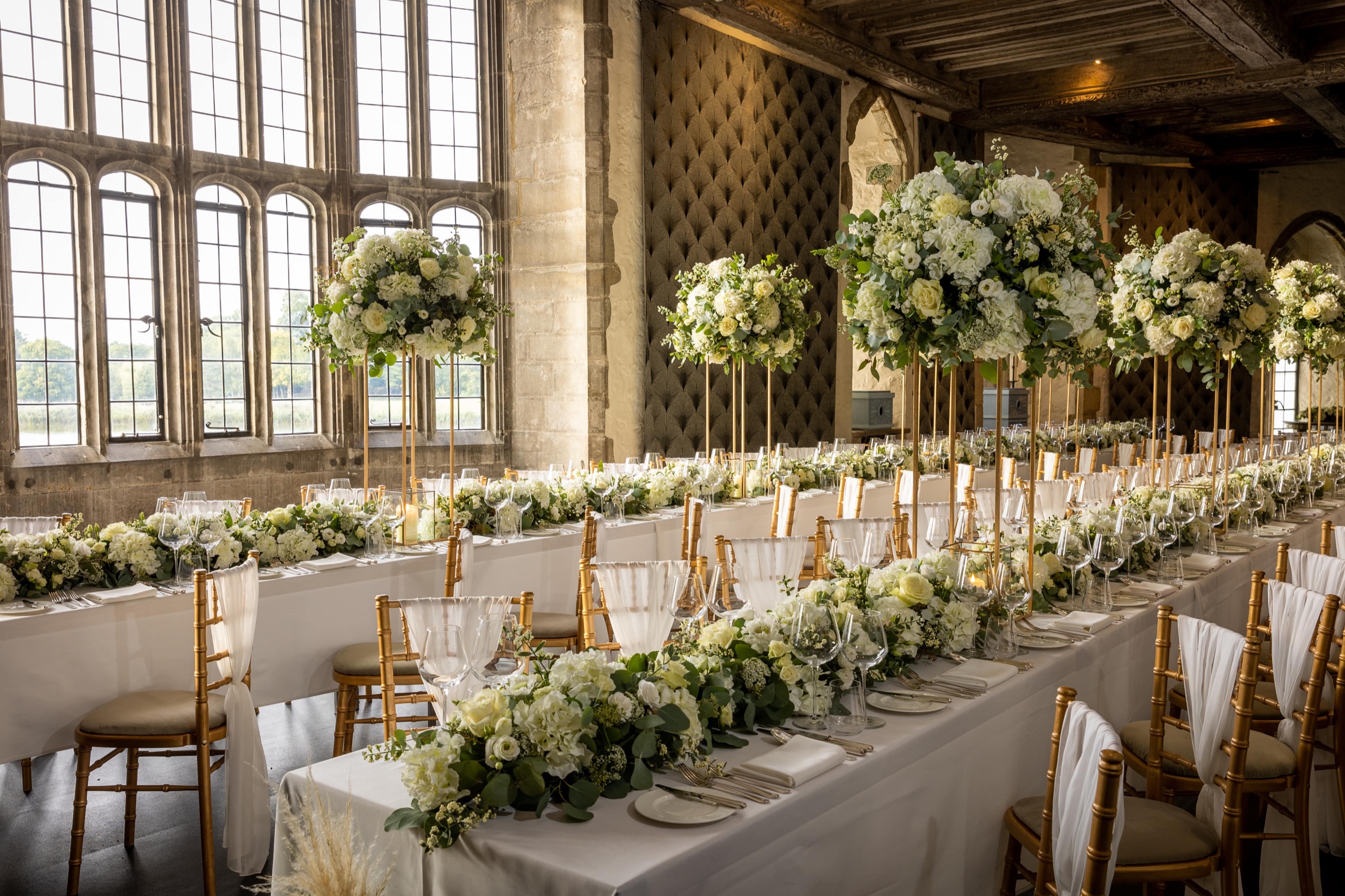
Dinner is served banquet style in the Salon, the largest room in the castle and the one Lady Baillie and her guests used for the weekend parties of the 1930s. It has a 16th century French fireplace of Caen stone, an ebony floor and views across the moat to the park. After the speeches the party moves through to the 1930s Drawing Rooms for dancing. The Library and an Entertainment Room are part of the same hire.
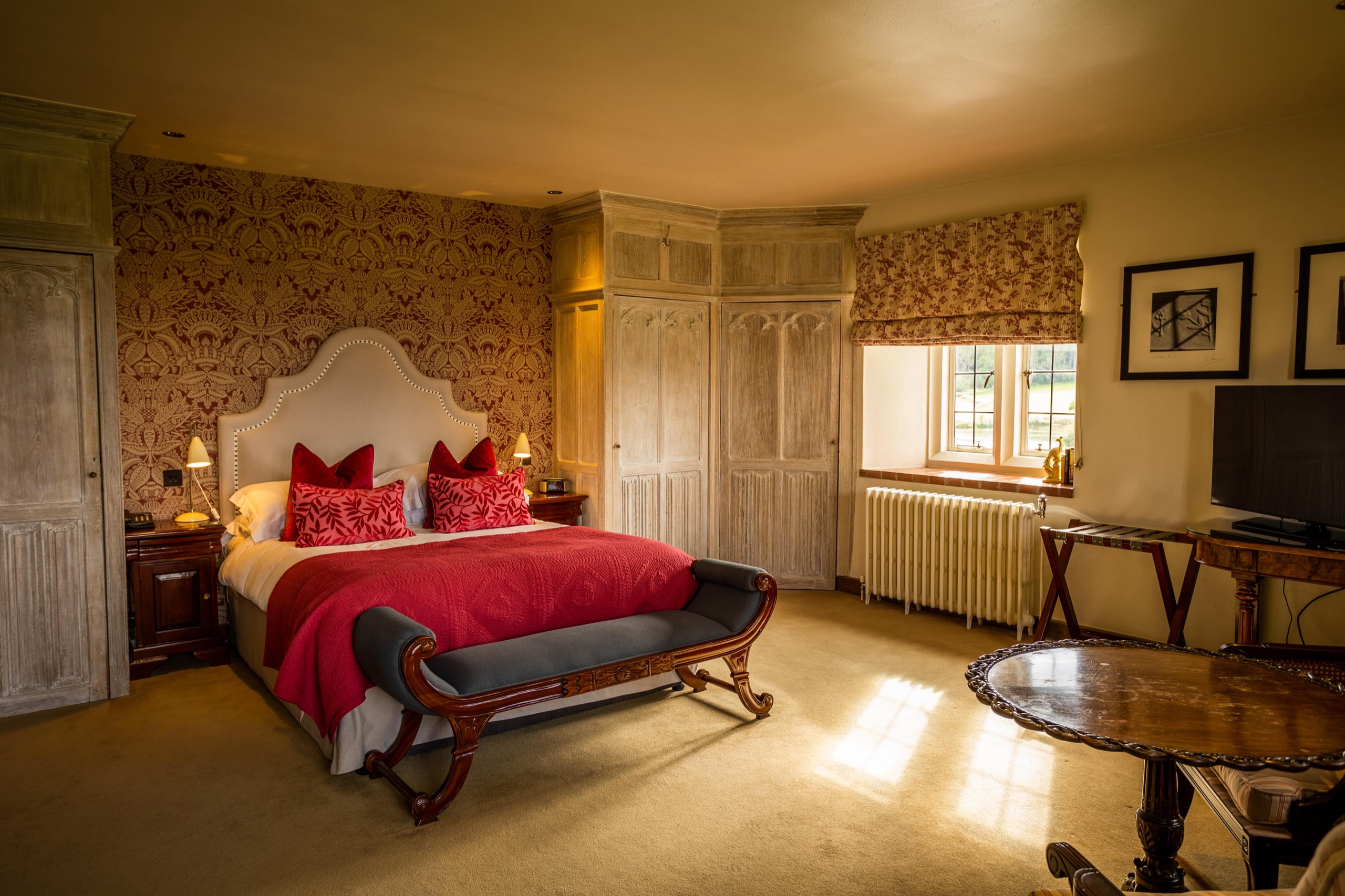
The couple and their closest guests sleep in the castle. The Castle package includes ten double bedrooms with breakfast, the Bridal State bedroom, seven State bedrooms and two Classic rooms, and more Classic rooms can be added. Residential guests can return to the castle and grounds the following day. The Exclusive Use package joins the Castle to the Maiden’s Tower and brings the bedrooms to 23.
The Maiden’s Tower, once a brewhouse and a cinema
Beside the castle on the larger island, the Maiden’s Tower is a 16th century stone building that served as a brewhouse until Lady Baillie turned it into bachelor apartments and a cinema for her house parties. After the war it became the family home of her daughter Susan. It is now a wedding venue in its own right, booked with exclusive use until midnight.
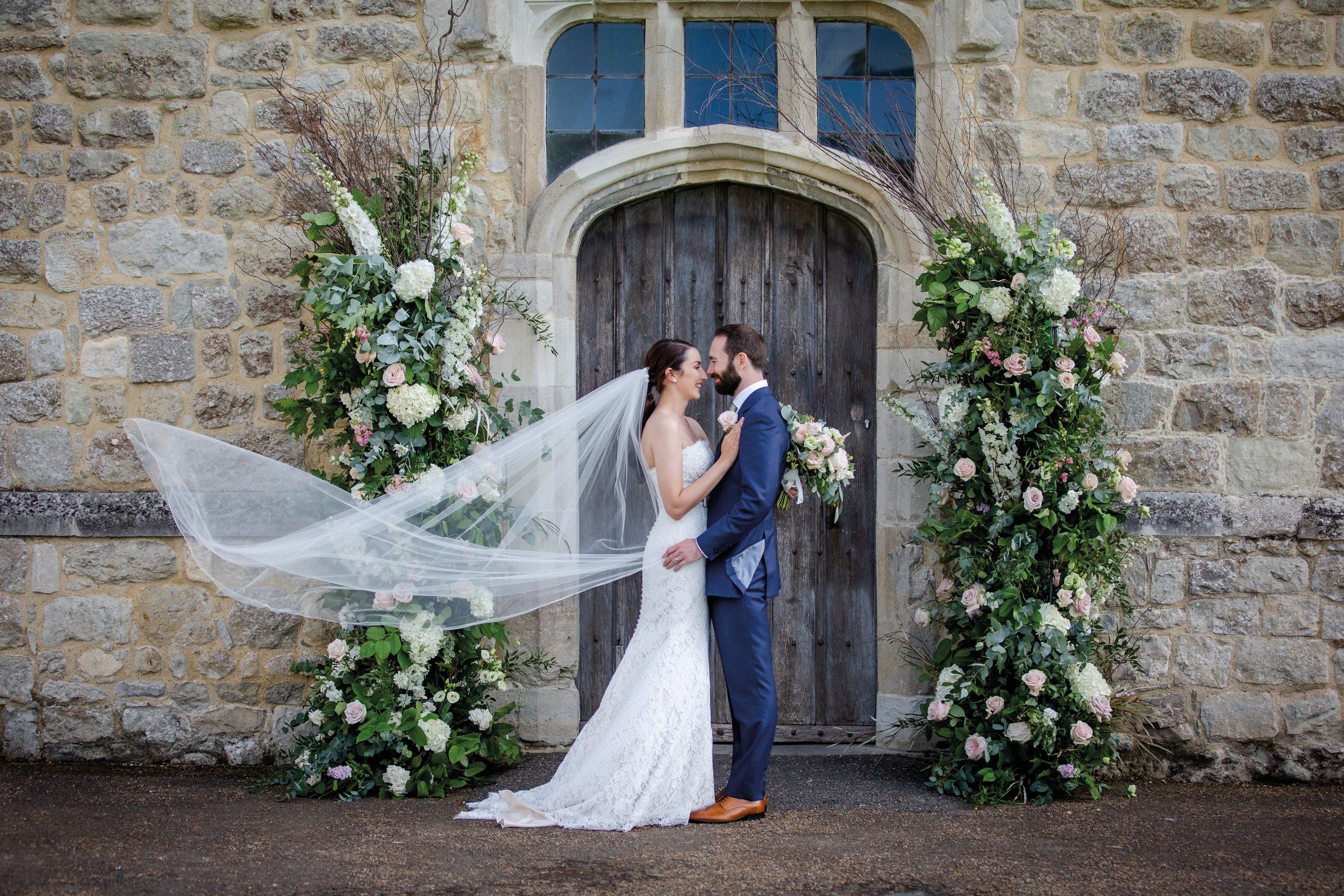
Its two wedding rooms, the Long Gallery and the Tudor Hall, open through French doors onto a private garden. Couples marry in the gallery or out in the garden, then dine in the hall, which carries on into the evening. Upstairs, five en suite bedrooms are decorated in period style and look across the moat to the estate’s nine hole golf course, built in 1931 by Sir Guy Campbell.
Battel Hall, a medieval manor in the fields
Battel Hall stands apart in the fields of the estate, a ragstone hall house of the second quarter of the 14th century, listed Grade II*. Its rarest feature is a large stone laver, a medieval washing place set under a crocketed ogee arch, with a battlemented cistern and lion’s head spouts. J. Newman wrote of it in 1980 that “nothing like it survives anywhere else in England.”
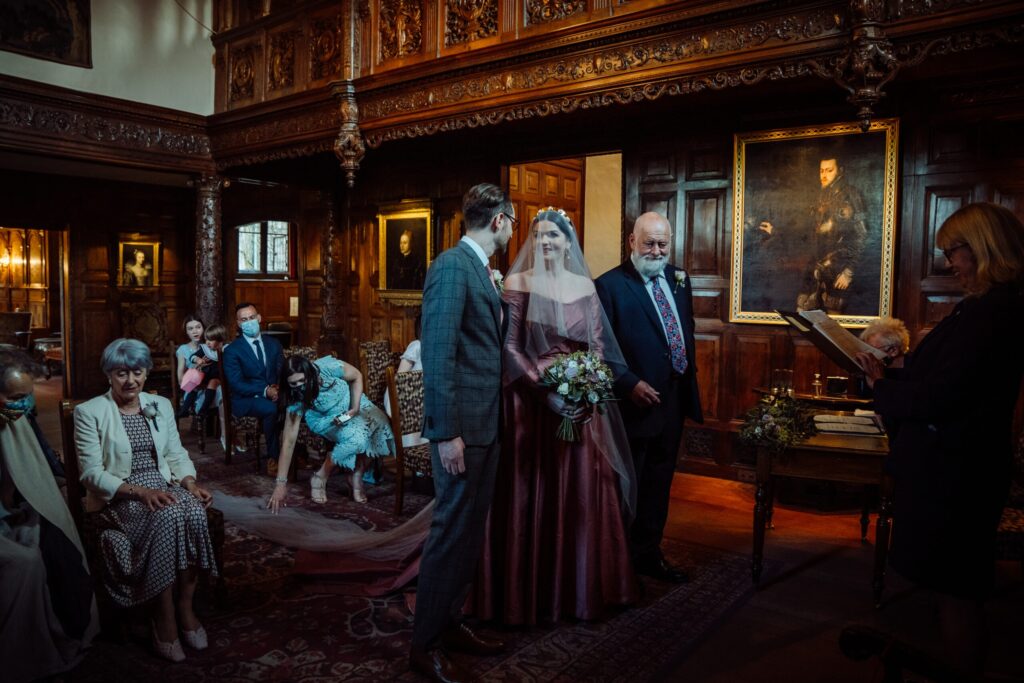
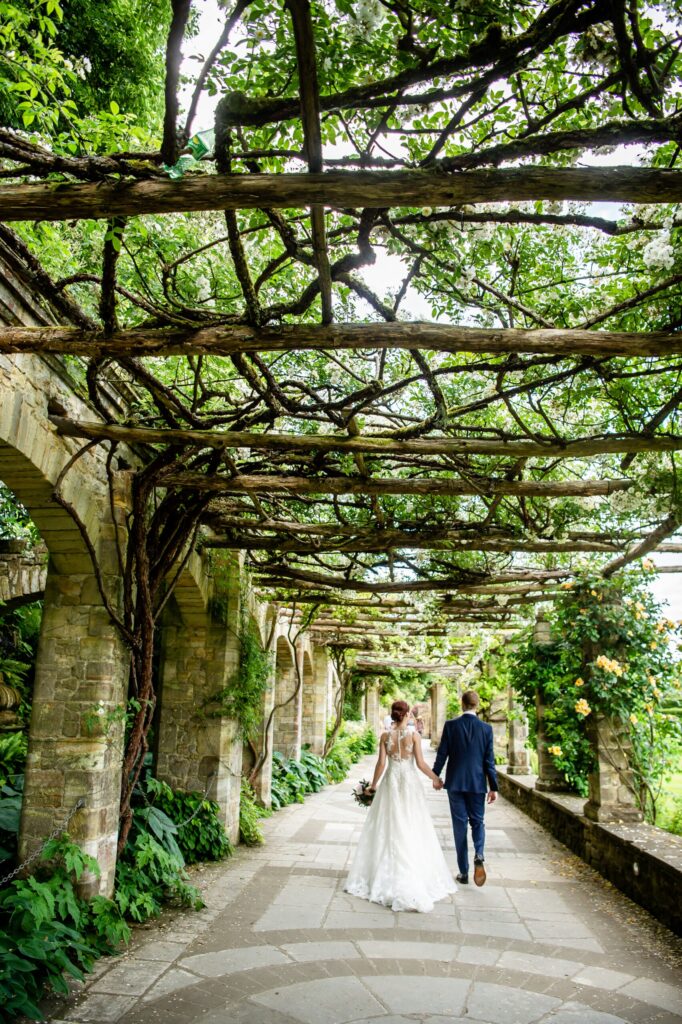
Weddings here are small and residential. The booking is a three night, self catering stay for up to 14 guests and two children, with exclusive use of the hall, its five en suite bedrooms and two more in the Grade II listed Battel Hall Oast next door. Couples marry in the wood panelled ceremony room or, in summer, under the timber framed pagoda in the garden, and the party continues in the Drawing Room and the Library, whose doors open onto gardens and woodland. A wisteria about a hundred years old covers the outer walls in spring and summer; in winter there are open fires.
When the guest list outgrows the castle
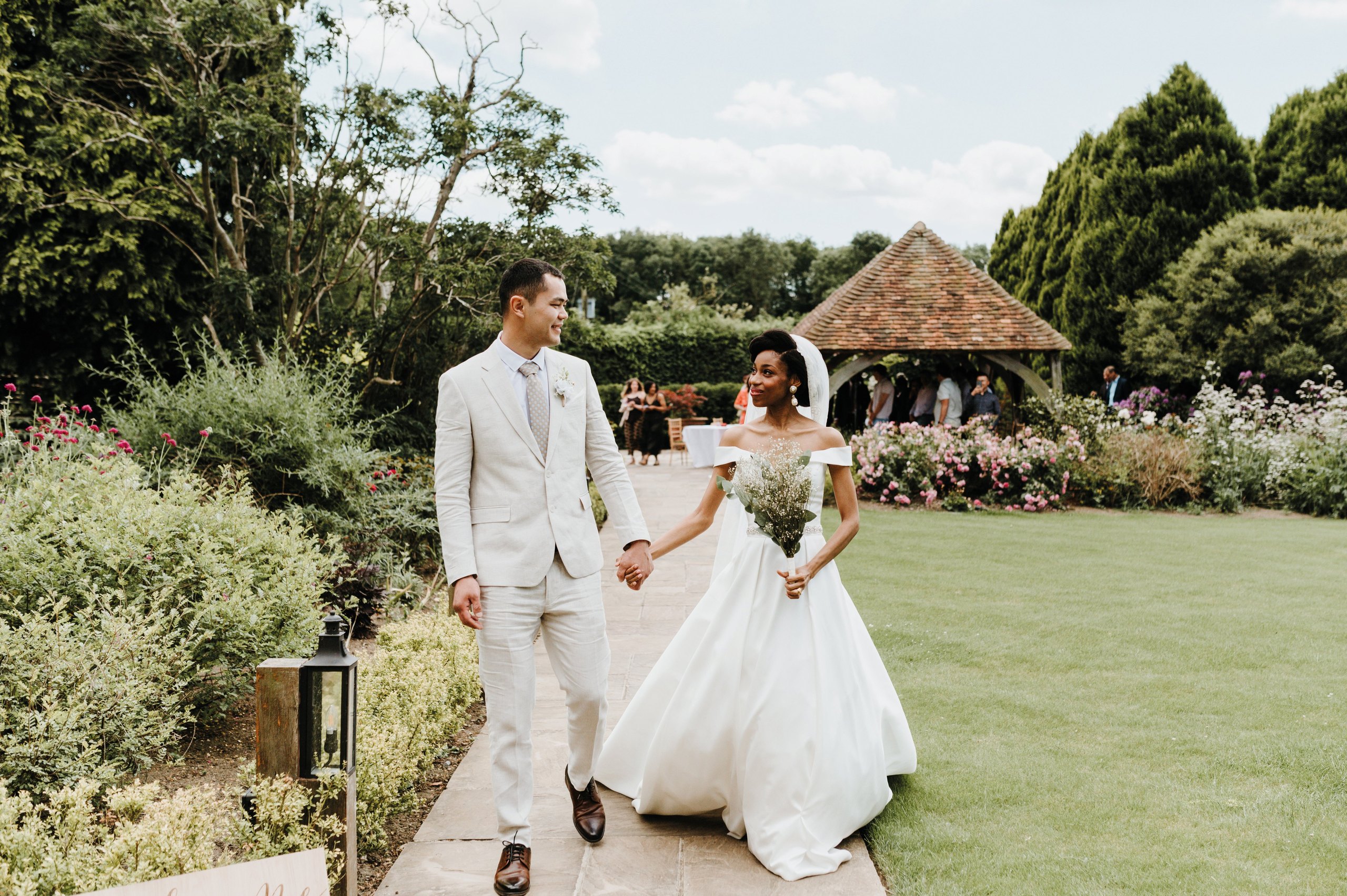
Larger evenings move out to the Fairfax Barn, a 17th century Kentish timber framed barn with oak beams, interiors with an Art Deco influence and a large terrace looking towards the castle. It is booked only as an addition to a Castle, Maiden’s Tower or Exclusive Use wedding, and the barn package brings 15 Stable Courtyard bedrooms with breakfast, so a dinner in the Salon can become a much bigger party without leaving the estate.
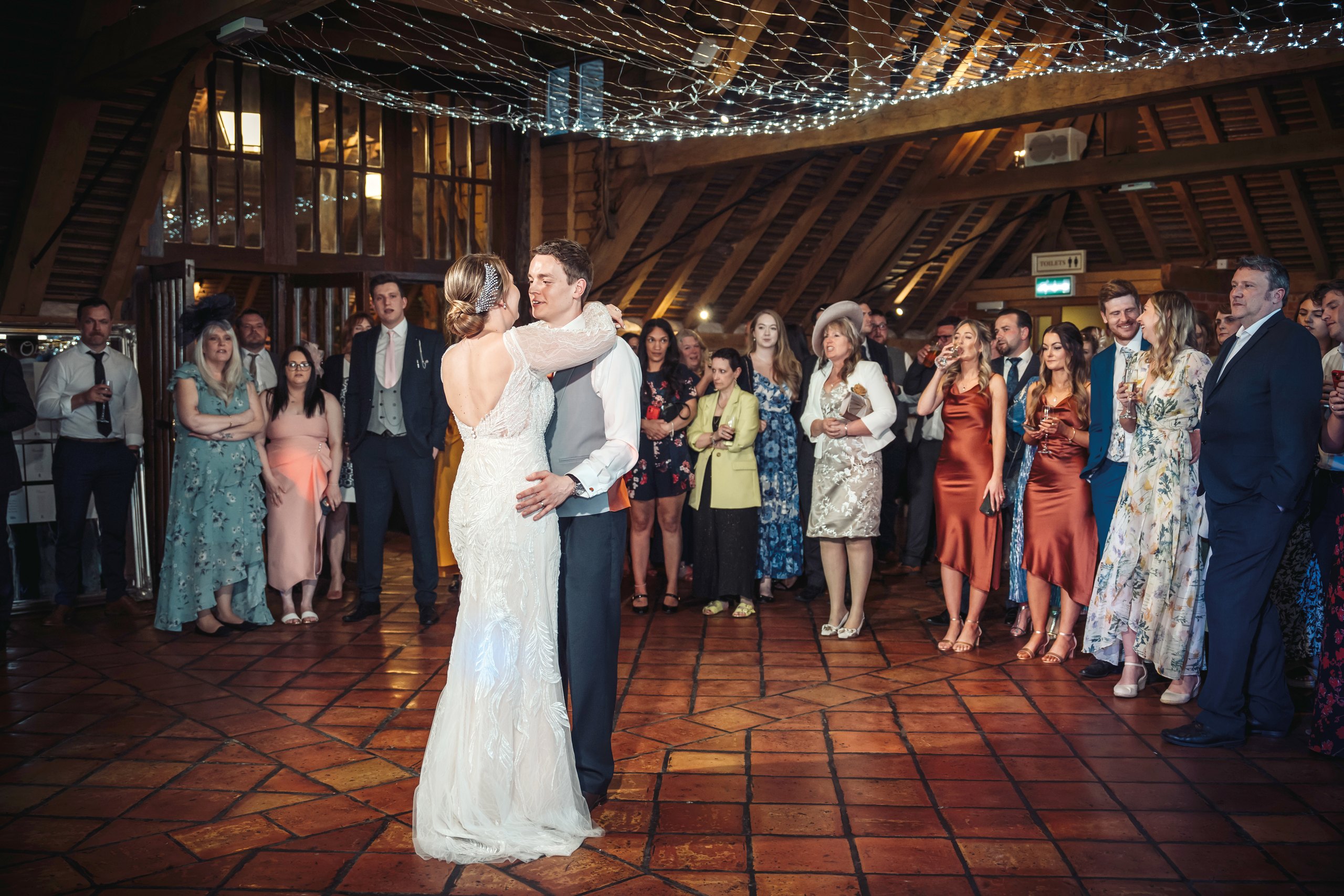
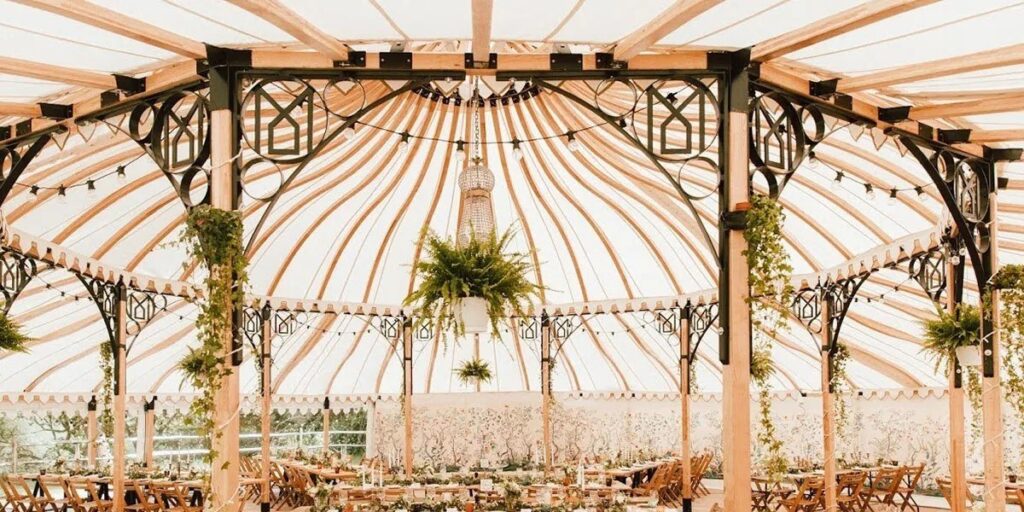
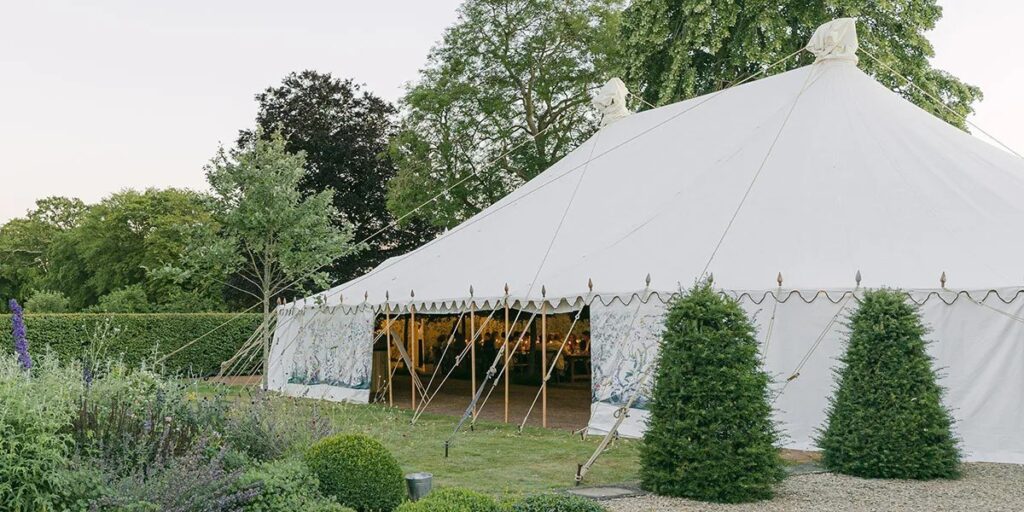
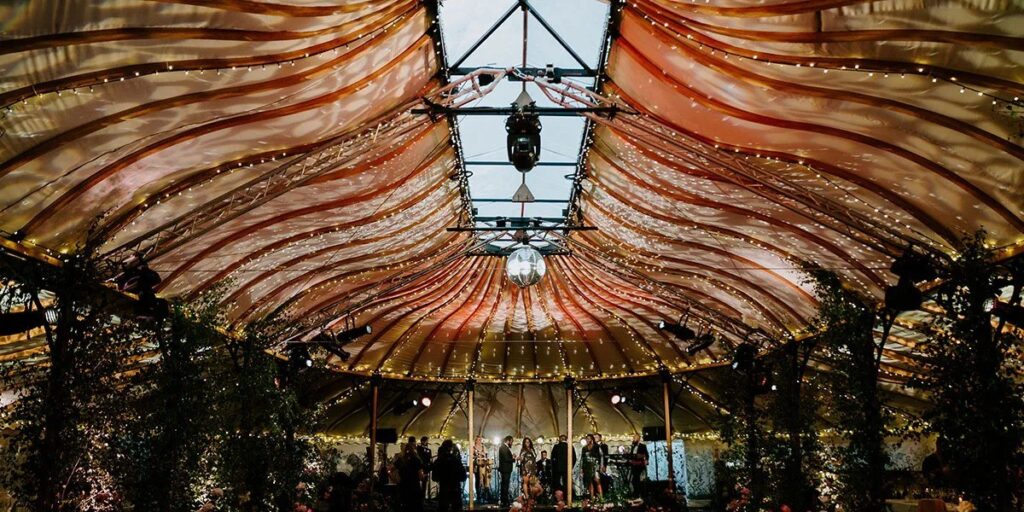
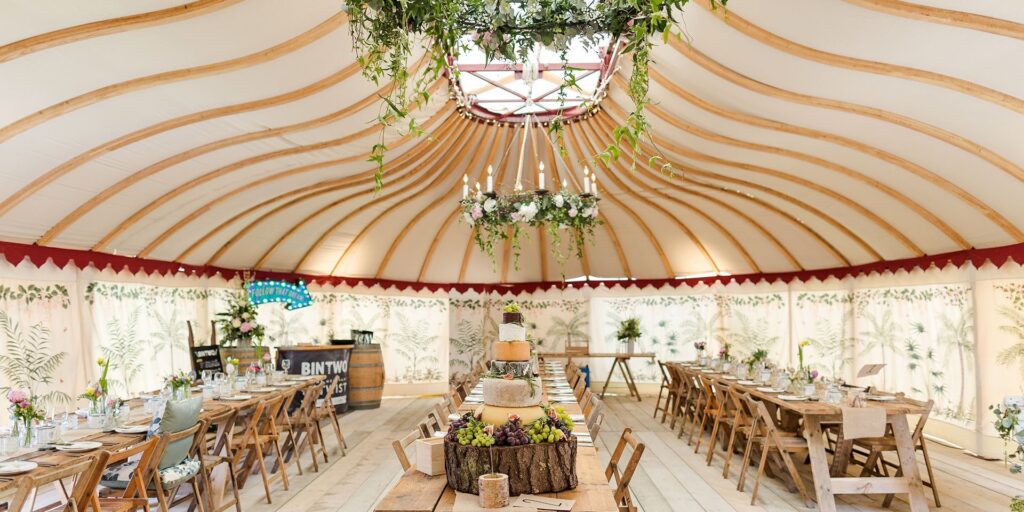
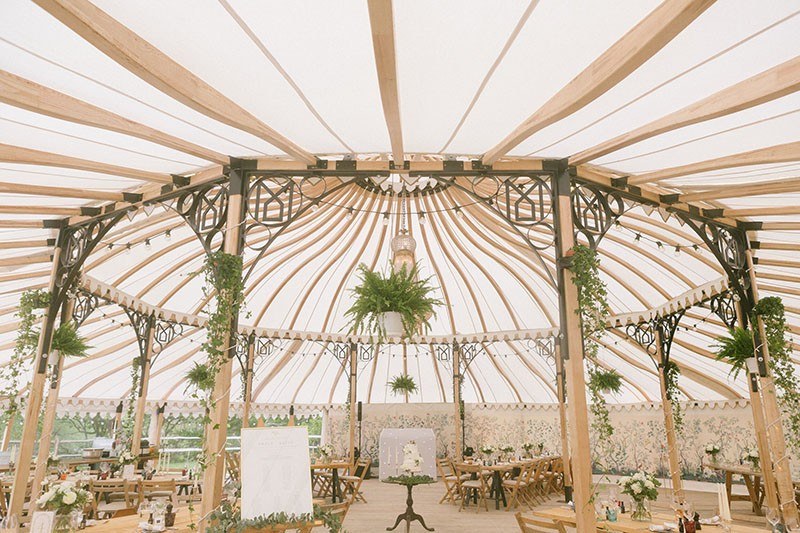
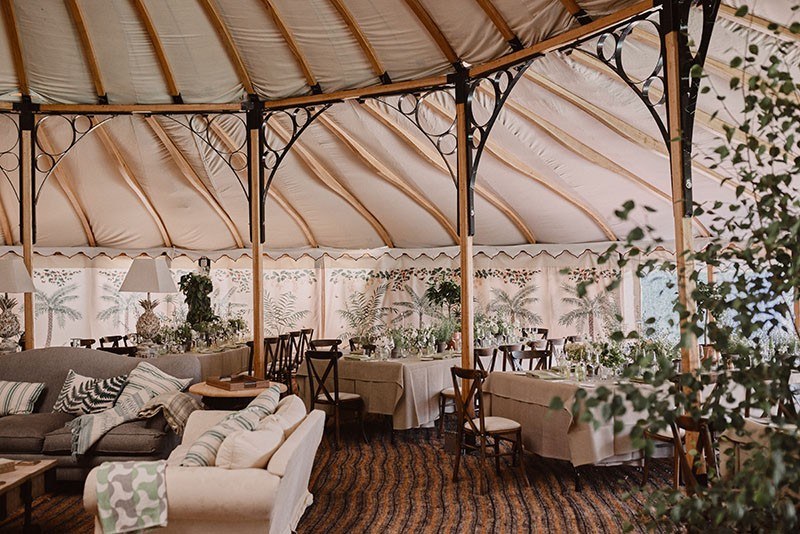
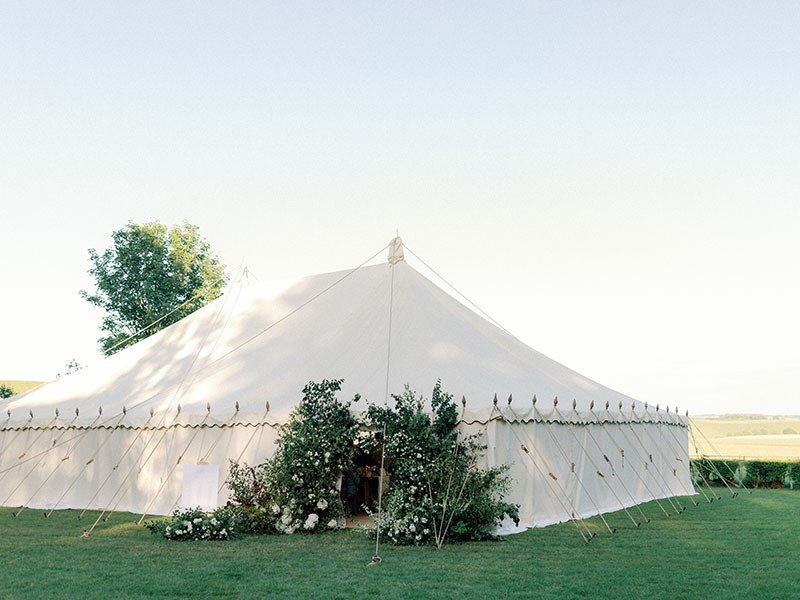
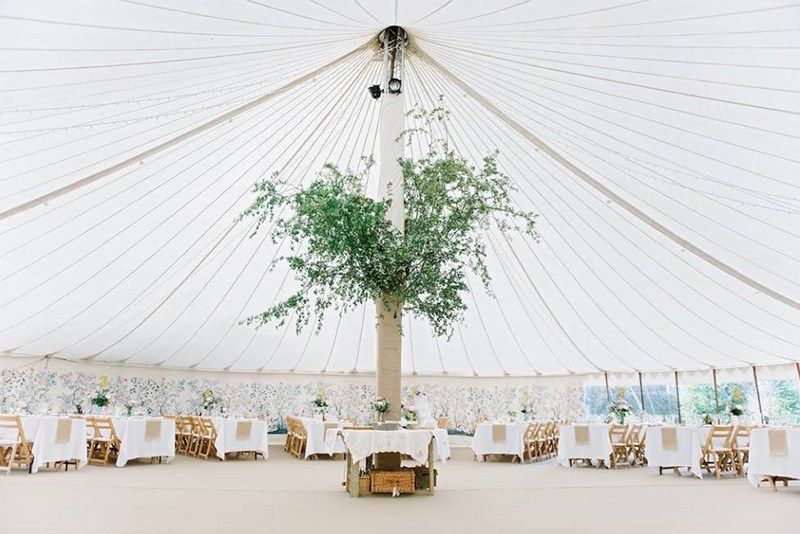
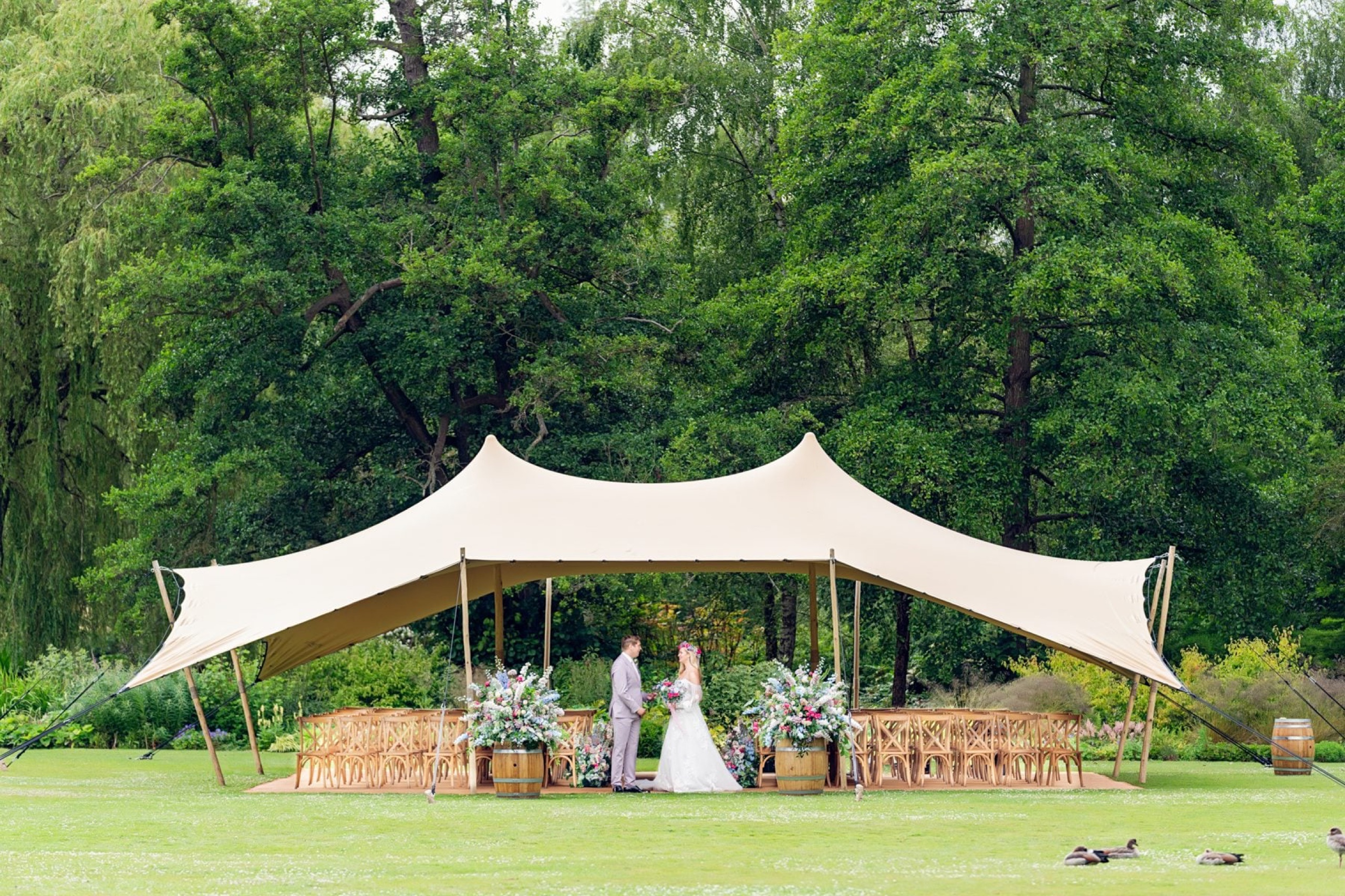
Outdoors there are three settings. Castle Island, on the moat, is used for ceremonies; on the Pavilion Lawn a stretched tent holds both ceremony and reception; and the Cedar Lawn, which looks over the castle and moat to the Kentish countryside, is the site for marquee receptions. The estate also holds Asian and cultural weddings, Hindu, Sikh and Muslim among them, with mandaps, ceremonial stages, specialist caterers and celebrations that run over several days.
Asian Weddings at Leeds Castle. Film: Leeds Castle Kent on YouTube.
Numbers, seasons and the road from London
Each building sets its own numbers. The Castle takes 100 for the ceremony and dinner and 120 in the evening; the Maiden’s Tower takes 80 for the ceremony and dinner and 100 in the evening; the Fairfax Barn holds evening receptions of 80 to 180; and the Cedar Lawn marquees are for weddings of more than 200. Leeds Castle stays open to visitors, so on public opening days a Castle wedding has the building to itself from 4.30pm.
Venue hire for a Castle wedding starts at £8,400, the 2028 rate for a Monday to Thursday between October and April, including VAT; Saturdays from May to September carry the highest rate. Battel Hall starts at £6,000. Catering is separate everywhere: couples choose from Leeds Castle’s preferred caterers, who quote their own menus and prices, and a Fairfax Barn evening carries a minimum catering spend of £5,000.
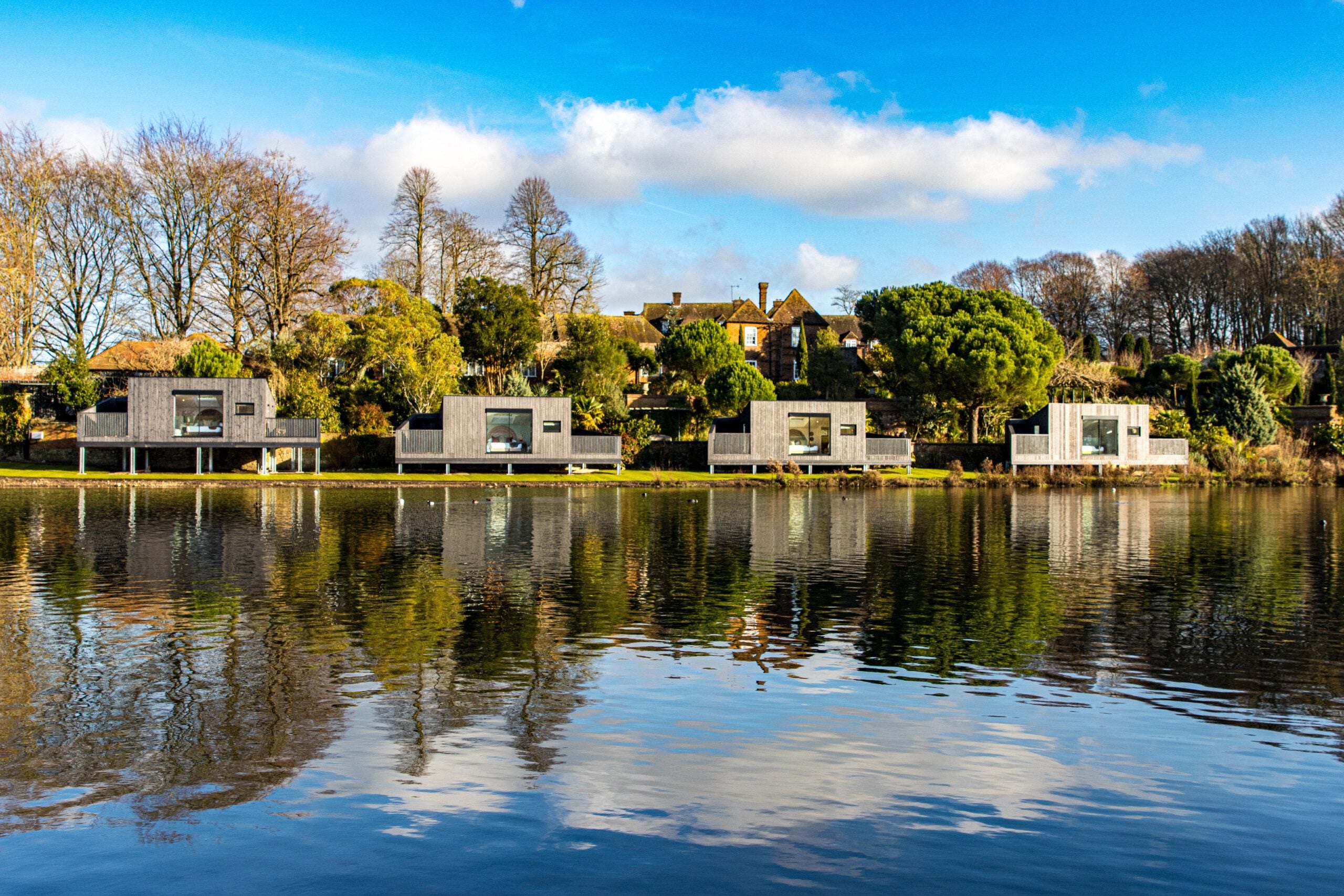
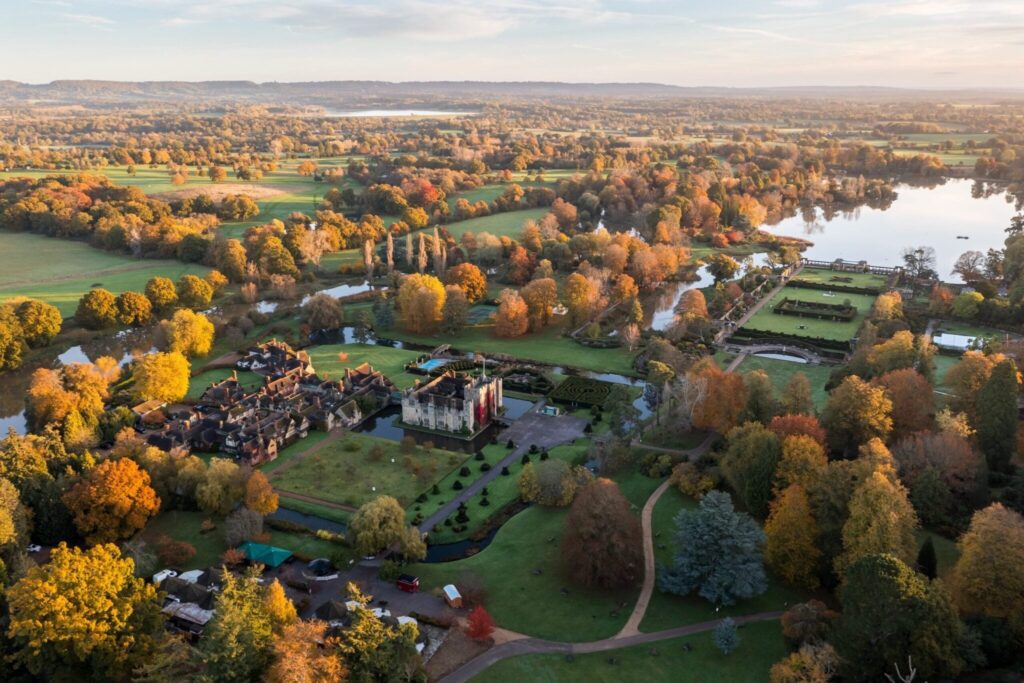
The estate covers 550 acres at Broomfield, about 40 miles from central London and five minutes from junction 8 of the M20. Trains from London Victoria reach Bearsted in about 70 minutes, London Gatwick is about 45 minutes by road, and parking for guests is free. Those not sleeping in the castle can stay in the Stable Courtyard rooms, the Lakeside Lodges or the estate’s holiday cottages. The Leeds Castle profile sets out each space, the Kent Wedding Atlas covers marrying in the county, our Kent venues sit alongside it, and the UK castle wedding guide sets Leeds beside other castles.
The castle or the estate
Leeds Castle is at its strongest when the whole wedding happens inside the castle walls: vows, a banquet in the Salon and a night upstairs without leaving the island, in rooms first arranged for house parties ninety years ago. The decision a couple has to make is whether their guest list fits around that table, or whether their day belongs in the barn and on the lawns.