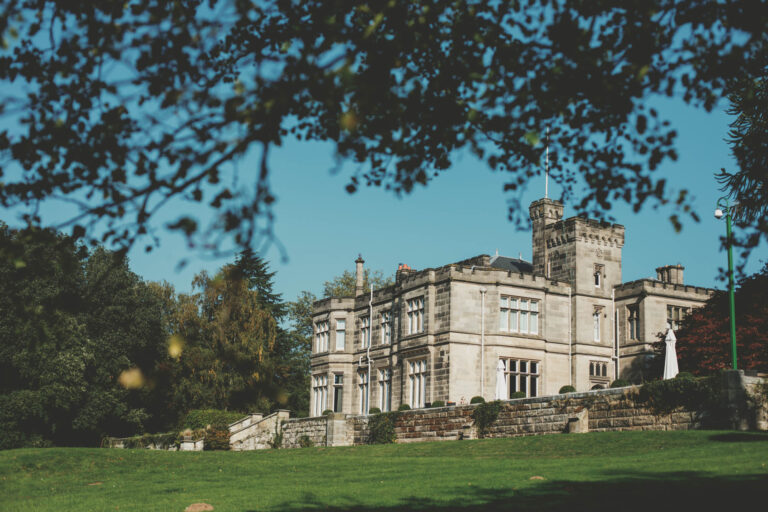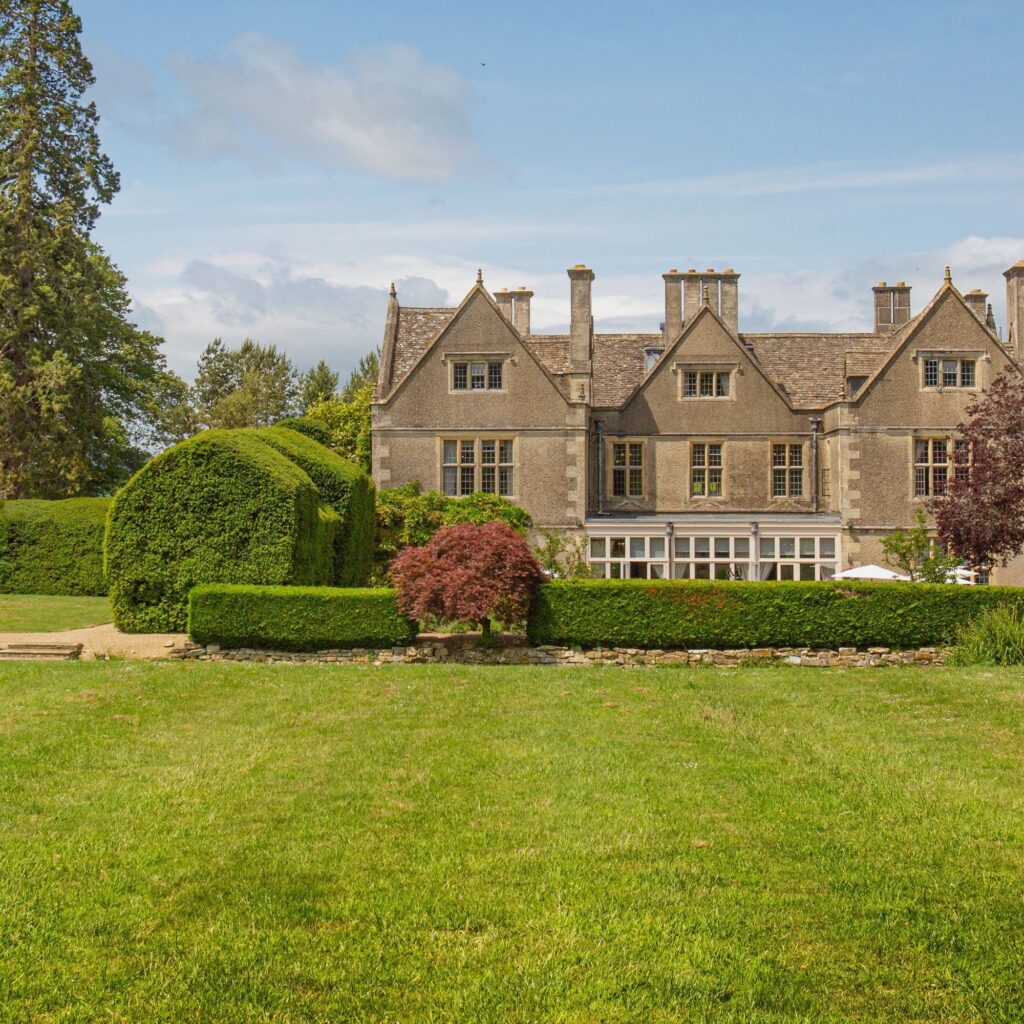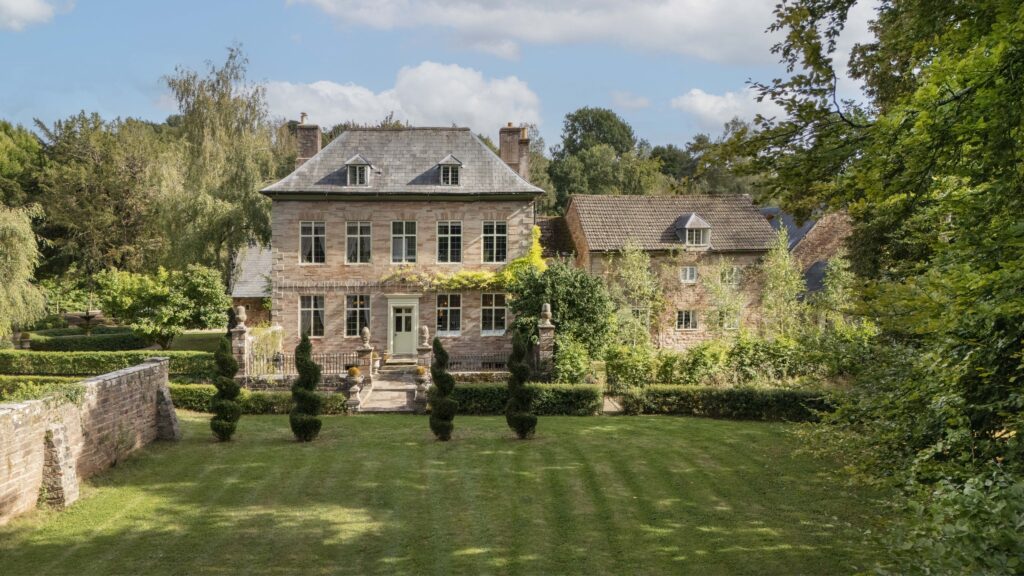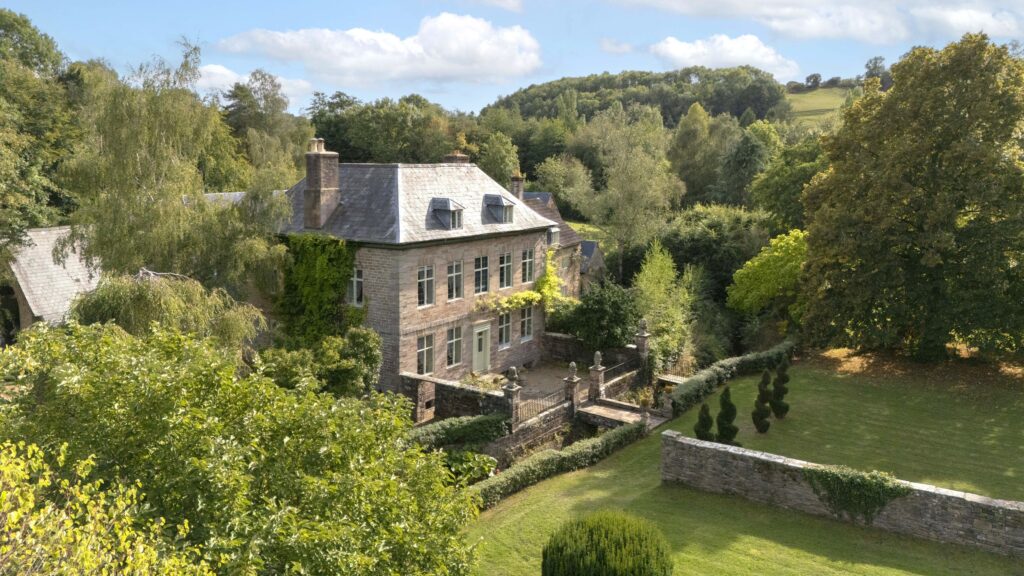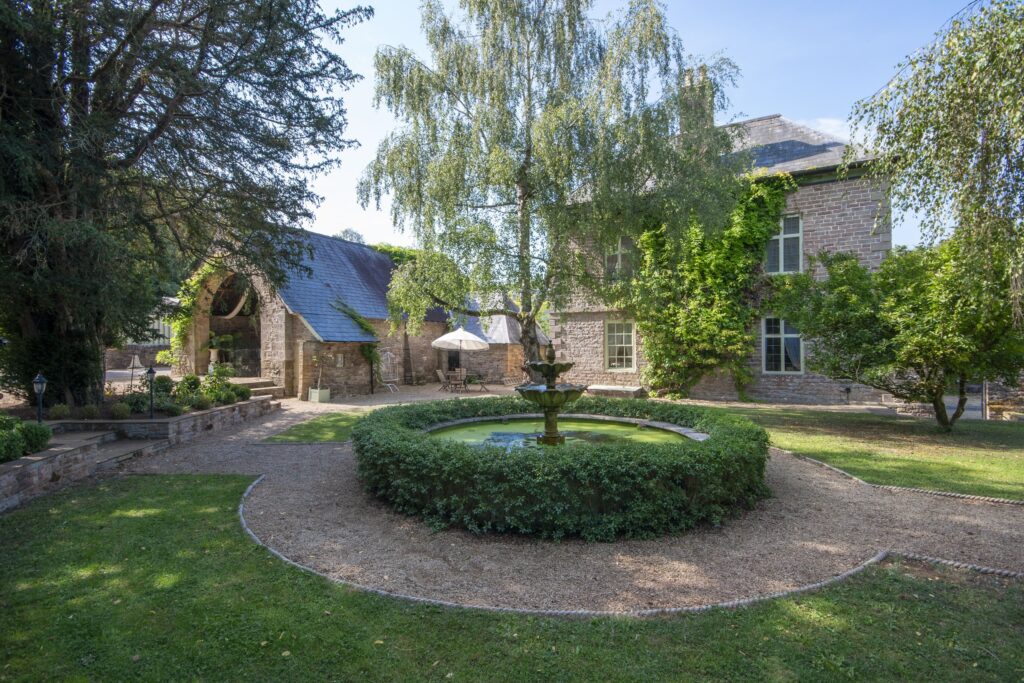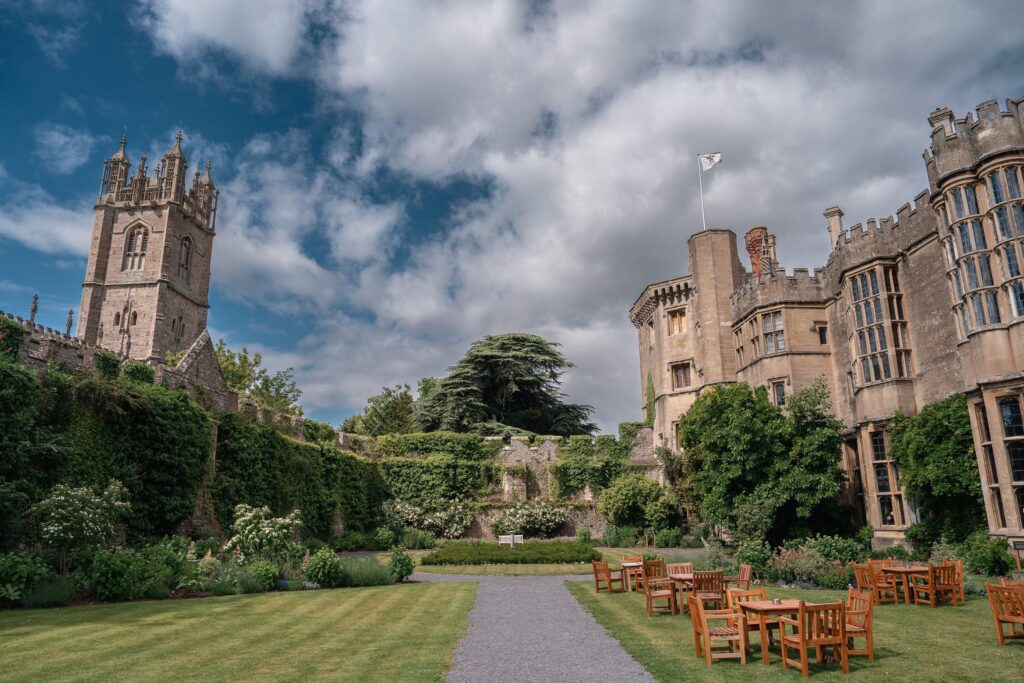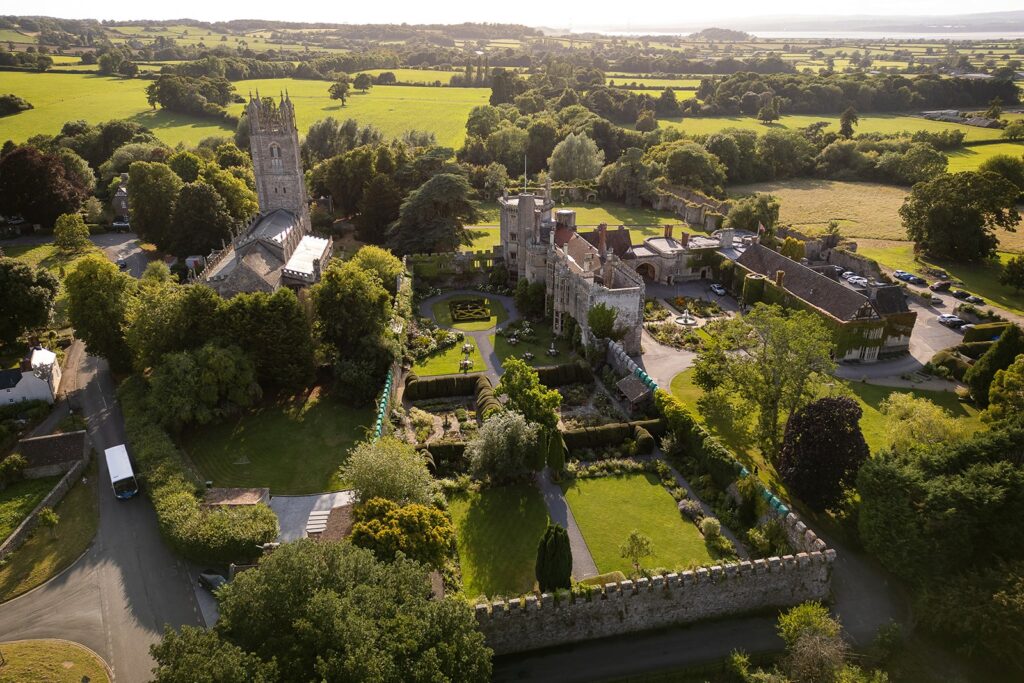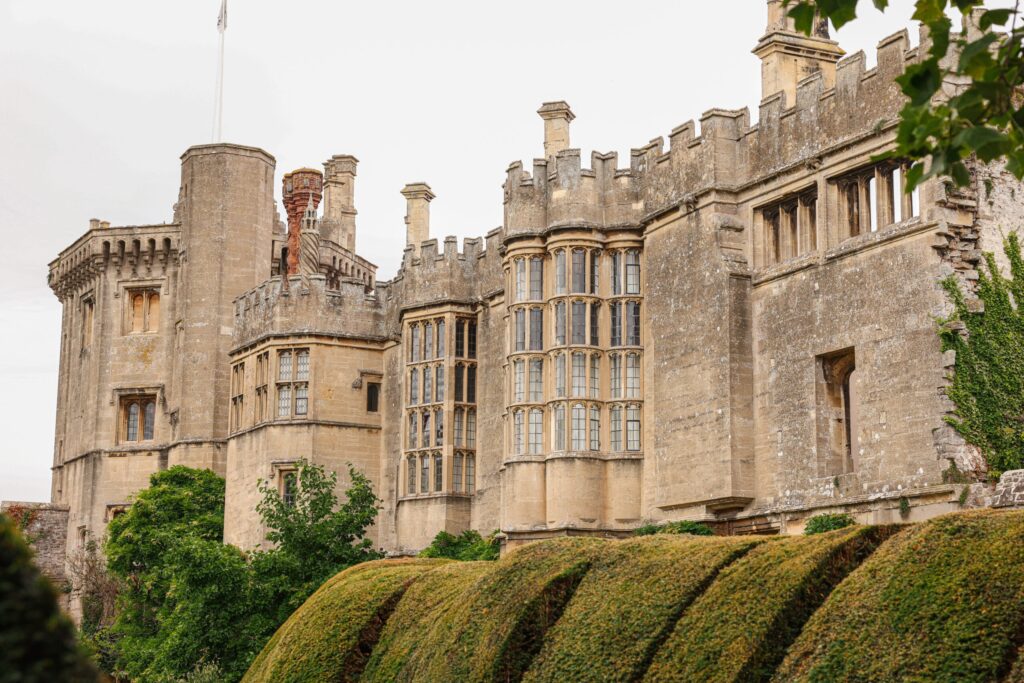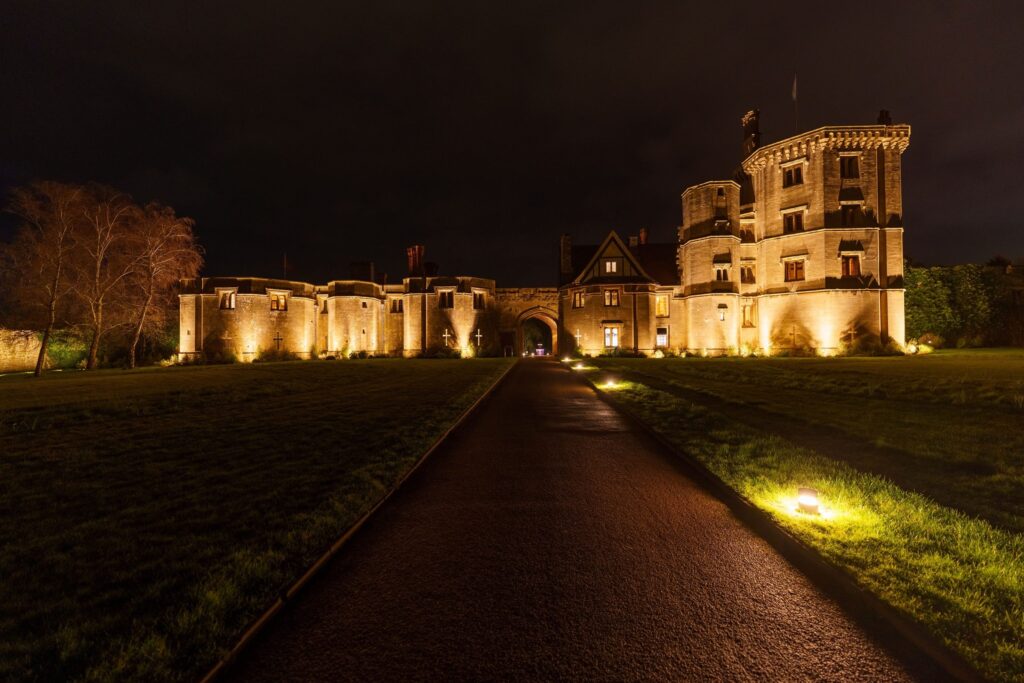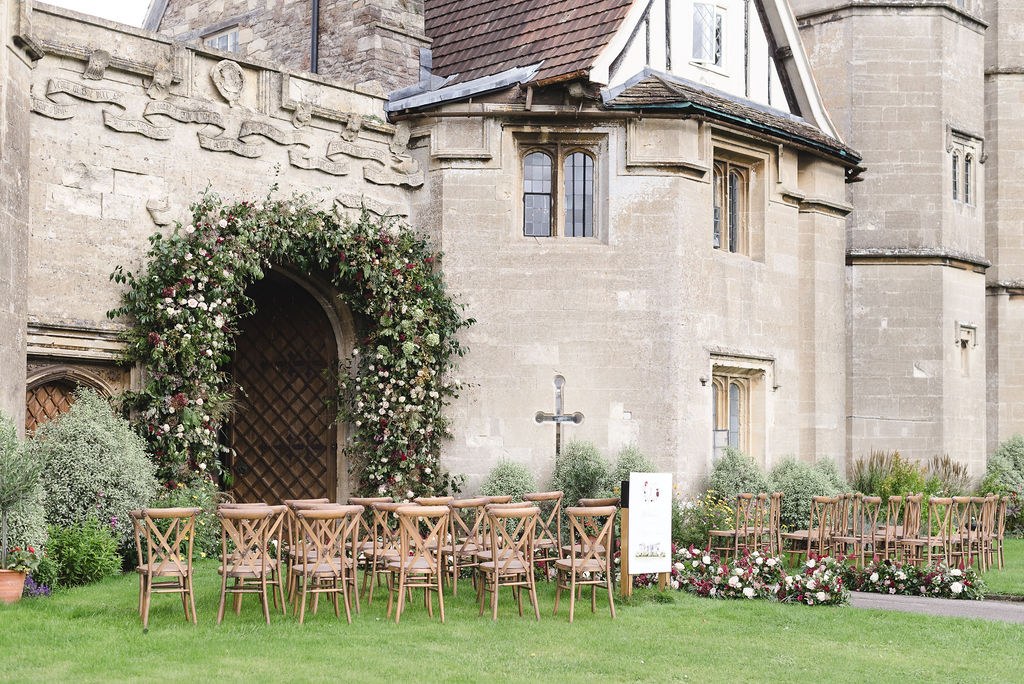
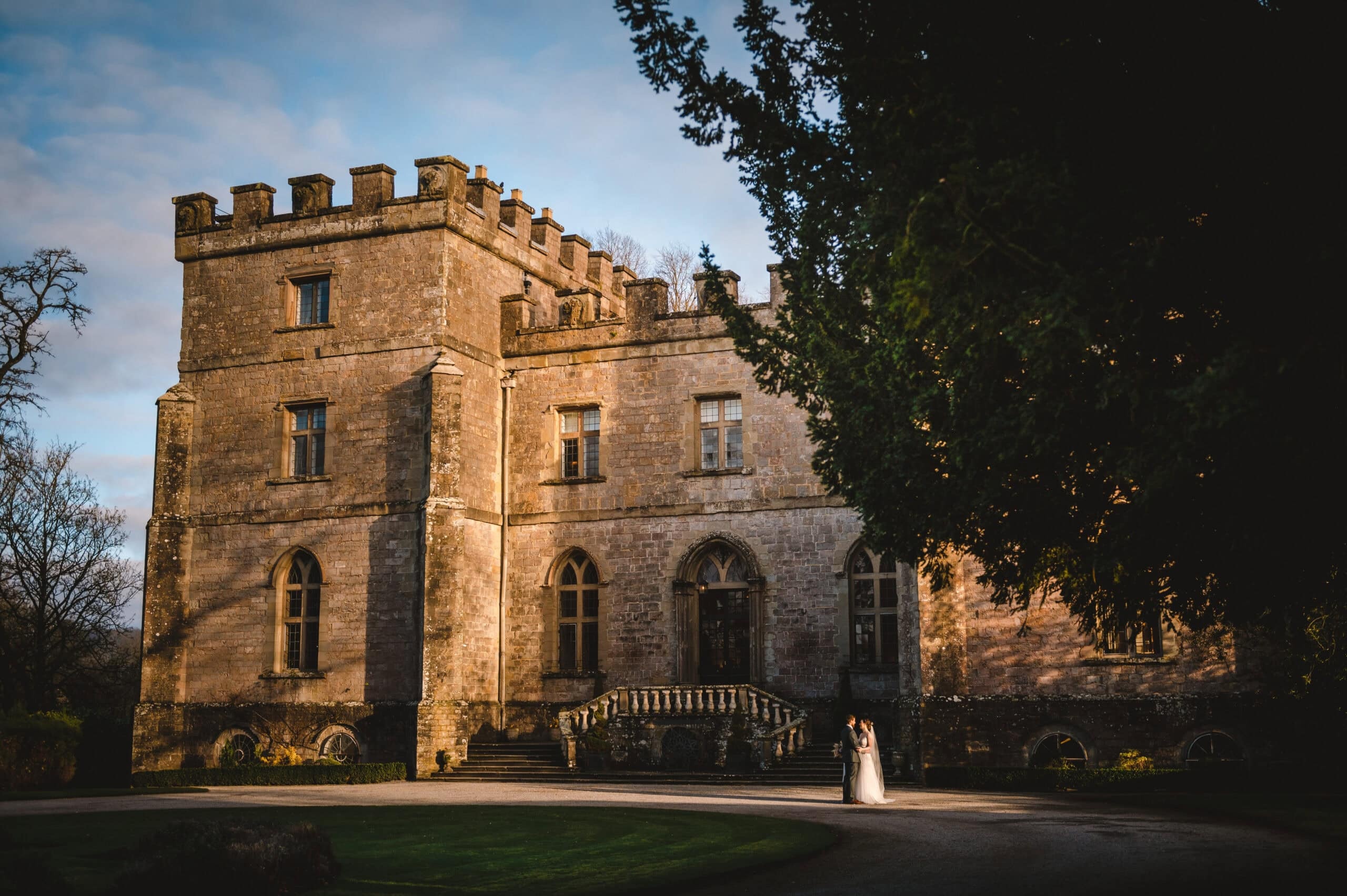
Clearwell Castle was never built to be defended. Thomas Wyndham began it in 1727 as a country house dressed as a castle, with battlements, pointed arches and towers of Forest of Dean stone, more than twenty years before Strawberry Hill. Two centuries later it was gutted by fire, stripped for salvage and marked for demolition, until the son of a former gardener bought it and his family restored it themselves. Today the castle in the village of Clearwell, Gloucestershire, is given over to a single wedding party at a time, Ballroom, gardens and fifteen bedrooms included.

A Gothick house for Thomas Wyndham
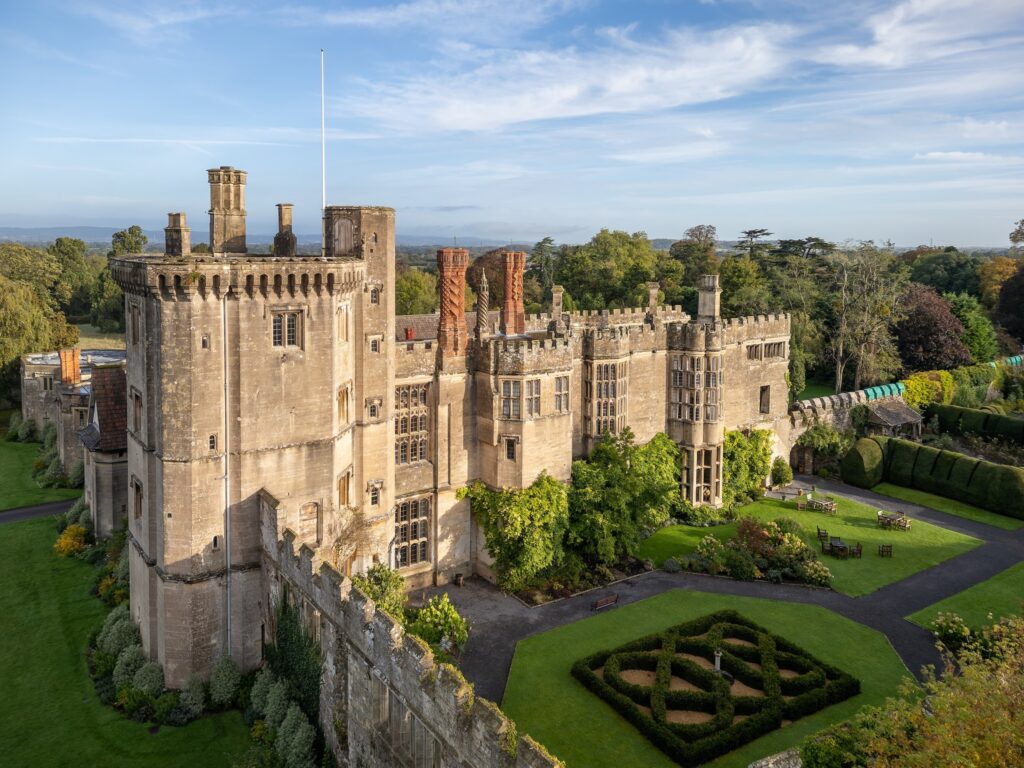
Robert Greyndour built the first house on the site in the mid fifteenth century. Francis Wyndham bought the manor in 1684, and it was his son Thomas, a barrister and Member of Parliament, who replaced the old house with the one that stands today. The architect was Roger Morris, who went on to design Inveraray Castle in Argyll almost twenty years later. Morris gave Clearwell a recessed two storey centre between paired three storey towers, all with embattled parapets, and a rear wing with a library and bedrooms followed in the 1730s.
Architectural historians differ only on how early it is. The current Buildings of England volume for the Forest of Dean calls it “a Gothick Revival castle, the earliest in England”, while a study published in 1970 placed it second only to Vanbrugh Castle among Georgian Gothic castles still standing. The house is listed Grade II* by Historic England, and the parkland around it is separately registered as a Grade II park and garden.
For most of its life it was not called a castle at all. As Clearwell Court it passed down the Wyndham line to Caroline, who married Windham Henry Quin, later Earl of Dunraven, and held it from 1814 until her death in 1870. The interior was refurbished for her in the mid nineteenth century, and the garden terraces probably date from the same years. The name Clearwell Castle arrived only in 1908.
Fire, salvage and a gardener’s son
Colonel Charles Vereker bought the castle in 1911. In 1929 a fire gutted it, and Vereker repaired the house, but after his death in 1947 it was sold to the county council and then to a housebreaker, who took the lead from the roof and the floors from the rooms. The 1970 edition of the Buildings of England records that between 1948 and 1954 “the interior was largely ruined by speculators”.
Frank Yeates, whose father had been a gardener at Clearwell and who had been born in North Lodge, was running a bakery in Blackpool when he heard the castle was to be demolished. He bought it for £3,000 in the early 1950s, and with his wife Alice and son Bernard set about restoring it room by room, teaching themselves the skills as they went and holding medieval banquets to pay for the work. Early eighteenth century cornices and baroque fireplaces survive, the finest in the hall, but many of the ceilings guests see today are facsimiles made when the house was restored.
Rock bands in the cellars
In the 1970s the Yeates family ran recording and rehearsal studios at Clearwell. Black Sabbath rented the castle in 1973 after a month of writing in Los Angeles had produced nothing; they rehearsed in the dungeons, and it was there that Tony Iommi found the main riff of Sabbath Bloody Sabbath. Led Zeppelin reconvened at Clearwell in 1978 to begin writing and rehearsing In Through the Out Door, and Deep Purple, Queen and Whitesnake are among the other bands that recorded here.
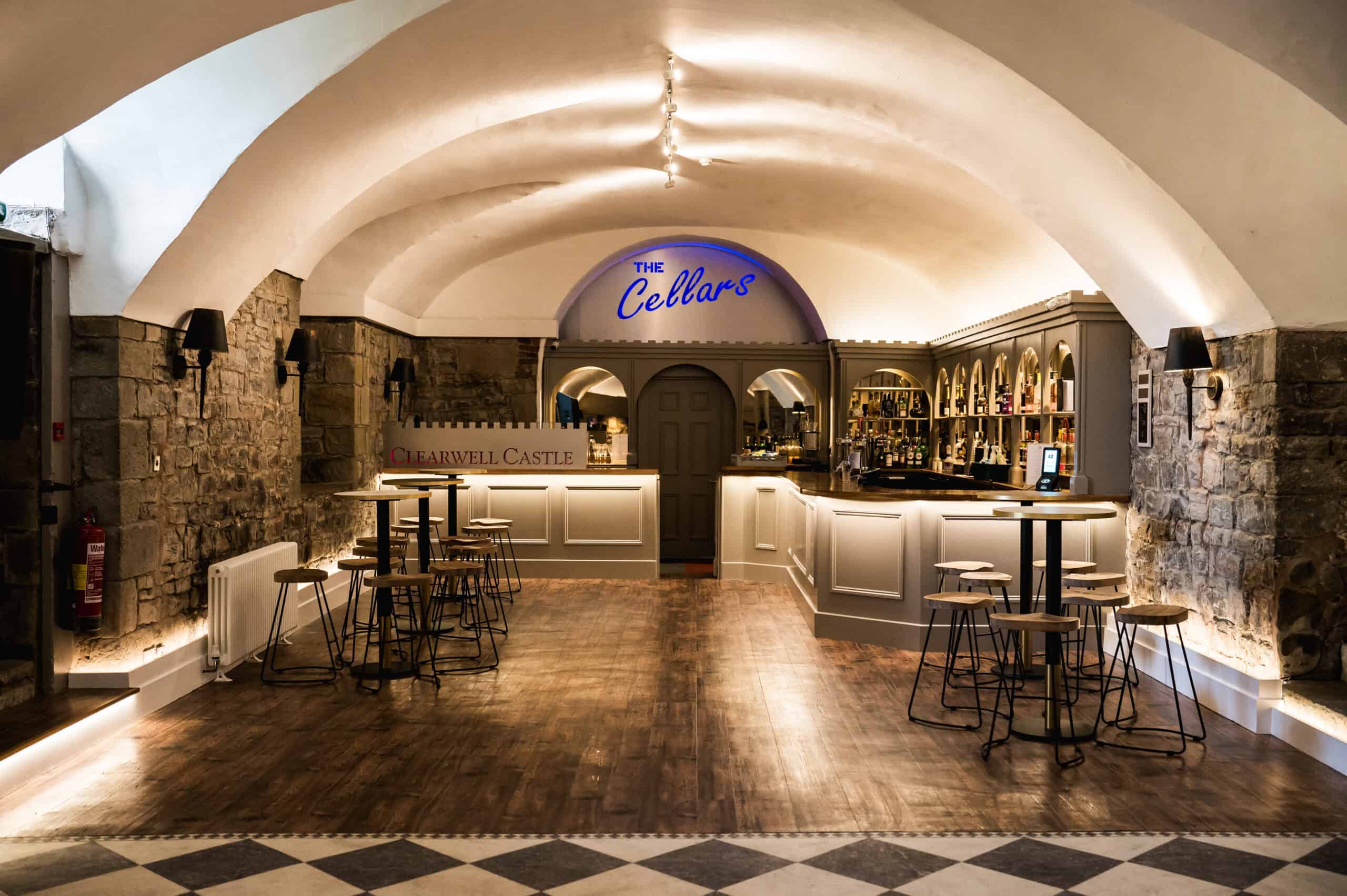
The studio was in what is now the Quiet Room, on the lower ground floor, where the walls are hung with old articles about the castle. On the same floor is the vaulted Cellar Bar, where a wedding party ends the night.
Harry Bramer bought the castle in 1998. His family company, Country House Weddings, now runs six venues for exclusive use, and Clearwell has held weddings ever since.
Vows in the Ballroom or the garden
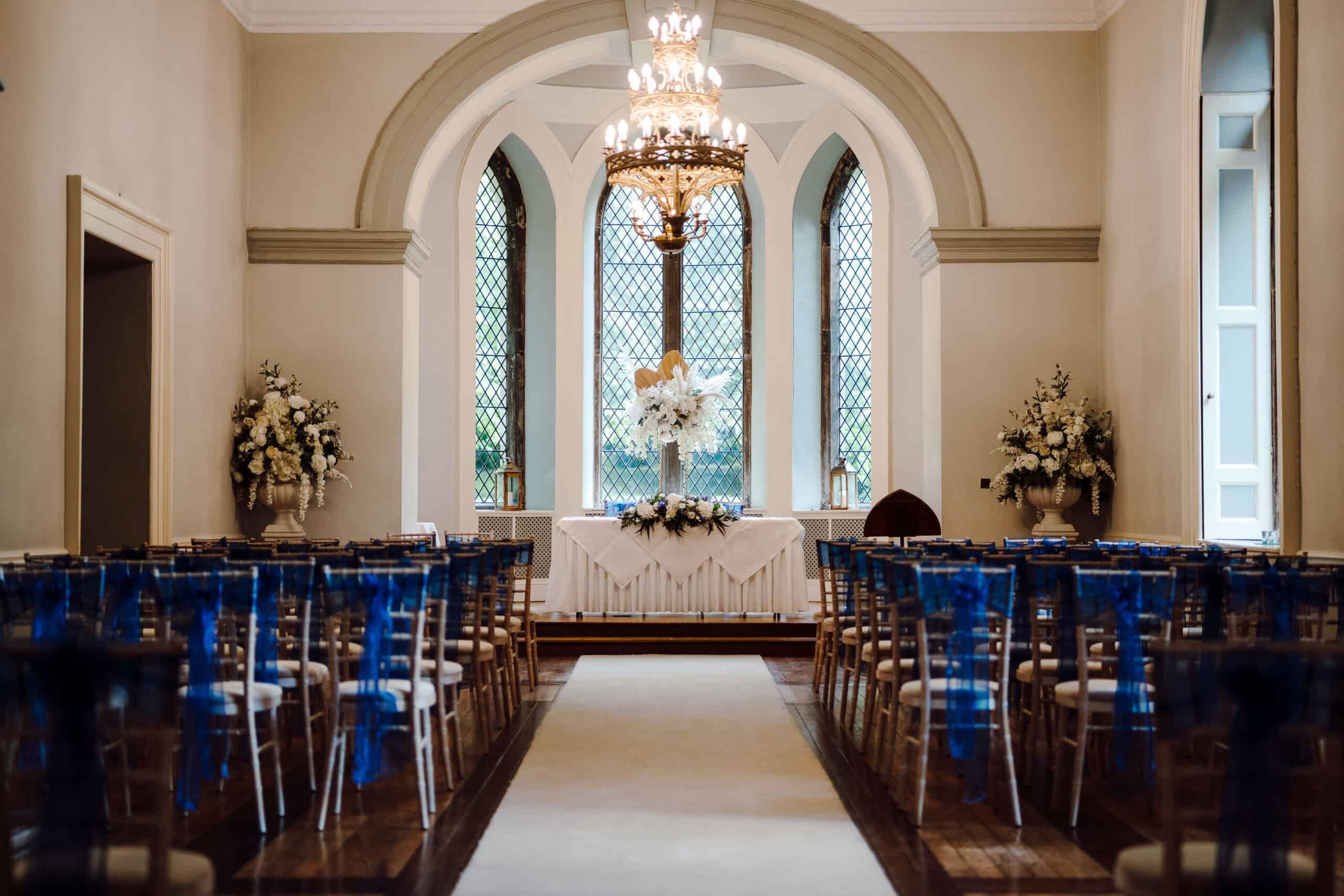
The day begins at midday, when the castle and its 20 acres are handed over to the couple and guests start to arrive. The Ballroom, which incorporates part of the older house and once served the village as a chapel, is the principal ceremony room. A 75 foot aisle runs down a hardwood floor to a raised dais under an arch, where the register is signed, with leaded lancet windows behind and two chandeliers overhead. It seats up to 150, and a ceremony between one and two o’clock gives guests time to arrive and check in first.
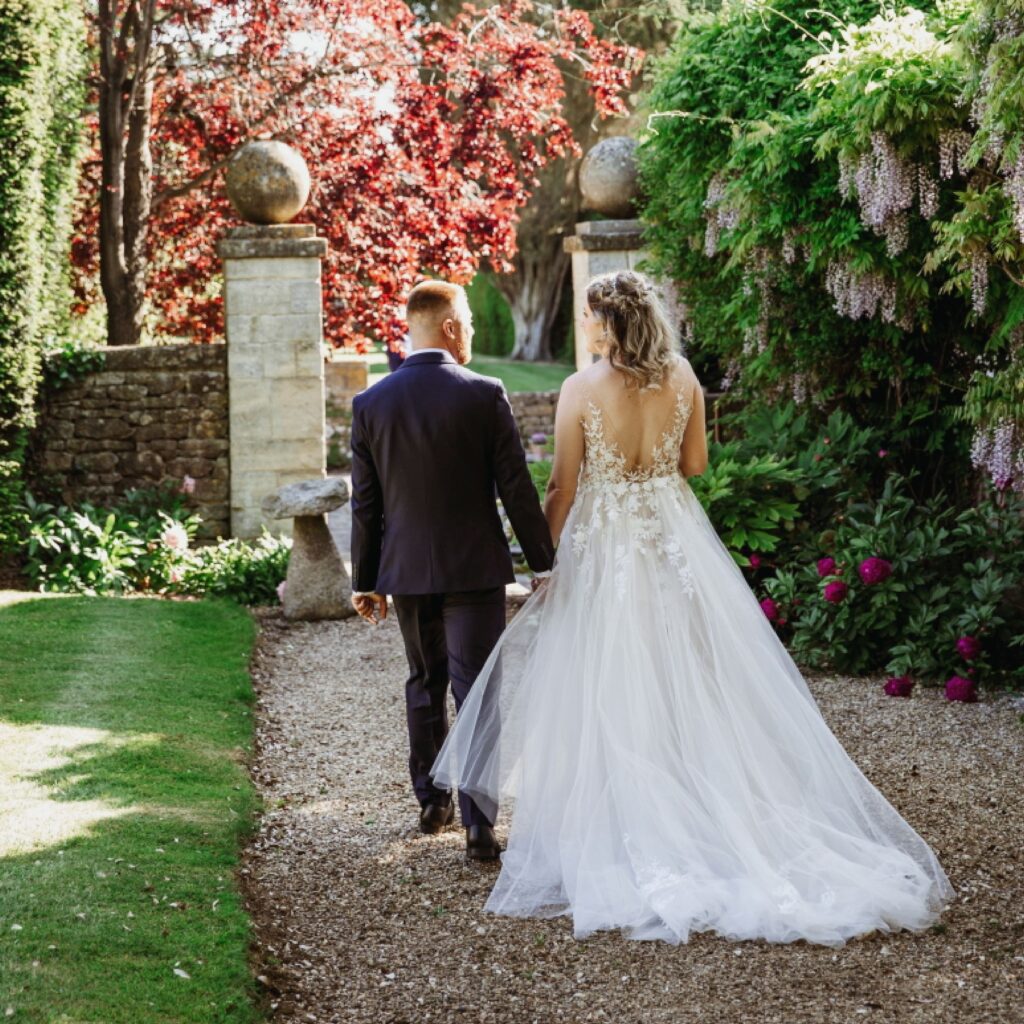
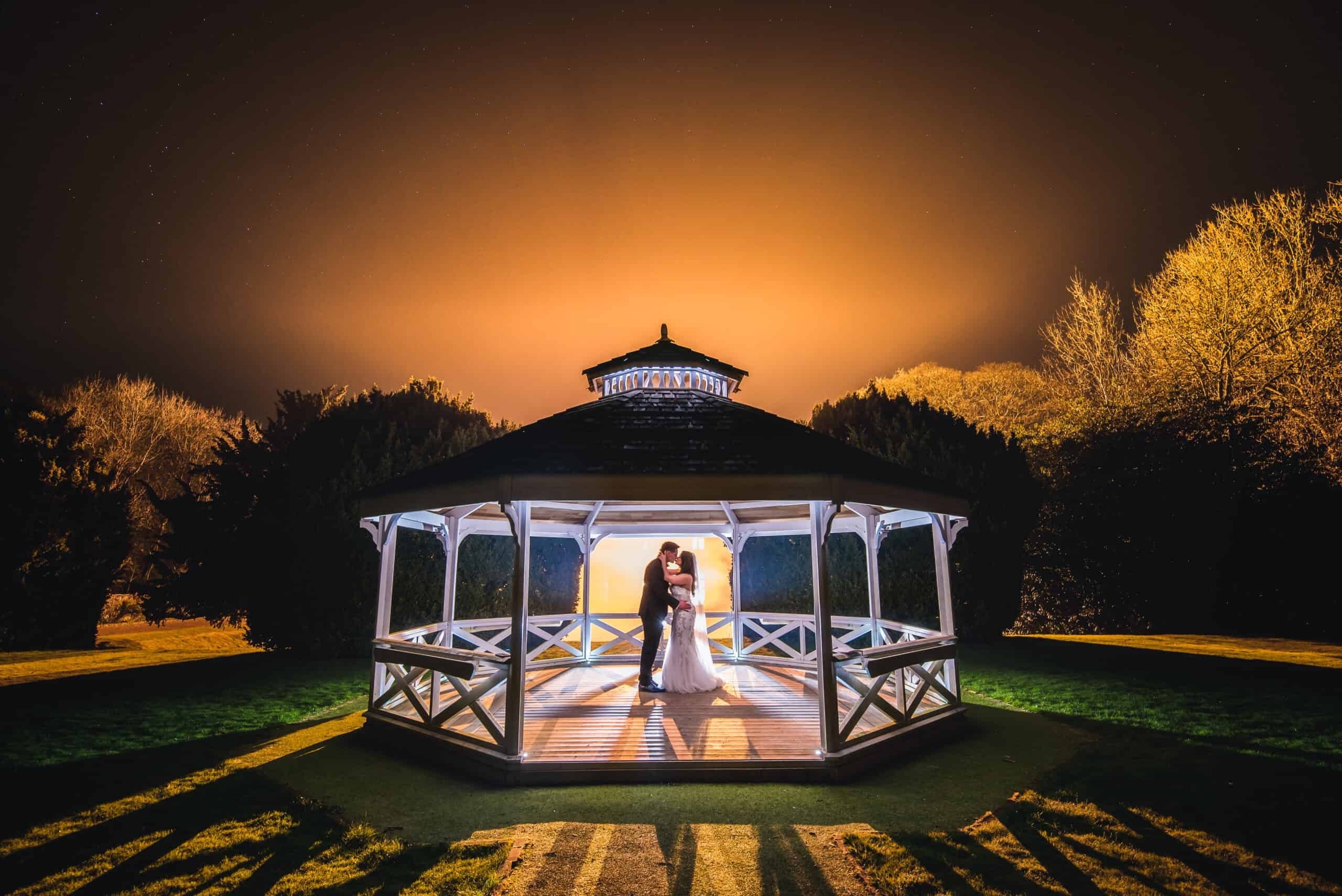
Outdoors, the licensed ceremony space is the Bandstand beside the croquet lawn, with the castle beyond. Whether to marry outside is decided on the morning itself, with the Ballroom held in reserve. The castle’s licence covers civil ceremonies only, so the registrar is booked separately by the couple; a priest or vicar can add a blessing afterwards, and couples wanting a church service can marry at St Peter’s Church next door.
Dinner under the chandeliers, dancing below
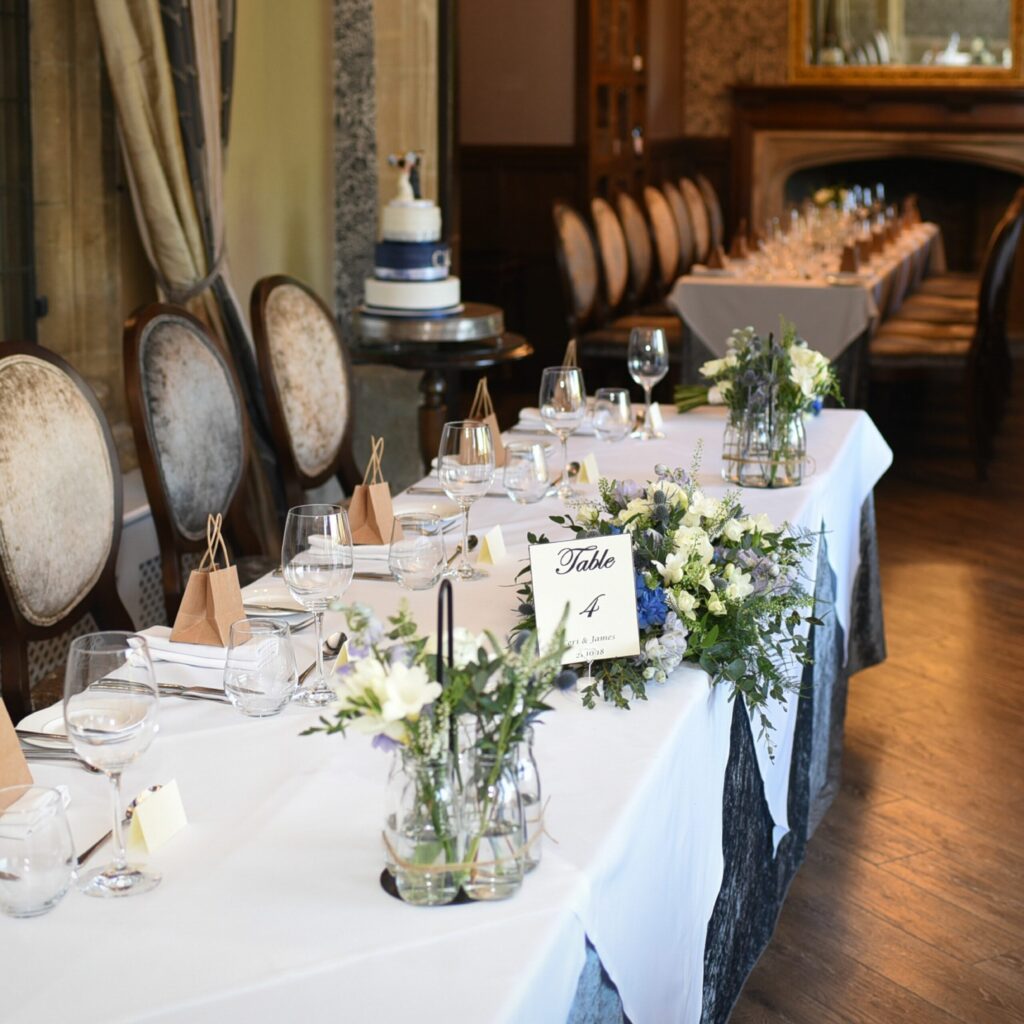
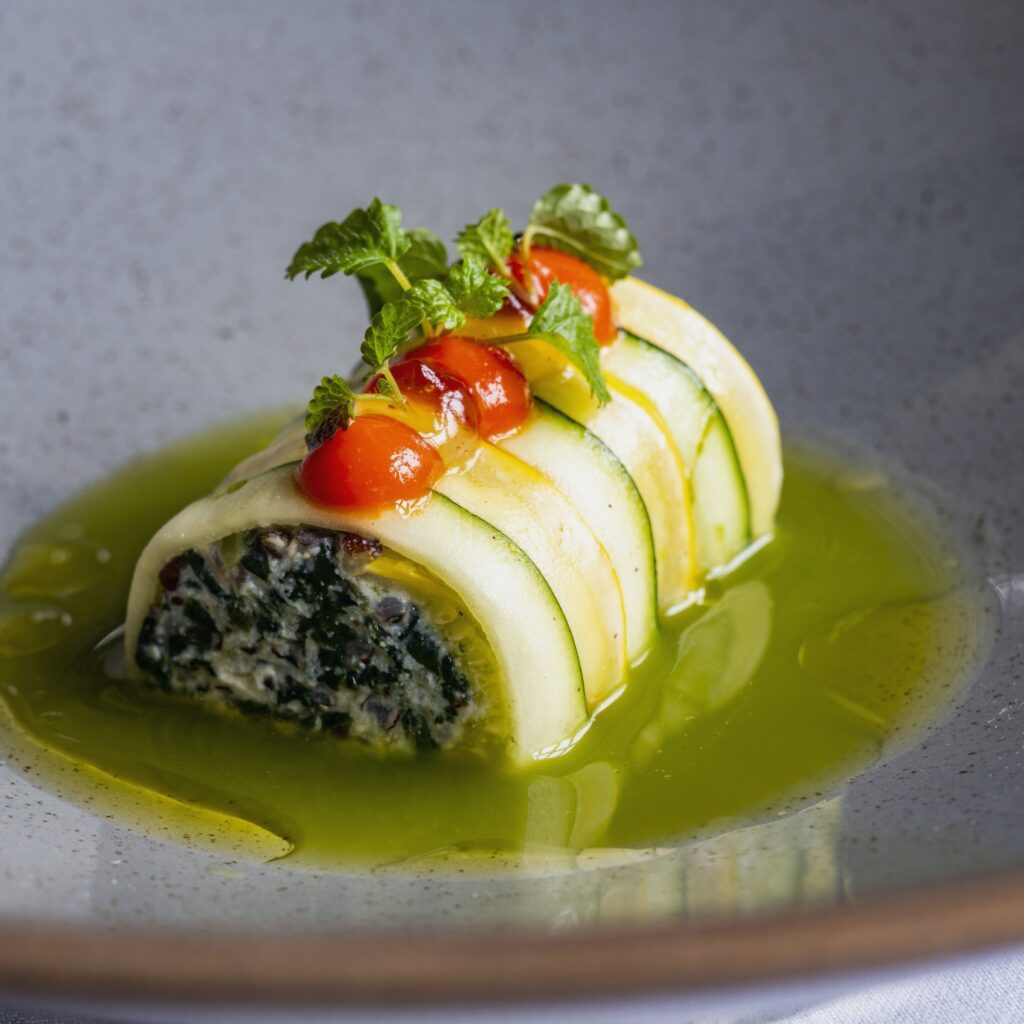
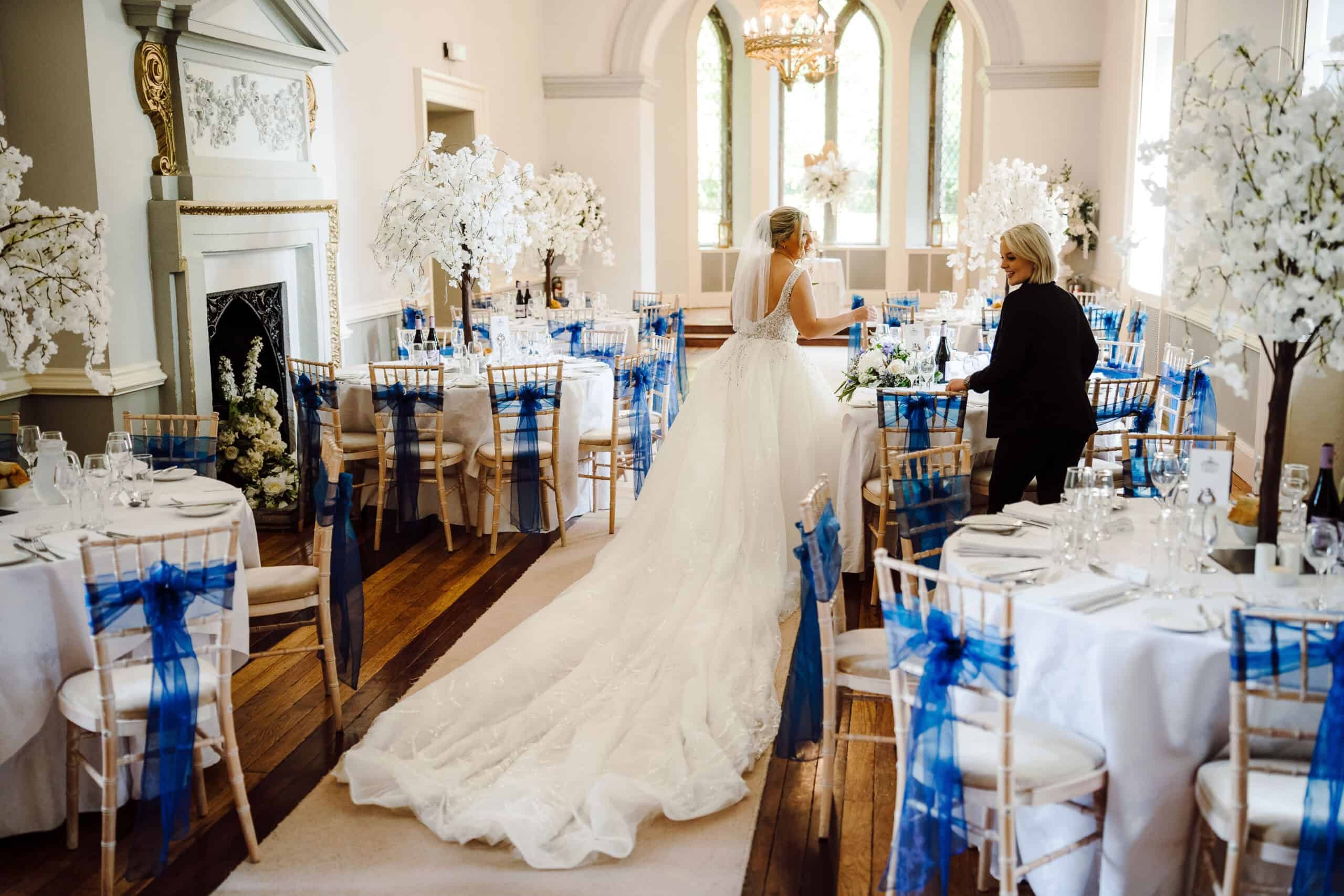
After the ceremony the Ballroom is reset for the wedding breakfast, again for up to 150. The cooking is done in the castle’s own kitchen by its own chefs, and no outside caterer is brought in apart from the wedding cake. All the vegetables are grown locally, menus can be written with the executive chef, and couples taste the food at a dinner evening included in their package. Country House Weddings also makes its own English sparkling rosé, Dadnor, from grapes its chairman grows in Herefordshire.
In the evening the party spreads through the house, and up to 250 guests can be invited when the whole castle and both bars are in use. The Drawing Room Bar sits beside the Cocktail Terrace, and the Drawing Room has a baby grand piano and a view over the croquet lawn. The first dance can be in the Main Hall or in the Cellar Bar, where the castle’s DJ plays or a band can set up. Music stops at midnight, and a late licence can take the party to one o’clock.
Golden yews and an old deer park
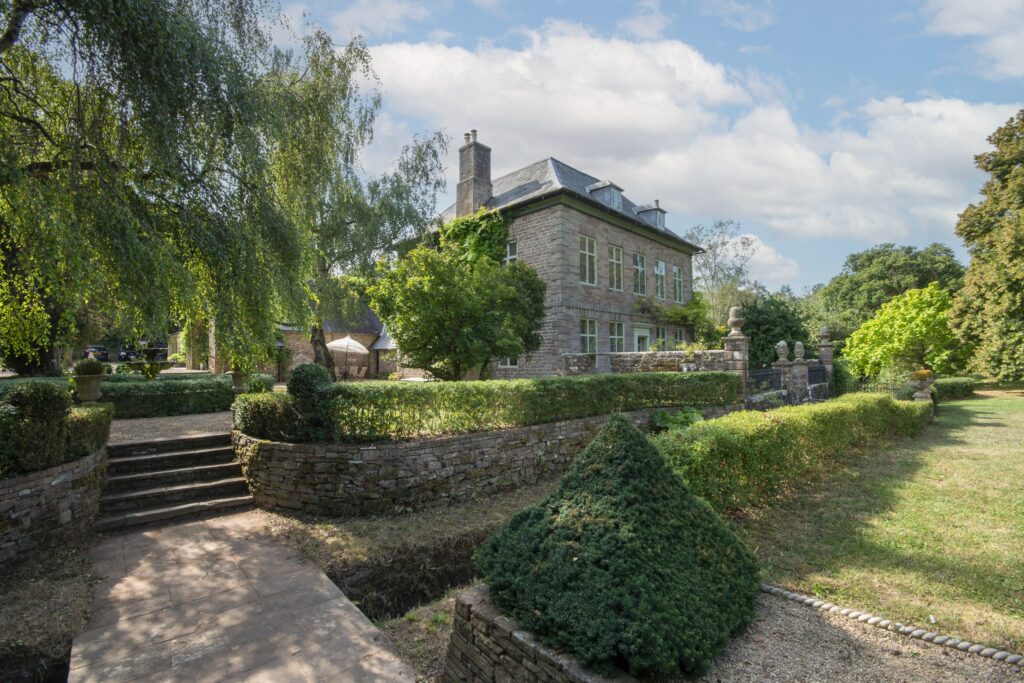
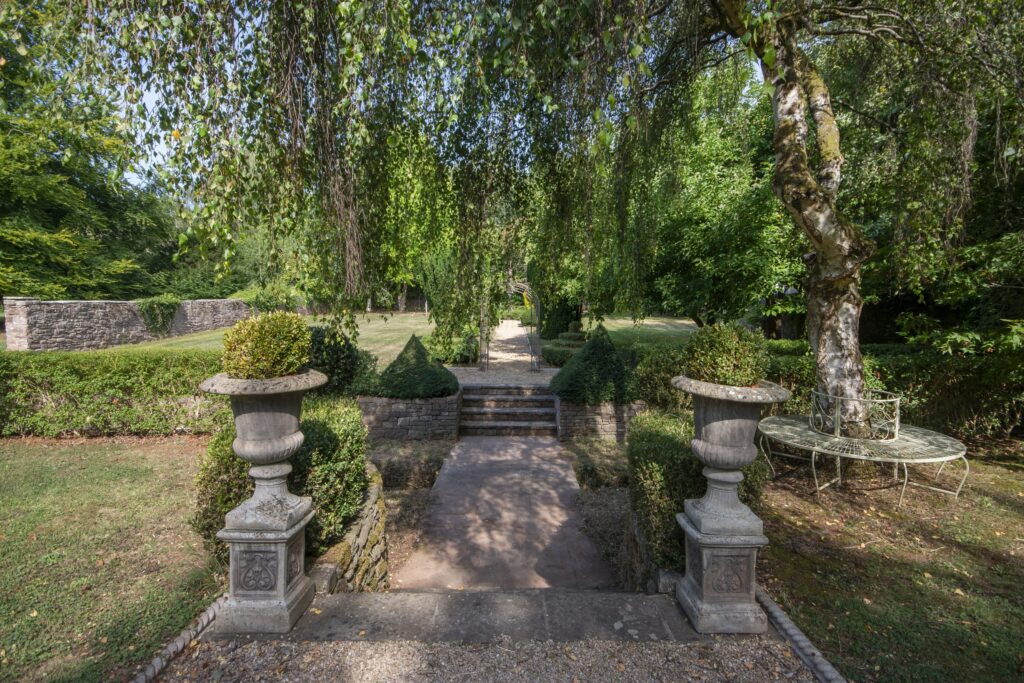
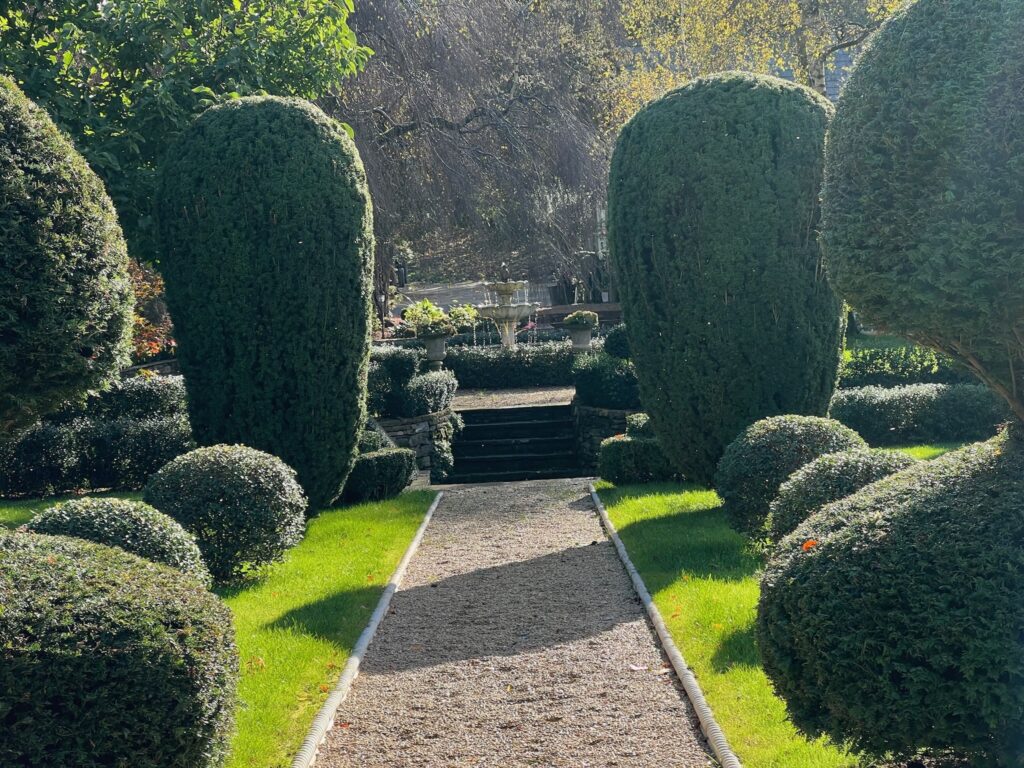
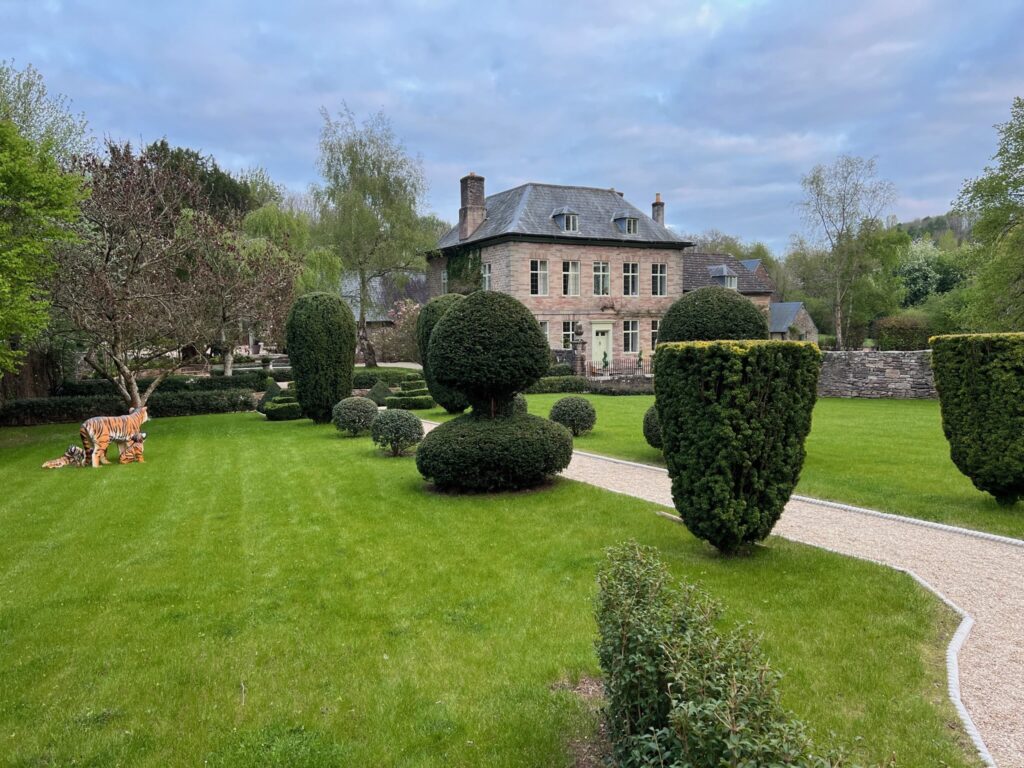
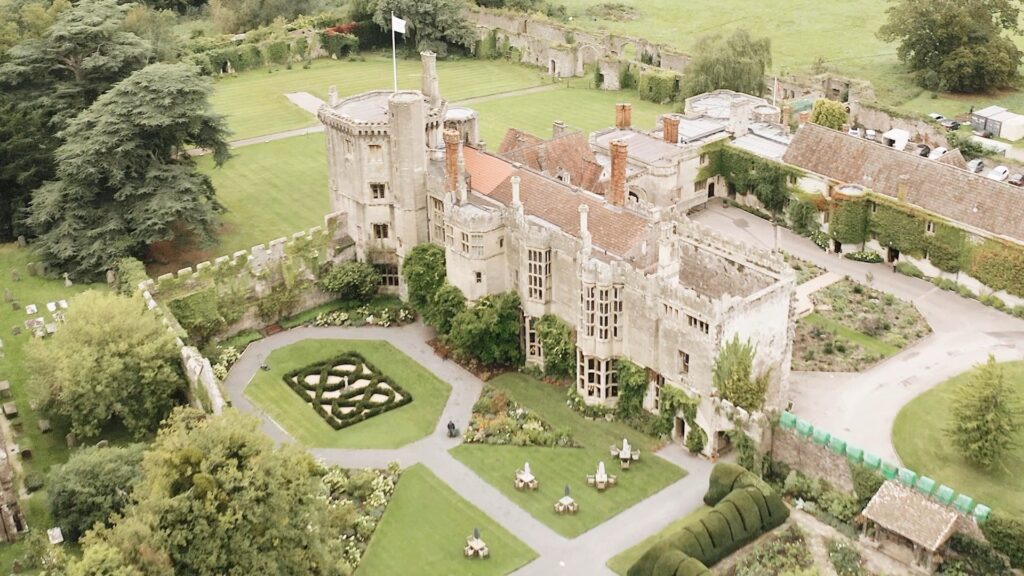
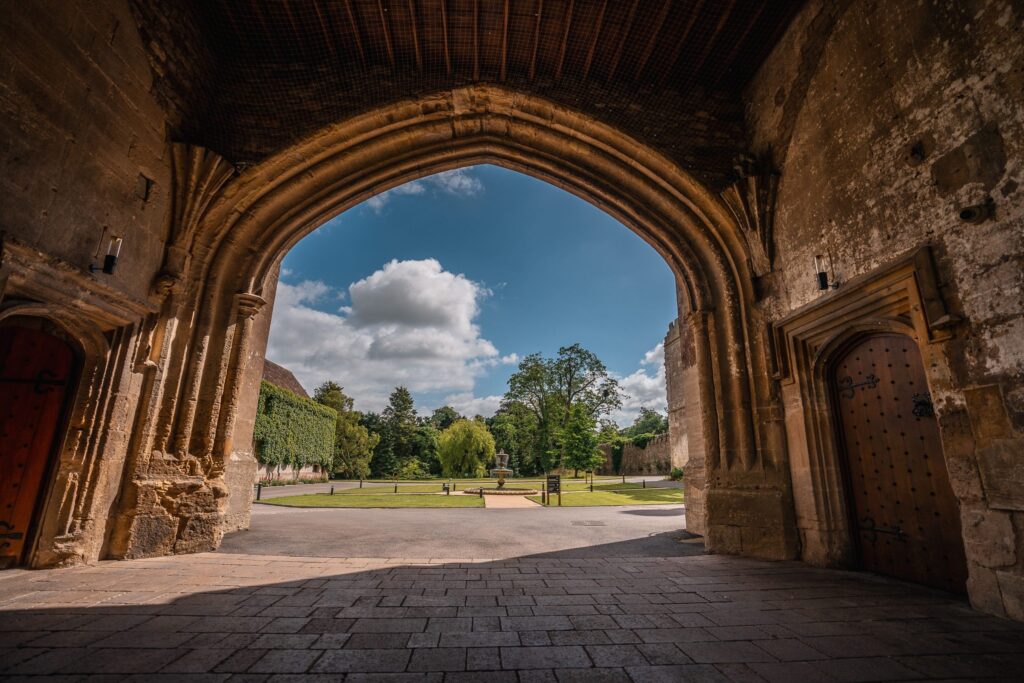
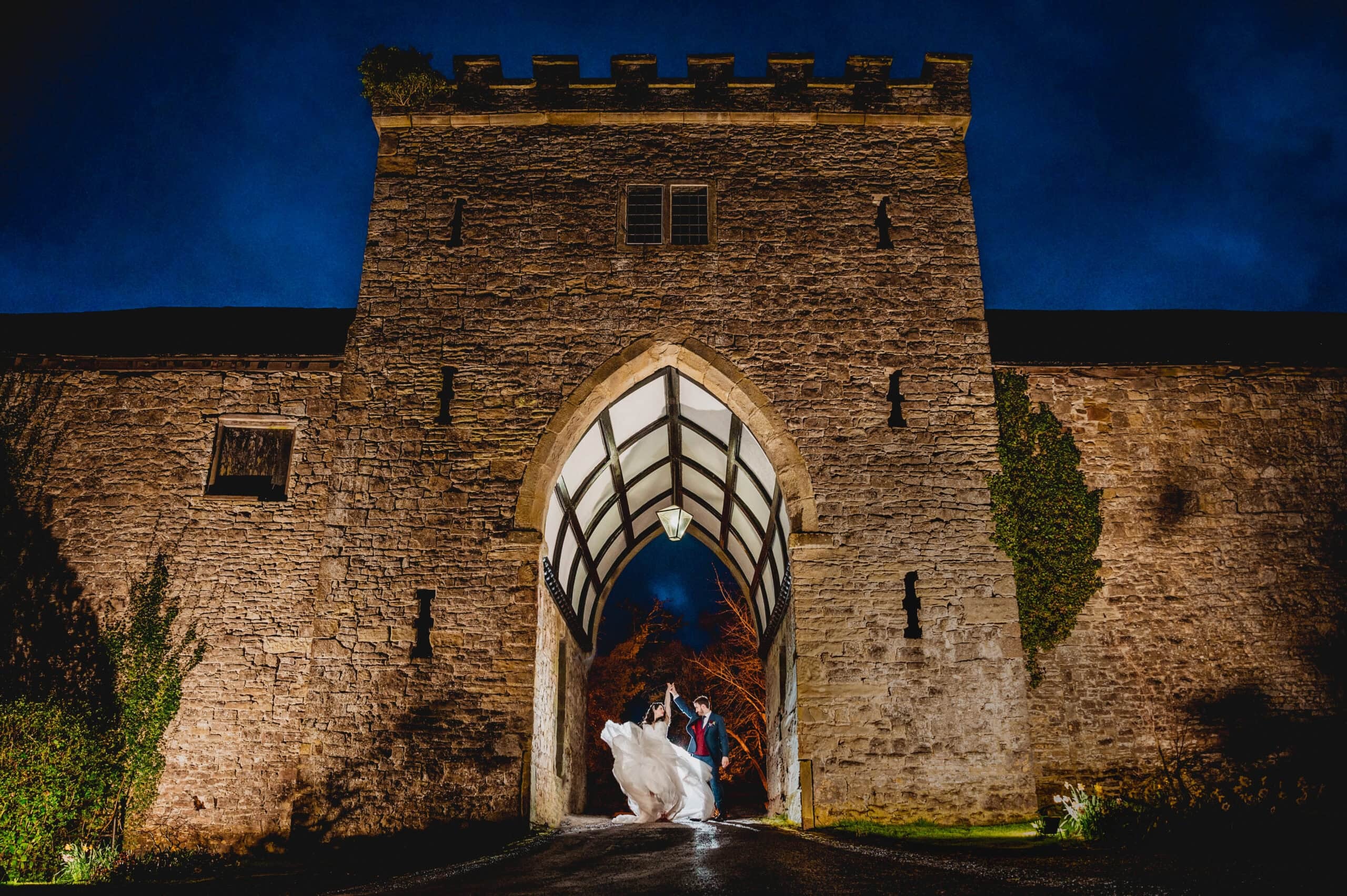
The registered park is older than the house: a late seventeenth century deer park, with terraces beside the castle that took their present form in the nineteenth century. Eight mature golden yews are planted symmetrically on the terraces to frame the view from the castle out to the park, and there are a sunken garden, the croquet lawn, a lime walk and a small lake. Two eighteenth century statues west of the main front, a figure probably of Hercules and a child with a sphinx, are listed in their own right, as are the gatehouse and the main gateway.
A castle bedroom for the night
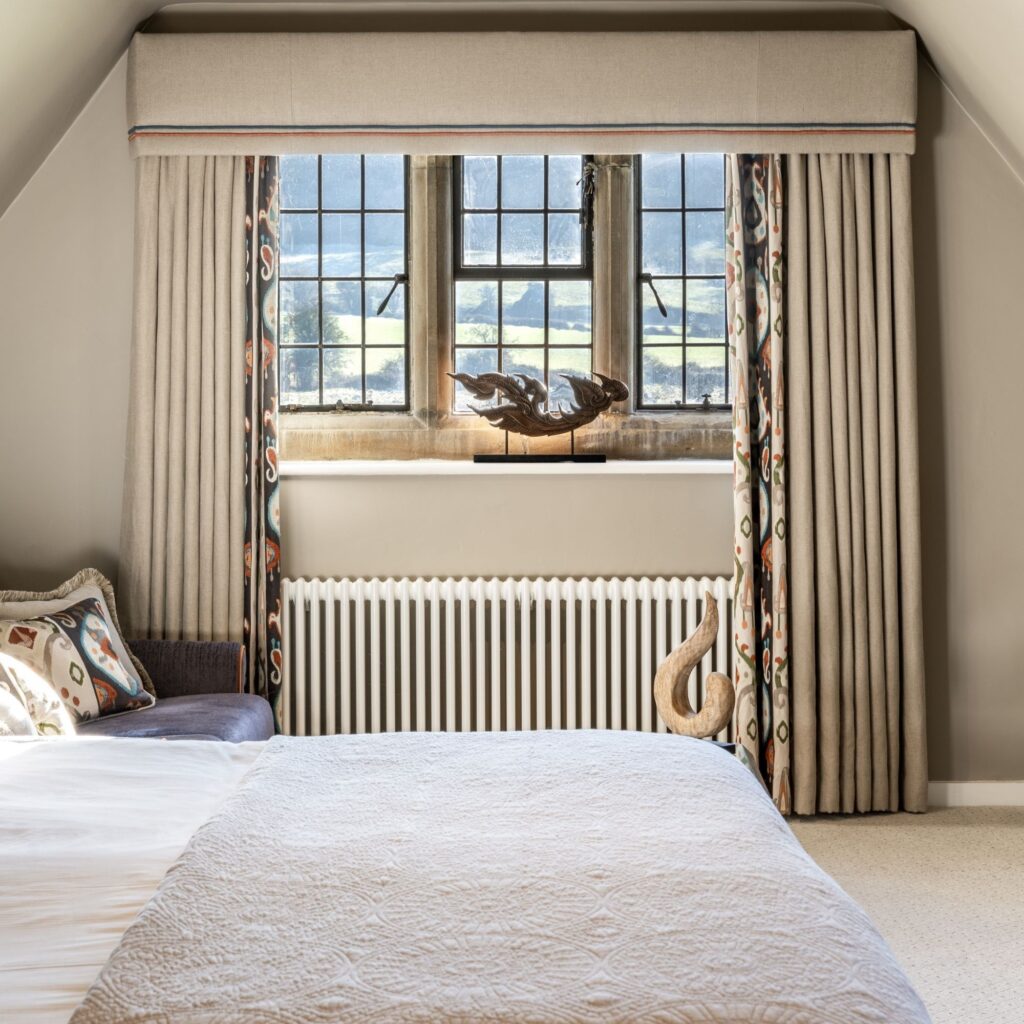
Clearwell is not a hotel, and the couple decides who sleeps where. Twelve bedrooms are on the upper floors of the castle, among them the Gresham Honeymoon Suite with a four poster and a spa bath, and two family rooms. Three more, the Coachman’s rooms, are in the courtyard, one of them an accessible room with a wet room, bringing the castle to fifteen bedrooms for up to 34 guests. Keeper’s Cottage, known as the Bridal Cottage, sleeps six, has a hot tub and is a place to get ready on the morning; North Lodge also sleeps six and Portcullis View is a studio for two.
In the village, a short walk away, The Wyndham is a former pub and hotel the castle bought in 2017 and restored. With its barn and lodge it adds 24 bedrooms, a private bar, a lounge and a restaurant, the place for a dinner the night before. In all the castle can sleep more than 100 guests, and breakfast the next morning is served for everyone in the Ballroom.
Reaching the Forest of Dean
Clearwell lies in the Forest of Dean, close to the Wye Valley and the Welsh border. Bristol, Cheltenham and Gloucester are each about 45 minutes away by road, Bristol Airport around an hour, and Lydney station about 20 minutes. All inclusive packages for exclusive use start from £6,000, varying with the season, the date and the number of guests. Two day weddings and a ceremony only option are also offered.
The castle or the church next door
For other castles, read our UK castle venues guide or the Edit on Leeds Castle in Kent; for the region, see weddings in Gloucestershire and the United Kingdom Wedding Atlas.
Decide first where you will be married: under the castle’s civil licence, in the Ballroom or at the Bandstand, or at St Peter’s Church next door with the castle for everything that follows. Then read the Clearwell Castle profile and check your date.