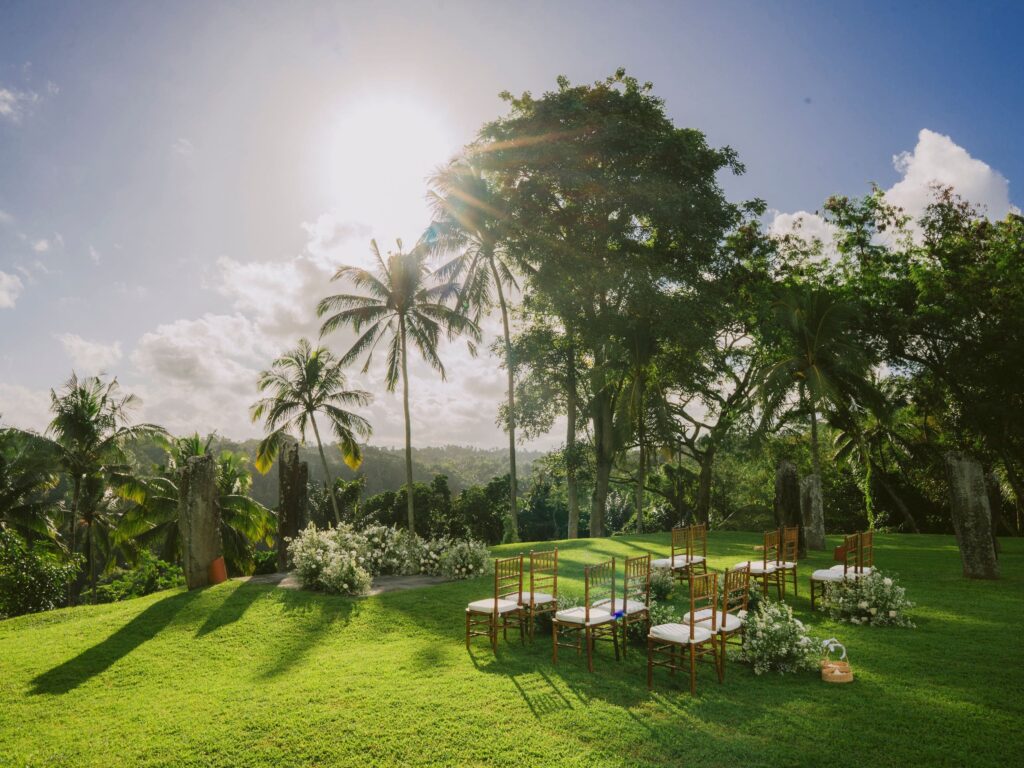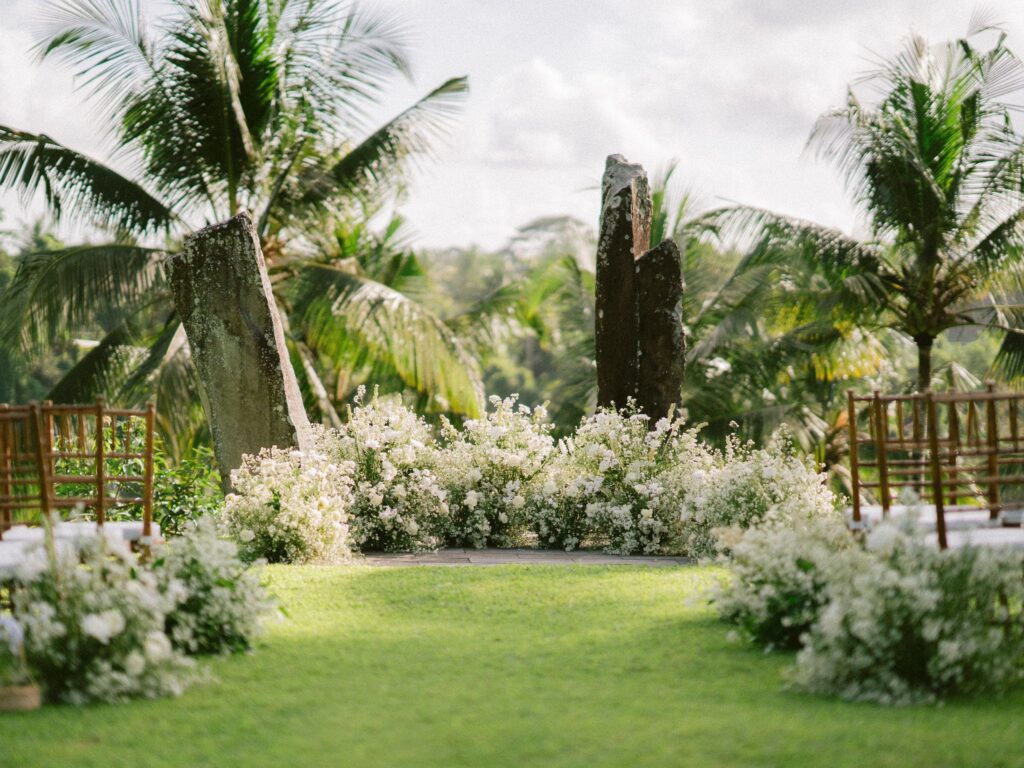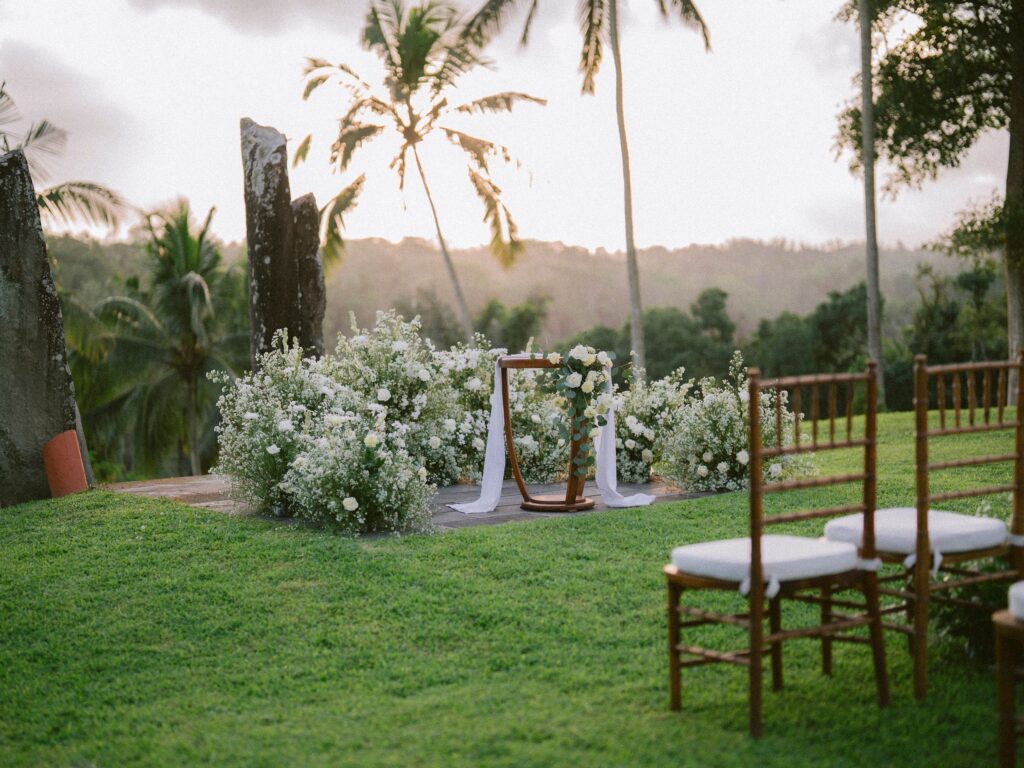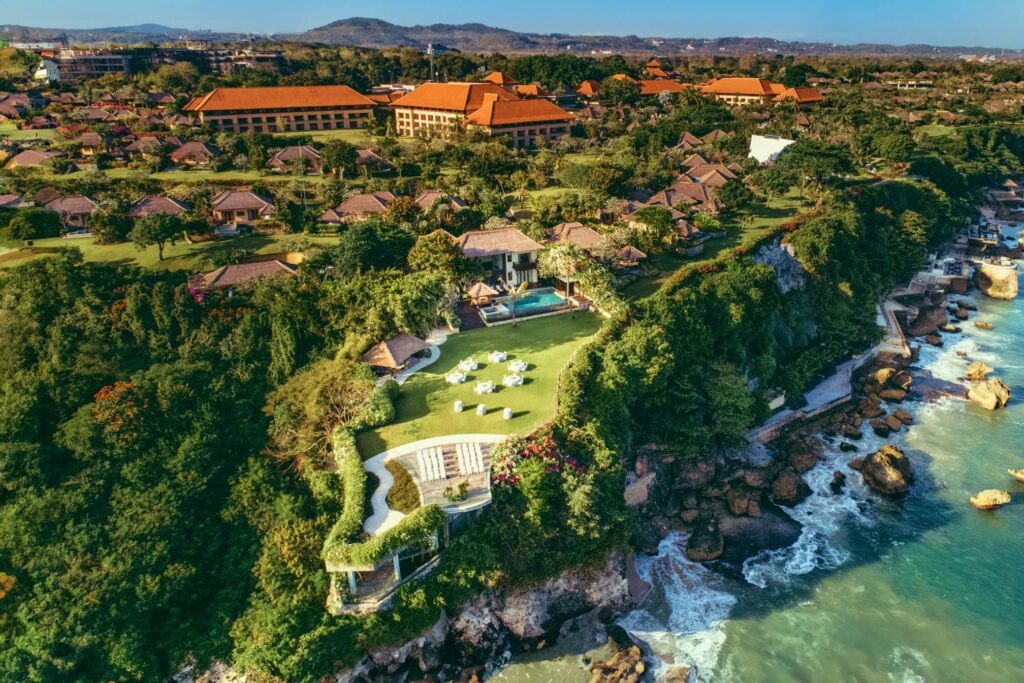
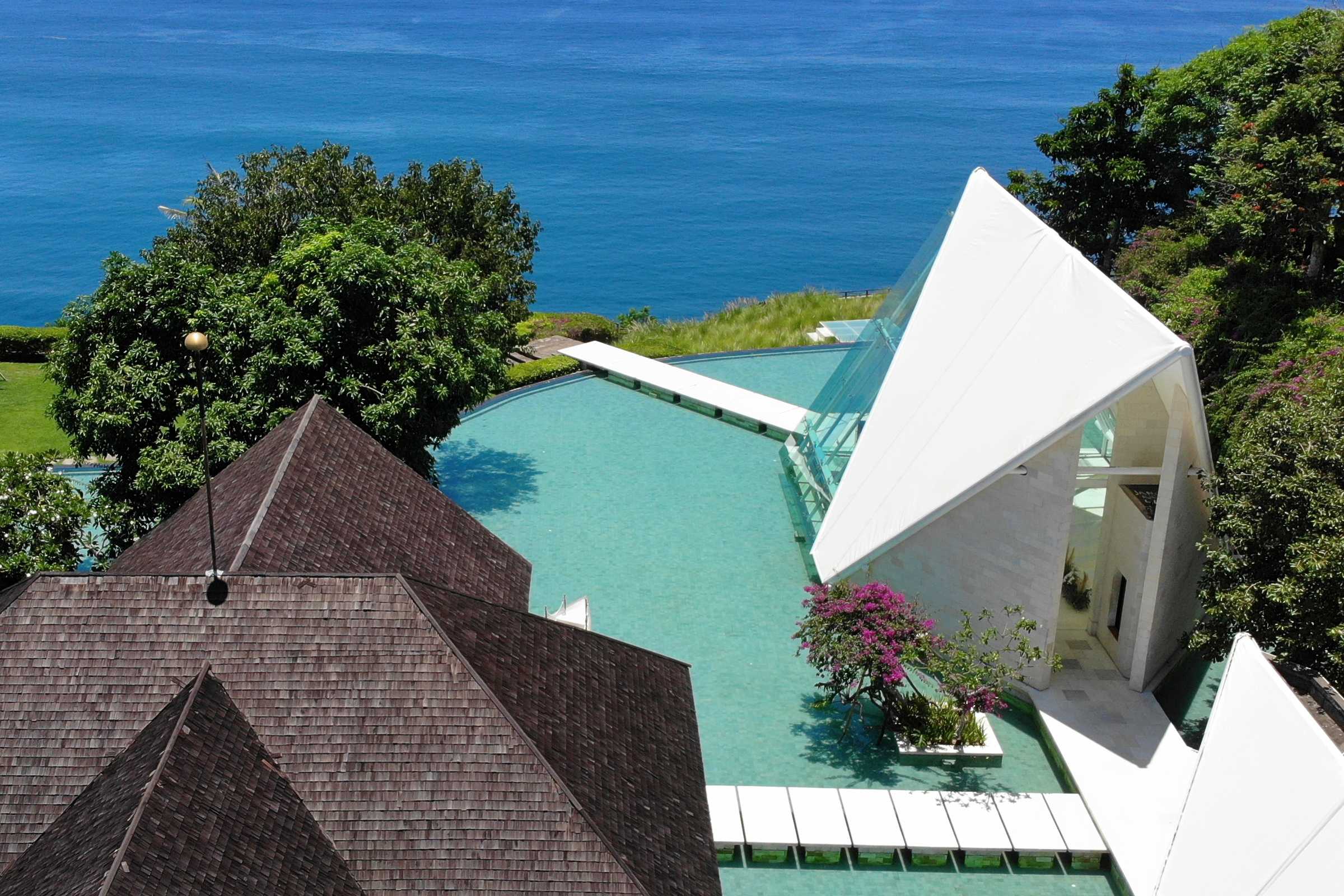
Tirtha is the Balinese word for holy water, and the chapel that carries the name stands in it. In 1998 a Japanese couple, Koji and Yuka Koreyasu, set out to create destination weddings in Bali, and in 2003 they opened Tirtha Uluwatu on the cliffs at the southern tip of the island: a site of 6,300 square metres built for weddings and nothing else, with a white chapel of steel and tension membrane set in shallow pools above the Indian Ocean. More than twenty years on, the same company runs a second wedding house seven minutes away by car, and it hosts one wedding dinner per venue at a time.

A chapel standing in water
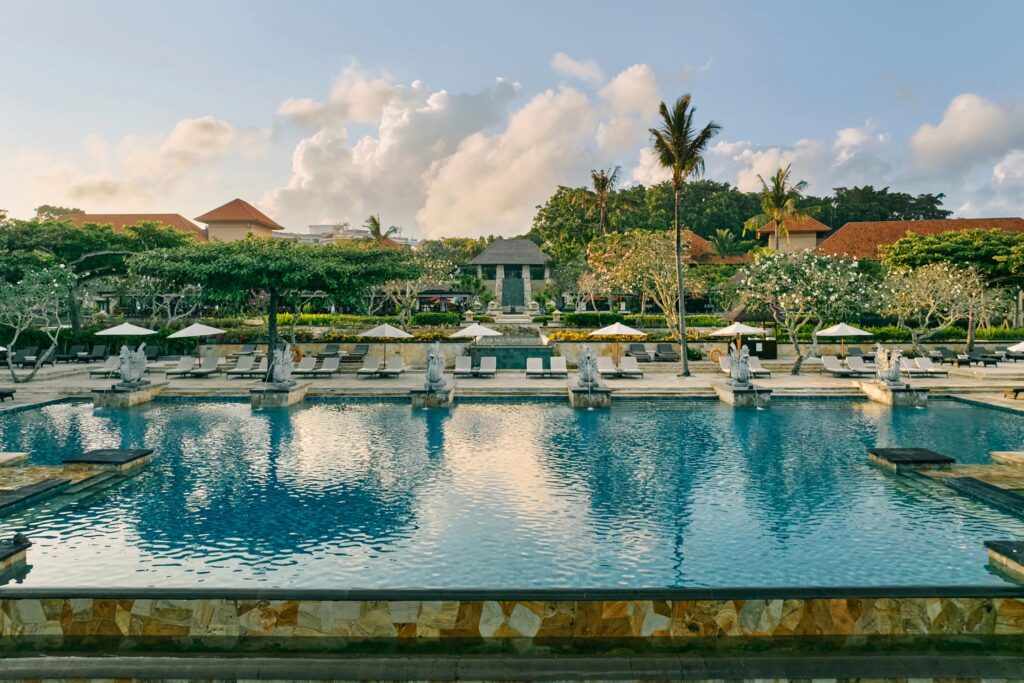
The chapel and reception centre appear among the projects of GKA Architecture, a practice based in Fremantle, Western Australia, which records the work as completed in 2003. The chapel is built of steel and tension membrane and has water on every side: shallow pools, with trees leaning over them, that hold its reflection at sunset. Beside it stands a traditional Balinese bale, used for dining in the open air.
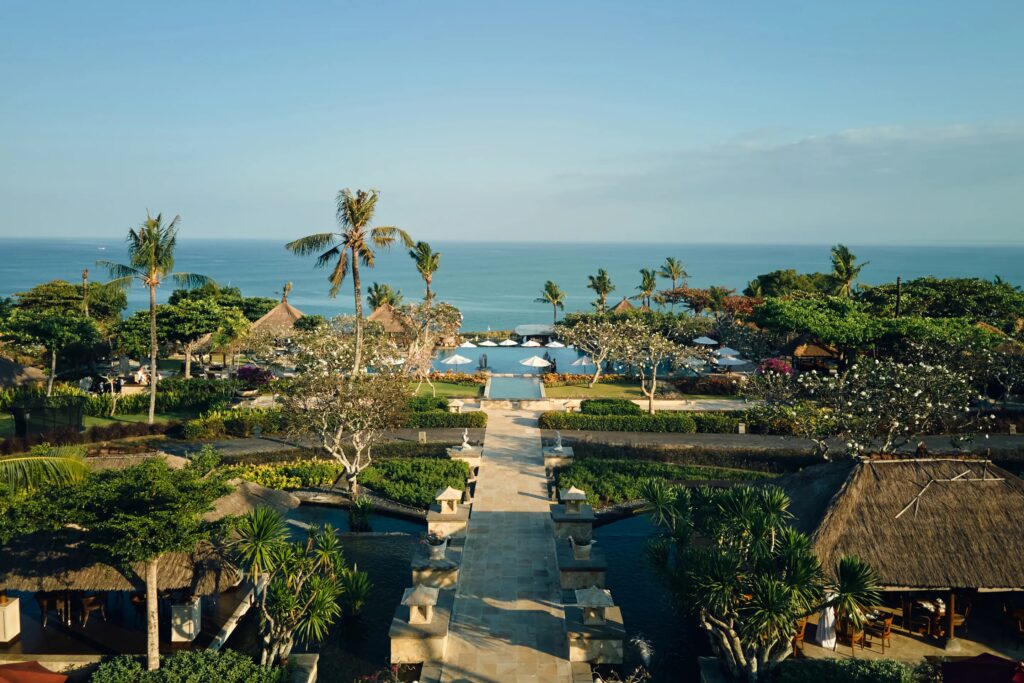
Set on a cliff about 100 metres above the sea, looking over a beach and the open ocean, the chapel seats 70. From the altar the view runs straight out to sea. Ceremonies are held at 9am, 11am, 2pm or 5pm, so a couple can choose between morning light and the late afternoon. The chapel is kept free of outside guests and hotel crowds.
Glass above the cliff
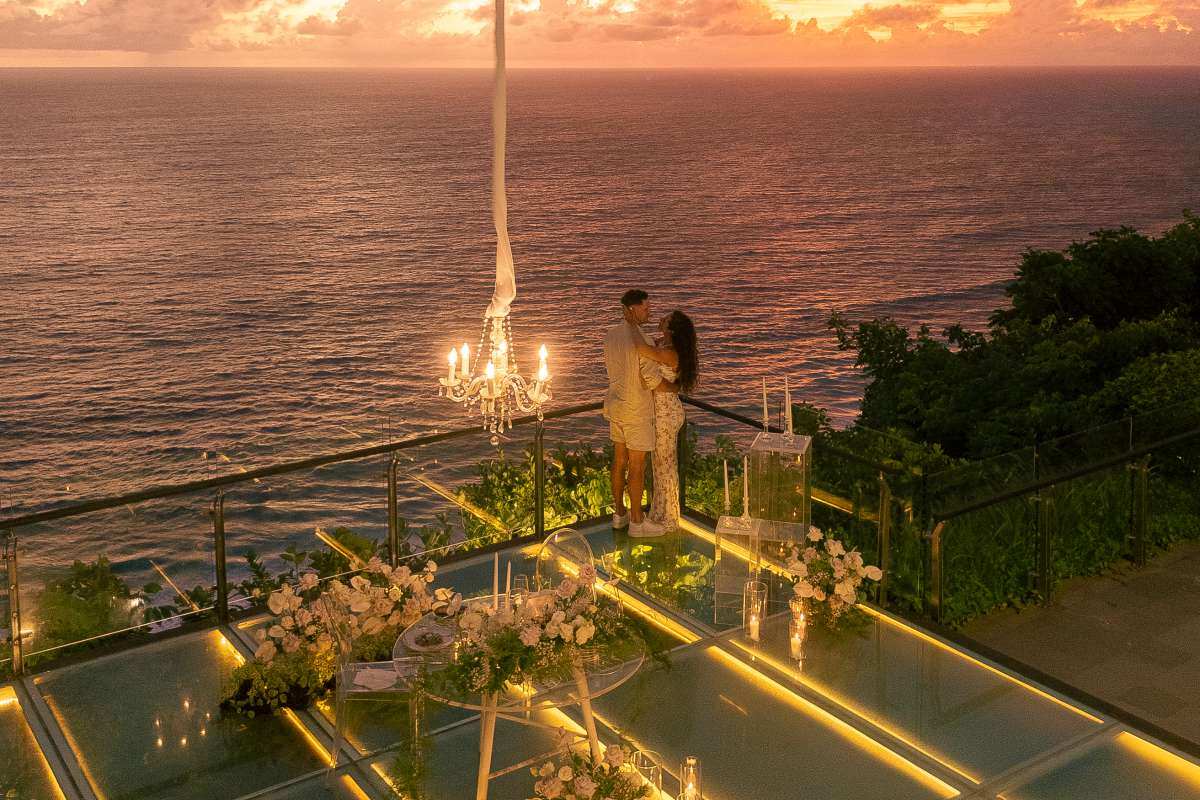
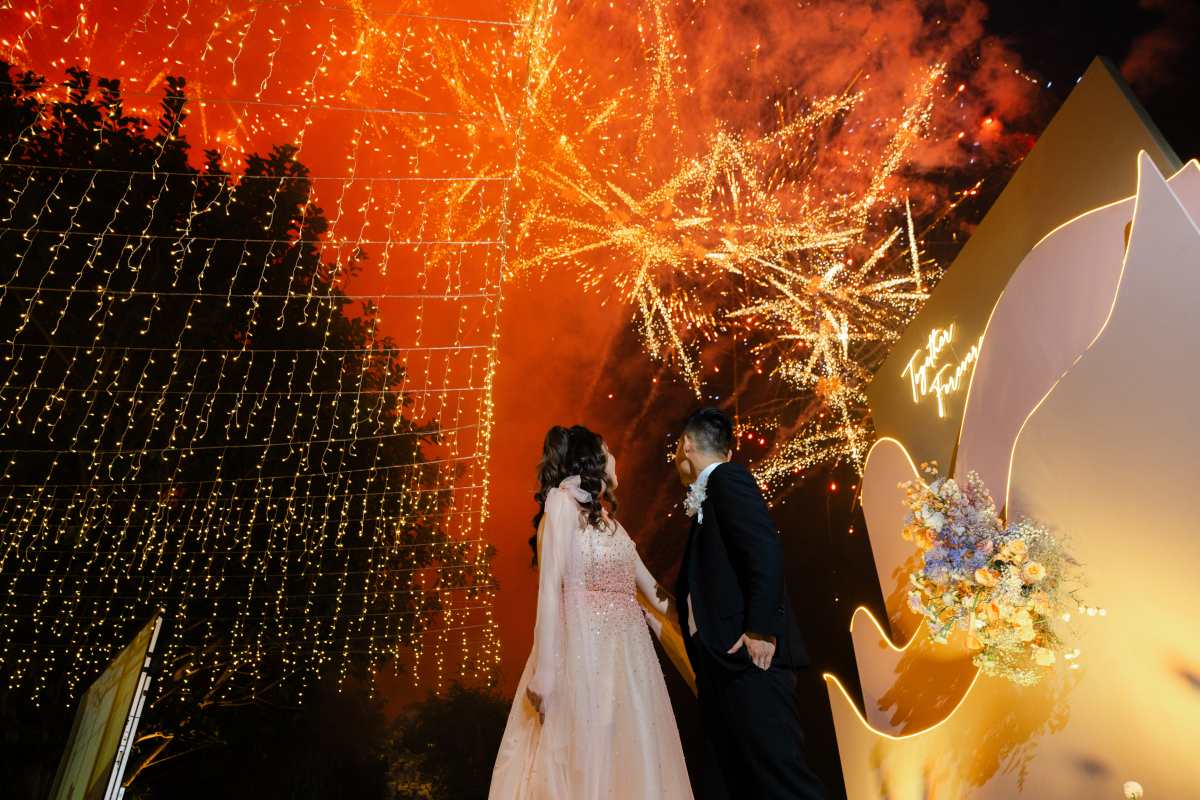
The chapel is one of three ceremony settings at Tirtha Uluwatu. The Glass Stage is a transparent platform that projects over the cliff, used for ceremonies of up to 150 guests at 5pm and for receptions of up to 60 at 7pm. The cake cutting and the first dance can take place on it, and a fireworks finale over the ocean can close the night. If the weather turns, a Glass Stage ceremony moves indoors to the Heaven Room.
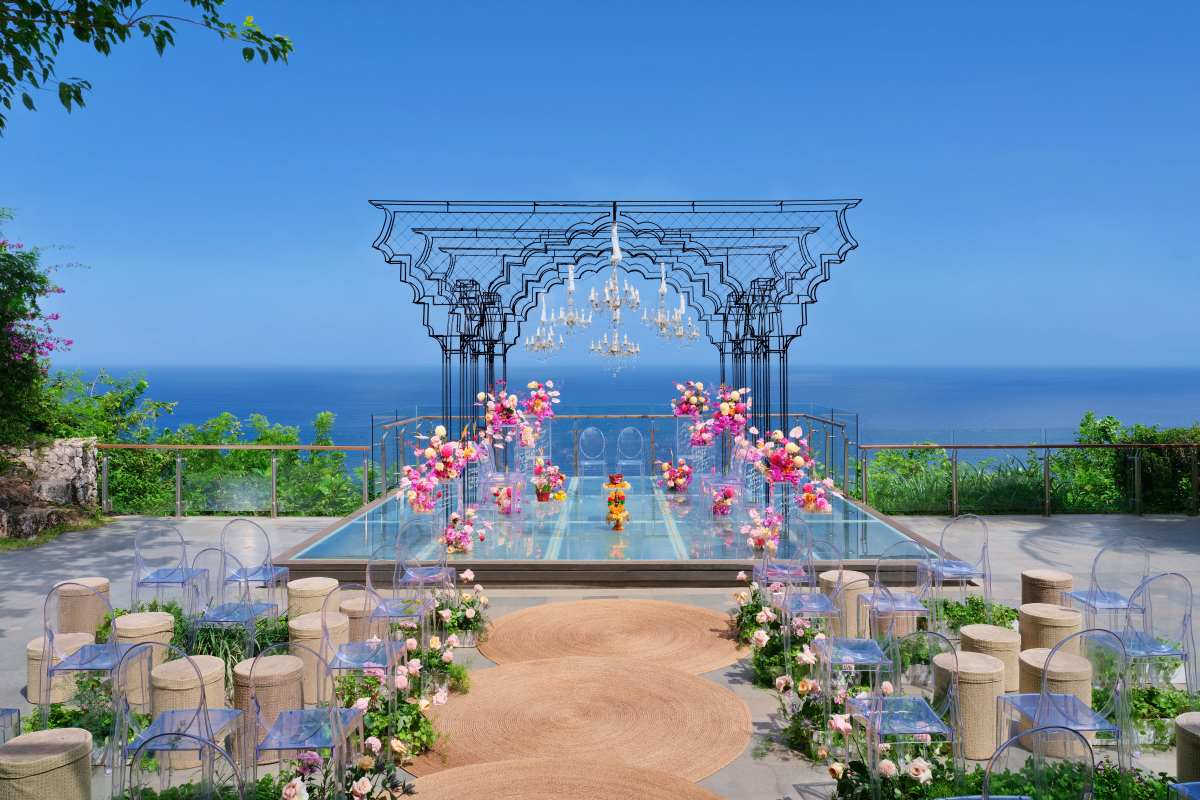
The Heaven Room occupies the upper floor of the main building. It is enclosed in glass and air conditioned, with high ceilings, a live open kitchen and a projector and screen for speeches. It holds up to 150 for a ceremony that is not religious. For dinner it seats 120, or up to 180 when the Open Terrace is added. Below it, Earth has its own open kitchen, a bar, a garden and a pool area, with room for about 300. The largest dinners use the Dining Pavilion together with the Cliffside Garden, which between them hold up to 350.
Five Uluwatu Suites are kept for the couple and their photographers while they get ready, and a floating stage in the reflection pool is used for photographs and the cutting of the cake. The After Party Room is soundproofed and sits under mango trees.
Glass House, the garden alternative
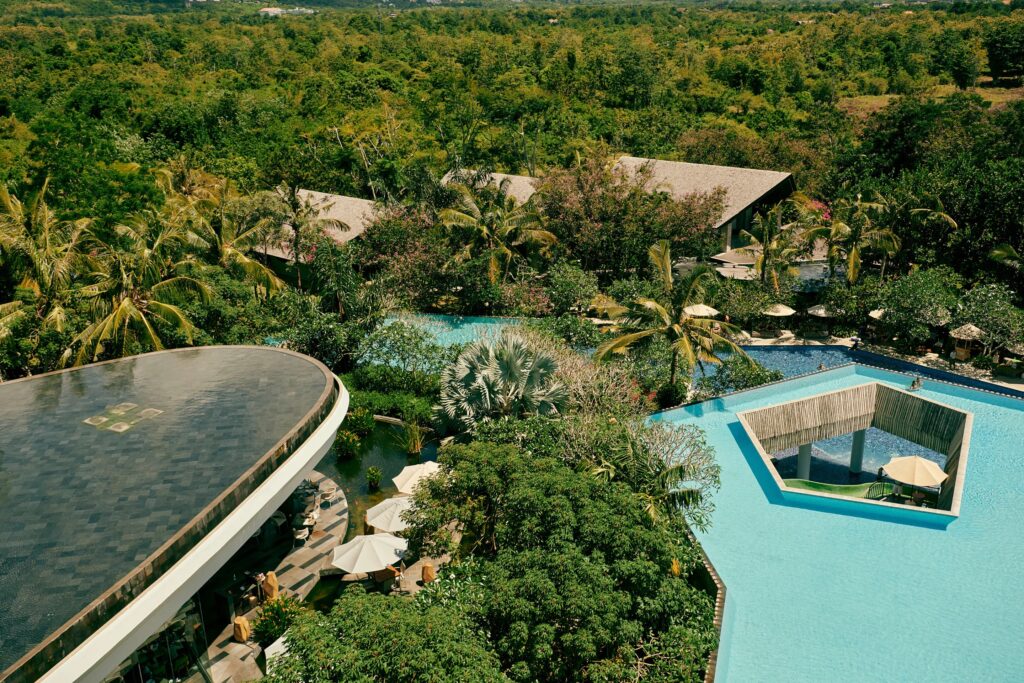
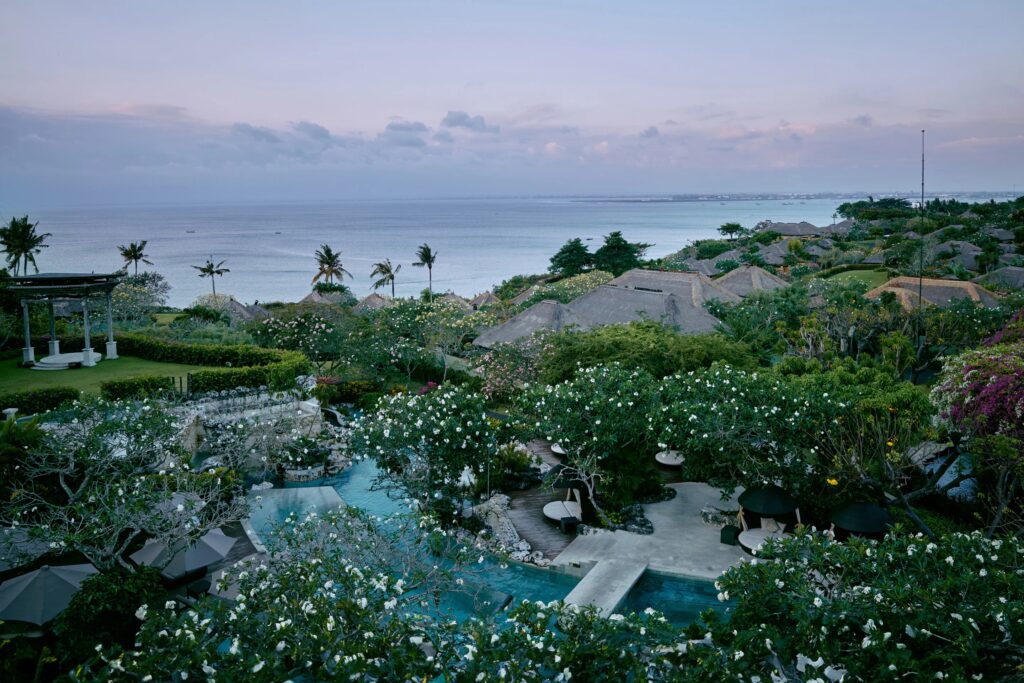
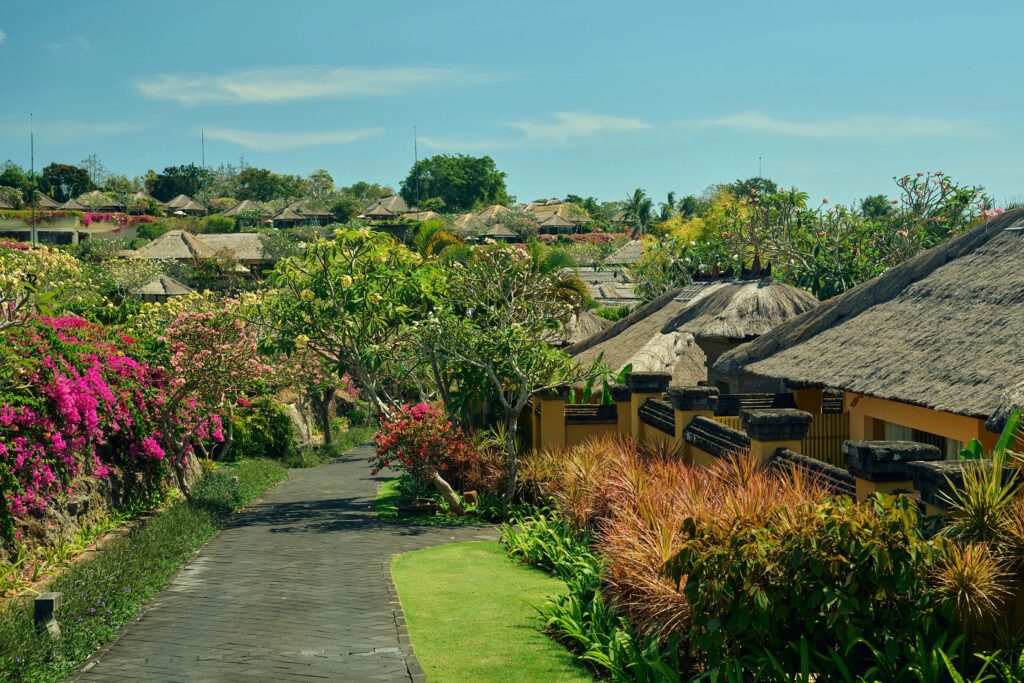
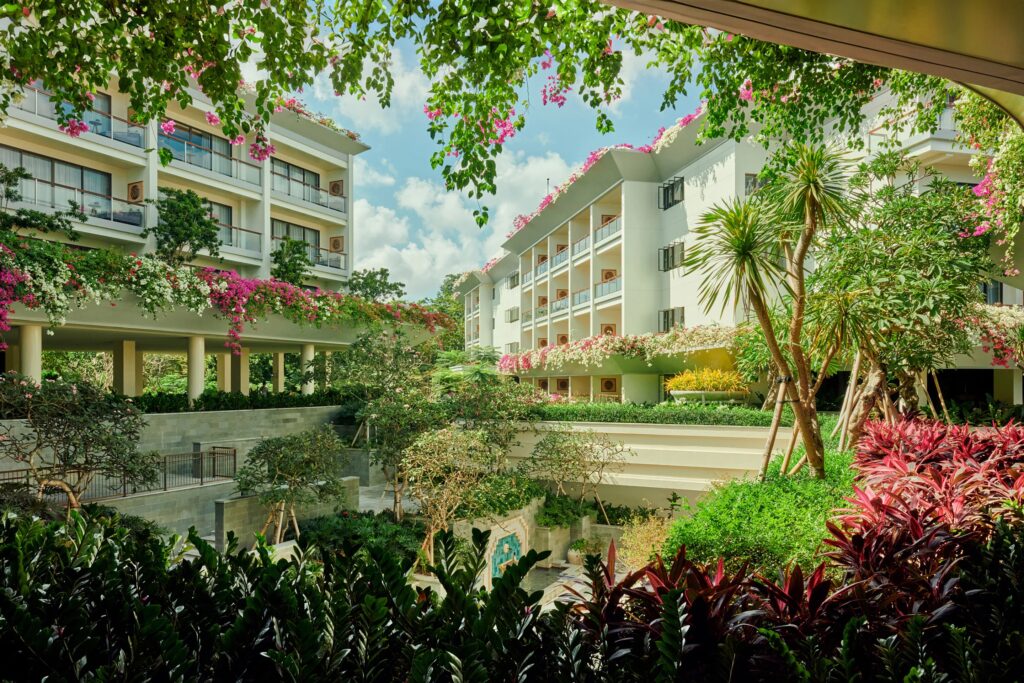
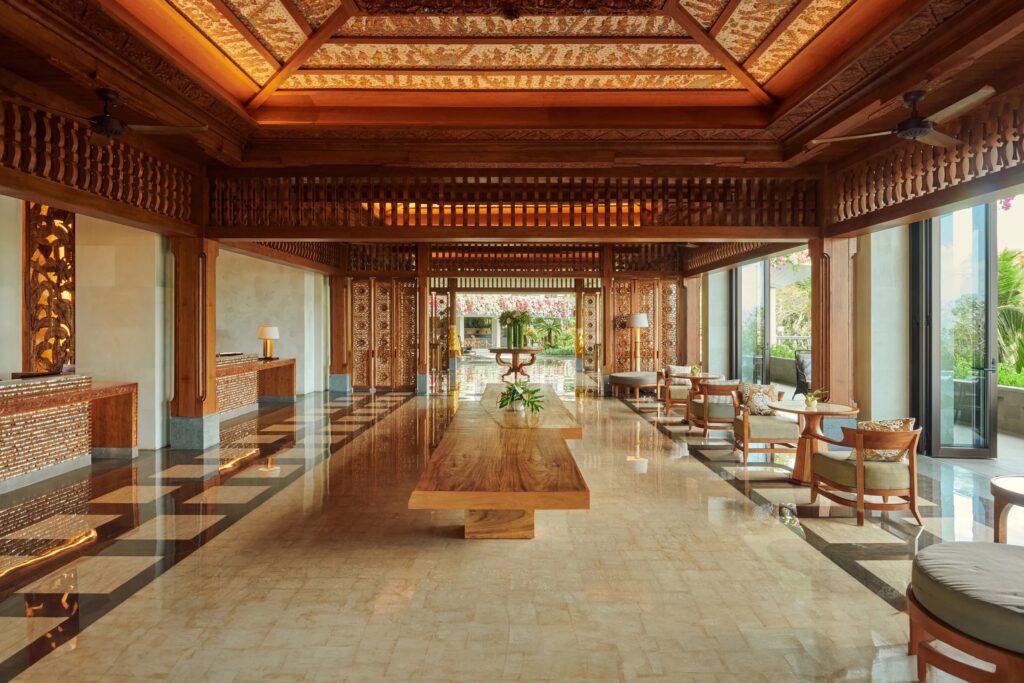
Glass House by Tirtha is the company’s second venue, a wedding villa on a 3,000 square metre site. Its entrance was designed by an Italian architect, and the house mixes that modern, minimal design with Balinese gardens; glass walls open the rooms to the trees around them. It is the only part of Tirtha where the wedding party can sleep. There are three bedroom suites: a master bedroom for the couple, which opens onto a Japanese style garden with running water, and two guest bedrooms, one over a fountain garden and one looking onto the Moonlight Garden.
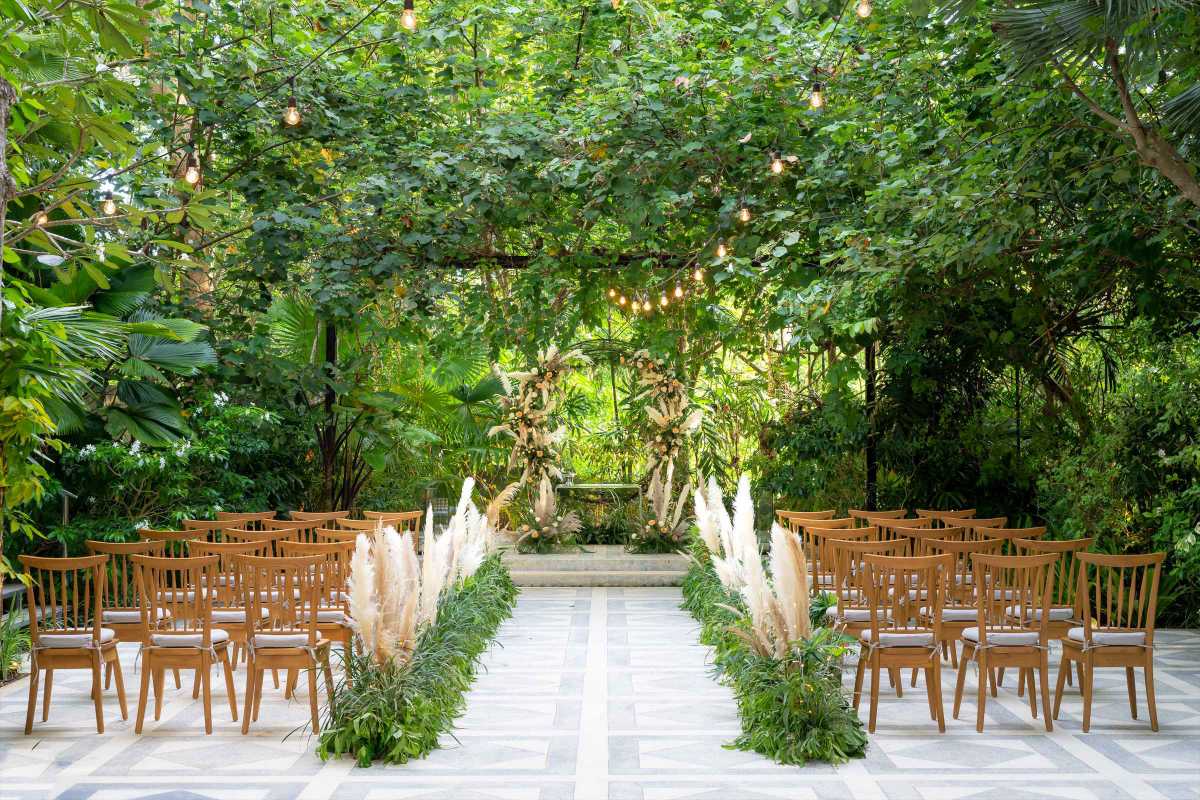
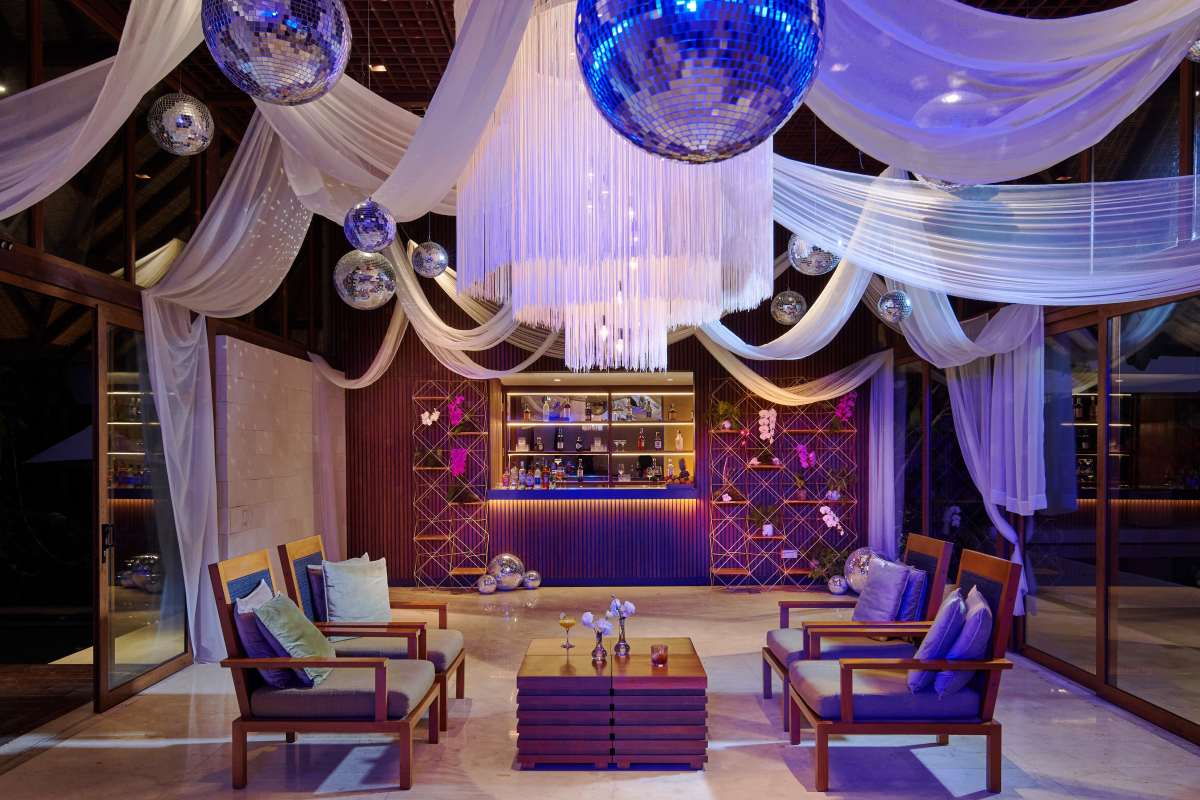
The Moonlight Garden is an open air setting with a stone aisle under the trees, taking 100 for a ceremony at 4.30pm and 150 for dinner, with a dance floor under strings of lights. The Plumeria Room, a greenhouse of floor to ceiling glass with chandeliers, seats 100 for dinner and can also hold a ceremony. Cocktails go to the pool terrace beside the lobby lounge, where a fire dance can be booked, and the Yellow Bamboo Garden next door is used for photographs and the after party.
Two venues, one weekend
The two venues can be used together. The Eve package is built as a three day, two night stay. The couple check into Glass House on the first day, where a welcome party for close friends can be held. On the wedding day they have breakfast and get ready at the house, then drive to the cliff, where an Uluwatu Suite is kept for them before a 2pm ceremony in the chapel. While the couple are photographed at Tirtha Uluwatu, the guests return to Glass House for cocktails, and the evening continues there with dinner, speeches and the first dance. An after party with a DJ costs extra, and Tirtha arranges transport back to the guests’ hotels at the end of the night.
Tirtha’s own planners organise and run each wedding as part of the package, with more than ten staff on duty on the day. Couples usually arrive three hours before the ceremony for hair and make-up.
A Japanese chef and an in house florist
The catering is in house and led by Executive Chef Ryoichi Kano. He was born and raised in Kobe, began training in French cuisine at 19, worked in leading Kobe restaurants, trained in Italy and cooked on a Japanese cruise ship before becoming head chef of a newly opened restaurant in Singapore, where he was nominated for honours that included the World Gourmet Summit. His cooking is French in technique with Japanese and Asian flavours, and local vegetables, herbs and seafood. Couples can choose a four course French menu, a four course Japanese fusion menu, a buffet or a vegan buffet, with food carts and canapés alongside. On selected evenings each month he also cooks Tirtha Dining, an omakase dinner at Tirtha Uluwatu served by reservation.
The flowers and styling come from Hanamizuki, Tirtha’s own decoration team. It works with the couple directly, starting from a questionnaire or a call about their story, colours and budget, then a first design and estimate, a mood board and a final presentation. Designs are drawn for a particular venue, so the venue is chosen first. Many of the flowers are imported, which means some are seasonal; when one is unavailable on the date, the team proposes another.
Ceremonies of every faith
Tirtha arranges ceremonies of many religions. It has packages for an Indian Hindu wedding, a Muslim wedding with the Ijab Qabul and a reception, and a Catholic wedding, in which the rite takes place in a Catholic church and the celebration follows at one of Tirtha’s venues. Catholic ceremonies cannot be held in the chapel itself. Couples who want only the party can book a reception alone, with the ceremony held elsewhere. Tirtha also plans weddings in Japan, in Tokyo, Kyoto and Hakone.
Deke and Alison, who had known each other since childhood, married at Tirtha Uluwatu on the Audrey package. A rowboat placed by the water near the chapel recalled their engagement in a canoe in Hoi An, and Hanamizuki hung the reception with flowers beneath crystal chandeliers in lilac, blush, bone white and cool blue.
Uluwatu and the dry months
Tirtha is in Pecatu, the village on the Bukit Peninsula that is also home to Pura Luhur Uluwatu, one of Bali’s sea temples, which stands on a cliff about 70 metres above the water. A Kecak dance based on the Ramayana is performed there every evening at 6pm against the sunset, and the temple’s long tailed macaques are known for taking sunglasses from visitors.
The dry season, from about May to October, is the recommended time to marry, and every venue has an indoor reception area for the wet months. Ngurah Rai International Airport is about 45 minutes away. Apart from the Glass House suites there are no rooms on site, so guests stay in hotels around Uluwatu, Jimbaran and Nusa Dua. Both venues have lifts and accessible restrooms, and staff help guests where there are steps. Prices are on enquiry, with 15.5% government tax and service added; a deposit secures the date and the final payment falls 30 days before the wedding.
The cliff or the garden
Tirtha suits couples who want a venue that exists only for weddings, with the chapel, the kitchen, the flowers and the planning under one team and no other party on the site. Because each venue takes a single dinner, the decision to make first is where the evening happens: on the cliff at Tirtha Uluwatu, which can seat up to 350, or in the garden at Glass House, which takes 150 and lets the couple stay the night. Read the Tirtha profile, our guide to marrying in Bali and the Indonesia Wedding Atlas, then check your date.