Charles Fitzroy Doll designed two extravagant hotels on Russell Square, and only one of them is still standing. The Imperial, his second hotel on the square, was demolished in 1967. The first, the Hotel Russell, was completed in 1898 and opened in 1900; it has traded as Kimpton Fitzroy London since 2018, and Historic England calls it Doll’s finest remaining building. Weddings came early. The building held its first in 1903, and couples now marry in its restored ballroom, take their drinks in Palm Court next door and keep their guests under the same roof for the night.

A French château in terracotta
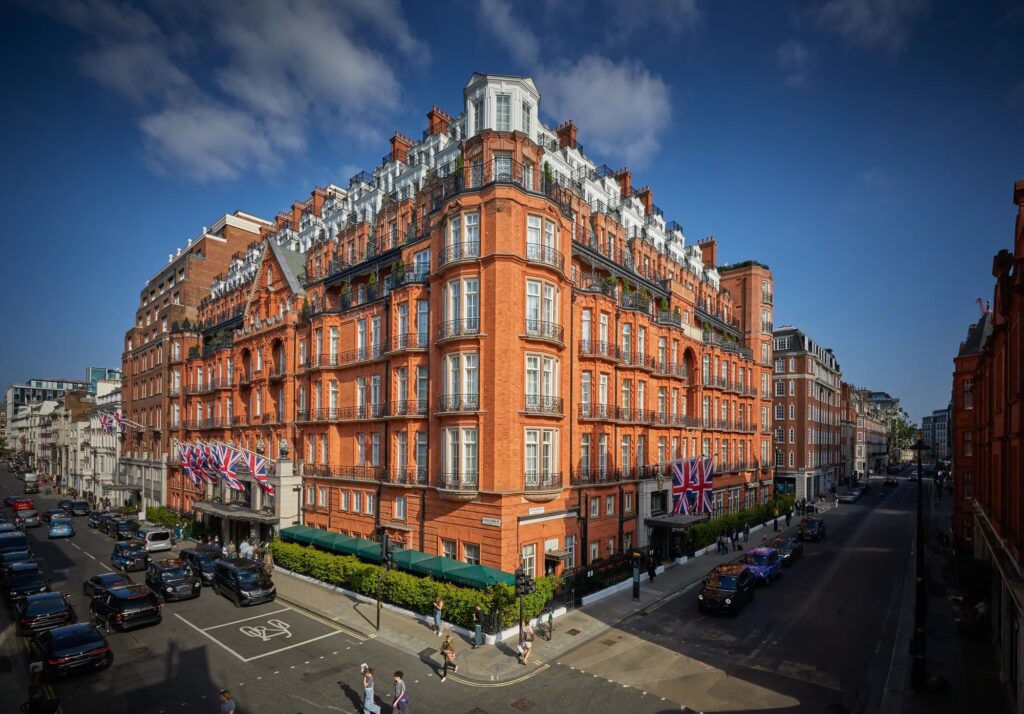
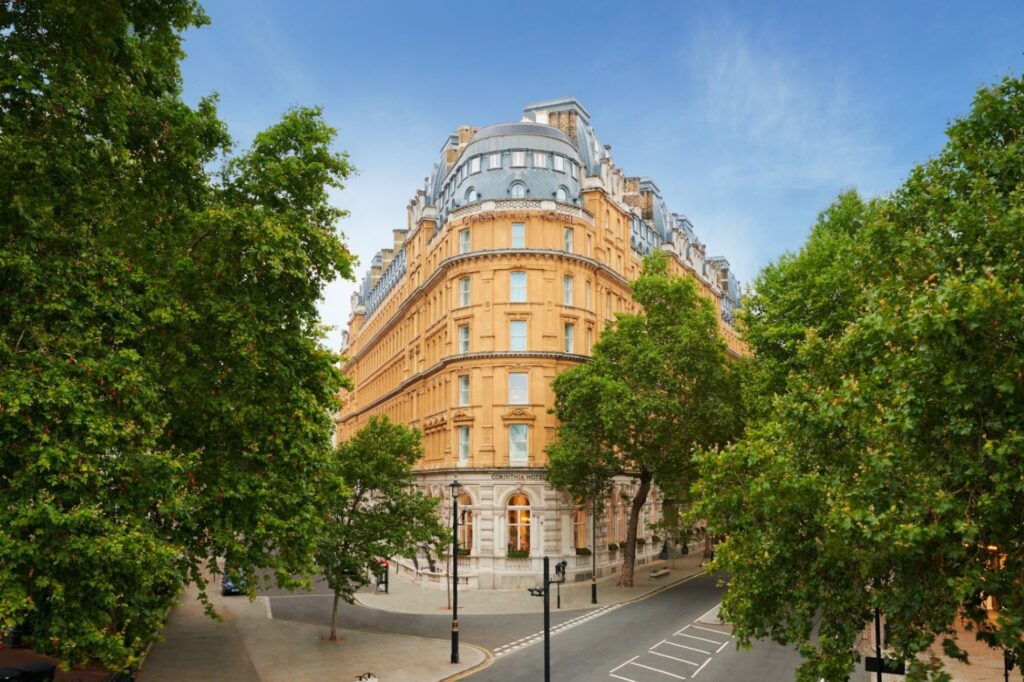
Doll was surveyor to the Bedford Estates in Bloomsbury and Covent Garden from 1885, and Russell Square was estate land, laid out in 1804 and named after the Earls and Dukes of Bedford. For the hotel he looked to France. The style is a flamboyant French Renaissance, drawn from engravings of the Château de Madrid by the Bois de Boulogne in Paris. Eight storeys of red brick and terracotta fill the east side of the square in seven gabled bays between octagonal corner turrets, under roofs of green fishscale tiles. Building ran from 1892 to 1898, and the date 1894 appears high on the front, above the entrance.
Over the main door stand life size statues of four British queens, Elizabeth I, Mary II, Anne and Victoria, modelled by the sculptor Henry Charles Fehr, and the first floor balconies carry the coats of arms of the world’s nations as they stood in 1898. The roof once had a central copper dome and lantern. The hotel was one of the few not taken over by the War Office during the Second World War, but an air raid in 1941 badly damaged the dome, and it was never replaced.
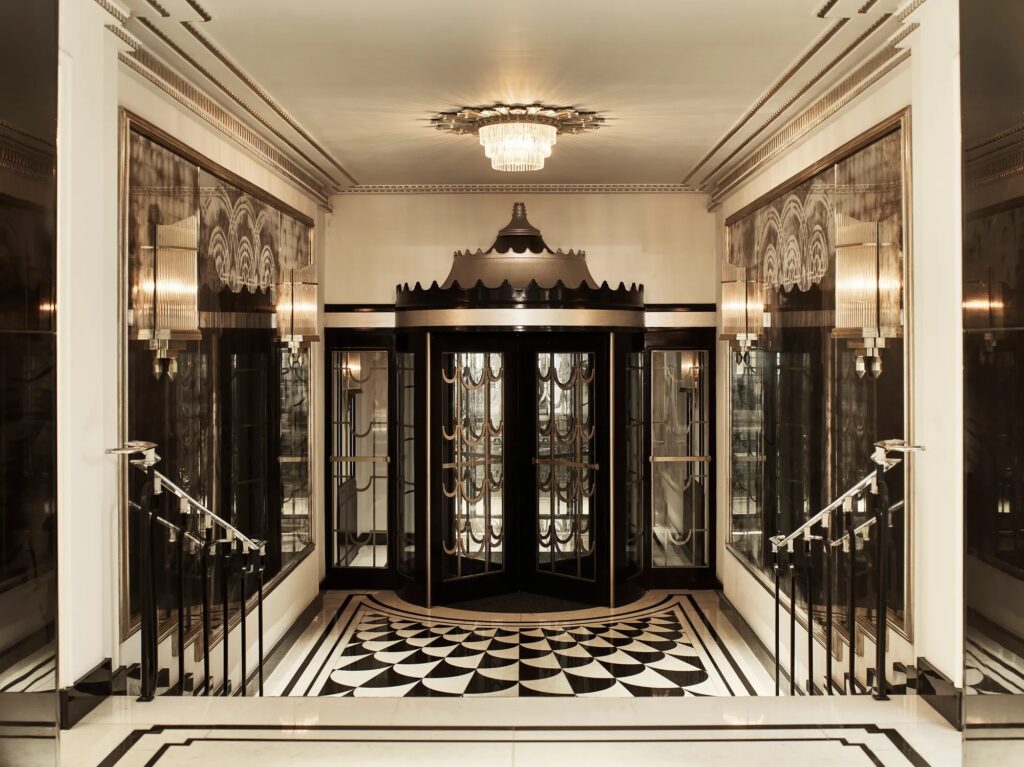
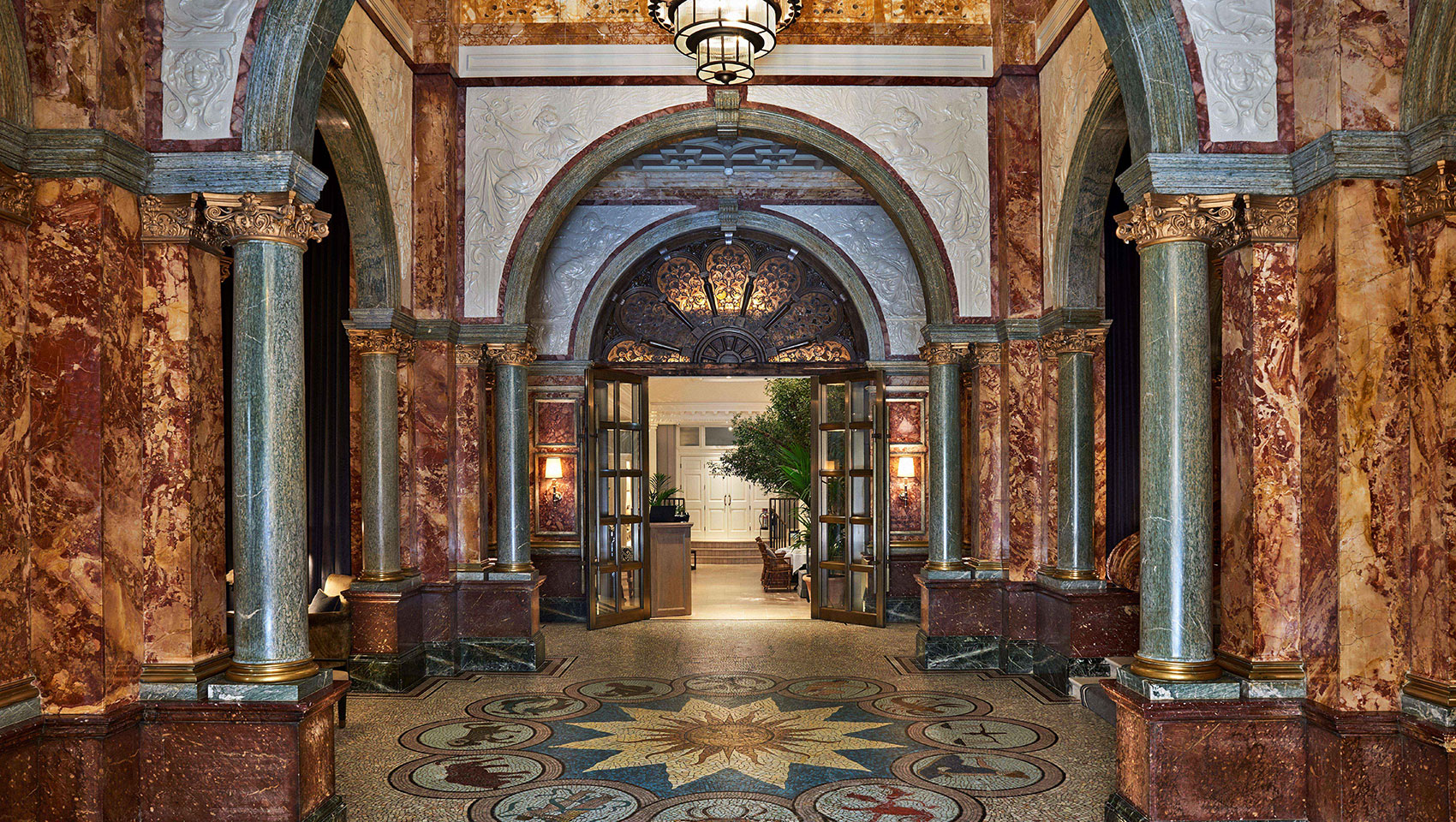
The building, with its railings, terracotta piers and lamp standards, has been listed Grade II* since 1970. Inside, the entrance hall is lined in pink and red marble and divided into three by marble arcades, with moulded plaster figures of an early Art Nouveau character in the frieze and spandrels. A staircase of Pyrenean marble rises from the hall under chandeliers, and the original Zodiac mosaic is set into the floor. The staircase, the façade and the garden of Russell Square across the road all serve for photographs, and the garden was replanted in 2002 on Humphry Repton’s early nineteenth century layout.
The dining room and the Titanic
Doll designed the hotel’s dining room in 1898 and is credited with the first class dining saloon of RMS Titanic, which drew on it. That room is now Fitz’s Brasserie, reputed to be almost identical to the ship’s saloon, and from Thursday to Sunday it serves an afternoon tea named The Tea Behind The Titanic. On the second floor stairs sits a bronze dragon called Lucky George, and an identical dragon is reported to have been aboard the ship. George appears on the Kit Miles cushions in the bedrooms and on the mugs in the rooms.
The ballroom, restored
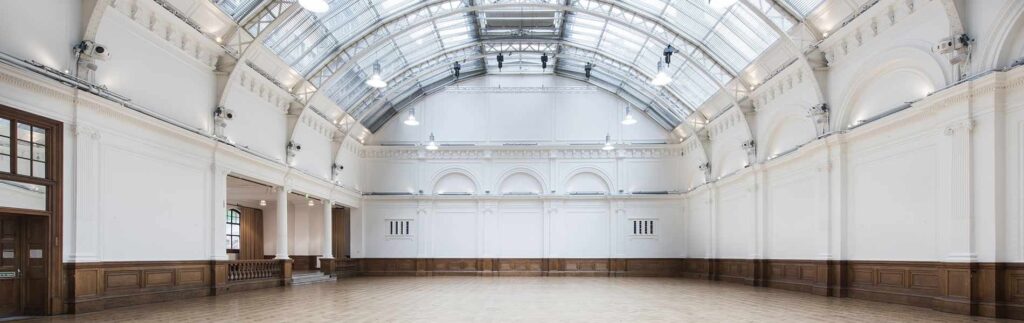
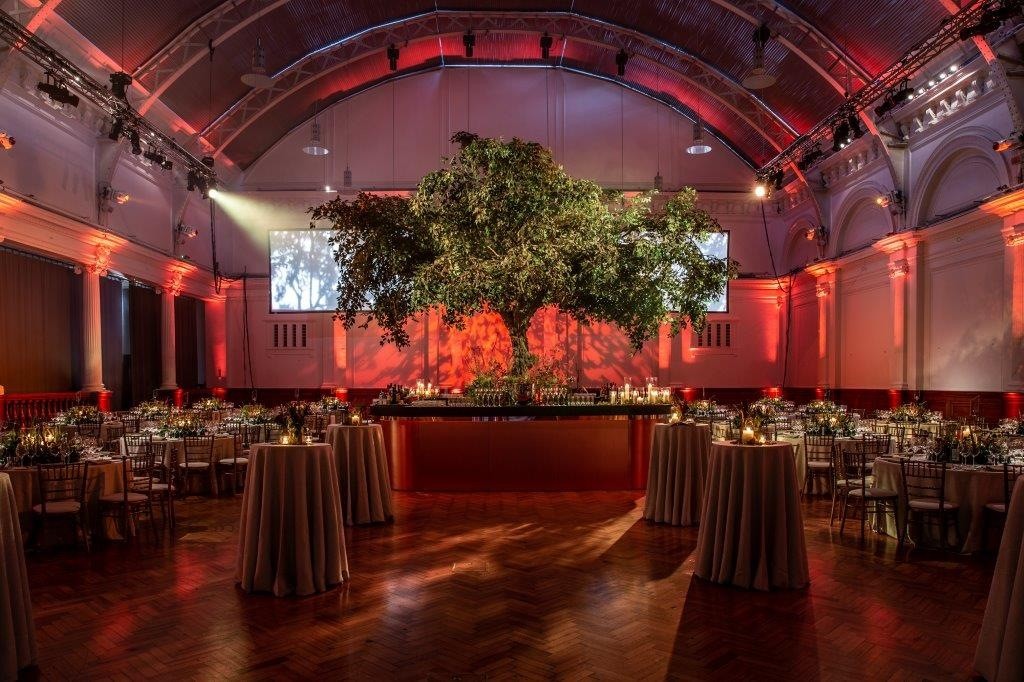
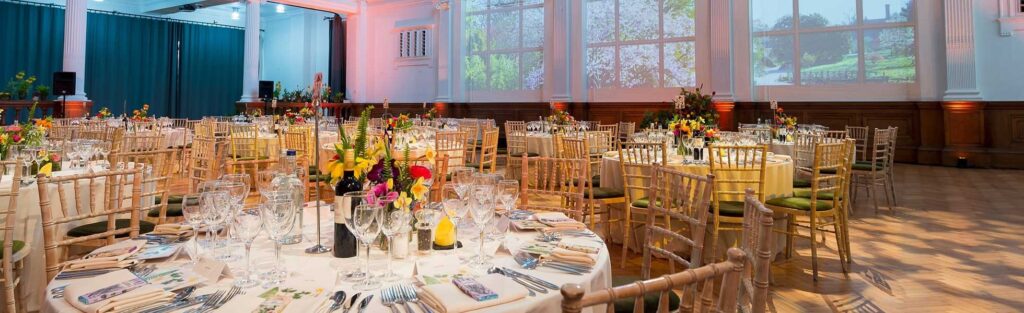
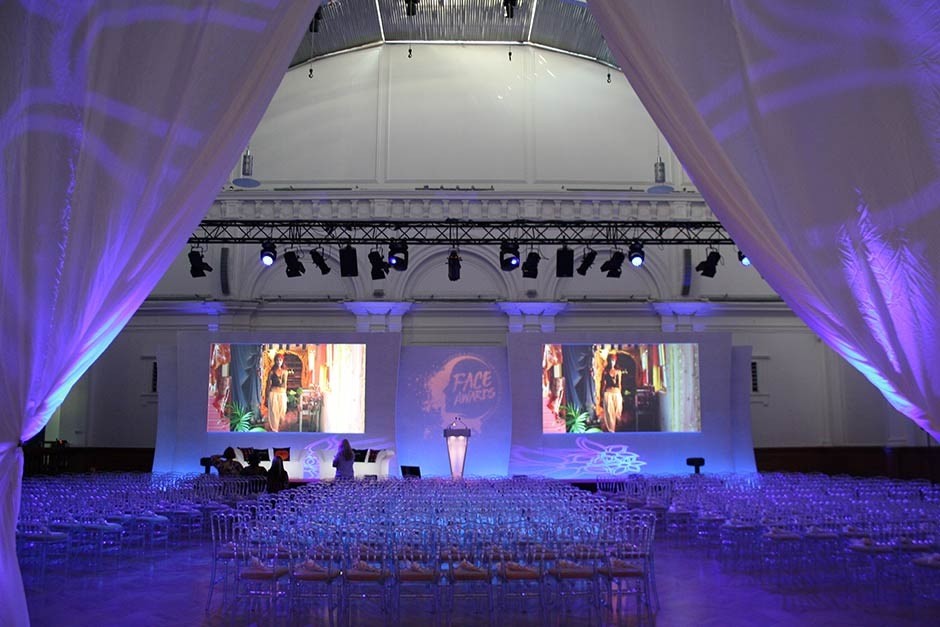
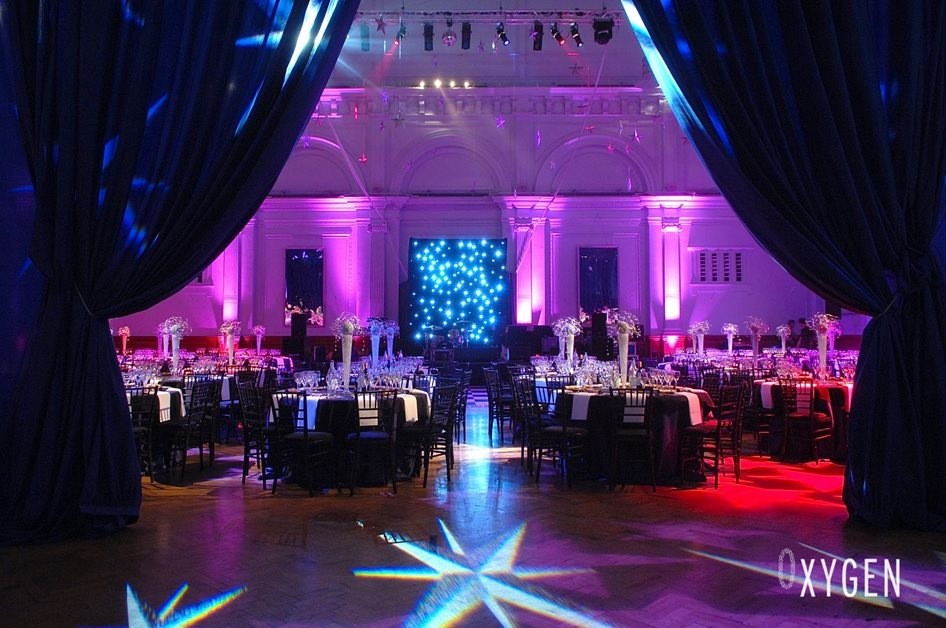
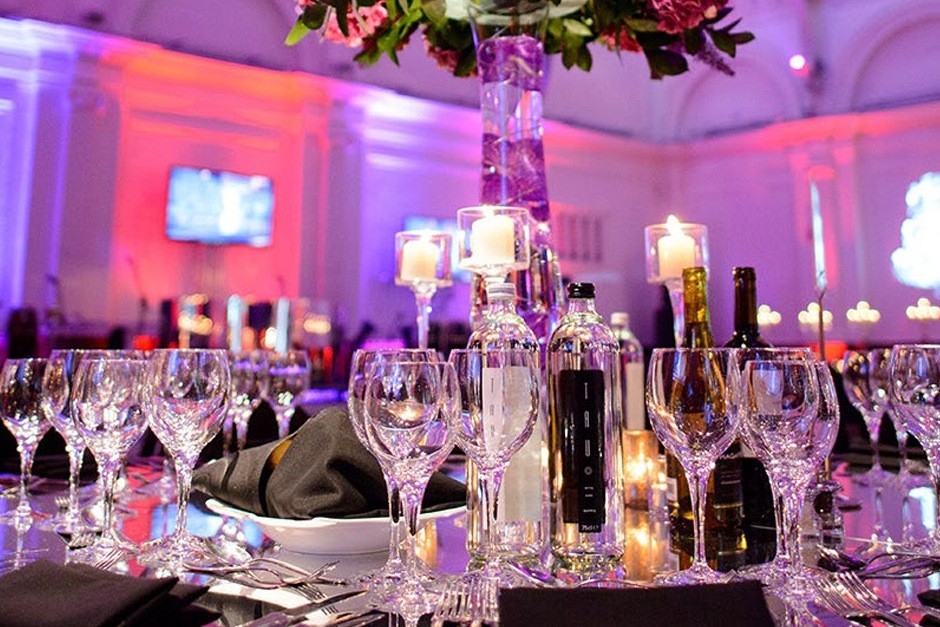
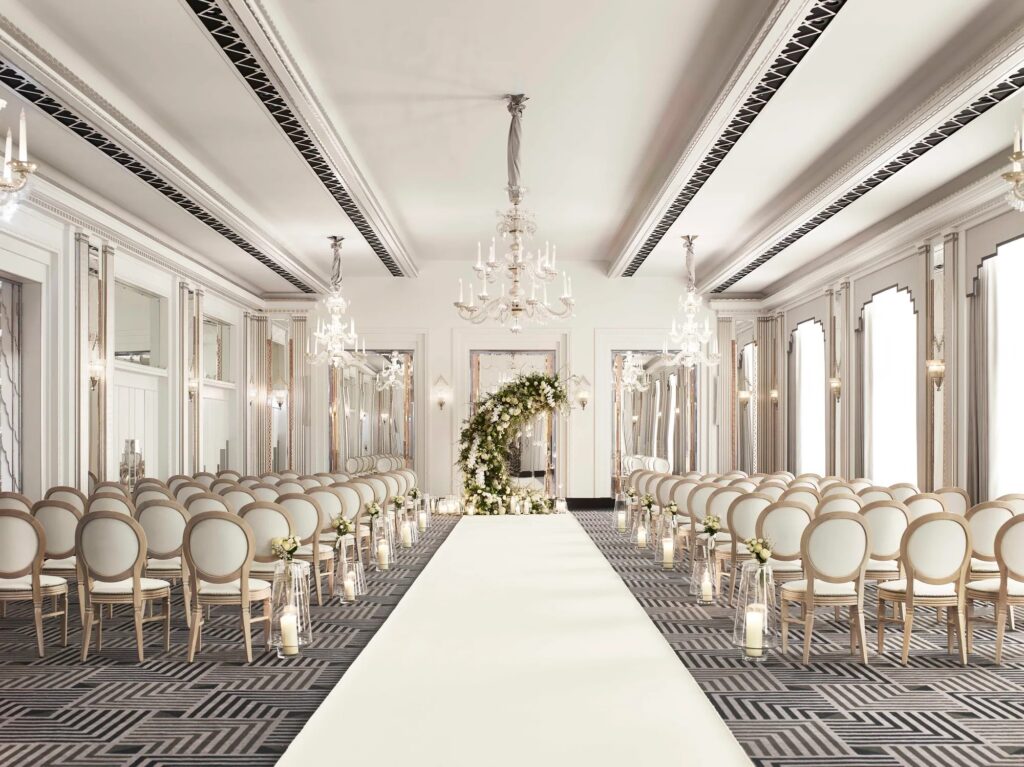
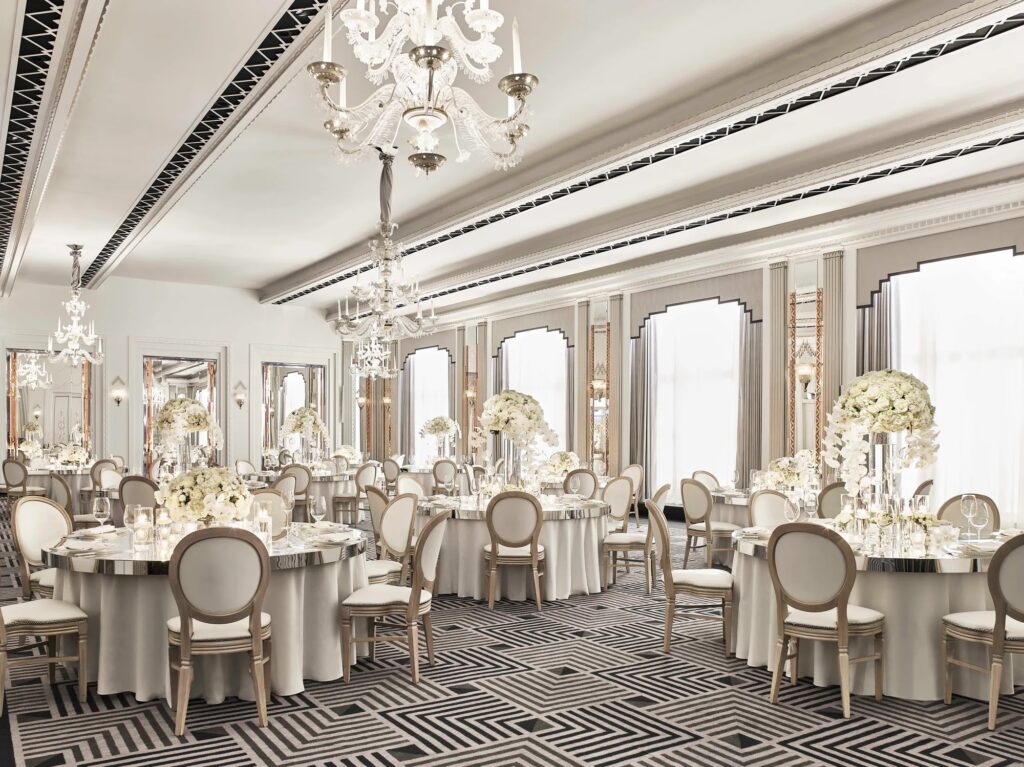
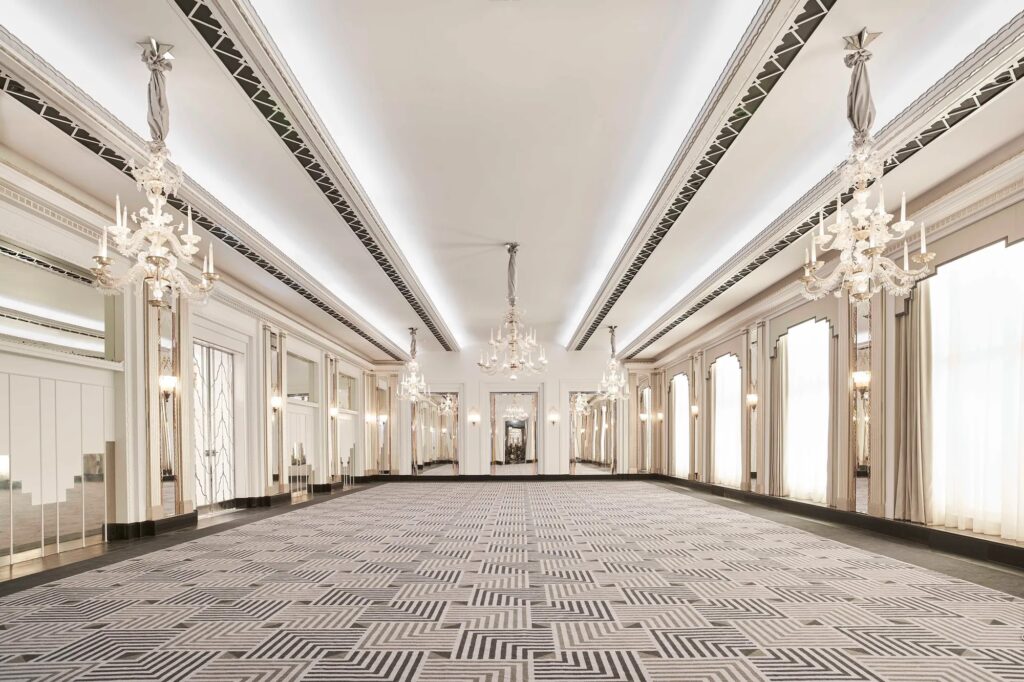
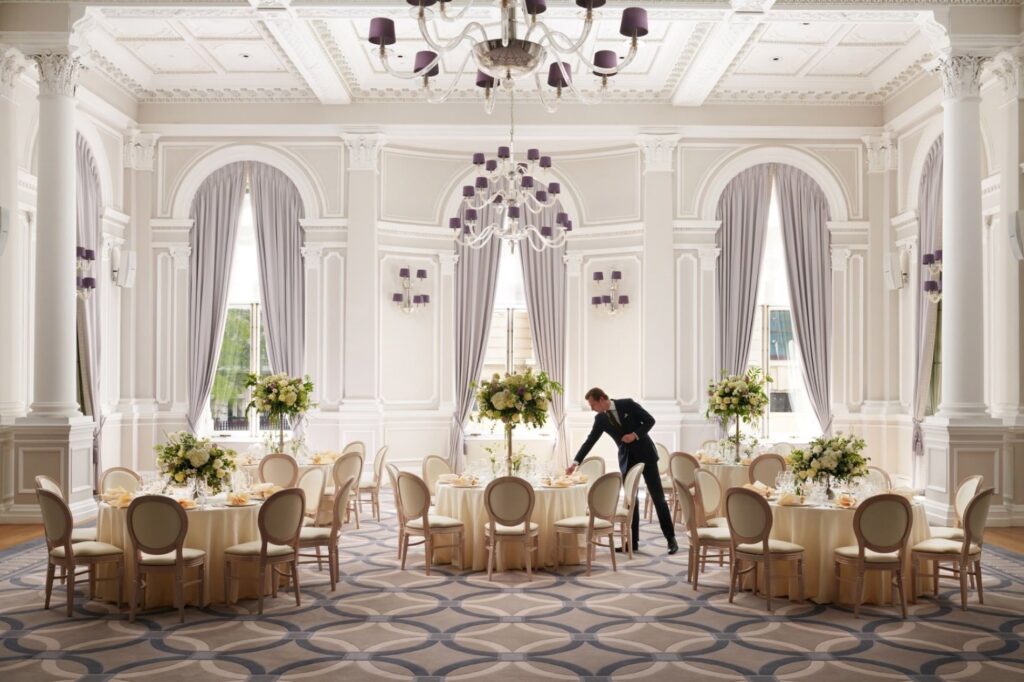
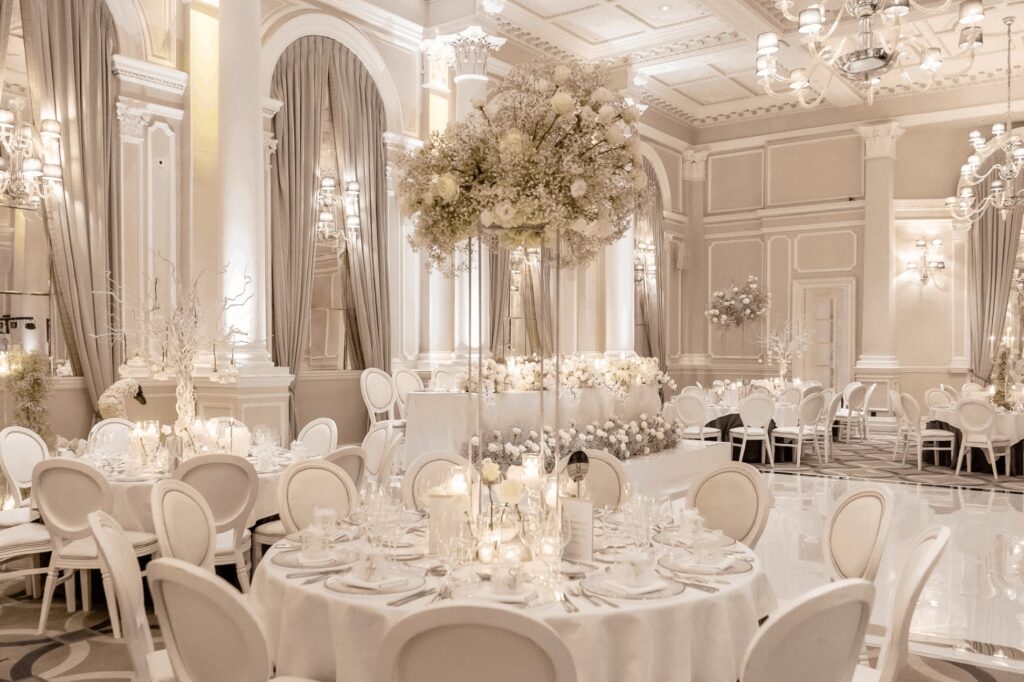
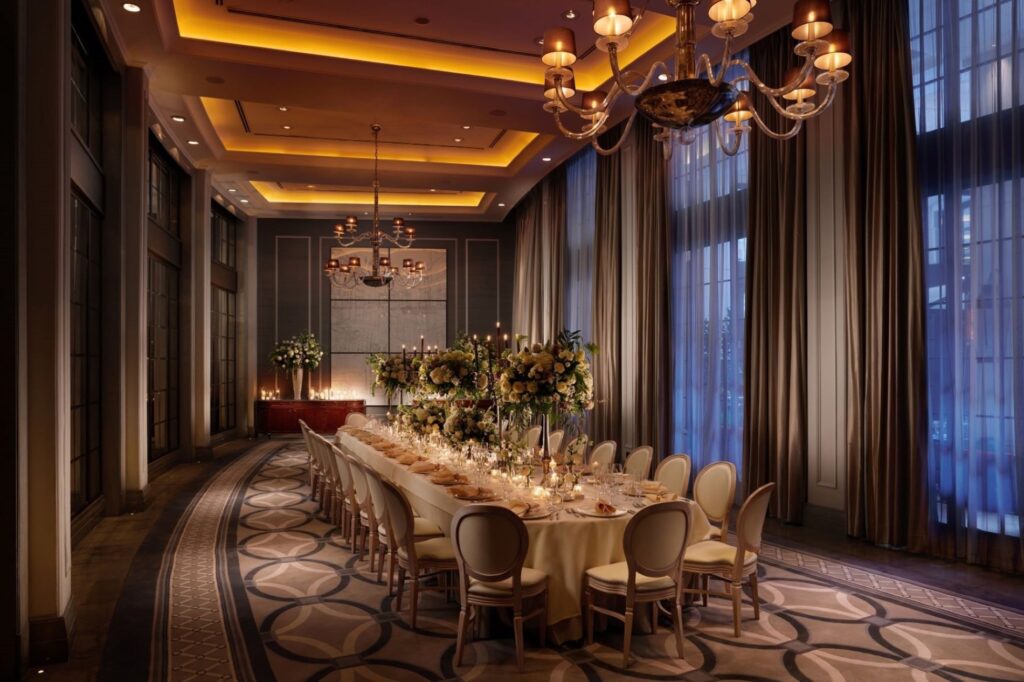
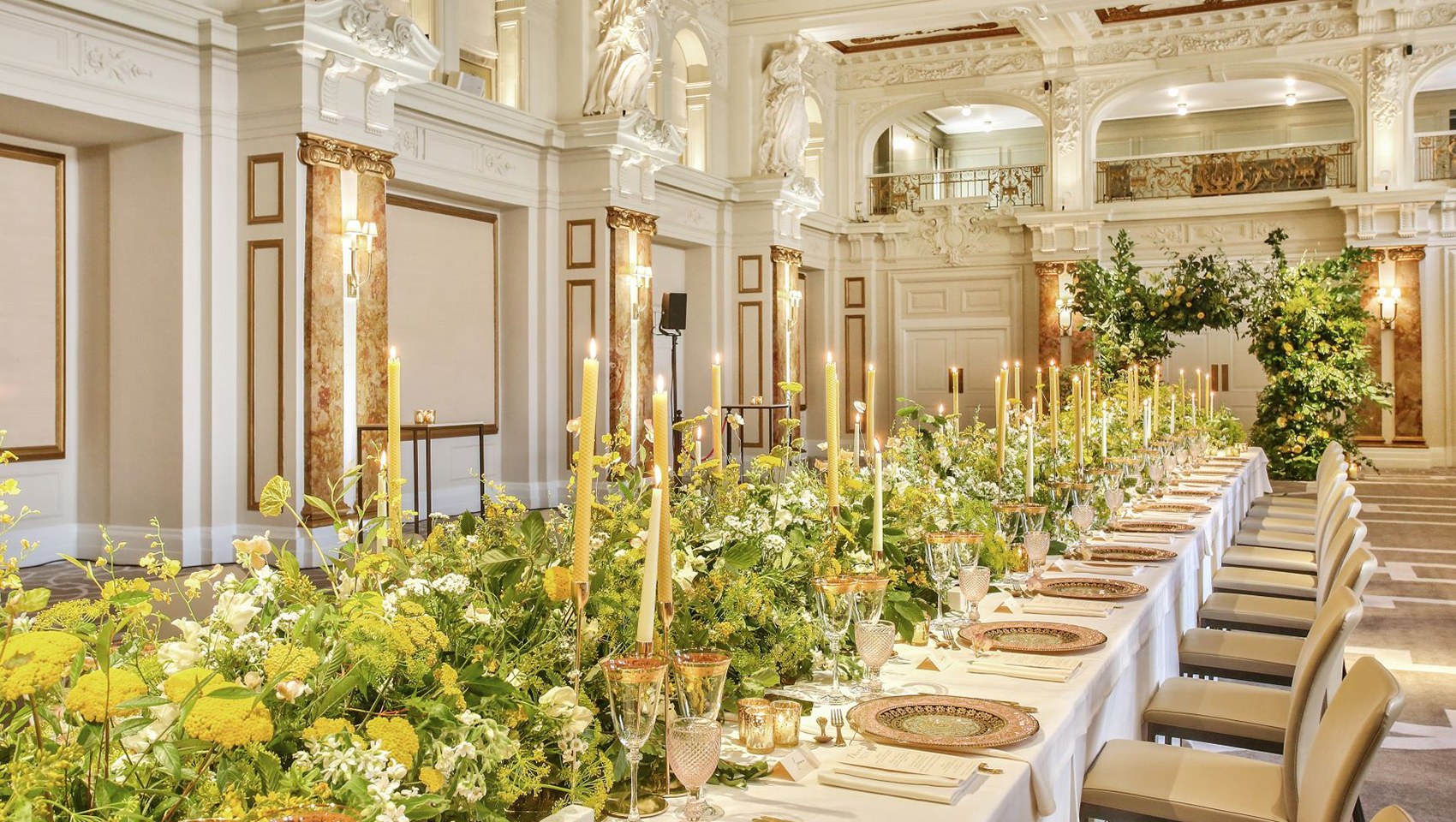
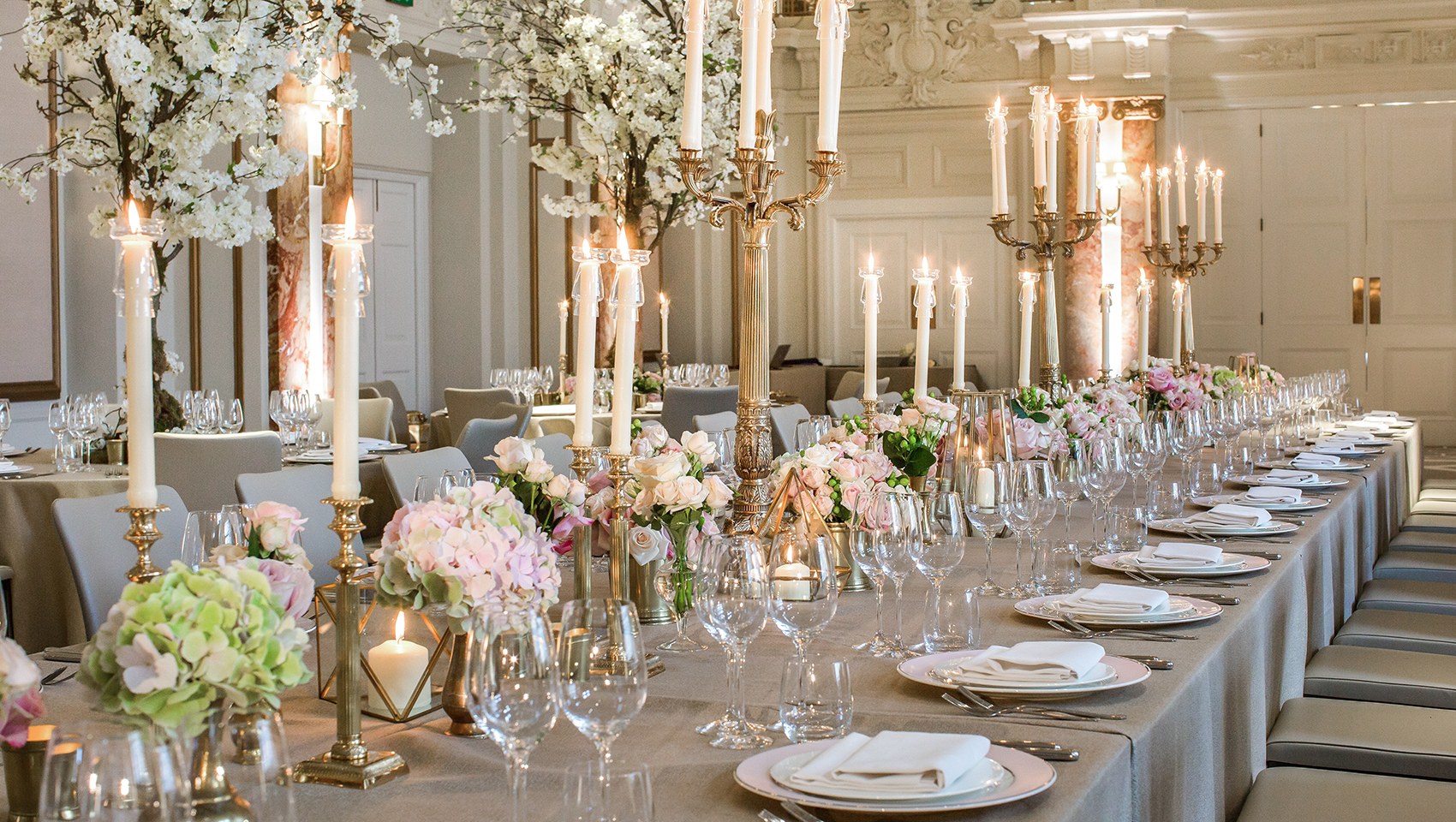
The hotel reopened in April 2018 after an £85 million refurbishment, briefly as The Principal London, and became Kimpton Fitzroy London that October under InterContinental Hotels Group. The work restored the original ballroom, and it is the centre of a wedding here. It is 30 metres long, 12 wide and 7 high, with an ornate coffered ceiling, a full wall of windows and a mezzanine gallery over the floor. It also has its own entrance on Bernard Street, so a wedding can come and go without passing through the hotel’s main door. Laid for dinner with a stage and a dance floor it seats up to 200, and it can be set for as few as 15; for a standing reception it holds 350.
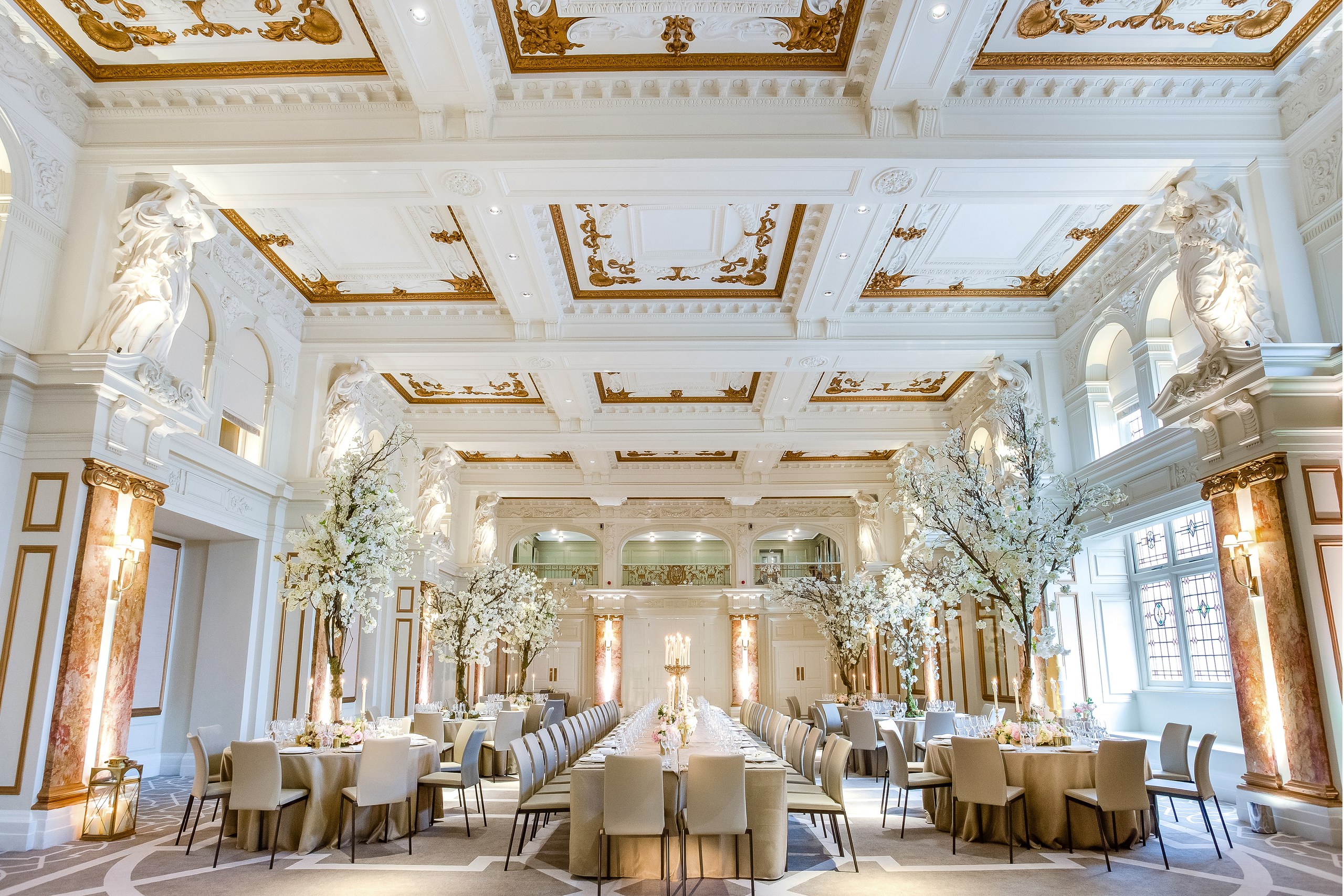
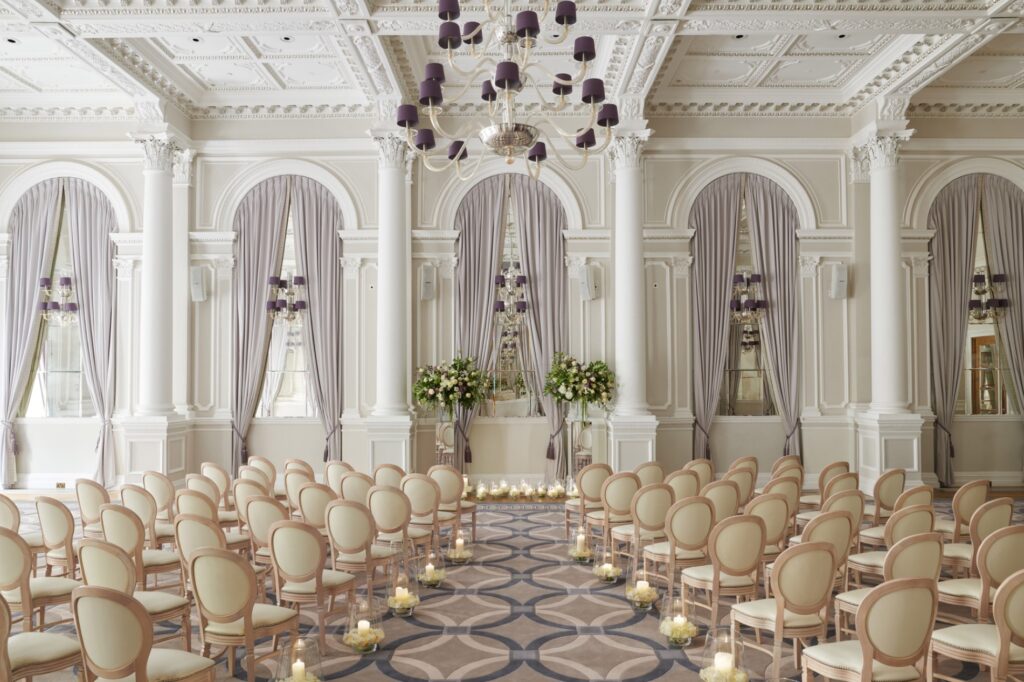
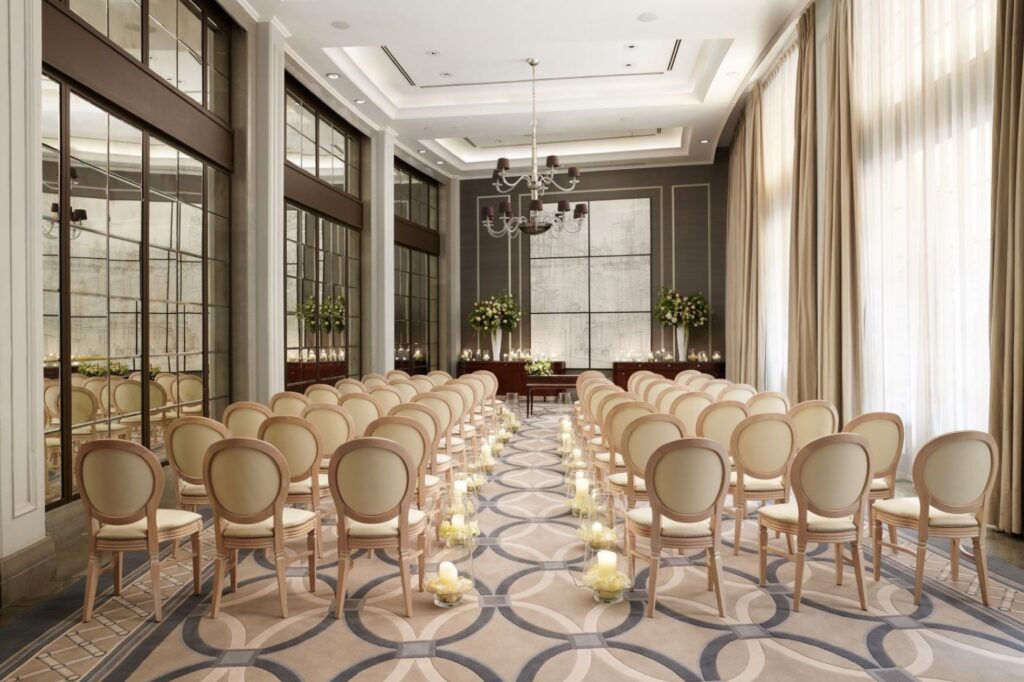
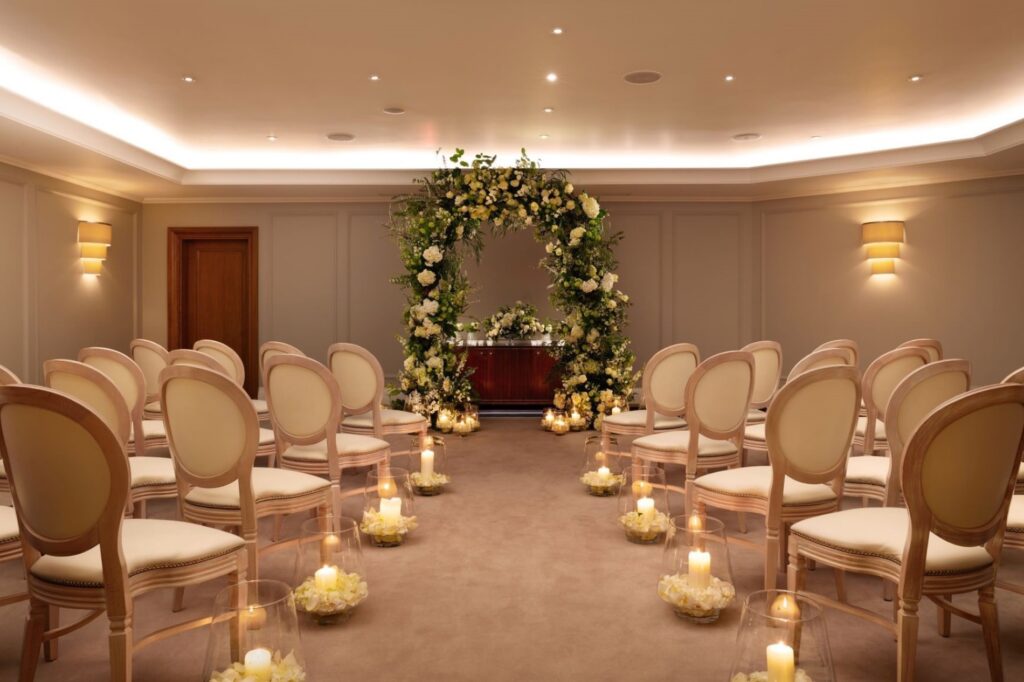
The ballroom takes the ceremony as well as the dinner. In 2025 a ceremony on site cost a supplement of £1,000, available with any wedding package. In 2018 the hotel was licensed for civil ceremonies conducted by registrars from Camden, who are booked separately; the current licence is worth confirming with the hotel and with Camden at the first enquiry.
Palm Court and the shape of the day
Palm Court adjoins the ballroom. It is a light-filled room with a Champagne bar, an indoor winter garden with trellised walls, four indoor trees that rise from floor to ceiling and a terrace outside, and it takes 210 for a reception. With the ceremony, the drinks and the dinner in two adjoining rooms, only time on the terrace depends on the weather.
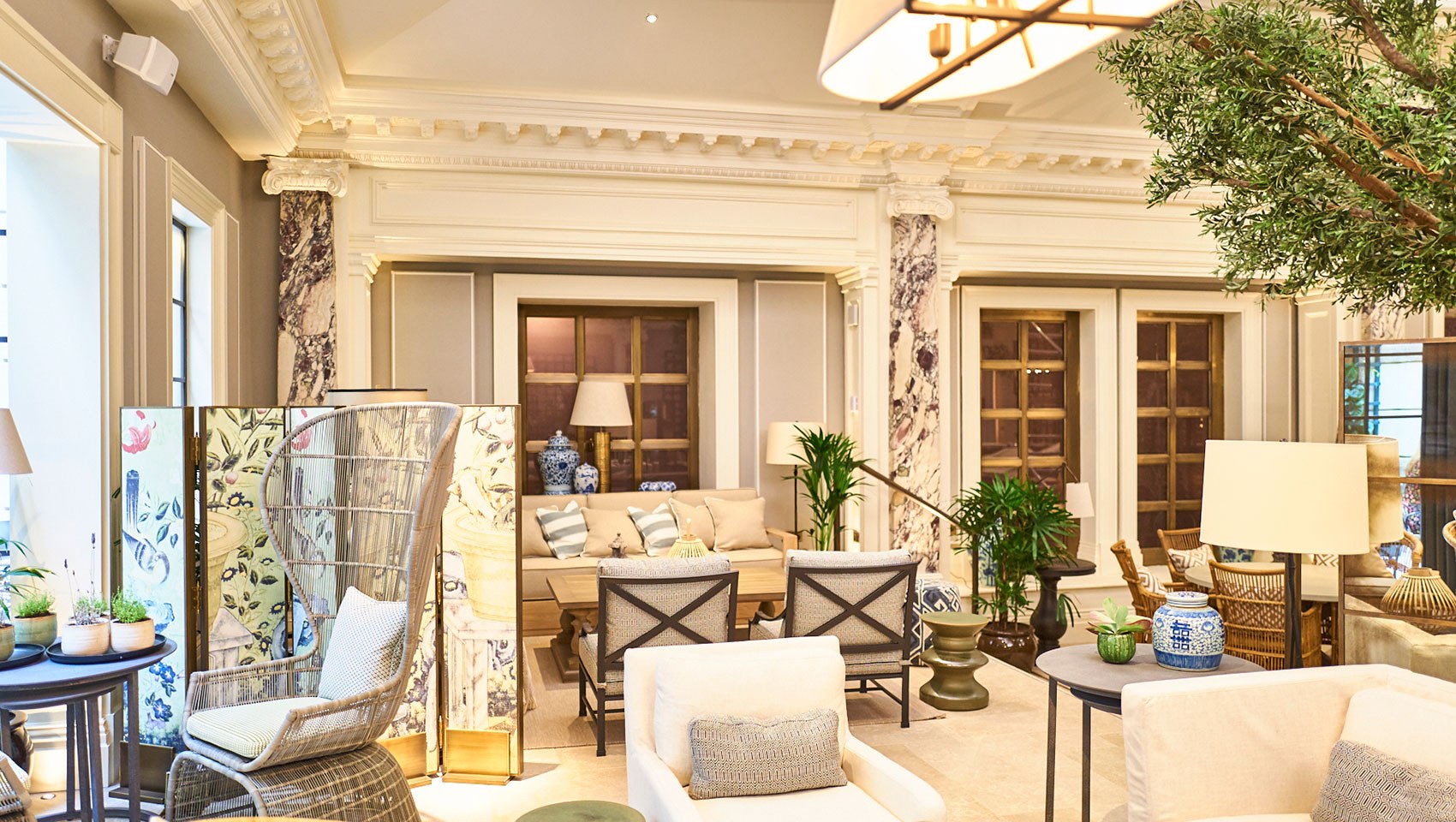
When Phoebe and Max married here, they used the whole sequence. The ceremony was in the ballroom, with a string quartet, readings from two of the wedding party, and vows they had written themselves, and drinks and speeches followed in Palm Court. For the wedding breakfast the ballroom was turned from a bright daytime room into a candlelit dining room. The couple went back to Palm Court for a champagne tower, then returned to the ballroom to cut the cake and dance their first dance to the band, and the evening went on with a photo booth and a busy dance floor. The place had a family connection: Phoebe’s grandmother grew up around the corner on Judd Street during the war and, as she told it, used to shout down to the hotel’s kitchen for cake.
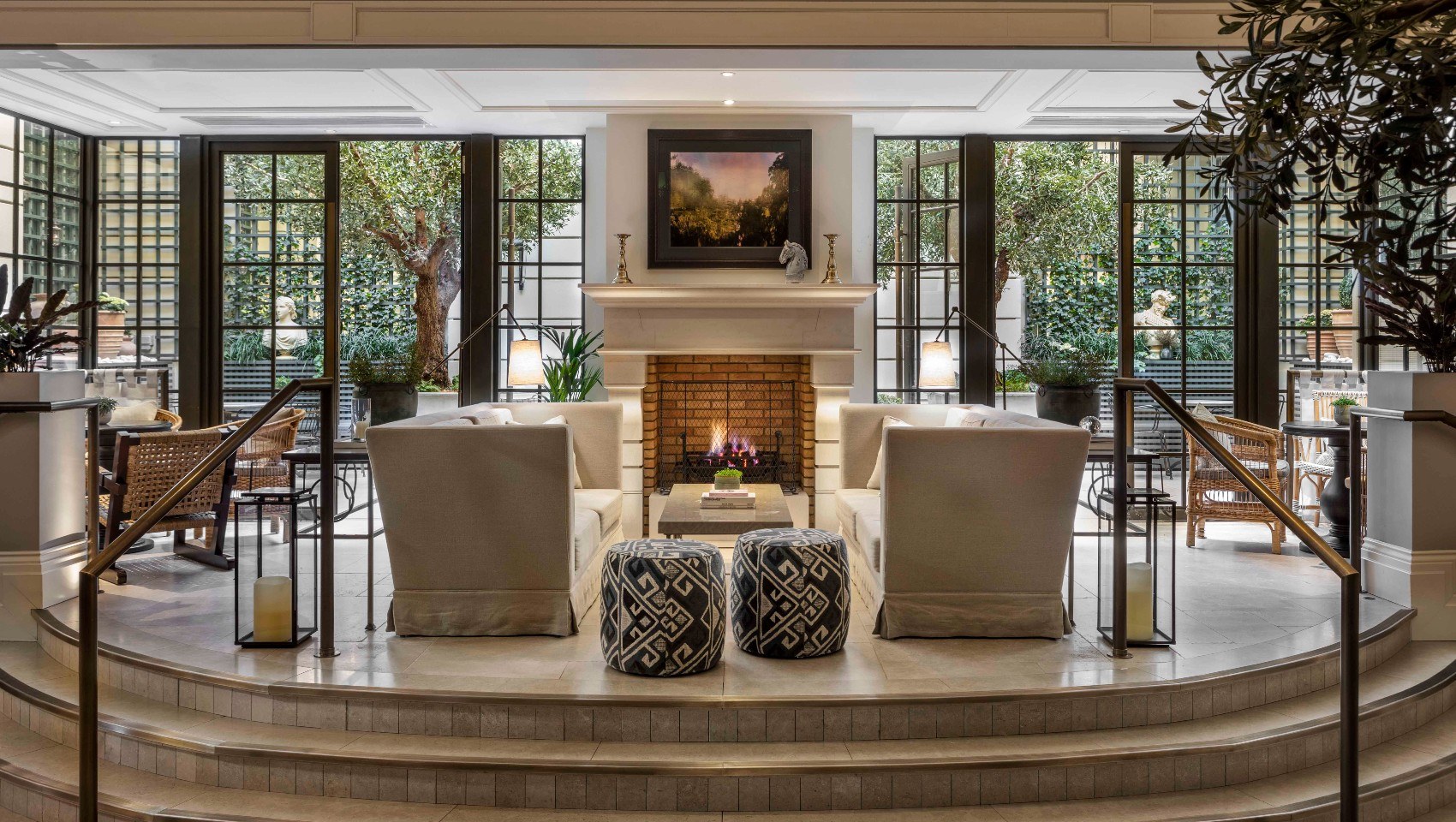
Ivi and Ben’s wedding in the spring of 2021 was held under lockdown rules, with 15 guests. Ivi got ready in a corner suite and Ben held his tisch in a junior suite; the bedeken took place in Palm Court, and the chuppah stood in the ballroom, where a Yamaha grand piano was brought in for the music. Afterwards their photographer, Christian O’Reilly of Fire and Ice, had the piano moved into the marble lobby for photographs. Charlotte and Jack, also marrying in the pandemic, kept the ceremony out of the hotel altogether. They married at Marylebone Town Hall with 30 guests, a red London bus brought everyone back with Champagne, and after canapés and photographs the reception was held in Fitz’s, the hotel’s main bar, with fish and chips served later in the evening. Fitz’s Bar can be hired exclusively for private receptions.
Weddings at Kimpton Fitzroy London, a film by IHG Commercial Marketing UK.
Catering is in house, with menus planned and tasted with the executive chef. The kitchen prepares kosher style food and works with partner caterers for kosher and Asian weddings. Jewish weddings have a dedicated wedding manager on site, and other event rooms and suites in the hotel can be set aside for the tisch and the bedeken.
Staying on the square
The hotel has 334 rooms and suites, designed by Tara Bernerd & Partners, and wedding parties are offered discounted room blocks. Each 2025 package included the couple’s wedding night, in a Deluxe Room on the Signature package and a suite on the Fitzroy and Bloomsbury packages. Phoebe and Ivi both got ready in a corner suite, and the largest suite, the Fitzroy, has four rooms, a four poster bed and a roll top bath, with views over Russell Square.
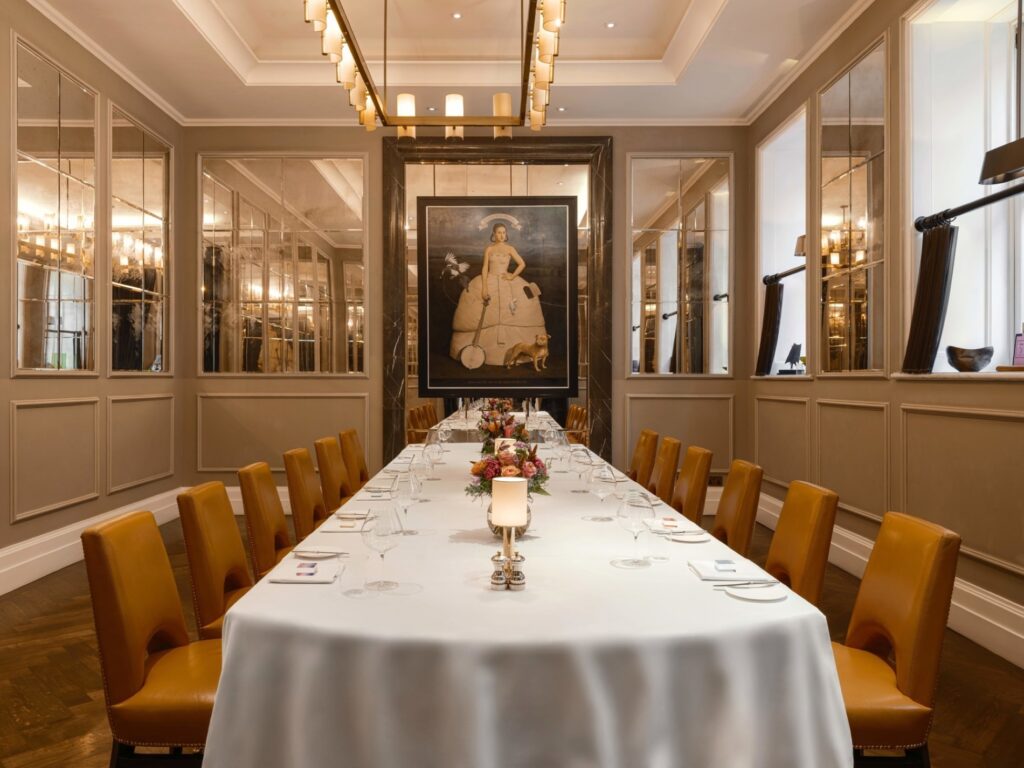
For the days around the wedding, eight daylit rooms on the lower ground floor take from 8 to 80 guests, for a rehearsal dinner or a brunch the morning after. They are named Carrington, Grant, Keynes, Woolf, Bell, Forster, Eliot and Moore. Across the square, at its north west corner, a plaque marks the building where T. S. Eliot worked from the late 1920s as poetry editor of Faber & Faber.
The number to settle first
Russell Square station, on the Piccadilly line with direct trains to Heathrow, is about 50 metres away, and there is no car park at the hotel. In 2025 the hotel held weddings on Saturdays and Sundays. That year the three packages cost £245, £285 and £300 a head including VAT, with a minimum spend of £28,000 including VAT plus 12.5% service on food, drink and corkage. On those indicative figures the minimum is roughly the cost of 115 guests on the Signature package, though the package and the minimum spend may combine differently in practice, and the hotel will confirm the current terms.
The decision to make first is the size of the guest list, because the ballroom can be laid for 15 or for 200 and the number shapes how the minimum spend applies. Read the Kimpton Fitzroy London profile, see the Holborn collection, which takes in Bloomsbury, and St. Pancras London, one stop up the line, and when the number is settled, check your date.