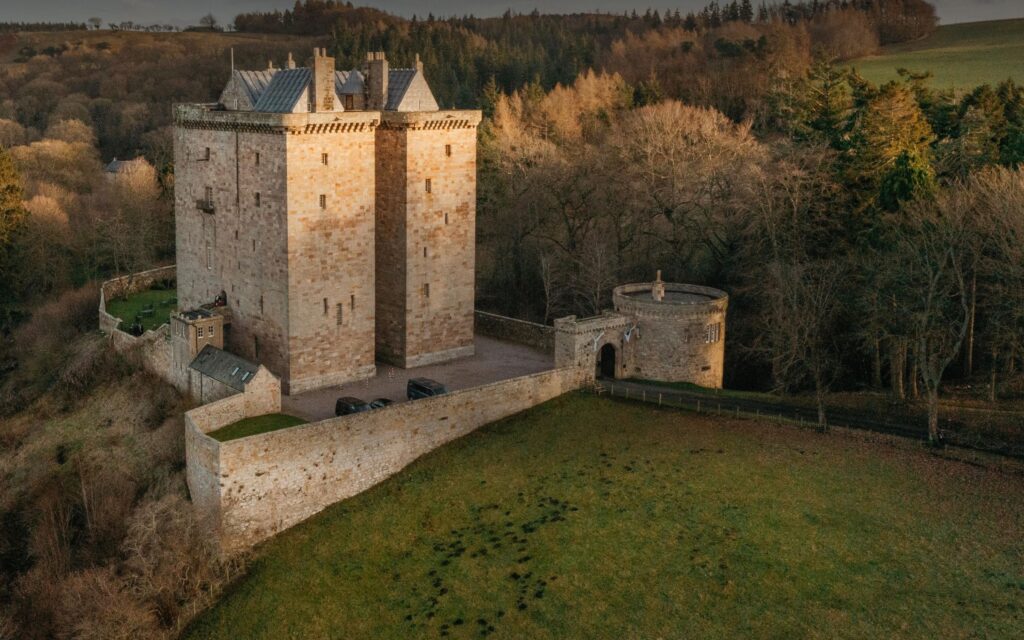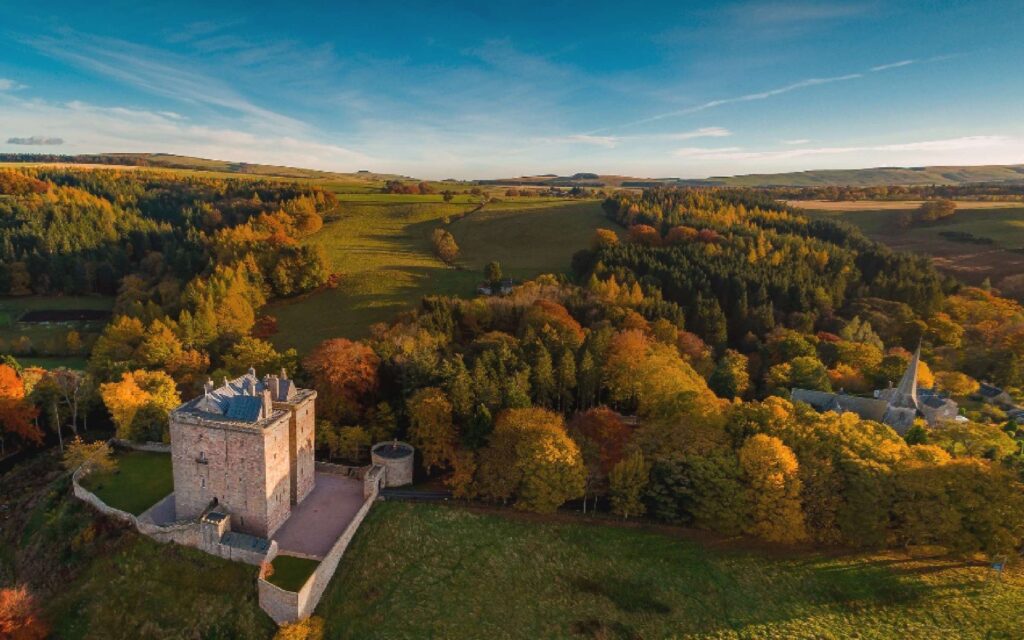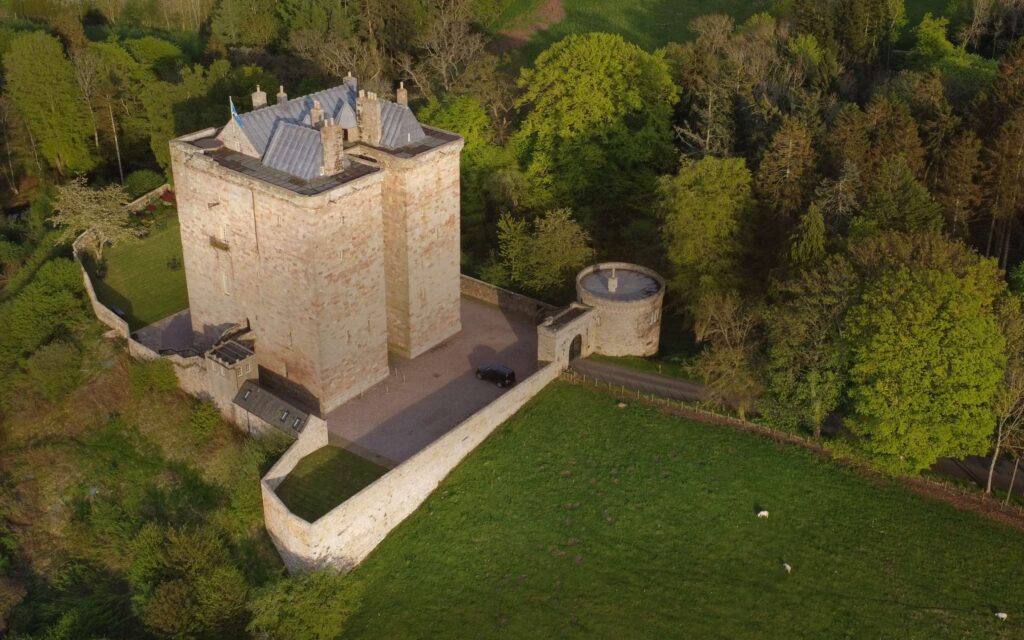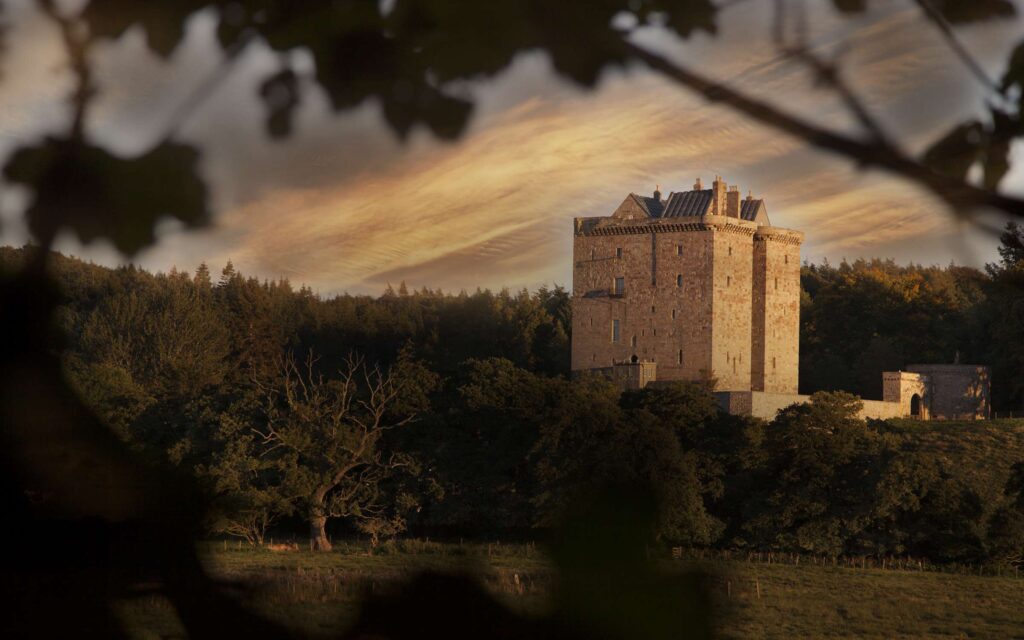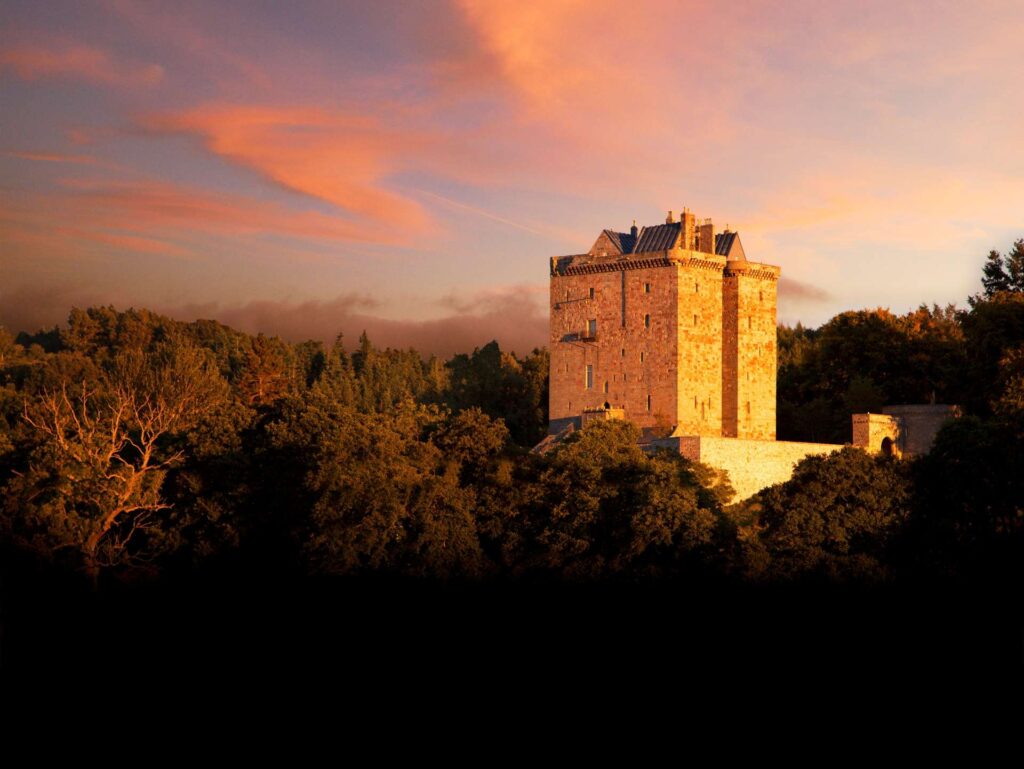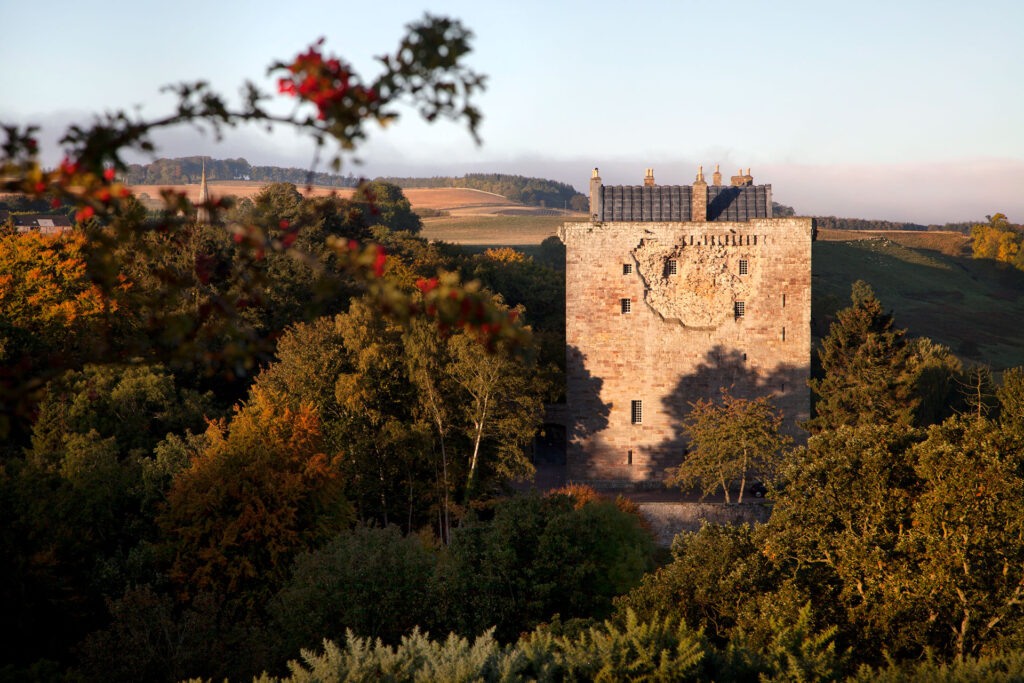
Nobody had lived in the Auld Keep at Dundas Castle for more than three hundred years when Sir Jack Stewart-Clark inherited the estate from his mother in 1995 and set about restoring it. The square stone tower, begun in about 1416 by James Dundas, had even been altered for use as a distillery in the 19th century. Today couples marry in its Great Hall, dine in the Gothic house William Burn built beside it in 1818 or in a Pavilion on the lawn, and take the whole castle for the wedding, near South Queensferry and a short drive west of Edinburgh.

A Dundas tower above the Forth
The Dundas family settled along the southern shore of the Forth in the 12th century, and in 1416 James Dundas obtained a licence from the Duke of Albany, then the effective ruler of Scotland, to build a keep. It is an L shaped tower house of four storeys in rubble stone, with a corbelled and crenellated parapet, an iron yett still guarding the door and barrel vaulted rooms around large fireplaces. For wedding purposes it matters that the keep stood empty for more than three hundred years: the Great Hall couples marry in now is the result of a restoration that began in 1995.
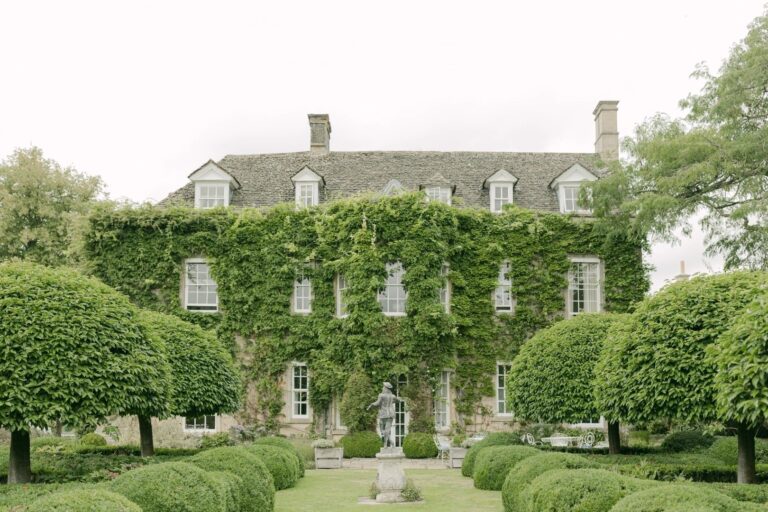
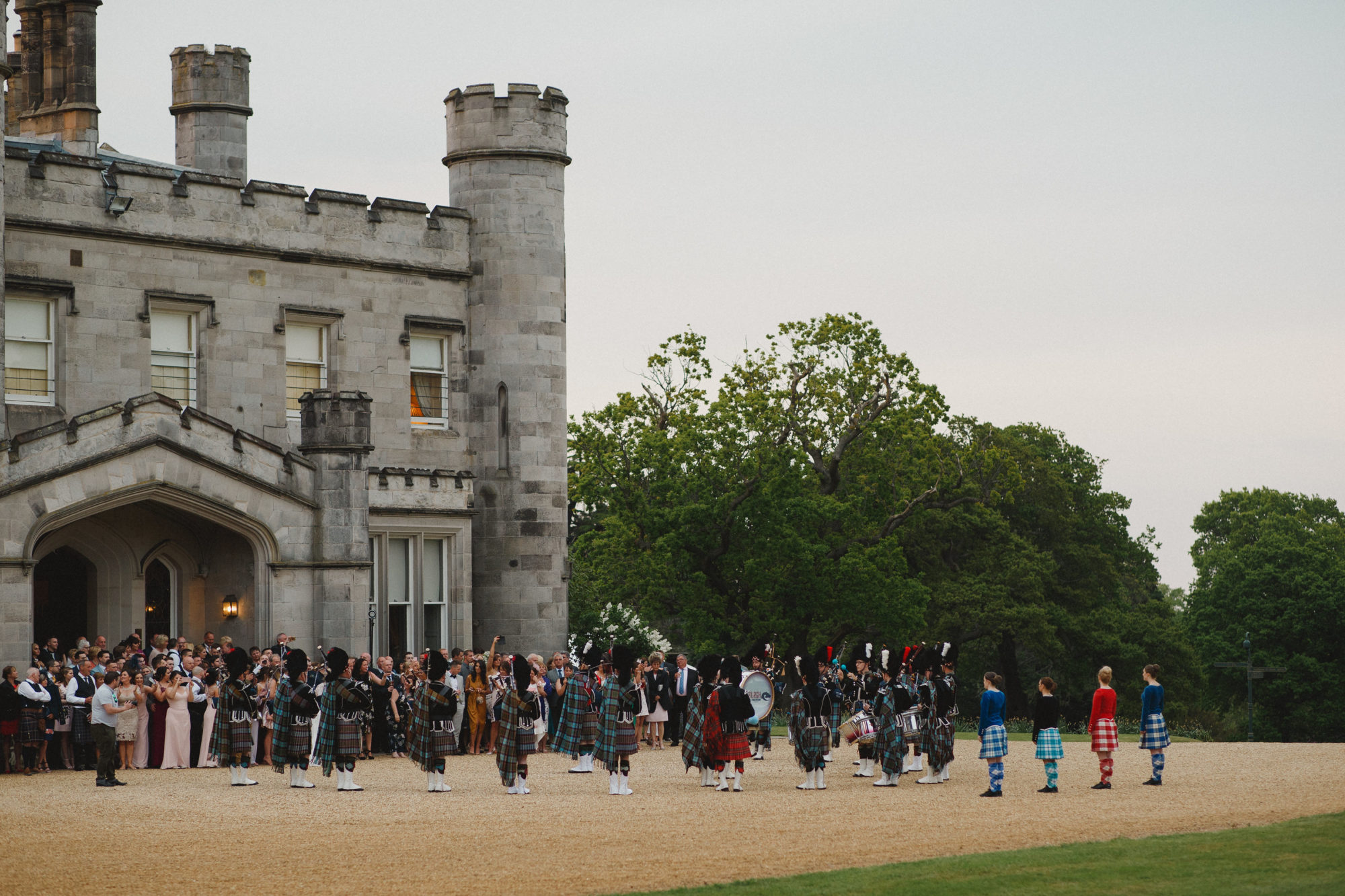
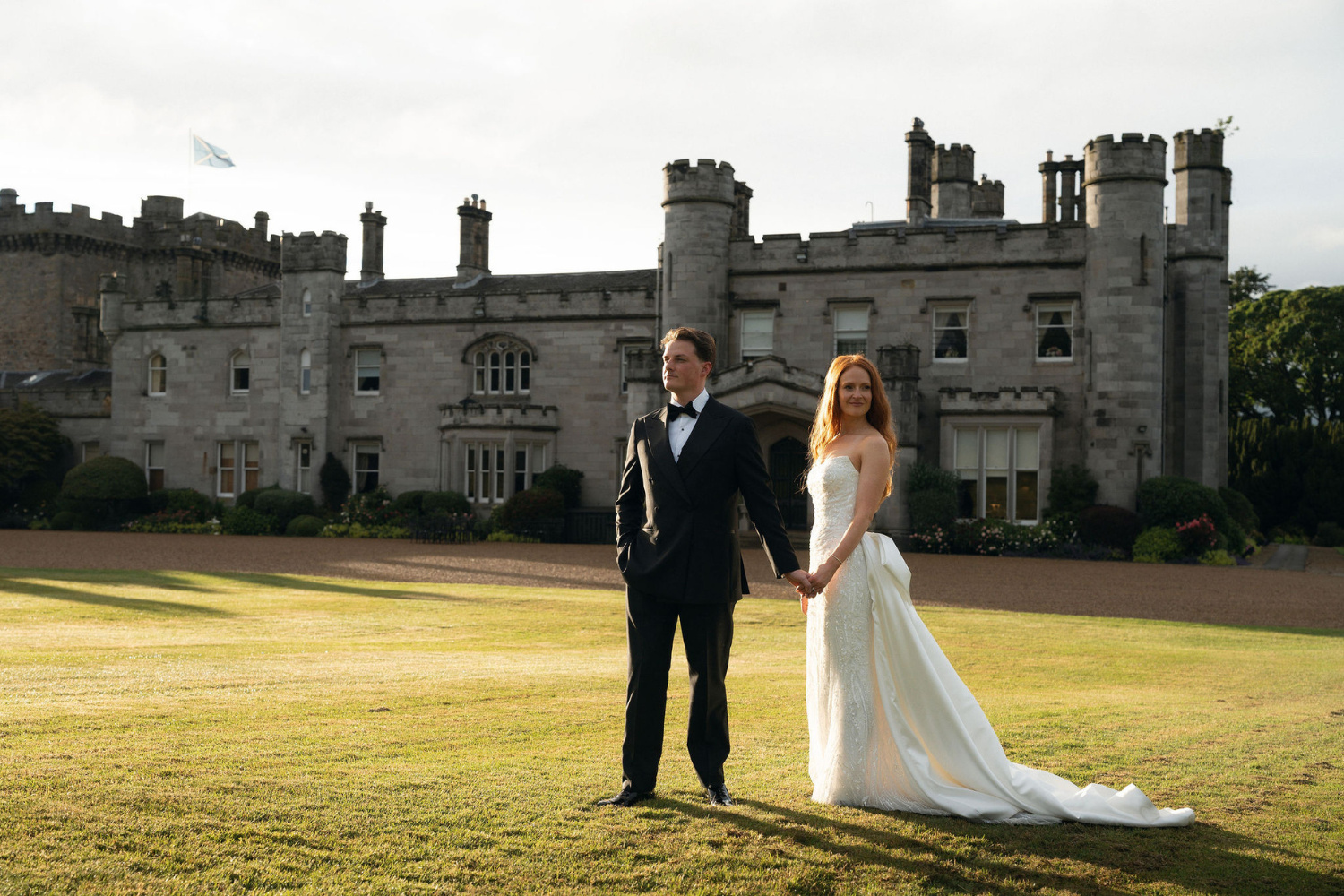
The contrast is the house beside it. In 1818 the Dundases pulled down a 17th century building and had William Burn build a new one in the Tudor Gothic style, with crenellated parapets, round corner towers and a broad arched porch. Burn designed many churches, and the hall has a rib vaulted ceiling with carved foliage; the tall state rooms look over the lawns. After Sir Jack inherited in 1995 the keep’s parapet was rebuilt, electricity was brought in and dry rot was cleared from the house, and Lady Lydia, an interior designer, refurbished every room. Historic Environment Scotland lists both the keep and Burn’s mansion at Category A, so a wedding here sets a modern celebration between a medieval tower and a Gothic house of 1818, a few steps apart.
Vows in the Auld Keep
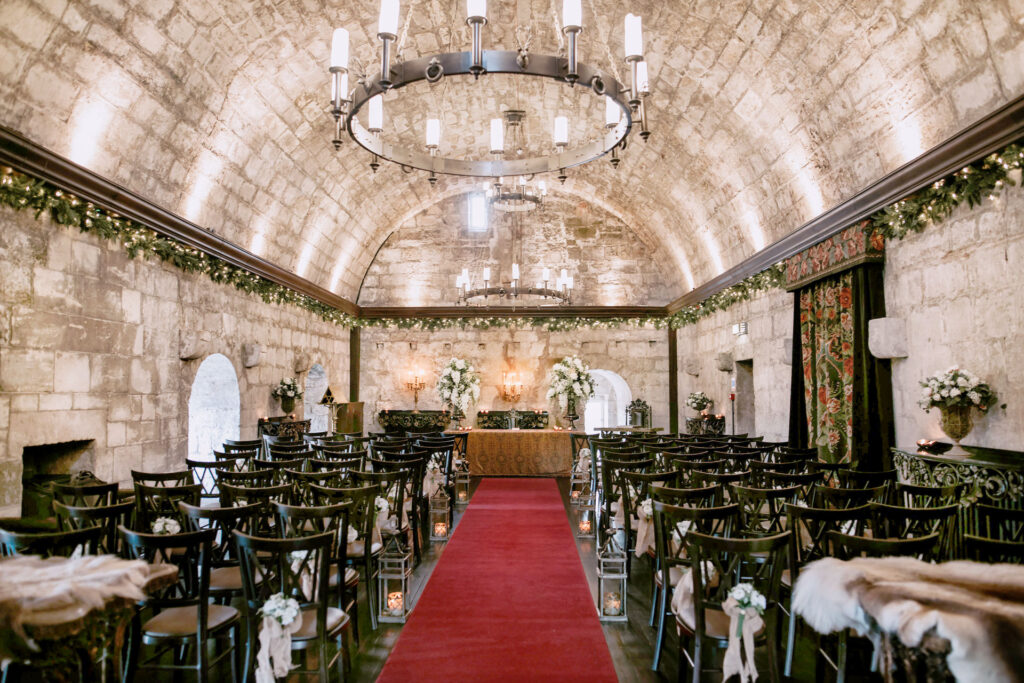
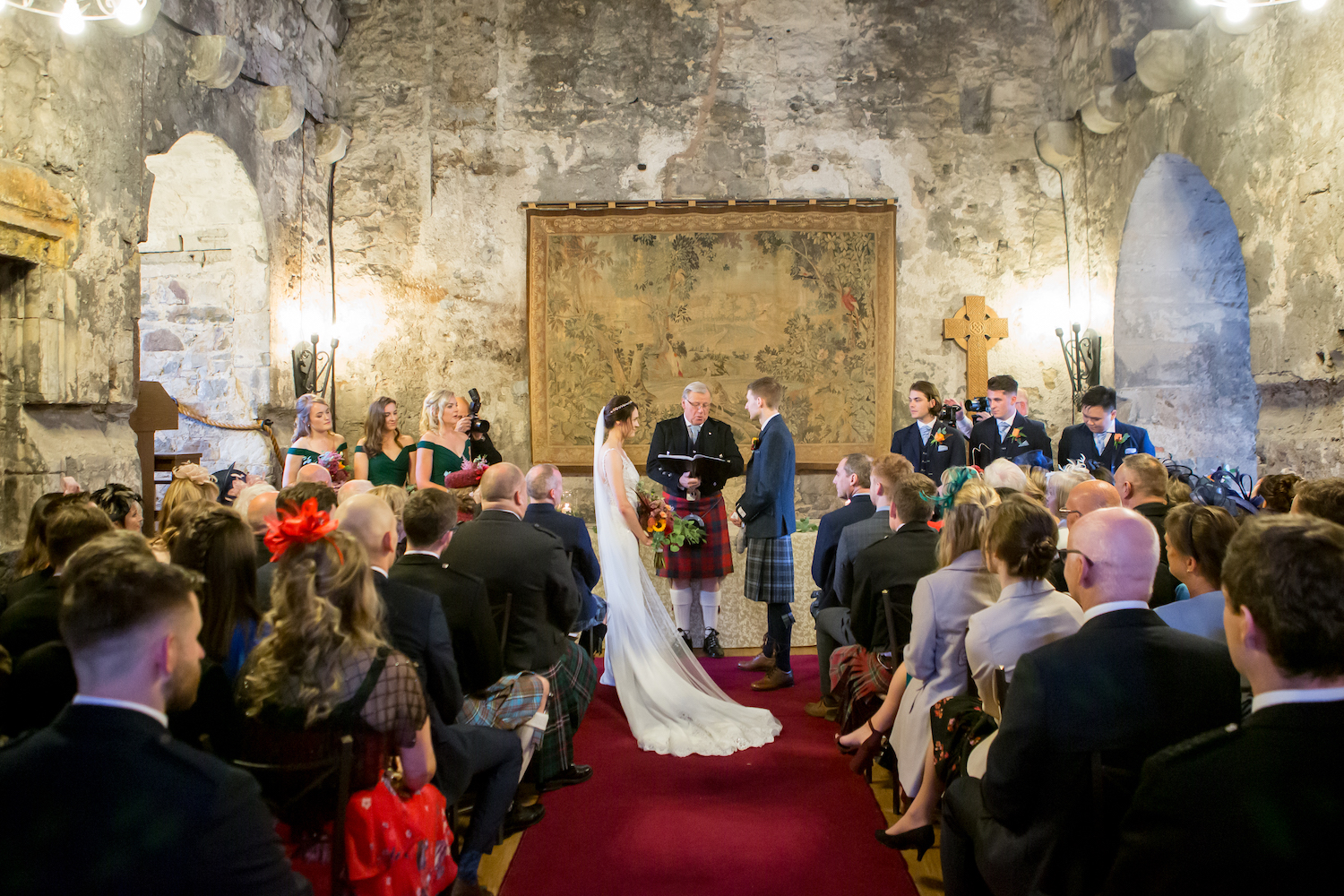
The Great Hall in the keep is reached by a staircase and has a vaulted ceiling and walls of original stone. It seats up to 110 guests for a ceremony. Couples can choose a civil, religious, humanist or independent celebrant ceremony, and civil partnerships are held too.
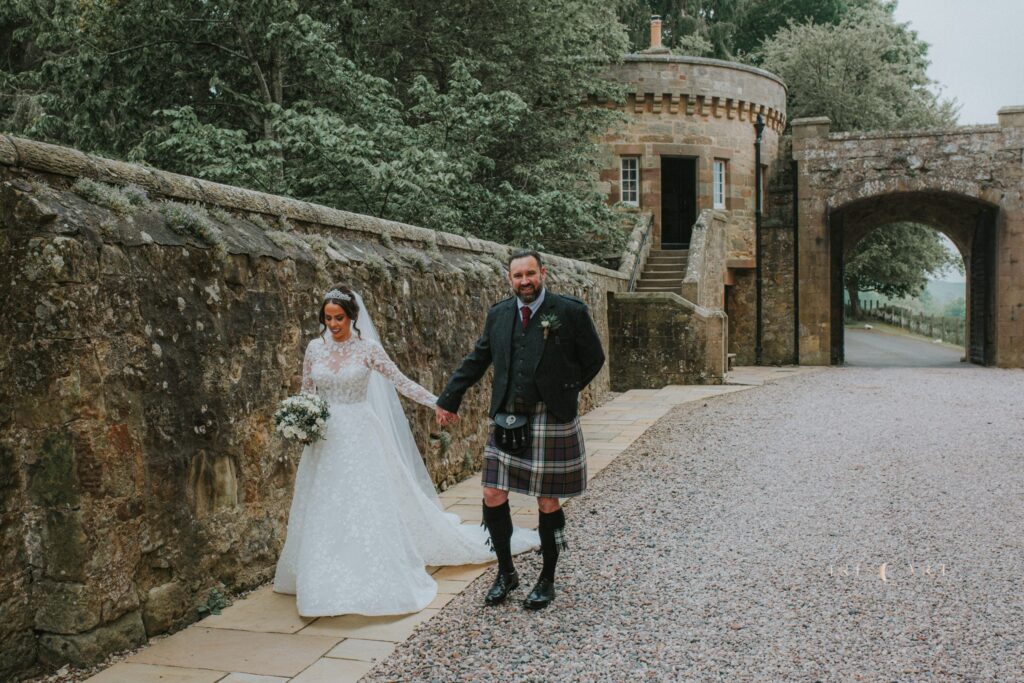
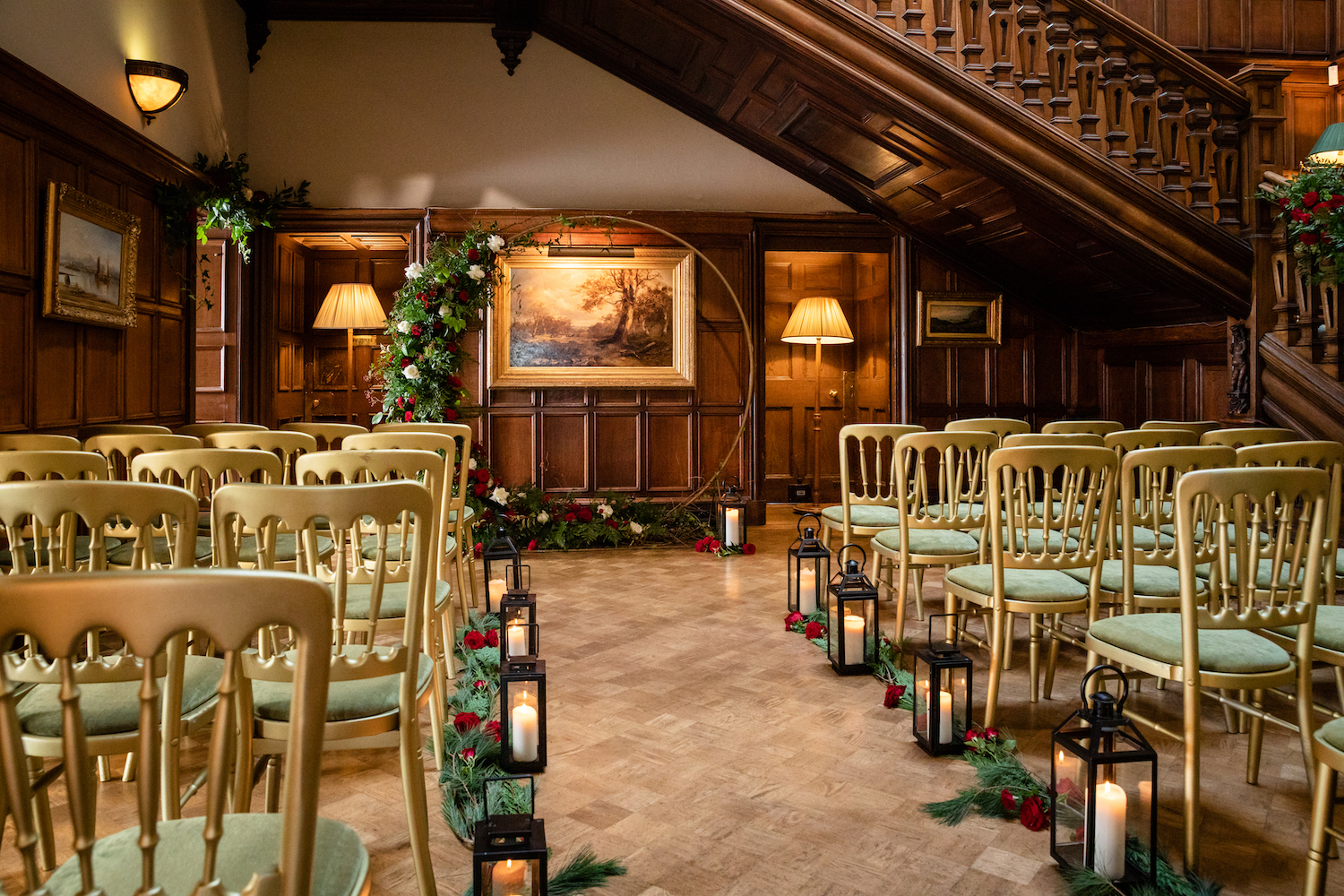
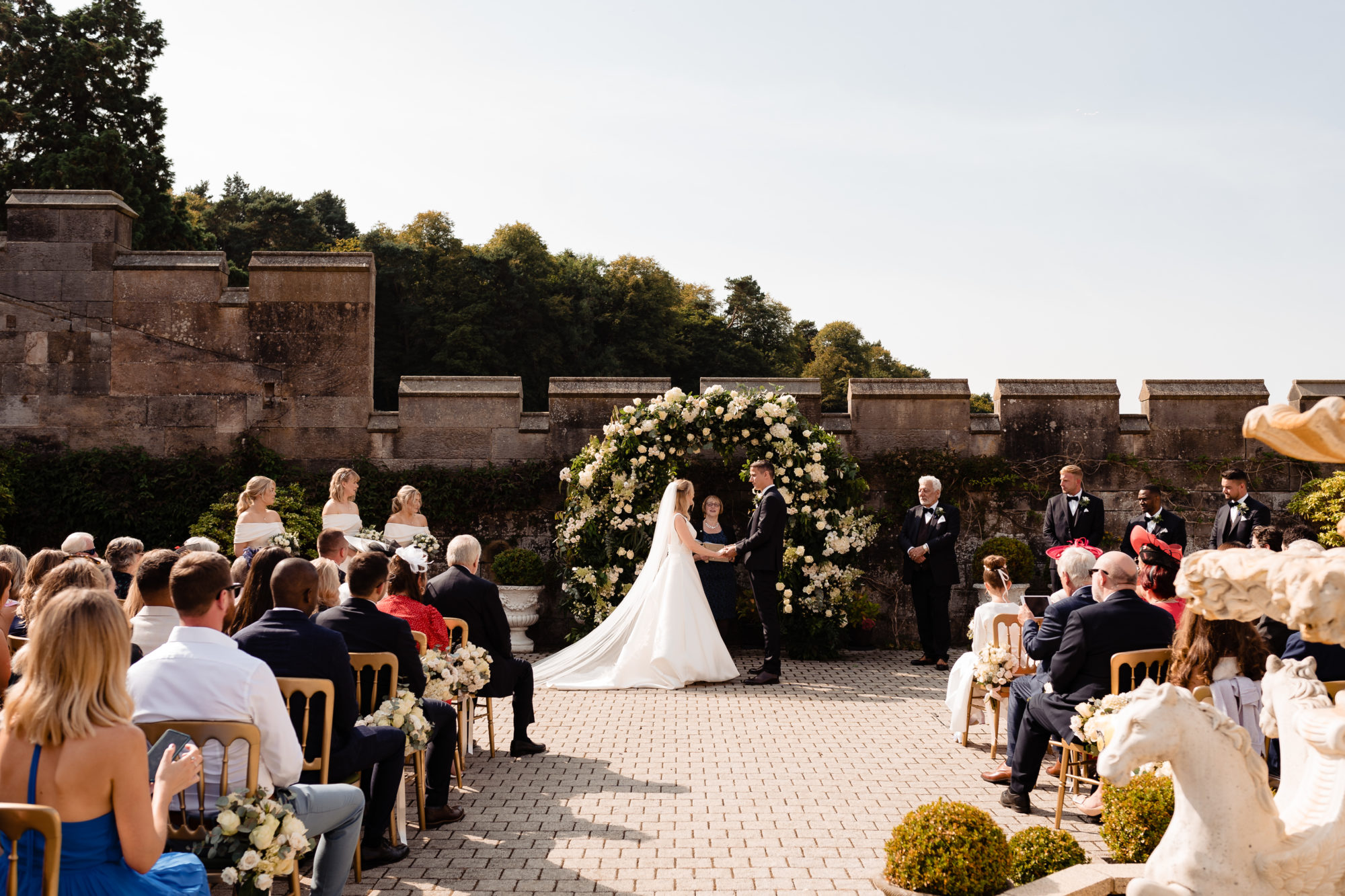
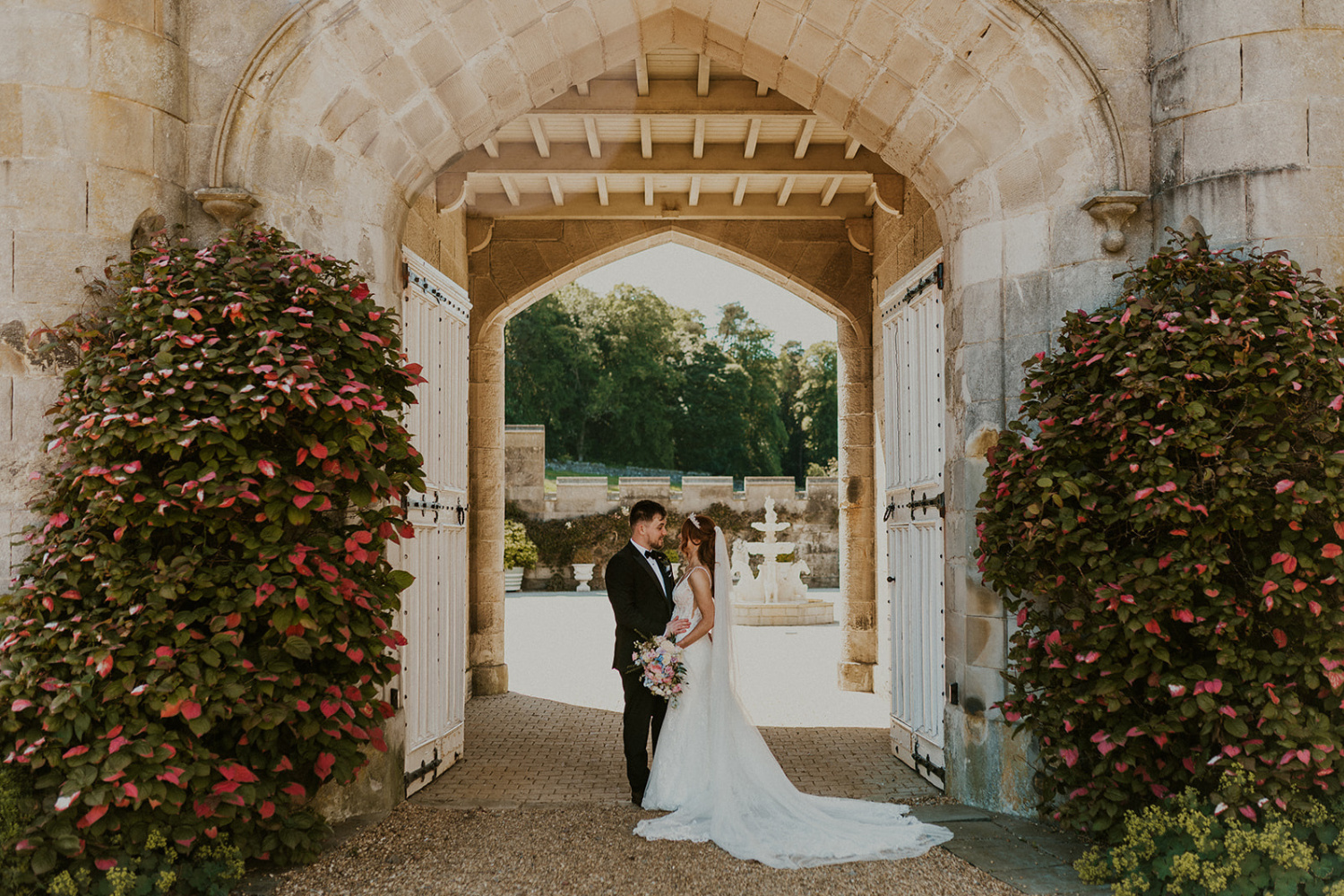
In Burn’s house the Main Hall, with its stained glass window, grand staircase and panelled walls, is also used for ceremonies. Outdoors, the Courtyard has a white stone fountain and coloured arched doors, and a ceremony there or on the lawn, with the castle behind, suits the larger guest list. Couples who marry in a church elsewhere can return to the castle for the celebration.
Drinks by the fire, dinner in the keep or the Pavilion
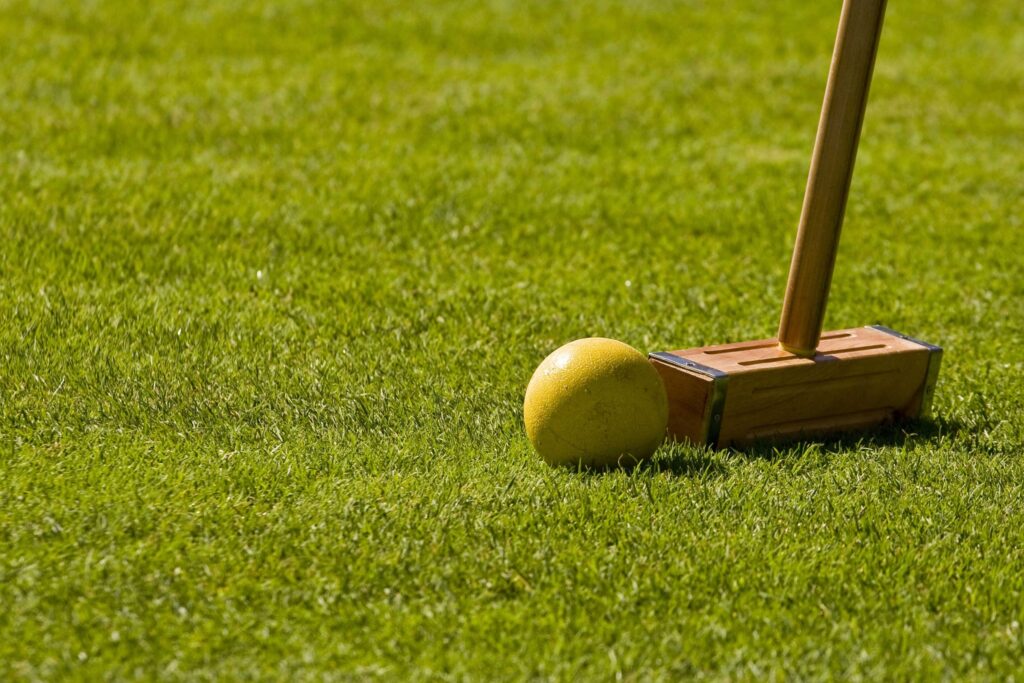
After the ceremony guests are served fizz or a cocktail on the lawn or in the Drawing Room, the Library and the Front Hall, with lawn games set out while the couple are photographed. The Armoury in the keep, which has its original open fireplace, is the place for a smaller gathering by the fire.
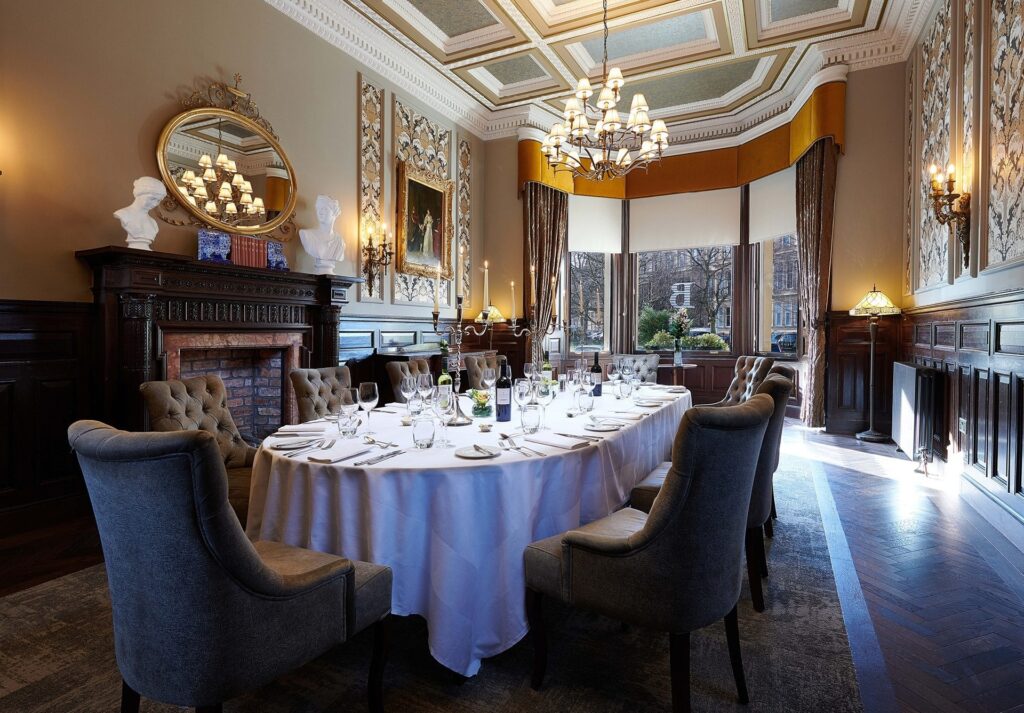
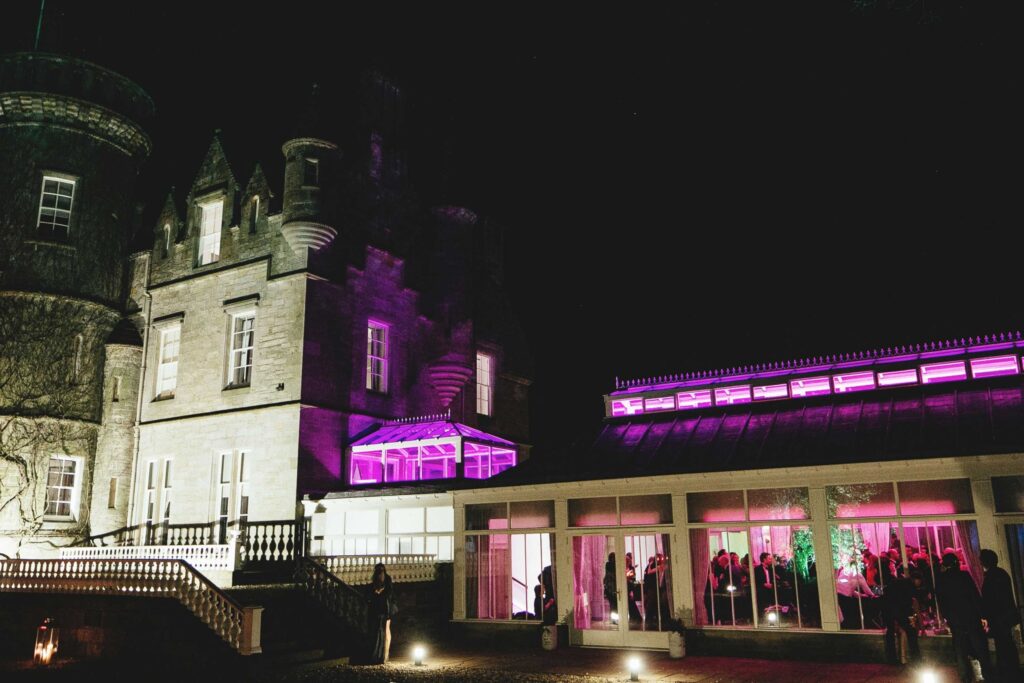
Dinner has three settings. The Stag Chamber, also in the keep, has stone walls and a vaulted ceiling and seats 26 by candlelight. The Croquet Room in the house, with a large open fire and a crystal chandelier, is the middle size, and larger weddings, up to 180, dine in the Pavilion, a permanent building on the lawns with its own dance floor and stage; the castle wall facing it is floodlit.
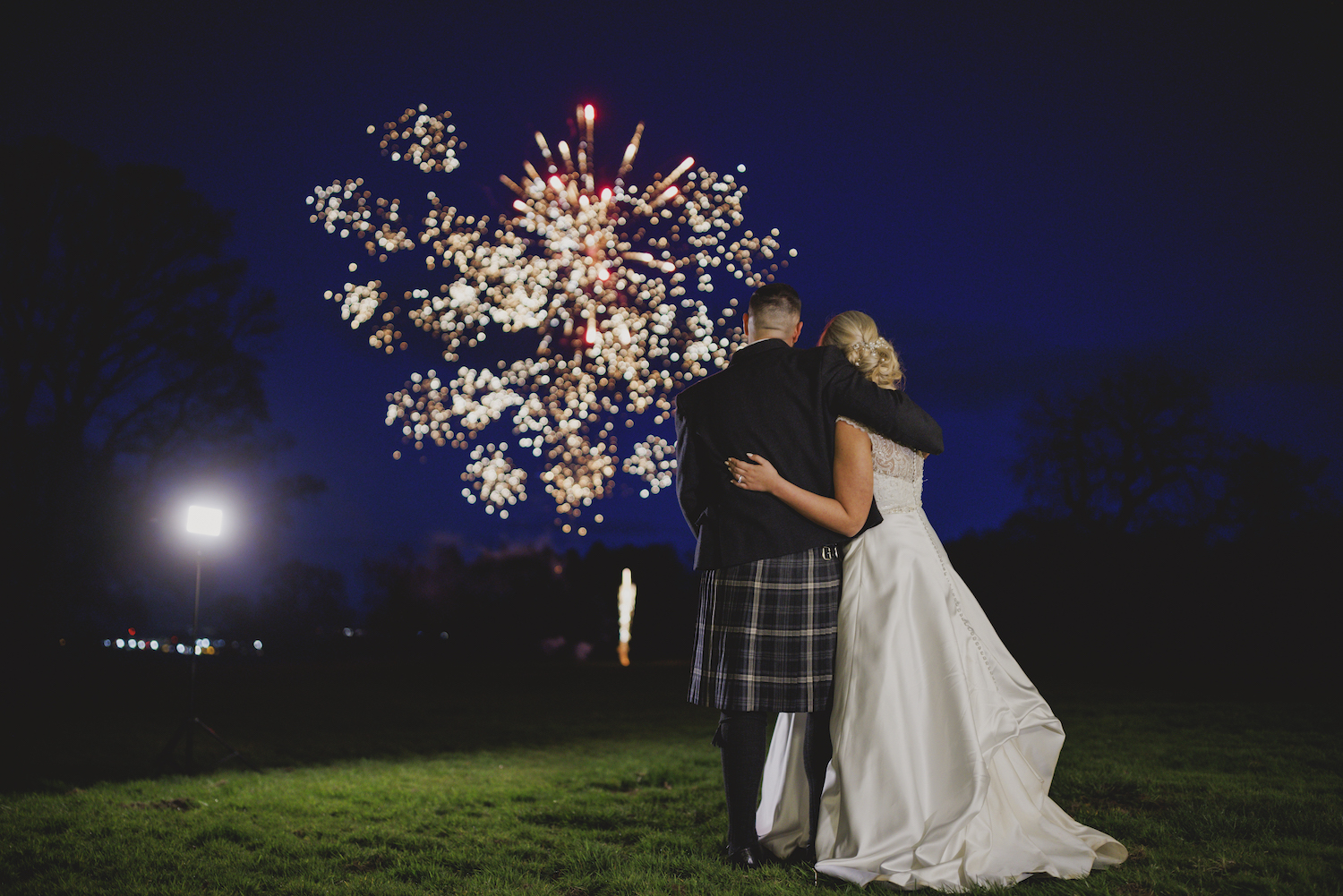
Heritage Portfolio is the castle’s caterer. Menus can be personalised and are tasted about three months before the wedding; all food can be Halal, kosher style dishes are available, and the castle holds VisitScotland’s Taste Our Best award. Guests may not bring their own drink. The night can end with fireworks, or with a pipe band playing the Beating of the Retreat. Carriages are at midnight, after which only resident guests stay on, with a residents’ bar set up in the Library.
Seventeen bedrooms and a boathouse on the loch
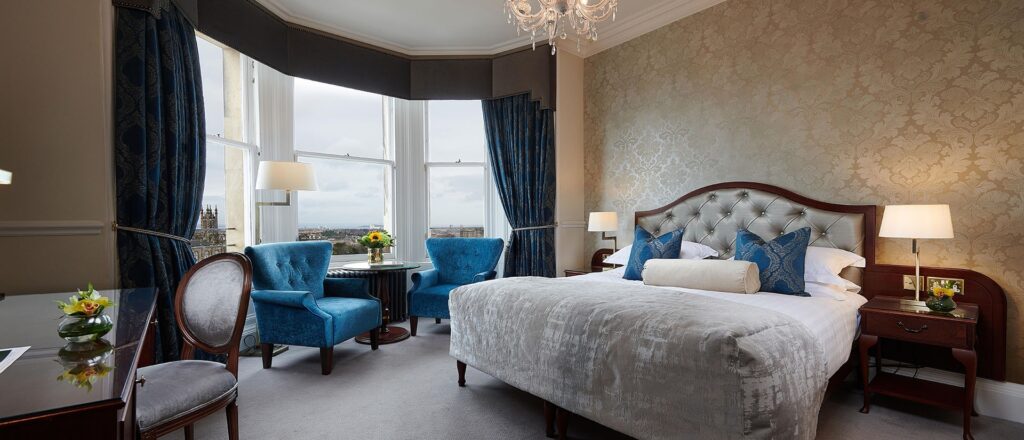
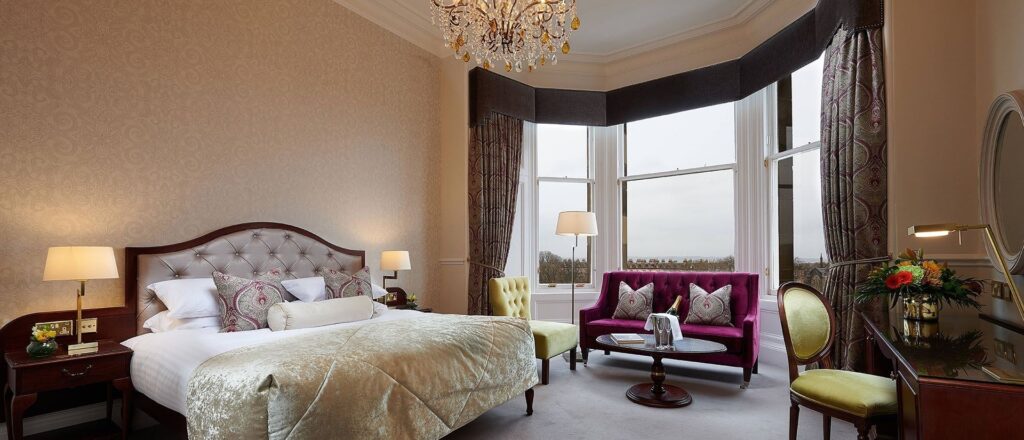
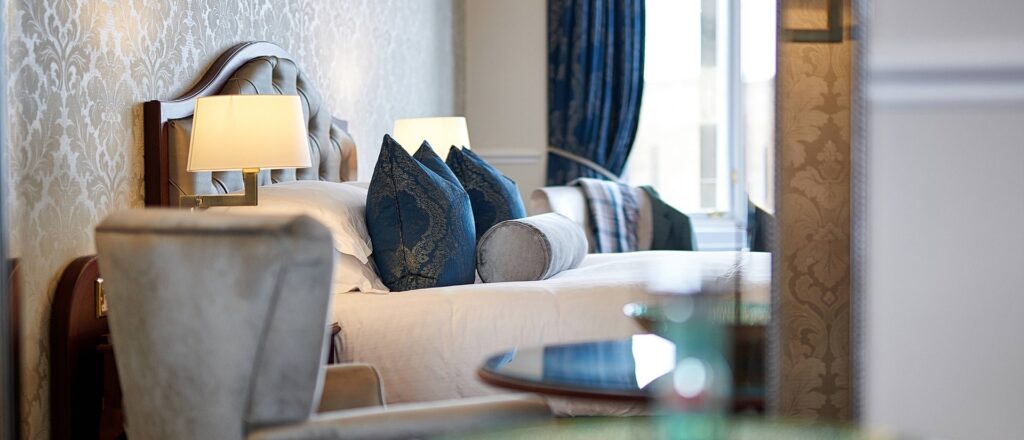
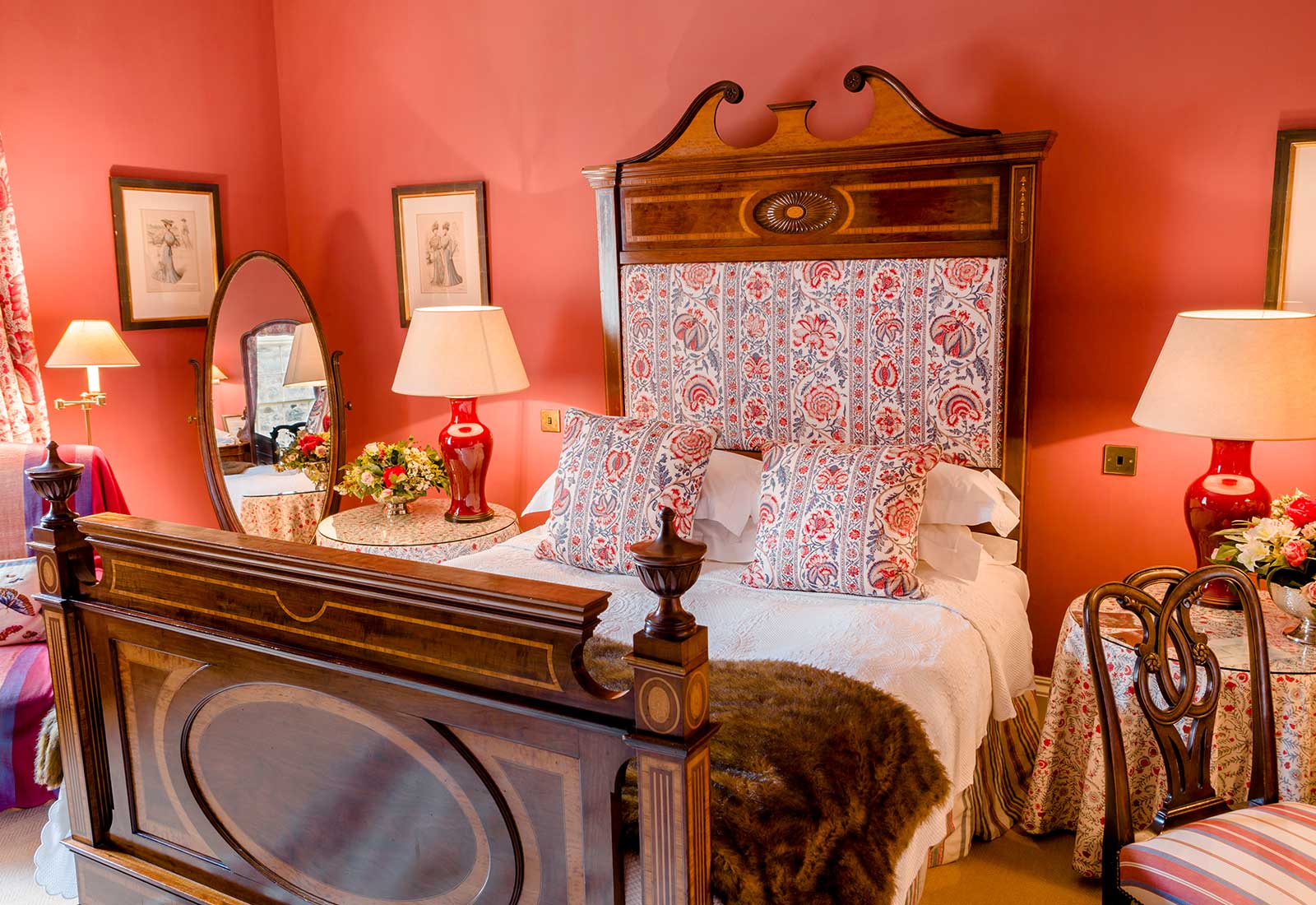
Bedrooms are not let individually while a wedding is on. The 17 rooms, in the main house, the Stables and Courtyard Cottage, sleep up to 37 adults, with extra beds for children, and couples allocate them to family and friends on a visit before the day. Every room is individually designed; some have fabric covered walls, original roll top baths or four poster beds, and those in the house and the Stables come with complimentary whisky. Resident guests check in from noon and leave by 10.30 the next morning, and a two day wedding can be arranged.
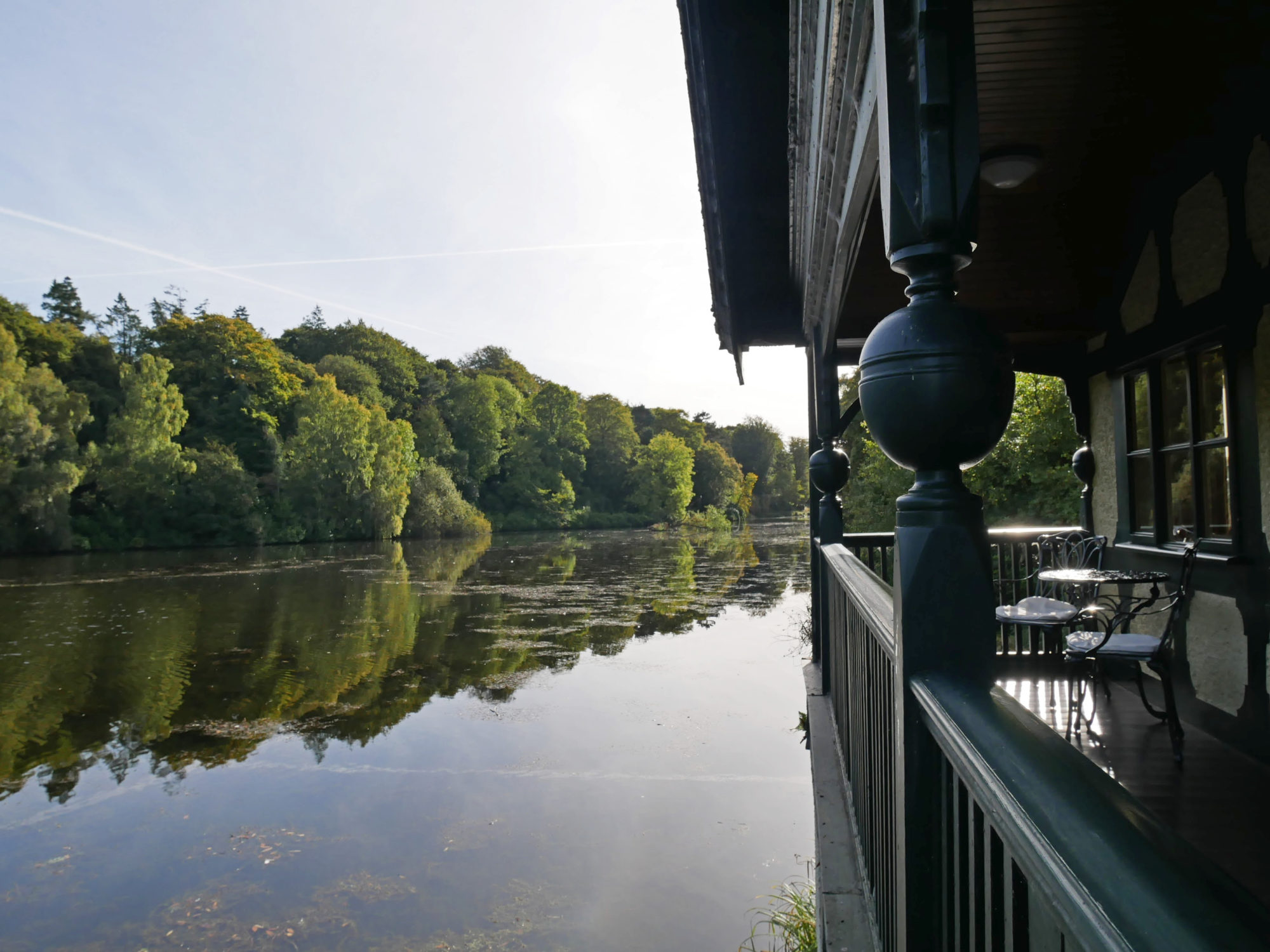
The Boathouse, a cottage on the bank of the loch with a veranda over the water, is booked separately from the castle and can be taken for the wedding night.
Between the Forth bridges and the city
The castle stands in a 500 acre estate with walks across it. From the parkland the views run north over the Firth of Forth to the Forth bridges, and along the ridge of Dundas Hill to the Pentland Hills. For a longer celebration the castle can arrange falconry, whisky tasting and clay pigeon shooting.
Dundas is just south of the Queensferry Crossing, about half an hour by car from the centre of Edinburgh and about 15 minutes from Edinburgh Airport. Guests arrive through the main estate gates on the B800 between South Queensferry and Kirkliston; for satnav, the postcode EH30 9SS leads to the B800 entrance. Dalmeny is the nearest railway station, about a mile and a half away in a straight line, and parking behind the castle is free, with resident guests able to leave their cars overnight.
For more castles, read our Edits on Leeds Castle and Amberley Castle or our 40 castle wedding venues in the UK, or browse wedding venues in Edinburgh and the United Kingdom Wedding Atlas.
The Great Hall or the Courtyard
The first decision is the size of the guest list, because it decides where the vows are said. A party that fits the Great Hall can say its vows inside the keep; a larger wedding, of up to 180, marries outdoors in the Courtyard or on the lawn. Beyond that, the choice is between a day built around the keep, with a smaller table and a night by the fire, and a larger party in the Pavilion with a dance floor and a late finish. Couples who want close family under one roof will value the 17 bedrooms, but the exclusive use that makes the castle private also means the weekend is planned around one wedding, so it rewards an early visit. Prices are on request, set out in the castle’s wedding brochure. Read the Dundas Castle profile and check your date.