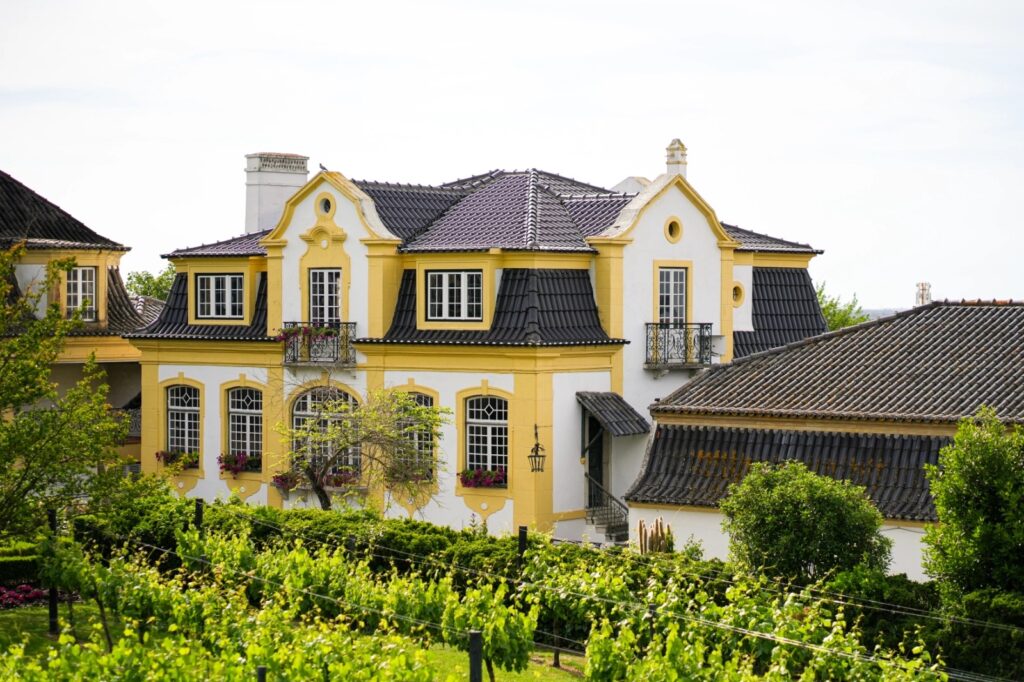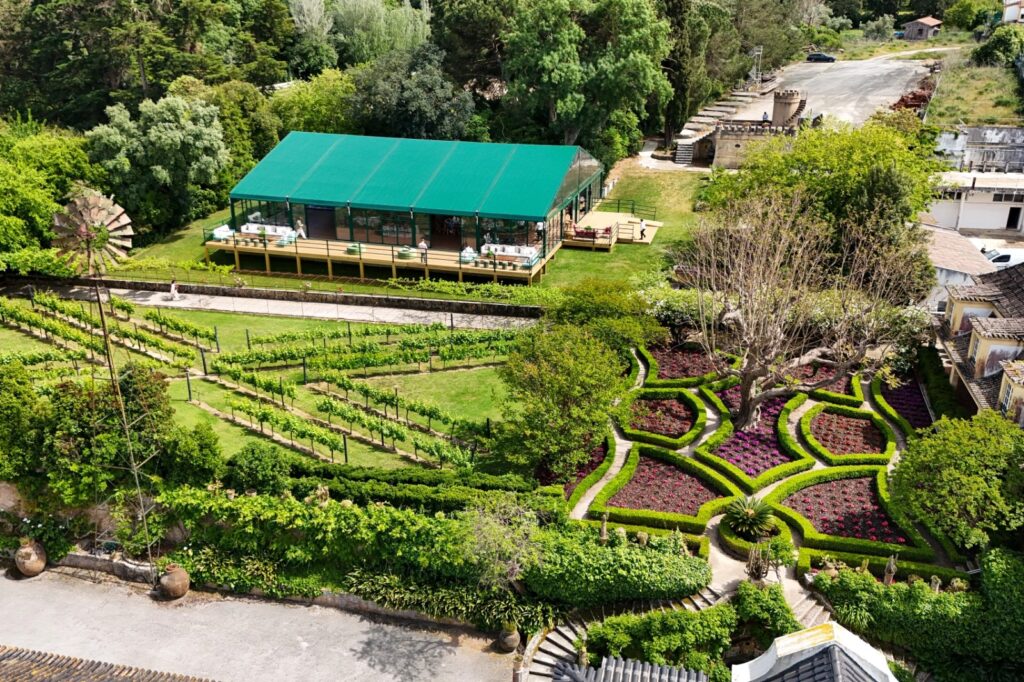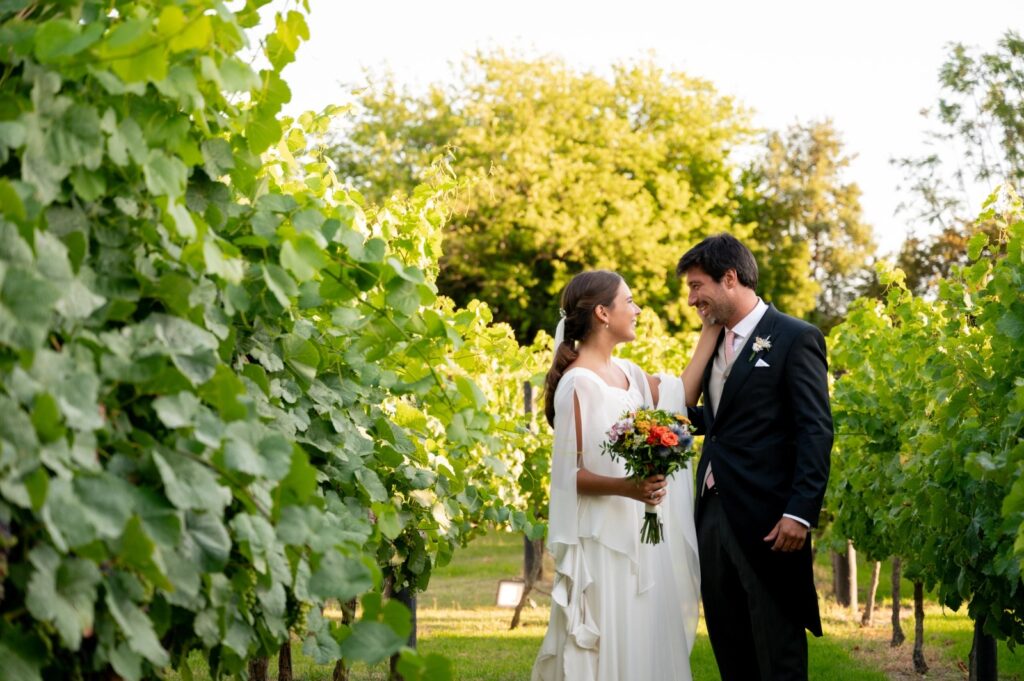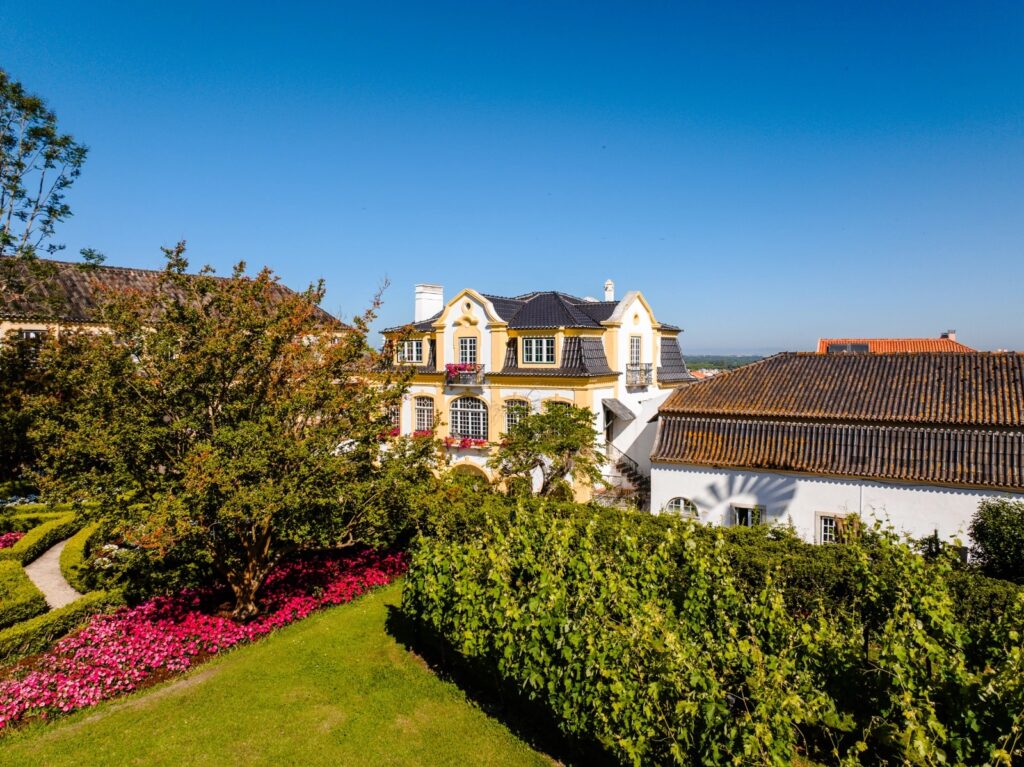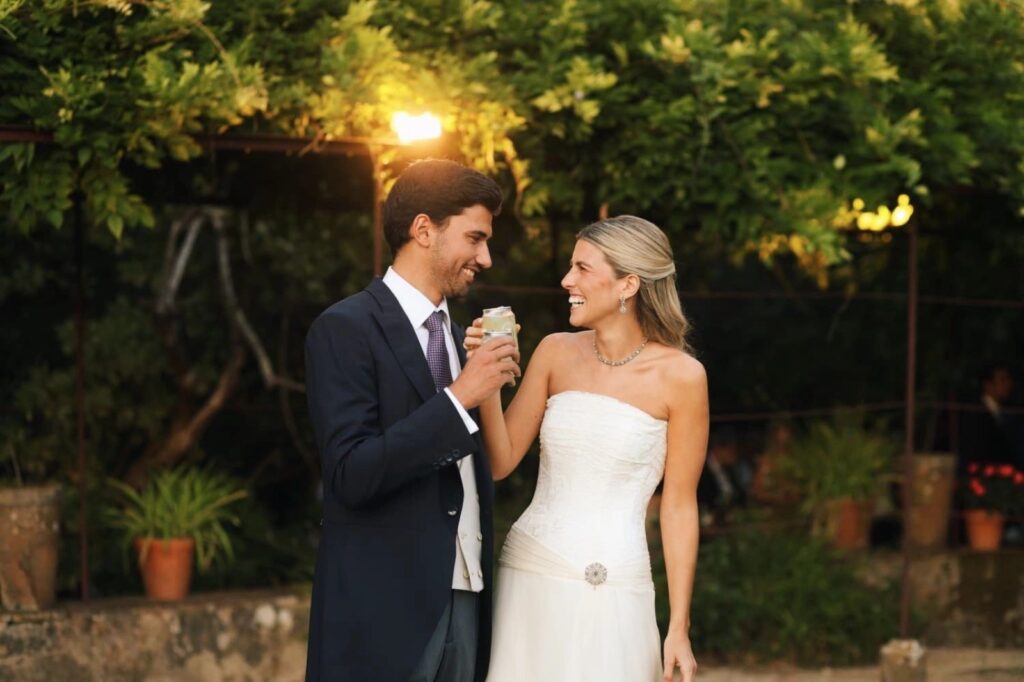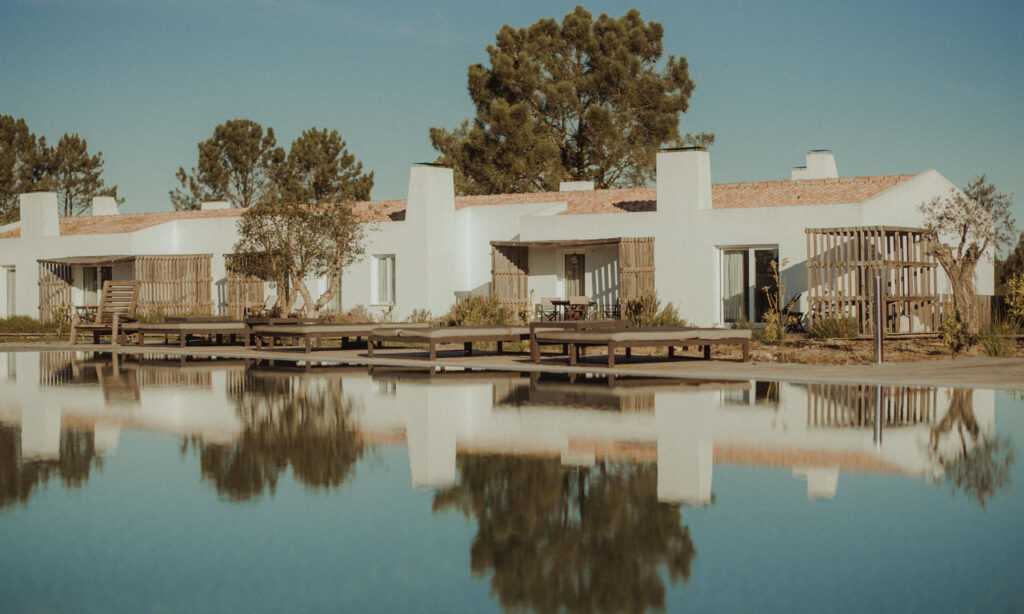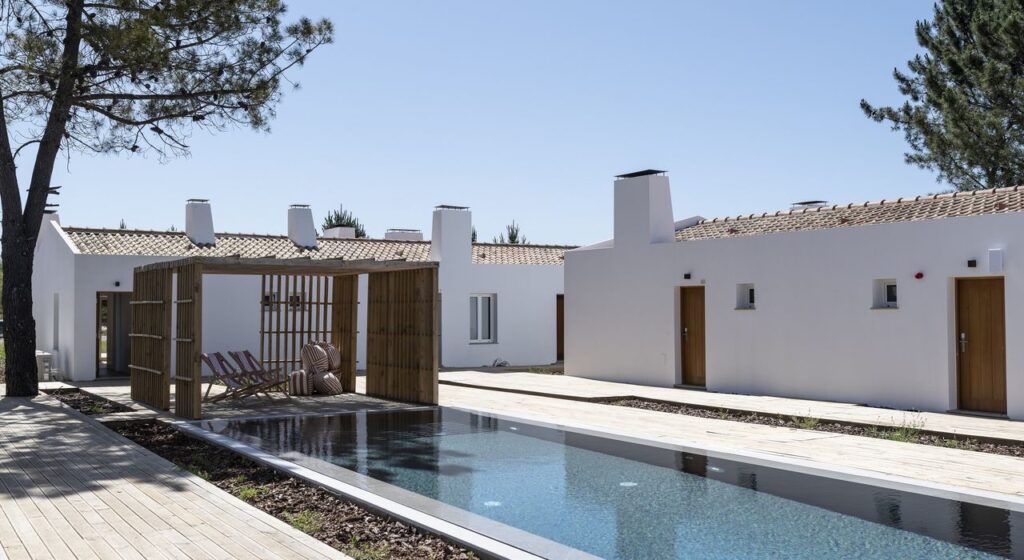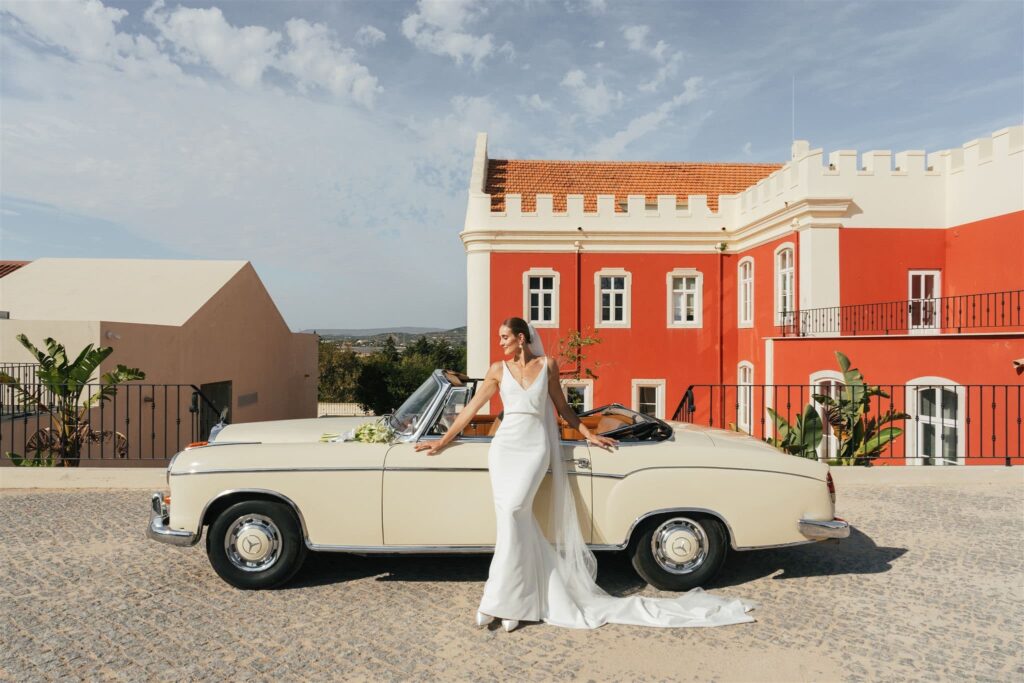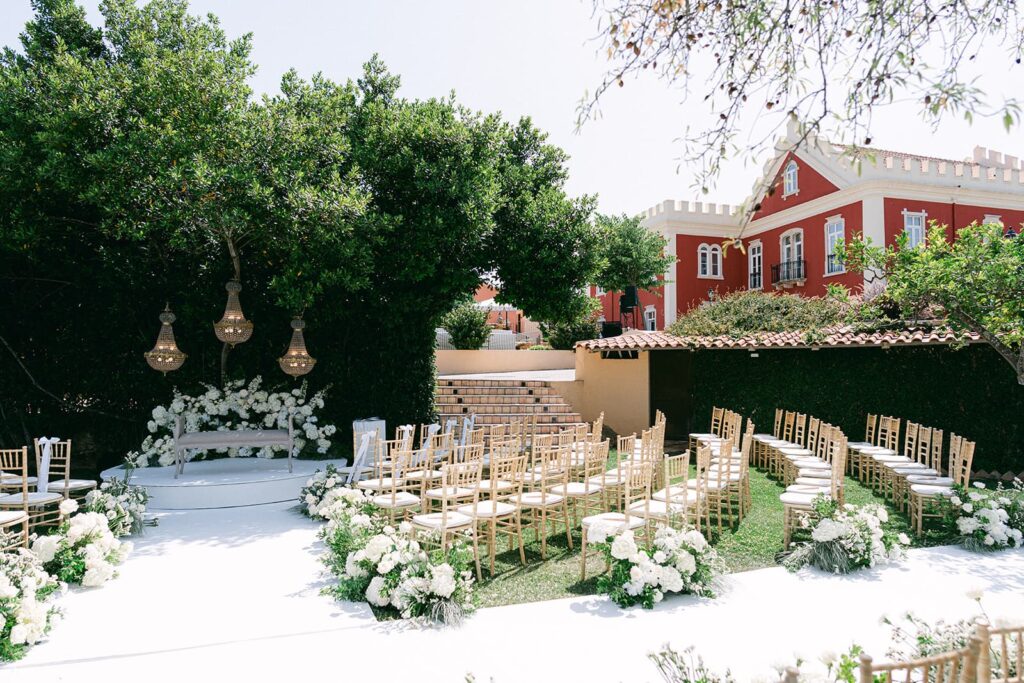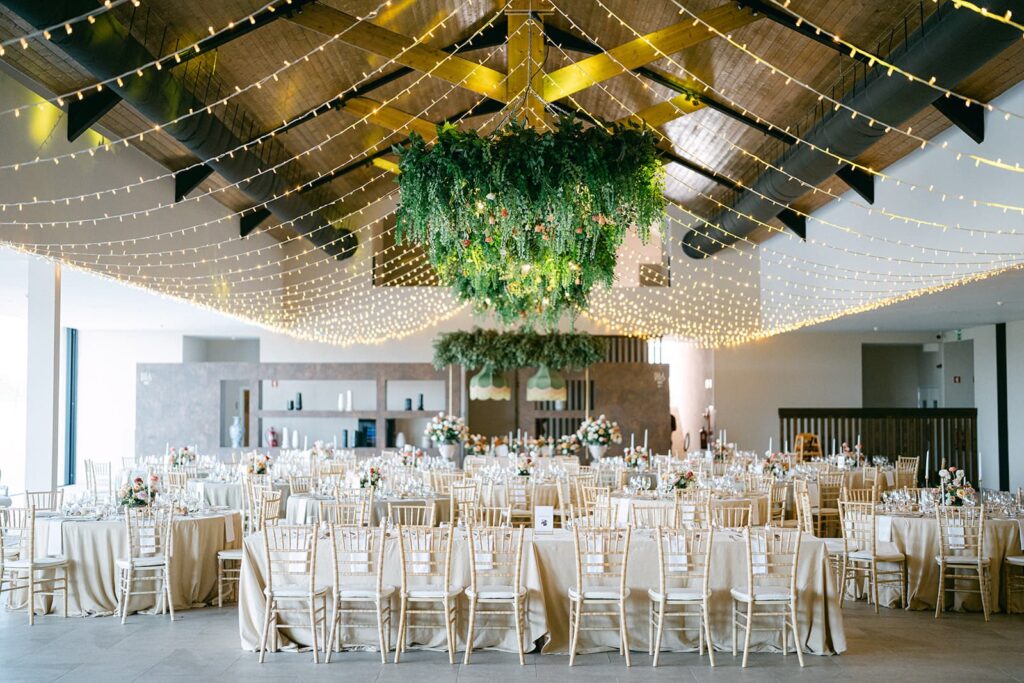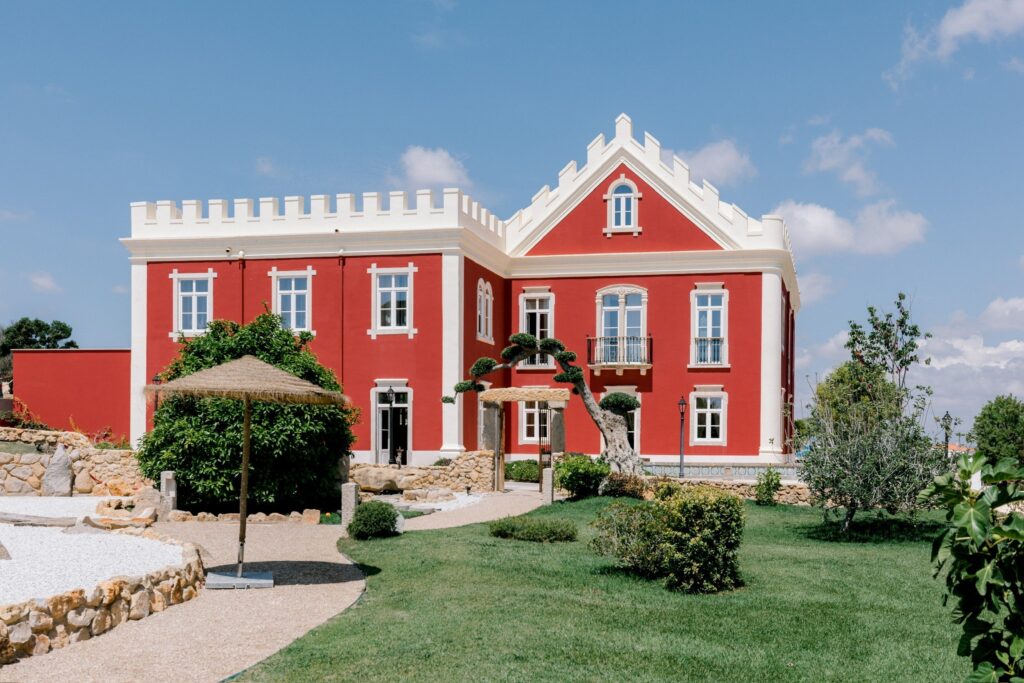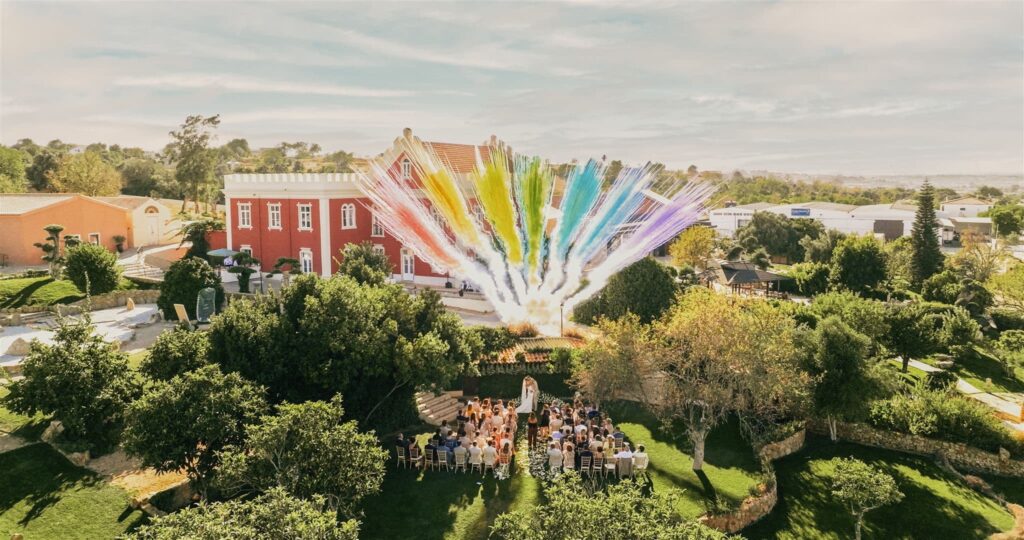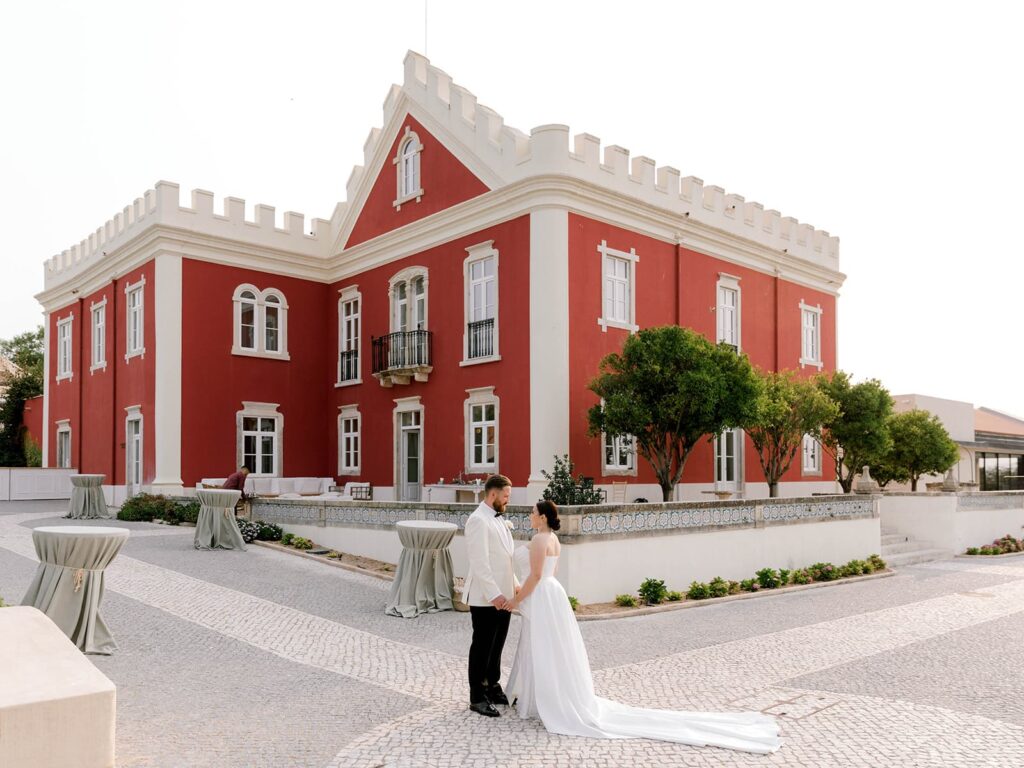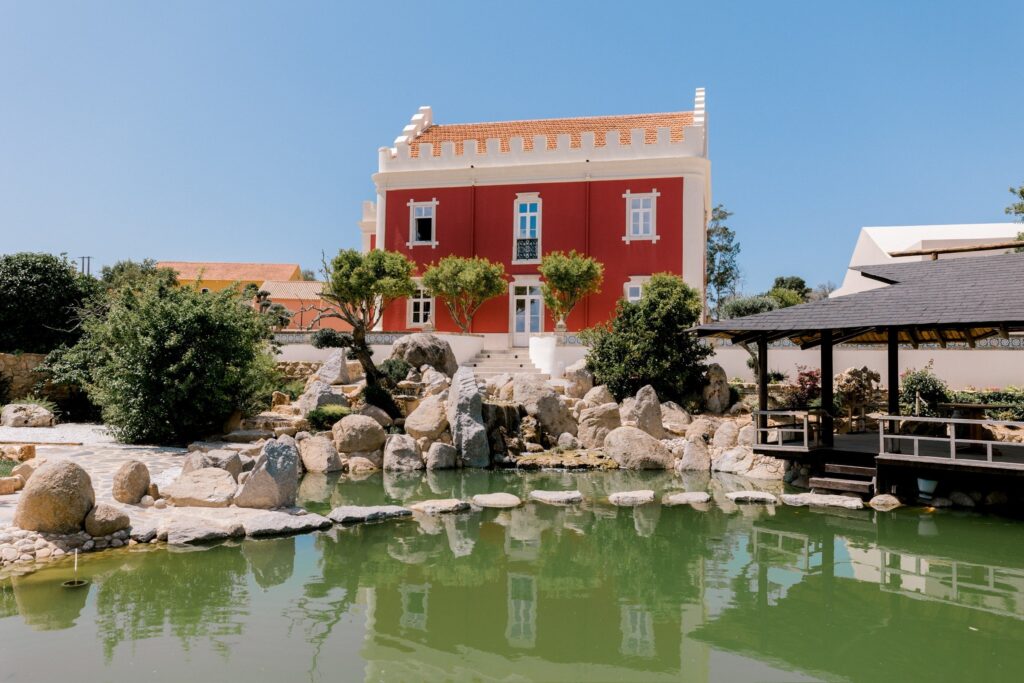
Most of the stone that built the Sanctuary of Fátima came out of the quarries at Moimento, a village on the edge of the town. Luz Houses stands in Moimento, a ten minute walk from the Sanctuary, and it draws on the same ground: a small hotel of fifteen rooms and suites laid out as a village of stone and terracotta cottages, each reworking a type of farmhouse that families on the plateau once built for themselves. Couples marry in a hermitage shaped after the old rainwater cisterns of the region, and a wedding here is for up to sixty guests, with about thirty staying in the village.

Shepherds, stone and the plateau of Fátima
Fátima sits on a limestone plateau at the northern end of the Estremadura Limestone Massif. For centuries most of its people kept sheep and lived by subsistence farming, and until the early twentieth century the land around the town was poor and bare. It was while guarding their families’ flocks at the Cova da Iria in May 1917 that three children from the hamlet of Aljustrel, Lúcia dos Santos and her cousins Francisco and Jacinta Marto, said they had seen a lady dressed in white. The Sanctuary built on the spot, in the local limestone, now receives millions of pilgrims a year.
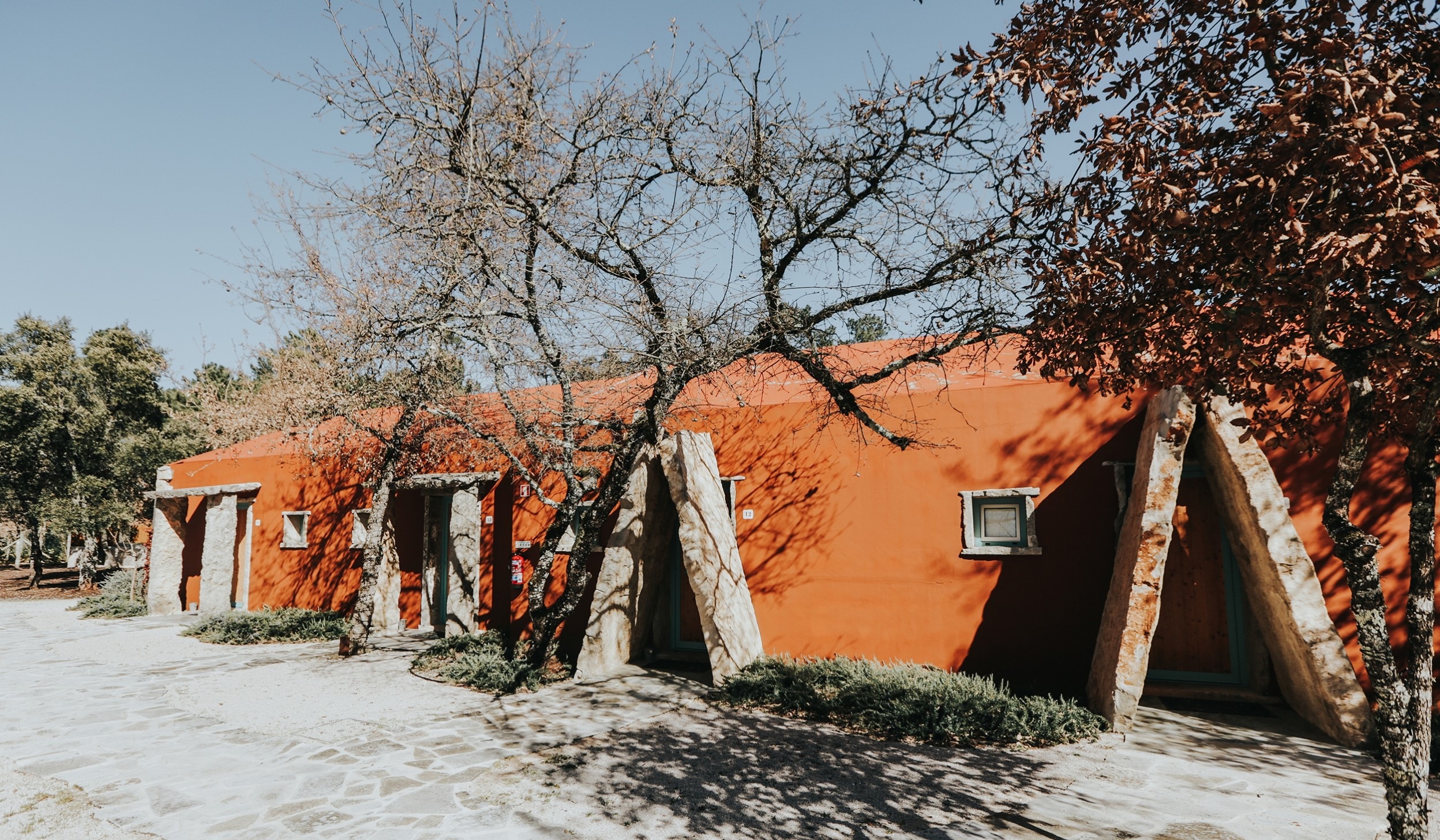
The farmhouses of that older Fátima were built by their owners with the help of relatives and neighbours. Walls were laid in irregular stones gathered from the fields and bound with a mortar of terra rossa, the red sand of the region, mixed with baked lime that hardened over time. Chimneys were cylindrical, like those of the Algarve. The oldest houses had low ceilings and a porch made from two great slabs of stone leaned together at an angle. Another type, the pial porch house, took its porch inside the walls, a T shaped entrance that sheltered the house from the weather and kept it cool in summer. By the 1930s and 1940s the houses had changed: whitewashed walls, framed windows, gabled roofs of Portuguese tile and, often, a band of blue or yellow along the foot of the walls.
A village drawn from the old houses
Luz Houses was conceived by Ana Alves, an architect who specialises in restoration, and Pedro Augusto Silva, who left a career in human resources to run it. Ana Alves spent more than a year studying the old houses of the region before the village was built, and the cottages follow their types closely: slab porches, walls of rough local stone, and the smoother masonry of the twentieth century. Inside, the houses are open plan, with polished concrete floors, white bedding and headboards textured with straw.
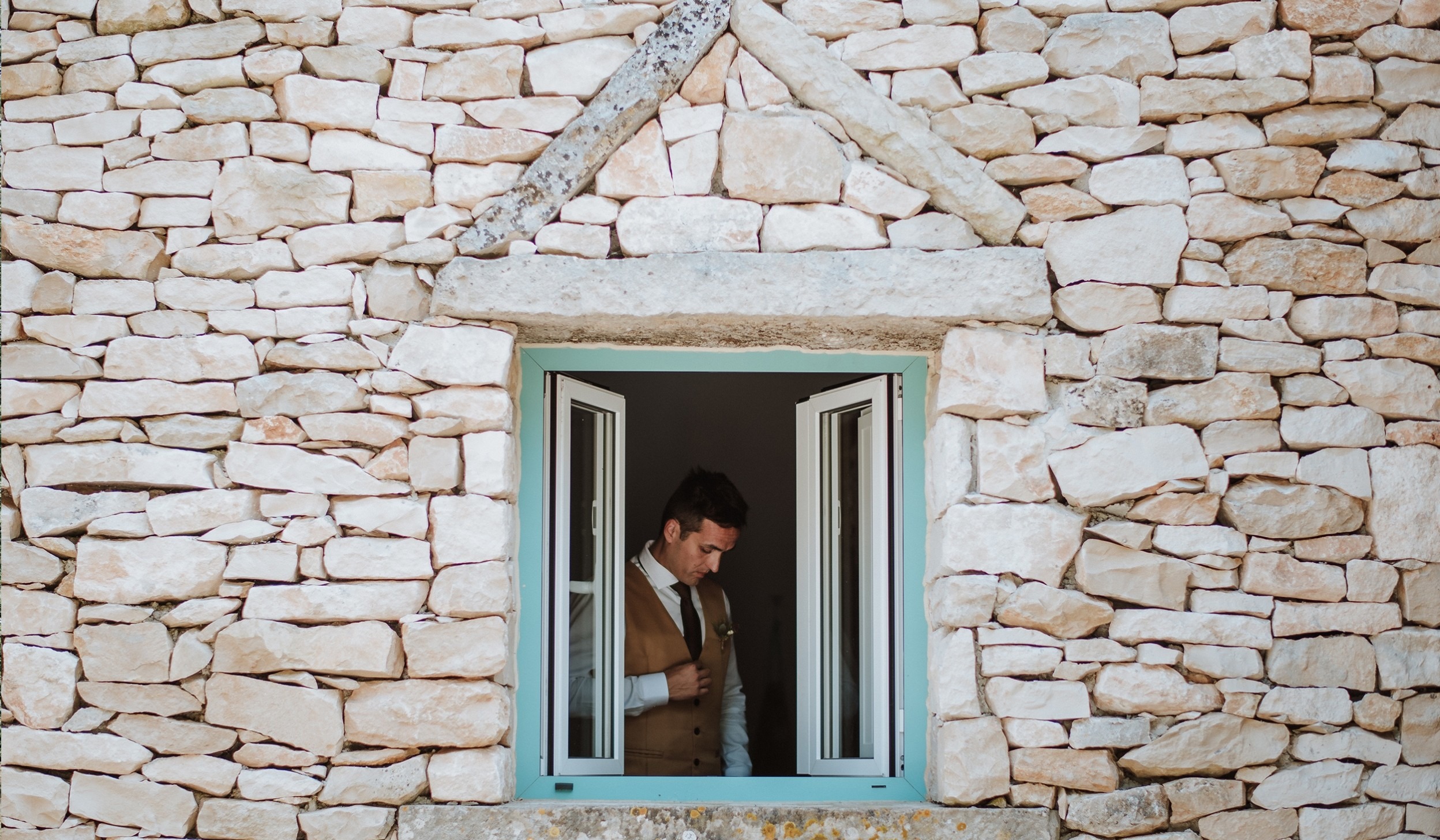
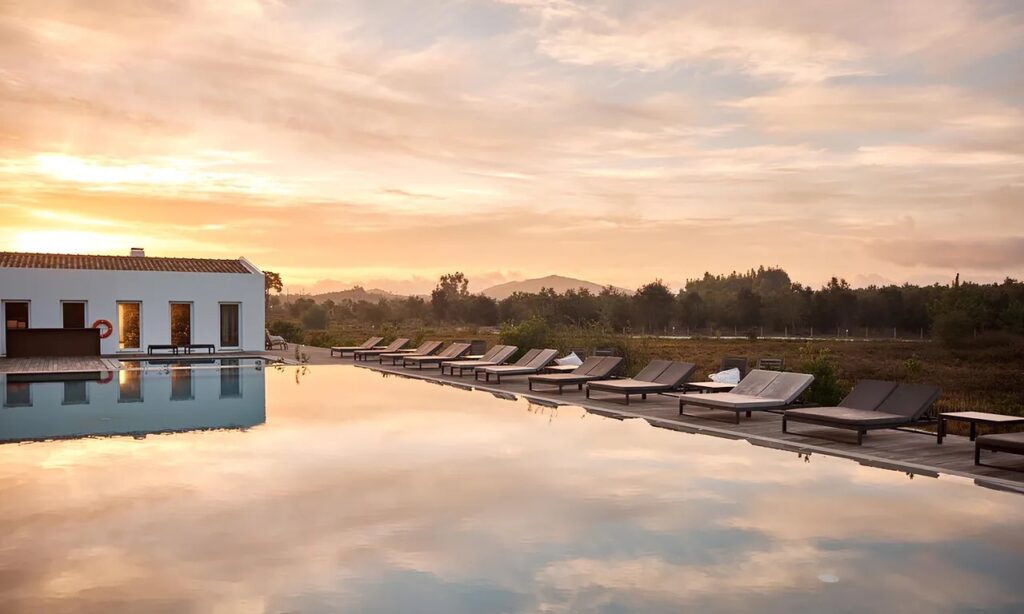
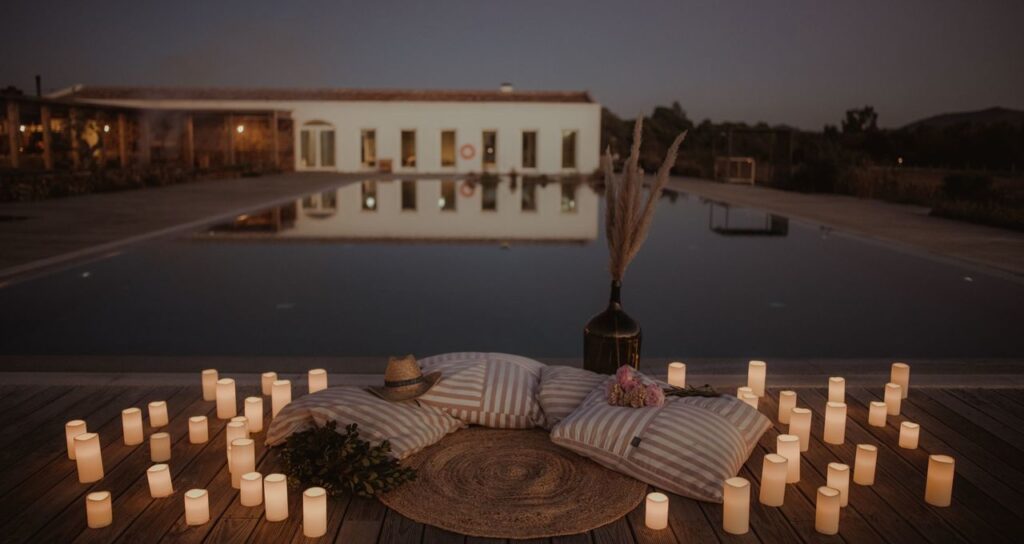
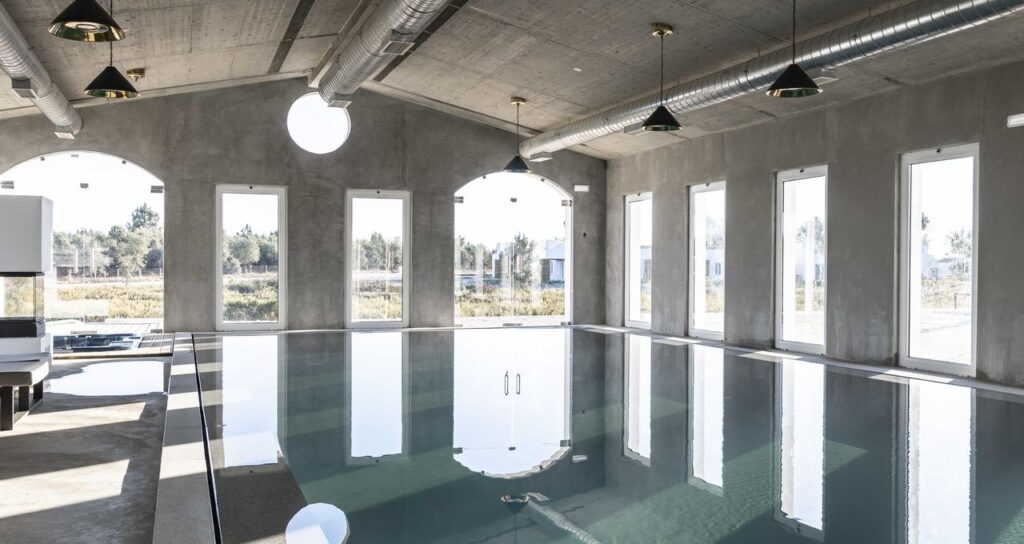
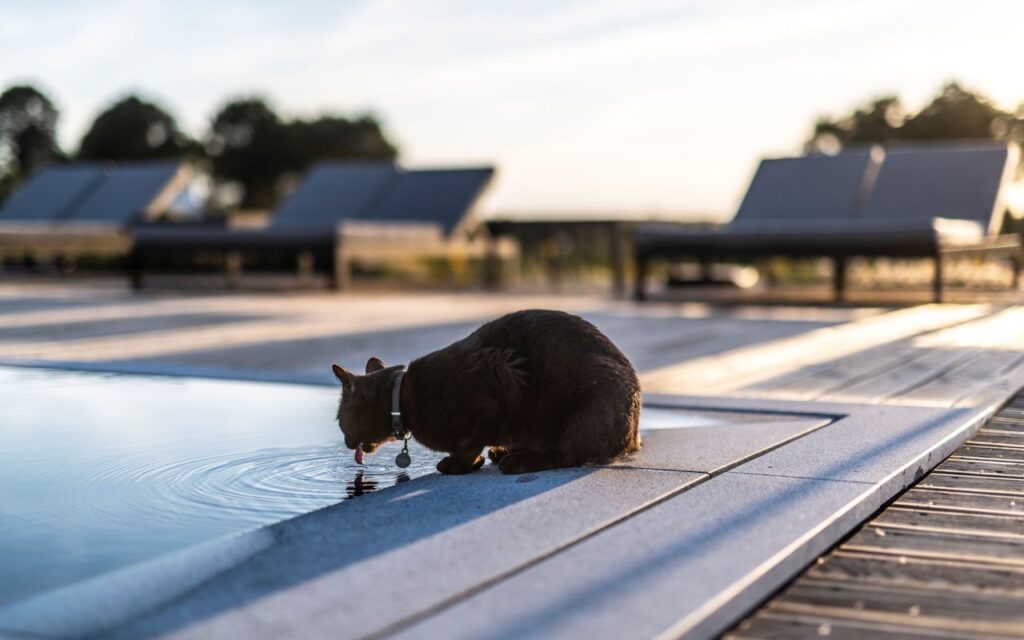
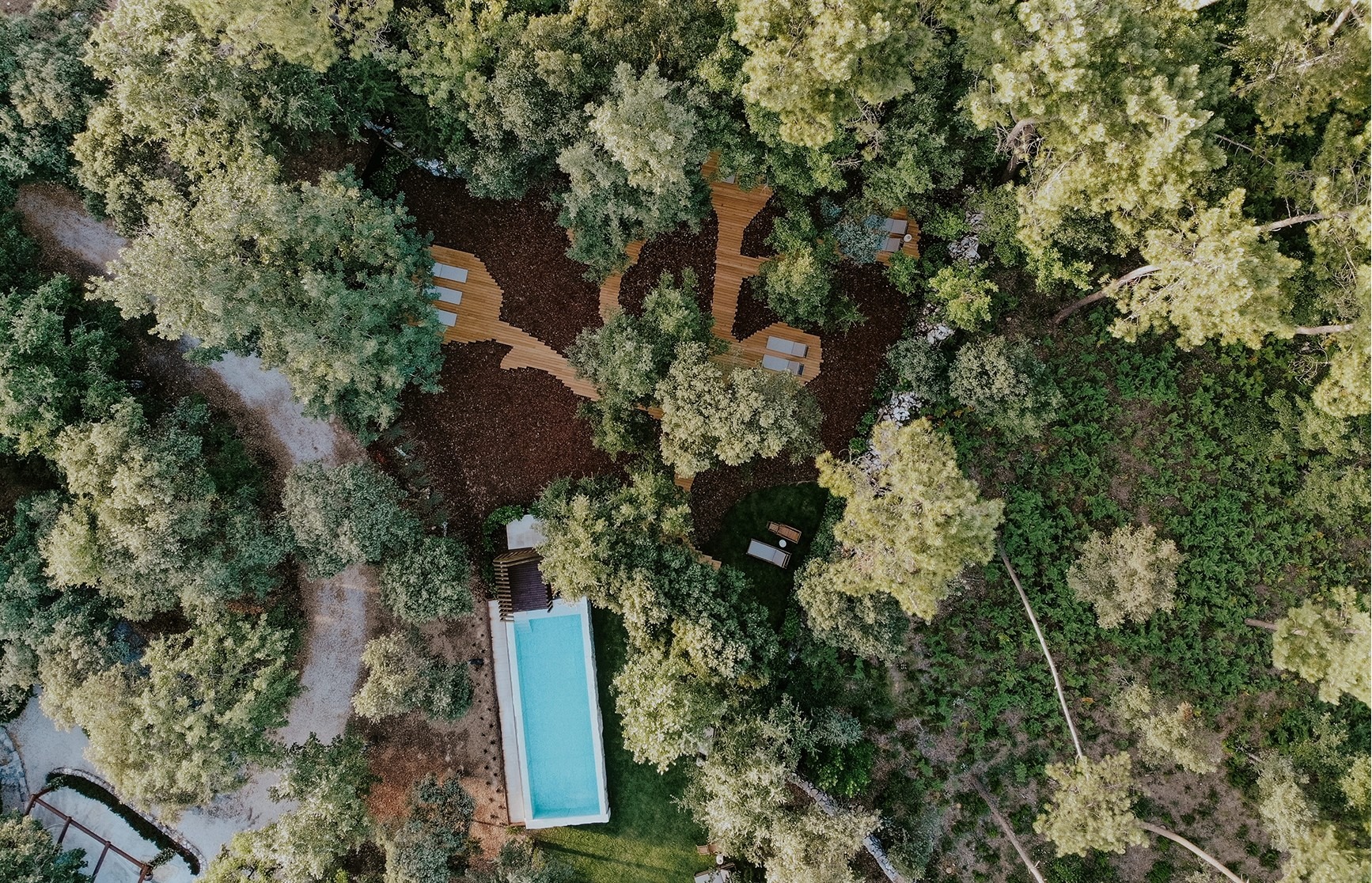
Pieces of the working farm survive among the new houses. The threshing floor was built by Manuel Jacinto with his own hands in the 1930s. A cistern a century old, open to the sky, stands in front of the terrace; shepherds used to stop there to eat and to water their flocks. There is a restored sheep shelter, a wood fired oven where bread and dishes are made to traditional recipes, and, in the garden, a small natural cave of the kind shepherds used for shelter from heavy rain and summer heat. The pool takes the old forms too. It was cut from ten blocks of local stone, extracted with diamond wire and worked by hand to resemble the carved stone tanks of the hills, and it is heated from mid May to mid October, weather permitting.
Vows in the Ermida
The ceremony setting is the Ermida, a hermitage at the end of a meditation path through the garden. Its form comes from the vaulted roof cistern, the most common rainwater tank on the plateau, which had two stone benches facing each other at the entrance where people set down their water pitchers. The Ermida is a small gabled building painted the colour of the earth, with a bell in a niche above a stone lintel and glass doors that fold back onto a glade.
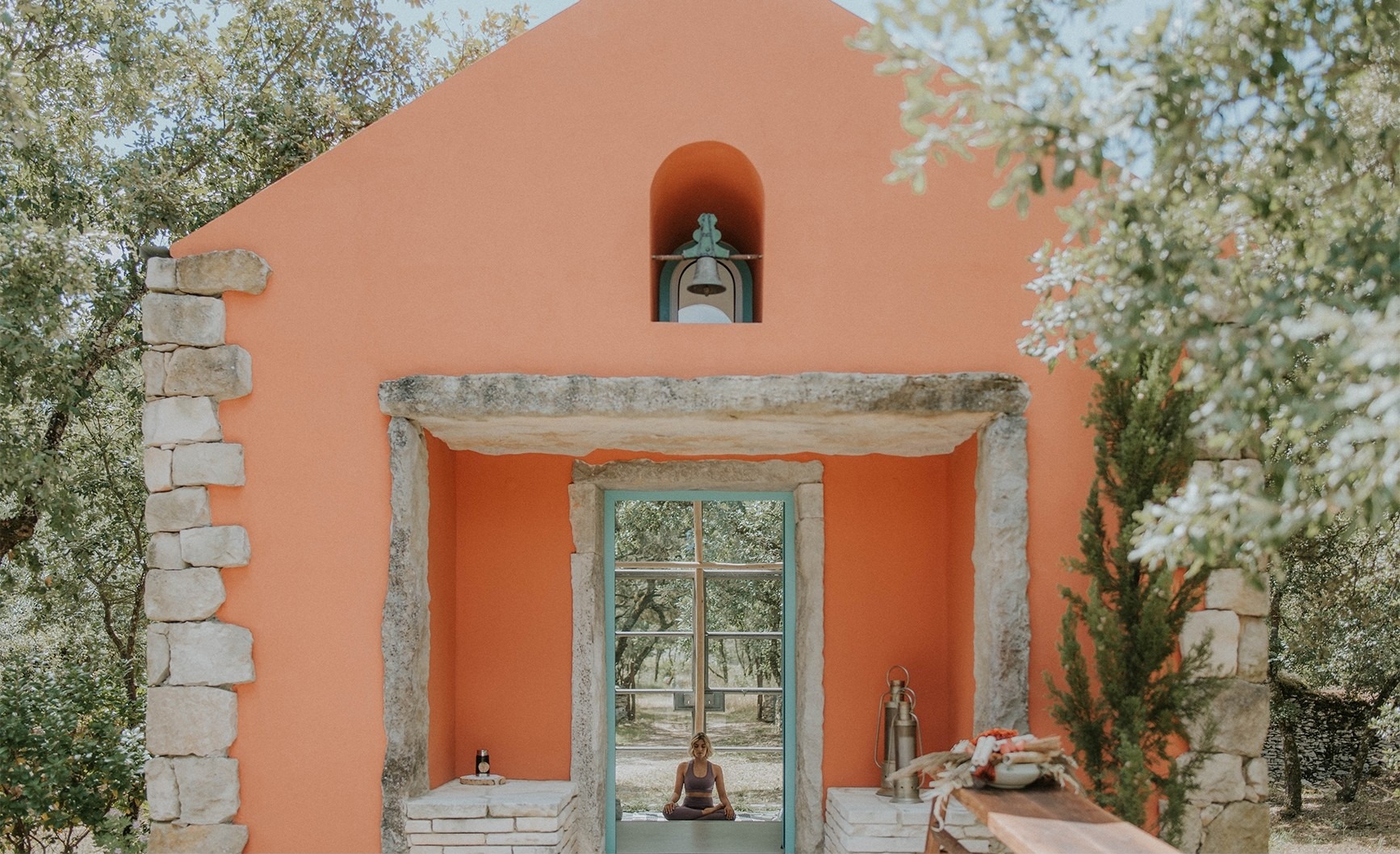
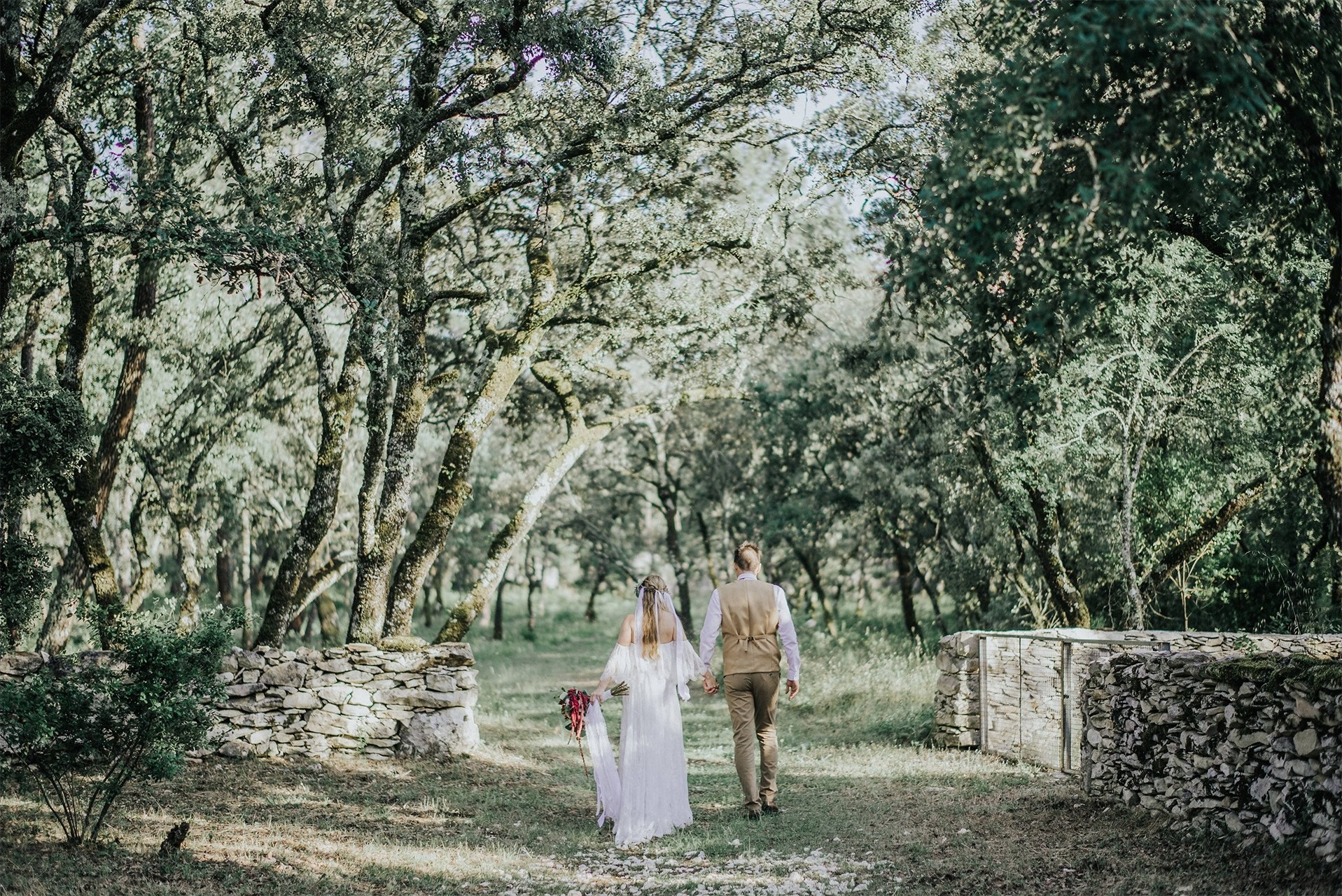
Civil ceremonies are held in the Ermida or outside in the gardens, for up to sixty guests, and the Ermida itself is for a smaller group. The gardens are planted with oaks, holm oaks, olive and fruit trees, and crossed by dry stone walls and paths.
Dinner in the Haystack and under the oaks
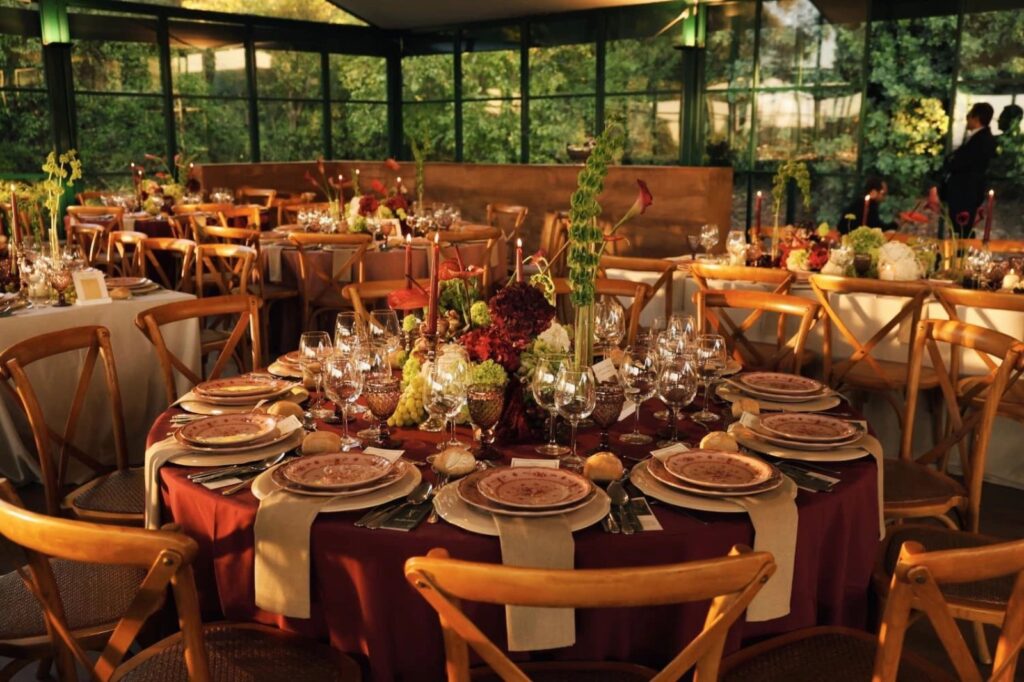
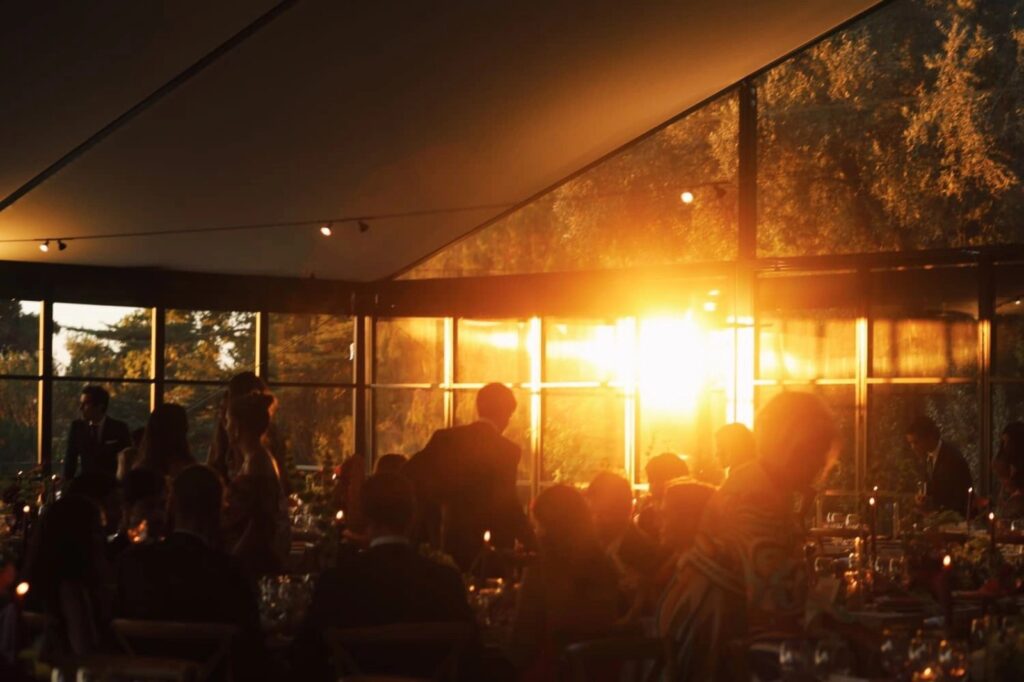
The celebration moves to the Haystack, a golden room modelled on the old pastoral buildings of Fátima, which seats around sixty for dinner. Dinner can also be laid outside under the oaks, lit by festoons and candles, and up to eighty can be accommodated for a standing reception. The threshing floor, with a firepit set into its old stone, is also used for dances and concerts.
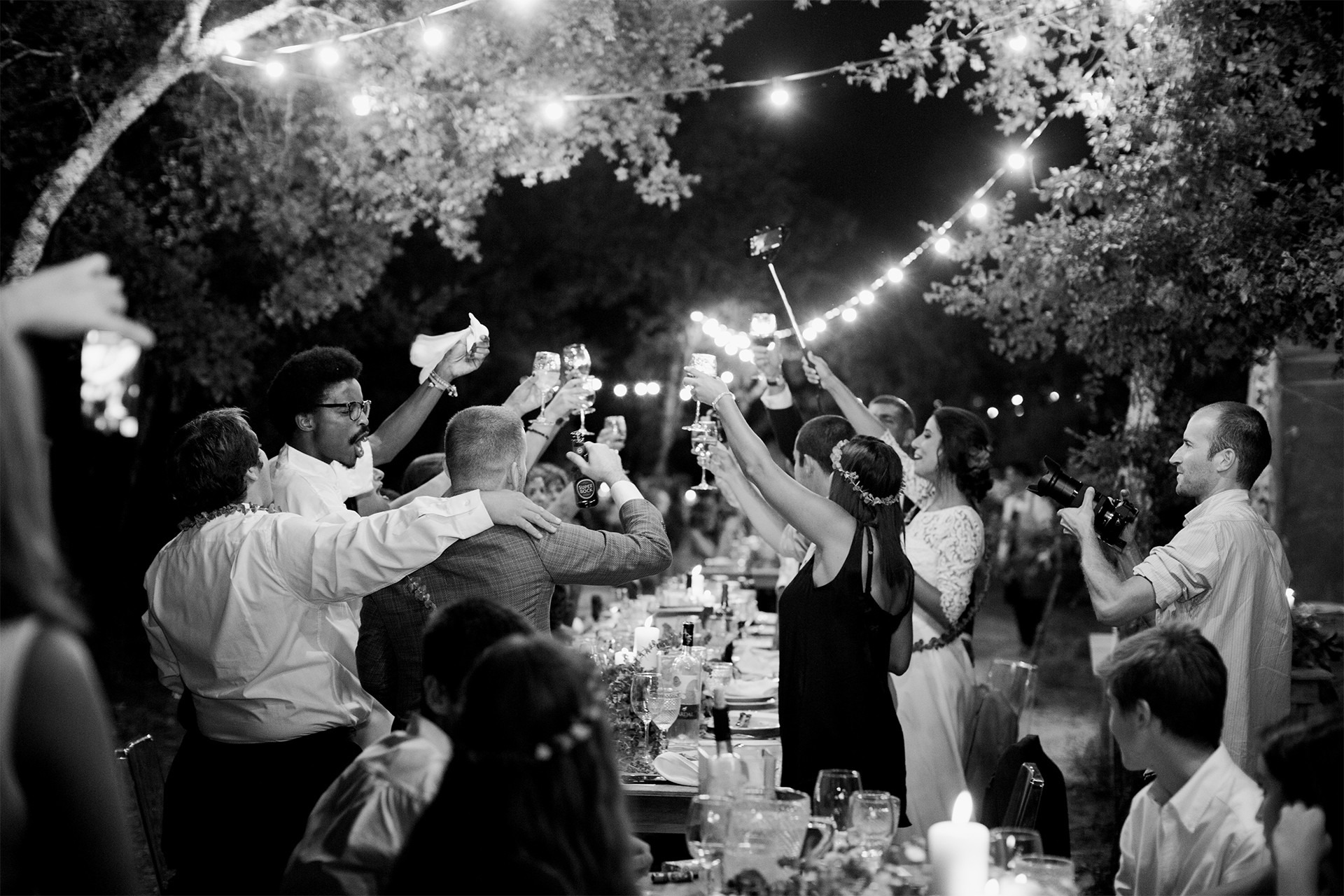
Catering is in house. The restaurant shares its name, Terra Rossa, with the red sand of the old mortar. Its menu is built on the local habit of sharing dishes, with ingredients mostly from local producers, and the kitchen keeps its production deliberately small. Wedding dinners are Portuguese and seasonal, cooked in the Mother House kitchen and carried out to the Haystack or the garden, with bread from the wood oven. Mata Bicho, a menu of simple dishes for the afternoon, takes its name from an old expression for the dried figs and glass of brandy that men took in the tavern in winter.
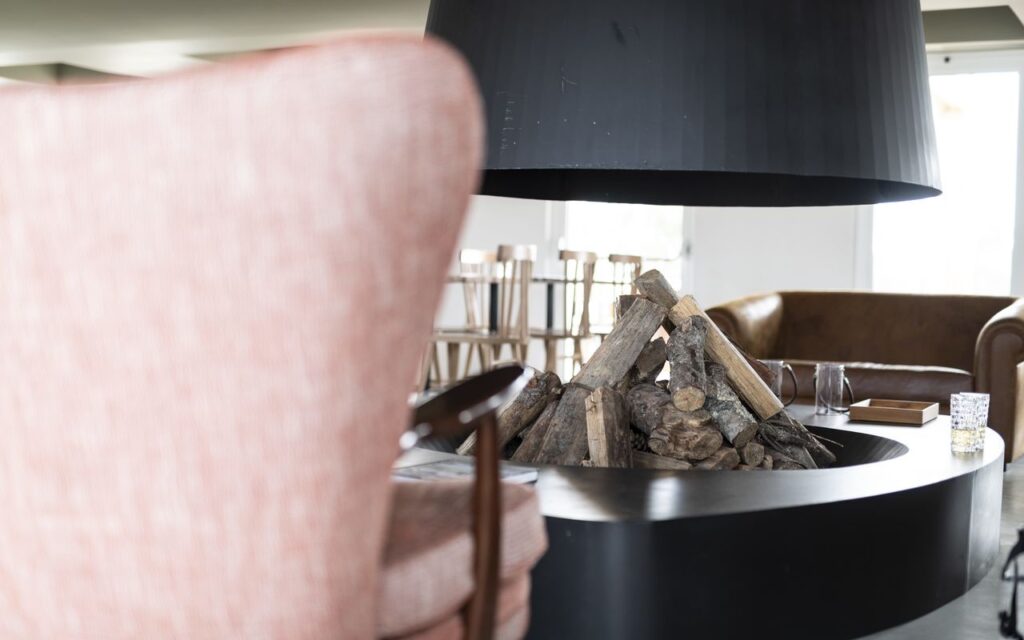
The Mother House is the centre of the village, with the reception, a living room and a dining room each with a fireplace, an honesty bar and a grocery and crafts shop selling local produce. The two pyramids above its entrance reproduce a rarer local cistern, the pyramidal roof tank, difficult to build and seldom seen. In the garden, an old Lisbon kiosk from the 1970s has been rescued and turned into the bar by the pool.

A weekend for the closest guests
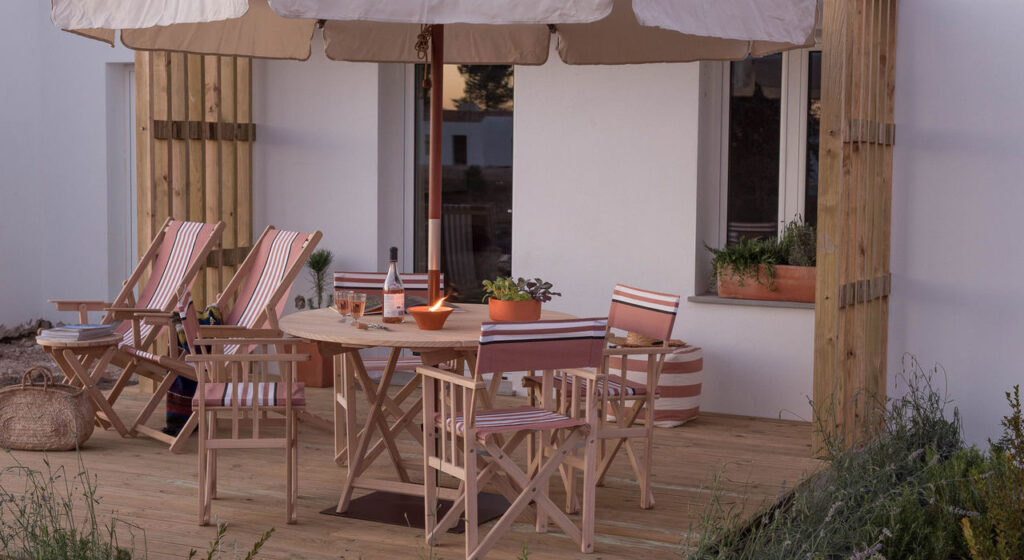
The fifteen rooms and suites sleep about thirty, enough for the families and the closest friends to wake in the village on the morning of the wedding. The Master Suite, on the first floor and reached by stairs, has a living room with a fireplace, a kitchen area with a dining table and a private terrace, and sleeps up to six. The Superior Suites have their own fireplaces and small kitchens and take three or four guests, and in both the Master and the Superior Suites stone baths are set into the room itself. The Charming Rooms, for two, have a bathtub. Breakfast is included and served in the Mother House between nine and eleven, with regional produce and bread from the oven.
The cave in the garden is the spa. Massages and treatments are given there by appointment, every day from ten in the morning to seven in the evening, using aromatherapy and herbal remedies drawn from local plants, in a space lit by candles.
Fátima and the country around it
The Sanctuary, with its two basilicas and the small Chapel of the Apparitions, is a short walk away, and Aljustrel, where the three children were born, keeps their family houses. The Moeda Caves, found in 1971 by two hunters chasing a fox, have 350 metres of galleries a few minutes away by car, and the Serra de Aire and Candeeiros Natural Park offers walking across some 35,000 hectares of limestone hills. For a free day, the Monastery of Alcobaça, begun by Cistercian monks in 1178 and a UNESCO World Heritage Site, Batalha and Óbidos are all within reach, and Nazaré gives guests the Atlantic. Our central Portugal page covers the wider region.
Lisbon airport is about an hour and a half by road and Porto about two hours. The hotel is a minute from the A1 motorway; the nearest railway station is at Caxarias, 23 kilometres away, with taxis and a bus to Fátima. Weddings are priced individually, by date, season and number of guests.
With sixty at dinner and beds for about thirty, the decision that shapes a wedding at Luz Houses is whether to take the whole village for the weekend, which can be arranged, so that everyone who sleeps there belongs to the wedding. Check your date.