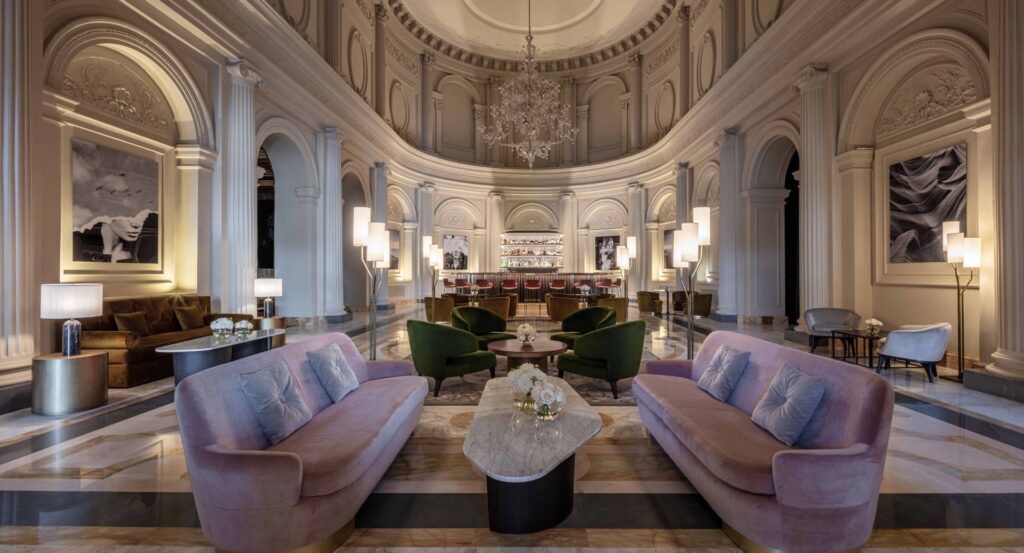
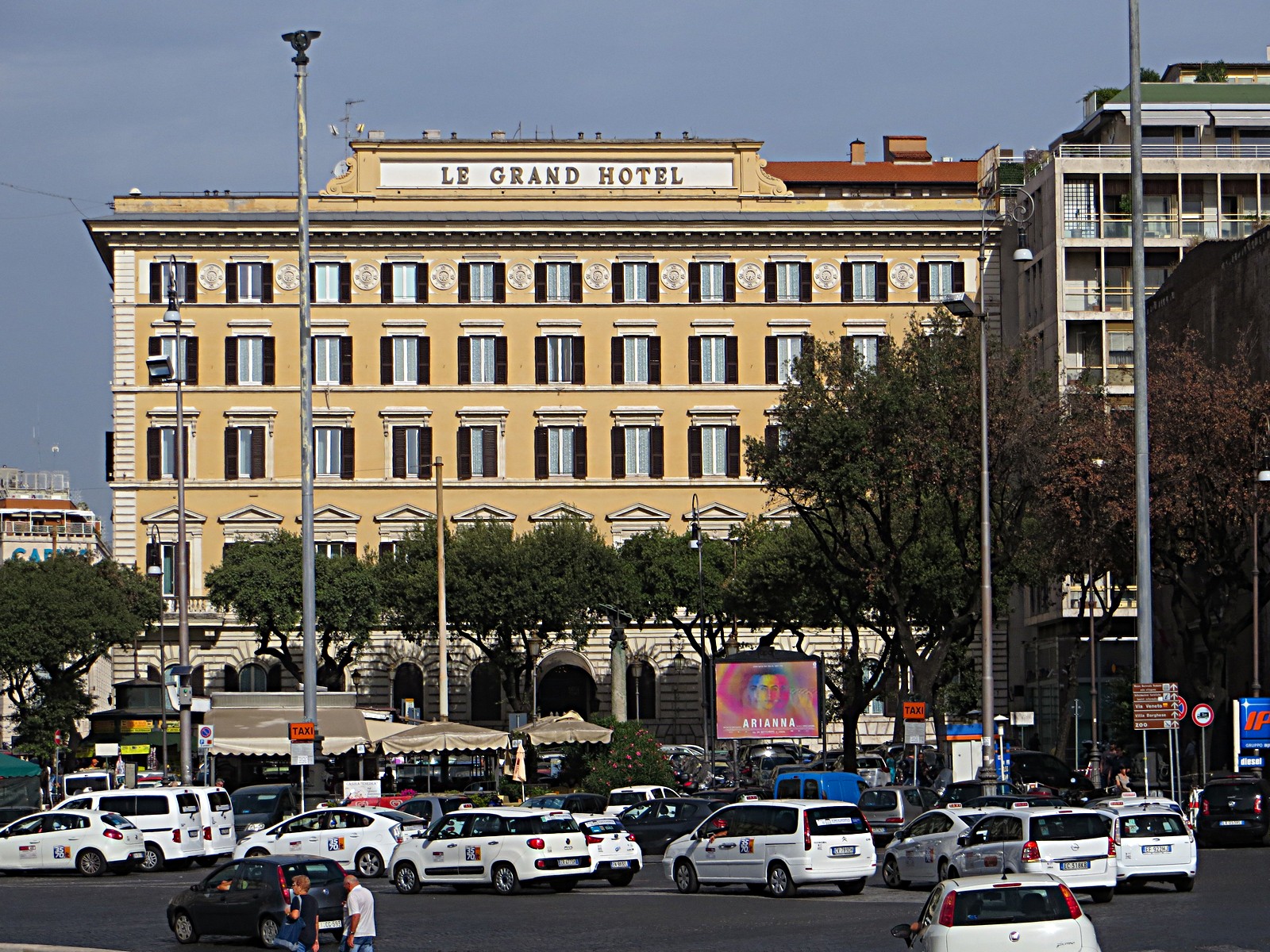
On 11 January 1894 César Ritz opened Le Grand Hotel in Rome with a dinner of sixteen courses for 100 guests, cooked by Auguste Escoffier. The hotel’s ballroom, the first public ballroom in the city, is now the Ritz Ballroom of The St. Regis Rome, and it is where weddings at the hotel take place: a symbolic ceremony beneath painted ceilings, then dinner and dancing in the same rooms, with the wedding party and their guests staying upstairs.

A grand hotel for a new capital
The hotel was built at the request of the Marquis di Rudinì, twice Prime Minister of Italy, who wanted Rome to have a hotel that could stand beside those of the other European capitals, and who persuaded Ritz to build it. In 1893 Ritz bought a site beside the Baths of Diocletian, between the Fountain of Moses and what was then Piazza dell’Esedra, where the banker Filippo Cavallini had already begun a hotel building to designs by the Roman architect Giulio Podesti. It stood close to the railway station, to the ministries on Via XX Settembre and to the Quirinale.
Le Grand was also the most modern hotel in the city. It was the first in Rome with electric light and private bathrooms, and its lift, the first in a Roman hotel and the thirteenth in Rome, was originally driven by a hydraulic pump fed with water from the Fountain of Moses, the monumental fountain built in 1585 to 1588 at the end of the Acqua Felice aqueduct. The old lift is still in use. For the kitchen Ritz brought in Escoffier, who had run Ritz’s kitchens at the Grand Hotel in Monte Carlo, and the press of the day described the new building as one of the most splendid hotels in Europe.
Alfonso XIII of Spain lived in exile in one of the suites and died in Rome in February 1941. On 8 June 1944, days after the liberation of the city, Pietro Badoglio met the leaders of the antifascist parties, among them Alcide De Gasperi, Palmiro Togliatti and Benedetto Croce, in a suite at the hotel. In the years of the dolce vita Ava Gardner, Lauren Bacall and Zsa Zsa Gábor lived there, and under Starwood the hotel was renamed the St. Regis Grand, the first St. Regis in Europe.
The first public ballroom in Rome
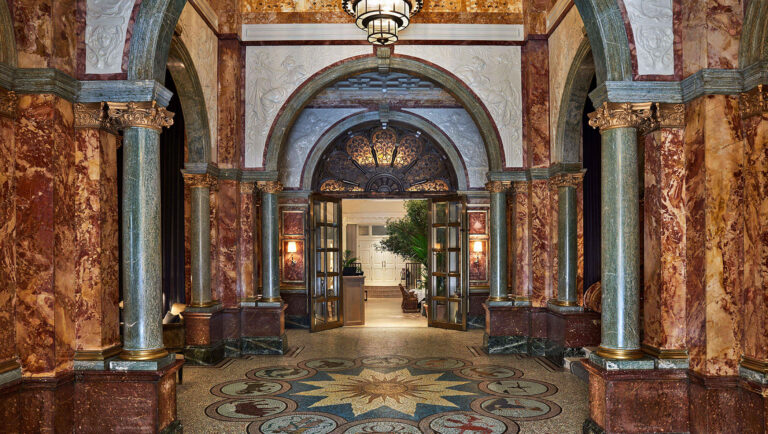
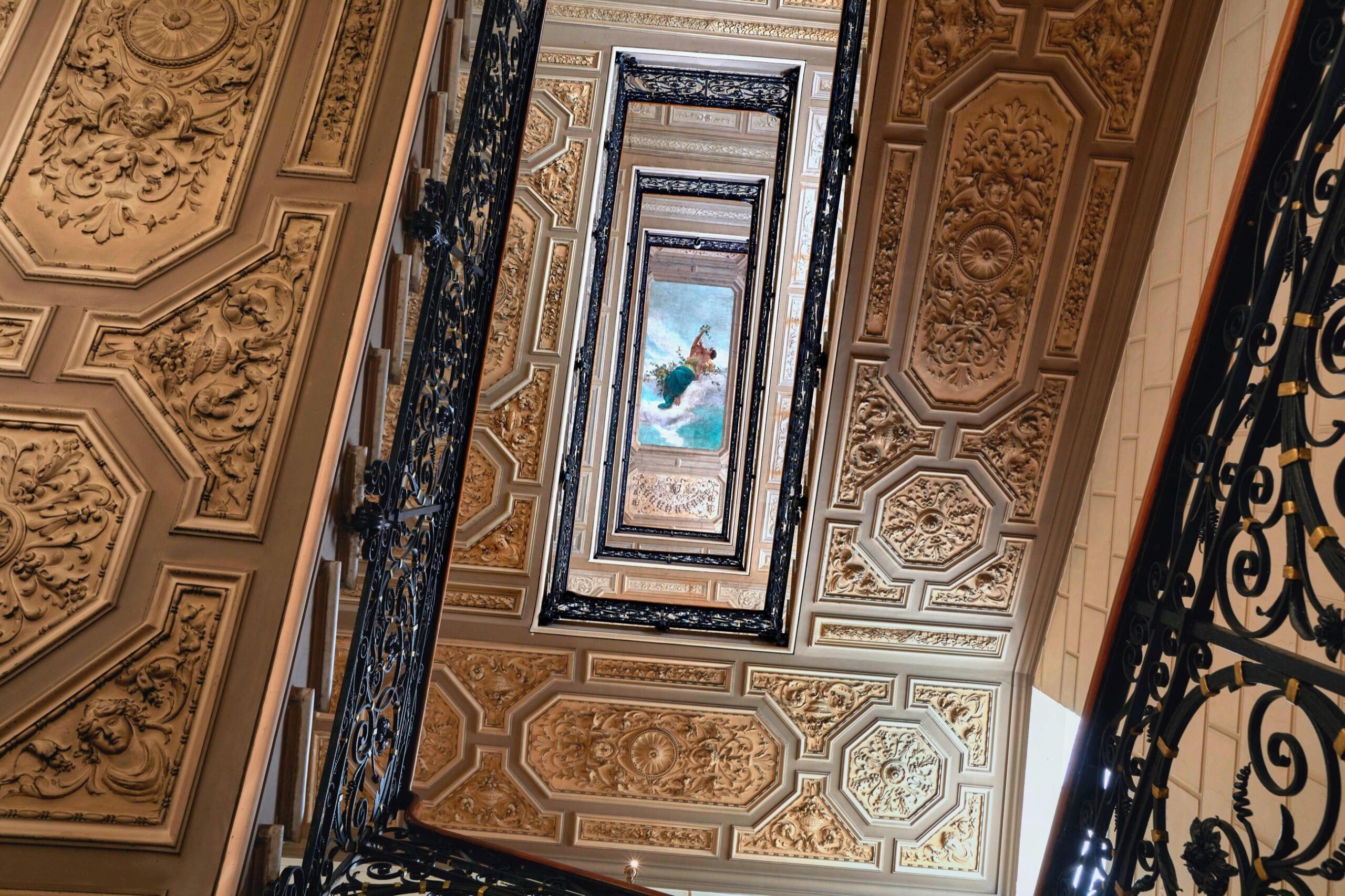
Podesti designed the ballroom, which opened with the hotel in 1894, and Ritz commissioned its frescoes from the Roman painter Mario Spinetti. The painted ceiling is protected by the Soprintendenza, the Italian state heritage authority. In the restoration completed in 2018 the restorer Patrizia Cevoli and a team of twelve specialists spent about six months cleaning the frescoes, with Rome’s Accademia di Belle Arti involved throughout, and the colours came back to the hues Spinetti painted more than a century ago.
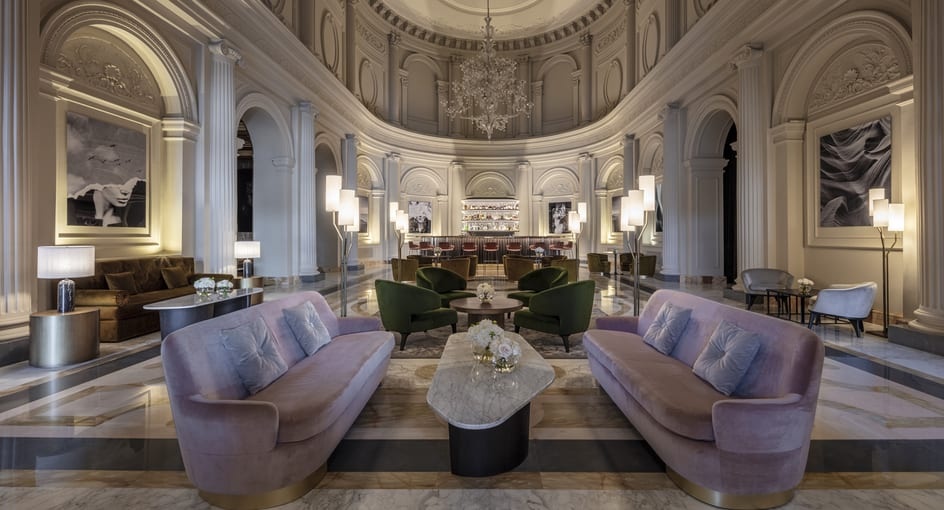
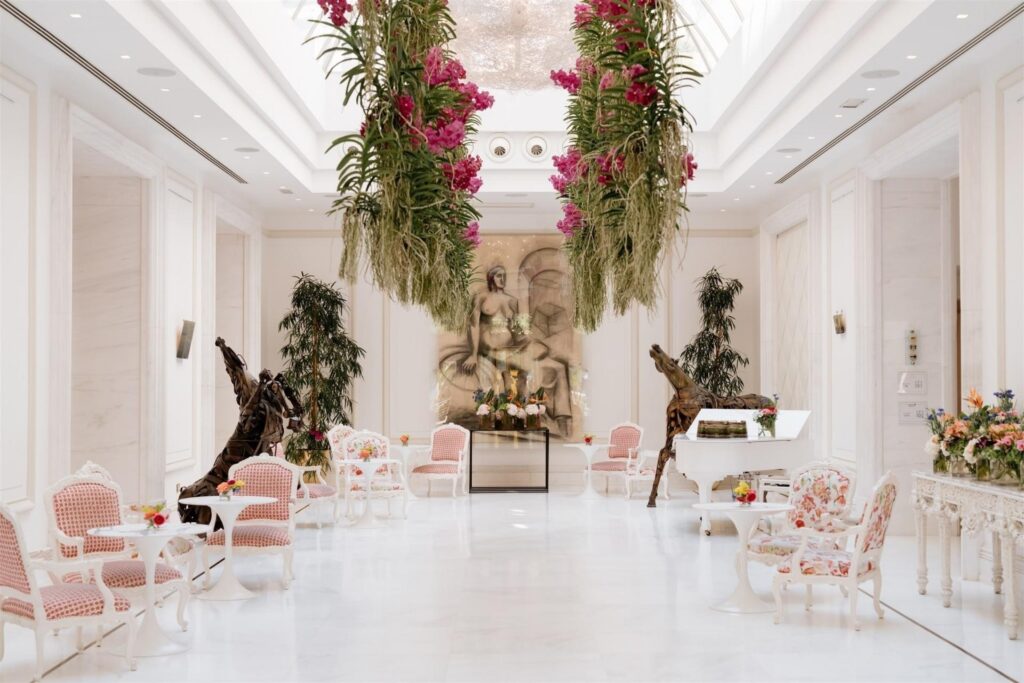
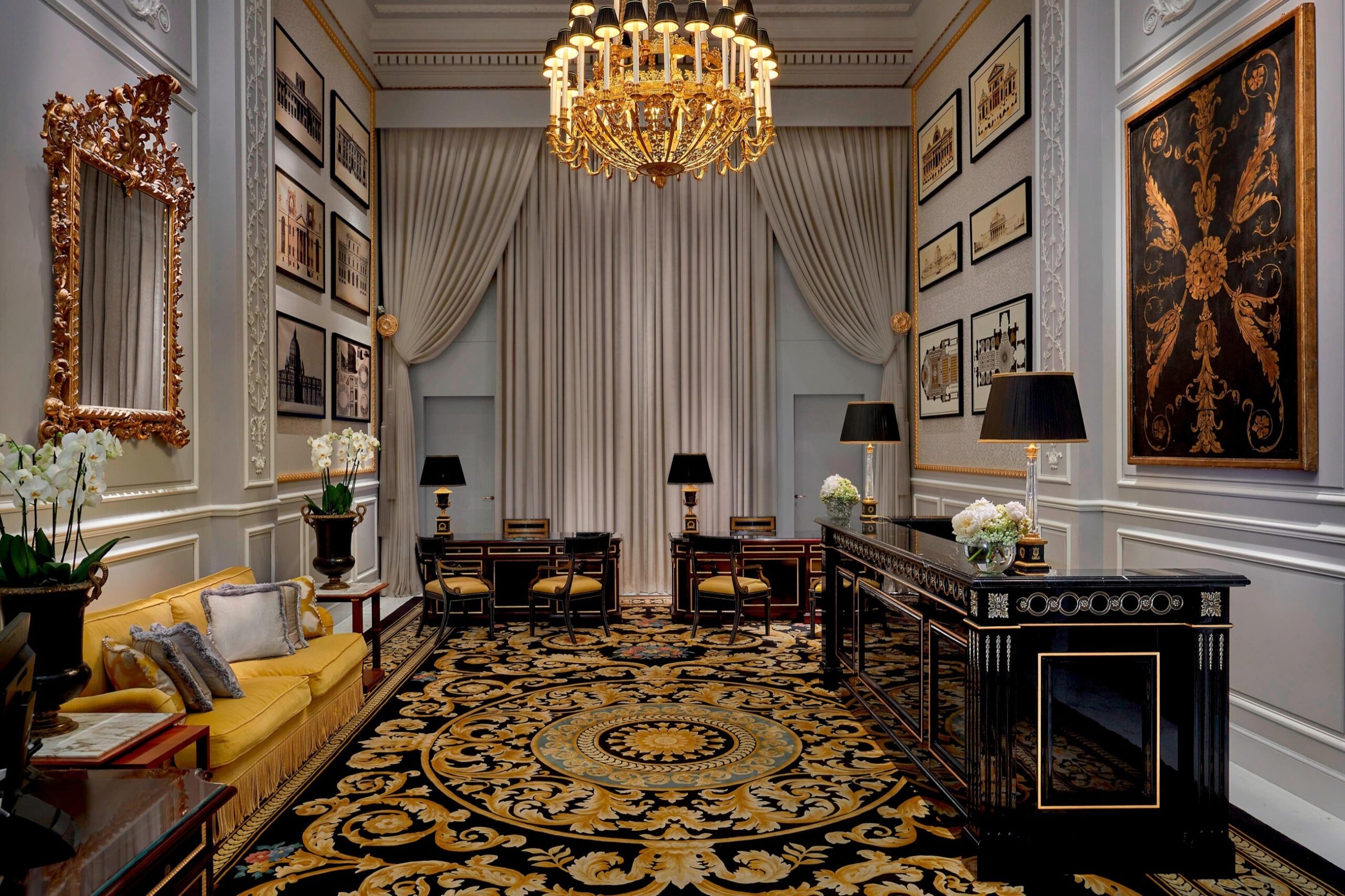
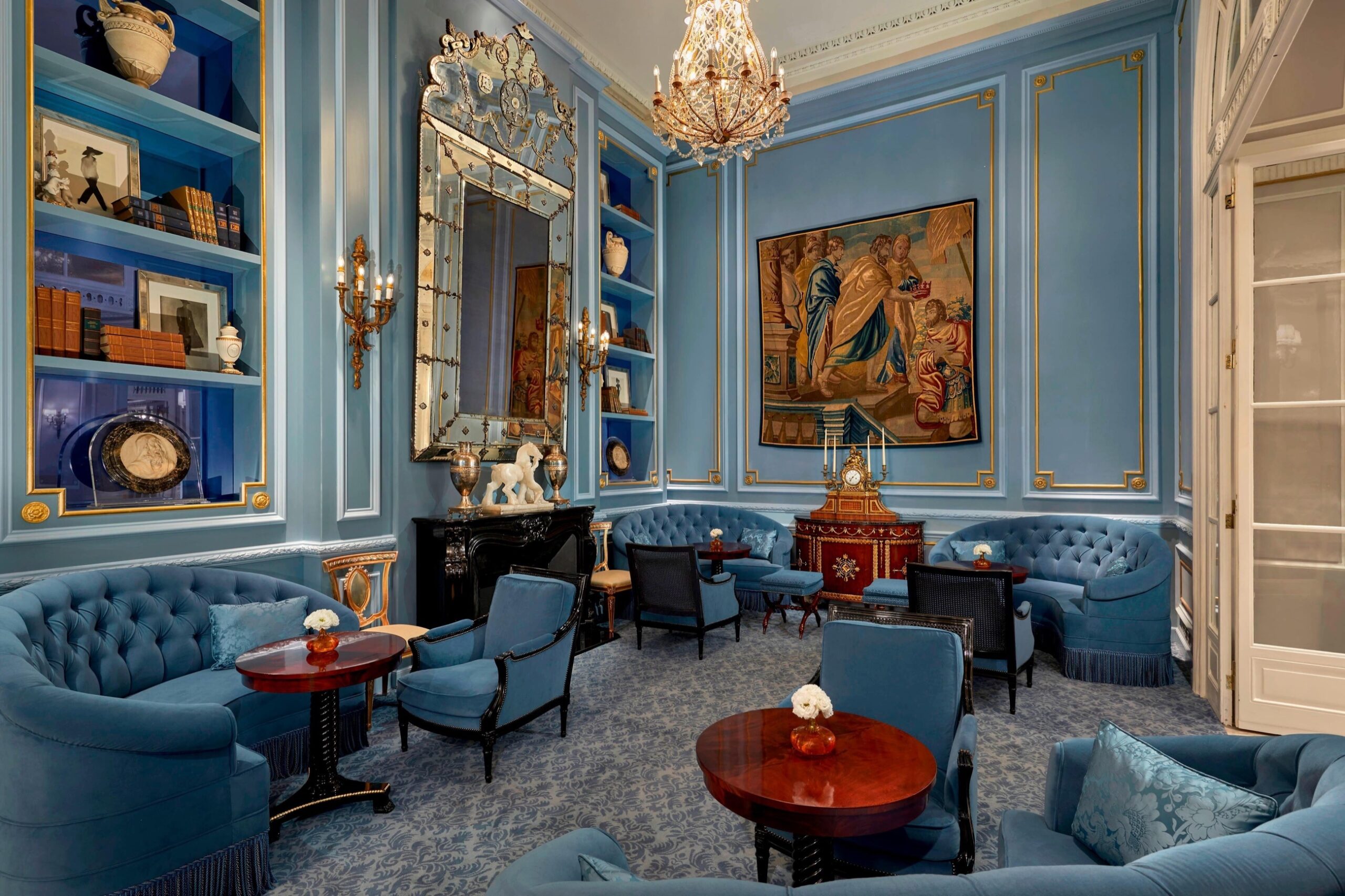
The rest of the building was restored over about three years by the Paris interior design studio of Pierre-Yves Rochon, which took the original interiors of 1894 and the restoration of 1906 as its reference. Rochon worked in a Roman palette of white, dove grey, yellow and powder blue, and returned the grand foyer to its original conception as a winter garden. The lobby now has a five metre Murano glass chandelier with blue decoration. Some pieces from a 1960s refurbishment by Maison Jansen were kept.
Ceremonies and dinners in the ballrooms
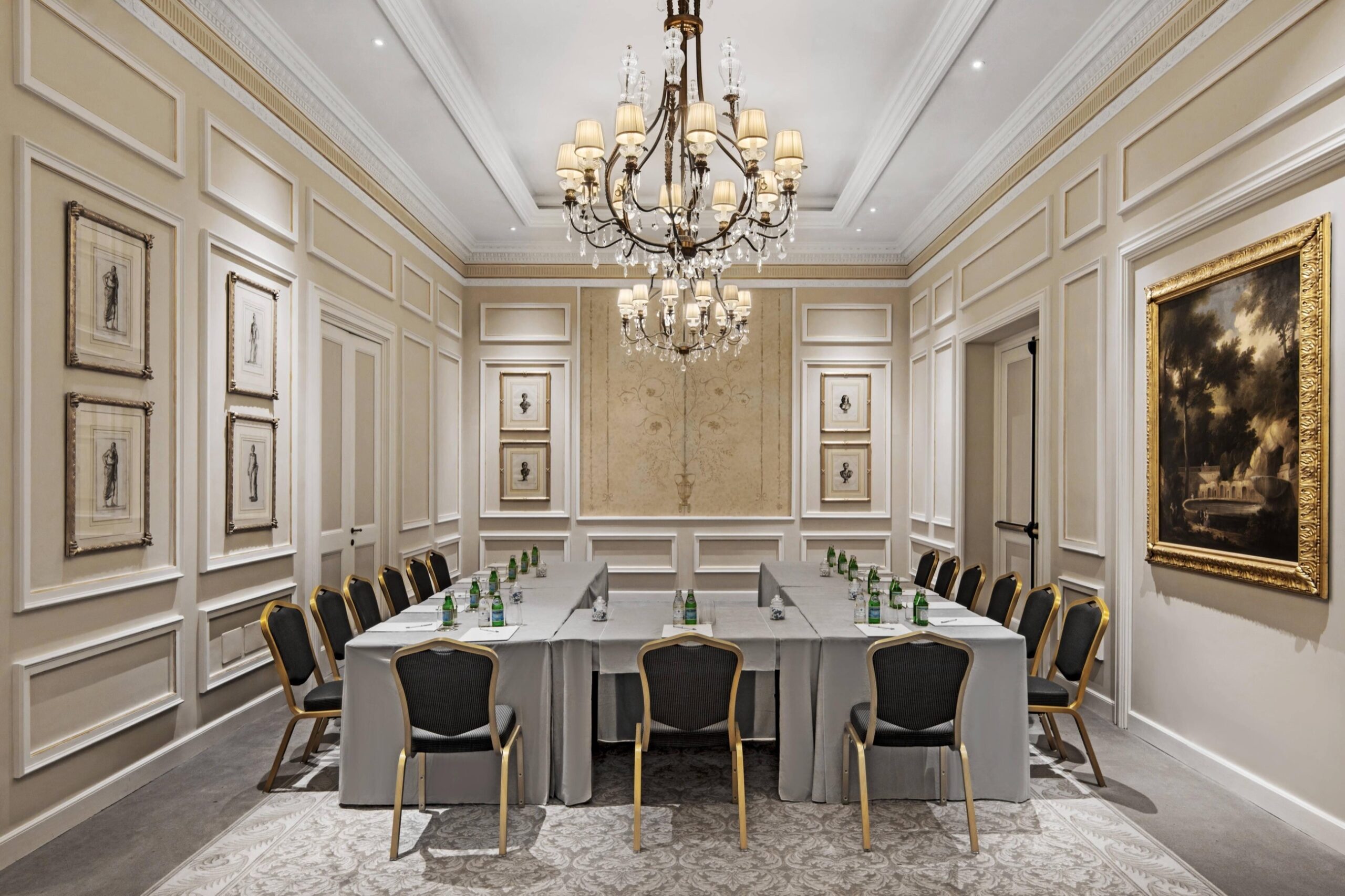
A wedding at The St. Regis Rome uses the hotel’s ballrooms and salons rather than the whole building. The Ritz Ballroom is the principal room. The Borromeo, Venezia and Danieli ballrooms take ceremonies, wedding breakfasts and receptions on a smaller scale, and the Principe function rooms are used for private dinners and the most intimate celebrations.
Ceremonies here are symbolic and can be held for up to 150 guests. A seated wedding breakfast or dinner takes up to 130, and a standing reception up to 250. Catering is in house: the hotel’s wedding team designs each celebration with the couple, menus are tailored to them and served in the ballrooms and salons, and dietary requirements are accommodated. Weddings are priced on enquiry.
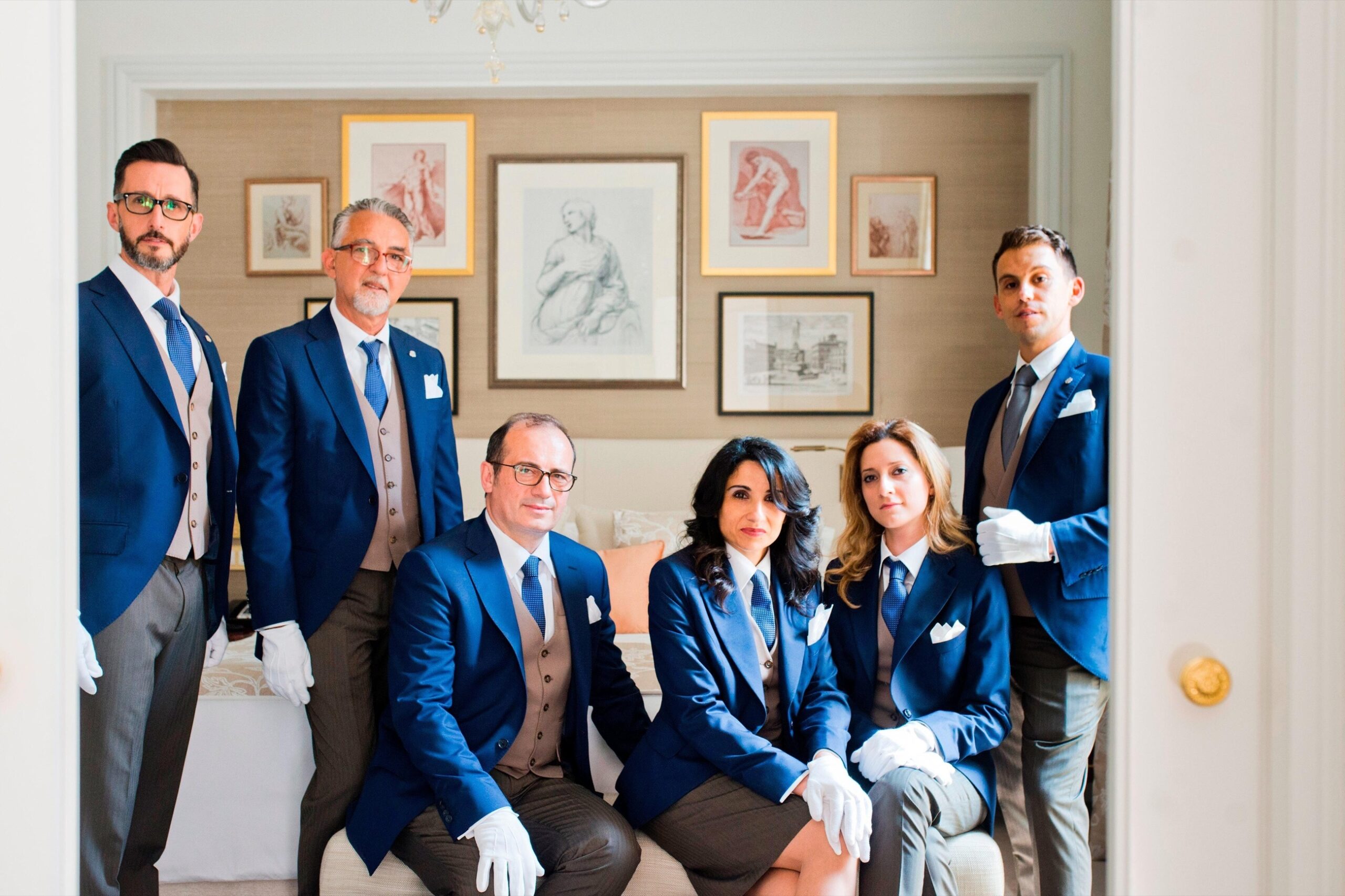
The hotel brings two St. Regis customs to a wedding. The evening champagne sabering, in which a bottle is opened with a sabre, can open the celebration, and the hotel’s butlers, a service every St. Regis keeps, look after the couple and their guests throughout.
Lumen and the kitchen
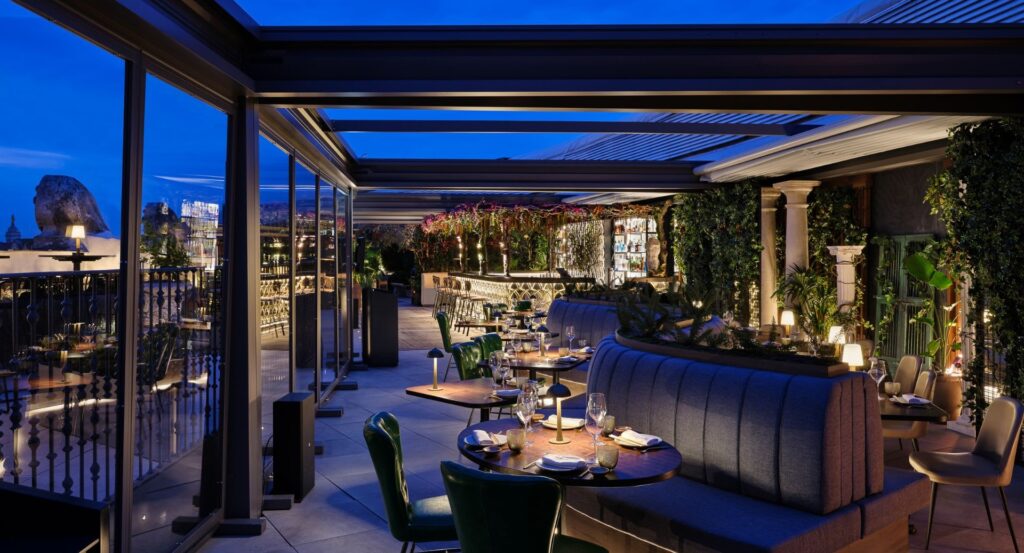
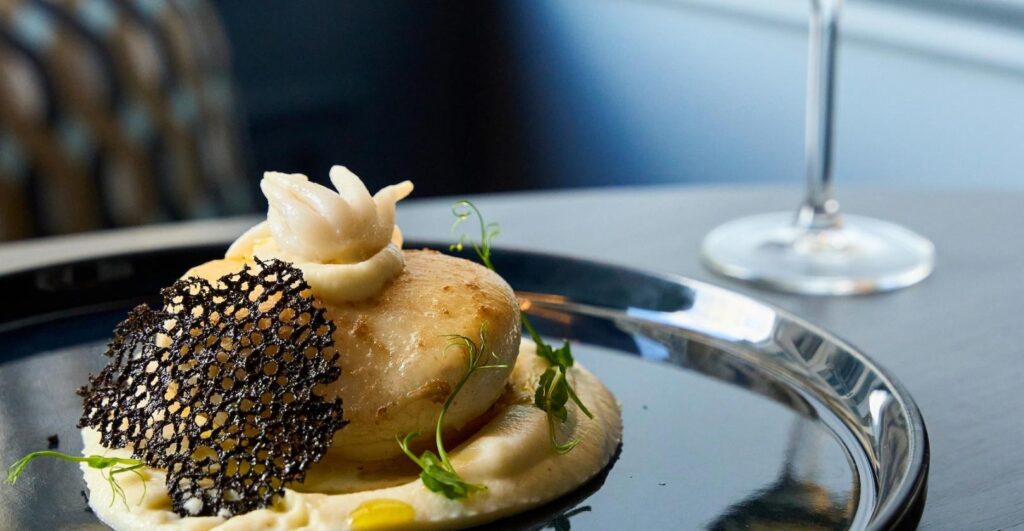
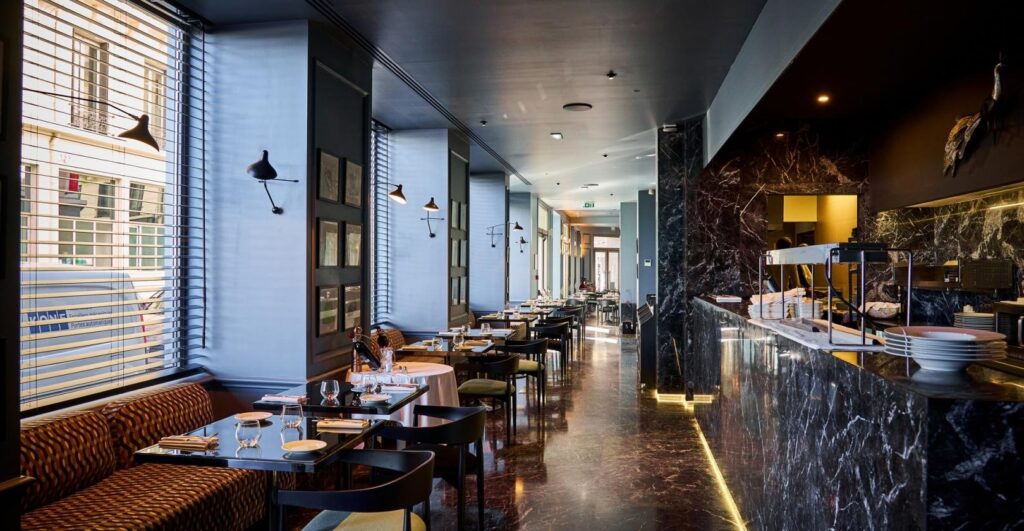
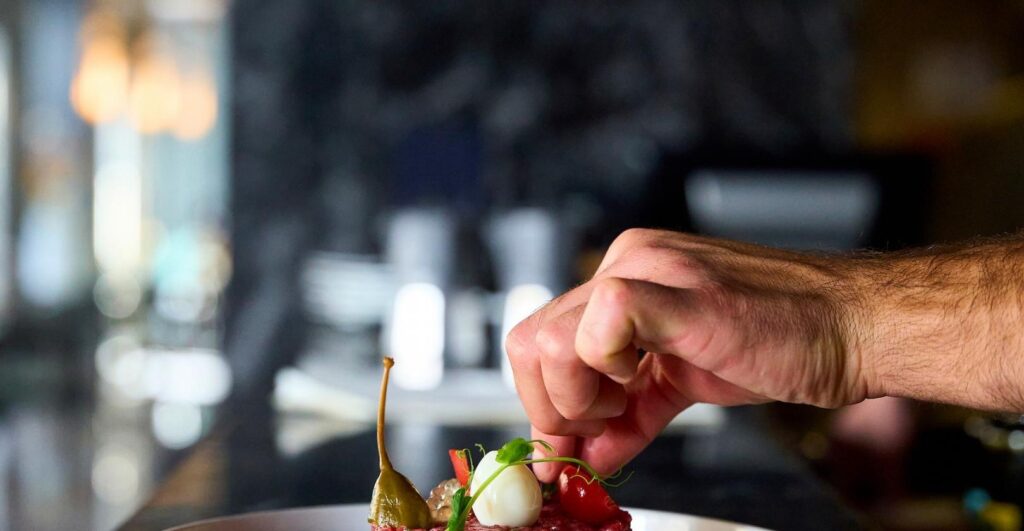
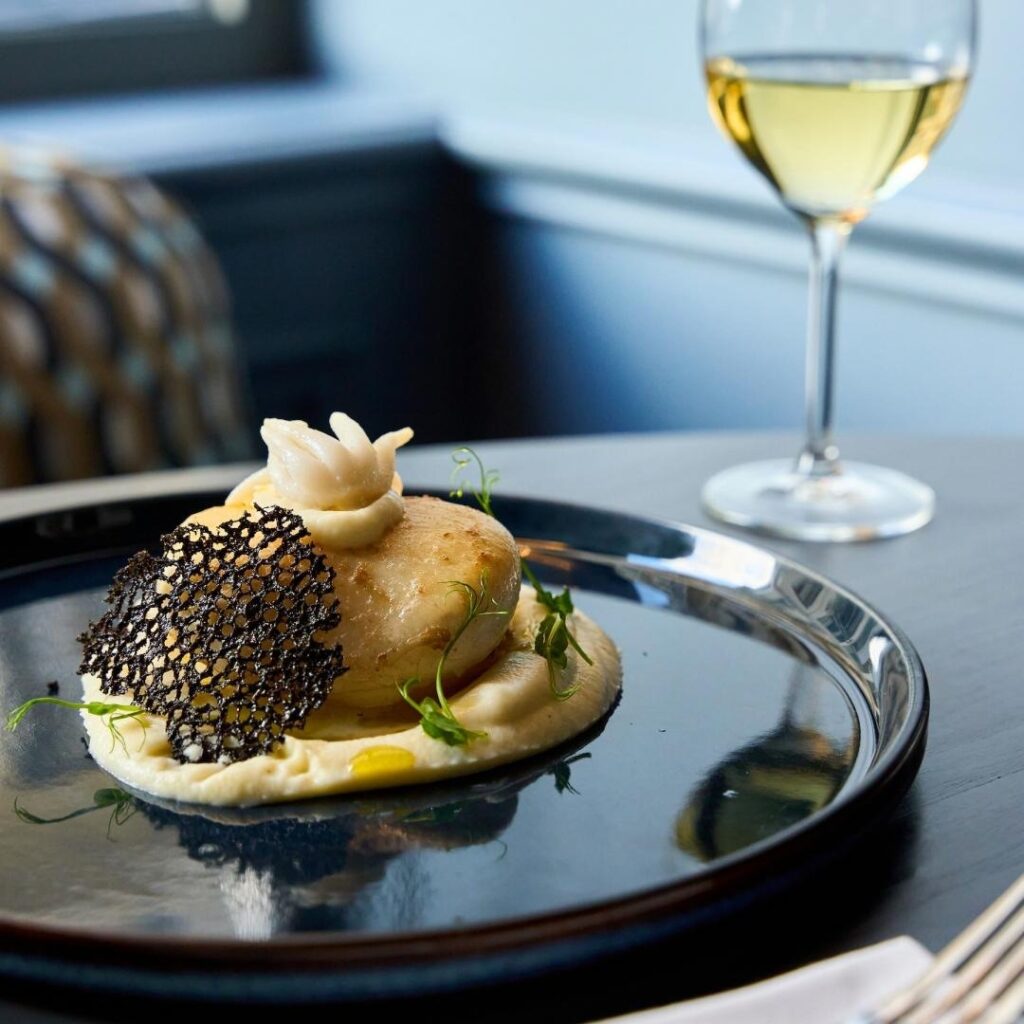
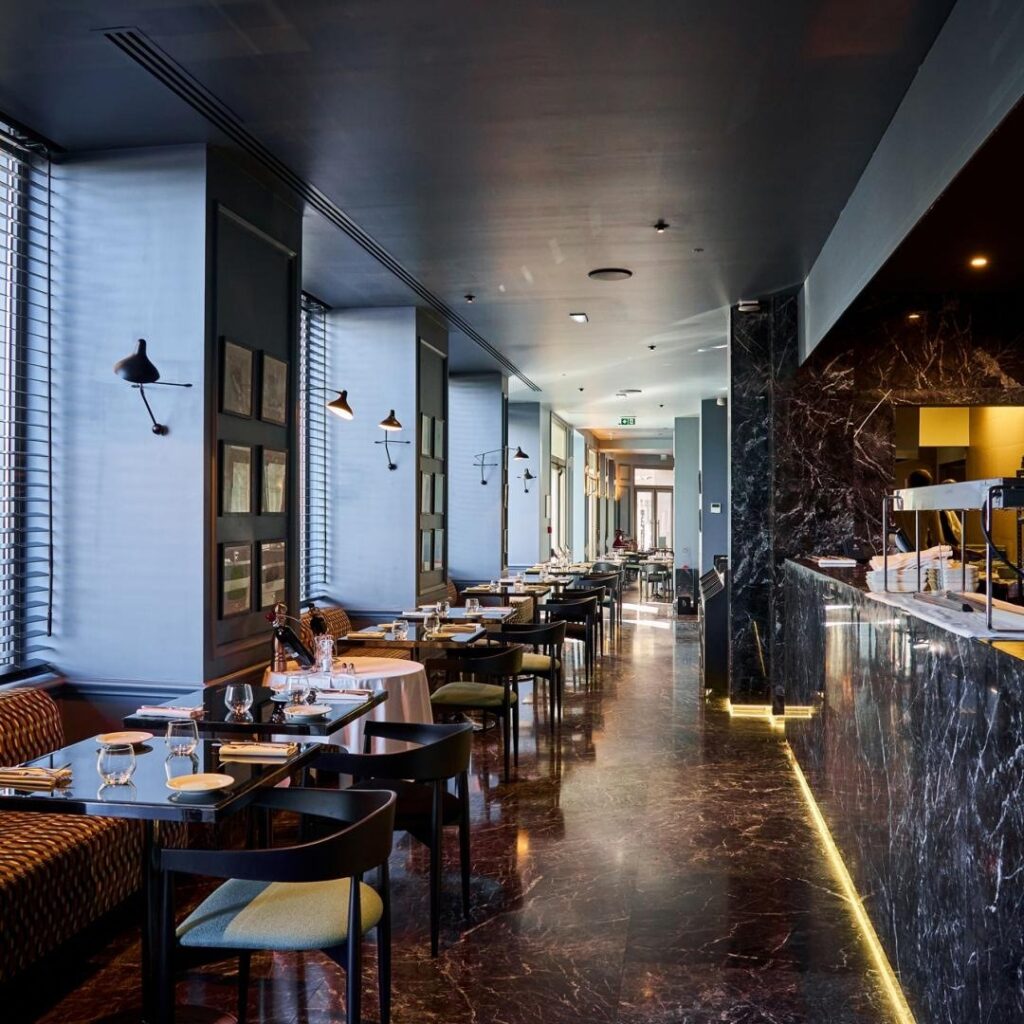
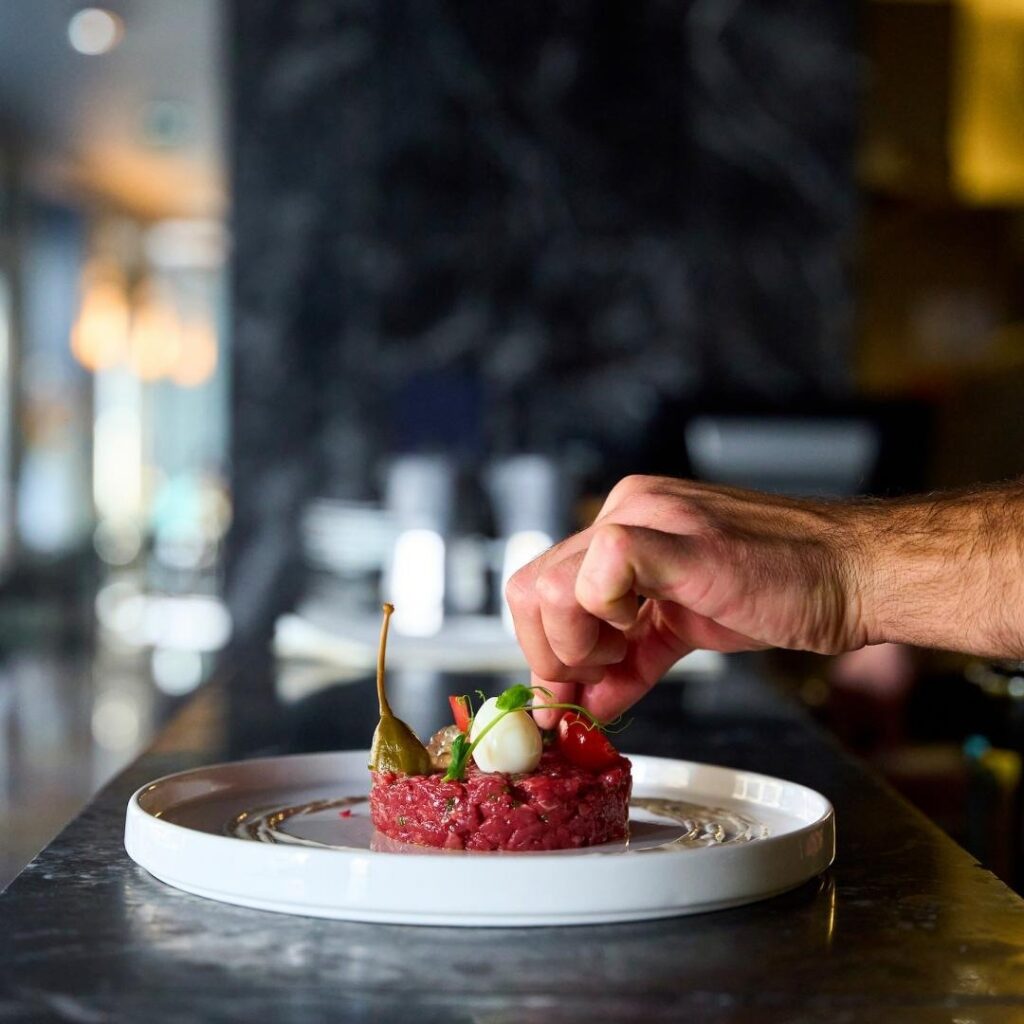
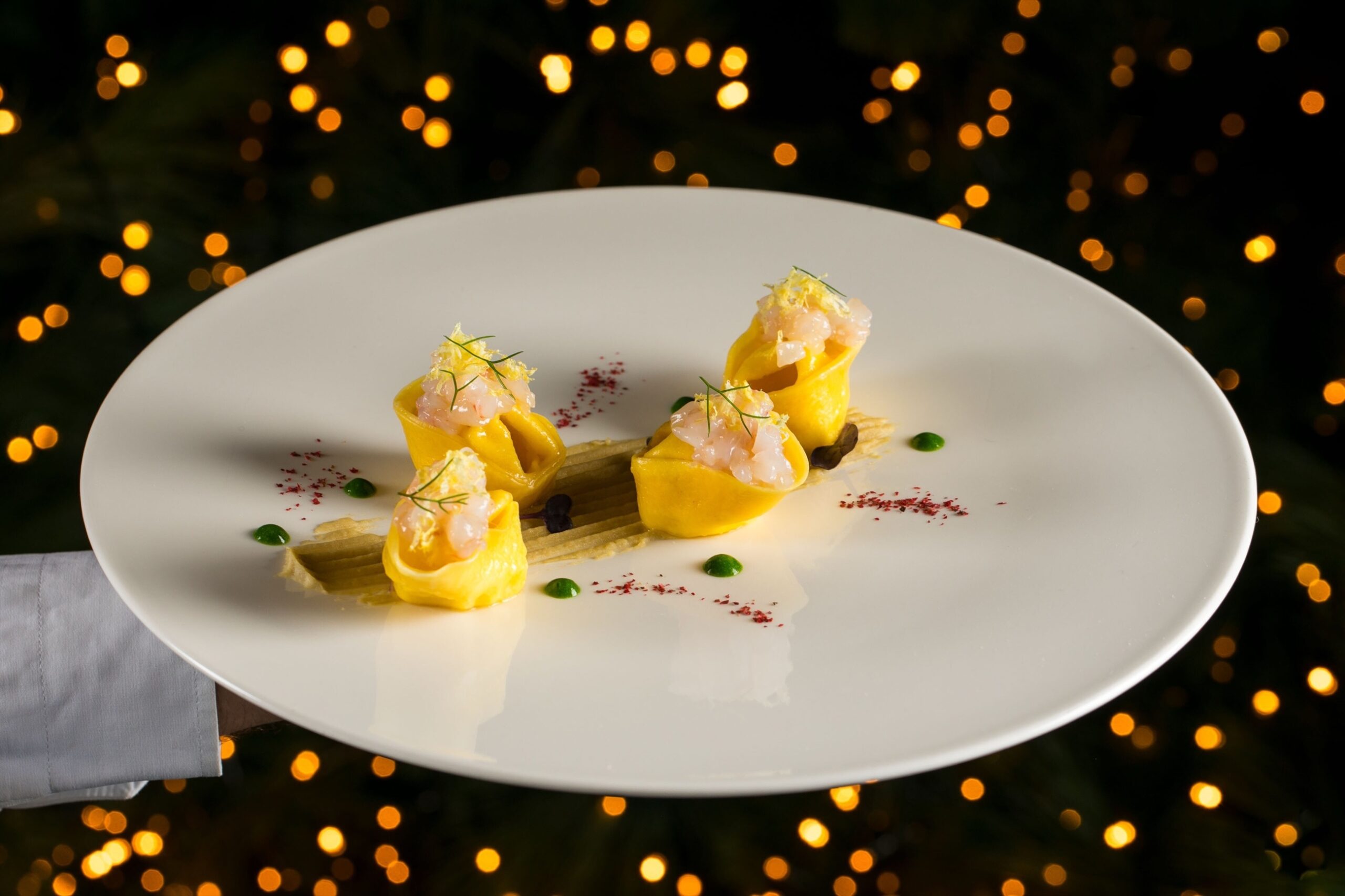
Lumen Cocktails & Cuisine is the hotel’s restaurant and cocktail bar, serving Italian food through the day and cocktails in the evening, with afternoon tea in between. The kitchens are led by Executive Chef Francesco Donatelli. La Credenza di Augusto 1894, opened with the restoration, is given over to tastings of fine produce, and the hotel holds lunches there during its annual festival of art, music and food.
Staying in the old Grand Hotel
The hotel has 161 rooms and suites, so a wedding party can stay in the building where the wedding takes place. Rooms are decorated in powder blue or terracotta, with furniture drawing on the Empire, Regency and Louis XV styles, and every room is looked after by the butler service. The suites include the Royal, Presidential, Astor and Metropolitan suites. The Royal Suite covers 300 square metres and looks over the Baths of Diocletian, and its past guests include Elizabeth Taylor and Richard Burton, Maria Callas and Fred Astaire.
Among the public rooms, the Library has Empire style crystal chandeliers and a black marble fireplace. Gianni Agnelli kept a suite at the hotel for many years, and his former private apartment is now a space of Galleria Continua, the contemporary art gallery from San Gimignano. House of Gucci and The Talented Mr Ripley both filmed scenes in the hotel.
The civil marriage and the journey in
The hotel holds the symbolic ceremony and the celebration; the legally binding civil marriage takes place with the comune and is arranged separately with the Rome registry. One of the city’s wedding rooms is the Sala Rossa, on the ground floor of Palazzo dei Conservatori on Piazza del Campidoglio, which seats 20 with room for 70 standing. It opens for weddings on Friday and Saturday mornings and late afternoons and on Sunday mornings, and the mayor or an official of the civil register conducts the ceremony. Bookings go through the Ufficio Matrimoni di Roma Capitale.
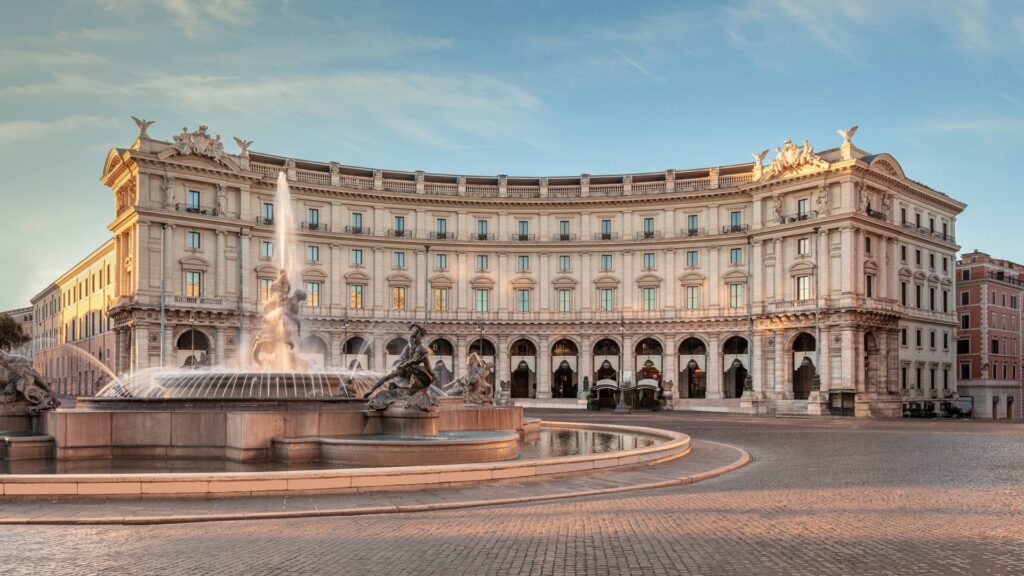
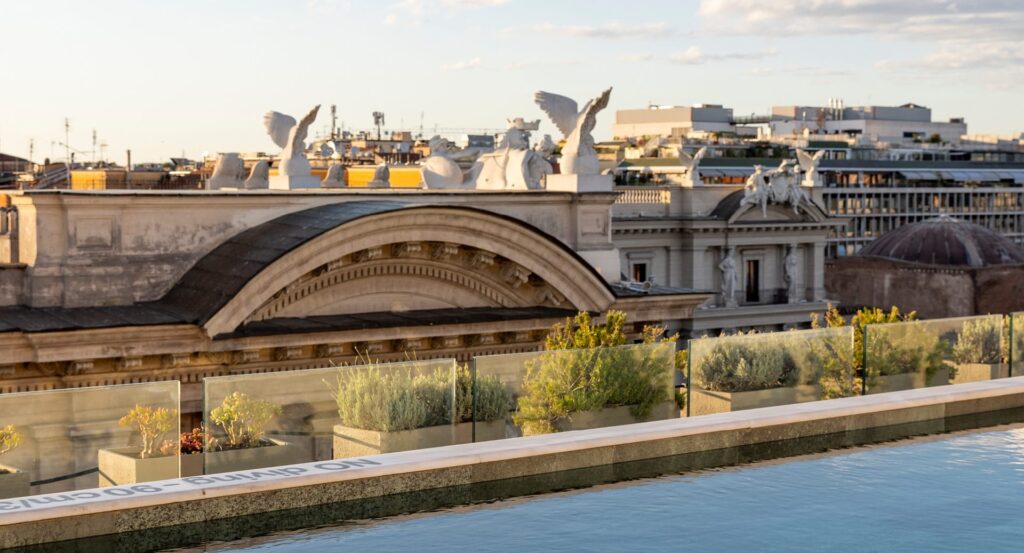
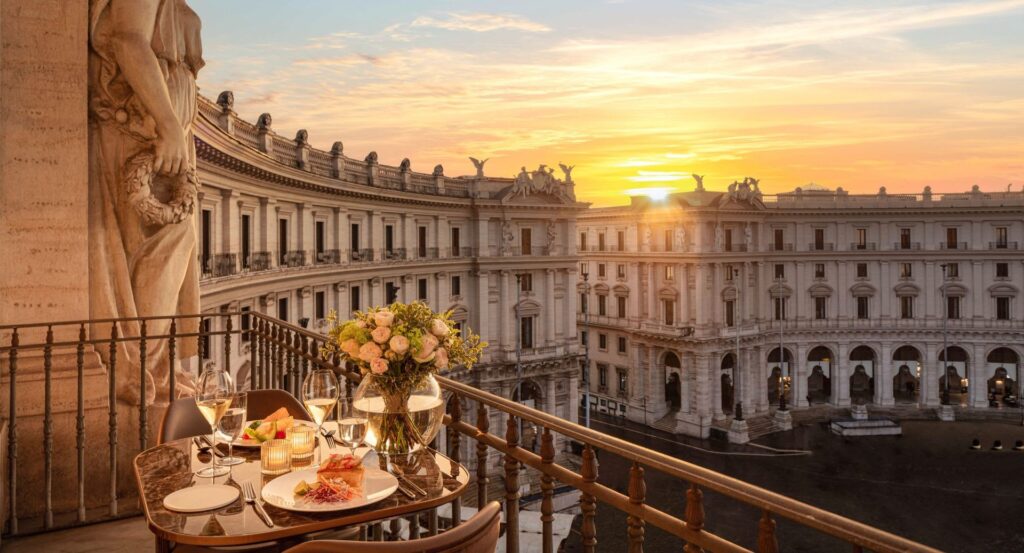
The St. Regis Rome stands at Via Vittorio Emanuele Orlando 3, beside Piazza della Repubblica. The square takes its curve from the great exedra of the Baths of Diocletian, which is why Romans still call it Piazza dell’Esedra, and the Fountain of the Naiads, with Mario Rutelli’s naiads of 1901, stands at its centre. Repubblica metro station serves the square, Termini is a few minutes away, the Trevi Fountain is a short walk, and Rome Fiumicino airport is about 40 minutes by road.
The first decision for a couple is the size of the dinner: whether everyone can sit down together in the ballrooms, or whether the guest list calls for a standing reception instead.
Check your date with The St. Regis Rome, read the full venue profile, see more wedding venues in Rome and the Rome Wedding Atlas, or read about The St. Regis Florence and compare Hassler Roma.