On the night of 29 December 1940 an incendiary bomb lodged in the roof of the stairwell at Trinity House on Tower Hill, and the fire left nothing of the 1790s building except its front to Trinity Square. The rooms where couples now marry are the work of the architect Albert Richardson, who rebuilt the interior after the war from the original drawings and from photographs that Country Life had taken in 1919. The Corporation of Trinity House still has its headquarters in the building, and four of the five rooms a wedding party uses look across Trinity Square Gardens to the Tower of London.

A lighthouse authority on Tower Hill
Henry VIII granted the Corporation its Royal Charter on 20 May 1514, and it remains the General Lighthouse Authority for England, Wales, the Channel Islands and Gibraltar. Its Masters have included the diarist Samuel Pepys, the Duke of Wellington and Prince Philip, Duke of Edinburgh; the Princess Royal succeeded her father in 2011 and holds the title today.
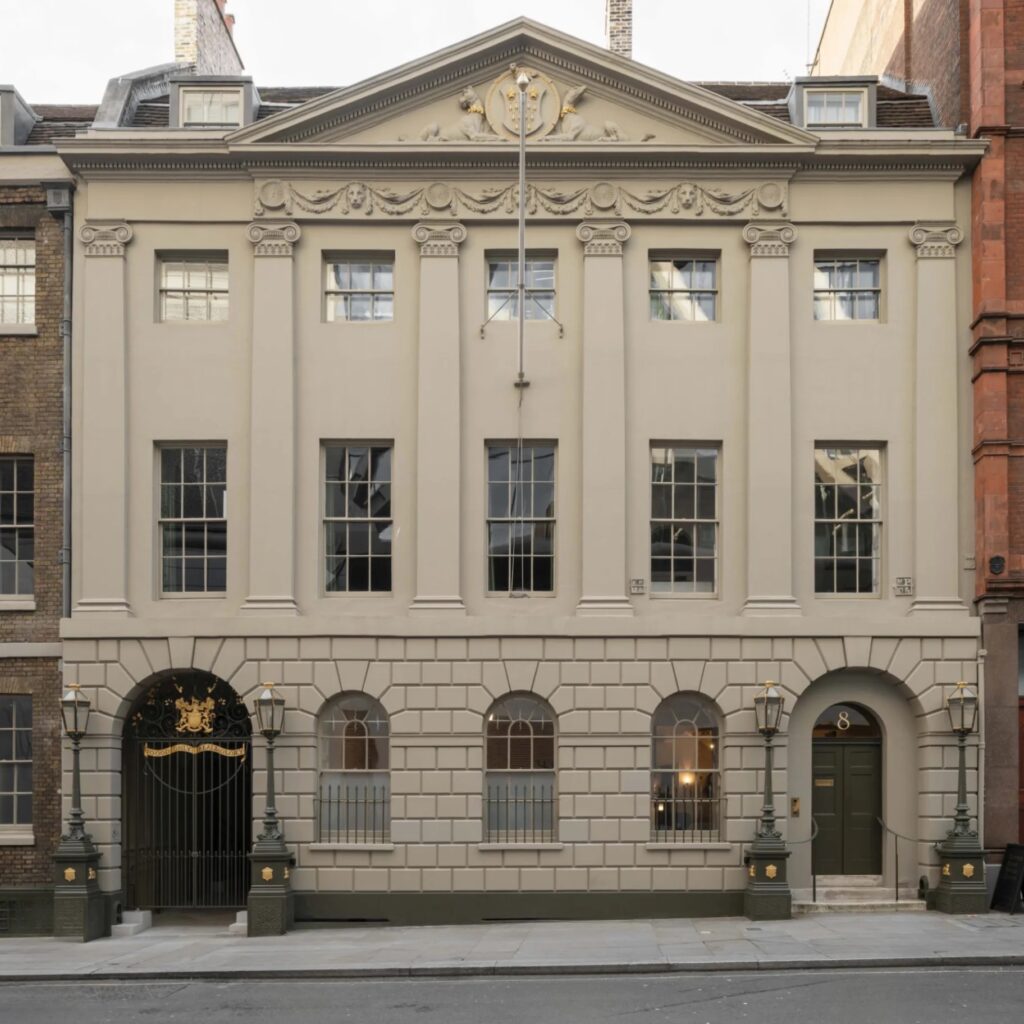
Samuel Wyatt, Surveyor to the Corporation and brother of the better known James Wyatt, designed the present house. William Pitt the Younger, the Prime Minister and another of the Corporation’s past Masters, laid the foundation stone on 12 September 1793, and the Court of the Corporation first met inside on 23 May 1796. The Portland stone front, the part that came through the war, is what guests see on arrival: carved panels of cherubs holding nautical emblems between pairs of lighthouses, and at the centre the arms of Trinity House between portrait medallions of George III and Queen Charlotte. Iron railings with gilded tips and tall lamp standards enclose the cobbled forecourt.
Rebuilt from the 1919 photographs
The raid of 29 December 1940 was the most severe of the air attacks on London. At Trinity House the interiors were gutted, and records, documents and paintings that had been packed into crates, ready to be moved to safety on 1 January 1941, were destroyed with them. The burnt out building was listed Grade I in January 1950, two years before the rebuilding began.
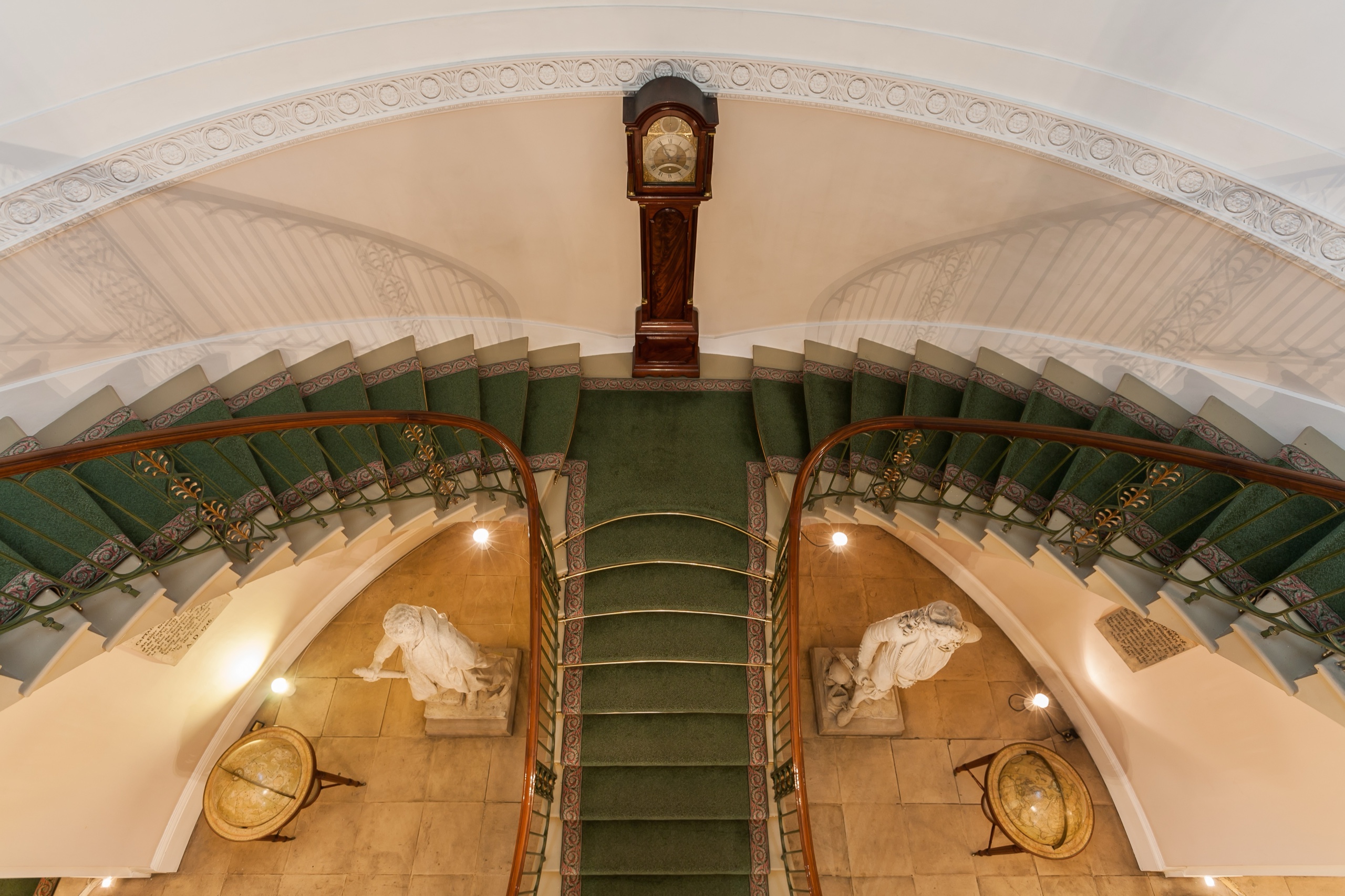
Work started in 1952. Richardson reconstructed Wyatt’s rooms almost exactly as the photographs showed them, and Queen Elizabeth II reopened the house on 21 October 1953, with his new wing completed by 1954. That wing, of brick with stone dressings, holds the Library, the Reading Room and the Pepys Room, so the largest of the event rooms, where the wedding breakfast is served, belongs to the 1950s rather than the 1790s. The Library’s elliptical ends are Richardson’s design; the stained glass reset in its windows is sixteenth century. In the stair hall, the pairs of caryatids above the first floor columns are by the sculptor Charles Wheeler.
The house was refurbished in March 1990 and redecorated, where possible, in the manner of the 1790s. Trinity House has held events since 1994, and film and television crews have used it for Skyfall, The Crown and Muppets Most Wanted.
Marrying in the Court Room or the Library
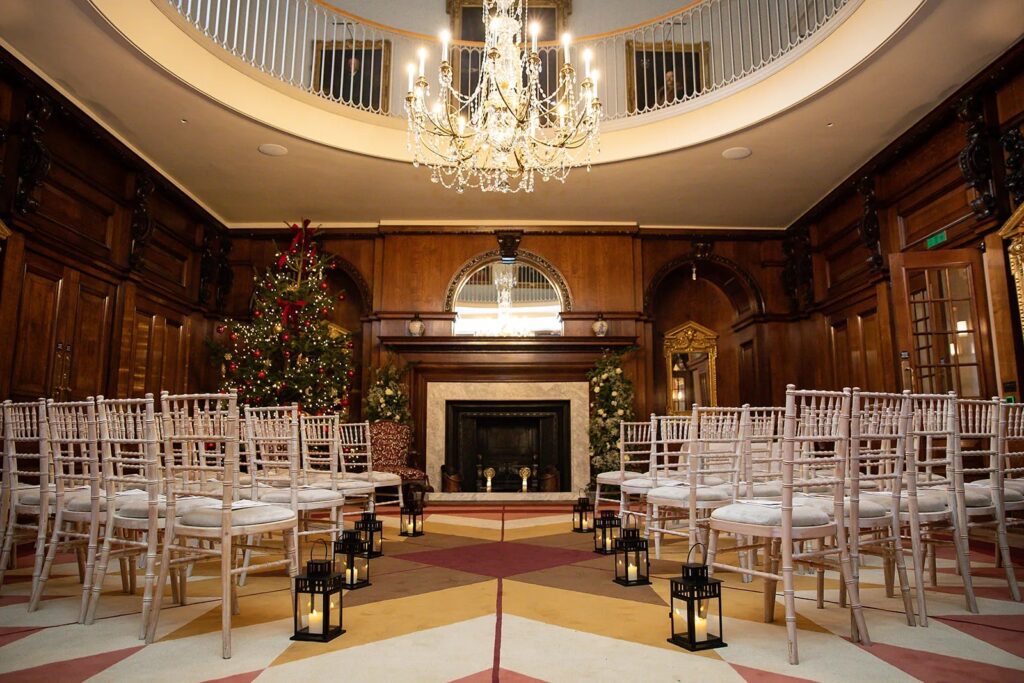
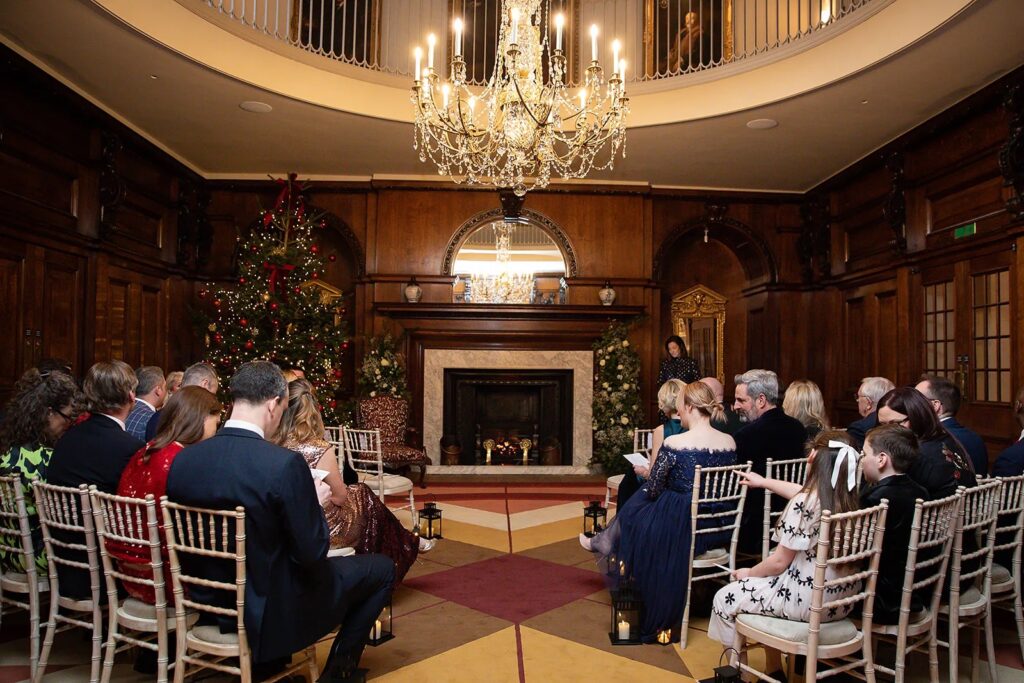
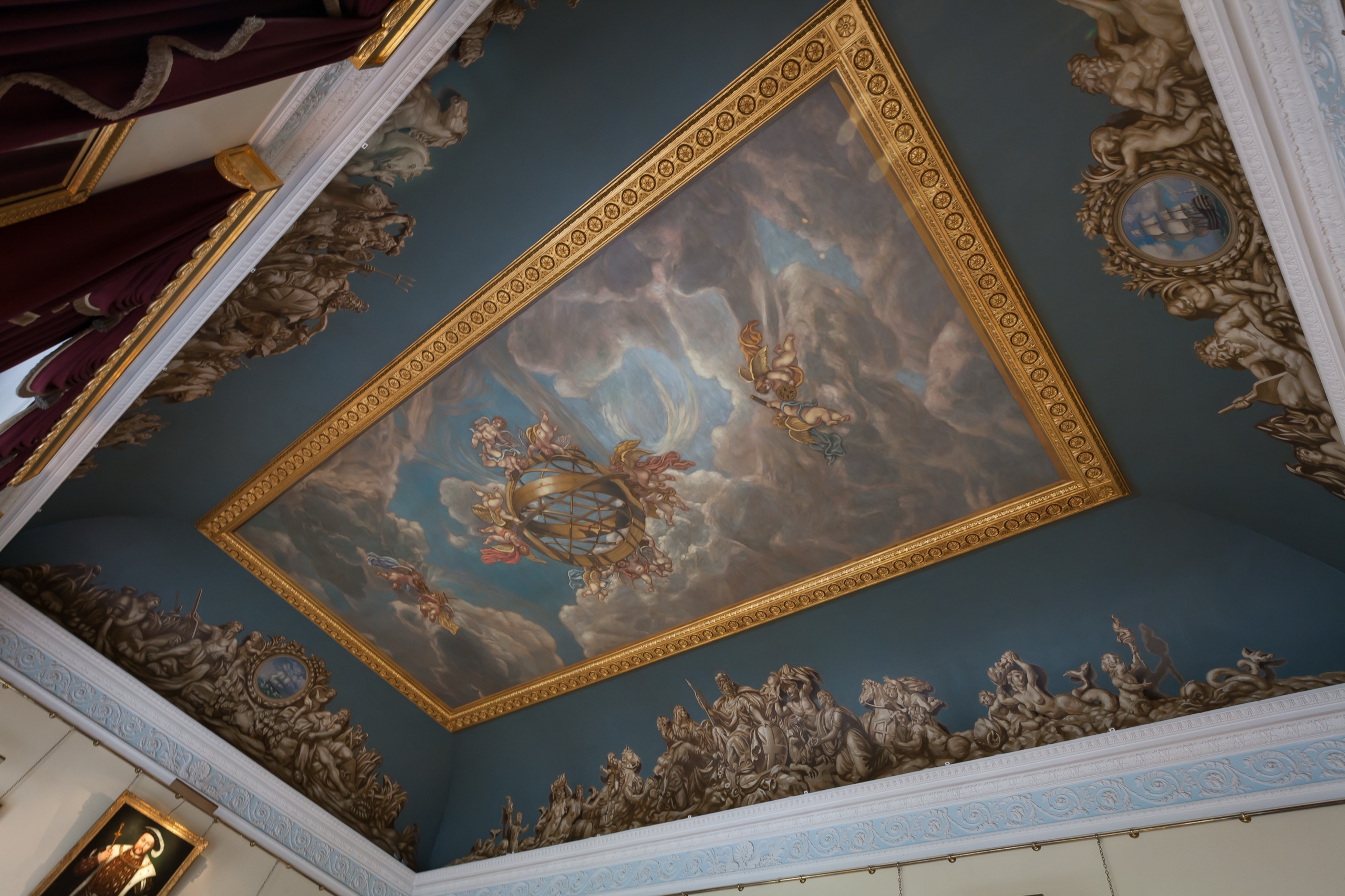
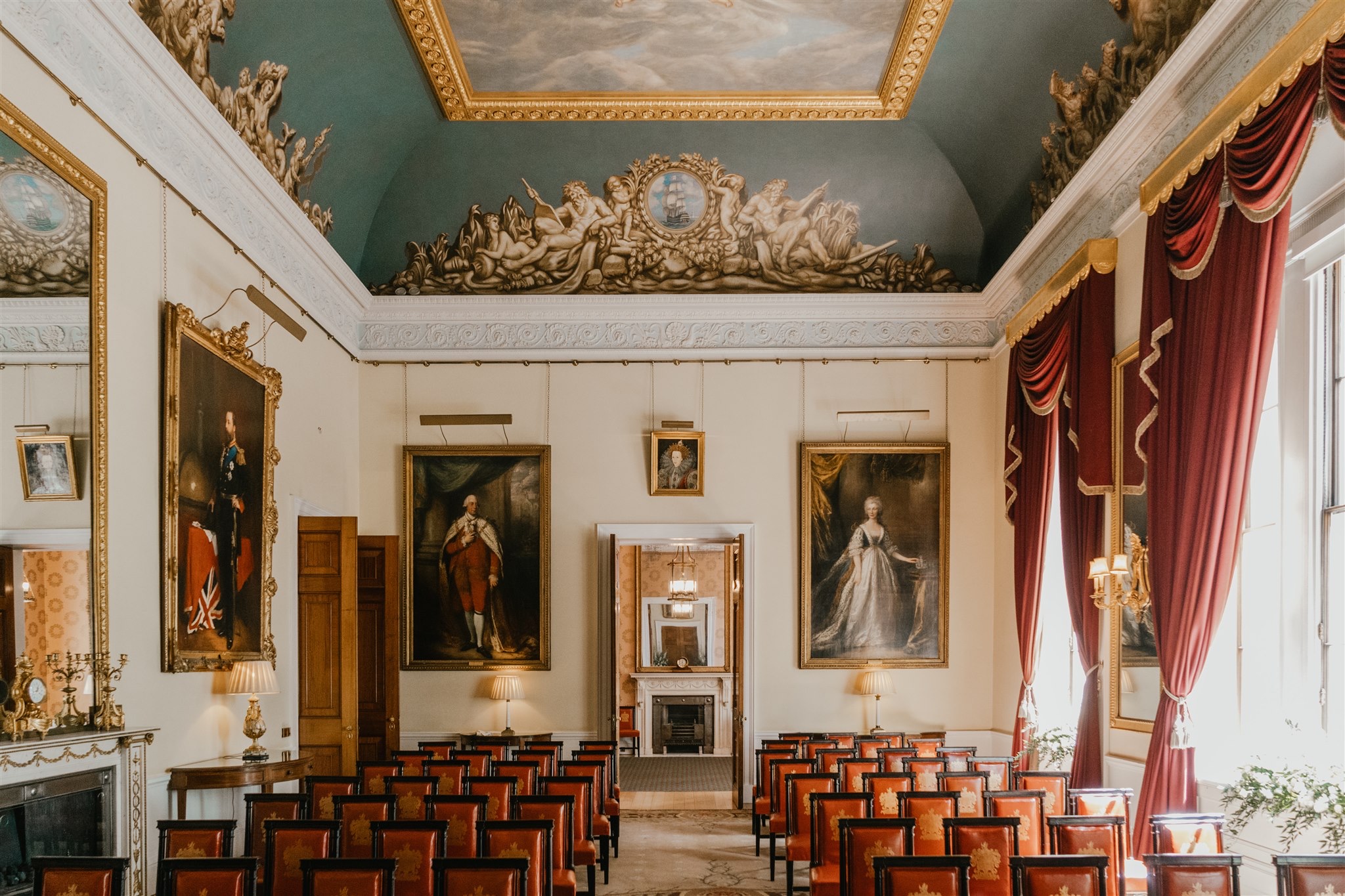
Two rooms are licensed for civil ceremonies. The Court Room, at the front of the first floor in Wyatt’s part of the house, takes ceremonies of up to 60 seated, with the Luncheon Room beside it opened for extra space. Its coved ceiling is painted in trompe l’oeil, a scheme first painted by J F Rigaud and recreated with the rest of the interior. Life size portraits of English royalty hang on the walls, and the white marble fireplace with ormolu ornament is a working one.
Larger ceremonies take place in the Library, which seats 130. Couples arrange the legal side with the Islington and London City Register Office. For a church service first, St Olave’s on Hart Street, the church used by Trinity House, is about 200 yards away; Samuel Pepys worshipped there and is buried in the nave beside his wife. All Hallows by the Tower, on Byward Street, is a short walk through Trinity Square Gardens.
How a wedding moves through the house
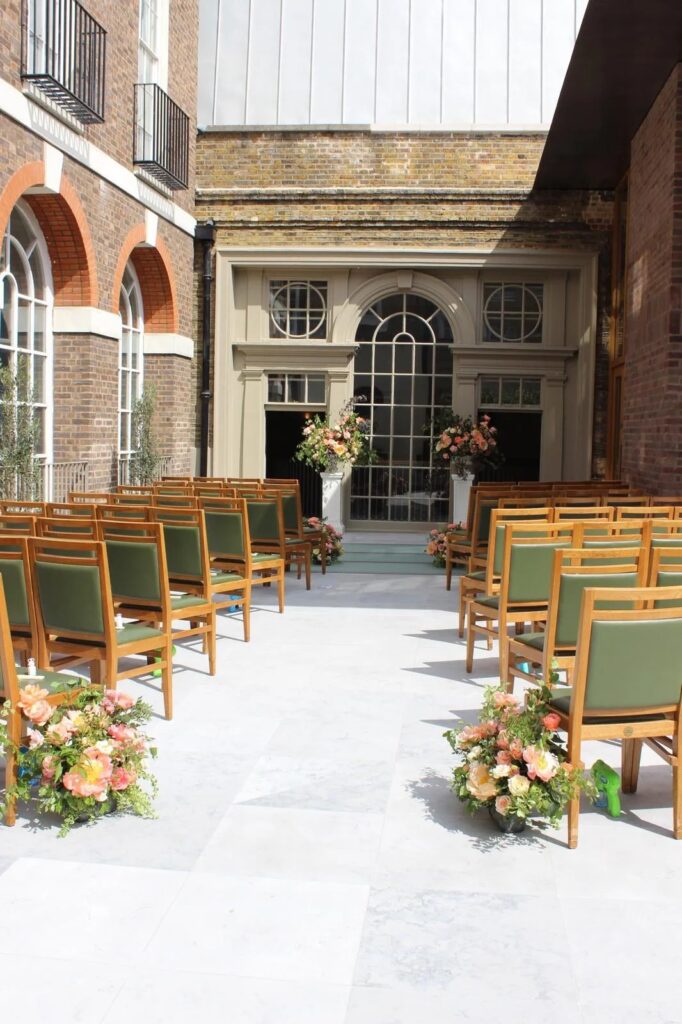
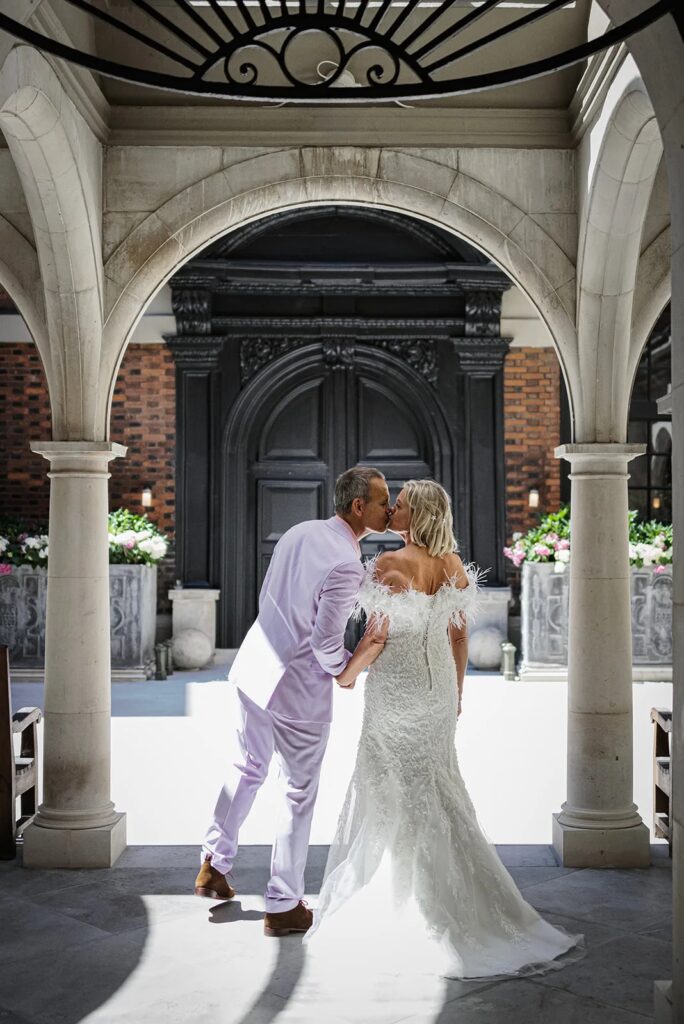
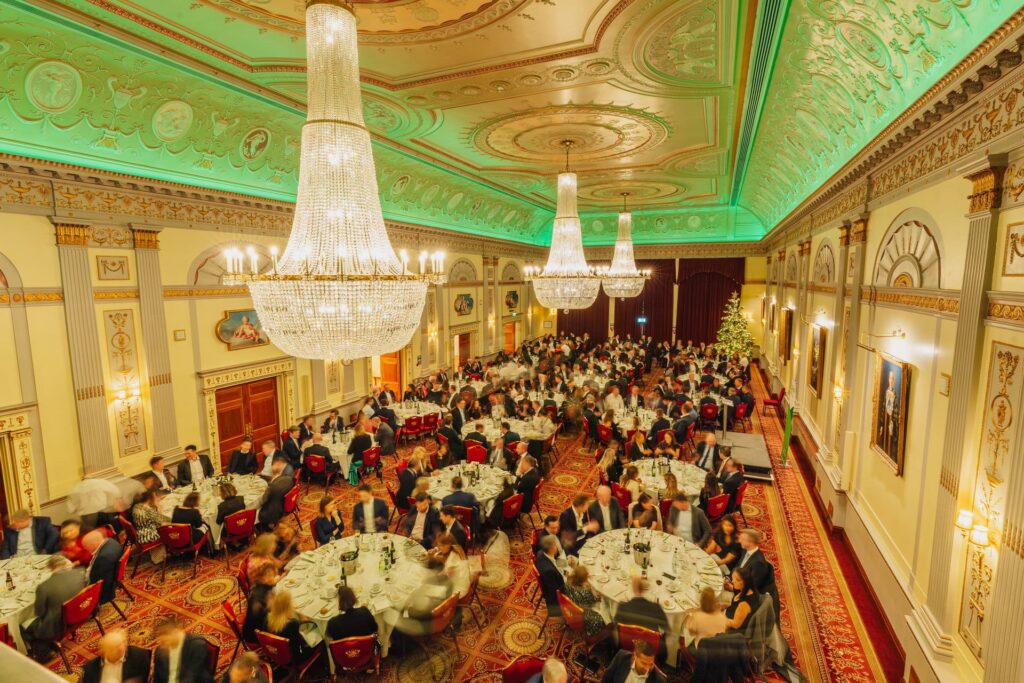
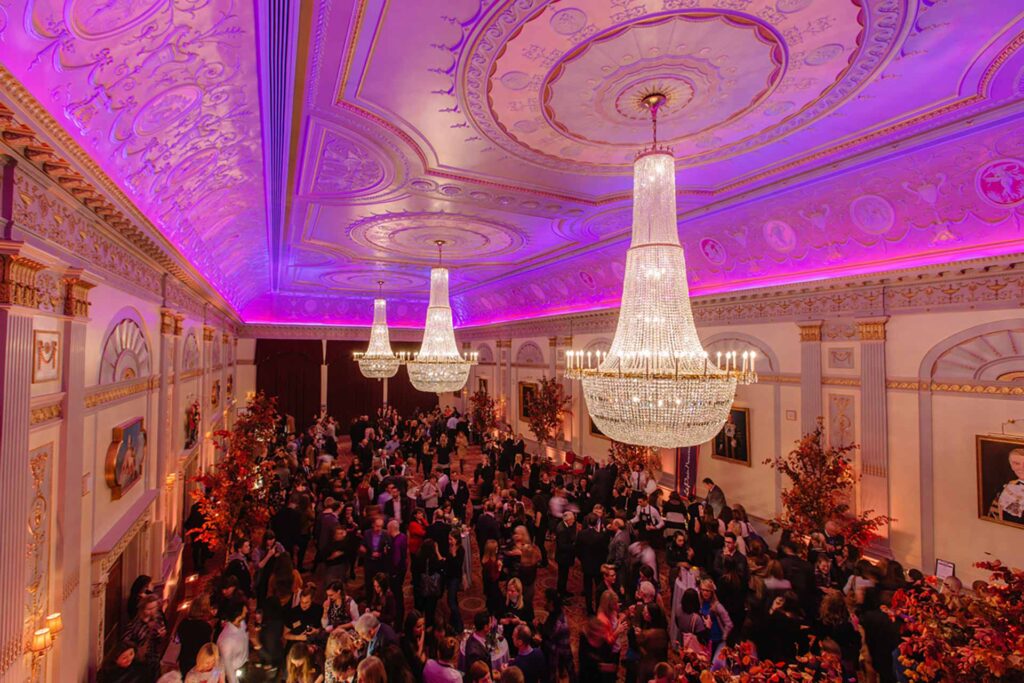
Guests come in from the cobbled forecourt to the entrance hall, and the twin staircase takes them up to the event rooms. A popular format then uses four of those rooms in turn: a welcome reception in the Court Room, which holds 130 standing, the wedding breakfast in the Library, dancing in the Pepys Room and an after dinner bar in the Reading Room. Drinks can also be served in the courtyard outside, and while they go round the couple can cross the road into Trinity Square Gardens for photographs. A guide can be booked to talk to guests about the building and the Corporation in the meantime.
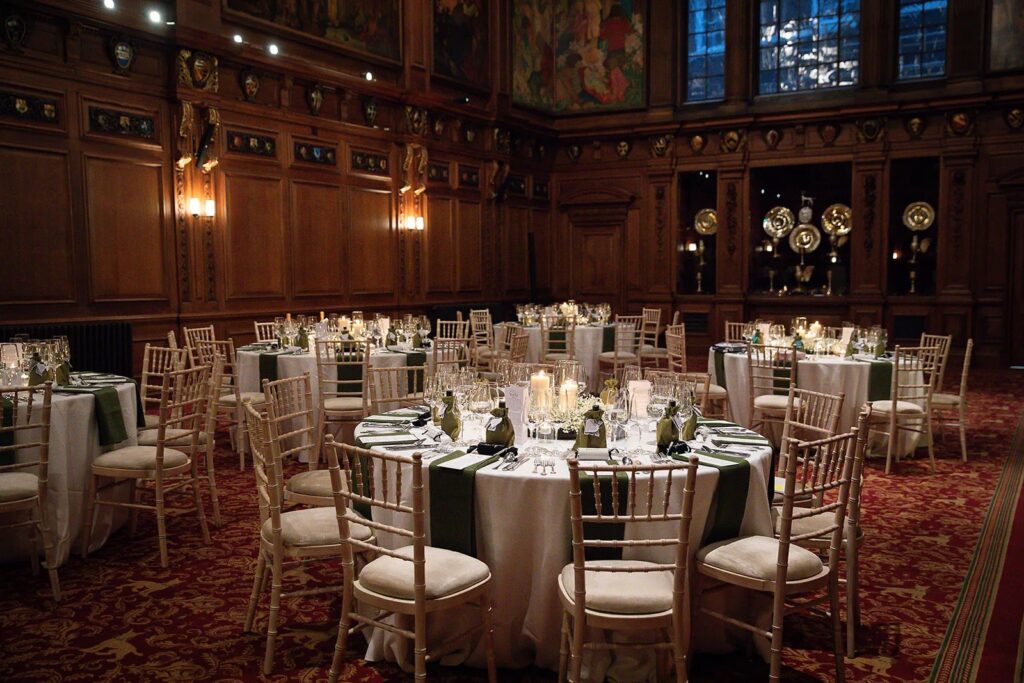
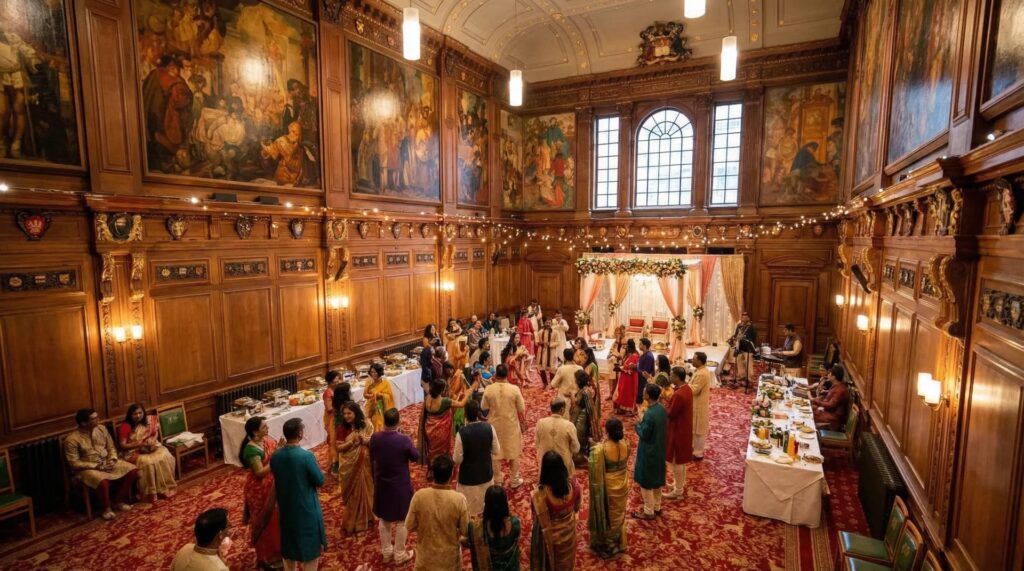
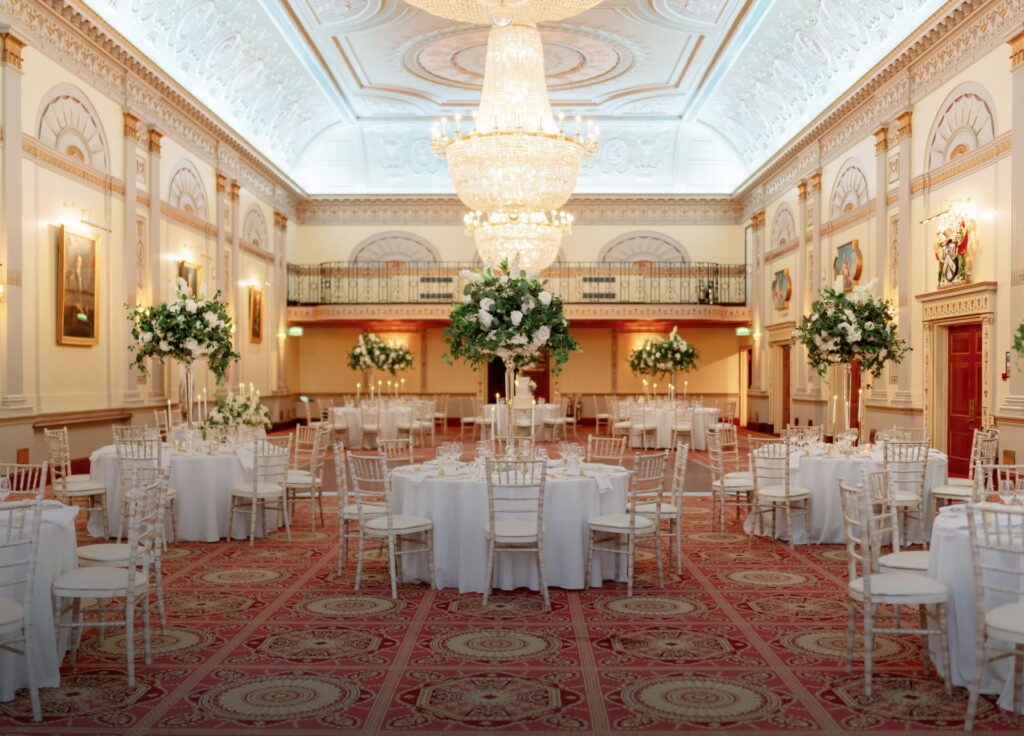
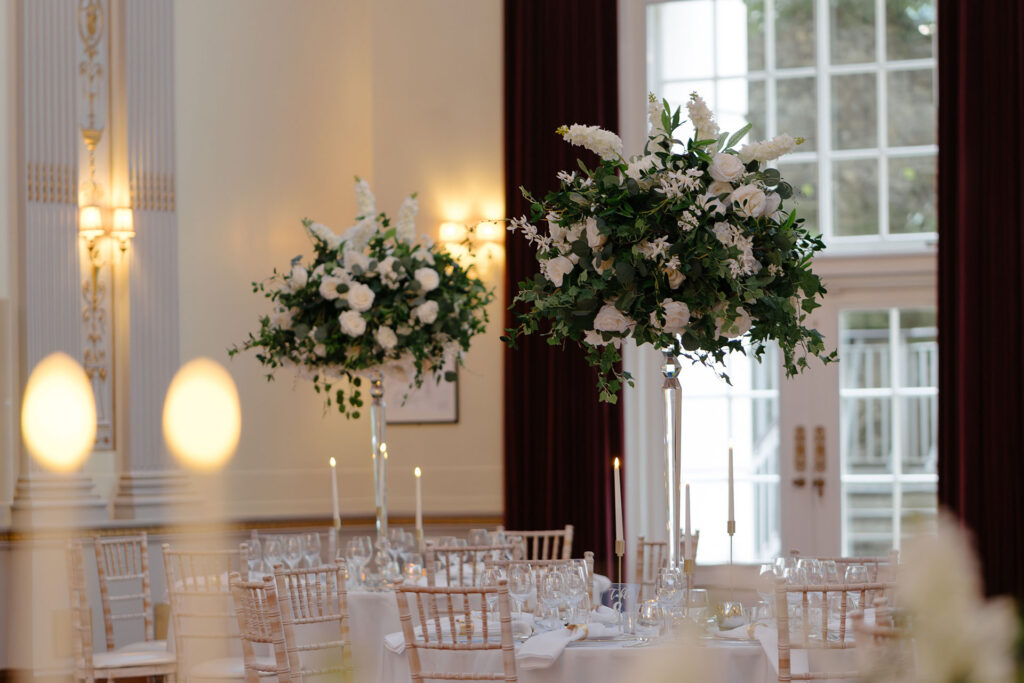
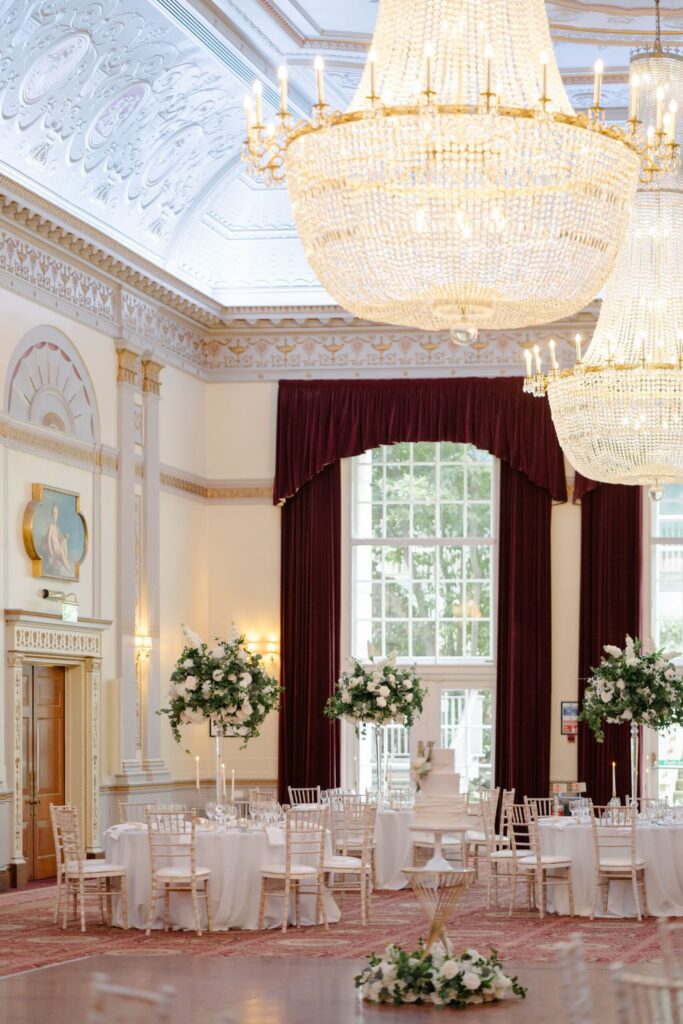
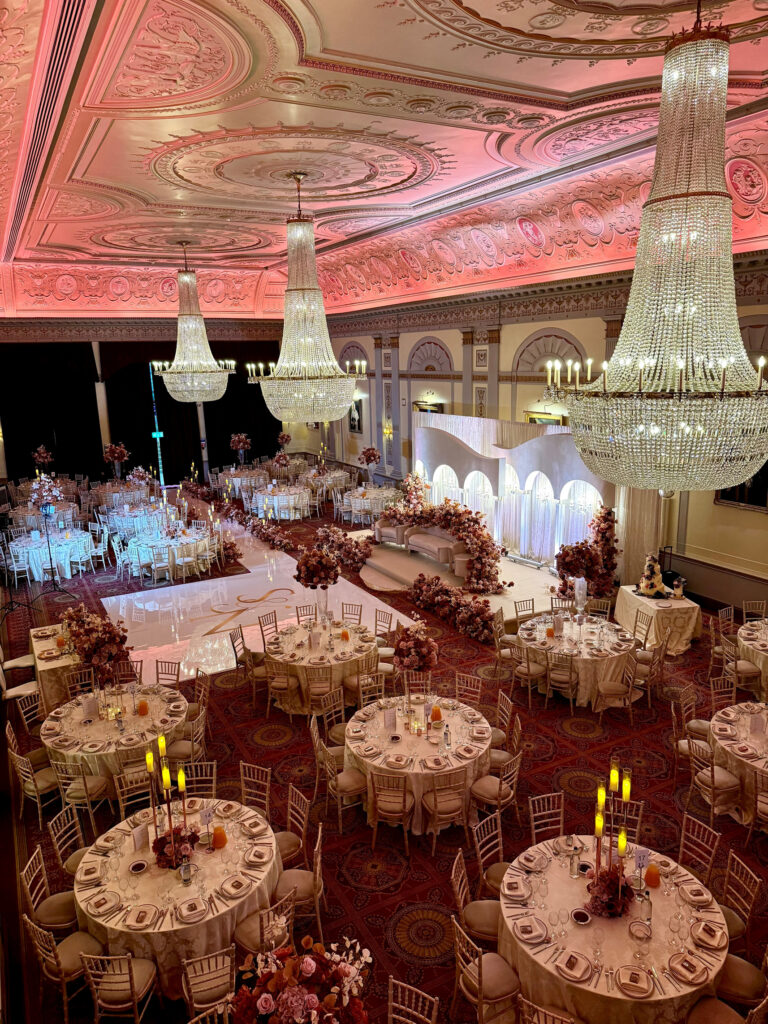
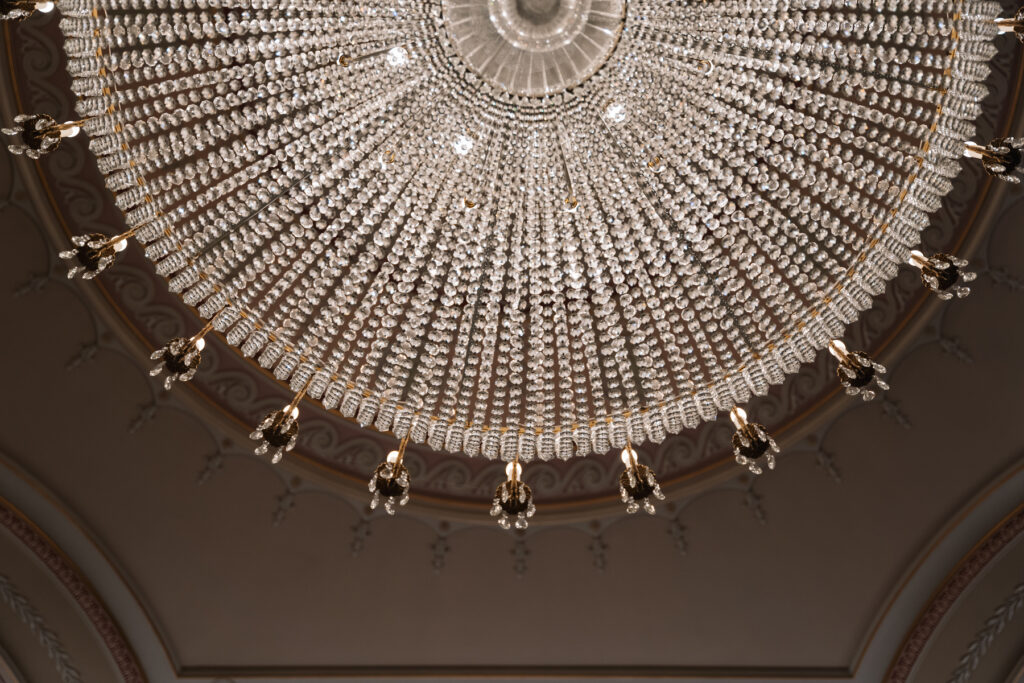
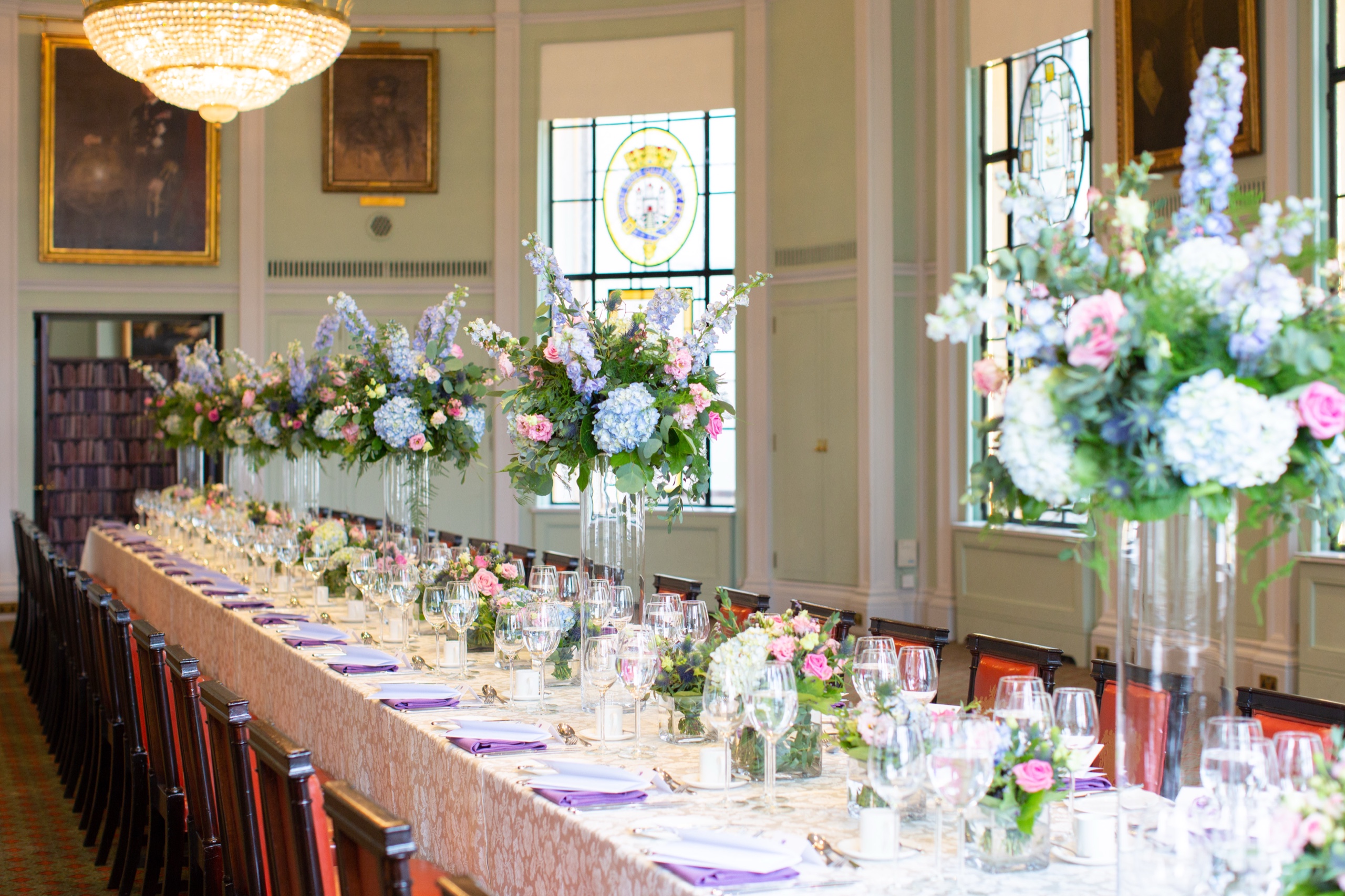
In the Library the books are kept behind doors around the oval walls, and there is a minstrels’ gallery built for musicians, two chandeliers, three stained glass windows and a cabinet of rare silver. The tables can be long or round, the chairs are the house’s own gold crested red leather ones, and a PA system is fitted for the speeches.
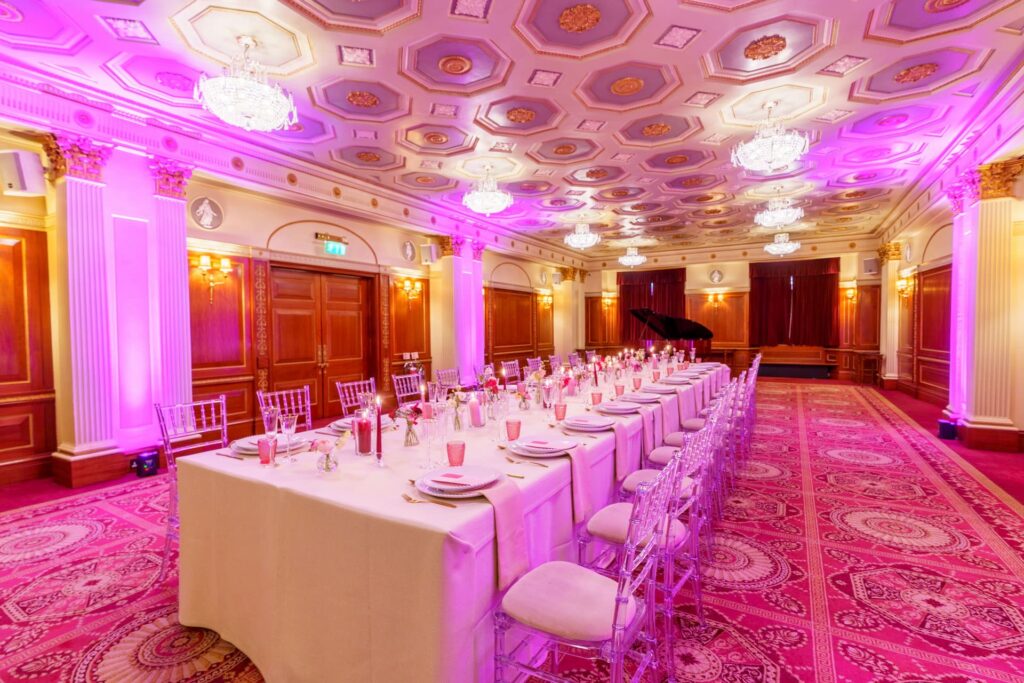
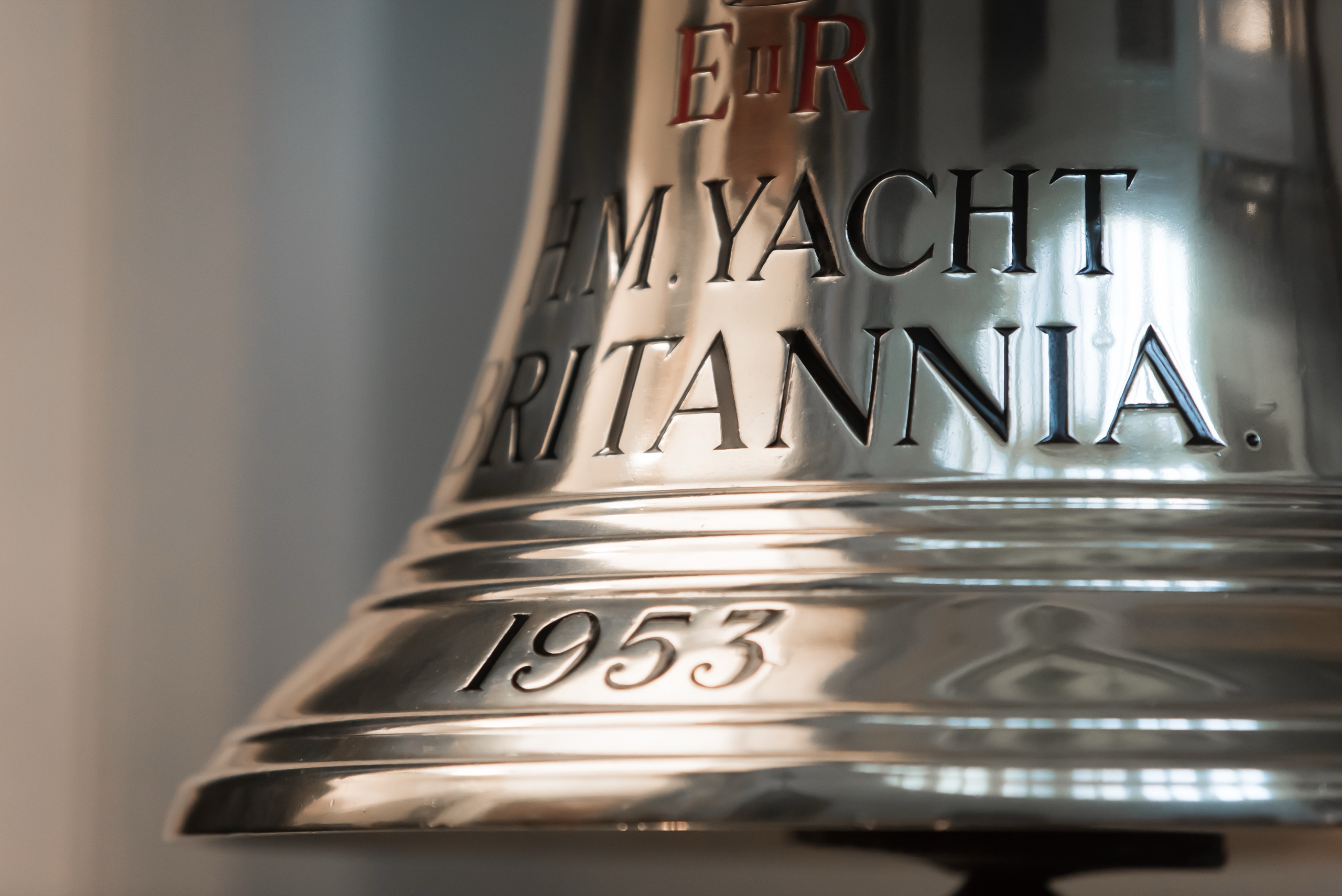
The Pepys Room and the Reading Room both open off the Library. The Pepys Room, named after the diarist, takes the dancing on a hired dance floor. The Reading Room, where the clock and barometer from Ernest Shackleton’s ship Nimrod and the Duke of Edinburgh’s frock coat are on display, takes the bar, or port and cheese. Two pieces of the Corporation’s history are part of the hire as well: couples may ring the brass bell of the Royal Yacht Britannia and cut the cake with the ceremonial sword.
A smaller wedding can stay in Wyatt’s rooms. The Luncheon Room, beside the Court Room, seats 20 around a polished table more than 200 years old and has a working fireplace of its own.
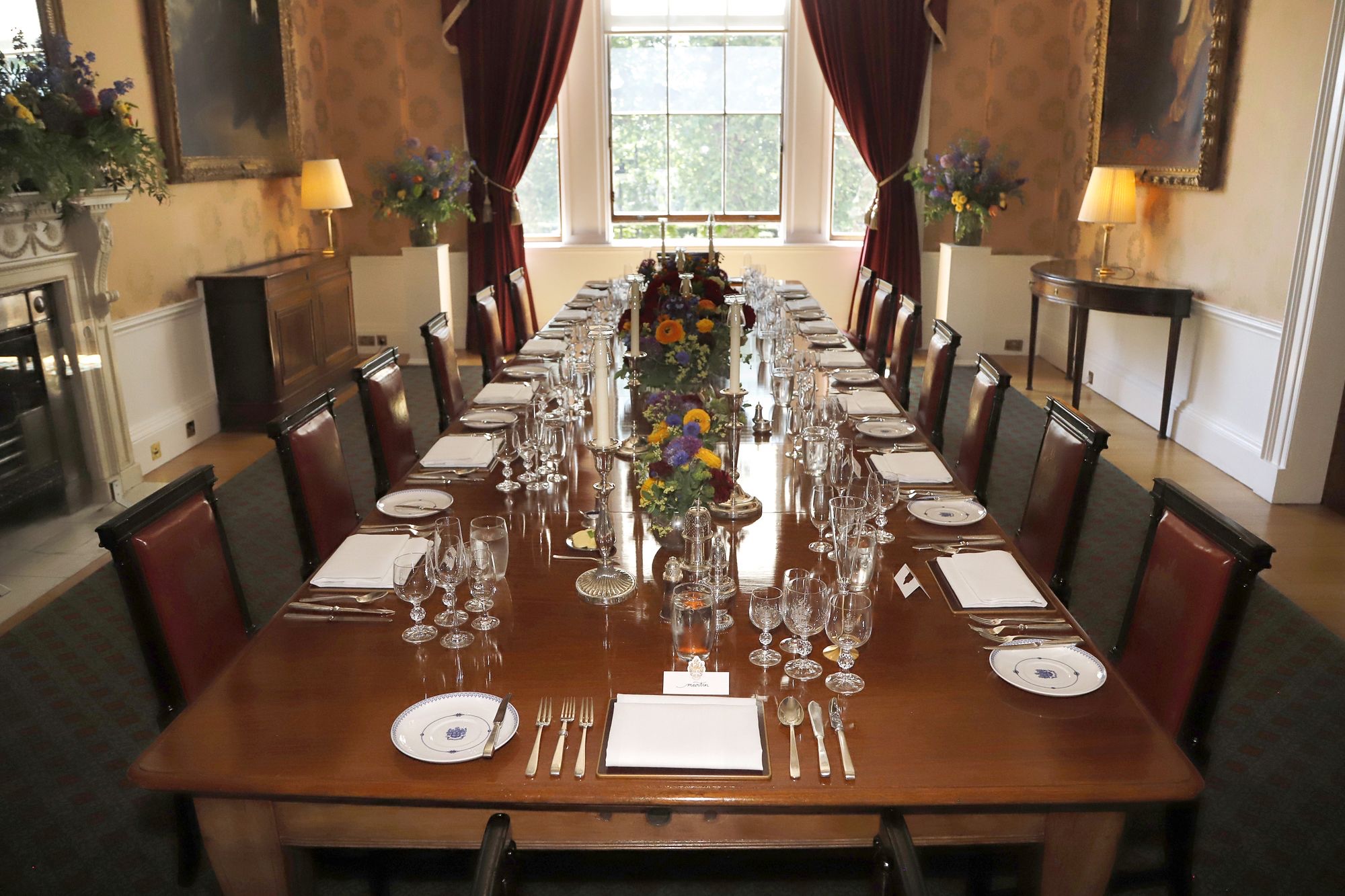
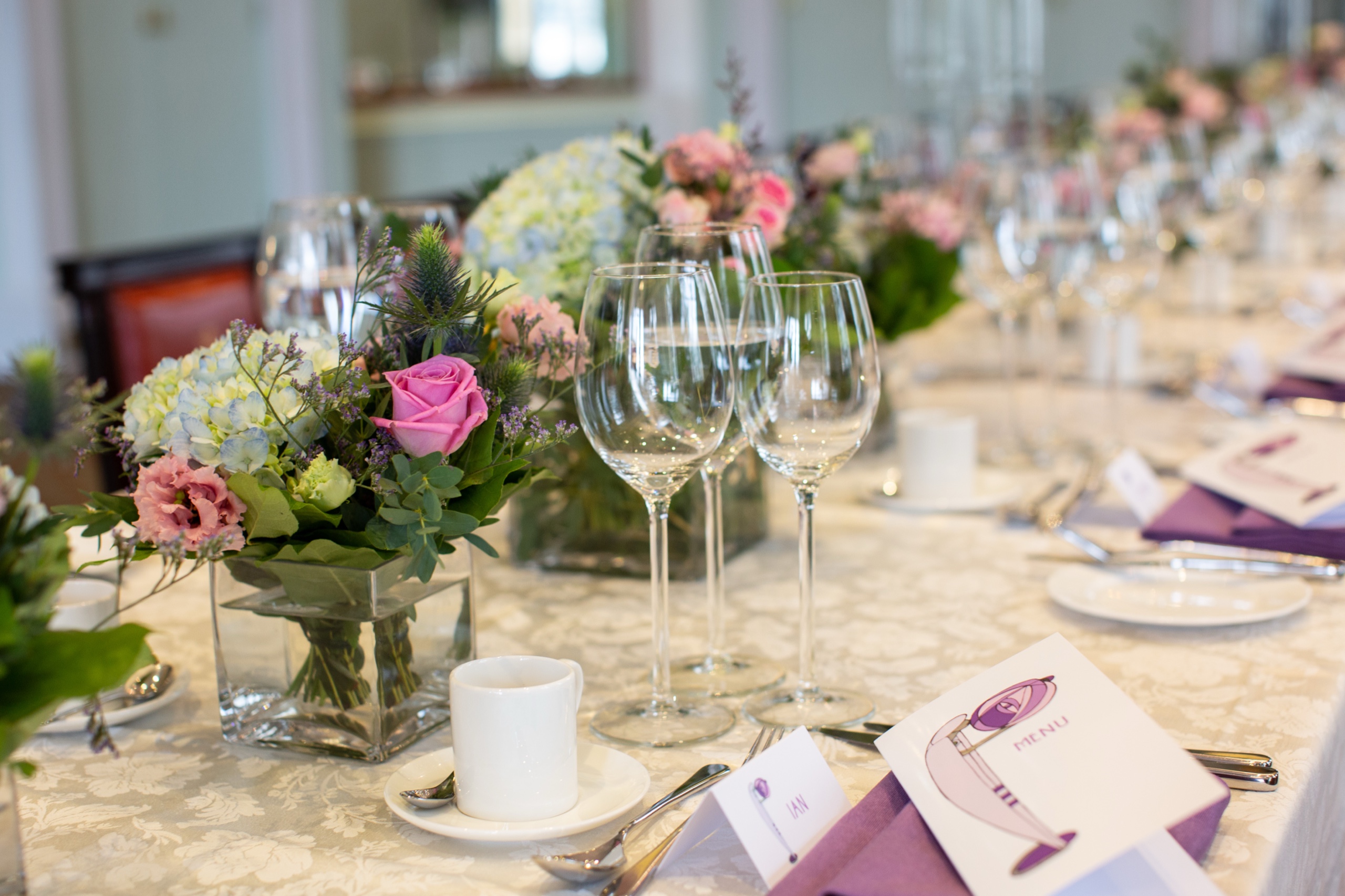
There is no in-house caterer. The events team narrows down the house’s list of preferred caterers, several of which, among them Lodge Catering, Lettice Events, Create and Heritage Portfolio, have put together wedding packages, and the house has its own kitchen. The wedding offer is a three hour ceremony hire of the whole house at £2,500 plus VAT on weekdays or £3,000 plus VAT at weekends, with two waiters and the glassware included, catering extra and no corkage on drinks the couple brings.
Arriving on Tower Hill
Tower Hill Underground station, on the District and Circle lines, is less than a minute’s walk from the door. Tower Gateway on the DLR, Aldgate and Monument are within walking distance, Fenchurch Street mainline station is a short walk, and river taxis stop at Tower Millennium Pier. The house has no bedrooms, so guests stay elsewhere. The directory’s wedding venues in the City of London and across London are a starting point for other venues nearby, and the London Wedding Atlas covers marrying in the capital.
Choosing Trinity House
Trinity House offers a Grade I interior rebuilt from photographs, facing the Tower of London, and on the wedding day the whole house is given to one couple and their guests. It suits a daytime City wedding of up to 130 seated, with the ceremony, dinner and dancing under one roof, for couples happy to choose a caterer from the house’s list. The limits are just as clear: there are no bedrooms, no in-house caterer, and the wedding offer is built around three hours. Other houses hired to a single wedding are gathered among our exclusive use wedding venues, and St Pancras London is another Grade I London building with its own Edit.
The decision to make first is the length of the day. The three hour offer can be taken at any time between 9am and 5pm, and a longer hire is quoted separately, so ask the events team how a longer day with dancing would be priced. Check your date with Trinity House on Tower Hill.