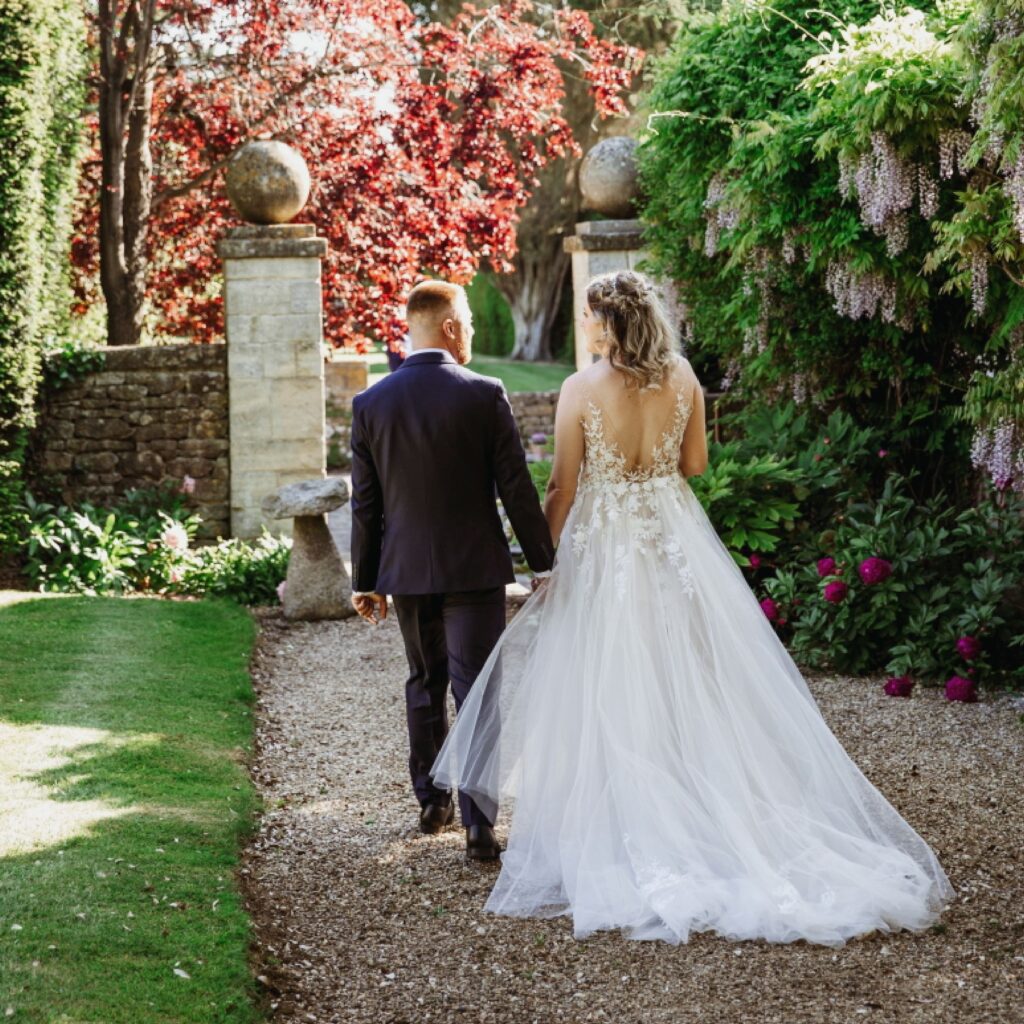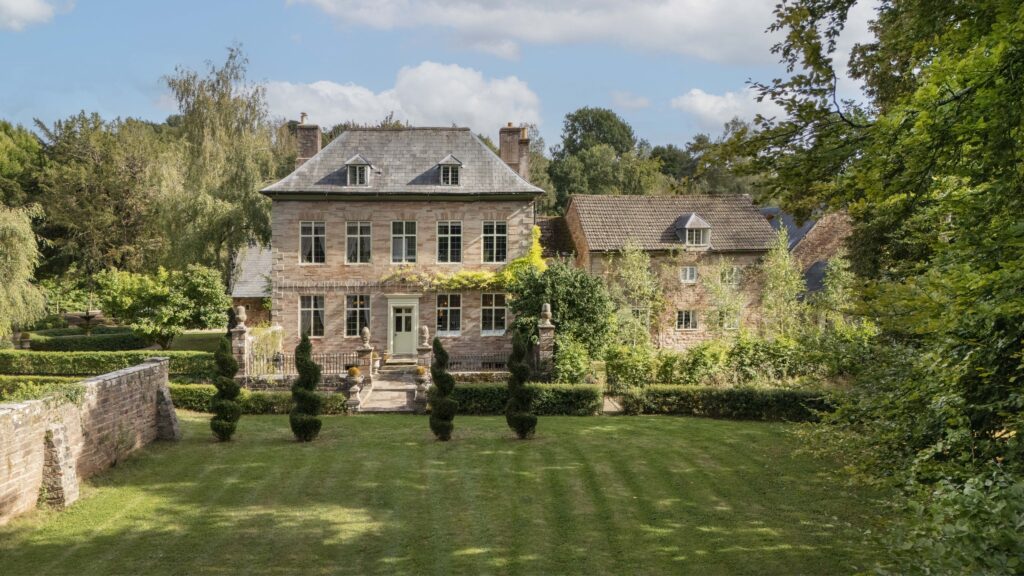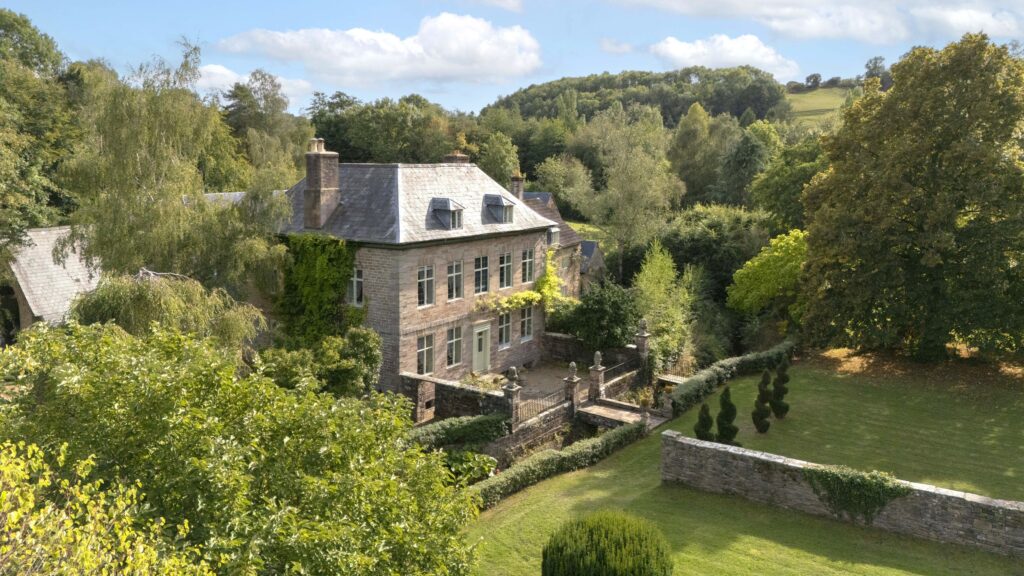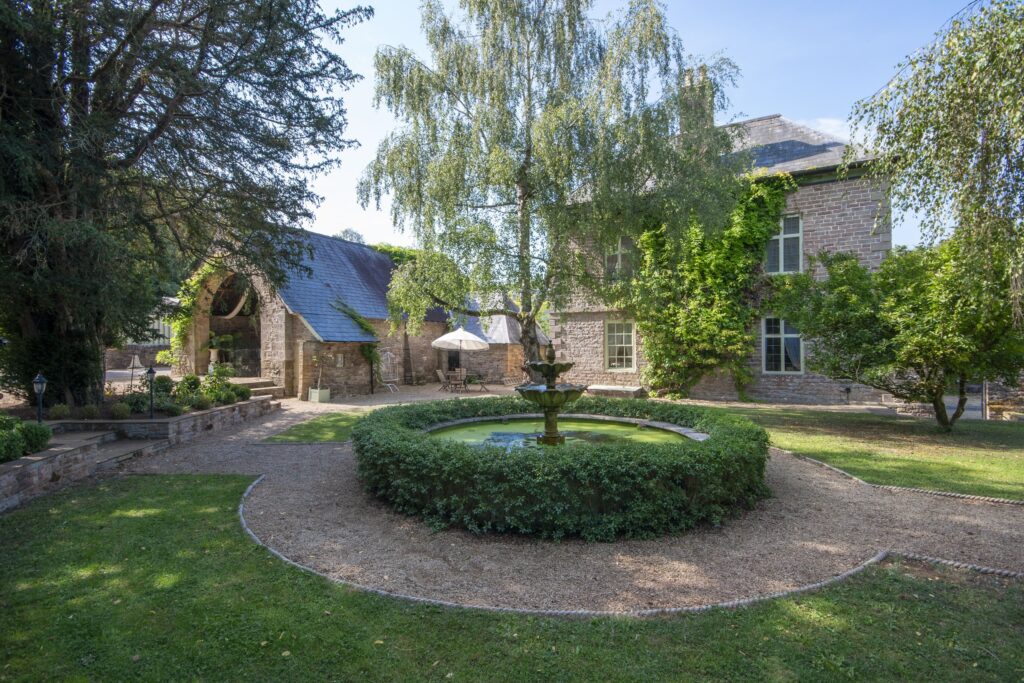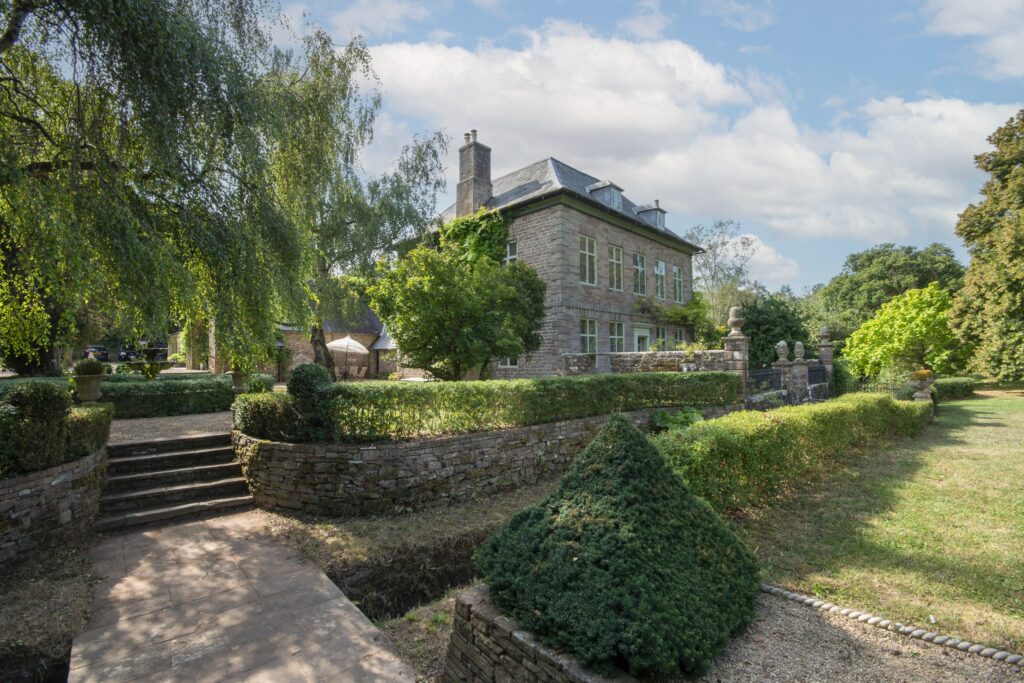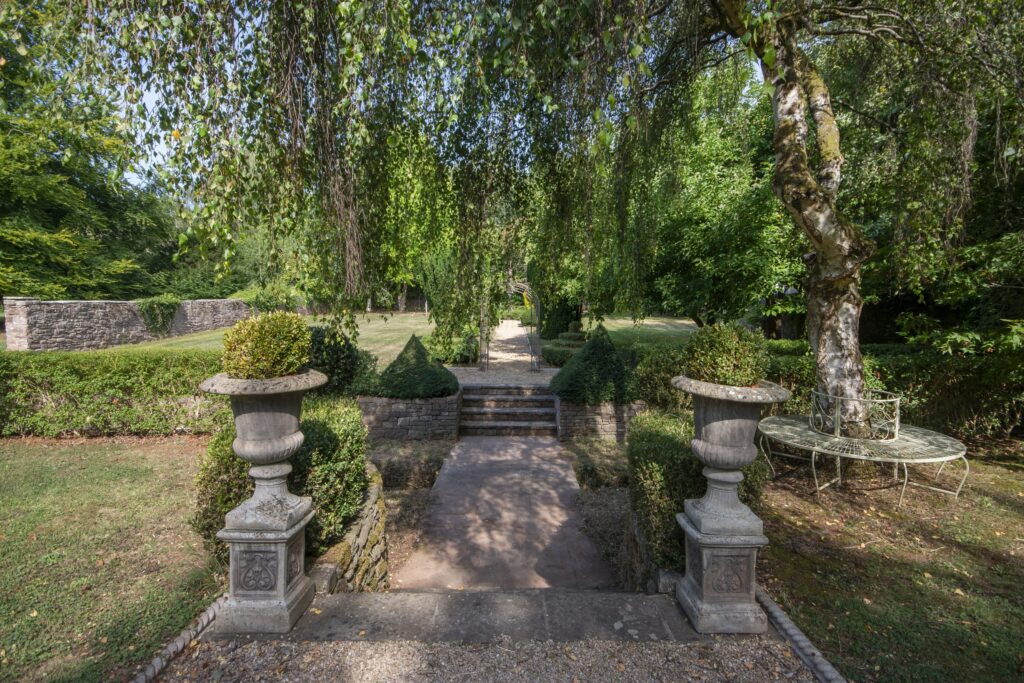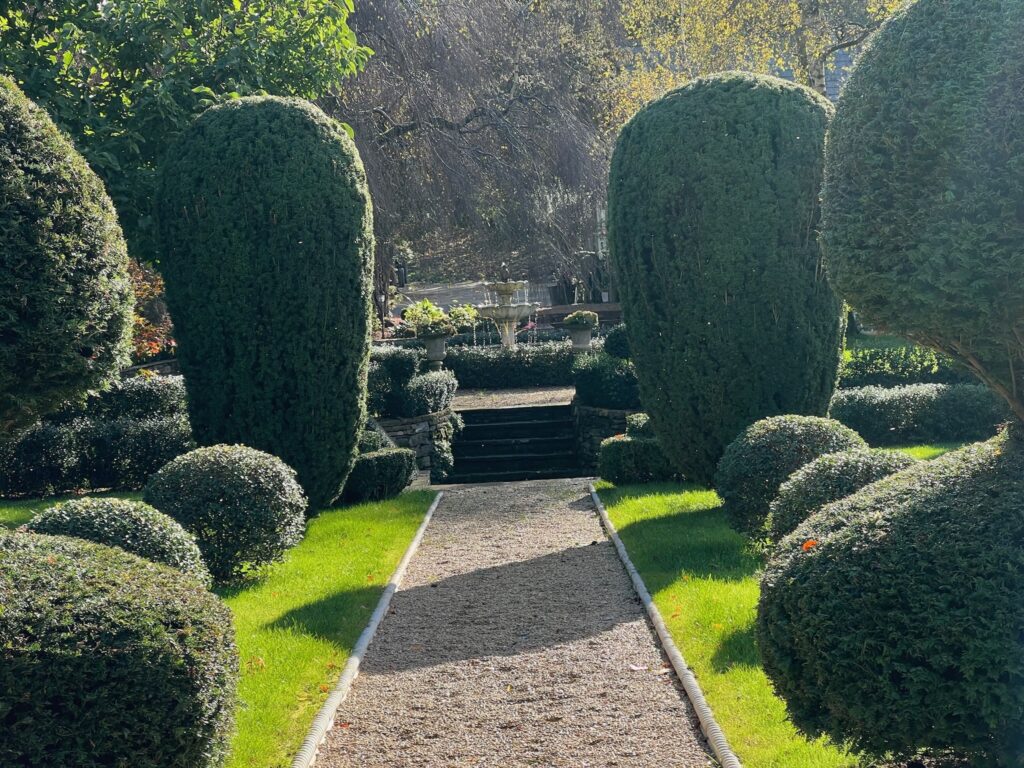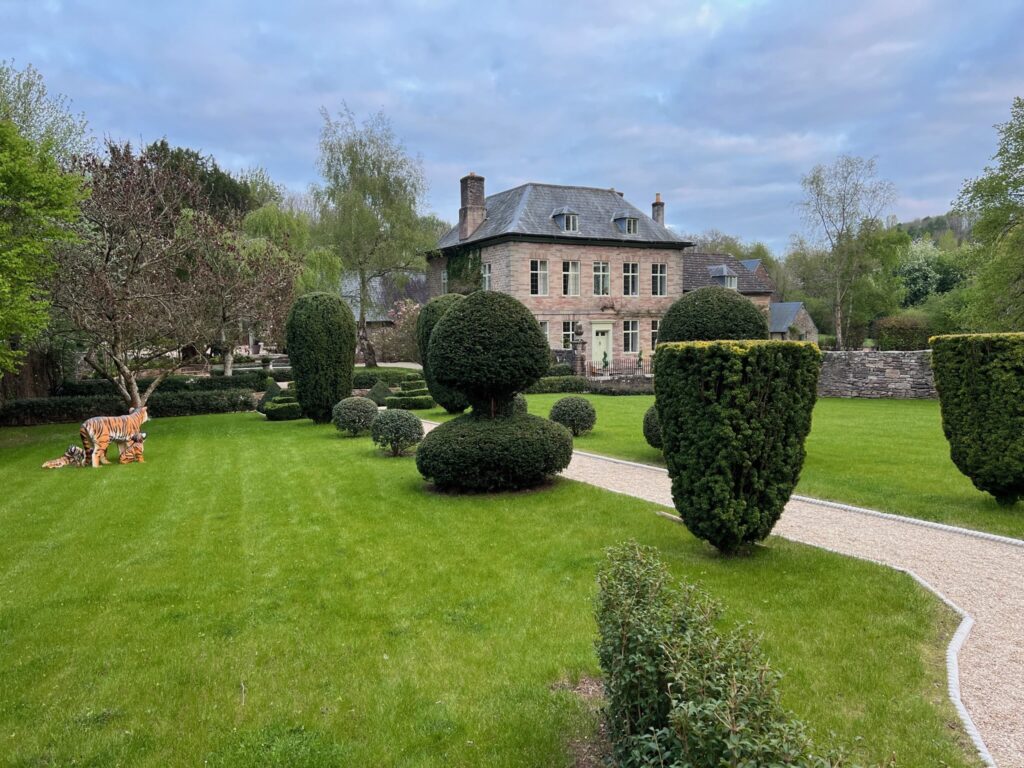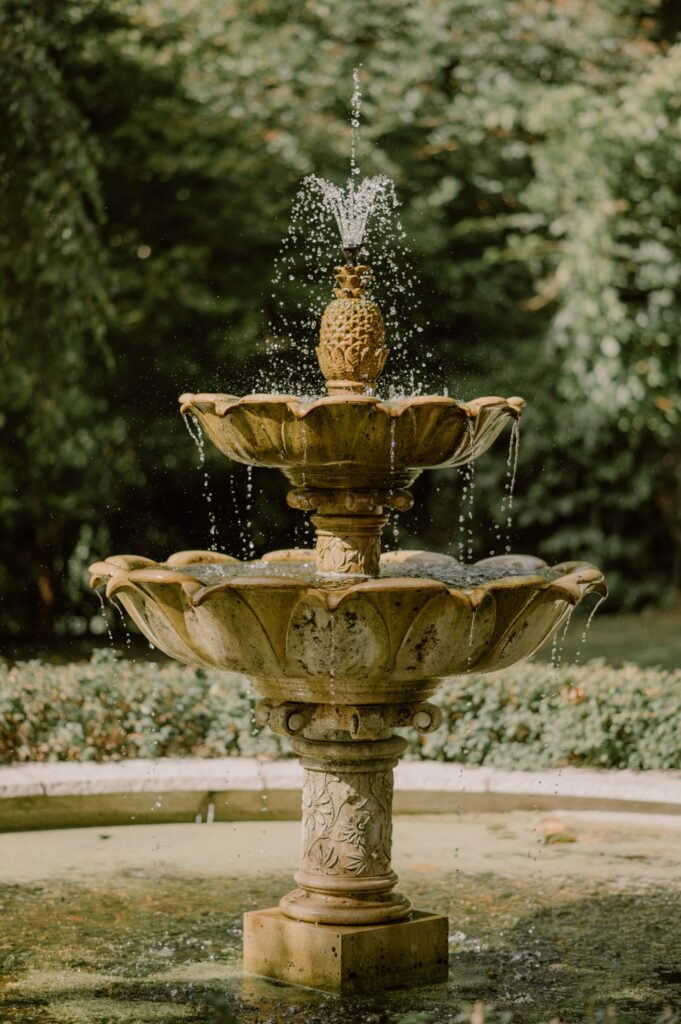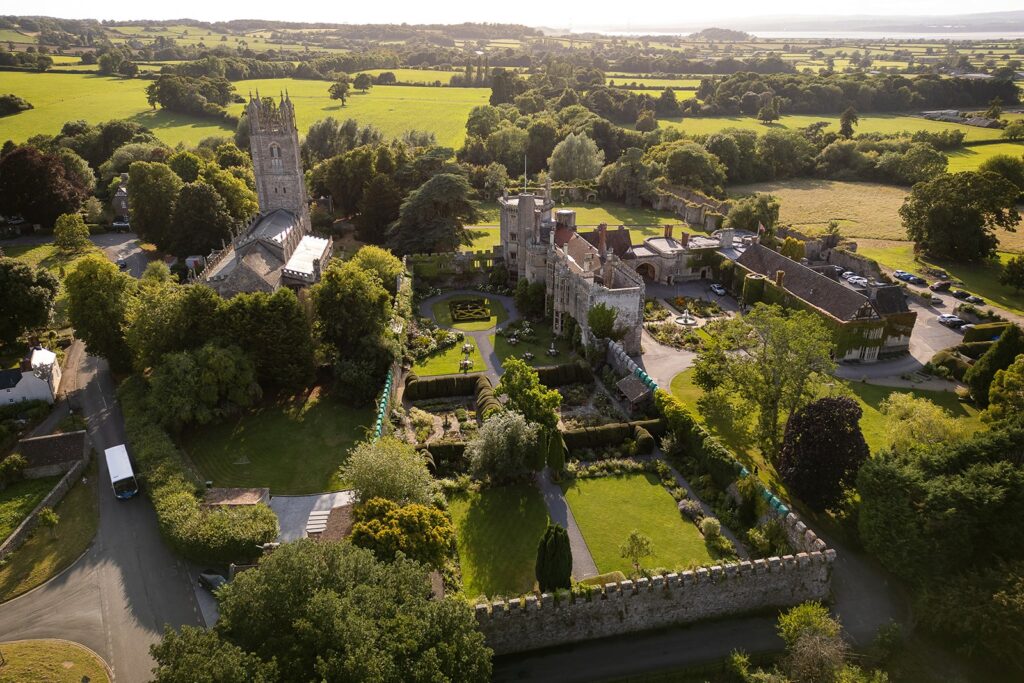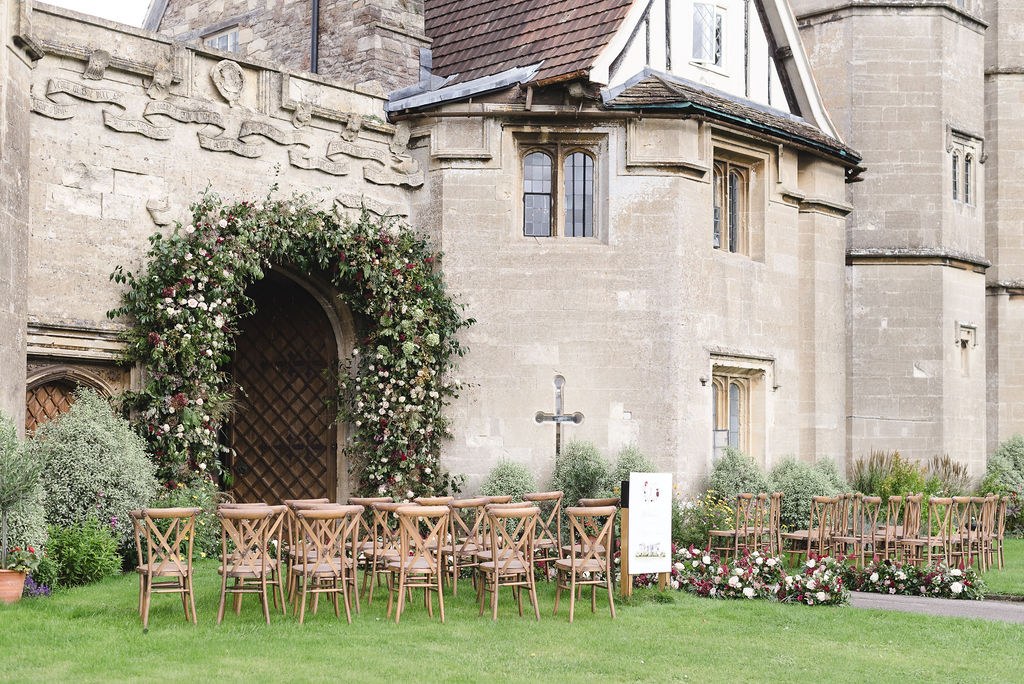
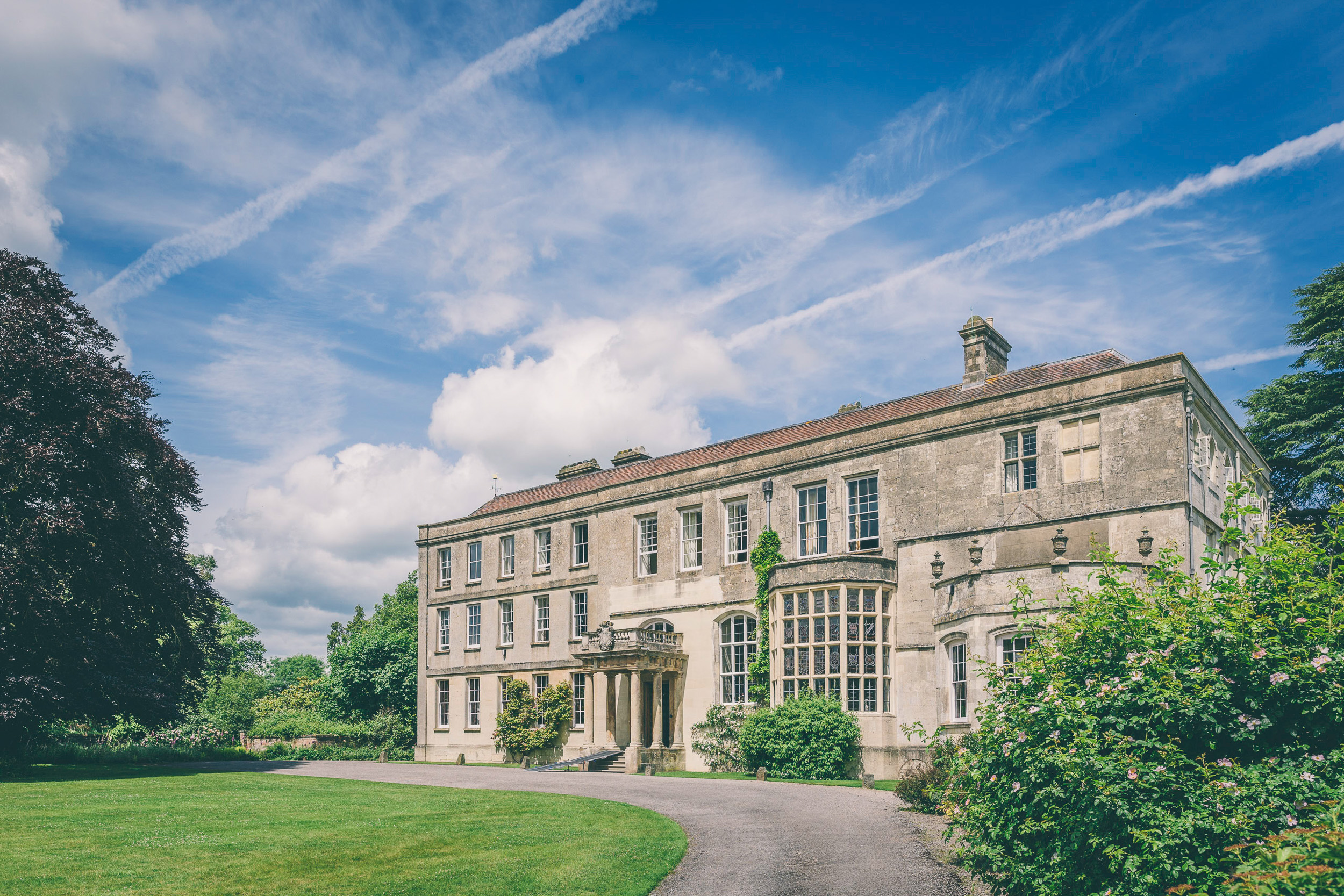
In 1262, in the reign of Henry III, the Guise family were granted land at Elmore, in a bend of the River Severn near Gloucester, for a yearly rent of “a clove of one gillyflower”. They hold it still. Anselm Guise inherited the estate from his uncle in 2007 while running an electronic music events business, and the party hall he built beside the house carries the name of that medieval rent, its walls rammed from Elmore’s own soil. A wedding here moves between the two buildings. Civil ceremonies take place in the Great Hall of a Grade II* listed house built between 1564 and 1588, out in the grounds, or in the Gillyflower itself, and the Gillyflower is where the dinner and the dancing happen.

A family seat since 1262
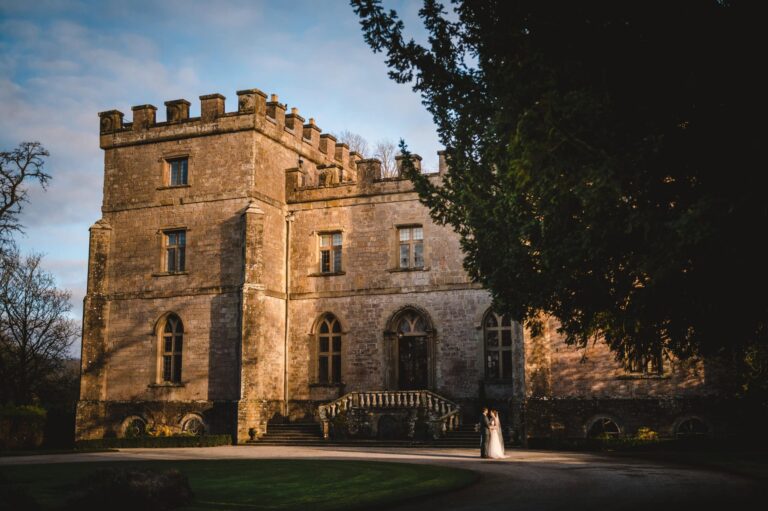
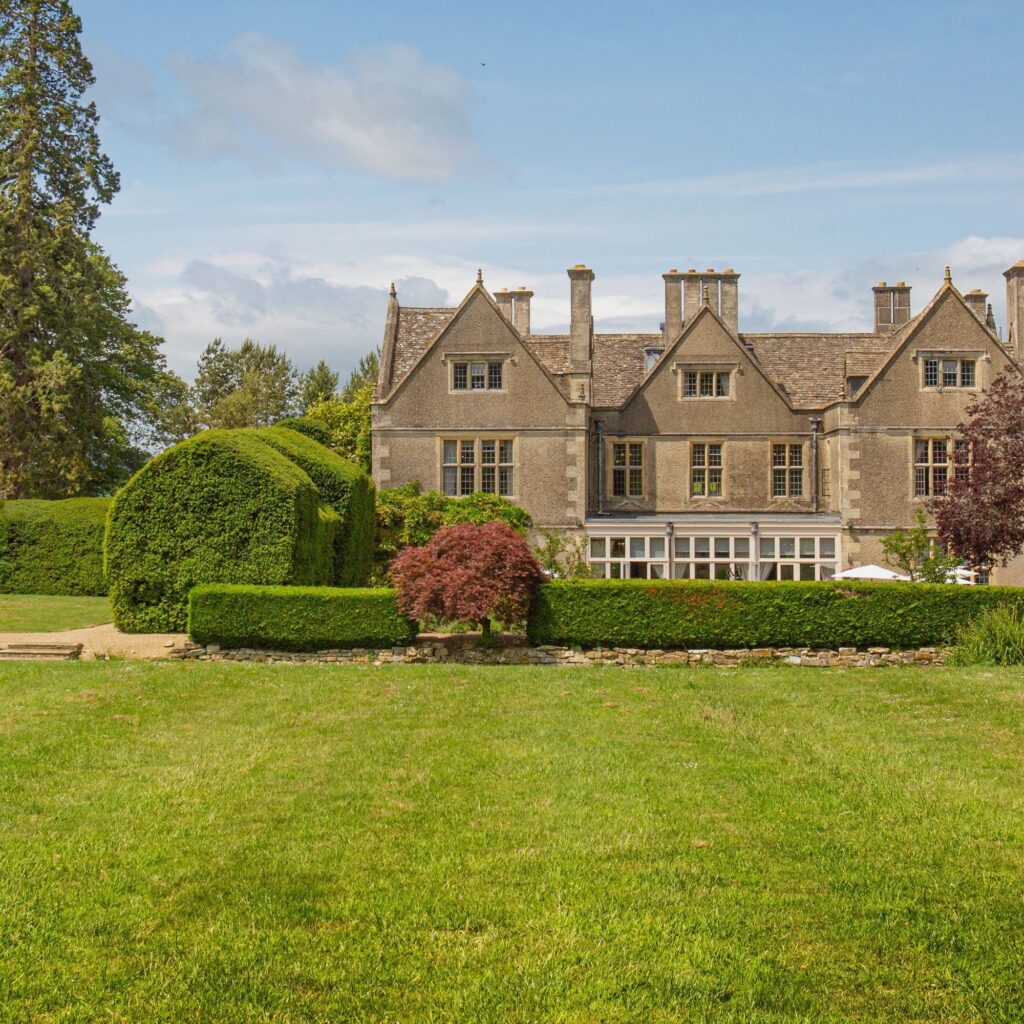
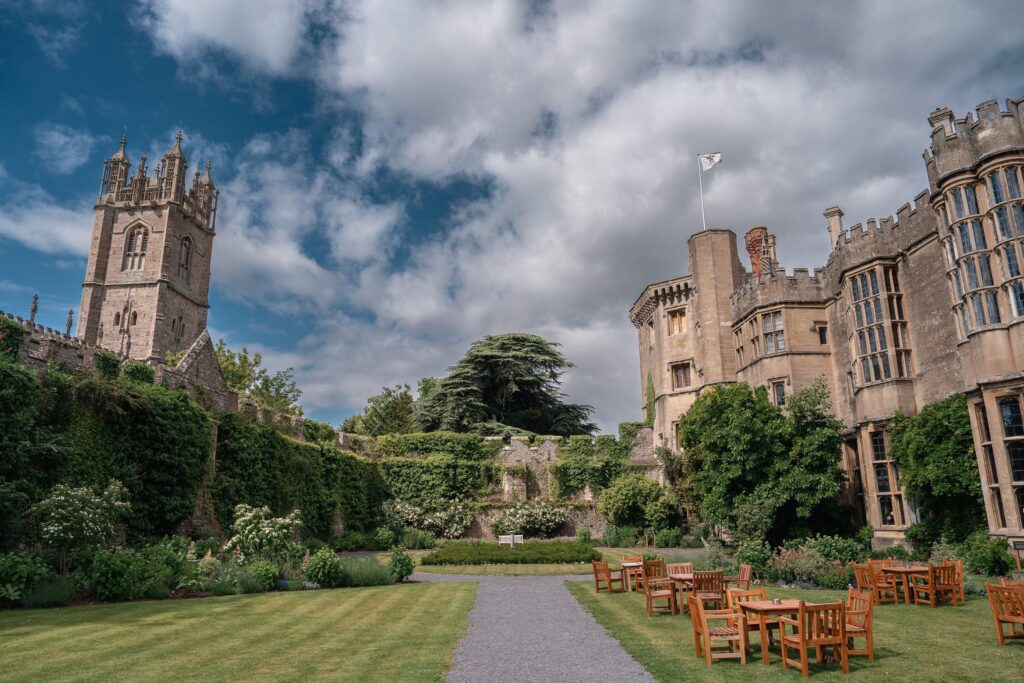
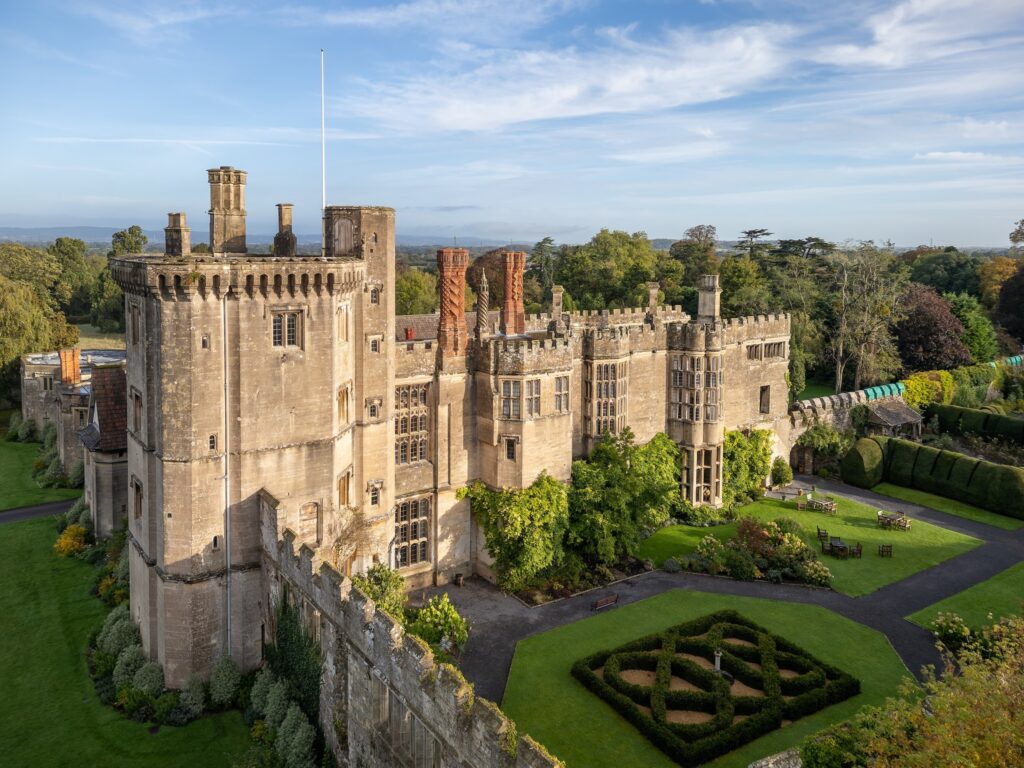
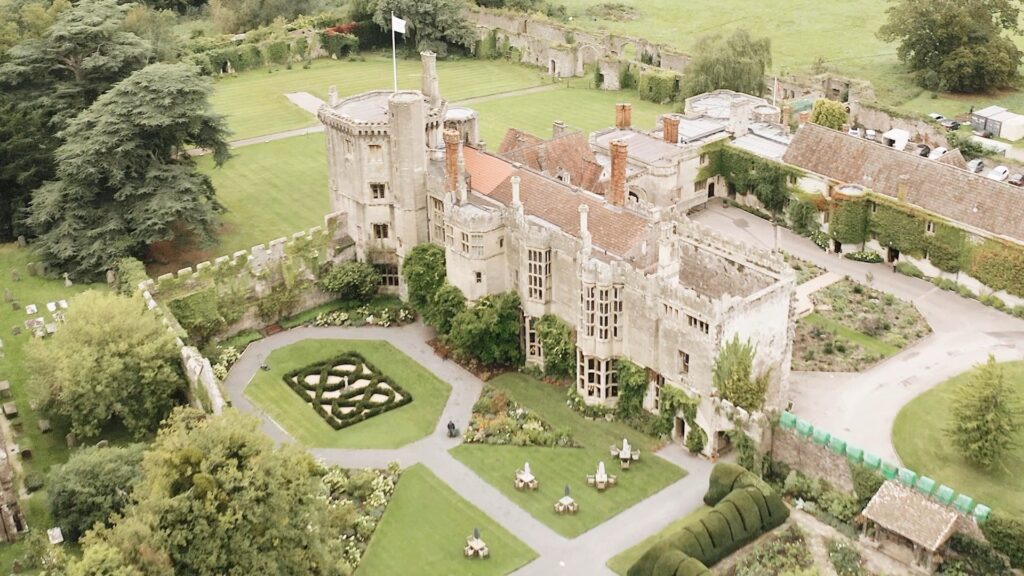
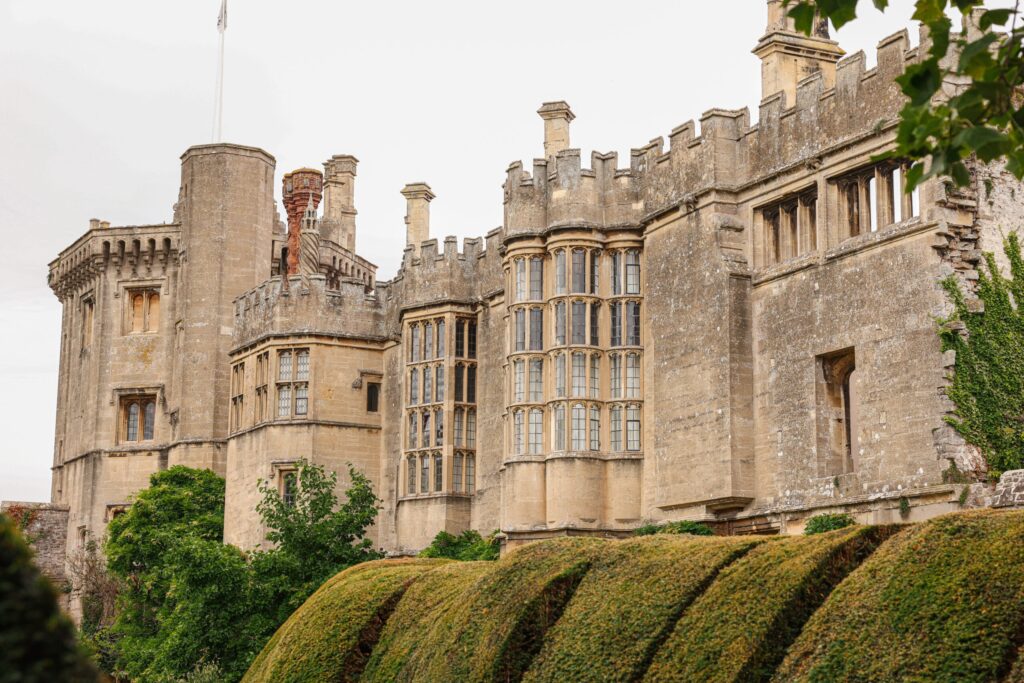
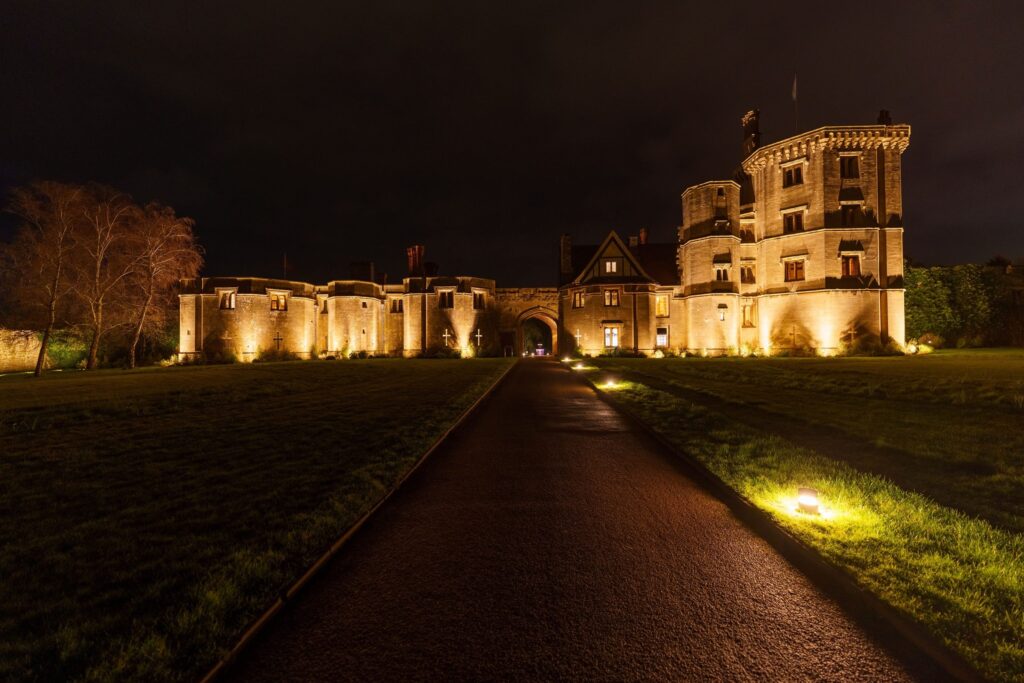
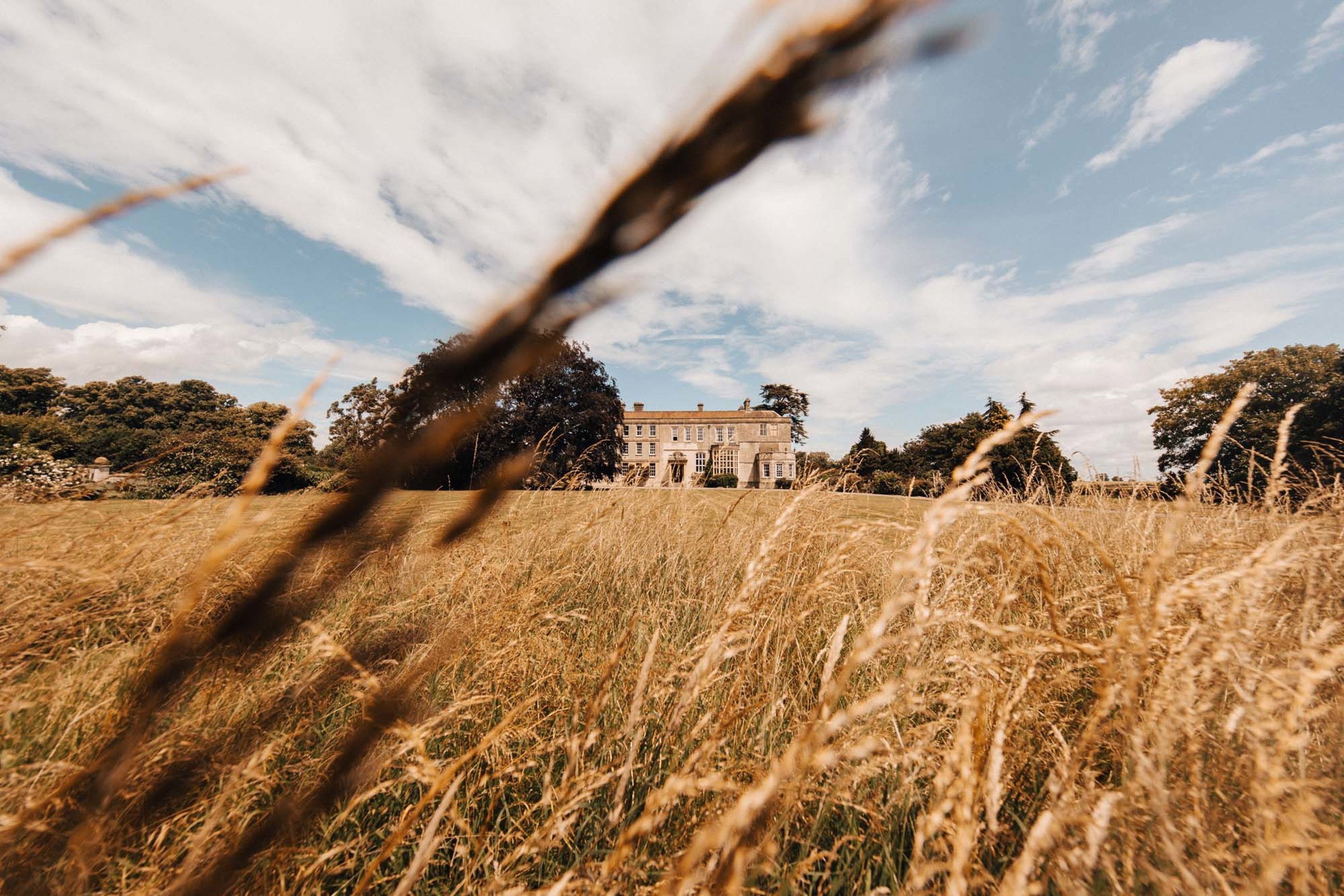
The present house went up between 1564 and 1588 on the site of a medieval house, whose remains are said to survive in the cellars. Those cellars are the oldest part of the building and still hold the wine. The house is limestone ashlar, a central hall with cross wings rising to two and three storeys, and it stands on a slight rise that gives it command of the flat land around. In the eighteenth century the south front gained a porch in the Doric order, three columns a side beneath a balustraded parapet carrying the Guise arms, and most of the west side followed around 1870.
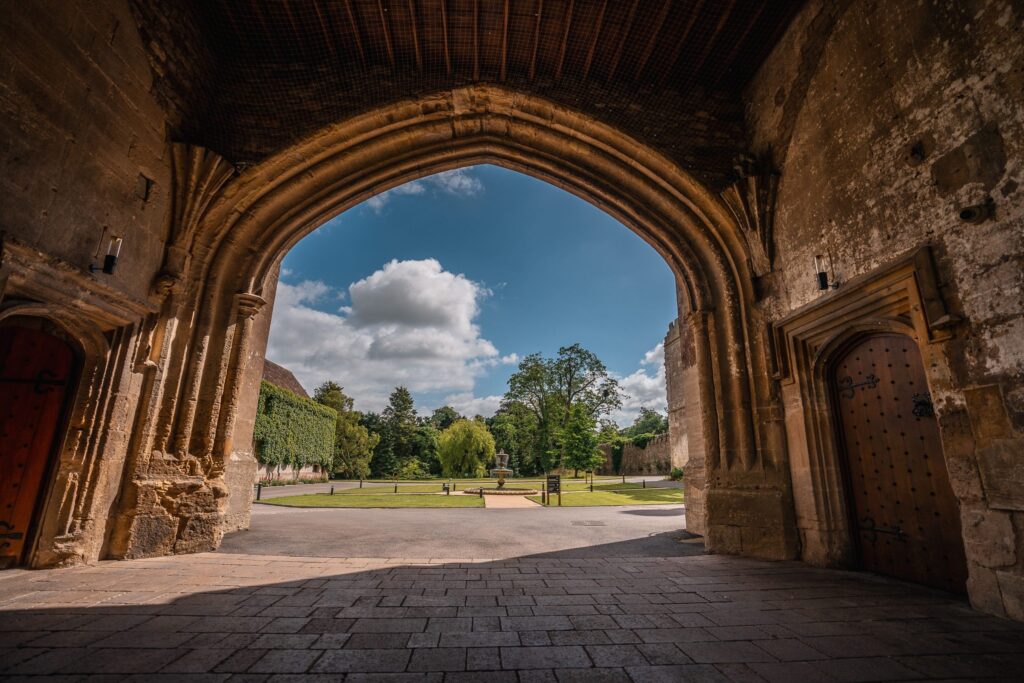
The family’s holdings spread well beyond Elmore. They bought the Rendcomb estate in 1638 and acquired Highnam by marriage in 1783; Highnam was sold in the nineteenth century to the Parry family, and Hubert Parry, the composer of Jerusalem, grew up there. Sir Berkeley Guise, living at Rendcomb when he inherited Elmore in 1794, built the present dining room for his parties. The gates south of the house came from Rendcomb as well: early eighteenth century wrought iron by William Edney, a Bristol blacksmith, made for Sir John Guise and moved to Elmore in the early nineteenth century, with the Guise swan badge in the overthrow. The gateway is listed Grade II* in its own right.
Vows under heraldic glass
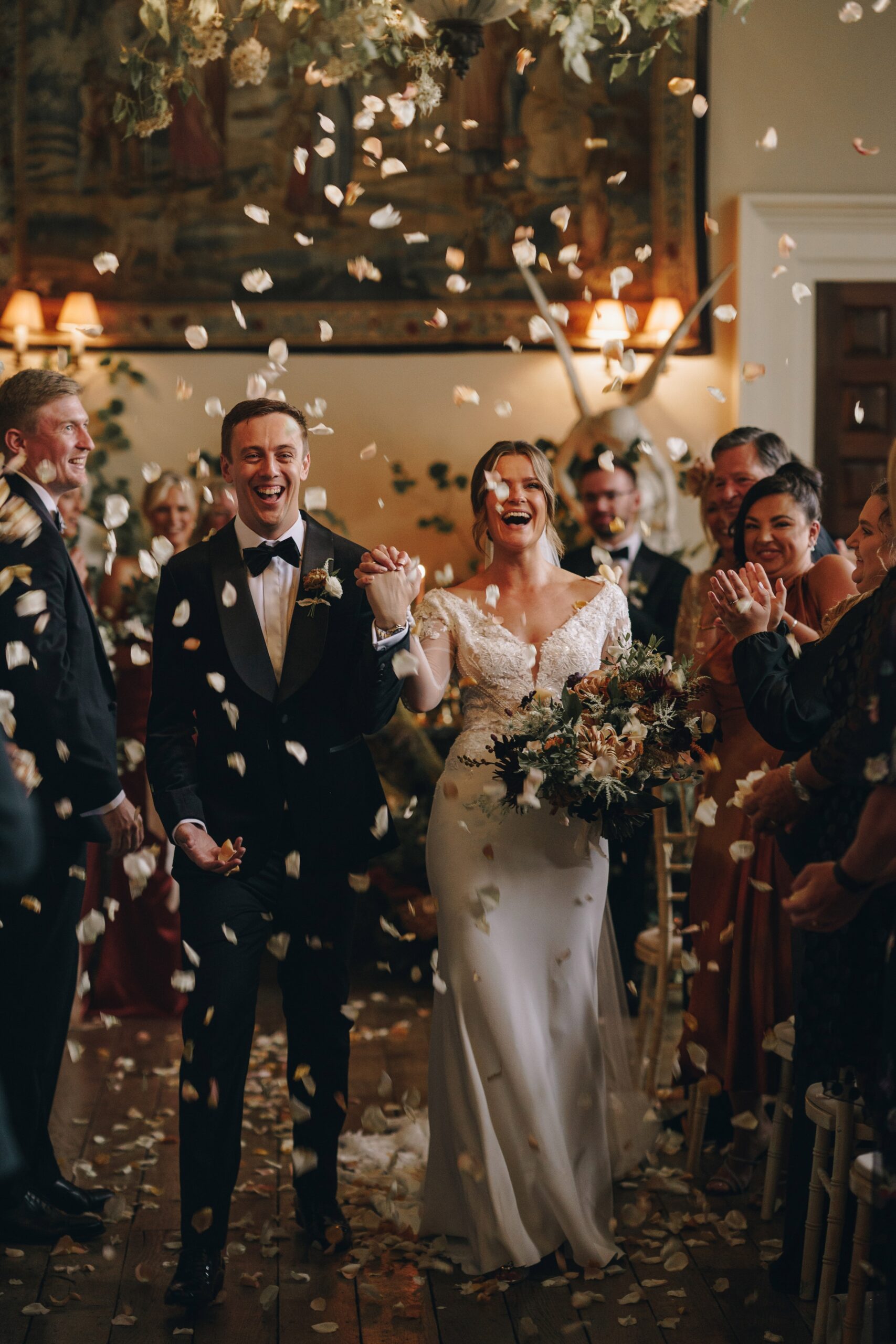
Indoors, the ceremony belongs to the Great Hall. It keeps a sixteenth century stone fireplace with painted strapwork, and its bay window was reglazed in 1853 with heraldic stained glass; tapestries and portraits hang beneath a chandelier. Civil ceremonies can move to the Gillyflower instead, and some couples marry outdoors in the gardens. Next door to the hall, the Drawing Room, with Jacobean panelling under a frieze carved with dragons, takes the drinks reception.
The wedding morning has its own geography. The Coach House, built in 2016, comes with the hire for the night before and the morning of the wedding. It is self contained, with two double bedrooms, two bathrooms, a kitchen and a sitting room, and massage and beauty treatments can be booked there before the ceremony. In the house itself, the Morning Room on the east side looks over the gardens and the East Lawn and can be used for getting ready.
The parish church down the lane
A Christian marriage or blessing takes place away from the house, at Elmore’s parish church of St John the Baptist, just down the lane. It is listed Grade I: a thirteenth century church with a late fourteenth century nave, restored by F. S. Waller in 1879 and 1880. The family’s history fills the chancel, where a chest tomb incised with a knight in armour marks Johannes Gyse, who died in 1472. In the churchyard stands the Guise Mausoleum, built in 1733 under the will of Sir John Guise as an exact copy of a Roman tomb at Terracina that he believed to be Virgil’s.
Before the first wedding
Turning a family house into a business took several years and, at times, a film crew. Channel 4’s Country House Rescue filmed Anselm Guise’s first efforts to make Elmore pay its way, among them a trial cookery school. BBC Two’s Permission Impossible: Britain’s Planners then followed his application for a wedding venue, and permission was granted. Elmore Court reopened as a wedding and events venue in 2013 with eight bedrooms. Eight more bedrooms and the Coach House followed in 2016.
The Gillyflower, built from Elmore soil
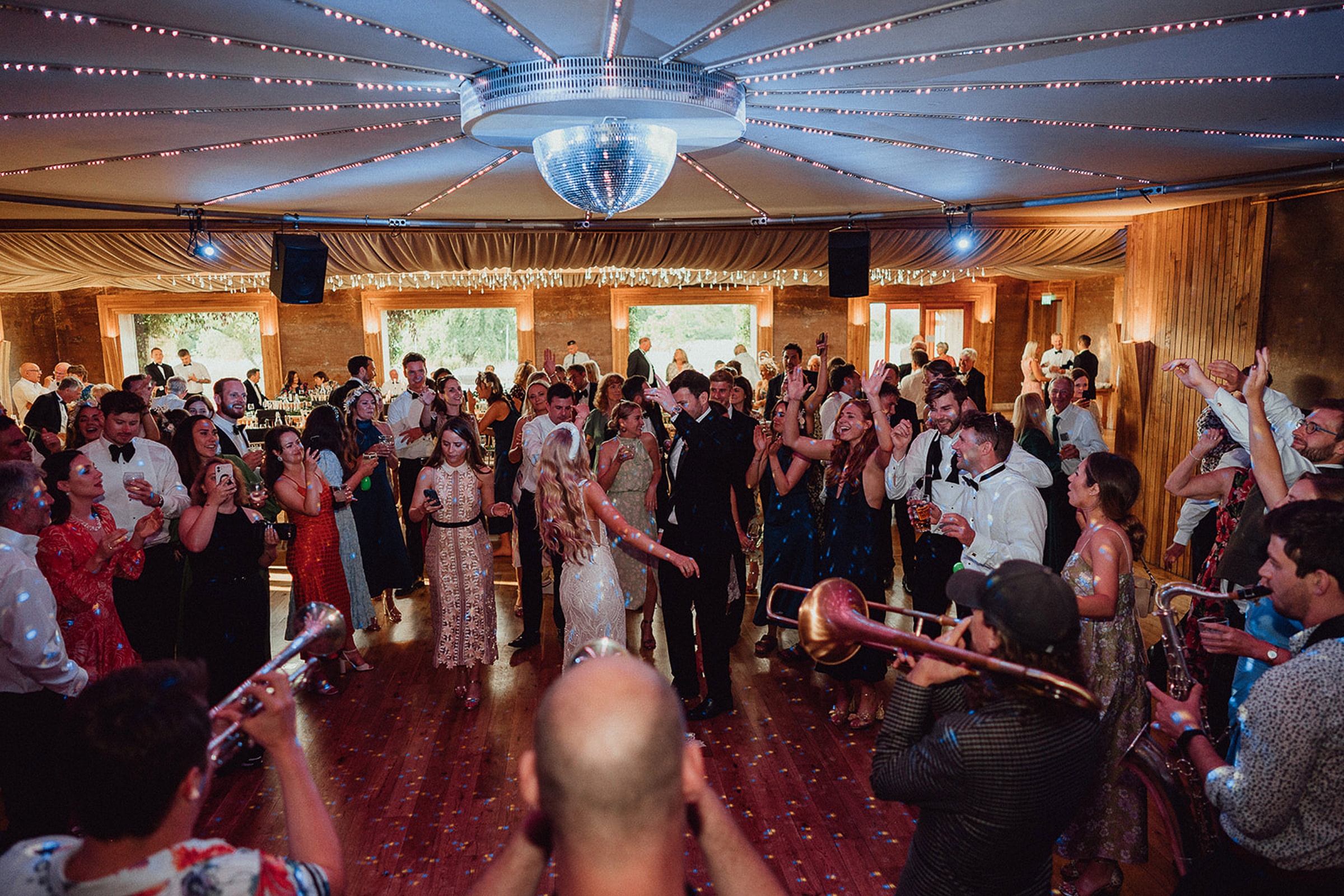
The hall stands beside the house, low and timber clad under a meadow roof, with large windows over the Gloucestershire countryside. A canvas marquee was never the plan. Anselm Guise wanted a room in this quiet corner of rural Gloucestershire where a wedding could be as loud as it liked without troubling the neighbours, so the walls were rammed from Elmore soil and timber, for the mass and density to hold the sound in. Inside are a dining area, a fully serviced bar and a dance floor, a Funktion One sound system and an LED lightshower overhead. Tables, chairs, a PA and two radio microphones come with the room.
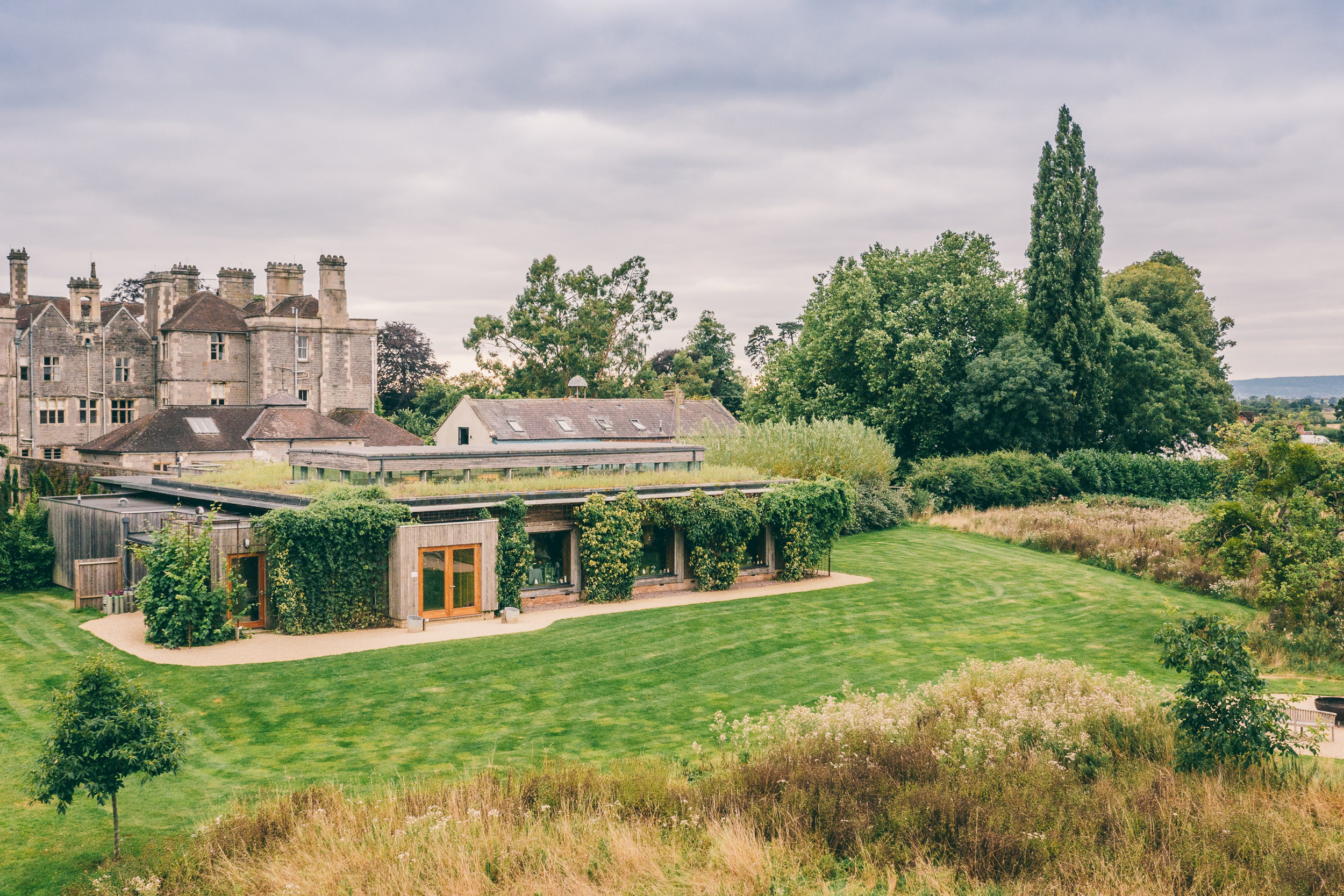
Around 60 to 200 guests fit in the Gillyflower. Outside, the lawns and gardens take drinks, games and photographs, with a fire pit and garden seating. The bar runs as a free bar or a cash bar, with cocktails made to order and special requests, a barrel of ale for instance, ordered in.
From the walled garden to the table
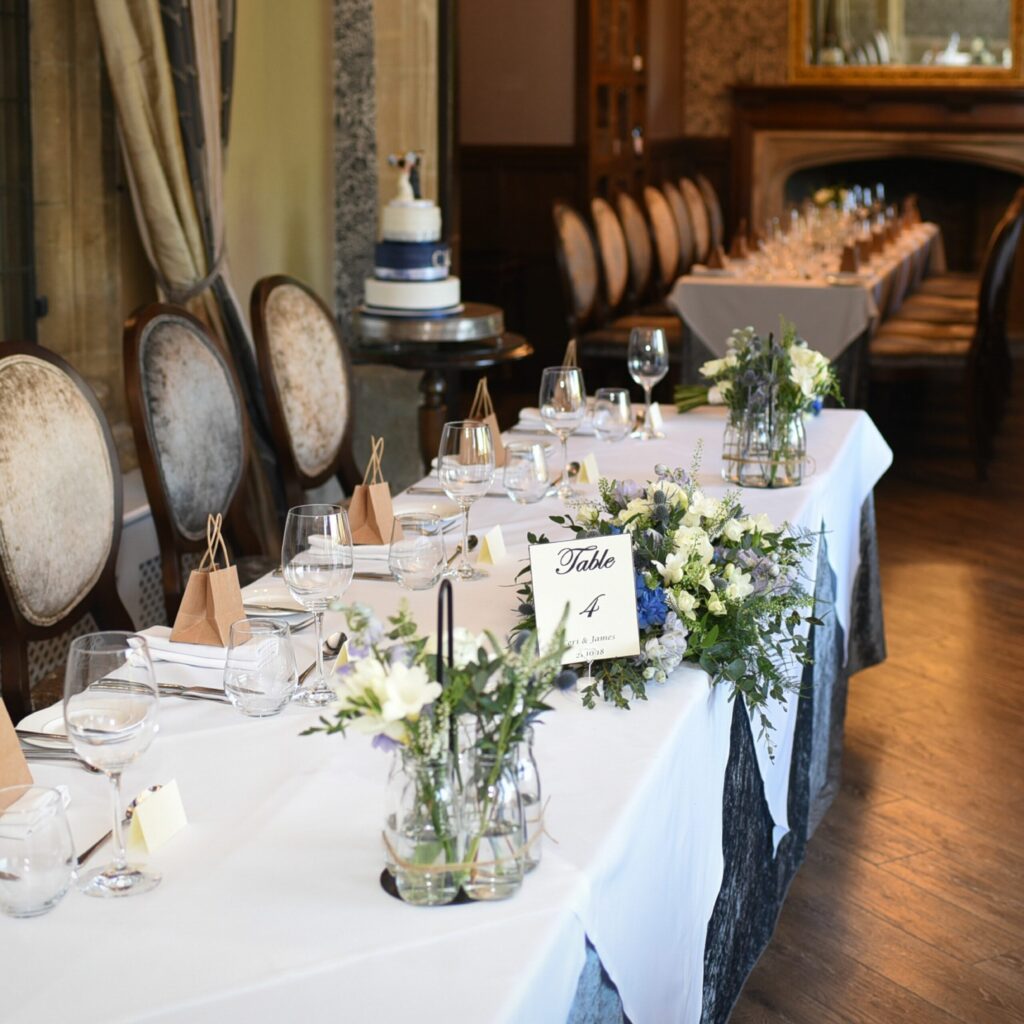
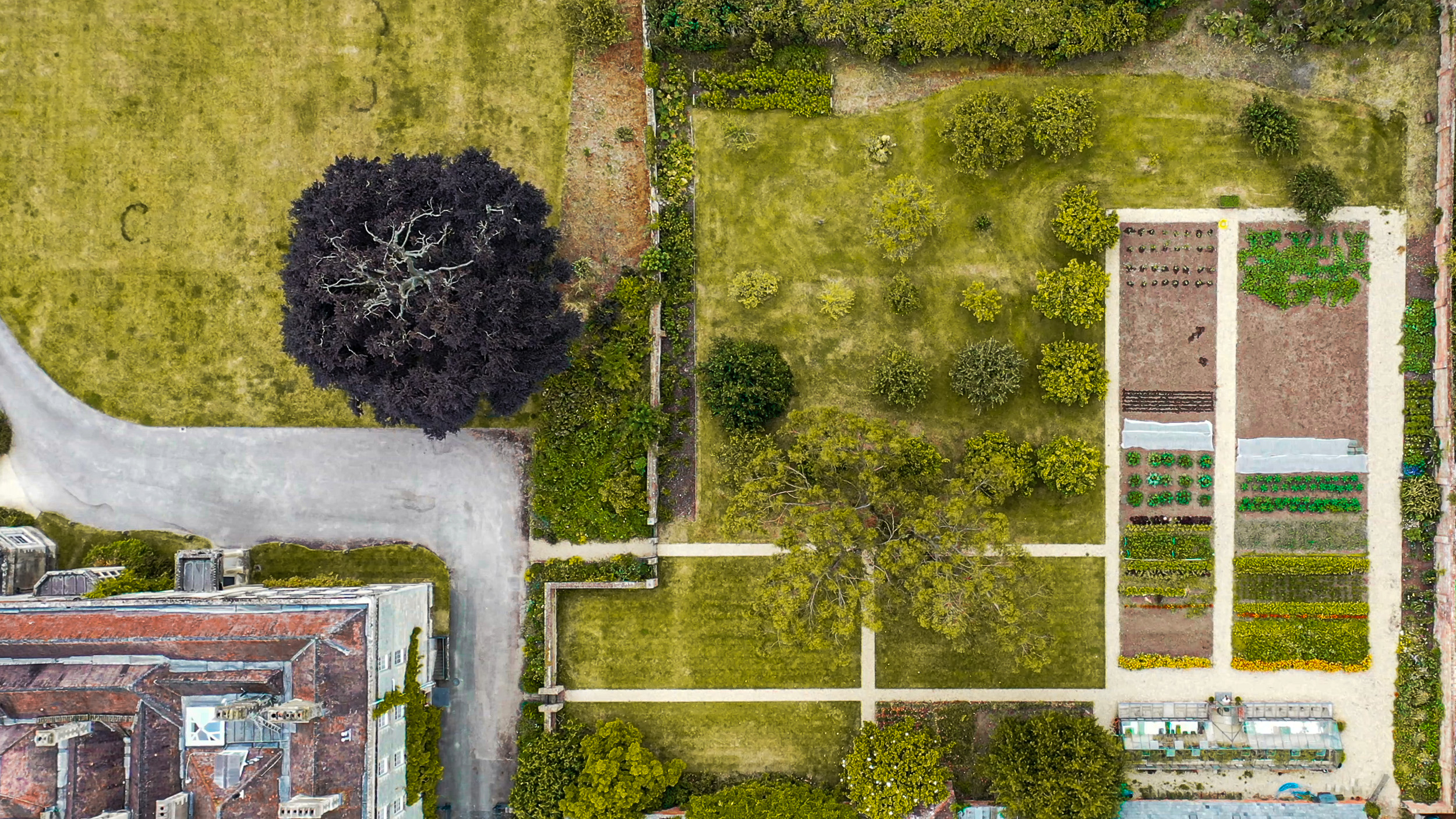
Catering is in house, though couples who prefer their own caterers can bring them. A growing share of the vegetables, fruit and herbs comes from the Walled Garden, the greenhouse and the wider estate. Beef is from the longhorn cattle on the rewilded land, and bread is baked with Wildfarmed flour milled from grain grown at Elmore. Menus are worked out with the couple rather than fixed, and wine comes up from the cellars at the prices of most wine merchants. The wedding breakfast can also stay in the old house: the Dining Room that Sir Berkeley Guise built for his parties, hung with family portraits, is used for wedding breakfasts and private dinners.

A house party that runs to breakfast
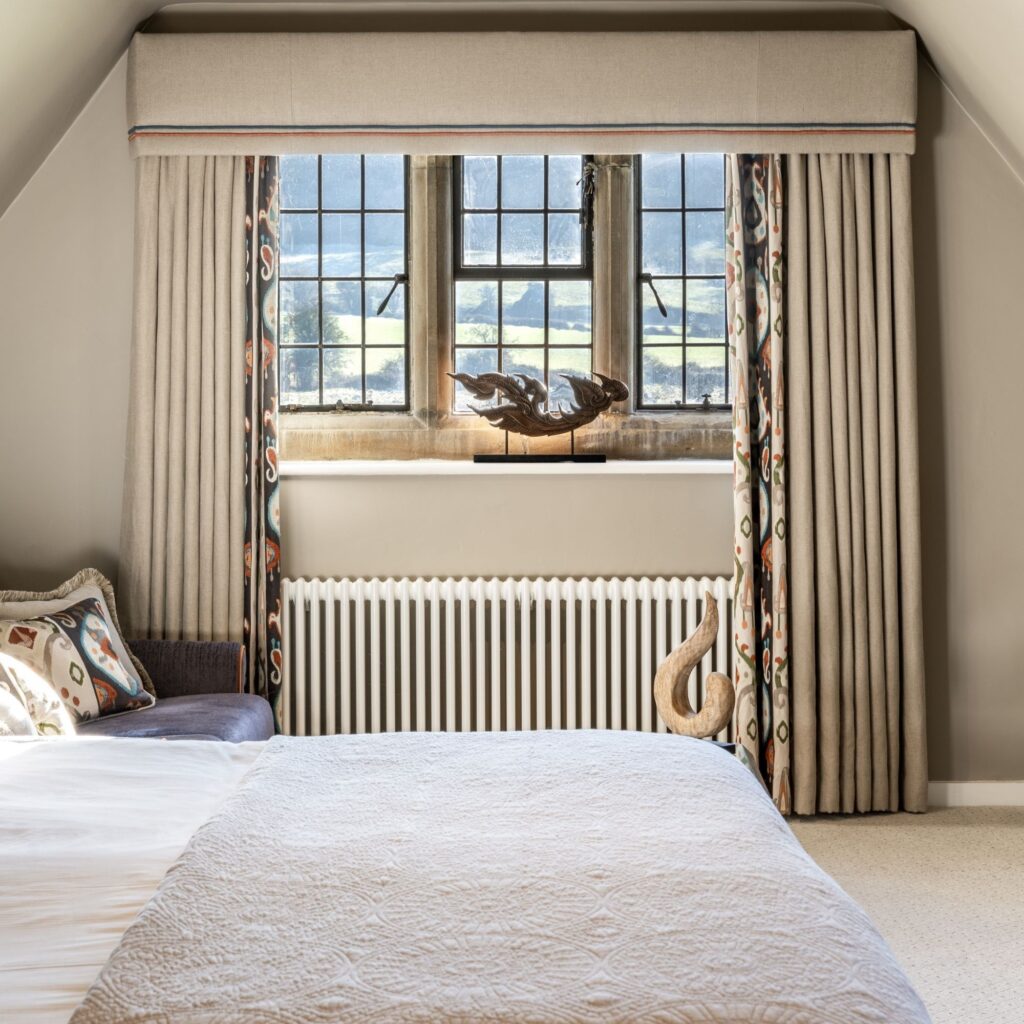
The booking gives the couple the house for the length of their stay, and with it 16 bedrooms to allocate: they choose their own wedding night suite and decide who else sleeps under the same roof. When the Gillyflower closes, the night need not end. A smaller bar in the Drawing Room stays open after hours for a last drink before bed, and house guests have a private kitchen of their own, with full dining service on request.
Guests who do not fit in the house can take the six treehouses in the woods at the southern end of the estate, booked separately. Each sleeps two adults, and most have room for an extra bed or two. The usual minimum is two nights, though wedding guests can ask the couple about single nights. The way to the party is on foot: a private gate on the drive, just before Sky and Kite, opens onto a path up to the house and gardens, and only wedding guests may use it.
Beyond the lawns
Past the gardens, the estate runs to farmland, woodland and wetland. Since 2020 Anselm Guise and his team have been rewilding a large part of it, a project of 450 acres; the idea came from Isabella Tree’s book Wilding, about the Knepp estate in West Sussex. That land is left to recover without chemicals, fertiliser or machinery, with rare breed animals introduced to it, and deer, owls, herons, harriers and egrets can be seen in season.
One night or a whole weekend
Exclusive use of the house, gardens and the Gillyflower is priced from £5,000, varying with the day of the week and the season. The hire includes the wedding night suite, the Coach House, the Gillyflower’s entertainment systems and breakfast the next morning; food and drink are charged separately. Music, photography, hair, make up and table dressing come from a list of local suppliers the estate works with. Elmore lies off the A38, a short drive from junction 12 of the M5. Guests travelling by train come into Gloucester, about four miles away as the crow flies, and finish by taxi; Bristol Airport is about an hour by road.
Four points are worth settling at a tour: how many the Great Hall seats for a ceremony, set against the Gillyflower’s 200; how many the Dining Room seats for a wedding breakfast; where outdoor vows move if the weather turns; and how the price shifts between seasons.
The decision that shapes everything else is how long to keep the house. The hire is built around the wedding night and the breakfast after it, longer stays can be arranged, and treehouse guests are asked for two nights. Settle that first, read the Elmore Court profile and check your date.
Related reading: wedding venues in Gloucestershire, the United Kingdom Wedding Atlas, and our Edit on Briery Hill House in west Gloucestershire.