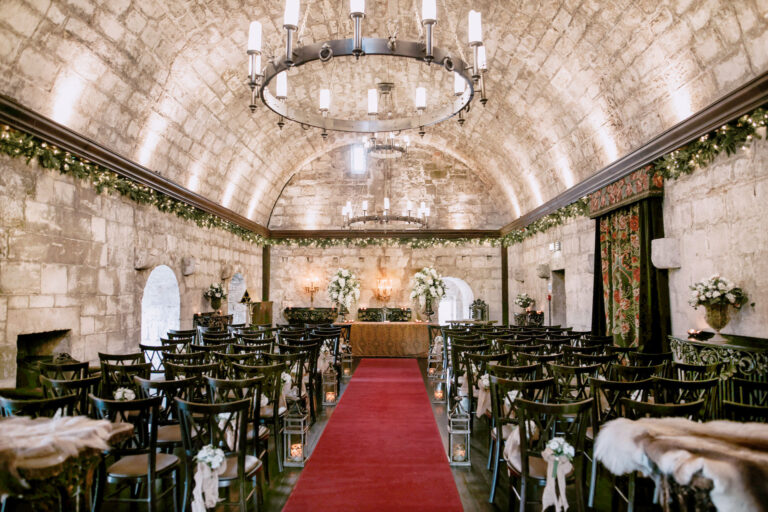
Marrying in the United Kingdom means following one of three separate systems, because England and Wales, Scotland and Northern Ireland each have their own rules. In all three you give notice to a local registrar before the day, and a booked venue is not the same as a legal marriage. In England and Wales you must give notice at least 29 days before the ceremony and name your final venue when you do. In Scotland a ceremony can be held at any indoor or outdoor location. In Northern Ireland the minimum notice is 28 days. If one of you comes from outside the UK, the visa rules come first. England and Wales are also consulting on a reform that would let couples marry almost anywhere, but that is a proposal and not yet law. This guide sets out what each government page says, so you can plan the legal side alongside the venue.

The three systems at a glance
| England and Wales | Scotland | Northern Ireland | |
|---|---|---|---|
| Notice | At least 29 days before the ceremony; ceremony within 12 months of giving notice | Both of you give notice to the registrar for the area of the ceremony; plan ahead, as booking the registrar is not notice | Minimum 28 days, normally about eight weeks (ten if either of you has been married before); given within the 12 months before the marriage |
| Where the ceremony can be | A register office, a registered religious building, or any venue approved by the local council, such as a stately home or hotel | Any indoor or outdoor location the celebrant or registrar can reach | Civil ceremonies in approved venues, with no location restriction on a religious marriage, as the BBC reports; councils charge extra for room hire and approved venues |
| Witnesses | At least two | Two people aged 16 or over | Not stated by the official page |
| Stated fees | Registrar £62 at a register office, £114.50 at a registered religious building; other approved premises may differ | None stated | £22.00 per notice form, one for each of you; £36.00 for a registrar to solemnise a civil marriage |
England and Wales
Under the government guidance for England and Wales, you decide where the ceremony will be before you give notice, because the notice must include the final venue. You sign a legal statement at your local register office, and you must have lived in that registration district for the past 7 days. You hold the ceremony within 12 months of giving notice.
A civil ceremony can take place at a register office or at any venue approved by the local council, for example a stately home or hotel. A registrar must carry out, or be present at, the ceremony, and you need at least two witnesses. A religious wedding can take place at any registered religious building, and an authorised person such as a minister must attend or you book a registrar. A civil ceremony must not include anything religious, though a religious blessing can follow it. So ask any venue you like whether it is approved premises for civil ceremonies before you book it.
To give notice you bring originals of a valid passport or UK birth certificate, proof of your home address and proof of any name change, with details of the final venue. If your normal address is outside the UK, you give a UK contact address.
Scotland
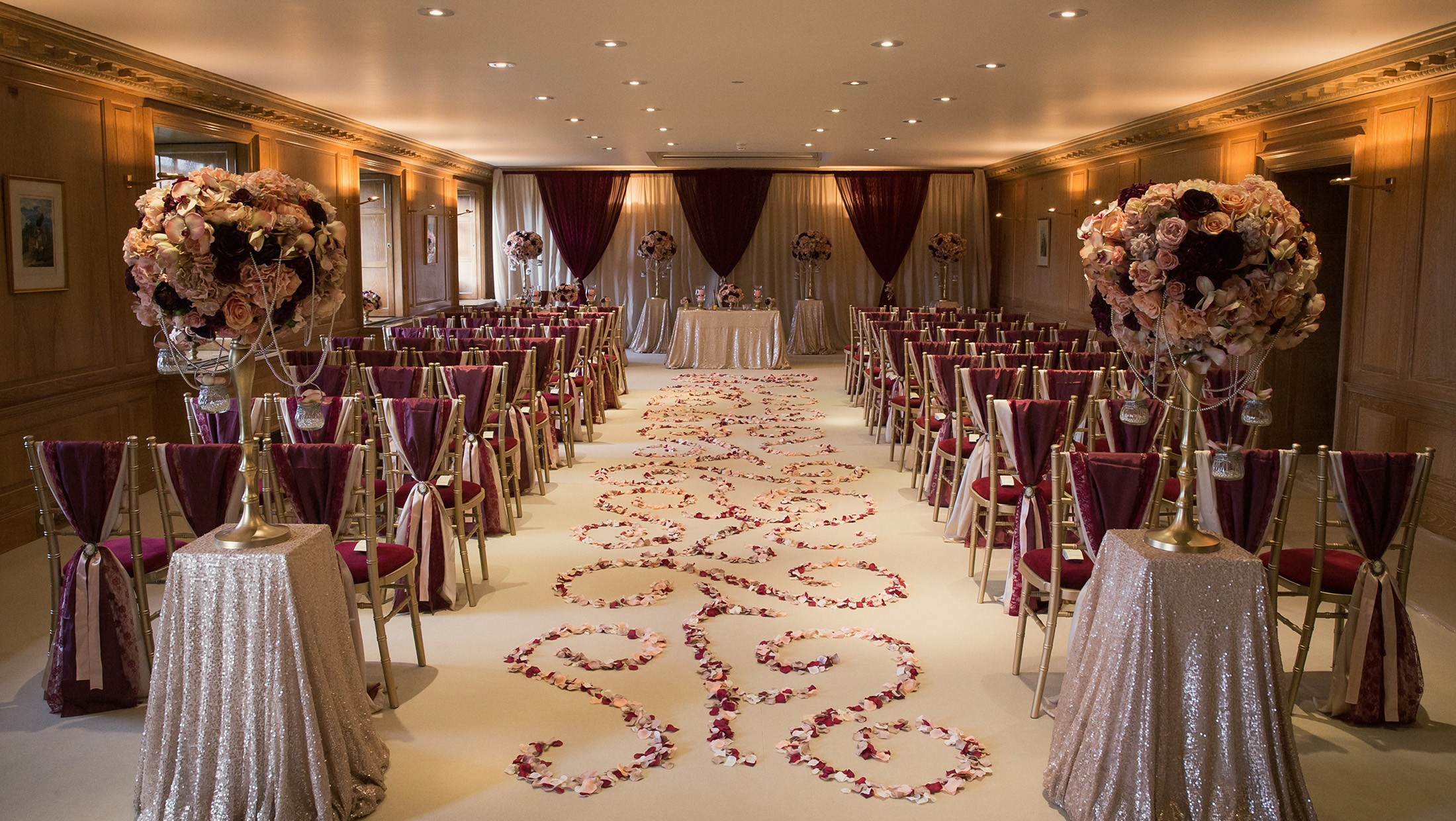
Both of you must complete a notice form and submit it to the registrar for the area where the ceremony will take place, and National Records of Scotland stresses that booking the registrar is not the same as giving notice. Surprise weddings are not possible: without proper notice a marriage can be postponed or prevented. You can choose a registrar or a religious or belief celebrant, and the ceremony can take place at any indoor or outdoor location that your celebrant or registrar can reach. You need two witnesses aged 16 or over.
If you live outside the UK, mygov.scot says you may need a certificate from your own country saying there is no reason you cannot marry, with a certified translation if it is not in English. It must reach the registrar with your notice at least 29 days before the wedding if it is required. UK citizens living abroad do not need that certificate. For the full Scottish picture, including the M10 notice form and the documents it lists, see our guide to getting married in Scotland.
Northern Ireland
Both of you send a marriage notice form, with documents and fees, to the registrar of the council district where the marriage will take place, in the 12 months before it. nidirect gives 28 days as the minimum and says leaving it that late risks having to postpone. Only in exceptional circumstances will the Registrar General allow a marriage with less notice. The BBC reports that civil ceremonies there can only take place in approved venues, while a religious marriage has no restriction on location.
Getting married in the UK as a foreigner
In England and Wales the government says you must apply for a visa to come to the UK to give notice or marry, unless you are a British or Irish citizen or have a status such as indefinite leave to remain or settled status. You cannot give notice or marry on a Standard Visitor visa, and a marriage visitor visa suits a stay of under six months. If you give notice without the right visa, the Home Office is told and the wait can run to 70 days. In that case you and your partner must give notice together at a register office in the district where at least one of you lives, see the visa guidance.
In Northern Ireland, nidirect says you must have the right visa before you travel and before you give notice, and the notice period may be extended to 70 days if you cannot show it. If you are not a UK, EEA or Swiss national you also fill in an immigration status statement.
Can you get married anywhere? What the proposed law changes in England and Wales
Planning a wedding in England or Wales? The government has proposed changes to where legal wedding ceremonies can take place. For now, plan around the current rules. Before paying a deposit, ask the venue and the local register office to confirm whether you can hold your legal ceremony there on your chosen date.
If you have found a family home, a private estate or an outdoor setting that you love, this is why the proposals matter. The Ministry of Justice consultation, covered by the BBC on 16 July 2026, ran from 16 July to 24 September 2026 and is now closed. These are proposals, not law, and the consultation gives no date for legislation. Position checked on 28 November 2026 against the government consultation page.
- Where. There would be no fixed restrictions on where a wedding can take place, provided dignity and safety requirements are met, and weddings would no longer need a pre-approved venue. Settings with unavoidable interruption, such as a nightclub in normal operation, would not qualify.
- New settings. The government is minded to permit weddings in private homes if robust safeguards are in place, and agrees in principle to weddings on inland and coastal waters and civil weddings on UK registered cruise ships in international waters.
- Who marries you. Civil officiants would include registration officers and independent officiants, and non-religious belief organisations, including Humanists, could conduct legally binding weddings. Anglican weddings are treated separately.
- Before the day. The seven day residence requirement for giving notice would be abolished, each of you would attend a compulsory in person interview with a registrar, and two witnesses would remain part of the core requirements.
Civil partnerships are not covered by these proposals.
Planning around the rules
Choose the venue first and confirm it can hold the kind of ceremony you want, then give notice. In England and Wales the venue goes on the notice, so changing it later is a bigger step than a change of mind. For where to marry, see our United Kingdom wedding guide and its regional guides, and for the cost side our London and Surrey cost guides. Marrying abroad follows different rules: see marrying legally in Ibiza or Mallorca.
Questions couples ask
How far ahead must we give notice to marry in the UK?
England and Wales: at least 29 days. Northern Ireland: at least 28 days, normally about eight weeks. Scotland: the official pages give no minimum for UK residents, so ask the registrar and plan well ahead.
Can we marry at any venue?
In Scotland, any indoor or outdoor location your celebrant or registrar can reach. In England and Wales a civil ceremony needs a register office or a venue approved by the local council. In Northern Ireland, ask the council about approved venues. England and Wales have proposed removing the need for approved venues, but that is not law yet.
Do we need a visa to marry in the UK?
If neither of you is a British or Irish citizen, probably. In England and Wales and in Northern Ireland the guidance says you need the right visa before you give notice, and a Standard Visitor visa is not enough in England and Wales.
Check your date with the venues that suit your plans.
Updated 28 November 2026