
Getting Married in Vienna
Habsburg palaces, the Ringstrasse and the State Opera in the Austrian capital. Vienna is the city of imperial ceremony. The Habsburgs shaped it for nearly 700 years, and the Ringstrasse, built between 1858 and 1900 under Emperor Franz Joseph I, lines a boulevard with palaces, museums, the State Opera and grand hotels. A great many royal-scale event spaces sit within one walkable district.
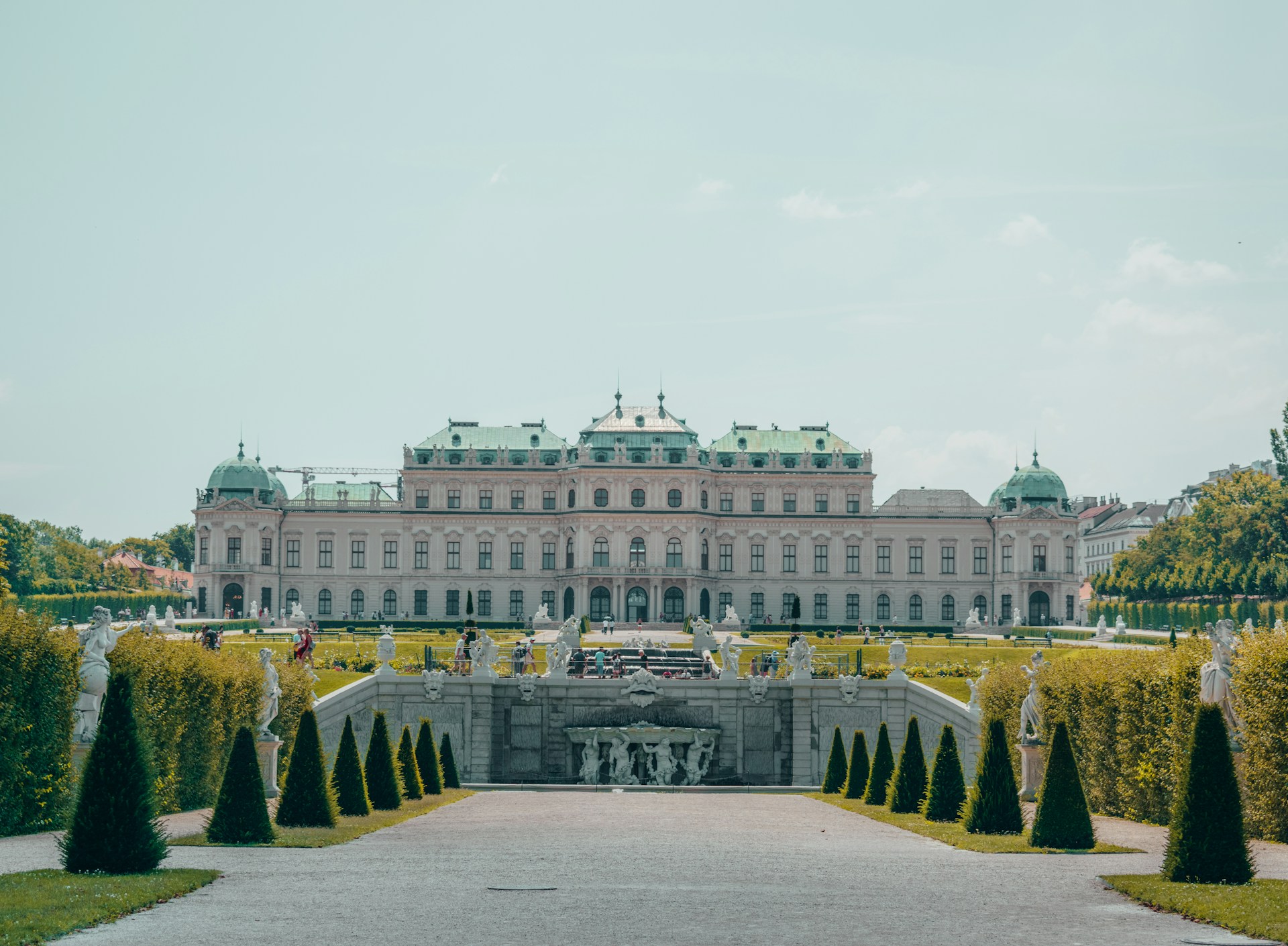
Habsburg palaces, the Ringstrasse and the State Opera in the Austrian capital
The wedding offer spans every scale: private palace events at the top, then historic concert halls, townhouse gardens, Heurigen taverns in the suburban vineyards and the coffee houses of the inner city.
Austrian law allows civil ceremonies at historic palaces and approved venues with an authorised registrar, so a palace ballroom or the Schönbrunn Orangery can be the legal ceremony location. Processing takes weeks and both parties must appear in person, so many UK couples marry legally at home and use Vienna for the celebration.
Where to Get Married in Vienna
Innere Stadt and the Ringstrasse
The historic core: St. Stephen's Cathedral, the Hofburg, the State Opera and the Ring with its institutions. The main grand hotels stand within walking distance of one another, and this is where the formal palace wedding is set.
Belvedere and Wieden
South of the Ring lie the Belvedere complex, where Klimt's The Kiss hangs, and Palais Schwarzenberg in its own grounds. The Naschmarkt open-air market is in the same part of town.
Prater and Leopoldstadt
The district across the Danube Canal holds the Prater parkland and the Riesenrad, the giant Ferris wheel of 1897. It is less formal than the centre, with the Augarten porcelain manufactory, founded in 1718.
Grinzing and the Heurigen suburbs
Grinzing, Sievering and Neustift am Walde hold the city's working vineyards. Vienna is the only capital with significant wine production inside its boundaries, and a Heurigen evening is the most Viennese social event on offer.
When to marry, and what to arrange
The season
When to Get Married
Vienna works all year. Winter weddings are atmospheric and cold, with the Advent markets as a draw. July and August suit outdoor events and Schönbrunn garden ceremonies, and the ball season from January to April gives the most formal social calendar.
Recommended wedding months
May-June and September-October
Peak season is July-August (25-32C, full tourist season, excellent for outdoor events and Schonbrunn garden ceremonies), and the shoulder months are March-April and November (Viennese ball season runs January-April, the most formal social calendar in Europe).
Settings, travel and stays
Choosing a Setting
Imperial palace and private hall. Palais Schwarzenberg, Palais Coburg and the Schönbrunn Orangery set the top of Viennese event space. Palais Schwarzenberg is the only Ringstrasse-era palace still held by its original family, and its garden and ballrooms can be used with no public access during the event.
Ringstrasse grand hotel. The grand hotels of the Ring carry the full ballroom and formal dinner tradition of the city, including the former stock exchange of 1873.
Museum and cultural institution. The Kunsthistorisches Museum opens for private evening events, with its main staircase and cupola room. The baroque hall of the Spanish Riding School, from 1729, can be requested for exclusive occasions.
Heurigen and wine estate. The Heurigen offer garden and stone-vaulted dining with the estate's own wines. They suit welcome dinners or farewell lunches better than main ceremonies.
Getting There
Vienna International Airport is among the best connected in Central Europe. The City Airport Train runs to Wien Mitte in the centre.
Vienna International Airport (VIE). Several carriers connect to many UK airports with daily flights. The City Airport Train is the easiest link into the centre.
Where Guests Stay
The best hotels are on and near the Ringstrasse, within walking distance of the main venues.
Neo-Gothic palace hotel. A small suite hotel in a restored 19th-century palace, with a private garden and a large wine cellar.
Former stock exchange on the Ring. A palace of 1873 directly on the Ringstrasse, with a grand ballroom.
Hotel behind the State Opera. A long-established Viennese institution, associated with the Sachertorte.
Imperial residence turned hotel. Another Ringstrasse palace, built as an imperial residence and the most regal of the Ring hotels in origin.
Good to know
Food and Drink
Viennese cooking is the refined form of the Central European tradition, shaped by the imperial court table. Coffee house culture is UNESCO intangible heritage.
Wiener Schnitzel. Veal, pounded thin, breadcrumbed and pan-fried in clarified butter, served with potato salad and lingonberry. Veal is the correct meat, not pork.
Tafelspitz. Boiled prime beef in broth with apple horseradish and chive sauce, the everyday dish of the Habsburg court.
Sachertorte. A dense chocolate cake with apricot jam, created by Franz Sacher in 1832. Two Viennese houses each claim the true recipe, so a side-by-side tasting suits a wedding programme.
Good to Know
Currency and tipping. Austria uses the euro. At restaurants the custom is to round up or add a little, stating the total when paying rather than leaving cash on the table.
Language. German is the official language, with Grüss Gott as the standard greeting and Servus the informal one. English is spoken in hotels, restaurants and tourism businesses.
Getting around. The U-Bahn is clean and punctual, and the first district is compact and walkable, so guests near the Ringstrasse rarely need taxis.
Coffee house culture. The coffee house tradition of Vienna is UNESCO intangible cultural heritage. The classic three include a house in Palais Ferstel, one opposite the Rathaus and the former court confectioner. A coffee house morning needs almost no planning and fits any guest itinerary.
Marrying legally and entry rules
The legal requirements for marrying here, and who needs a visa, are being checked and are not published yet. Confirm both with the official authority that will marry you before you book.
Planners, photographers, florists and musicians who work in Vienna
High Emotion WeddingsVienna PicnicsFind Vienna wedding professionals
When is Vienna best for a wedding?
May, June, September and October give the best mix of weather, light and manageable visitor numbers. The ball season is rich but cold, and winter suits the Christmas market backdrop.
How strict is the dress code at palace venues?
Formal dress is expected at palace and opera venues, and black tie is the usual standard for evening events. Venue staff confirm the level when the space is contracted.
What is a Heurigen evening and is it worth including?
A Heurigen is the traditional Viennese wine tavern, open when the estate's new wine is ready, shown by a pine branch over the door. It serves cold platters with its own wines, and as a welcome dinner or post-wedding lunch it is convivial and unmistakably Viennese.
Meet Aura, Your Wedding Planning Assistant
Describe your dream wedding, from the destination and setting to the number of guests and your budget. Aura will help you discover wedding venues and professionals that match your plans.
More Wedding Destinations
SalzburgSalzkammergutStyria and GrazTyrol and KitzbühelAll destinations
How We Compiled This Guide
This guide draws on the venues' own published details, official sources and the knowledge of our editors. Entry and legal information can change, so confirm it with the authority that will marry you before you book.