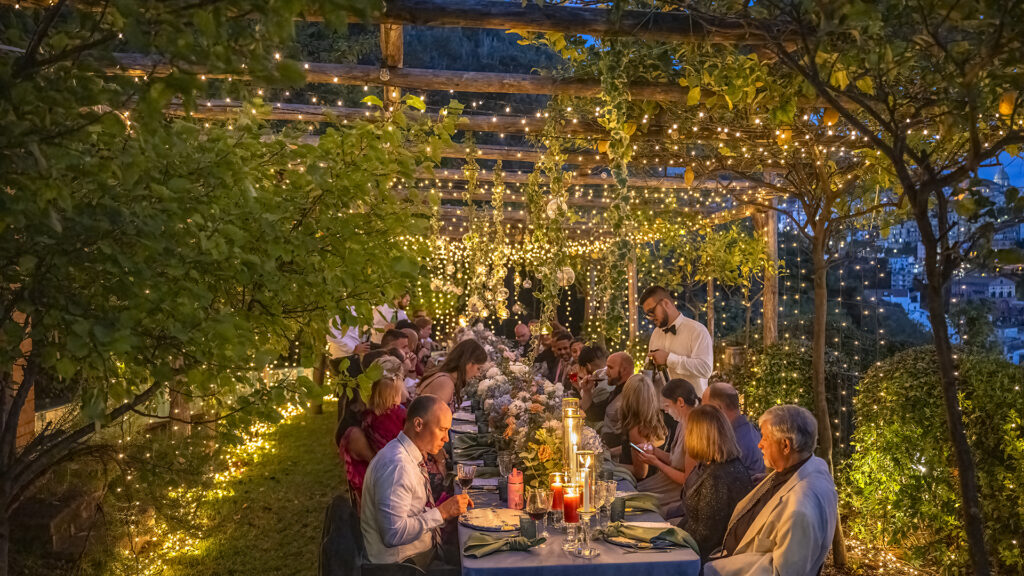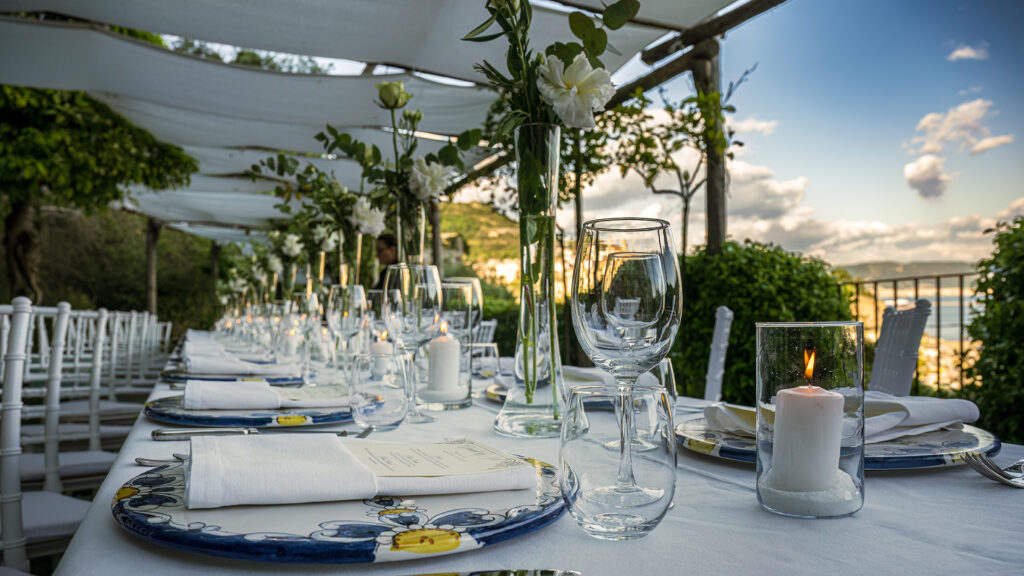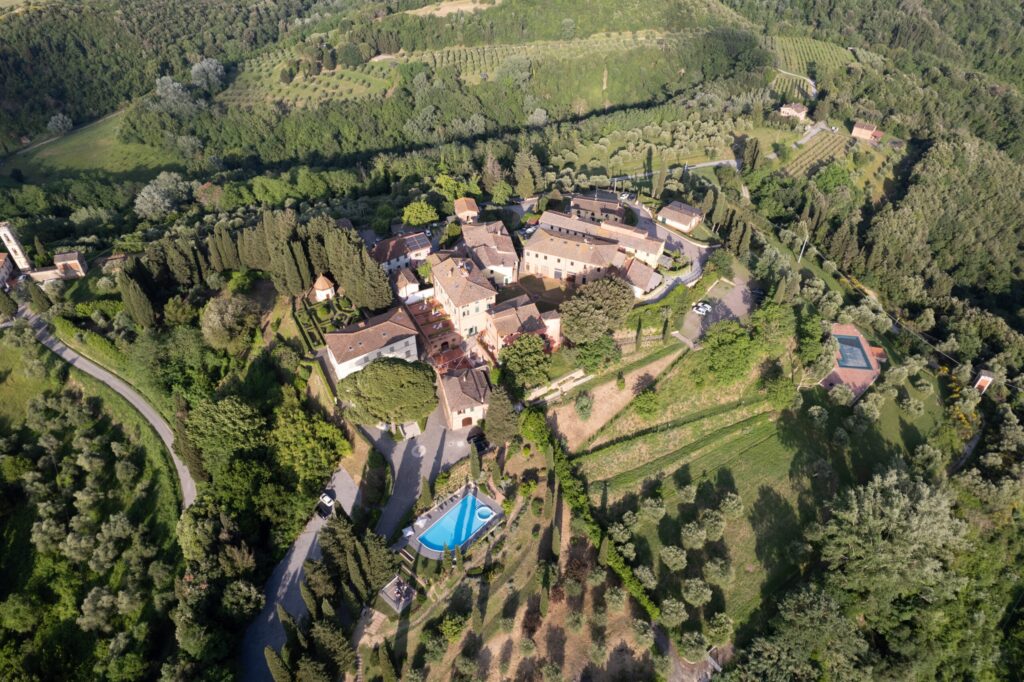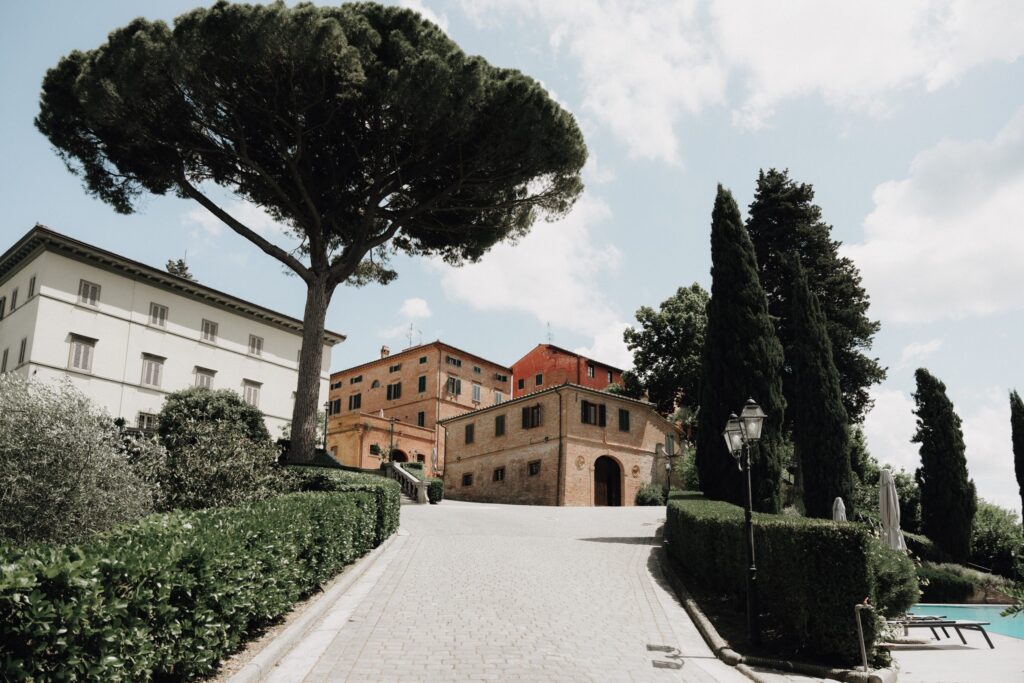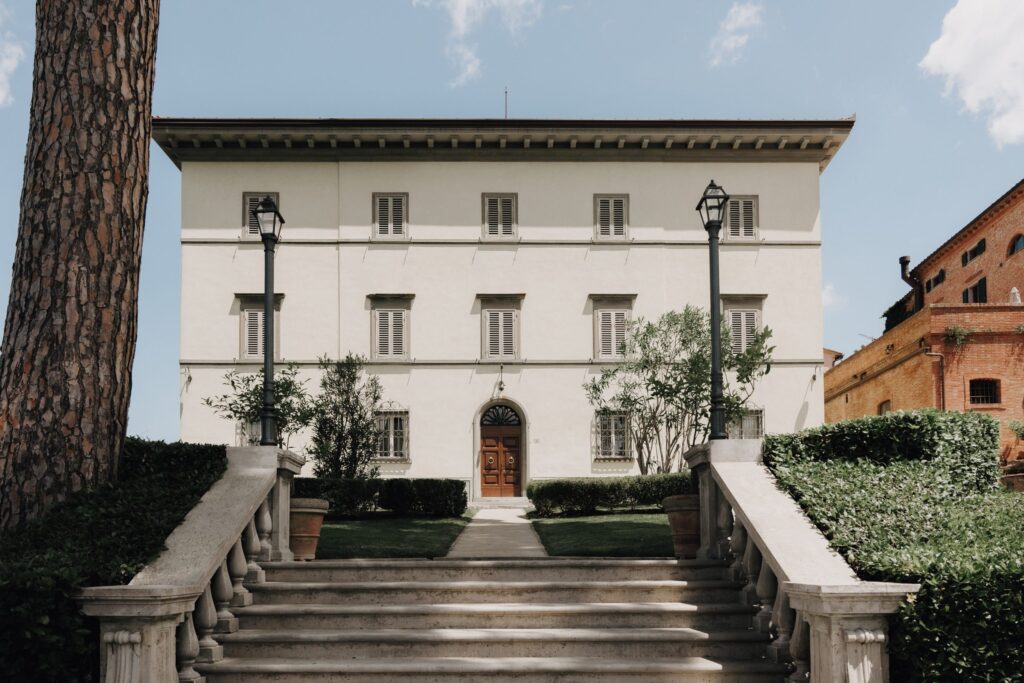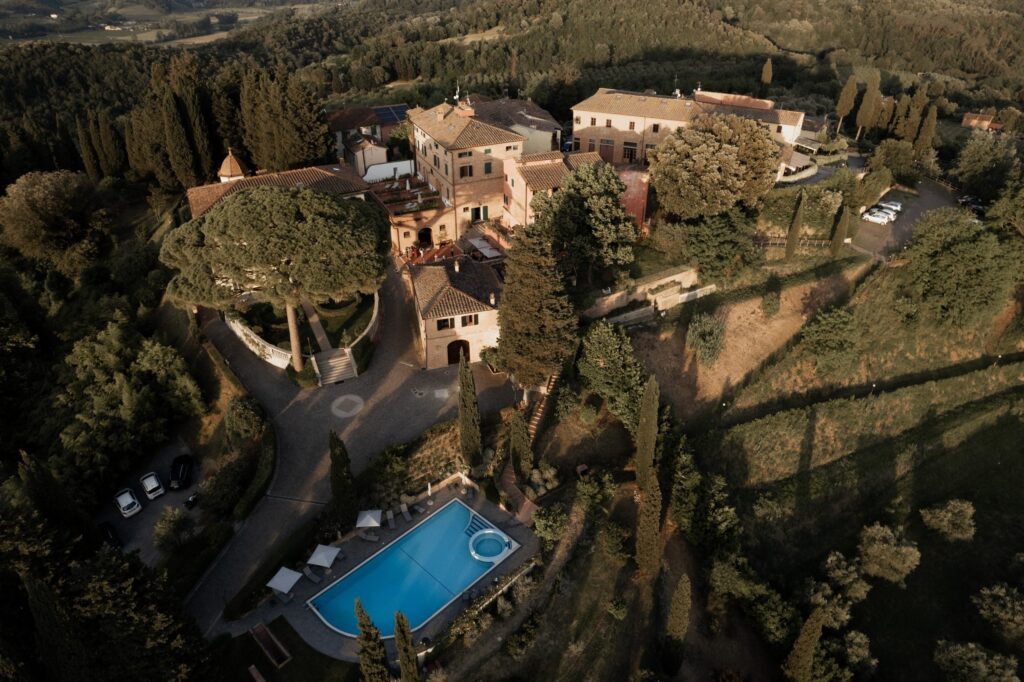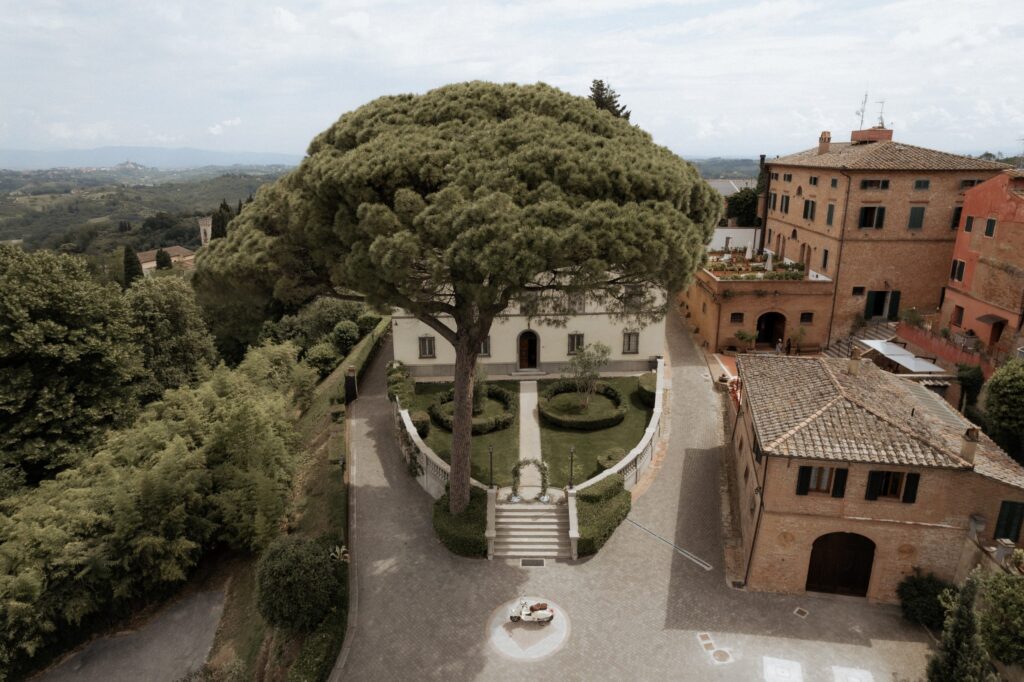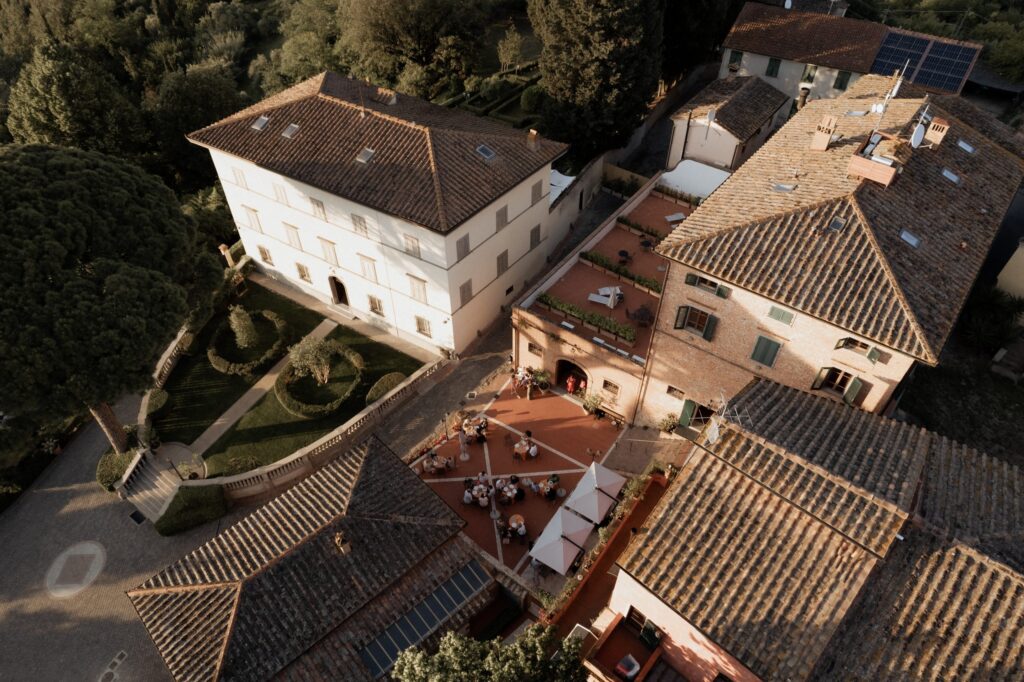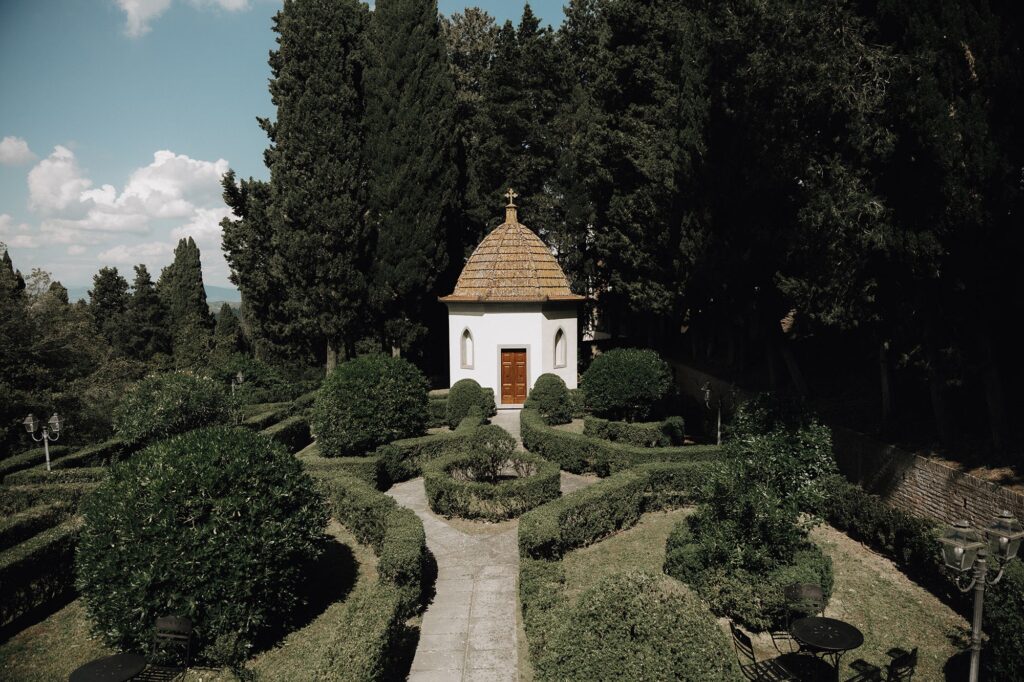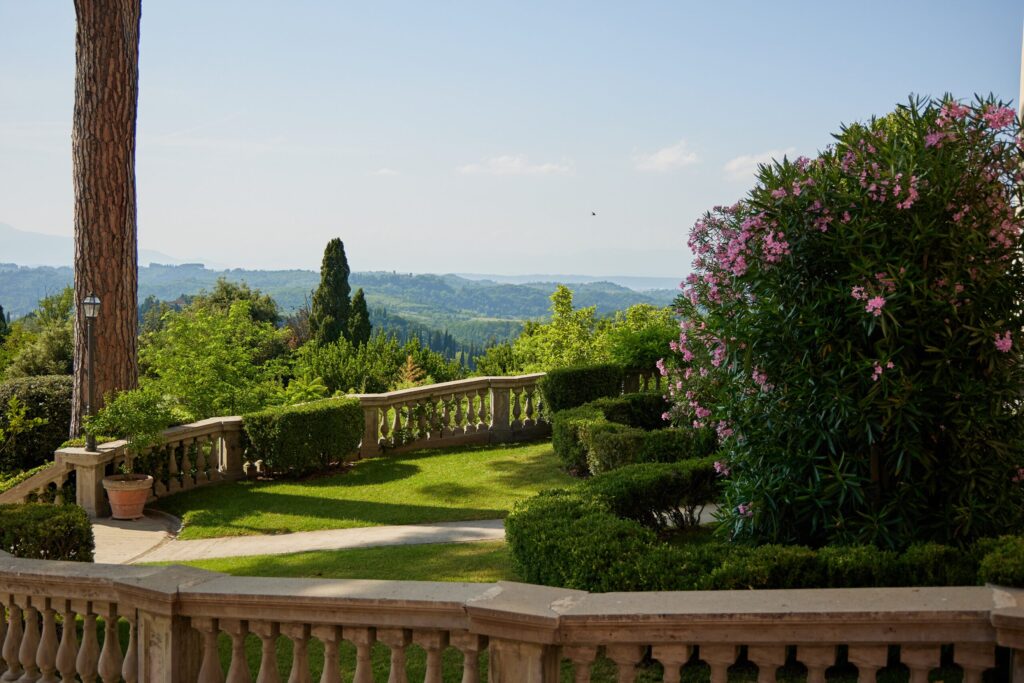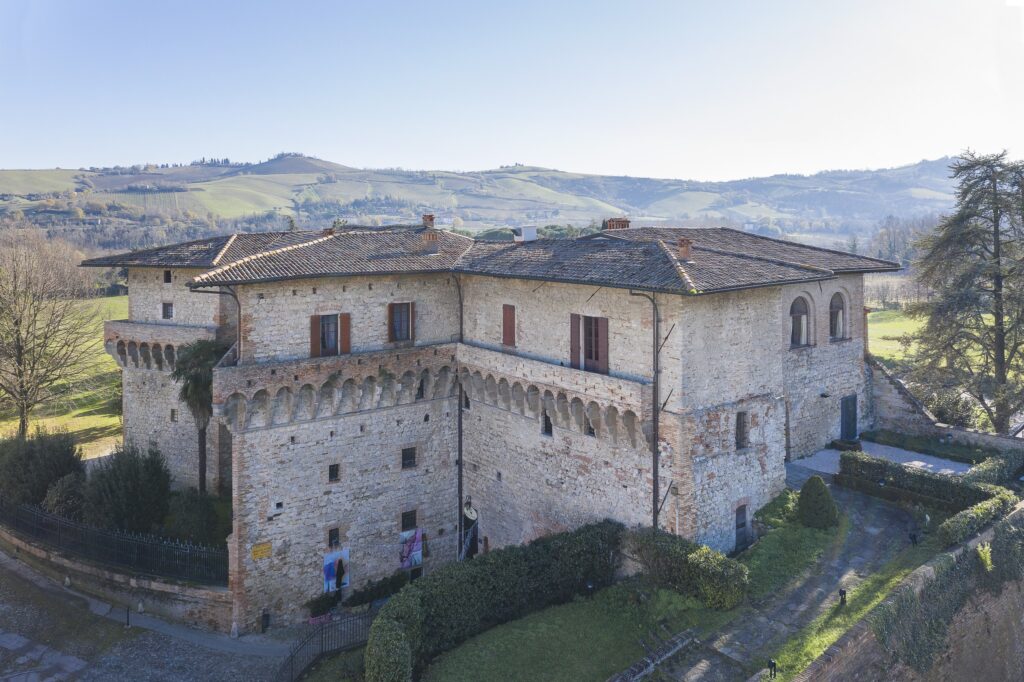
Locanda La Raia was a post station for travellers before it became a relais, and a wedding at La Raia is spread across two buildings. The twelve rooms, the restaurant and the spa are in the old post house. The wedding itself is held at Borgo Merlassino, a farming hamlet on the northern edge of the same biodynamic wine estate in the Gavi hills of southern Piedmont. The sequence La Raia describes runs from a promise by the lake to an aperitif in the Borgo’s patio, dinner in an ancient barn and dancing in a large circular courtyard.

A post house on a working farm
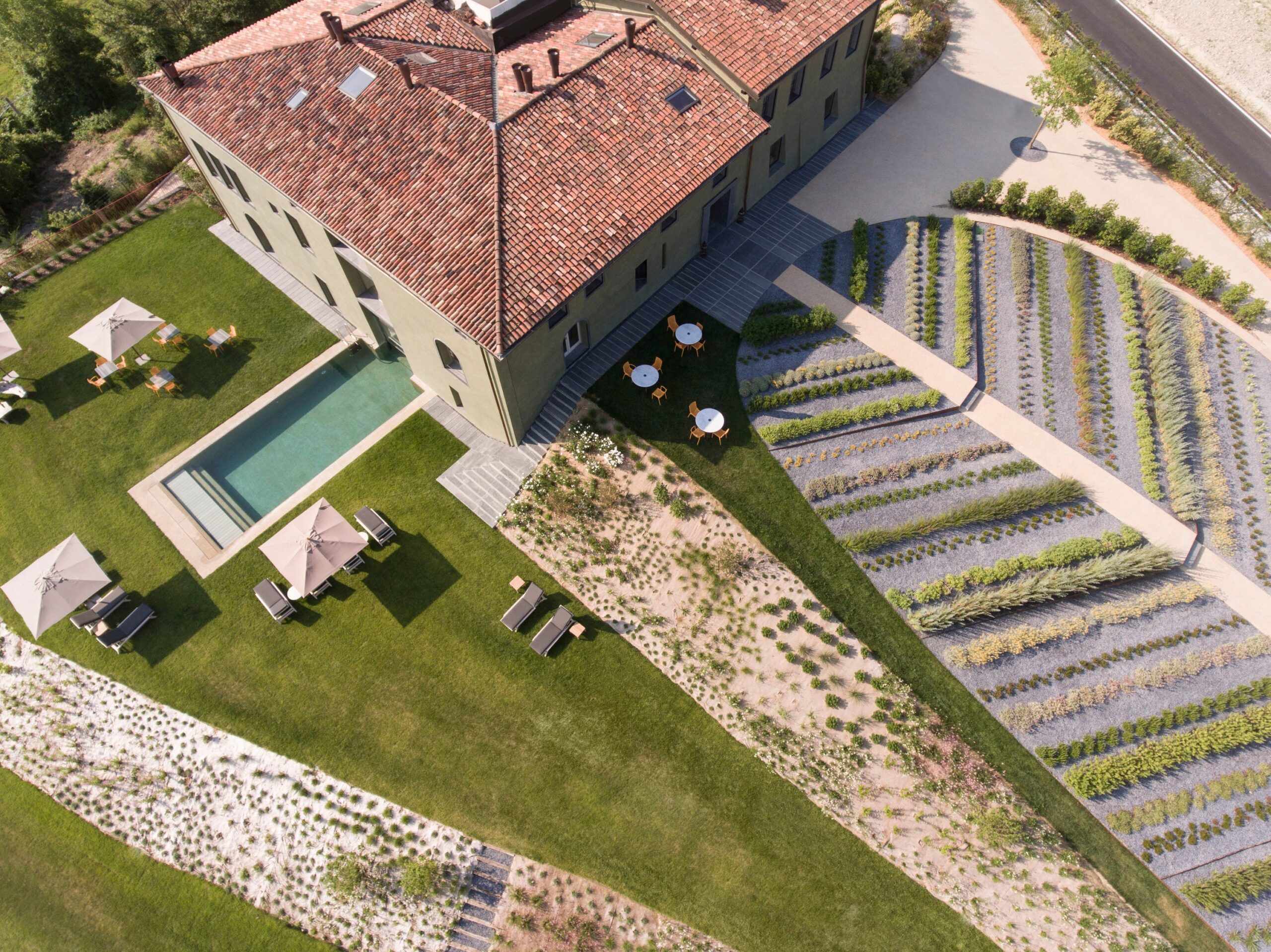
The Locanda stands in Località Lomellina, in a small region between the upper Monferrato and lower Piedmont. It was once a stopping place on the road, and La Raia says the building was inaugurated as a relais in 2017. Its rooms are arranged as a house rather than a hotel: a lounge, a dining room, a floor given over to a spa, and twelve bedrooms and suites that La Raia describes as different from one another.
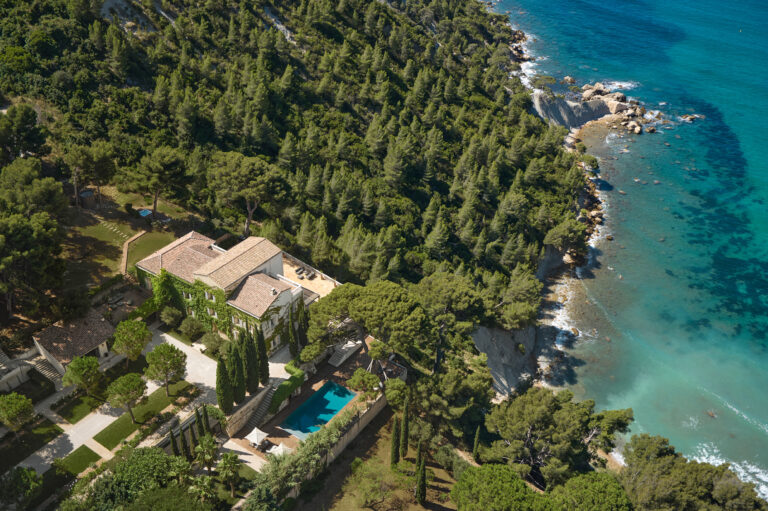
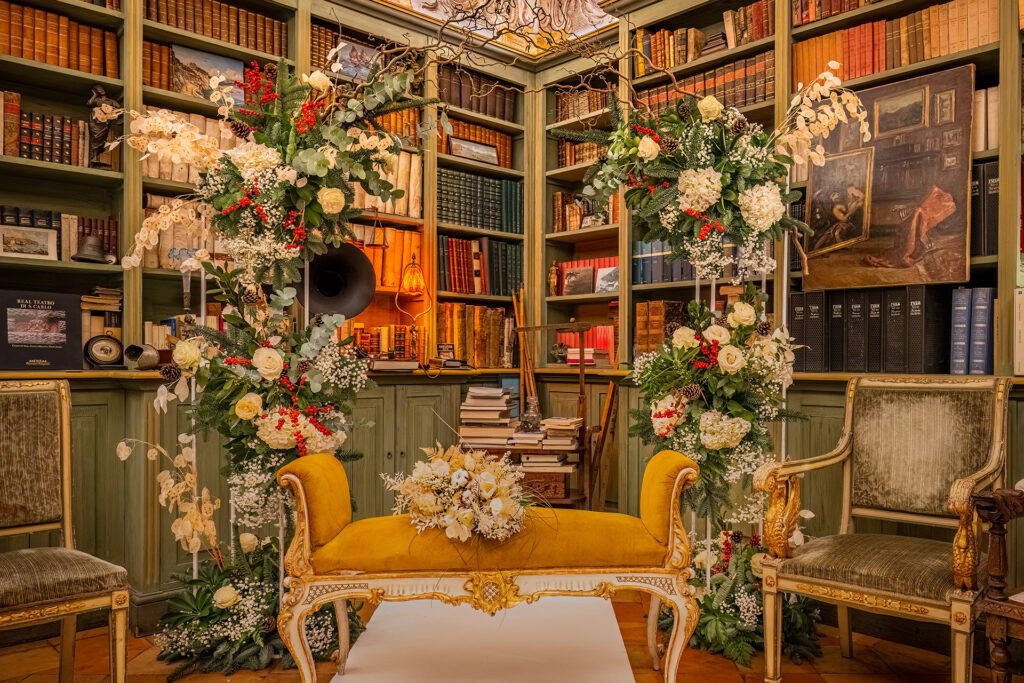
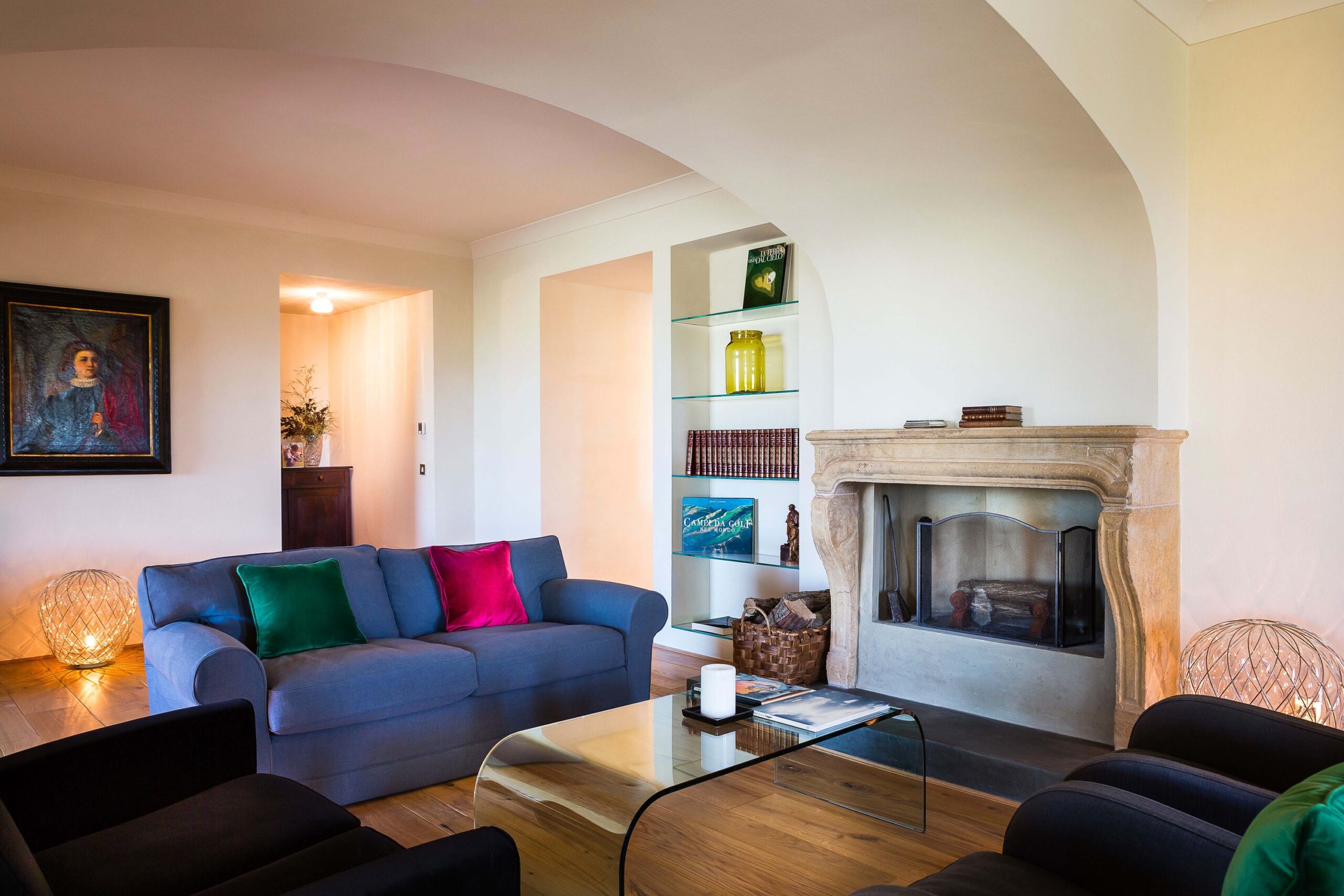
The interiors mix antique seventeenth century Piedmontese furniture with contemporary design objects and family paintings, with flowers from the garden in the rooms. In front of the house is a garden of aromatic herbs, and beyond it a larger garden made with Coloco, the French team that has collaborated with the landscape architect Gilles Clément. The planting is of local species and fades into the rows of Cortese vines that surround the house.
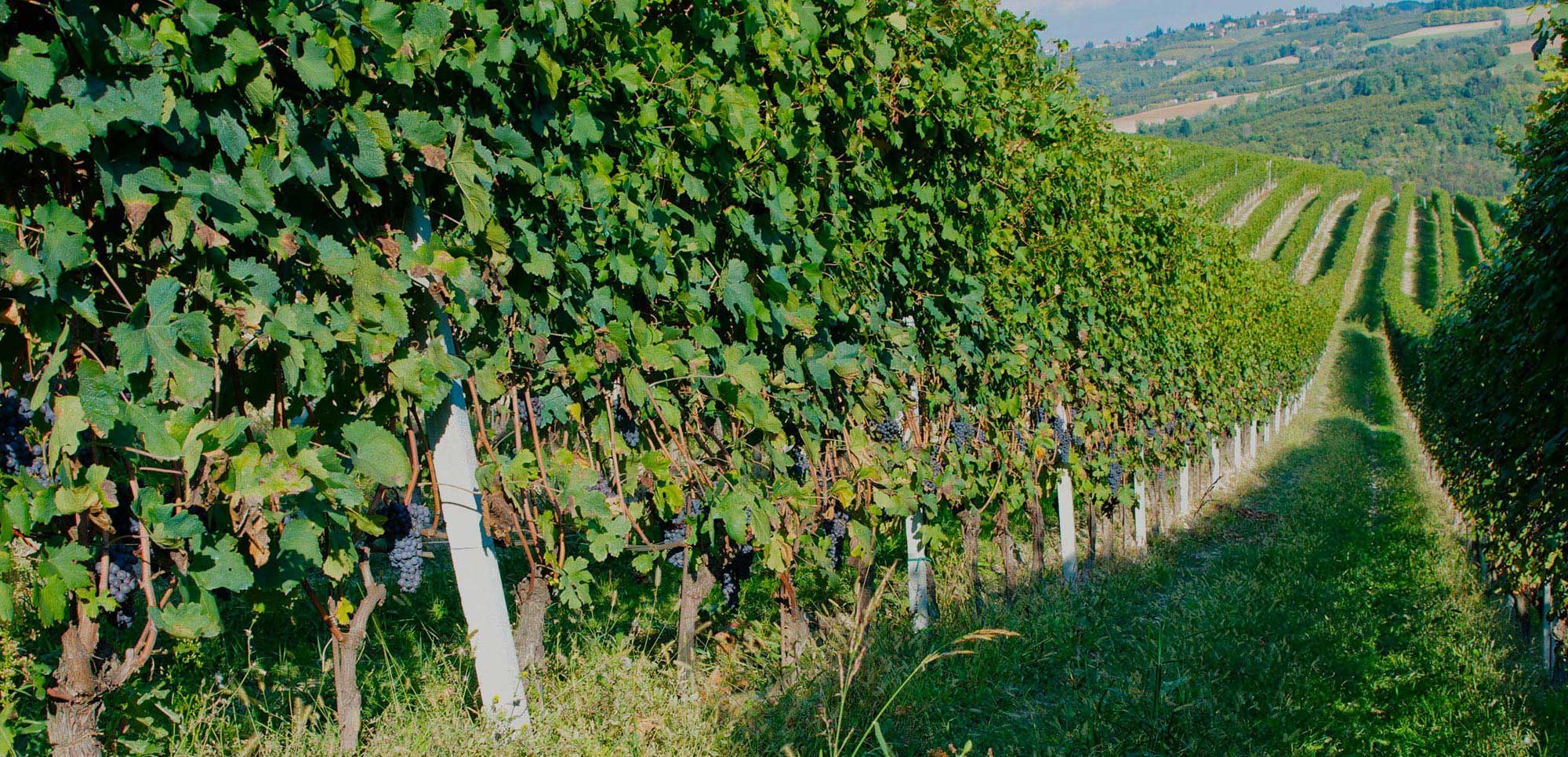
The house sits inside a farm, and the farm is the reason for most of what a visitor sees. La Raia describes La Raia as a Demeter certified biodynamic farm of vineyards, pastures, arable fields and woods, with a ring of chestnut, acacia and elder woodland, two lakes and a stream that gives the estate its name. Cortese and Barbera are the principal vines, and Pinot Noir. Fassona cattle graze the meadows, ancient cereals grow in the fields, and there are beehives on the land.
Borgo Merlassino, where the wedding is held
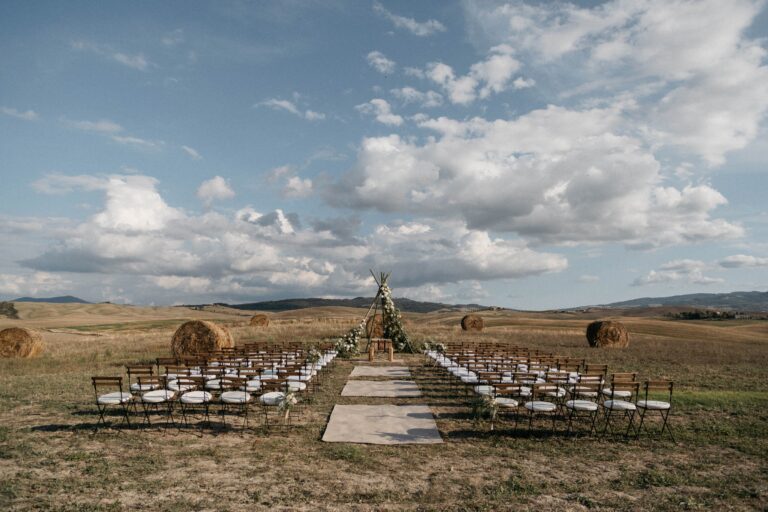
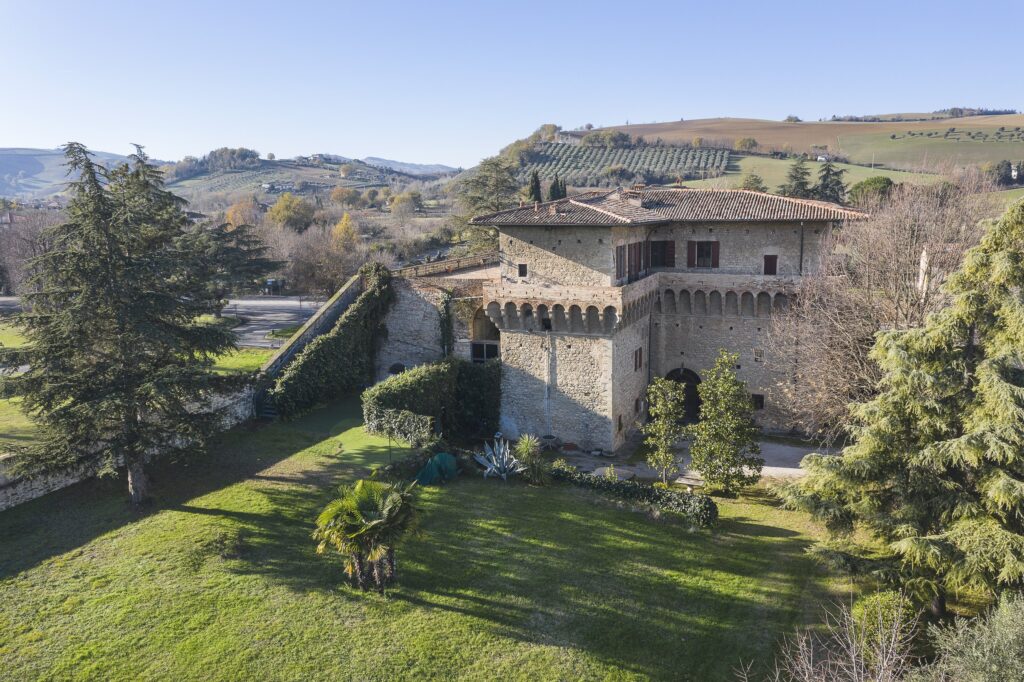
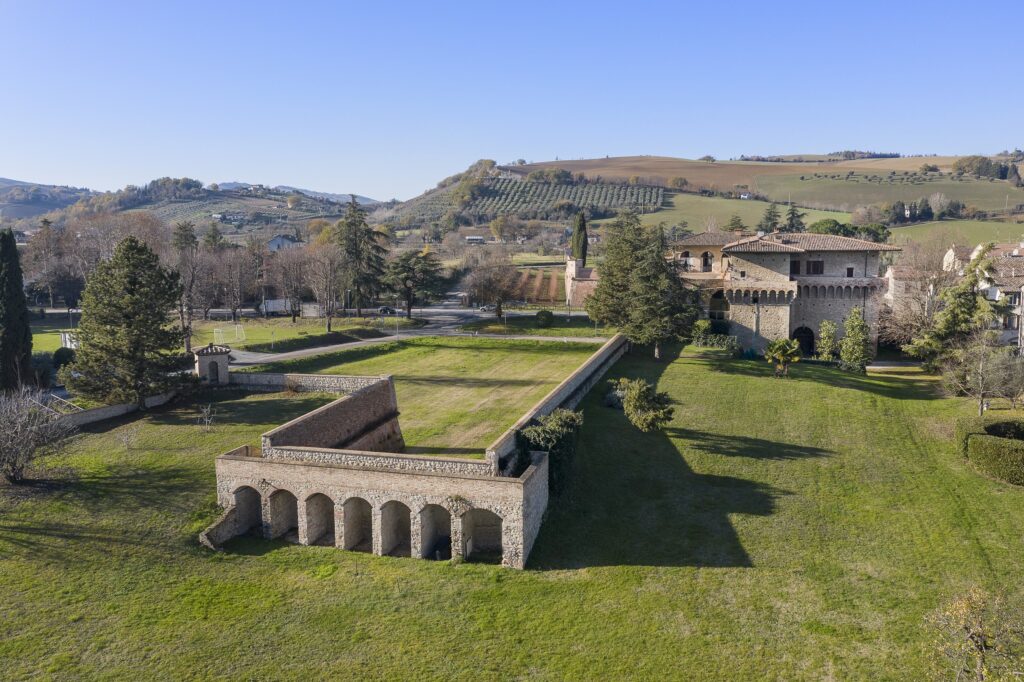
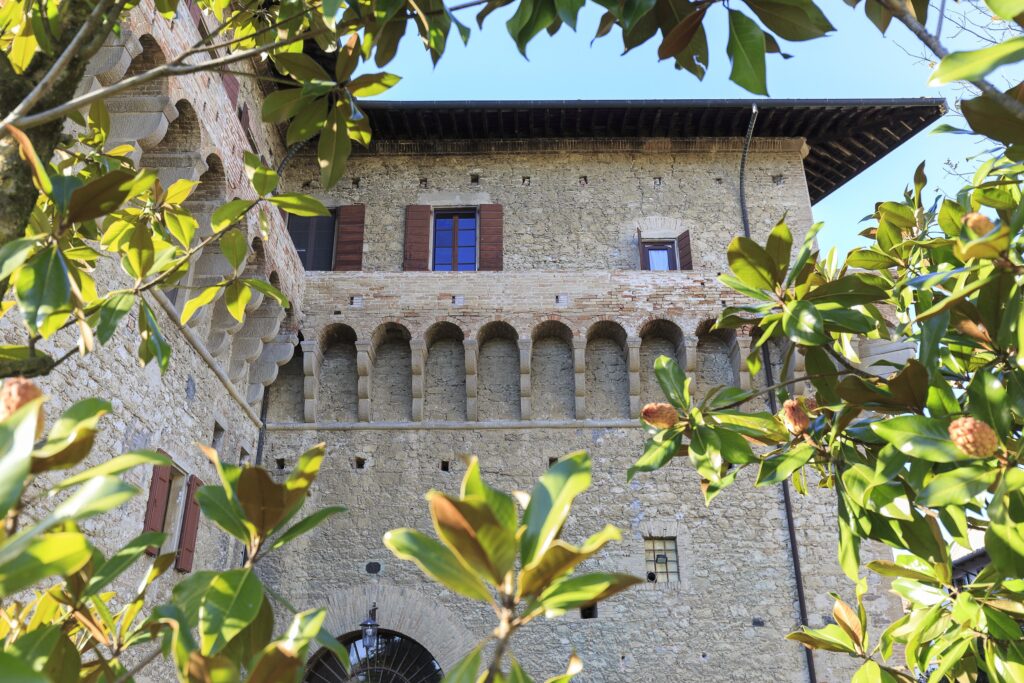
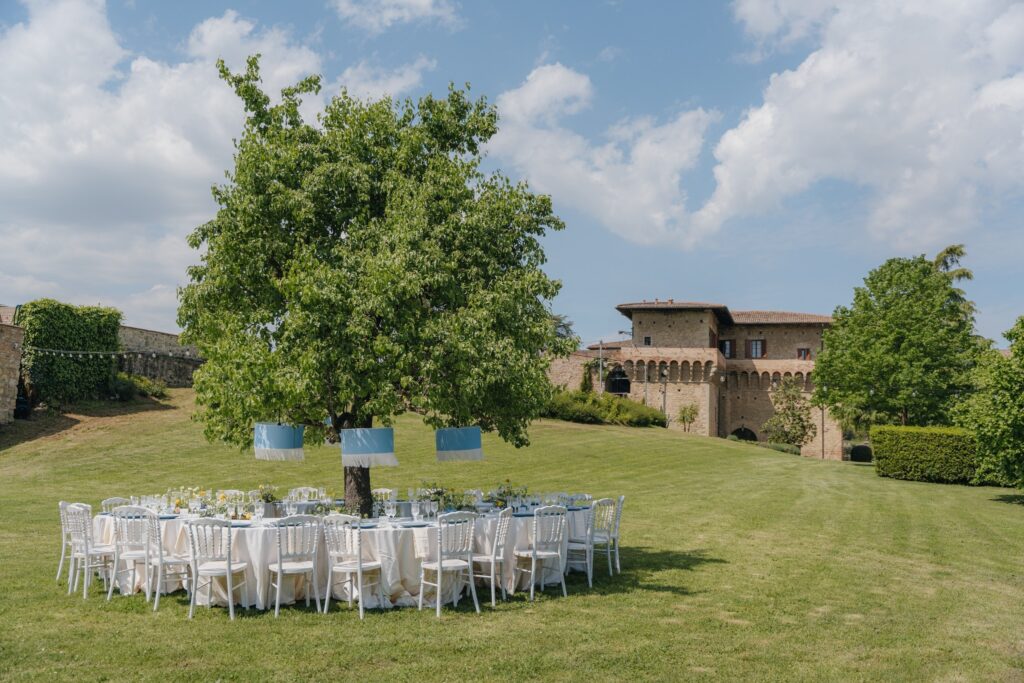
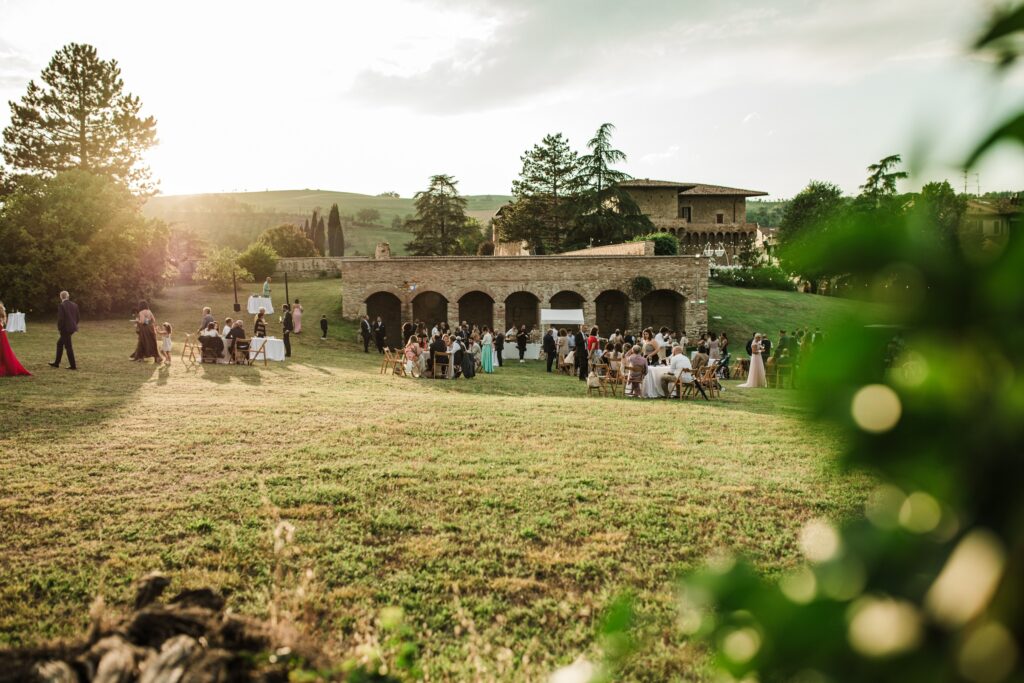
Weddings take place at Borgo Merlassino, which La Raia describes as an ancient farmstay overlooking an unspoiled valley, among old woods and beside a small lake that is easy to reach. The old farmhouse, the barn, the patio and La Villa are arranged around a large circular courtyard, and Cortese vineyards run up to the buildings on every side. La Raia says it restored the hamlet, and that it now holds cultural events as well as celebrations.
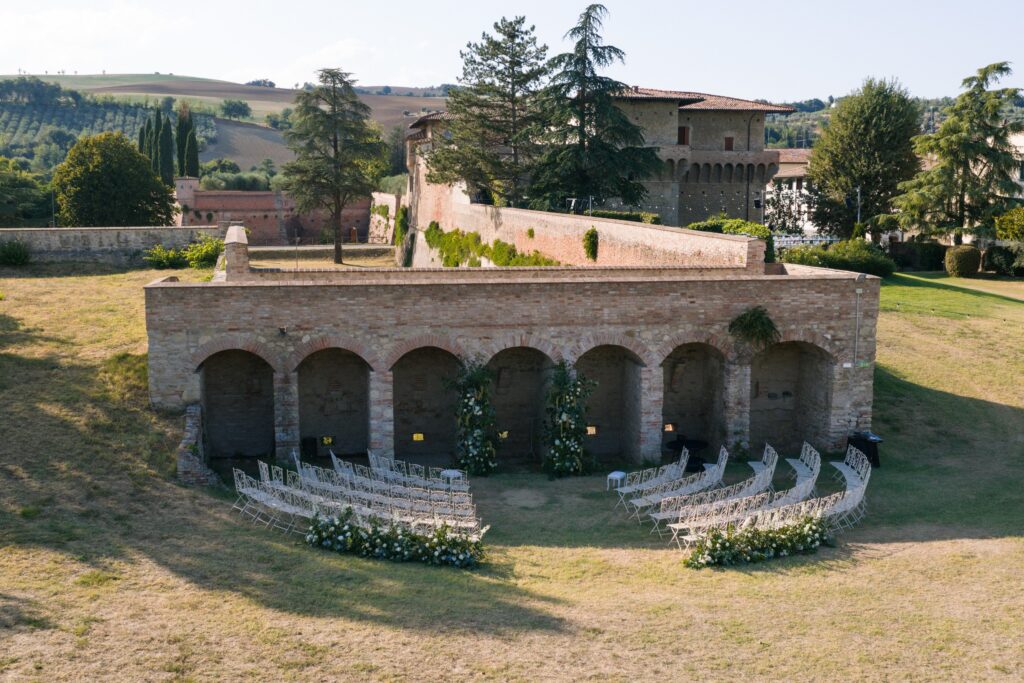
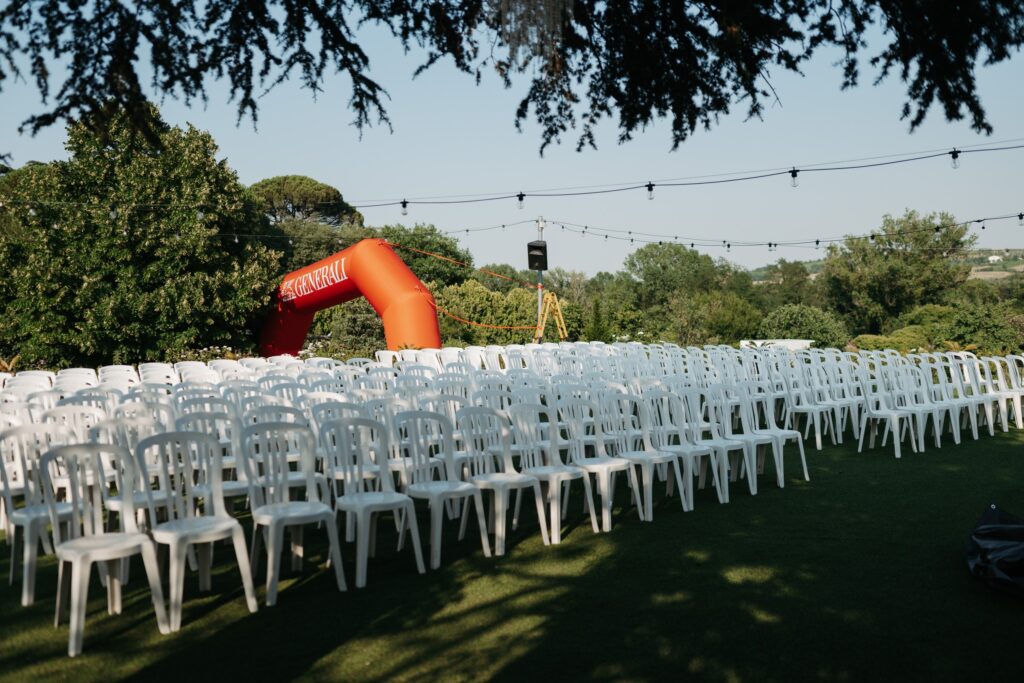
Each part of a wedding has its own building. The ceremony, which the estate calls a promise, begins by the lake among the vineyards. The aperitif moves to the Borgo’s patio, and dinner is served in the ancient barn. Afterwards the courtyard becomes the dance floor, with live music or DJ sets. Themed brunches are held at the Locanda, where the swimming pool is close by.
The arrangement has a practical consequence. The Borgo is where the celebration happens, and the Locanda is where guests staying on the estate sleep, eat and spend the morning. The distance between the two is not stated, so it is worth asking how guests will move between them.
Sleeping in the Locanda or in the Borgo
The Locanda’s rooms are grouped in a few types. Gavi Superior rooms open to the light of the hills and face the gardens and vineyards. Gavi Riserva Deluxe rooms are larger and use natural, restful colours. The Gavi Pisé Suite is among the most popular rooms in the house, according to the estate, and the Gavi Pisé Executive Suite has a view of the Cortese hills and a large jacuzzi.
There are also apartments at Il Borgo, in the farmhouse that forms the centre of the hamlet. They are furnished with antique pieces and contemporary artworks, and one, La Villa, has a small tower with a view across the hills and chestnut woods. La Raia describes them as suited to families, friends and anyone wanting privacy, and says they are booked by writing to the estate. They put beds in the hamlet itself; whether a wedding booking includes them is for the estate to say.
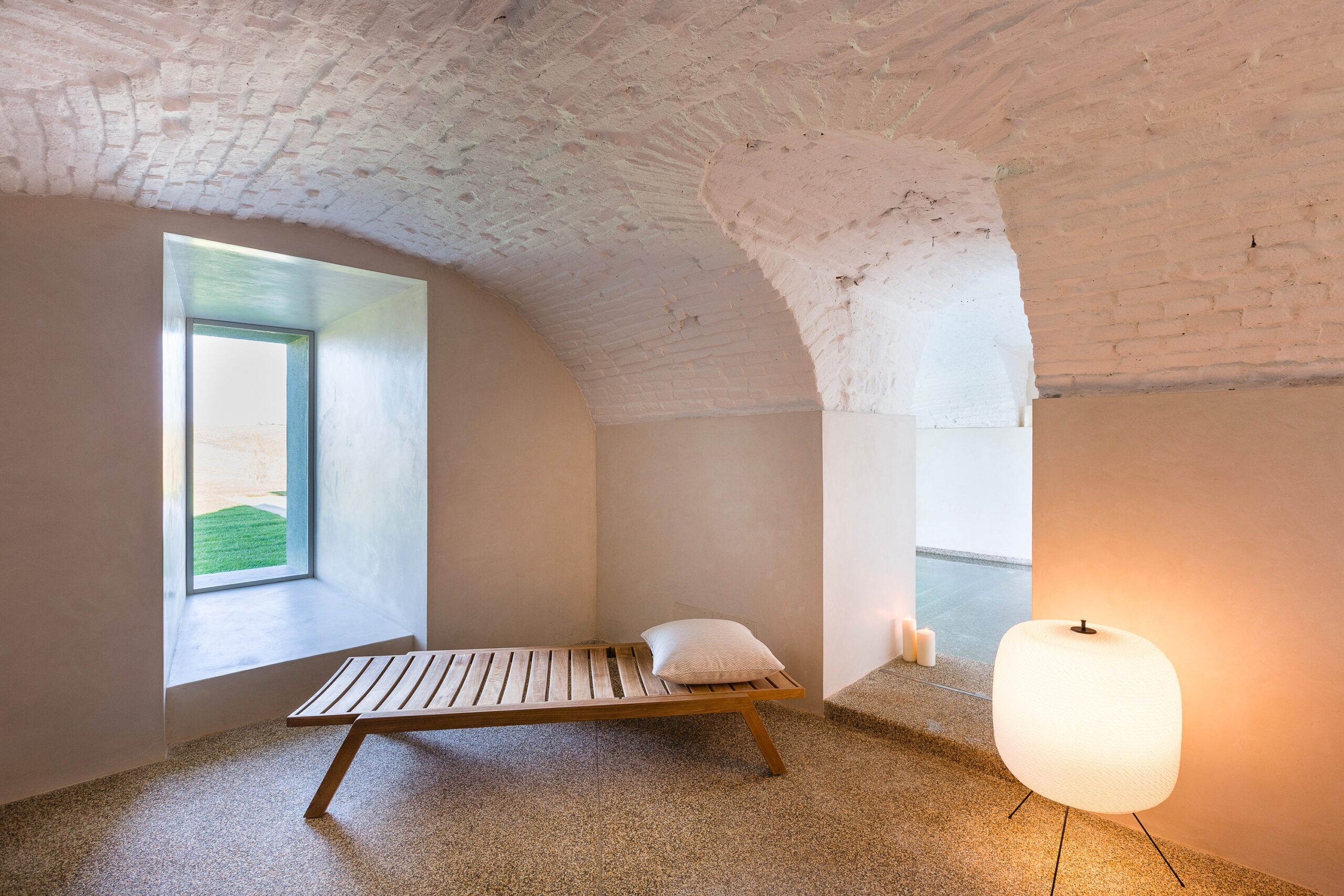
The Locanda also gives a whole floor to wellness. It has temperature controlled indoor and outdoor pools looking over the vineyards, a relaxation area with a Himalayan salt wall, a gym, a treatment cabin, a Turkish bath and a sauna, and a tennis court stands among the vines. Guests of the Borgo can book a treatment at the spa.
A kitchen that answers to the farm
The restaurant received the MICHELIN Green Star in 2025, as La Raia states, and it ties the award to the estate’s ecosystem. Chef Tommaso Arrigoni cooks a seasonal menu that blends Ligurian influences, such as fragrant vegetables, with Piedmontese ones, such as stuffed pasta and meat. La Raia lists its own ingredients as ancient cereals and flours, vegetables from the garden and greenhouses, aromatic herbs from the garden at the door, eggs, grass fed Fassona beef and organic honey, with cheese and cured meats from small suppliers in the region’s Slow Food Presidia.
Beside the à la carte menu there are two tasting menus, paired with Gavi La Raia and with Nebbiolo and Barolo from Tenuta Cucco in the Langhe. A Menù del Borgo, introduced in summer, is built on the garden’s vegetables, fresh eggs and seasonal fruit. The restaurant opens every evening except Tuesday and for lunch on Saturdays and Sundays, and it is open to people who are not staying.
This is the restaurant’s ordinary offer, not a wedding menu. How the kitchen caters a wedding dinner in the barn is a question for the estate.
Wine, rammed earth and a collection of art
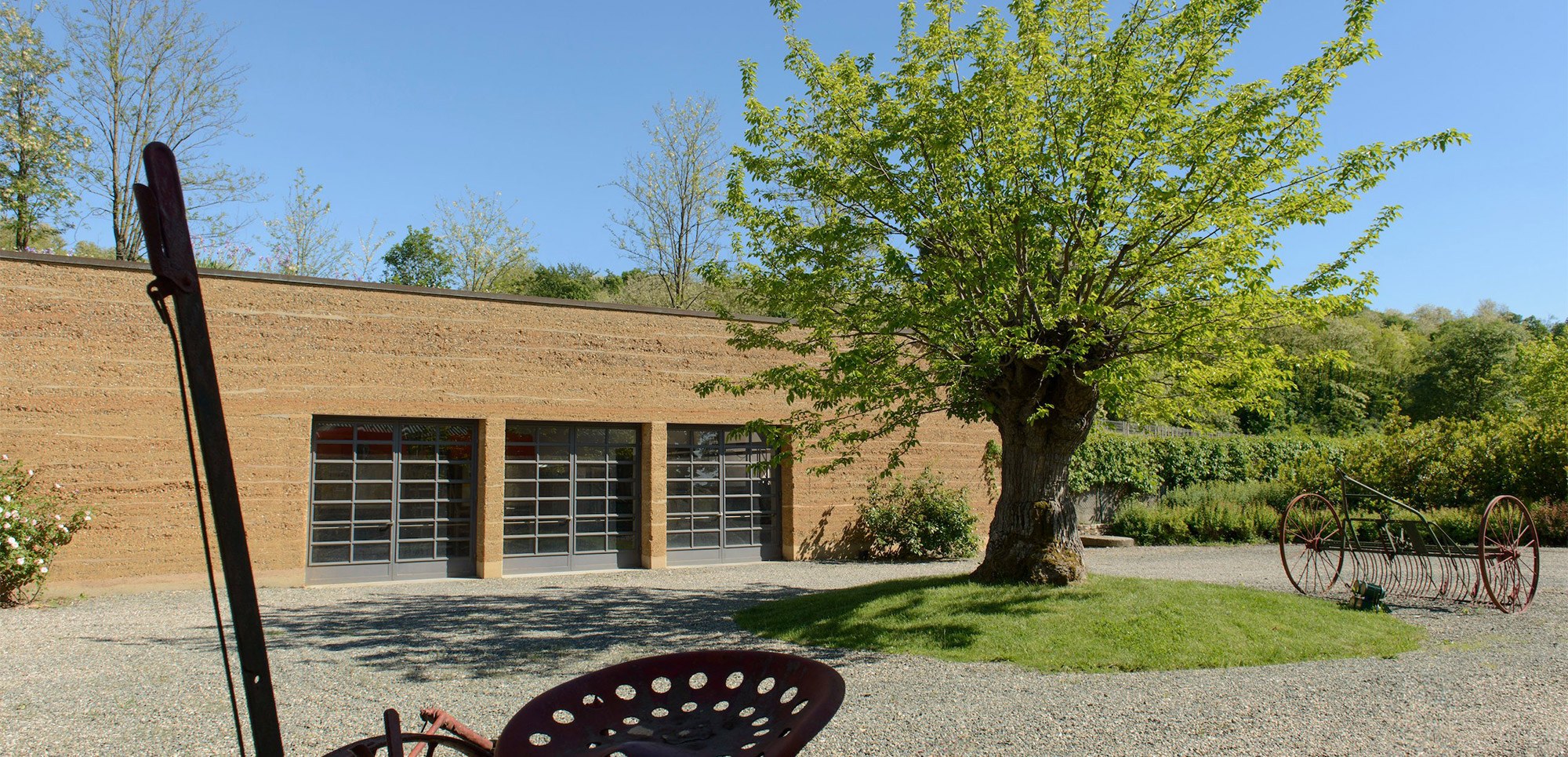
A wine estate does not usually have a second identity, and La Raia has two. The first is the cellar. The estate built its winery with a rammed earth wall, in a technique developed by the Austrian artist and architect Martin Rauch, using soil dug from the site and the surrounding fields so that the facade looks cut from the hill. A glass facade shows the stainless steel tanks, and a barrique cellar designed by Studiodeamicis holds historic vintages and the large barrels used for the Gavi Pisé. The estate includes the wall and the cellar in its wine tours, and it offers a guided winery tour with a tasting of five wines as part of a stay package.
The second is the art. Fondazione La Raia was established in 2013, in the estate’s words, to encourage thinking about landscape, and artists from Italy and abroad have made works on the land. Michael Beutler’s Oak Barrel Baroque, from 2021, is a structure inspired by the architecture of Palladio and built from beams and the staves of barriques at the end of their life. Adrien Missika’s Palazzo delle Api is dedicated to the pollinating insects that the estate’s flower gardens attract. The works can be followed along an art itinerary, one of three walking routes on the estate with the wine and biodiversity itineraries.
The truffle season
Autumn brings a particular reason to come. The estate offers a truffle season stay, with hunts for white and black truffle on its own land with truffle hunters from Truffle Hunter Italy and two dogs, followed by a massage and an à la carte dinner at the Locanda built around truffle and autumn produce. The estate recalls that in 1760 the botanist Vittorio Pico called the white truffle the hidden jewel of the lands between the Tanaro and Scrivia rivers, which is the territory of the Gavi hills. The offer is a stay package, not a wedding service.
Beyond the estate
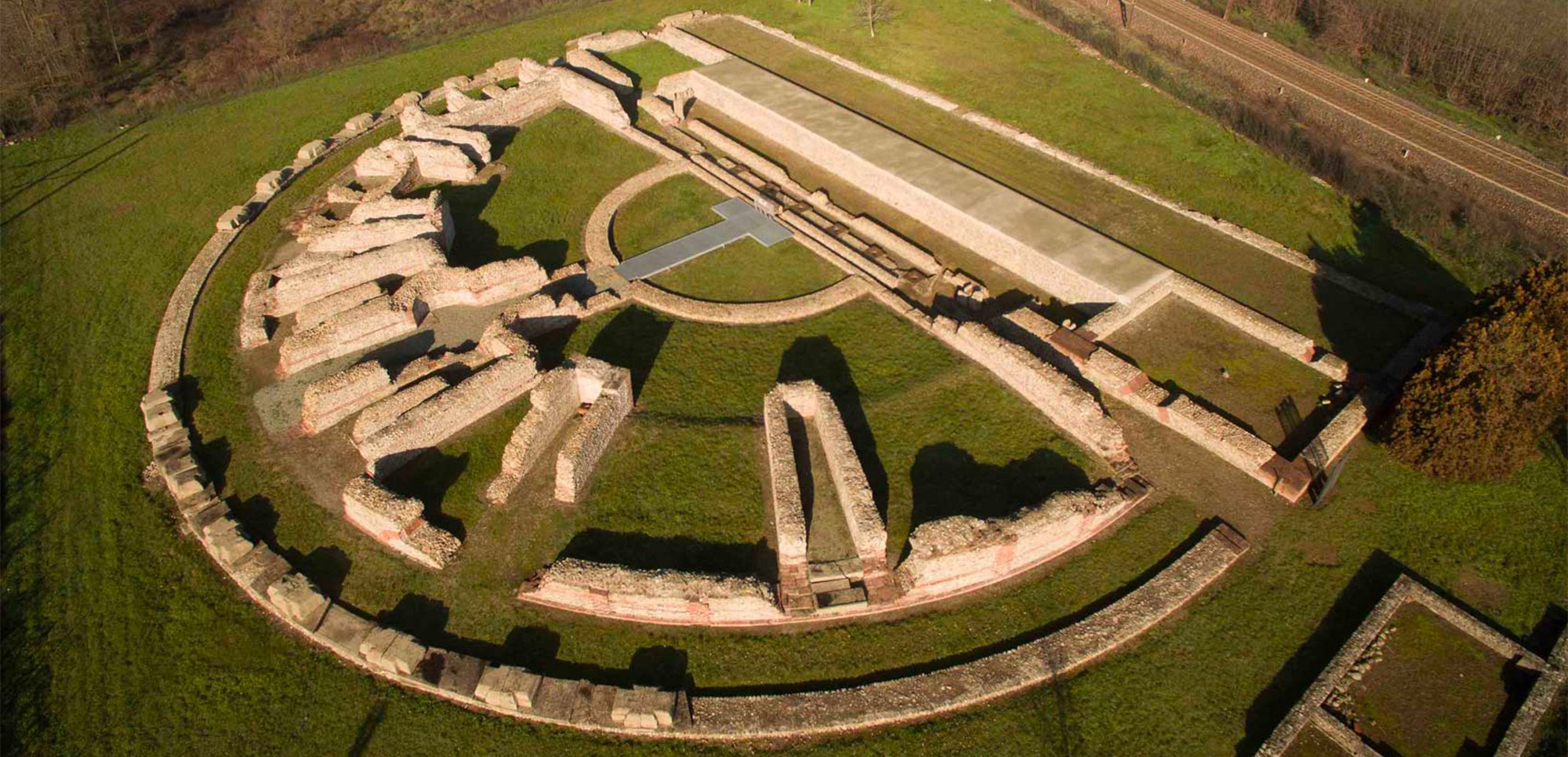
The estate’s own list of nearby places begins with Libarna, a Roman town of the second century BC a few kilometres away on the Postumia road, which linked Genoa to Aquileia, and which the estate counts among the most important archaeological areas in northern Italy. Forte di Gavi is a few kilometres away, and Novi Ligure has painted aristocratic palaces. The Pinacoteca of the Cassa di Risparmio di Tortona Foundation holds Divisionist works by Giuseppe Pellizza da Volpedo, and the Bodrato chocolate factory in Novi Ligure can be visited.
Further afield, Genoa is half an hour by car, Portofino is 85 kilometres away and the Cinque Terre 135 kilometres, according to the estate. Milan and its main airport are about an hour away by car, and Turin and the Langhe, with the Barolo vineyards of the UNESCO World Heritage landscape, are within reach for guests who stay longer. The wider region is covered in the Piedmont destination guide.
Planning a wedding at La Raia
The number of guests the Borgo can seat for dinner in the barn, or hold in the courtyard, is not confirmed, and it is the first thing to ask about. Nor is it confirmed whether a legally binding ceremony can be held by the lake; the estate calls the lakeside moment a promise. A couple who want a civil or religious ceremony on the estate should ask what arrangement is possible.
Casas Latinas lists the property for private hire, with daily cleaning, a concierge service, a continental breakfast prepared in the house (the cost of groceries is excluded) and a chef on request. Whether private hire covers the Locanda, the Borgo or both is for the estate to answer, and so is the price of a wedding. Guests arrive by Milan’s main airport, about an hour away, or from Genoa, half an hour away.
A wedding with a farm at its centre
La Raia suits couples who want the setting to be a working landscape: a lake and vineyards for the ceremony, a hamlet for the party, a Green Star restaurant and a spa for the guests who stay. Its character comes from the farm and the art that has been made on it, and from the fact that the celebration and the rooms are in two different buildings. The point to settle early is the guest number, followed by the ceremony arrangement and which of the two buildings a booking covers.
The Locanda La Raia profile and its magazine issue carry the rooms, the estate and the images in full, and the estate will answer questions on dates. To start, check your date.