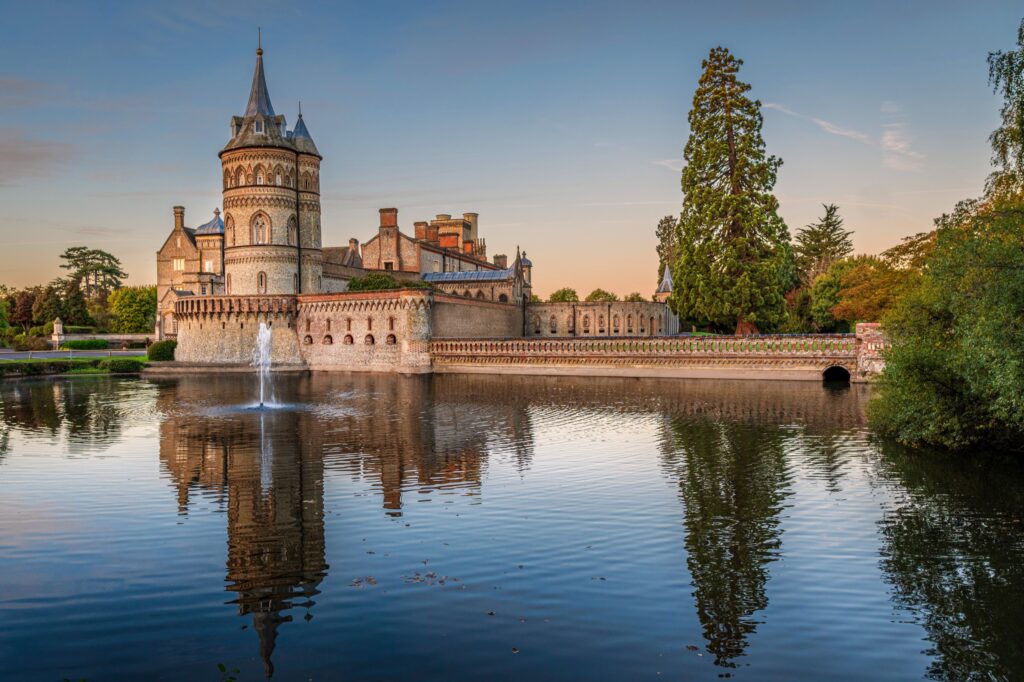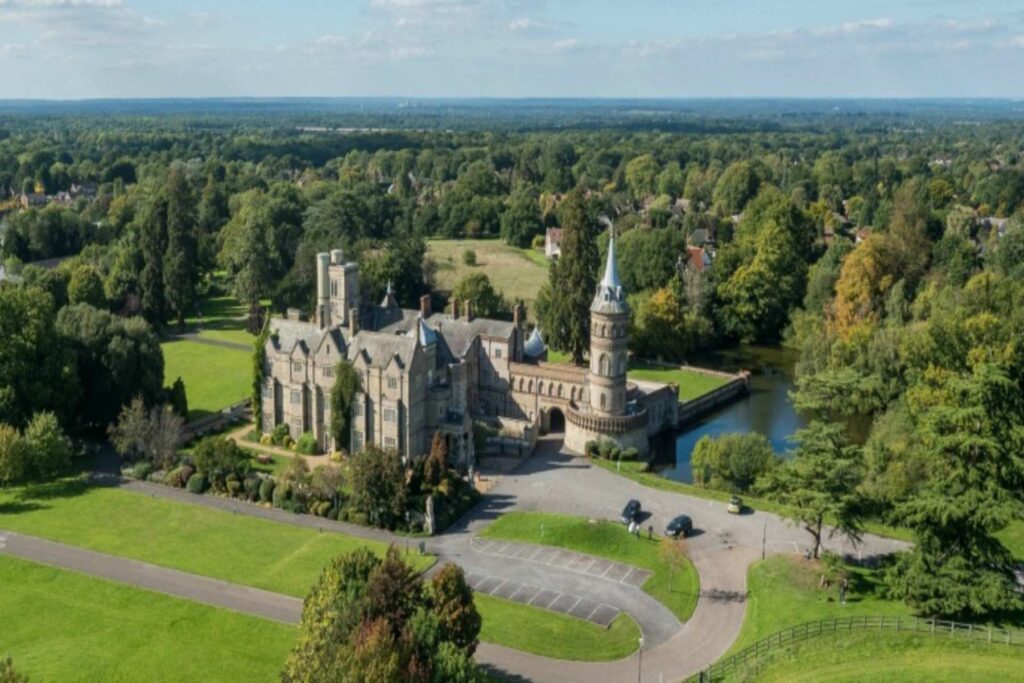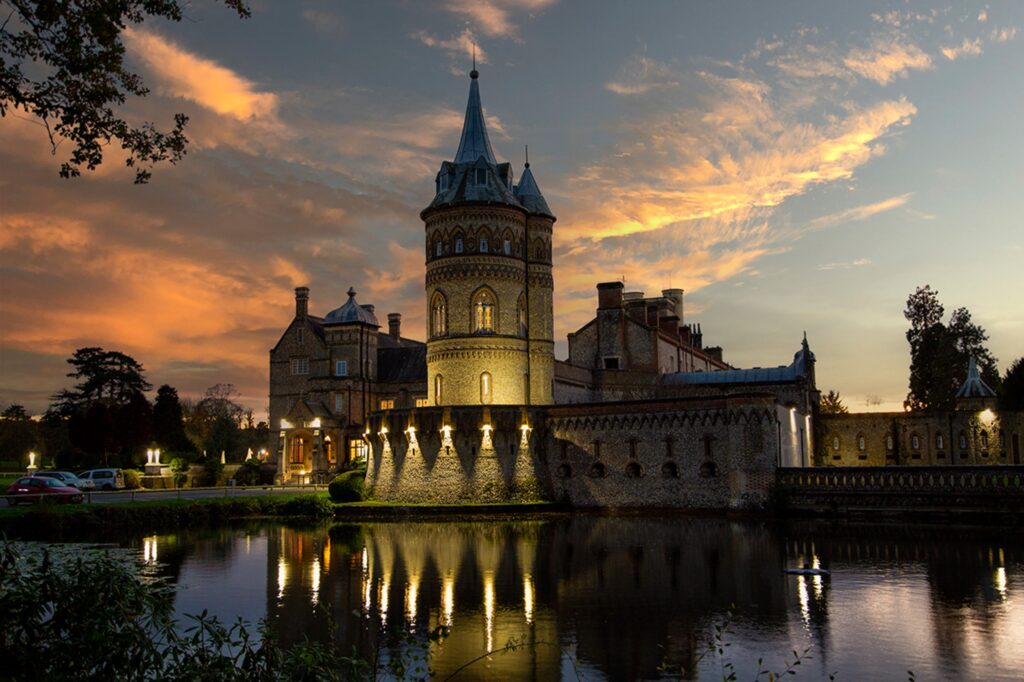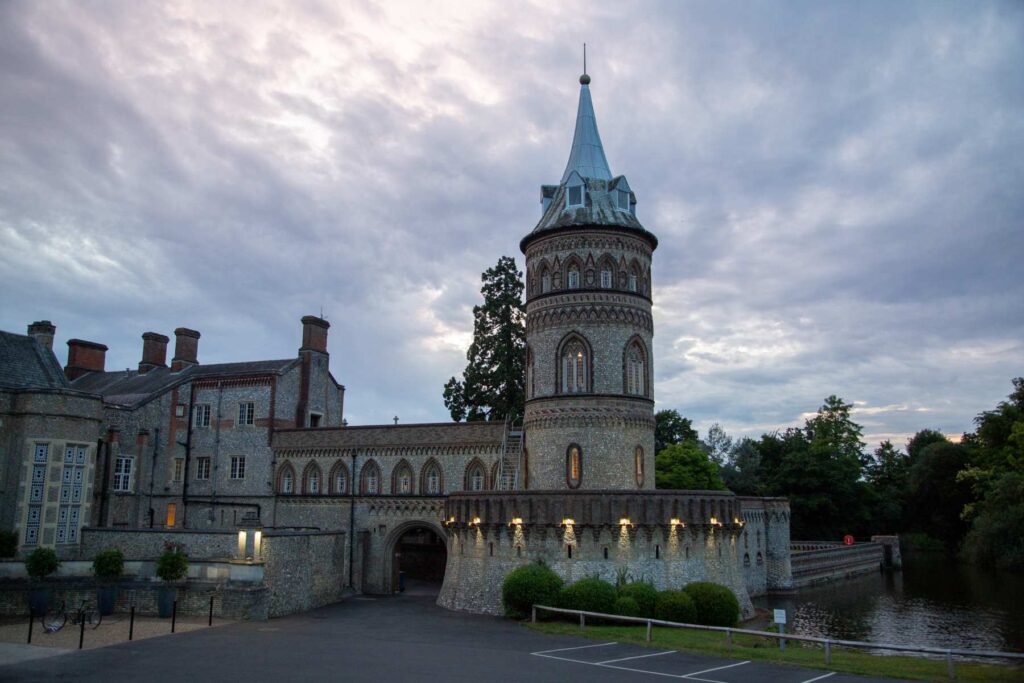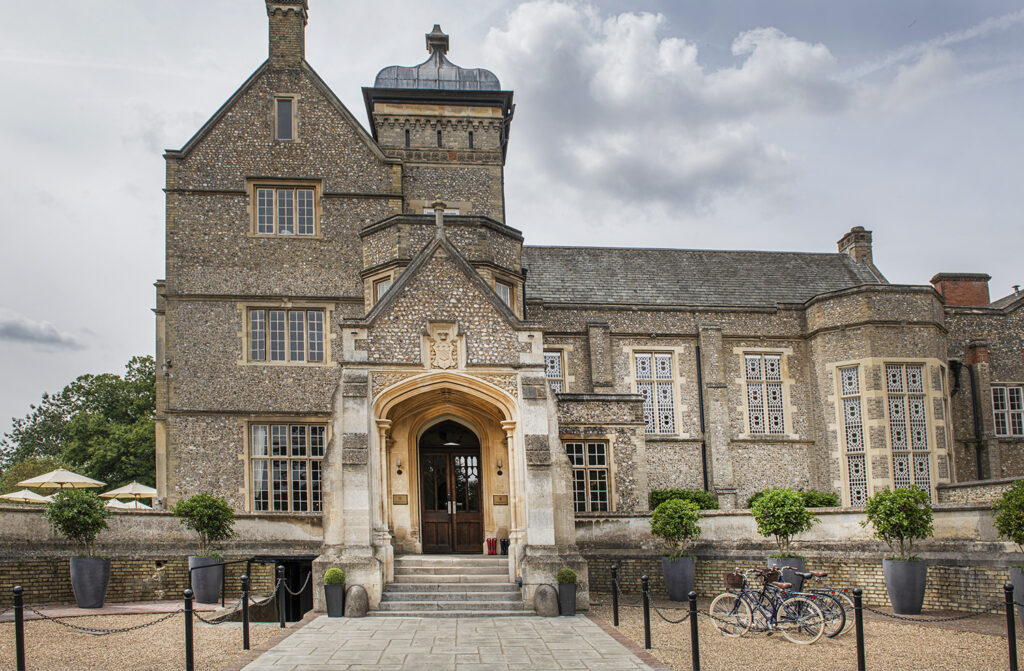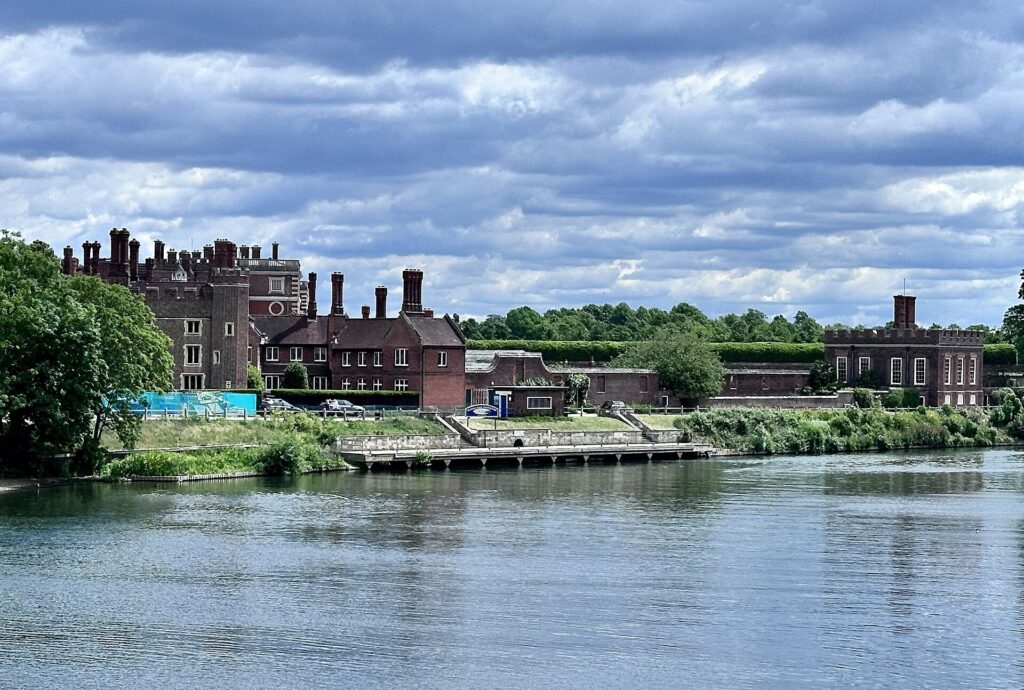
In July 1554, in the days before she married Philip of Spain in Winchester Cathedral, Mary I was a guest at Farnham Castle. It was a palace of the Bishops of Winchester, at once a fortress, an administrative centre and a stopping place on the road between London and their cathedral city, and monarchs from King John to Queen Victoria visited or stayed. The palace on the hill above Farnham in Surrey is now hired for exclusive use for weddings. Couples marry in one of two chapels or four licensed rooms, dine in the Great Hall, and have 33 en suite bedrooms for their guests.

A palace on the road to Winchester
Henry of Blois, Bishop of Winchester and brother of King Stephen, began the castle in 1138. Henry II had the original building slighted after 1155, and it was rebuilt in the late twelfth and early thirteenth centuries; the Great Hall and the Norman Chapel date from around 1180. The Bishops of Winchester held Farnham continuously until 1927, and the Bishops of Guildford lived here after them until 1956.
Royal guests came often. King John was a frequent visitor, Elizabeth I came at least six times, the last in 1602, and in 1620 Bishop Andrewes entertained James I for three days at a cost of more than £2,000. The Civil War broke the pattern: Parliament garrisoned the castle in 1642, and by 1648 it had been sold and neglected. It was restored in 1662 and became the bishops’ principal residence. In the Second World War the Royal Engineers ran their Camouflage Development and Training Centre here, where artists including Roland Penrose and the magician Jasper Maskelyne were trained in military camouflage.
Fox’s Tower and the steps from the town
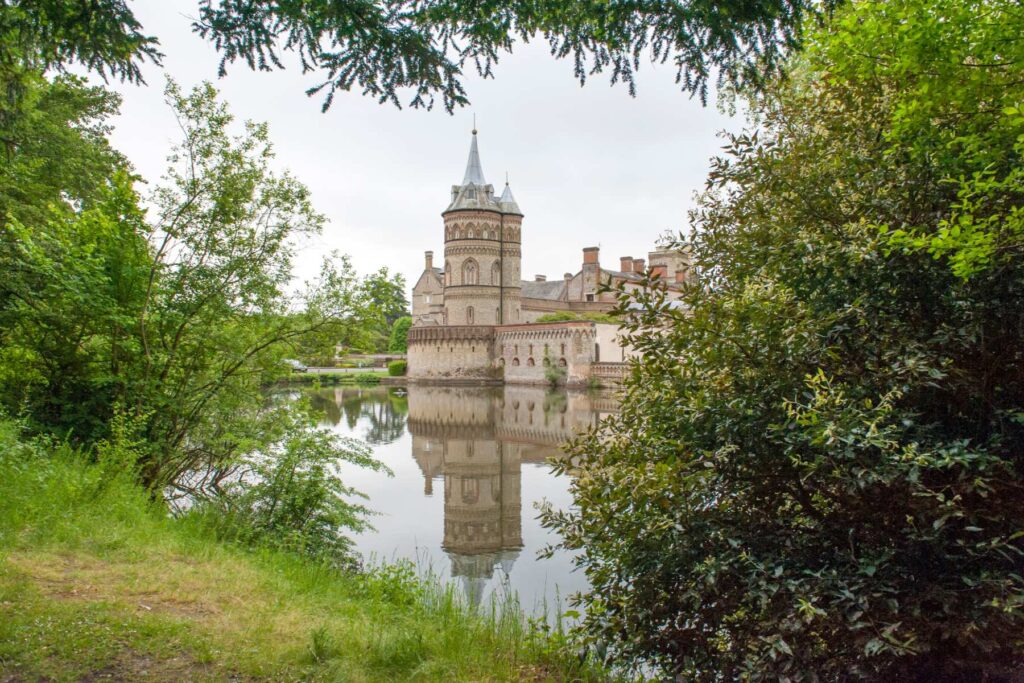
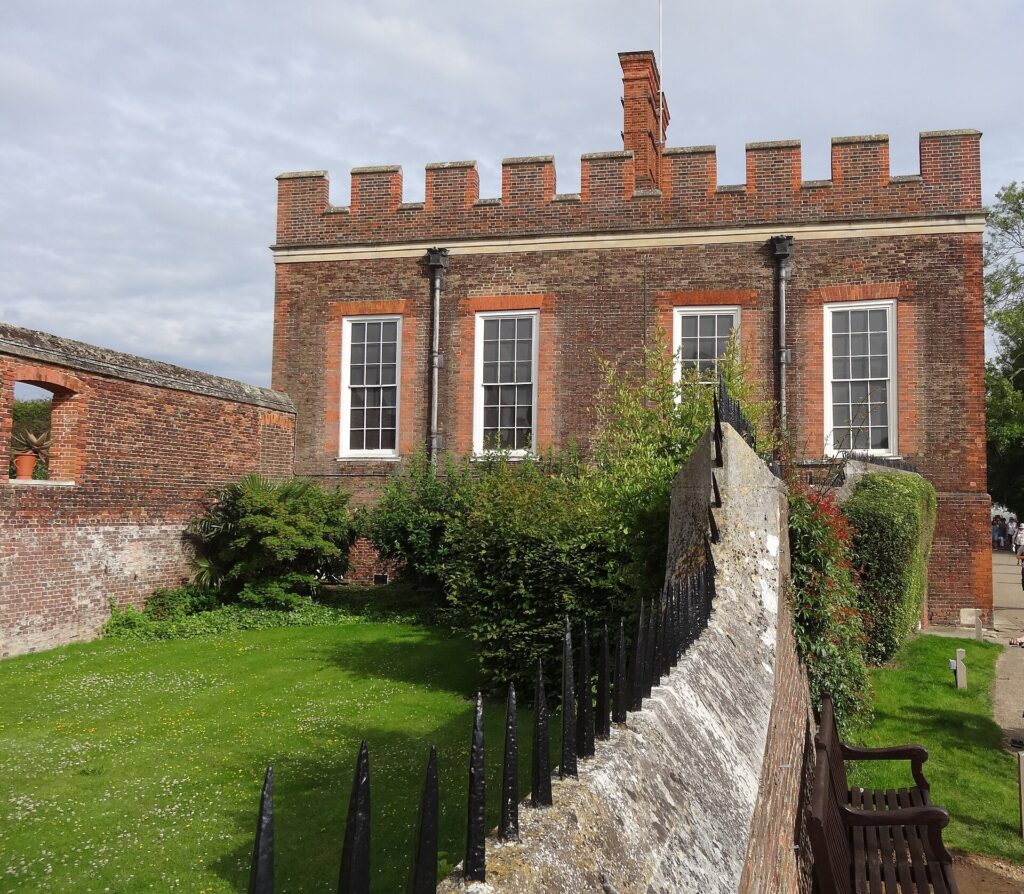
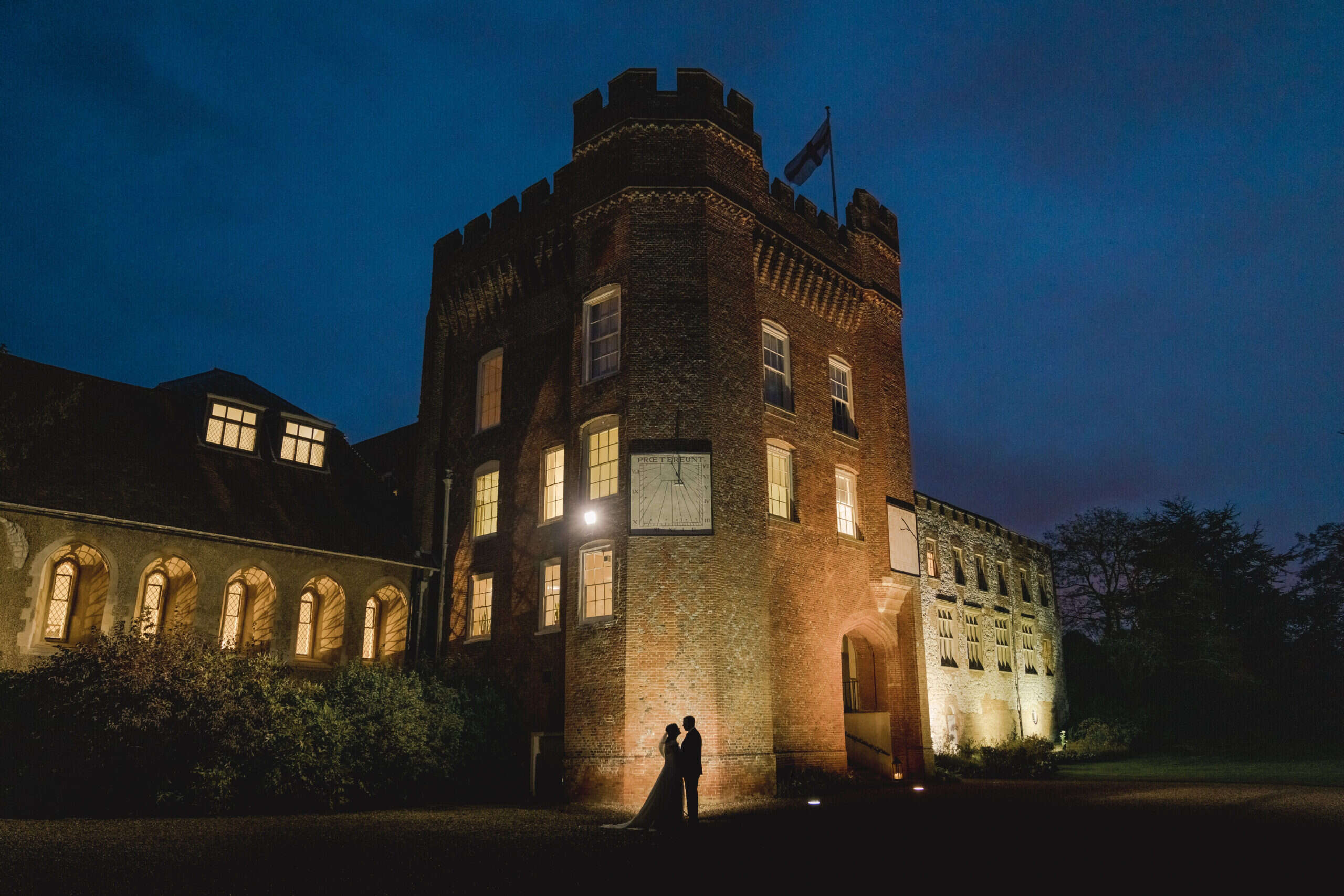
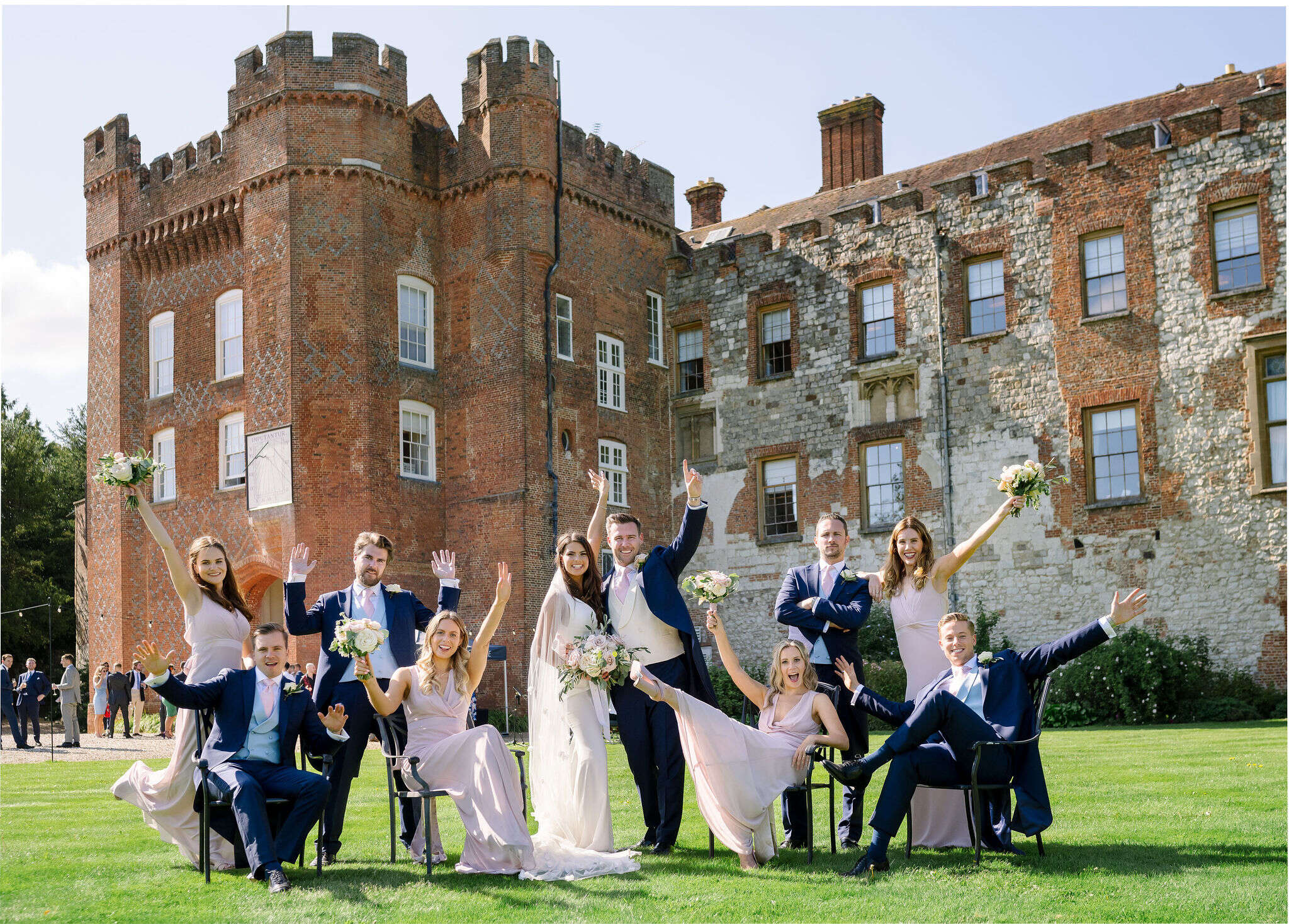
The palace is entered through a square brick tower of three storeys, patterned in a diaper of vitreous brick and set with painted sundials. Bishop Waynflete began it in 1470, and it was built between 1470 and 1475. The name Fox’s Tower comes from Bishop Richard Fox, who was long thought to have built it. In the 1520s he altered the tower and the south side of the palace and built steps up from the town; known as the Blind Bishop’s Steps, they climb along Castle Street, the wide approach to the castle gates.
The Keep above the lawns
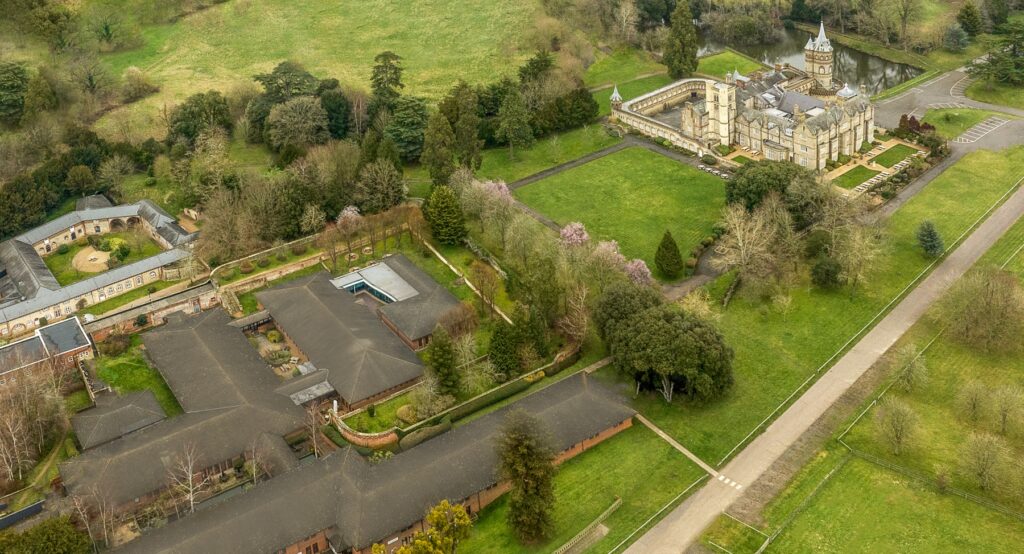
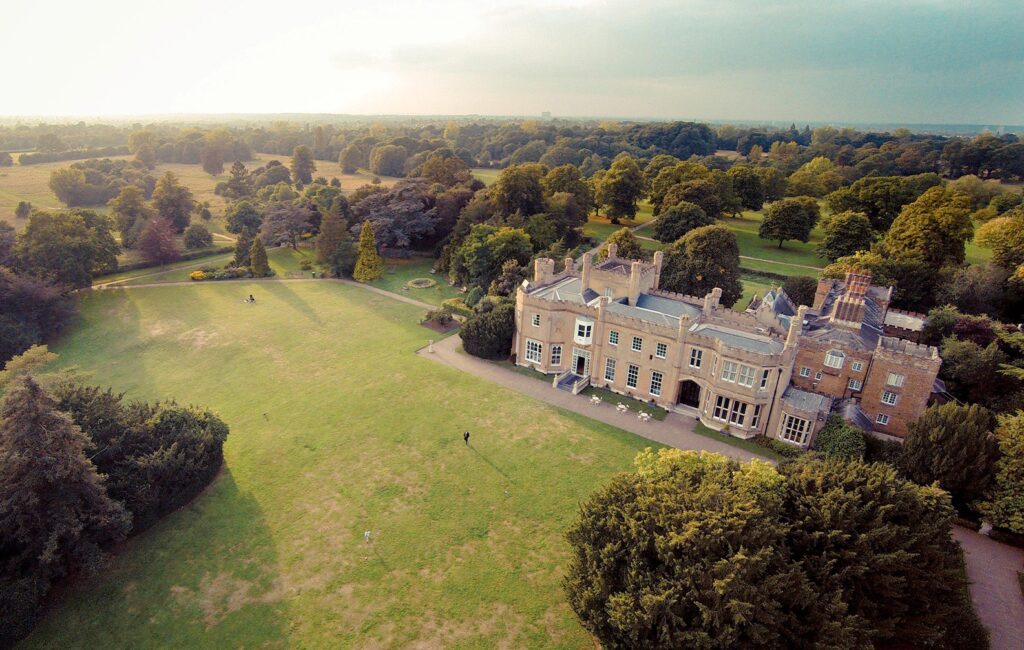
Above the palace stands the Keep, where the castle began. Henry of Blois’s first stone tower may have stood as much as 35 metres high, and its base was buried in chalk to form a mound about ten metres high. When the castle was rebuilt it took the form of a shell keep some 50 metres across, raised around the mound and the buried base of the earlier tower. The Keep is a scheduled monument, placed in the guardianship of the State in 1933 and now in the care of English Heritage, while the palace buildings to the south are listed Grade I in their own right. The Keep is currently closed to the public, so on a wedding day it stands as a backdrop rather than a place to visit.
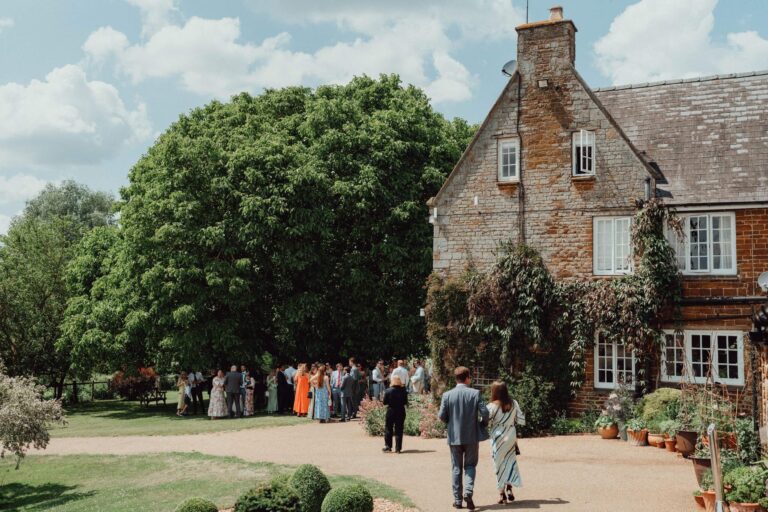
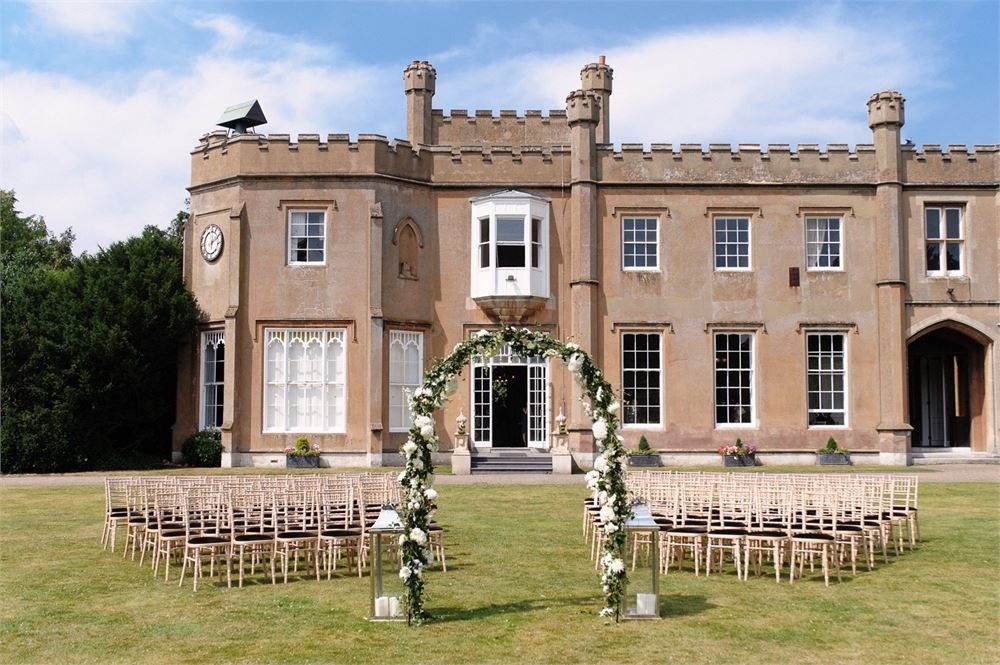
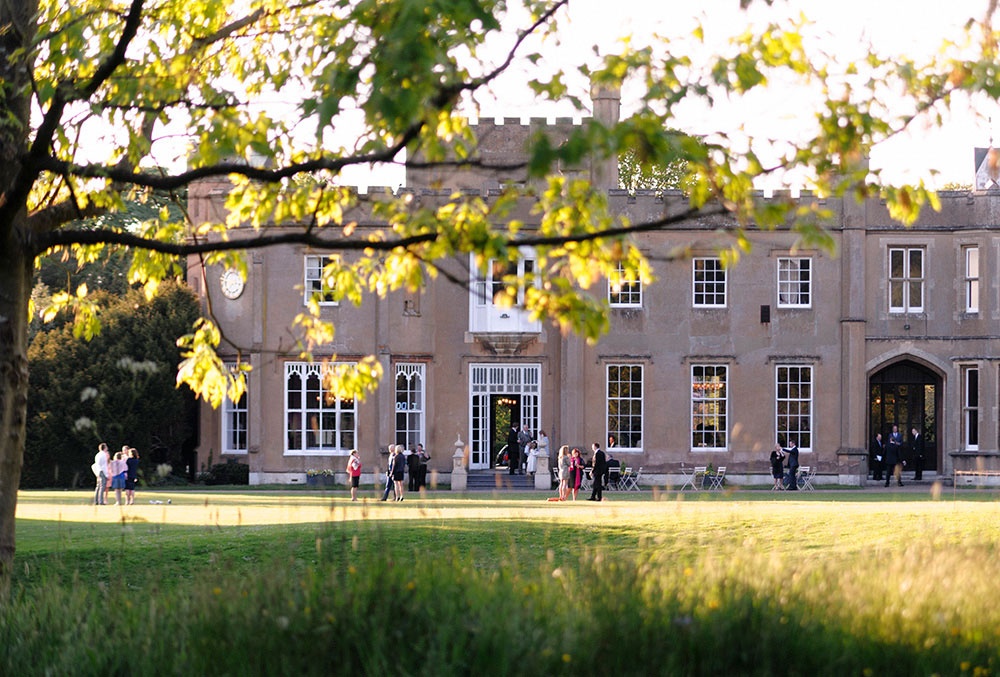
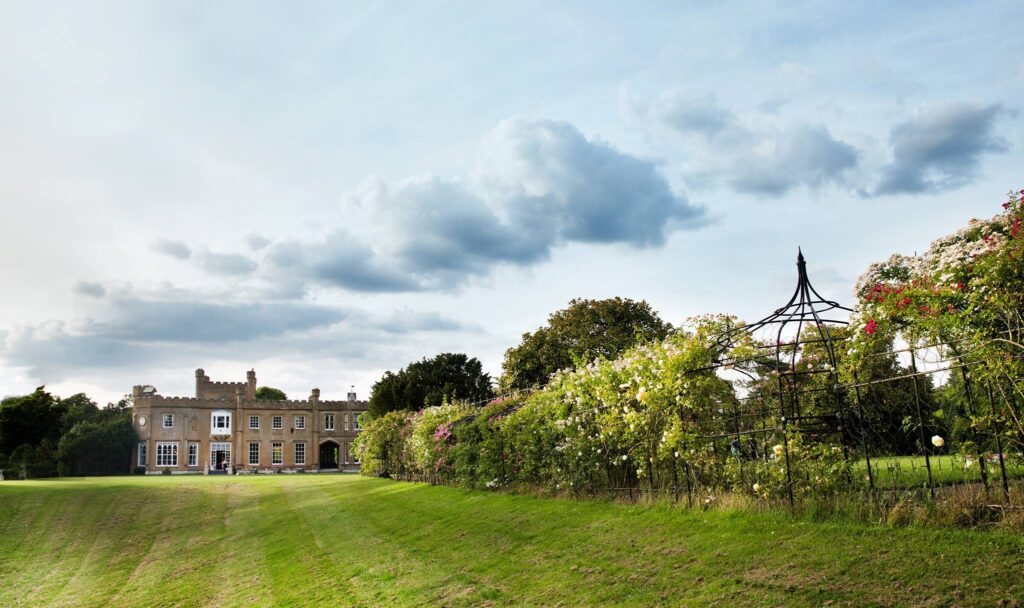
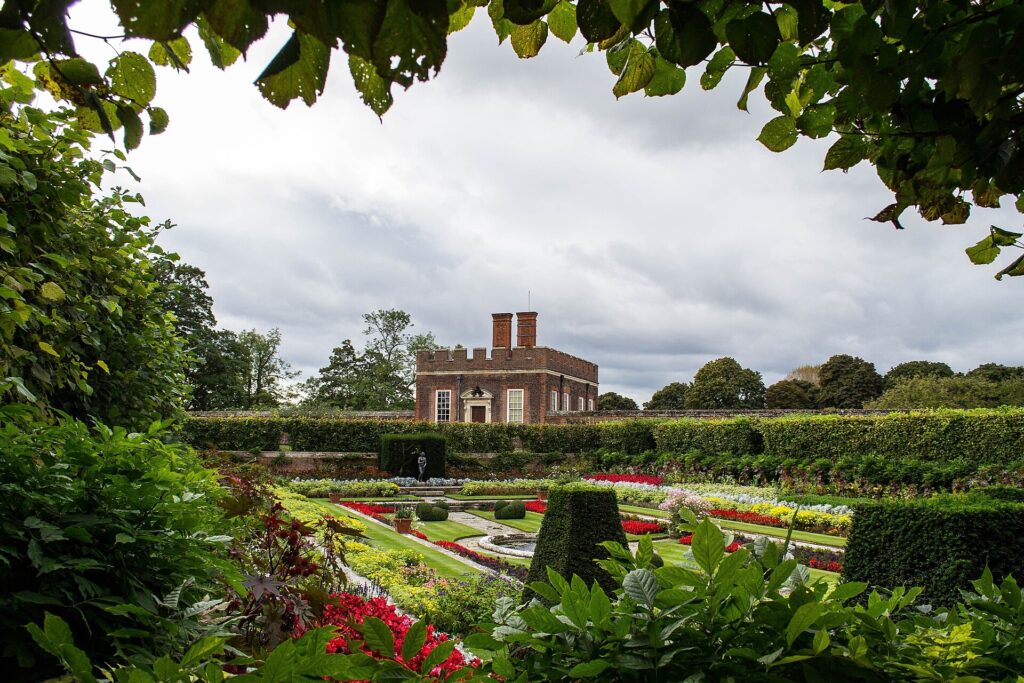
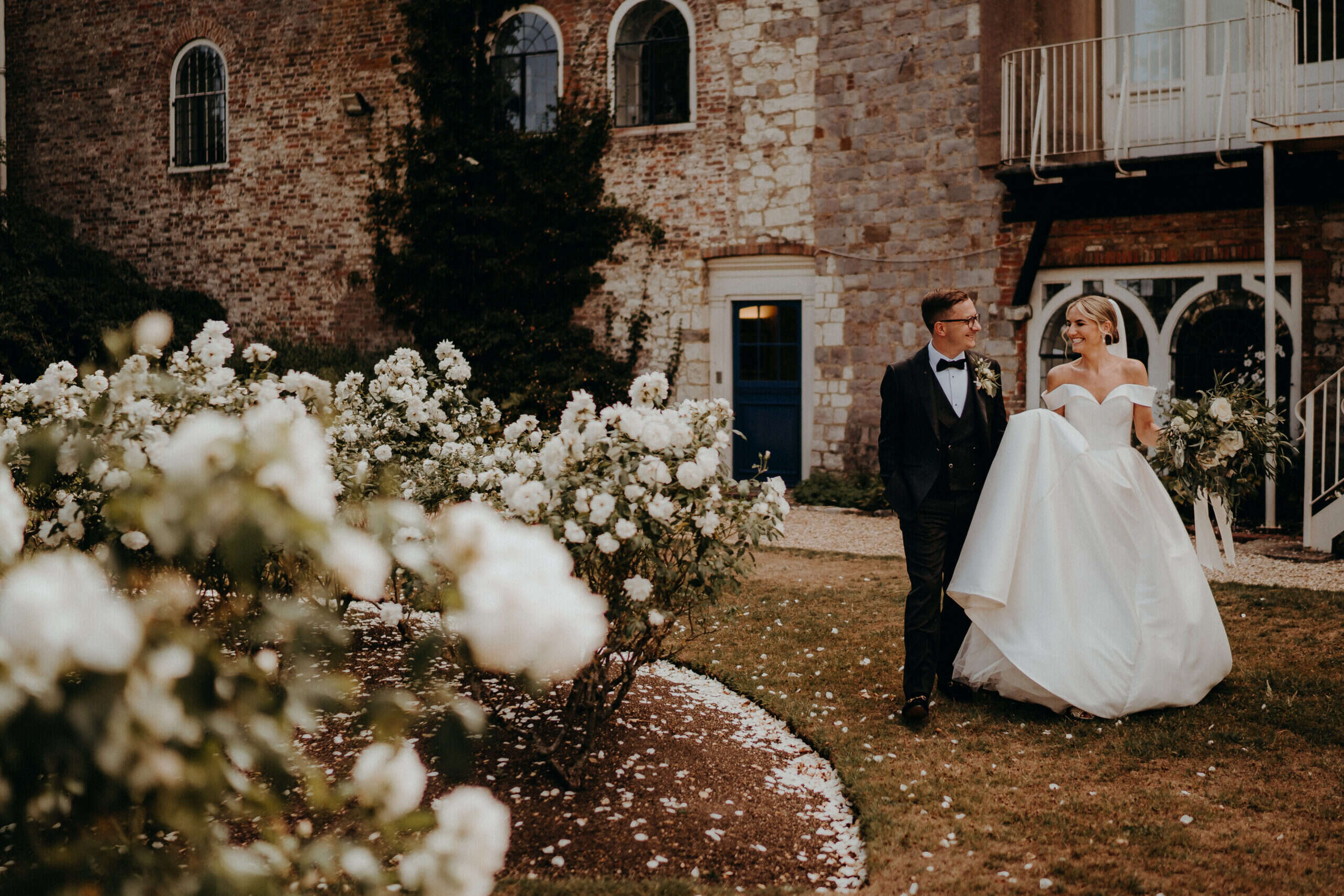
Below it lies the East Lawn, an intimate and sheltered ceremony lawn with the Rose Garden alongside, used for ceremonies from late March to late October. The Great Lawn is the larger setting, with the whole front of the castle behind the couple.
Two chapels and four licensed rooms
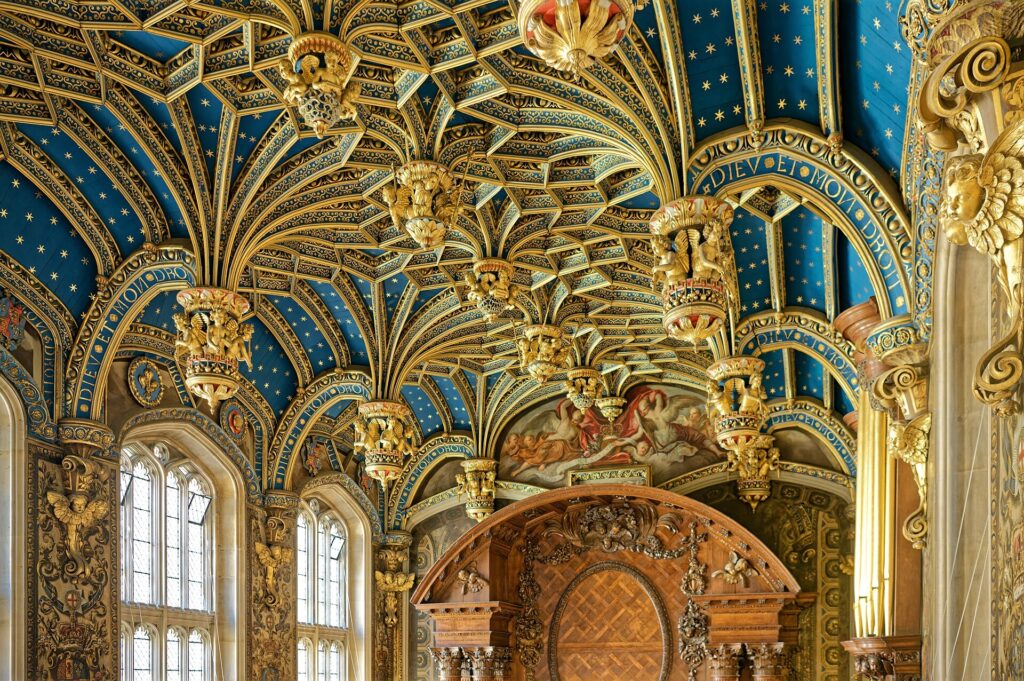
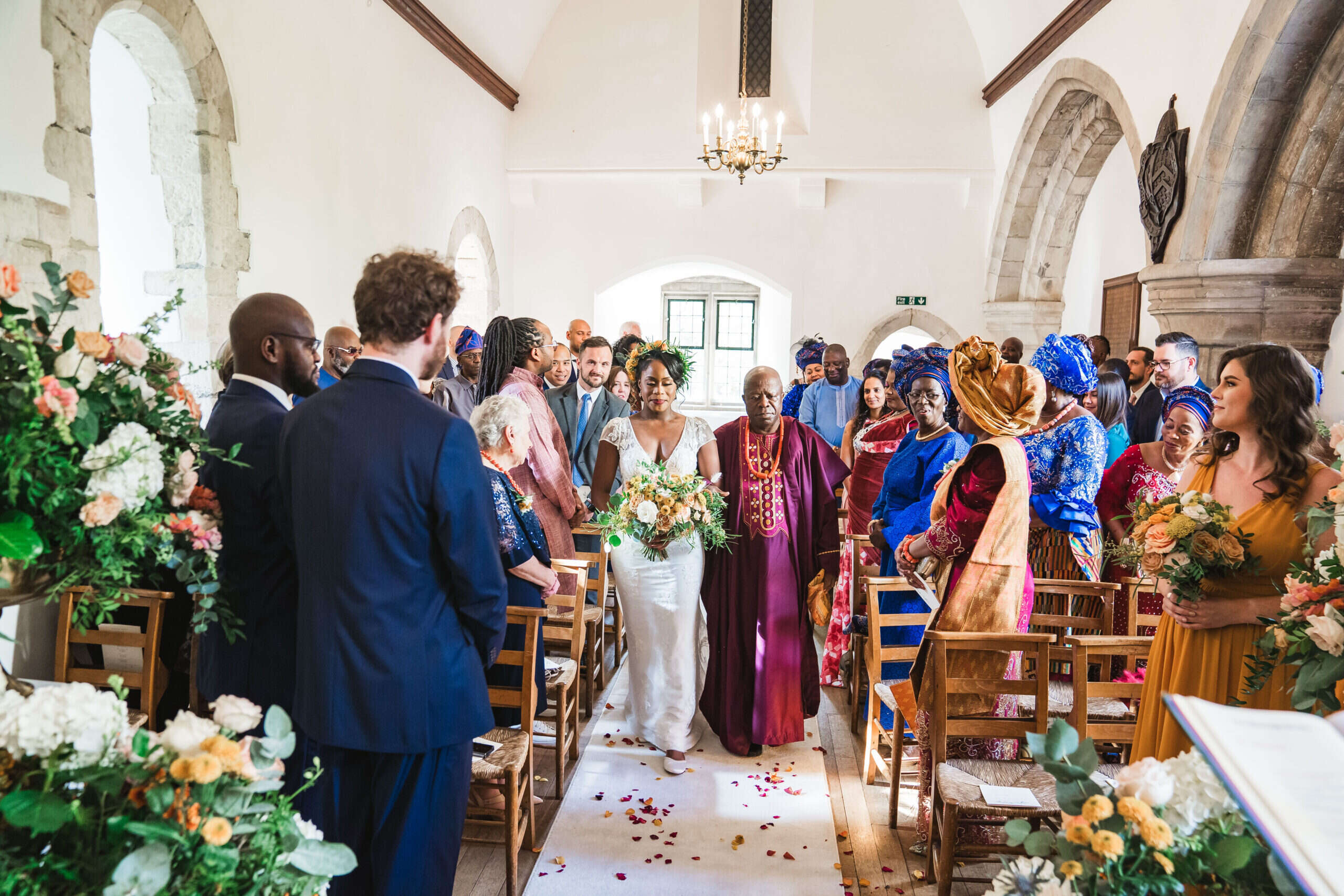
The palace has two chapels, five centuries apart. The Norman Chapel, built around 1180, is the oldest part of the palace; the Bishop’s Chapel dates from the seventeenth century and keeps its carved fittings and panelling. Both are private and are used only for Church of England weddings of eligible couples who hold their reception at the castle, and the cost of marrying in either is agreed with the castle’s wedding team.
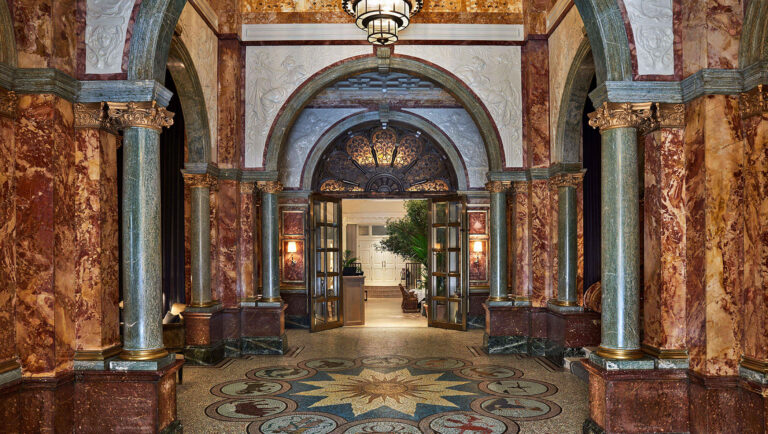
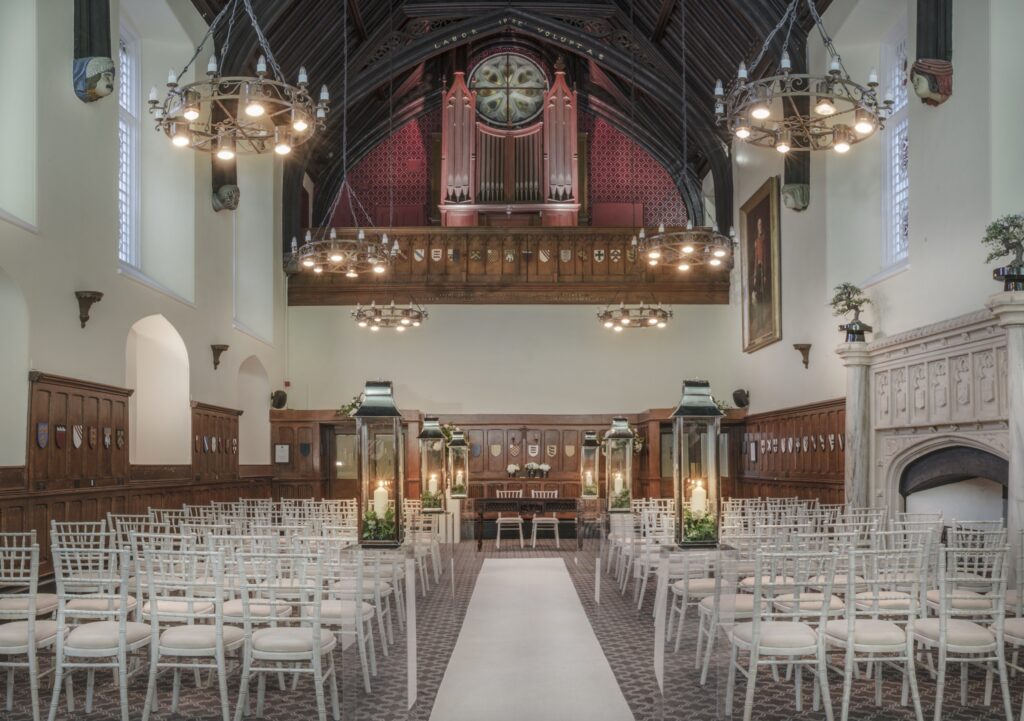
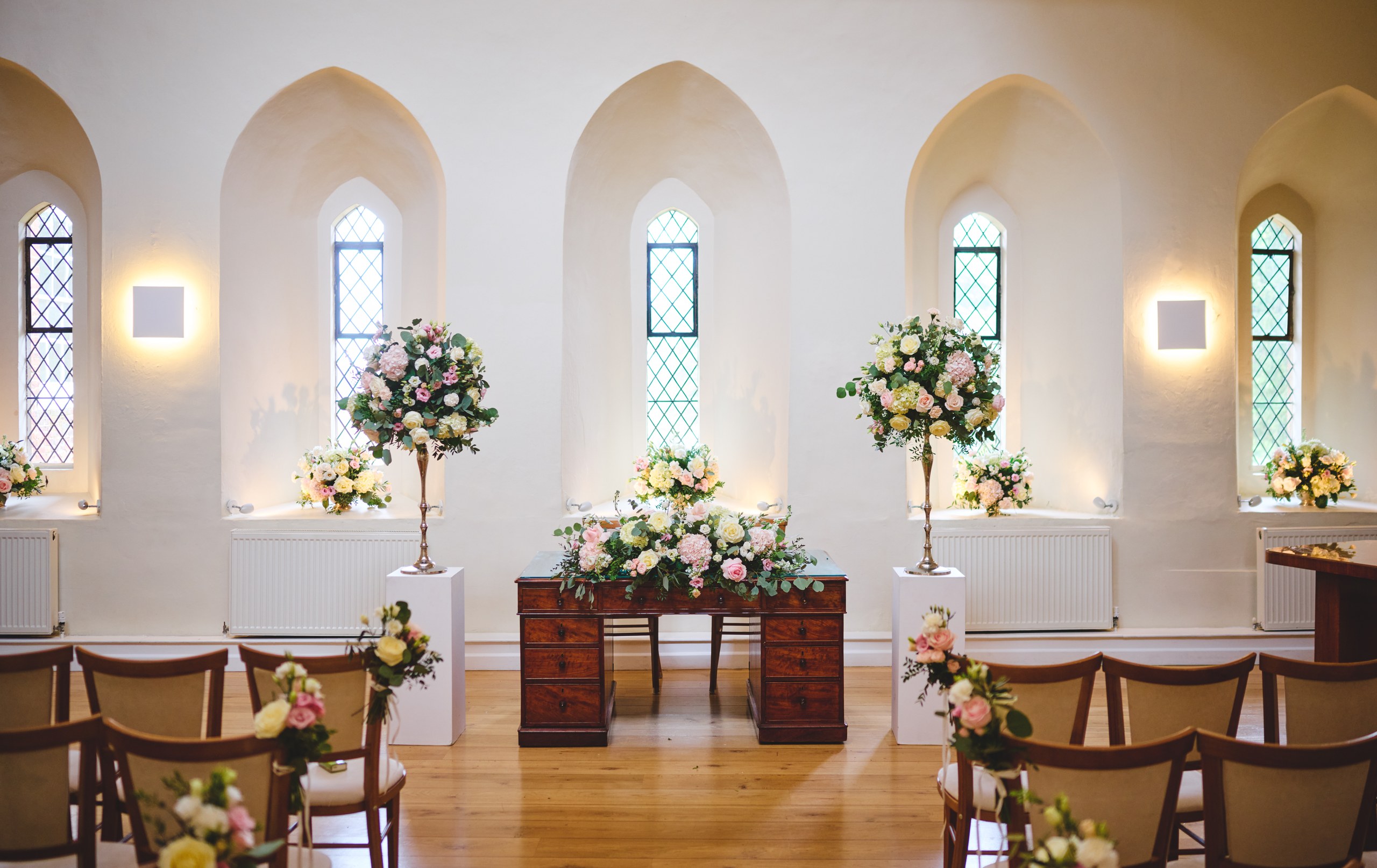
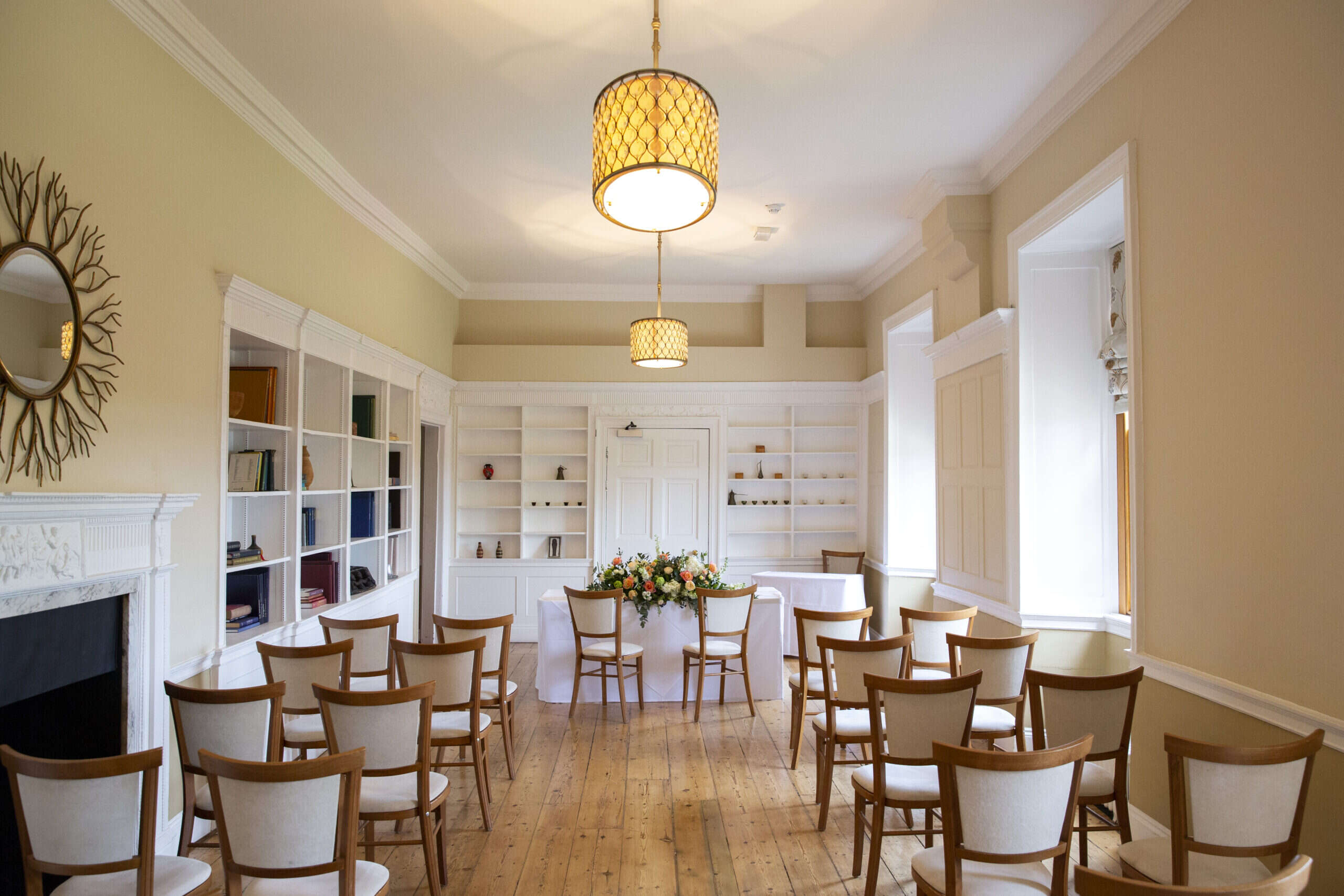
Civil ceremonies are conducted by the registrars at Artington House in Guildford, whose availability sets the date, and the ceremony room is included in the venue hire. The Great Hall is the largest of the four licensed rooms, seating up to 265 along the longest aisle in the castle. The Lantern Hall seats 160, with the aisle facing either its lancet windows or the historic arch. The Winchester Suite, reached from the Great Stair, looks over the Rose Garden and Farnham Park, and the Library on the first floor takes up to 60, with views across Farnham to the Surrey Hills.
A celebrant can marry a couple elsewhere in the grounds. On a dry hire wedding, Mandap ceremonies with a Havan are permitted in the Lantern Hall, the Winchester Suite and the Great Hall as well as outdoors.
Dinner in the Great Hall
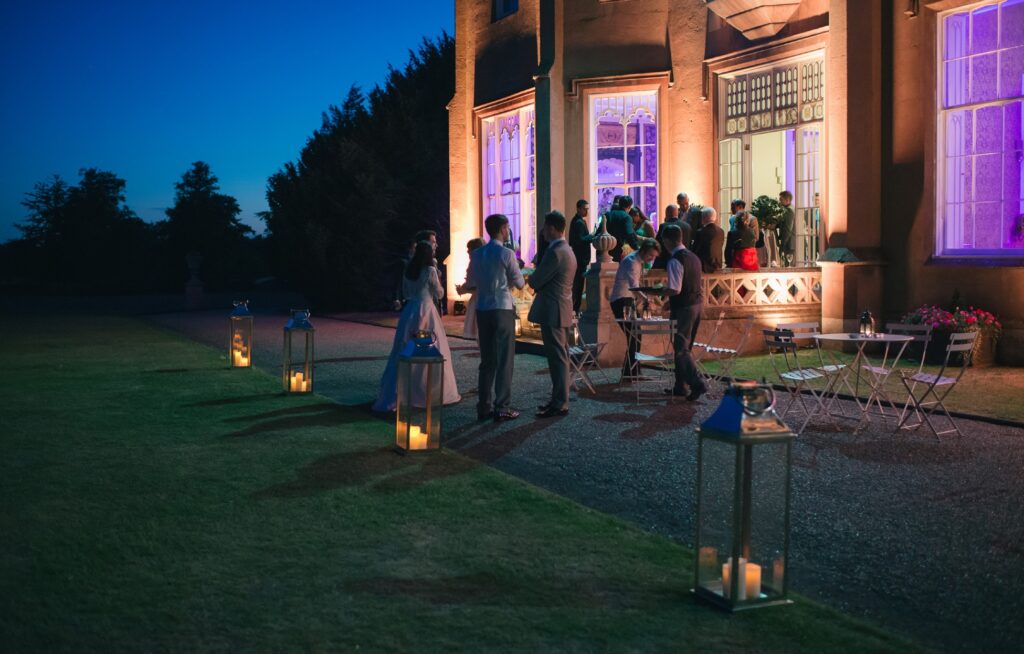
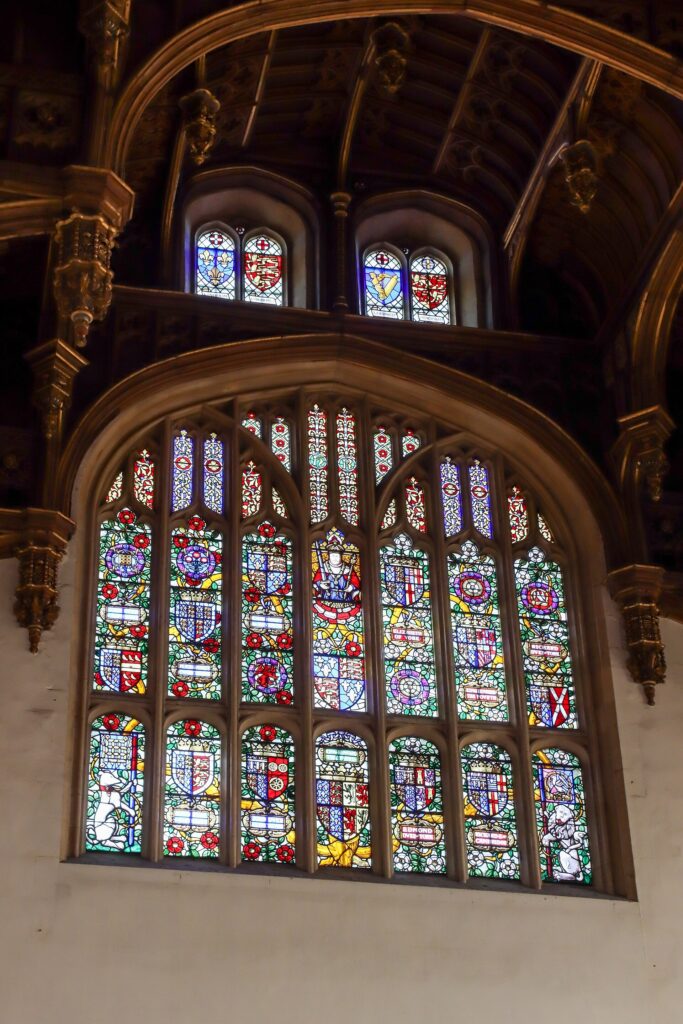
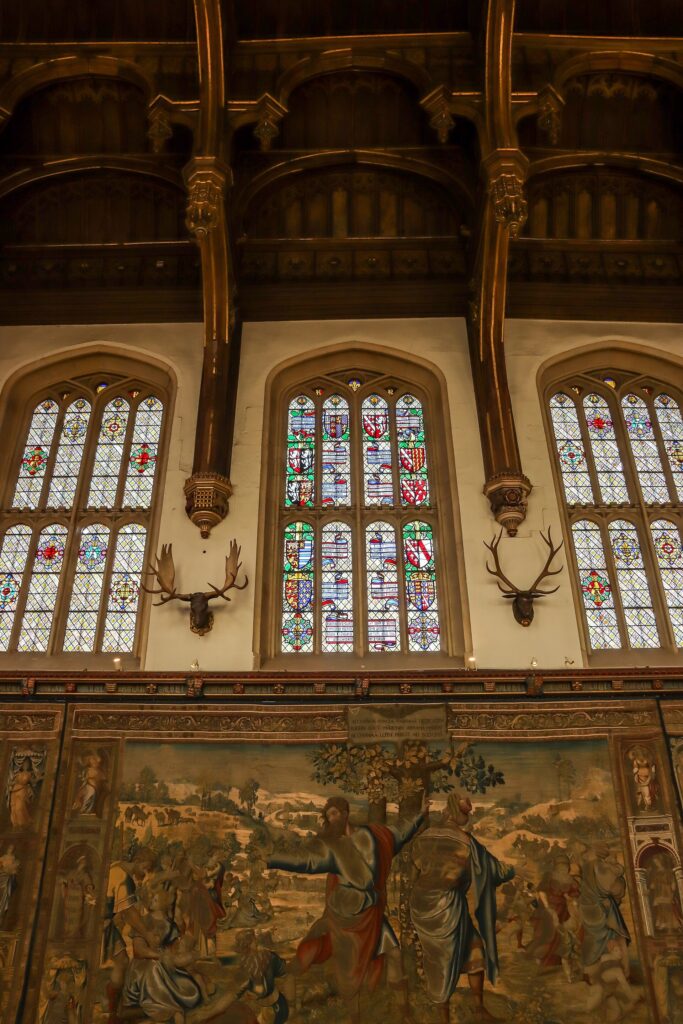
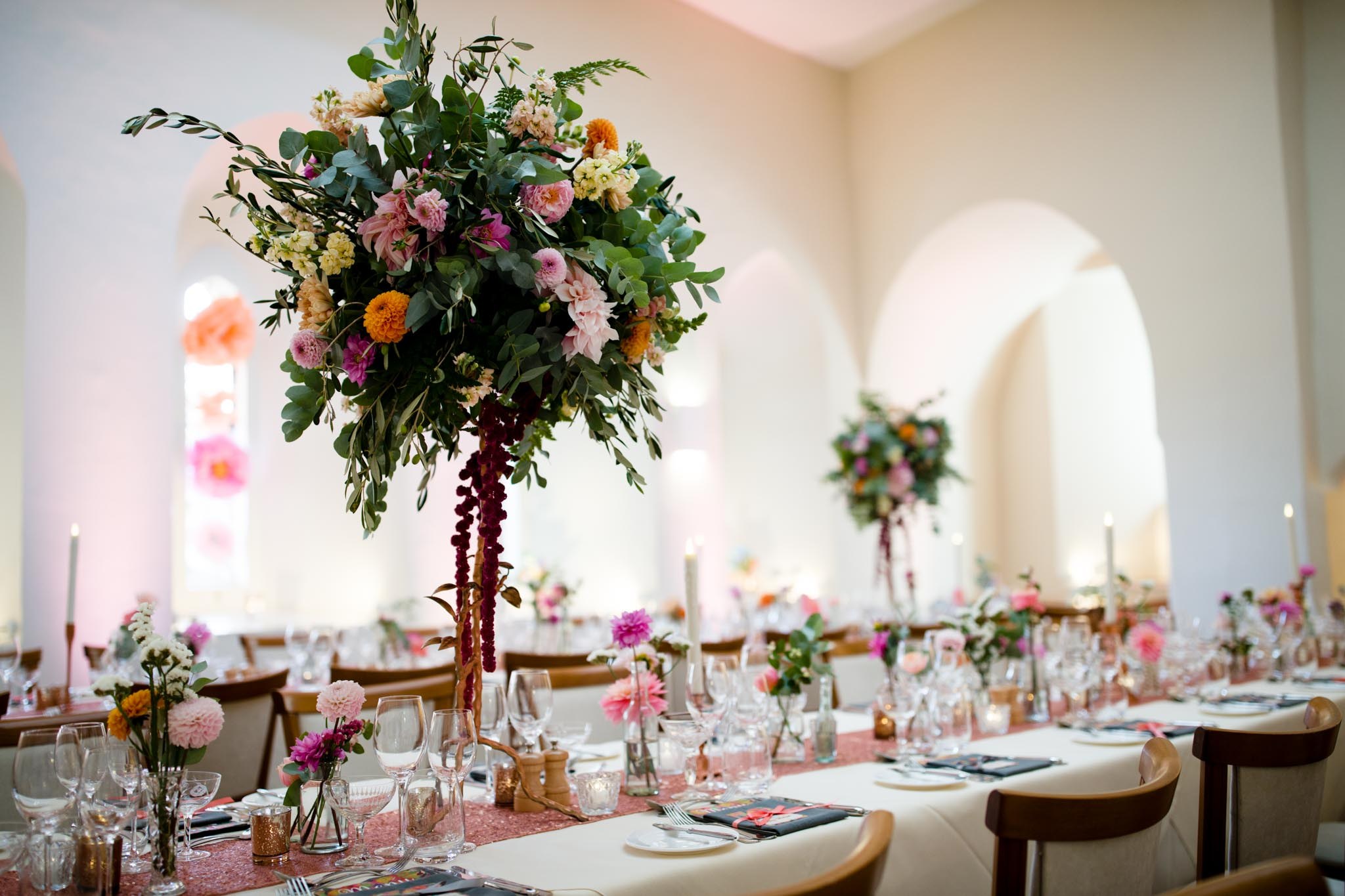
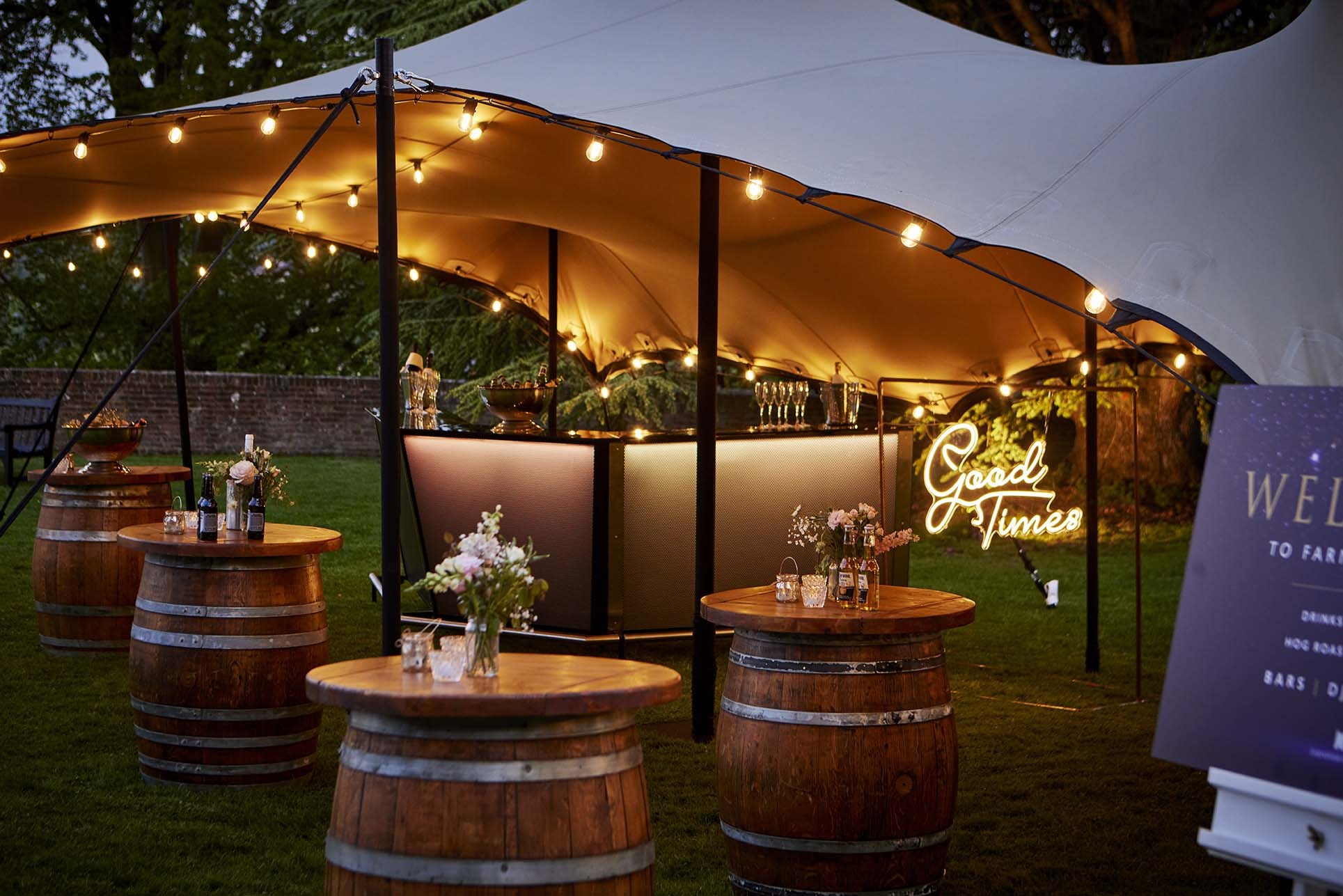
The Great Hall was built around 1180, raised and given clerestory windows in 1378, and reconstructed under Bishop Morley in the late seventeenth century, which is the interior a wedding dines in today. Hung with portraits, it seats 234 for the wedding breakfast. Drinks and canapés come first, on the Great Lawn or at the Canopy Bar, with the Lantern Hall and the Stone Hall as the wet weather alternatives. After dinner the dancing can stay in the Great Hall or move to the Lantern Hall or the Winchester Suite, and the castle takes up to 350 guests in the evening. A marquee on the Great Lawn allows a larger celebration, and on dry hire marquees of any size are welcome.
Food is cooked in the castle kitchens by an in house team led by Head Chef Simon Lloyd, using seasonal produce from local suppliers, the castle’s Kitchen Garden and a wood fired oven. The sample wedding menus are named Beaufort, Montague and Winchester, with vegetarian, vegan, children’s and evening menus alongside. For a dry hire wedding the chefs can design a fusion menu, or couples can bring in one of the castle’s recommended external caterers for an authentic traditional menu.
Staying at the castle
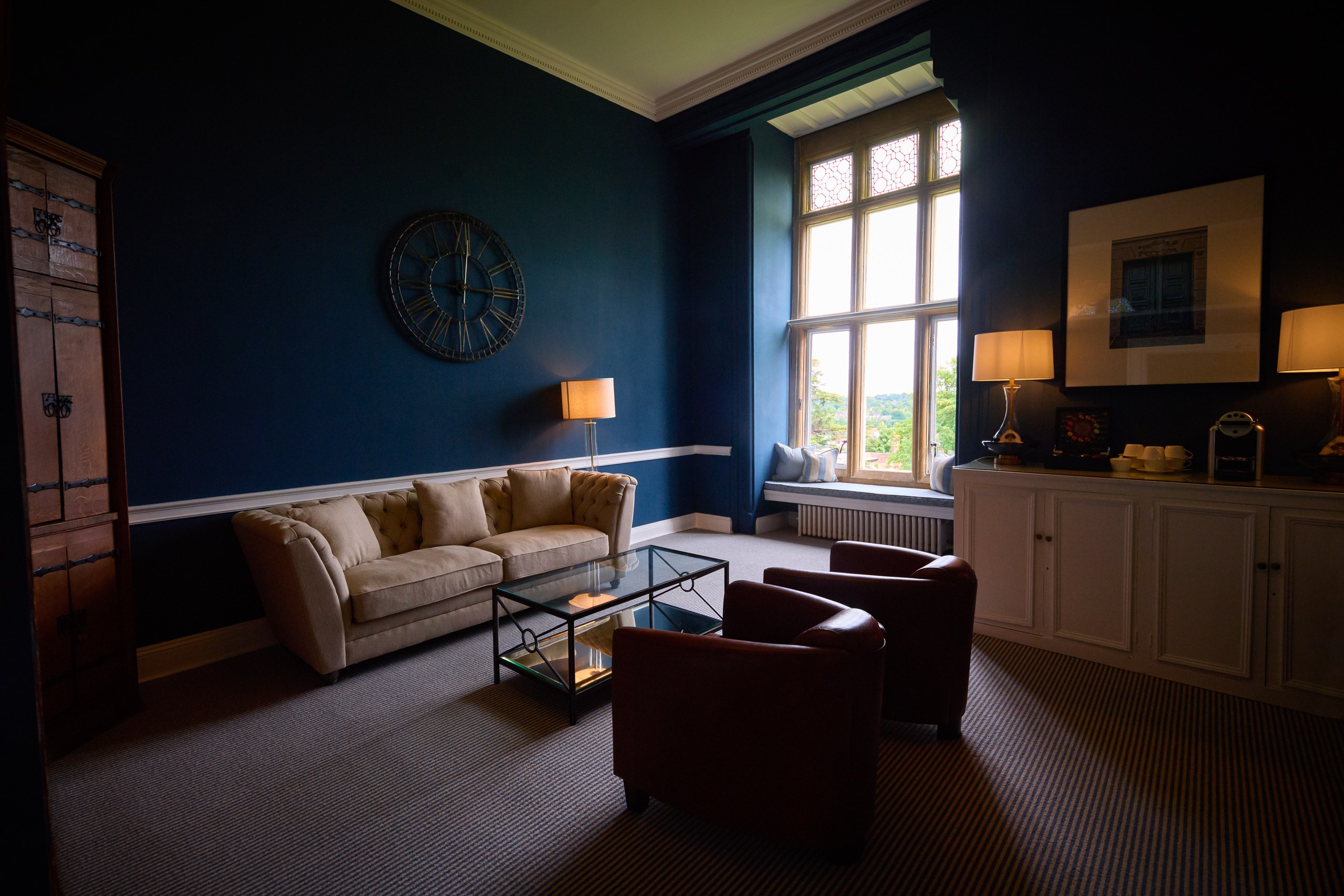
The couple’s room is the Guildford Suite, the honeymoon suite in Fox’s Tower, which looks over the Great Lawn and the Gatehouse and has a lounge, a king size bed and a roll top bath. Guests have 33 en suite bedrooms across the estate, from singles and twins to super king and family rooms, enough for up to 66 people to stay, and they book them by telephone with the castle. Breakfast the morning after the wedding is served in the Library.
The wedding morning has its own quarters. The Gatehouse, a private cottage in the grounds, gives the bridal party three first floor rooms for hair and make up, and the Pembroke is a private suite where the groom and ushers get ready. A wedding weekend begins with lunch and a welcome dinner on the Friday and ends with brunch on the Sunday, with a complimentary late bar on the Saturday night. Weddings can also be held midweek.
Farnham and its park
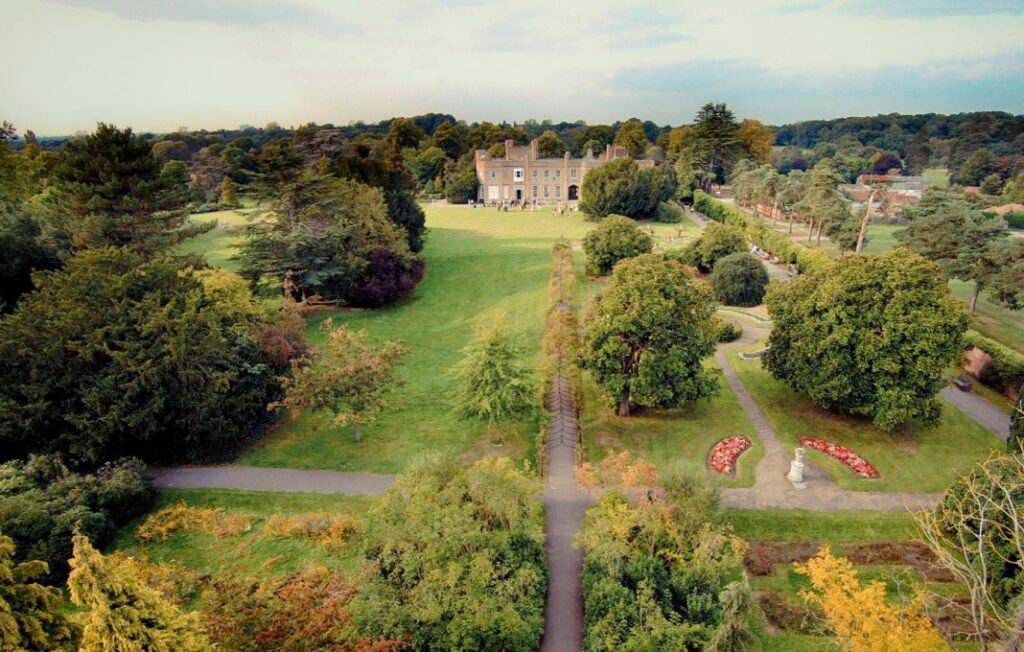
Farnham is a Georgian market town on the Surrey and Hampshire border, in the valley of the North Branch of the River Wey. Its centre is about half a mile’s walk downhill from the castle, so guests staying in the town can walk up. Beyond the palace lies Farnham Park, created for Bishop William of Wykeham in 1376 as a deer park for the castle and now a Local Nature Reserve; it is the view from the Winchester Suite.
Planning a wedding at the castle
The castle is hired for exclusive use, and weddings take three forms: an all inclusive package, a wedding weekend or dry hire. Venue hire starts from £4,000 and dining menus from £150 per person. The all inclusive package for 2027 is £18,000 for up to 50 adult guests, with a charge per person above that, and covers venue hire, a ceremony room or outdoor ceremony, dining and drinks packages, a DJ, the honeymoon suite and a dedicated event manager.
Farnham station is about a mile away, with direct trains to London Waterloo. By road London is about an hour, with the A31 and A3 close by, and guests flying in can use Heathrow or Gatwick. Parking on site is complimentary for wedding guests, subject to availability.
Chapel or registrar
Farnham suits couples who want a Grade I listed bishops’ palace with a recorded royal history and their guests staying on site, within about an hour of London. For other castles, read our Edits on Leeds Castle in Kent and Highcliffe Castle or the UK castle venues guide; for the region, see weddings in Surrey and the United Kingdom Wedding Atlas.
Decide first between a chapel wedding, open to eligible Church of England couples, and a civil ceremony with the Guildford registrars, whose diary sets the date. Then read the Farnham Castle profile and check your date.