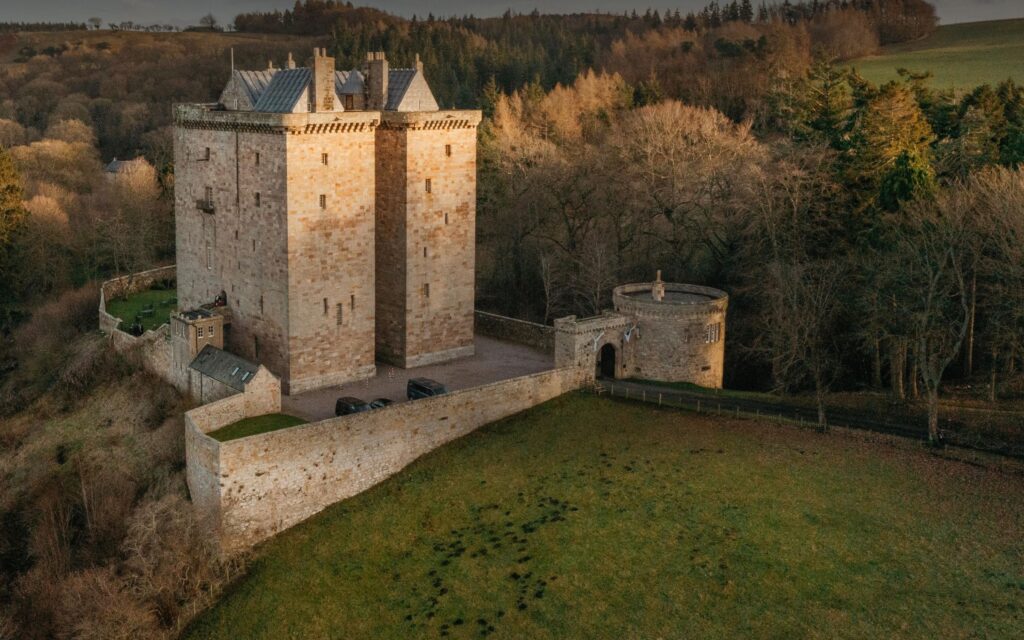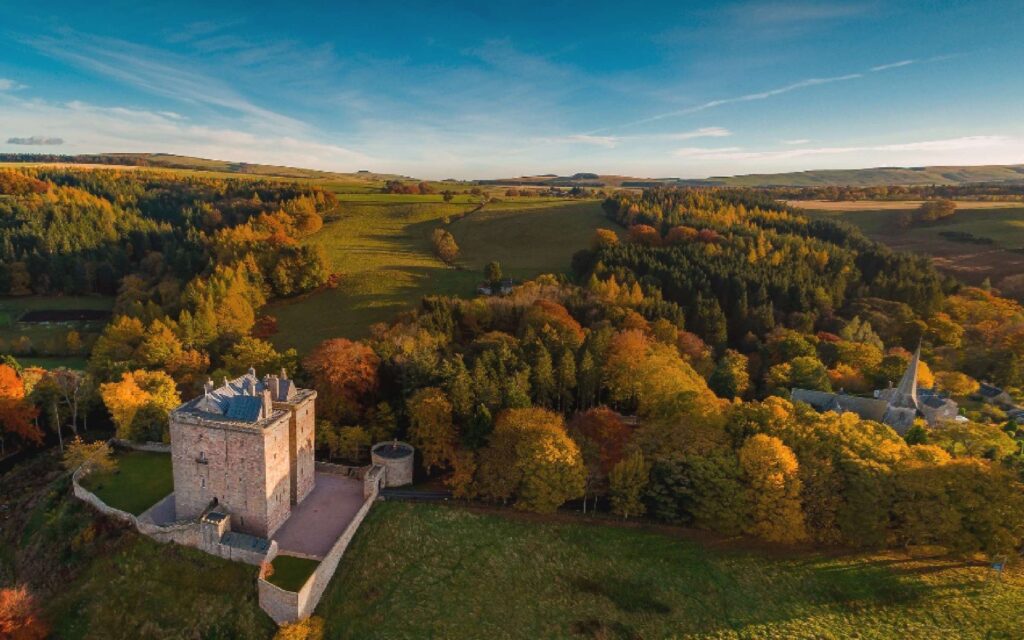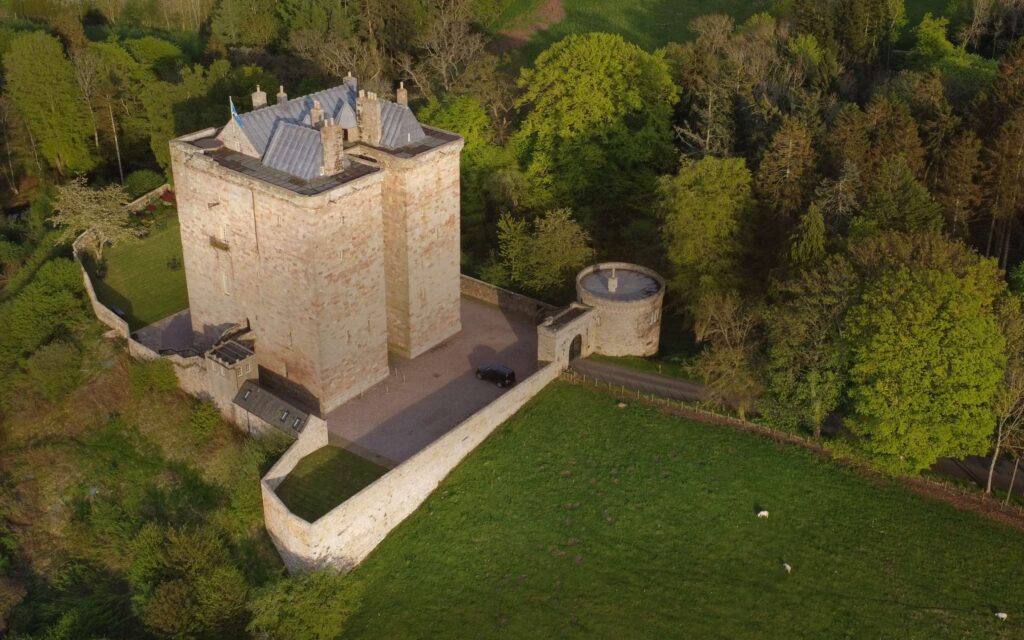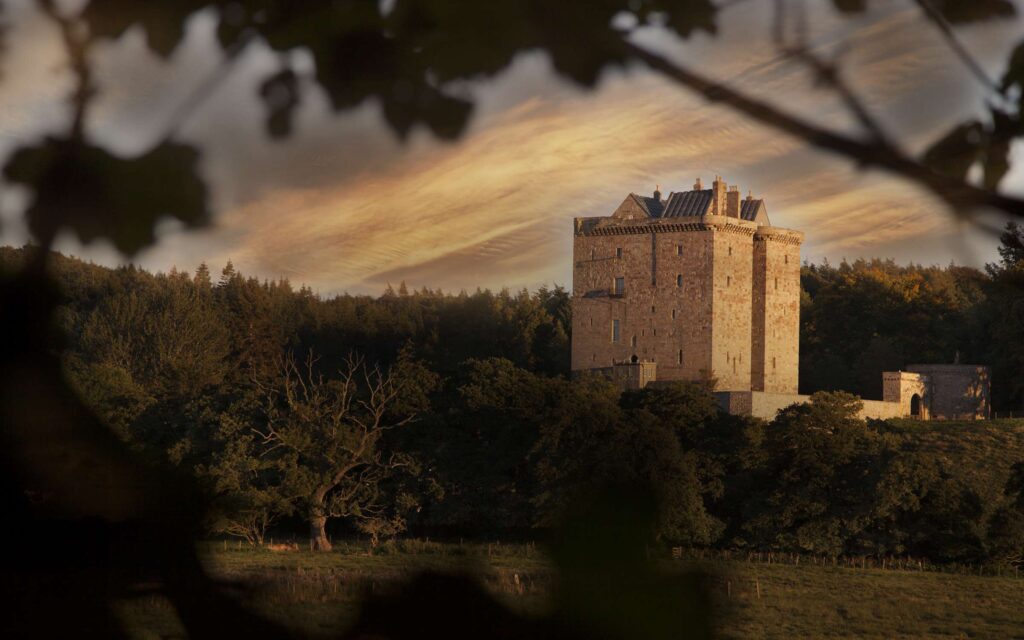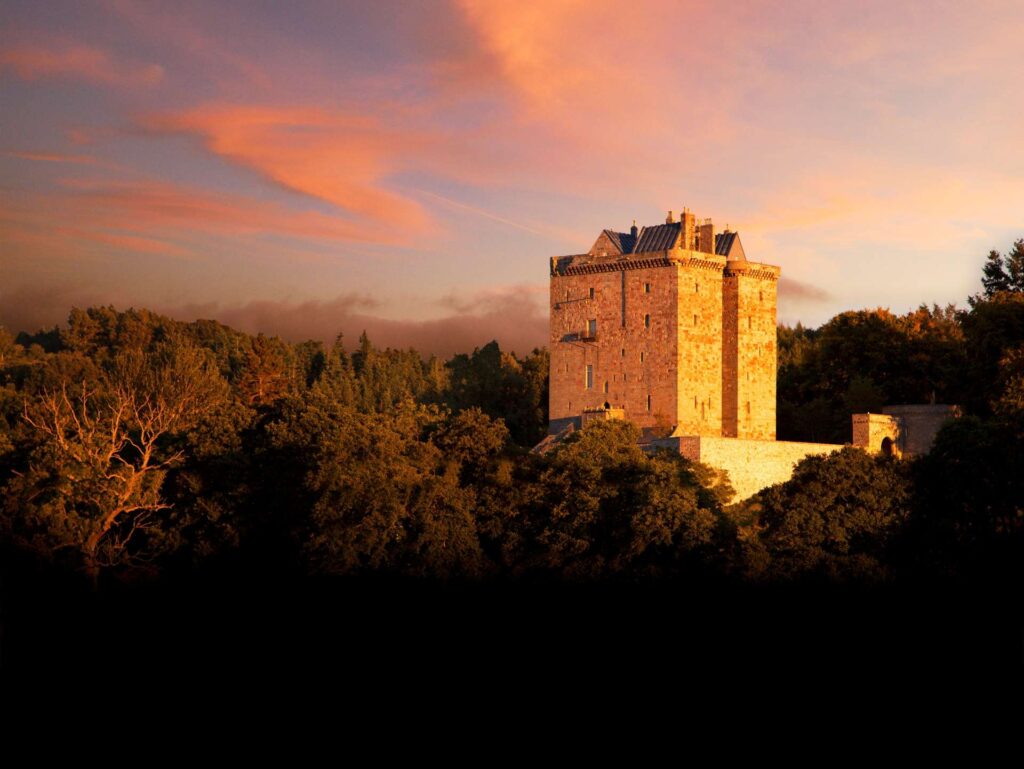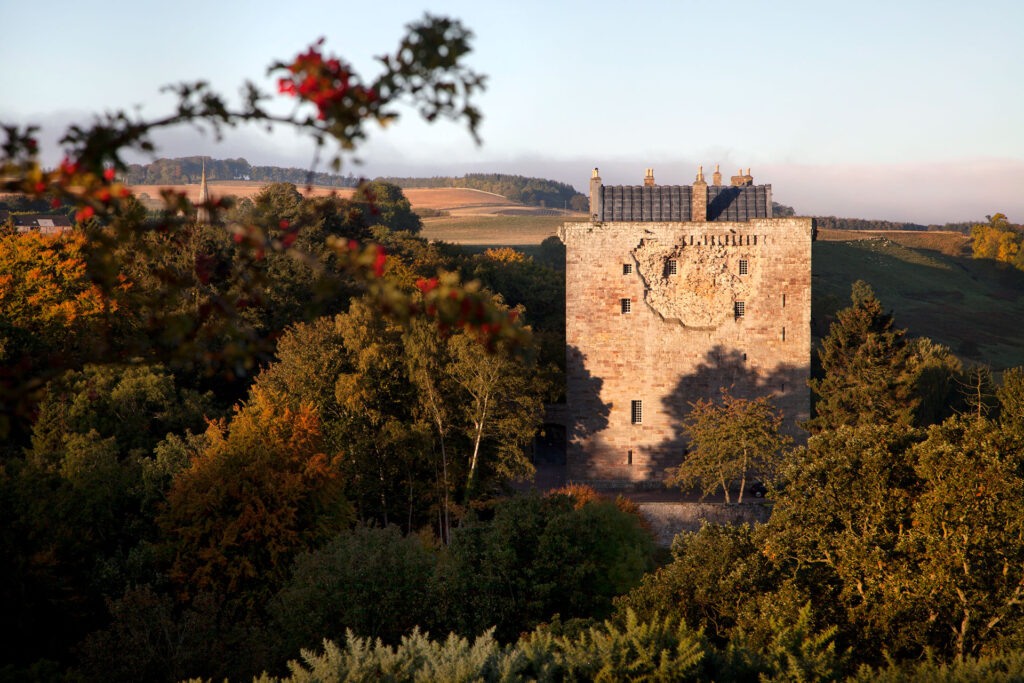
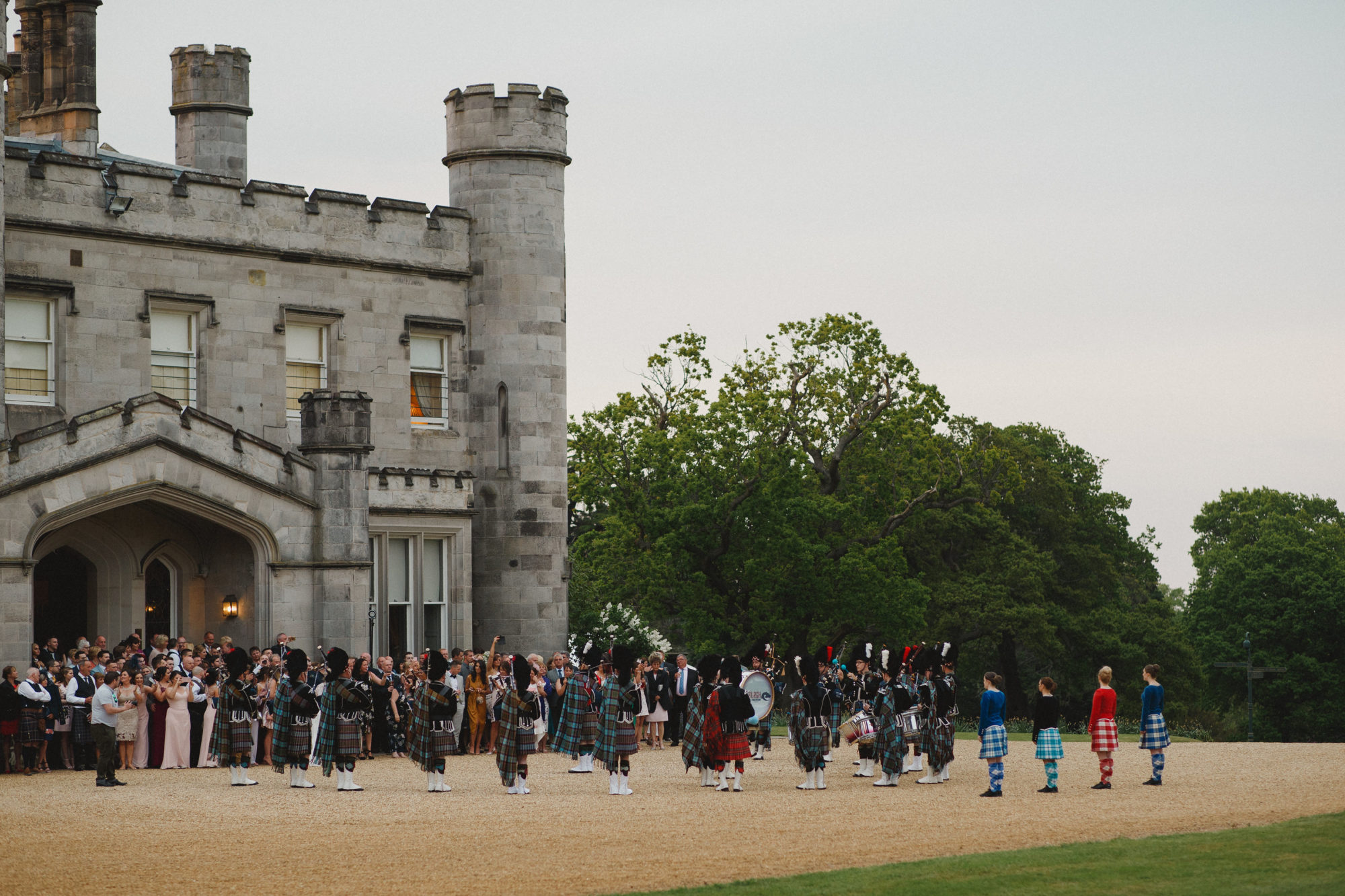
Nobody had lived in the Auld Keep at Dundas Castle for more than three hundred years when Sir Jack Stewart-Clark inherited the estate from his mother in 1995 and set about restoring it. The square stone tower, begun in about 1416 by James Dundas, had even been altered for use as a distillery in the 19th century. Today couples marry in its Great Hall, dine in the Gothic house William Burn built beside it in 1818 or in a Pavilion on the lawn, and take the whole castle for the wedding, near South Queensferry and a short drive west of Edinburgh.

A Dundas tower above the Forth
The Dundas family settled along the southern shore of the Forth in the 12th century, and by the 15th century they held or controlled most of what is now West Lothian and the west of Edinburgh. Hugh Dundas served under William Wallace, and his son George fought with Robert the Bruce at Bannockburn. In 1416 James Dundas obtained a licence to build a keep from the Duke of Albany, then the effective ruler of Scotland in place of his elder brother, King Robert III.
The keep is an L shaped tower house of four storeys in rubble stone. Its corbelled and crenellated parapet was added in the 16th century, with corner turrets carved with the Dundas shield, the entrance door is still guarded by an iron yett, and most of the rooms inside are barrel vaulted around large fireplaces. On 13 August 1553 James Dundas gave silver plate to his infant daughters, Elizabeth and Jane, in the great hall at Dundas. Oliver Cromwell stayed at Dundas around the time of the Battle of Dunbar in 1650, and a statue of him still stands outside the keep.
On a terrace east of the house stands a fountain and sundial carved in sandstone for Sir Walter Dundas in 1623. It has twelve lead spouts set in the mouths of carved masks, and Latin verses on its four sides invite visitors to enjoy the garden and the hours, and warn them not to harm the fountain or the dial.
William Burn’s house, and what it cost
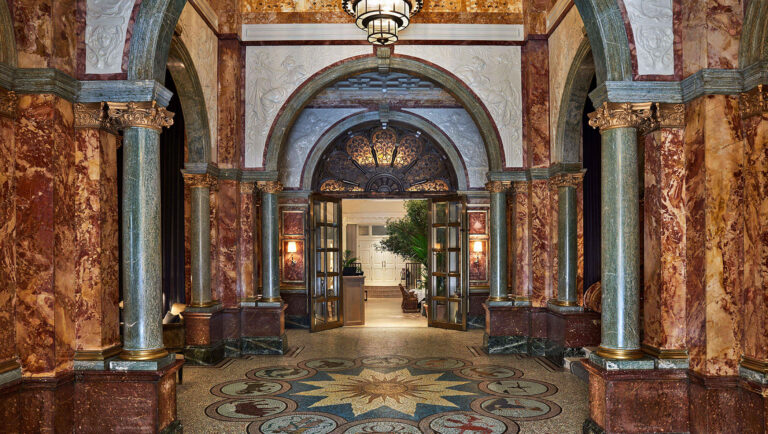
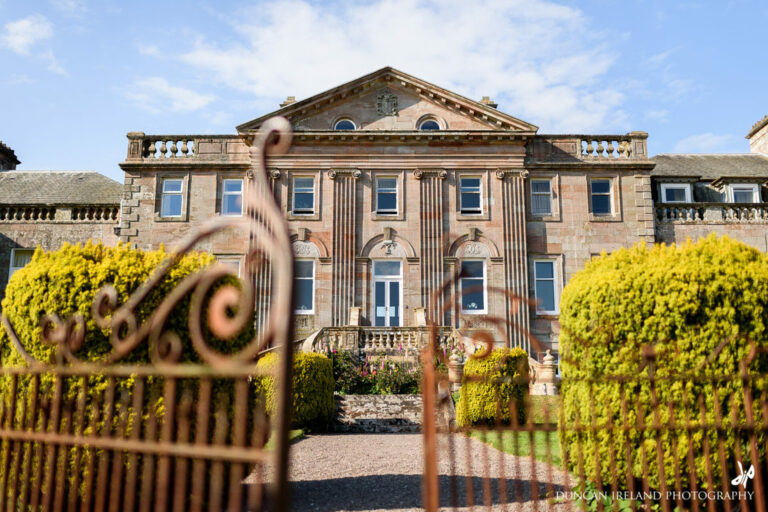
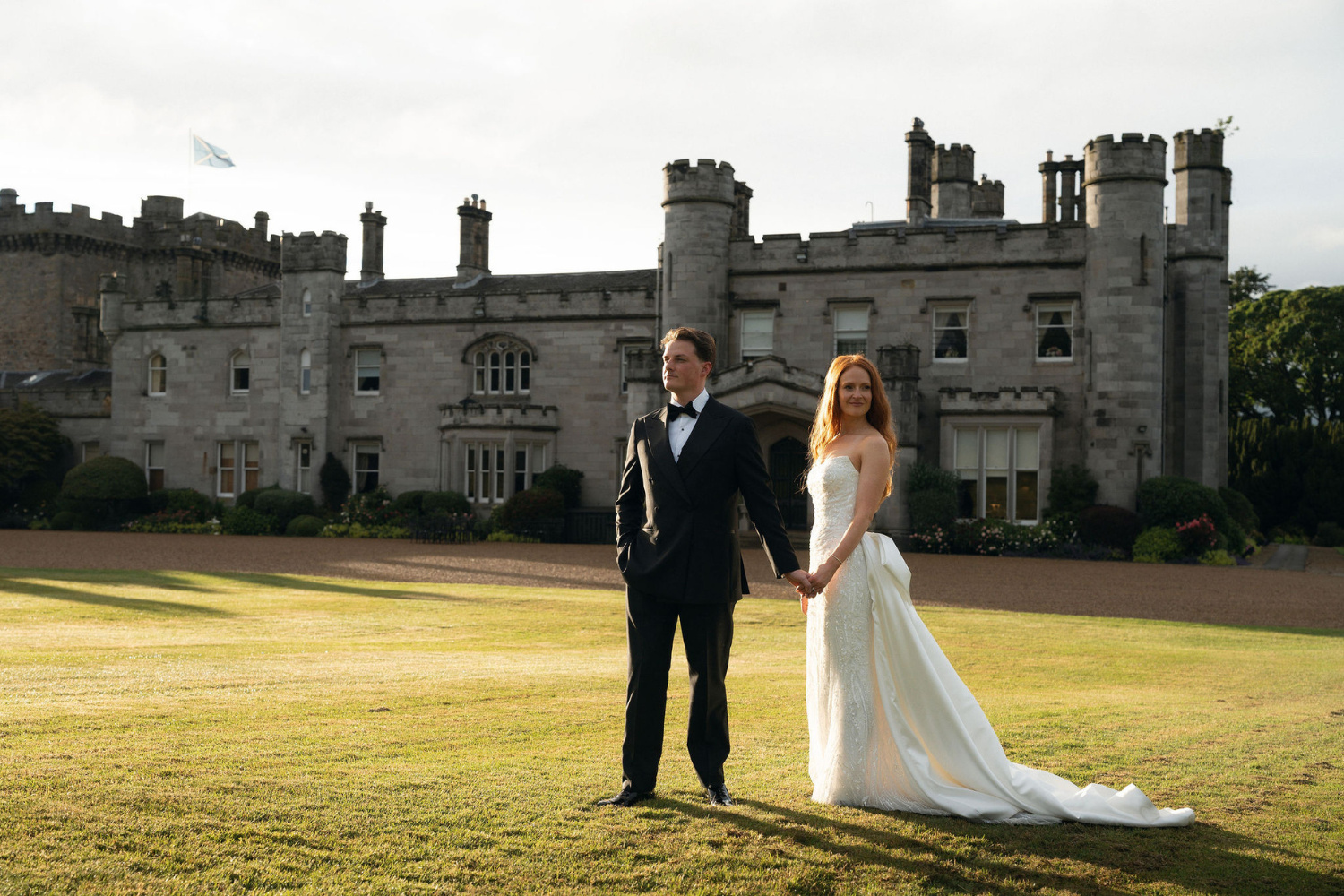
In 1818 James Dundas pulled down the 17th century house beside the keep and had the architect William Burn build a new one in the Tudor Gothic style, with crenellated parapets, round corner towers and a broad Tudor arched porch on the entrance front. Burn designed many churches, and his church style shows in the main hall, the passage and the staircase: the hall has a rib vaulted ceiling, with four centred arches and carved foliage on its capitals and bosses. The tall windows of the state rooms look over the lawns to the parkland.
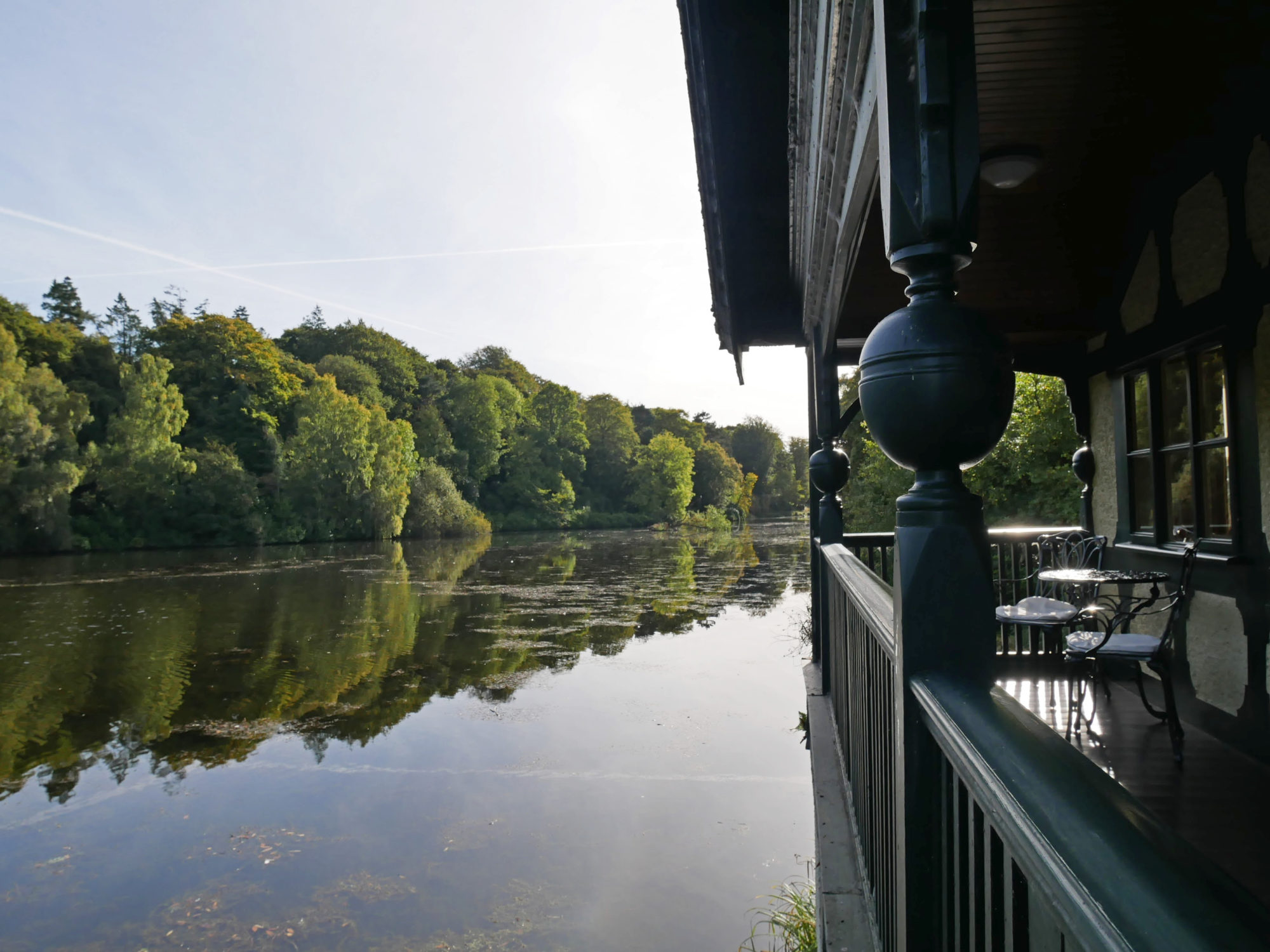
The new house and its gardens cost so much that the Dundases sold the estate in the 19th century. Its next owners, the Russells, turned an area of swampy ground into a loch with islands by 1894; the islands have gone, but a boathouse in the Tudor style survives on the south shore. In 1899 the castle, with five farms and about 1,500 acres, was bought by Stewart Clark, a Paisley thread manufacturer, whose son John took the name Stewart-Clark and was made a baronet in 1918. In the Second World War Dundas served as the headquarters for protecting the Forth Bridge.
After Sir Jack inherited in 1995, the keep’s parapet was rebuilt and its stonework restored, electricity was brought in and dry rot was cleared from the house. His wife, Lady Lydia, an interior designer, then refurbished every room, and the Stables were given a new roof and two new en suite bedrooms. Historic Environment Scotland lists both the keep and Burn’s mansion at Category A, and the grounds are in the Inventory of Gardens and Designed Landscapes in Scotland. The castle has also been a film location, for The Princess Switch 3 and the first series of Department Q among others.
Vows in the Auld Keep
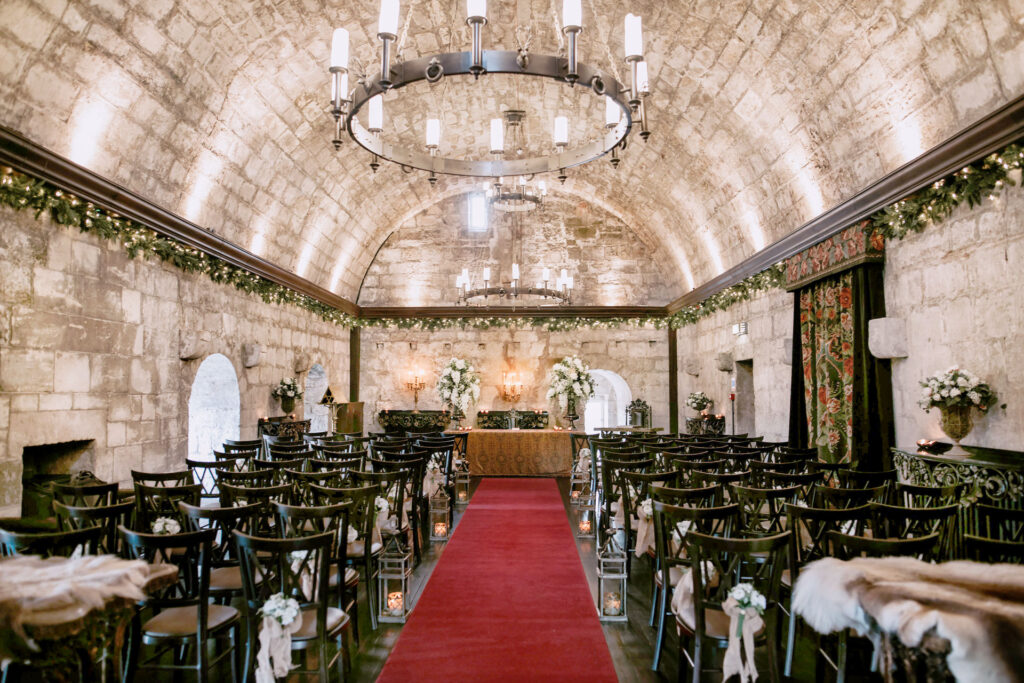
The Great Hall in the keep is reached by a staircase and has a vaulted ceiling and walls of original stone. It seats up to 110 guests for a ceremony, or 152 with a video link, and an electric organ and a PA system are part of the hire. Couples can choose a civil, religious, humanist or independent celebrant ceremony, and civil partnerships are held too.
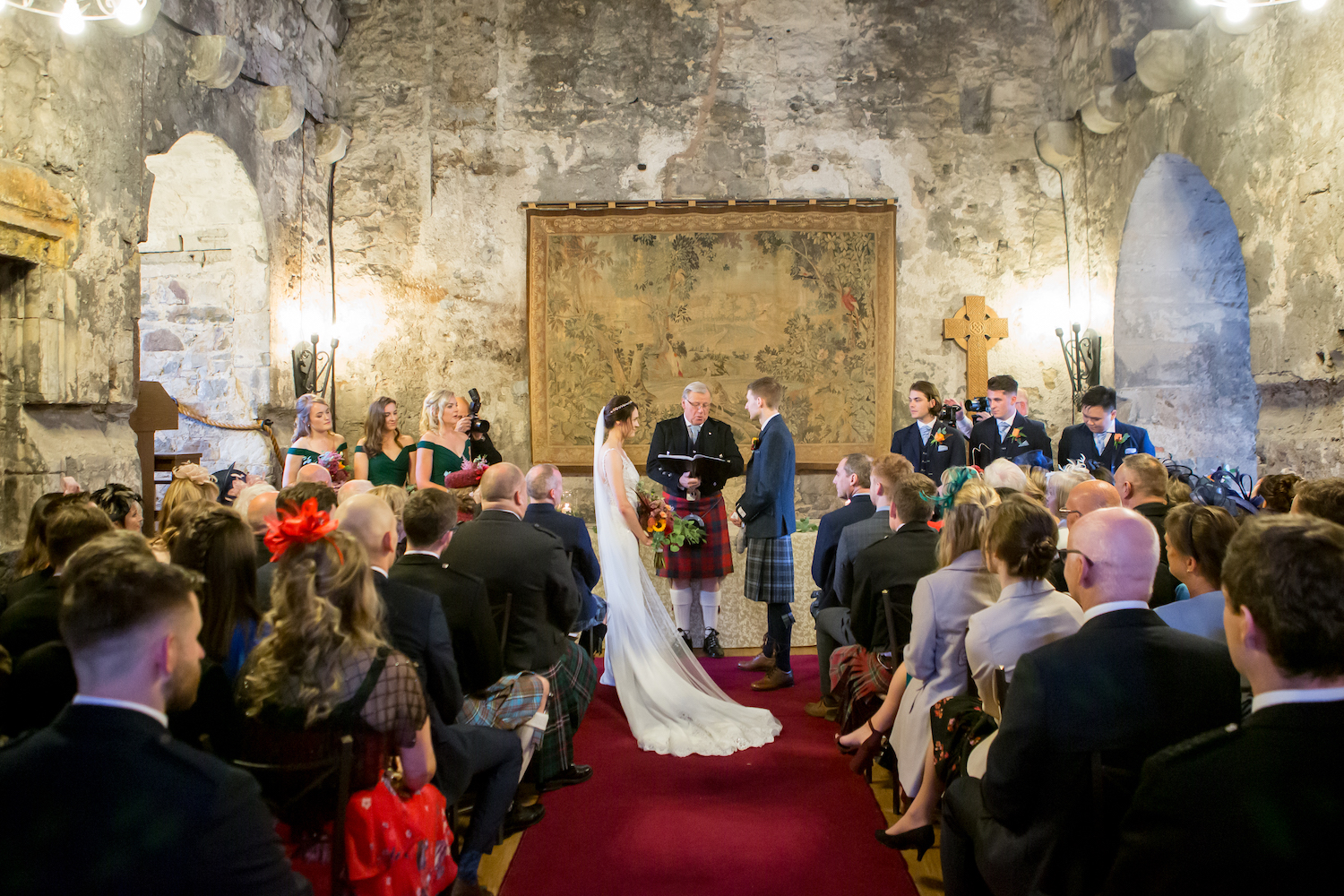
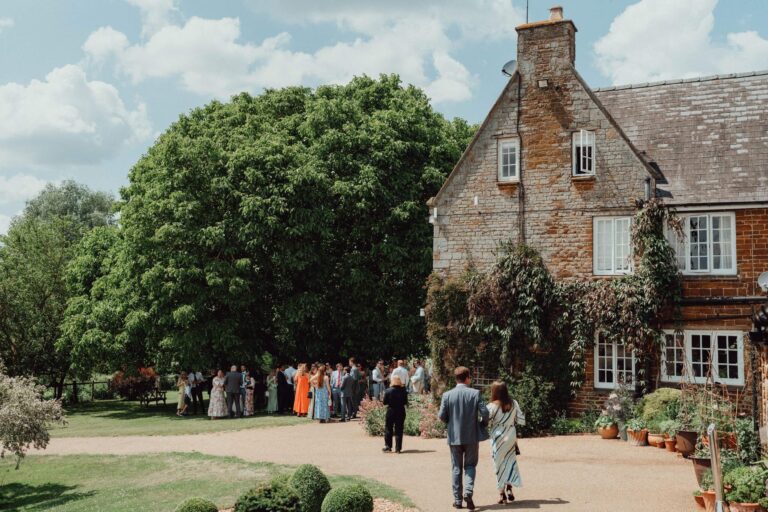
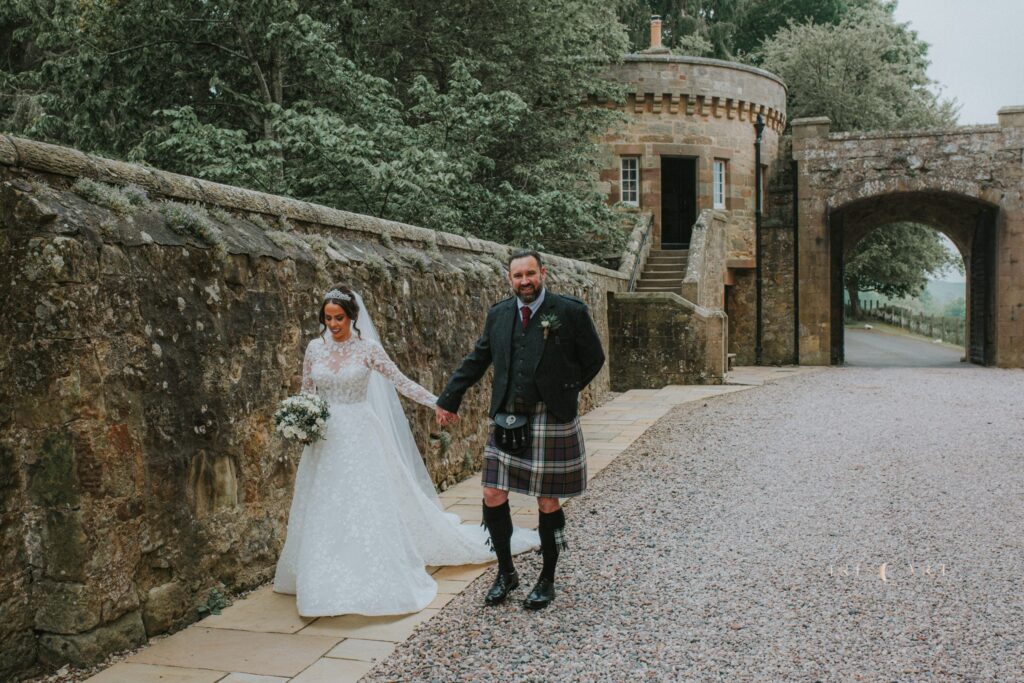
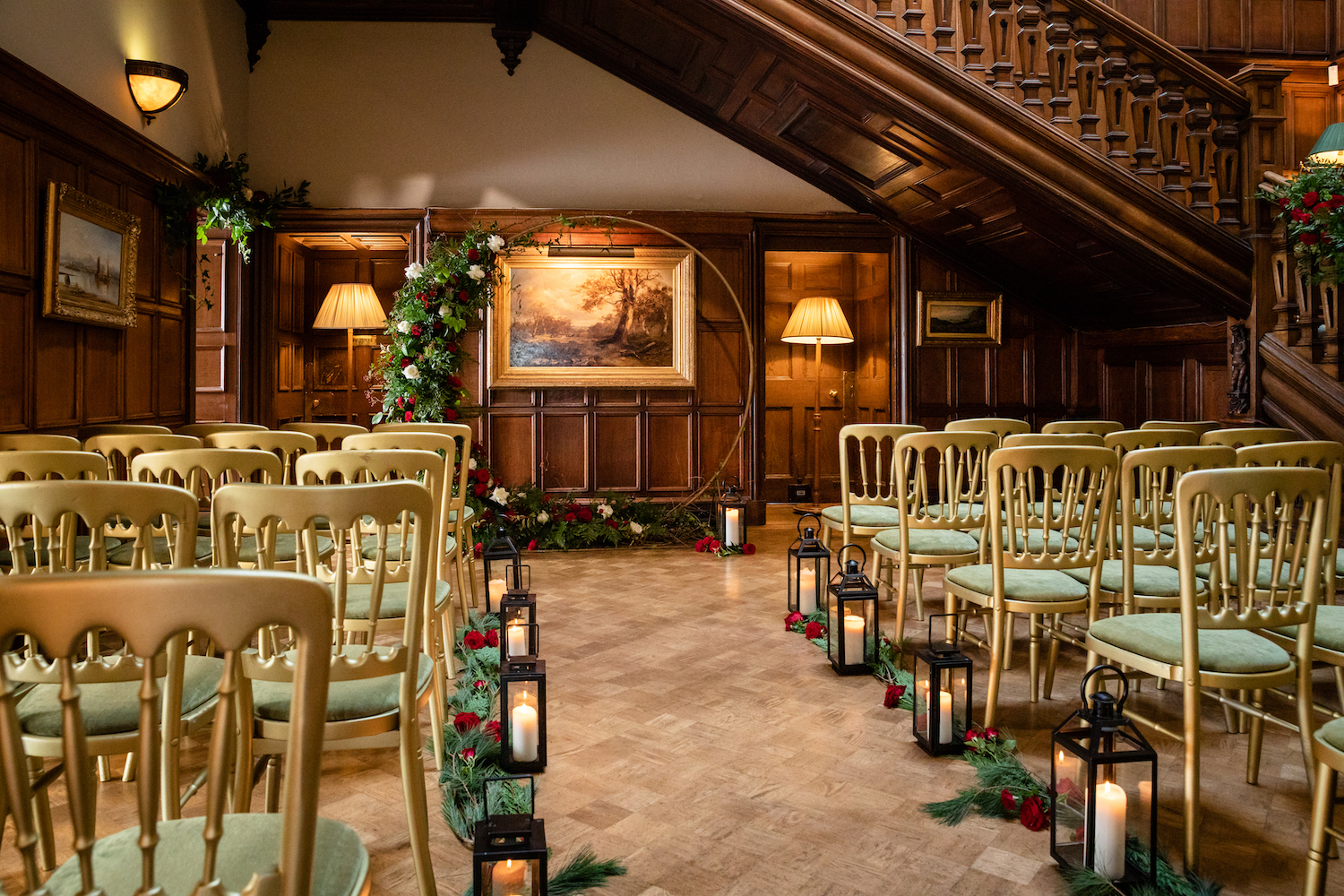
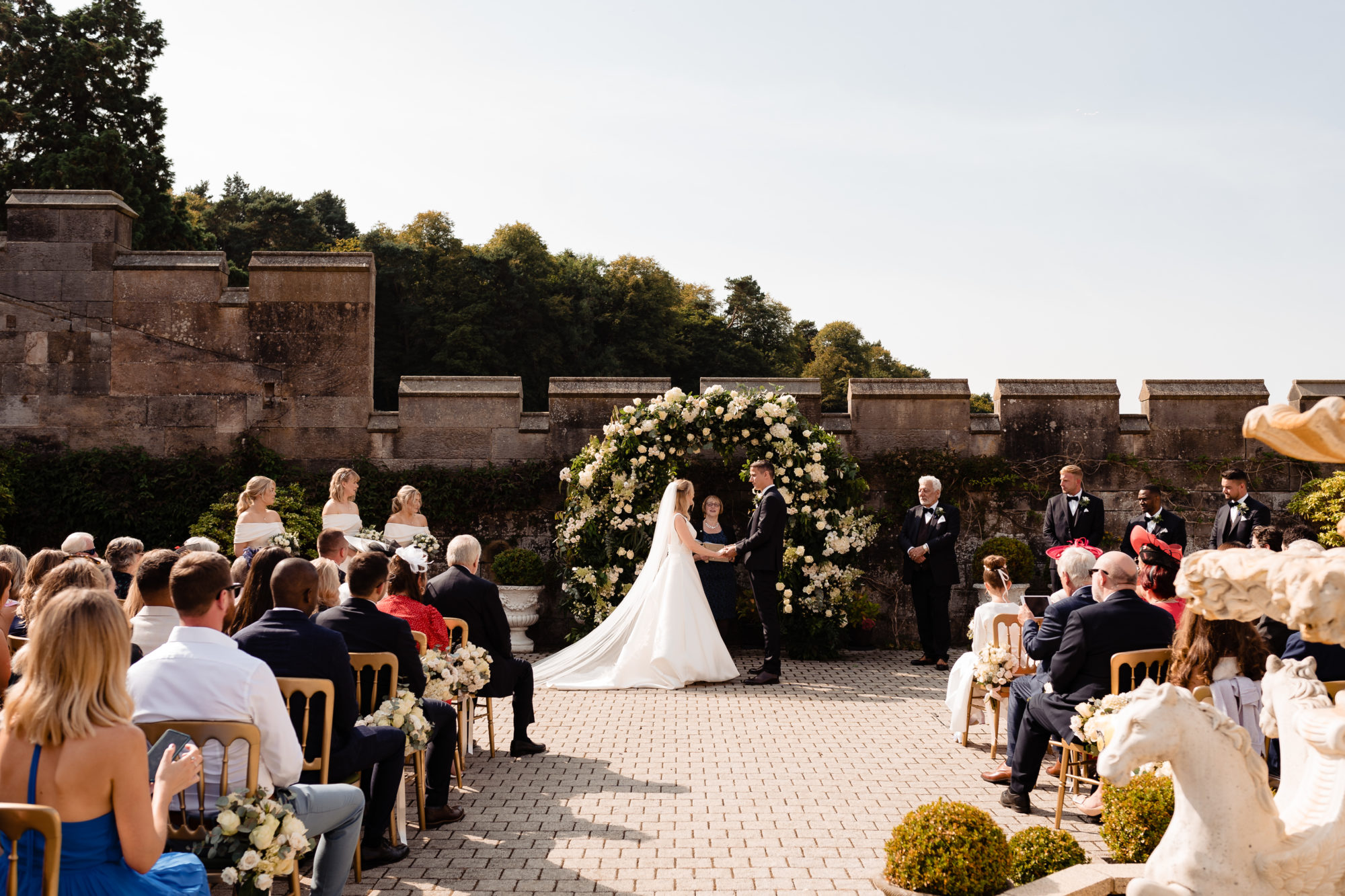
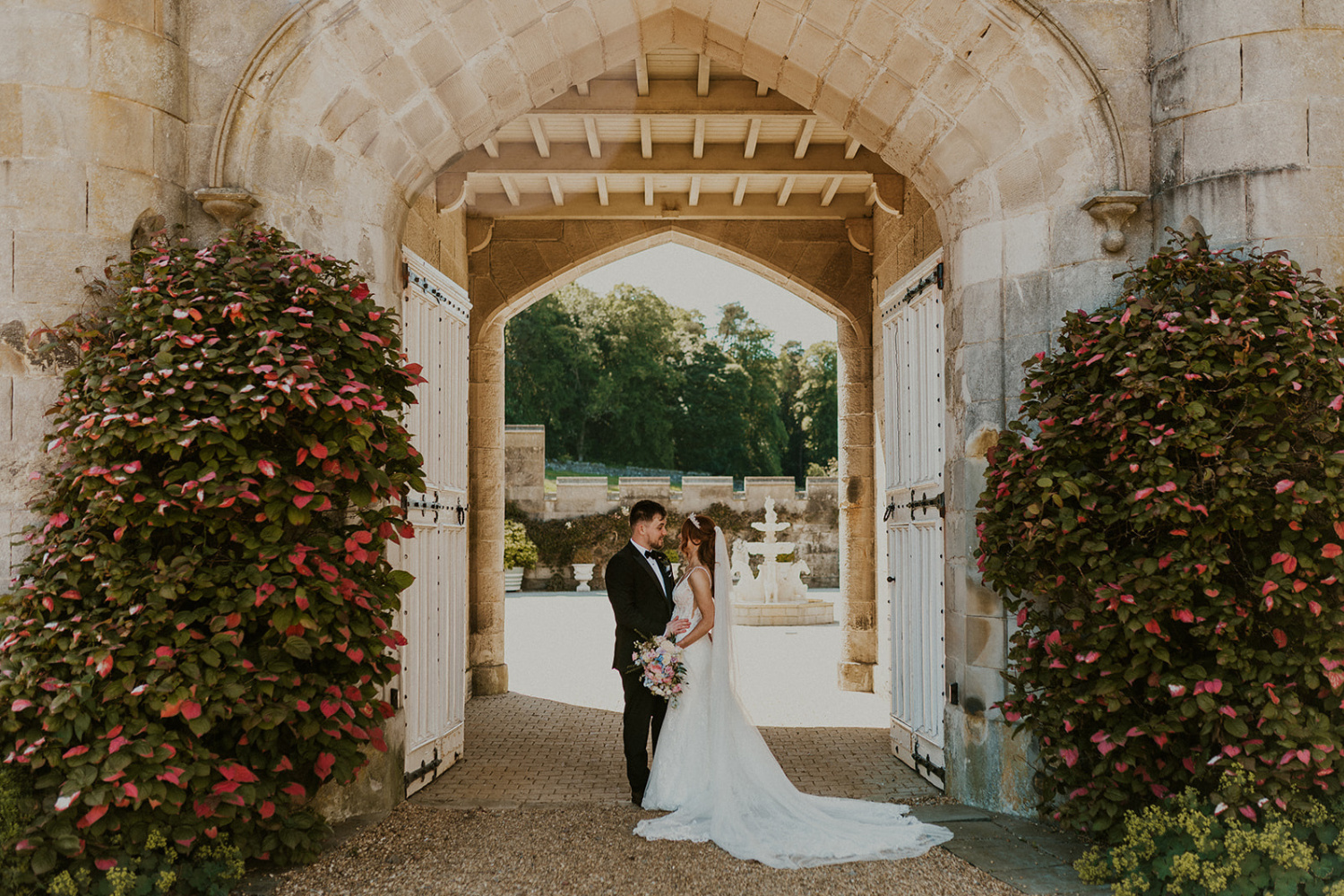
In Burn’s house the Main Hall, with its stained glass window, grand staircase and panelled walls, is also used for ceremonies, and the Croquet Room takes up to 80. Outdoors, the Courtyard has a white stone fountain and coloured arched doors, and a ceremony there or on the lawn, with the castle behind, can take up to 180 guests. Wooden pews are provided for a small lawn ceremony of up to 30. Couples who marry in a church elsewhere can return to the castle for the celebration.
Drinks by the fire, dinner in the keep or the Pavilion
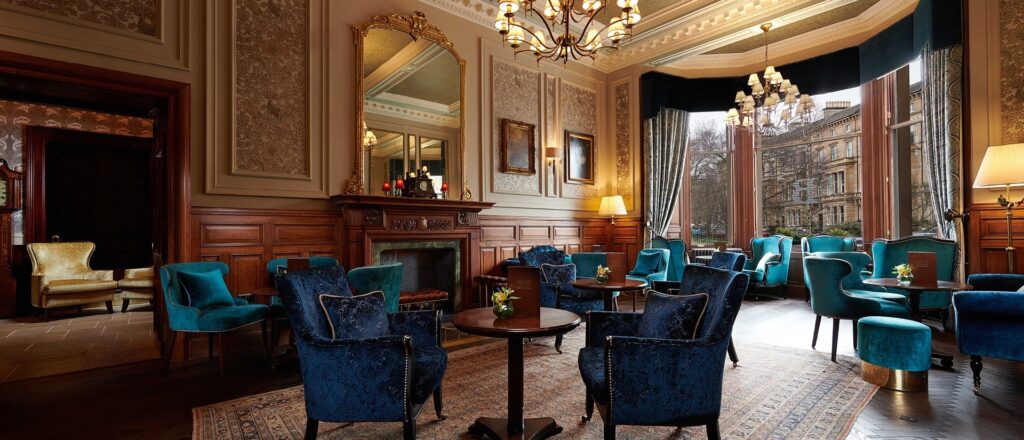
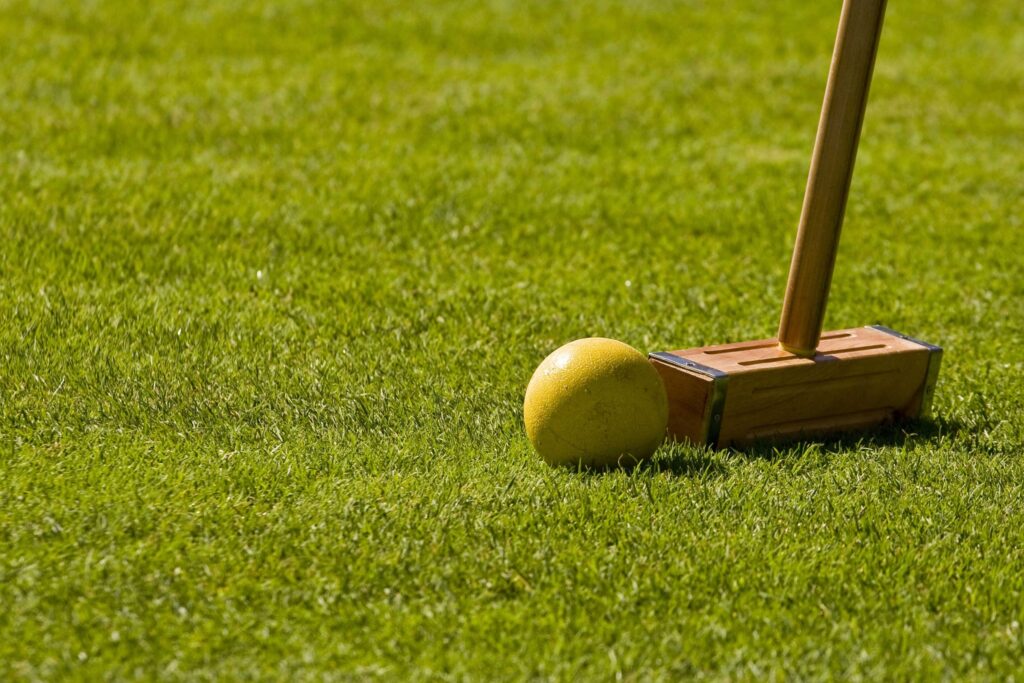
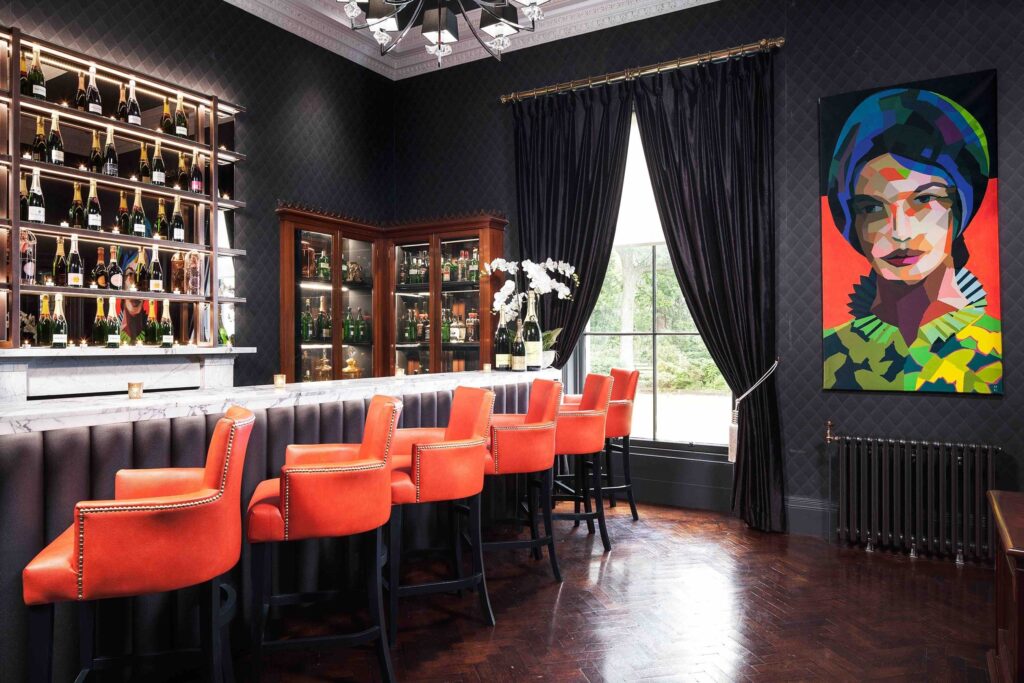
After the ceremony guests are served fizz or a cocktail on the lawn or in the Drawing Room, the Library and the Front Hall, with lawn games set out while the couple are photographed. The Armoury in the keep, which has its original open fireplace, holds up to 30 for a smaller gathering.
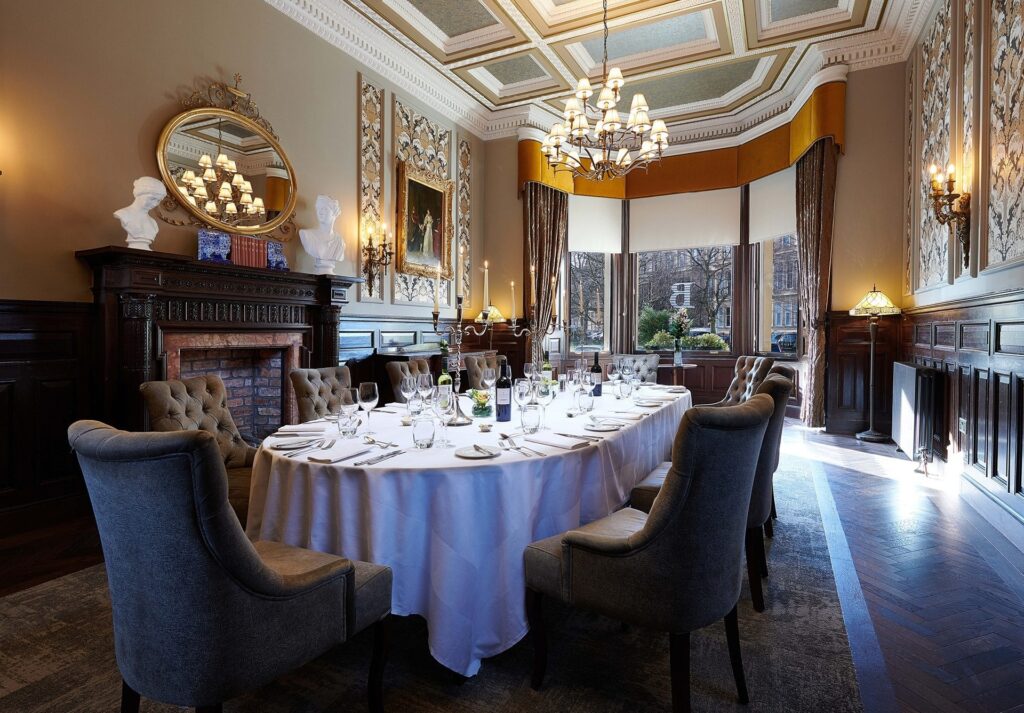
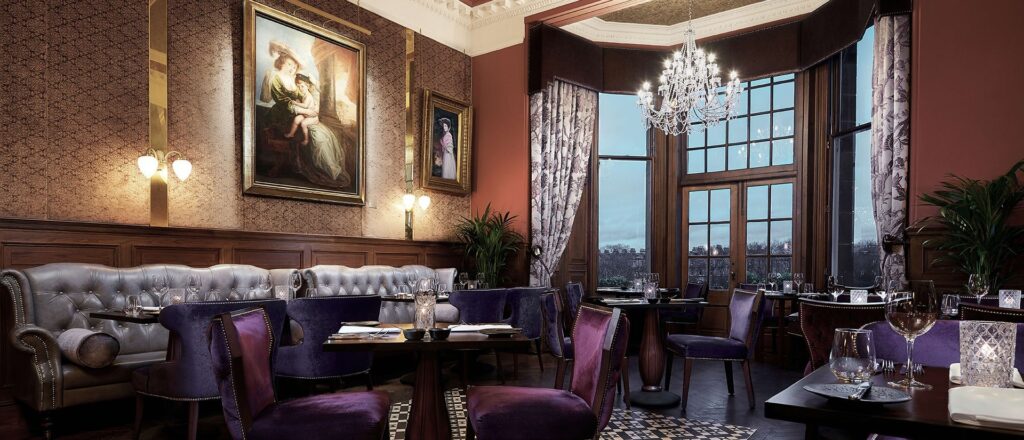
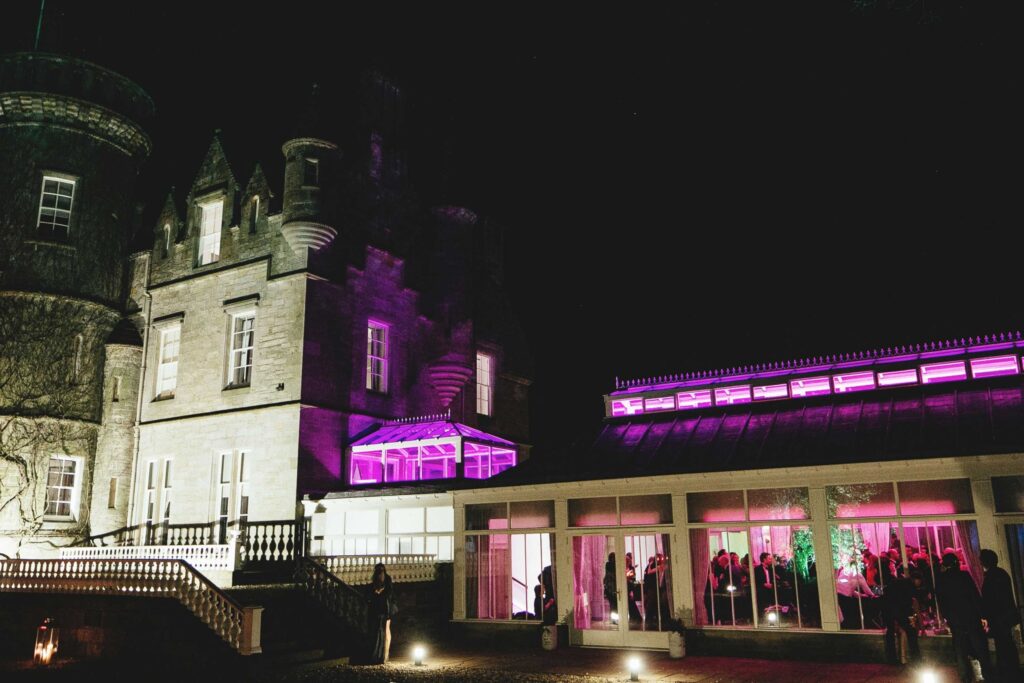
Dinner has three settings. The Stag Chamber, also in the keep, has stone walls and a vaulted ceiling and seats 26 by candlelight. The Croquet Room in the house, with a large open fire, a crystal chandelier and views over the lawns, seats 60. Larger weddings dine in the Pavilion, a permanent building on the lawns that seats 180 and has its own dance floor, stage, chandeliers, fairy lights and a PA for the speeches; the castle wall facing it is floodlit. A silver cake stand and a Dundas ceremonial sword come with the hire.
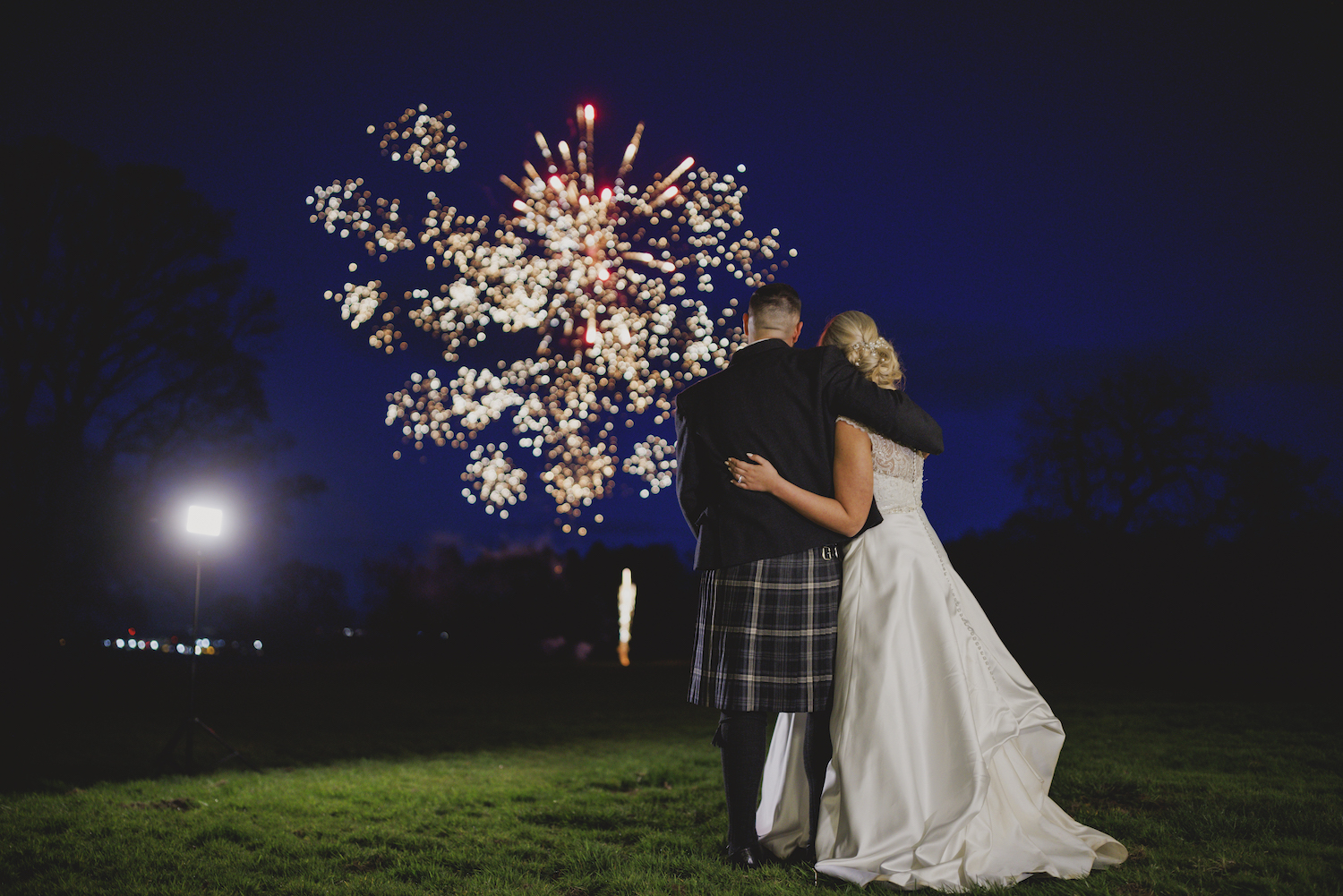
Heritage Portfolio is the castle’s caterer. Menus can be personalised and are tasted about three months before the wedding; all food can be Halal, kosher style dishes are available, and the castle holds VisitScotland’s Taste Our Best award. Guests may not bring their own drink. The night can end with fireworks, or with a pipe band playing the Beating of the Retreat. Carriages are at midnight, after which only resident guests stay on, with a residents’ bar set up in the Library.
Seventeen bedrooms and a boathouse on the loch
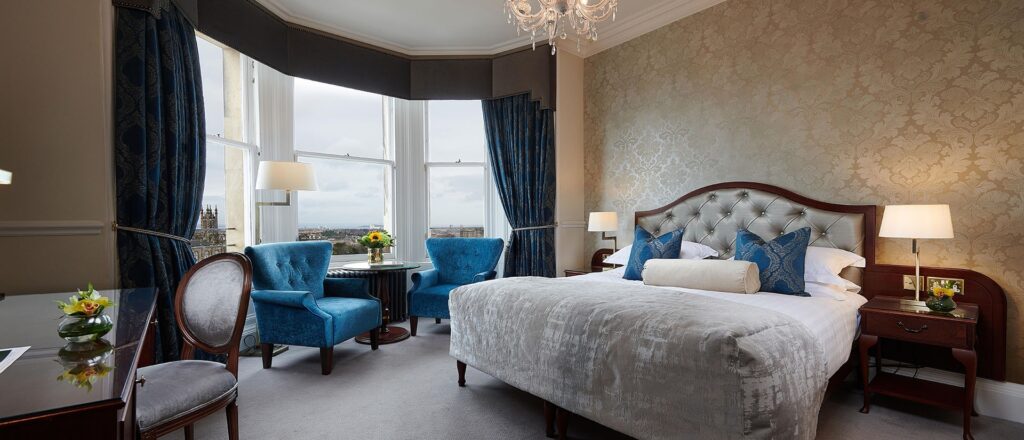
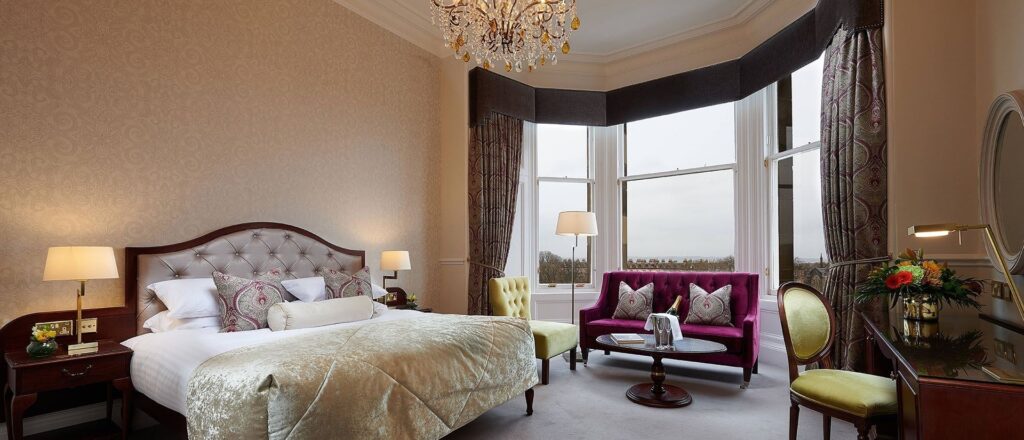
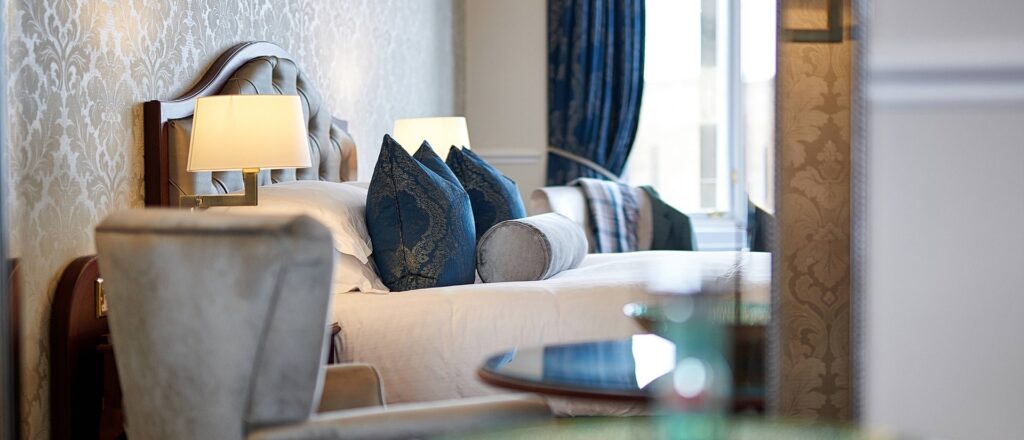
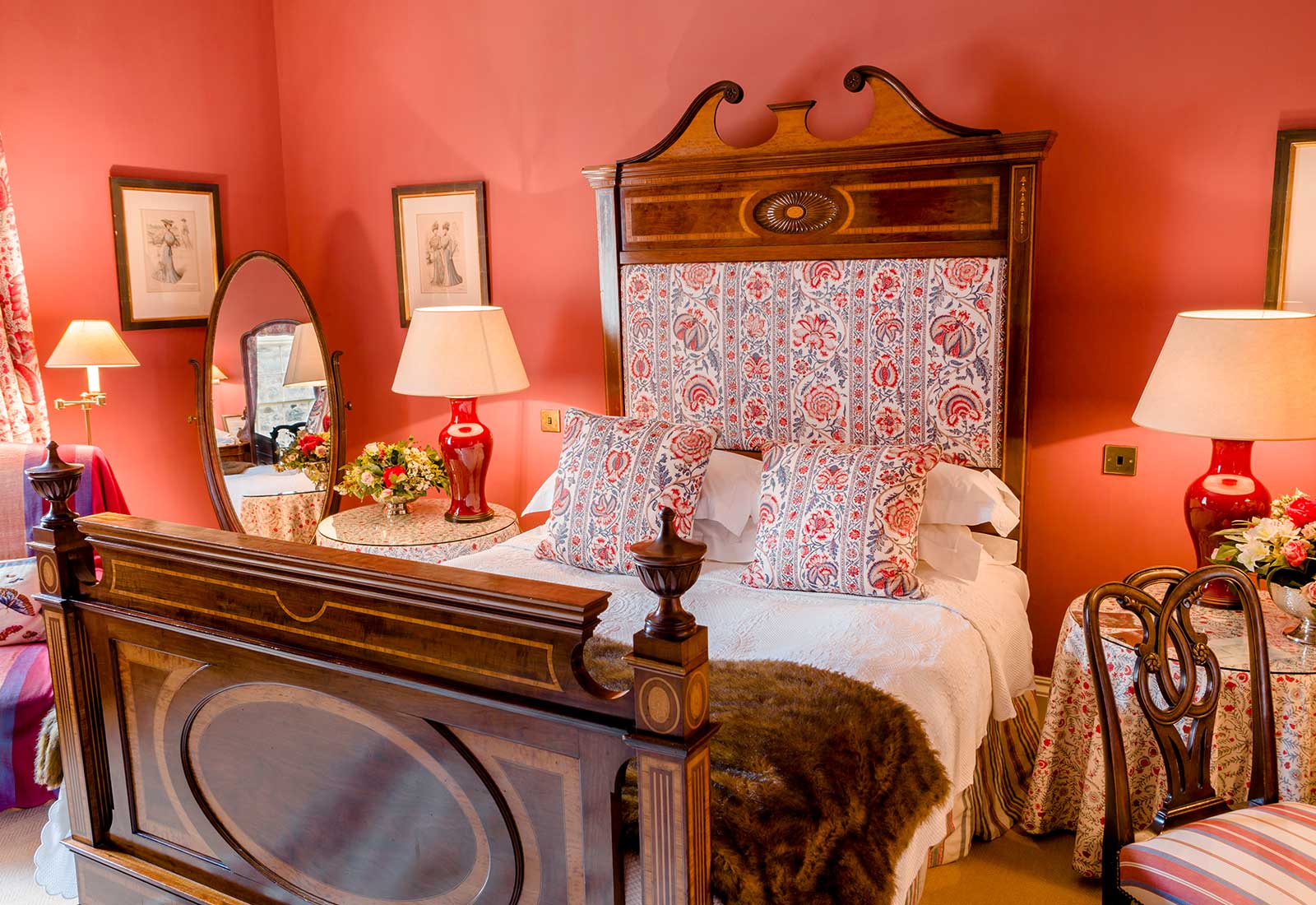
Bedrooms are not let individually while a wedding is on. The 17 rooms, in the main house, the Stables and Courtyard Cottage, sleep up to 37 adults, with extra beds for children, and couples allocate them to family and friends on a visit before the day. Every room is individually designed; some have fabric covered walls, original roll top baths or four poster beds, and those in the house and the Stables come with complimentary whisky. Resident guests check in from noon and leave by 10.30 the next morning, and a two day wedding can be arranged.
The Boathouse, a cottage on the bank of the loch with a veranda over the water, is booked separately from the castle and can be taken for the wedding night.
Between the Forth bridges and the city
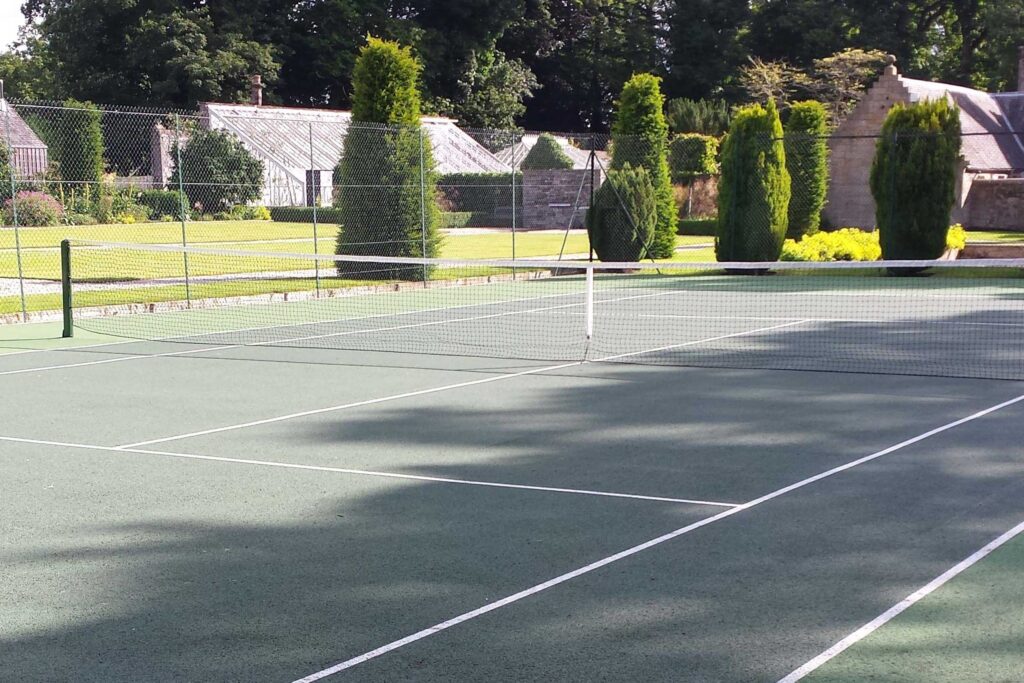
The castle stands in a 500 acre estate with walks across it. From the parkland the views run north over the Firth of Forth to the Forth bridges, and along the ridge of Dundas Hill to the Pentland Hills. For a longer celebration the castle can arrange falconry, whisky tasting and clay pigeon shooting, and the hire includes the squash court and the billiard table.
Dundas is just south of the Queensferry Crossing, about half an hour by car from the centre of Edinburgh and about 15 minutes from Edinburgh Airport. Guests arrive through the main estate gates on the B800 between South Queensferry and Kirkliston; for satnav, the postcode EH30 9SS leads to the B800 entrance. Dalmeny is the nearest railway station, about a mile and a half away in a straight line, and parking behind the castle is free, with resident guests able to leave their cars overnight.
For more castles, read our Edits on Leeds Castle and Amberley Castle or our 40 castle wedding venues in the UK, or browse wedding venues in Edinburgh and the United Kingdom Wedding Atlas.
The Great Hall or the Courtyard
The first decision is the size of the guest list, because it decides where the vows are said. A party that fits the Great Hall can say its vows inside the keep; a larger wedding, of up to 180, marries outdoors in the Courtyard or on the lawn. Prices are on request, set out in the castle’s wedding brochure. Read the Dundas Castle profile and check your date.