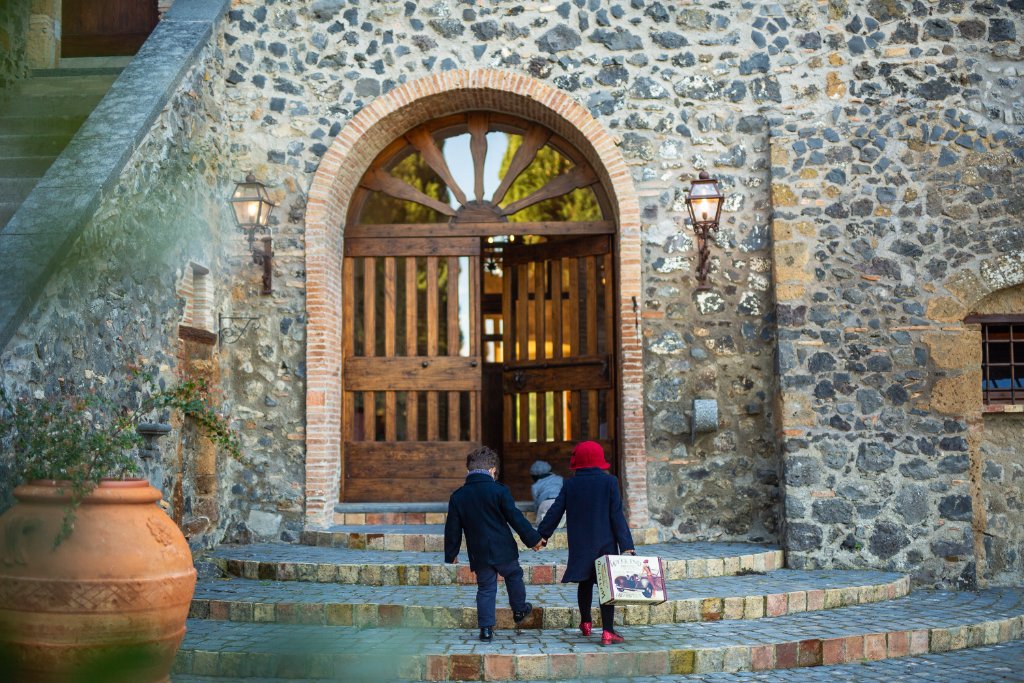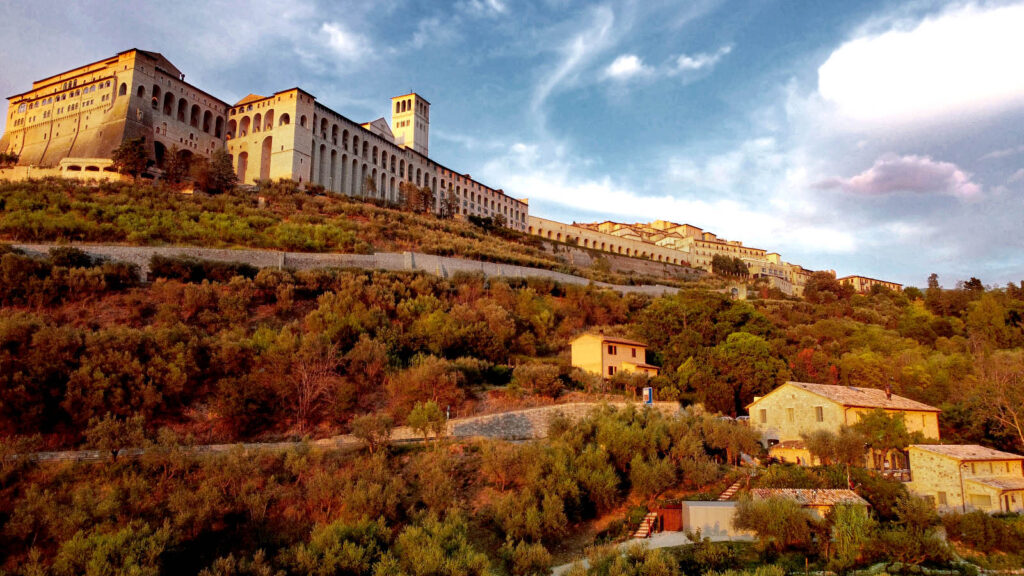
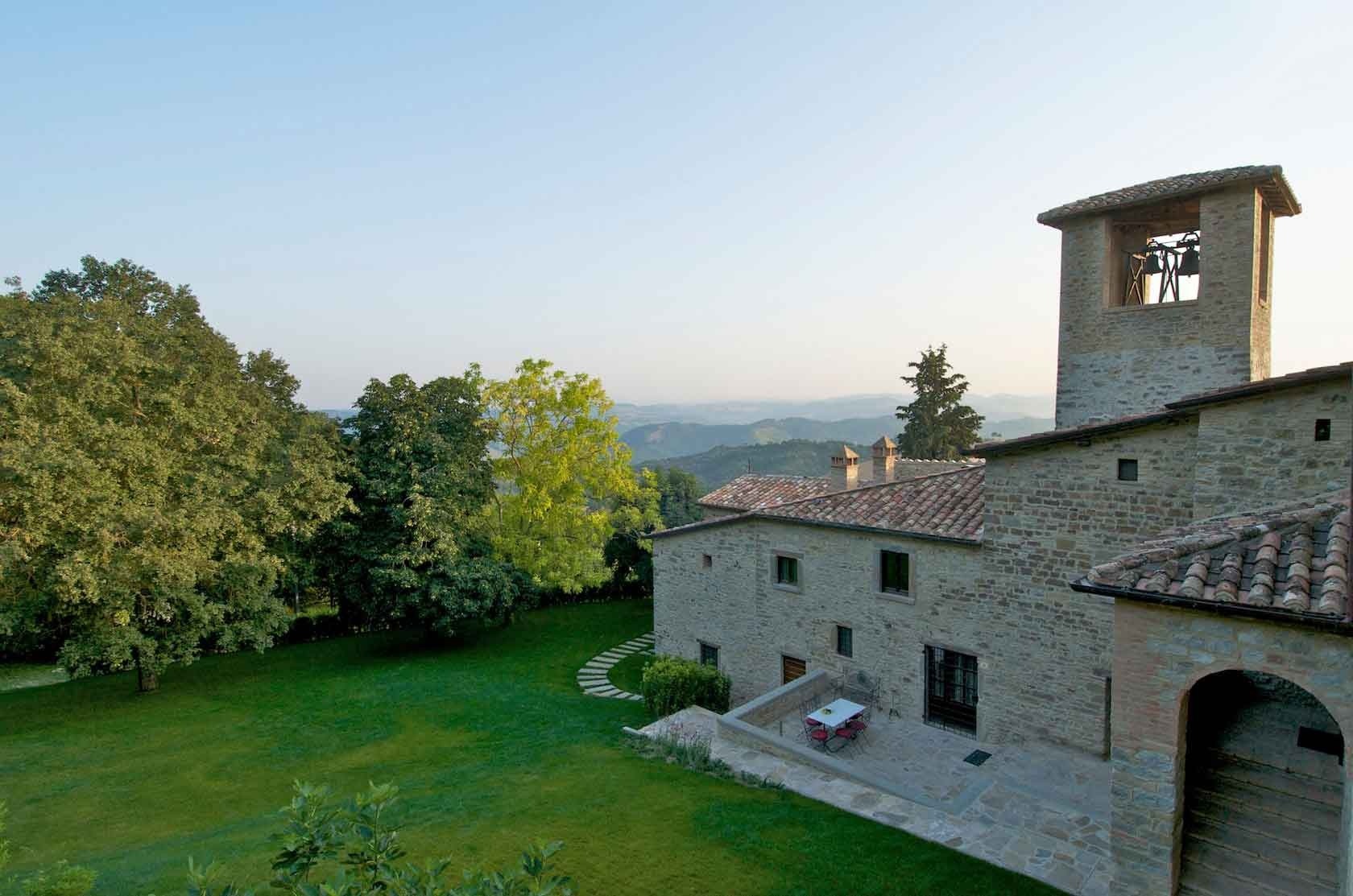
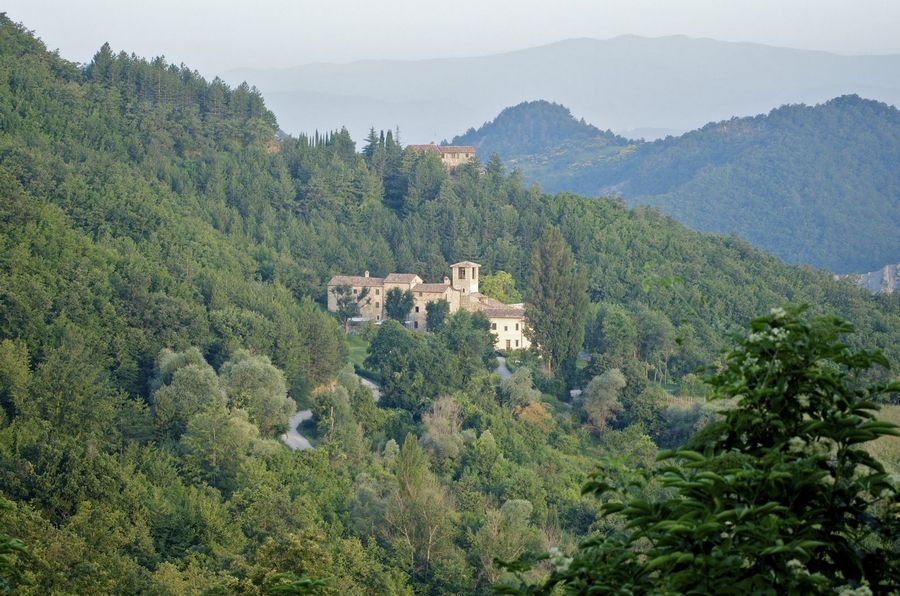
In The Consul, his book about the war years, Walter Orebaugh, the former American consul in Nice, recalls the moment a man named Giuseppe stopped in front of an old stone church with a square bell tower, crossed himself and told him that this was San Faustino. The church and the plain buildings around it, he wrote, “looked as though they had sprung out of the rocky soil”. That church belongs to The Abbazia San Faustino, a Benedictine abbey completed in 1289, and across a wedding weekend it can do three jobs: couples can marry beneath its stone vaults, guests take breakfast there the next morning, and after dinner the drinks are poured among its frescoed walls.
A Benedictine house above the Carpina
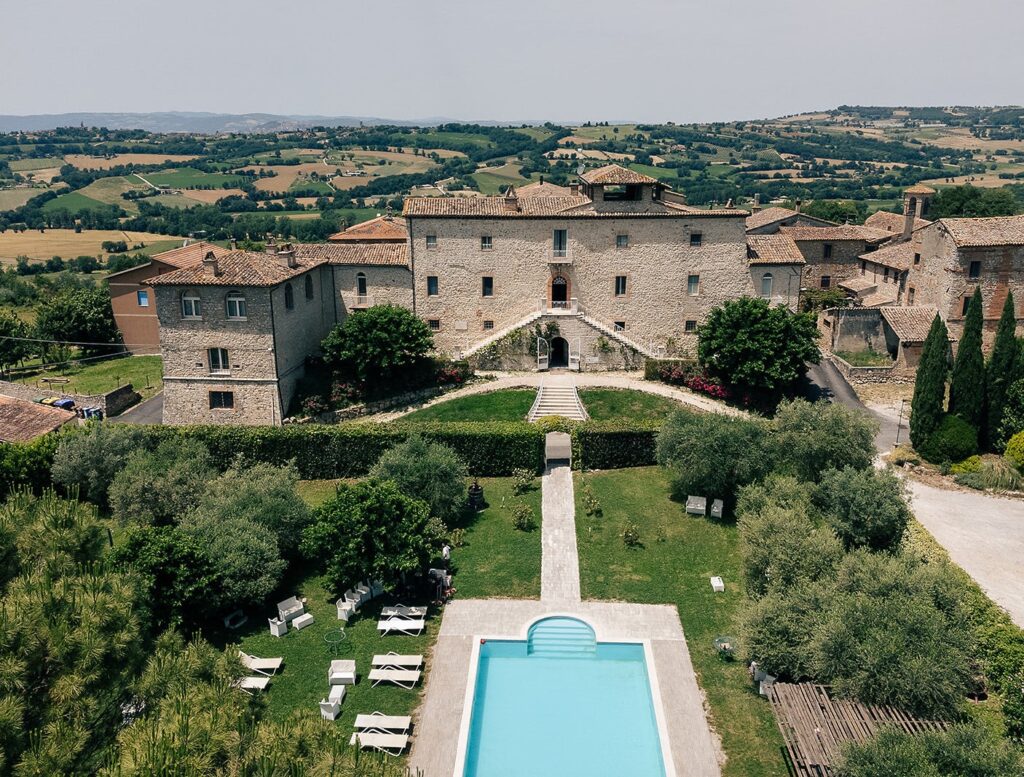
San Faustino is a hamlet of Pietralunga, a comune on the Apennine slopes about 35 kilometres north of Perugia, whose territory is crossed by the Carpina river. The abbey stands at about 600 metres. It was raised on the ruins of a Roman settlement and of a later Lombard tower, and the Benedictines completed it in 1289. They were not the only monks in these hills: the abbey of San Benedetto Vecchio, on Monte Pellio in the same comune, is documented from 1191 and prospered until the early fifteenth century. Pietralunga itself grew on its hilltop from the sixth and seventh centuries, after the nearby Roman town of Forum Julii Concupiensium was destroyed in the invasions of late antiquity, and an eighth century pentagonal Lombard fortress still forms the core of the old town.
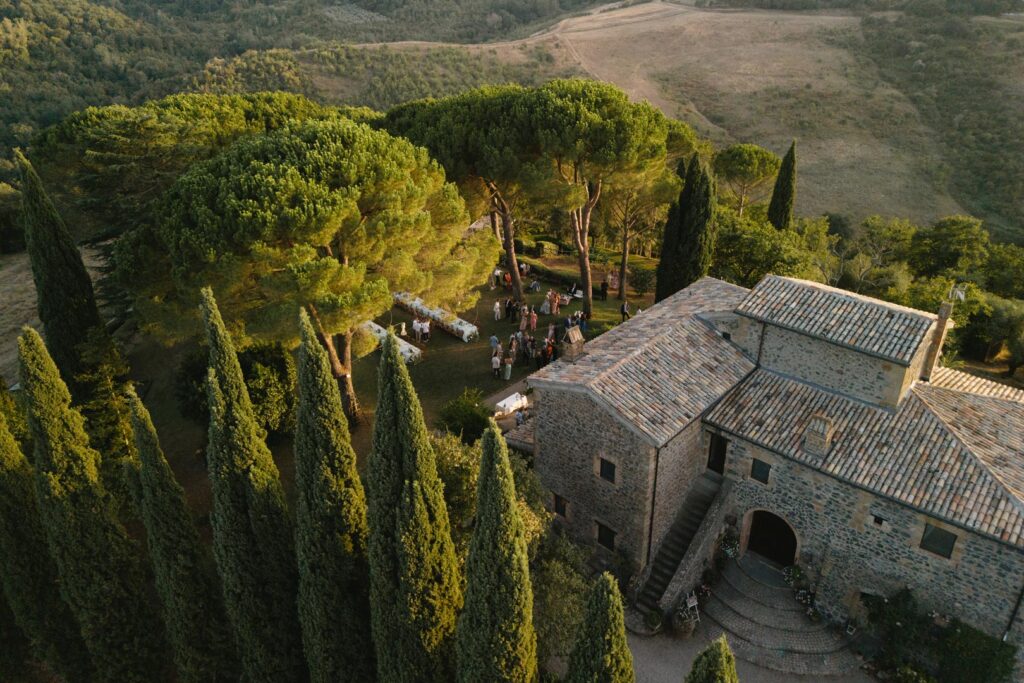
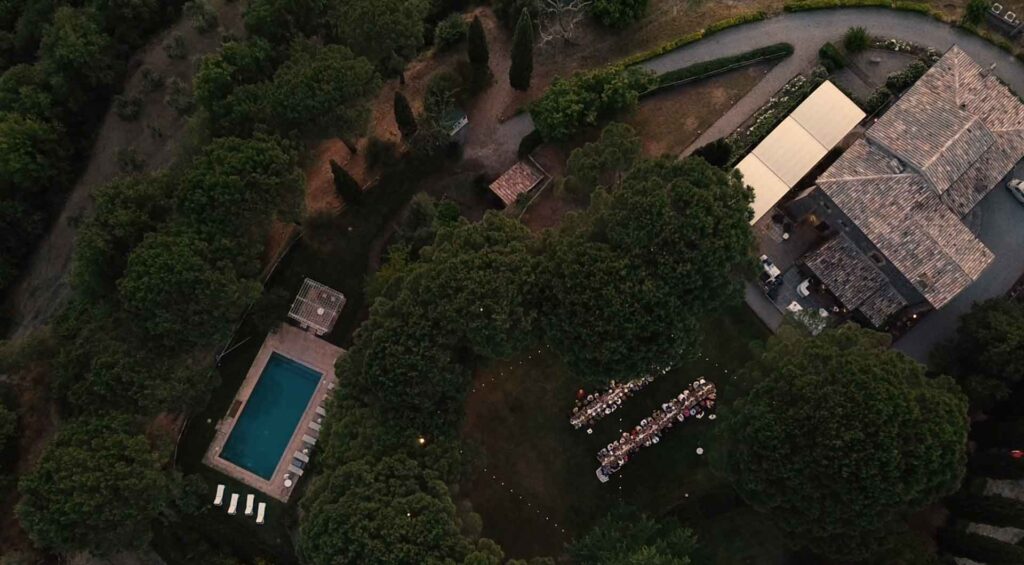
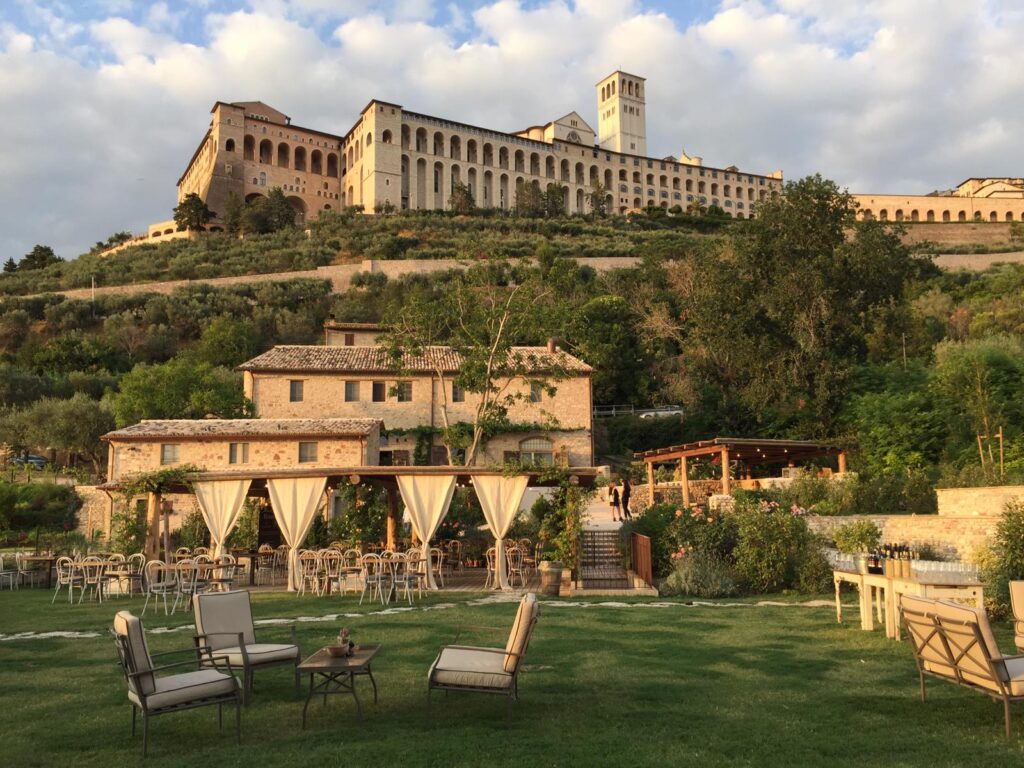
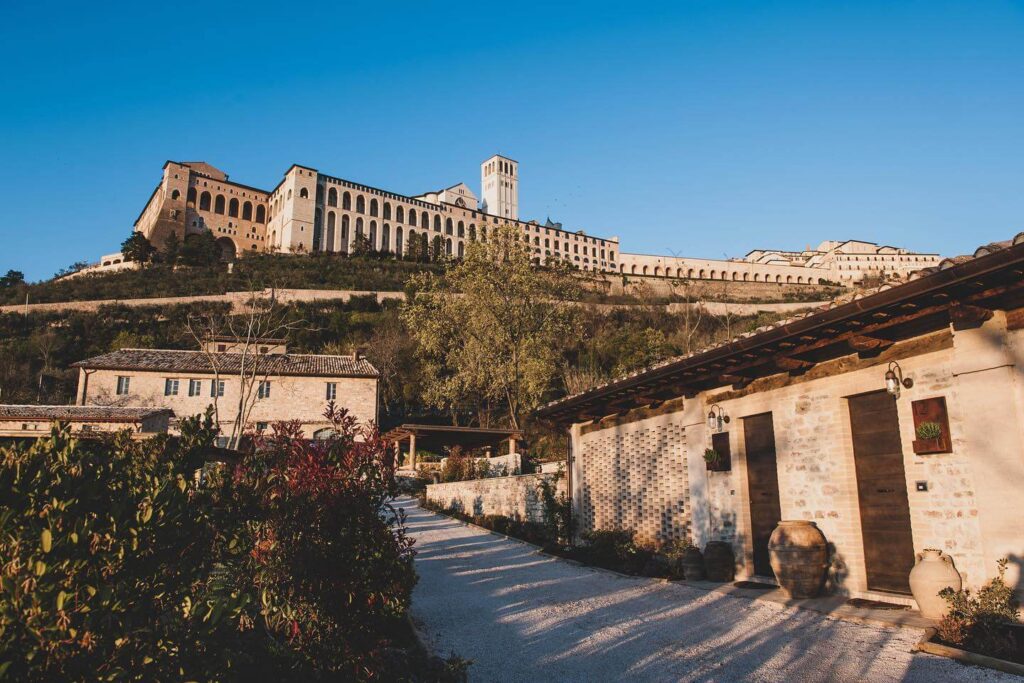
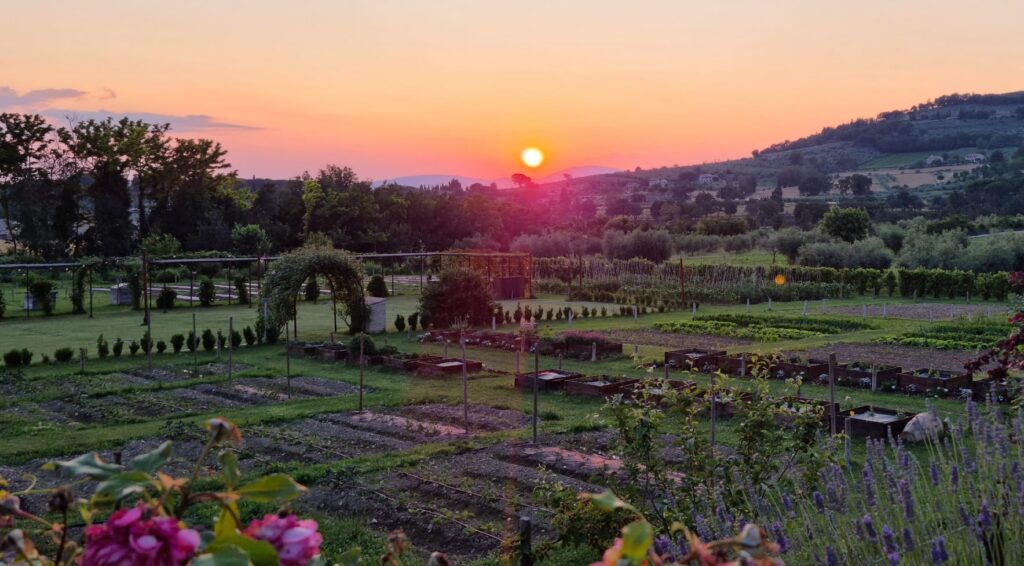
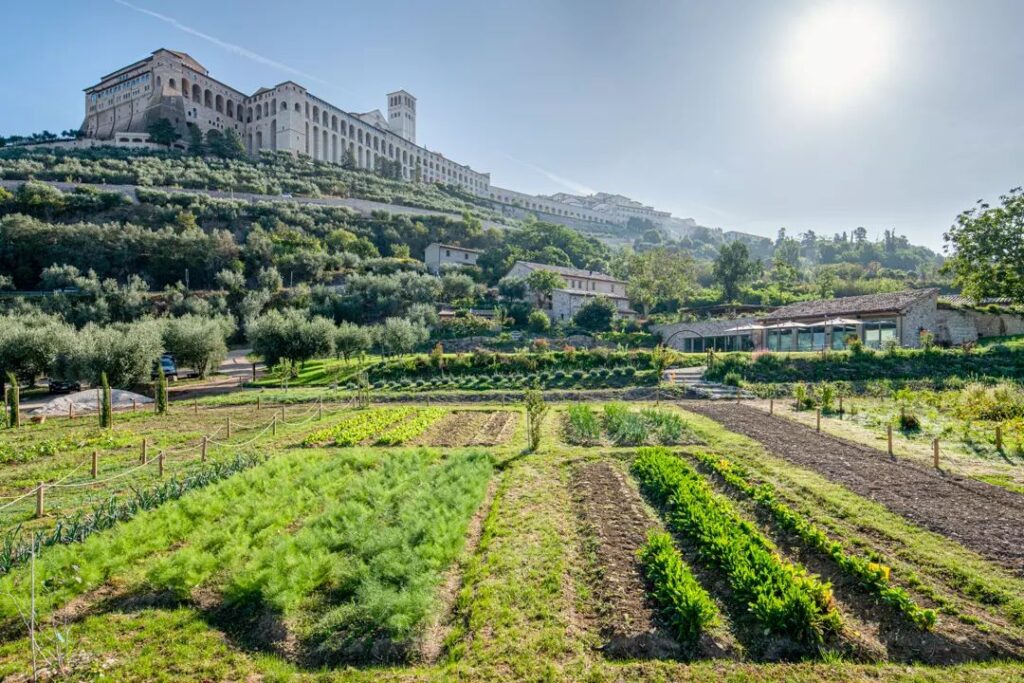
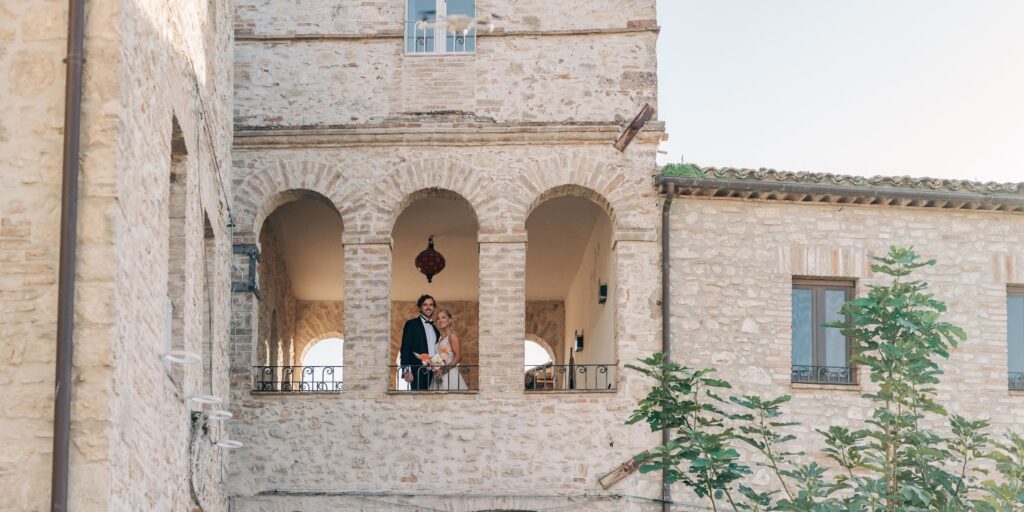
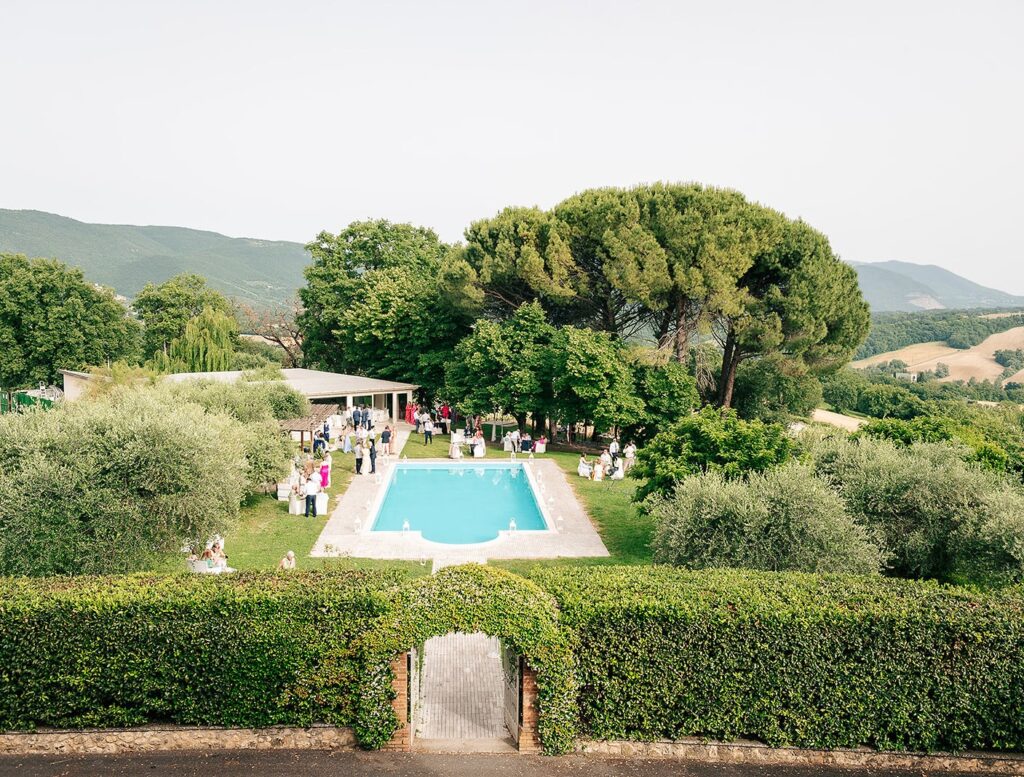
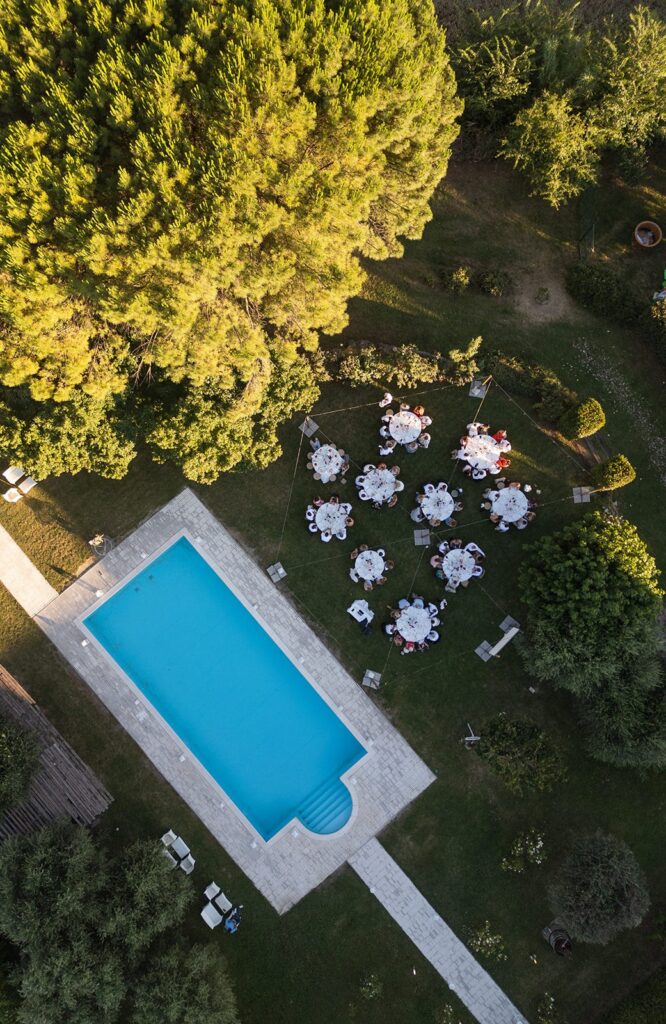
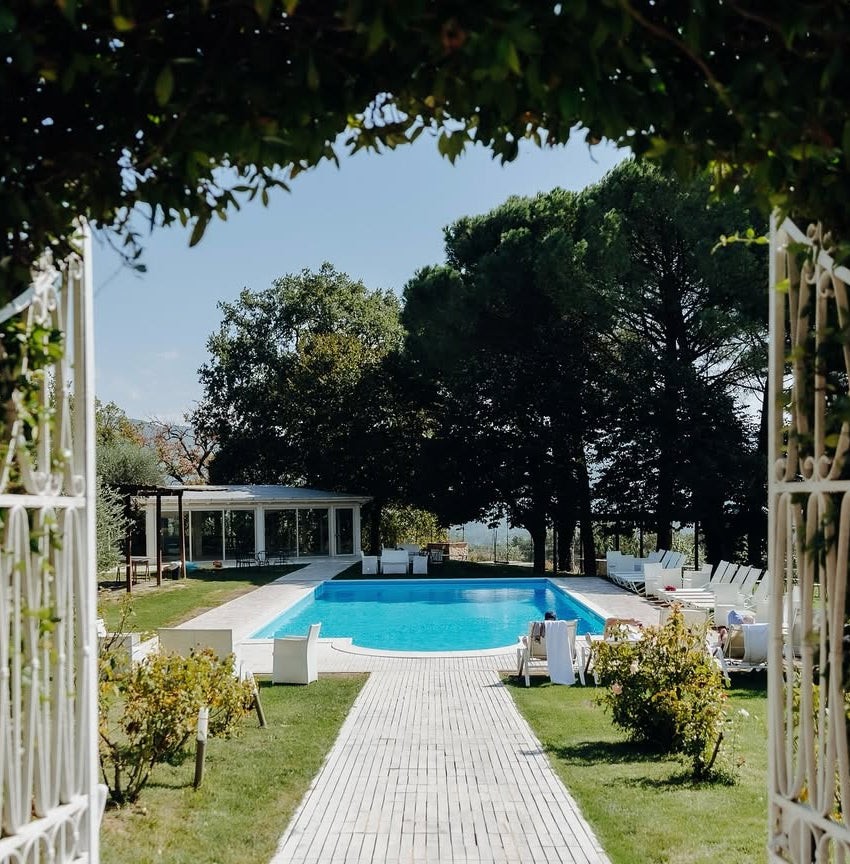
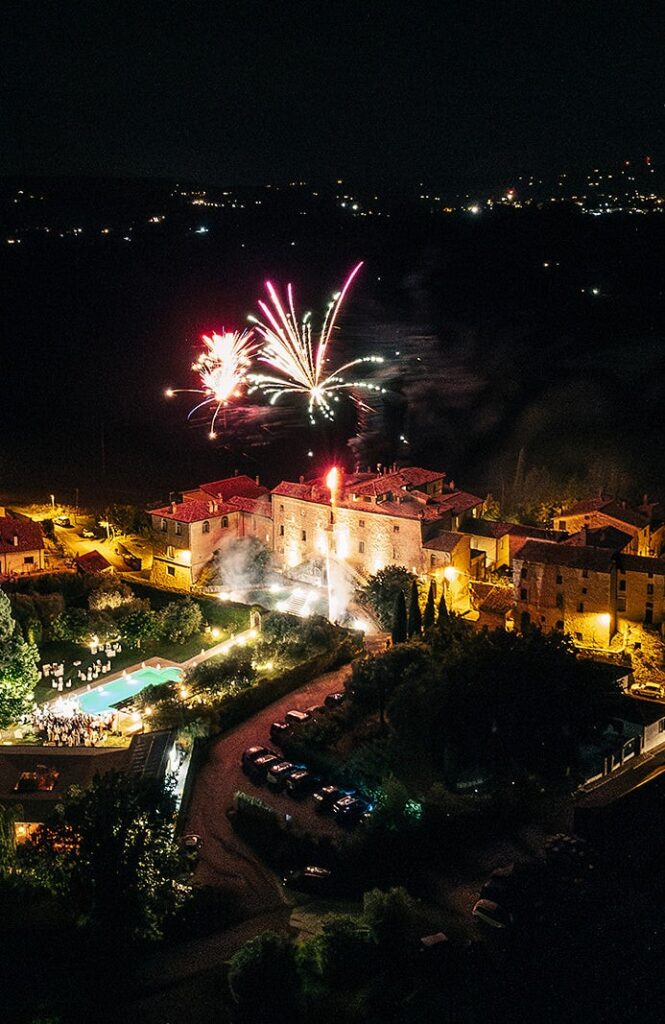
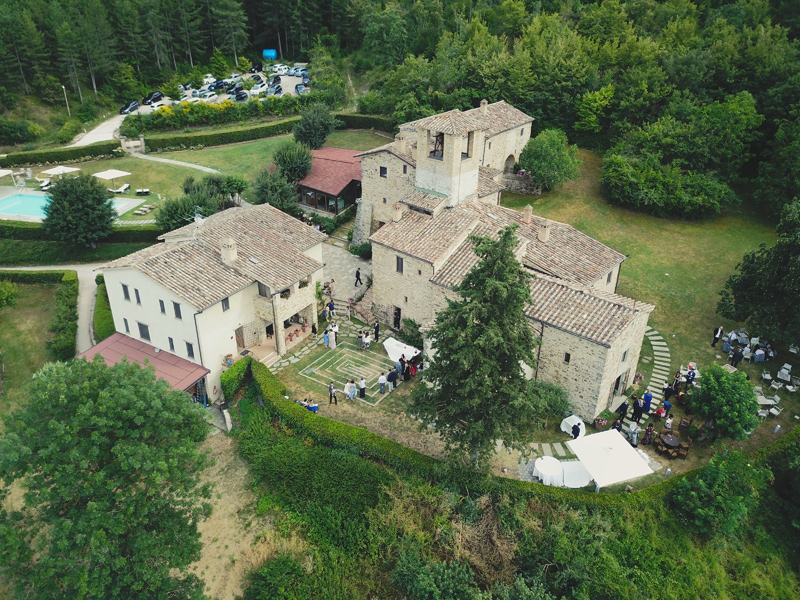
Restored as a residenza d’epoca, the abbey keeps its medieval stonework and the frescoes preserved in it, and dresses its rooms with handmade ceramics, wrought iron lamps and fine fabrics. Around the buildings lie a formal garden, an orchard, a kitchen garden, an olive grove and a large park, with a heated pool set into the lawns.
The hill also gave its name to a partisan band, founded at a meeting on Bonuccio Bonucci’s land at San Faustino on 13 September 1943 and later known as the Brigata Proletaria d’Urto San Faustino. Orebaugh was among the dozen or so men in its first action, an ambush on a German convoy in early February 1944.
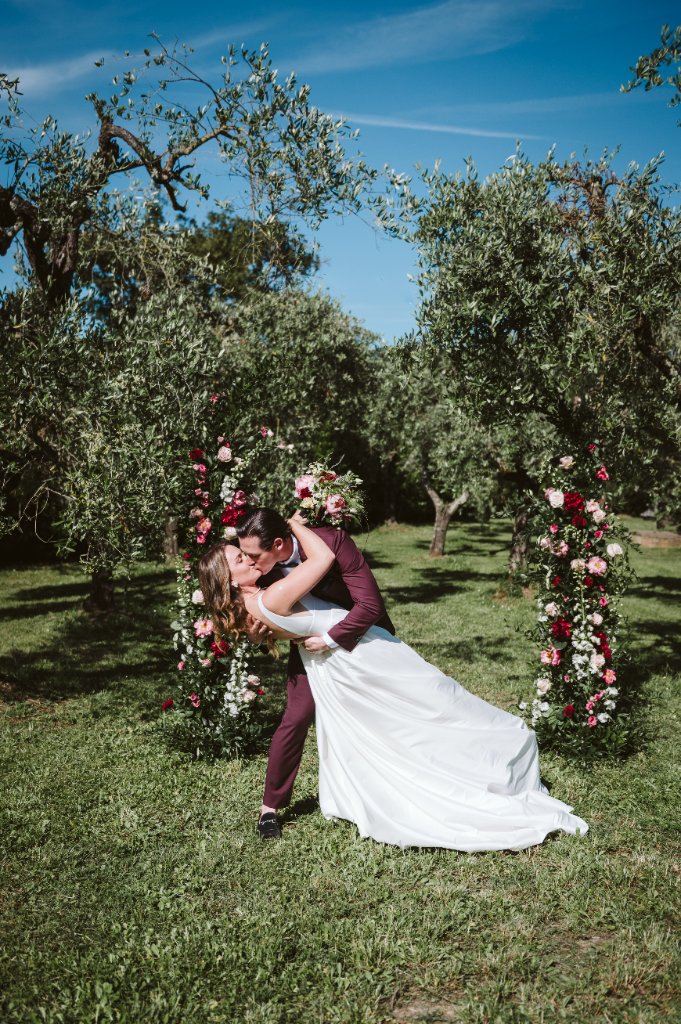
Vows beneath the stone vaults
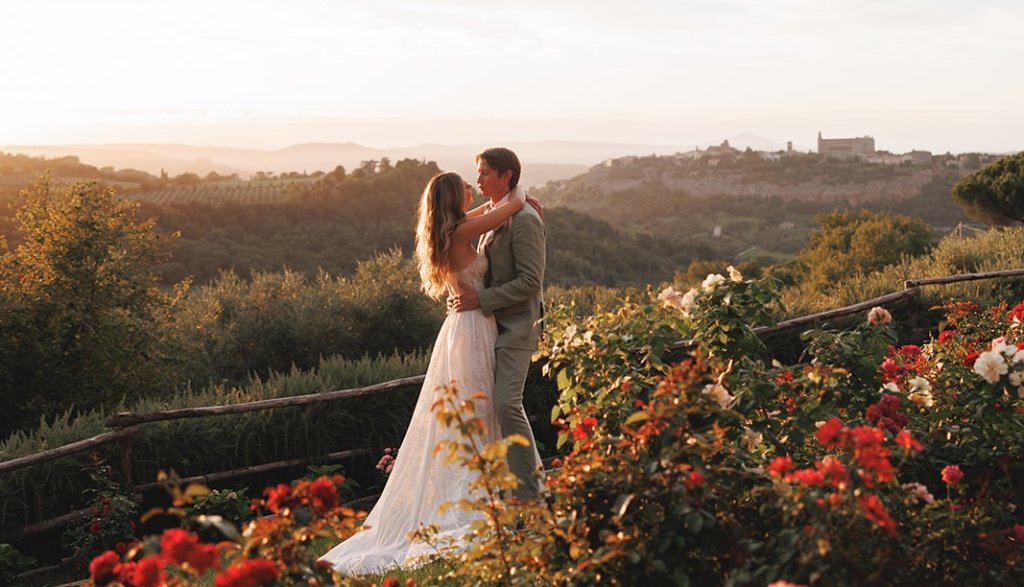
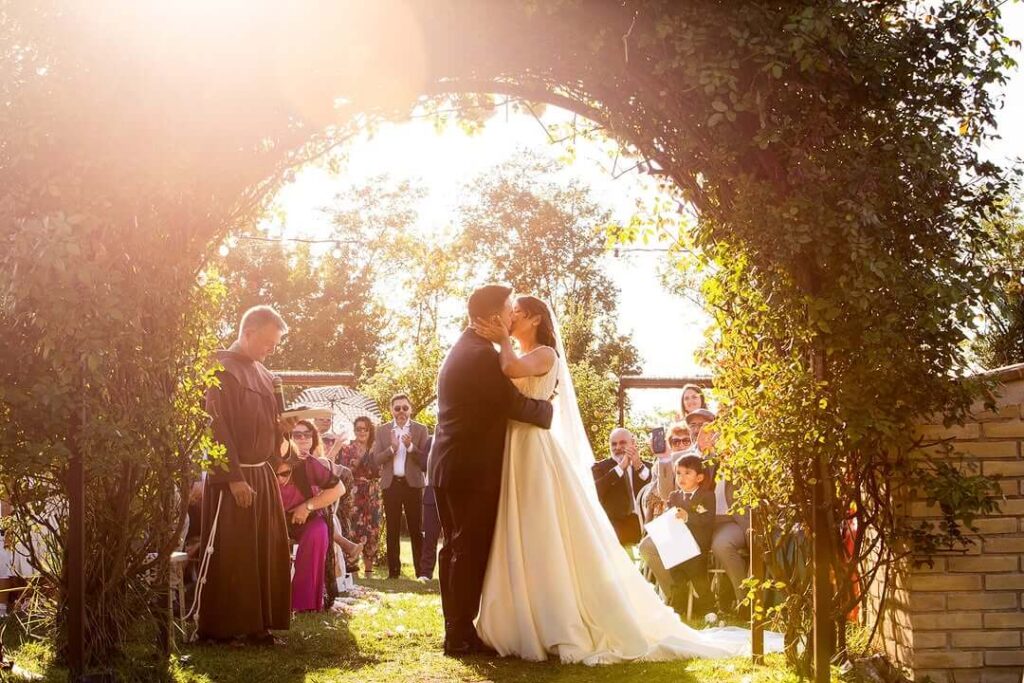
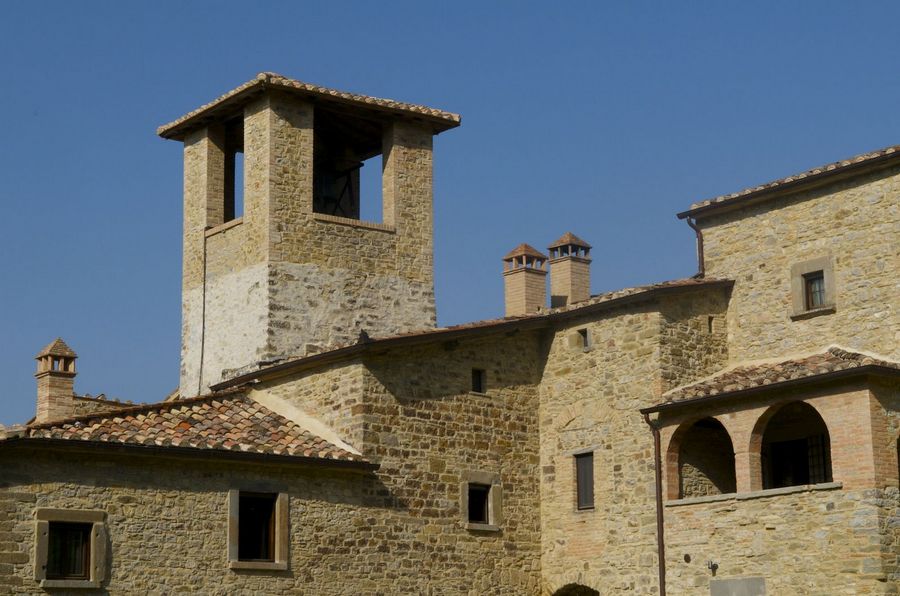
Three kinds of ceremony are offered, civil, symbolic and a blessing, and there are three places to hold them. One is the old hamlet inside its medieval walls. Another is the park, planted with roses and looking out over the Valle del Carpina. The third is the former abbey church, where the couple stand beneath the vaulted stone ceiling with the apse and its old fresco behind them.
San Faustino counts itself among the few private properties in Umbria where the mayor can conduct a civil ceremony on site. Couples coming from abroad will still need to check which documents Italy asks for to prove that they are free to marry.
Stone halls, a glazed loggia and the lawn
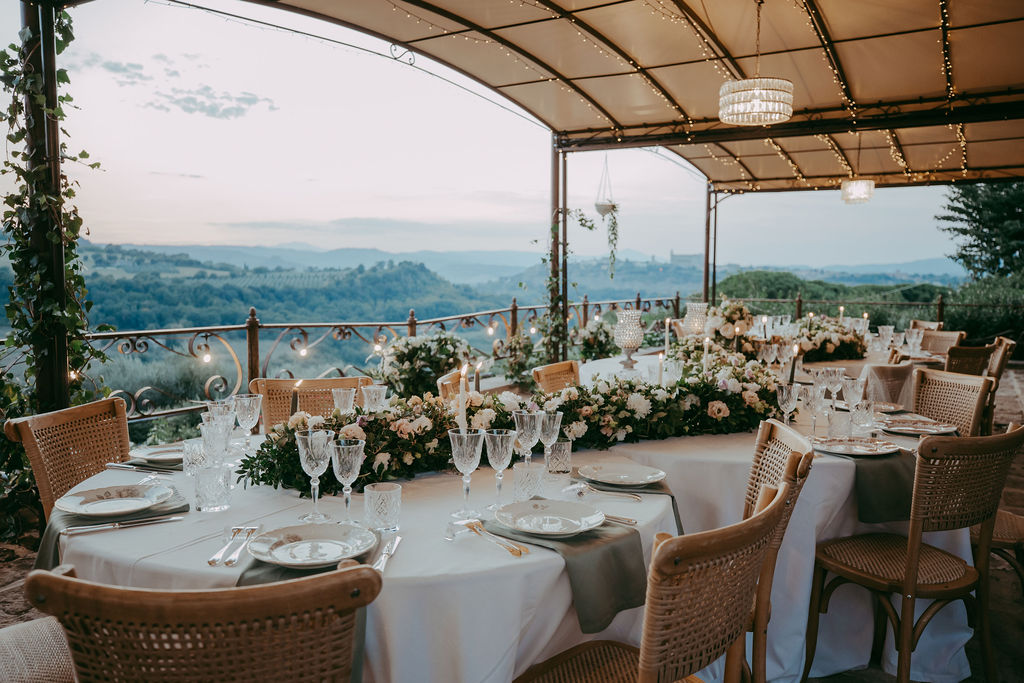
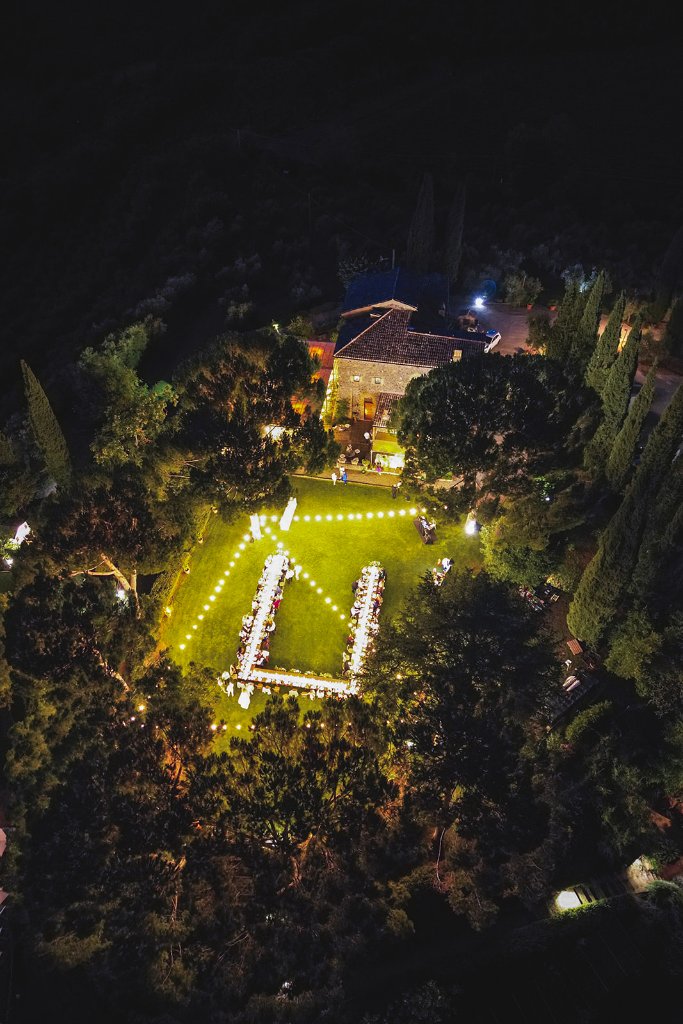
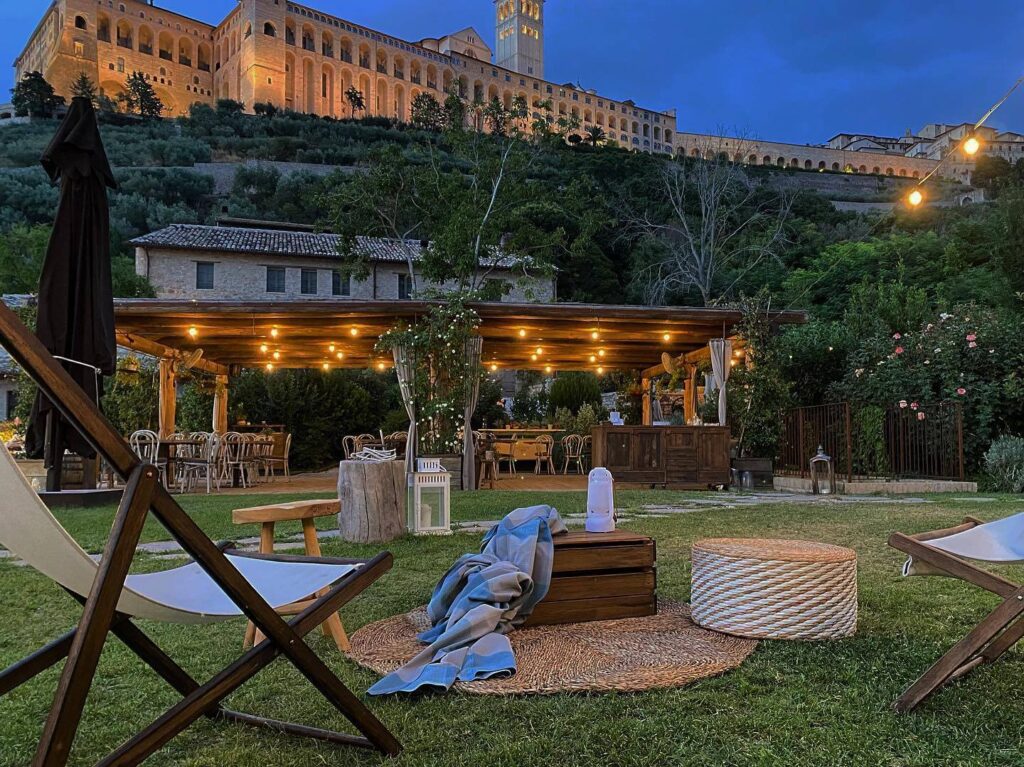
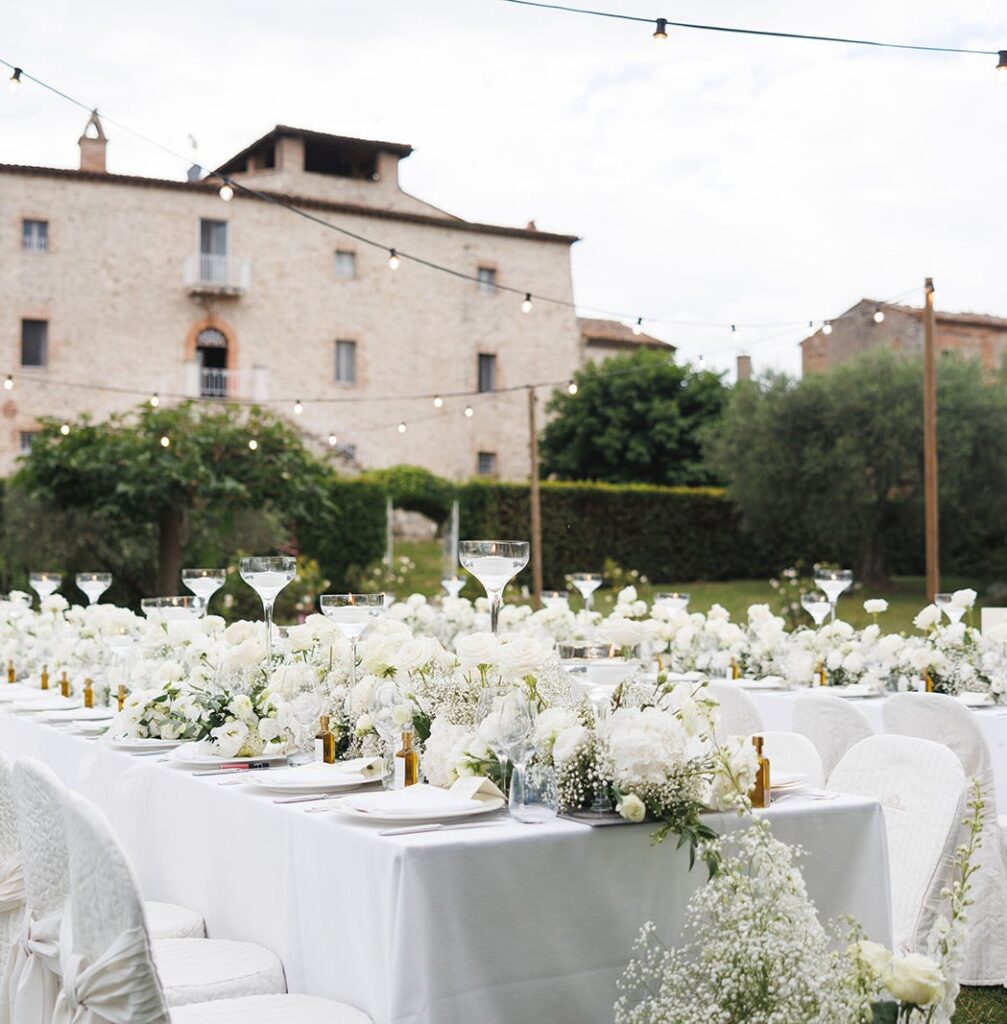
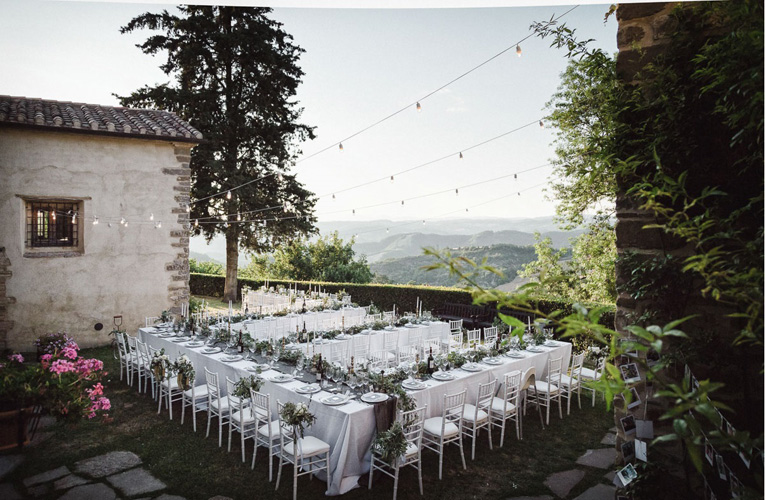
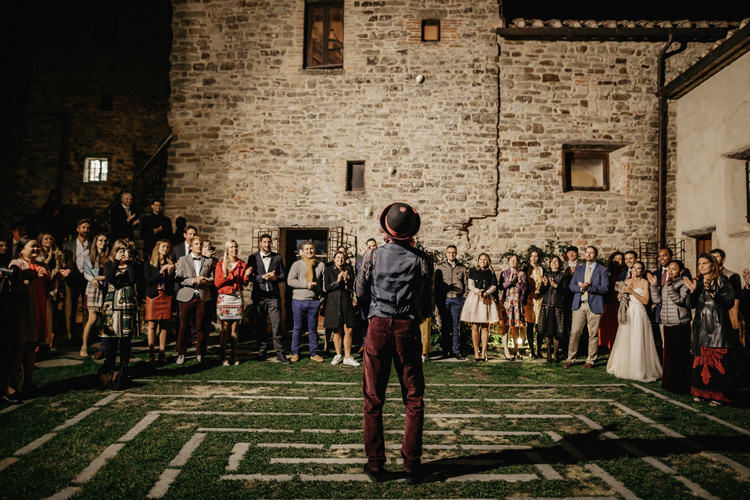
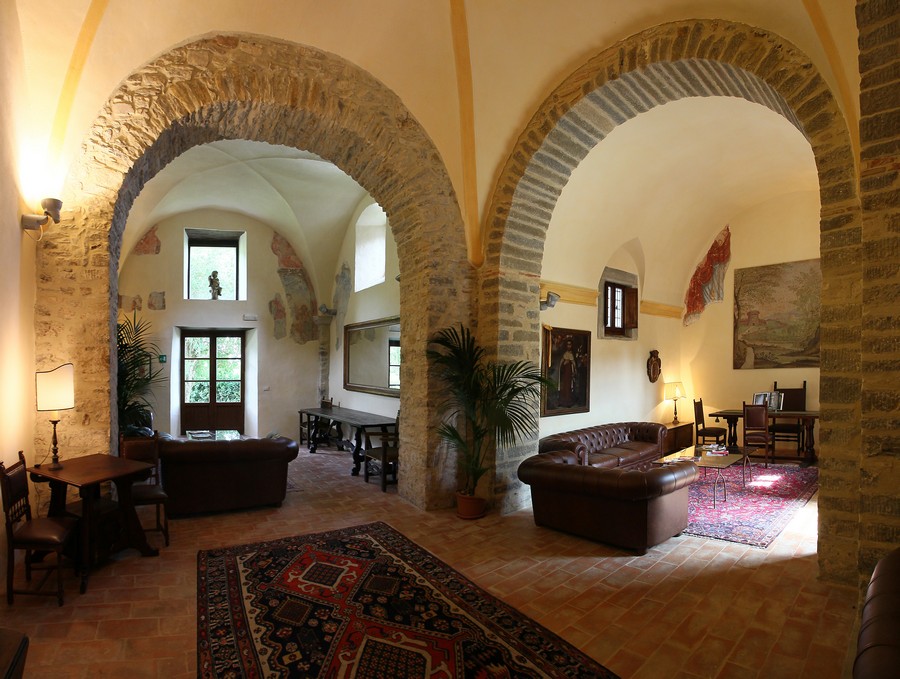
Up to 180 guests can attend a ceremony and sit down to dinner, and 200 can stand for a reception. Dinner can stay under cover or move outside. Inside are the stone halls, with vaulted ceilings, columns and timber beams, and a glazed loggia with a wooden ceiling that looks out over the valley. Outside, a terrace faces both the Carpina valley and the abbey, and the park of roses, olive trees and old trees looks down on the pool, beside which long tables can be laid under festoon lights.
Once the cake is cut, the evening moves to the cocktail bar and its bartenders, with a DJ, a band or live music. The abbey is let to one wedding at a time, with no time limit on music, dancing or the pool. Its own staff run the day, and couples who prefer an outside wedding planner can bring one. Music, a shuttle, photography and film, hair and make-up, flowers and entertainment for children can all be arranged through the abbey. Cesare Chioccioli Films recorded Amy and James’s wedding here, and that film opens this page.
L’Ora Sesta, named for the midday hour
The kitchen takes its name from the monastic day. L’Ora Sesta means the sixth hour: Sext, the office said around noon. The Rule of St Benedict, written in the sixth century, set out the psalms for it, and in the Benedictine timetable the midday meal followed. The same Rule gives a whole chapter to guests, who were to be received with every care.
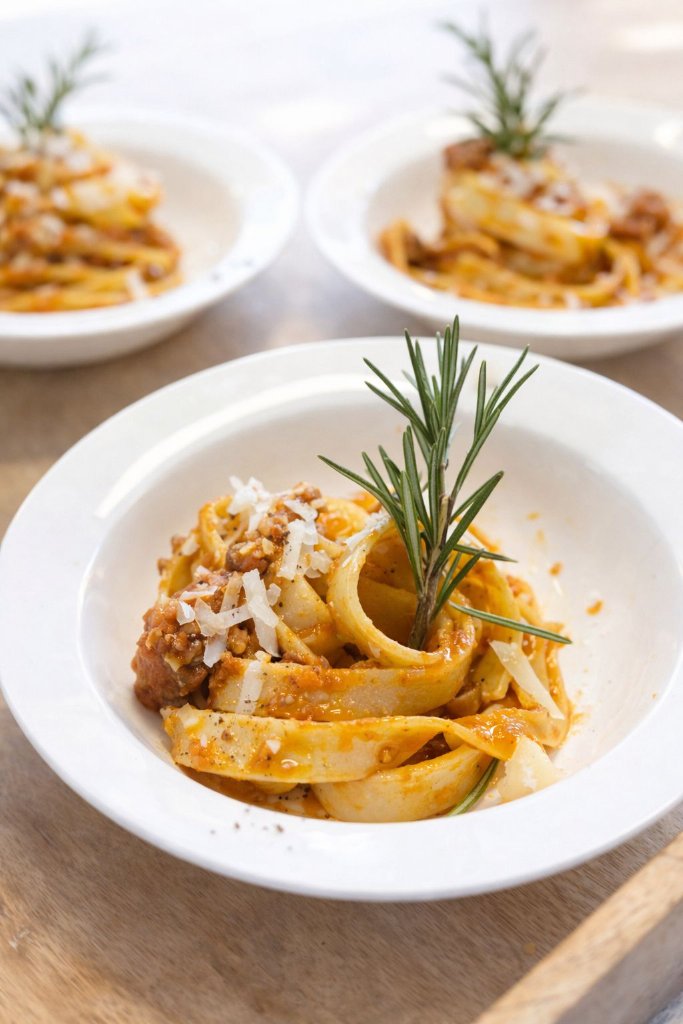
The main dining room is a veranda looking over the garden and the hills, and a smaller second room fills the former stable. The cooking is mostly local and seasonal: chicory pan fried with porcini and pork cheek, tagliatelle with woodland asparagus, pork fillet alla ghiotta in a traditional Umbrian sauce, pork shank with wild fennel, and feathered game larded with truffle and herbs from the abbey’s kitchen garden.
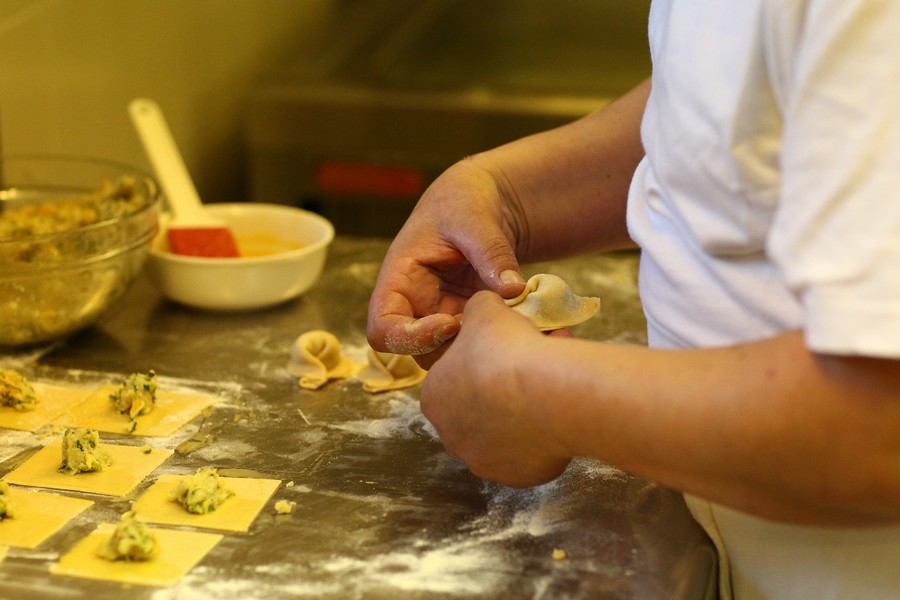
Weddings are catered in house by the same kitchen, from two menus, Country and Elegant. Bread and pasta are made on the premises, and the wine comes from Umbrian and other Italian cellars. Wedding dinners start from about €130 a guest.
A weekend within the walls
Taking the abbey means taking all 16 of its rooms, from Classic and Superior rooms to Junior Suites and Suites. Among them are the Bell Tower Suite and two rooms called Scoiattolo and Melograno, Italian for squirrel and pomegranate. Thick old walls, warm wood, antique furniture, beamed ceilings and terracotta floors run through them, and some suites have a sitting room and a staircase of their own. Around 56 guests can sleep in the abbey, with further rooms nearby and a shuttle to bring guests back and forth.
Exclusive use starts from about €3,000 a night, depending on the season. Breakfast, made with homemade and local produce, is served on the panoramic terrace or in the old church.
Truffle woods and the Carpina valley
The days either side of the wedding can be spent close by. A professional guide and his trained dogs lead four hour truffle hunts through the oak woods that border the abbey. A guided trek in the Carpina valley takes in the Coloti observatory and the Pieve de’ Saddi, a church built in the fifth century on the remains of a Roman temple, and horse rides follow the same valley, open to riders who have never been in the saddle. Two kilometres from Pietralunga, an organic farm runs handmade pasta lessons, morning or afternoon, and the pasta is eaten for lunch or dinner. A wine tour visits a cellar for a tasting with local pork, Umbrian cheeses and bruschetta dressed with oil from the abbey’s olive grove.
Back at the abbey there is yoga in the open air, and the kitchen can lay on a barbecue, a pizza party or a brunch across the weekend. Gubbio is about 30 minutes away by road and Umbertide about 25, with Assisi about an hour. Perugia San Francesco is the nearest airport, about 40 minutes from the abbey.
The guest list shapes the weekend
San Faustino suits couples who want a medieval abbey to themselves for a few days, with a church for the vows, its own kitchen and rooms for the people closest to them. The decision to make first is how many guests will sleep under the abbey’s roof and how many will stay nearby and travel in by shuttle. See The Abbazia San Faustino profile for the rooms and the gallery, read about Umbria in the Wedding Atlas, or read the Edits on Castello di Montignano and Parco dei Cavalieri near Assisi. Ready to plan? Check your date.