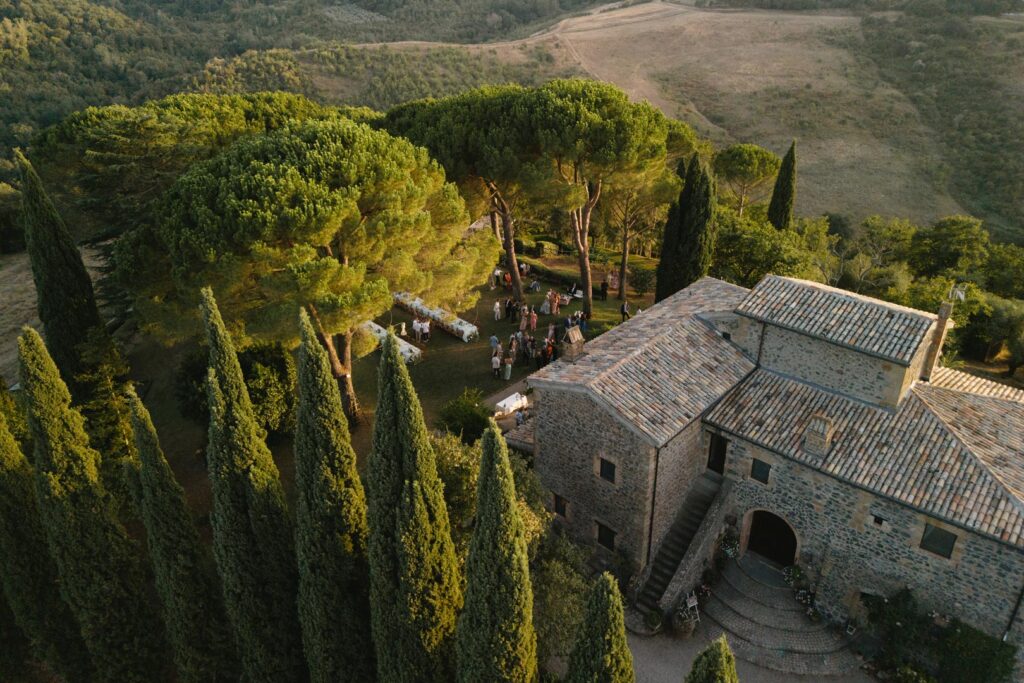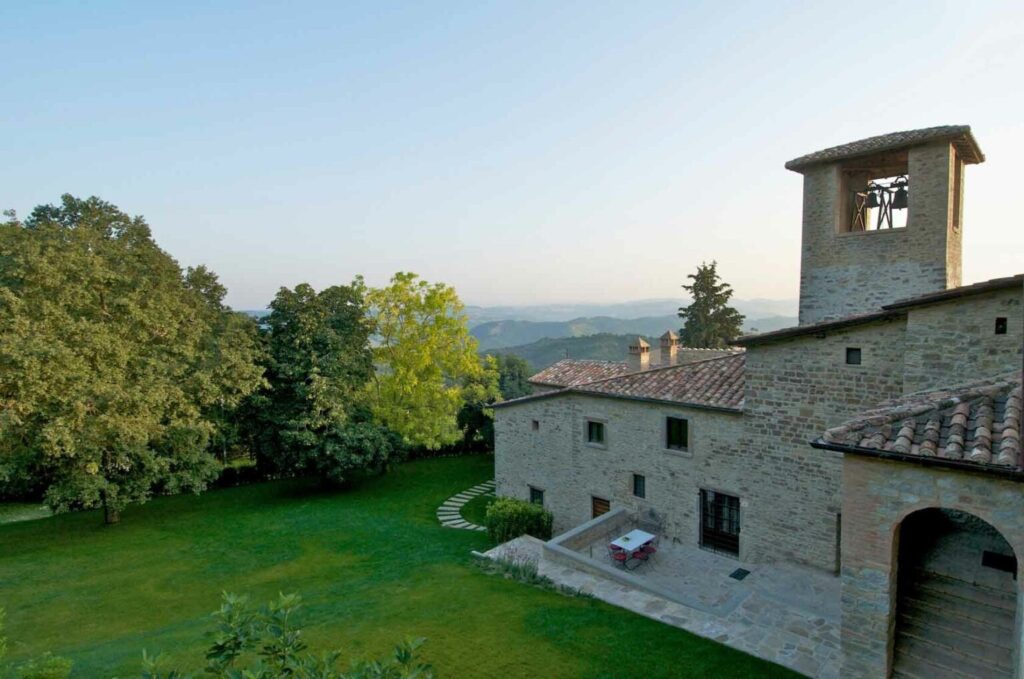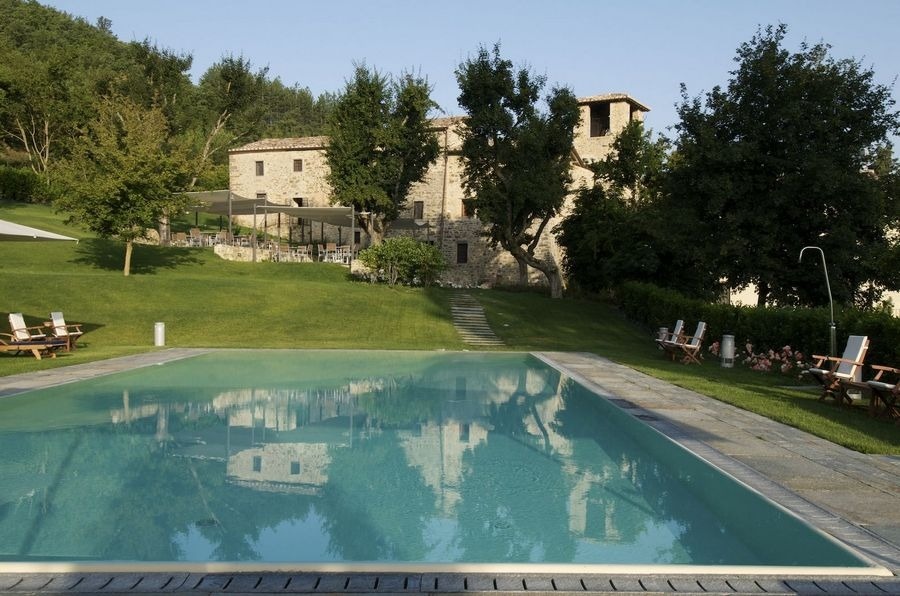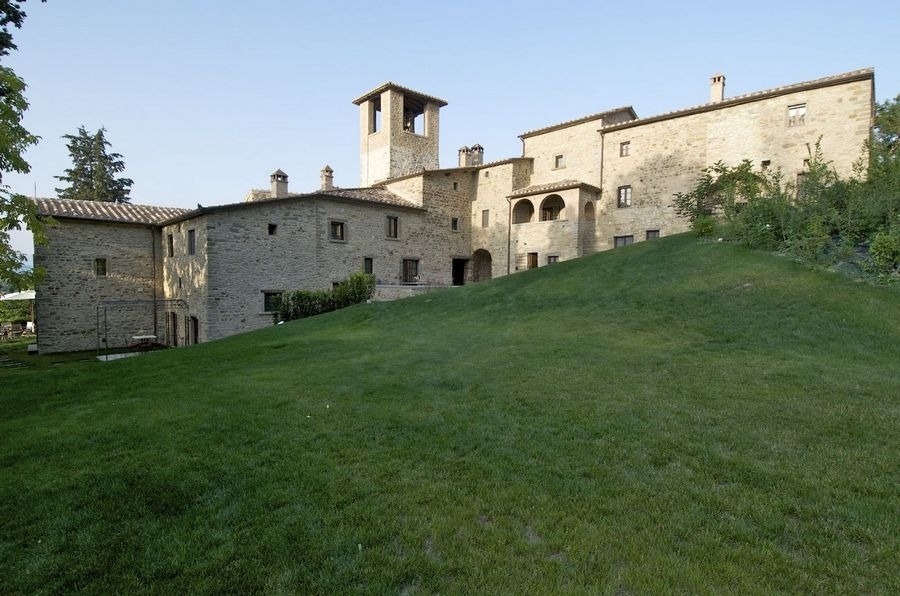
A wedding at Castello di Solfagnano moves through the work of five owners. The towers and outer walls are what remain of a medieval stronghold on a rocky spur north of Perugia, by 1486 a residence of the Baglioni family. The Antinori made it a villa in the sixteenth century, and its walled hanging garden followed in the eighteenth. A French industrialist modernised the farm, the Bennicelli family planted avenues and an Italian garden after 1879, and since 2007 the Colaiacovo family has restored it. Today the castle, the villa and a 60 hectare estate are let to one wedding party at a time, for 15 to 360 guests.

A stronghold above the upper Tiber
Solfagnano is a small village at the northern edge of the comune of Perugia. The Tiber runs right through its territory, with flat land along the river and higher ground rising towards Monte Tezio. The castle stands on a rocky spur above the valley, about 25 minutes by car from the centre of Perugia, at the top of a long avenue of stone pines.
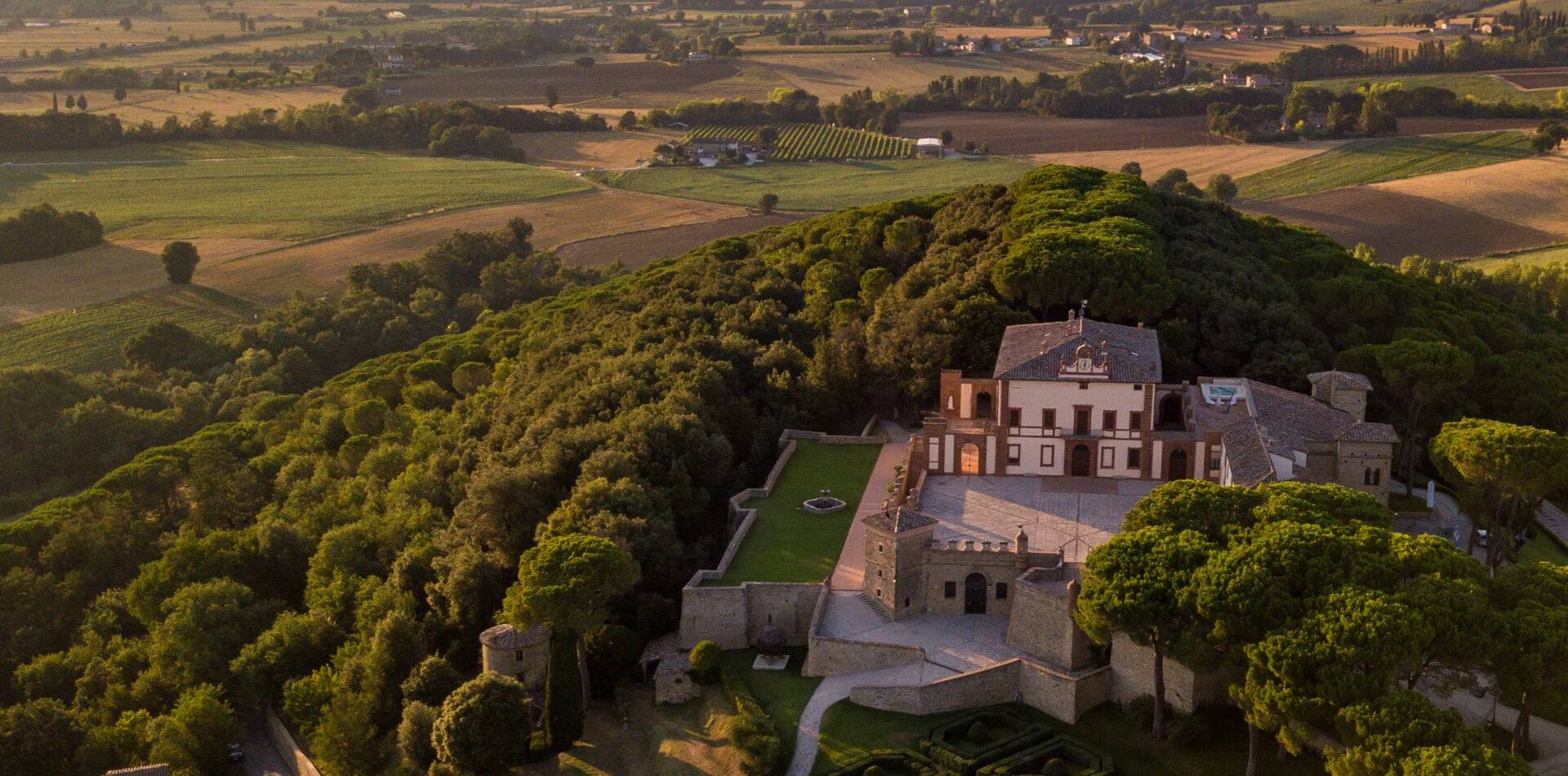
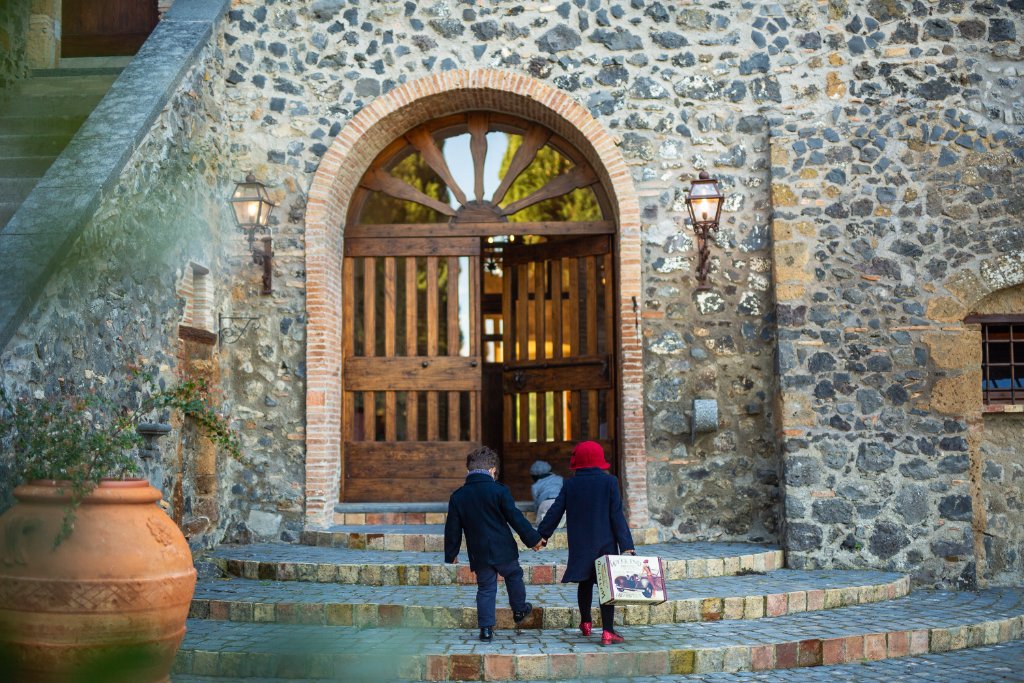
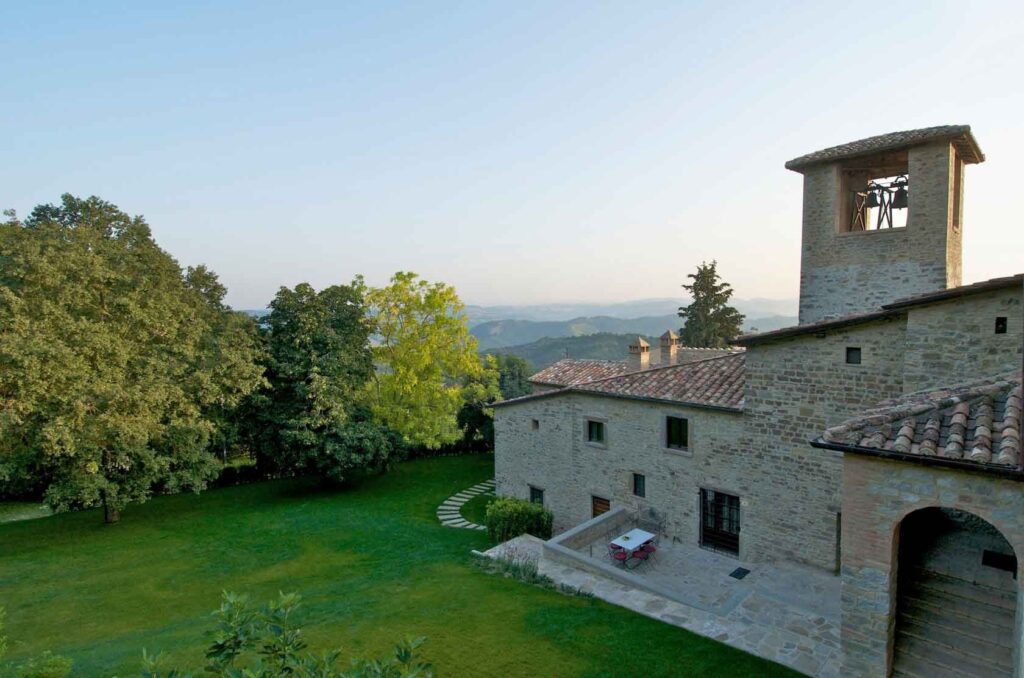
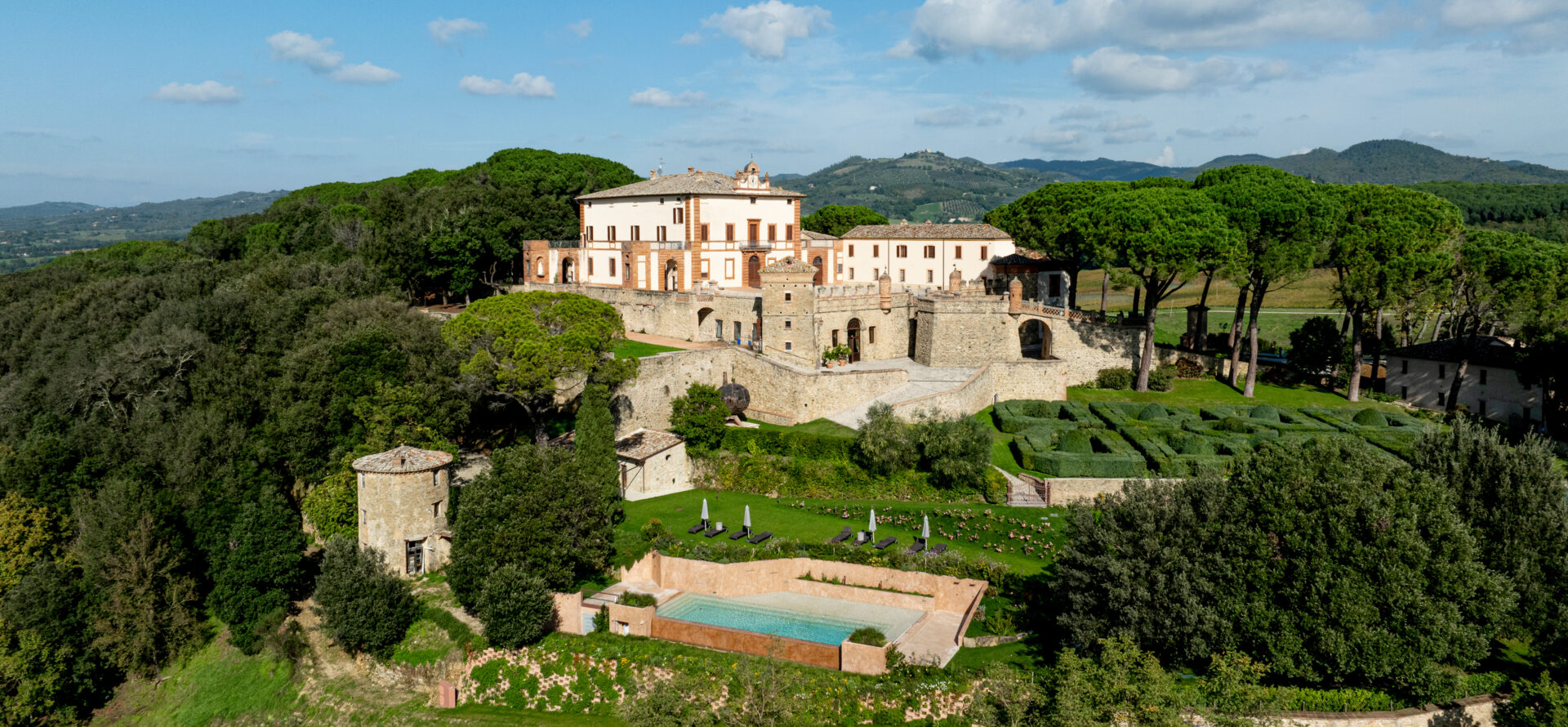
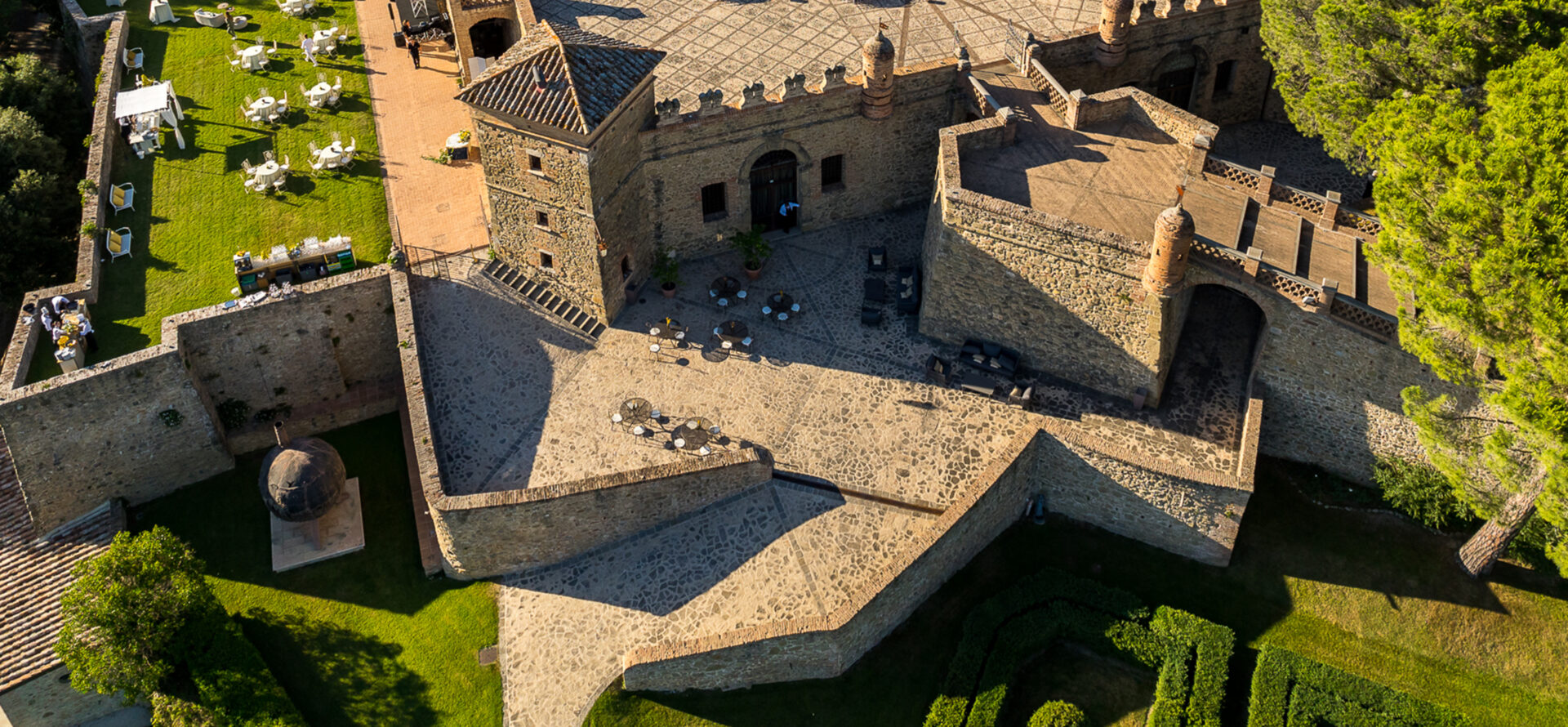
It began as a defensive building, raised to watch over this part of the Umbrian countryside. The Baglioni ruled Perugia from 1438 until 1540, when Rodolfo II Baglioni surrendered the city to the troops of Pope Paul III after the Salt War and Perugia passed to the Papal States. Of the fortress they knew, the large perimeter towers and the external walls survive. The towers still shelter Piazza delle Torri, a broad open space on the valley side that is used today for ceremonies and for dancing in the open air.
The Antinori villa and its hanging garden
Early in the sixteenth century the Antinori acquired Solfagnano and began to turn the fortress into a noble villa, opening a building made for defence towards the landscape around it. In the eighteenth century orchards and gardens were laid out on Roman models such as the Villa Pamphilj. In the second half of that century the ramparts gained baroque battlements and sentry boxes, and inside the walls came a large panoramic courtyard, a double flight staircase and a large hanging garden enclosed by the old masonry. A gallery on the ground floor leads from the courtyard to a garden of holm oaks on the far side, planted as a wide half circle with two ringed avenues.
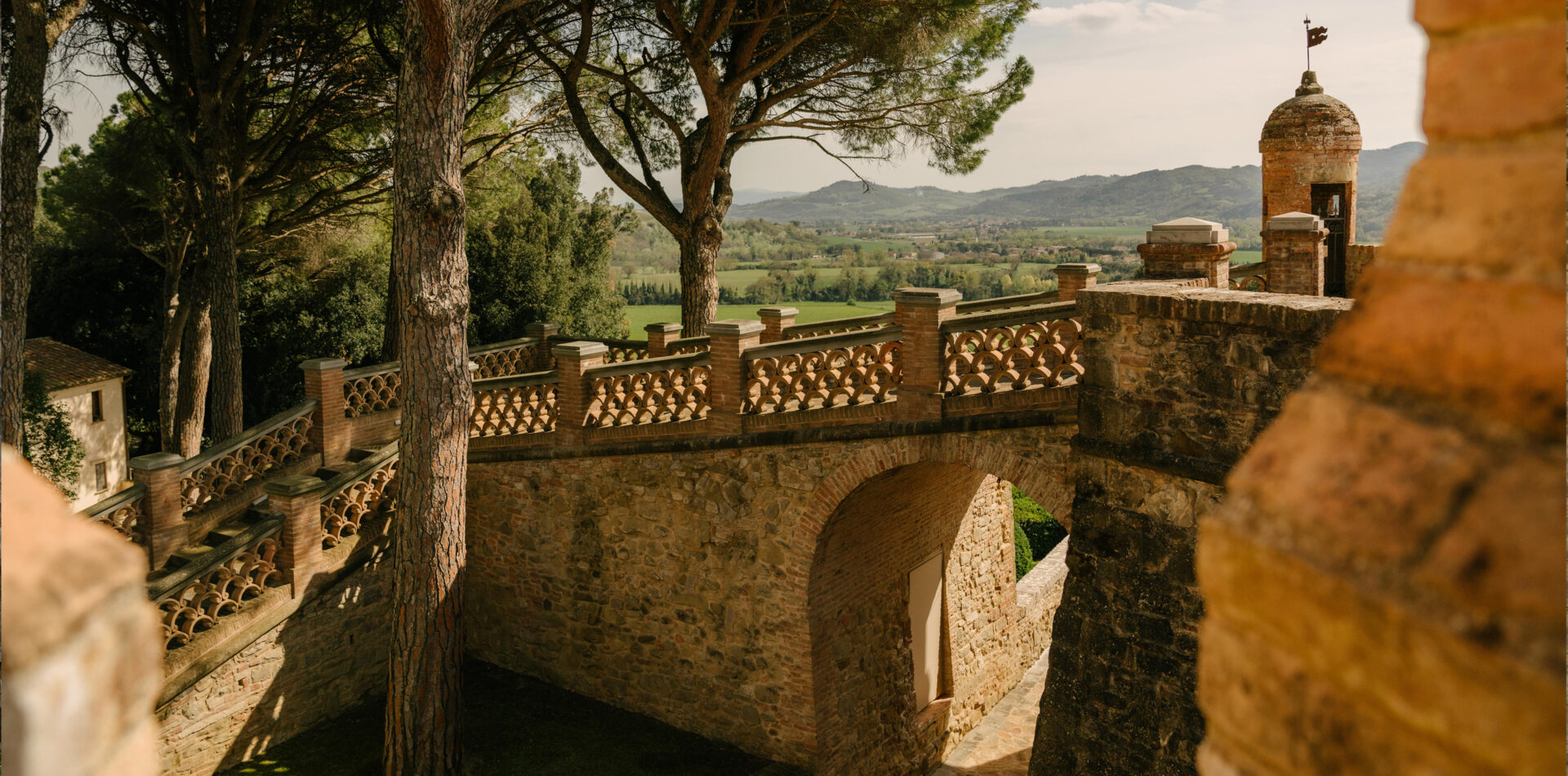
Between 1783 and 1840 Anna Raffaelli Antinori added scenic gardens, Arcadian symbols and artistic activity, and made Solfagnano a cultural centre. The castle’s eighteenth century fountain stands at the centre of the Giardino della Fontana, a hanging garden that couples use for smaller ceremonies and for drinks before dinner.
Prat, Bennicelli and the Italian garden
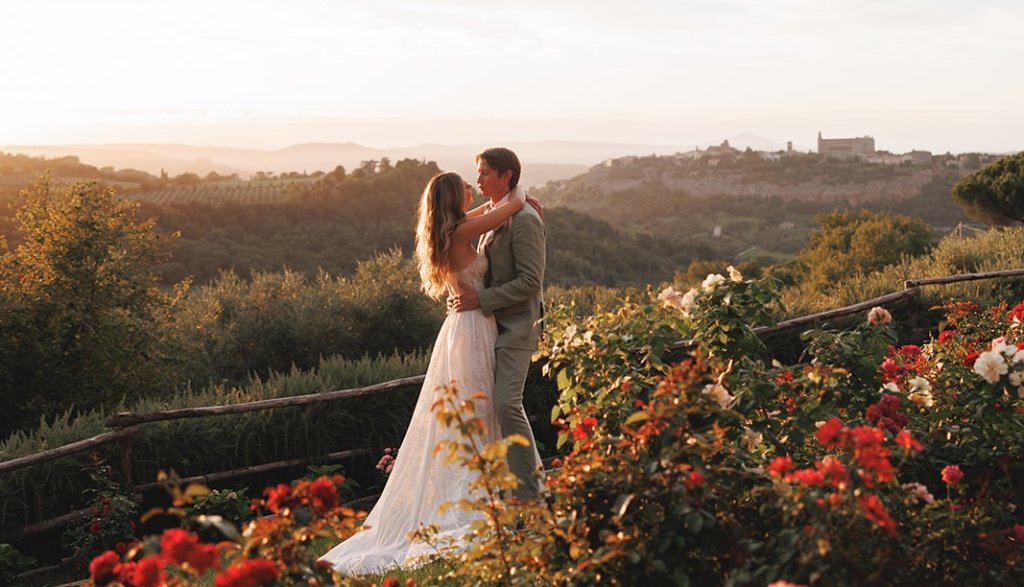
In 1840 the French industrialist Francesco Prat bought the castle, had it raised to a marquisate and brought in new farming methods and structural work. In 1879 it passed to Filippo Bennicelli, a Roman entrepreneur, and the castle is still also known as Villa Bennicelli. The Bennicelli added avenues of trees and exotic gardens, and inside the bastions they laid out an Italian garden set slightly oblique to the house, its beds edged with box hedges with curved corners and round box bushes at their centre. Piazza dell’Orologio, the forecourt beneath the clock tower where guests arrive, looks across that garden to the open country and catches the sunset.
Between 1900 and 1940 the castle became a centre of agricultural modernisation, and the villa was damaged in the Second World War. In 2007 the Colaiacovo family, led by Pasquale Colaiacovo, bought Solfagnano and carried out a careful architectural restoration. The estate now also has a new cellar, designed to sit into the Umbrian landscape, with space for winemaking and rooms for tastings.
Where couples marry
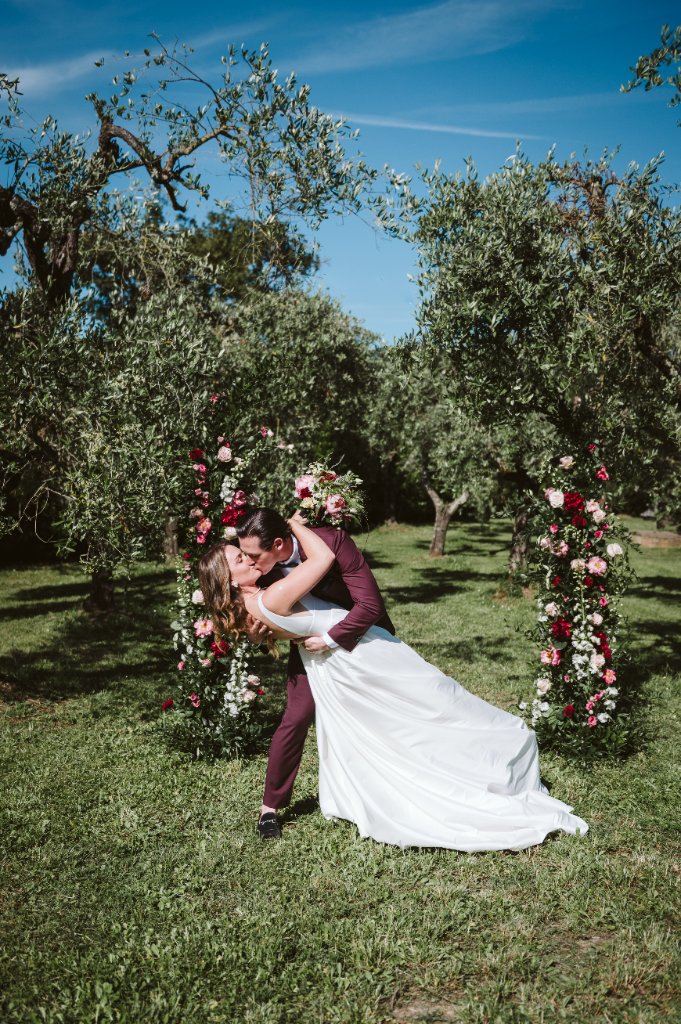
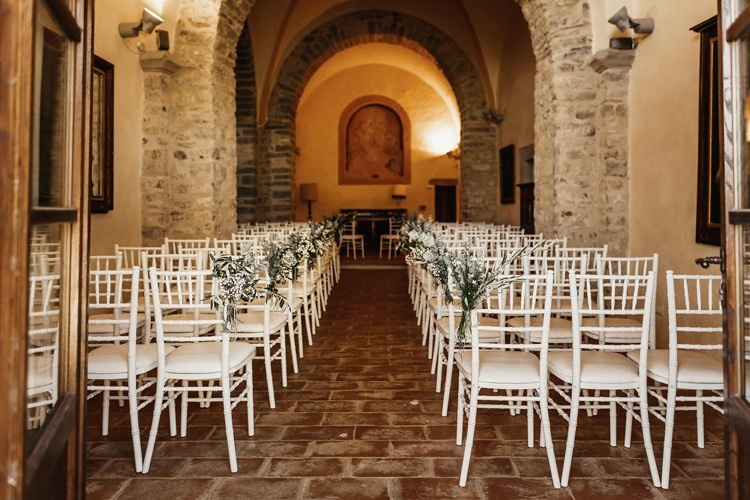
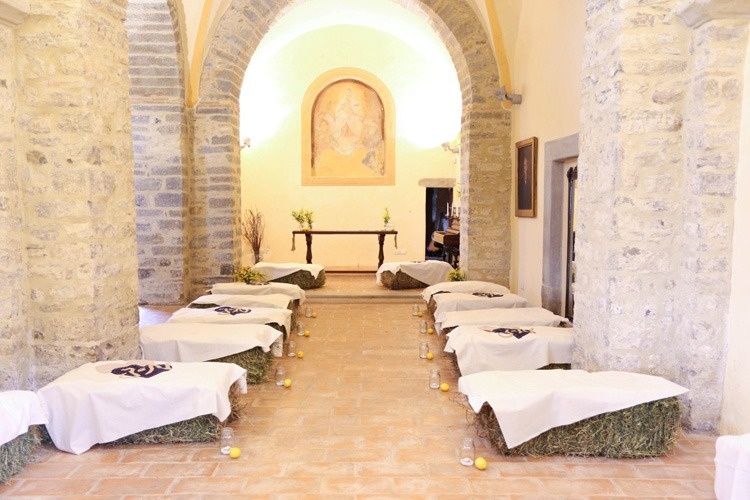
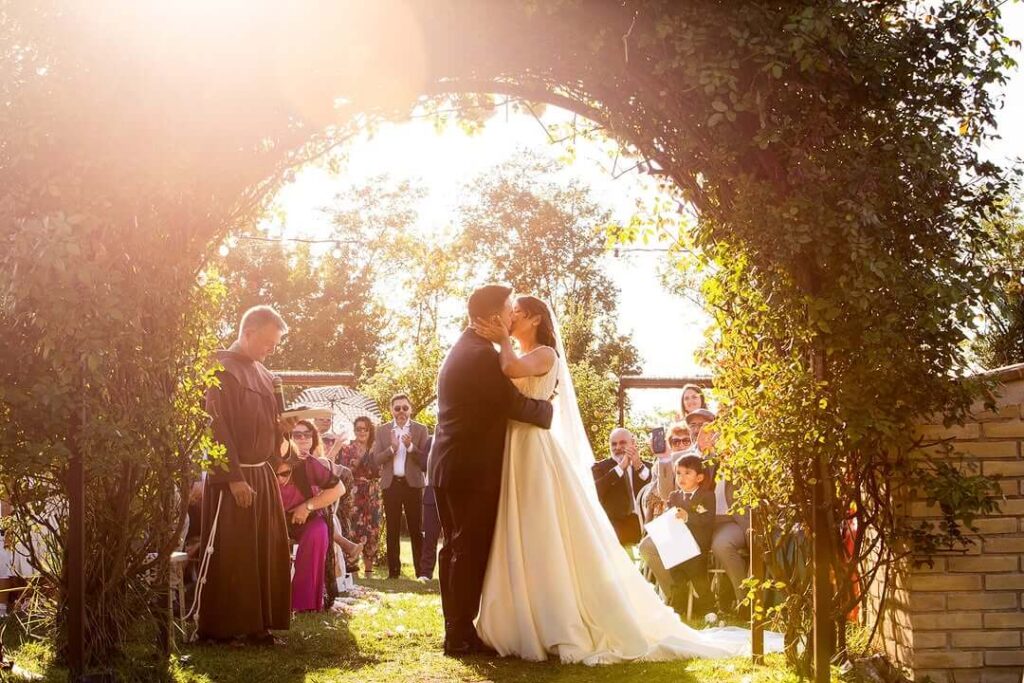
Civil weddings take place in the castle’s indoor halls, which hold a licence for civil ceremonies. Religious ceremonies are held in the Church of Sant’Antonio Abate, a chapel inside the castle complex with a vaulted nave and painted decoration. Vows are also exchanged outdoors: on the piazzas, in the Giardino della Fontana and in the Cattedrale dell’Amore, an avenue of old trees whose branches close overhead like the nave it is named after, and the setting for cutting the cake. For an outdoor ceremony, ask the castle how the legal civil part of the wedding is arranged.
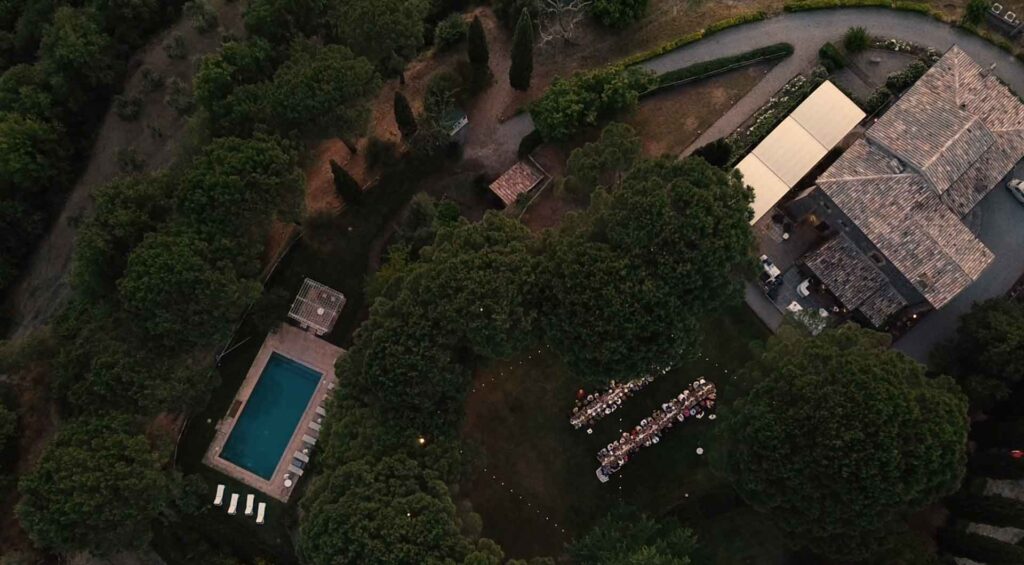
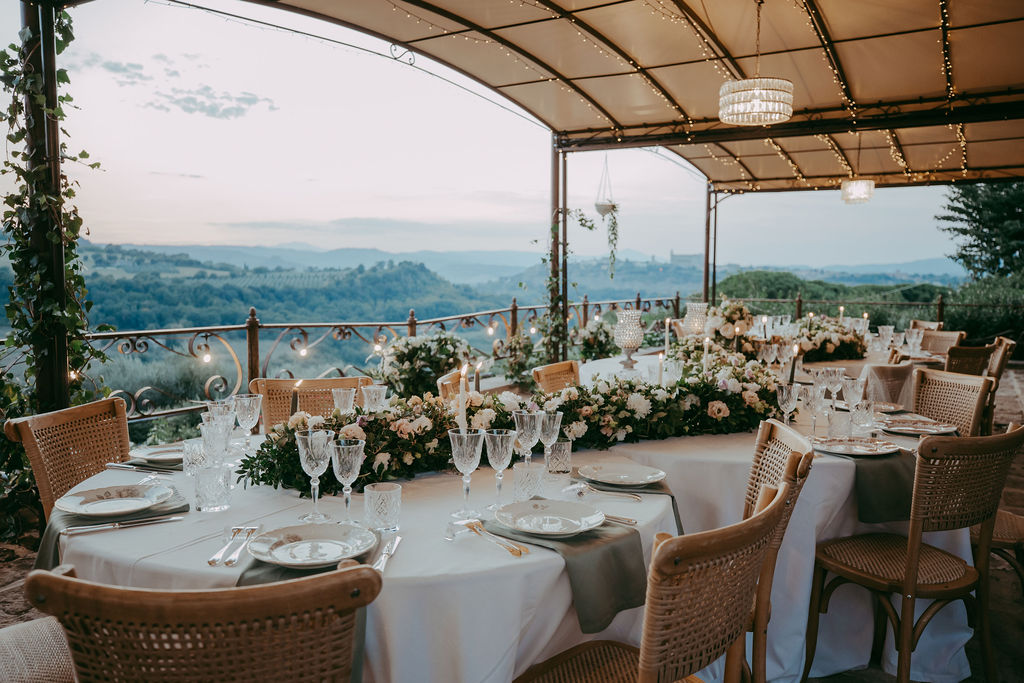
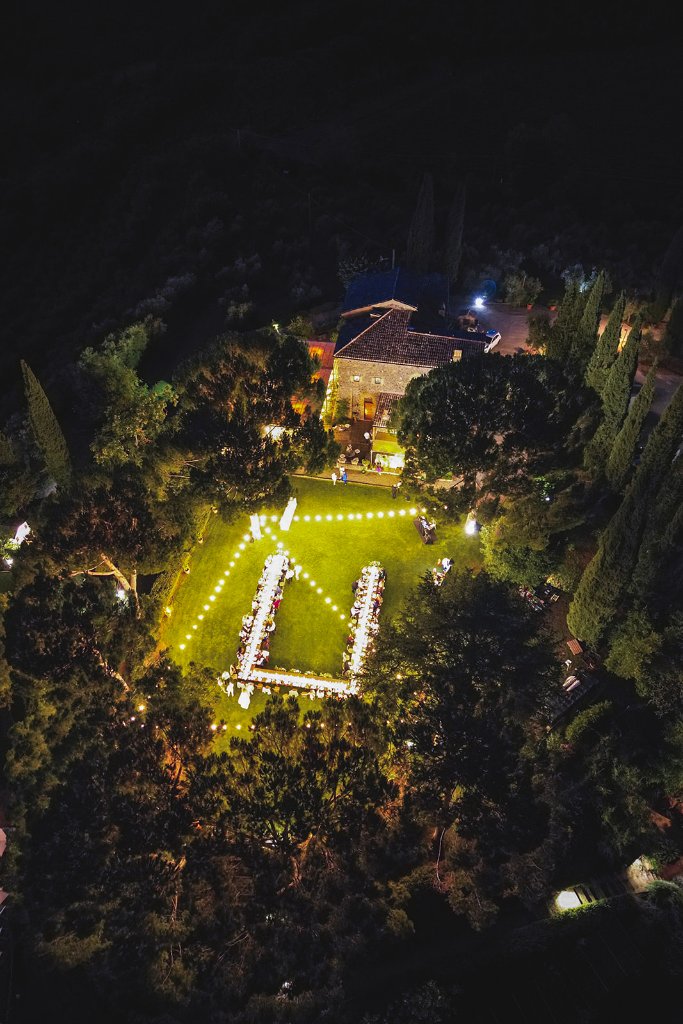
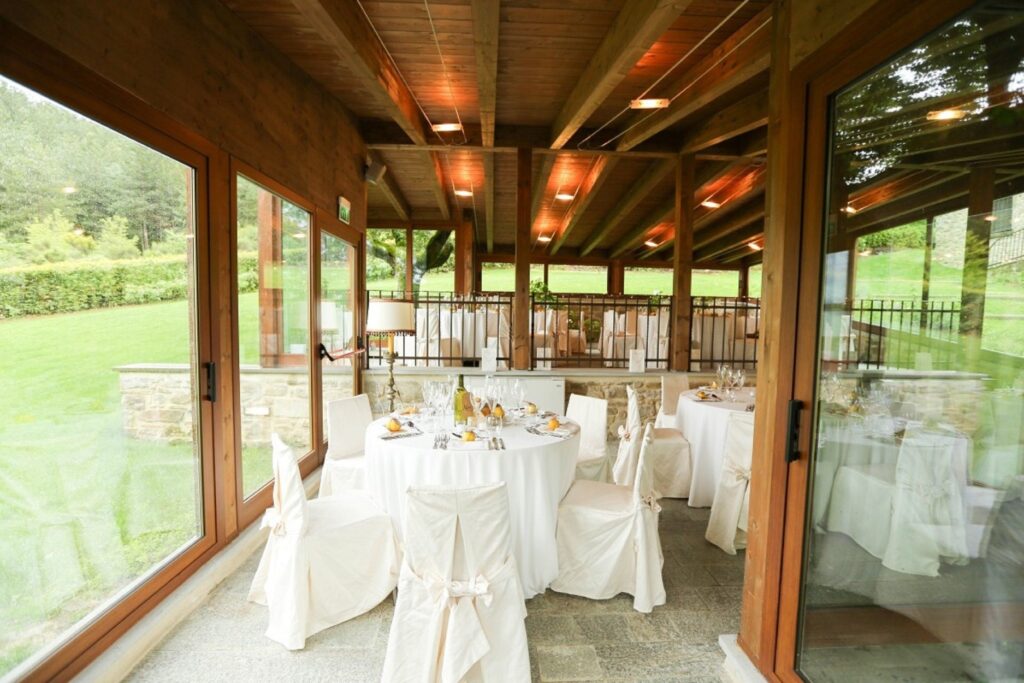
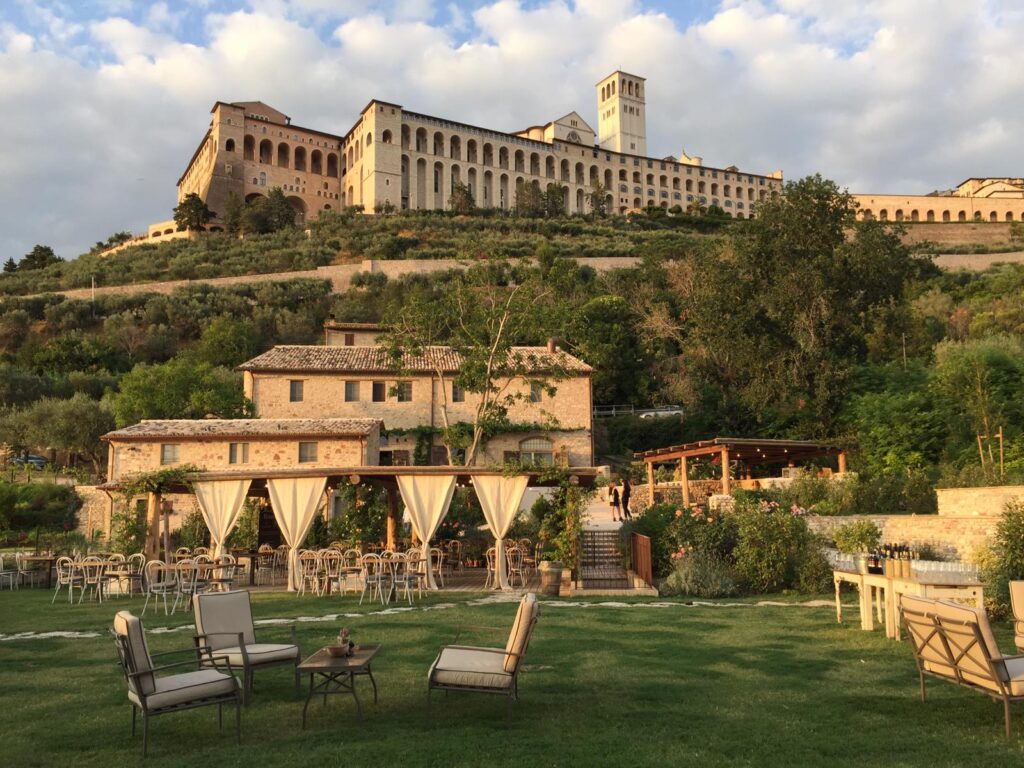
The rest of the day has its own places. Piazza 1563, at the entrance and looking over the vineyard, is set aside for the aperitivo, and later shares the dancing with Piazza delle Torri. Dinner can be laid in the courtyard, out on the piazzas or indoors under the vaults.
Under the vaults, whatever the weather
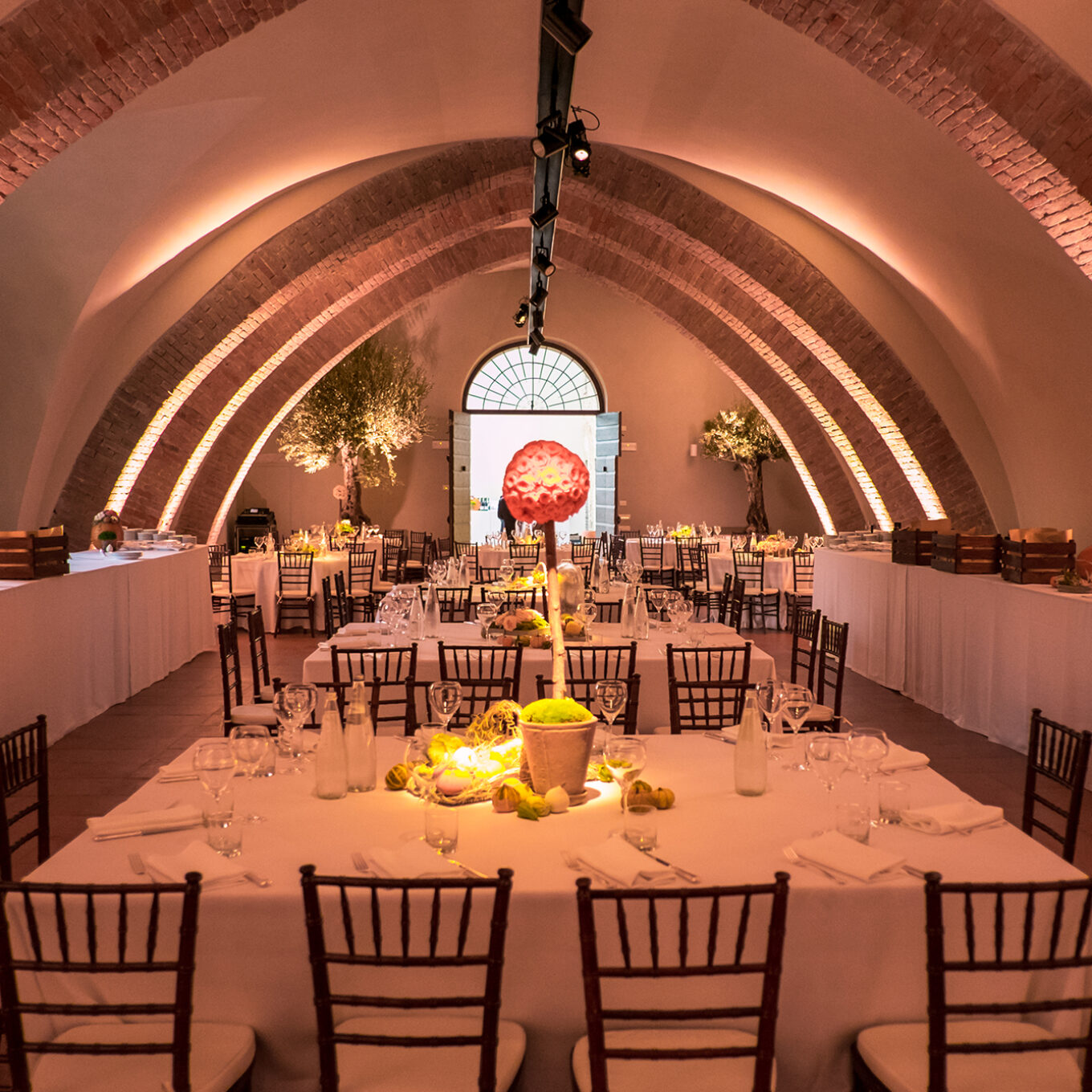
The largest room is the Salone delle Volte, 600 square metres in three naves that can be divided, taking up to 350 guests. It has air conditioning, radiant heating, its own bar counter and a small patio outside. The indoor halls are the castle’s answer to bad weather, and at 350 the Salone delle Volte holds nearly the estate’s full number of guests. The halls are reached by dedicated accessible routes, and the castle provides staff for cleaning and for greeting guests.
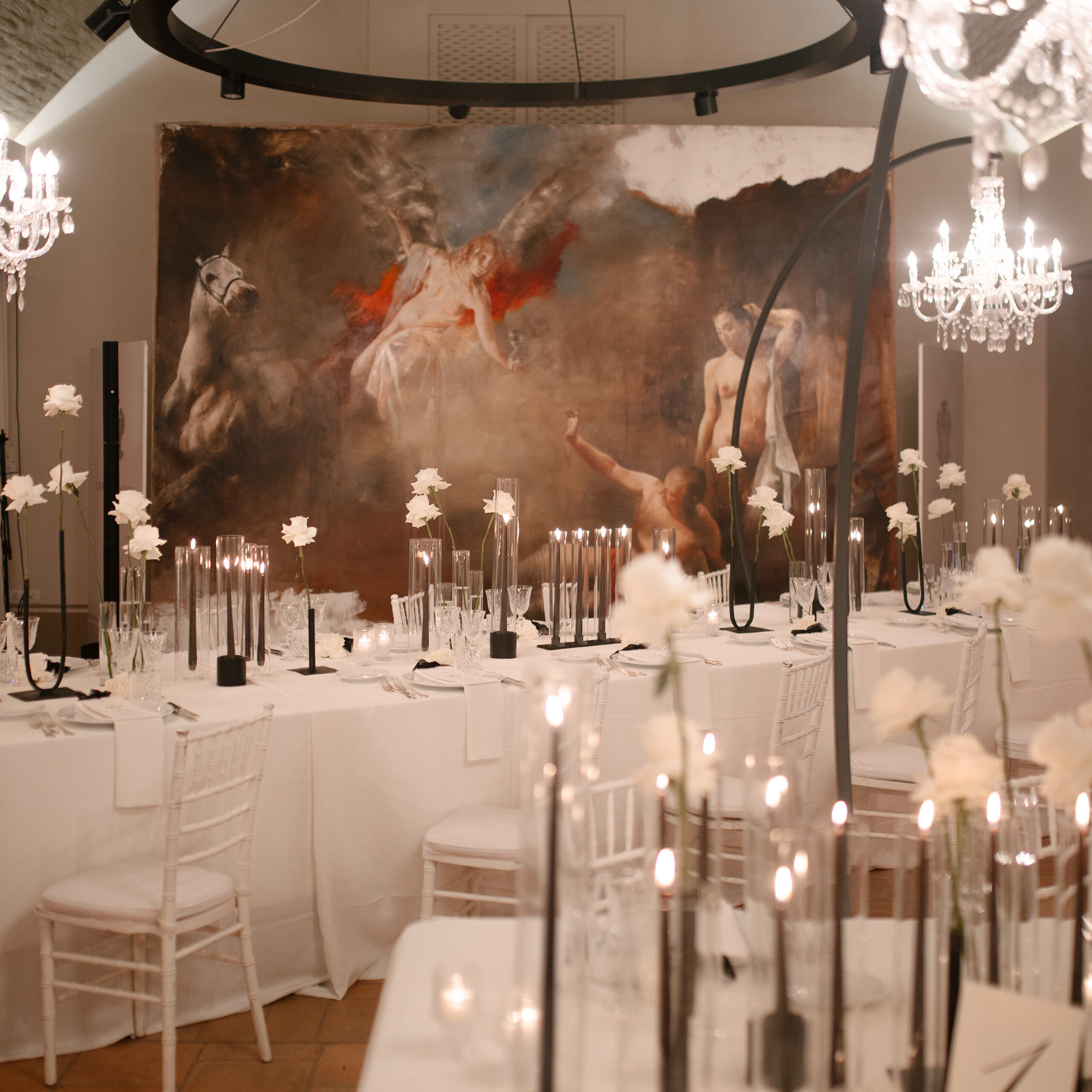
The Granaio, whose name means granary, covers 250 square metres under exposed brick arches and seats up to 220 for dinner, with a view onto Piazza 1563. It opens into the Cantina Emozionale, a fourteenth century stone hall with soft lighting that can be adjusted, which takes up to 40 people for a smaller dinner or a tasting.
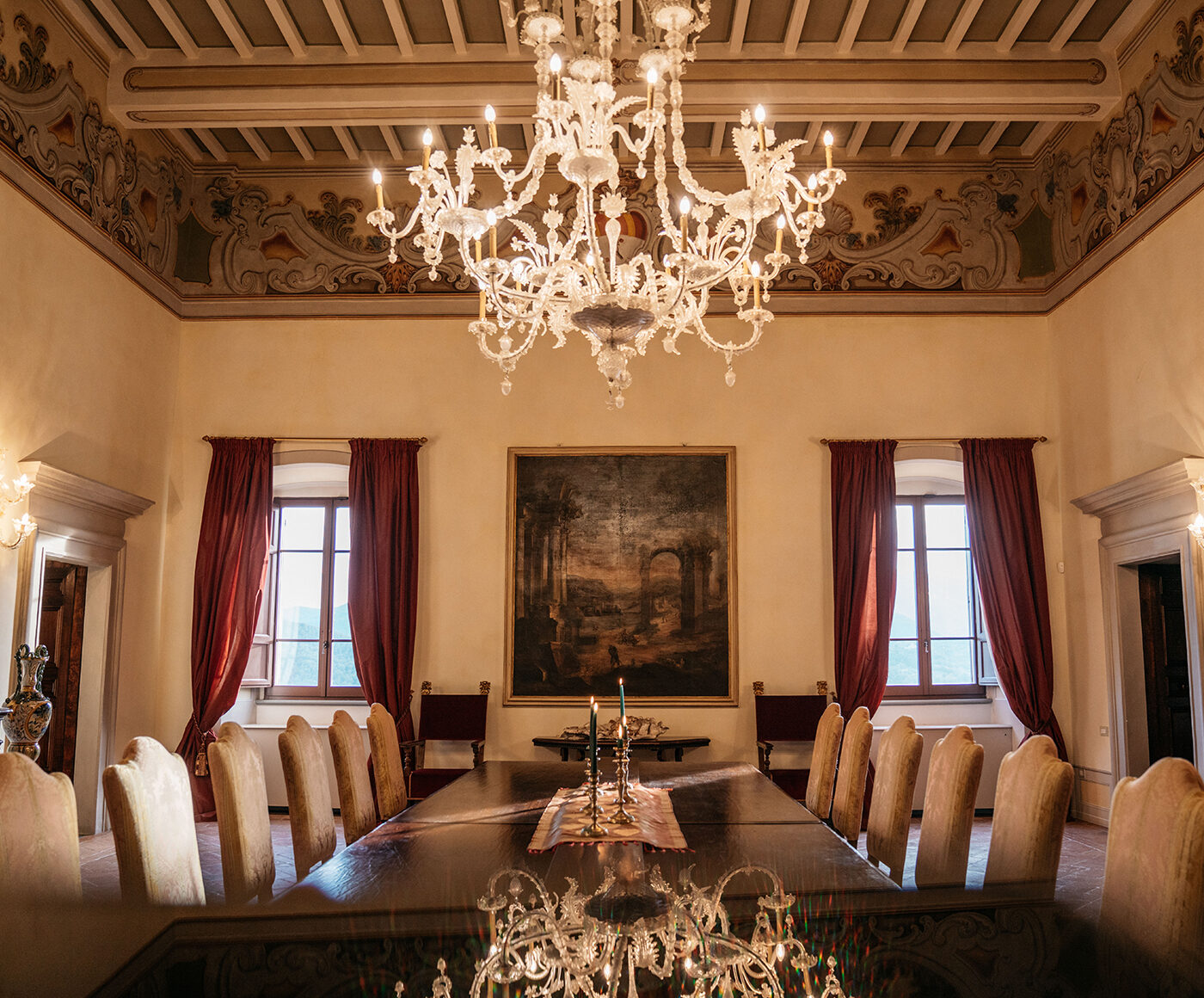
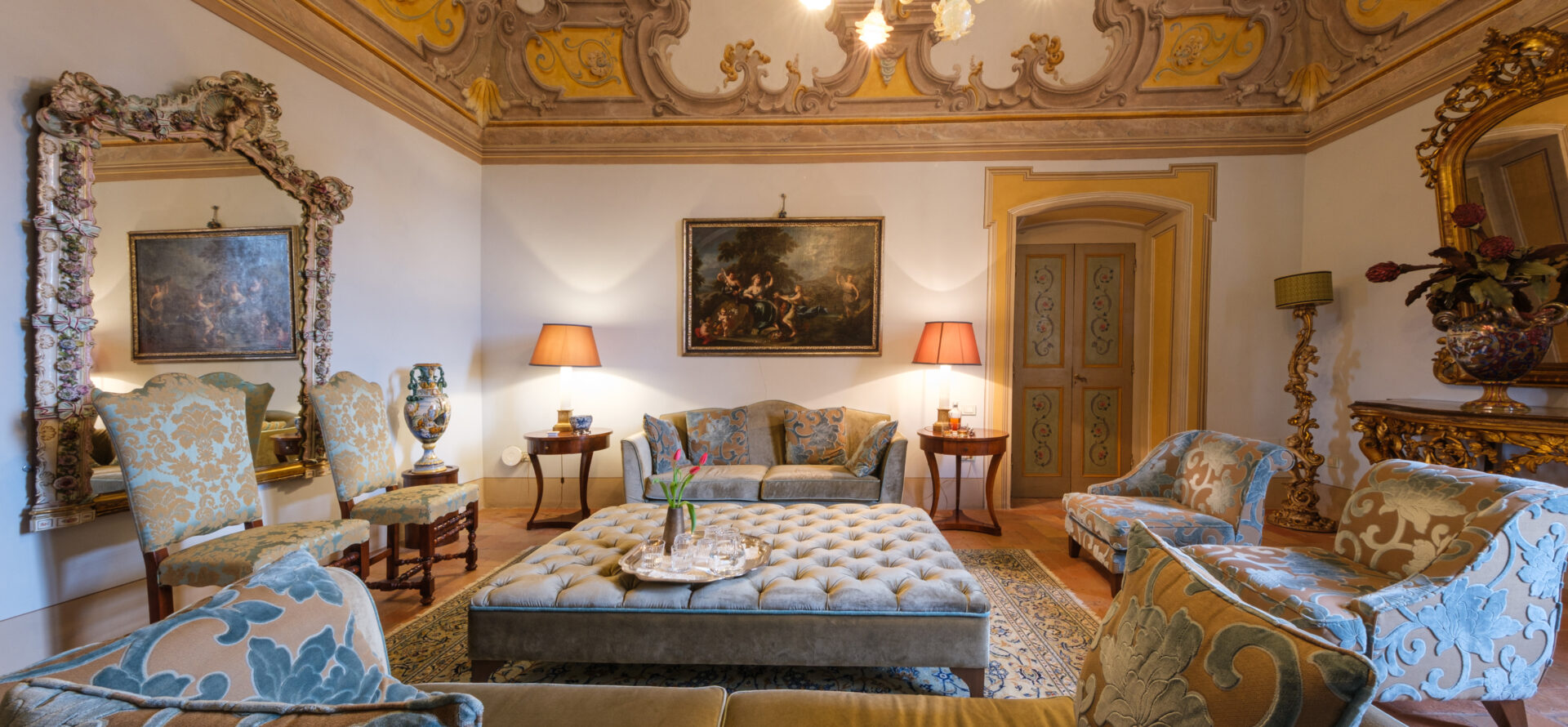
The villa keeps a separate set of rooms, with frescoed ceilings, fine furniture, old paintings and Italian artisan ceramics. On the ground floor are the Salotto Azzurro, the Salotto Rosa, a billiard room and a dining room beside the kitchen. On the first floor are the Salotto Rosso and the Salone Nobiliare, 95 square metres with a fireplace and seating for 60, used for gala dinners.
A kitchen for your own caterer
The castle’s modern kitchen is reserved for whoever takes the estate, fully equipped for the couple’s chosen caterer or personal chefs. On request the castle introduces wedding planners, caterers and chefs with Michelin stars. Suppliers can come in the day before the wedding and return the day after, so setting up and clearing away need not be squeezed into the day itself.
The land around the castle is still farmed. Its 60 hectares hold parkland, vineyards, gardens and a working farm that makes wine, extra virgin olive oil and honey, draws on solar energy and keeps old crops in cultivation. Tastings of the estate’s wine, oil and honey can be arranged for guests.
Sleeping inside the walls
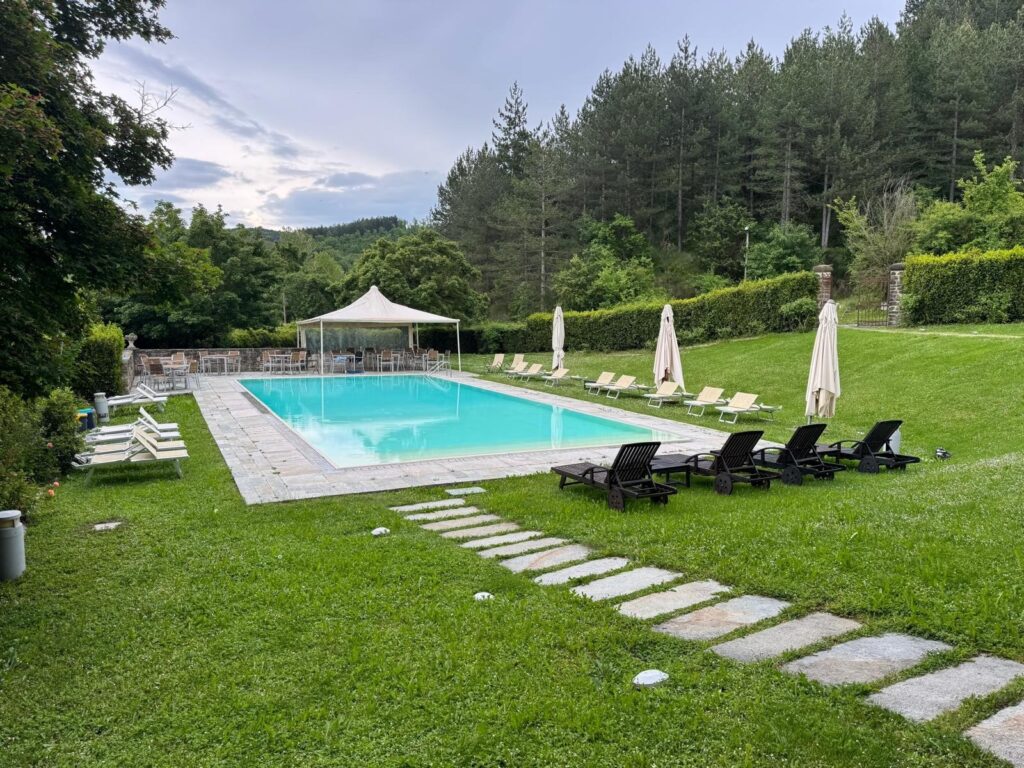
There are 25 rooms across the castle and the villa, so the couple and those closest to them can stay on site. Eleven Camere Classiche keep the older character of the house, among them the Suite Imperiale, with a panoramic terrace, a chaise longue and a private jacuzzi. Eleven Camere Moderne are brighter and more contemporary and vary in style and size, and three Eco-Design Suites are built from Trion and coconut wood. An outdoor pool looks across the valley.
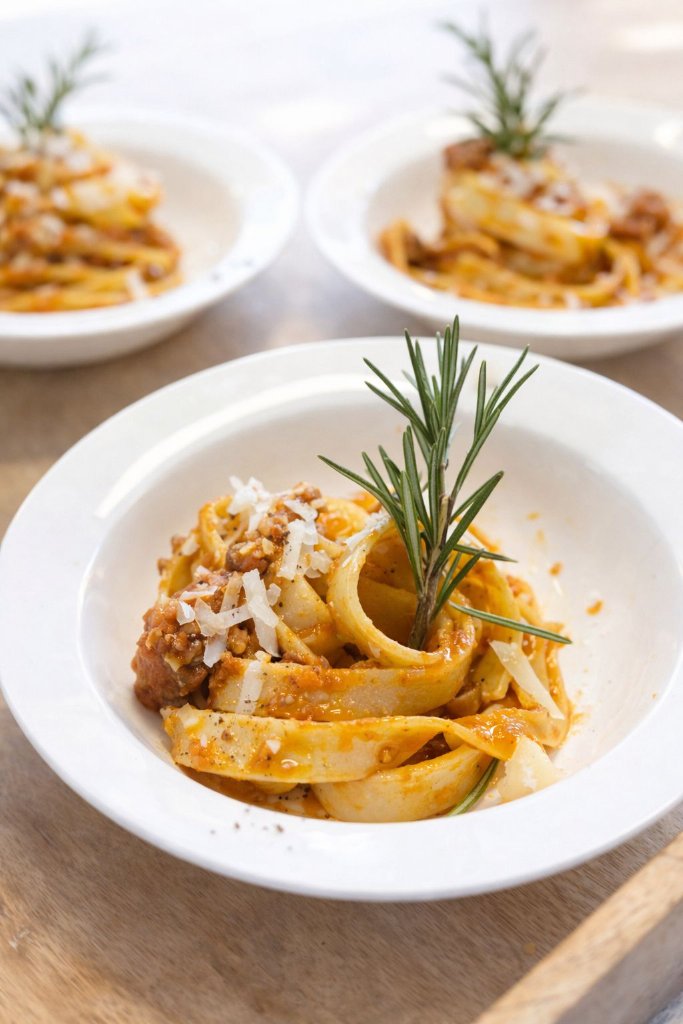
For the days either side of the wedding, the castle arranges yoga, a drawing workshop open to beginners and practised artists, foraging walks that end with cooking what has been gathered, and treatments for face, body and hair. Its fresh pasta class takes at most ten people, who make two kinds of pasta with seasonal sauces and a traditional dessert, with vegetarian versions on offer.
The address is Strada di Solfagnano 32, outside Perugia. Perugia’s Sant’Egidio airport is about 30 minutes away, Assisi about 35 minutes, Florence about an hour and 45 minutes by car and Rome roughly two and a half hours, with Spoleto and Lake Trasimeno within reach for a day out. Exclusive use of the castle, villa and estate starts from an indicative €15,000 a night. For more places to marry in the region, see our guide to wedding venues in Umbria and The Umbria Wedding Atlas.
Choosing who cooks
Solfagnano suits couples who want a whole estate for the wedding, with the ceremony, the dinner and the rooms inside the same walls, and who are happy to assemble their own team. The decision to settle first is the kitchen: a caterer you already trust, a personal chef, or one of the starred chefs the castle can introduce. Read the Castello di Solfagnano profile and check your date.