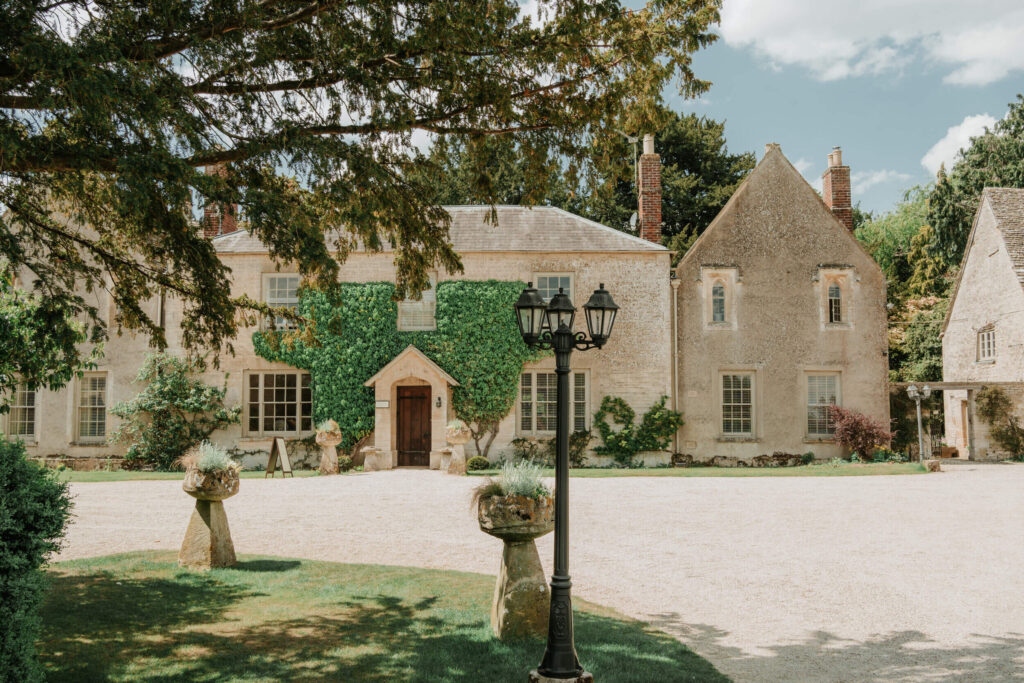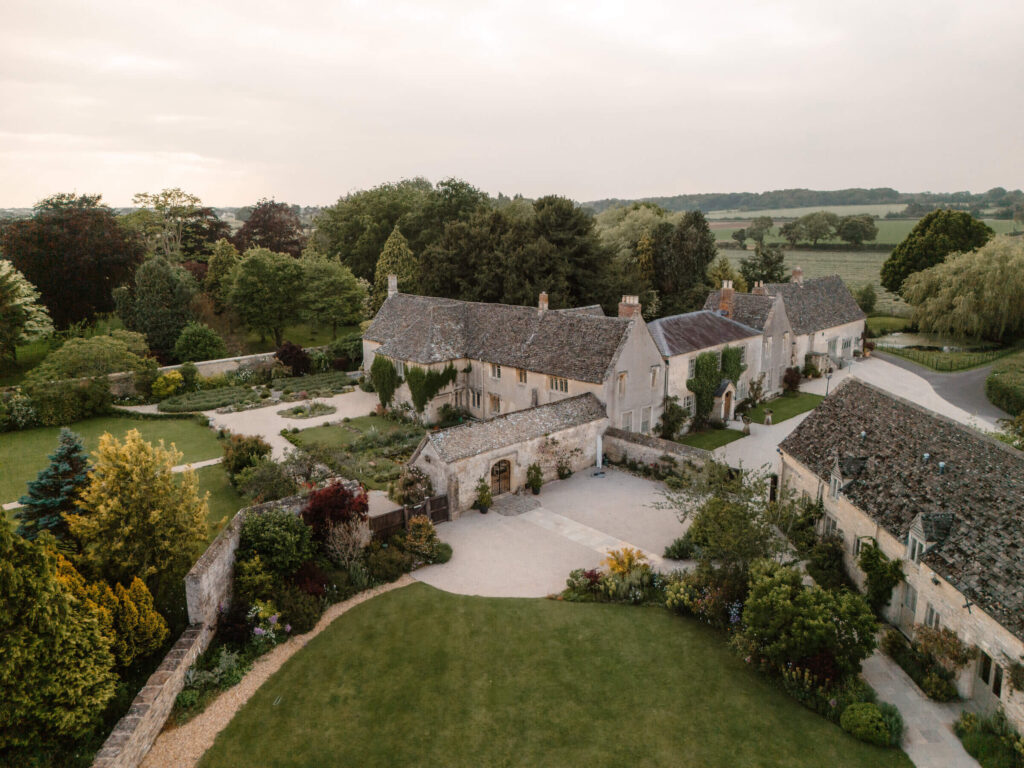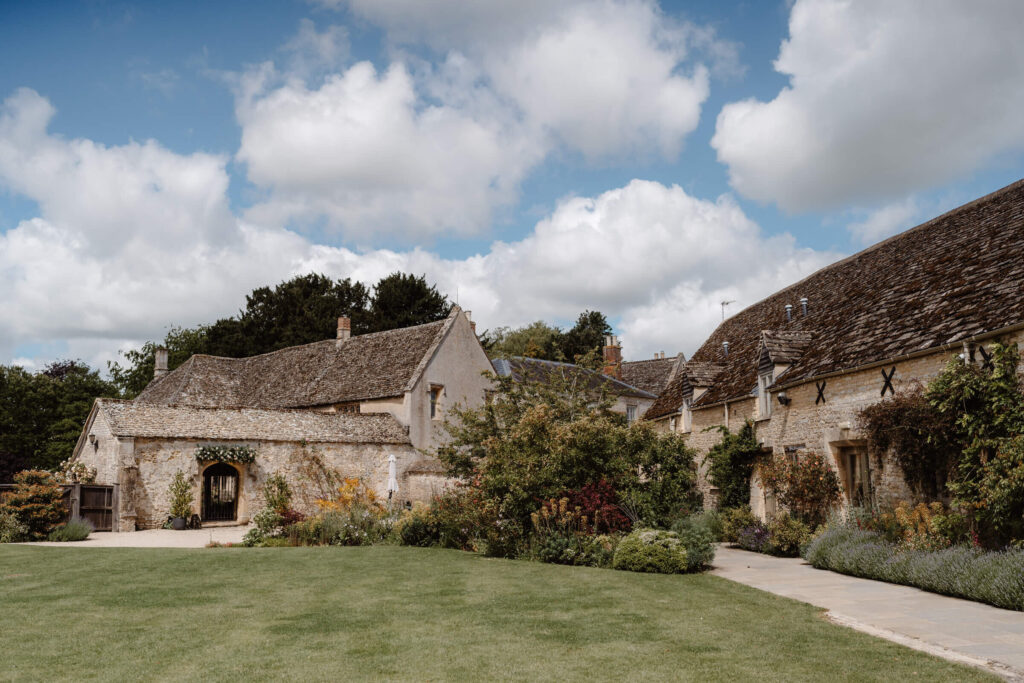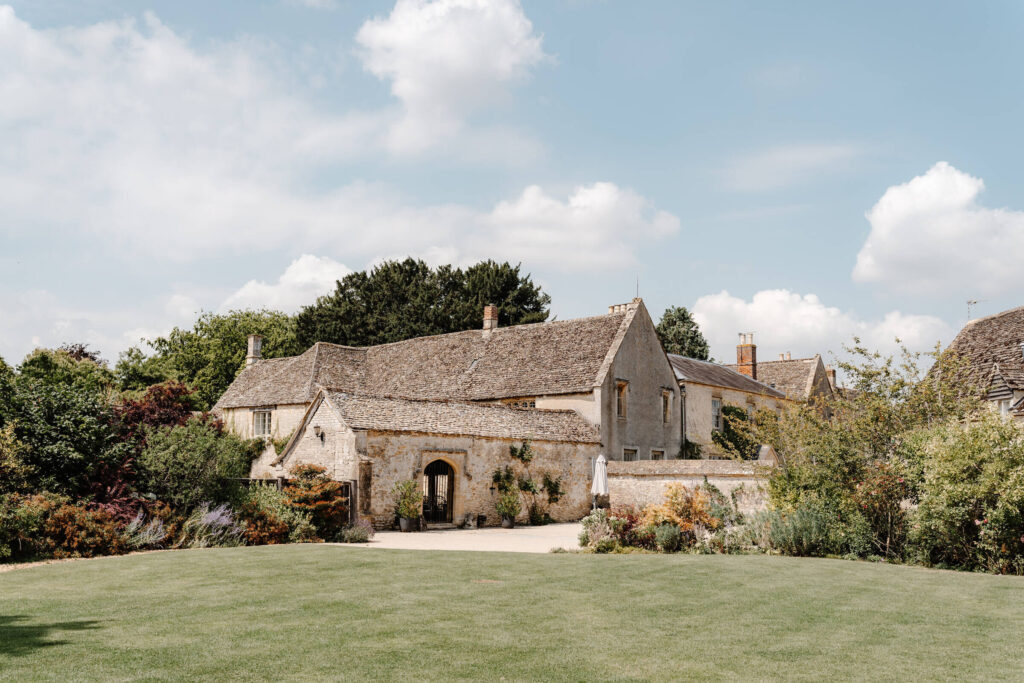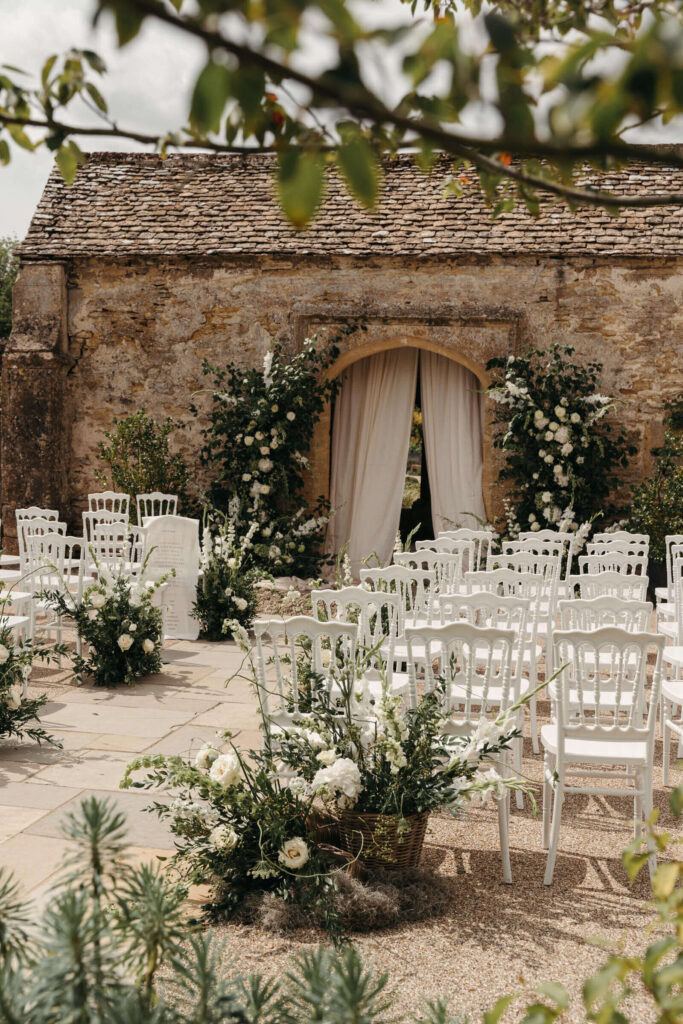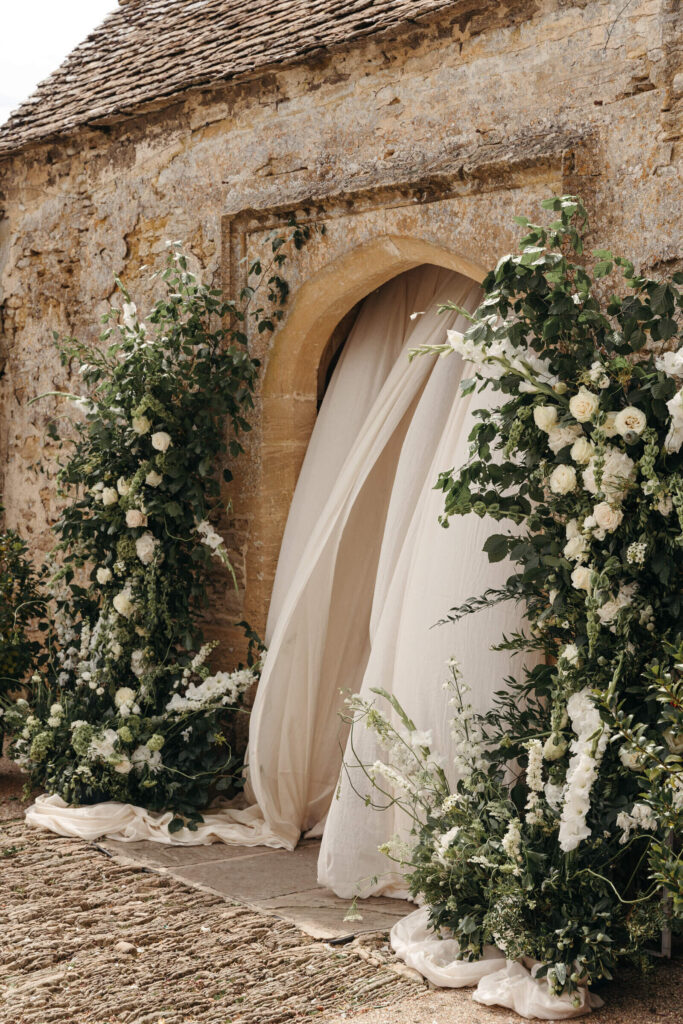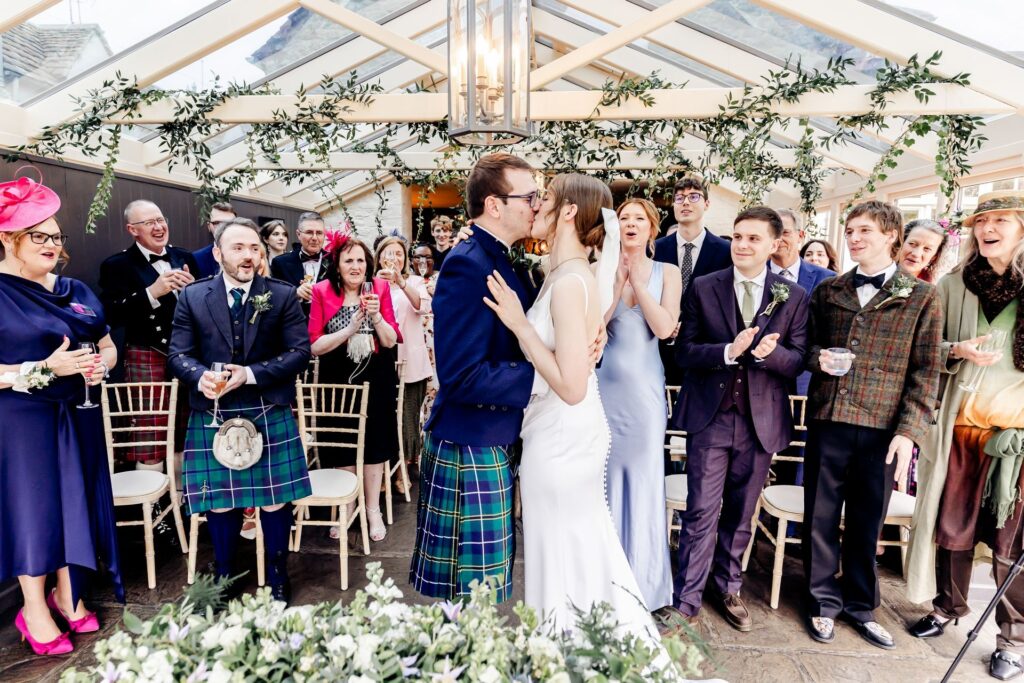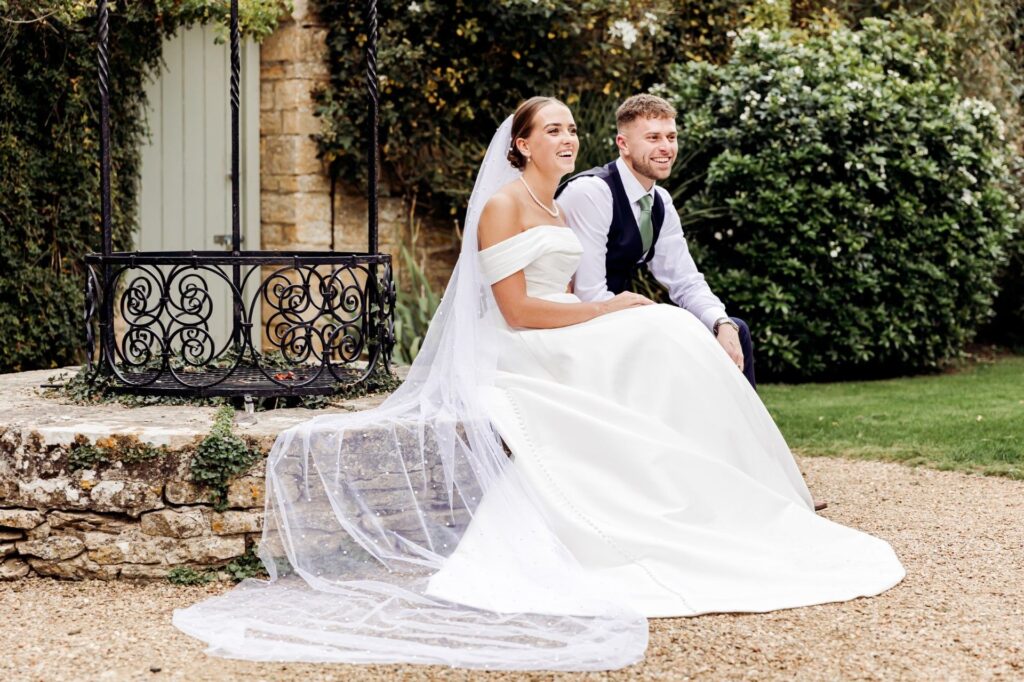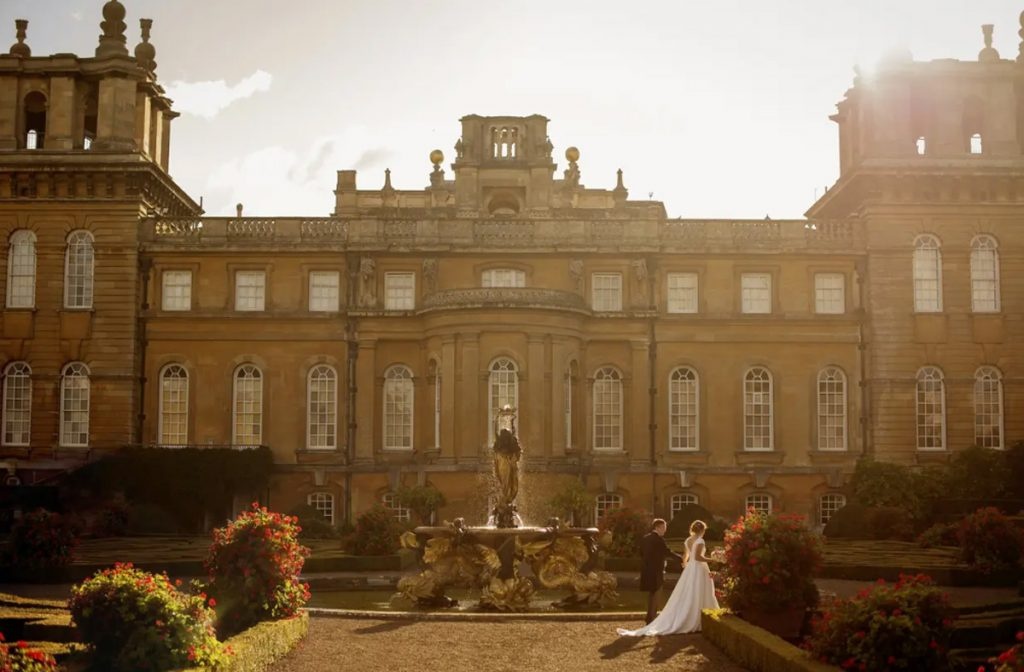
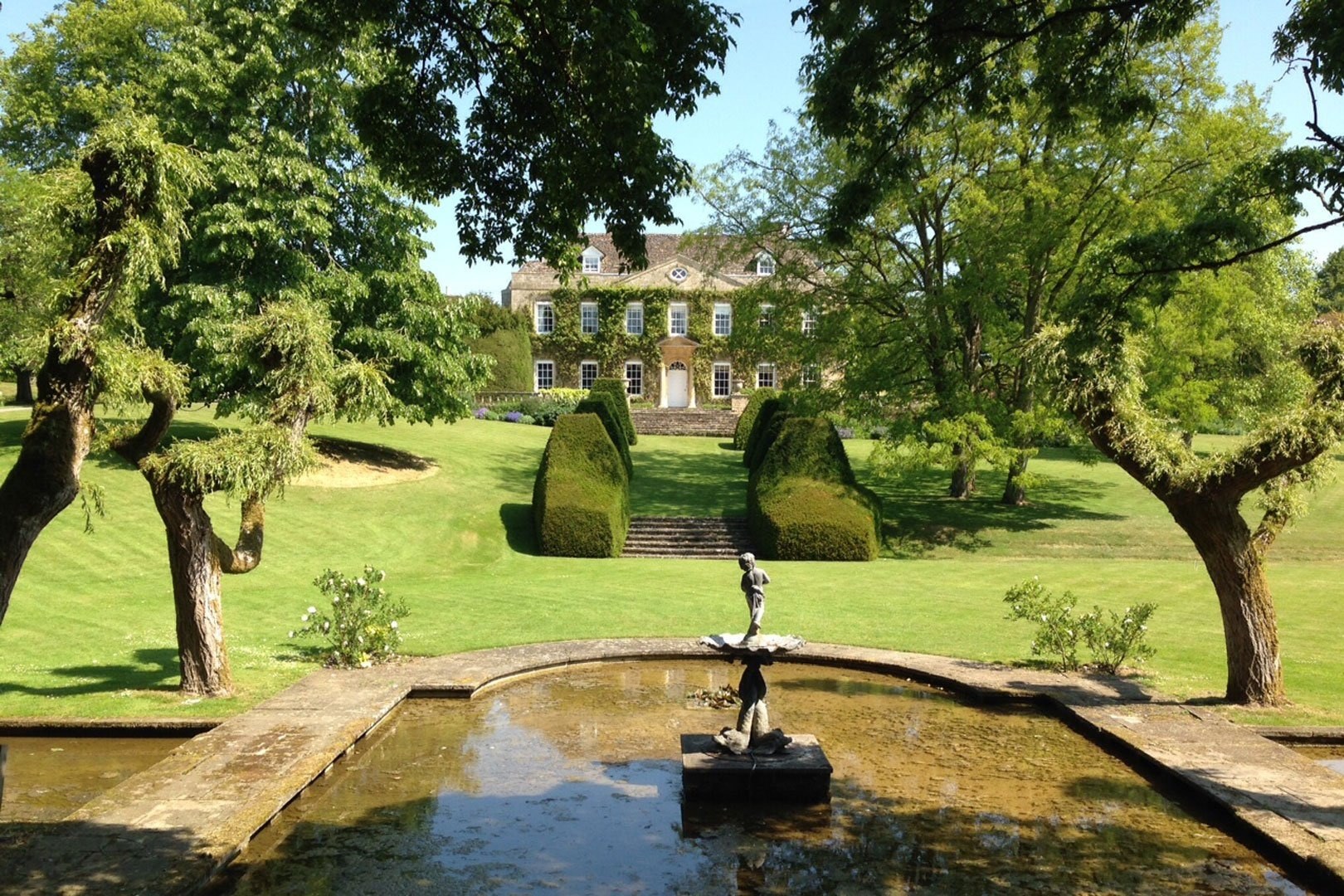
In 1937 Anthony Gillson and his American wife, Priscilla, bought Cornwell Manor, a Georgian fronted house of Cotswold stone near Chipping Norton, and brought in Clough Williams-Ellis, the architect of Portmeirion, to remake it. He gave them a ballroom, a swimming pool, terraced gardens and a formal water garden with a fountain on the main lawn. Then the war intervened, and Priscilla Gillson is said never to have spent a night in the house. The rooms and gardens made for that marriage are now where Cornwell weddings take place: couples marry in the ballroom or beside the fountain, and the Ward family, owners since 1959, hire out the whole house for wedding weekends that run from Thursday noon to Sunday at 5pm.

Four centuries behind a Georgian front
Cornwell is mentioned in the Domesday Book. Its hamlet of twelve cottages sits at the centre of a private estate of 2,000 acres between Chipping Norton and Stow-on-the-Wold, on the Oxfordshire side of the Gloucestershire border. The Annesley family lived at the manor in the sixteenth century. In the seventeenth it passed to Sir Thomas Penyston, and his descendants stayed until the nineteenth century.
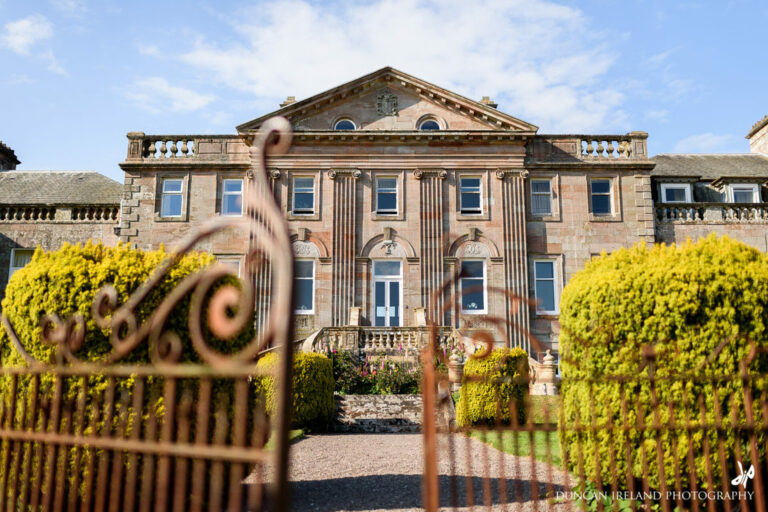
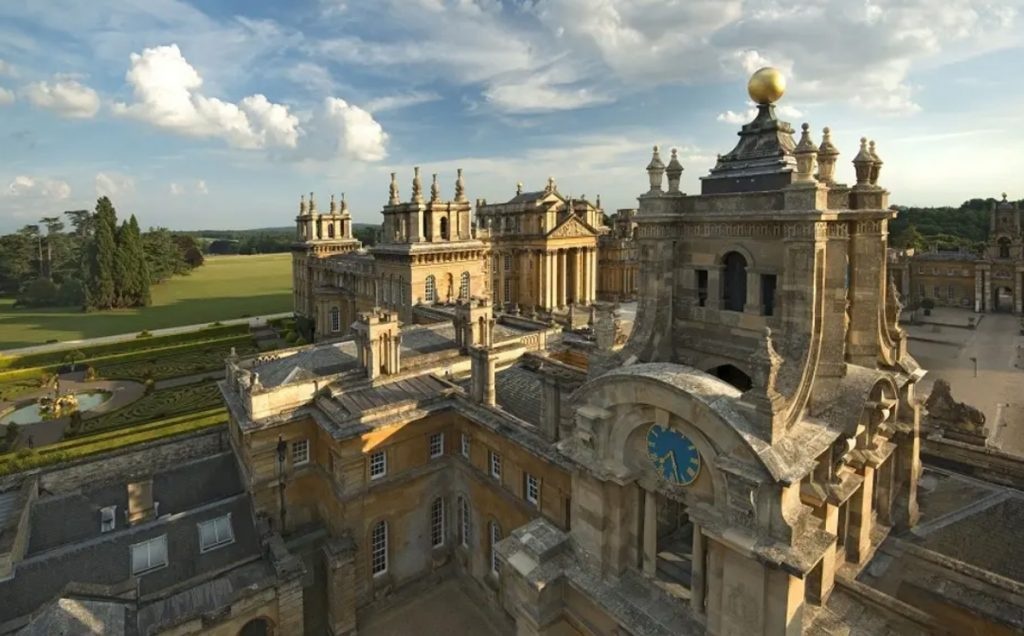
Around 1750 Fairmeadow Penyston gave the house its classical south and east fronts. Behind them the roof, the courtyard and the kitchen wing are older, and the cellars point to a medieval manor house. The stone flagged entrance hall has a stone chimneypiece carved with the Penyston arms, and an eighteenth century open well staircase is lit by a large Venetian window. The low dining room is lined with seventeenth century panelling painted to imitate walnut; set into it above the hearth is a portrait of a Jacobean youth, thought to be the first baronet, which house legend says must never be moved. The manor is listed Grade II*, and its gardens and park are registered at Grade II.
Portmeirion’s architect in the Cotswolds
The story told at Cornwell is that Priscilla Gillson saw the house from a distance, rang the bell, and when told it was not for sale replied that everything has its price. Williams-Ellis was by then known for his Italianate village in north Wales and as a founder of the CPRE, the countryside campaign. At Cornwell he left the main elevations and the principal south rooms alone and worked around them.
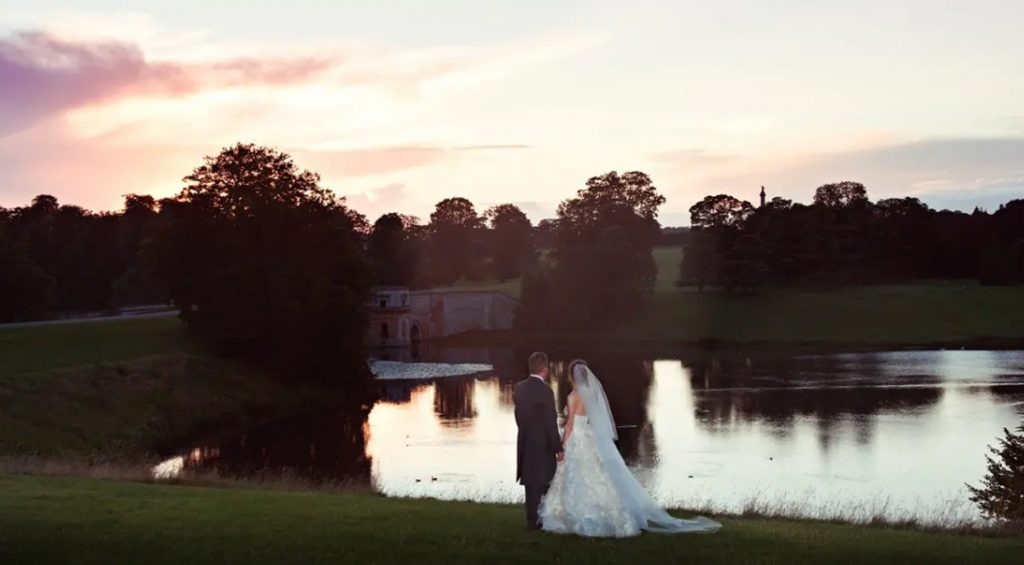
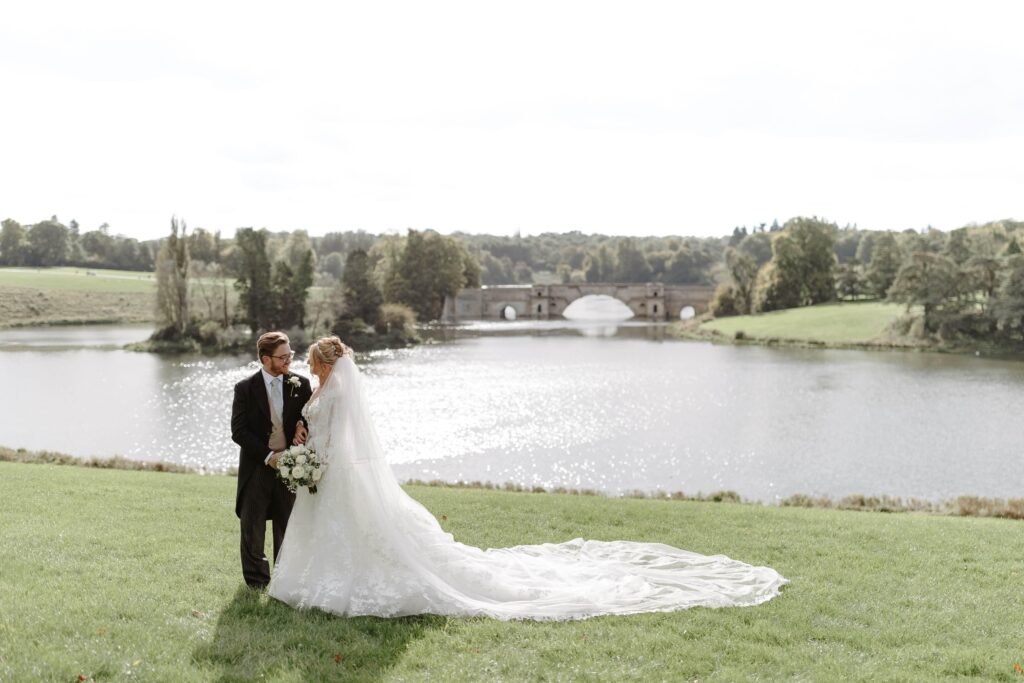
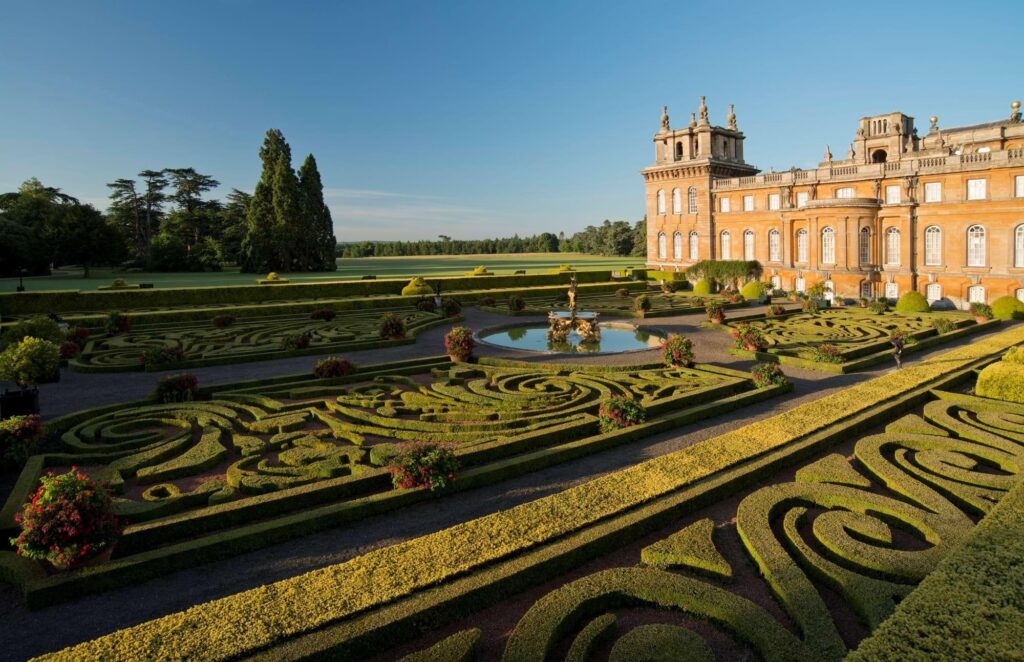
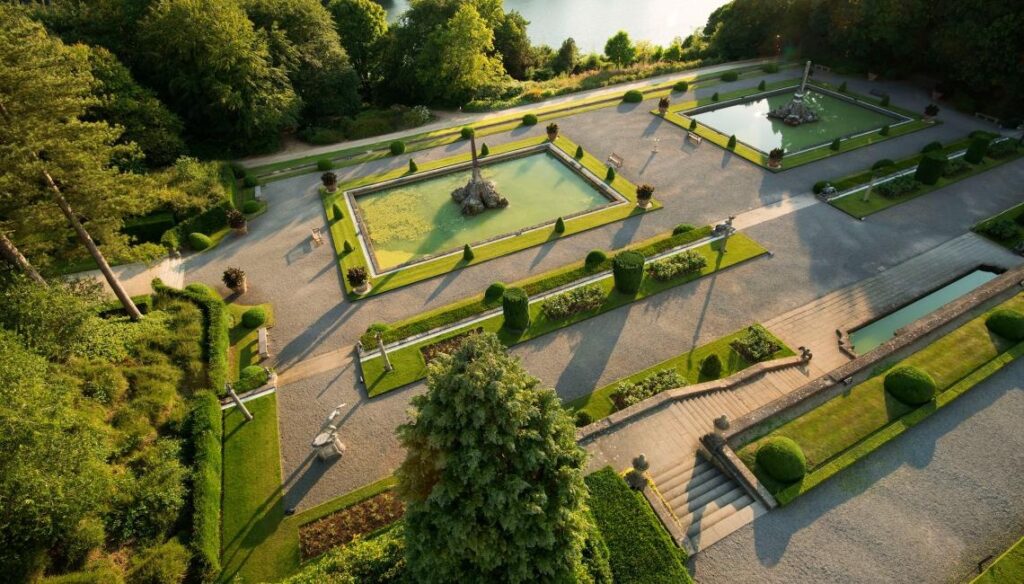
The ballroom went up off the old nursery wing, in a walled garden of its own. A pool garden took a swimming pool and a pavilion. Below the south front he terraced the slope and made a formal water garden: the stream drops over a small semicircular cascade into a stone lined canal, which widens into a pool with a central fountain about 75 metres from the house. Beyond it the water feeds a chain of three lakes that were already in the park by the late eighteenth century. He also modernised every cottage in the hamlet and turned the old village school into a village hall with an Art Deco belfry.
In 1941 Mrs Gillson lent the finished house, with its furniture and a butler, to the Auxiliary Territorial Service as a place of rest for women volunteers and wounded soldiers. Anthony Gillson was killed in action in Burma in 1944, and a plaque in the church records his death. Mrs Gillson sold Cornwell to Lord Robert Crichton-Stuart, who lived there until 1959.
The Wards’ family home since 1959
That year the Hon Peter Ward, a son of the 3rd Earl of Dudley, bought the estate with his wife, Claire. The house was decorated in 1960 with the help of Colefax & Fowler, and painted Regency furniture from Witley Court and Himley Hall, earlier Ward houses, went into the main bedrooms. Claire Ward redesigned the gardens while keeping the Williams-Ellis terraces and water garden. Alexander Ward inherited Cornwell in 2008 and lives there with his family.
It is still run as a family home rather than a hotel, and that shapes a wedding here: the house itself is for the guests staying, while the ballroom, the gardens and the pool are open to everyone.
Inside the 1930s ballroom
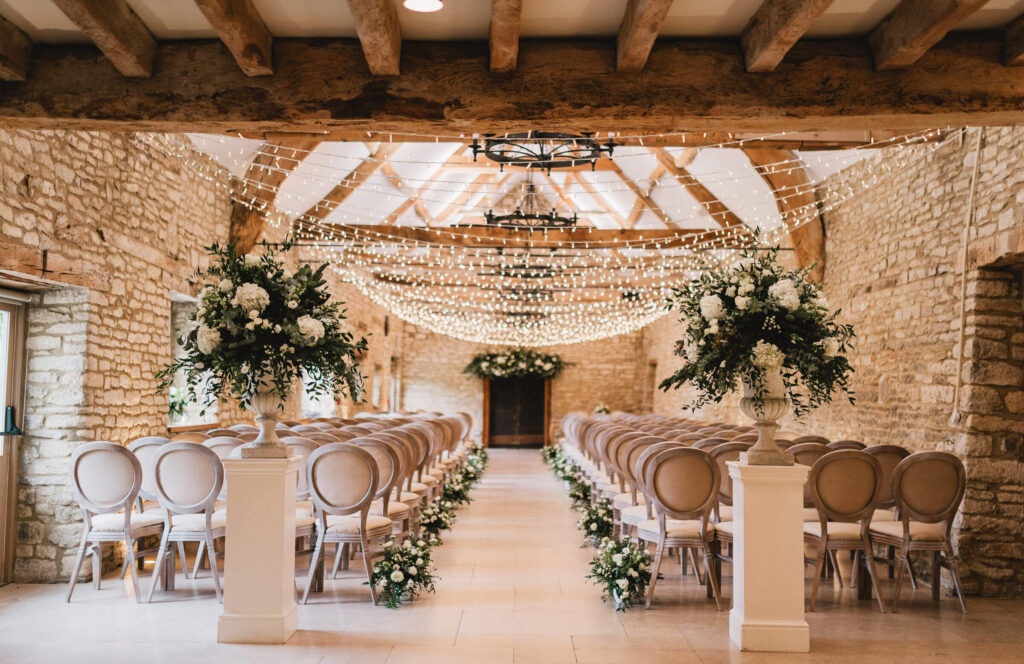
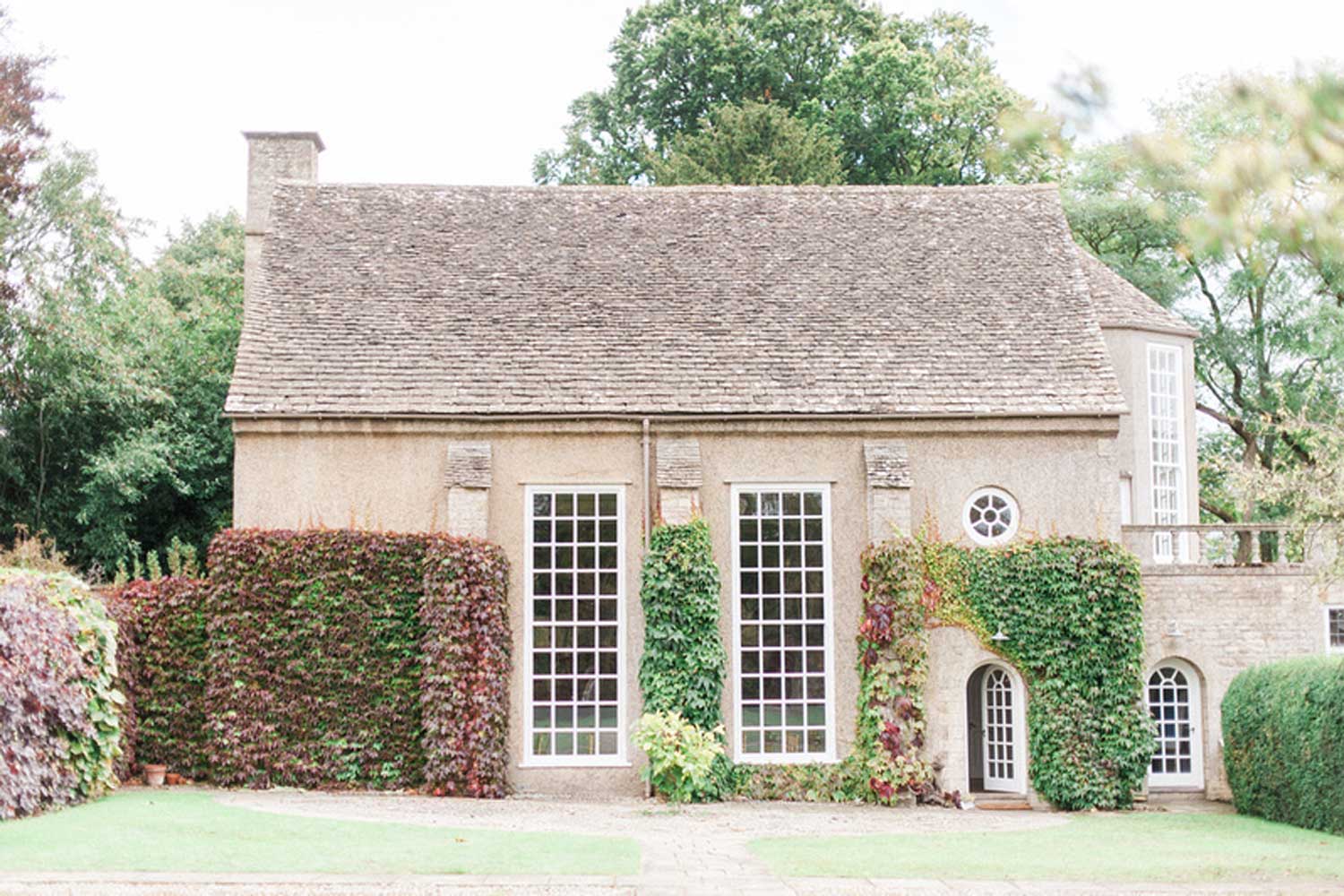
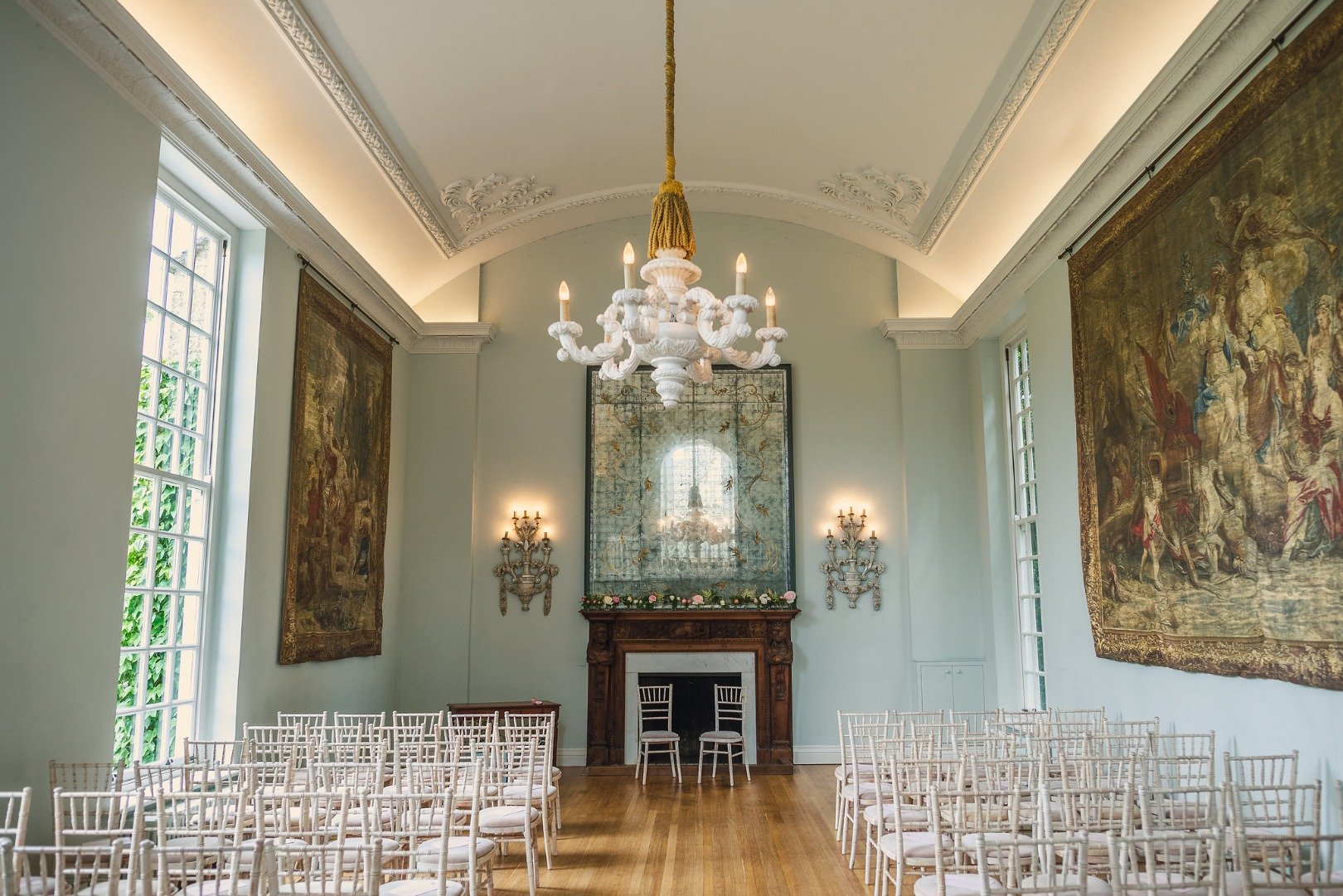
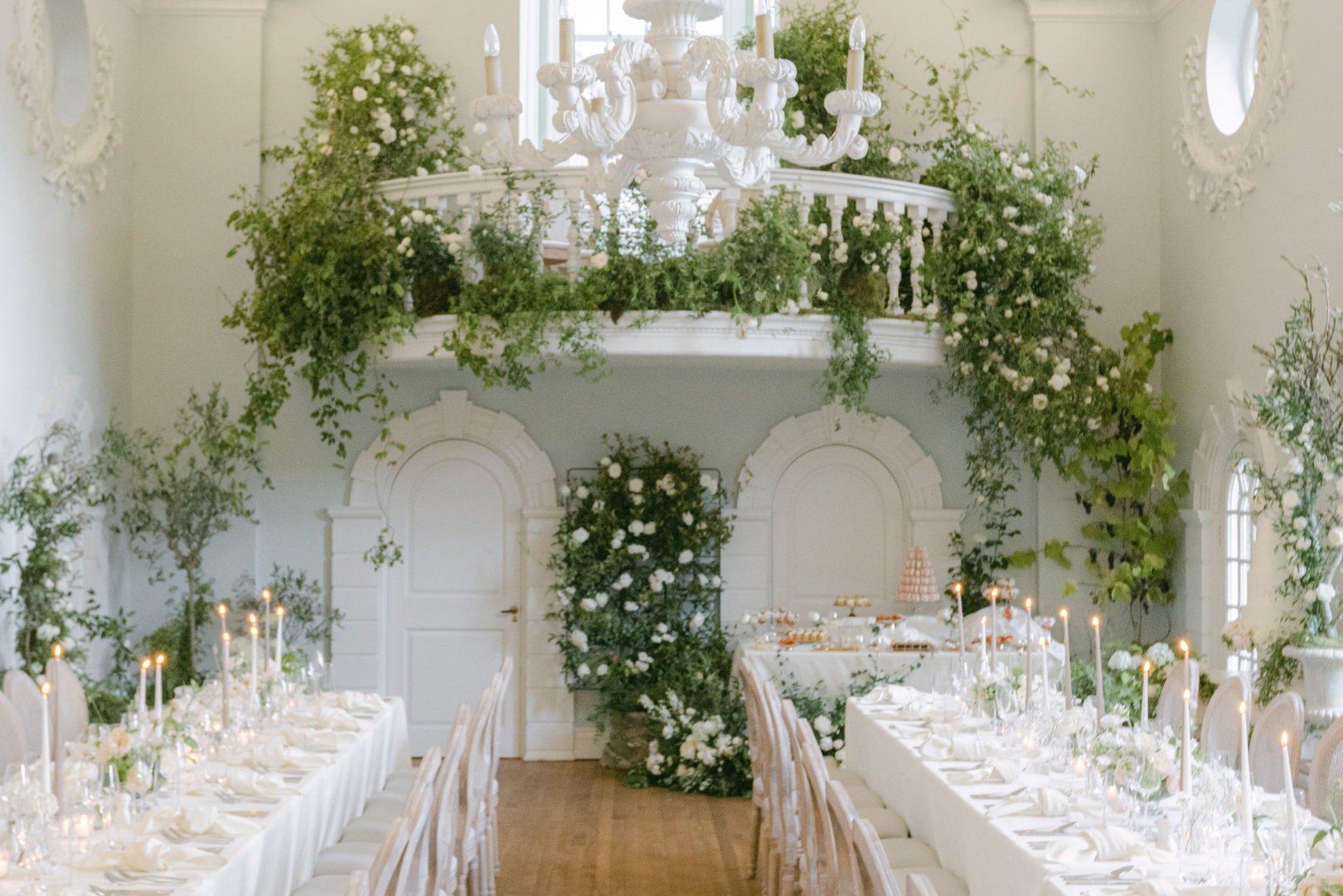
The ballroom has an enriched coved plaster ceiling, a cornice of leaf decoration and, at the south end, a projecting semicircular musicians’ gallery with turned balusters, which takes a string quartet or a DJ. Two large tapestries from the series The Triumph of the Gods hang on the long walls: The Triumph of Minerva, more than six metres long, and The Procession of Bacchus. A verre églomisé mirror hangs above the carved oak fireplace.
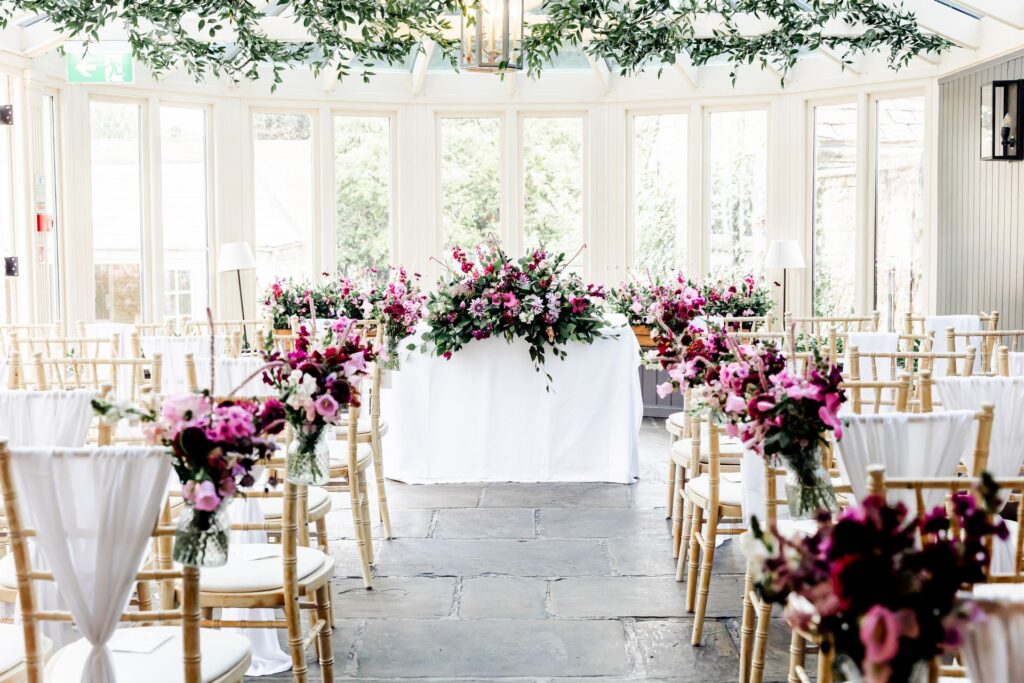
The room is licensed for civil ceremonies for up to 100 seated or 144 standing, and seats 72 for dinner. Registrars come from the Oxford register office. It is hired empty, so all the furniture is hired in.
Vows by the fountain or at St Peter’s
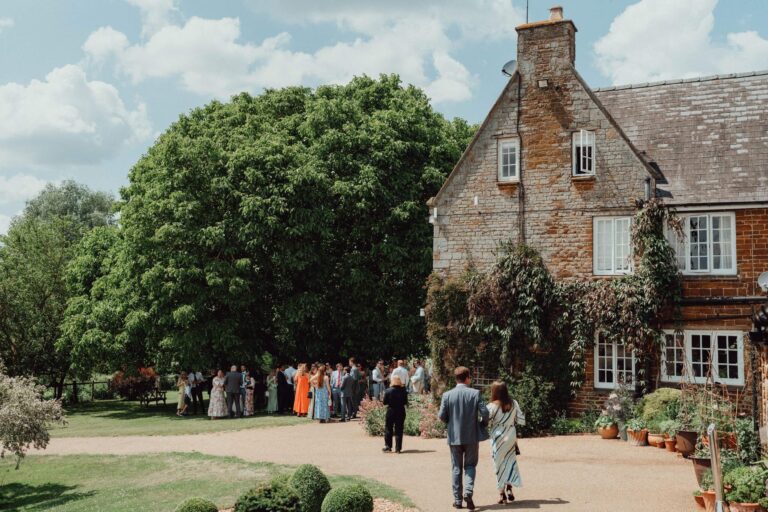
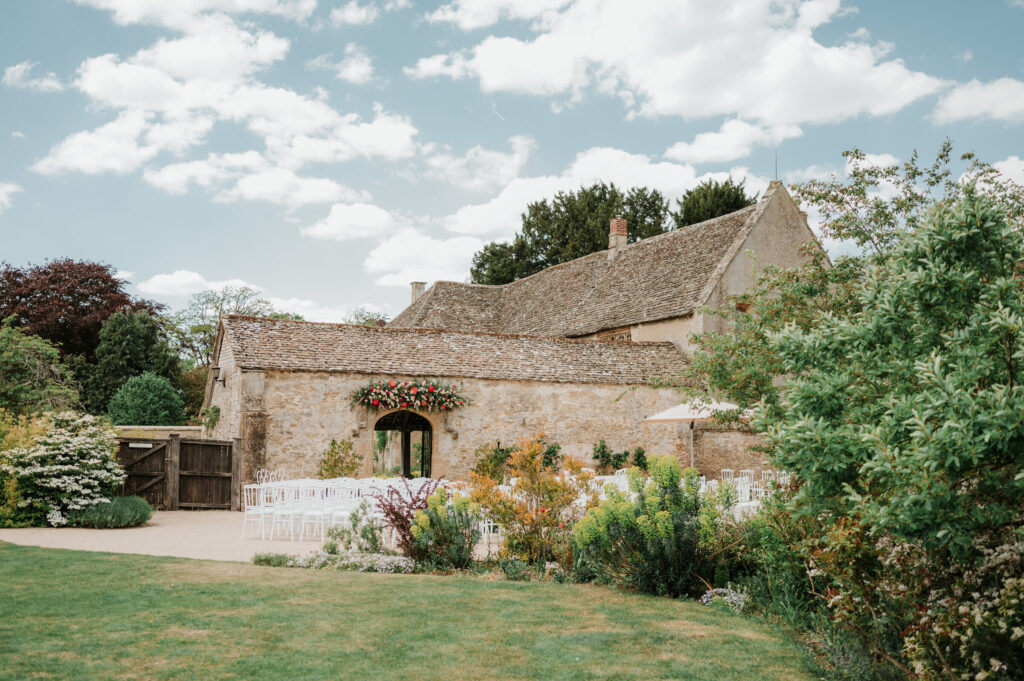
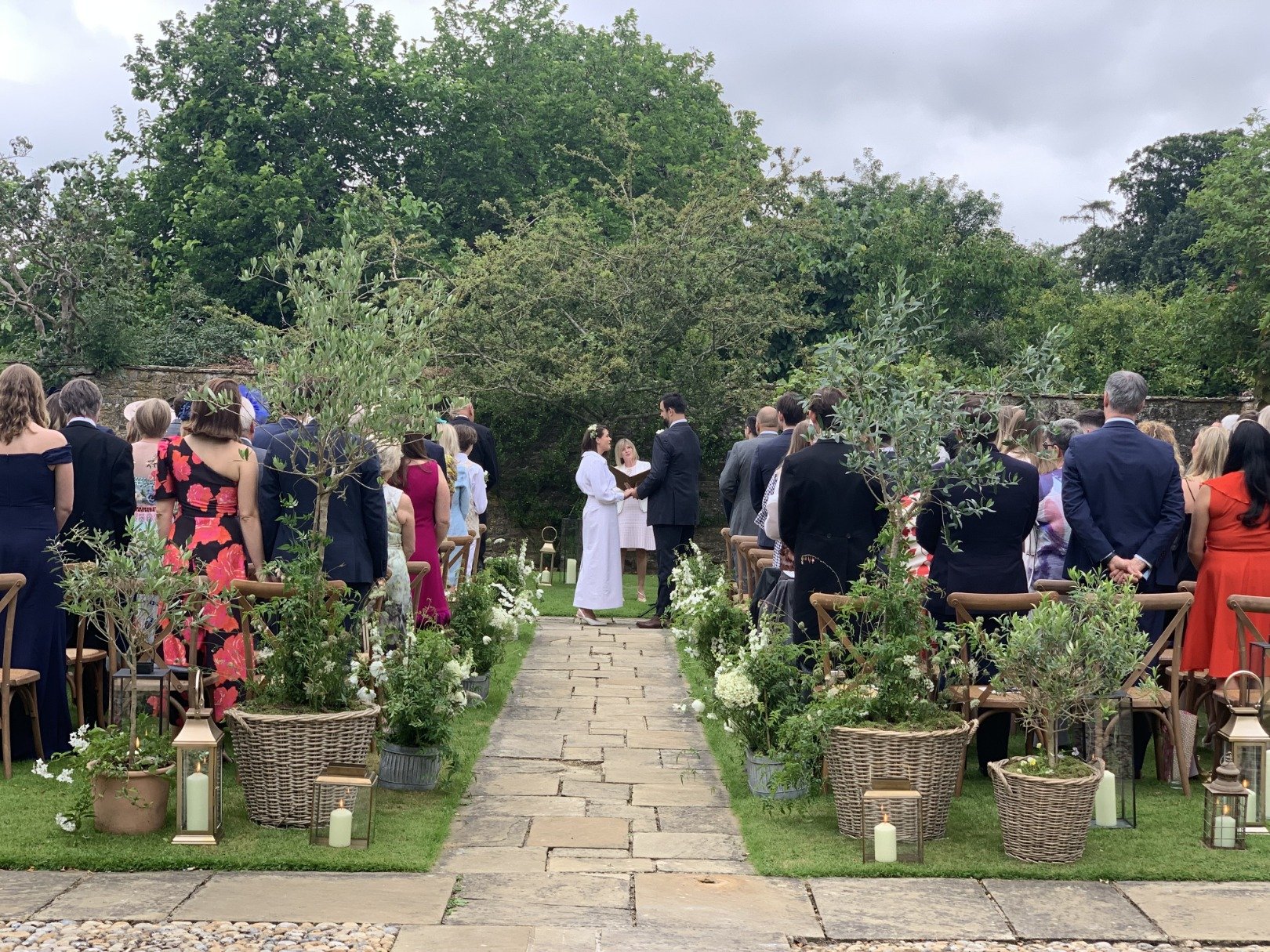
The gardens are licensed for civil ceremonies for up to 144 guests, with the ballroom as the wet weather alternative. At the fountain beside the croquet lawn the house stands behind the couple and the aisle runs through an avenue of yew hedges; an A frame roof can be hired in case of rain. The ballroom’s walled garden can be covered with a stretch tent. The secret garden behind it and the east terrace above the lakes suit smaller ceremonies, and there is also an orchard in the kitchen gardens beyond the pool. The drawing room is licensed for small civil ceremonies.
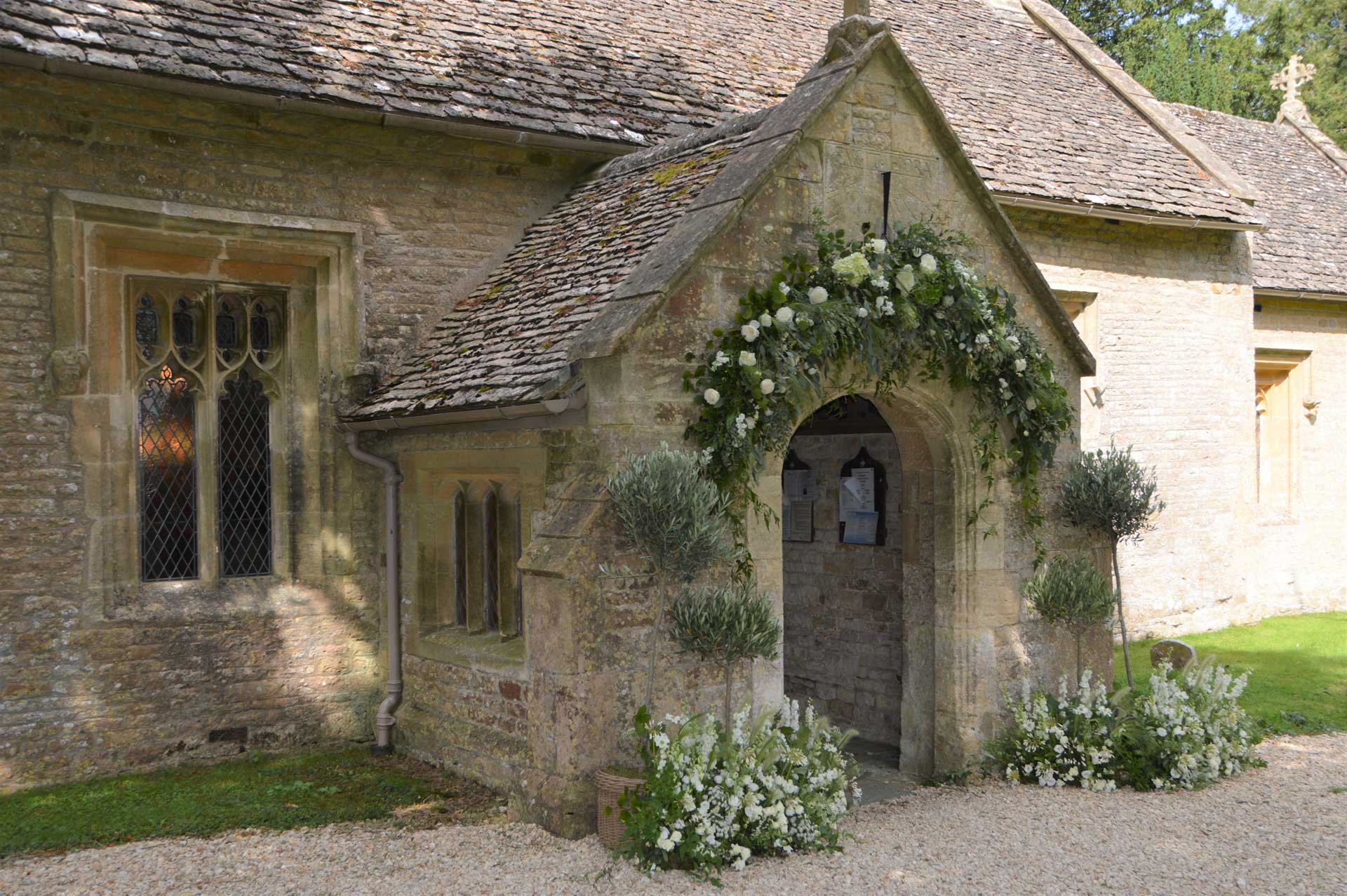
St Peter’s, the small estate church, is Norman in origin. It stands in the park less than 200 metres from the house, reached along a lime avenue, and seats 80. A Church of England wedding there needs a qualifying connection, established by attending services regularly for at least six consecutive months. Couples without one can marry legally first, at Cornwell or elsewhere, and then ask permission for a blessing in the church.
From the terrace to the marquee
Drinks are served on the terrace above the lakes, or in a formal garden of Portuguese laurels with a statue of a fiddler. On the Friday the terrace can take a long table for up to 70 for an outdoor rehearsal dinner, weather allowing.
A dinner too large for the ballroom needs a marquee or tipi. It can stand by the water garden, down stone steps through the topiary from the house, or in the ballroom’s walled garden, which takes up to 150; larger weddings use the park, which overlooks the house and the lakes. The hire includes ground rent for a marquee for up to 200 guests, and weddings of up to 300 are possible for a supplement.
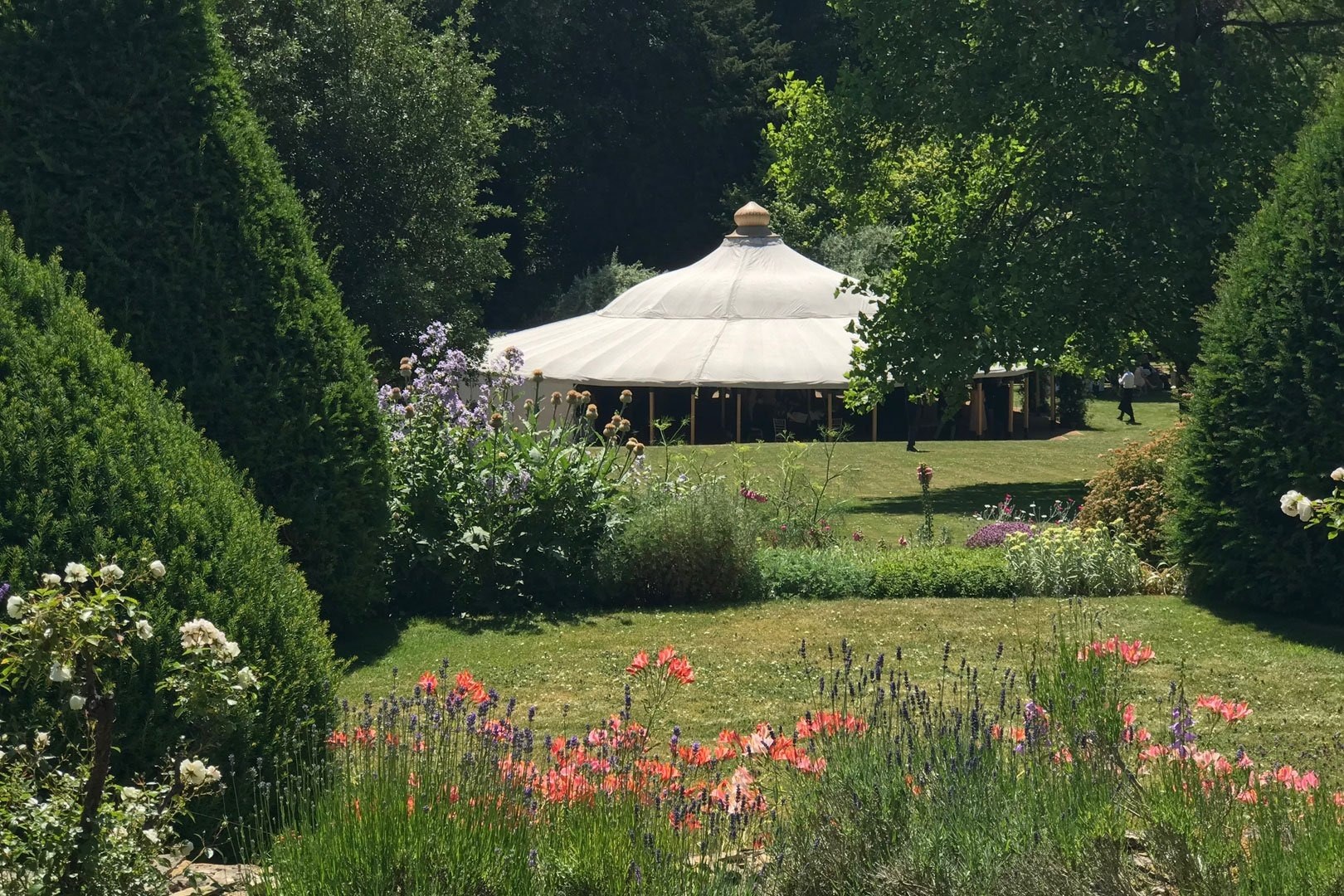
The house does not cater the wedding. Couples choose their caterer and marquee company from a preferred list, with Ottolenghi among the caterers, and Evenlode Productions handles power, sound and lighting; the wine comes from the Cornwell Manor list. A wedding planner or an on the day coordinator is required, as are hired loos and a generator. Music and the bar can run until 1am in the ballroom or a marquee, but nothing is played in the open air after 10pm, and fireworks are not allowed in the gardens or grounds.
Three nights at Cornwell
Twelve double bedrooms sleep 24, with nine bathrooms, six of them en suite. Among them are the Bridal Suite, with a canopied bed, the Green Room, with a four poster, and the Dressing Room, with a fireplace and an antique bed. Breakfast for house guests is served for two hours each morning, and a poolside brunch can be arranged on the Sunday before the 5pm departure. Glamping for up to 26 more guests can be arranged.
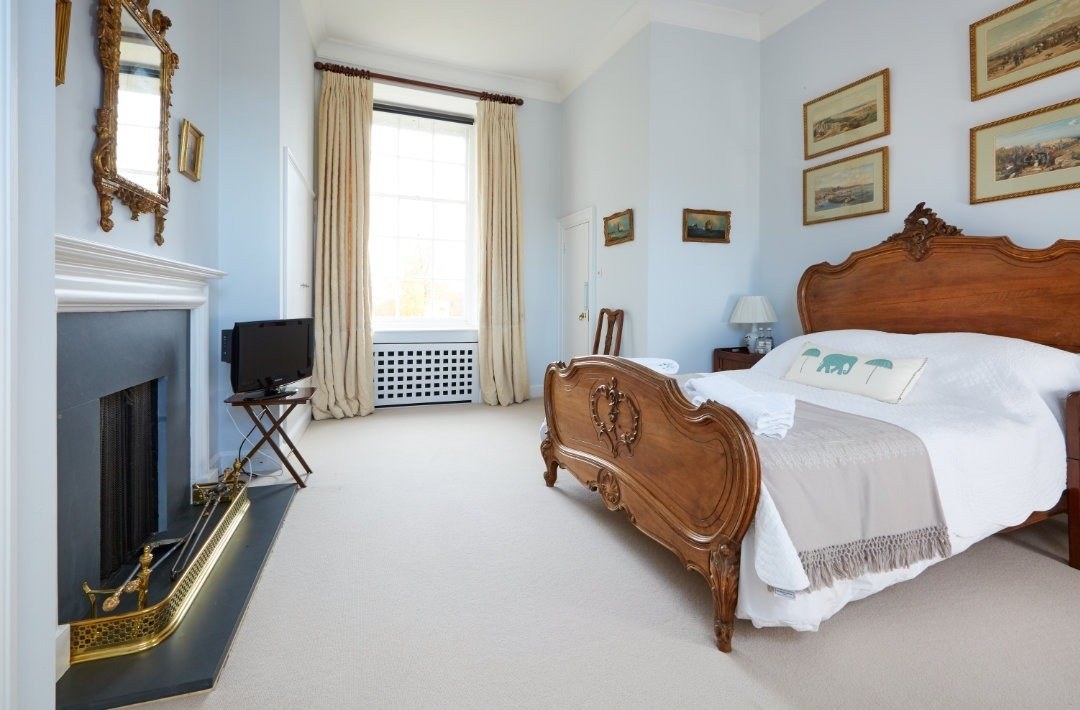
For 2026 the three day weekend is £35,000 plus VAT. It covers the house for three nights, breakfasts, housekeeping, the ballroom, gardens and heated pool, marquee ground rent and the late licence; the event manager, marquee, furniture and catering are extra.
Getting to Cornwell
Kingham station, on the Cotswold Line with Great Western Railway trains to London Paddington, is under three miles away as the crow flies. Chipping Norton and Daylesford are five minutes by car, Soho Farmhouse fifteen and Oxford about half an hour. A grass paddock takes up to 80 cars. A short film of the house and estate, made by the wildlife film maker Leander Ward of Wayfarer Media, is on Vimeo. For another historic Oxfordshire house, read our Edit on Caswell House, or browse weddings in Oxfordshire and the Cotswolds Wedding Atlas.
The Gillsons’ ballroom or a marquee
The decision that shapes a Cornwell wedding is the size of the guest list. Up to 72 can dine in the room Williams-Ellis built for the Gillsons, under the musicians’ gallery and the tapestries, with nothing to put up; beyond that, dinner moves to a marquee by the water garden or in the park, and the ballroom can be kept for dancing. Read the Cornwell Manor profile and check your date.