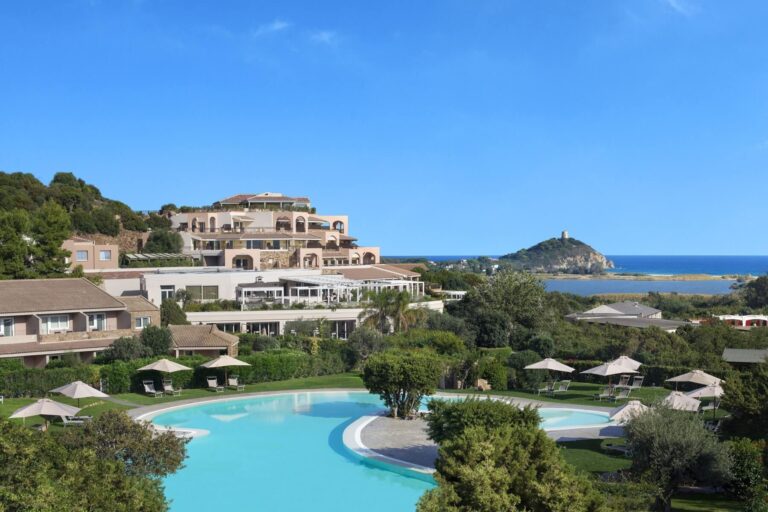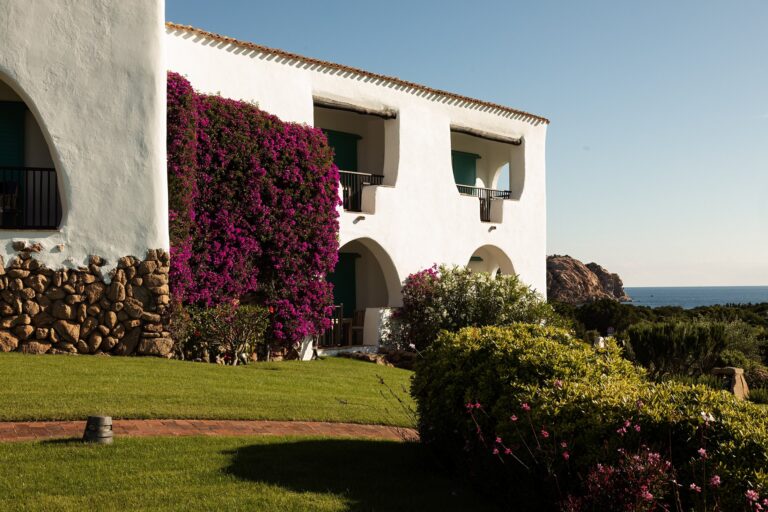
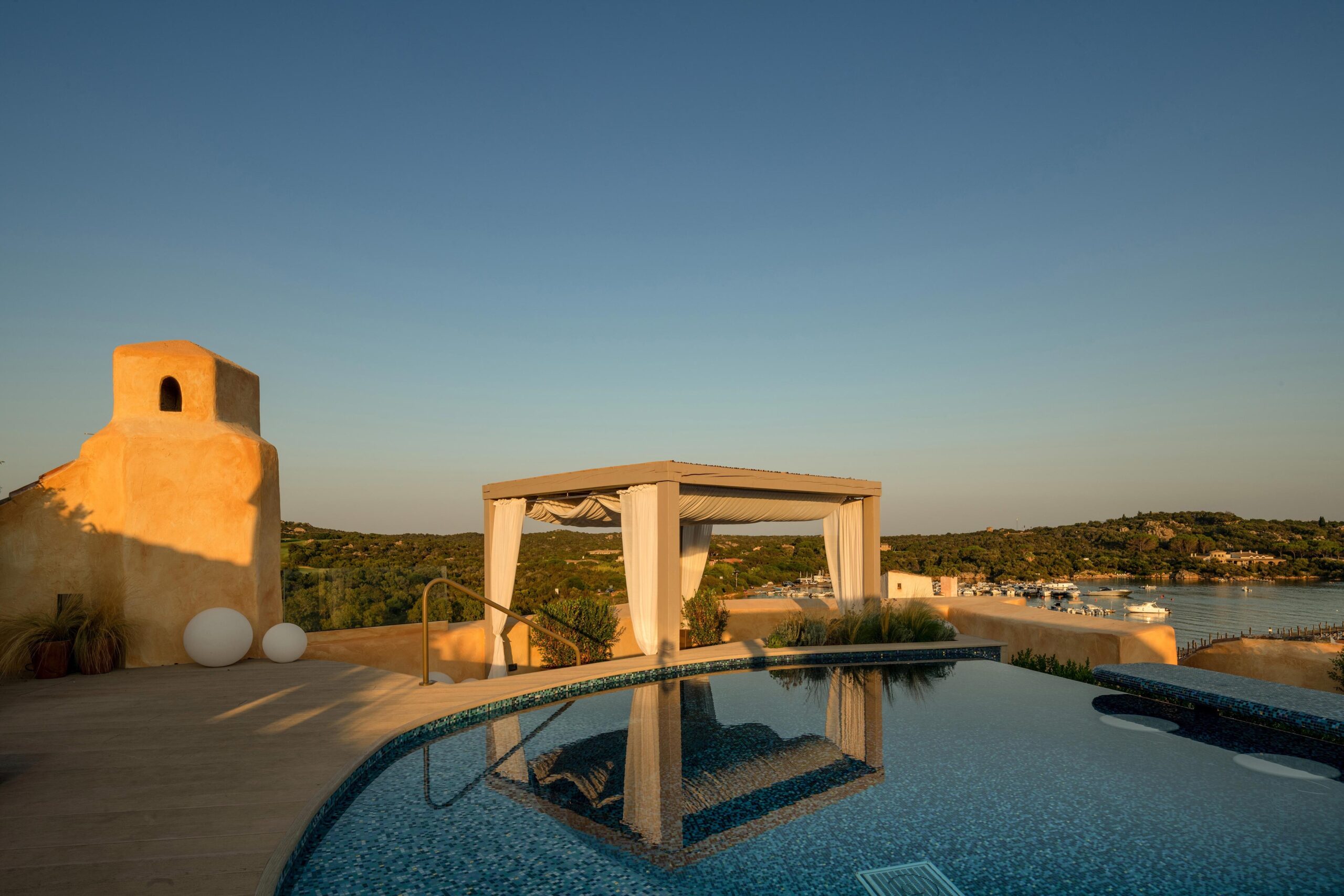
When Prince Karim Aga Khan’s consortium began work on the Costa Smeralda in 1961, the land around the bay of Cala di Volpe was wild and uninhabited. The hotel built on its shore, which dates from 1963, was one of the first of the new coast, and the Aga Khan gave the commission to Jacques Couëlle, a French architect with no formal training who shaped many of its forms with his own hands. Seen from the water, the result reads as a small village of plaster and terracotta. Couples now marry on its terraces above the bay, on the long wooden pier and on the private beach, and their guests can arrive by boat.

The Aga Khan’s coast
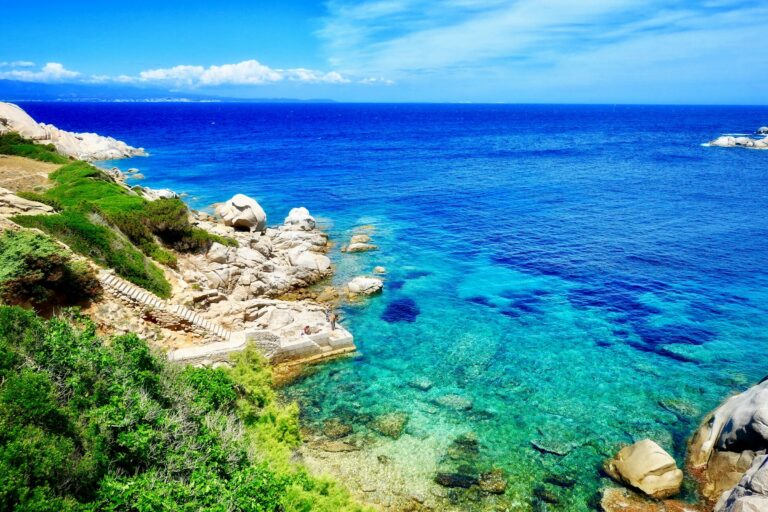
The Costa Smeralda was financed by a group of companies led by the Aga Khan, and it runs today for some 20 kilometres along the north-eastern corner of Sardinia. The name first belonged only to a short stretch of shore in the comune of Arzachena, which is still the hotel’s address. Porto Cervo, ten minutes away by car, was laid out to a detailed plan, and the architects who shaped the coast included Michele Busiri Vici, Luigi Vietti, Jacques Couëlle and his son Savin.
Cala di Volpe came early in that programme, on a cove of its own. It has since joined Marriott’s Luxury Collection, but the irregular forms Couëlle gave it survive: low buildings, arches and terraces gathered at the water’s edge. A long wooden pier runs out from the shore into the bay.
A self-taught architect
Couëlle, who lived from 1902 to 1996, was self-taught, and he stayed on the margins of the great architectural movements of his century, Modernism included. His sculptural forms evoke the architecture-sculpture that emerged after the Second World War. He founded a research centre for natural structures in 1946, counted Pablo Picasso and Salvador Dalí among his friends and was known as the architect of billionaires. Before Sardinia he spent the years from 1955 to 1963 building the village of Castellaras-le-Vieux on the Côte d’Azur, and he worked with his son Savin.
An account retold for the hotel’s sixtieth anniversary has Couëlle lying on the ground when he first arrived, to feel the shape of the land with his body. The plaster was blended with branches from local trees, and the stained glass windows were pieced together from uneven fragments of glass. His stained glass of 1963 is still set into the concrete and plaster wall of the lobby. In the 1970s Savin added a new wing of guest rooms.
Sixty years on the bay
In August 1976 the main unit of The Spy Who Loved Me, the tenth James Bond film and the third with Roger Moore, began work in Sardinia, and the hotel was one of its locations; Valerie Leon played the hotel receptionist in the Sardinian scenes. The film had its royal premiere at the Odeon Leicester Square in London on 7 July 1977.
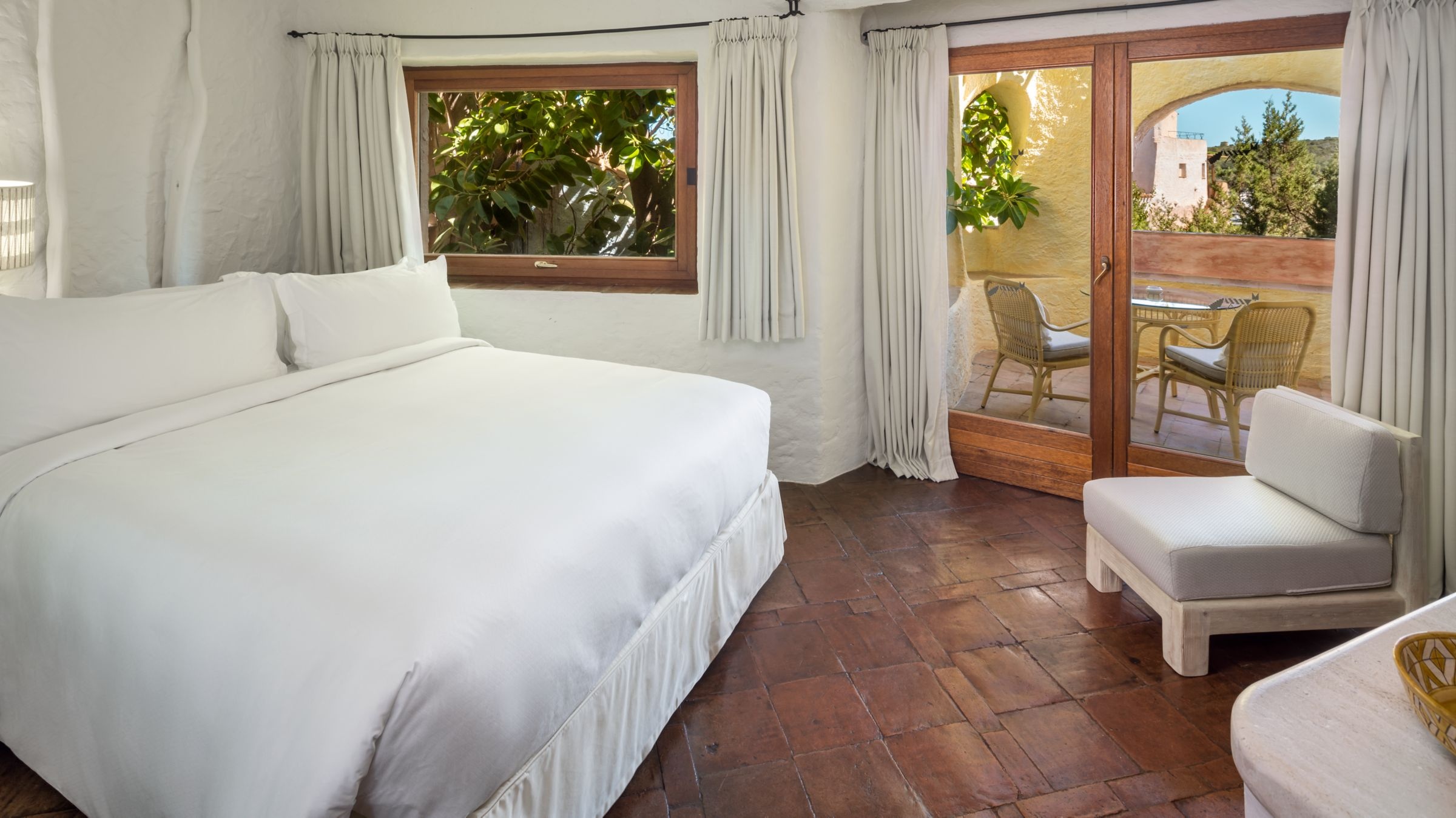
From 2018 the designers Bruno Moinard and Claire Bétaille, who won a competition for the work, restyled the hotel in phases, beginning with three prototype rooms. Moinard has said that step by step modifications had destroyed the original spirit of the hotel. The work kept Couëlle’s curved walls, rustic beams and large vaulted ceilings. The lobby bar was raised and lengthened for views of the sea and given a skirt of copper and stucco, and a new reception desk was made to match. In the bedrooms the beds were turned to face the sea, limestone floors were laid in an irregular pattern and headboards were plastered in place, and some rooms have canopies of juniper branches and reeds. Ceilings are clad in reed, and most of the furniture was made to measure by local craftsmen.
The hotel marked its sixtieth year in 2023 with a book from Assouline, titled simply Cala di Volpe, which follows the property from its first building to its renovation.
Vows at the water’s edge
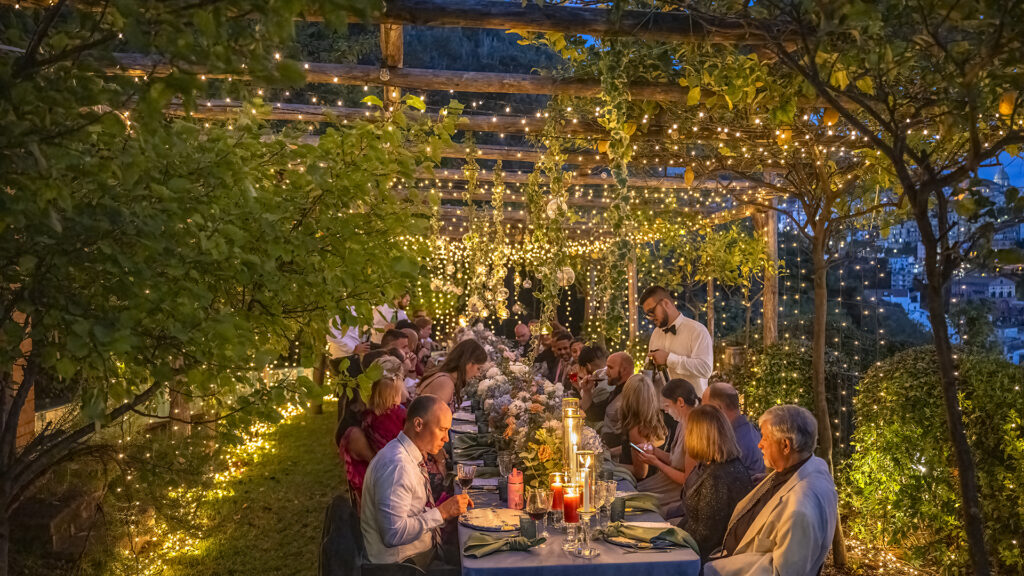
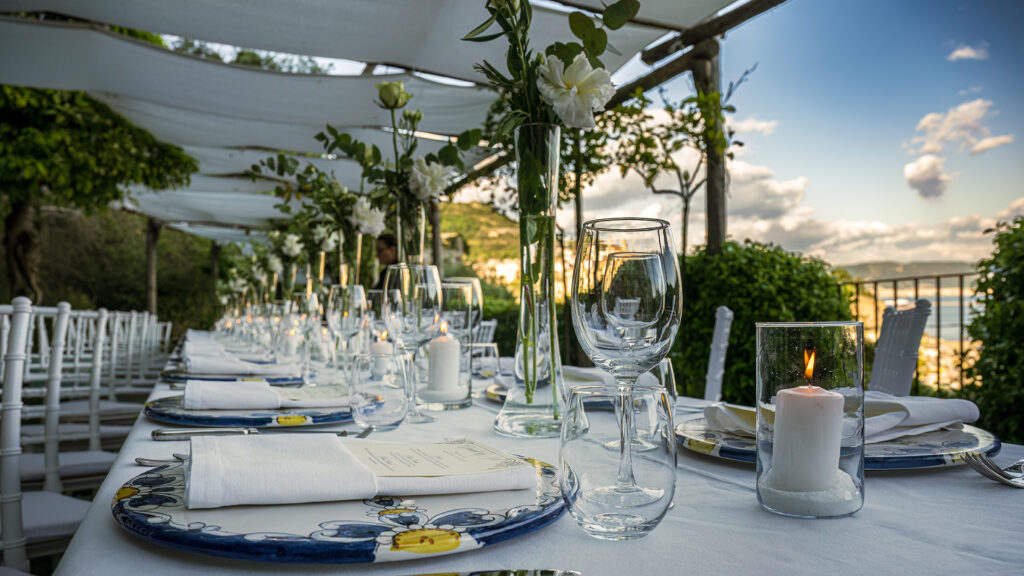
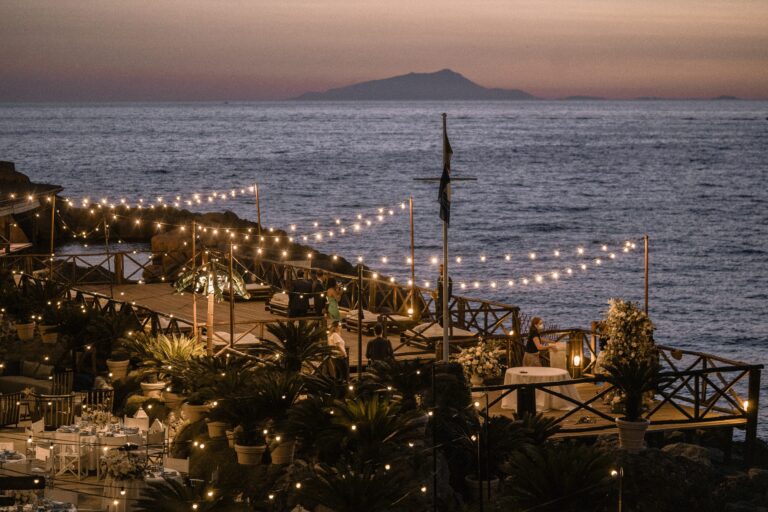
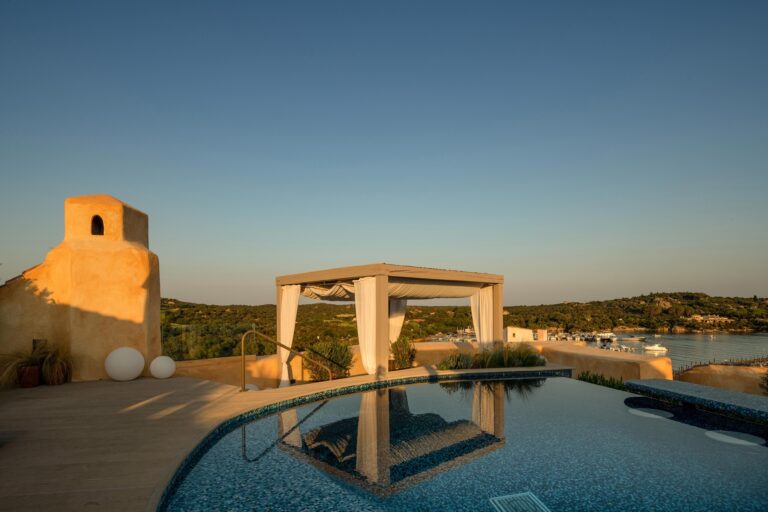
A wedding here is arranged around the bay. The tiered terraces face the water and take outdoor ceremonies and open-air receptions. Ceremonies can also take place on the wooden pier, out over the cove, and the private beach and beach club hold vows on the sand and informal receptions by the sea. A third choice is the side of the pool, an Olympic-size saltwater pool that looks across the bay. The private dock means guests can come in by boat, as the hotel’s lunch guests often do.
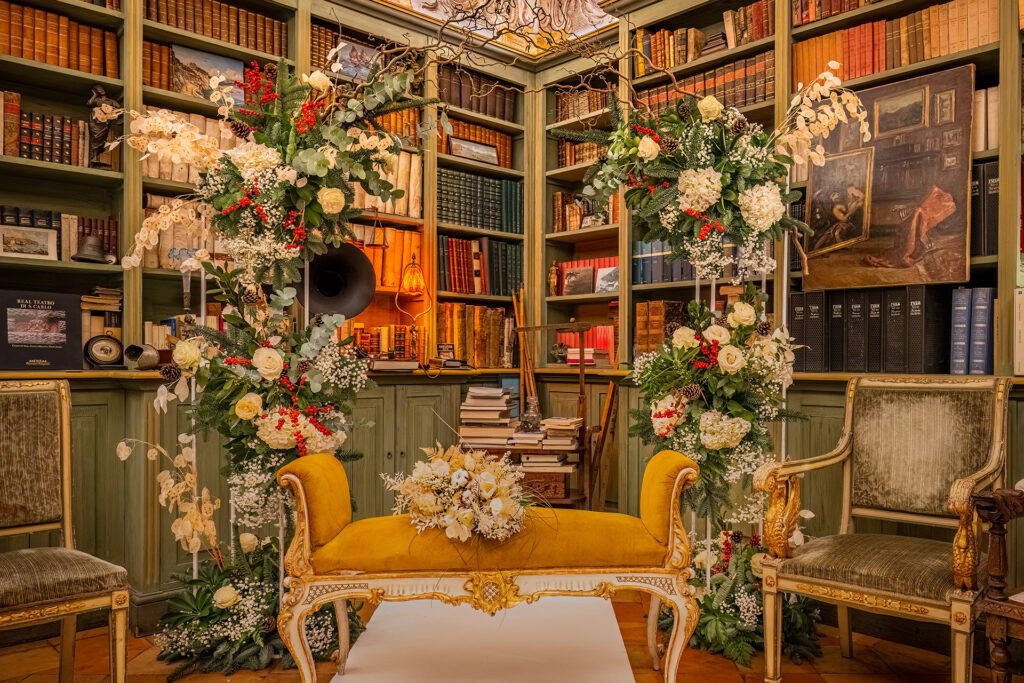
Civil ceremonies can be held at the hotel, and religious blessings and symbolic ceremonies can be arranged. Indoors, Il Pescatore and the event rooms take civil ceremonies and formal dinners. Up to 300 guests can be seated for dinner or stand for drinks, and the whole hotel can be reserved for the wedding party, every room and event space included. Marriott’s certified wedding planners work with couples on the budget, the menus, the décor and the choice of suppliers.
A wedding day around the cove
Because the ceremony places are spread along the shore, the day can move with the light. Vows can be made on the tiered terraces, on the pier over the water or on the beach, and a pool-side ceremony is a fourth choice. Guests who come by sea can land at the private dock, which the hotel’s lunch guests already use, and from the water the hotel reads as a village of plaster and terracotta at the edge of the cove.
From the ceremony the party can drift to the beach club for an informal reception by the water, then move up to Il Pescatore, whose terrace looks over the bay, or to the Cala di Volpe Barbecue beside the pool for a seated dinner in the open air. The hotel’s other restaurants, Le Grand, Matsuhisa and Beefbar, give a weekend party somewhere else to eat, and the spa is there for the morning after.
What the restoration changed for guests
Much of what a guest notices today comes from the Moinard Bétaille work. The lobby bar was raised and extended so that the sea is visible from the stools, and Couëlle’s 1963 stained glass was kept in the wall behind it. Upstairs, turning the beds to face the sea means a guest wakes facing the sea, and the plastered headboards, irregular limestone floors and canopies of juniper and reeds keep the rooms close to the craft of the original. In the designers’ account the rooms are in the same spirit but never exactly alike, which suits a wedding where guests will compare notes at breakfast.
The hotel has 121 rooms and suites, and a wedding that takes the whole hotel has them all, along with every event space. How many of those rooms a guest list will fill depends on the plan agreed with the hotel, so it is worth asking early.
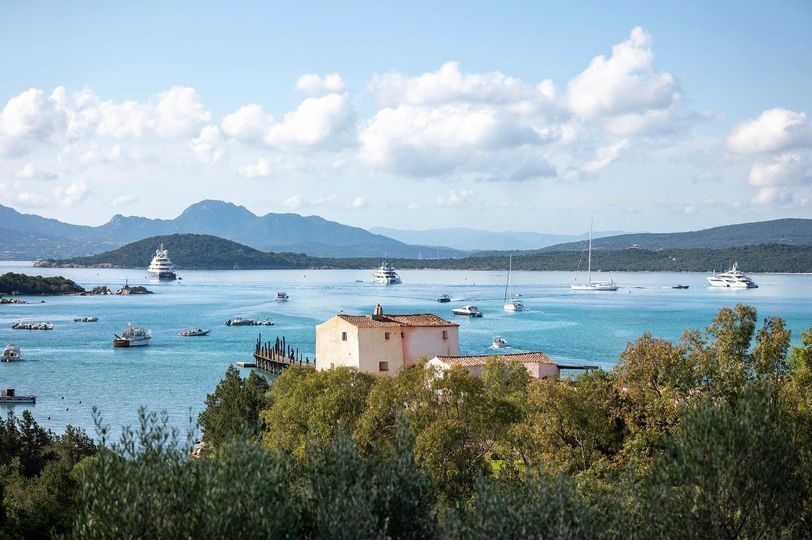
For a free day, Porto Cervo has its Old Port, built in the 1960s as a fishing harbour, and the modern marina where the Yacht Club Costa Smeralda has its clubhouse. Offshore, the seven main islands of the Maddalena Archipelago lie in the Strait of Bonifacio between Sardinia and Corsica and form a national park; Porto Rotondo and Baja Sardinia are also within reach.
Olbia Costa Smeralda Airport is about 30 minutes away by road. The hotel closes for the winter, so a wedding falls within its season, and each wedding is priced on enquiry as a proposal of its own. For more on marrying on the island, see our guide to wedding venues in Sardinia.
A cove of your own
The question that shapes a wedding at Cala di Volpe is whether to take the whole hotel. Taken outright, it gives the wedding party the pier, the terraces, Il Pescatore and every room to itself. It suits couples who want a building with a real story behind it and a ceremony, dinner and bedrooms gathered on one cove; it asks them to plan around a winter closure. Read the Hotel Cala di Volpe profile and check your date.