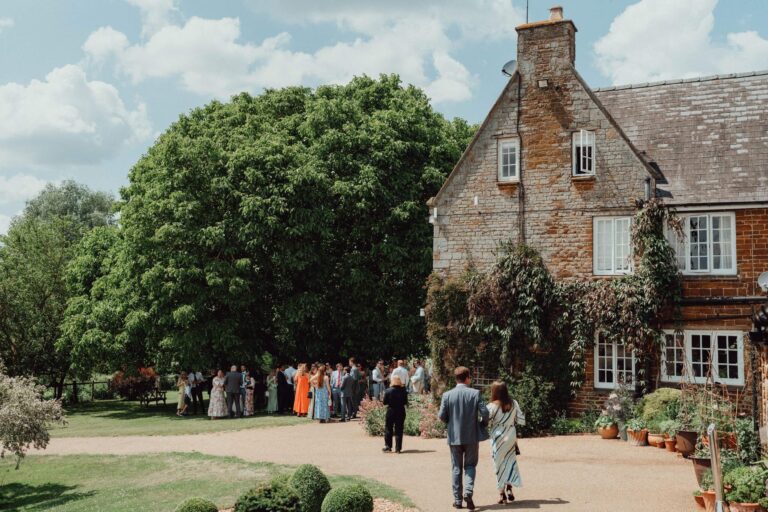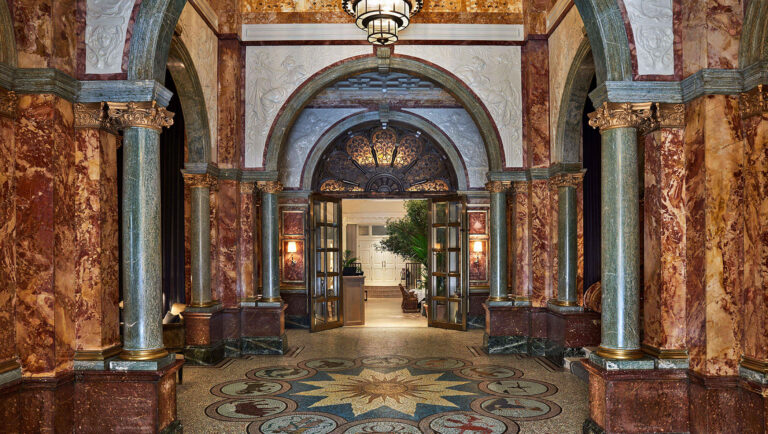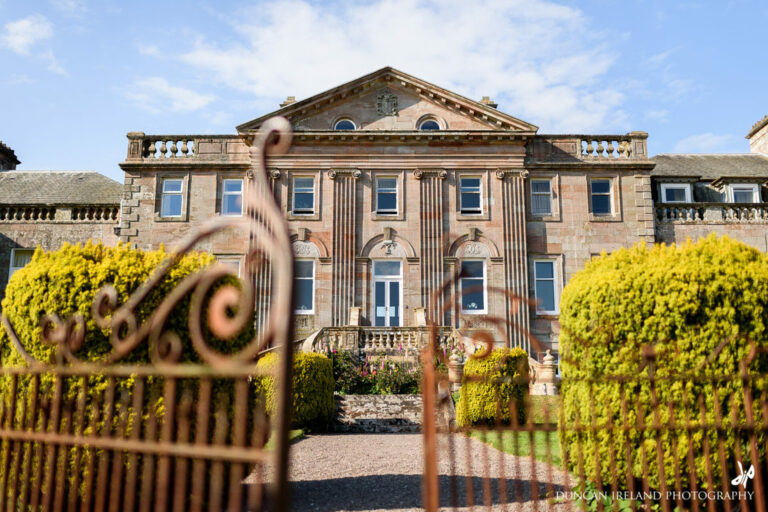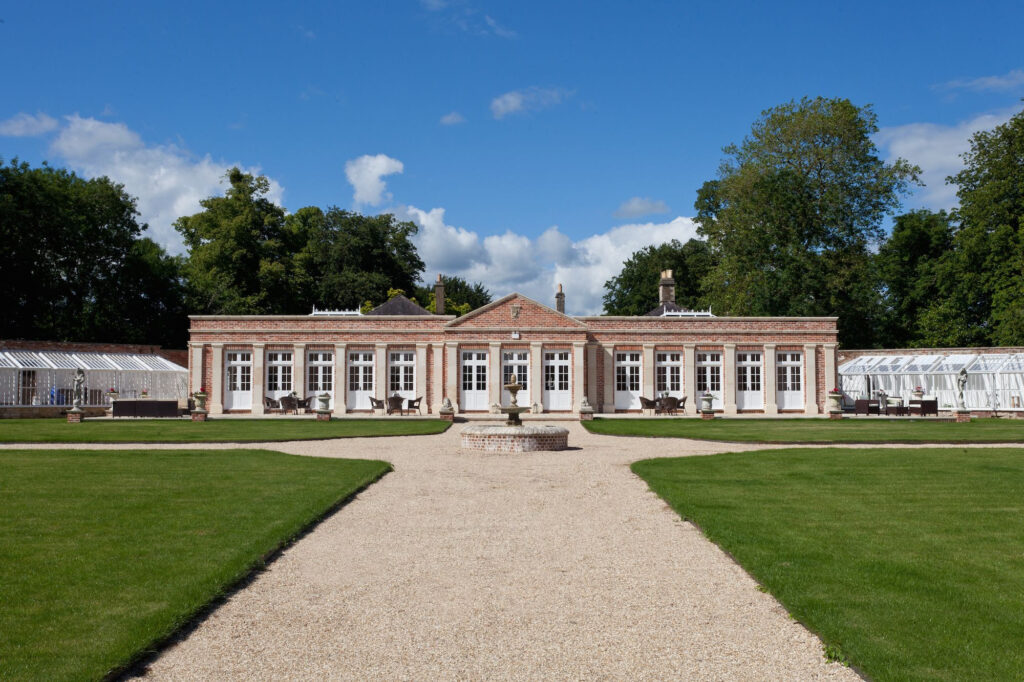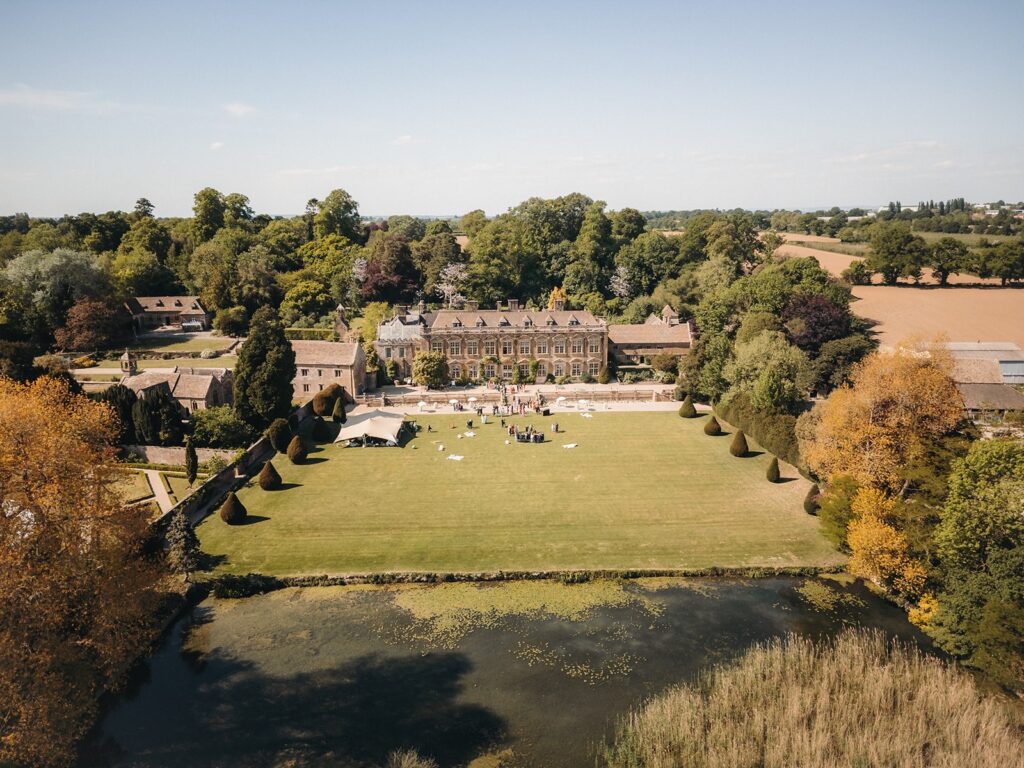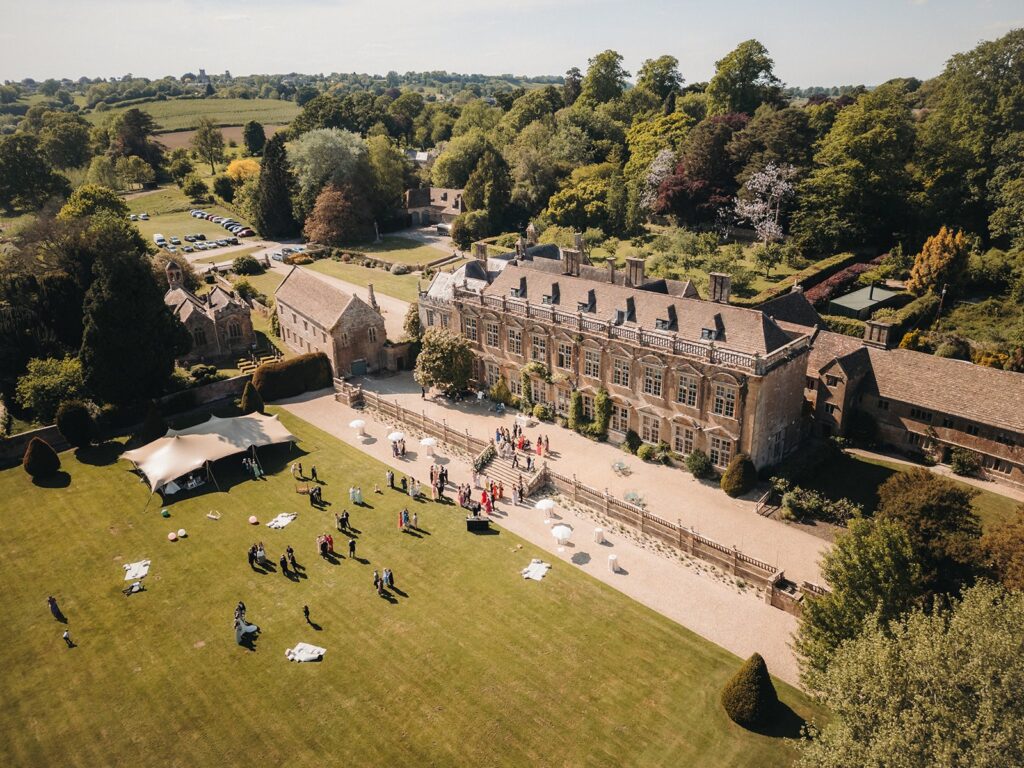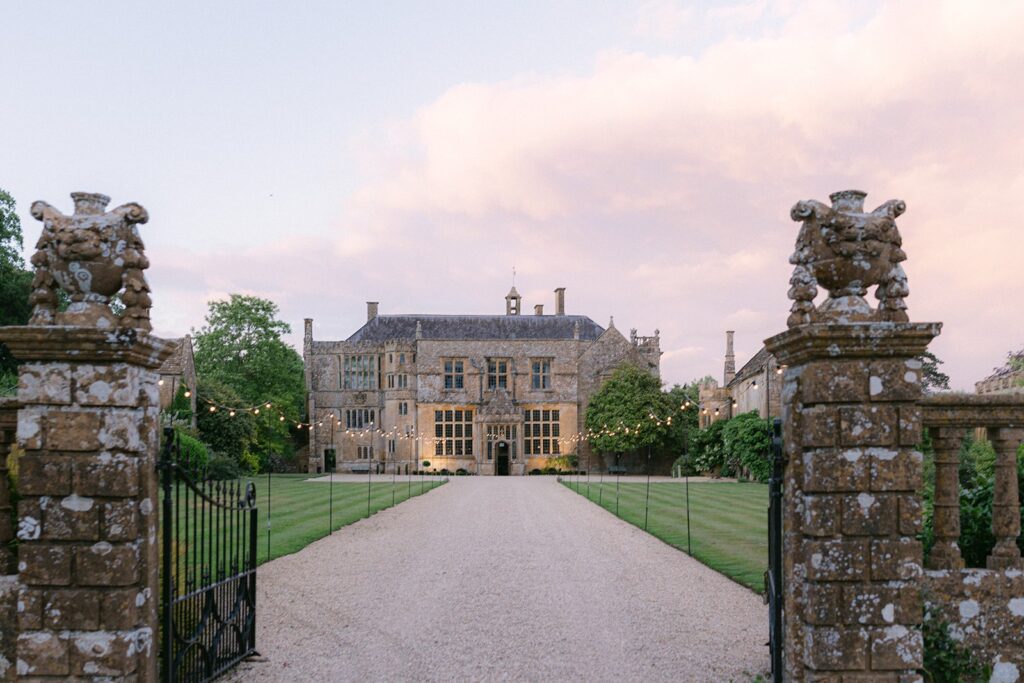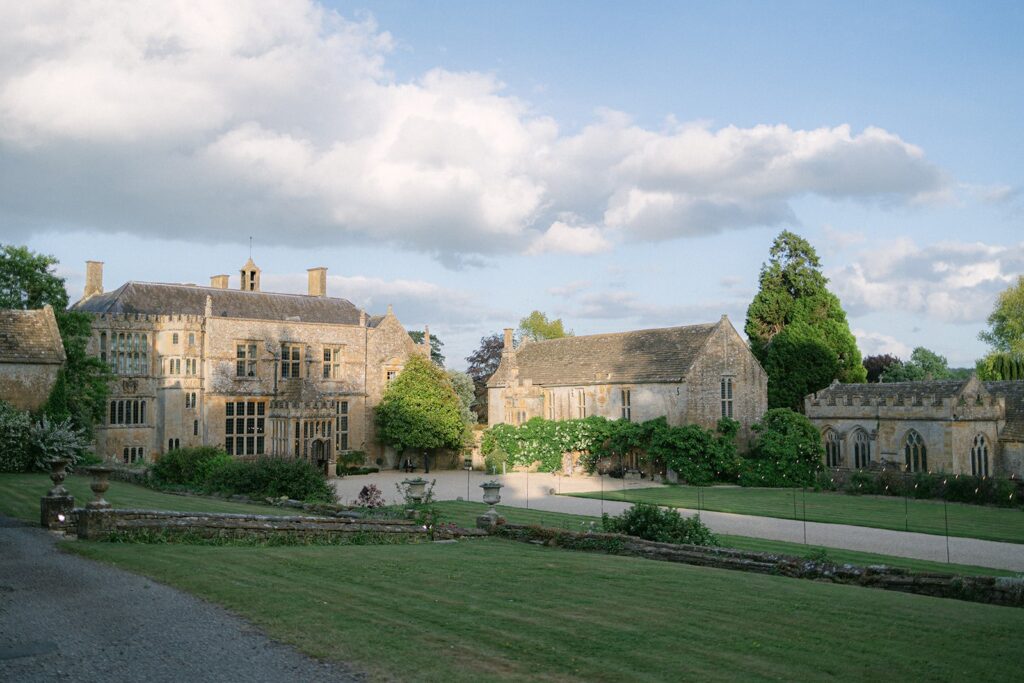
St Audries Park stands where the Quantock Hills come down to the Bristol Channel at West Quantoxhead, and the estate a couple takes for their wedding was largely made in the middle of the nineteenth century. In the 1840s and 1850s the old village was cleared so that the park could be extended, and the architect John Norton designed a new parish church, lodges and a village school for the estate while he refaced the house. Those buildings still have a part in a wedding here: the church for a Church of England service, the lodges and the former school for the night before.

Malets, Aclands and a Victorian rebuilding
William de Mohun held Quantoxhead in 1086, and in the late fourteenth century Sir William Lucy sold it to Sir Baldwin Malet. The Malets kept it into the early eighteenth century, and from about 1540 it was known as St Audries, after Audrey, the Anglo-Saxon abbess of Ely who is also called Etheldreda.
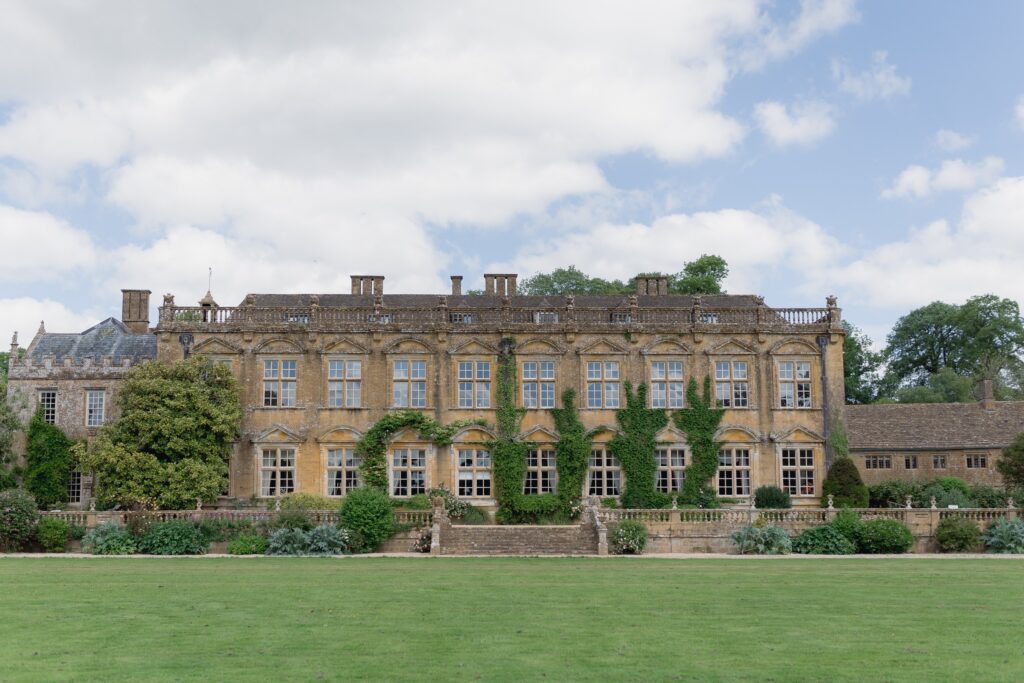
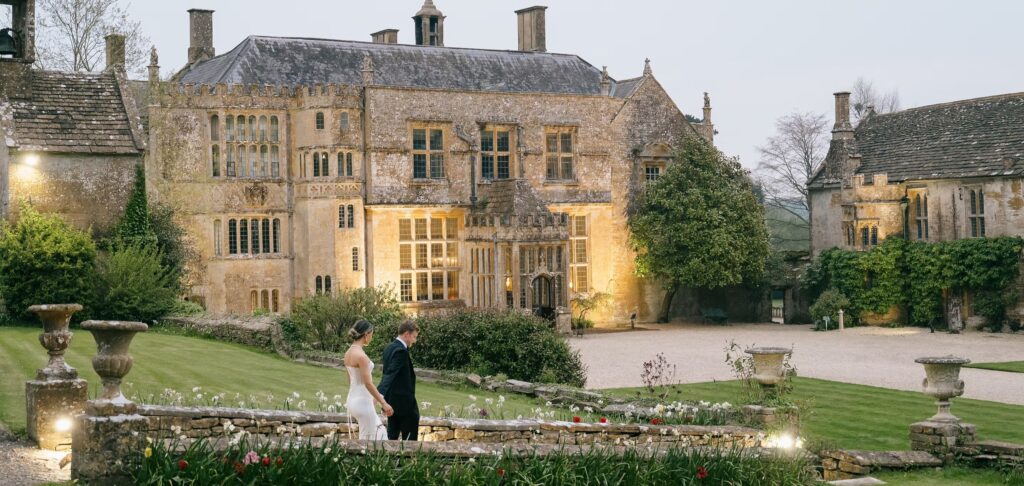
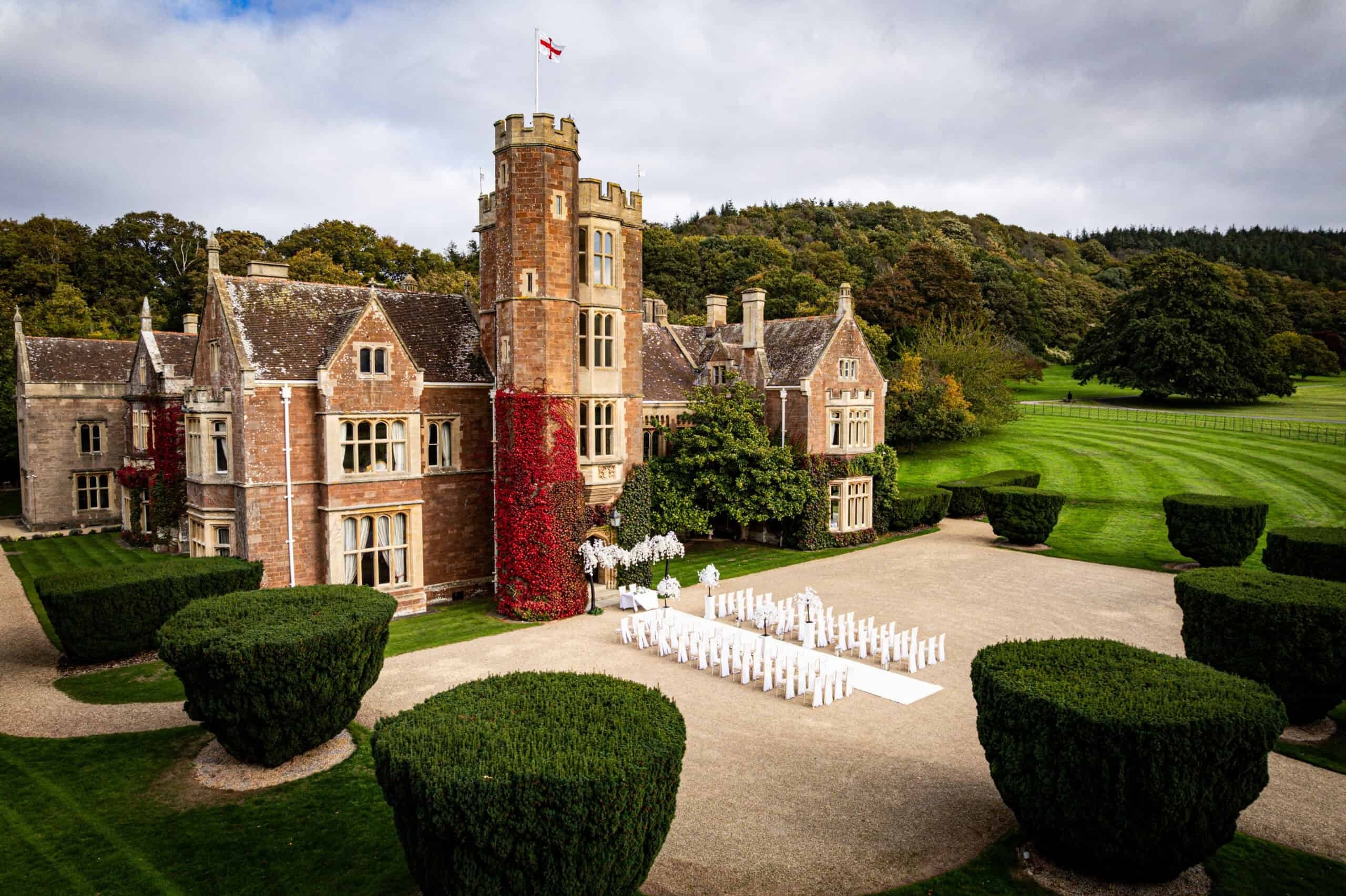
In 1835 Sir Peregrine Fuller-Palmer-Acland bought St Audries for his daughter Isabel. She married Sir Alexander Acland-Hood in 1849, he came to live there, and in 1911 his son was raised to the peerage as Baron St Audries. Between 1835 and 1870 the earlier house was rebuilt and enlarged almost entirely. Richard Carver of Taunton began with the service quarters and the stables; Norton took over around 1850, with William Shewbrooks of Taunton as his builder, and gave the house its Tudor Gothic front in red Sampford Brett sandstone. Over the entrance, a crenellated tower carries an oriel with a Latin inscription and the Acland arms.
The village that gave way to the park
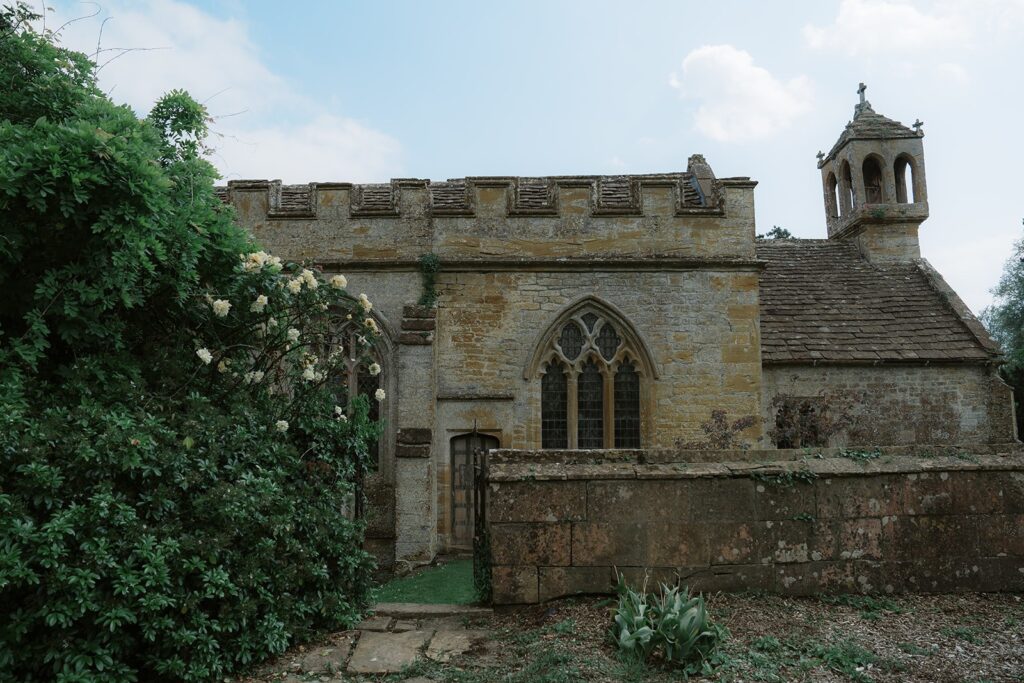
The park fills a wide, bowl shaped valley that narrows to the north west, with the cliffs of the Bristol Channel along its northern edge. To extend it to its present boundary, the cottages of West Quantoxhead were taken down through the 1840s and 1850s, the last of them around 1850, and the village was resited. The medieval church went too. Sir Peregrine laid the foundation stone of its replacement, St Etheldreda’s, in October 1853, and it was consecrated on 17 October 1856 at a cost of more than £16,000, most of it met by Sir Peregrine and Sir Alexander. Norton built it in the Geometrical style of the late thirteenth century, in the same stone as the house, and kept the twelfth century font from the old church. It is listed Grade II*.
His lodges and school belong to the same years, and each is listed Grade II in its own right. Williton Lodge, of 1850, has the Acland-Hood arms on its central gable; Church Lodge followed in 1851. Peregrine House was built in 1856 and 1857 as the village school, with the family arms set into a chimney breast on its south front and a bellcote on its east gable. The house is listed Grade II, and its park and gardens are on the Register of Parks and Gardens, also at Grade II.
In the twentieth century the house changed hands and uses. The second Baron sold the estate in 1925, and from 1934 the house was a girls’ school, with the orangery as its chapel. The school stayed until about 1990; after a period as a Buddhist centre, the house was sold again in 2001. It now belongs to Country House Weddings, a family run group of six country houses, each used only for weddings.
Vows beneath the orangery arcade
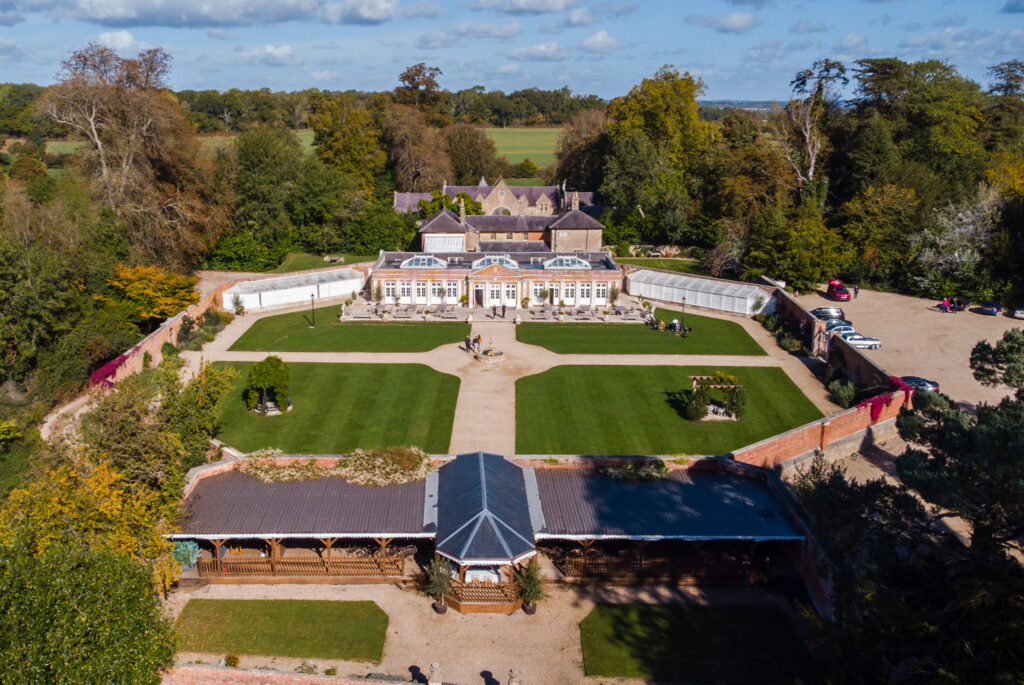
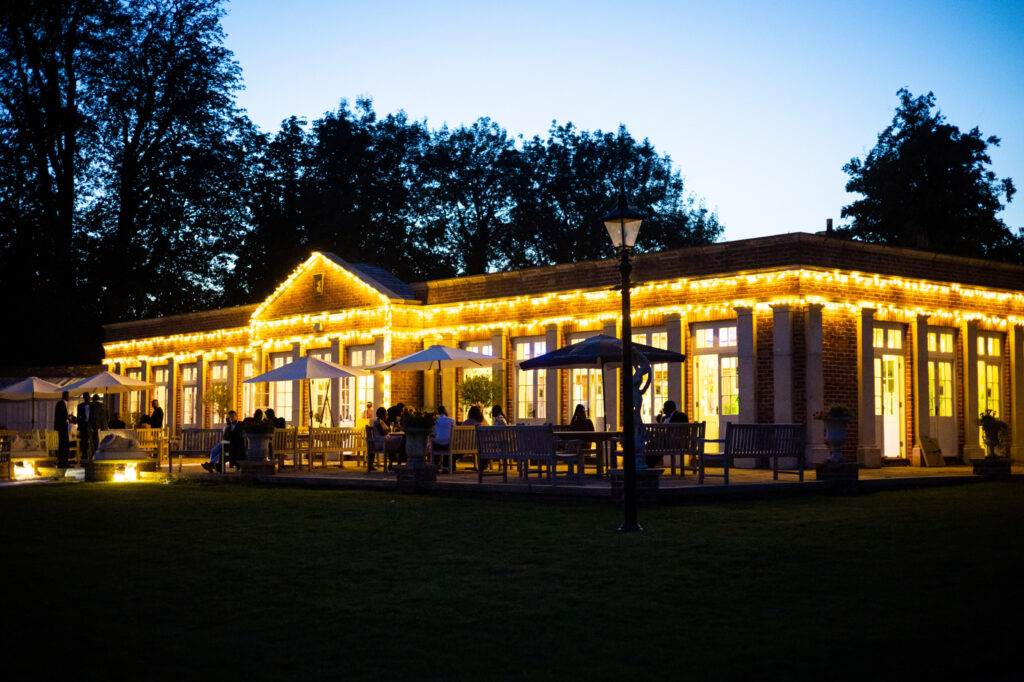
The orangery is older than Norton’s work: early nineteenth century, probably by Carver, a single storey Gothic building listed Grade II separately from the house. Inside, a five bay arcade of timber four centred arches carries a clerestory, and its pillars form an aisle beneath the skylights. Having served the school as a chapel, it is now the principal ceremony room and holds a civil ceremony licence. The Drawing Room in the house, with an ornate ceiling, a baby grand piano and a bay window, is licensed too. Up to 130 can be seated for a ceremony, the couple included.
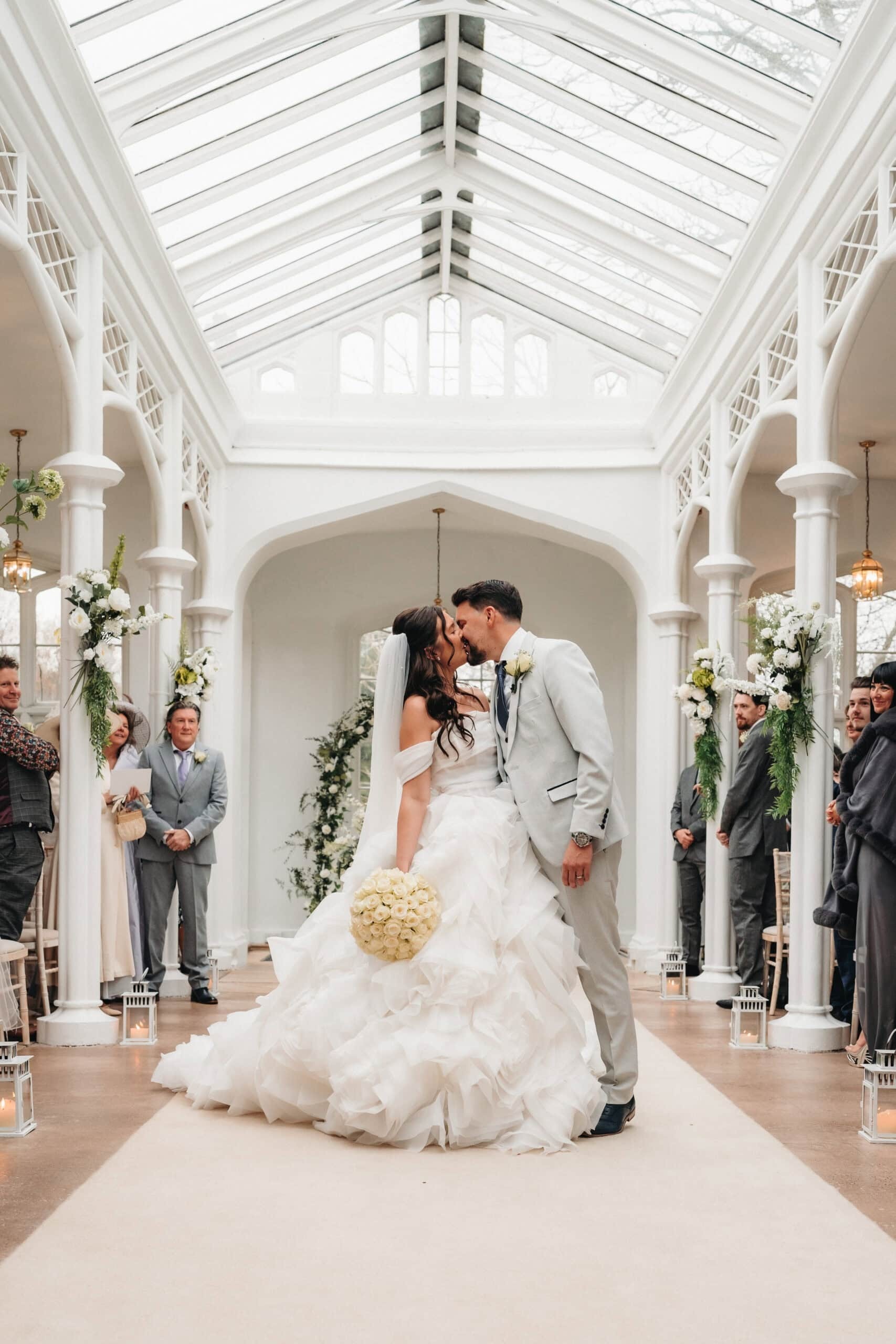
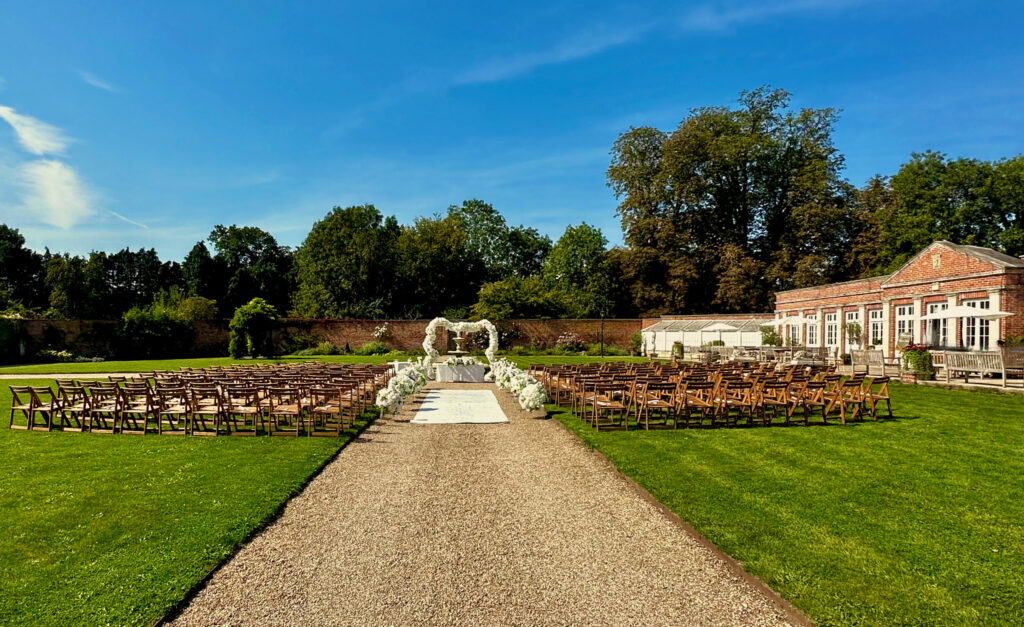
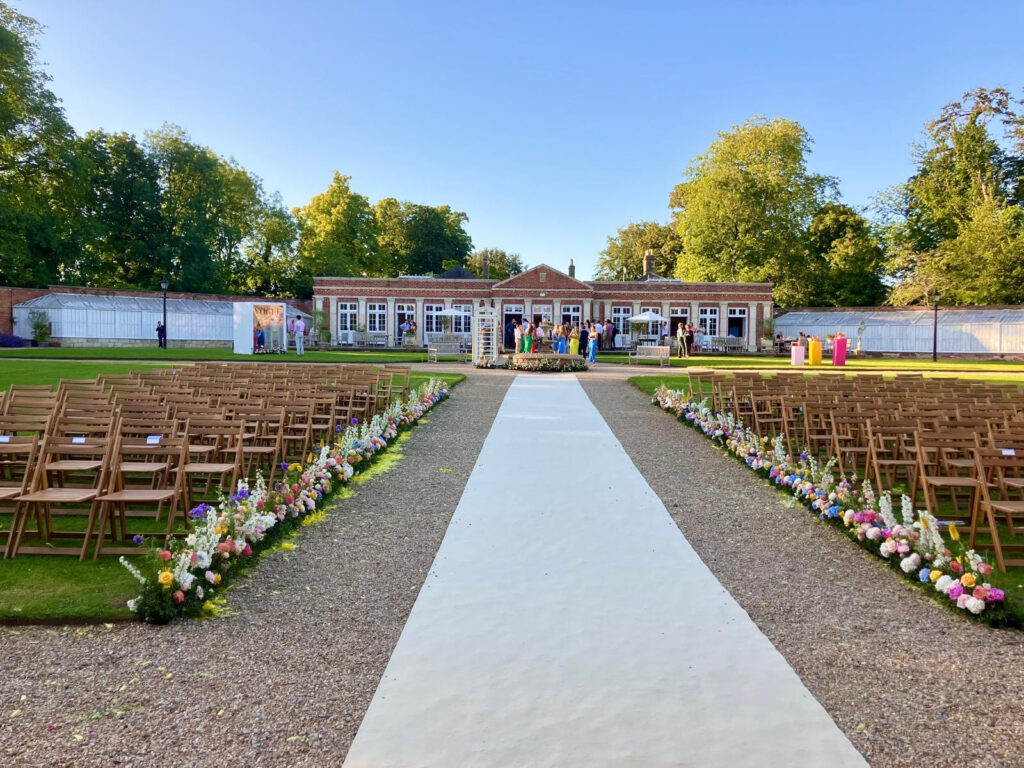
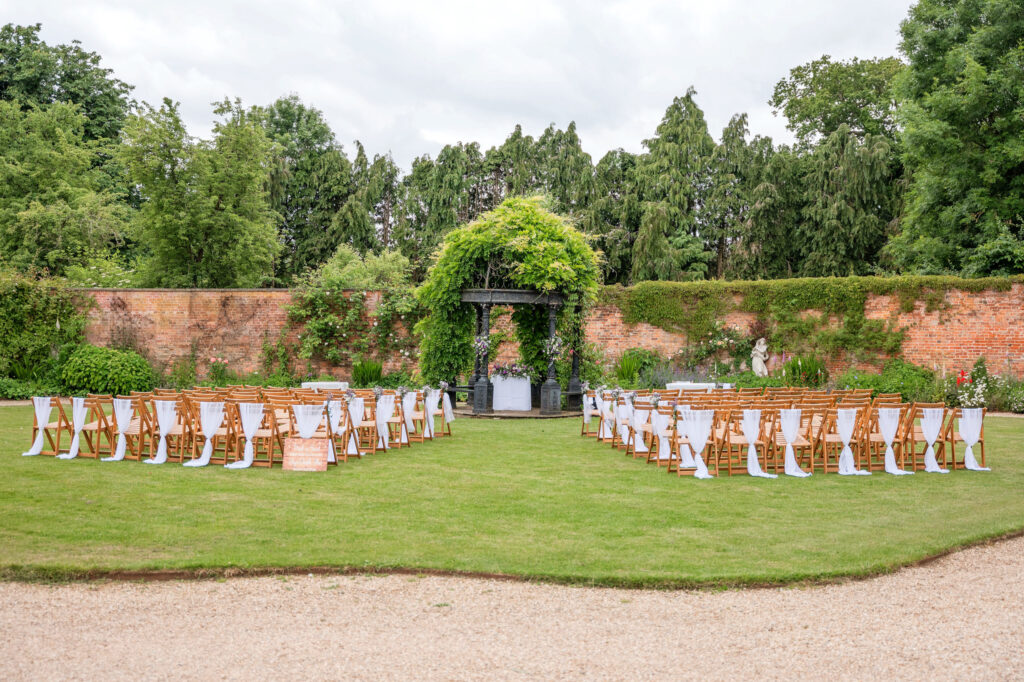
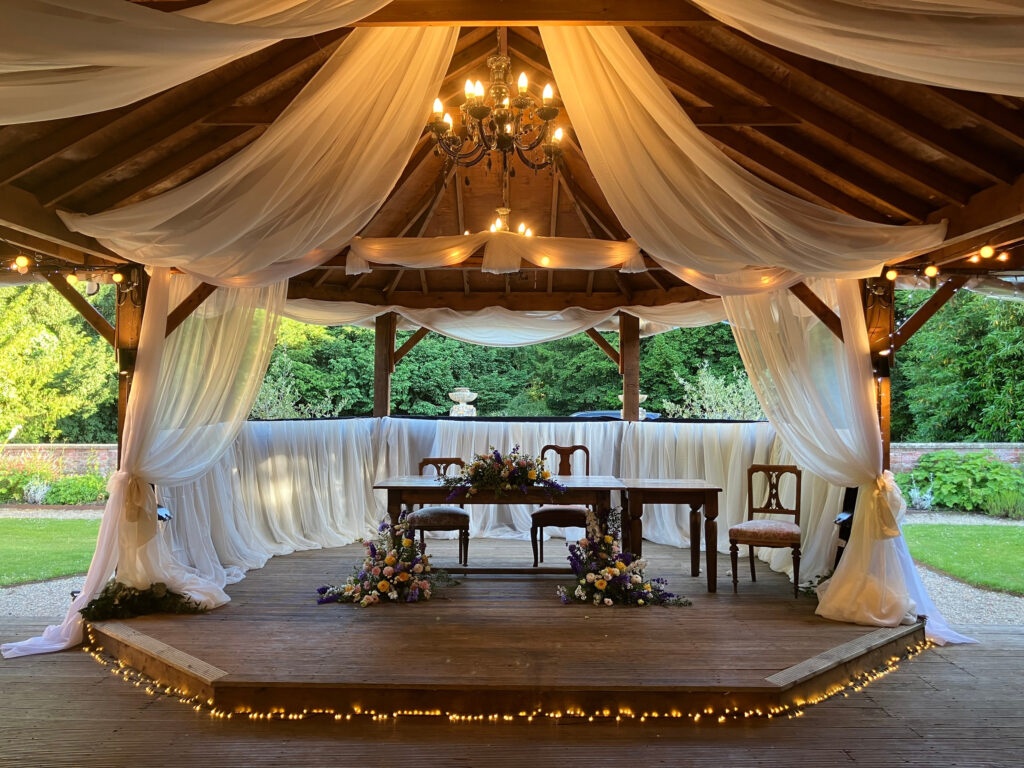
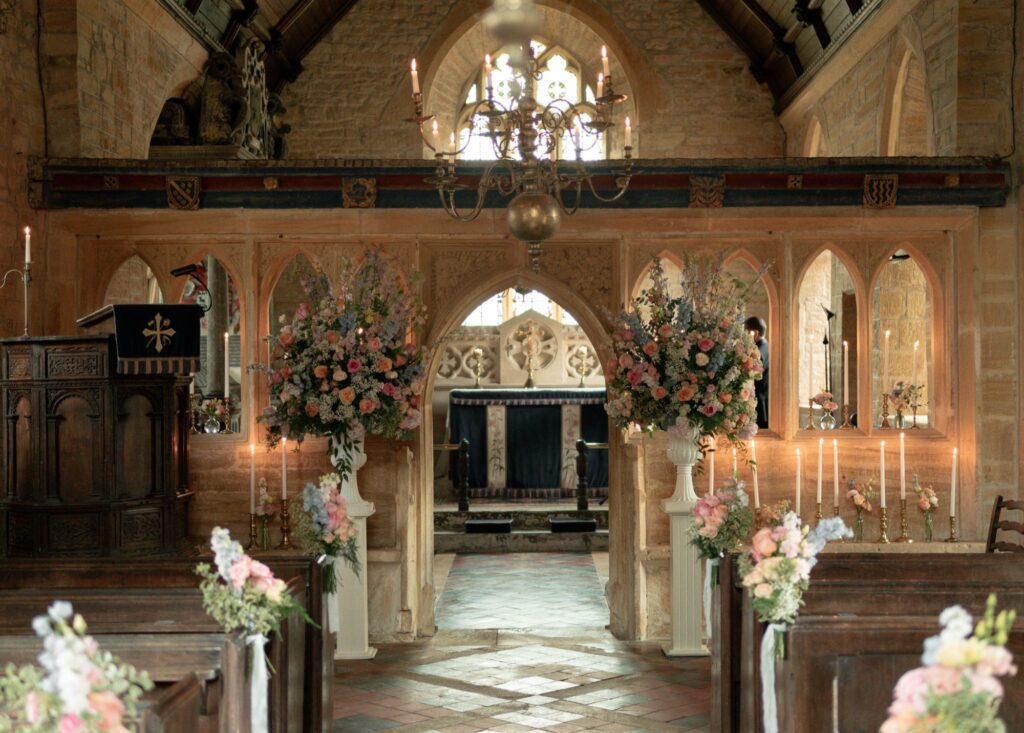
Two outdoor settings are offered as well, the Orangery View and the South West Aspect, each with the house and grounds behind. A civil marriage is conducted by the Taunton Registration Service, which couples book directly and pay separately. A celebrant can lead the ceremony instead, with the legal formalities arranged at a register office. For a Church of England service or a blessing, St Etheldreda’s seats up to 120 on the wooded edge of the estate, a short walk or drive from the house.
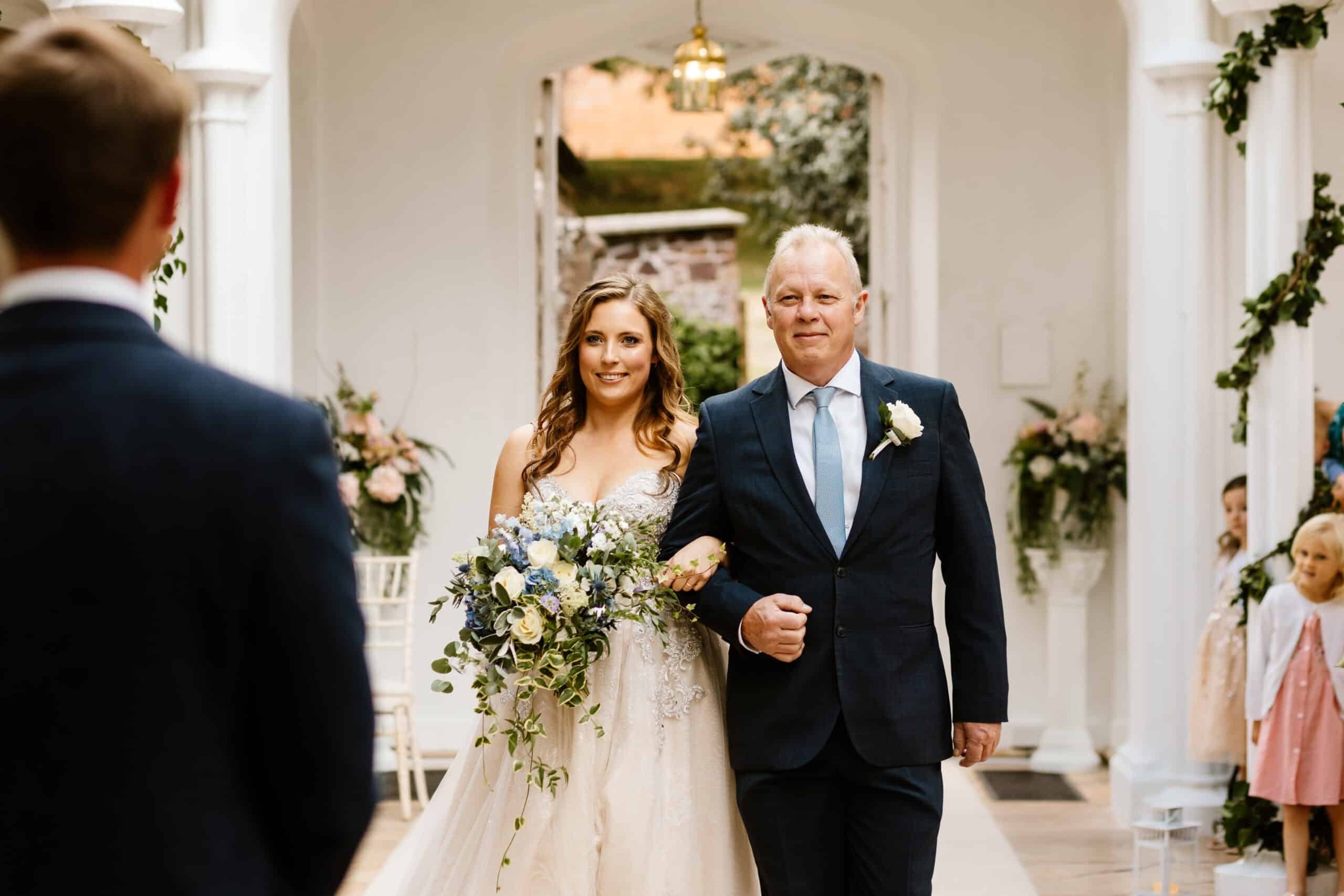
From the Banqueting Hall to the Great Hall
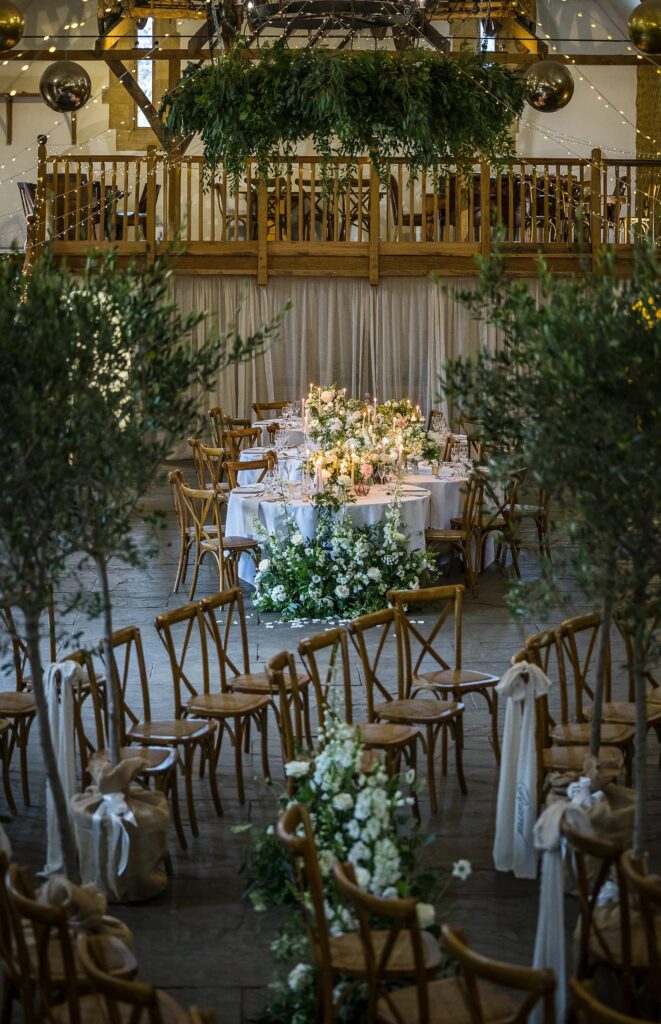
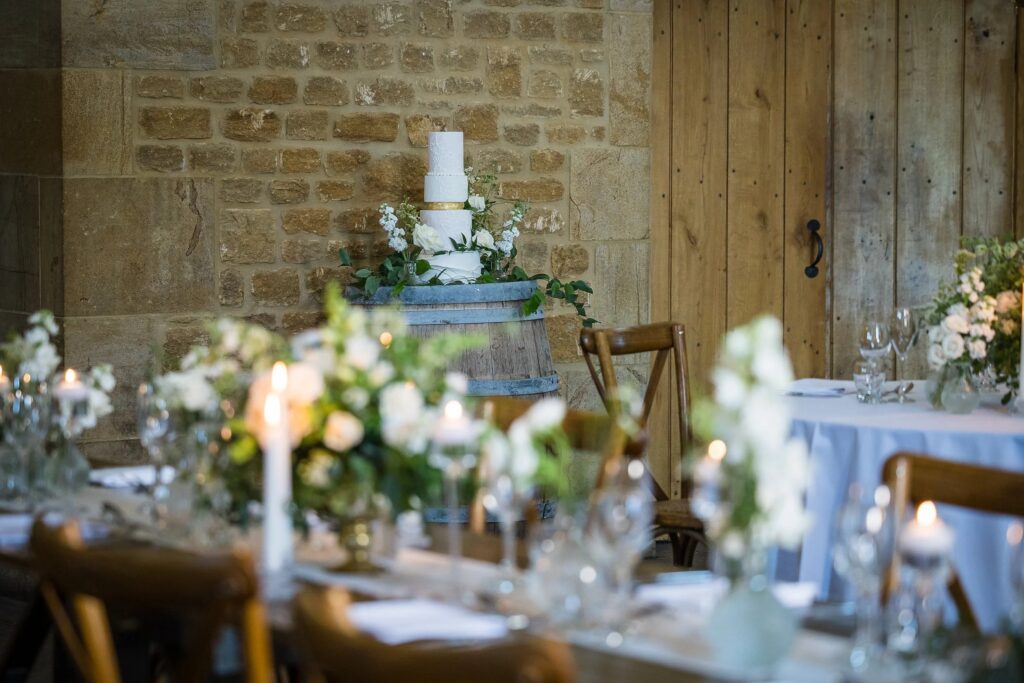
House and grounds belong to the wedding from midday, when the main house rooms also open, so the wedding party can dress on site. The wedding breakfast is served in the Banqueting Hall, which seats up to 130 and is laid out just as readily for 30. It has chandeliers, a mirror and a fireplace, and the top table, or a sweetheart table for two, sits in the curve of the sash windows above the rose garden and the deer park.
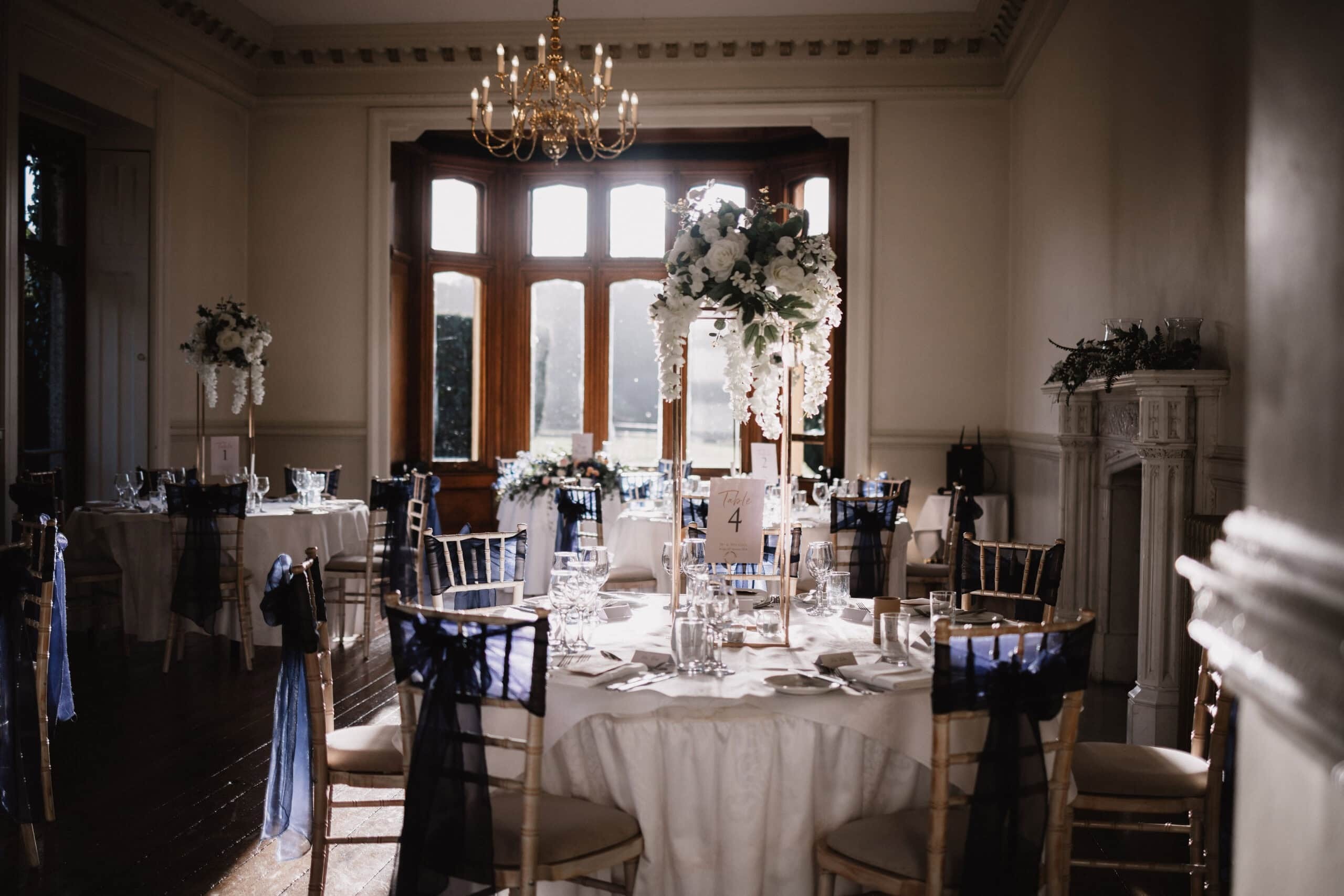
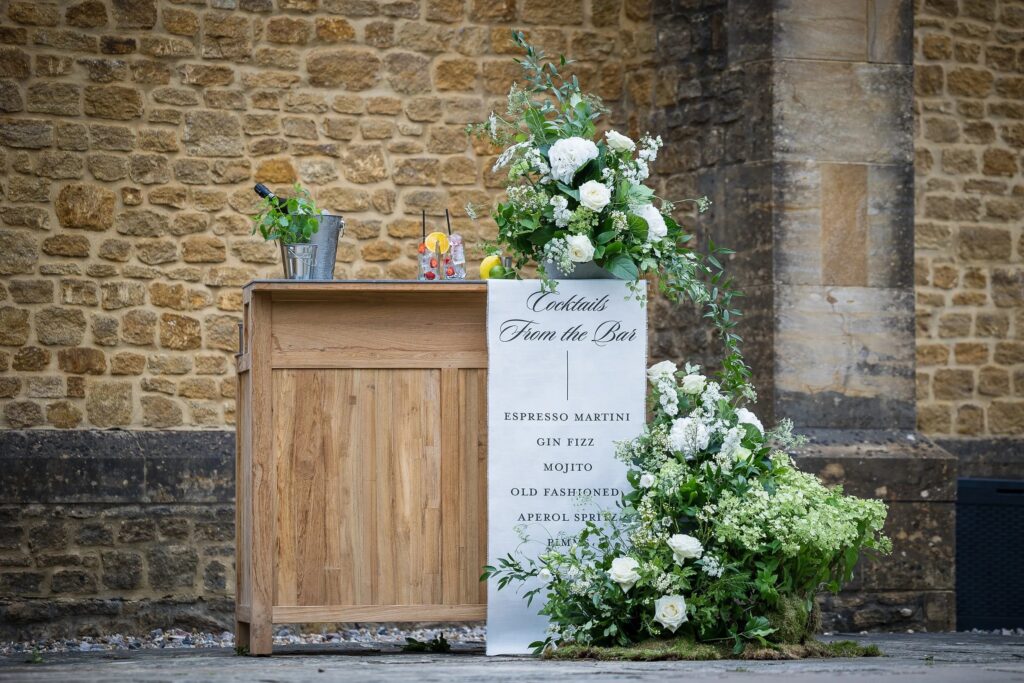
The evening moves to the Great Hall, which Norton’s new fronts made room for. Guests enter through a screens passage where a three bay timber arcade carries the minstrels’ gallery, and the hall has linenfold panelling, an arch braced roof and a large fireplace. The first dance can be held here, a live band can follow, and a cocktail bar opens off it. Later there is a purpose built disco with its own Champagne Bar, and on summer nights the courtyard garden. Up to 250 guests can join for the evening.
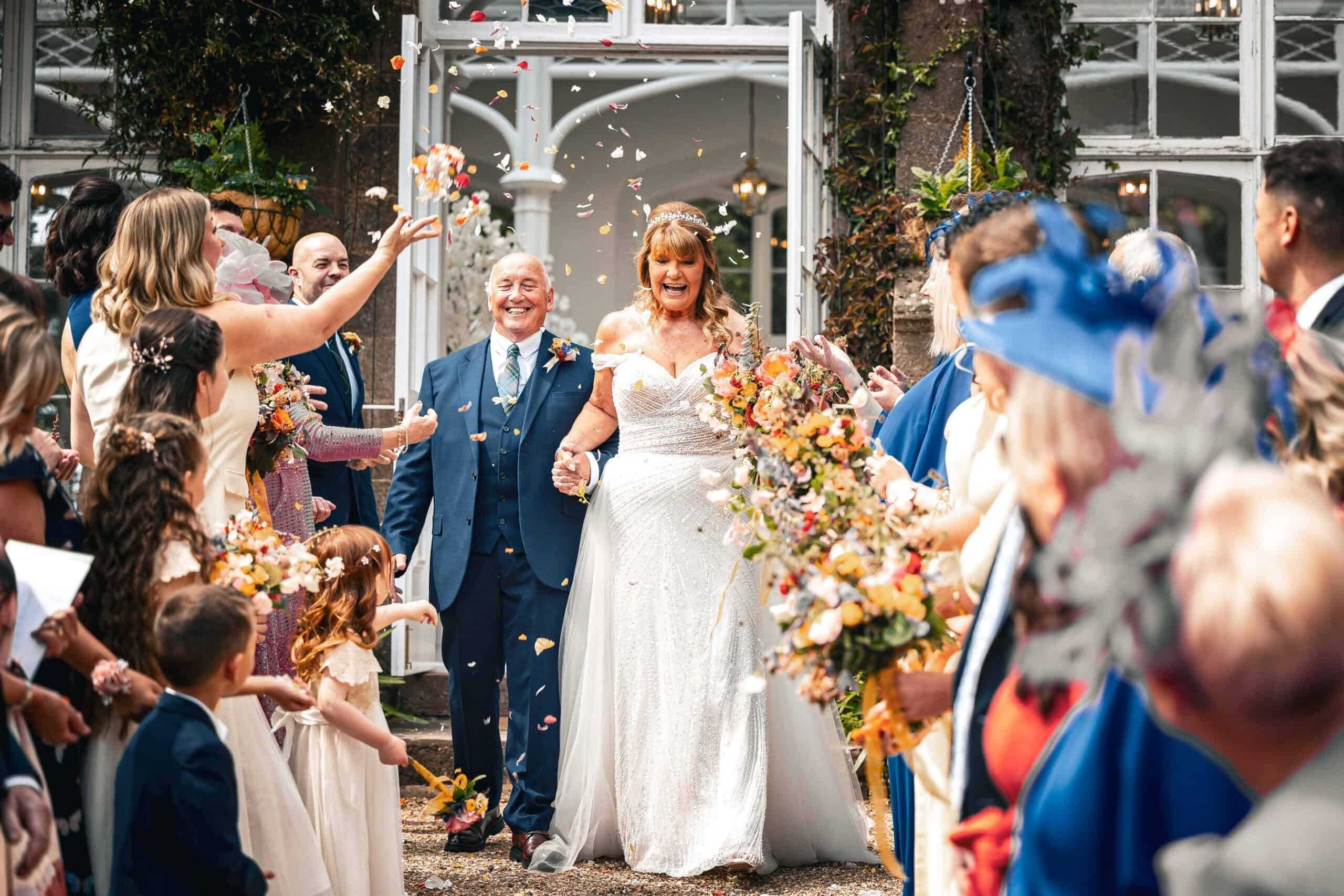
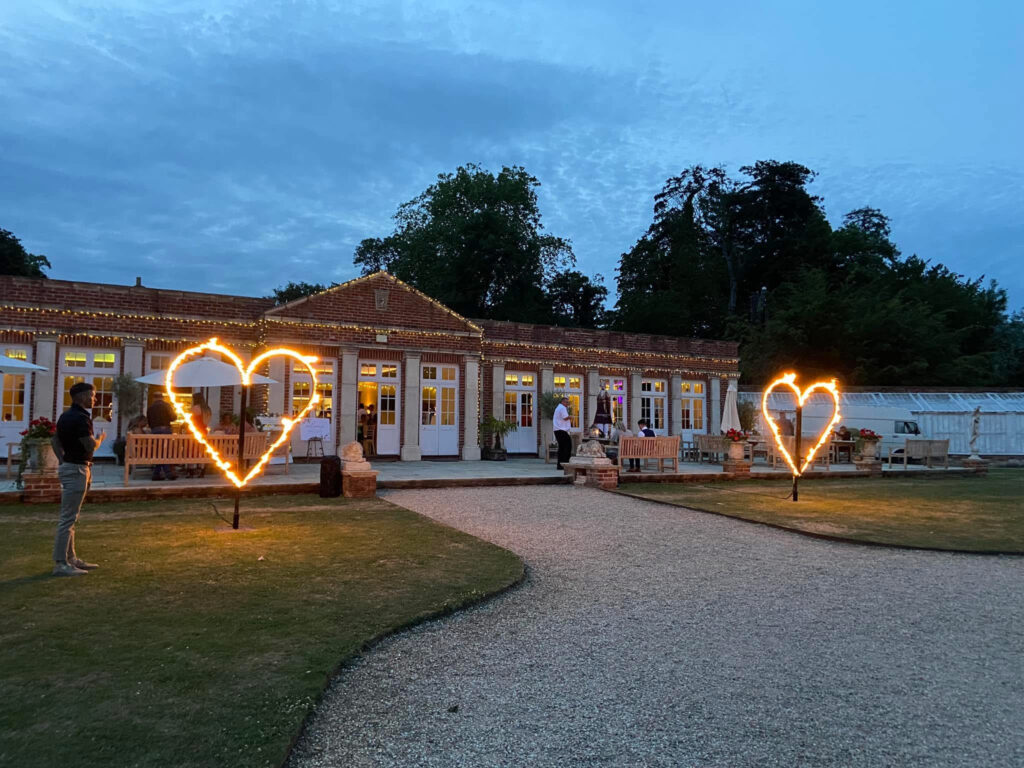
The bars and the DJ stop at midnight, and an extension to 1am can be added for a fee. Fireworks are allowed through one supplier, Firemagic.
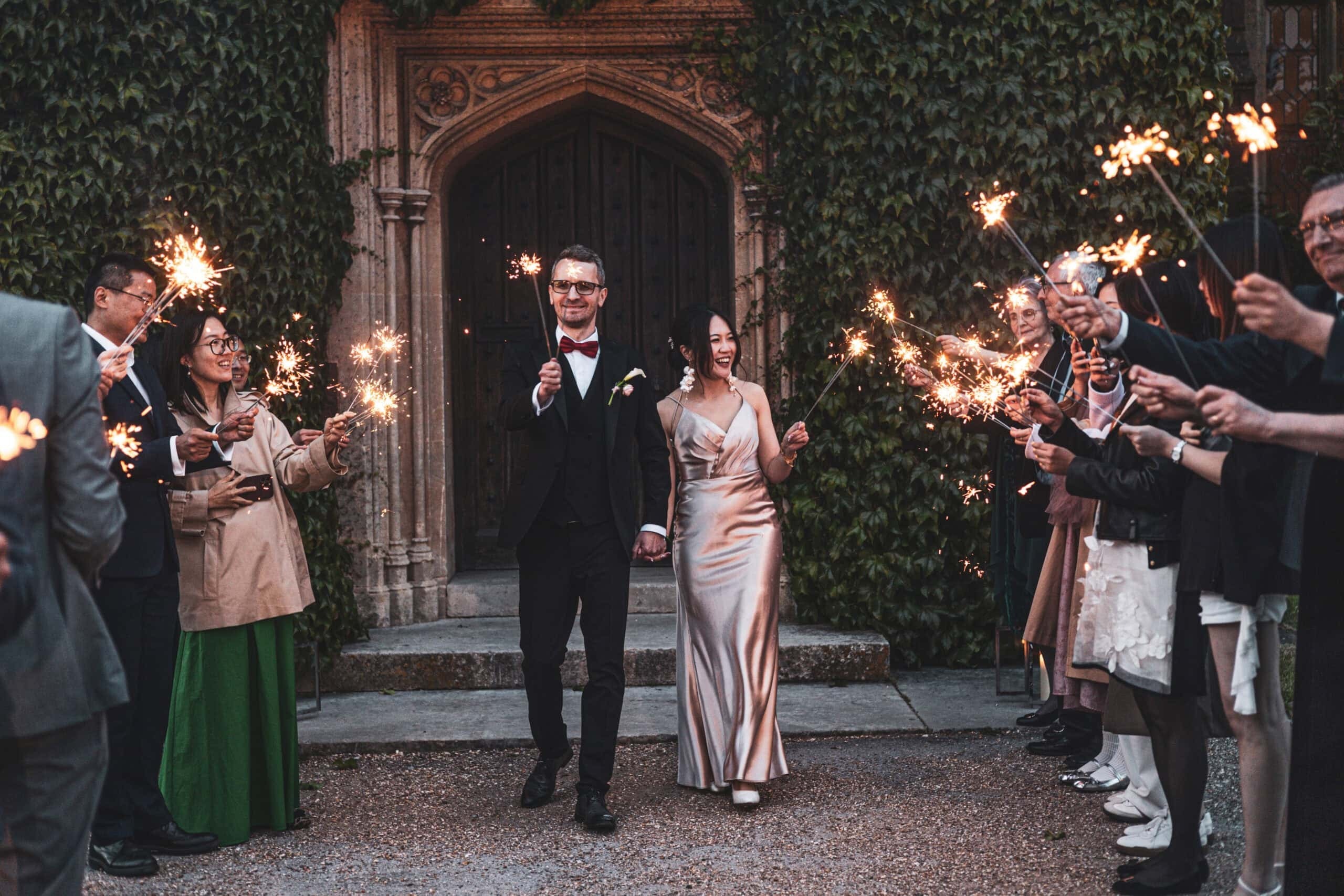
A kitchen that cooks everything
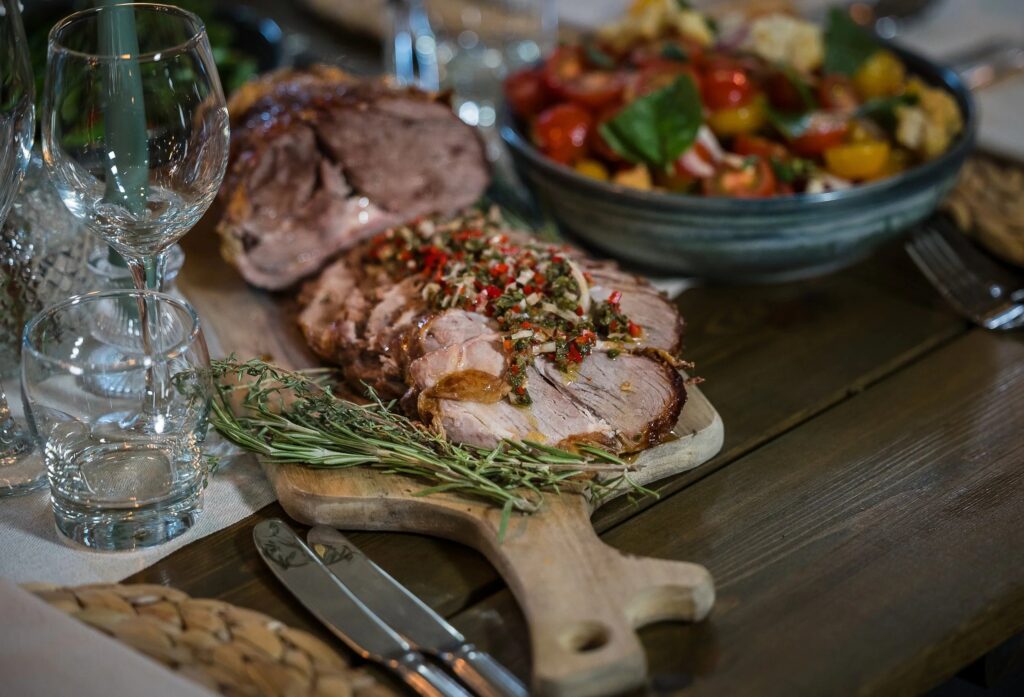
All the food comes from the house’s own chefs; the wedding cake is the one thing a couple may bring in, and couples cannot bring their own drinks. The Classical menu has four canapés, three courses, handmade petits fours and a late evening buffet. Vegetables are grown locally, and every wedding package includes two tasting tickets. The wine list includes Dadnor, a pale English sparkling rosé made from grapes grown in Herefordshire by the company’s chairman.
Fourteen suites and a cobbled courtyard
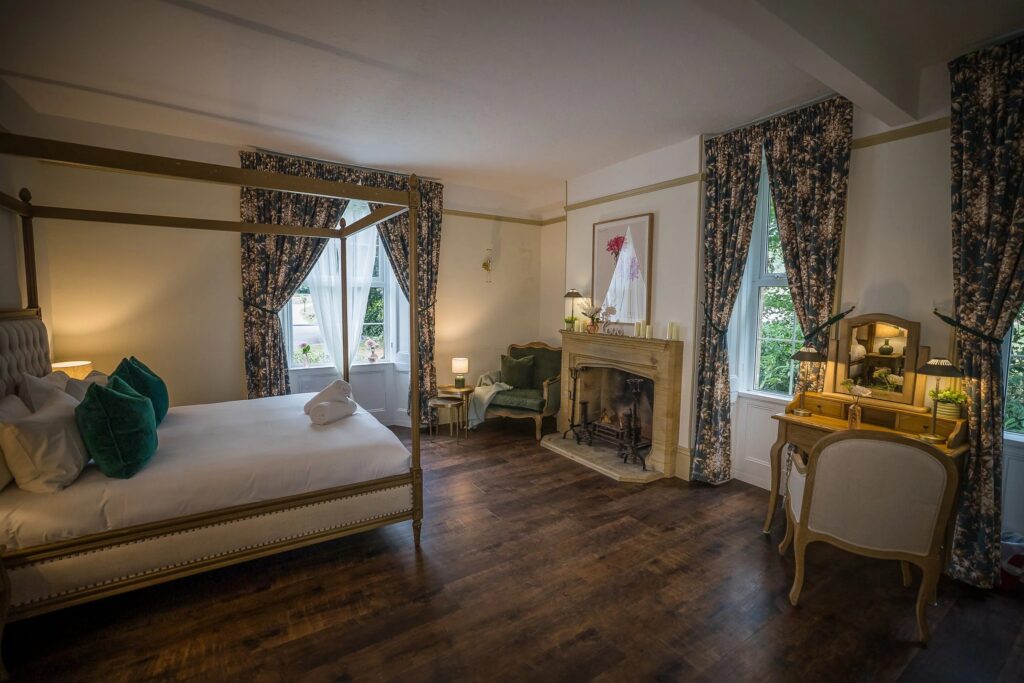
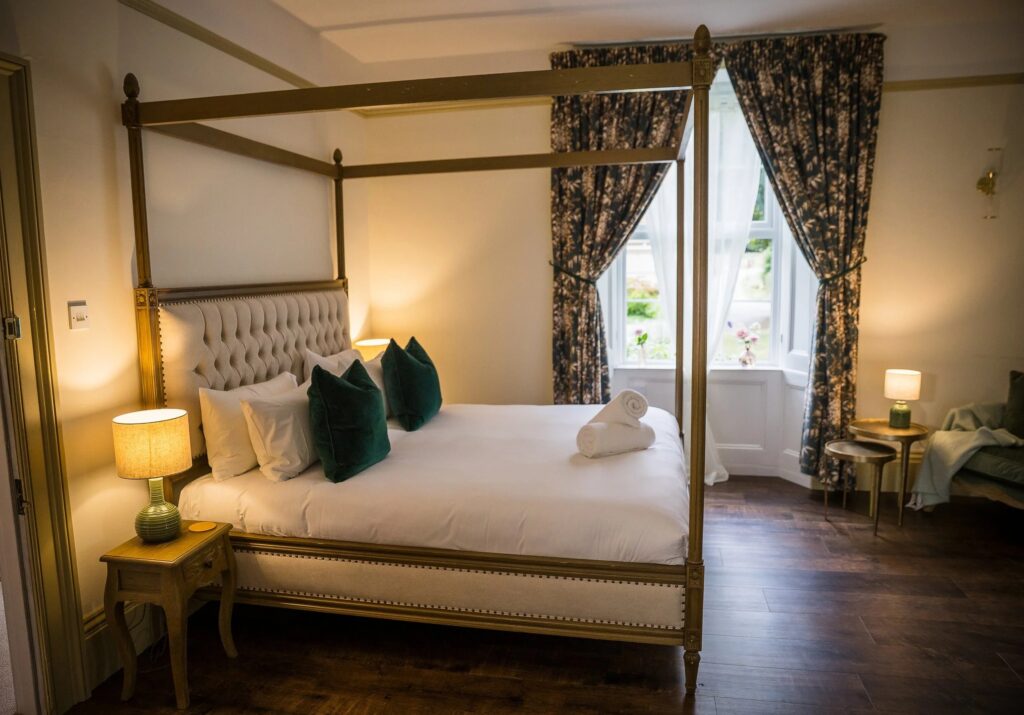
St Audries does not take hotel bookings: the couple reserves the bedrooms and allocates them. The main house has 14 suites sleeping up to 32, kept for the wedding night, with a full English breakfast the next morning. Several take their names from the estate’s past, Sir Baldwin, Lady Acland and Sir Peregrine among them, and the honeymoon suite, Lady Hood, has a four poster bed and a spa bath.
Across a cobbled courtyard, the converted Victorian coach house has 12 en suite rooms, four of them family rooms, and one twin with a wet room for disabled guests. Windsor House, with its own drive, parking and garden, has 11 en suite rooms that can be taken for either night, subject to availability, and four Walled Garden Rooms overlook the old walled garden. Guests leave the estate by 11am the next morning.
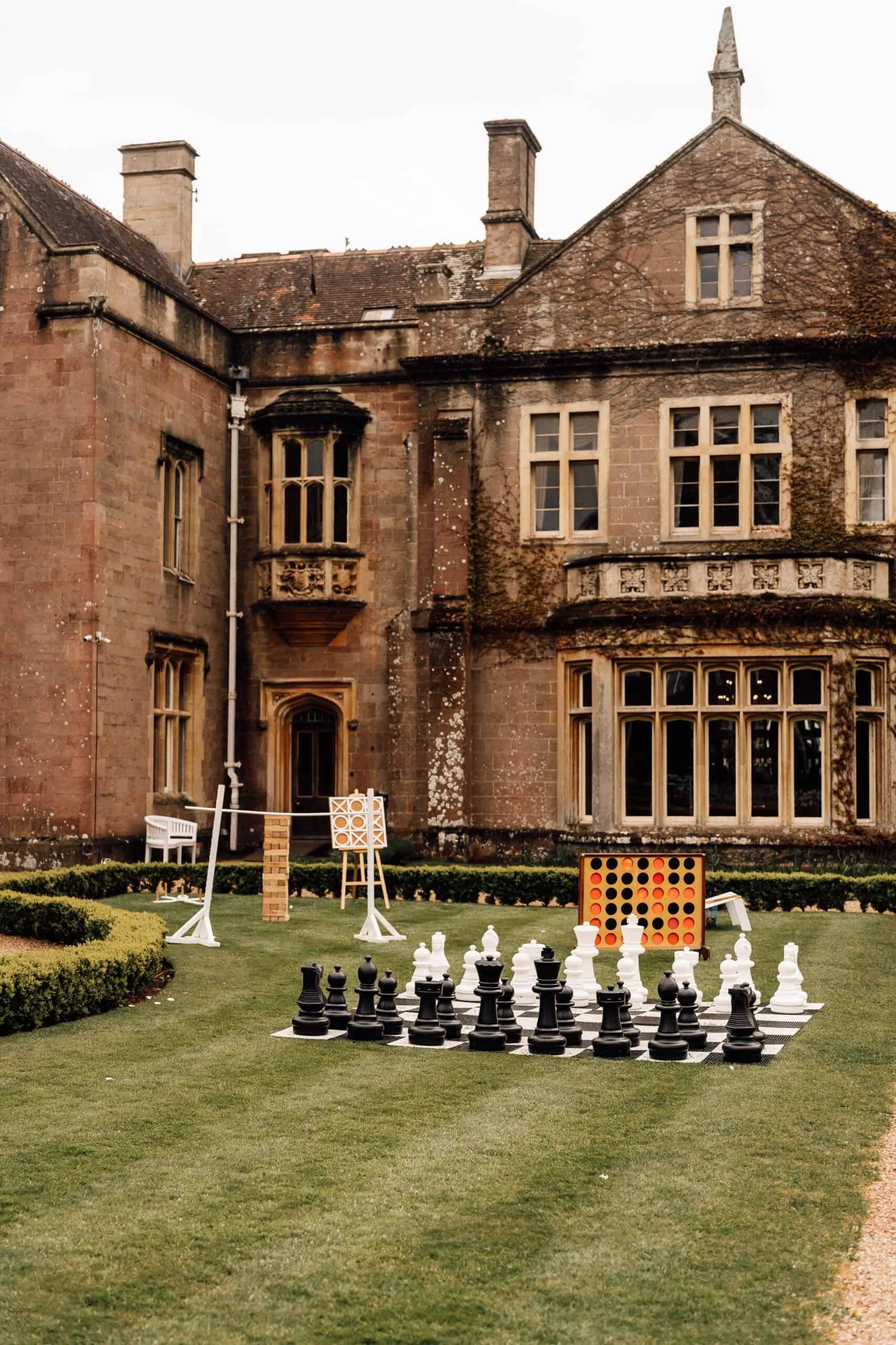
The night before in Norton’s lodges and school
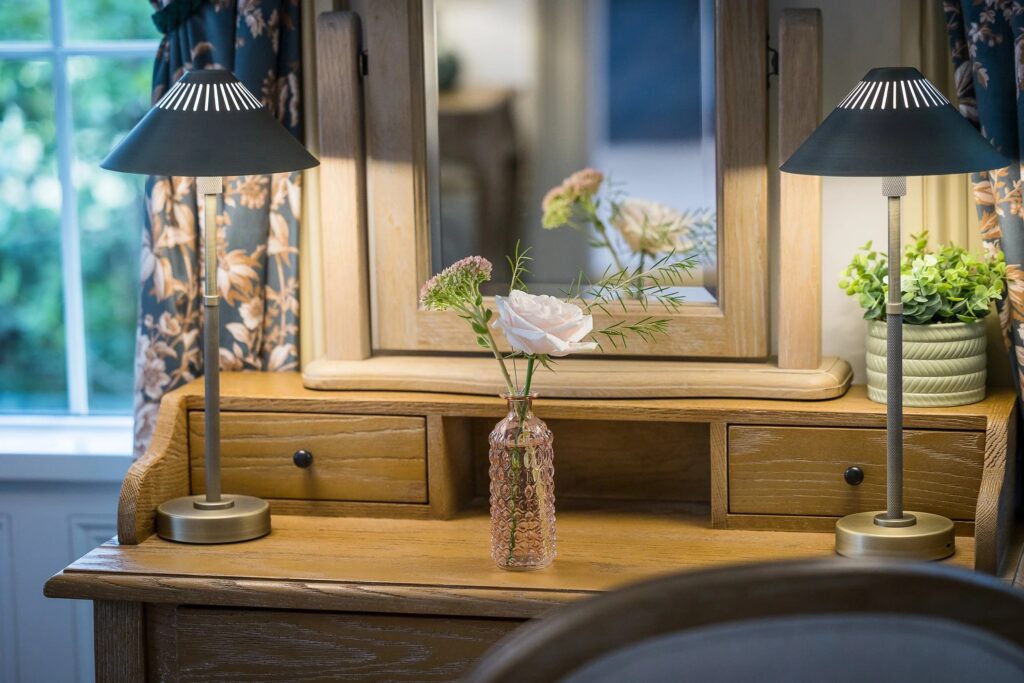
Williton Lodge, set back from the house and a short walk past the lake and the deer park, sleeps eight in four bedrooms, with dressing tables for getting ready and a six person hot tub in the garden; it is meant for one half of the wedding party. Church Lodge, just below St Etheldreda’s, sleeps eleven. In the former school, Peregrine Cottage sleeps six, and the old school hall is now a dining hall with its own bar and a herb garden for summer barbecues. The chefs can cook a wedding eve menu there, and a Party at Peregrine package is offered.
Where the Quantocks reach the sea
The Quantock Hills, designated in 1956 as England’s first Area of Outstanding Natural Beauty, end on the Bristol Channel at Kilve and West Quantoxhead. St Audries sits at that end, beside the A39, with Taunton as its post town and the M5 about 15 minutes away. Its 100 acres take in the deer park, formal gardens, a croquet lawn and a fountain, with views to the coast.
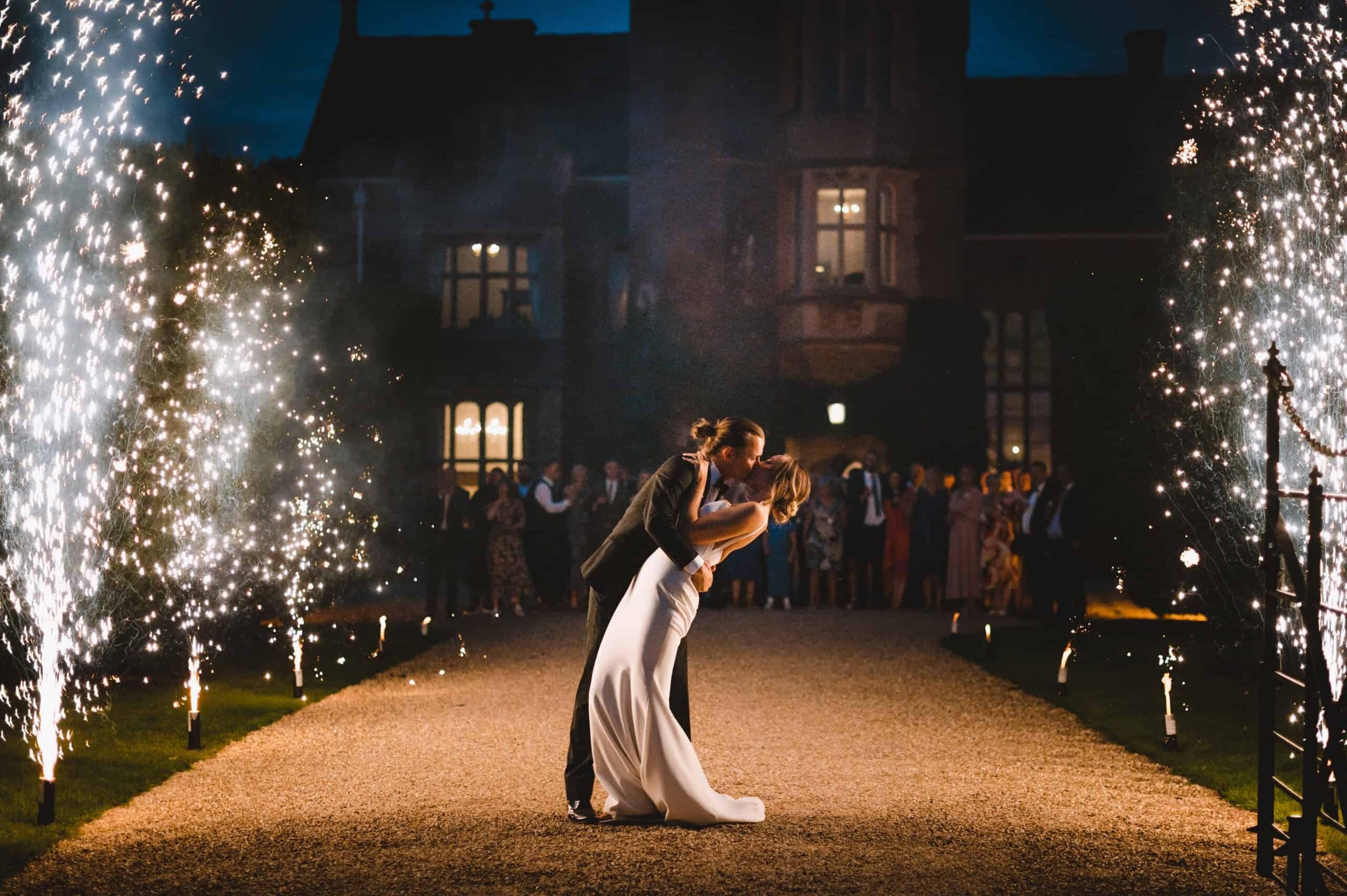
Packages are all inclusive. The Candlelight Package, an evening celebration for 40 guests, starts at £6,000; the Classical Package covers the whole day and starts at £8,400 for 60, which is also its minimum. Read our Edit on Clearwell Castle, the group’s castle in Gloucestershire, or, elsewhere in Somerset, see Brympton House, browse weddings in Somerset or open the United Kingdom Wedding Atlas.
A wedding day, or a wedding weekend
The first decision is whether the wedding begins on the day or the evening before, with one party in Williton Lodge, the other in Church Lodge, and dinner in the hall of Norton’s village school. Read the St Audries Park profile and check your date.