A wedding on the Amalfi Coast is legally binding in two cases: a civil ceremony conducted by an official of the town council (the comune), or a Catholic ceremony that the parish registers with the civil authorities. A symbolic ceremony has no legal effect. Most of the paperwork is done before you travel, and the comune where you marry has the final word on the list.
Three kinds of ceremony, two of them legal
Civil
The mayor or an official the comune delegates conducts the ceremony, in the town hall or in a place the comune has registered as one of its branch offices. You need two adult witnesses, and an interpreter if either of you does not understand Italian. Every town on the coast is its own comune, so Ravello, Amalfi, Positano and Vietri sul Mare each set their own locations, dates and fees.
Catholic
A Catholic wedding in Italy can carry civil effect: the priest reads the relevant articles of the civil code and the parish sends the record for civil registration, so no separate civil ceremony is needed. It is arranged through your parish at home and the parish on the coast. Expect to be asked for baptism and confirmation certificates and proof of a marriage preparation course.
Symbolic
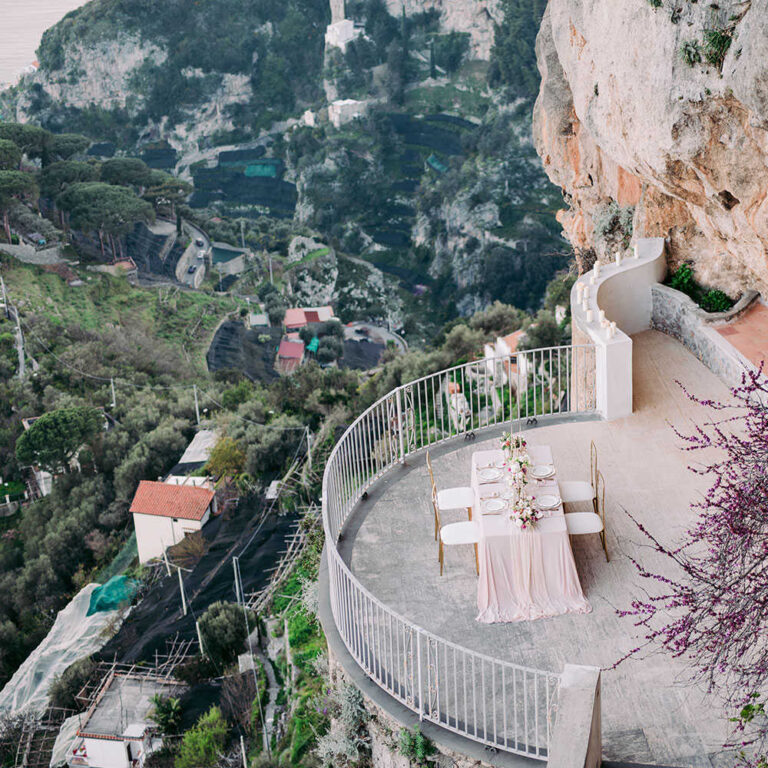
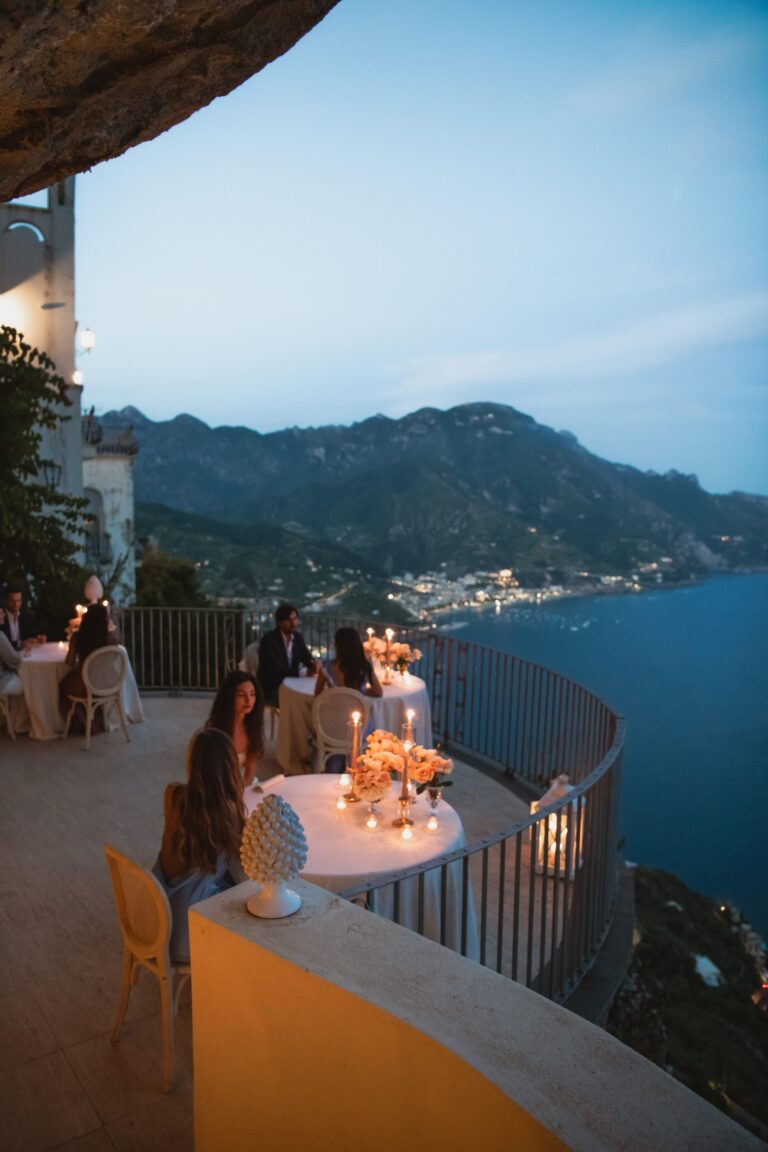
A symbolic ceremony can take place on any terrace, at any hour, led by anyone you choose. Many couples marry legally at home in the days before or after and keep the coast for the ceremony that matters to them. It removes the comune’s calendar and document checks from the planning.
Same-sex couples
Italy recognises same-sex couples through the civil union (unione civile) created by Law 76 of 2016, registered before a comune official. GOV.UK publishes a separate same-sex version of its Italy templates.
Which of our venues can host the legal ceremony
This is the first question to put to a venue, because the answer decides whether your guests move to a town hall and back.
- Palazzo Suriano, in Vietri sul Mare: a registered branch office of the Comune of Vietri sul Mare, so the civil ceremony can be held in the house. Its listing also names Protestant, Jewish and symbolic ceremonies.
- Villa La Rondinaia, in Ravello: its listing marks an outdoor licence, but whether a civil ceremony can take place in the grounds, or happens at the comune with a symbolic ceremony at the villa, is for the villa to confirm.
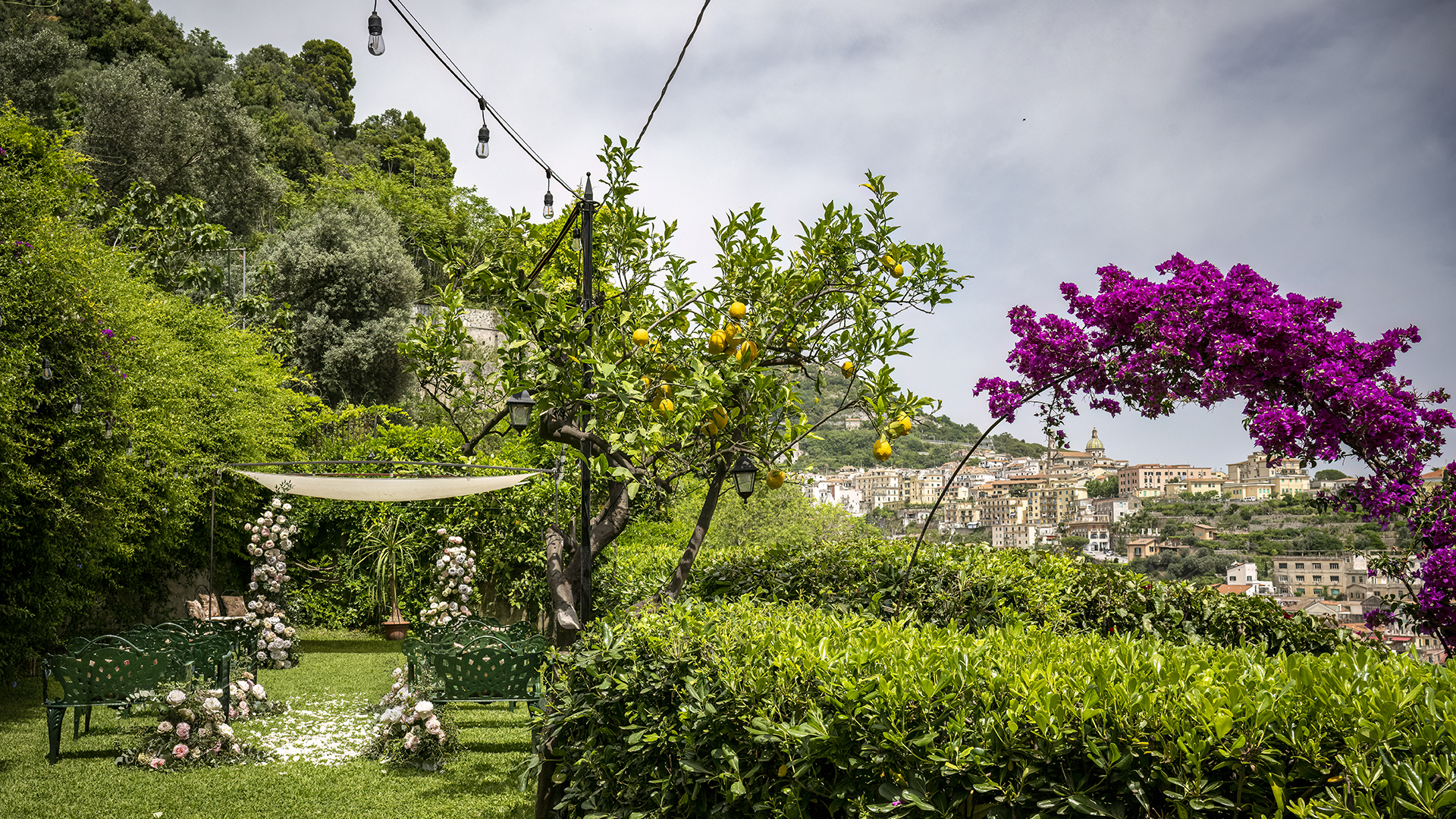
- Hotel Raito, above Vietri sul Mare: ceremonies are held on its Agrumeto and Uliveto terraces. Whether these are civil, religious or symbolic is to be confirmed with the hotel.

Ask the exact question: is this space registered by the comune for civil weddings, and on which days does the comune officiate there?
Documents for couples from the UK
Italy asks each foreign partner for proof that they are free to marry, called the nulla osta. For British nationals this is the certificate of no impediment, issued by the British Embassy in Rome and applied for by post. GOV.UK publishes the notice and affirmation templates for Italy, and your notice of marriage must be signed in front of a notary.
Documents in English are translated into Italian, and legalised with an apostille where the comune asks for it. Ask the comune whether it also wants full birth certificates, and check every document’s date against your wedding date, because some are only accepted for a limited period.
Couples of other nationalities obtain the nulla osta from their own embassy or consulate in Italy. There is no residence requirement for foreign couples to marry in Italy.
The order to do it in
- Decide between civil, Catholic and symbolic, and confirm what your venue can host.
- Ask the comune, or your venue’s events team, for its written list of documents for your nationalities.
- Book the comune date and the venue together, so the two match.
- Apply for the nulla osta, then arrange translations and apostilles.
- In the days before the wedding, go to the comune together to declare your intention to marry, with your interpreter if needed.
- After the ceremony, ask the comune for copies of the marriage record, including the multilingual version if it issues one, to register or use at home.
Who helps
A planner who works on the coast, or the venue’s own team, usually deals with the comune for you. Palazzo Suriano‘s concierge helps with each detail of the day. For the wider planning picture, from seasons to travel, read the Amalfi Coast Wedding Atlas.
Questions couples ask
Can we marry legally on a sea-view terrace?
Only where the comune has registered that space for civil weddings. Palazzo Suriano is one; elsewhere, the legal part may take place at the town hall, with the ceremony itself at the venue.
Do we need to live in Italy first?
No. Foreign couples can marry in Italy without residence, provided the comune accepts their documents.
Is a symbolic ceremony a lesser choice?
Legally it is simply not a marriage, so you register at home. In practice it gives you any time, any place and any celebrant, which is why many couples on the coast choose it.
Updated 1 October 2026