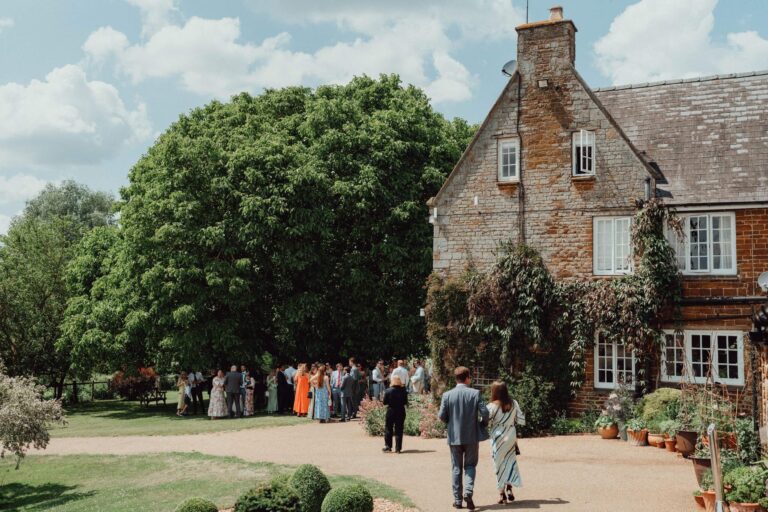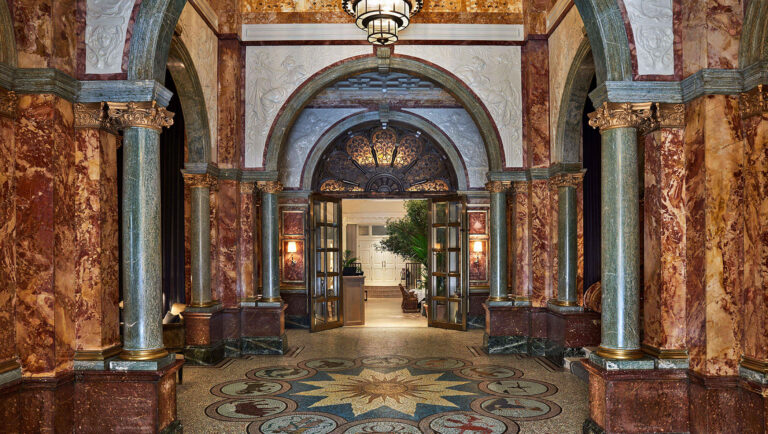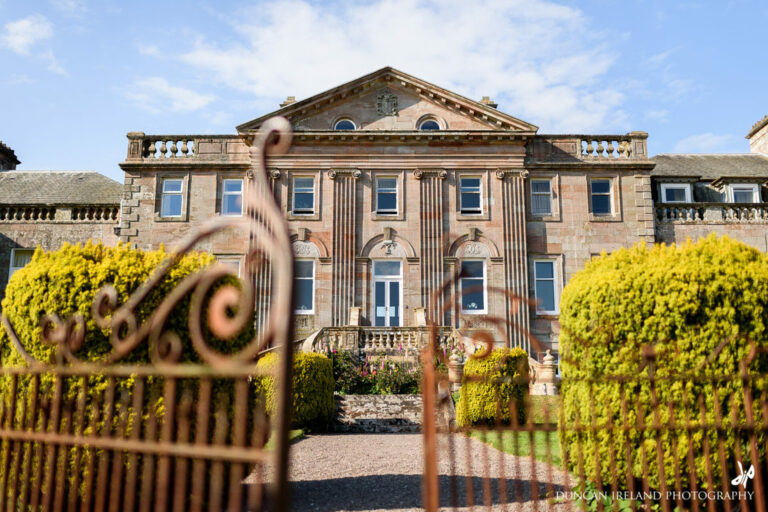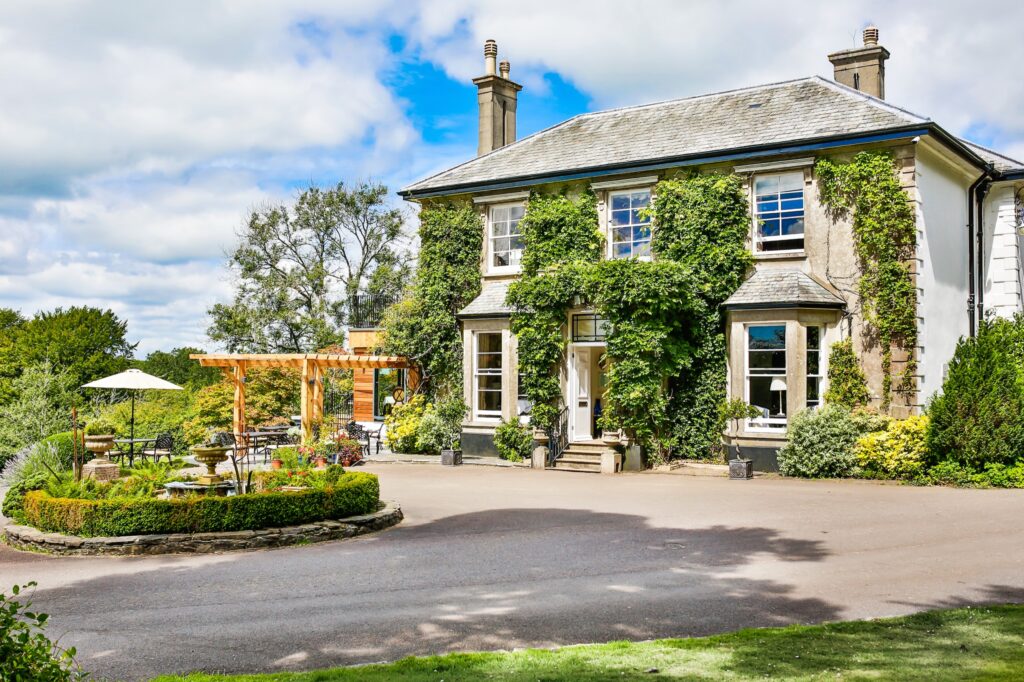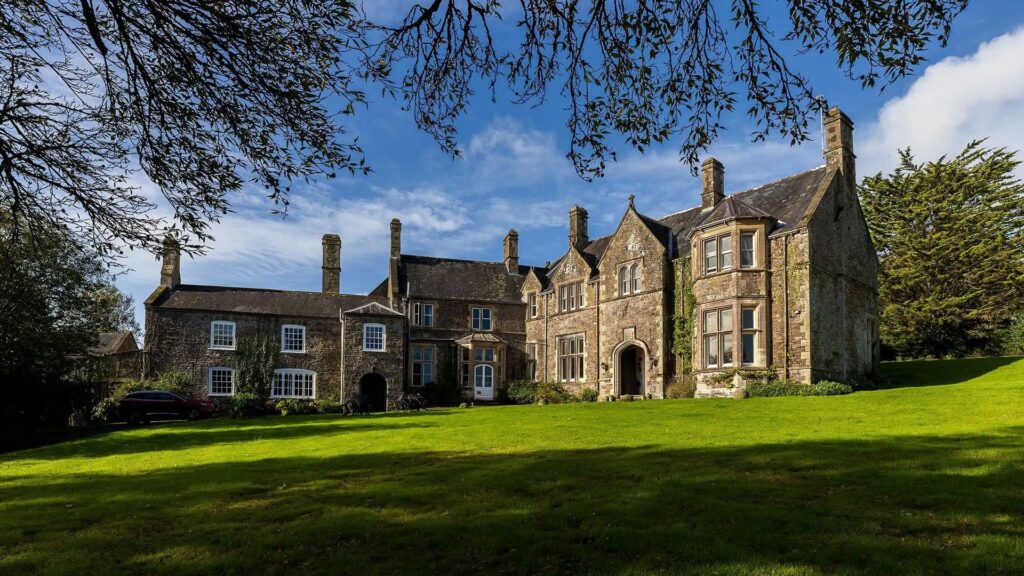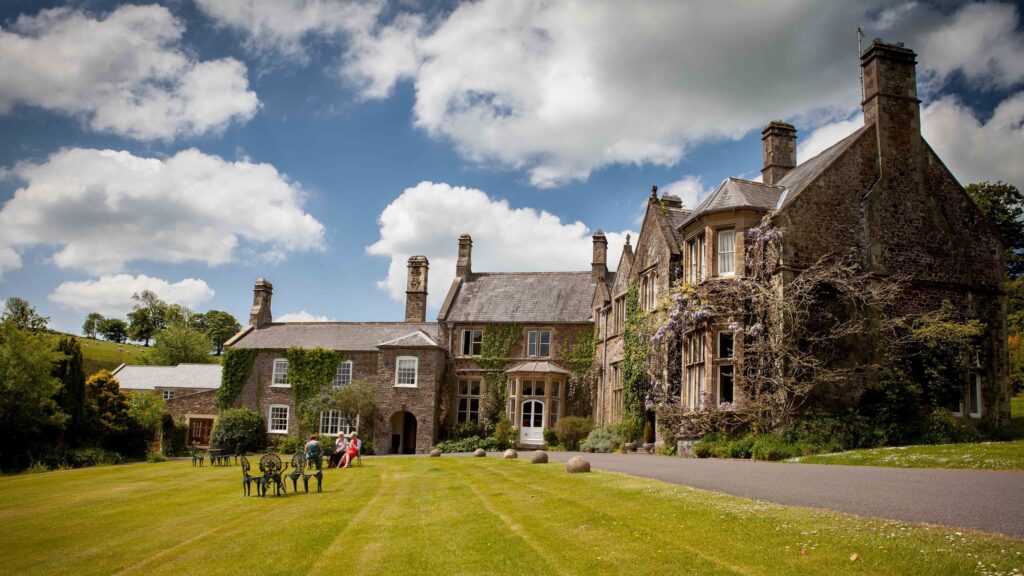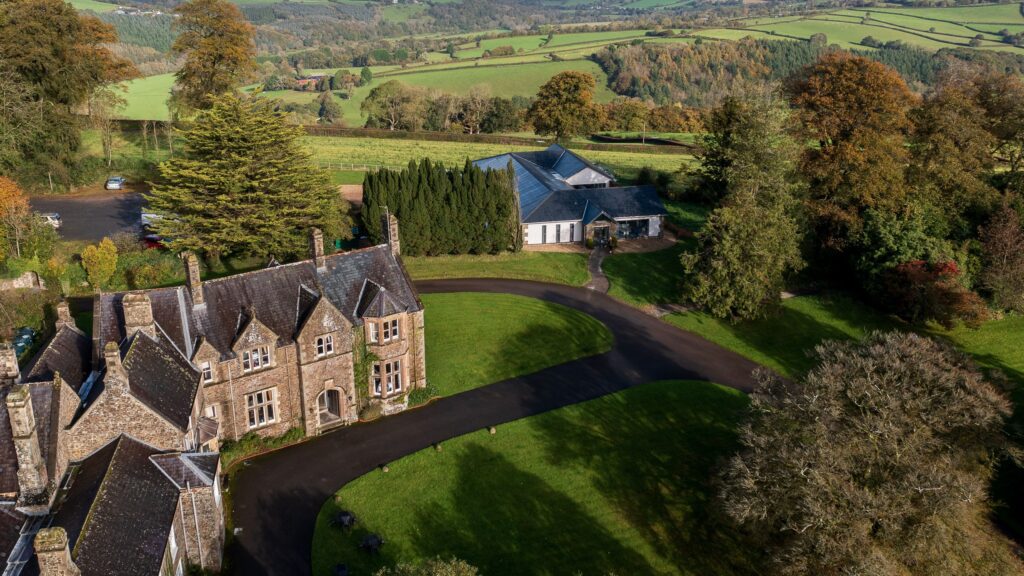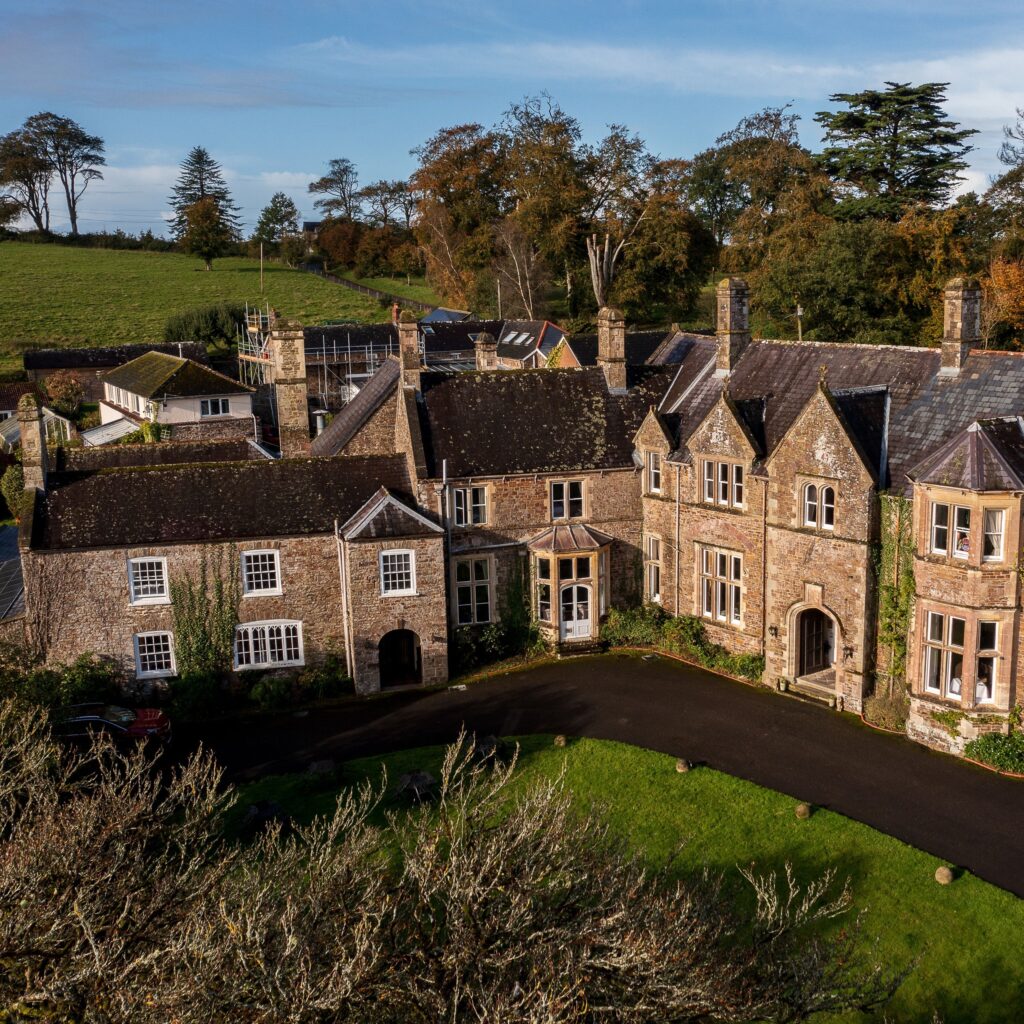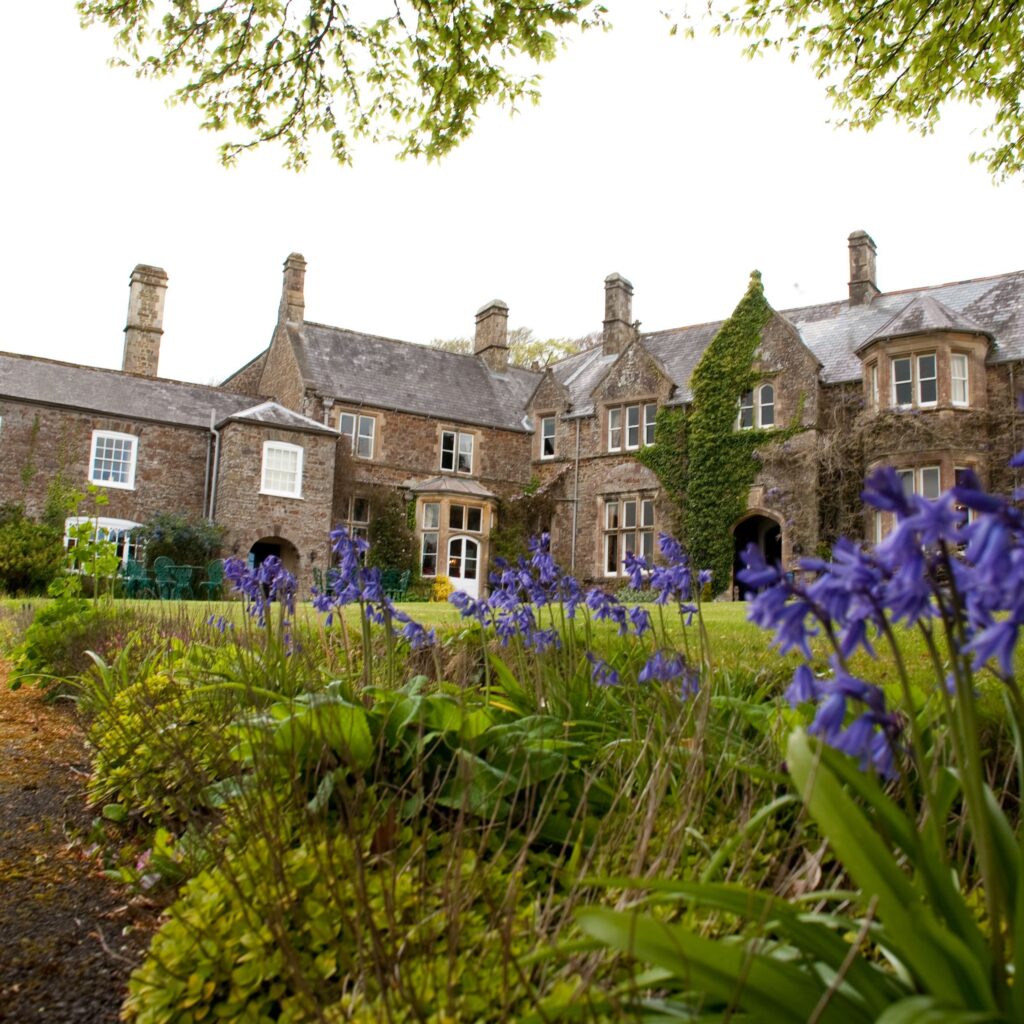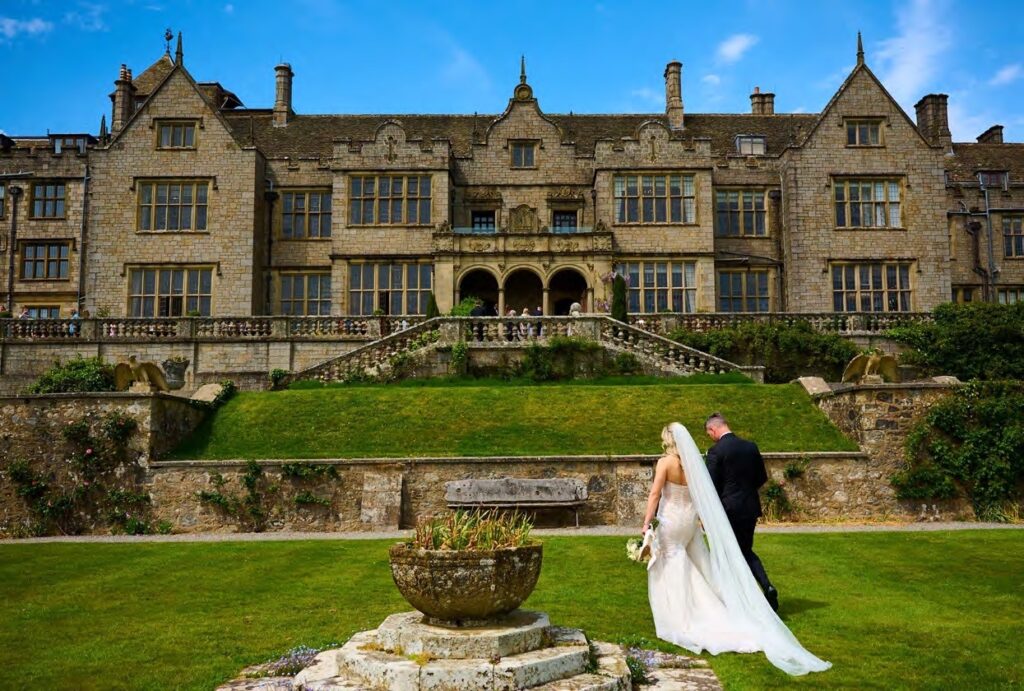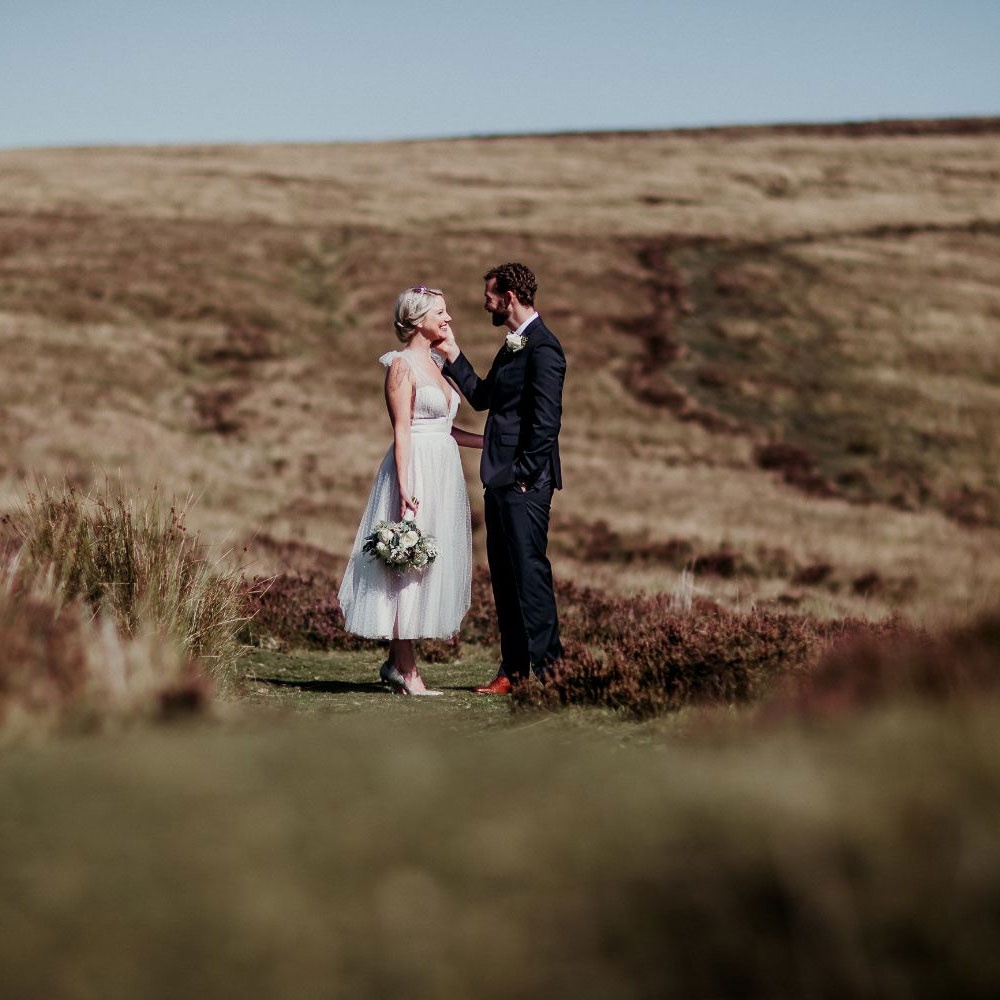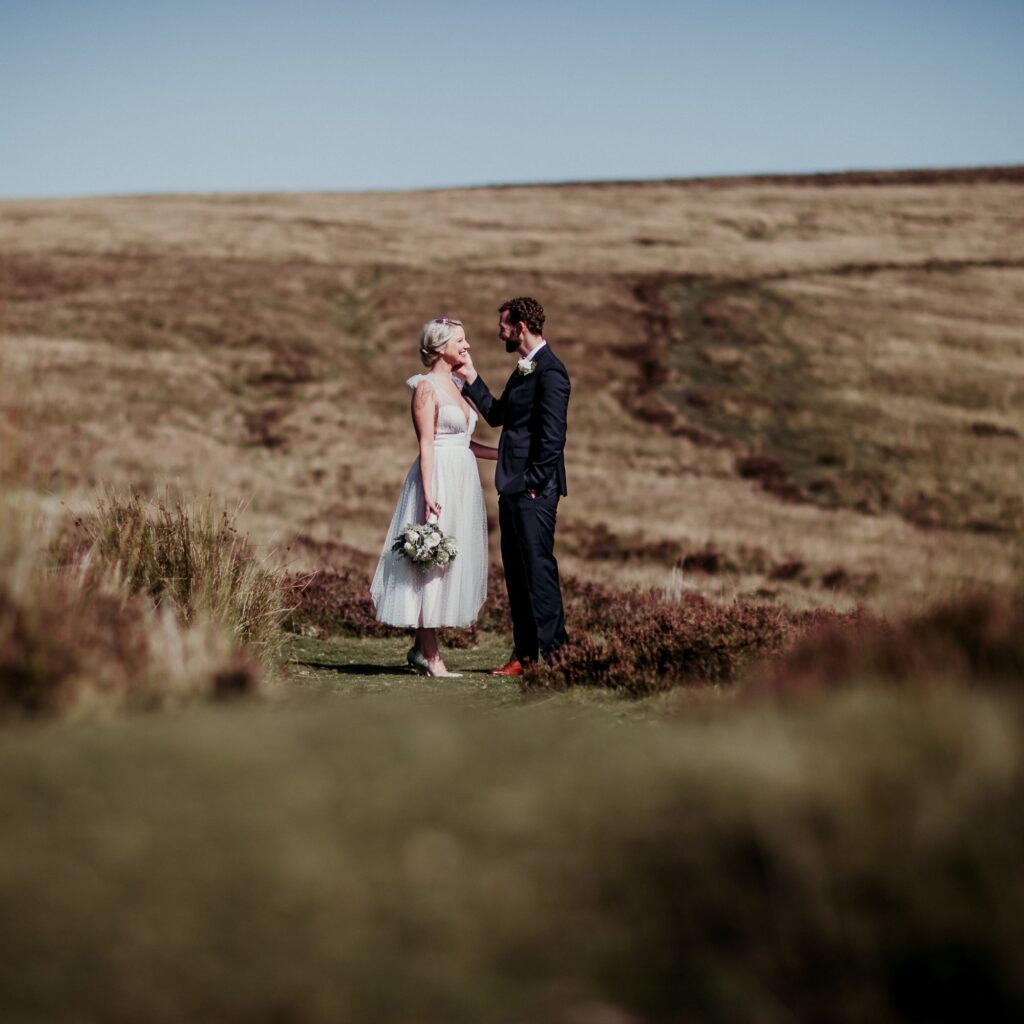
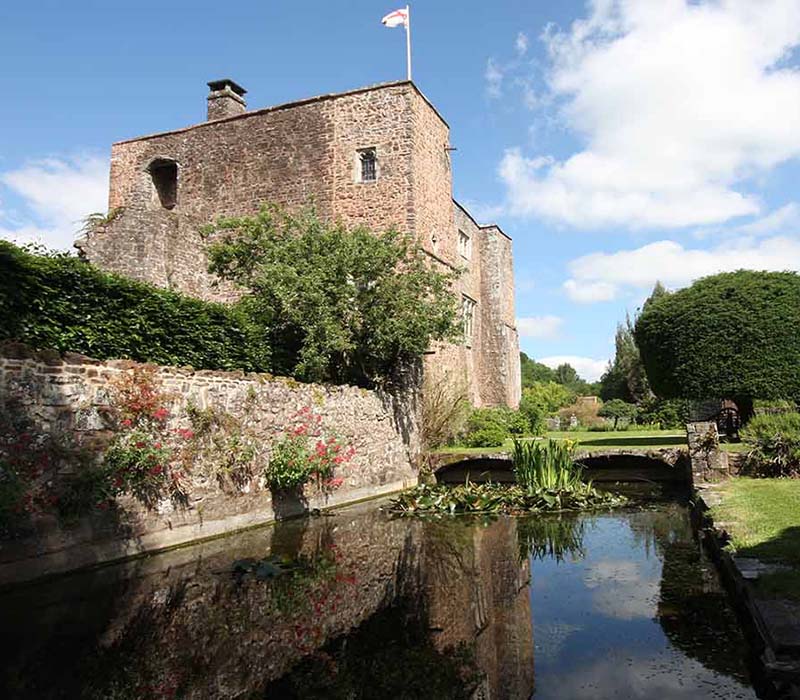
In 1644 Queen Henrietta Maria stayed at Bickleigh as the guest of Sir Henry and Lady Dorothy Carew, on her way to Exeter, where Princess Henrietta Anne was born that June. Before the Civil War was over, Parliamentarian troops under Sir Thomas Fairfax had attacked the house and pulled down its main building and inner keep. What survived on the bank of the river Exe near Tiverton is the castle that couples now take for exclusive use for their wedding: a vaulted gatehouse, a small medieval chapel and a farmhouse built after the war, gathered around a courtyard with a moat.

A Courtenay house and a Carew household
The house was once known as Bickleigh Court. The Courtenays, the family of the Earls of Devon, built a mansion here in the fifteenth century, and Bickleigh passed to the Carews in the early sixteenth; Thomas Carew is said to have eloped with Elizabeth Courtenay in 1512. The Carews held the estate until 1924.
Their loyalty to the King made the house a target. Once the Queen had gone, Fairfax’s army, having slighted Tiverton Castle, attacked Bickleigh, and the main castellated building and the inner keep were demolished. Sir Henry Carew is said to have rebuilt the gatehouse range after the war, and the north range, a farmhouse probably of the late seventeenth century, was added after the Restoration. In time the buildings fell into disrepair and were used as a farm store and a cottage.
Restoration began in the 1920s under the Harpers and continued from 1933 under Lieutenant Colonel Jasper Henson, who owned Bickleigh until 1957, brought in electricity and commissioned six suits of armour for the house. Between 1970 and 1990 the castle was open to the public and drew about 20,000 visitors a year. Today it is principally a wedding venue.
The gatehouse that stayed standing
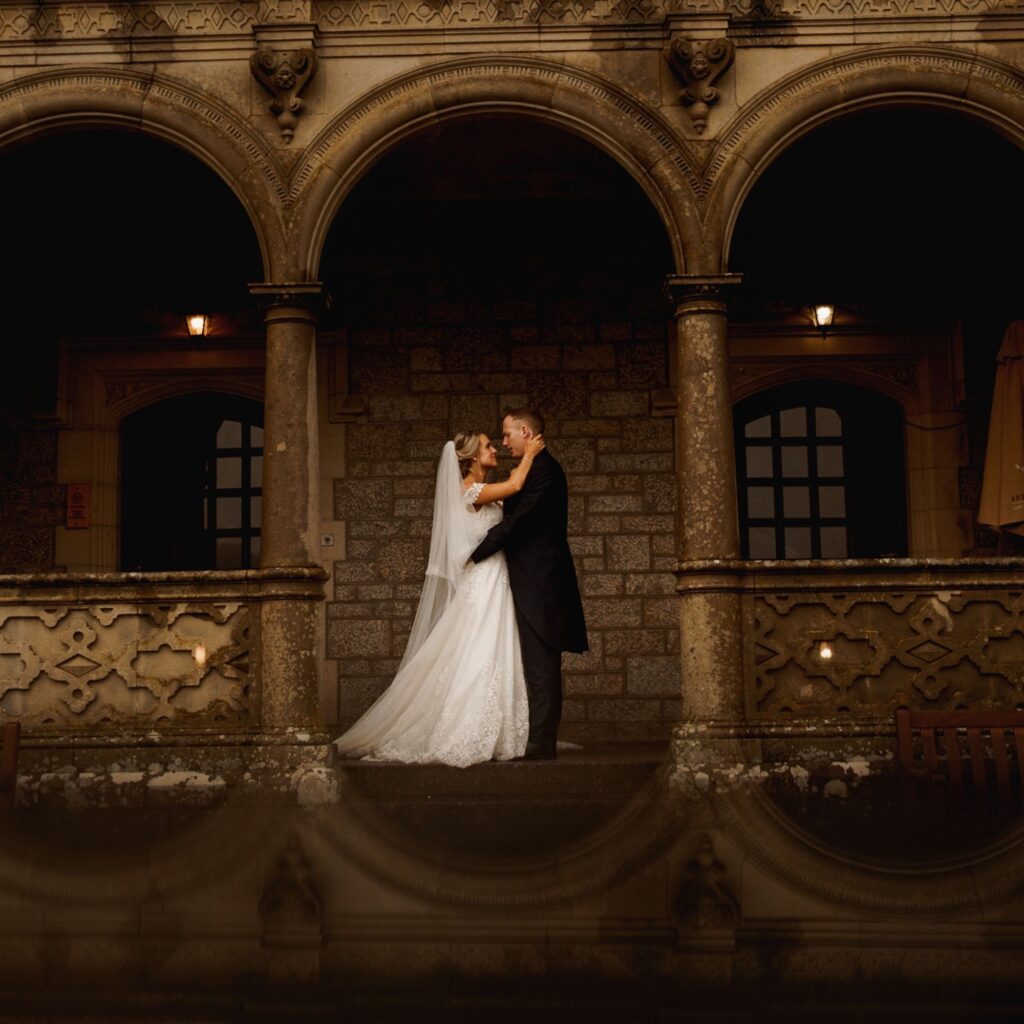
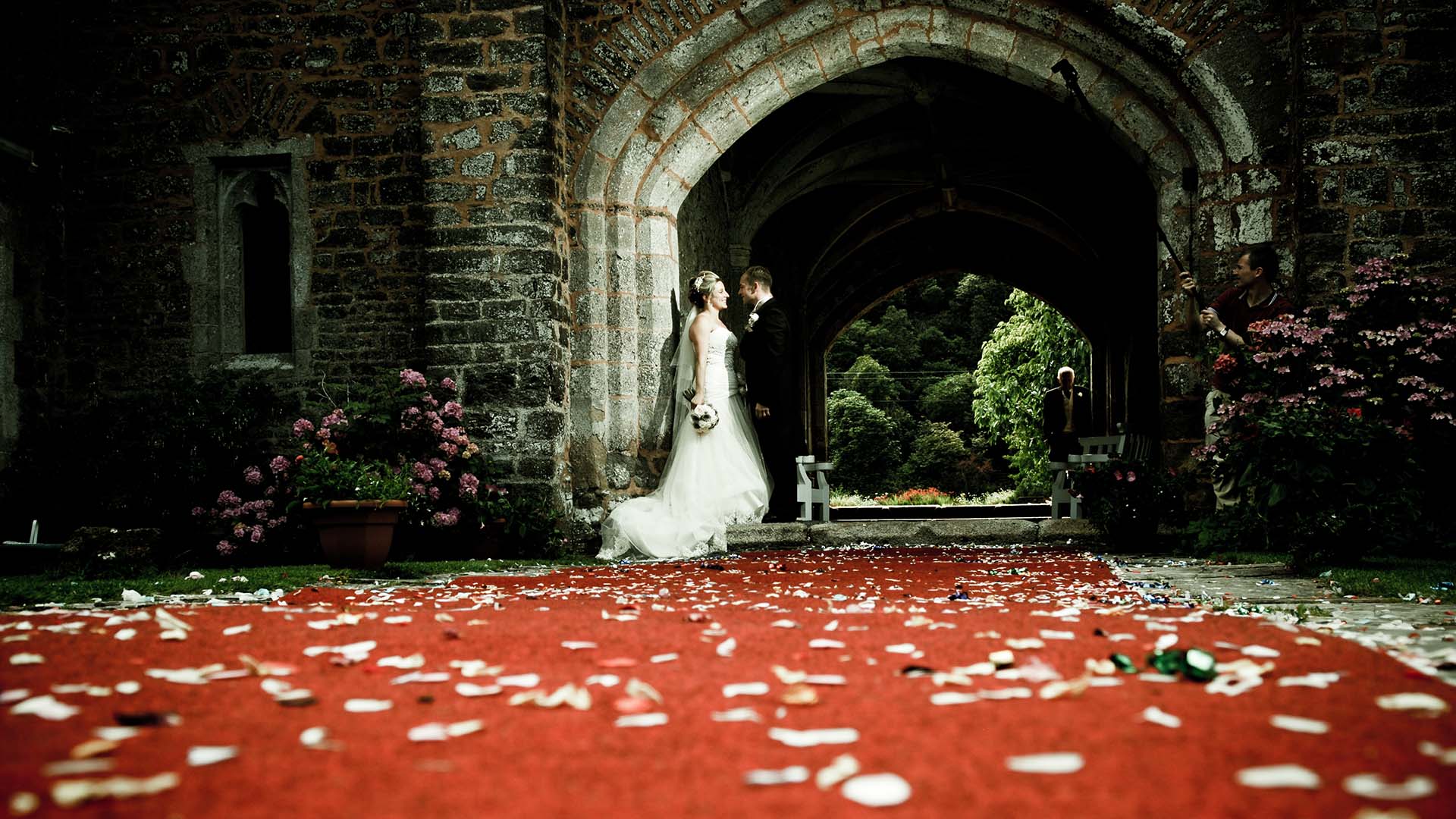
The gatehouse is listed Grade I, the highest grade among the surviving buildings. It dates from about the early fifteenth century: three storeys of volcanic rubble, turrets at front and back, and a carriage entrance through the middle with two bays of rib vaulting, its carved bosses bearing heraldic shields. It formed the east side of what was once a much larger group of buildings around a courtyard, and what stands today may be only a fragment of it. Henson’s work of the 1930s is still inside, in a chimneypiece carrying his arms and a gallery lined with Tudor panelling.
A chapel older than the gatehouse
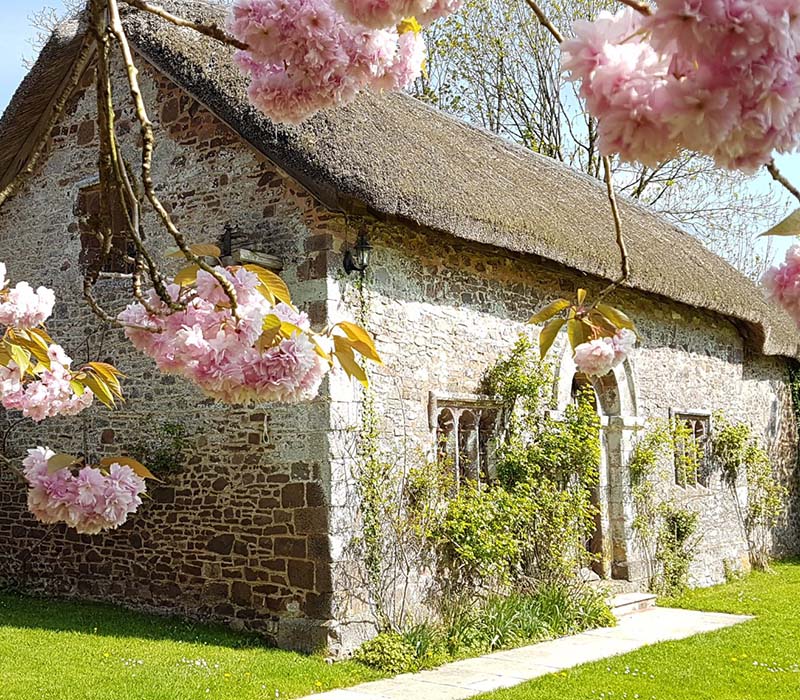
The chapel stands on its own in a walled garden, and it is probably the oldest building at Bickleigh. Its fabric is probably twelfth century, which makes it a rare surviving private chapel of that date. It has a nave and chancel, Romanesque windows in the chancel, a fifteenth century wagon roof with carved bosses inside and a roof of thatch outside, and it is listed Grade II*.
Before 1929 it was used as a cattle shed. The Harpers restored it that year, the Bishop of Exeter reconsecrated it in 1933, and in 1970 the nave was given a new roof copied from the original. Its furnishings were brought from elsewhere: a chest, probably of the sixteenth century, serves as the altar, beside a seventeenth century lectern. Couples use the chapel for a blessing or a humanist ceremony, and for photographs; the civil ceremony itself is held in the Great Hall or outdoors.
The Great Hall or the river lawn
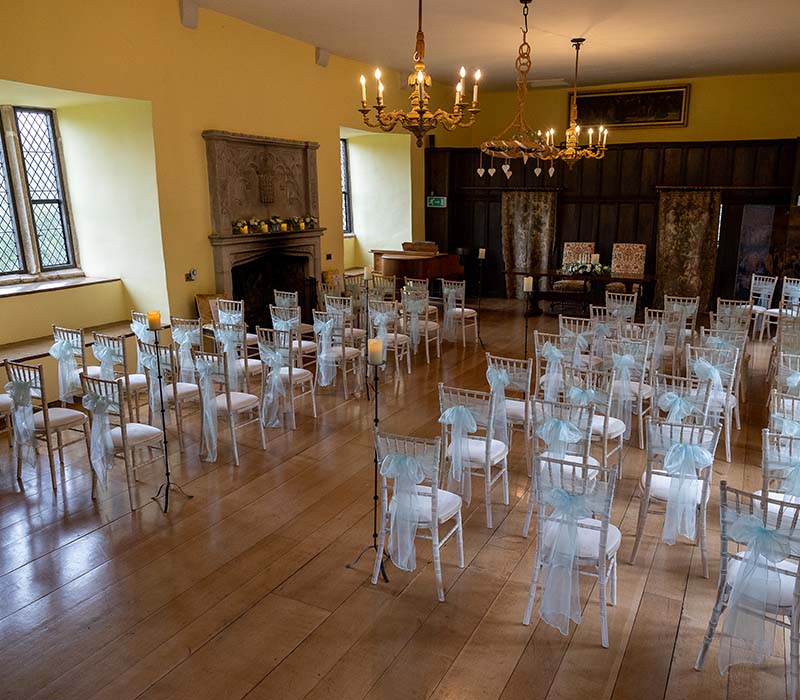
The Great Hall is licensed for civil ceremonies of up to 120 guests. It is a beamed room with a Minstrels’ Gallery and a log fire that is lit in winter, and it also serves for drinks when the weather is cold.
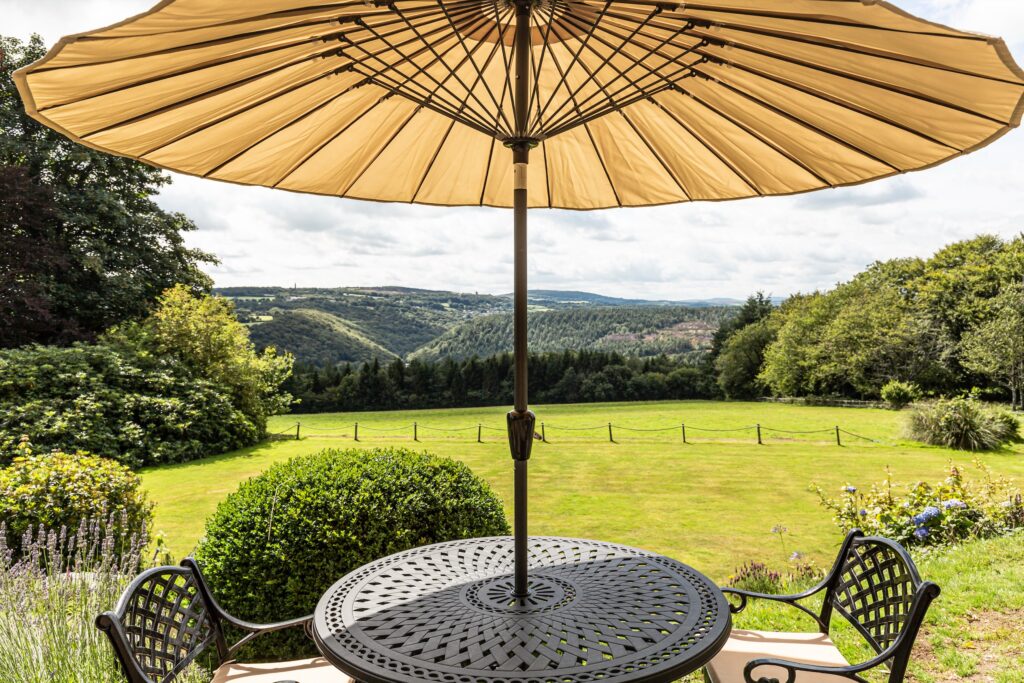
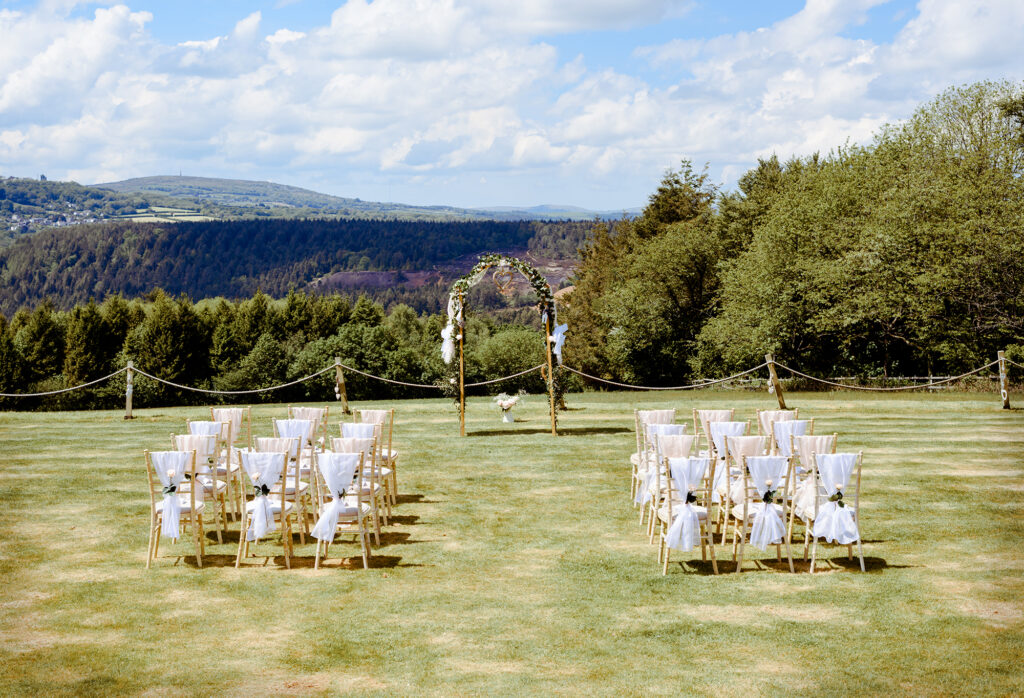
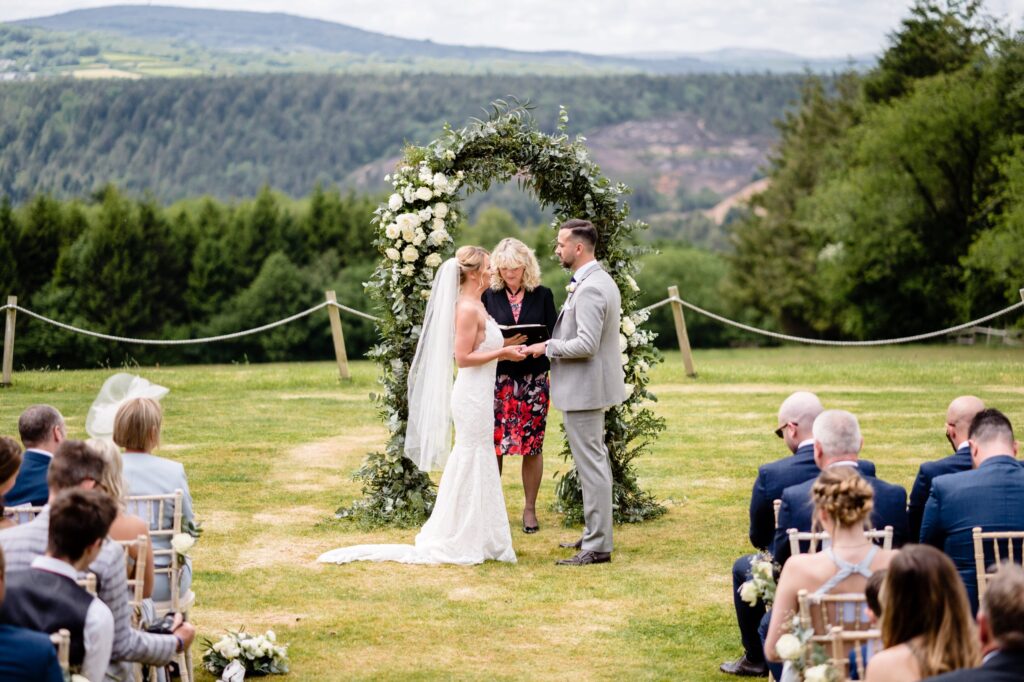
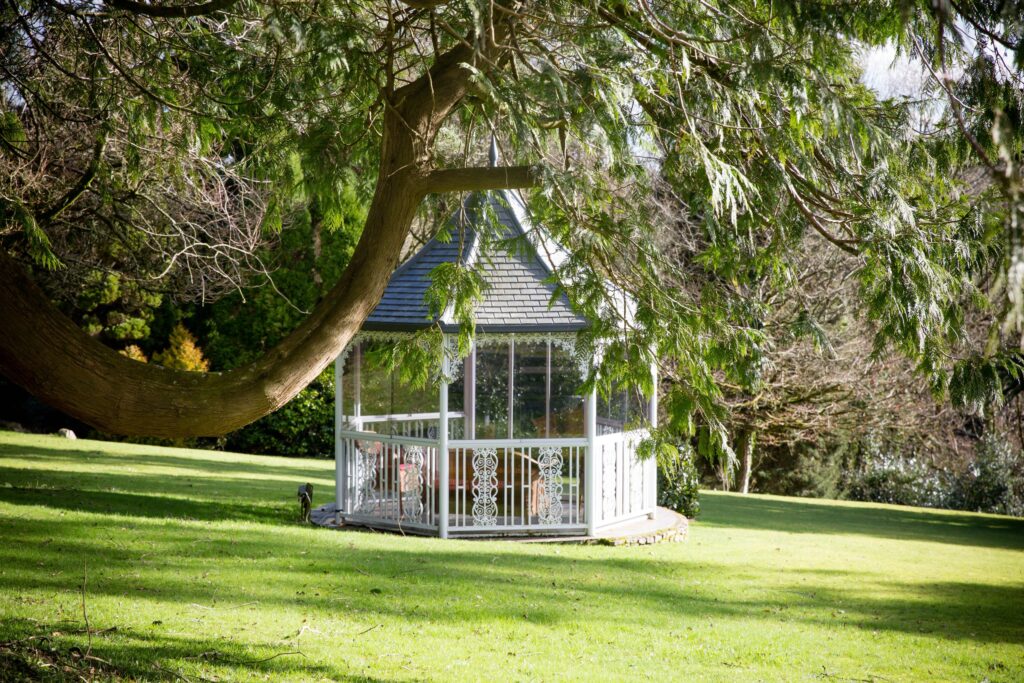
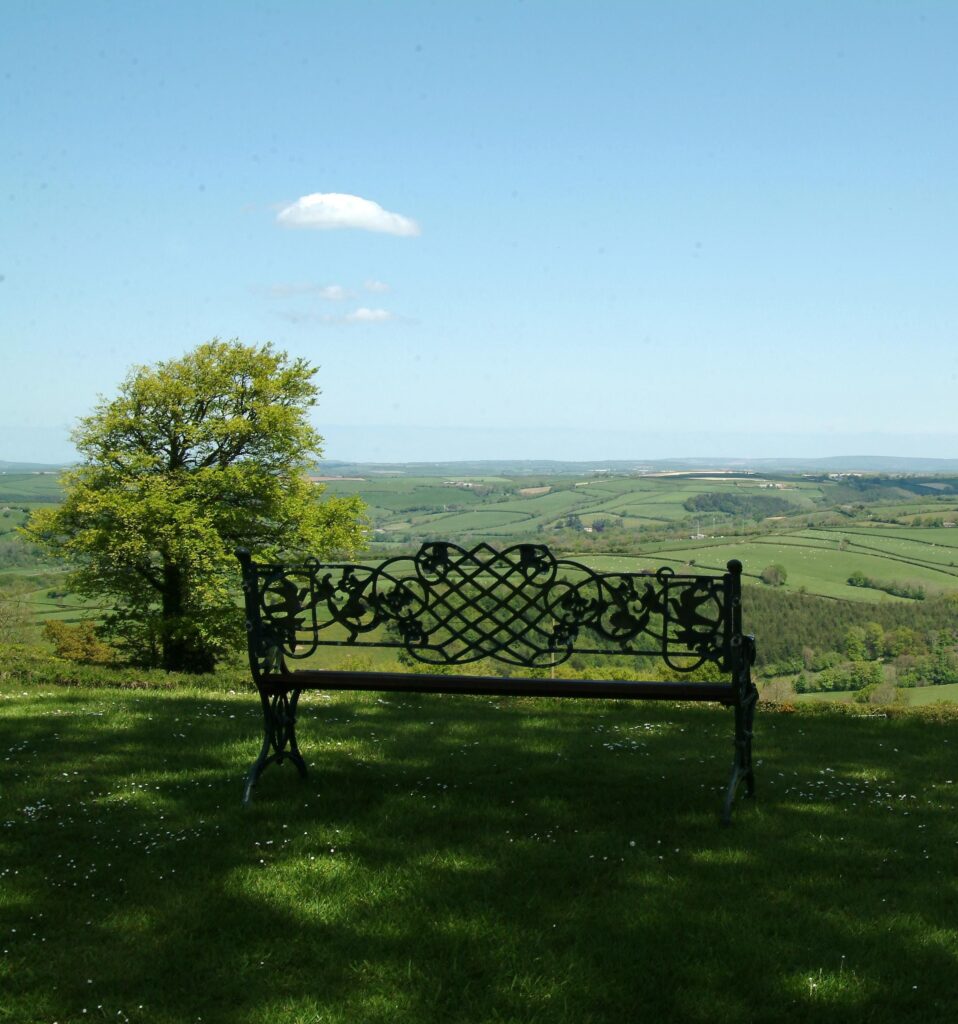
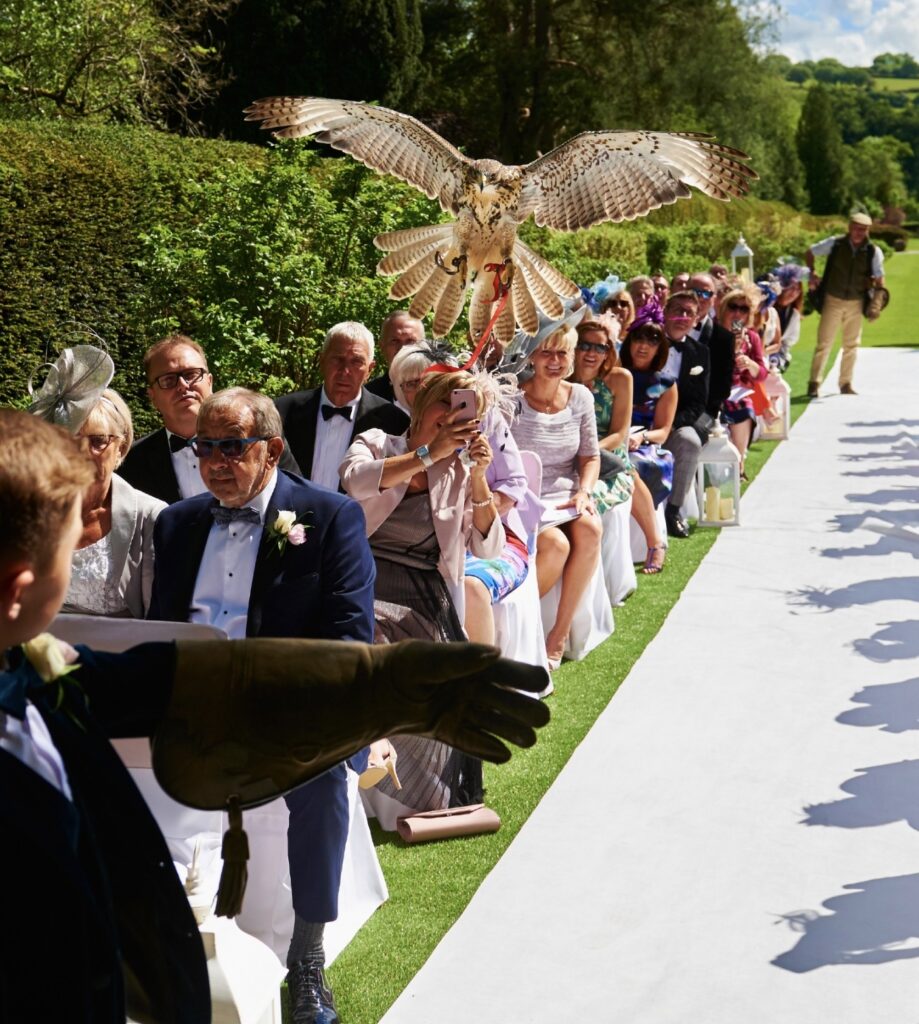
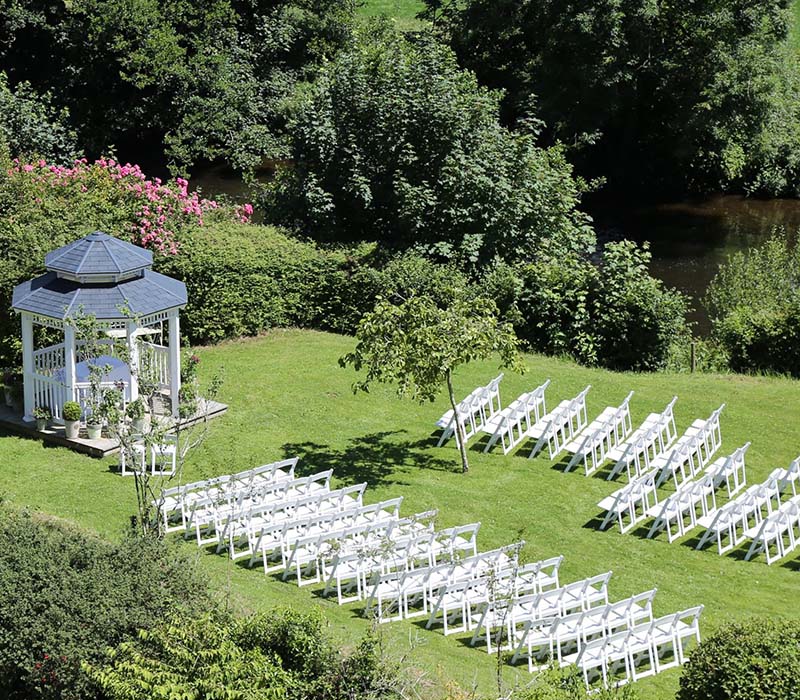
Outside, the gazebo lawn beside the Exe takes at least as many guests for an outdoor ceremony, with the Devon hills beyond the river. Outdoor ceremonies suit spring and summer, and the decision about the weather is made on the Friday before the wedding: if rain looks likely, the team sets up the Great Hall as well, so the ceremony can come indoors on the day.
Dinner in the barn, dancing in the stables
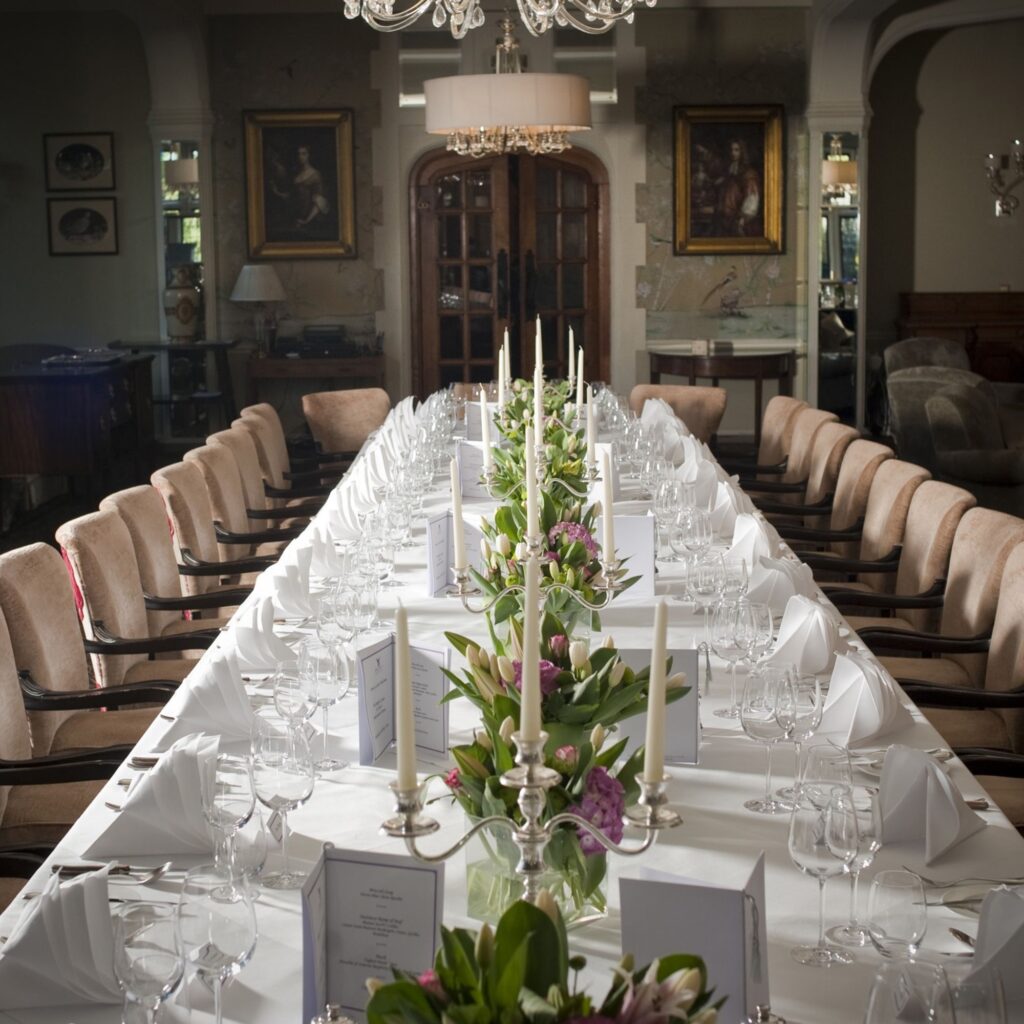
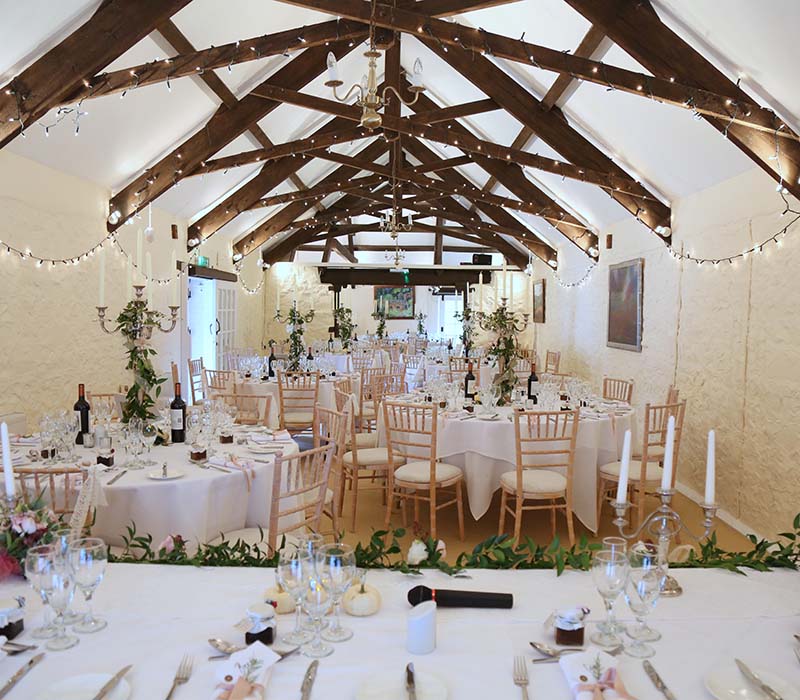
The wedding breakfast is served in the Banqueting Room, converted from an eighteenth century barn, which seats 40 to 120 under its open timber roof and is reached by stairs or a ramp. Menus are written for each couple around seasonal produce, and dietary requirements are accommodated. Food is priced separately from the venue packages.
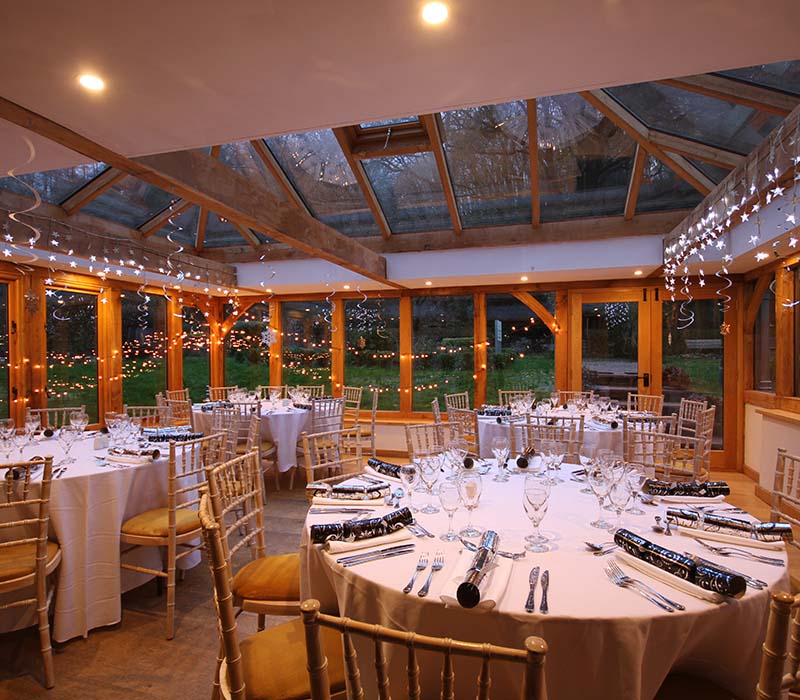
The bar and the Orangery occupy the Victorian stables, where the cobbled yard, the mounting block and the stable doors have been kept, and there is a dance floor for a band or a DJ. The Orangery is also licensed for civil ceremonies and can seat about 70 for dinner on its lower floor, an alternative for a smaller wedding. The licence for the bar and live music runs until 1am, after which quieter music can carry on.
Thatched cottages around the courtyard
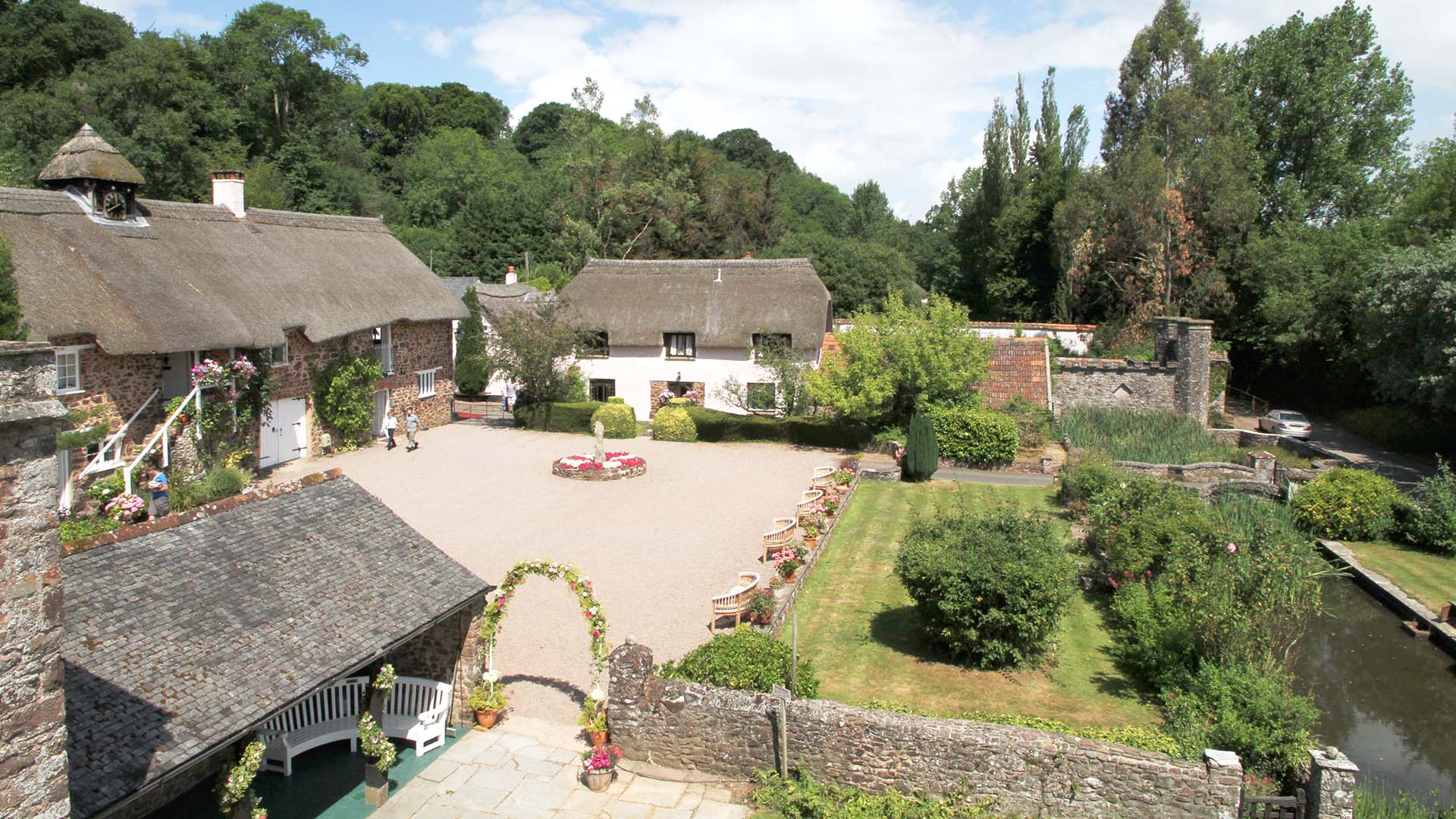
Eighteen bedrooms and suites sleep up to 40 guests, in the castle itself and in three thatched cottages around the courtyard, which are listed Grade II. Rooms are booked in addition to a wedding package rather than included in one, and overnight guests have a full English breakfast the next morning. At a full wedding breakfast, that means the wedding party and close family can stay at the castle while other guests book rooms nearby.
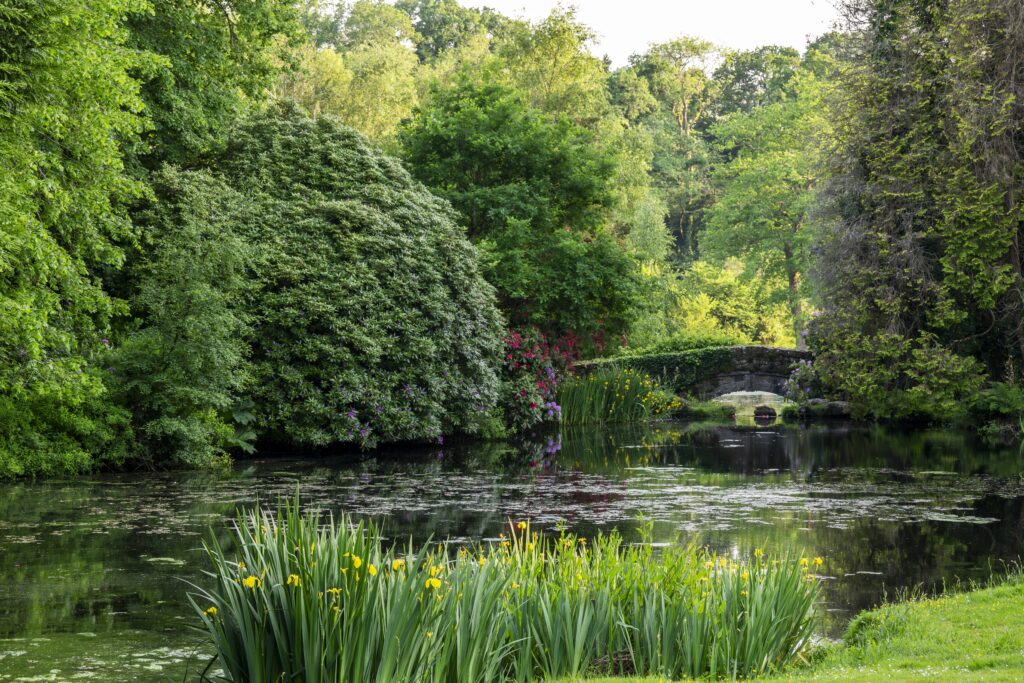
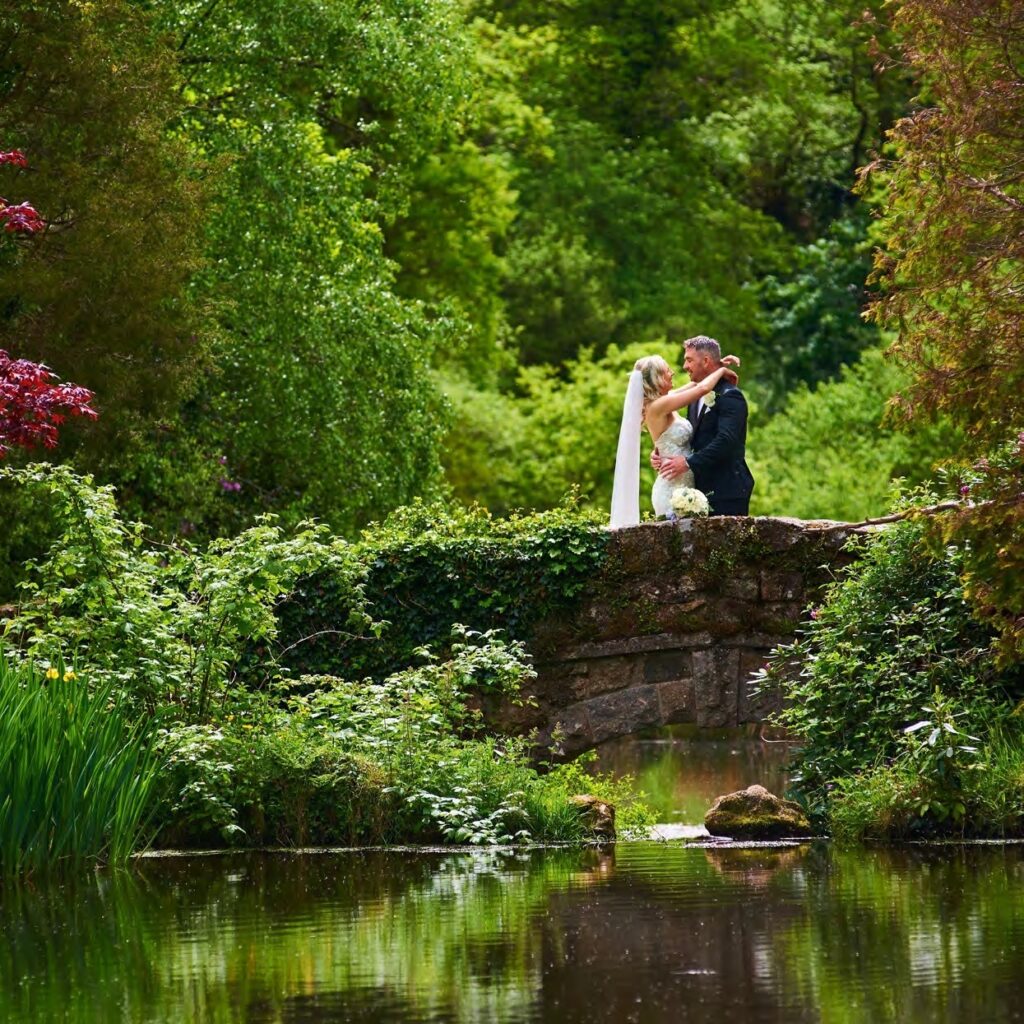
The courtyard is overlooked by the old stable block, rebuilt in the nineteenth century beneath a turret clock. The gardens were laid out in the eighteenth century by Sir Thomas Carew, with fish ponds made from what remained of the Norman moat, and today they hold rhododendrons, topiary, a walled garden and a knot garden walk. The estate also has a hard tennis court and a croquet lawn.
Bickleigh and the Exe valley
Bickleigh is a village of a few hundred people about four miles south of Tiverton, in the valley of the Exe. Its stone bridge, which carries the A396 over the river, dates from the early seventeenth century, and the Fisherman’s Cot inn beside it was built in 1933. Bickleigh Mill, south east of the bridge, has a restaurant and shops. In the churchyard is the grave of Bampfylde Moore Carew, a son of the village rector, who claimed to have become king of the gypsies.
The castle is about 20 minutes from the M5. Tiverton Parkway is the nearest station, roughly seven miles away in a straight line, with Exeter St Davids the other choice by rail, and Exeter Airport is the nearest airport.
Midweek or the whole weekend
Packages start from £3,900 for a civil ceremony with up to 50 guests. A midweek castle package, Monday to Thursday, is £6,595 for 50, and weekend weddings run from £13,300 to £16,600, the most complete of them keeping the castle from Friday until Sunday midday. The wedding breakfast and the rooms are charged on top of every package.
The Courtenays’ own Devon seat is Powderham Castle. For other castles, read our Edits on Highcliffe Castle and Leeds Castle in Kent; for the region, see weddings in Devon and the United Kingdom Wedding Atlas.
Decide first whether Bickleigh is a weekday wedding, with the castle and gardens for the day, or a weekend with the castle kept from Friday and the cottages full. Then read the Bickleigh Castle profile and check your date.