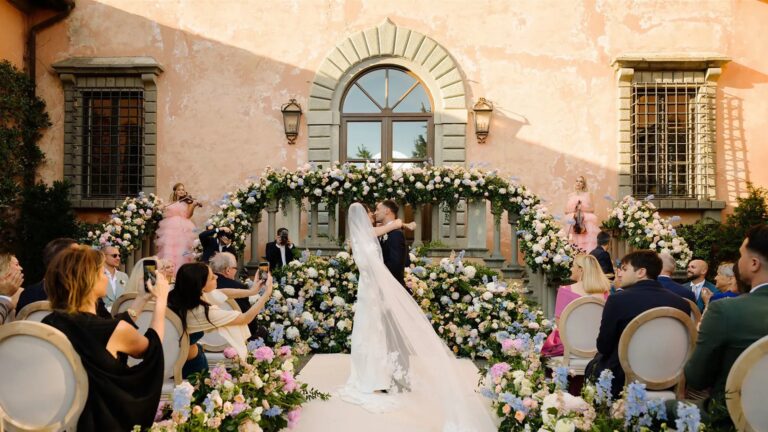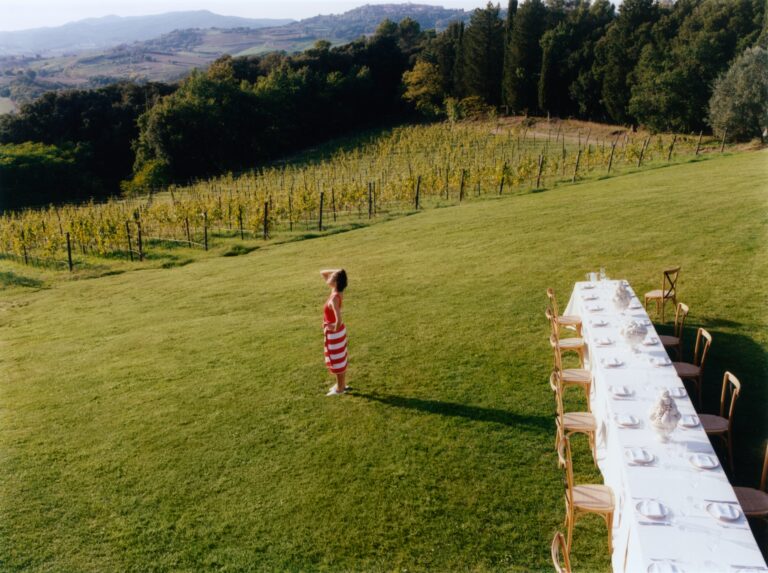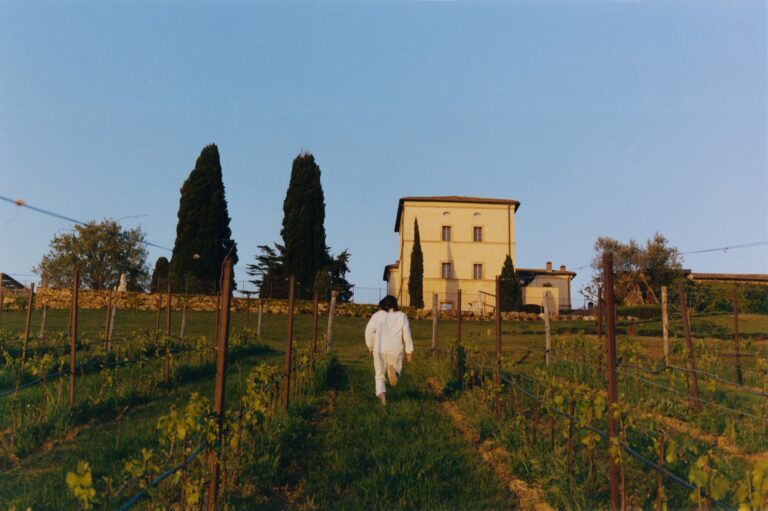
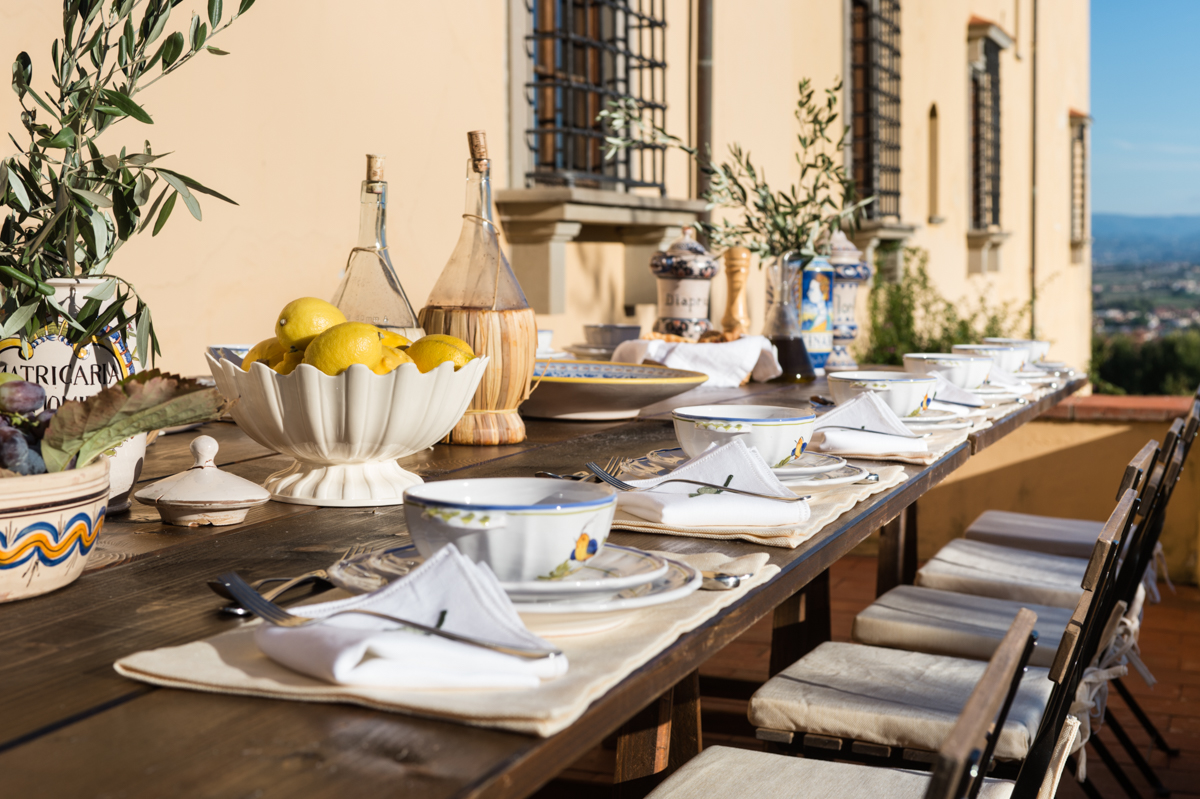
Several of the Tuscan venues on 5 Star Weddings make their own wine and olive oil, and most cook in house, so the menu is usually built with the venue’s own kitchen rather than an outside caterer. That shapes three decisions: what you pour, how the meal is structured and what it costs per guest. This guide covers what our venues produce and serve, the wines worth knowing and the questions to settle at the tasting.
Estates that pour their own wine
- Castello di Velona, near Montalcino, makes its own Brunello di Montalcino and Rosso di Montalcino, which lead the wine pairings at its wedding dinners.
- Villa Mangiacane, at San Casciano in Val di Pesa, produces Chianti Classico, olive oil and vin santo: about 50,000 bottles a year from 43 hectares of vines, with tastings and vineyard picnics for guests.
- Borgo Bucciano, at San Miniato, makes red wine and extra virgin olive oil and serves them at its meals.
- Castello di Casole is surrounded by organic vineyards and olive groves, and its private dining menus use the estate’s wine and oil.
- ColleMassari Hospitality, in the Maremma near Grosseto, is a restored medieval borgo on a 1,200-hectare wine estate, with 120 hectares of organic vineyard producing Montecucco Sangiovese DOCG.
- Pometti Estate, Villa Boscarello, at Trequanda in the Val d’Orcia, is a seventeenth-century villa on a family wine estate, with eleven hectares of organic vineyards and century-old olive groves.
- Il Falconiere, above Cortona, is a Relais & Châteaux villa on fourteen hectares of vines and olive trees, with a vineyard pool.
In Siena, Palazzetto Rosso holds tastings of Chianti and Tuscan wine in its brick wine cantina, which suits a smaller dinner in the city.
Serving the estate’s own wine is usually the simplest route: it is on hand, the kitchen knows it and guests can visit the vineyard the day before. Ask how many labels there are, whether there is a white and a sparkling, and what is bought in to fill the gaps.
The wines worth knowing
- Chianti Classico, from the hills between Florence and Siena, made mainly from Sangiovese. The black rooster on the bottle is the mark of the Chianti Classico consortium.
- Brunello di Montalcino, made from Sangiovese around the hill town of Montalcino and governed by the Brunello consortium. Rosso di Montalcino is its younger, lighter sibling.
- Vino Nobile di Montepulciano, from Montepulciano in the south of Siena province.
- Vernaccia di San Gimignano, a dry white from around the towers of San Gimignano, and a natural choice for the welcome drinks.
- Vin santo, the sweet wine served at the end of a meal with cantucci for dipping.
What the menu looks like, and what it costs
One venue publishes its wedding menu in full. Relais La Costa, near Monteriggioni, lists a traditional Tuscan wedding dinner from EUR 160 per person in its 2026 to 2027 wedding brochure. That covers:
- A welcome aperitivo of Tuscan finger food: bruschette, fried vegetables, crostini, cheeses and cured meats, with prosecco and orange juice.
- A seated dinner of two pasta or rice courses and one main course with a side.
- Water, and one bottle of wine for every four guests.
Its kitchen cooks for up to 60, with vegetables from the house garden and oil from its own olive grove. One bottle for four is a modest pour for a long evening, so ask what further wine costs before you set the drinks budget.
Kitchens and restaurants on site
Castel Monastero, near Castelnuovo Berardenga, has Contrada, which holds one Michelin star, on its piazza, and the Cantina in the medieval cellar, which can host dinner for up to 110 and the late-night party. Villa Castiglione, in the hills of Impruneta, has a restaurant cooking Florentine dishes such as peposo dell’Impruneta, the black pepper beef stew named after the town, and bistecca alla fiorentina.
Valle di Badia, near Pisa, works the other way: it provides two fitted kitchens with a separate service entrance for the caterer you choose. That gives freedom over the menu, but it is a separate contract to negotiate.
Building the days around the food
A Tuscan wedding is often three days, and the food can carry them. Castello di Velona plans menus from a welcome dinner to a farewell brunch. Borgo Bucciano offers pizza evenings and barbecues for groups, a relaxed welcome night for guests arriving at different times.
The season sets the produce. The new olive oil arrives in late autumn, and the white truffle season around San Miniato peaks in November. For the region’s signature dishes and where to eat them in the cities, see the Tuscany Wedding Atlas.
Questions to settle at the tasting
- What is in the per-person price, and how is extra wine charged?
- Can we bring wine from another estate, and is there a corkage charge?
- Is the tasting included, and for how many people?
- How are dietary needs handled, and is there a children’s menu?
Questions couples ask
How much does a Tuscan wedding dinner cost per guest?
The one published figure among our venues is from EUR 160 per person at Relais La Costa, including the aperitivo, a three-course seated dinner and a bottle of wine for every four guests. Others quote on request.
Should we serve the estate’s own wine?
Where the venue makes it, usually yes. It suits the food, it is already on site and it is the most local choice on the table.
Updated 23 October 2026