
Getting Married in Venice
Palazzi, guildhalls and lagoon islands reached by water. Venice has no roads, and water is present at every turn. Gothic and baroque architecture is packed onto a walkable island, and that combination is found nowhere else.
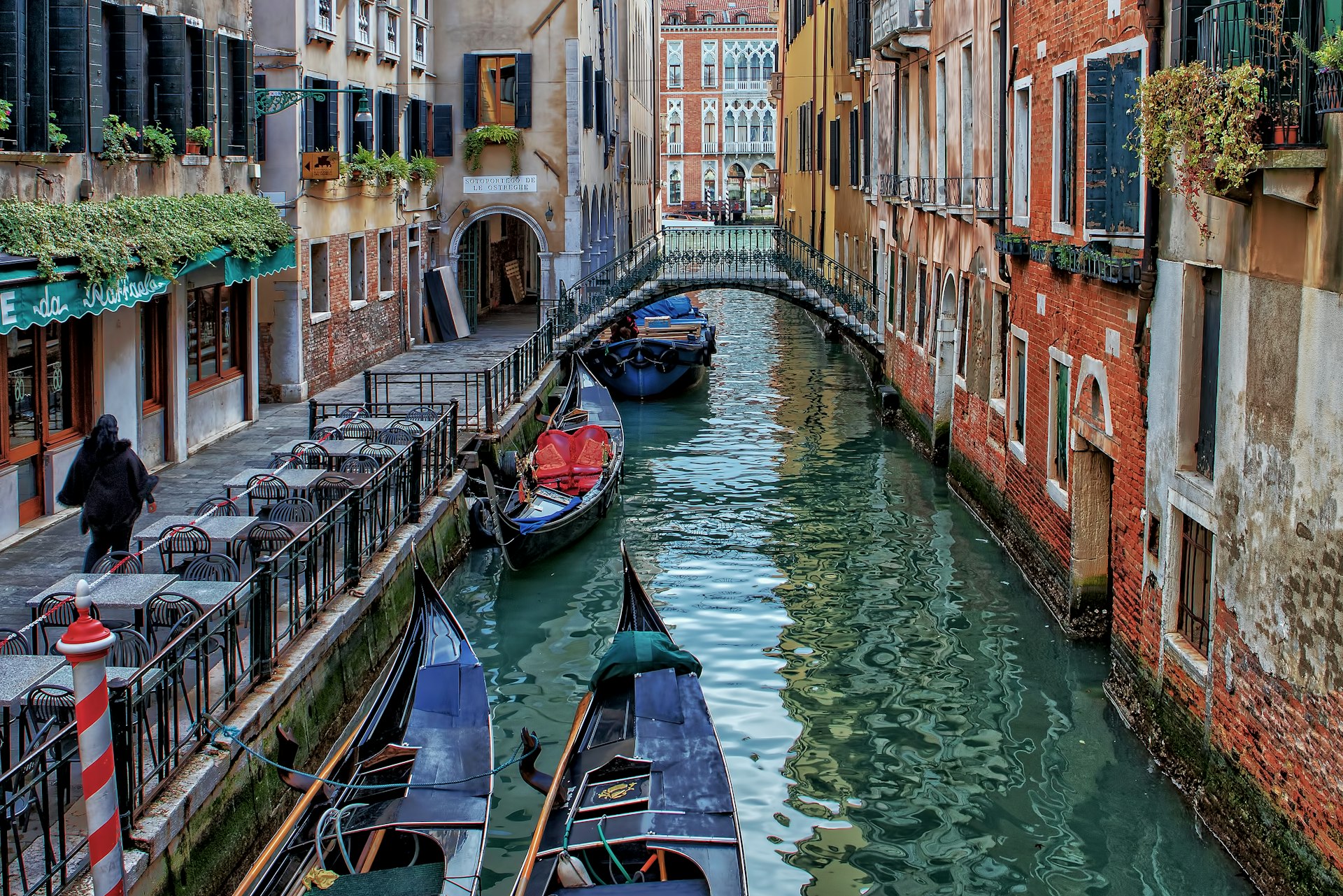
Palazzi, guildhalls and lagoon islands reached by water
A Venetian wedding is shaped by arrival. Guests come by water taxi to a palazzo water entrance, the couple crosses a bridge by gondola at dusk, and a ceremony takes place in a sixteenth-century guildhall under frescoed ceilings. The setting supplies much of the staging.
Venice needs more planning than most Italian cities. With no cars, transfers must be coordinated carefully, and high season brings large numbers of visitors. For couples willing to plan the logistics, the setting cannot be replicated.
When to marry, and what to arrange
The season
When to Get Married
Early June and late September are warm, with slightly fewer visitors than in July and August.
Recommended wedding months
May, June, September and October
Settings, travel and stays
Choosing a Setting
Grand Canal Palazzo. Sixteenth and seventeenth-century palaces on the Grand Canal, with piano nobile reception rooms, terrazzo floors and private water-gate arrivals by gondola or water taxi. Supply is limited, so booking is needed far ahead.
Private Island. The outer islands, including Torcello, San Lazzaro degli Armeni and private lagoon estates, reached only by boat. They give exclusive use for the wedding day.
Historic Guildhall. The Scuole Grandi, medieval charitable institutions turned into event spaces. Scuola Grande di San Rocco and Scuola Grande dei Carmini are among the most sought after, with Tintoretto paintings and gilded ceilings.
Garden Courtyard. Walled garden courtyards of Venetian palaces, entered from the canal. Space is rare in Venice, which makes them private, and they suit a ceremony or an aperitivo before moving inside.
Waterfront Terrace. Hotel terraces and villa belvederes with views of the Giudecca Canal or the lagoon. They are easier to book than a palazzo buyout and suit couples who want the atmosphere of Venice with fewer logistics.
Getting There
A water taxi from Marco Polo airport to central Venice is the most atmospheric arrival. Hiring a private water taxi for the wedding day is strongly advised.
Where Guests Stay
Venice has a small supply of high-end hotels, concentrated along the Grand Canal and on the Giudecca. Peak dates need booking well ahead.
Cannaregio palazzo hotels. Fifteenth-century Grand Canal palazzi converted to hotels keep original frescoes, glass chandeliers and a gondola jetty. Some are available for partial exclusive hire.
Giudecca island hotels. Hotels on the Giudecca, reached by private launch from San Marco, have pools, private gardens and separation from the busy centre of the city.
San Polo palazzo suites. Sixteenth-century palazzi on the Grand Canal near the Rialto, converted into small suite hotels. They suit couples who want the palazzo experience without a large hotel operation.
San Marco hotels. Some Grand Canal palazzi have been hotels for centuries. A terrace facing Santa Maria della Salute can be hired for private events.
Good to know
Food and Drink
Venetian cooking is built on the lagoon, with Adriatic seafood, salt cod from the north Atlantic, the cicchetti bar culture and wines from the surrounding Veneto, including Prosecco and Soave.
Cicchetti. The Venetian answer to tapas: small bread-topped snacks eaten with a glass of Veneto wine, standing at wooden bars. Baccalà mantecato, salt cod whipped with olive oil, and sarde in saor, sweet-sour marinated sardines, are the staples.
Risotto di go. Go, a small bony lagoon goby, makes a well-flavoured broth. Risotto di go is a distinctly Venetian first course and appears on few menus because it takes knowledge and patience.
Daily fish. Small restaurants in Castello serve fish according to what arrived from the Rialto market that morning. There is no printed menu, and the cooking is restrained and led by the ingredient.
Good to Know
Water taxis. There are no cars in Venice. Every guest transfer, florist delivery and caterer arrival is by water or on foot. Private water taxis are the usual answer on the day.
Acqua alta and the MOSE barriers. Venice has periodic tidal flooding. The MOSE barrier system, operating since 2020, gives significant protection and has reduced high-water events. Venues still have contingency plans for exceptional tides, and a planner should be asked for their acqua alta plan.
Day-tripper congestion. Most visitors are day-trippers, concentrated around San Marco, the Rialto and the Ponte dell'Accademia between mid-morning and early evening. Ceremonies and photographs in busy spots are best scheduled early in the morning or after 7pm. Cannaregio, Castello and the Giudecca are quieter at all hours.
Murano glass. Glassmaking has been practised on Murano since 1291. A visit to a working furnace, with the option to commission pieces as favours or gifts, suits a wedding weekend. Family-owned furnaces are a better choice than the showrooms near the vaporetto stop.
Visas and Entry
Entry rules for Italy depend on the passport held. Italy is in the Schengen Area, so Schengen short-stay rules apply to visits. Current guidance is on the Italian government's website and on the traveller's own government's travel pages.
Marrying Legally
The legal marriage and the celebration are separate. Ask your venue or planner what the town hall requires for the place where you plan to marry.
Planners, photographers, florists and musicians who work in Venice
How do wedding guests move around Venice?
On foot and by water. Vaporetto routes cover the main canals, and private water taxis are used for wedding-day transfers. A planner should coordinate all water transport as part of the event plan.
Is Venice too crowded for a wedding?
High summer brings heavy visitor traffic to the main squares and routes. Venues on quieter canals or on the outer islands give privacy, and early morning ceremonies before visitors arrive work well.
What happens if there is acqua alta during the wedding?
The MOSE barriers now give significant flood protection, and venues have contingency plans. A local wedding planner will have handled this before.
Can the couple arrive at the ceremony by gondola?
Yes, with coordination. Gondola arrivals work for the couple and small bridal parties, and larger groups use water taxis. A planner arranges routes and timing so the arrival avoids bottlenecks.
Meet Aura, Your Wedding Planning Assistant
Describe your dream wedding, from the destination and setting to the number of guests and your budget. Aura will help you discover wedding venues and professionals that match your plans.
More Wedding Destinations
Aeolian IslandsAmalfi CoastBellagioCalabriaAll destinations
How We Compiled This Guide
This guide draws on the venues' own published details, official sources and the knowledge of our editors. Entry and legal information can change, so confirm it with the authority that will marry you before you book.